Please note: this feature contains a full description of events in Lady Macbeth and as such contains spoilers.
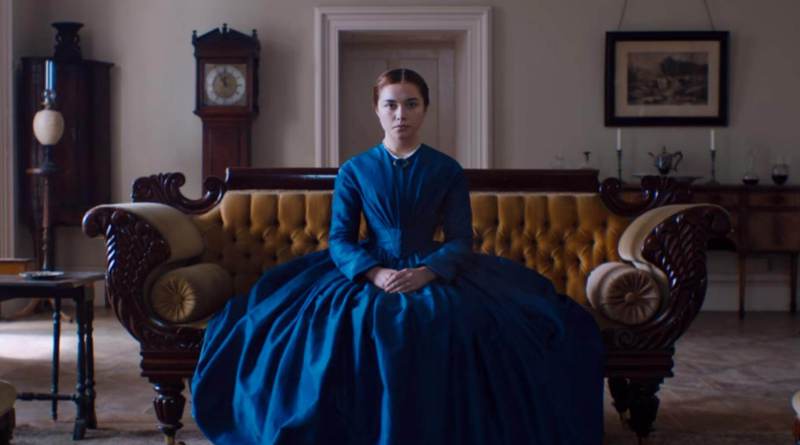 Marriage in the nineteenth century – particularly between the lower middle classes, perhaps, who had enough to lose but little enough to boast – must have been for many women a miserable existence. Firstly, women often had limited influence on the matches proposed to them, having to consider the fortune of their families and dependents as well as themselves, when respectable opportunities to earn money were very limited. The Married Woman’s Property Acts did not come in until 1870 and beyond; until that time, women forfeited any land, property or money they had in their own names, passing it directly to their husbands at the point of marriage. They had no legal rights to their own children – the father de facto retained that right – and limited access even to the extreme solution of divorce which, in the rare cases it took place, frequently led to women being socially ostracised, shunned by neighbours and family, and of course penniless, if they had no other arrangement or allowance entailed upon them. The only legitimate, respectable way out of a middle-class marriage was widowhood.
As the first reels of Lady Macbeth (2016) unfold, we’re left under no illusions about the stifling, isolating existence of many bartered brides in the mid-nineteenth century. The teenage Katherine has essentially been sold as a chattel, alongside a piece of purposeless land, to a much older man – under the wary eye of her father-in-law, a man who can only boast that he’s even more unpleasant than his son. From as early as her wedding night, her new husband Alexander makes it clear that her domain is indoors, where things will be more ‘comfortable’ for her. His wife insists she likes the fresh air, but he’s implacable, and so Katherine begins a dreary domestic life as his wife; not for nothing is she so often in frame with a clock. It also seems telling that her gasps of pain, annoyance and embarrassment so often occur when something is literally being done behind her back: when she’s being laced into a corset, submitting to having her hair brushed for the ornate braids she wears, or – more humiliating still – when her husband prefers to keep her at a cold, unconsummated distance, facing the wall…
Because of this, she can’t even get on with the arduous, risky business of providing the family with an heir, her whole reason for being procured for this out-of-the-way house – given Alexander’s predilections, as well as his long absences. Without books, callers or other occupations of any kind, Katherine seems primed to go the way of a thousand nineteenth century heroines, dissolving into ‘nervousness’ or lapsing into apathy, yet another Catherine Earnshaw or Margaret Sherwin perhaps. But Katherine has a ‘thick skin’, as she puts it, and a steely reserve. With her husband away, she takes over the duty of overseeing his labourers, which includes a new boy – Sebastian, a man who doesn’t care a jot about her social status, and treats her with the same easy disrespect he does her maid, Anna (whom he’s in the process of humiliating when Katherine first claps eyes on him.)
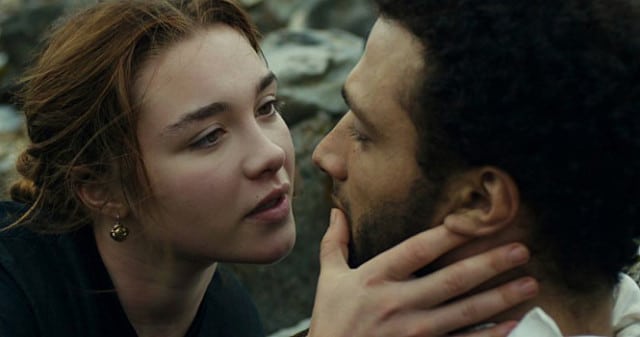 Knowing the young bride is alone in the house one night, Sebastian takes his chance and sneaks in, giving the lie to the absent Alexander’s assertion that Katherine will be ‘safer’ there. At first, Katherine acts the part of the valiant virgin, trying to repel what seems a would-be rape – but then, subverting the expected codes of behaviour, she inverts the situation, suddenly reciprocating his advances. Sebastian suddenly has to re-assess, finding himself no longer in the stereotypical male role; he might have expected her to behave more like Anna perhaps, who even as a social inferior is demure enough to be mortified. Respectable women at this time were supposed to be passive, and virtually asexual – only submitting to the act for the purpose of maternity. Dr William Acton, practitioner to Queen Victoria, wrote a famous paper in 1857 – so, contemporary with the film – where he claimed that ‘the majority of women (happily for them) are not very much troubled by sexual feelings of any kind’: certainly, Sebastian is surprised by the way Katherine responds, and it’s not what he would have expected. It is also the moment that his own agency begins to rescind, irreparably, whilst hers blossoms – at least, up until a point.
Katherine’s descent into crime echoes not only the Shakespearean origin behind the film’s title (and the story behind the screenplay here) but also the extreme means which many literary women of the era utilised in order to satisfy their needs – be these lust or larceny. From Lady Audley to Emma Bovary, sexual appetites and liberation always demand a heavy penalty in the end. However, Lady Macbeth thwarts the anticipated Victorian (or Tsarist) moral payback in some key respects – and the screenplay deviates from its basis in the Russian novella Lady Macbeth of the Mtsensk District (1865) to see Katherine progress through increasing magnitudes of extreme behaviour, but without presenting viewers with a straightforward penance. If Katherine commences her criminal life in an expected way, then she doesn’t end it thus.
Her initial rebellion – against that ghastly old man, her father-in-law, who unfairly accosts her for neglecting her wifely duties when her husband is elsewhere – begins with a ‘woman’s crime’, the ubiquitous poisoning (closely echoing The Beguiled) which takes place in the home through a contaminated meal. Posing for a post-mortem photograph with her father-in-law’s remains in the correct full mourning garb, Katherine looks every inch properly sorrowful. It is, however, a ruse, and Katherine wastes no time in restructuring the household around her wishes and desires. The more Katherine is able to empty the house, the more agency she’s able to enjoy; the fewer people to witness her at home, the fewer people to have opinions on her conduct. With Boris gone, she has free access to her lover once again.
However, when her husband eventually returns, she doesn’t attempt the ‘woman’s crime’ again – although she could have, as she rushes to bring him a drink of tea – another feminine staple. He’s not apparently suspicious of the circumstances surrounding his father’s demise, doesn’t mourn him, and probably could have been dispatched the same way. However, in response to her husband’s rising anger – his wife may have tried to limit people’s knowledge of what she’s been up to, but he’s heard the rumours – Katherine opts against the life of penance and prayer books suggested by him, actually bringing Sebastian into the bedroom and then caving in Alexander’s head with a poker when he – perhaps reasonably – objects. A woman’s crime, this ain’t. Katherine has not opted to play safe and plausible here.
But getting rid of a gentleman (and his horse) is a different prospect to excusing the death of an elderly man, and marks a turning point in her behaviour. Sebastian now begins to shrink from her; she’s too demanding, too active. It seems she’s capable of anything at this juncture, and when her home is invaded by unexpected visitors, she takes the ultimate step for a Victorian lady – murdering a child, the ultimate inversion for someone whose role is meant to view childrearing as an almost divine calling. She’ll do anything, it seems, to keep Sebastian near to her, even when it seems like he’s exhausted and damaged by her attentions. However, in the novels of the period, including Lady Macbeth of the Mtsensk District, Katherine would simply be found out. She would pay a bloody price for her deeds; she might even confess. Order would be restored, probably by her death.
This isn’t to be in Lady Macbeth. When accused of her final crime, Katherine takes refuge behind her status as a woman of means. Again inverting Sebastian’s attempts to steer his own course, she turns his revelations that she murdered her husband’s ward back onto him. How could she kill a child? She loved the boy as if he were her own, she says. On the other hand, the lowly worker is naturally a suspicious character; she exploits his dirty, dishevelled appearance and shifts the blame. (He’s also mixed-race, but so are the new inhabitants of the house, including the child, so it seems as though his class is more significant in this instance.)
On consideration, those present are convinced by her story. Katherine has gone from counteracting expectations to get what she wants, to enacting the same expectations, also to get what she wants. Well, she saves her own skin, at least – but her victory is a hollow one, ultimately, as she is left entirely alone in the marital home. She has condemned her lover, and isolated herself in pregnancy, a pregnancy which would be both illegitimate and go on to produce another child of mixed race – a definite stigma, when you have just sent the mixed-race father to the gallows as a liar and a murderer. The film ends abruptly here, inviting the audience to consider Katherine’s ominous future. It’s a judicious place to leave the narrative, and sees her almost as powerless as she was when she first wore her bridal veil. To live – at what cost?
The overall effect of Lady Macbeth is to put your sympathies into a centrifuge. At first, it’s difficult to feel anything other than unequivocal pity for this young girl, married off and isolated (we know little about her family, but she does at one point say that she misses her mother.) Even as she begins to unpick the fabric of her very limited world, taking a lover – even getting rid of her father-in-law – you can still feel for Katherine. But as her behaviour escalates, and she shows that she’s willing to do anything, no matter how bloody, it becomes more challenging to sympathise with her. Is she simply a victim of circumstance? Does she have any other means available to her? Or is she herself inherently flawed somehow?
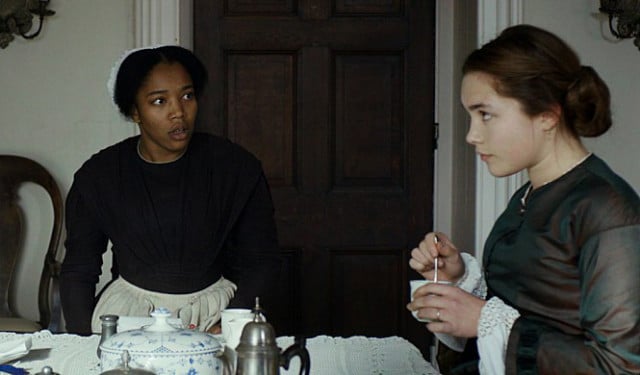 There’s no simple answer here, but it’s worth remembering that she is not the only woman whose lot in life is pinioned by her social role. Anna, the lady’s maid, is a liminal figure in the film who is often present at key moments, but utterly peripheral, unable to influence things one way or another. She tries – valiantly – but she is in the unenviable position of being on the lowest rung here, the only person Katherine can command with propriety and impunity. There’s an interesting relationship between the two women, one which moves from some degree of intimacy to complete alienation. As Katherine’s sense of agency escalates, Anna’s already-limited agency diminishes – to the point when the girl becomes utterly voiceless in the face of the crimes she is forced to witness.
It is this voicelessness which Katherine finally exploits when faced with Sebastian – who is by now utterly powerless – and his accusations of her guilt. Had Anna been able to speak for herself, then she could have saved them both; however, the long and arduous process which has seen her become so traumatised that she becomes mute leads to a heart-breaking scene where she simply cannot form the words; she closes down completely, and so she will hang for a crime she did not commit. Katherine’s voice may be limited, but when she uses it to exonerate herself, she is still believable as a genteel young woman shocked by these insinuations of crime. Anna has no such redress, and her ultimate lack of power is emphasised by her literal speechlessness.
 I feel as though I’ve been here before. Not just because there was a film called Bong of the Dead a few years ago, which my co-editor Ben reviewed, nor indeed because this very day
  Eventually, the zombie thing intrudes a bit more forcefully into their home when a zombie gets to one of them (and it’s not as if they’re walled in, by the way – one of the characters pops in and out whenever he wants). This darkens the mood rather suddenly. To dispel the fairly static scenes which preceded this sudden spike in drama, Bong of the Living Dead now dispenses with the loud, wild-eyed intonation which came before and tries to segue into sentimentality for a while – something which just doesn’t mesh well.
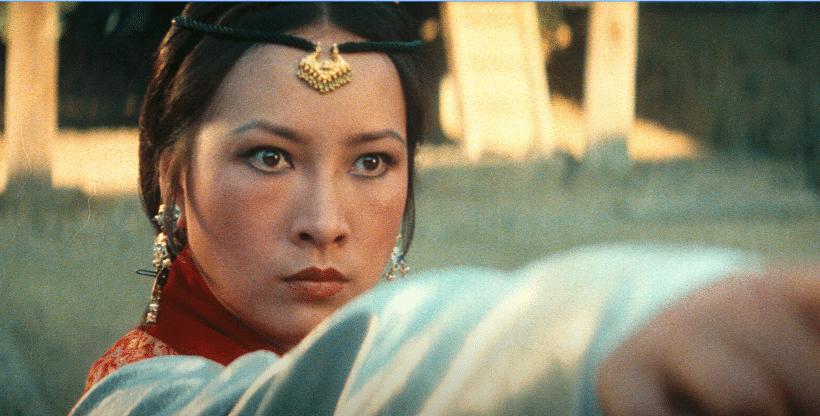 Whilst I have something of a handle on Japanese cinema of the 70s and 80s – well, in so far as the films have made the great leap to Western screens – I know comparatively little about Chinese cinema of the same period, and in that I have to include Hong Kong/Taiwan. I’ve seen a couple of hopping vampires (hopping because they still have their winding sheets on) and a handful of crime dramas, but not a lot else. Compared to Japan, China, HK and Taiwan are, by and large, a closed book. I’m aware, though, that the director of Legend of the Mountain, King Hu, moved from acting to directing, and that the film under consideration here is oft considered to be his magnum opus. An epic it certainly is; rocking in at over three hours, it’s a lengthy, visually incredibly accomplished Chinese folk tale, which uses its ample screen time to do a great deal of quite disparate things along the way.
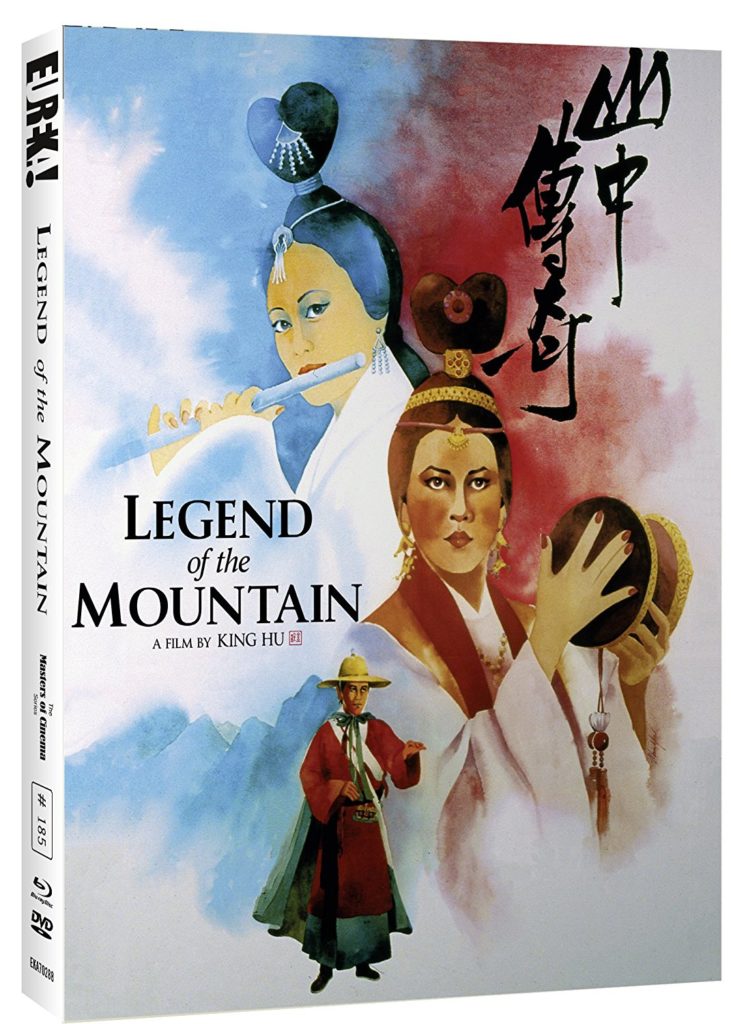 This entire project screams classic China: abundant landscapes are presented in a highly colourised, painterly manner, and traditional Chinese instrumentation accompanies the action throughout. Then, of course, the subject matter itself is based on ancient folklore, and to an extent this film is a piece of Far Eastern folk horror, albeit that the film never settles into this mode completely. Supernatural elements underpin the story, and the director works hard within his means to produce some subtle, uncanny scenes. But this film is many other things, to the extent that it never really takes its place in any genre, in an expected sense. It has an eye for historical detail, but also flits between being a pastoral, a romance, a reminiscence and – when it’s not adding comedic elements and the obligatory martial arts scenes to this melee – it even dabbles in Buddhist philosophy, ruminating on life, love and everything. Overall, Legend of the Mountain does a great, great deal. Well, the film is immensely long, and I’ll say it, as ever; it’s rather too long for my tastes, and despite its pleasant visuals and overall engaging subject matter, it veers from cramming in more and more plot elements to lengthy, even unnecessary forays through the woods. As it’s nearly forty years old, I can’t even say it’s falling in behind the new tendency to make films increasingly longer.
 But in the 80s – a whole thirty years ago, to be precise – a film used the theme of the waxwork museum as its central plot device; not only that, but it was one of the first truly self-referential horror films, doing far more than simply utilising the waxwork museum as a straightforwardly scary setting. Whilst sharing some plot features with House of Wax, Waxwork also runs stories within stories, eventually pitching these stories against the world as we know it. It’s ambitious, it’s novel – and it’s such fun.
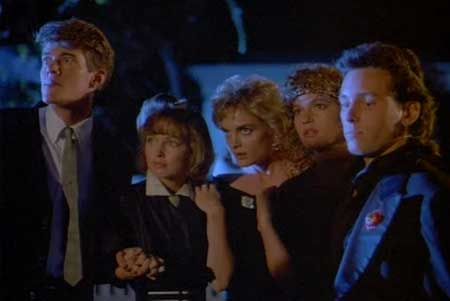
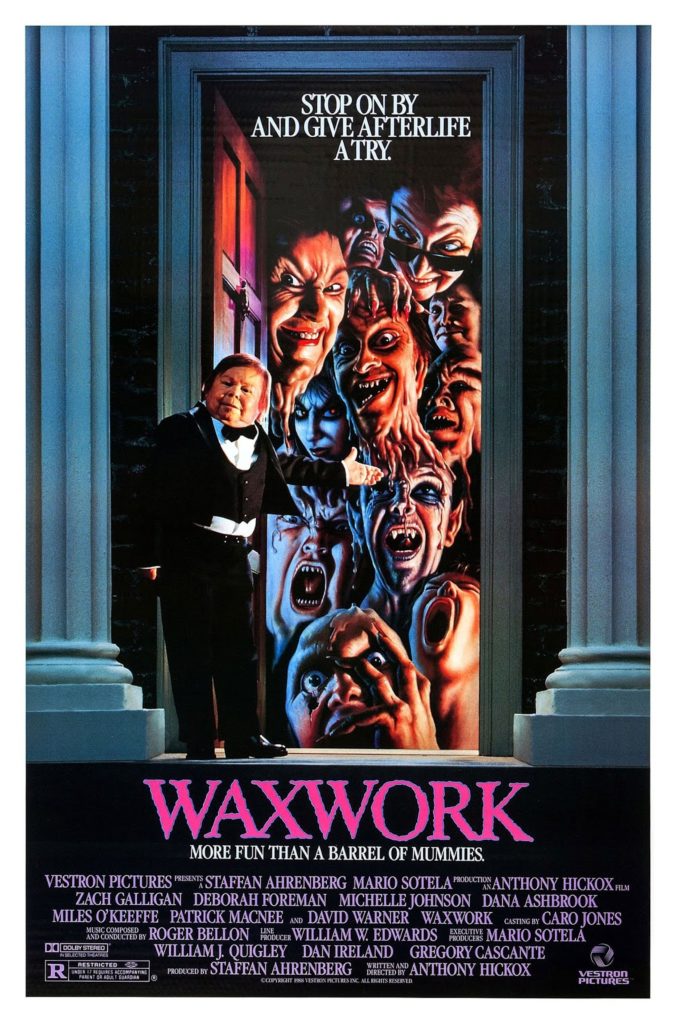 The nature of each waxwork tableau is significant. Each functioning as a distinct story (and I’d honestly have happily seen each and any of them turned into a film of their own) the waxworks feature a panoply of entertainment and horror film archetypes: there are circus acts, historical murders, Gothic fantasies and a whole host of famous monsters. In the first sequence, the werewolf story even references Universal’s take on the werewolf myth, using the ubiquitous silver bullets which were the invention of the 1930s script. Later on, we come up against mummies, vampires, zombies, even the Phantom of the Opera: the whole film is a love-letter to both old and new horror, with a cast of older actors, several of whom, like Patrick Macnee, had long worked in horror cinema, featuring alongside new actors like Zach Galligan – fresh out of the hit kiddie horror Gremlins, and forever associated with this decade in film.
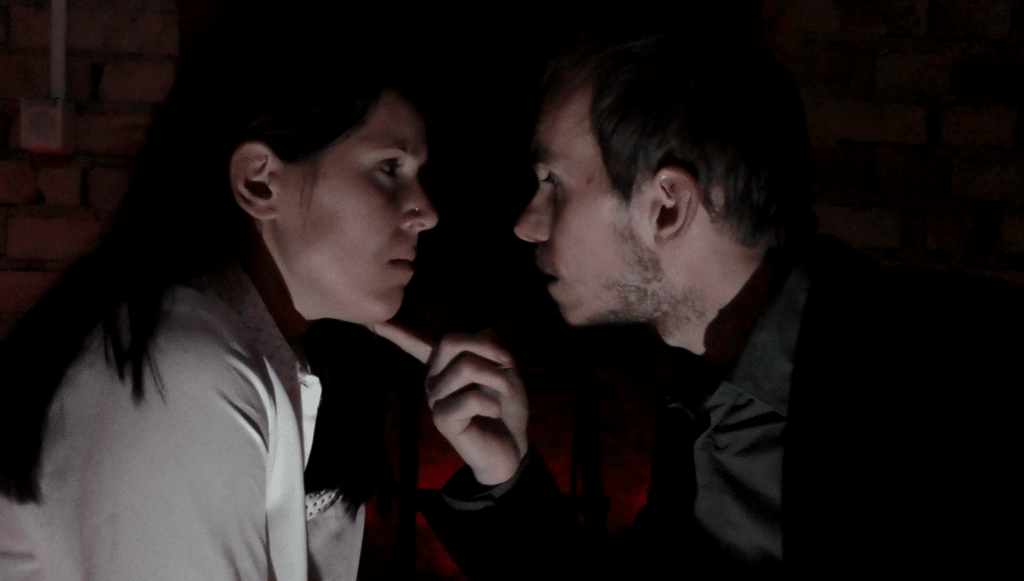 Is it just me, or does the ‘found footage’ craze of the past fifteen years or so seem to have died back a little of late? This sub-genre seemed to dominate indie cinema for what seemed like forever, becoming infamous as a go-to model for those on a shoestring budget. Well, found footage films are still out there and they’re still being made, though to be fair, a Hungarian ‘horror comedy’ found footage is a new one on me. This would be A Guidebook to Killing your Ex, then, written and directed by
 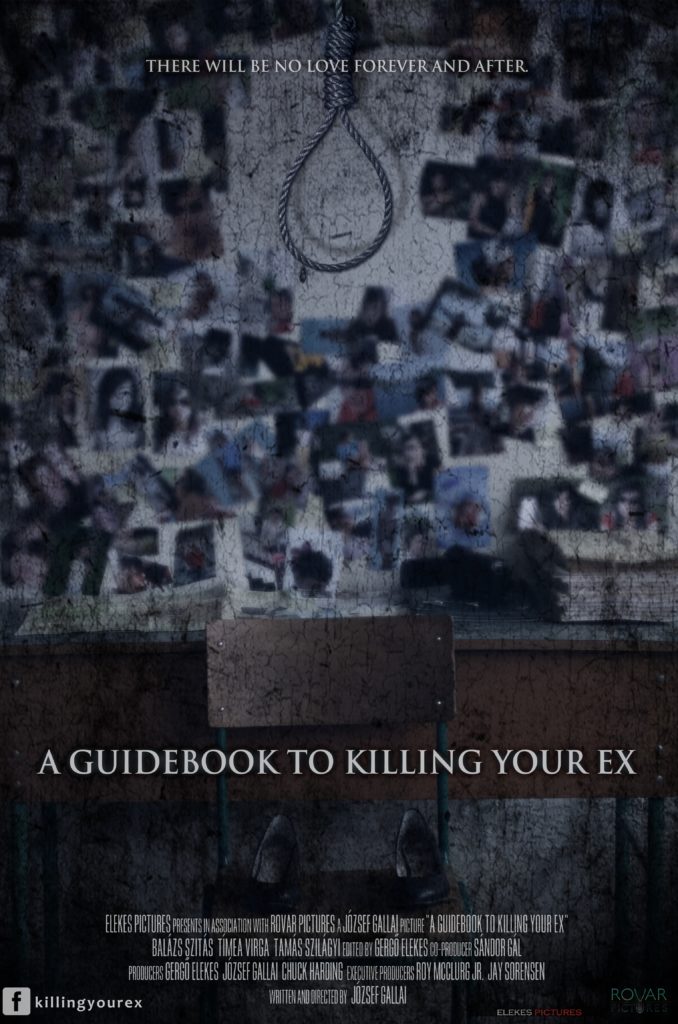 The decision to use the found footage framing style makes sense here in many respects, though in common with many other films within this genre, there are a few head-scratching moments. These completed films (this one held in police files post-case) apparently pop up in the form we see them, which suggests (as above) that some sort of editing is going on before films are recovered or, perhaps, that those who find the films edit them into some sort of shape before they’re seen – in which case, the inclusion of things such as John Doe tucking into a meal are odd things to keep in. See also: someone speaking the immortal line “What is the camera for?” Maybe I’m alone in getting hung up on these points, but I think it’s interesting; standard, edited-by-omniscient-storyteller films don’t bring these issues with them. I mentioned that the film had much in common with the ‘mumblecore’ genre, too, and it would seem that lots of the dialogue is improvised – though Doe does look off camera from time to time rather than into it, which means, perhaps, that he is looking at cues. This improvised dialogue – which is reasonably sparky and engaging – is far easier to see as associated with mumblecore than it is to see the film as a whole as a comedy, or a straightforward horror for that matter. There are some absurd elements which veer towards humorous, and in terms of horror there is some slightly grisly footage, but overall, A Guidebook to Killing Your Ex feels a lot more like an experimental , dialogue-heavy film than either a horror or a comedy. Its refusal to sit comfortably in either of the bigger genres is to some extent a strength, but may mean it’s trickier for the film to find its audience.
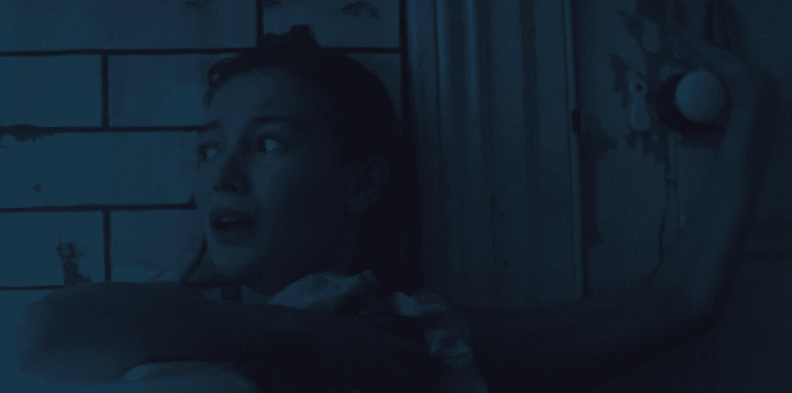 The very opening scenes of The Lodgers speak to the key themes of the film as a whole: a young woman, sitting alone by a lake at night, preoccupied by her thoughts, suddenly flees back to a dilapidated mansion house when she hears the clock striking midnight. This is the first, but not the last nod to the darker side of fairy stories; stories which the film references in abundance. Especial menace surrounds a trapdoor in the house, which bubbles and threatens with dark water as the girl returns; there are sinister forces at work here, and the girl is obviously terrified.
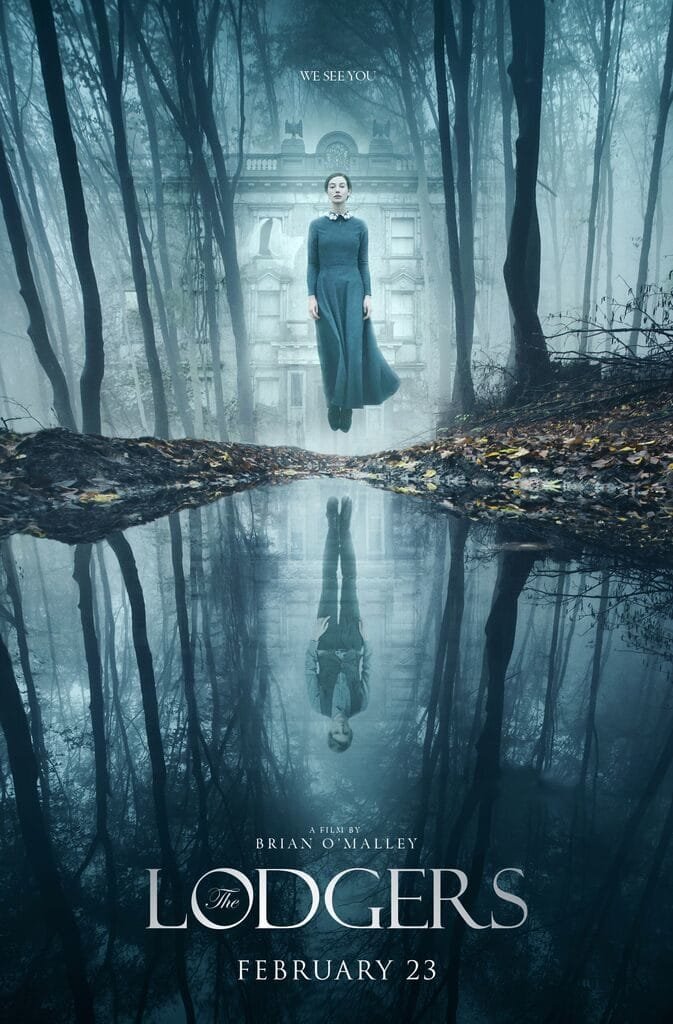 Meanwhile, an Irishman who has been away fighting for the British in World War One returns to the village, going home to his family business – the local grocers. This is Sean (Eugene Simon – best known as cousin Lancel from Game of Thrones, the Lannister who goes full Sparrow). His reappearance causes inevitable ripples of anger around town, coming as it does at a particularly heated time in Anglo-Irish relations; however, as his mother owns the only shop in the area, he soon meets the distinctly aloof Rachel, though his initial attraction to the girl is clear. Rachel, meanwhile, receives a letter from England which jeopardises her and her brother’s isolated existence in the house, and as her oppressive home life becomes even more unbearable, even terrifying, she no longer repels Sean’s attempts to help.
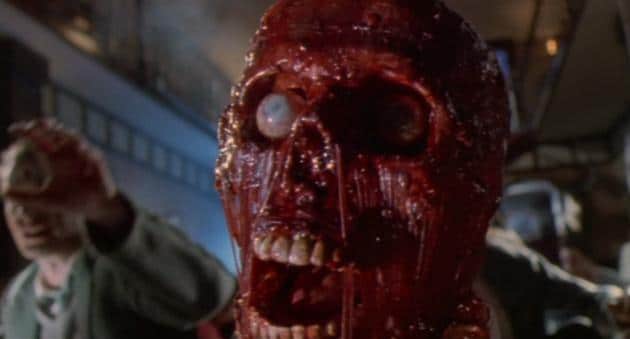 I think everyone must remember the first time they saw Dead Alive – or, to give it its UK title, Braindead, where it released in the spring of the same year (May). There are other titles in use, all of which show that distribution companies took the film very much in the spirit it was intended. As well as the expected variants on ‘braindead’, in Spain a line of dialogue from the film gives us the title, Your Mother Ate My Dog; in Brazil, they opted for Animal Hunger; Hungary, a literal nation, simply went for Corpse! (exclamation mark included). All in all, the variety of titles around the globe do a fair job of summing up the film’s plot and vibe.
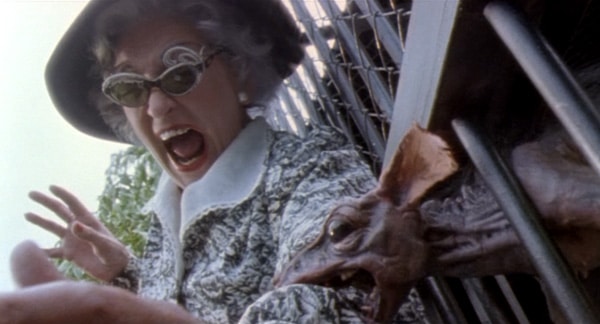 It’s the 1950s, and a naturalist expedition into Skull Island, Sumatra (ring any bells?) to find a specimen of a rare species – a ‘rat monkey’ – ends in a bloody incident which can’t be patched up, not even with a bit of Dettol. These little buggers are dangerous, it seems, being the warped offspring of local monkeys and slave-ship rats, and only amputation (even of the head) can be used to treat their bites successfully. Lesson duly noted. Back home in New Zealand, overbearing mother Vera divides up her time between Wellington Ladies Welfare League duties and stopping her grown-up son Lionel from growing up any more than is strictly necessary. When he starts dating a local girl, Paquita, Lionel decides to take her for a lovely day at the zoo. Vera, who isn’t too keen on her son fraternising with an Experienced Girl like Paquita, goes along to spy on them. Our rat monkey friend is by now installed and on display, but when Vera gets too close to its cage, it sinks its teeth into her, ruining her dress into the bargain. It looks as if she’s won this round, as Lionel immediately escorts his injured mother home, but she soon falls sick. Really sick. And it seems as though whatever condition she’s picked up from the monkey, it’s contagious. Lionel is one of life’s copers, but he soon loses control of the situation, despite doing what he can to keep his mother (and some unwitting houseguests) ‘calm’. Except, oh, he makes a singular error, prompting the closing sequence to end all closing sequences…
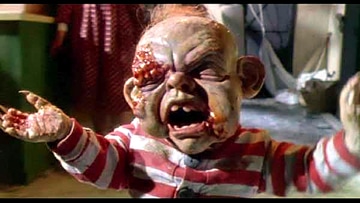 More than this, Dead Alive is confident enough in itself to do a few new things with the idea of the zombie. Lionel has his hands full with the little house gathering he ends up with, but probably didn’t expect to have to contend with two of them falling for each other. The only people consummating anything in the film are corpses; weirder still, these corpses end up doting on a new arrival soon afterwards. Cinema had brought us monster offspring, but never clowning like this. Parenthood doesn’t exactly get an easy run in the film, at any point, and forging the guise of a happy family gives us one of the film’s most outrageous scenes. Baby Selwyn – with Lionel haplessly trying to look after him – gives us the best parody of the proud parental walk in the park, probably ever, especially when Lionel starts punching the little bleeder before shoving him in a duffle bag, under the astonished eye of a gathering of genteel looking women. “Hyperactive,” apparently. There’s still a shock value in having a character doing anything to ‘The Children’, even if one of them is a zombie, so this is another expectation Jackson plays fast and loose with, as well as showcasing Timothy Balme’s tremendous skills as a decent man on the edge of losing his mind. When I first saw the park sequence, I had to watch it again straight away. I wasn’t sure if I had really seen a man doing that with/to a pram. (I re-watched the sequence to write this feature, and yep, it’s still enough to make me cry laughing. I mean, how could you not?)
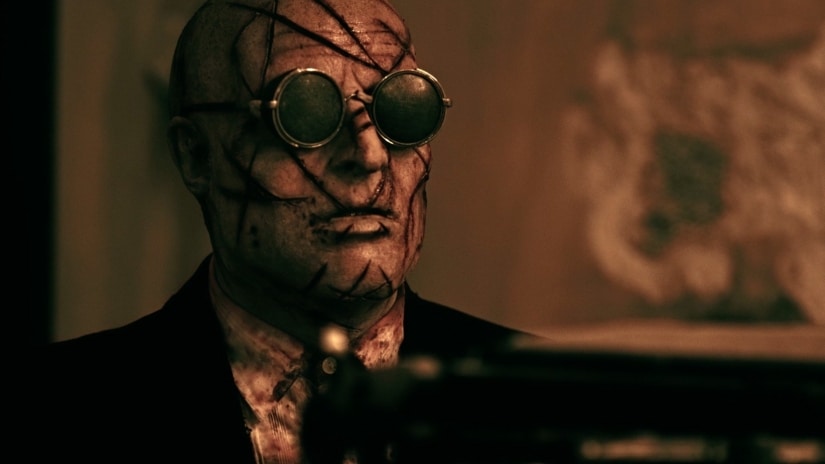 My relationship with the Hellraiser sequels is ambivalent at best, hostile at worst; as I’ve said previously, the first Hellraiser
 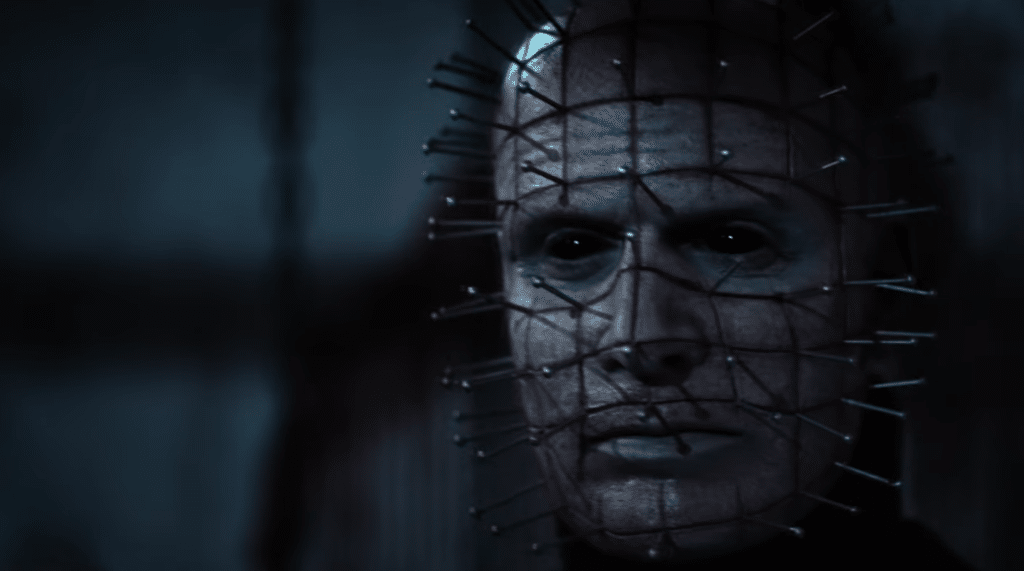 In the melee, there are some decent ideas here. The idea of an affinity between deviants and demons is of course nothing new, but exploring it in a modern, urban setting still has some promise, lending old Judeo-Christian ideas a grimy horror patina. The idea of being judged at the Pearly Gates is transformed into a demonic admin exercise here – it’s different, and it has potential. Although the presence of T&A doesn’t exactly fit in with the other monsters in this mythos, these scenes are book-ended with material which gets close to the dark, maggoty horror of the first two Hellraisers, and a few moments in the script display some love and knowledge of the source material, which at least shows that Tunnicliffe isn’t just winging it here. As for Pinhead himself, well – when he’s on screen, he’s…okay. He’s blank, rather than malevolent; his garb has obviously been simplified for reasons of expediency, but the make-up is reasonably good. We have to remember that Doug Bradley wasn’t exactly able to shine in his last few appearances in his hallmark role, either, so as far as the sequels go, Taylor does a reasonable job with what he has.
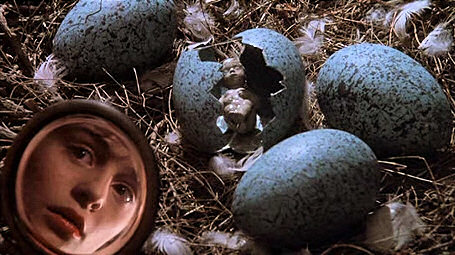 The Company of Wolves (1984) really is a force of nature – a vivid array of stories-within-stories which capture the insurrectionist tendencies of Angela Carter’s book, The Bloody Chamber, a collection of familiar fairy stories reworked into unfamiliar forms. The film brings several of Carter’s tales to the screen, albeit via a new, modern framing device, one which links the humdrum with the imaginative, showing ways in which these two states overlap and influence one another. Ambitious, aesthetically-pleasing and intricate, it’s a film which has a diehard fan base, but perhaps has always struggled to attain the audience – or the appreciation – it merits, coming as it does at the tail-end (pun noted) of a number of grisly werewolf flicks and a growing appetite for the gory, not the Gothic. But there’s much to reward the viewer in The Company of Wolves, and now – with James Gracey’s book about the film – it yields up more still in this observant and scrupulous study.
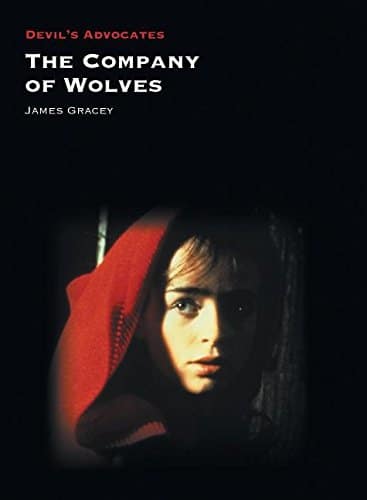 The book also offers detailed comment on the film’s use of symbolism, its impact on cinema and its legacy in film (the likes of Pan’s Labyrinth, for instance) and of course an engaging chapter on lycanthropy. This section of the book eventually brings us full circle, discussing the history of lycanthropic cinema, but before then we go back to the origins of the werewolf myth and its evolution through literature – noting that male and female lycanthropes have tended to receive very different treatments, something which has seeped into cinema, too.
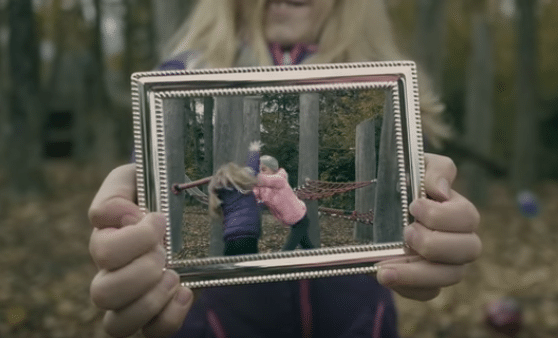 How short can you – legitimately – make a cinematic scare? There are people who would say that a second is enough, but these people are probably discussing jump-cuts. Jump-cuts aren’t scary; jump-cuts are the equivalent of someone screaming BOO! into your ear to trigger a reflex reaction. Most people need – and expect – rather more than that – but the question remains – how short can a film possibly go?
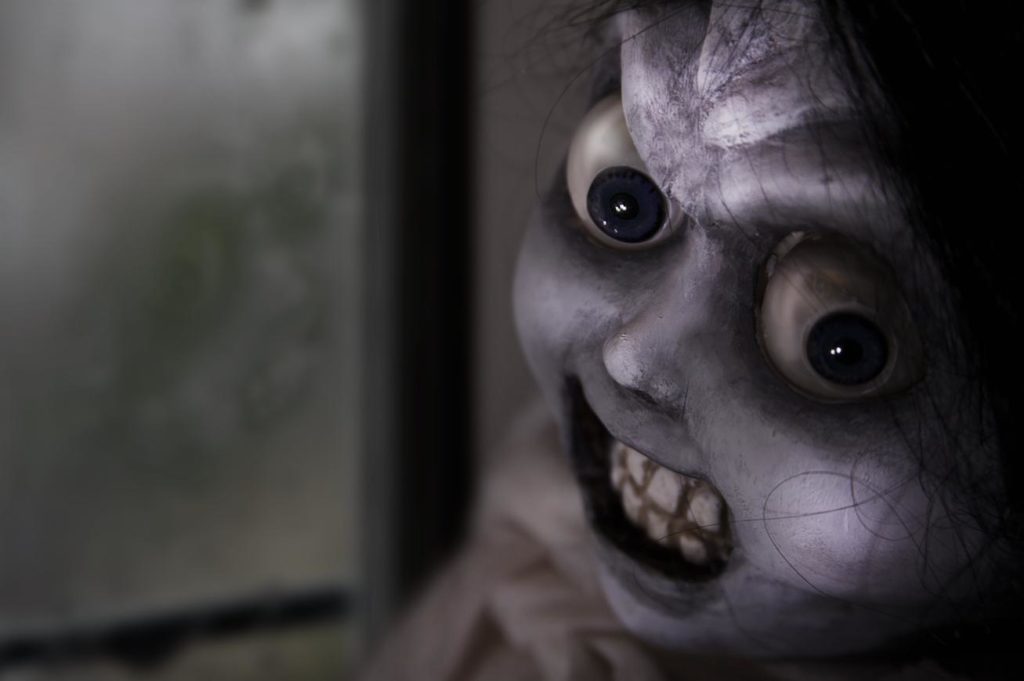 I try to make it a point never to openly roast films just for the fun of it; whatever I say about a project, I try to ask myself whether I’d be happy to say it in front of the filmmaker themselves, and I try really hard to remember that real people out there might have poured a lot of effort into their movie. So, with that in mind, I did try to stick to this with regards The Curse of the Witch’s Doll (2017), and not only because I was the one who chose to watch this screener – I made the decision. So all told, in this case I would definitely say these things in front of the people responsible for this film, and it turns out to be physically impossible to talk about it without an air of exasperation bordering on a good roast. To do otherwise would be worse than dishonest. Alright, so let’s get on with it.
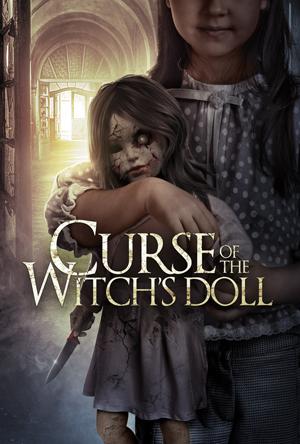 A missing child is meant to be a cataclysmic event in a person’s life, but no one in this film seems massively bothered. To be fair, I feel that the cast are making an effort with what they’ve been given, but they come across as self-conscious, and certainly not expressive of any great concern – not the mother, not the detectives who pop in once or twice and do little else, and not the landlord either. You could possibly argue that as ‘things aren’t what they seem’ (yes, the film attempts THAT plot twist) then this is reflected in the performances, but actually I don’t think so – I’m not prepared to do the work here to justify what I’ve watched. Add to this a script rammed with stock phrases like “we’re doing all we can” and a bewildering array of lighting and sound problems, and it’s devilishly hard to suspend your disbelief. Additional attempts to add dramatic interest by changing tack invariably fall flat, because it’s not possible to believe in anything up until the point of the plot shift anyway.