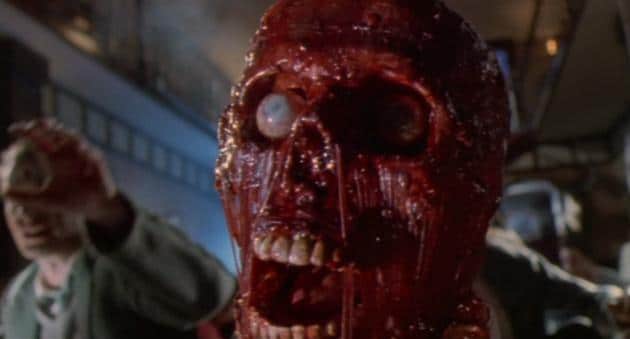
 I think everyone must remember the first time they saw Dead Alive – or, to give it its UK title, Braindead, where it released in the spring of the same year (May). There are other titles in use, all of which show that distribution companies took the film very much in the spirit it was intended. As well as the expected variants on ‘braindead’, in Spain a line of dialogue from the film gives us the title, Your Mother Ate My Dog; in Brazil, they opted for Animal Hunger; Hungary, a literal nation, simply went for Corpse! (exclamation mark included). All in all, the variety of titles around the globe do a fair job of summing up the film’s plot and vibe.
When I first saw the film – not long after its video release, around the time that I saw the likes of Army of Darkness and Return of the Living Dead 3 – I was already primed for films which could link black humour with grisly effects. I still wasn’t quite ready for Braindead, though; in fact, claims that it’s the goriest film ever made still ring utterly true. Using the already-familiar idea of the ‘dead undead’, director Peter Jackson takes the equally familiar idea of the living trying to escape from them, then chucks in a stack of physical comedy before absolutely drenching his sets in blood (300 litres in the final scenes alone, apparently). The film is an unparalleled piece of splatstick, so ridiculous that it’s sublime, and a demented rite of passage for so many horror fans. But apart from the unprecedented gallons of red stuff – why else do we love this film? Gore is good, but on its own it just becomes a series of grisly panels.
“SINGAIA!”
Hopefully, no one will go full pod person on me for spoilering the film if I sidestep into a quick synopsis here…but obviously, if you haven’t seen it, stop reading. Go to it.
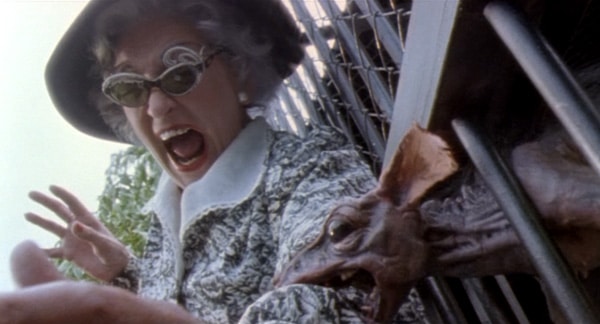 It’s the 1950s, and a naturalist expedition into Skull Island, Sumatra (ring any bells?) to find a specimen of a rare species – a ‘rat monkey’ – ends in a bloody incident which can’t be patched up, not even with a bit of Dettol. These little buggers are dangerous, it seems, being the warped offspring of local monkeys and slave-ship rats, and only amputation (even of the head) can be used to treat their bites successfully. Lesson duly noted. Back home in New Zealand, overbearing mother Vera divides up her time between Wellington Ladies Welfare League duties and stopping her grown-up son Lionel from growing up any more than is strictly necessary. When he starts dating a local girl, Paquita, Lionel decides to take her for a lovely day at the zoo. Vera, who isn’t too keen on her son fraternising with an Experienced Girl like Paquita, goes along to spy on them. Our rat monkey friend is by now installed and on display, but when Vera gets too close to its cage, it sinks its teeth into her, ruining her dress into the bargain. It looks as if she’s won this round, as Lionel immediately escorts his injured mother home, but she soon falls sick. Really sick. And it seems as though whatever condition she’s picked up from the monkey, it’s contagious. Lionel is one of life’s copers, but he soon loses control of the situation, despite doing what he can to keep his mother (and some unwitting houseguests) ‘calm’. Except, oh, he makes a singular error, prompting the closing sequence to end all closing sequences…
“They’re not dead… exactly…”
Firstly, you’d have to really go some to see the kind of social commentary here which writers are so happy to pick out of almost anything horror-related these days, particularly if dead (or otherwise zombified) creatures are wandering around. I mean, if you put your mind to it, you could come up with something relating to the monstrous feminine, but by and large, the film sets out its lack-of agenda before the opening credits roll: the fact that limbs are being lopped off and the title on screen physically comes out of this OTT sequence surely tells us that. Sure, there are some messed up relationships in the film, but they’re fairly quickly escalated into something comprehensively and joyously detached from reality – and that’s okay, it’s good to park your brain at the door and enjoy a film which is completely unreal and cartoonish from time to time. If the film has any central message it’s that ‘life comes at you fast’, and poor Lionel’s attempts to keep normality ticking over are hilarious, excruciating and ill-fated. Yes, he gets the girl at the end, but only after going through a houseful of party guests with a lawnmower.
Things certainly do go badly wrong at home for our homebody main character, though. Jackson’s early films (Bad Taste and Braindead in particular) take great pleasure in turning an average house into something going catastrophically wrong and he seems to have a particular knack for making mealtimes disgusting. Passing around the ‘gruel’ in Bad Taste was vile enough; the dining table scene in Dead Alive is a masterclass in stomach-turning awkwardness, this time swapping the gruel for an everyday dessert. Vera’s frantic attempts to host a delightfully middle-class WLWL gathering, despite her body parts starting to fall off, result in that repellent, hilarious sequence where an oblivious and very easily-pleased Mr. Matheson tucks into a bowl of pus-filled but otherwise “damn fine” custard. The whole thing is laugh-out-loud funny, brilliantly acted by the late Elizabeth Moody (“Thank……you…No…ra”) and it’s a kind of horror-infused Keeping Up Appearances (a British sitcom about social snobbery – honestly, the parallels are there). Elsewhere, moments which are meant to be very sad (such as Vera’s ‘passing’) segue immediately into head-shredding gore, and the riotous false ending involving the ‘tranquiliser’ subverts the whole mood of the quieter scene which comes before it. You never get to relax in this film, and nor would you want to, making it one of the best splattery comedies out there – and the quaint, old-fashioned setting of 50s New Zealand acts as a neat foil and a perfect contrast to the absurd developments we see on screen.
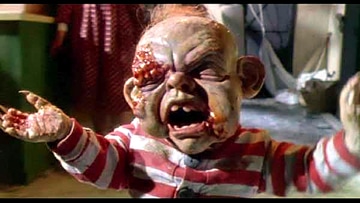 More than this, Dead Alive is confident enough in itself to do a few new things with the idea of the zombie. Lionel has his hands full with the little house gathering he ends up with, but probably didn’t expect to have to contend with two of them falling for each other. The only people consummating anything in the film are corpses; weirder still, these corpses end up doting on a new arrival soon afterwards. Cinema had brought us monster offspring, but never clowning like this. Parenthood doesn’t exactly get an easy run in the film, at any point, and forging the guise of a happy family gives us one of the film’s most outrageous scenes. Baby Selwyn – with Lionel haplessly trying to look after him – gives us the best parody of the proud parental walk in the park, probably ever, especially when Lionel starts punching the little bleeder before shoving him in a duffle bag, under the astonished eye of a gathering of genteel looking women. “Hyperactive,” apparently. There’s still a shock value in having a character doing anything to ‘The Children’, even if one of them is a zombie, so this is another expectation Jackson plays fast and loose with, as well as showcasing Timothy Balme’s tremendous skills as a decent man on the edge of losing his mind. When I first saw the park sequence, I had to watch it again straight away. I wasn’t sure if I had really seen a man doing that with/to a pram. (I re-watched the sequence to write this feature, and yep, it’s still enough to make me cry laughing. I mean, how could you not?)
This really is the film which has it all, if you like seeing gore layered on top of gore and a pitch-perfect script. Never mind the meticulous cinematic metaphors – there’s a time and a place for all of that. Dead Alive blends pratfalls, ingenious, imaginative gruesome effects, engaging characters (yeah, even Uncle Les) and a novel set up which plays out in an unexpected way. It’s sheer, farcical entertainment throughout. I suppose, in the end, the whole thing is about a sheltered young man eventually making decisions for himself. It’s just that, to get to that point, he has to be absorbed into the monstrous womb of his recently-resurrected giant jealous mother, then carve his way out of there. So, okay, if you really want to go down the social commentary route, I suppose you could, but there’s more than enough to just stick to the entertainment value here.
I’ve always felt surprised that the guy who directed the likes of Dead Alive and Meet the Feebles eventually went on to make Lord of the Rings and I said as much when I wrote a retrospective about Bad Taste, but perhaps it’s not that staggering after all although the different-era films are, shall we say slightly different in tone. Jackson has a history of aiming big and bold, even from the very earliest point in his career, and his horror/exploitation offerings can certainly still hold their own, even against a new wave of films which were surely influenced by the unhinged overkill of Jackson’s early years. And, twenty five years on, this film is as brilliant and irreverent as ever; it’s far, far more than just a gag reel, but its gags and its one-liners have definitely stood the test of time.
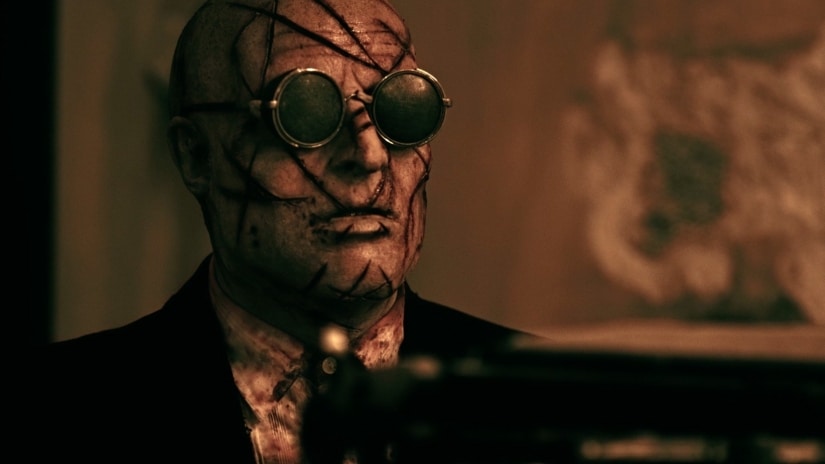 My relationship with the Hellraiser sequels is ambivalent at best, hostile at worst; as I’ve said previously, the first Hellraiser
 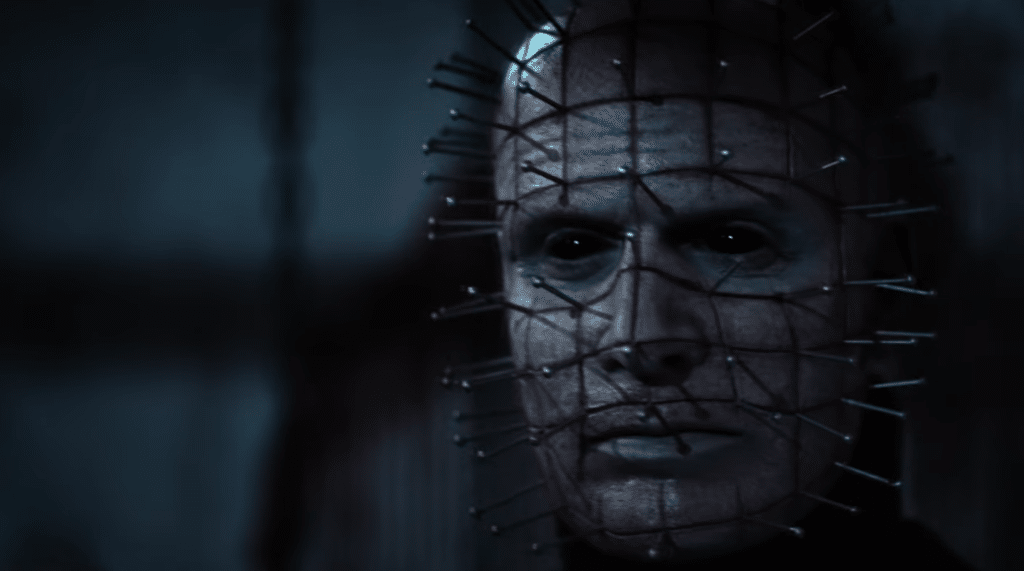 In the melee, there are some decent ideas here. The idea of an affinity between deviants and demons is of course nothing new, but exploring it in a modern, urban setting still has some promise, lending old Judeo-Christian ideas a grimy horror patina. The idea of being judged at the Pearly Gates is transformed into a demonic admin exercise here – it’s different, and it has potential. Although the presence of T&A doesn’t exactly fit in with the other monsters in this mythos, these scenes are book-ended with material which gets close to the dark, maggoty horror of the first two Hellraisers, and a few moments in the script display some love and knowledge of the source material, which at least shows that Tunnicliffe isn’t just winging it here. As for Pinhead himself, well – when he’s on screen, he’s…okay. He’s blank, rather than malevolent; his garb has obviously been simplified for reasons of expediency, but the make-up is reasonably good. We have to remember that Doug Bradley wasn’t exactly able to shine in his last few appearances in his hallmark role, either, so as far as the sequels go, Taylor does a reasonable job with what he has.
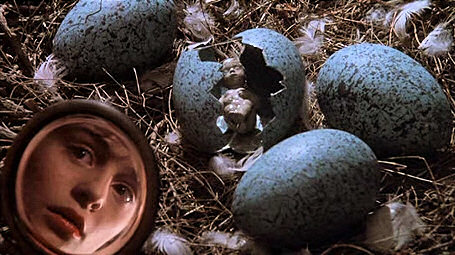 The Company of Wolves (1984) really is a force of nature – a vivid array of stories-within-stories which capture the insurrectionist tendencies of Angela Carter’s book, The Bloody Chamber, a collection of familiar fairy stories reworked into unfamiliar forms. The film brings several of Carter’s tales to the screen, albeit via a new, modern framing device, one which links the humdrum with the imaginative, showing ways in which these two states overlap and influence one another. Ambitious, aesthetically-pleasing and intricate, it’s a film which has a diehard fan base, but perhaps has always struggled to attain the audience – or the appreciation – it merits, coming as it does at the tail-end (pun noted) of a number of grisly werewolf flicks and a growing appetite for the gory, not the Gothic. But there’s much to reward the viewer in The Company of Wolves, and now – with James Gracey’s book about the film – it yields up more still in this observant and scrupulous study.
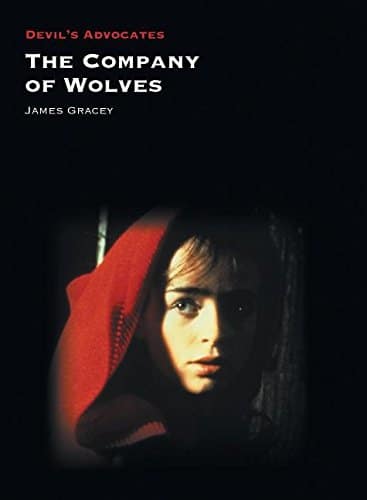 The book also offers detailed comment on the film’s use of symbolism, its impact on cinema and its legacy in film (the likes of Pan’s Labyrinth, for instance) and of course an engaging chapter on lycanthropy. This section of the book eventually brings us full circle, discussing the history of lycanthropic cinema, but before then we go back to the origins of the werewolf myth and its evolution through literature – noting that male and female lycanthropes have tended to receive very different treatments, something which has seeped into cinema, too.
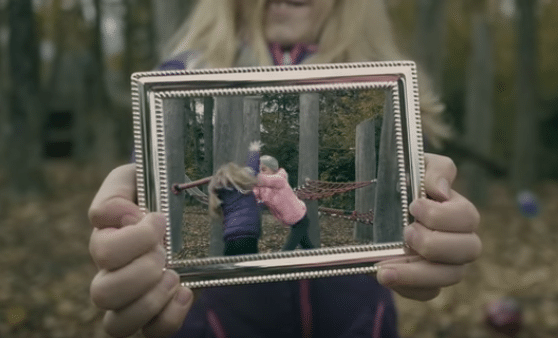 How short can you – legitimately – make a cinematic scare? There are people who would say that a second is enough, but these people are probably discussing jump-cuts. Jump-cuts aren’t scary; jump-cuts are the equivalent of someone screaming BOO! into your ear to trigger a reflex reaction. Most people need – and expect – rather more than that – but the question remains – how short can a film possibly go?
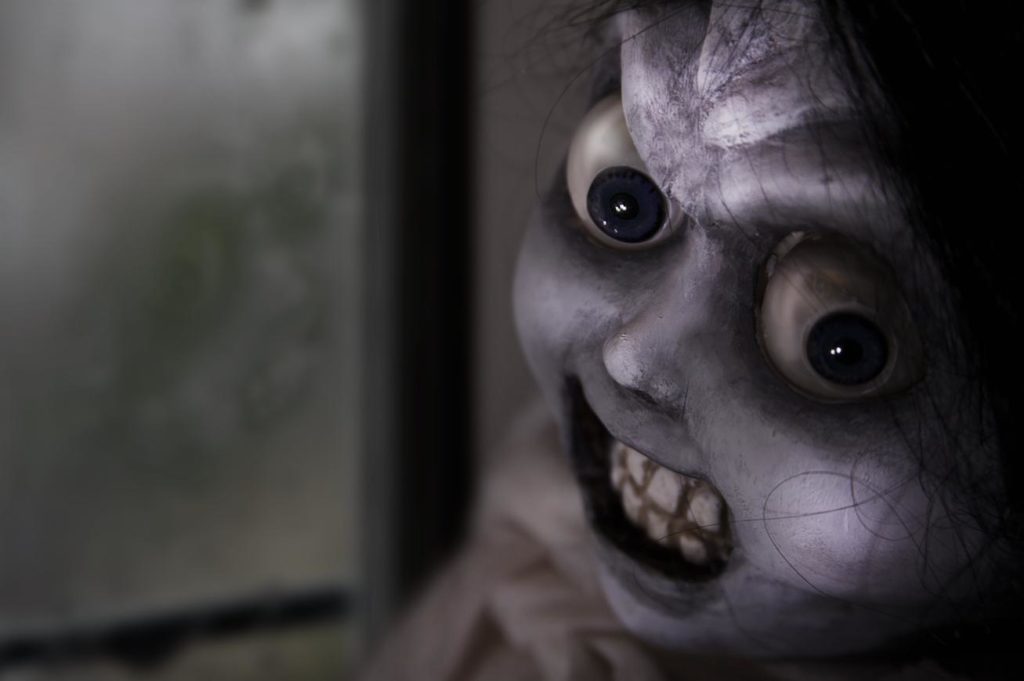 I try to make it a point never to openly roast films just for the fun of it; whatever I say about a project, I try to ask myself whether I’d be happy to say it in front of the filmmaker themselves, and I try really hard to remember that real people out there might have poured a lot of effort into their movie. So, with that in mind, I did try to stick to this with regards The Curse of the Witch’s Doll (2017), and not only because I was the one who chose to watch this screener – I made the decision. So all told, in this case I would definitely say these things in front of the people responsible for this film, and it turns out to be physically impossible to talk about it without an air of exasperation bordering on a good roast. To do otherwise would be worse than dishonest. Alright, so let’s get on with it.
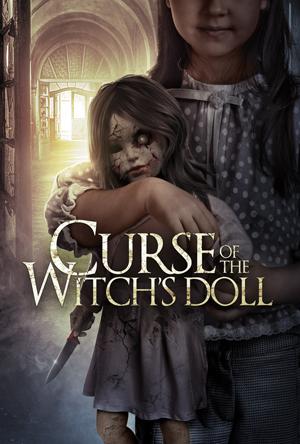 A missing child is meant to be a cataclysmic event in a person’s life, but no one in this film seems massively bothered. To be fair, I feel that the cast are making an effort with what they’ve been given, but they come across as self-conscious, and certainly not expressive of any great concern – not the mother, not the detectives who pop in once or twice and do little else, and not the landlord either. You could possibly argue that as ‘things aren’t what they seem’ (yes, the film attempts THAT plot twist) then this is reflected in the performances, but actually I don’t think so – I’m not prepared to do the work here to justify what I’ve watched. Add to this a script rammed with stock phrases like “we’re doing all we can” and a bewildering array of lighting and sound problems, and it’s devilishly hard to suspend your disbelief. Additional attempts to add dramatic interest by changing tack invariably fall flat, because it’s not possible to believe in anything up until the point of the plot shift anyway.
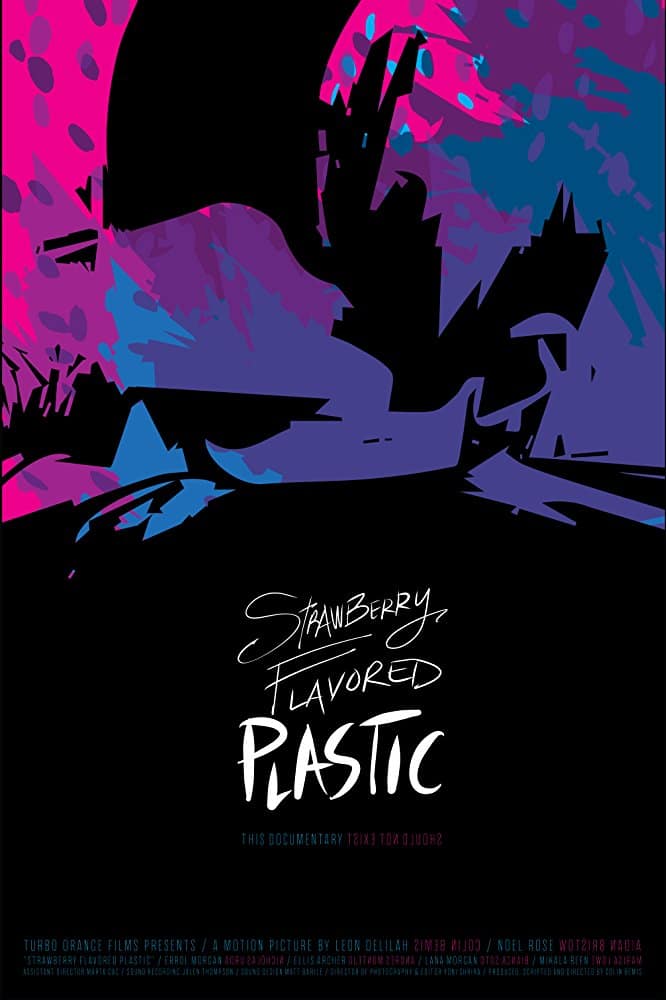
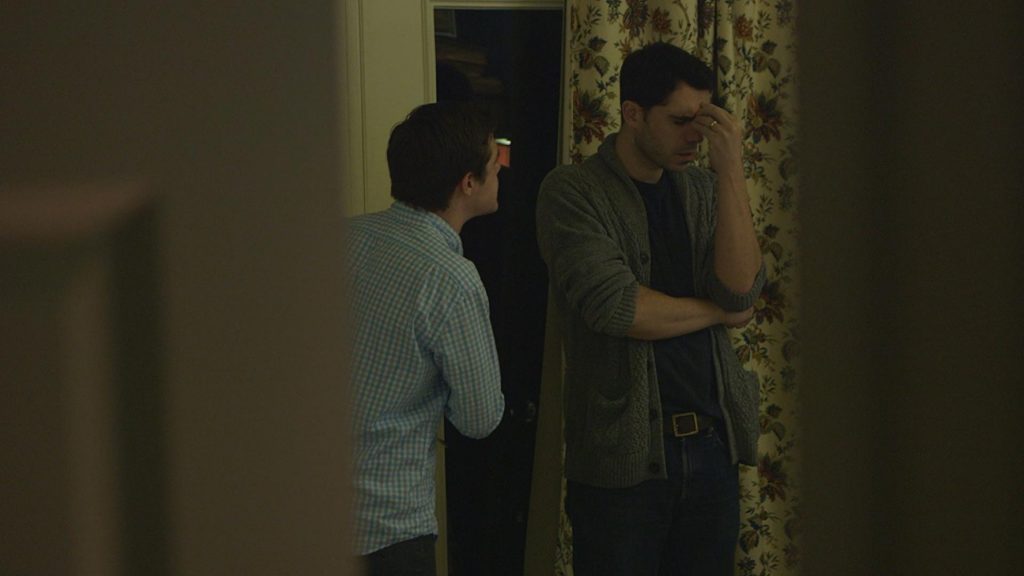 The ‘mockumentary’ format has been used to interesting effect over the years; note that I said ‘mockumentary’ rather than ‘found footage’, a sub-genre which usually conjures more questions than it can ever answer. There are some important distinctions between the two. Strawberry Flavored Plastic dodges the most typical question asked during found footage, which is ‘why are we/you filming?’ by positioning itself as a film about filmmaking, detailing what two filmmakers are willing to go through in order to see their unique angle through to a completed piece of work. In this, it’s reminiscent of a couple of older films – Man Bites Dog and Resurrecting The Street Walker perhaps, though far more subtle and psychological than either of these predecessors.
 This is a slow-building film with ample philosophical elements: our killer spends a lot of screen time pondering the nature of his crimes, after being asked a range of questions by two young men eager to understand what motivates him. Noel is very much the key character here, thanks to an absorbing performance by Aidan Bristow; it’s oddly difficult not to warm to his character, although he is capable of terrible things. Perhaps there are some similarities with early seasons of Dexter here (the ‘unscratchable itch’ and the ‘dark passenger’ are similar ideas), albeit we are never made party to Noel’s internal thoughts in the same way – not if he doesn’t want us, via the film, to know about them. Noel manages to dominate Ellis and Errol’s lives even when he disappears for periods of time. However, despite Noel’s overall dominance of the screen time, the two naive but very driven filmmakers gradually emerge as characters in their own right, not just guys behind cameras. We see them beginning to appreciate the strange quandary they’ve brought upon themselves – and, via them, the film explores the pressures of filmmaking: when is it time to call time on a project? When must you call ‘cut’ for good? When does a good documentary end?
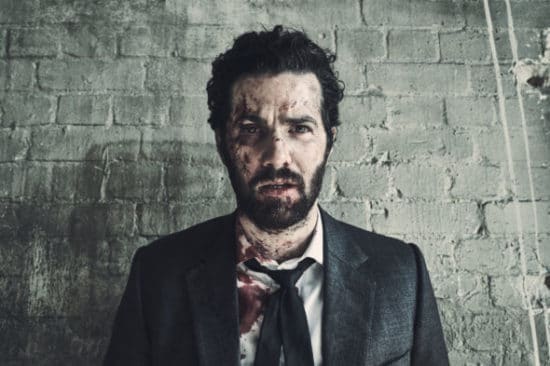 We’ve all heard of post-apocalyptic drama – literature, film and television which look at life after the End of the World as We Know It – and we can all name a few noteworthy examples, I’m sure. Well, the recent BBC series Hard Sun reinterprets this idea, giving us something rather different: ‘pre-apocalyptic drama’. It’s a new one on me. But, using this idea of a modern world poised on the edge of something catastrophic has – at least on paper – some bite. How would knowledge of some impending doom alter the behaviour of people waiting for it to come?
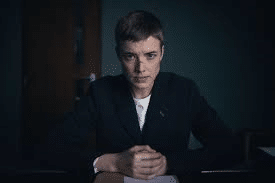 There are many strengths here: the attention to little details works well, with portentous graffiti warning of the ‘hard sun’ beginning to appear all over London. This is a neat touch, which adds to the increasing sense of something being wrong, if not openly discussed; London on the whole looks like an intimidating, alien space for most of the time it’s shown on camera. There’s a bit of mischief involved, too: some of the character names refer to folklore (Grace’s surname is Morrigan – Celtic goddess of death) and we even have a Herbert West in here for good measure, which fits quite well with his particular plot line. These may be entirely coincidental, I suppose, but it seems unlikely. As for the performances; I’ve read quite a lot of criticism of them, and yes, they tend towards being rather overblown (with the exception of Amuka-Bird, who is so calm and collected for the most part that a plot twist where she turned out to be AI wouldn’t have been too much of a leap). But, for most of the characters, the overblown style doesn’t seem to be so bad a fit, given the mode and the topic at hand. It’s all a bit like a London manga, more about spectacle than slow-burn, or indeed plot coherence.
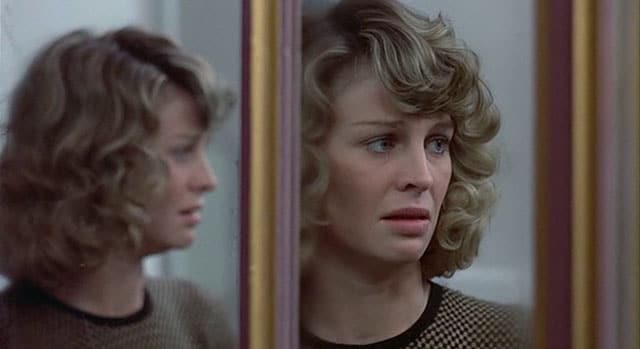 Don’t Look Now is a strange and rather wonderful horror film: routinely featuring on ‘best films of all time’ lists, it clearly made (and continues to make) a resonant impression on viewers, whether those who saw it upon release or those who have come to it later. It’s this lasting appeal which has prompted some serious consideration in print in recent years, with this edition of the Devil’s Advocates series by author Jessica Gildersleeve marking an upcoming addition to the fold.
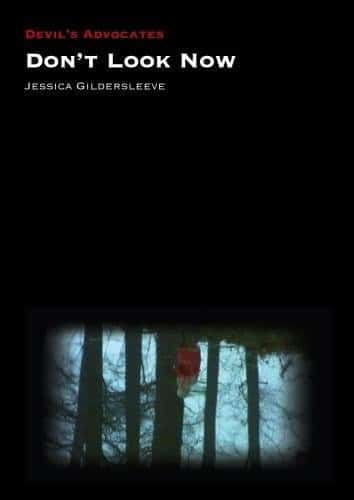 Perhaps the main body of the book and its arguments, however, is devoted to the film’s specific treatment of trauma; this certainly isn’t your standard book which devotes a chapter to the director, then a chapter to the key actors, and so on. In order to retain her chosen focus, Gildersleeve uses something she refers to as ‘contemporary trauma theory’, and it’s at this juncture that the book really hikes up its academic tone. Of course, the Devil’s Advocates series tends towards the scholarly, granted, but I do feel that, in comparison with
  This must be a boom time for dystopian sci-fi and horror; I cannot imagine why. Over the past few months I’ve received either information about upcoming projects or screener links for a range of dystopian cinema, whether films about worlds poisoned by tech, gripped by environmental havoc, or somewhere between the two. God knows, I haven’t even been able to get around them all. Even that fail-safe low-budget staple – the zombie – seems to have taken a back seat at this moment in time. Maybe this is just a trend, or maybe people are just sweating the small stuff, such as the US President using social media to goof around on the topic of nuclear annihilation. What a time to be alive! Still, I’m sure people aren’t using their films to play with some of their anxieties, because sci-fi and horror have never been used in such a way. Nope.
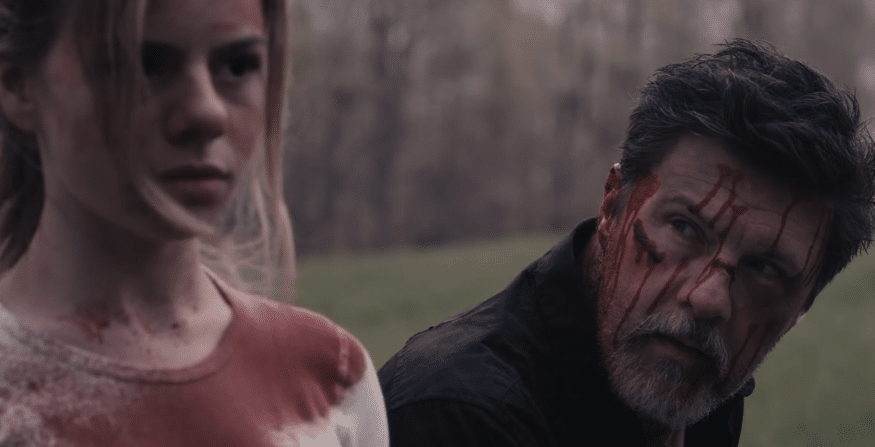
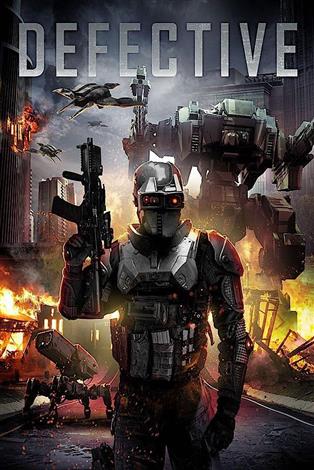 To judge by the information available on IMDb, Defective had a tough time on the budget front, eventually working with only half of what they’d pegged to get the film made. Unfortunately, the low budget is quite noticeable: for instance, the film isn’t slick, there is some slight echo in places, and there are obviously constraints on the setting/locations which, to an extent, detract from the believability of this version of the world, albeit if we do accept that this dystopia is not that far in the future. At times, there’s a disparity of threat: people can attack the metal-clad enforcers and every time, this seems to hurt them despite their armour. However, the shots used are generally good, even innovative in places (a sequence where people are pursued down a stairwell looks great, for instance) and the performances are decent. Had the film had an abundance of money to play around with, then, would it have been a completely different experience?
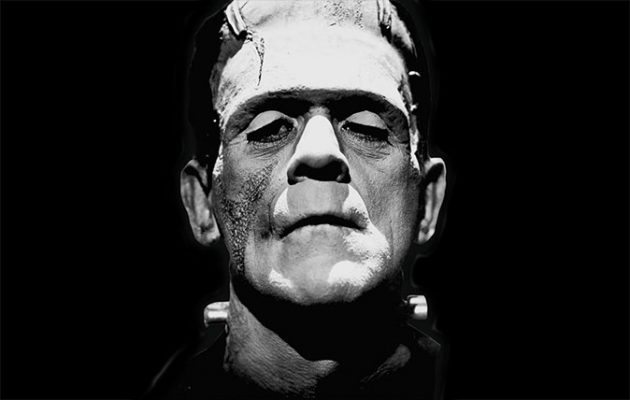 Frankenstein’s Creature is one of the true modern horror archetypes. Like the vampire or the ghoul, it’s an enduring and versatile monster, ready to reflect whatever set of anxieties we currently have; its ghastly stitched flesh and tendons are durable enough to withstand whatever we seek from it. And yet, unlike the vampire – which was popularised by literature and the likes of Le Fanu and Stoker later in the century, but existed in myth in various forms for centuries beforehand – this reanimated man made of men stems from the imagination of one person: a teenage girl, Mary Godwin, later Mary Shelley. Although she wrote throughout her life, it is Frankenstein for which she’s famous, and its legacy is quite unprecedented. And, as cinema developed, it was one of the first horror stories ever to be adapted for the screen, where it has returned in a wide array of forms over the past century.
 An elopement to France followed, which had to be curtailed due to penury, and when Mary – pregnant, sick – returned to England, even her forward-thinking father would no longer assist her. Her first child was born prematurely in the following year, and died without even receiving a name. Plunged into a depression, Mary wrote in her journal of a “dream that my little baby came to life again; that it had only been cold, and that we rubbed it before the fire, and it lived.” Already in Mary’s life and in her imagination, even by the standards of the early nineteenth century, birth and death seem to be interlinked and interchangeable. Mary quietly bemoaned her frequent further pregnancies, complaining of how they stripped her of vital energy and health; only one of her children ever reached adulthood, and Mary nearly died of a miscarriage. Her own mother, the feminist Mary Wollstonecraft, had written to Godwin towards the end of her pregnancy with Mary that she expected “the animal” was about to be born; when the animal came, it left Mary Wollstonecraft with an acute infection which killed her within days. Doubtlessly, very female anxieties underpin the horrors of Frankenstein, just as much as anxieties about male-dominated science; the terrors of bringing new life in into the world do not start and end with Victor Frankenstein’s new methods.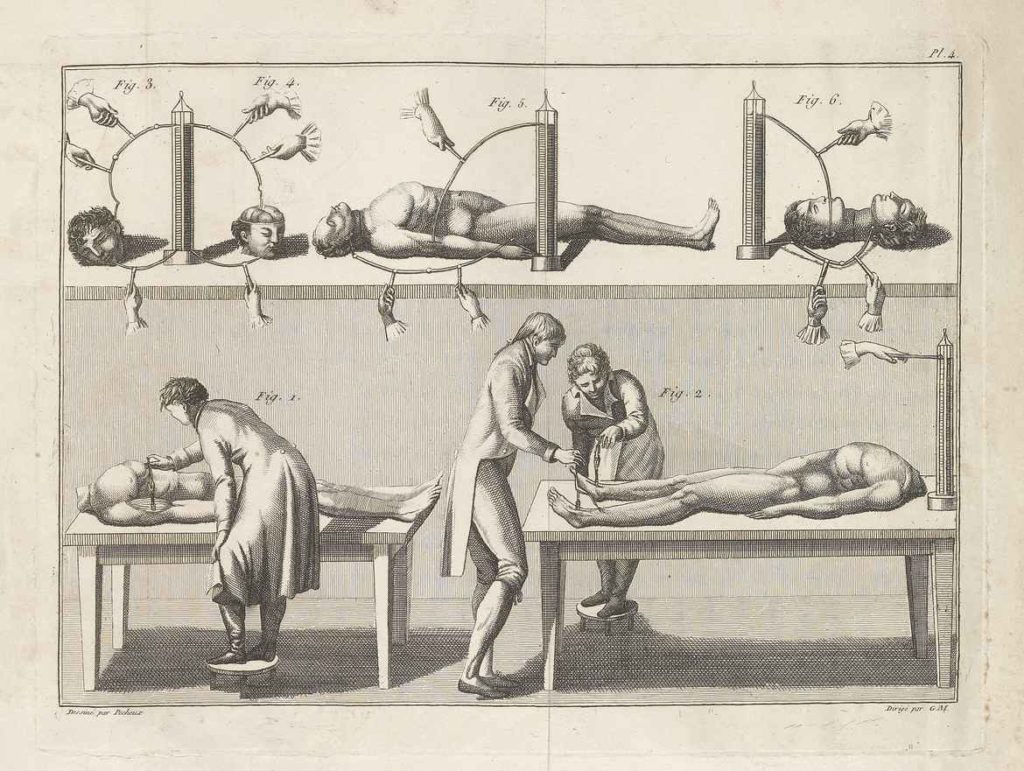
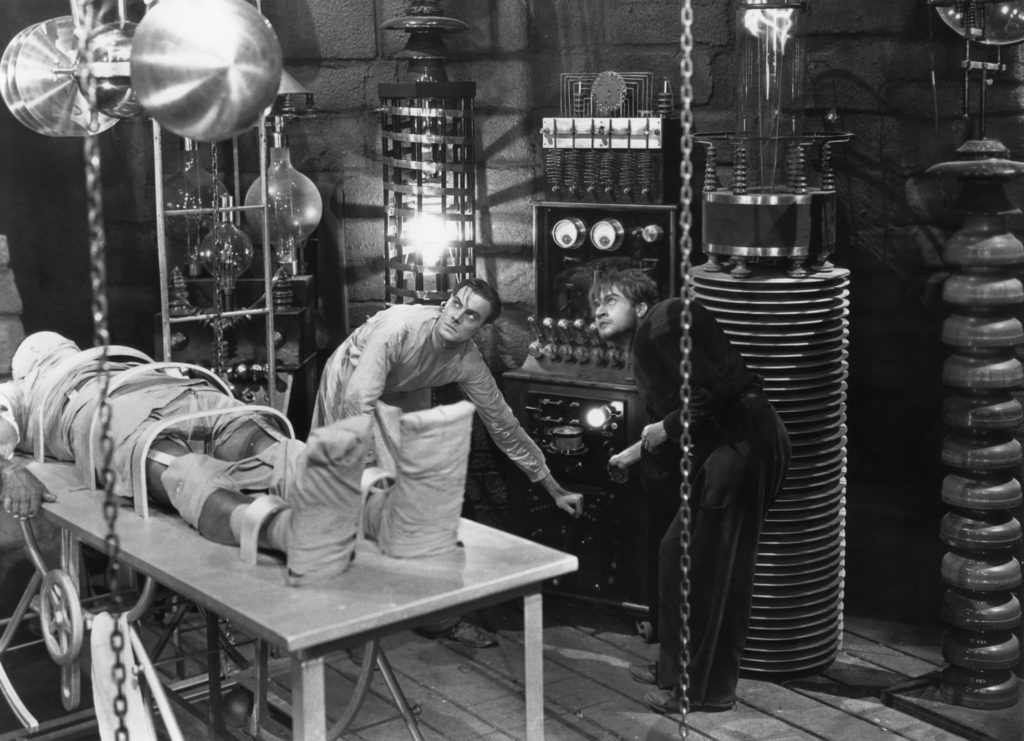 It seems to me that, once Frankenstein had started appearing on the new phenomenon of the cinema screen, both the novel and the new medium quickly became a distorting mirror for particularly twentieth century anxieties about twentieth century science. Universal Studio’s Frankenstein was released in 1931; by 1945, nuclear warfare would change world politics forever, and to this day ‘Frankenstein’ is an ongoing shorthand for worries about the direction science is heading – remember the ‘Frankenstein foods’ slur used against GM-crops when anxieties about this hit their peak about fifteen years ago? For early twentieth century viewers, with escalating world tensions, new methods of mass destruction and a constantly-refigured understanding of their place in the world, it seemed that monstrous things really did happen in labs. Frankenstein’s creature became a monster not of the ‘unhallowed arts’, but of bad science, and it’s a phenomenon which still recurs today.
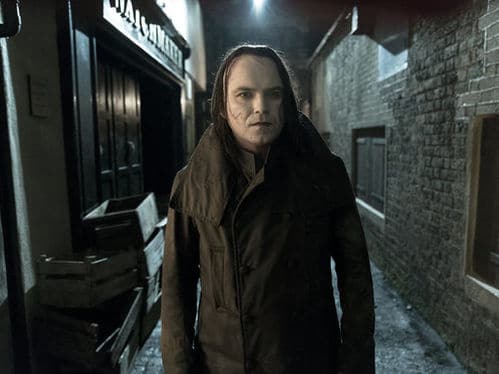 Penny Dreadful (2014-16) – It’s easy to scoff at the trend for literary mash-ups – you know, the likes of Pride and Prejudice and Zombies – but Penny Dreadful, which shows us a Victorian London peopled with a whole host of famous literary monsters, is a triumph of interesting developments and love for the source material. Frankenstein’s Creature is played in the series by Rory Kinnear: his is an outstanding representation which brings us right back to the start. Kinnear’s creature is humane, intelligent and persecuted but utterly monstrous, tormenting his Creator and destroying his other work. However, Victorian London was awash with misfits and malformed, and the Creature escapes, seeking to build some sort of a life amongst others rather than fleeing for the wilderness. His subsequent association with the theatre is a fitting development, a final link between novel, screen and performance.
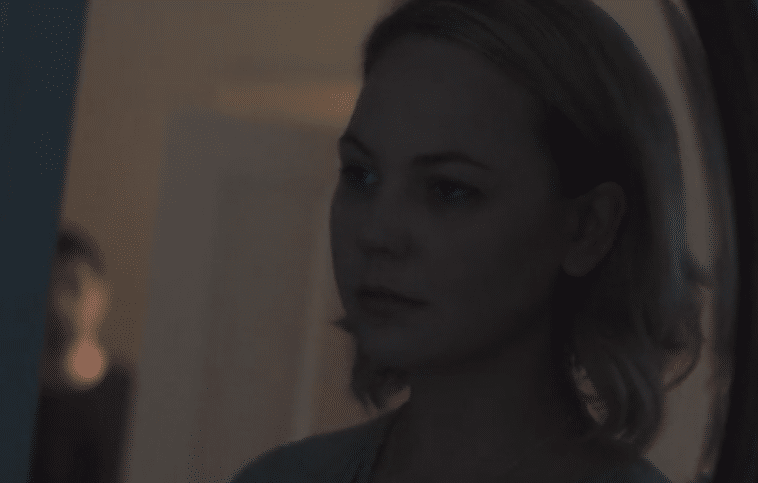 It’s comparatively rare these days to go into a film viewing with no idea of what to expect, so often your best chance at this is to gain access to an online screener – particularly if these screeners come via film festivals which, for good or ill, have a fairly selective audience until such time as their films get a general release. In the case of Rabbit (2017), which first screened at Toronto After Dark last year, I got the chance to see this film with a completely blank slate – and I’m very glad I did. From the opening scenes, the film weaves a clever and nightmarish spell, eschewing gratuitous horror or torment in favour of something far more subtle.
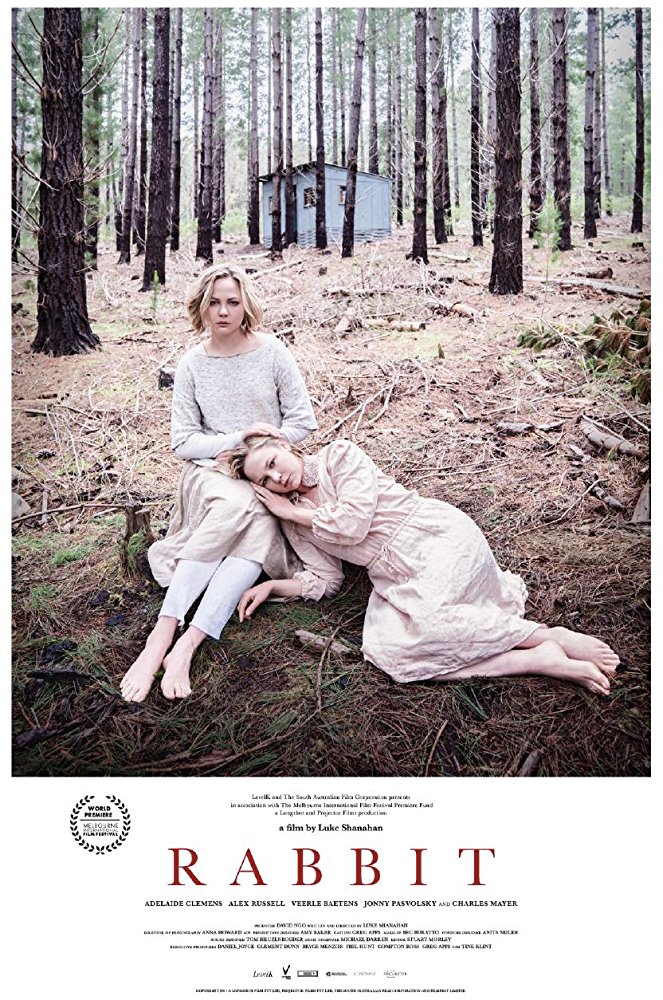 This is maintained artfully throughout Rabbit, because every line of dialogue and every gesture has a somewhat practised air: I’m trying to avoid invoking the name of a certain director, but there are some unmistakable resemblances to Mulholland Drive in the first half of this film. Things do progress in a slightly more tried-and-tested way in the second act, admittedly, although the atmosphere sustains the impression that this is not just another horror. Overall, there’s a convincing sense that some conniving intelligence with grim intentions is manipulating events, something which horror has played to great effect in recent years, from Martyrs to Starry Eyes to Get Out – though none of these films have utilised mise-en-scène quite so well. Director Luke Shanahan and cinematographer Anna Howard have set up a series of gorgeous, unsettling sequences which you barely glimpse, but which are deeply unsettling. The film is fraught with menace, and it all seems to operate in that pre-digital space which is equally beloved of modern horror. Perhaps for modern audiences, this symbolises an unfamiliar terrain where help is not at hand; in any case, a lot of films seems to have dispensed with phone trouble as a plot device.