Tribeca 2026: Unidentified

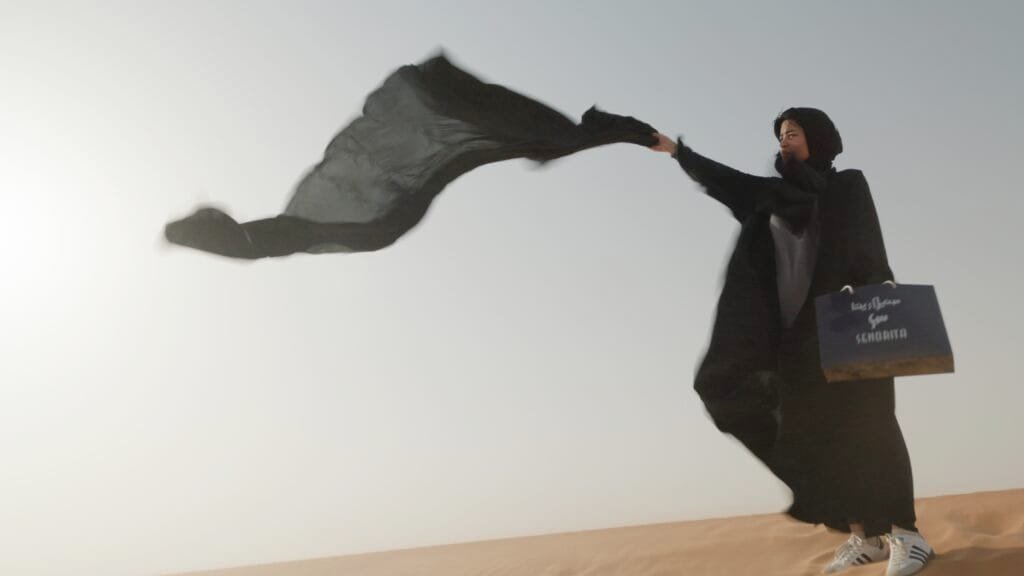
A vehicle races off through the Saudi desert, leaving a young woman dead in the dunes. That’s our opening to Unidentified (2025) – a film which is intriguing due to its background (directed by the first female Saudi filmmaker, Haifaa Al-Mansour), but also a nicely-paced and structured crime thriller, even if for some audiences it may feel a little domestic, or even reactionary, in some respects. For this reviewer however, that’s what really makes the film a success, for reasons discussed below.

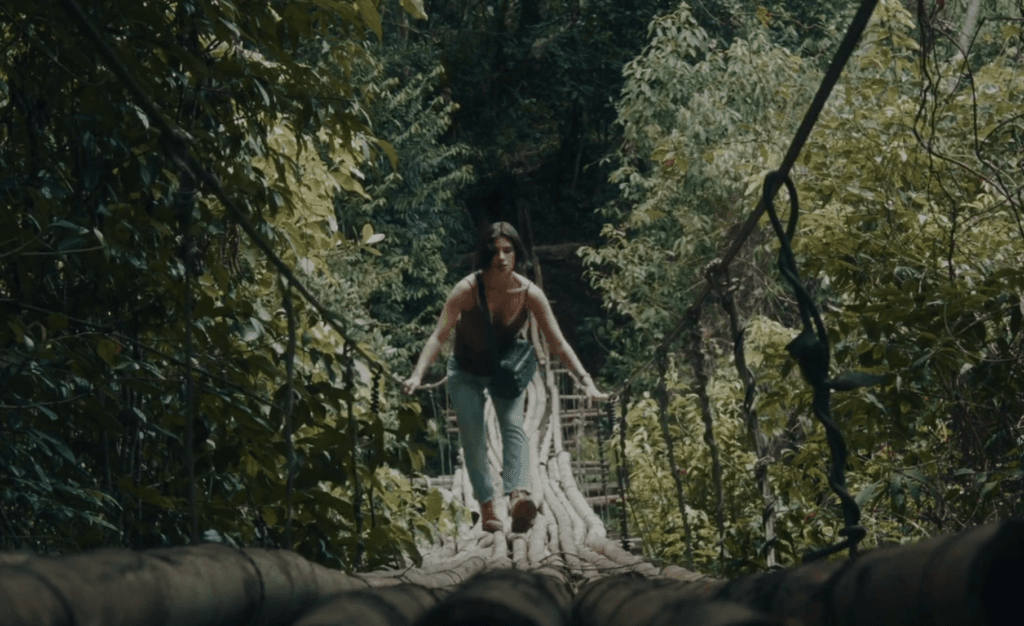
We cut to one of the film’s many contrasts with a woman called Nawal (Mila Al-Zahrani) who enjoys a strange podcast, one which blends make-up tips with true crime exposés (though to be fair, this is a pretty neat encapsulation of the interests of millions of young women worldwide). Nawal is living independently, having left her husband and home behind: she hasn’t even unpacked her belongings yet, and her brother is already knocking at the door, urging her home. But Nawal has a job with the Riyadh Police, digitising old files as ‘everything is going online’. She’s briefly taken away from the tedium of this role when the girl’s body is finally discovered and she’s drafted in as a kind of chaperone, something which is apparently necessary even for a dead woman. Nawal, given her interests, is immediately absorbed by the case: there’s almost no information to go on, and only a two-week cut-off before the girl will go into an unmarked grave. As another woman now on the fringes of society, Nawal finds this unconscionable, and begins to take an interest in the case which goes far beyond her admin role remit. Perhaps there’s a sense of ‘could have been me’ here: we glean enough about Nawal’s background to know that the breakup of her marriage was very traumatic. However, as she investigates, she seems to start being watched herself, and may even be at personal risk.

Let’s be honest here and admit that one of my key motivations behind asking to review this title was to get a glimpse of a version of Saudi life, given that Saudi Arabia is usually either very closed off from the West, or else viewed through a very specific kind of lens: Western commentary tends to focus on its religious conservatism, even if under the de facto reign of Mohammed bin Salman, things have relaxed to some extent. For example, women may now drive in Saudi Arabia, something which is key to Unidentified: Nawal makes extensive use of her vehicle throughout the film, and beyond its timeline too. The world of the film is perhaps surprisingly progressive in some respects (Riyadh has the kind of nightlife you’d expect from any big city; women can live independently, hold down careers and many of them go where they please) but it rings with Islamic cultural conservatism in others (one of the reasons mooted for the mystery girl’s death is an ‘inappropriate relationship’, which her fathers or brothers may have acted upon). Here, girls just ‘go missing’ – from home, from school – and people may not wish to claim them, even if they turn up – living or dead. And, as one girl says in response to Nawal’s questioning, “Once your family decides on something, it spells the end for you.” Challenging this can literally mean death. That’s the strange, blended reality we witness in the film.

At its core, then, Unidentified is a film about the push and pull of modern life, albeit on one woman in particular, trapped between two worlds. It’s not limited to the expected divide between Nawal’s actual job and her interest in a case which goes way beyond her professional responsibilities. We have already discussed the podcast, where a girl applies lipstick as she warns against the perils of enraging men; we get a dolled-up headmistress, very much in charge of her domain, doling out arch warnings about immorality. We meet schoolgirls who have devised their own wall of silence, even as they sneak out at night to go to hookah bars and talk to men, just before they are married off. The film does successfully present a rather paranoid, secretive world which masks a lot of its worst excesses (though of course, all societies do this to a greater or lesser extent). Its violence typically happens off screen; this is never gratuitous, and in fact may feel too quiet for some crime cinema fans. It also opts for a recognisable structure and story arc, right down to the late addition of some surprises, though on the whole these work, the film is well made and well edited, with some wonderful stylistic visual flourishes, offering clever symbolism. On the whole, there’s a pervasive, uneasy religious context where religion – in lockstep with a harsh and unforgiving patriarchal culture – overshadows everything which takes place here. Nawal is a feisty character, to the upper limits that she can muster. She finds ways to push back against a world full of restrictions, and the film does grow increasingly tense as she gets closer to the truth.

Will you begin to wonder whether things have in fact all been put to bed, giving a glance to the remaining runtime, when it looks as though we’ve reached that point – The Truth? You might. And by the time you actually get to the end credits, you may feel either enlivened, or enraged, by the way things are finally wrapped up. I’d recommend taking a step back here, even getting a bit (whisper it) meta, and considering what the film’s structure and denouement has to say about Saudi life, even as a fictionalised and subjective glimpse of Saudi life. If filmmaking offers a distilled version of current social and cultural anxieties, then Unidentified has far more to say than it might at first seem to say. For this reviewer, it speaks quiet volumes of its own, adding an additional layer of ideas to consider – which prompts a look back over the whole narrative arc anew. That’s a real compliment to the film. It’s surprising to see such underwhelmed reviews already out there; there’s lots to ponder and admire here.

Unidentified (2025) will screen at this year’s Tribeca Film Festival, starting with Tuesday, June 9th at 8:30 pm (US premiere).
Raindance 2026: The Killing Moon

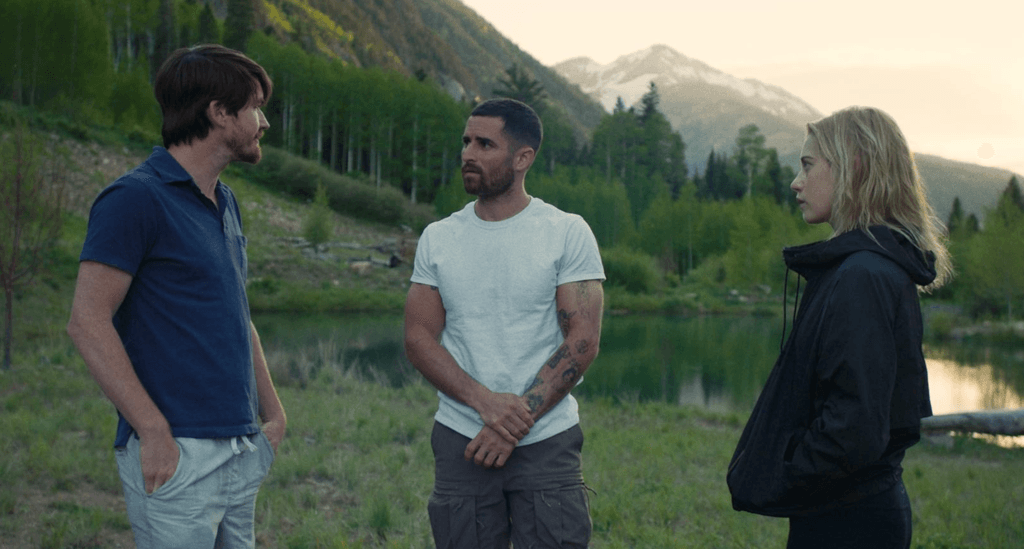
If there’s one thing to take away from The Killing Moon (2025), it’s to wonder why some married couples are married couples – and the film leans into this immediately, as we meet key protagonists Elliot (Ryan Caraway) and Olivia (Victoria Diamond), lost on their way to a swanky mountain retreat somewhere in Colorado (discoverable from the film info – we’re not given the specifics of the location). When they finally get where they’re going, they continue to squabble. Then, as they settle into their vacation, we learn two key things: Olivia is crypto-wealthy and her husband resents her wealth by presenting as at least mildly snippy at all times. Let’s just say that the dynamics here are awkward, and it’s almost a relief when there’s an unexpected caller at the door.

Ah, but we’ve seen this caller: in the film’s opening scene, we saw this guy sat at a campfire, hiding his wedding ring before building up to a horrific self-injury, slashing his leg with a knife. Now he’s here, he’s bleeding profusely and asking for help. Shocked, Elliot and Olivia bicker a little more, but agree to let in the man, Rory (Matthew Leone) – the better to disregard basic first aid, but panic can do that to a person. Rory lives to see another day, and seems happy to hang around the next day too: a trip to a local beauty spot thereby turns into a heated masculinity contest, replete with odd decisions and behaviours (just like Rory sticking around, to be honest). Whatever Rory has planned, it feels like it’ll be justified if it shuts up Elliot, who is clearly being painted as inept and bitter. Certainly, Elliot’s smug bluster paints Rory in the better light, leaving The Killing Moon with the potential problem of turning Rory into the film’s villain – if the film needs a villain. Or does it have one? What’s the film to do?

The film does implicitly acknowledge that it needs some sort of new addition or direction after more than enough chest-beating and it endeavours to deliver this, which shows both a sense of whole-film crafting and some ambition too. Frustratingly, this still can’t link up with the bigger, more significant ideas it reaches for: some of the film’s more puzzling, or less appealing aspects are by this point a little too entrenched, centring almost wholly around the script and the tone chosen for the film (although the lead actors always give their best here, doing much with what they are given).

From the start, the signposting of marital issues – vital to the film – is clumsy, with each partner moving quite arbitrarily from one set of beliefs about their partner to another. Olivia sees Elliot as hopeless, then indispensable. Elliot is racked with sexual jealousy, then isn’t, and Olivia doesn’t notice the shift, or at least responds to it in a very brief way. This want of more, nuanced characterisation, with the suggestion of backstories, has a large impact on everything that follows – this plot foundation cannot slip or it’ll take everything with it, including Rory’s much more interesting arc. There’s no question but that The Killing Moon is a very well-made film in its technical aspects: it looks and sounds great, it’s sensibly edited in terms of its runtime (pushing this past the ninety-minute mark would only have harmed it as a whole) and it creates a sense of time and place. There’s lots of skill here. Director, writer and editor Daniel Bogran is a young filmmaker and this is his very first feature. With some deeper realism and complexity in the script, it would be great to see what he could do; it would better test his evident skills. As it stands, it’s very hard not to ask, ‘But how would that even work?’, something which could potentially be weeded out by a few productive screen development meetings.

The Killing Moon has some great strengths and works hard to move things along in a timely way, though at its heart it is a broad-strokes marital breakdown, even if reaching for something bigger. It isn’t sharp enough to really innovate around its topics and there are some issues around its plausibility, although it does move closer to a broader backstory, with glimpses of the broader resonance it clearly wants to convey. There are hints of good things here, even if not fully formed, and Leone in particular is an actor to watch.

The Killing Moon (2025) will feature at this year’s Raindance Film Festival from June 21st.

Sender (2026)

Did you order something?

As she prepares a meal, a woman is disturbed by the arrival of a package. She collects it from the doorstep, and when she opens it, she immediately seems emotionally affected by what she finds inside. So much so, in fact, that she starts to asphyxiate herself with the bubble wrap which the items arrived in.

That’s how we kick things off with Sender (2026), an often tense little tale about modern life which has some elements of satire along the way. It picks an interesting focus, too, given that so many of us are often swamped by online purchases – even if that frenetic opening scene is the most high-impact moment.

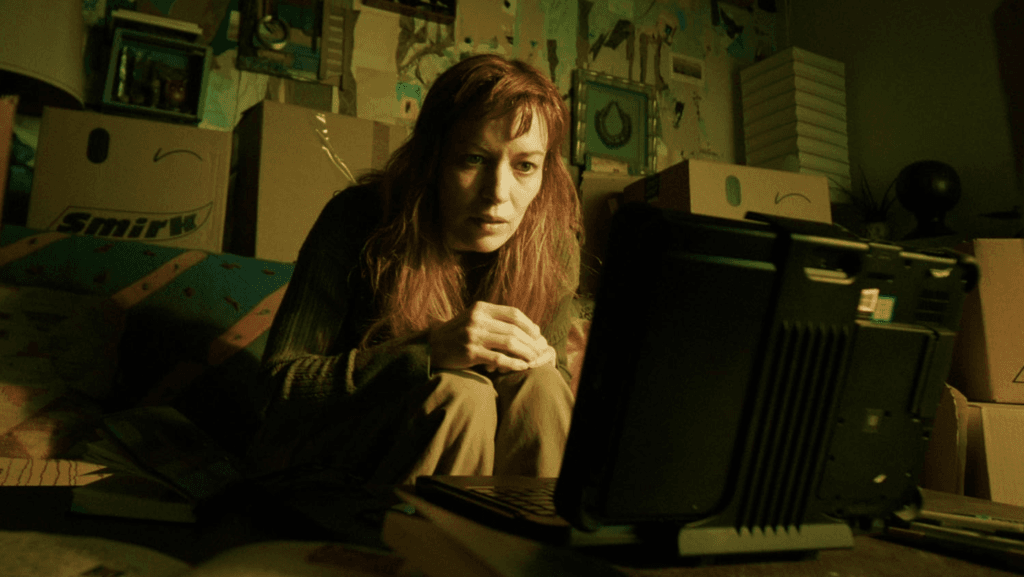
We next pick up with a new character: Julia (Severance‘s Britt Lower) is an alcoholic in recovery (with frequent relapses) who has recently quit her job (been fired) and hopes to make a fresh start, taking some tentative steps towards enrolling at art school, with her new home bearing the brunt of her early artistic impulses. She attends a support group, but again, her commitment to the programme isn’t exemplary, and she mainly learns how to make a nuisance of herself in front of fellow attendee Whitney (Rhea Seehorn), who absolutely refuses to be Julia’s sponsor, perhaps sensing trouble. Back at the house, setting up home requires lots of deliveries, so Julia is soon getting plenty of boxes coming through the door. These largely come via a delivery company called Smirk, and given the amount of business she seems to be sending Smirk’s way, she gets to know the driver a little, a guy called Charlie (David Dastmalchian).

However, there soon seems to be something amiss with this new start. Julia starts to receive items she doesn’t remember ordering. Not only that, but these items seem to display some kind of insight into her character, as if they are coming from a place of prior knowledge. Given her relapses, it’s not beyond belief that she is ordering all of these things for herself, but it doesn’t seem to be that. What makes it weirder is that she – or someone using her name – has been leaving glowing online reviews for all of these deliveries, too. What’s going on?

As the items themselves grow more ominous, the already rather febrile atmosphere of the house increases. Sender could go in a number of different directions here – supernatural, psychological or a kind of whodunnit; without spoilering, it elects to focus all its attentions on an already rather nervy, vulnerable woman, following her down a rabbit hole as she struggles with a tide of new stuff, stuff which seems to anticipate her needs, wants – and fears. This is all punctuated with flashbacks to the throes of alcoholic episodes and relapses – Julia is clearly presented as someone not in a good place to investigate Smirk, or anything else – but the film soon comes to over-rely on these frequent, fast edits, revisiting earlier flashbacks and offering up lots of scenes where Julia is elegantly wasted, whilst zipping between set-ups and ideas at a frantic pace.

On one hand, this feels a lot like being online; it’s overwhelming, this barrage of items, these algorithms which seem to ‘know’ you. Whether this is the intended effect or not, though, the film’s structural choices can feel irritating, and it’s distracting when it recurs like this. Then, surprisingly, the pace begins to dip, even whilst the zip-quick edits persist; at around the midway point, Sender pauses to examine the relationship between Julia and her long-suffering sister, Tat (Anna Baryshnikov), who co-signed for the new house to help Julia out (and is suitably horrified at the sea of boxes now littering the place). This, plus Julia’s more in-earnest attempts to track down her mysterious sender, dissipates some of the initial mystique – though some audiences may enjoy the debates offered up by the film as it progresses, many of which touch on notions of control and self-control – big ideas, now as ever.

This film has a huge cast, with both Britt Lower and Rhea Seehorn having recently taken leading roles in vastly popular Apple TV series, like Severance and Pluribus. Their appearances here would draw comment enough, but to get David Dastmalchian on board too is a real coup: it feels hard to imagine that this film won’t get picked up by an eager distributor in the not-too-distant future. All of the lead actors perform their roles admirably here, though Dastmalchian seems to steal every scene he’s in, and we could always stand to see more of Rhea Seehorn. Overall, Sender has good ideas, and at its best it can be deadpan, paranoid and pithy. It does tend to get lost in those ideas and how to present them to us, however, particularly floundering right at the end – which is unfortunate, but this film’s very existence shows us what sorts of things scare and alienate us now. Perhaps the ultimate Amazon-themed horror (oh come on, it’s so clearly Amazon) is still ahead of us, but Sender‘s initial shock factor, plus its great cast and wry observational touches, does provide us with points of interest and engagement.

Peppermint Pixie Dream Girl (2026)

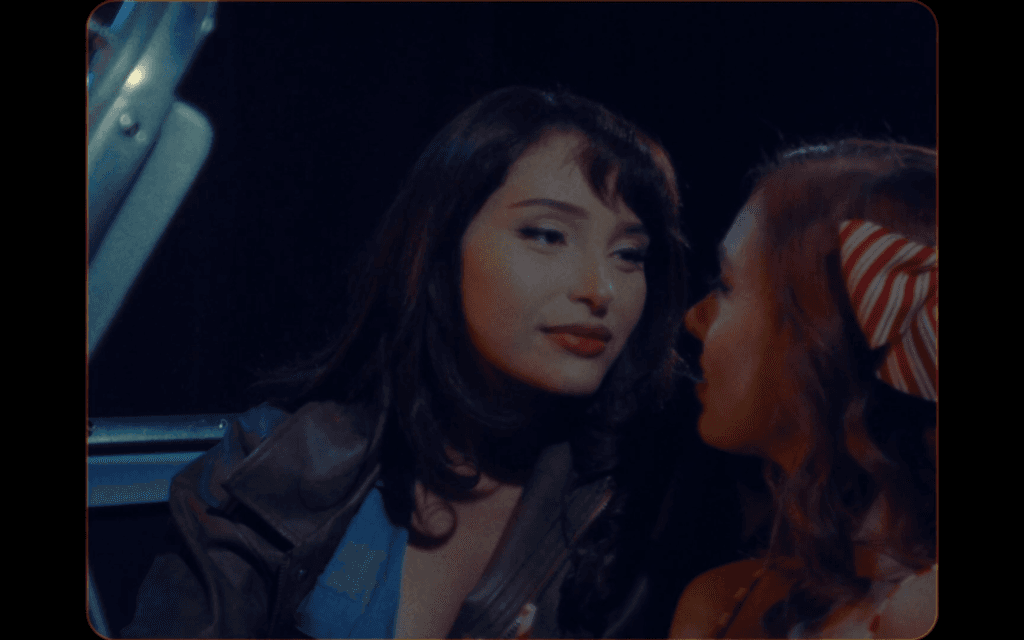
Whoa – don’t be fooled by that title. Peppermint Pixie Dream Girl (2026) may start out kitsch, with all the aesthetic trappings of vintage Americana – but it swiftly takes us somewhere far darker, and it’s all the more intriguing for it.

We start in a kind of Happy Days diner, where a couple kills time before even placing their orders by making out. The beau (Alec Barnett) is a needless dick who only leaves off sticking his tongue down his girlfriend’s throat in a particularly gruelling manner to insult the waitress, Shirley May (Zoey Luna). She barely has the time to respond to his transphobic comments, when she’s happily distracted by a new customer, Dorothy (Abby Langh) and they begin to flirt over the perfect peppermint milkshake. After Shirley-May’s shift, they head off for a date at the local drive-in: everything seems good.

It’s not a straightforward date, though; any time this film seems to be presenting us with something easeful and straightforward, it changes tack. There’s a lot going on in the background in this particular incarnation of mid-20th Century America: we’ve already heard talk of nuclear tests on the diner radio, Dorothy starts talking about aliens – here, as genuinely during these decades, the cheesecake visuals only mask a lot of the cultural anxieties bubbling away beneath the surface. If the date begins to go a little awry when Dorothy reveals she does, in fact, have a boyfriend, then things get considerably more terrifying when a gang of local greasers arrive, determined to split these two up and to unleash their fury on such an unconventional pairing.

So this could have been a meet cute and nothing much else, but Peppermint Pixie Dream Girl has far bigger ideas about how to balance its different elements, giving rise to something quite unique. If it resembles anything visually, then it’s the Fallout game franchise with its own not-quite-real-but-recognisable take on a nuclear-era America, but PPDG manages something quite uncanny and distinctive. It’s all weirdly on point, with a strong visual style aided by careful control of the colour grading, audio and dialogue. Then, having established a world of milkshakes, ribbon accessories and candy stripes, the film steadily wheels in the direction of …almost something grindhouse, with (almost) nudity, violence – and blood. All of this, in less than eighteen minutes.

To put it simply, the promise of deadly nuclear tests feels like the obvious connection between the film’s different modes, and so it turns out to be. It takes a keen eye to hold all of this together, but it works: PPDG a wonderfully strange short film which weaves just a fragment of something post-apocalyptic, but makes it feel meaningful and heartfelt, too.

Matador Bolero (2026)

Matador Bolero starts very calmly: there’s a young woman communing with nature against the backdrop of a rather beautiful, Super 8, retro-styled idyll. There’s no dialogue as of yet, and no music. She then finds a large, pastel-coloured egg, placing her hand on it – all the while being observed by a masked figure, hiding nearby. Nope, the figure doesn’t produce a knife; they don’t approach the girl in any way at this point, either. Instead we get a brief diversion into on-screen text, which appears like subtitles: “just as one’s image is erased, a mirror emerges from the sea.” If by this point you’re thinking the spirit of Jean Rollin is alive and well and has resumed his career from beyond the grave, then this impression is about to shift, too: we’re swiftly transported to a grindhouse-type cityscape, a world of nightclubs and strip shows, or – in the case of a club called The Matador – a little of both.

As the screen teems with very beautifully composed images – many over-layering one another to the point of sensory overload – we can only be certain of a few things. We meet the club’s owner, Charlie, who is called to the telephone one night, thereby missing a shooting in the club which claims the life of a popular actress called Beverley Green. There’s clearly some kind of criminal underworld at play here, and the police are convinced that Charlie himself is in on it, subjecting him to a highly unorthodox police interview. Charlie gets released without charge, but here the film chooses to add in a set of, shall we say, different considerations. A character referring to himself as ‘Adam’ may be part of this clubland world, but he’s a much bigger prospect than that (clue’s in the name). He has tasked himself with reversing a series of events which have fractured the known universe, leading to a state known as ‘The Bend’. This all happened after the sacrifice of a unique child, now resurrected as a kind of super computer and known by the name of ‘Bolero’. Adam is looking for Bolero, and his followers, in order to bring the world back to a utopian state – which it definitely isn’t, not currently.

So there’s our justification for the film’s the title, but are we still feeling confused? Almost certainly; Matador Bolero is confusing by design – if we accept that the film is much more about blending moods, impressions and visual styles than telling a story. This is a world which encompasses the frenetic sexual anxieties of giallo with far loftier shapes, ideals and potential symbols. In fact, the film and its approach reminds this reviewer very strongly of the work of Hélène Cattet and Bruno Forzani. Now, it could be that the work of Matador Bolero director Jonathan Rosado shares a common ancestor, rather than directly being based on Cattet/Forzani, but surely anyone familiar with the likes of Amer will see a low-budget, if earnest love letter to both its visual style and, some might say, its cavalier approach to narrative. If so, your feelings about one will colour your feelings about the other. Personally, having some sort of narrative thread to follow feels important – films feel very long without it – and there’s something to track here, though the dreamlike, oblique nature of Adam and Bolero’s story winds up feeling oh-so whimsical. And, again like all of Cattet/Forzani’s work to date, it tests one’s patience, even whilst inspiring admiration for such a spirited, committed aesthetic approach. I do have to wonder how films like these – these sequences of largely disparate ideas in eye-catching apparel – really find their people. There are lots of interesting things going on, but presumably there are limits to who will find and thrive on them. Oh, and there’s a bit of Jess Franco in here too, for anyone who likes their strange, existential genre film to factor in some soft furnishings. If you know, you know…

Interestingly, and perhaps tellingly, Matador Bolero has lots of links to music video: Adam is played by experimental musician Yves Tumor, and the film also stars Kansas Bowling, who got her first feature-length released by Troma when she was just seventeen and has carved out an interesting career as both an actor and a music video director since that time. That feeling of distinct, music video-style vignettes and an emphasis on style is written all over Matador Bolero. It’s a bold project but a strange prospect, pushing the boundaries in what feels like both experimental, but recognisable ways, and coming up with something off-kilter, but visually strong.

Matador Bolero (2026) opens in New York on May 22nd and Los Angeles on June 12th.

Children of The Wicker Man (2024)

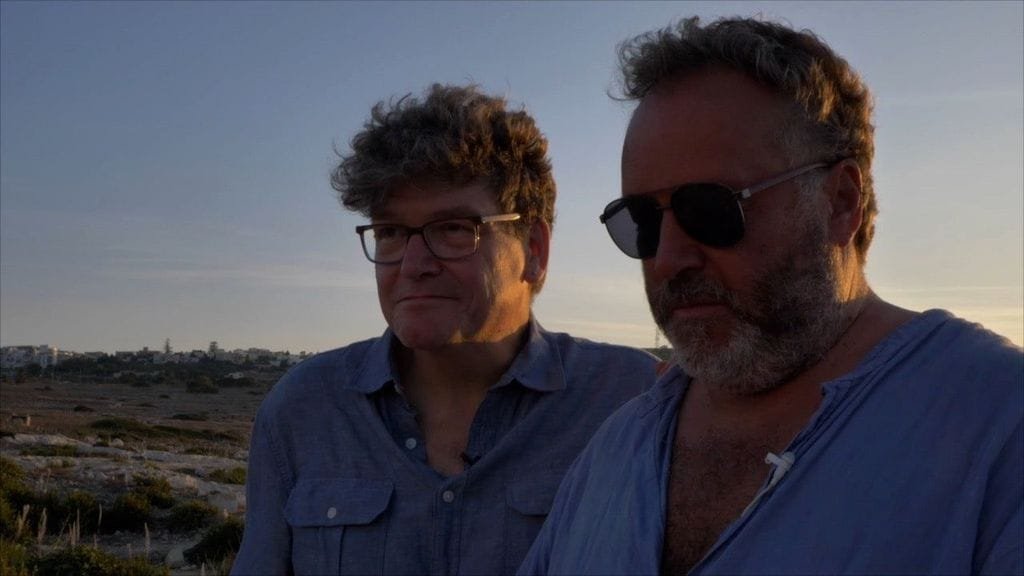
In the opening scene of documentary film Children of The Wicker Man, we see one of Robin Hardy’s sons taking receipt of some of his late father’s possessions – notably reels of film, papers and production notes related to the 1973 film. It’s this which prompts Justin to reach out to some of Hardy’s other children – namely his half-brother, Dominic, and provides the inspiration for a film of their own.

Even knowing nothing about the rather tortured background of The Wicker Man, the fact that Justin opens by describing an array of, if not quite alienated half-siblings, then certainly a number of children from broken Hardy-adjacent families suggests an unhappy dynamic; as the film unfolds, that turns out to be all too true. Where film fans may revel in Robin Hardy’s prowess as the director of what turned out to be a seminal British horror film (but could have sunk without trace – see below), for his sons, the film felt like an almighty obstacle in their relationship with their father. Making this documentary sees them trying – and, to an extent, justifiably failing – to approach the topic of The Wicker Man anew as disinterested adults, not children. The documentary is a balancing act, then: in some respects we have two filmmakers walking us through the Wicker Man project in as neutral a way as possible, yet in some ways, the same filmmakers here allow themselves to give in to the ire their father’s film caused them as they grew up. We have the usual run of interviews, production notes, photographs and anecdotes you might expect from a ‘Making of’ type project, but behind all of this is something else entirely – a kind of grieving.

Whilst the two men find some kind of peace with their subject matter as their study unfolds, it’s fair to say that this is no hagiography. Children of The Wicker Man is a rather unflinching look at Robin Hardy the man; here’s a man who let his wife sink all of her money into his first feature-film project (he had been in advertising), before walking away, leaving her to raise his children on her own, because her addiction struggles were unsafe for him. There’s a suggestion of similar things happening elsewhere in his life, though details are understandably less forthcoming where those children aren’t so directly involved in the documentary. Of course, there’s a school of thought which suggests that great art excuses poor personal behaviour; from the perspective of friends and family, that no doubt always feels like bollocks. Perhaps it should do; it certainly colours things here, and this film never feels like a happy passion project, more like a purging of what went on during the making of The Wicker Man once and for all. There’s a lot in here, too: it meanders as it goes, but you retain the sense that panic, uncertainty and conspiring events really hampered the making of the film, and made for an unhappy experience for pretty much everyone involved.

Seeing original scripts, lists of cuts, candid photos – all of this is very interesting, and it’s an opportunity to see aspects of the film which would otherwise go unseen. If it needs saying, it’s probably more the completists, than just passing fans, who would relish the level of detail on offer here, as we get right down to the minutiae, glimpsing all of the feuds, rumours and reasons this film very nearly never got finished at all. Children of The Wicker Man is thorough, if not lavish: its blended visual style goes from talking heads to on-screen text and sketches, some of which are, arguably, more irritating than enlightening (big crosses appearing through pictures of rejected actors’ faces, for example, is a bit unnecessary). There are a few boom mike issues, and as ever the division of the film into ‘Acts’ doesn’t really achieve much, but this is all just window dressing, really. The film is at its best when it gets to the heart of the matter: the unique perspective of the Hardy family.

Considered on the whole, Children of The Wicker Man provides a wealth of context (and, by the by, helps to excuse the underwhelming Wicker Tree, without simply excoriating it). It also manages to end on a fairly obliging note, mentioning Robin Hardy’s late-in-life reappearance and celebration, with Justin and Dominic now seeing The Wicker Man not just as “that fucking film”, but as a unique and brilliant narrative film – even if it’s still difficult. And as much as Children of The Wicker Man charts a deeply personal journey, the film’s title could be construed as a metaphor for the film’s ongoing legacy and its impact on a range of people, not just Robin Hardy’s sons. However, at the end of the documentary, we see it as a reclamation of their life extending beyond the grasp of The Wicker Man, as well as a guarded celebration of it.

Children of The Wicker Man (2024) will be released by Severin Films on 30th June 2026.

Hokum (2026)

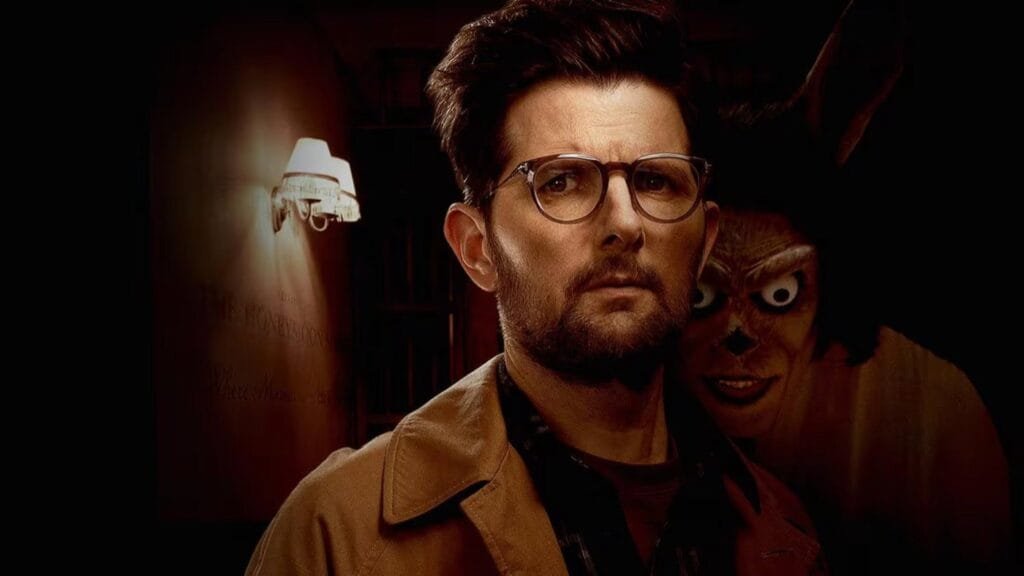
Hokum (2026) is all about the periphery of stories. Legends, tales within tales, rumours, fractured biographies. Feelings and memories, not linearity and convention – which works really well in this deliberately splintered, but always impactful horror. Even as the opening credits roll we start with a story within a story, given that our protagonist Ohm Bauman (Severance‘s Adam Scott) is an author just on the verge of completing his no-doubt successful Conquistador Trilogy (we know he’s successful just based on the fact that his house is constructed out of unadorned, bare concrete). But he’s hitting the dreaded writer’s block, uncertain on how to end his story; we watch as a bruised and battered soldier – his key character – staggers across a desert landscape, using a map to look for treasure, some final destination of his own. As Bauman grapples with this as-yet incomplete tale, he seems to be looking for his own map, and in a moment’s reflection on old photos and postcards, happens upon the idea of travelling to Ireland, visiting the hotel where his late parents spent their honeymoon many years ago. Perhaps some proximity to a place linked with happier times will help him – though this by no means seems sure, and his memories seem by no means straightforwardly happy either. Part of his visit will be to scatter their ashes.

So he finds his way to the largely unchanged, unrenovated but sill functional hotel, somewhere in rural Ireland. Let’s get to it: one of Hokum‘s minor sticking points is Bauman’s initial behaviour when he reaches his destination, even given his clearly depressed and prevaricating state – though, even in a film which cultivates its uncertainties, it does become somewhat more excusable as the film progresses and we discover more about him. At the start of his time at the Bilberry Woods Hotel, however, he veers between baffling rudeness (a bold choice from a horror writer, who must know remote hotels and troubled authors aren’t a good mix) and almost instant, needy friendliness with one member of staff, Fiona (Florence Ordesh), which perhaps makes up for him sneering at the manager and assaulting the bellboy with a superheated teaspoon. Perhaps the partially-heard tales of local witchcraft legends set him off somehow, or else it’s the jet lag. Fiona seems to take his vacillating ways in her stride, though, and feels instinctively that there’s something dangerously unsettled in his behaviour – even going so far as to demand his room be unlocked after he retires for the night, saving his life in the process.

In keeping with the film’s rejection of a conventional, linear plot structure, things lurch forward a little and then pause to fill in (some of) the blanks here. Bauman recuperates, but instead of hotfooting it back to the States, he returns to the hotel for his belongings and asks after the woman who saved him. It’s not good news. Fiona has disappeared: she hasn’t been seen since the Halloween party he was keen to avoid, by being dead if necessary. Feeling a big pang of responsibility regarding the disappearance, Bauman begins to ask around, and keeps being drawn back to something Fiona said: that she had heard rumours of ‘the witch’ in the Honeymoon Suite, and was desperate to investigate the room – long since locked up and abandoned. Stories of this witch have already appeared in the film. As much as folklore of this kind apparently repels him (folk horror lesson one: scoffing outsiders always need to get their heads around local lore eventually), Bauman can’t fathom why nobody has at least looked for Fiona in the suite in question. With the assistance of local woods dweller and rumoured wife killer Jerry (David Wilmot, and he actually comes across as a fairly stable guy, all told), Bauman decides he has to look for Fiona in the hotel itself – just like the police should have done. More narrative fragments billow into place, and Bauman ends up – alone – in the Honeymoon Suite. As an audience, we are in the privileged position, if you can call it that, or knowing that Bauman’s hunch is right, even if this only confirms to us that – whether supernatural or natural, real or psilocybin-tinged dream state – things are not looking good for him, or anyone who follows him there.

Director and writer Damian McCarthy has been honing his skills across a few decent titles in recent years: Oddity (2024) is an effective Irish folk horror in its own right, and feels very much like an antecedent story to Hokum – though the newer film definitely has the edge in terms of scares. There’s definitely been a progression and a growth in confidence. Sure, there are a few jump scares here, but far scarier is when the film allows you to glimpse or half-glimpse something devastating in the corner of the frame. A blend of a kind of ‘dark night of the soul’ and a more conventional haunted house story, right down to often doing away with the constraints of conventional, linear time and space, Hokum has elements of 1408 (2008) and The Haunting of Hill House (2017), though with one key, if ever-mysterious and often peripheral presence to bind the terrifying phenomena together: a bloody good witch, something of particular interest to this reviewer.

As the film builds and blends together a compelling sense of liminality out of its pulleys, abandoned spaces, hidden rooms and of course a vast, subterranean basement, the figure of the nameless witch offers up a number of interpretations, without ever forfeiting those seriously creepy scenes. And, like all good terrifying figures, less is more: she doesn’t get, or need, acres of screentime. Whilst she is bound by one ‘rule’ which, ahem, our protagonist is lucky enough to learn before he gets trapped in the hotel, she still operates as villain, moral arbiter and demon of conscience in various different moments, in a genuinely unsettling, unpleasant setting. But best of all, she remains a shadowy presence. Hokum trades narrative explication for mood and boundless nightmare, and it works fantastically well, even if, being picky, there are some minor pacing issues as we go: it works perfectly that this film with its reliance on grave uncertainties, never decides to just spill its guts, to tell us everything and move neatly on. Like folklore, the endings shift, change or disappear. And, yeah, perhaps our contested lead character turns out to be well-suited to the decidedly disarrayed, but no less compelling narrative style. A dubious character with a moral test in front of him? We’re back to the Conquistador Trilogy at this point, and we leave Hokum – probably, fittingly a blend word, ‘hocus pocus’ and ‘bunkum’ – as either a story of magic, or a ruse which may or may not have relied on altered states, but in any guise, an effective, self-aware, dread-inducing new folk horror.

That’s Nasty! The Beast in Heat (1977)

In 1983, the Director Of Public Prosecutions published its first list of movies which were tagged with the tabloid-friendly label of Video Nasties. These cinematic outliers were deemed to have to power to deprave and corrupt and, if the title in question had been successfully prosecuted under the Obscene Publications Act of 1959, any dealer stocking it could be fined or jailed. In one case, involving Romano Scavolini’s Nightmares In A Damaged Brain, one of its distributors was sentenced to eighteen months in prison (eventually reduced to six months on appeal, but sheesh).

It was a heady time, driven by moral outrage, framed as a battle for the very soul of the United Kingdom, and the seventy-two films that appeared at one time or another on that DPP list attained a level of notoriety their filmmakers never expected (unless, arguably, you were Umberto Lenzi). Thirty-nine remained banned, thirty-three were dropped from the list. All of them became must see items, of course.

As the memory of those crazy days fades and those of us who lived through the Nasties era scratch our heads and wonder what all of that hysteria was about, did those movies actually threaten the fabric of society as we knew it? Let’s take a look at one of them…


THE BEAST IN HEAT (1977, dir. Luigi Batzella)


*** THIS REVIEW CONTAINS SPOILERS ***


In occupied Italy during the Second World War, S.S. officer Doctor Ellen Krastch (Macha Magall) has created what she hopes to be a terrifying new weapon for the Third Reich: a half-man, half-beast hybrid which is attracted to the scent of fear. As various local, naked, unwilling women are thrown into the beast’s cage for experimental purposes, a group of brave resistance fighters plans to fight back against their oppressors…

Where do you start with this one? Ejecting the DVD and throwing it in the nearest bin, then having my brain scrubbed clean wouldn’t have been such a bad idea. However, it’s a nasty piece of work, it was deemed a Video Nasty and hence qualifies for That’s Nasty! It does deserve some form of coverage, if only to flag up what a repugnant piece of trash it is. I didn’t actually see The Beast In Heat until a few years ago and only because the disc was priced at a whole five bucks in the Severin sale. I wasn’t paying top dollar for what I thought would be garbage and my instincts served me well.

As to the actual name of this, you can take your pick. There’s a Spanish certificate “S” caption before it all begins, designating it as El Bestia En Calor before the opening credit run has the title as Horrifying Experiments Of S.S. Last Days. I remember seeing a trailer for Horrifing Experiments Of S.S. Last Days – the Severin release at least appears to have grabbed a version which is spelled correctly – but the UK VHS dropped the mention of the S.S. and focused on the most sensational element of the tale. The rendering of the Beast on the cover artwork is absolutely rubbish, by the way, looking nothing like what you see on screen.

It was unlikely that I would have stumbled across it in the UK’s Video Nasties heyday, as the JVI release of the movie didn’t run to that many copies (possibly as low as just a few hundred) and none of the local rental places stocked it. It’s no surprise that the British Board Of Film Classification had conniptions when they clapped eyes on this one, slapping it with a ban that has not been tested in the intervening decades. Even now, my feeling is that a new submission to the BBFC would almost certainly suffer a few cuts, even if the general tone of the move is now deemed unlikely to deprave and corrupt.

Directed by Luigi Batzella, hiding behind the pseudonym of Ivan Katansky, The Beast In Heat is a clunky mash-up of lumbering war movie and tasteless torture flick, riding the coat tails of Ilsa: She Wolf Of The SS by casting glassy-eyed Euro babe Macha Magall as the embodiment of evil. Yes, there is certainly girl power at work, but not the sort you’d hold up in any kind of positive light as Kratsch watches her stumpy, hairy creation gurn, grunt and claw its way through a handful of stupid but unrelentingly grim vignettes. The scenes of non-beast-related persecution are similarly inept, but it’s all filmed with such a bankruptcy of spirit that I can’t help but get very judgey about everyone who decided that involvement in this project was a good idea.

The dubbing does dim some of the disgust by being bizarrely inconsistent, with Kratsch’s cut glass RP tones colliding with accents that would have been perfect in the sitcom ‘Allo ‘Allo. Some of the early going hints at broad comedy, with Kim Gatti’s Captain Hardinghauser rushing to take a post-coital phone call from high command and having his trousers fall down as he salutes the latest plans of his Fuhrer. Still, the urge to snigger at someone being called a “half-vit” is almost instantly obliterated as Hardinghauser’s men storm the nearby village, throw a baby up into the air like a clay pigeon and use it as machine gun target practice. This is what we’re dealing with here.

Away from the censor-baiting elements, the war film side of things is both preposterous and stupefyingly boring, as John Brawn’s heroic type Drago aims to disrupt rather than destroy, choosing to blow up key resources as opposed to taking lives. These key resources include a strategically important bridge which appears to be guarded by a sum total of two – count ‘em! – of the German forces’ most unobservant recruits. Drago waits until a trainload of soldiers passes across the bridge before blasting the structure to pieces, because he doesn’t want the mass carnage on his conscience and there’s no money for that kind of special effect.

The villagers versus Nazis battles rely heavily upon badly matched, crudely inserted stock footage from 1970’s When The Bell Tolls, also directed by Batzella. The shootouts are not only haphazardly edited but they’re generally bloodless, occasionally confusing and often at odds with what’s going on in the other half of the story. However, you do get an extended bombing run perpetrated by a model plane on a string. This is what we’re dealing with here.

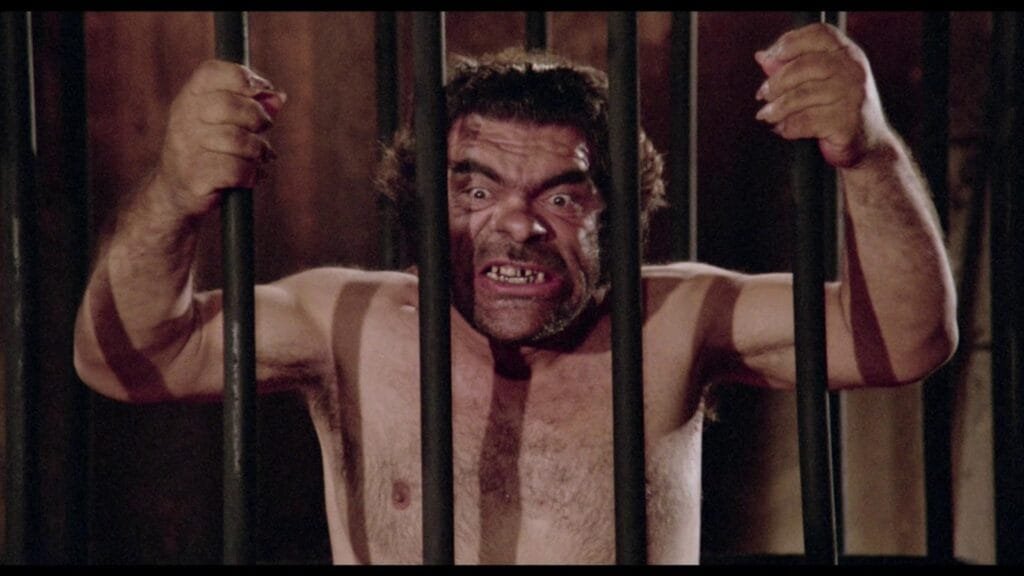
Away from the model plane induced carnage, the Beast itself is played by Salvatore Baccaro, credited as Sal Boris, and it’s fair to say that he launches into the role with gusto, committing to the bit even in the tale’s most revolting moment as the sex-crazed monster tears out and chows down on a victim’s pubic hair. Using the word “offensive” doesn’t do it justice – it’s prolonged, gloating and thoroughly repellent, desperately dredging up the worst excesses of its excuse for a script to cover for the fact that anything that doesn’t involve the machinations of Magall’s character is a snoozefest.

This particular act is part of a chaotic sequence in which multiple folks are being tortured while The Beast does his thing. I’ll admit, this does briefly hit the queasy heights Batzella may have been hoping for, but the pandemonium is undercut by some weird, although technically practical, decisions, the most glaring of which is the choice of guinea pigs, painted black, cosplaying as rats who are attempting to burrow through someone. The underlying intention is undeniably sick but the execution is lazy and ludicrous, which for me makes it all the more repulsive and irresponsible.

In keeping with the pervading “war is hell” message, The Beast In Heat ends with almost all of its cast having been killed, including Kratsch, who ends up on the receiving end of ironic revenge as the resistance storms her HQ and chucks her in the cage with her creation before Drago applies the coup de grace to both monsters with a machine gun. The downbeat coda which follows seems to be aiming for some kind of profundity, but when you stop to consider so much as a few seconds of anything that’s gone before it, that kind of closer seems utterly ridiculous and certainly unearned.

Oscillating between tedious and obnoxious, The Beast In Heat ends up being a little too clumsy to provoke a full sense of outrage, but is also far too vicious to pass off any of its more grotesque vignettes as high camp. Magall is unquestionably beautiful and possesses an interesting screen presence but, predictably, even she can’t escape the gratuitous nudity and pervy plot points as Kratsch gets her kit off for the flimsiest of reasons. It’s her particular way of interrogating a prisoner, apparently. Yes, of course it is.

Considering how surprisingly tame some of the Video Nasties are, at least in the case of The Beast In Heat it’s blindingly obvious what caused all of the consternation when unwitting viewers dropped this in their Ferguson Videostar. Its effects work may fall mercifully short in depicting the cruelty of an invading regime, but conceptually it’s vile and Batzella’s heavy-handed treatment of the material does it no favours whatsoever.

Touch Me (2025)

‘Tell me a story’, says the therapist at the beginning of Touch Me (2025) – though specifying that it should be a fantastical kind of story. Swap out the details, she says, but find a way of telling me about something which has traumatised you. Well, boy does Joey (Olivia Taylor Dudley) oblige, offering up a hell of an anecdote which, as requested, also hints at the issues which might just have brought her to therapy in the first place. This is the first of the ways in which this film plays with audience expectations, foreshadowing the high neon weirdness to come, whilst showing us something which feels troubled and real where it counts.

Back in the real world – let’s accept that the therapist’s office sits outside of the strictly real here – Joey is enmeshed in a relentless play-off between fantasy, inebriation and the unavoidable presence of reality, which keeps on pressing in at the corners, no matter how much red wine Joey and her housemate Craig (Jordan Gavaris) imbibe – and that’s saying something, because these two don’t drink by the glass, but by the bottle. But money, family, essential repairs: these inescapable factors prevent the desired full disengagement from adulthood. Desperate measures call for desperate times: Joey declares she’s going to go get a job. They need the cash. She doesn’t actually get a job, but she does run into a guy who looks just like the alien-in-a-tracksuit she made up for the therapy story and, oh. That was actually true. The world-saving, tentacle-sex maestro was a thing, his name is Brian (an unrecognisable Lou Taylor Pucci) and when he offers Joey a chance to reconcile with him and get away from it all, she takes him up on it, though taking Craig along, too. Since their bathroom is not currently in a functional state, it’s actually great timing.

Joey has already had a taster, but it turns out that Brian, plus his mysterious but loyal human employee Laura (Marlene Forte) have a lot to offer; in the main, this takes the form of unorthodox pseudo-therapy, dance, and almost inevitably, weird interspecies sex, which functions a lot like interactions with the Aylmer in Henenlotter’s Brain Damage (1988) – offering up a kind of narcotic effect which just so happens to destroy the feelings of anxiety which otherwise assail both Joey and Craig; misery loves company, and this seems to be one more reason that these two stick together so firmly. But with enticements like this on offer, jealousy soon raises its head and the more complex Joey and Craig’s responses to this unique style of ‘therapy’ get, the more troubling the whole set-up becomes. Which begs the question: is Brian really what he seems to be? What does he actually want?

The relationship between Joey and Craig is, by the by, utterly charming and plausible, and gets brought into ever closer relief by the crazy situation they find themselves in (and the lead actors are very well cast here, with Dudley in particularly doing a great job of balancing glamour with seeming authentically a little broken). This film boasts, from the opening monologue, a layered, witty and very funny script. It splices moments of genuine vulnerability with darkly comic content, trading off its diehard body horror sequences for plaintive, relatable conversation between relatable, flawed characters. But then we wheel back to the absurd, even if that never feels to the detriment of the film’s big heart as a whole. Brian’s role becomes more and more ambiguous even if always entertaining, but he has an important part to play here, and arguably this relates to another of the film’s themes, albeit given a characteristically oblique treatment: the relationship between poverty and privilege, and who gets to control what/whom. Sure, Touch Me often underscores something poignant with something ridiculous, but it does so to cast new light on its key players. Similarly, and in common with many of the best examples of the body horror genre, it breaks down boundaries – often literally – in order to interrogate very human, painfully contemporary concerns.

With its bold Yuzna-worthy aesthetics and shifting modes of storytelling, Touch Me uses the lens of altered states and body horror to tell an interesting, engaging story. Despite its similarly dark subject matter, it isn’t as bleak and sour-feeling as director and writer Addison Heiman’s previous film, Hypochondriac (2022) – a deeply personal project – but it’s still a film which uses fantasy in its own, intimate, unflinching ways, with seemingly absolute confidence in its use of mode and motif. Given all the tentacles, it remains a deeply humane film. This is such an enjoyable film too: it doesn’t stumble, and for that it’s glorious.

Touch Me (2025) will be available on Digital Download from 4th May.

The Whistler (2026)

The Whistler (2026) opens with some on-screen text introducing the María Lionza cult, a Venezuelan belief system which believes, amongst other things, that spirits live amongst us, ready to possess the living. This being established, we next see a fearful woman creeping in and out of a sugarcane field in the dark, trying to avoid the light of a car’s headlamps. She fails, and is caught by the farmer who has clearly been driving around looking for her. He then forces her to participate in a ritual, trying to draw down a particularly fearsome spirit known as ‘the whistler’. But even when this seems to be successful – what he wanted or needed to happen – the woman later escapes into the dark again, and it’s clear that her being loose is now a real threat.

So there’s something ominous out there; we skip over a brief period of time before seeing a young, urban couple, now driving through the same sugarcane region we’ve already seen. Due to strategic cane fires, i’s raining ash when they arrive; the young woman of the pair, Nicole (Diane Guerrero) sees this as an ominous sign, but she may be predisposed to such omens. She and her husband Sebastian (Juan Pablo Raba) are visiting Venezuela from the US due to the death of Seb’s father; they were already grieving the death of their young daughter, Dani. Perhaps not especially surprisingly, Seb’s father is the farmer we’ve already seen – Vicente – and this visit is to attend his funeral.

With the patriarch of the family and the farm now gone, it should fall to Seb to take his father’s place: that is certainly the preference of his mother, Isabel (Laura Garcia Marulanda). But Seb is uncertain; he has a life in America; he doesn’t really see himself throwing it all away to become a farmer. Besides, he could sell the place, take his mother to America, and start over. Isabel is resistant to losing her home, but she brings up a practical consideration, too. It seems that there are squatters on the land who will not leave, and this is not good news for any attempts to sell. The people on the property are María Lionza practitioners: they have been taking resources from the farm, too. Nicole even recognises someone lighting fires on the estate in the name of her spiritual beliefs – a member of staff called Petra (Indhira Serrano). It’s a confused picture, but clearly this is a complicating factor in any future plans. And things step up a gear when Nicole stumbles upon a María Lionza ceremony taking place in the woods; when she witnesses a spirit manifesting in the body of a young woman, it does so with the voice of Dani, Nicole’s deceased child, calling out to her. Suddenly, Nicole finds herself propelled much closer to the shadowy believers and their belief systems, desperate to hear her child’s voice again.

There’s a lot of region-specific lore to digest early on in The Whistler, and right at the start of the film, motivations – anyone’s motivations – are not quite clear. More exposition does follow, but later – and tends to arrive in blocks. But despite this, other aspects of the film are very clear throughout, positioning The Whistler squarely in the ‘folk horror’ category. There’s the remote location, the arcane practices, the mysterious rituals and the arrival of outsiders, even if Seb comes with rather more understanding than Nicole. We also get a fractious balance between material concerns and spiritual solutions, and in this aspect, the film begins to migrate more towards contemporary spiritualist titles like Talk To Me and Baghead.

But, recognisable elements or not – no horror film is ever made in a vacuum – this is a very worthwhile venture indeed. The Whistler elects to develop even its more familiar plot points in its own way, with its own emphases and visuals. This is a very sombre, atmospheric film which takes its time, but doesn’t feel vague or obtuse. It boasts a wealth of simple, effective sensory elements throughout. The sound of the whistle itself – a simple enough thing – is incredibly sinister. We also get smoke, flame, lamplight and candlelight (and total darkness), all used in scenes rich with visual symbols and metaphors, also punctuated with sparing, but effective scenes of gore and violence, but only where these bring something specific to proceedings. Although partly shot in neighbouring Colombia, it’s intriguing to feel so immersed in a very different version of Venezuela than, particularly recently, audiences might be used to considering. The location shoots are beautiful, lush and expansive, although shimmeringly, oppressively hot. But this is no puff piece either: woven into the film are many of the social issues which have beset the country.

You could count the upsurge in María Lionza worship as part of this: people often turn to new, or resurrected spiritual solutions in times of hardship. We also come to understand the poverty, the lack of healthcare and the regular power-cuts, and of course the presence of displaced squatters points to other kinds of deprivation. Their presence on the Castillo land allows for an interesting blend of material and spiritual anxieties, asking the big question: should people accept the world as it is, or as folk belief says it is? Can people – can these people – meaningfully redress what is happening around them? The whistler itself acts as a manifestation of betrayal and greed, an aberrant force which strips away what little people have, so it feels like little surprise that it’s out there now, or that its impacts are most strongly felt by those who have already lost so much.

Whilst it might not be a revolutionary film in terms of some of its key narrative points, The Whistler still sets itself apart through its steady, thoughtful, human-focused approach. Its story is brought together by supernatural events, rather than being subsumed by them: ultimately, this is a film all about grief, and what it does with this theme is its strongest aspect. It’s interesting to note that director Diego Velasco and his writing team have had limited experience of the horror genre so far, but perhaps that has worked in this film’s favour here, allowing its horror elements to be used without any weight of genre expectations to detract from its overall aims.

The Whistler (2026) will be released from April 17th after its world premiere at Fantaspoa in Brazil on April 11th.

Thinestra (2025)

We start in a giallo-lit spin class as the opening credits of Thinestra (2025) run; the credits are rolling as if they’re on wheels, too. It’s a neat statement of visual intent for a film which takes beauty norms, particularly around weight, as a central theme, playing with aesthetics and style as it goes. In this instance, it turns out that the spin class is part of a dream, one in which Penny (Michelle Macedo) winds up eating the instructor. Clearly, Penny’s unsustainable efforts to reach an arbitrary target weight are getting under her skin. She lives and works in LA, too, a place coded worldwide as a city of extremes, and certainly a place heavily invested in prohibitive beauty standards. Penny works in advertising – an industry which clings onto a number of other, beauty-conscious industries: modelling, media, fashion. This makes it double-pronged for Penny: she’s the one who retouches the images, so she knows there’s a lot of lying going on, but she can’t help aspiring to the lie, anyway.

One evening, in a moment of weakness, she discloses to the current campaign model (Mary Beth Barone) just how miserable her weight is making her feel. Openly taking pity on her – helpful for morale, I’m sure – she hands Penny a small packet of diet pills labelled with the brand name ‘Thinestra’ (obviously named by a Satanist with a lisp). They’re not yet widely available, but – she avers – they have amazing effects. Penny accepts the pills, but she doesn’t start taking them straight away. For now, she’s sticking with the low carbs, meal replacement shakes and general misery, made ever more difficult by the fact that Christmas is coming, with all of its constant temptations. A festive biscuit-related blow-out finally sends Penny to the point of taking one of the pills. Surely, at this stage anything is worth a shot?

Of course this is a bad call: the pill works incredibly, horribly effectively, but comes at a cost – unleashing, temporarily, an alter-ego who comes out and, as alter-egos seem given to do, wrecks Penny’s life in a range of increasingly grisly ways.

I know what you’re thinking, so let’s get on and discuss the fact that Thinestra‘s story arc very much resembles The Substance (2024). Swap out ageing for dieting, and there we go. Thinestra also struggles the most in those scenes which most strongly mirror scenes in The Substance: starting with a fitness class, for instance, or the surreptitious presentation of the pills to a desperate woman by a beautiful user of the same medication. Despite these close similarities, though, Thinestra does have its own ideas, and does take things in its own direction. It’s much more given to laughter – not wry laughter, but a more open sort of humour, with plenty of bizarre hallucinations and dreams to flesh out Penny’s innermost thoughts. However, it never feels as though it’s laughing at Penny; she knows these things are ridiculous, and so do we. The film very clearly sends up the culture which both enables and then punishes disordered eating, rather than any individuals stuck in the system. Michelle Macedo plays Penny just right, too, as a likeable, fallible young woman; it’s easy to stick by her, even as things get worse and worse under the influence of the medication (and despite some minor issues in terms of reconciling the lighter tone of the first part of the film with the inescapable miseries of the last act).

There are other key differences. Female friendship is important in Thinestra, whereas The Substance feels very, very lonely in that regard. Penny’s co-worker Chaela (Shannon Dang) is a welcome addition, allowing for some good dialogue and also ensuring that Penny has at least some social outlets, even if these situations often become stressful places of comparison for her. There’s a broader range of characters here overall. But Thinestra is definitely still a body horror, and boasts some good, budget-busting sequences of abject horror content: there’s garbage eating, fat-secreting, bruises, vomit and blood. Even if the film struggles in how it’s going to bring all of this together – whether literally or metaphorically – it nonetheless brings the goods if you like your body horror to leave you feeling a little destabilised and in need of a shower.

In Thinestra‘s critique of beauty norms and the consumption culture which sustains it, it also pays a nod here and there to other films – The Neon Demon (2016), perhaps, and Excess Flesh (2015) – but, although it would have been nice to know a little more about Thinestra and where it comes from without its rather simplistic wrap-up, the film has many merits, and, once again, isn’t just a re-tread. In fact, there’s another layer of tragedy here, and that’s the way Penny doesn’t listen to the good advice given by her mother; society’s great irony is to ignore women of a certain age whose age virtually guarantees that they’ve lived through all of this and could comment on it, but once you reach that age, no one cares, which is perhaps another nod to the plot of The Substance, as well as key to what unfolds in Thinestra.

Thinestra (2025) is available to stream from 14th April.