Did you order something?
As she prepares a meal, a woman is disturbed by the arrival of a package. She collects it from the doorstep, and when she opens it, she immediately seems emotionally affected by what she finds inside. So much so, in fact, that she starts to asphyxiate herself with the bubble wrap which the items arrived in.
That’s how we kick things off with Sender (2026), an often tense little tale about modern life which has some elements of satire along the way. It picks an interesting focus, too, given that so many of us are often swamped by online purchases – even if that frenetic opening scene is the most high-impact moment.
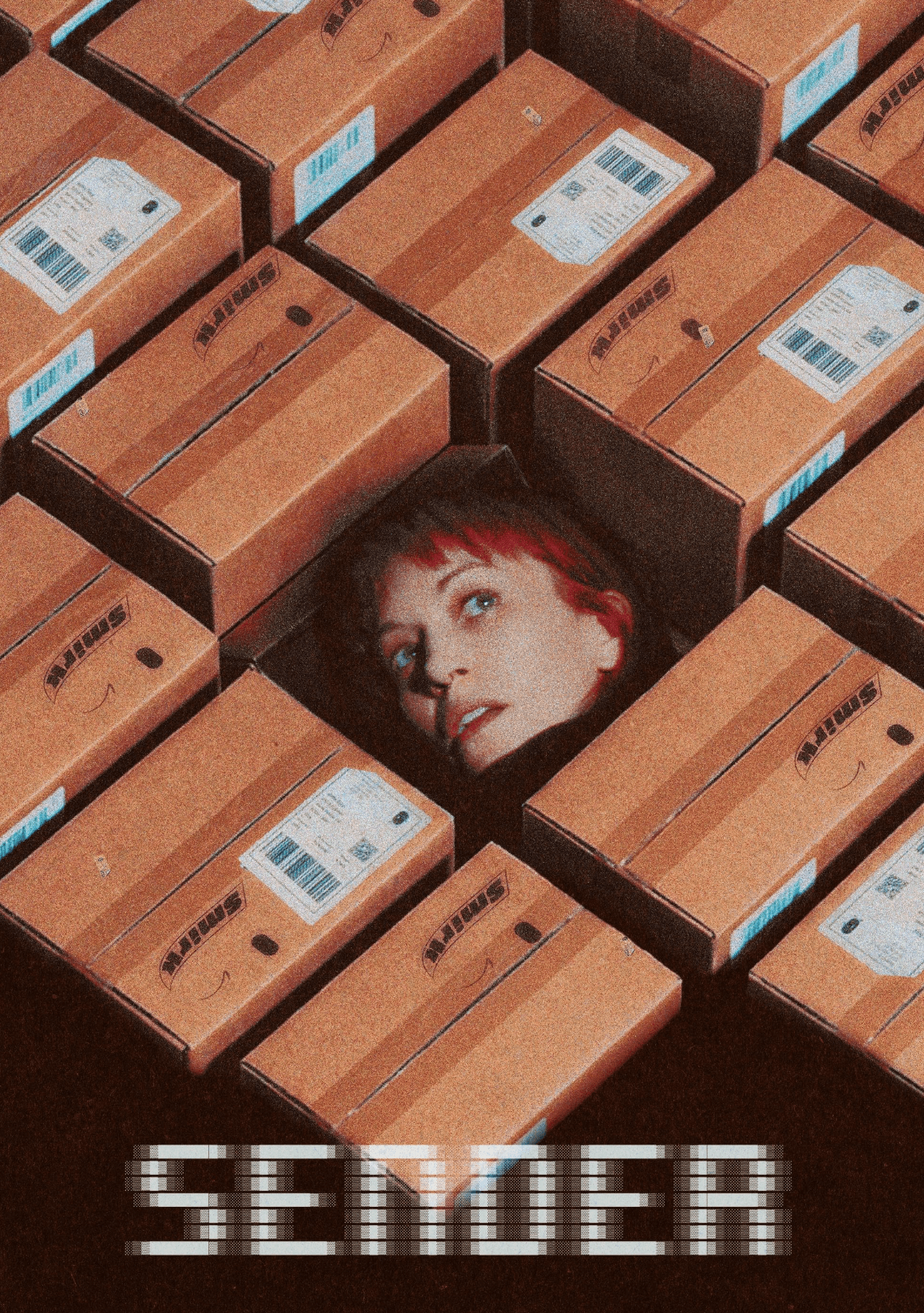
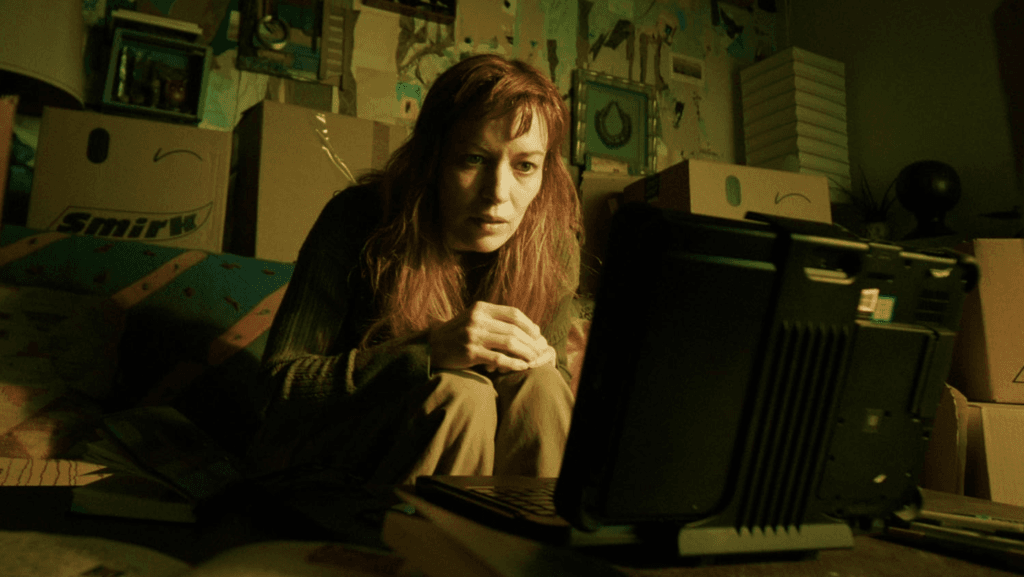
We next pick up with a new character: Julia (Severance‘s Britt Lower) is an alcoholic in recovery (with frequent relapses) who has recently quit her job (been fired) and hopes to make a fresh start, taking some tentative steps towards enrolling at art school, with her new home bearing the brunt of her early artistic impulses. She attends a support group, but again, her commitment to the programme isn’t exemplary, and she mainly learns how to make a nuisance of herself in front of fellow attendee Whitney (Rhea Seehorn), who absolutely refuses to be Julia’s sponsor, perhaps sensing trouble. Back at the house, setting up home requires lots of deliveries, so Julia is soon getting plenty of boxes coming through the door. These largely come via a delivery company called Smirk, and given the amount of business she seems to be sending Smirk’s way, she gets to know the driver a little, a guy called Charlie (David Dastmalchian).
However, there soon seems to be something amiss with this new start. Julia starts to receive items she doesn’t remember ordering. Not only that, but these items seem to display some kind of insight into her character, as if they are coming from a place of prior knowledge. Given her relapses, it’s not beyond belief that she is ordering all of these things for herself, but it doesn’t seem to be that. What makes it weirder is that she – or someone using her name – has been leaving glowing online reviews for all of these deliveries, too. What’s going on?
As the items themselves grow more ominous, the already rather febrile atmosphere of the house increases. Sender could go in a number of different directions here – supernatural, psychological or a kind of whodunnit; without spoilering, it elects to focus all its attentions on an already rather nervy, vulnerable woman, following her down a rabbit hole as she struggles with a tide of new stuff, stuff which seems to anticipate her needs, wants – and fears. This is all punctuated with flashbacks to the throes of alcoholic episodes and relapses – Julia is clearly presented as someone not in a good place to investigate Smirk, or anything else – but the film soon comes to over-rely on these frequent, fast edits, revisiting earlier flashbacks and offering up lots of scenes where Julia is elegantly wasted, whilst zipping between set-ups and ideas at a frantic pace.
On one hand, this feels a lot like being online; it’s overwhelming, this barrage of items, these algorithms which seem to ‘know’ you. Whether this is the intended effect or not, though, the film’s structural choices can feel irritating, and it’s distracting when it recurs like this. Then, surprisingly, the pace begins to dip, even whilst the zip-quick edits persist; at around the midway point, Sender pauses to examine the relationship between Julia and her long-suffering sister, Tat (Anna Baryshnikov), who co-signed for the new house to help Julia out (and is suitably horrified at the sea of boxes now littering the place). This, plus Julia’s more in-earnest attempts to track down her mysterious sender, dissipates some of the initial mystique – though some audiences may enjoy the debates offered up by the film as it progresses, many of which touch on notions of control and self-control – big ideas, now as ever.
This film has a huge cast, with both Britt Lower and Rhea Seehorn having recently taken leading roles in vastly popular Apple TV series, like Severance and Pluribus. Their appearances here would draw comment enough, but to get David Dastmalchian on board too is a real coup: it feels hard to imagine that this film won’t get picked up by an eager distributor in the not-too-distant future. All of the lead actors perform their roles admirably here, though Dastmalchian seems to steal every scene he’s in, and we could always stand to see more of Rhea Seehorn. Overall, Sender has good ideas, and at its best it can be deadpan, paranoid and pithy. It does tend to get lost in those ideas and how to present them to us, however, particularly floundering right at the end – which is unfortunate, but this film’s very existence shows us what sorts of things scare and alienate us now. Perhaps the ultimate Amazon-themed horror (oh come on, it’s so clearly Amazon) is still ahead of us, but Sender‘s initial shock factor, plus its great cast and wry observational touches, does provide us with points of interest and engagement.