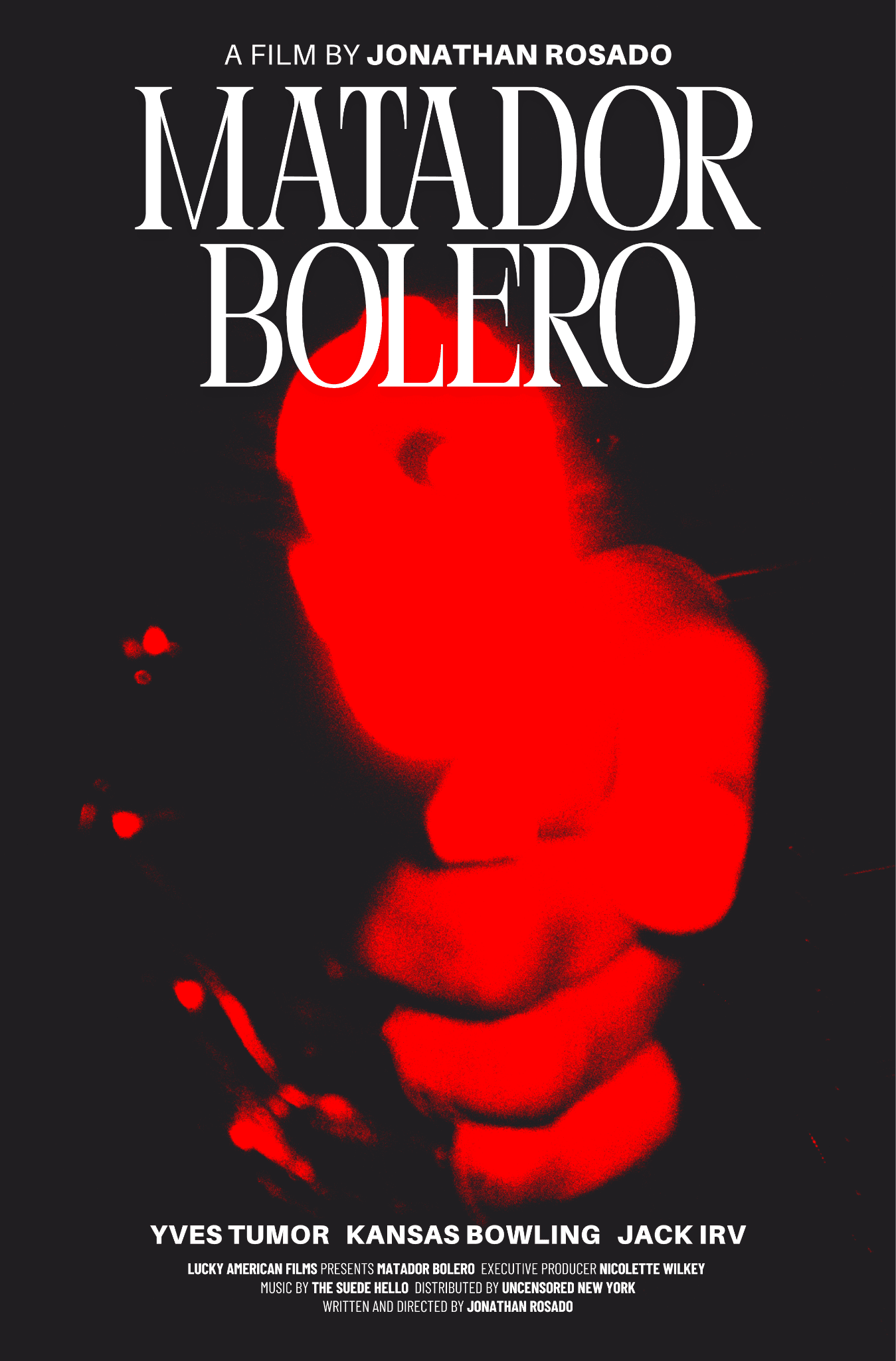
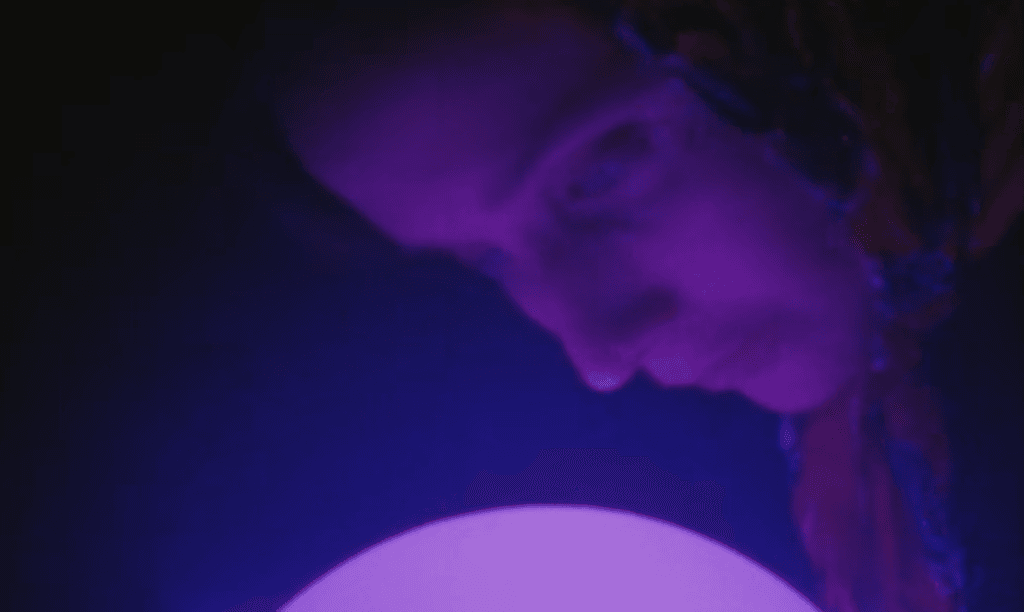
Matador Bolero starts very calmly: there’s a young woman communing with nature against the backdrop of a rather beautiful, Super 8, retro-styled idyll. There’s no dialogue as of yet, and no music. She then finds a large, pastel-coloured egg, placing her hand on it – all the while being observed by a masked figure, hiding nearby. Nope, the figure doesn’t produce a knife; they don’t approach the girl in any way at this point, either. Instead we get a brief diversion into on-screen text, which appears like subtitles: “just as one’s image is erased, a mirror emerges from the sea.” If by this point you’re thinking the spirit of Jean Rollin is alive and well and has resumed his career from beyond the grave, then this impression is about to shift, too: we’re swiftly transported to a grindhouse-type cityscape, a world of nightclubs and strip shows, or – in the case of a club called The Matador – a little of both.
As the screen teems with very beautifully composed images – many over-layering one another to the point of sensory overload – we can only be certain of a few things. We meet the club’s owner, Charlie, who is called to the telephone one night, thereby missing a shooting in the club which claims the life of a popular actress called Beverley Green. There’s clearly some kind of criminal underworld at play here, and the police are convinced that Charlie himself is in on it, subjecting him to a highly unorthodox police interview. Charlie gets released without charge, but here the film chooses to add in a set of, shall we say, different considerations. A character referring to himself as ‘Adam’ may be part of this clubland world, but he’s a much bigger prospect than that (clue’s in the name). He has tasked himself with reversing a series of events which have fractured the known universe, leading to a state known as ‘The Bend’. This all happened after the sacrifice of a unique child, now resurrected as a kind of super computer and known by the name of ‘Bolero’. Adam is looking for Bolero, and his followers, in order to bring the world back to a utopian state – which it definitely isn’t, not currently.
So there’s our justification for the film’s the title, but are we still feeling confused? Almost certainly; Matador Bolero is confusing by design – if we accept that the film is much more about blending moods, impressions and visual styles than telling a story. This is a world which encompasses the frenetic sexual anxieties of giallo with far loftier shapes, ideals and potential symbols. In fact, the film and its approach reminds this reviewer very strongly of the work of Hélène Cattet and Bruno Forzani. Now, it could be that the work of Matador Bolero director Jonathan Rosado shares a common ancestor, rather than directly being based on Cattet/Forzani, but surely anyone familiar with the likes of Amer will see a low-budget, if earnest love letter to both its visual style and, some might say, its cavalier approach to narrative. If so, your feelings about one will colour your feelings about the other. Personally, having some sort of narrative thread to follow feels important – films feel very long without it – and there’s something to track here, though the dreamlike, oblique nature of Adam and Bolero’s story winds up feeling oh-so whimsical. And, again like all of Cattet/Forzani’s work to date, it tests one’s patience, even whilst inspiring admiration for such a spirited, committed aesthetic approach. I do have to wonder how films like these – these sequences of largely disparate ideas in eye-catching apparel – really find their people. There are lots of interesting things going on, but presumably there are limits to who will find and thrive on them. Oh, and there’s a bit of Jess Franco in here too, for anyone who likes their strange, existential genre film to factor in some soft furnishings. If you know, you know…
Interestingly, and perhaps tellingly, Matador Bolero has lots of links to music video: Adam is played by experimental musician Yves Tumor, and the film also stars Kansas Bowling, who got her first feature-length released by Troma when she was just seventeen and has carved out an interesting career as both an actor and a music video director since that time. That feeling of distinct, music video-style vignettes and an emphasis on style is written all over Matador Bolero. It’s a bold project but a strange prospect, pushing the boundaries in what feels like both experimental, but recognisable ways, and coming up with something off-kilter, but visually strong.
Matador Bolero (2026) opens in New York on May 22nd and Los Angeles on June 12th.