 Festival season is upon us once more, and one by one, the best horror and genre film festivals of the UK are revealing what they have lined up. Myself and co-editor Ben often take ourselves down to Sheffield’s Showroom Cinema for Celluloid Screams: now in its ninth year, it has introduced us to a range of excellent films during the years we’ve been attending, and films we see there have often wound up on our ‘Best Of’ lists at the end of the year – proving that festivals are where it’s at for film fans. This year looks to be no different, with an absolutely stellar line-up coming our way. Whilst there’s often a bit of overlap between festivals of this nature (no bad thing, in my opinion, meaning that most people will be able to get to at least one of the screenings they’re after) Celluloid Screams has also got the steal on some intriguing and exciting new films.
Here’s some of the highlights for me:
The Endless (Friday 20th October)
We’ve been big advocates of filmmakers Justin Benson and Aaron Moorhead here at Warped Perspective (or rather, back in the Brutal as Hell days) and there’s a good reason for that. Benson/Moorhead blend clarity of vision with sharp characterisation and masses of imagination; they never feel they need to give the audience a safe journey, and both of their films so far (Resolution and Spring) rank amongst some of the most memorable films I’ve personally seen in recent years. I cannot wait for The Endless. Engage copy and past mode:
A decade after leaving their home at Camp Arcadia, an isolated new age cult, brothers Justin and Aaron (directors Benson and Moorhead stepping in front of the camera this time) struggle to make ends meet in their normal lives. When a videotape arrives containing an invitation to revisit the camp, the two brothers are drawn back towards their previous life, initially enamoured once more with the seemingly idyllic existence that they used to share. The longer they stay however, the more it becomes apparent that the retreat and its surroundings are governed by strange and indescribable forces that threaten the very existence of those who dwell within it.
Borley Rectory (Friday 20th October)
…And breathe. Anyone who is interested in ghostly phenomena will likely have heard of Borley Rectory, once vaunted as “the most haunted house in England”. As a child, poring over investigator Harry Price’s accounts of this place terrified me so much that I had to sleep with the lights on for weeks. I’m beyond excited, therefore, to see this story – over six years in the making – making it to the screen. Director Ashley Thorpe calls his film an ‘ultrasound of a haunting’ and I anticipate great things. The involvement of League of Gentlemen/Psychoville actor and writer Reece Shearsmith is another element in its favour; alongside the other Gents, two of whom are going to be present at the festival (see below), Shearsmith has been integral in scooping up all manner of horror tropes and presenting them to us in bleakly comic form. It takes know-how to blend terror and comedy, but of course Shearsmith has carved a career as a horror and genre actor of some calibre, so appearing in a piece of work which picks at the seams of the ghastly British consciousness is exactly the kind of progression I’d both hope for and expect from him.
68 Kill (midnight showing, Friday 20th October)
Much has already been said of 68 Kill, the vast majority of which has been glowingly positive, and this sounds like a great film to pick for the late night slot. Trent Haaga is a safe pair of hands when it comes to what the blurb describes as ‘outrageous’ cinema:
Chip (Matthew Gray Gubler) is a sucker for a pretty face. Dominated by his dangerously beautiful girlfriend Liza (AnnaLynne McCord), he duly accedes to her every whim. However, poor Chip lands himself in a whole heap of trouble when he reluctantly agrees to assist Liza with the robbery of $68,000 from her sugar daddy. This theft leads to a blood-splattered and increasingly outrageous sequence of events, as Chip tries desperately to find a way out of his chaotic situation and return to the simple life he once knew.
I Remember You (Saturday 21st October)
An Icelandic supernatural noir/horror? Sign me up; this tiny nation is (accordingly) something of a rarity on the genre and horror circuits, but has a culture, folklore and outlook all its own which is ripe for on-screen exploration:
Based on Yrsa Sigurdardottir’s best-selling novel, this supernatural scandi-noir is certain to send a shiver down your spine. An elderly woman hangs herself inside a church in the remote Westfjords of Iceland, which leads to an investigation into a number of strange deaths of elderly people in the region. Freyr, the new psychiatrist in town discovers that the deceased woman was obsessed with the disappearance of his 7-year-old son, who vanished without a trace three years prior. Across the bay in an abandoned village, three city dwellers are restoring a house when a series of supernatural occurrences begin to unfold. These two stories gradually intertwine and it turns out that the disappearance of a young boy decades earlier may hold the key to uncovering the truth.
Tragedy Girls (Saturday 21st October)
Been hearing good things about this one, and any skits on the pervasiveness of the ‘likes’ culture of social media (by the way, please ‘like’ and share this post for our edification) and our mordant preoccupation with celebrity deserve to be seen and enjoyed. This one will no doubt make us laugh at it all, too, which is exactly the reaction we need in greater abundance:
Meet Sadie and McKayla, aka the ‘Tragedy Girls’. Together, they run a website devoted to true crime. Their fascination with the subject is boundless, and the girls soon find they’re no longer satisfied with merely writing about violence, and decide to embark on a more ‘hands-on’ approach. Comedy ensues as the delightfully gruesome killings end up looking like accidents, much to the girls’ frustration, as they crave recognition for their murderous prowess. As their exploits attract attention to their small town, the Tragedy Girls quickly become engulfed in the social media fame they always dreamed of – but will their relationship survive it?
Special Event: Inside Number 9 (Special Anthology Screening – Saturday 21st October)
Remember how I said The League of Gentlemen and Psychoville wrought horror into uncomfortable laughter? Add Inside Number 9 to that list: it’s another piece of genius writing and storytelling for television which calls to the late, great horror telly of years gone by. With this special anthology screening of a selection of episodes, writers Steve Pemberton and Reece Shearsmith will be in attendance both to introduce their work, and answer questions afterwards.
M. F. A (Sunday 22nd October)
I’d expect this to be the most harrowing piece of work on the bill. However, these are often the films we need the most; weave a story out of something disturbing and possibly relatable, and you can explore the feelings it engenders in a way which often just fails to materialise when you simply look at news or statistics:
Noelle (Francesca Eastwood) is a shy and withdrawn art student. She has a hard time fitting in with her peers, so she’s thrilled when she receives an invitation to a party from handsome classmate Luke. However, the evening takes a devastating turn when Noelle is brutally raped.
After seeking help from various sources, Noelle encounters hypocrisy, injustice, and a total unwillingness to address the situation. Her frustration soon turns to anger, and Noelle decides to take matters into her own hands. She sets out to avenge rape survivors whilst channelling her rage into her artwork, creating dark and affecting pieces for her thesis. With a mesmerising performance by Eastwood, this captivating revenge thriller tackles rape culture in modern society head-on with a fierce and unflinching intensity. Though it does contain scenes that some viewers may find upsetting, it deftly tackles the tough subject matter to shine a spotlight on a very real issue.
This is just a snapshot of the weekend to come: there’s plenty more at the website, including a staggering array of short films, which are always given their fair dues at Celluloid Screams (and often make for the most unusual and innovative pieces of film you’ll see during the year). Also, look out for some classic screenings of Suspiria (which is turning 40) and Hellraiser (which is turning 30!)
Passes for the whole festival are priced at £85 (or a tenner less for concessions) or, if you’re a young whippersnapper between the ages of 18-26, you could get a £60 pass as part of Showroom Cinema’s Cine26 membership scheme. Individual tickets go on sale on the 22nd September. We’ll see you there!
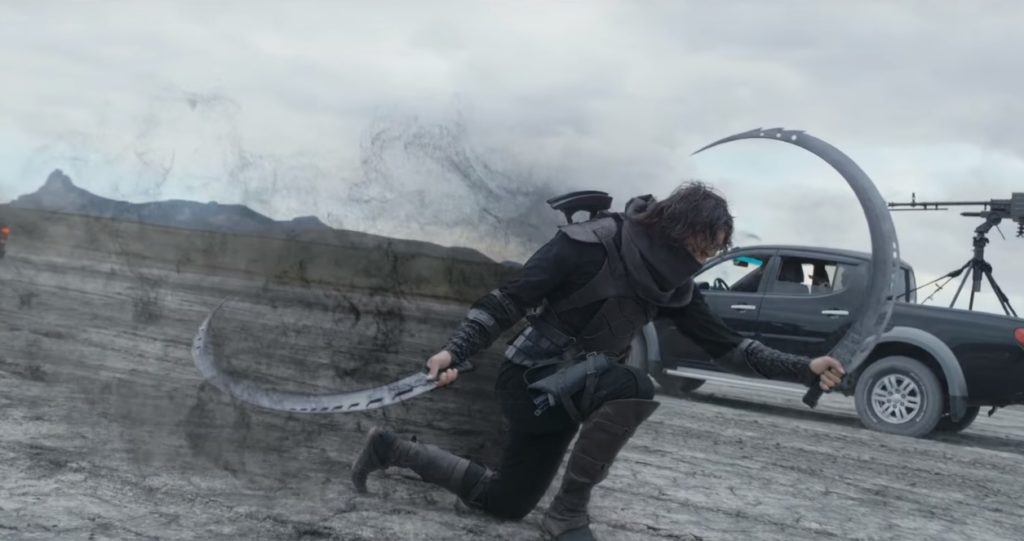 Though a few notable films have bucked the trend, it’s still comparatively rare, at least in Western cinema, that we see so much of a mention of Stalin or the Soviets whilst Nazi bad guys are ten a penny in all manner of horror, sci-fi and exploitation cinema. So, when I saw the promo material for Guardians – a modest budget Russian sci-fi – it seemed that here we’d have a film to buck the trend, what with all the mentions of Stalin taking action in response to the Nazis developing ‘super soldiers’ and what-have-you. It turns out that this context is mainly for the press information and doesn’t really feature in the film at all, however, so aside from some black and white images relative to the Cold War in the opening credits, the film is set squarely in modern-day Russia.
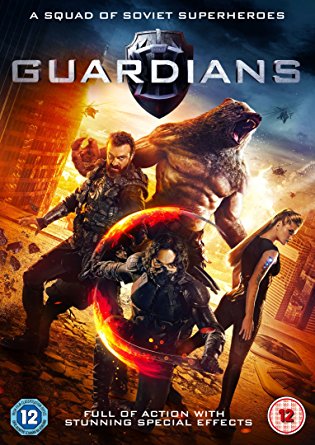 The Guardians themselves, once back together, need to use their slightly odd array of skills to defeat their erstwhile engineer. So we have: Ksenia, a woman who becomes transparent in water, and is impervious to extremes of temperature; Khan, a guy who can move very fast and has some equally speedy swords; Ler, who can make stones move, and (my obvious personal favourite) Arsus, who can turn into a half man, half bear (the top half) or if he’s really up against it, an ENTIRE BEAR, replete with Incredible Hulk style magic reappearing trousers when he becomes a man again. The rest of the film prioritises a number of what look like reasonably budgeted fight/action scenes, with a fair few head-scratching moments regarding the plot: it feels rather as if things are being raced through here, simply in order to introduce some action heroes who are clearly being set up for a sequel by the end credits – which is okay, but if you’re expecting a detailed story, best forget it. In fact, you’re probably already thinking of a certain other franchise at this point, and yes, the similarities to X-Men are manifest, albeit the latter takes more time (or more time makes it to screen) to establish character and motivation. It’s as if director Sarik Andreasyan has looked at all the X-Men movies and got a little ahead of himself, wondering how he could propel his own characters to those heights. This is clearly a film made by a team cognisant of the rage for superheroes ongoing in cinema. Guardians goes at a run throughout, where perhaps it would have established itself better by taking a breath.
 The way that I first found out about its existence no doubt did a great disservice to A Ghost Story. Remember that Guardian newspaper article from July, which argued for something called ‘post-horror’? Post-horror is, of course, simply the latest in a long line of terms invented by people who can’t quite accept that they may have liked or made some horror: we’ve had dark fantasy, social thrillers, and now we have post-horror;
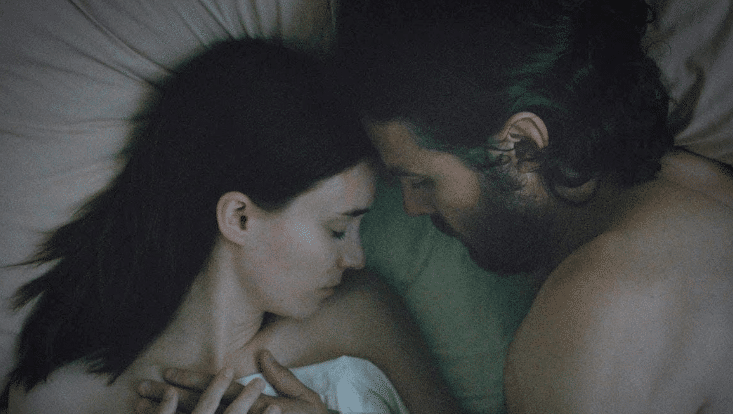
 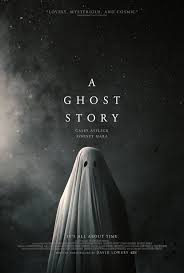 At this point, C sits bolt upright. The sheet which covers him stays in place, referencing the old idea of ghosts wearing shrouds (see the alleged ghost photograph taken at Newby Church in the UK as an example) and also the prevalent idea in Western culture that ghosts remain because of some sort of unfinished business. Instead of walking through what looks like an exit, which is incidentally the only slightest nod to conventional ideas about the afterlife in the film, he walks home. From now, the character is mute and invisible. Whereas in a book like The Lovely Bones, where the deceased narrator is again drawn back towards their loved ones, in the novel we have just that – a narrator. Here. we have to read the ghost’s actions, even gestures, and we can do no more. We do know, however, that C’s ghost is fascinated by M, and desperate to reach out to her. Here. it could easily have segued into something which feels familiar – a Ghost (1990) for the Tumblr generation, where things seem bleaker but more picturesque as a rule. However, the key moment comes when M moves out; the ghost remains, trapped, waiting for her. Weeks – or years, decades? – go by. He observes life unfolding, but it is intermittent; a moment gives way to a different season, different residents. Still the ghost is there, (usually) invisible and unable to voice his thoughts. In this, A Ghost Story is indeed a horror story, because there can be few things more horrifying than the prospect of an eternity in this state.
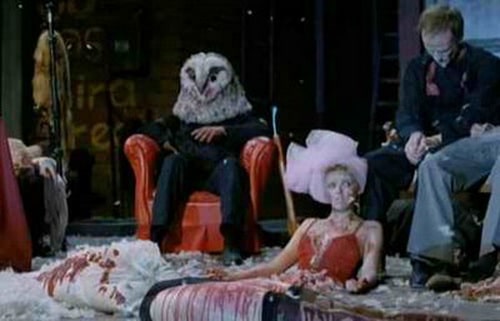 In a small US theatre, the cast of avant-garde performance The Night Owl are readying themselves for their big opening night. In true Stanislavsky style, the director wants everyone locked in, so that they can really get into their roles. This is a health and safety disaster waiting to happen in its own right, so it’s even more of a shocker when a psychopathic luvvie breaks out of a nearby psychiatric hospital that very night, dons the suitably eerie owl mask being used in the performance and then runs amok, picking off the actors one by one. Yep, this is the film most commonly now known as Stage Fright (or StageFright, but I’ll stick with the distinct words if I may), the first film made by director Michele Soavi as a foray away from his mentor Dario Argento: it carries a lot of the hallmarks of Argento’s work, as you’d suppose it might, but it also shows a director already more than capable of committing his own style to celluloid.
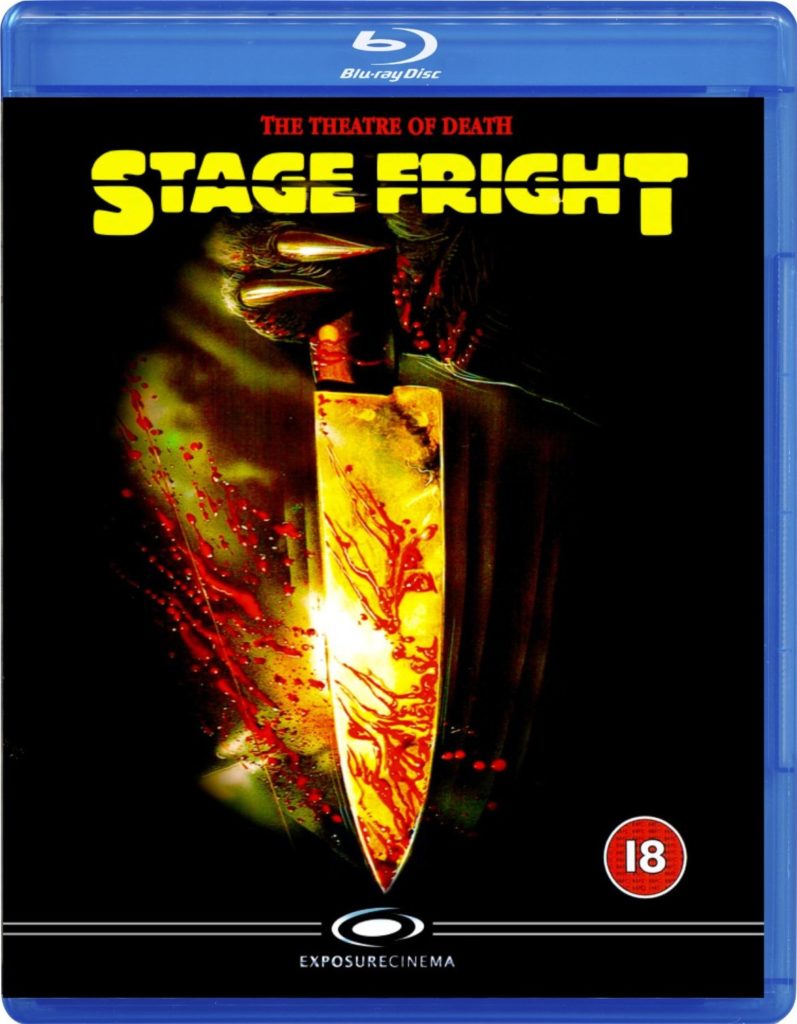 For all that, this is a horror film, and by this point in the 80s, horror was established enough and popular enough to be self-referential on a scale not seen before: horror cinema had often become about the knowing nod, relying on audiences to know some of the conventions, or at least to have seen enough of the wealth of films already floating around and far more readily available, thanks to good ol’ analogue technology. Freddy Krueger was doing the rounds by now, wisecracking and gurning for the camera as he terrorized teenagers; Henenlotter was grossing audiences out with his body gore gags; even Romero could afford to reference his own work in the otherwise relentlessly grim Day of the Dead (remember the little jingle from Dawn which plays over the zombie being left in the dark to ‘think about what he’d done’?) Stage Fright, too, is often cleverly self-referential, and deserves more dues for it. The whole film-about-a-play which is itself based on an exploitation script, where in one scene director Peter matter-of-factly announces that it’s time to give the rape scene a go, seems to me to be a spin on the behind-the-scenes elements of many of the films being made under the masked killer banner around this time. It’s an actor who initiates the horror here, after losing his mind in his acting career.
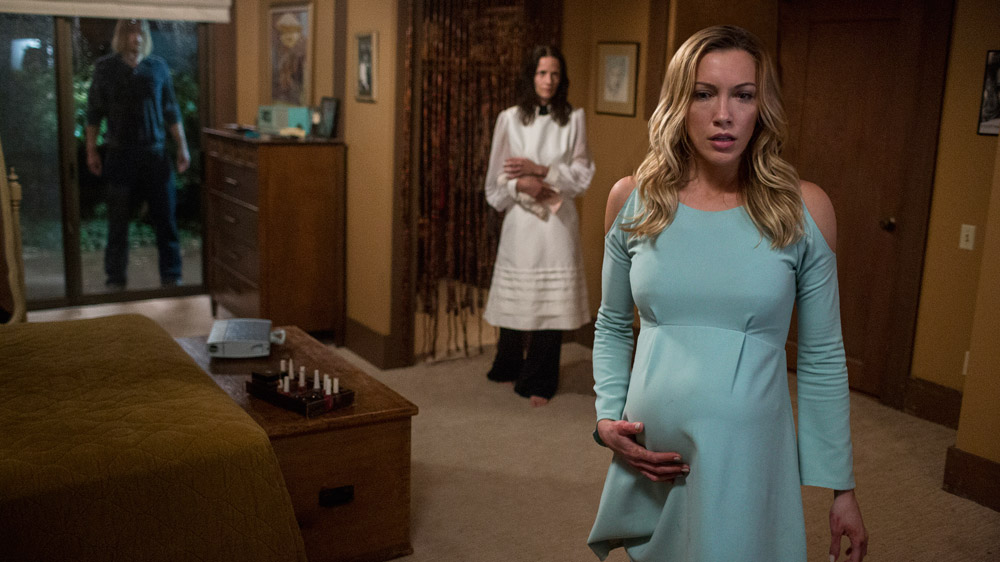 Considering their importance to the subculture consciousness – y’know, having probably dismantled hippie culture ready for the start of the 70s – cinematic versions of (or interpretations of) the Manson Family murders have always been…problematic, shall we say. Some of the very vaguest of nods to the case have been played for great, exploitative fun (such as I Drink Your Blood) whilst some have gone for the full art-house treatment (such as Jim Van Bebber’s The Manson Family) and – for me – not quite worked. It’s a different prospect altogether when you actually namedrop the case, as Wolves at the Door chooses to do: the Manson Family inspiration is right there, writ large on the cover art. Openly using such a well-known case has its issues; these are also writ large all over this film.
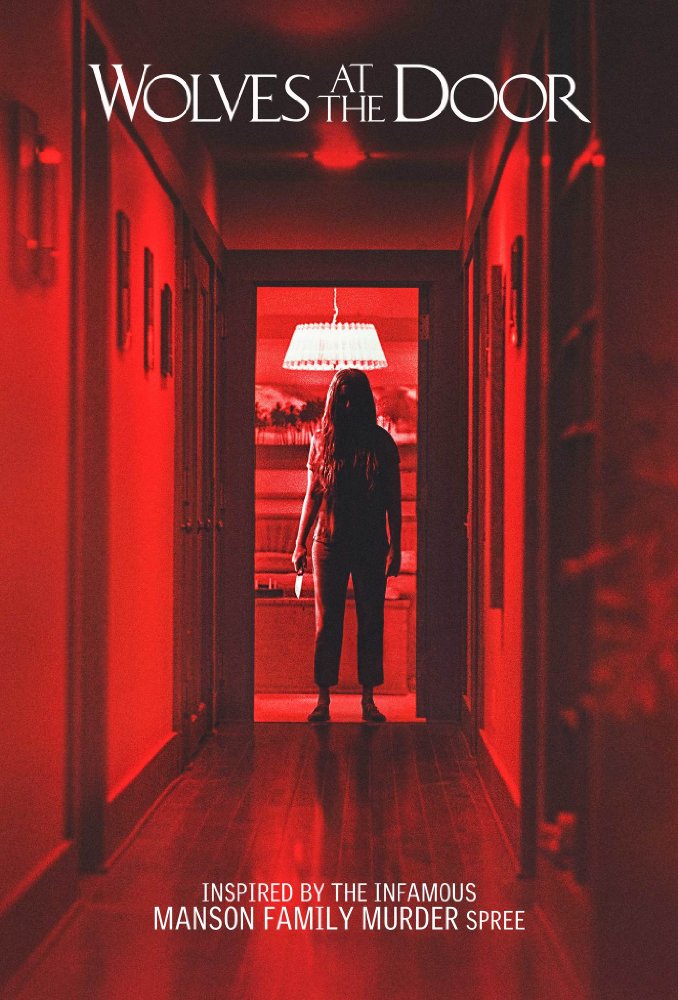 See, this is the thing when you oh-so loudly and proudly declare that your film is based on the Manson murders. These murders are amongst the nastiest and most well-known from the era, and to this day, horror films shy away from torturing and killing heavily-pregnant women (as an example) so this leaves the film at an impasse: do you recreate all of the grisly details from the case, dare any disapproval, and also land yourself the task of creating tension around events which many viewers will already know well? Or do you deviate from the case, despite name-checking it – and, if you do something rather different, won’t you be held to account for that? These are issues which dog Wolves at the Door throughout, but, I’m sad to say, they’re only some of the flaws causing issues with the film.
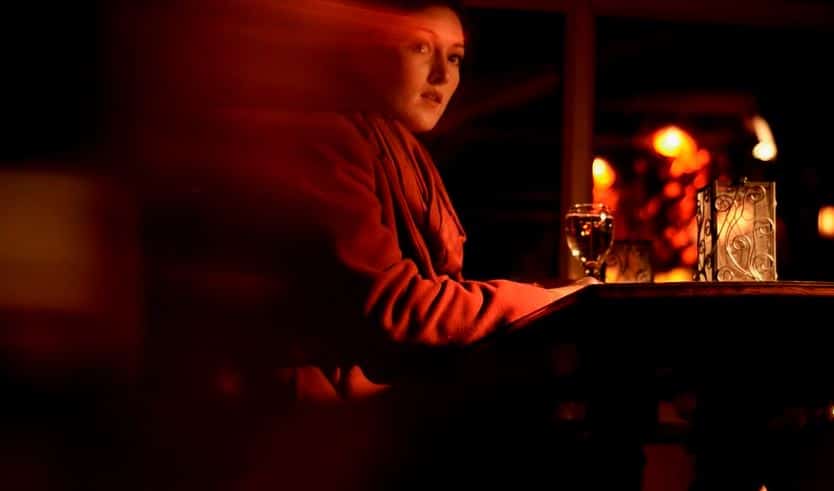 With some films it’s clear, even from the opening seconds, that they are not going to provide an easy viewing experience, and this is definitely the case with Malady (2015), a first feature-length from director Jack James which I’ll confess has left a rather unpleasant aftertaste with me. This emotional effect has been carefully constructed, of course, and it’s there every step of the way. As the opening scenes blend emotional exchanges between a dying mother and her adult daughter, Holly (Roxy Bugler) with the end result – her funeral – there’s an immediate weight and sense of dread here. Holly’s mother spends her dying breath imploring her soon-to-be bereaved daughter to “find love”: left with little else, Holly tries to move on and fulfill her mother’s last wish, pushing herself to go out into the world – though it’s a struggle, and this frail young woman doesn’t seem particularly willing or able to feel at ease.
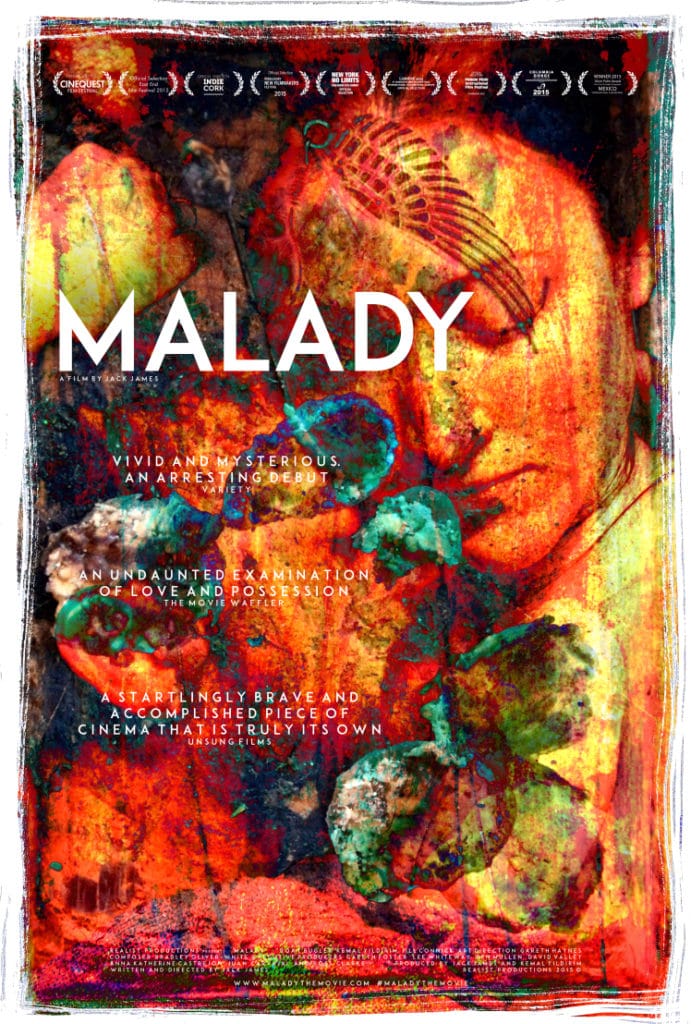 There is a great deal to admire in how this film has been shot and soundtracked, each of which show a lot of care and skill. The discordant sound design is superb: it gets going as soon as the film begins and rarely lets up throughout. As for the shooting, the film is underpinned with anxiety, and it keeps the pressure on the nerves by its relentless focus on people’s hands, as well as their facial expressions. The close, often unsteady camera work lends a suitably claustrophobic feel to the film – even the intimate scenes feel unseemly via this technique – but then to balance this, there’s thoughtful shot composition and lighting, often rich with lots of contrasts. Appearances can be deceptive, perhaps: scenes can be warm and inviting, but the human drama unfolding is anything but warm. Human relationships in this film are not straightforward, to say the least, and the film’s style mirrors that.
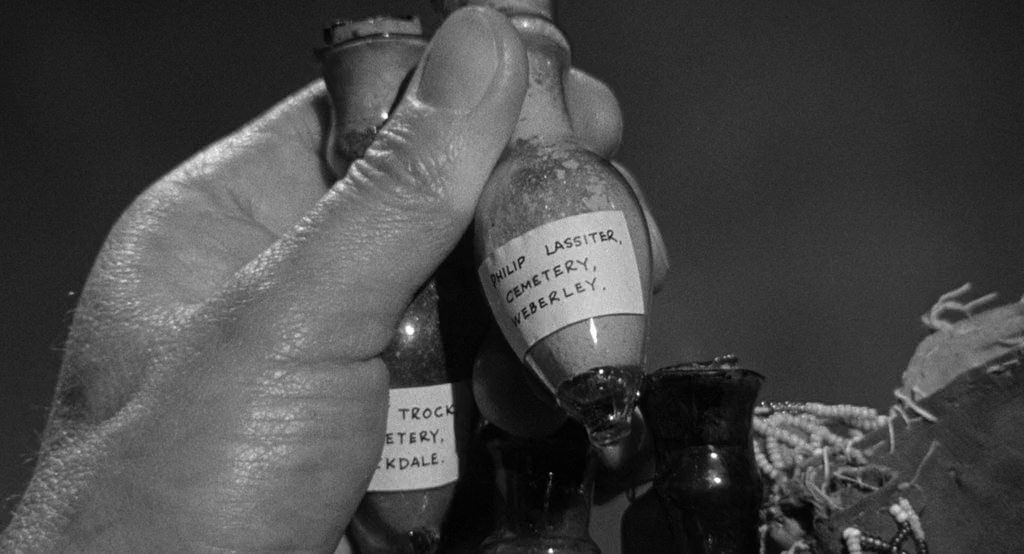 After a dreary Friday night playing bridge with a selection of oblivious males and watchful females, Tansy begins to act strangely. After their guests leave, Tansy becomes frantic, looking for something which she claims is a shopping list. Eventually, she finds what she’s looking for: an effigy, like a voodoo doll, woven into the fringes of a standard lamp. Taylor, a little baffled by her panic, continues to get ready for bed, but at around the same time he finds something very strange in one of the bedroom drawers – a dead spider in a ceramic pot. She demurs, saying it’s just a souvenir from their time living in Jamaica, but within a short space of time the Taylors’ quaint, domestic cottage is suddenly turning up a whole host of curios, charms and spells; it’s like looking again at a photograph and suddenly noticing a host of new details that you missed on the first glance. Taylor, the thinker, is decidedly unimpressed. The final straw comes with his discovery of a range of phials of graveyard dirt: he insists that the whole lot gets consigned to the fire, despite Tansy’s by now desperate pleadings that dark forces are poised to destroy him without her protections. True enough, almost the moment that the flames consume the charms (including, accidentally, a locket portrait of himself) Taylor’s extraordinary luck begins to fail. Blind chance, or something more?
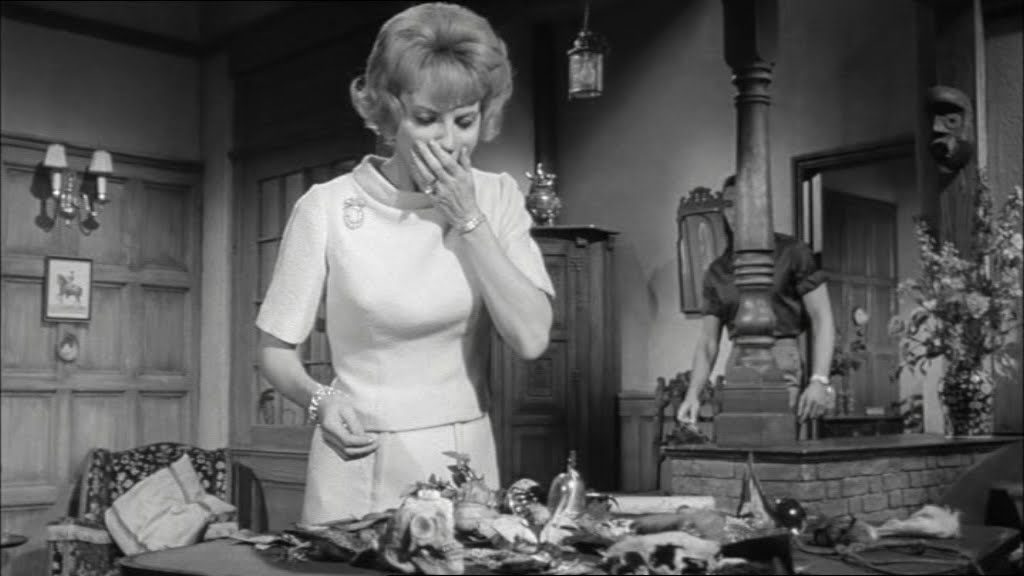 Although Night of the Eagle’s approach to gender (and to race) can feel out of step with modern thinking, it’s an important factor in the film’s plot, and gender is very important in the film. Tansy is a housewife: Taylor implies that boredom has therefore driven her to her magical practices, but she insists – quite vociferously – otherwise. What Tansy is doing is operating within the domestic sphere where she ‘belongs’ to control the external environment, as witches have long done historically. Think about the stereotype of a witch: the cauldron, the broom. Objects which were part of the average home hundreds of years ago were imaginatively ritually re-purposed for witchcraft. Tansy isn’t so different, and even Taylor acknowledges that we – women – still use ritual in our daily lives, whatever form it takes; it’s just that Tansy is performing ritual magic. As much it pains me to hear Tansy castigated as ‘hysterical’ by her husband (oh, that word…) and to also see her on the reverse of that – utterly catatonic and self-sacrificial, that does not ultimately take away from the great power held by women in the film, or the wildly malevolent joy with which Flora Carr (Margaret Johnston) intones the words ‘burn, witch, burn’ as she attempts to kill Tansy – a phrase which gave the film its alternative title. It seems that Flora may have been defending her ward, a student who alleged that Taylor had sexually attacked her – or, she simply believed what she chose to believe. Incidentally, Flora does have a role outside the home, so she can add black magic to her professional credentials – although, by the end of the film, we’re shown in no uncertain terms that women really couldn’t have it all at the time.
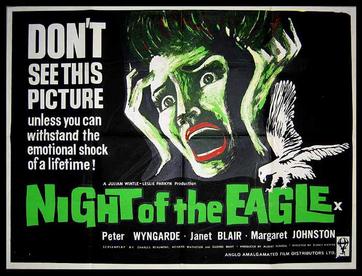 If women are harmful sleeper agents, then consider also the impact of the Taylors’ tenure in Jamaica, where – we are told – Tansy first picked up her magical habit from fraternising with the locals. You don’t have too look too far for anxiety about the effects of a more ‘primitive’ belief system on a more developed one, and that could easily form the basis of a completely different article, but I will say this: the impact of this Jamaican magic is of note within Night of the Eagle because, as Tansy says, “it seemed to work”. It’s not simply harmful because it’s Other – it’s simply harmful. As we have seen in Svetlana’s feature on American folk horror, Haitian supernatural practices have become interwoven with American folk beliefs: this is another example of the terrific impact of racial and cultural Others on a Western cultural landscape. In the 1960s, ideas of horror seemed to have to adjust to this ever-changing landscape, poised to degrade at any time and sweep modernity away. Even wives were weaponising; even beliefs were vulnerable and permeable.
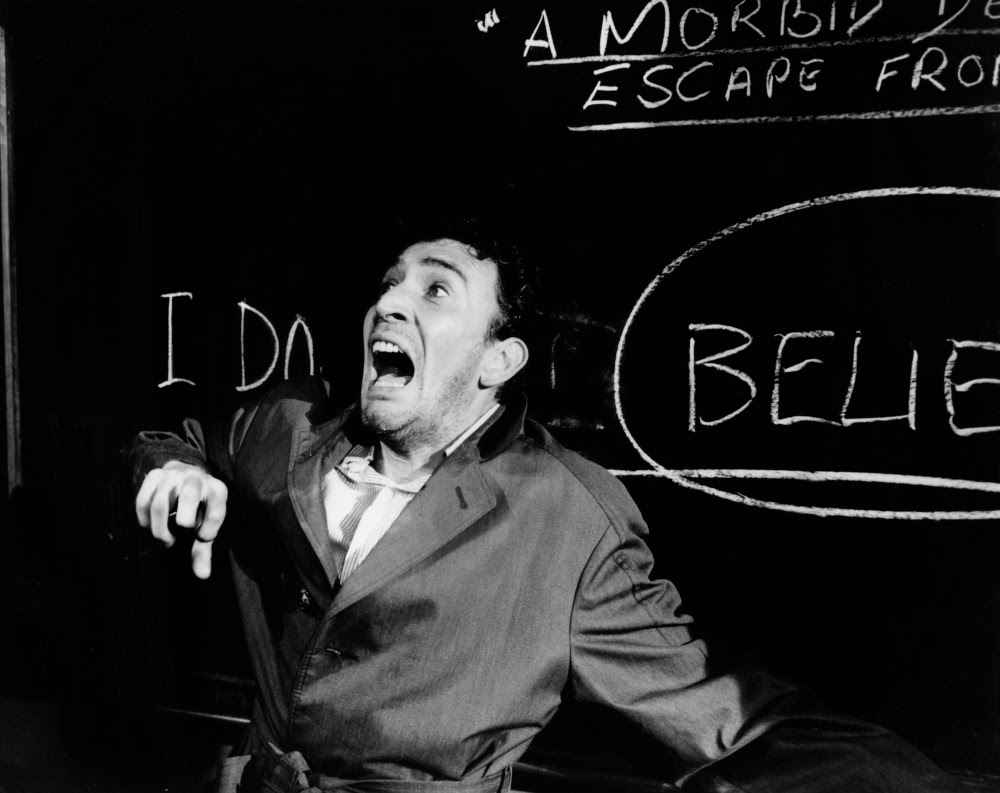 Where it differs, perhaps, is in the way Taylor has to come to accept that strange things are happening; once he has done this, he can escape, although things cannot be the same again. A man of few words, we are never told how he feels, but we’re in the same position as him, by the end. We don’t know if the eagle falls by chance or intent. We don’t know if Tansy survives by chance or through magical protections. The world is a more uncertain place by the end of Night of the Eagle. In this respect, Norman Taylor is more of a Rosemary Woodhouse than a Sergeant Howie – he encounters a cult, and his rationalism gets modified by the encounter. The Taylors survive. But at what cost?
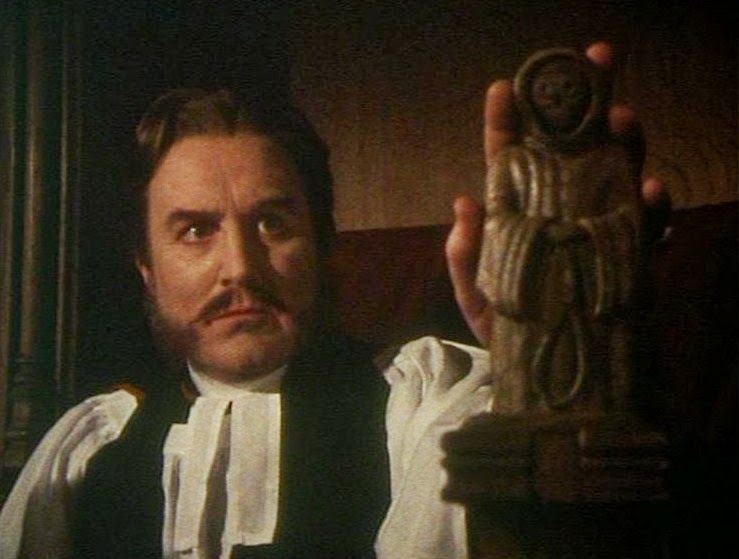 There’s engaging content here throughout, which I feel would intrigue fans as much as academics – though that’s a bit of a false dichotomy these days, I know. For instance, I really enjoyed the section on M R James and his screen legacy which so often comes to us via Lawrence Gordon Clark, a talented figure who has done a great deal to shape our appreciation of ‘folk horror’ (see also: Nigel Kneale, whose work is happily given due consideration.) The 70s themselves are shown as uniquely placed to have given us so much folk horror,and we also see, interestingly, the way that the decade now comes down to us as a kind of folk horror realm itself – other, distant, uncanny, tinged with nostalgia. There is also a section on more modern forays into folk horror (The Witch, A Field in England, Kill List) as well as a whole host of films and TV I’ve never seen, but would now seek out: The Shout sounds fascinating. All in all, the level of research and knowledge showcased in Hours Dreadful is second to none.
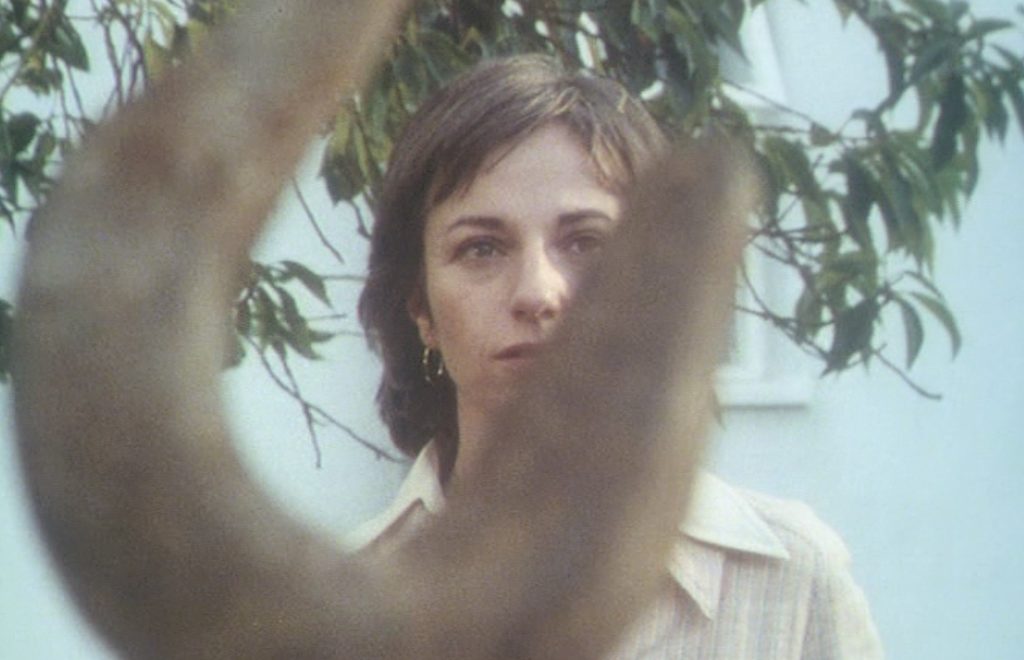 Consider the implications of interfering with a stone circle in 1977’s Stigma, written by Clive Exton and directed by Lawrence Gordon Clark, who directed several other of the above-mentioned Ghost Story for Christmas TV episodes. It’s also relevant to say that, throughout the TV and cinema of the 1970s, Avebury (the location of Stonehenge and a number of other monuments) crops up several times. In Stigma, a young couple moves into a remote country house, which just so happens to be in the middle of a stone circle. Their renovations – which shift a standing stone – disturb a force that has been long buried, with the resultant action focusing on wife and mother Katherine’s body and what happens to her as a result of this modern transgression. A flawed narrative perhaps, but a story that points directly to the risks of breaking a stone circle, even in the twentieth century – with links arising between Katherine and an uncovered burial beneath the dislodged stone, presumably a ritual sacrifice. This dark side to picturesque and harmless ancient monuments would occur again during the decade.
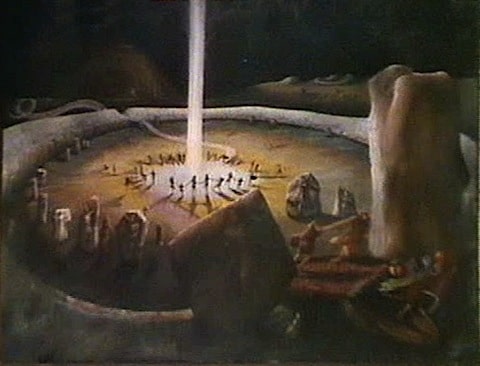 In Psychomania (1973), the group of bikers thwarting the rules of life and death do so in wide-shot locations that feature a stone circle, just to underline the strangeness and otherworldliness of the plot in a film which we would probably not otherwise consider here. Along similar lines, and something which definitely seems to fit with the current discussion, it’s still incredible to me that The Children of the Stones (1976) was ever aimed at children, although one of the hallmarks of the 1970s seems to be that the distinction between kid-friendly and adult-friendly content was less clear. Even the public information films of the decade, which intended to caution children against dangerous behaviour, are often remembered today as akin to horror film viewings. I saw Children of the Stones for the first time in the mid-eighties, and it really got under my skin. The story of the village of Milbury – built in the midst of a stone circle (and again set, and filmed, in Avebury) makes for a strange new home to son Matthew and his father, Adam. A creepy story of indoctrination and weird psychic phenomena (and yet another sinister patriarch) ensues, with the stones themselves at the crux of the plot, whereby the circle has come to exist in some sort of time loop, making its influence seemingly inescapable. I have not revisited the series in many years; a mish-mash of terrifying music, blank-eyed schoolfellows and that painting usually drift to mind first when I recall it now.
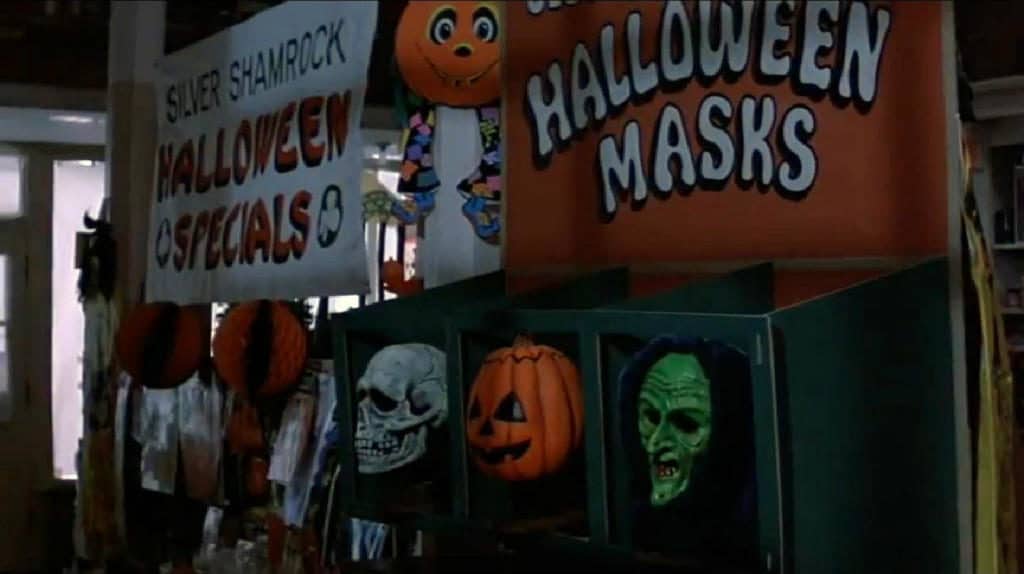 As a clash between the modern and the ancient, first of all, I’d argue that Season of the Witch is second to none: here, fragments of a Stonehenge stone are being added to mass-produced Halloween masks in order to control the wearers via a mass media trigger – TV. The reason given for this is simply to rejuvenate the festival of Samhain, which we modern folks have co-opted as Halloween, a festival where, as antagonist Conal Cochran sneers, people simply send their children “begging for candy”, ignoring the bloodshed and sacrifice originally associated with the Celtic New Year. Well, no more. Here, not only is a standing stone – from the most famous standing stones in the world – integral to the horror, but also it’s physically been transmitted to the New World, where the intention is to wreak havoc – old against new, misunderstood tradition against crass modern. Moreover, not only is America in danger, despite the distance between it and the British Isles, but its beloved free market and TV media are the things being used to promulgate that danger. Never were old and new brought to bear on one another in such a clear, direct way. Witches, Jack O’Lanterns and skulls – magic, ritual and death – via mass sale – transmit the destructive magic of a British standing stone to a crowd of naive and distant victims. Like Count Dracula and his native earth, as he purchases a property in England via modern and legitimate channels, it seems that this malign monolithic power (as it’s imagined here) can be carried and established in a new terrain simply by manipulating the modern system.
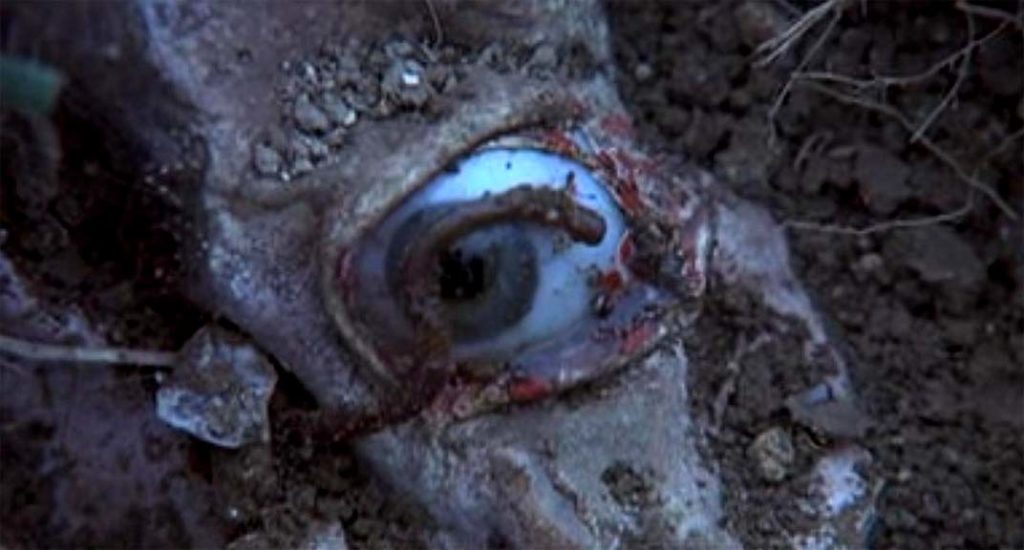 No film better understood (or embodied) the idea that you could quite literally unearth an evil than The Blood on Satan’s Claw (1971). In this seminal film of its kind, it’s the process of ploughing the land which turns up something unexpected – the remains of something ungodly. This simple act, in a fraught rural agrarian society, pushes the whole of that society to the edge of a precipice, as the village’s young people begin to fantasise about the remains and turn away from their fraught relationship with the Church towards more carnal forces. (The Church’s shortcomings are also explored in another contemporary film now held up as canon in folk horror tradition, Witchfinder General). It’s interesting that, in her book, Looking For The Lost Gods of England, author Kathleen Herbert identifies two things which are relevant to The Blood on Satan’s Claw. Firstly, the age-old importance of the soil in pre- or very early Christian times, where it was seen as a conduit between man and god, and secondly, accounts of rituals which incorporated the plough as a means of making offerings to the land – by literally ploughing offerings to the gods into the dirt. The spectres of these practices were retained by early Christianity, though – typically – shorn of any pagan significance. In The Blood on Satan’s Claw, the camera acknowledges the importance of the soil, and a deliberate decision was taken to place the camera on ground level or even beneath the level of the dirt. This tactic gives the land a prescience and a menace, which is borne out by later events – the accidental discovery of physical, but supernatural remains.
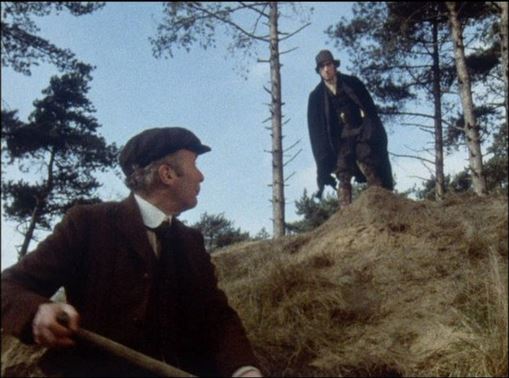 If something is unleashed simply via turning the land over, then what happens when something is deliberately placed in the ground? The master of quiet English horror, M. R. James, grappled with these possibilities in some of his best short ghost stories: he fills his tales with barely-tangible ancient terrors, which creep into view (almost) when modern interventions permit them. Some of these are summoned, accidentally or otherwise; some are malign entities which simply take their moment to escape. There are a number of stories which process these fears. In An Episode of Cathedral History – bearing in mind that cathedrals were often built on sites which formerly had other, pre-Christian ritual purposes – the tale tells of a mysterious tomb, whose disturbance causes strange phenomena to occur in the town and (possibly) releases a supernatural force, a ‘lamia’ – a term meaning a monster, or a witch. Whatever the creature is, it’s certainly something which Christianity would prefer locked safely away in hallowed ground (and there, we have the idea that the dirt of the earth can be sanctified with a Christian blessing, which speaks volumes to the beliefs of the past.) Perhaps the most famous James story, however, apart from ‘Oh Whistle and I’ll Come To You’, is A Warning to the Curious; the unearthing a Saxon crown, buried in the earth for the protection of the land, leads to severe repercussions for the amateur archaeologist who digs it up. Albeit in a simplified form, A Warning… was filmed as part of the superb A Ghost Story for Christmas series in the 1970s, as one of several Jamesian yarns adapted for television. The sense of a something relentless, a portent of doom, is married perfectly to a sense of the dispassionate, but harmful British terrain.
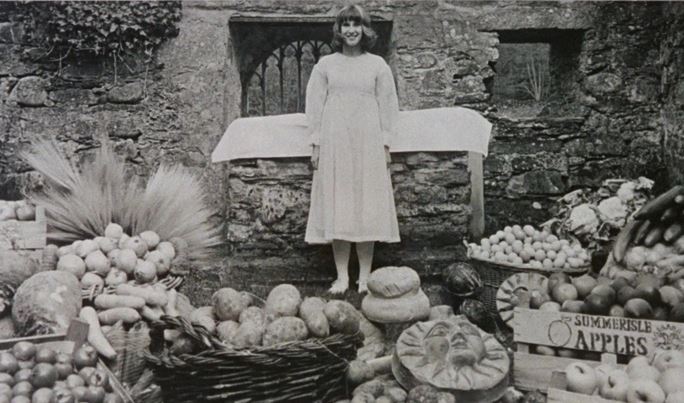 The clay can work wonders: it can manipulate people, birth terrors, and remind us all that the old gods hold sway. Perhaps we’re slower to see the significance of the soil in one of the folk horror classics, The Wicker Man (1973). Many of the elements we associate with the sub-genre are of course there – the pagan practices, the closed community and the threat to Christian outsiders, but at its heart, The Wicker Man is as a tussle between science and unreason, with the land of Summerisle itself at the kernel of the clash. The film only really discusses this element at its close. Howie, as he pleads for his life, has a moment where he invokes rational scientific argument to attempt to dissuade Lord Summerisle from doing what he’s about to do. The crops have failed, he points out, because the soil on the remote Scottish island is completely unsuited to growing apples – gulf stream or not. They were bound to fail.
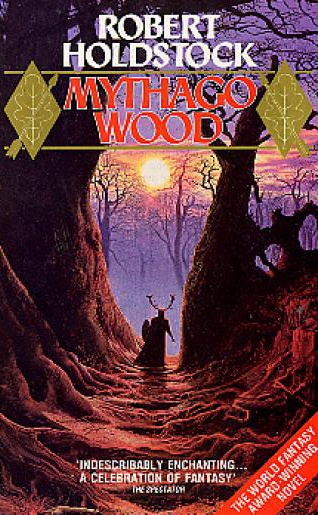 As well as what’s happening below the soil, the trees and structures on top of it have also figured significantly in folk horror. Woodland – which once covered huge swathes of the British Isles – has long been the stuff of nightmares, but it perpetuates British cultural identity, too: most children still know the stories of Sherwood Forest, for instance – an area that is still around today, though greatly depleted. Taking this link further still, the novel Mythago Wood (1984) encapsulates the idea that ancient woodland embodies our history: the woodland described here is a parallel universe, inhabited by archetypes of the British consciousness, from Celts to knights, through to monsters and magic. This can be a thrilling place, but it can also be menacing.
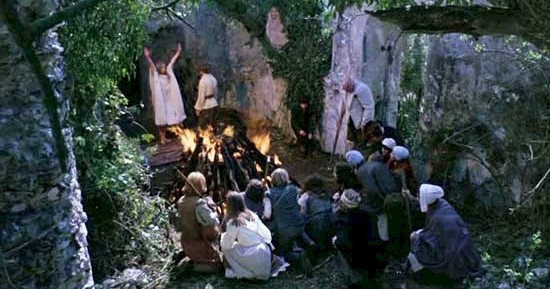 We owe our use of the term ‘folk horror’, if I’m not mistaken, to the writer and actor Mark Gatiss who used the term in his History of Horror TV programme. Nevertheless, even if Gatiss came up with a pithy, recognisable shorthand, albeit that director Piers Haggard also referred to ‘folk horror’ in describing his own work, then his umbrella term took hold because it described a sub-genre already beloved of film fans. Those three key films chiefly associated with folk horror – The Wicker Man, Witchfinder General, The Blood on Satan’s Claw – established a new kind of uncanny cinema, where the vulnerabilities of established Christian thought were exposed to unreason. Considering the enlightened times in which these films were made, they seem to represent a hankering for a magical past, or at least for something both more powerful and mysterious than the current order had to offer. It’s possible, too, that the Age of Aquarius and the new wave of magical thinking found its portrait in the attic in at least some of the folk horror which emerged from the late 60s through the 70s. If magic was indeed back, and if young people were turning their backs on the norms of their parents’ generation, then what could all of this mean?