Whilst it’s over ten years since director Park Chan-wook began stepping back from the beautiful, but brutal revenge sagas which first brought him to our attention, it’s nonetheless fair to say that I was surprised by The Handmaiden, his most recent feature. Although in some ways you can see commonality – deceptive appearances, surveillance, sexuality – between this and his earlier works, it’s otherwise a very different beast, a period drama which makes us look and look again at what we are being told before we can really understand its story. However, Park allows himself one minor tentacles/torture set piece. It’s only fair; they’ve done him proud up until now.
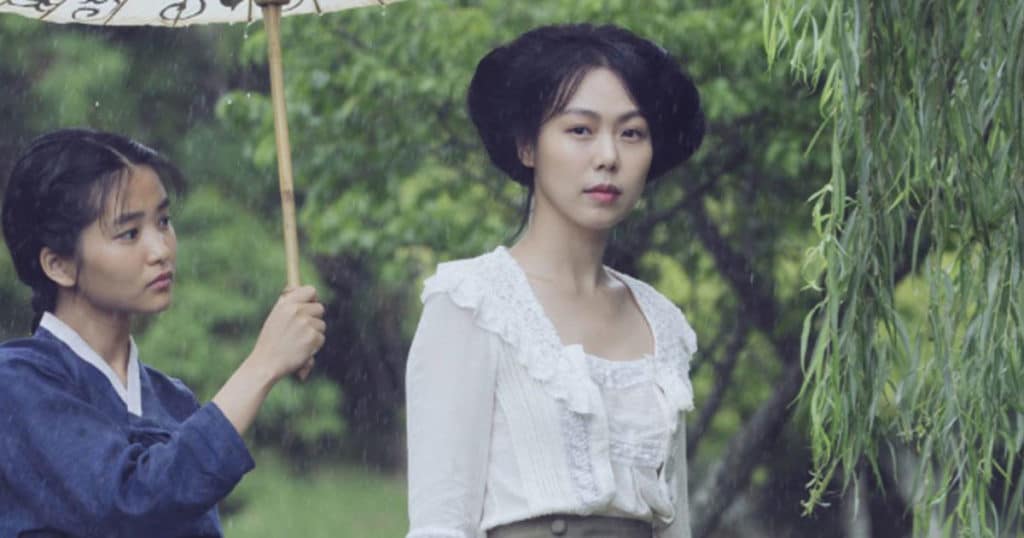 The film is set in 1930s Korea: while Europe was grappling with the rising possibility of another war with Germany, the Japanese had already extended their empire to include China and Korea, occupying the latter from 1910. A young Korean girl, Okju, is told that she’s been selected for the role of handmaiden – or a lady’s maid – for a wealthy Japanese heiress, Hideko, who lives with her uncle at a grand Korean mansion. Okju – going by the Japanese name of Tamako for her new role – is both spellbound and intimidated by the place, a weird mish-mash of Japanese and Western architecture, and at first can only gather scraps of information on her new mistress, who is apparently much-afflicted with her nerves. Tamako’s first meeting with her is after Hideko has a violent nightmare, but the new maid can’t help but be warm and informal with her from the outset, doing her best to calm her. Thus, a peculiar friendship is born.
But it turns out that Tamako isn’t as innocent as all that. She’s not Okju, or Tamako, but Nam-Sookee, a likeable little rogue from Korean criminal stock: her mother was hanged for being a thief, and her network of aunties, cousins and young charges keep company with some very crooked people indeed. Amongst these are fellow con-artist ‘Count Fujiwara’, a Japanese nobleman who is really neither of those things, but wants to get close to the wealthy Hideko, so that he can marry her and secure her fortune for himself. Getting insider knowledge from the lady’s maid is all part of this scheme, but he promises Sookee a cut of the profits when he’s done and he has, as he puts it, dumped Hideko in a madhouse. Everyone, it seems, has their price and Sookee has her own ambitions to get far away from her current situation, so she agrees to this set-up.
The thing is, she’s unprepared for the melancholy and enigmatic Hideko, whose beauty charms her, while she’s troubled by the bizarre relationship Hideko has with her elderly uncle, a bookseller and collector who uses her to perform readings for his invariably male buyers and guests (spoiler: he doesn’t ask her to read The Famous Five to them). Likewise, Hideko is intrigued by this lively new maid who speaks her mind and seems oddly earnest. Gradually their relationship changes, though the extent of these changes is steered in surprising directions. A long film in three separate chapters, Park allows different voices to come to the fore as he – gradually – reveals the truth. Some scenes are repeated and extended as other characters assert how things actually happened, telling us their version of events. The overall effect is very immersive.
“What does a crook know about love?”
Although the way is never left clear, the film really shines as an examination of the redemptive power of the two girls’ relationship, something which blossoms on screen. Park takes his time with this story; nothing is rushed. Sex is a key factor in this – throughout, even the intimation of sex with men is coarse and sadistic, whereas with women it’s gentle and intimate – but minor scenes work just as well. For example, where Hideko laces her maid into a tight corset, so that they each mirror the other (there’s a great deal of this mirroring elsewhere) they can speak to each other as equals for a short time, which encourages each of them to relax their guard a little. These moments of breakthrough eventually guide the two girls to their later actions. Essentially, the machinations of others bring them together, and it’s these little moments of parity which help their relationship to move beyond the strictures imposed on it by other forces – those which underestimate and belittle them. It’s this error of underestimation which is turned to such brilliant effect in the third chapter, something definitely worth waiting for.
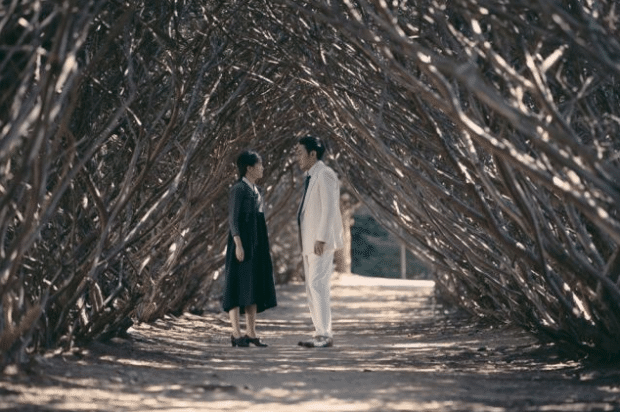 The Handmaiden is also a beautiful piece of film, where every fragment of every scene looks sublime. From the characters themselves – I’m sure Min-hee Kim is carved out of marble – to their clothing, to the interior shots and the landscapes, it looks as though some kind of mathematical formula has been used to perfectly compose every moment. Even someone eating a grain of rice turns into a vision. And if you think I’m exaggerating, well – you need to see it, then you’ll believe it.
A film which unveils new ways in which its characters understand the world is always the product of a skilled hand, and Park Chan-wook certainly fits that bill. Whilst links to horror are for the most part subtly unfolded here, all neat aesthetic twists and stock-in-trade unhappy heroines, the film still has an ugly underbelly of vice and criminality. It’s the threat of these forces winning out which really drives the story, but also allows the story to expand as sumptuously as it does. This is another phenomenal and challenging piece of work.
The Handmaiden will be released on Standard and Special Edition DVD/Blu-Ray by Curzon Artificial Eye on 7th August.
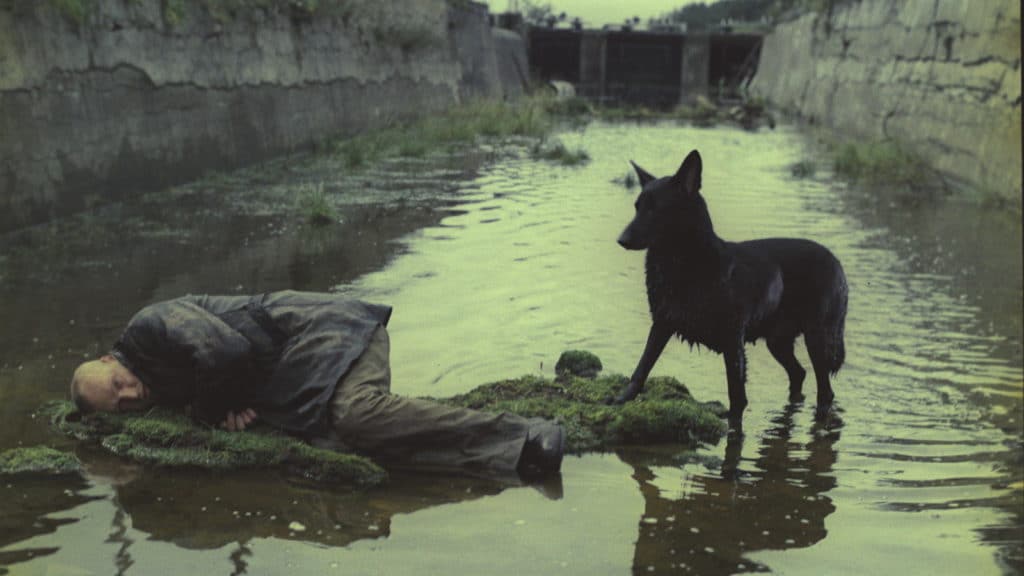 Together with two other men – known only as ‘The Professor’ and ‘The Writer’ – the stalker takes them through deserted, waterlogged streets and nearer to their destination, avoiding gunfire along the way. The further they go, the more the landscape seems to be post-apocalyptic in some way; everything is broken, or derelict. Absolutely everything is flooded. The route is dangerous, they are low on resources and the soldiers keep up their assault on them, but eventually, they are able to reach the outskirts of the Zone.
 Being art-house orientated, Stalker successfully looks very striking indeed, positioning its characters against abandoned places and post-War bunkers (the film was shot on location in Russia and Estonia, each of which still bore the marks of conflict, even in the 1970s.) It also boasts a painterly approach, with lingering shots, creative uses of colour and a camera which deviates from the inner turmoil of the three men to pan over interesting, and clearly composed tableaux of potentially symbolic objects. Stalker is massively lo-fi, however, with an emphasis on rather cerebral dialogue about ‘the meaning of it all’ and an appropriately obtuse Soviet conclusion where we learn only not to ask again in future. La La Land, this categorically ain’t.
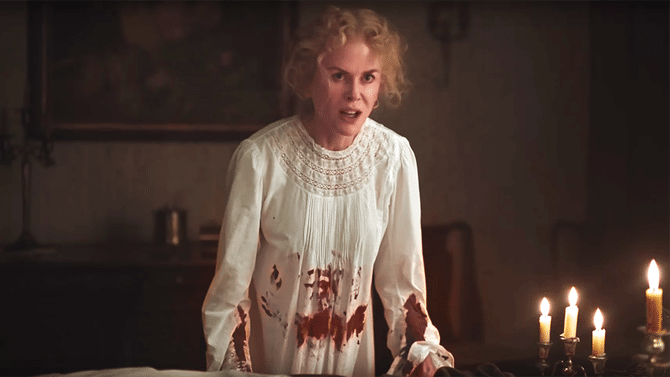 I will say I was rather surprised to see that The Beguiled had been remade. Not frothing-at-the-mouth indignant that anyone could ever remake such a film, but more intrigued that anyone would want to do it: the 1971 original, starring Clint Eastwood, was a strange project which probably didn’t find its audience upon release and it’s struggled to get due recognition since. It’s not a romance, and it’s not a war film, it’s incredibly tense, but it’s low on action. These trope-defying films have a hard time and they’re a hard sell. So why return to the subject matter all over again?
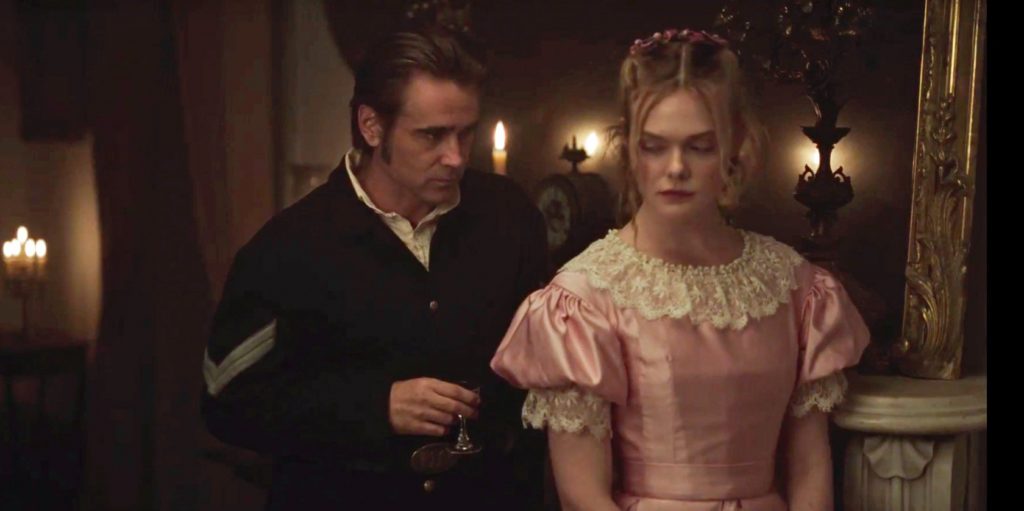 Having no great moral impetus – beyond hard cash – to get back to the battle, he sets his morals aside completely, happy to manipulate each of the women for – is it his own vanity? For sport? Or simply to secure their Southern hospitality for as long as possible? It seems that it’s any or all of those reasons in turn, but what’s certain is that the power shifts in The Beguiled move one way, then another, like a needle and thread through a tapestry (or any of the other less orthodox fabrics we see when we encounter this women’s work in the film). First McBurney is powerless – completely prone, after his injury, and the women who tend to him seem to enjoy his powerlessness: Miss Martha cleaning his (almost) naked body is turned into a queasily erotic tableau where a man potentially about to die of his injuries becomes some serious eye candy: furthermore, the enjoyment she gains from looking at him and touching him is ratcheted up by the use of microphones which pick up the rapid changes to her breathing, a trick the film employs elsewhere with the other women. Then, McBurney takes full stock of his situation, flattering and cajoling the women – particularly Miss Edwina, who Dunst effectively plays here as a living powder-keg. She’s an insular and downbeat character (teaching will do that to you) but her emotions reflexively spark into life when it transpires that she’s been lied to. Thus, the power shifts again, and again after that.
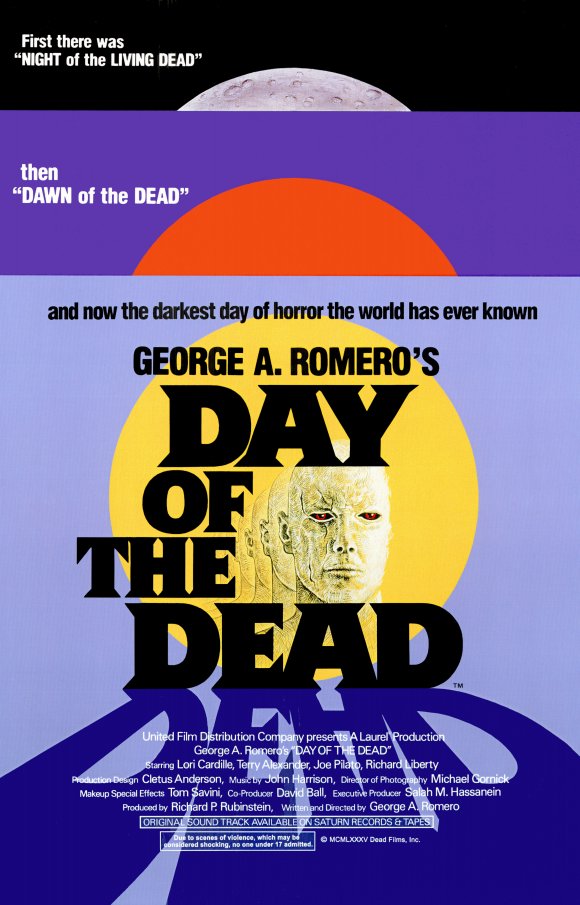 A return to the zombie genre later in his career lacked the verve and the impact of his earlier work, with his later films Land of the Dead, Diary of the Dead and Survival of the Dead never attaining the same organic sense of social commentary, but people were delighted to see him working again after such a long hiatus. Still, it’d be incorrect to see him solely as ‘the zombie guy’ anyway, and would do him a disservice. The Crazies – which pre-dates Dawn of the Dead – is a great, manic film, and the underrated (and very subtle) vampire horror of Martin is a whole world away from the zombie genre. Whilst Romero’s filmography isn’t vast, he made enough films to show that he could indeed be versatile.
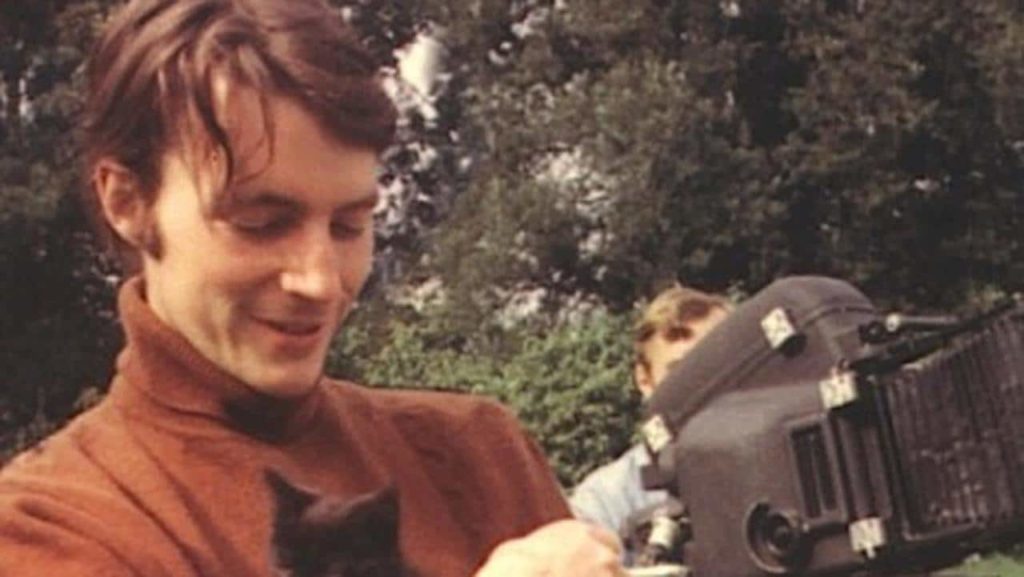 Personally, out of the entire publication, I most enjoyed Jon Towlson’s feature on British director Michael Reeves. Reeves, who directed two phenomenal films (The Sorcerers and Witchfinder General) died as a very young man following an overdose. Towlson’s feature focuses on the psychogeography of Reeves’ life, looking at the homes and pubs which were not only close to his heart, but probably integral to how he lived. These spaces were where he socialised, threw ideas around and – towards the end – grappled with what he saw as the deeply wrongheaded criticisms of his work, particularly the then much-maligned Witchfinder General, now considered a classic of its genre. It’s an interesting perspective, looking squarely at the seeming incongruity between Reeves’ films and his surroundings but always remaining sympathetic and engaged. It’s hard to disagree with the conclusion of this piece – that the death of Michael Reeves so very young was a phenomenal loss.
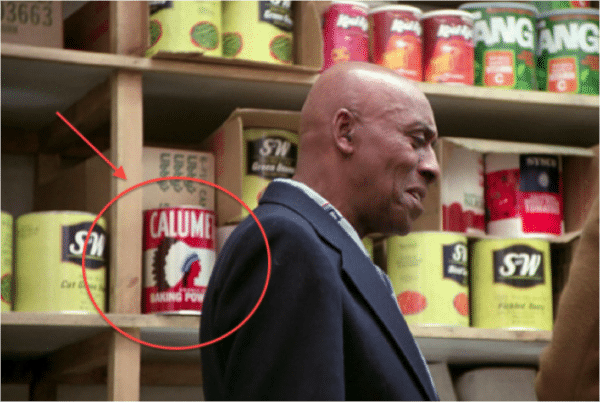 Exquisite Terror doesn’t seem to have an overarching editorial policy, meaning there’s no impetus to toe a line, one way or another. This boosts the variety of features on offer – a good thing – though of course it also means that I, like anyone else, will always prefer some articles to others. God Bless America: Stephen King’s Shining by Jim Reader comes to mind here I’m afraid: there’s nothing whatsoever wrong with how this piece is written, as it flows well, but the claims it makes about Kubrick’s seminal horror film seem based on very tenuous evidence. These feel like pre-existing tenuous claims, too, as many improbable interpretations of The Shining already featured in the frankly bonkers documentary film Room 237 (2012), which at the very least made me wonder what it is in particular about The Shining that bears such strange fruit. The premise – that Kubrick’s film is a commentary on the historical treatment of Native Americans, based on two lines of dialogue and some incidental images of Native Americans – is no more convincing now that I encounter it for the second time here. On a similar note, Once Bitten: The Queerness of Becoming Other ostensibly features a ‘queering’ of a handful of werewolf films, but what’s counted as lycanthropic in nature seems a little broad. Also, to my eye, some of the interpretation seems somewhat awry (I don’t know Der Samurai, but one of the key scenes mentioned as evidence of the links between queerness/othering seems to have firm markers of hetero-, rather than homo-erotic lust.) Finally, if you say that werewolf films reflect the anxieties about the AIDS panic of the 80s, then I think we need specific examples.
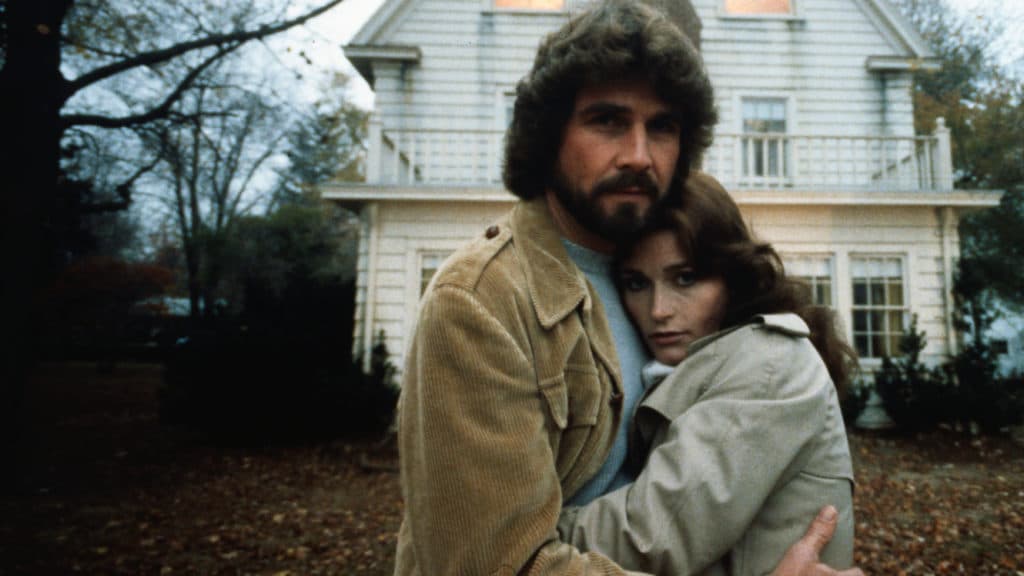 For someone not given to supernatural beliefs, I have a fascination with supernatural horror, and there are few supernatural horrors more famous than The Amityville Horror; close to forty years after it first appeared, there are still films getting made which carry the Amityville moniker. One of the key reasons for the success of the original film was the link between the screenplay and the ostensibly ‘true story’ of the Lutz family, whose experiences are dramatised in the film. The Lutz haunting is itself well known, and a fascinating, terrifying story in its own right, comprising a bizarre blend of testimony from the family themselves and a host of others who had become involved with them, such as the self-styled ‘demonologists’ Ed and Lorraine Warren, whose case films have incidentally turned up elsewhere in horror cinema – such as in The Conjuring (2013) and Annabelle (2014). Any description of a haunting as ferocious as the one recounted by the Lutz family always seems to me to be a detective story, too: people corroborate or contradict one another, recount or re-assert what they experienced. Still, the film itself doesn’t much trouble with these ambiguities, preferring to play out many of the events described by the Lutzes on screen, in as straightforward a way as you can muster when those events include inexplicable phenomena.
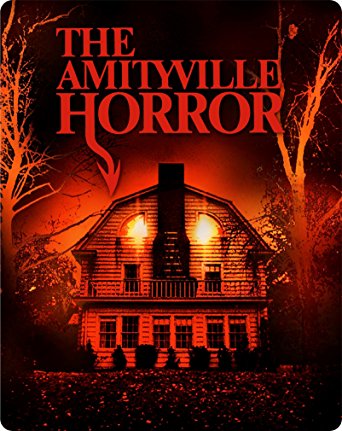 …And there are some successful elements – the ‘red eyes’ scene still works well, for instance – enough so, that the film has enjoyed great influence on other horror films which have followed in its wake. The impact of these key scenes is always increased, for me, when you remember that an adamant family was convinced that these phenomena were real – enough so that they eventually fled the house, leaving all of their belongings there, even leaving food on the table. The whole ‘based on a true story’ preamble, which we’re so used to now, owes much to the success of Stuart Rosenberg’s movie, as does the ‘real time’ unfolding of events, a technique still integral to many scare stories (it’s relevant to note that much ghostly ‘found footage’ embeds real time via its shooting style.) Sure, there’s some back-and-forth between banality and histrionics, but The Amityville Horror is an important chapter in the genre and is worth a place in your collection.
 For many people, horror films wouldn’t be the obvious choice if they wanted to feel in some ways uplifted. Horror isn’t about feeling good, after all – or at least, that’s not the usual verdict. It’s about feeling scared. Many people would perhaps be more likely to go for a period drama, a musical, a romantic comedy, or something of that kind: the type of film where, when it comes down to it, everyone eventually settles for something or someone and lives ‘happily ever after’. That’s the more normal thing to help a person relax, and probably the last thing which would pick me up.
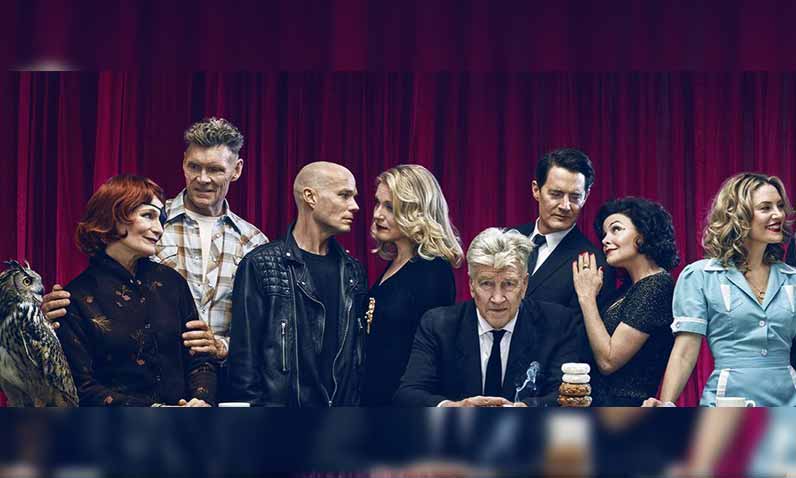 The recent return of Twin Peaks has meant a wonderful thing: David Lynch is back on our screens again, and even in the short time since my recent retrospective piece on