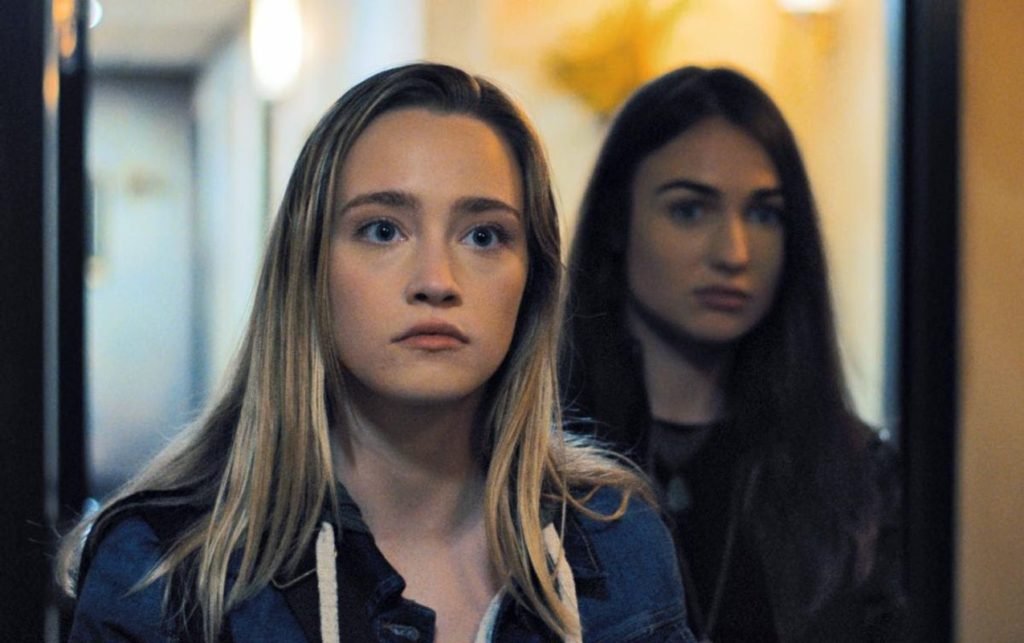
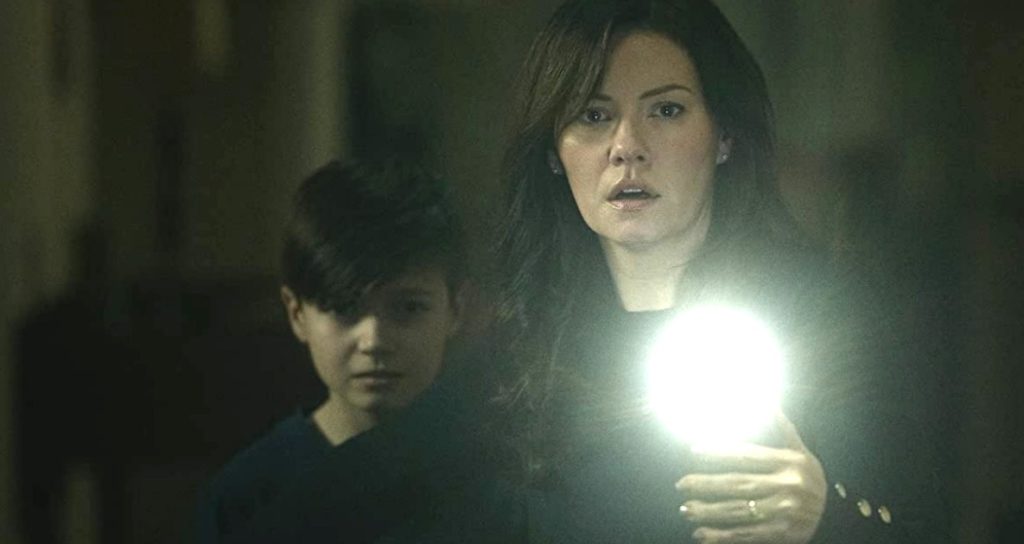
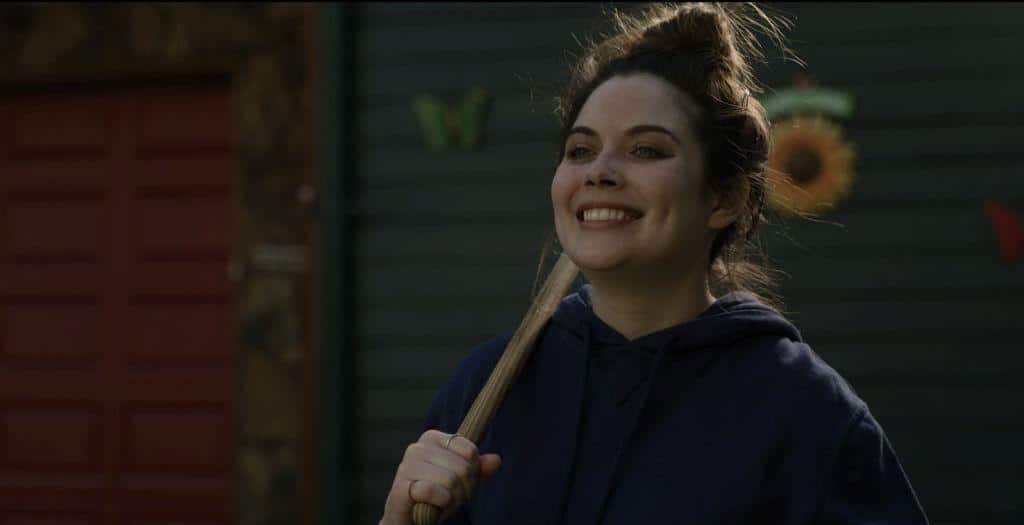
It’s always promising when a horror short film gives itself a title as straight up and out there as ‘The Thing That Ate The Birds‘, and accordingly, this film certainly doesn’t disappoint. It packs a lot more into its eleven-minute running time that a Thing which Eats Birds though, so whilst you get what it says on the tin, it doesn’t exactly stop there either. The film manages a balancing act between the kind of grisly fare suggested by the title, and a surprising amount of character and back story – indeed, more than you often get in a feature, which is quite some feat.
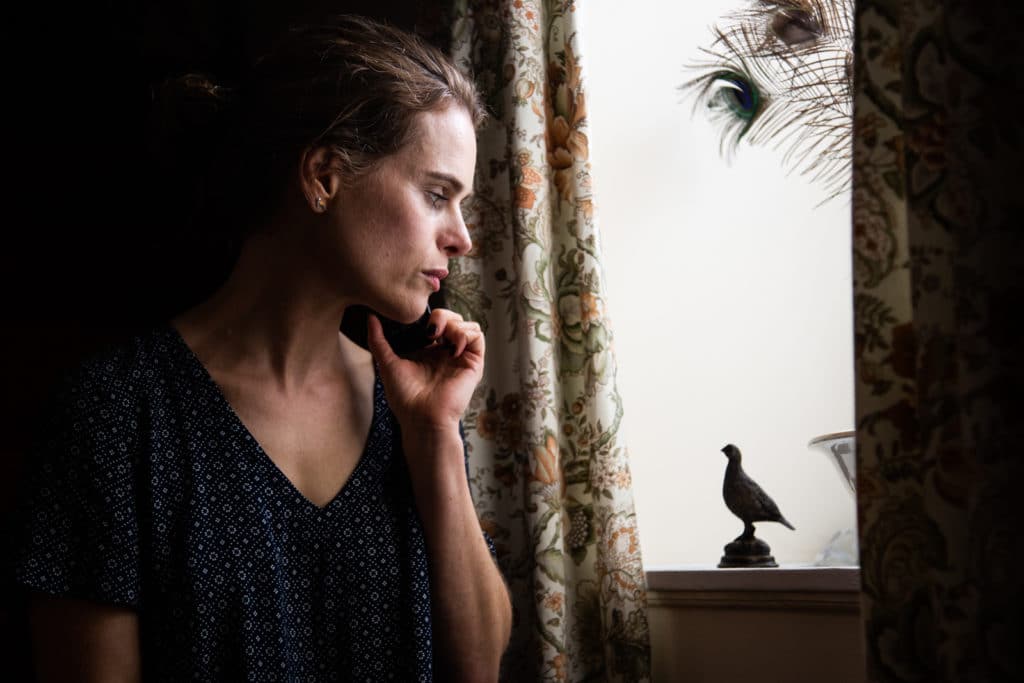
Filmed on location in North Yorkshire – let’s declare our bias here as this site is run from North Yorkshire, and say it is one of the most beautiful places in the world – Abel (Eoin Slattery) is a gamekeeper with a significant problem. Something is killing his birds before he can, and he’s perplexed. Whatever it is – his assistant Jake (Lewis Mackinnon) suggests foxes or stoats – it’s making short work of them, their remains bleeding out on the ground in front of him. This would all be bad enough, but it seems that the fate of his birds isn’t Abel’s only problem. The film is very good at including little visual clues in its shots, and so the fact that Abel wakes up on the couch instead of in bed with wife Grace (Rebecca Palmer) is one thing, but you can quickly guess that the half-drained tumbler of whisky on the table in front of his impromptu bed may be an issue too…
With the situation at home clearly as dire as his work dilemma, Abel makes the decision to focus on the latter, which perhaps strikes him as easier to solve; it’s a decision which leads on quickly to a run of other decisions, proving that his instinct wasn’t correct. Now, it’s at this point in the film that you are de facto invited to see what ensues in a straightforward, horror film way or in more symbolic terms. On balance, the film feels richer when understood through its symbolism, though it works perfectly well either way – another compliment for director/writer team Sophie Mair and Dan Gitsham, who have ensured that it works on both levels, with neither interpretation feeling like a cop out. What you do see on screen invokes palpable dread; there’s enough malevolent mystery here to ensure investment up until the end (and no tone-shifting determination to pack in a simplistic all-loose-ends-tied-up conclusion, either. The film hangs onto a few questions, but parts ways with the audience via a grisly, almost darkly funny final frame.)
There’s some BFI heft behind The Thing That Ate The Birds, which probably helps to contribute towards the film’s quality in style and appearance; the balance between sweeping, wide frames which convey the scale of the landscape and the very intimate, even claustrophobic domestic scenes works very well indeed. All in all, this is an impressive short film which leaves one final question hanging, a question which works however you read the rest of the film: how responsible is Abe for what happens here?
Sound good? Why then, you can take a look at the film for yourselves here.
There has inevitably been a surge in ‘lockdown horrors’ over the past couple of years. It’s a fairly broad church, with some of these films simply being made under lockdown conditions, whilst others directly address the threat of novel viruses – but nearly every one of these films has directly or indirectly addressed the things we’re perhaps now newly aware that we fear: isolation, othering, illness, loss. The Sadness (2021) covers the lot, and is without a doubt the best of these so far: it’s a disturbing, relentless and unflinching film, a knowing entrant to the zombie horror genre in many ways, but knowingly crossing into other genres, too, whilst never offering any respite from what unfolds.
Modern Taiwan is ‘learning to live’ with a new virus called the Alvin virus, which causes flu-like symptoms; some commentators are alarmed at this laissez-faire approach, believing that the virus’s proximity to rabies (yeah, just go with this bit) means that it still poses a significant threat. Others see the whole thing as a hoax; it’s an election year, after all, and what better way to whip up fear in the masses? In the midst of all this, and quietly living their lives, is young couple Jim and Kat (Berant Zhu and Regina Lei) – and let’s be honest, it’d be no manner of film at all if the anxieties over the virus didn’t turn out to be very well-founded. However, as it turns out, the virus acts in an interesting way. Jim and Kat separate for work that morning as usual, right before this sudden shift in events becomes apparent: they then need to find each other against this chaotic backdrop. Yes, it’s a familiar plot point, but like everything else in this film, the journey is quite something. Happily, Jim and Kat are a sweet couple with all of the usual petty grievances and quirks which help to render them plausible, and they work effectively as key characters, each with their own traumatic character arc. Oh man, these are traumatic character arcs.
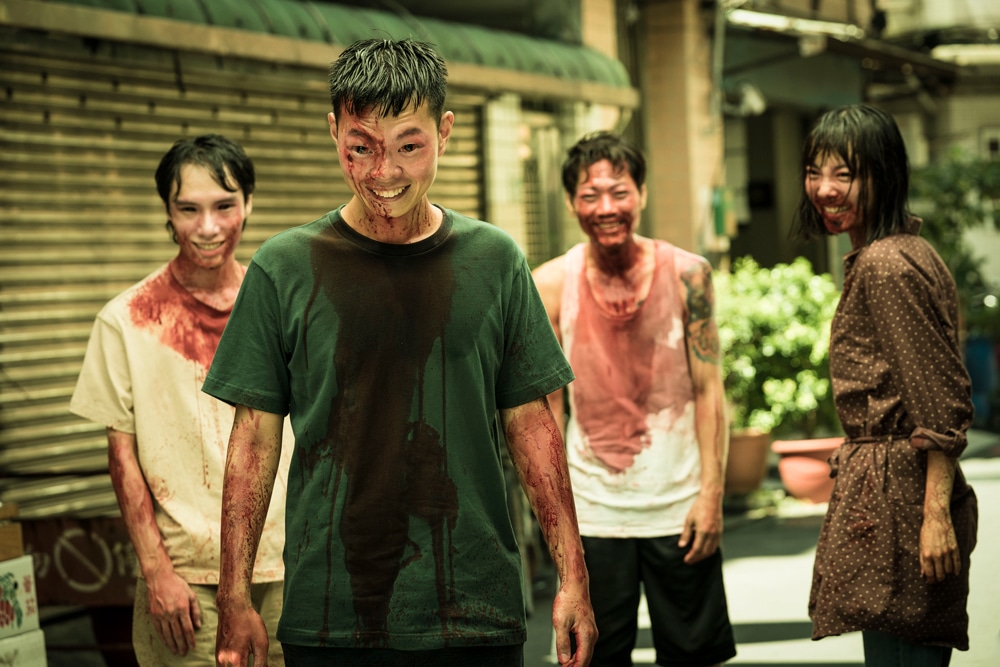
To the virus itself. Rather than turning the infected into fully mindless zombies, or indeed killing them outright, it instead gives people permission to be the worst versions of themselves; think Freud and his ‘weak superego’ idea, only run wild. People are becoming gleefully violent, unhinged – but importantly, still rational – monsters. Ever wanted to crush the head of the guy in the queue in front of you? The virus makes it all oh-so possible, or even impossible for you not to indulge those feelings. And, of course, it doesn’t take many people to begin shunning the rules of normal life before those rules cease to matter much. The film doesn’t present a society already under siege, mid-way through a crisis – as many of the Romero zombie films do – and nor does it quite explode into action the way that, say, World War Z does; instead, it shows the uneven, and startling ways in which society can be upended by people who have, as a result of the virus in this case, dispensed with social order. To come back to Romero, the on-paper similarities to The Crazies are clear – love for his films is writ large here in several scenes – but The Sadness blends its Crazies-esque plot points with what looks like a nod to the ultraviolence of the Noughties, all blue-filtered torture and a camera which stays unwaveringly on scenes of incredible cruelty.
Along the way, the film looks superb: shots are composed carefully, make-up effects more than match up to the virus carriers’ grotesque, joyous curiosity about what can be done to the human body, and the pace of the film does just enough to render everyone here an unknown quantity; you’re often not quite certain if the person filling the frame is, in fact, infected, or otherwise unhinged. The ‘what are you reading?’ man on the train is one of the film’s most successful sequences for me, an eminently recognisable scenario which plays out in part in every city in the world on a daily basis. The man’s anger and frustration when Kat asks politely to be allowed to read quietly is in itself creepy and alarming; let’s remember that he escalates this situation when there’s nothing at the time wrong with him. And, though the virus divides Taiwan suddenly and sharply into ‘us and them’, it’s also clear that some people are apparently always on the verge of perpetrating horrors against one another, and that the virus simply grants permission for that.
It’s hard not to think of the current situation, in Ukraine of course, but also in other places perhaps less fully reported in the West, where people apparently behave appallingly as soon as they feel like they can. It’s a deeply unsettling aspect of humanity: to what extent are our consciences simply mandated? Ditto, people’s understandable – but still often unpalatable – desire to look away, remain uninvolved, is put under scrutiny here too. The only sequence which jars against the tone of the rest of the film is a certain political nod-and-a-wink; everything else makes for a deeply unsettling, thought-provoking horror, a story taken to extremes in the way only horror can. The Sadness has real gravitas and clout, it’s slick with blood, and it’s a worthwhile, reinvigorating addition to the genre. Grimly subversive stuff.
The Sadness is available on May 12th 2022 from Shudder.
If you knew that the world was about to end, what would you do? No, what would you do? Rage? Panic? Loot? Or spend the time trying to atone for a lifetime of missteps, treating your imminent demise as a means of finding purpose? Films tend towards the louder, messier, angrier answers to that question, but not without exception, and Exposure 36 (2022) is one such exception. It’s a film focused on more intimate human stories, albeit against a backdrop of a world three days away from destruction.
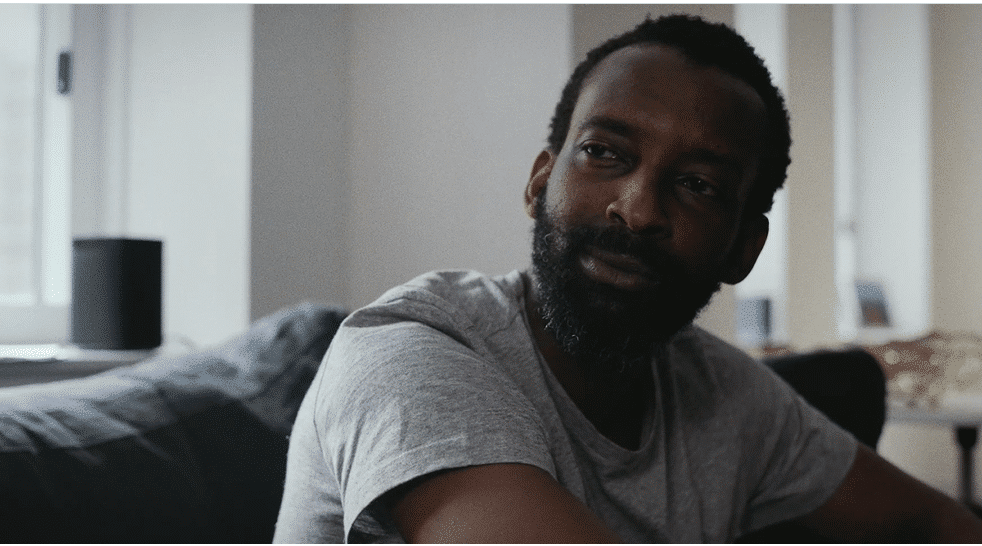
The first notable thing here is that – well, the world seems to be taking it rather well. Admittedly the three-days-to-doomsday thing doesn’t seem to be completely nailed down, though people are still treating it as if it is – but the streets are quiet, the radio offers listeners the chance to hear their favourite tracks before the three days are up, and commercial flights are doing their best to get people home to their loved ones, for as long as they’re still able to fly. This is of no apparent interest to Cam (Charles Ouda), whose priorities seem to be sifting through his vast, saleable array of prescription meds and spending the rest of his time photographing what he sees around him, using one last roll of film he finds. Is he just hiding behind the lens? A comment in The Blair Witch Project (1999) suggested as much; that real life and all its horrors feels safer refracted through a lens. We know that Cam has his demons, but he keeps ahead of them, moving from place to place, memorialising people and scenes with his camera, and selling his meds to anyone who needs them, earning a vast sum of – soon-useless – money.
Cam drops by a friend/customer’s house – a guy called Nick (Nick Smithson) – where he chats to Nick’s younger sister Katie (Jennifer Leigh Whitehead), a girl he’d bumped into by chance earlier: they hit it off. This could all have been just another drugs deal however, except Nick confides in Cam that he’s heard rumours of a ‘way out’ – access to an underground facility, some distance away from NYC. Nick wants in, and tries to convince Cam to invest his wealth in going along with them. Whilst Cam refuses, as he goes about his business he finds he’s drawn back to the pair, Katie especially. When she calls him later that day, now newly aware that she’s in a very precarious situation, Cam reluctantly agrees to help, but there’s more to this than a sudden disappearance.
What needs to be understood here is that Exposure 36 is an immensely slow-burn, muted film: it’s classed as a sci-fi, but it’s that fairly popular modern kind of sci-fi which eschews the big and bold, instead using an extraordinary premise to to examine what this could do to people’s psychological states. There’s nothing much fantastical here, and in fact it’s the intense quiet of the incoming apocalypse which is the most obvious fictional note in the film; it’s quite a reach in terms of plausibility, given how many people act after even a brief break in normality. The big question for viewers here is how much they will feel sustained by this human drama by the time the credits roll, as both the lack of urgency and the lack of obvious signs of the deadly situation facing these people is noteworthy.
However, the film does do a good job of building emotion, chiefly via Ouda as Cam, who dominates both screen-time and audience interest. It’s an incredibly self-contained performance throughout, with Cam seemingly genuinely perplexed by the behaviour of people he meets, even whilst holding back on his own emotions: there’s a sense of distance to him, something which does work well with the odd, often enigmatic situations he finds himself in. Overall, give or take a handful of slightly jarring moments of humour from others, the other characters are also subtly drawn. This reviewer perhaps expected the photography motif to move more to the fore as a plot device, but nonetheless this is used interestingly throughout, acting as a record of what unfolds around Cam and adding some artistry to it.
If Exposure 36 has similarities to any other film, it’s These Final Hours (2013): here, too, a man seeks personal redemption as the end of the world rattles towards him. The earlier film keeps this incoming event more in its sights, however, with a few moments of the kind of spectacle you may have come to expect. Exposure 36 looks carefully at the ordinary rather than running with the extraordinary, but it’s a well made, watchable film with a strong lead character and a great, immersive soundtrack. It does show some aptitude for doing genre film a little differently, and given this is writer/director Mackenzie G. Mauro’s first feature-length project, it will be interesting to see what comes next in his career.
Exposure 36 is available on VOD streaming platforms from May 10th, 2022.
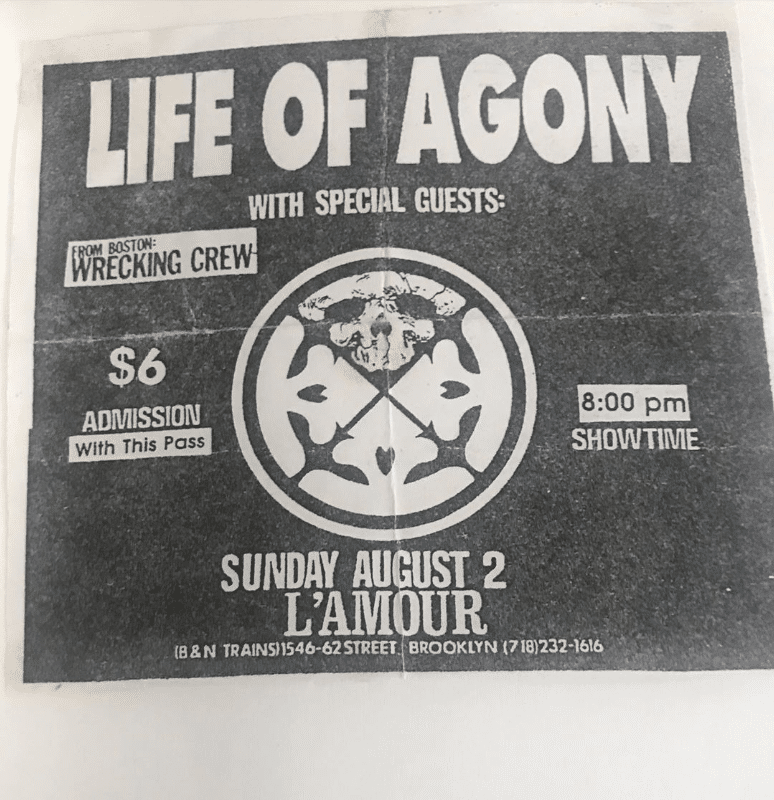
There’s been a run of very good music documentaries lately. This has been facilitated by the likes of Netflix and Amazon, ever hungry for new content, but regardless of the means, the best of these have been about bands with careers and fan bases of a certain vintage, making them commensurate with enough highs, lows and turning points to make for an entertaining story. Even a passing awareness of Life of Agony would suggest that they fit that bill, given they formed over thirty years ago and have enjoyed a career with very jagged highs and lows to date. So there’s plenty here for a documentary, and The Sound of Scars has its moments, though some of the decision-making on editing and emphasis turn the project into something other than a straightforward music lover’s film. In many respects, the film is far less an appreciation of the music than it is a capsule of current social mores and attitudes, via old sadness and more recent woes. It’s all about the feelings.
Of course, the emotional states which fed into the band were always going to figure here; that’s understood. LOA were initially so interesting for striking a formidable balance between the nascent hardcore metal scene and more heart-on-sleeve, emotional content (would it be unkind to see some aspects of proto-emo in there?) They have also long had a unique sound which I strongly associate with 90s Brooklyn: their debut was produced by Josh Silver of Type O Negative, and you can absolutely hear it in the music. Moving on somewhat from their hardcore sound by the time they recorded their magnum opus – Soul Searching Sun – in 1997, the band made something far more expansive and progressive without losing the emotional weight they’d become known for, but this high point (and close call with mainstream success) turned into a profound low with the abrupt departure of vocalist Keith Caputo, who was beaten down by the pressure.
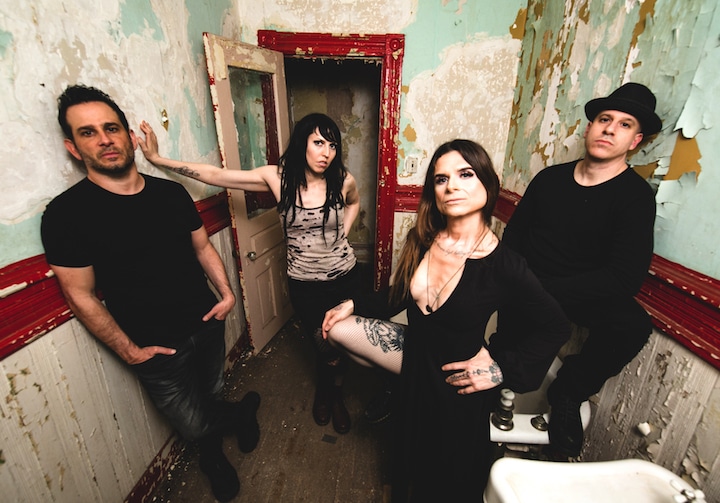
It’s a tale as old as time, but perhaps LOA stand out here on one count: when Caputo re-joined the band some years later, it was no longer as Keith, but as Mina, as the singer had decided to come out as transgender. This fact becomes a kind of narrative frame for the film, and I’m surprised to see some reviews claim the reverse; it opens with Mina after all, who is quick to point out that Keith was only ever a ‘construct’, a hyper-masculine man amongst hyper-masculine men, and a kneejerk response to a traumatic, challenging early life. (This instantly-recognisable masculinity is present throughout the film, the blend of camaraderie and tribal warfare which means, for most women, deciding very carefully where they can stand and walk during a gig.) This introduction segues into a brief early history of the band, together with a history of the incredibly traumatic childhood experiences shared by bandmates Joey Z and his cousin Keith (and a brief note: rather than fixating on ‘deadnaming’, the film is fairly relaxed about interviewees using either ‘Keith’ or ‘Mina’ to refer to Mina Caputo, depending on what point in time is being discussed). Bassist Alan Robert is the exception here, coming from a loving and supportive family – who profess themselves baffled by his long history of depressive thought.
All of the band members are aware that their early ethos was very much ‘do unto others what has been done to us’, referring to themselves as ‘punks’ and relating how intensely violent and combative the early years of the band were. A particularly engaging section of the film relates to getting signed by Roadrunner, and the subsequent upsurge in pressure, noted particularly by Caputo who – a contested person at this point – struggled with it, alongside feelings of unhappiness relative to gender identity. It’s clear to read between the lines and see that the same diehard gender expectations which gave rise to the punching-and-kicking masculinity mentioned earlier seem to also mean that anything more sensitive or gentle is by its nature viewed as ‘feminine’ (Caputo has mentioned elsewhere that being a woman allows her to be a ‘fucking sissy’ in ways impossible whilst living as a man). That’s testament to just how entrenched a lot of these roles are – but of course, this discourse being held sacrosanct, it’s all simply affirmed, which is occasionally frustrating, especially as a more in-depth examination of the music itself isn’t really there as a counterbalance.
Sure, there are some clips of early practice sessions, early gigs and interviews – which are great to see – but these are still brief and there’s actually little detail on things like musical influences, the recording processes, tours, changing creative directions and so on. Surely if the trauma which underpins the music is seen as vital, then the end product itself deserves a little more emphasis? It’s also interesting to consider that, given the happy endings displayed in the film – loving family lives, cute kids, nice homes, personal fulfilment – the bleak emotion of the music keeps on coming. Will this always be the case? And will this ever impact upon the angst-laden sound the band has perfected? I’m also curious as to why drummer Sal Abruscato – a vital part of River Runs Red and Ugly as well as the reformed band – isn’t mentioned once; there’s only a glib comment on how the band ran through numerous drummers before Abruscato was replaced by current member, Veronica Bellino. That’s strange.
Perhaps The Sound of Scars simply isn’t the film I was expecting, because it certainly has good elements; its meandering style at least tantalises with a lot of previously-unseen footage, home video, early promos and plenty of access to most of the integral members of the classic line-up. The emphasis on problematic childhoods was always going to be there, and the film is an interesting document in the way it straddles music documentary and tell-all personal story – though, for all that, I didn’t reach the end of the film feeling like I had a deeper, more significant understanding of the individuals in the band, even whilst wishing them well: their friendships certainly come across warmly, and you’d never begrudge any of them their success. But the music still speaks for itself and for the band far more convincingly than the film does.
The Sound of Scars is now available on digital and cable platforms.
Interested in promoting or otherwise supporting filmmakers who are aged 24 or under? You really should be: it’s a jungle out there, and we need that emerging talent coming through. With that in mind – it’s been one of their core aims since their inception – The National Film Festival for Talented Youth is about to celebrate its fifteenth birthday, and as part of these celebrations, there’s an in-person and virtual film festival coming up: if you are able to get to SIFF Cinema Uptown in Seattle, check out the live event on Saturday, April 30th (8:45pm Pacific Time). Happily, the festival will also be running a virtual component, with no geo-fencing, so it can be viewed anywhere in the world: this will be available from the point of the live event and through to May 8th.
Screening as part of the festival, the Thrills and Chills package is probably of the most obvious, immediate interest to Warped Perspective readers: largely horror-based, with a few dashes of surrealism and dark humour, the films on offer really are of a high calibre; if we were going to group them together in ways other than genre, then certainly many of them display a fascination with the domestic sphere and how happy homes don’t necessarily stay that way, however inviting and modern they might seem. Sure, this isn’t exactly a new thing when it comes to horror, but you can’t help thinking that a couple of years of being locked down in that very sphere has prompted a few new kinds of recurring domestic nightmares along the way…
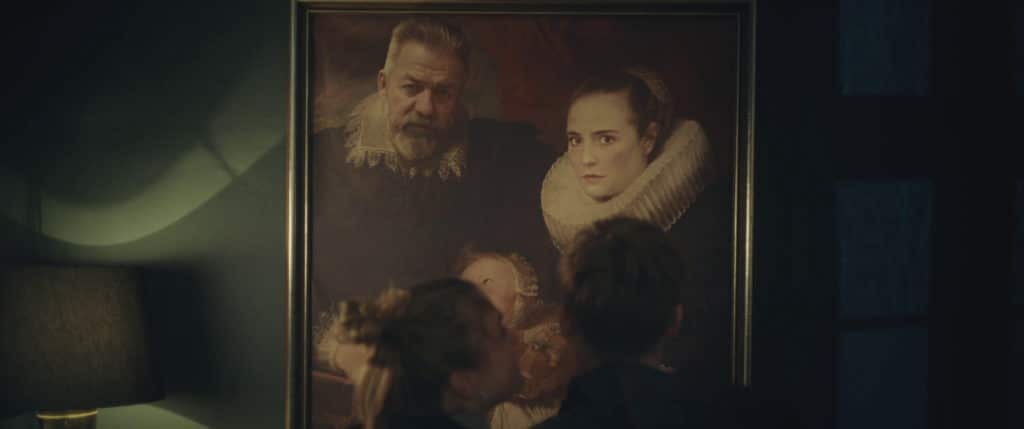
With that in mind, the first film in the collection – Peaches and Scream – brings us two different viewpoints from its two lead characters. Young couple Thomas and Anna are heading back to her place for the first time, a home which she has inherited; it’s a stunning period building, replete with some unusual wall art which Anna assures Tom is down to her dad’s very particular tastes. This would be one thing, but it seems as though dad – and the rest of her family – are kind of works of art themselves. Alarm bells begin to trill, but it’s all quite low level at first; still, from the beginning, Thomas is a very sympathetic character for the audience, a kind of everyman in this increasingly weird situation whilst Anna seems to struggle to square up her home life with the expectations of others. The film has plausible, very natural dialogue and there’s a natural energy between the two leads which carries across a lot of the more bizarre goings-on, as well as keeping the film’s humorous touches alive and well throughout. (NB: this film will only be available in person, not virtually.)
Proto is another domestic horror with more than a few comedy notes, this time taking for its basis a very contemporary anxiety – namely the power we, as a society, have handed over to virtual home devices such as Alexa. The version of this used here is the ‘Proto’ of the title, and Proto is responsible for taking care of the apartment shared by Val (Lane Emerson) and Tom (Cal J. T. Moreno, also the director). Proto seems unusually keen on ordering things for the apartment – something which Tom refers to as “kinda creepy” – but it gets more intense, and harmful in fact (plus you will not see the likes of one of the sequences here again). Much of the film comes to us via Proto’s own point of view by giving us what Proto would ‘see’, making the device a kind of character in its own right; despite it being just a device, it also clearly has a malign presence from very early on, and the film does a good job of exploiting the certain kind of paranoia about being listened to, with a neat horror flourish at the end. The film is nicely paced across its ten minutes, too.
Talisman is also set in a new home, recently moved into by a Canadian-Chinese family (this is a bilingual production). From the start, there’s a strange dynamic at work here: it’s a beautiful house, but mother (Qingqing Yan) seems unusually superstitious, determinedly cleansing the house of ‘bad energy’ and looking pointedly for signs of good or bad luck; this is a concern to father (Danny Liang) and son Yi (Sean Lu), with dad alarmed that their son is becoming increasingly indoctrinated into these folkish beliefs. But Yi does begin to encounter odd phenomena, things which really frighten him; it seems that the family may have brought some bad luck, but why and how? Shooting Talisman so frequently from Yi’s perspective is very effective, as it questions his potential suggestibility, as well as his vulnerability – and he does seem to be singled out by the frightening goings-on in his new house. Did we need screen time and dialogue allotted to him getting frightened and fleeing the toilet? That sequence jars a little, but on the whole, this is an interesting film which makes great use of its setting, landing a few real-life points as well as making good use of more supernatural scenes.
Another Taste is rather different, this time a music video starring performer Kathulu Lemon: in terms of thematics, it’s all about an appearance of staid normality which gives way to sequences of blood and gore, starring Lemon herself. The video is sumptuous to look at and very effectively put together, with vivid colour, gorgeous framing and innovative, artistic shots throughout. It’s somewhere between Excision (2012) and Raw (2016) in terms of aesthetics. What’s not to like about that?
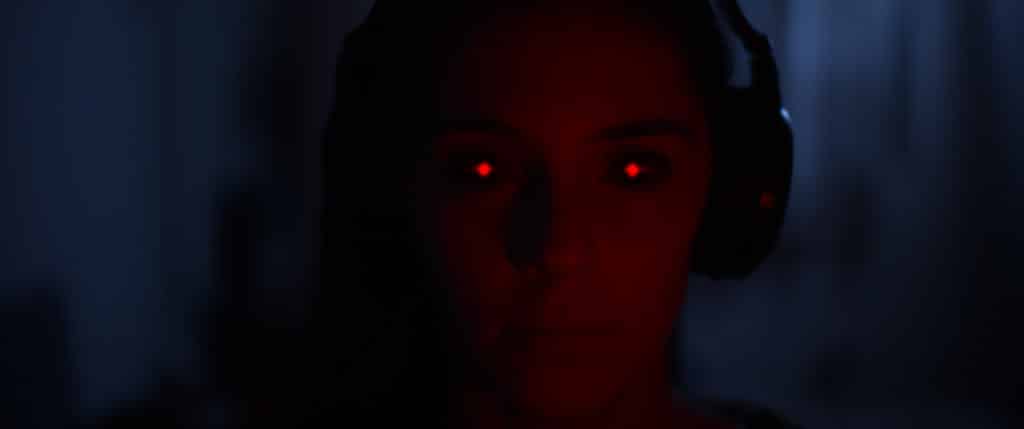
Smahorror, a Japanese film directed by Masaki Nishiyama, brings us an intriguing take on social media and its horror potential. Mobile phones and the terrors they facilitate are nothing new perhaps, and it’s worth saying that Japanese cinema has always led the way in terms of bringing contemporary technology into the fold (remember the use of CCTV in The Grudge?) but in any case, Smahorror does what it does very effectively. It starts with an Instagram story, introducing us to a group of girls investigating a rumour of a live-streamed suicide at their school. Fake, or real? The girls get drawn in, as events take an increasingly savage, alienating turn. The film blends its phone footage with more conventional footage throughout, doing so in interesting ways. As a result, it looks good whilst also managing a few very effective scares despite seeming familiar in several respects. It’s simple, clean and compelling, with a few neat tricks up its sleeve.
Spare Body is probably my pick of the collection here, as well as the darkest, genuinely scariest film too – it tantalises at some kind of dystopian nightmare society rumbling away in the background, but chooses not to explain all the mysteries incumbent on that, instead again invading a domestic setting with something perplexing, ghastly and very, very unpleasant. The opening scene shows us a package with a couple of logos printed on the outside: ‘Second Lives Now Possible’. it says, alongside a warning: ‘Do Not Open Until Necessary’. Cut to a teenager ignoring a similar notice displayed on the outside of a closet in his home, opening it to retrieve some cash hidden there. However, he notices a large object inside, and can’t resist a look. He’s horrified by what he sees, but – morbid fascination quickly draws him back: yes, it is a bad decision. This economical and disturbing spin on the idea that ‘curiosity killed the cat’ plays out extraordinarily well, with more than one incredibly equilibrium-disturbing scene. A simple idea, absolutely, but it all goes to show that with skilled handling it’s more than possible to weave something terrifying out of these simple elements. Bravo to writer, director and star Ethan Hunt: he’s one to watch for sure.
Finally, animated short Wendigo – taking North American folklore for a basis, but actually an Irish project – demonstrates plenty of ambition and vision, becoming hypnotic and surreal as its plot unfolds. It’s the story of a young traveller, Charlie (voiced by Marc-Ivan O’Gorman) who wishes to investigate the story of an ill-fated house, known locally as the Olsen manor. Aided by inn owner Fred (voiced by Dave Hendrickson), Charlie is able to get the history of the house, but a visit to the site itself seems to trigger something strange; soon, he feels like he is being pulled into the Olsen legend, as well as pursued by a strange, skeletal entity. Whilst the dialogue here starts out rather stilted – although it’s in keeping with the odd, quirky vibe of the film – things really take off as Charlie gets closer and closer to the mysterious phenomena which he has, ultimately, come to explore. It’s a film which boasts some very appealing visual sequences and let’s not overlook its soundtrack, which is very effective too.
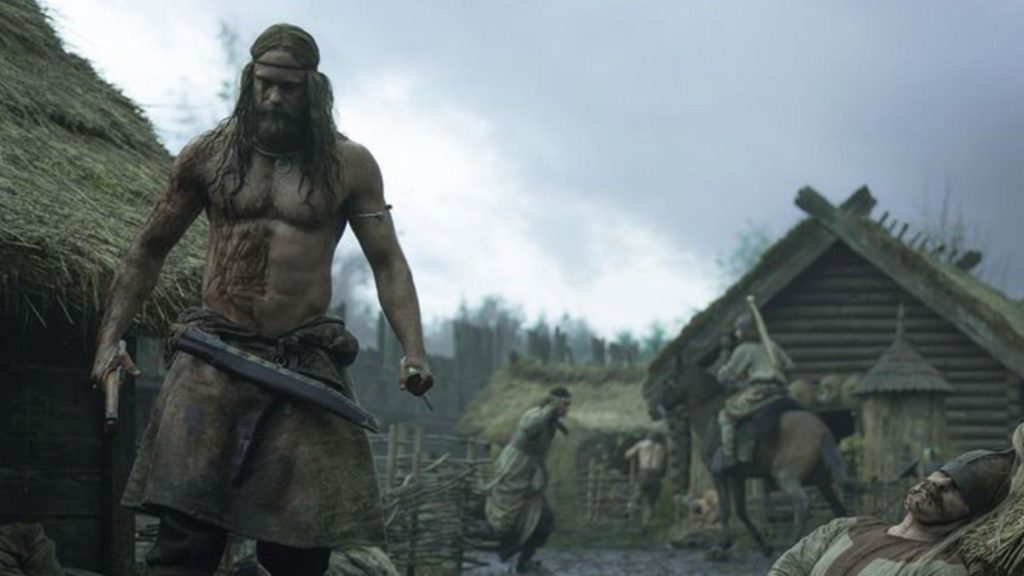
Is it too soon to talk about go-to themes and styles where director Robert Eggers is concerned? He has, after all, only made three features to date; who knows, he could head somewhere very different next time he works. A comedy musical perhaps. But, let’s indulge ourselves here and look at what he does seem to enjoy. Remote, hostile landscapes; historical settings; isolated groups of people; the interplay of destiny and choice, and hints of supernaturalism, which still retain an air of uncertainty. These elements run through The Witch (2015), The Lighthouse (2019) and – despite ostensibly opting for a Viking epic, these shape The Northman (2022), too. This isn’t really a Viking epic as a lot of audiences might expect, although it has more than its share of blood and iron: it’s a far more brooding film, intimate in fact, where the worlds of men and magic overlap, leading one another. In this sense, it’s probably a closer facsimile of how the warriors and settlers of the Viking Age saw their world than other stories we may have seen on film, as well as – in some ways – an obvious choice for Eggers.
The plot itself is simple enough – and reads as rather accessible, perhaps more so than The Witch (and certainly more so than The Lighthouse, which tested this reviewer to the limits). The plot is based loosely on part of the Gesta Danorum, which itself inspired Hamlet. Young prince Amleth is heir to a small kingdom, where he lives with his mother Queen Gudrún (Nicole Kidman). The return of his father gives him cause for celebration, though his father is alarmed by how childish Amleth remains; he therefore makes it his business to educate him, taking him through rituals which will assure his son of his place in the great tree of kings. This is all the more pressing, as the King has returned from raiding with a vicious wound which he fears will kill him, depriving him of an honourable death. ‘Plan for the worst, hope for the best’ is the motto of the day – and it’s all in good time, as King Aurvandil (Ethan bloody Hawke!) is almost instantly overthrown by his scheming brother Fjölnir (Claes Bang), who orders the princeling executed.
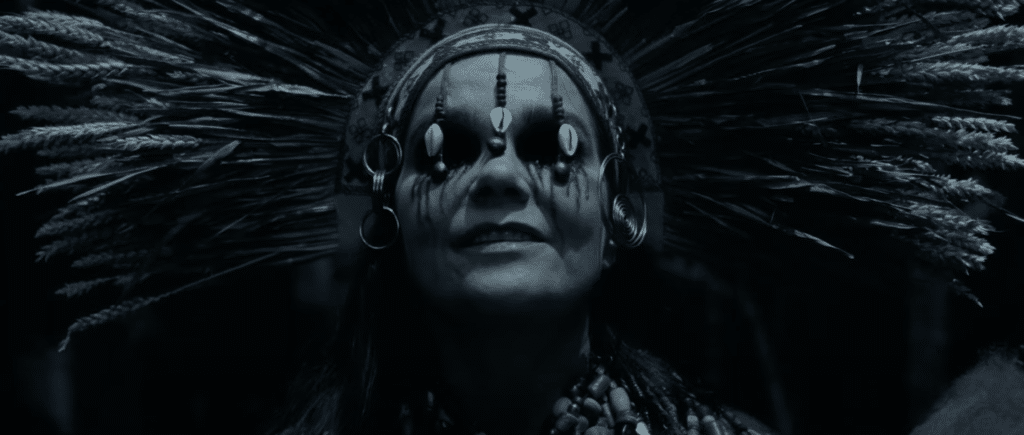
The boy escapes however, Arya Stark-like in his repeated avowals of revenge, rowing desperately out to sea where it seems he’s picked up by other Vikings, on their way to settle the land of the Rus. He is raised by them, trained by them and, as a grown man and a fierce Berserker, he begins to give further thought to his destiny. An opportunity presents itself after his clan plunders a village, kidnapping a number of Slavs; Amleth (the picturesque Alexander Skarsgård) decides to smuggle himself to his uncle’s current abode in a settlement on Iceland, disguised as a Slavic slave. On the journey, he develops a closeness with another slave, a Slav girl known as Olga of the Birch Trees (Anya Taylor-Joy), one of several of the witches and magicians who shape his actions. When they arrive in Iceland, Amleth is unrecognisable to his mother or uncle, though further trance-like, magical experiences convince him he is on the right path. Is it that clear, though? The film goes on to disrupt some of these expectations, and it lingers on Amleth’s predicament as he slowly attempts to unpick the small Icelandic community where it seems his only family has moved on, perfectly contentedly, without him.
This is where the film differs quite significantly from many other Viking stories told on film; it pauses to consider this man’s trauma, in ways which are normally ignored to get straight to the battle scenes. Consider films such as Pathfinder (2007): the Vikings here, whilst terrific fun to watch, are all but two-dimensional, and barely act like thinking and feeling men at all. Other films of a similar persuasion treat their Viking characters as a means to an end, mainly able to fight and bleed until they finally keel over. Eggers has made something much more thoughtful, though without lacking for scenes of incredibly gruesome gore. If The Northman is similar to anything else, then it’s Valhalla Rising (2009), which also manages to balance violence against its introspection, albeit with a similar predilection for spilled intestines and for landscapes which would ably kill you through exposure, never mind anything else. But the trauma is not Amleth’s alone: other characters have their share, and deal with it in ways their own, even where this subverts character arcs which may have seemed pretty clear-cut.
This is the film’s greatest strength, this choice to explore how trauma operates, whilst retaining the mad fantasy elements playing out elsewhere. Although she was talking about a time around four hundred years ahead of the world of the film, historian Barbara Tuchmann has commented that so many European movers and shakers, kings and princes, acted in the erratic, cruel, incomprehensible ways they did because they were unnurtured, unloved, often traumatised and abused adolescents with something to prove. It rings true here: Amleth is motivated by the unhappy life he has led up until this point, and seeks salvation in the only way he has been taught to expect it. In this respect, although he is our hero, he’s ambiguous, particularly when he discovers certain truths. It keeps the film engaging, for even where there are lulls in the action (at well over two hours, of course there are lulls) there are motivations to consider. Throw in a whack of altered states, dreams and witchcraft, which the film often does, and the time moves on pretty steadily overall. Relationships between men and women are also explored through magic, as well as through largely-understated appraisals of their power play. Performances are solid, too, keeping moments of happiness rather rare. The film also does an excellent job of portraying the mud, cold and grim practicalities for Northern European settlers in this early Medieval period, in a film which is borderline monochrome on so many occasions: it’s a gloomy, sparse world.
The Northman is a serious prospect with serious players, a tale of revenge slowed down and explored through elements of horror as well as historical fantasy. It’s certainly a spectacle, for all its slower moments, but a largely effective and successful spectacle: by the time the credits roll, it’s hard not to be utterly swept away by it.
Funny how it’s turned out, but zombie horror has been with us so long and appeared so often now, that it all feels oddly comforting. For the most part, tropes which are maddening from other genres seem more than acceptable when there are zombies in tow: it doesn’t even really seem to matter that much anymore whether they are fast, slow or anywhere in-between. Are characters switching off TVs and radios mid-way through what is clearly an important bulletin about what is unfolding? No matter! Are the same characters going through troubled relationships with their offspring, which will no doubt be solved by the issue of surviving a heaving mass of mindless killers? Cool! Is someone, at some point, going to conceal a bite wound? Oh, we can’t stay mad at you. This brings us to Virus: 32, a film which makes some attempt to challenge a trope or two but embraces far more of them, and does a reasonable job in doing so. It’s a solid, workaday film with a bundle of neat elements and minor frustrations, tantalising a key twist which – in the grand scheme of things – doesn’t change things all that much. And it doesn’t really matter, either.
Things start in a fairly unassuming way – elderly resident does something shocking and violent – before we pan out/across to a different apartment and meet our key character, a young woman called Iris (Paula Silva) who seems to have not a care in the world, until her estranged husband turns up with their young daughter. It seems Iris had forgotten she was due to look after her, so she’d arranged to do a night shift at the dilapidated fitness club where she’s on night watch duties (and honestly, this looks like the kind of place no one would really need to break into under ordinary circumstances, but a wage is a wage). There’s nothing for it; Tata will have to accompany her mother to work, so off they go. A nicely-composed aerial shot shows us the comforting fact that something sinister is going on around them unnoticed: it’s the tale as old as time, or not far off. Still, it’s not long before Iris has to take notice of the facts: dangerous, oddly mindless people are finding their way into the building. This fact splits up mother and daughter, who have to spend a period of time seen to one another only on the building’s CCTV or heard via the old landline phones, as small children don’t seem to have iPhones in Montevideo. But, as she witnesses a gruesome attack (animal lovers beware), Iris notices that, post attack, the perpetrators go into a brief kind of trance: about thirty-two seconds of trance, to be exact.
Why does this happen? Funnily enough, seeing as it’s almost-certainly one of the film’s big ideas and its new, small but notable contribution to the genre – enough to be foregrounded in all the press material – there’s no indication. Virus: 32 is pretty low on the whats and the whys, to be honest, and just presents things as they unfold, leaving the audience to ponder anything more. Still, zombie lore is embedded and used in a series of fairly engaging ways, with some clear nods to classic zombie cinema which still look good in their own right. There truly are some great set-ups here, with great uses of light, framing and timing: the zombies themselves, again, are not explained away but they seem part-way between the newly-sentient zombies of Land of the Dead (2005) and, even more so, the high-speed angry bastards of 28 Days Later (2002). This gives you some indication of what kinds of action you are going to see. The film works as a microcosm – this isn’t a horror on the scale of something like Land of the Dead, of course – but its action sequences are decent enough.
There are some issues with pacing, but these don’t really creep in until the middle act: at first, Virus: 32 is a quite light touch, deftly-moving film which manages to create characters out of very little, including a very small cast. It’s some time before the camera even alights on Iris and stays there, for example, and this isn’t a script-heavy film at any point, but enough lands to make the main characters sympathetic and likeable. There are also some neat tricks used in shooting and editing which maintain interest, too, with some innovative shots and long sequences which must have took some skill to put together. The film is a little dingy – it’s pretty much all shot in a large, dark building at night, after all – but it’s not so dark that it becomes impenetrable, and it sets up some accomplished scenes which work rather well. As stated, things falter at the mid-way point when the plot and the level of action begin to scan less well, but the film holds a few things in reserve, including a welcome slab of cynicism for patient viewers.
All in all, and despite the new-idea promise inherent in the title, you can’t really call Virus: 32 a ground-breaking film. As such, it shares many of the issues of other perfectly enjoyable zombie horrors, with some of the same unanswered questions, tolerable frustrations and budgetary constraints. But the budgetary constraints here were pretty punitive, and yet director Gustavo Hernández has managed a decent movie with some good composition, an intriguing, if underplayed idea, a likeable set of leads and a reasonable balance between homage and development. It’ll take up its place in the genre and work perfectly for many genre fans, I’m sure.
Zombie: 32 (2022) premiers on Shudder on April 21st, 2022.
Based on a Japanese novel, partly produced by a Japanese team, you’d be forgiven for expecting Room 203 to contain a fair amount of J-horror elements – but that’s not how it primarily comes across. It’s far more rooted in the Western tradition of haunted houses, though it balances its use of tropes with its other aspirations altogether. It’s a film more interested in relationship-building than generic scares, though perhaps leaning rather heavily on the former; for the most part, the supernatural aspects here are kept rather low key.
The opening scenes say anything but that, however: Room 203 feels like it starts already at ten minutes in, with a very quick glimpse at some sepia-page occult goings-on before cutting straight to a young man refurbishing an apartment – yep, it’s Room 203. As he works, he catches his hand on something in a hole in the wall, dislodging a necklace that had been stashed in there. When his girlfriend arrives to see his progress, he gives her the found necklace; presumably neither of them can hear the significant, ominous sighs emanating from it which we can hear, else things wouldn’t have gone South quite so fast for her. You’d be forgiven for thinking that the film hoped to sell itself solely on the vivid calling card of its opening few minutes, but be assured: things slow down a lot at this point, the point where the opening credits actually roll.
We meet the next incoming tenants of the apartment: Kim (Francesca Xuereb), who is flying the nest to start her life at college, living with old friend Izzy (Viktoria Vinyarska), much to the chagrin of Kim’s parents. The girls’ giggly house move is cut a little short by their first encounter with the landlord Ronan (Scott Gremillion), but they like the ‘vintage vibes’ of the place, and decide to definitely take it. Renters/former renters be warned: the first horror here is that Kim hands over a substantial amount of money to the landlord without requesting a receipt. Uh-oh.
It gets worse; not rapidly worse, but worse. The hole in the wall/necklace soon reappear, and as life goes on for both girls (starting college, nights out, auditions, love interests) glimpsed shadows, nightmares and odd aromas weave their way into their lives. As with most cinema of this kind there’s a mystery to unpick: Kim and her new beau Ian (Eric Wiegand), both budding journalists, get cracking, turning up some unexpected and interesting, if not always explicable plot elements.
The film settles into a very slow burn mode. It’s as much about two damaged people and their friendship as it is anything else, with the supernatural aspects in the plot drawing off these damaged people, waiting for a suitable weakness in one or both of them. Xuereb, as Kim, turns in a good performance here, particularly given that she is frequently seen reacting to her own misgivings and dreams and isn’t necessarily being propped up by ghosts, demons or similar. She also dominates the screen time too, doing a decent turn throughout. Vinyarska warms up a bit more slowly, but then this is pretty much in keeping with her character. However, this shift in focus to the back stories of both girls does get baggy in places. The film is never exactly a conventional ghost story anyway, remaining quite conservative in what it actually shows to us. The crashing incidental music, when it does veer into more supernatural fare, feels like it belongs elsewhere – even when the jump scares start to appear, and appear they do.
Room 203 is a curiosity in a few ways, though not one which lacks ambition. Human dramas will overshadow the horror to too great an extent for some viewers, and the lack of a neat conclusion has its frustrations, though its big, mythological twist helps to distinguish it and it’s certainly a well-made, often thoughtful, muted take on the genre.
Room 203 receives a limited theatrical run, as well as getting a VOD release, on April 15th 2022.
Now here’s a risky idea: returning to a short film, around seventeen years or so after making it, hoping to expand the universe of that film into a feature-length. A big ask at the best of times, no? Whilst it’s certainly not the first time this has been done, The Cellar (2022) was always going to have a hard road ahead; this is because The Ten Steps (2004), the short film in question, is an absolute masterclass in that format. Whenever I want to make the case that short films are criminally underappreciated by audiences, I show people The Ten Steps. The film’s so effective because it does just enough of everything you need in good storytelling – establishing character, building a narrative – and only tantalises at something bigger, something terrifying, coming as it does via a terrific punchline. If you haven’t seen it and you have ten minutes spare, click the above link and enjoy.
This brings us, then, to The Cellar – same writer and director, Brendan Muldowney – and how to maintain that same careful handling across ninety minutes, whilst simultaneously building in detail. If anything, The Cellar is a lesson in just how difficult that process is; it feels somehow like this wasn’t quite the film intended, or at least not quite like this. In any case, aspects which work brilliantly across ten minutes struggle across another eighty, and unfortunately, several issues are writ large across the newer film – some understandable, some rather more baffling.
We begin with a familiar-seeming family moving into a gloomy old house somewhere in Ireland; mother and daughter Keira and Ellie (Elisha Cuthbert and Abby Fitz) sound American; father Brian (Eoin Macken) seems to lurch between sounding American and Irish, and younger son Steven (Dylan Fitzmaurice Brady) sounds clearly Irish. Accommodation Theory in action? Anyway, the move is an unwelcome one to teenager Ellie, a girl so immediately, unnecessarily surly that you find yourself feeling sorry for whatever supernatural force may end up with her. It turns out, by the by, that the move has been prompted by the parental business, a social media management company – and this is our new set-up for both parents being out of the house when the fuses in the gloomy old house blow…
This situation has seemingly already been exacerbated as brother and sister have found – and played – an old record which seems to consist not of Sumerian, but mathematical equations. In fact, the house seems full of mathematical equations and ominous lettering, carved above doors and into floors; as Ellie descends into the cellar to throw the fuse switch and the storyline of The Ten Steps ends, it’s clear that the symbols are going to be a plot key, and it’s not a bad idea at all. There’s a dash of Thirteen Ghosts (2001) here, and more than a few nods to Fulci’s best horror movies too. Now newly aware of the strange nature of the house and its mysterious previous owner, Keira takes charge of investigating Ellie’s disappearance: she knows she has to solve these puzzles somehow if she is to get her daughter back.
But by god, it’s slow going: where some of the most potentially interesting hooks are barely explored (how did that creepy phonecall actually end?) a fairly aimless pondering of the house’s secrets takes up far too much time, harming the film’s plot and yet doing little to counterbalance this with adequate characterisation, despite Elisha Cuthbert’s best efforts. There are some scares, but as the best of these were already well-established, the others struggle to match up to it – or else repeat it. Sure, the film holds onto some far more interesting world-building for its final act, but after such a wait this feels like it needs closure which we could happily do without in the short film; this isn’t forthcoming, sadly, the demonic maths angle remaining frustratingly underdeveloped, simply another means of talking about demonic entities in the end.
Supernatural storyline aside, there are some additions in the script which only help to further fracture basic plot coherence: it always feels like, in order to accept the fantastical, you need to believe in the humdrum first. You need a firm foundation.
Whilst the family set-up in The Cellar is by no means completely implausible, a few choices stand out as odd. Firstly, making the family business into social media managing feels like an attempt to modernise the storyline that will ultimately age far more quickly than a works dinner (as shown in the earlier film) and seems rather thin. Would an expert in social media really have no concept of her own daughter’s social media presence, not any of it? Would an expert in social media really think Hebrew is a ‘font’, and also be unable to Google this for herself, needing an assistant to do it for her? The other expert we briefly encounter in the film maybe had it tougher: he was a regular Joe, he explains, until a head injury turned him into a maths genius. Why this needs to be added to the storyline is unclear. To reiterate, these things are not entirely unbelievable, but they represent script choices which beg many questions, in a film which has enough questions on the go.
The Cellar was always going to be a difficult proposition then, and unfortunately it cannot match up to the bold exercise in economy which audiences got with The Ten Steps. The film looks good and sounds great, but ultimately The Cellar fails to furnish us either with a compelling expansion of the original universe, or with anything new enough to excite. It does, however, serve as a hearty reminder of the brilliance and potential of short film, perhaps particularly in horror, where a mere hint at causation can be more than enough to scare. Feature-length films need something more, and we need more from them.
The Cellar (2022) premieres on Shudder on April 15th, 2022.
Director and writer George Popov’s low-key but effective supernatural horror The Droving (2020) is an excellent example of the use of folklore in cinema – and though the folklore in the film is original, it feels linked to pre-existing storytelling, particular through the importance of the English landscape. Sideworld: Haunted Forests of England (2022) is a different kind of look at British folklore, this time a documentary film examining several English forests, their myths, rumours and witness testimonies. The resulting film is a meandering one, but interesting, with evocative footage of each site blended with descriptions of apparitions, legends and personal accounts. Those interested in history as well as those with more fortean tastes will find much to enjoy here.
First impressions of the film are – how incredibly beautiful these locations are. That on its own makes the film worth a look. Well shot and edited, Popov, alongside cinematographer Richard Suckling and the film’s editor, Jonathan Russell, have definitely captured something very special here. The focus on haunted forests is also particularly welcome, because forests themselves are so integral to folklore. Primal, seemingly timeless, forests are an oddly liminal location: abundant in resources on one hand, they are also dangerous, remote and hostile places, archetypally associated with risk. They crop up in a wealth of stories; many fairy stories, whilst sanitised over the years as tastes have changed, feature a dark and dangerous forest, brimming with hostile animals and malevolent outcasts. Not for nothing has horror cinema latched onto this, with a whole gamut of films taking place in the woods. The specific places covered in the film are: Wistman’s Wood in Dartmoor, Cannock Chase in the Midlands, and Epping Forest in the South-East. Each of these places has a very rich history, with that history straying into ghost stories and other fantastical tales, some of which are selected for discussion here.
To add variety – Popov narrates the lion’s share of the film – eyewitness testimonies are included, and these, for me, are some of the most compelling inclusions. Hearing completely ordinary people (albeit voiced by actors here) describe phenomena which they have experienced is fascinating; more of this would have been equally welcome. Historical sources are also included – these are engaging, and mostly not well-known – as well as on-screen text, artwork (original and historical) and a subtle, but effective soundtrack. These things add a bit of texture to the film, which although feeling leisurely in pace, covers a great deal of ground and allows itself to go off in different directions, considering other interesting details which are broadly linked to each specific site.
There are lots of documentaries available out there, and the format has proliferated as affordable kit has become more and more readily available. You Tube is full of documentaries, some very good, some indifferent and some preposterously bad. How to cut through these swathes? Sideworld comes to us from a talented team who are not just reputable and experienced, but passionate about film. George Popov’s clear interest in history and mythmaking keeps a balance between focus and that kind of affection for the subject matter which can draw upon a lot of other material. Somehow the film has a very ‘fireside’ feel to it, and part of me recommends waiting until the nights draw in again to watch it. It would be certain to act as a great starting point for further storytelling, and who doesn’t love that? It’s an impulse as old as the hills. But if you have an hour – or just over – and want that experience now, you can see the film here.
Also recently released, the second Sideworld chapter, Terrors of the Sea, continues in much the same vein as Haunted Forests of England. Again narrated by George Popov – with some other speakers along the way – the film does just what you would expect, focusing this time on phenomena associated specifically with the sea: ghost ships, sea creatures, ghostly sailors and that peculiar subset of sea lore, mermaids/mermen. During his introduction, Popov makes the interesting point that as a narrative filmmaker he is involved with “finding truth by telling lies”. This prepares us for the stories themselves – somewhere between verifiable truth and storytelling – which again come with a variety of beautifully-shot images of the sea and coast, some still images (sympathetically selected and showing evidence of research) and careful use of sound design. There are only a few stories here – at times the pace is rather slow – but the stories told are treated in a detailed manner. Again, if you enjoy this kind of deliberate storytelling and perhaps if you are a fan of likeminded podcasts (the main outlet for folklore and supernatural accounts these days) then you would be very likely to enjoy this film. You can find more details on how to watch here.
It should be no surprise to anyone that the pervasive world of social media is finding its way into more and more horror cinema: as for the new breed of influencers which inhabit this world, their pursuit of ‘likes’, the drive for more and more content, the fight for revenue generation – of course this is going to lead to horrifying scenarios and set-ups. It’d be weird if it didn’t.
Joining the ranks, step up Z director Brandon Christiansen with his latest film Superhost, a tale of travel vloggers Teddy and Clare (Osric Chau, Sara Canning) who are desperate to avoid oblivion, i.e. a dwindling series of returns on their ventures/adventures. There’s a lot riding on their upcoming stay at the super-modern des res Sugar House; their relationship is as fragile as their brand, in its own way. Things look good at Sugar House initially, despite some, shall we say ‘oddities’ in the house – but after a few hiccups, Teddy and Clare decide to try and make the best out of their situation, including playing on their apparently unhinged hostess, Rebecca (Gracie Gillam), who is sure to be good for the channel – right?
Warped Perspective has a Blu-ray copy of Superhost, a Shudder Original release, to give away to one of the site’s UK-based readers. What do you say? All you have to do to be in with a chance of winning is to email the site (keri AT warped-perspective.com) with ‘Superhost’ as your title. The competition will be drawn on Friday, 8th April.
Good luck!
GDPR: all personal information is securely stored and will be deleted at the close of the competition.