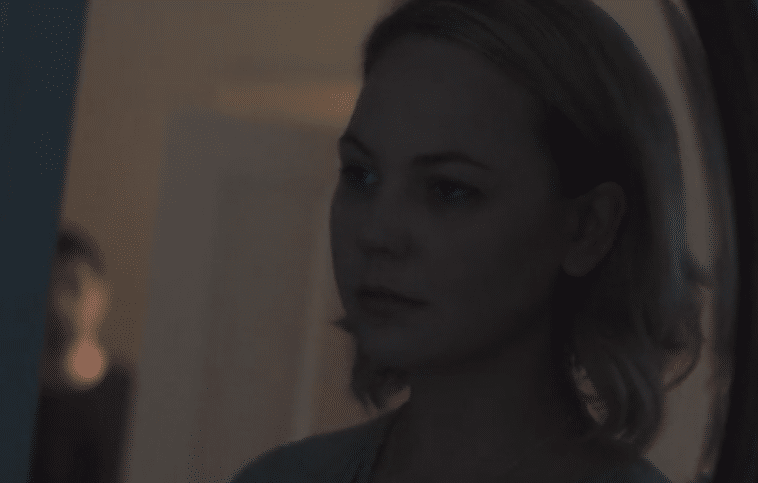
 It’s comparatively rare these days to go into a film viewing with no idea of what to expect, so often your best chance at this is to gain access to an online screener – particularly if these screeners come via film festivals which, for good or ill, have a fairly selective audience until such time as their films get a general release. In the case of Rabbit (2017), which first screened at Toronto After Dark last year, I got the chance to see this film with a completely blank slate – and I’m very glad I did. From the opening scenes, the film weaves a clever and nightmarish spell, eschewing gratuitous horror or torment in favour of something far more subtle.
That said, the film makes quite the opening impact, with a cacophonous wall of sound and a nightmarish, stylised forest: a woman is fleeing, clearly distressed, and seeks refuge at a nearby guest house. In this place, the people who let her in behave in an oddly banal way, but when she tries to leave again, the tension (and that noise!) escalate further. So far, so familiar, you may think: women have been running through forests since time immemorial, and they’re usually in a bad way when they do. However, the unnatural angles and odd inmates of this area of woodland make the film feel surreal, rather than conventionally menacing. Furthermore – it transpires that this is all a dream, being had by the missing woman’s twin sister Maude (Adelaide Clemens). Cleo has disappeared, and Maude cannot shift vivid images of her sister being terrorised… somewhere. It has escalated to the point that it’s impacting upon her everyday life, so it’s recommended that she return home to Australia from med school in Germany to recuperate.
Awkward, awkward family exchanges ensue: her parents, it transpires, have already had a makeshift funeral for Cleo, but increasingly, Maude feels that her twin sister is still alive. Were they close? That’s complicated, but whatever was between them, it’s increasing its hold on the remaining twin. She also begins to appreciate the ripple effect that her sister’s disappearance has had on other people close to the case; the cop who failed to find her is now on an extended period of leave to recover, and Cleo’s fiance Ralph (Alex Russell) even says that he has shared some of the same feverish dreams about her. Cleo has preoccupied them all – but only Maude, as she soon begins to assert, can find out where she is, and she vows to bring her home. Together, these three begin to unpick the strange dream, aiming to trace Cleo to her last known whereabouts.
It’s actually pleasant not to be able to dismiss a film as ‘another sylvan horror’ or ‘another boondocks horror’ and so on, even though Rabbit has blended some elements of these together. It takes identifiable tropes – as we’ve already identified – but skews them, just enough that you can’t substantially guess where you’re going with all of this: if you can categorically say anything at all, then this is a mystery story, one where no one’s motivations are clear, but where everything is imbued with a low-key air of malevolence.
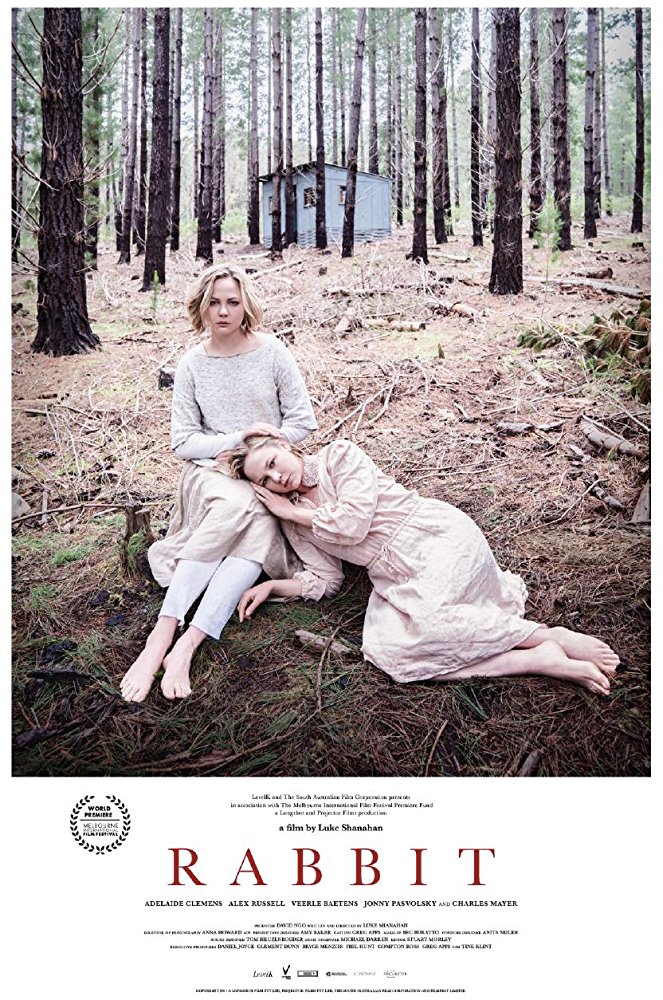 This is maintained artfully throughout Rabbit, because every line of dialogue and every gesture has a somewhat practised air: I’m trying to avoid invoking the name of a certain director, but there are some unmistakable resemblances to Mulholland Drive in the first half of this film. Things do progress in a slightly more tried-and-tested way in the second act, admittedly, although the atmosphere sustains the impression that this is not just another horror. Overall, there’s a convincing sense that some conniving intelligence with grim intentions is manipulating events, something which horror has played to great effect in recent years, from Martyrs to Starry Eyes to Get Out – though none of these films have utilised mise-en-scène quite so well. Director Luke Shanahan and cinematographer Anna Howard have set up a series of gorgeous, unsettling sequences which you barely glimpse, but which are deeply unsettling. The film is fraught with menace, and it all seems to operate in that pre-digital space which is equally beloved of modern horror. Perhaps for modern audiences, this symbolises an unfamiliar terrain where help is not at hand; in any case, a lot of films seems to have dispensed with phone trouble as a plot device.
The eventual direction is largely a surprise too, although for a few moments towards the conclusion, another, notorious film’s influence made itself clearly felt. I’m struggling enough to review this film without giving the game away, and if I mention this film by title I’ll have done just that, so I’ll just say that for a short time, the film dances closer to something which has gone before. This is only a minor criticism, though, as Rabbit finds its way to a conclusion by unusual means throughout. It arrives at an interesting overarching theme with barely a drop of blood spilled, and Clemens believably enacts a range of emotions in increasingly bizarre situations, leading to an altogether heady, ethereal sensation.
Rabbit is the first new film I’ve seen in 2018, and I have a sneaking suspicion that it’ll remain one of my favourite films of this year. My attention never wavered, and to the end credits, I felt unable to settle into any expectations. This is an elaborate, artistic and unnerving fairy story: let’s hope to see it released very soon in 2018.
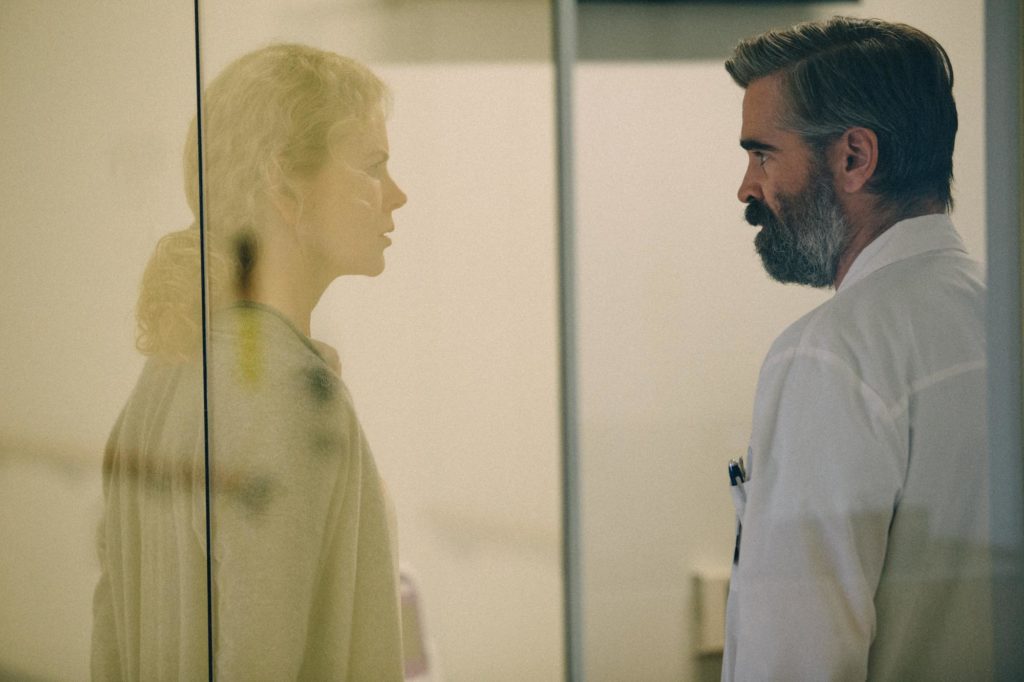 I’ll spare you the full preamble where I say how fast the year has flown, or that I haven’t been to the cinema as much as I’d have hoped, or that [current year] wasn’t all that great for films; in actual fact, I’ve seen some excellent films this year, in some cases from entirely unanticipated directions. On these lines, I never expected to enjoy a film so much that is based on Greek myth, blending horrible realism with farce and potentially supernatural elements. The Killing of a Sacred Deer is my first outing with director
 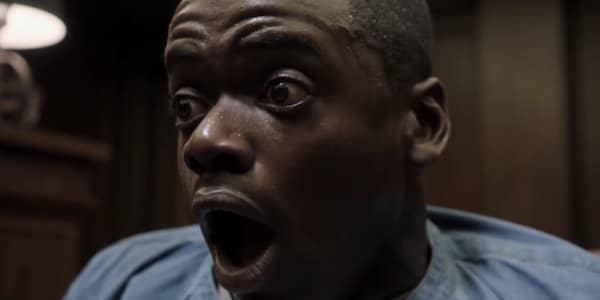 In one of those cases where I’ll just be adding my voice to the choir, Get Out is another of my picks of this year, and it actually has some similarities to The Killing of a Sacred Deer. Director Jordan Peele caused something of a stir on his Twitter feed recently when he declared that Get Out ‘is a documentary’. It isn’t, of course, if we’re to take him at face value at least, but it’s a seamless blend of social commentary and supernaturalism; the fantastic elements of the film lead it into conflict with realism, but in so doing, they underline a few distinctly uncomfortable truths about race in America in a way which only fantasy can really achieve. Daniel Kaluuya does a superb job as Chris, a black guy who just happens to be in a relationship with a white woman, Rose (Allison Williams). They’re about to visit her parents for the first time and he’s naturally a little apprehensive as to whether his race is going to be an issue. At first, the issue seems to be that they’re tripping over themselves to prove that it isn’t an issue whatsoever, which leads to some incredibly uncomfortable cinema as Rose’s dad insists he would have voted for Obama a third time, if he could. But for all their achingly liberal pretensions, the Armitages have black servants – black servants who behave decidedly oddly. As Chris finds out what’s going on, the horror escalates in a series of quite subtle but effective ways. Raising lofty and complex issues such as comparative power in society, though interweaving moments of comedy for some much-needed light relief, Get Out is an innovative and, I’d say, an important film, whose reputation will surely build and build. Me and Ben discussed our take on the film at the time we first saw it; you can take a look at that
 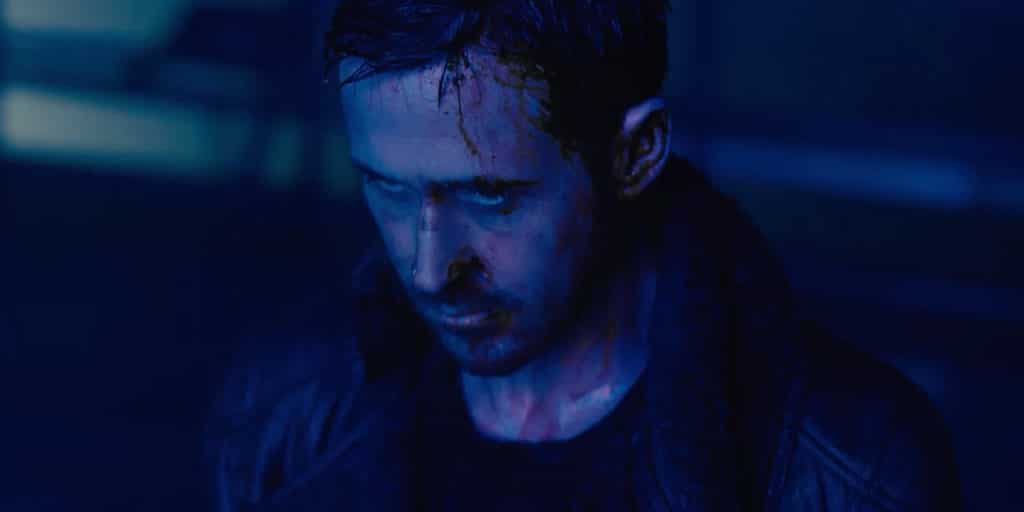 Here’s another of those ‘preaching to the choir’ moments, as I’m going to mention a film which has met with ample acclaim, and rightly so. Well, saying that, there were a number of people who seemed to feel that Blade Runner 2049 was ‘boring’. Ordinarily I can manage other people’s opinions, but that seems a bizarre assessment in my book. Blade Runner 2049 was the sequel we’d dared to hope for. In a world of tawdry remakes and pissant prequels, this entrant into the Blade Runner universe was absolutely superb. It asked questions, but it didn’t drag the audience right up to the thing they were meant to notice; from the importance of having a name, to the impact of commodification, to selfhood, to what constitutes humanity – it was all in there, but refracted through an almost silent and self-possessed main character, and a dystopian world which veered between garish superficiality and the drabness of a meagre, lonely existence. The most human relationships in the film weren’t between humans at all; humans clung to what made them ‘special’, but their own special status made them behave like animals. As for the film’s gender politics – another sticking-point for some viewers (as ever, it seems) – firstly, the film is under no obligation to show us an idealised future, what with being a dystopia and all; more to the point, it seems to me that in an overcrowded, desperate, but ultimately technologically-advanced universe, sex would be just another commodity, just as it is in countless places around the world today. An uncomfortable truth perhaps, but just another facet of the film’s uncompromising investigation into how people behave (allowing for the fact, of course, that no one is ‘just’ a sex worker in the film). Blade Runner 2049 is also an aesthetic and an aural odyssey, with something humbling happening on every beat. I for one cannot wait to see this film again when it gets its general home release in January, and if you’ve missed out so far, then maybe
 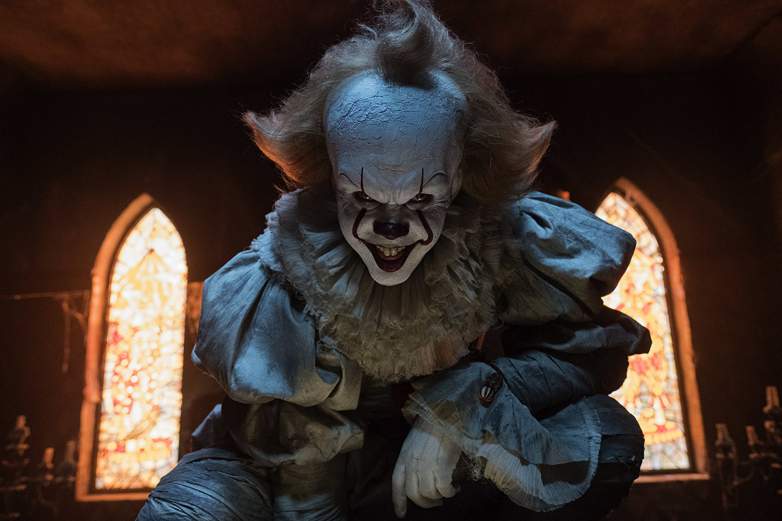 It’d be remiss of me to get to the end of this article without mentioning IT – probably the most straightforward horror film to make it into this year’s list, but an absolute romp from start to finish. No doubt this film was engineered in some respects to appeal to people of roughly my age who grew up during the 80s, but it’s a visual treat in any case, and there are good performances from the young cast to pit against Bill Skarsgård as Pennywise the Dancing Clown. Harder-hitting than the 1990s TV miniseries, and bleaker too perhaps, the new film still retains that level of fairy story type fantasy, where the boogeyman can clamber out of books, projectors, creepy houses to menace children, whilst their parents are completely oblivious to what’s happening to them. It’s a loud, proud horror film which doesn’t let up for its entirety. This is unashamed entertainment, which is sometimes just what we need.
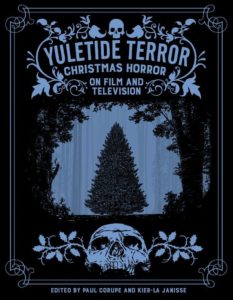 We go straight into the essays themselves – there’s no introduction and as such, no overall proposed direction – and we start where you may expect, with slasher classic Black Christmas (1974). Stephen Thrower, one of my favourite film writers, provides a detailed history of the film alongside what to me seems even more interesting, a wealth of accompanying comments on the film’s reception (there were some highly amusing comments in the press about the indecency of female characters swearing). Likewise, you would probably expect to see a feature on Silent Night, Deadly Night (1984) and the book fulfils that too: this material is engaging enough, though probably less interesting for me than other fare as I’m just not that into slashers (although fans of slashers often spend a great deal of time defending slashers against being simplistic, which is the case here too. Where you stand on that depends on your own tastes, of course.)
 An ancient curse, probably Chinese in origin, ran something like this: ‘May you live in interesting times’. It’s a wry old phrase. The insinuation is that when things get interesting, then it’s often a useful code for bad news, so via a play on meanings, and without saying so outright, it’s a hex that seethes with its true intent. Subtle, veiled…so it probably wouldn’t generate a Twitter storm or begin the only process which now seems to matter – breaking the internet.
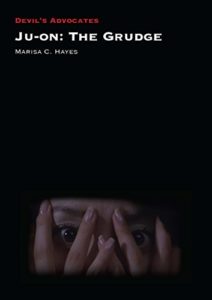 The Devil’s Advocates series is a collection of slim but studious volumes examining notable horror cinema: here, author Marisa C. Hayes takes us through an intimate, authoritative and long-overdue study of director Takashi Shimizu’s 2002 film. As Hayes notes, whilst Ju-on: The Grudge had a huge impact, it still gets less consideration in print than, for example, Ring. Placing the film at the heart of the rise of what’s known as ‘J-Horror’ here, Hayes builds a solid and readable case, showing how Ju-on both belongs to, and revitalises a tradition of ghost stories.
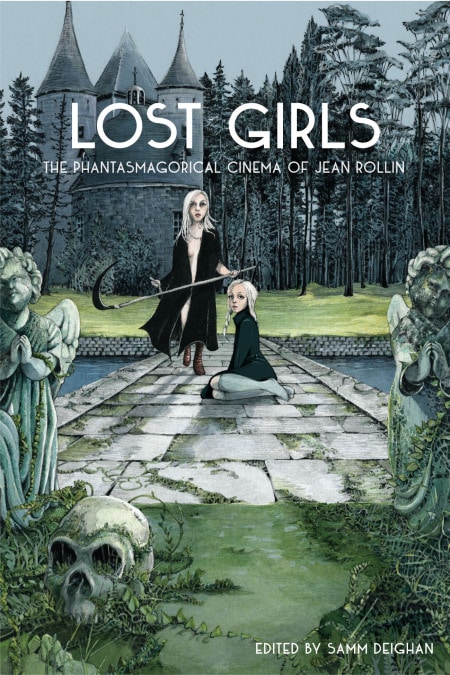 I first encountered the cinema of Jean Rollin via the UK’s Redemption Films, whose founder, Nigel Wingrove, became good friends with Rollin over the years; the film company deserves far more awareness of the great service they did by bringing so many of these films into the common consciousness in the Nineties, making the films themselves into an artefact worth having with an array of stylish, distinctive video covers marking them out. Until that time, any knowledge I had of the director’s work came via still images in magazines, and there it probably would have stayed until, in all likelihood, the films resurfaced – though probably not as well-presented – during the earlier years of the DVD revolution, when there was a real surge of hitherto-unknown releases. But however the films may or may not have made their way to our shelves, it’s taken some time for Rollin criticism to follow in print, although Immoral Tales first re-assessed Rollin’s work in the nineties, and more recently, David Hinds published his Fascination: the Celluloid Dreams of Jean Rollin. But is there more to say?
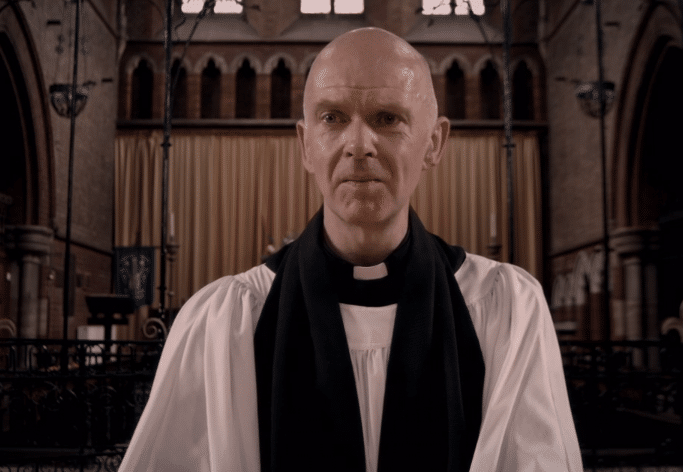 Vampirism is something monstrous, something impossible, but it’s a broad enough kind of monstrosity to mean it can be explored in a number of ways on screen. Unto Death, by director Jamie Hooper, uses the vampirism theme to explore a relationship, and how it is put under extraordinary pressure by the most extraordinary of circumstances. The resulting film is a subtle, but affecting piece of human drama.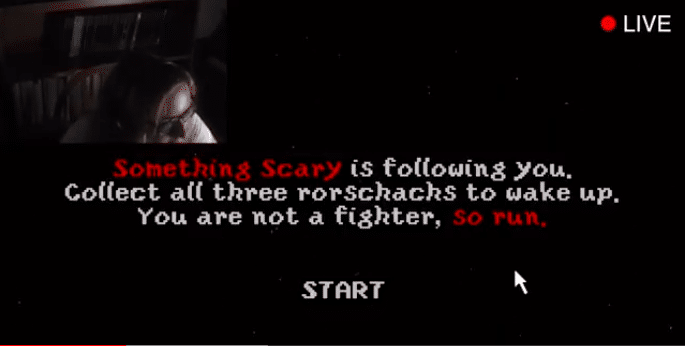
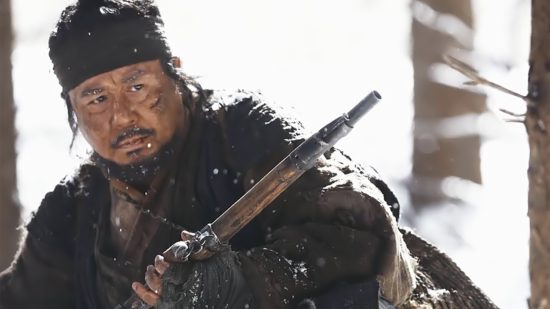 Sometimes a film self-consciously goes for the ‘epic’ tag, and it’s clear from the very outset that this is the case with Park Hoon-jung’s 2015 movie The Tiger. With its sweeping Korean vistas, Sturm und Drang musical score and lone figure set against an unforgiving world it clearly fits the bill, and actually that’s just fine: it’s a genre which seems to suit actor Choi Min-sik, perhaps best known for his work in the groundbreaking Oldboy (2005) which was in many ways an ordeal horror epic, when you think of it now, a decade or so on. However, in its painstaking attempts at detail in this rather artistic study of cruelty, the film is certainly an epic-length two hours, forty minutes in duration. This is more and more the trend in cinema these days, but I strongly feel that The Tiger could have curtailed one or two hunt scenes, for example, and retained or even improved much of its impact.
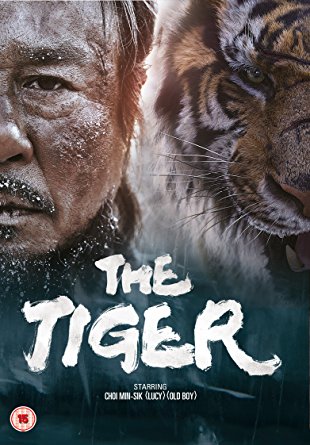 This whole ‘man vs beast’ aspect of the film feels rather like The Revenant in places, a film which is its 2015 contemporary. Unlike the outraged mama bear in The Revenant, though, the ‘Mountain Lord’ here is more than an animal in many respects; the film plays fast and loose with animal realism in its (well-utilised) CGI sequences, and although the film is unsettlingly gruesome in its hunt scenes, there is a certain level of disparity of threat here too, as on occasion, the tiger becomes semi-mythic, something akin to a moral arbiter of the characters, killing savagely sometimes, but interacting rather differently sometimes. This shifting identity is something of a sticking point in the first half of the film; it’s not clear, for much of this time, what the tiger actually is. Still, eventually, a parity is created between the hunter and the tiger, which makes ever greater sense as the narrative progresses.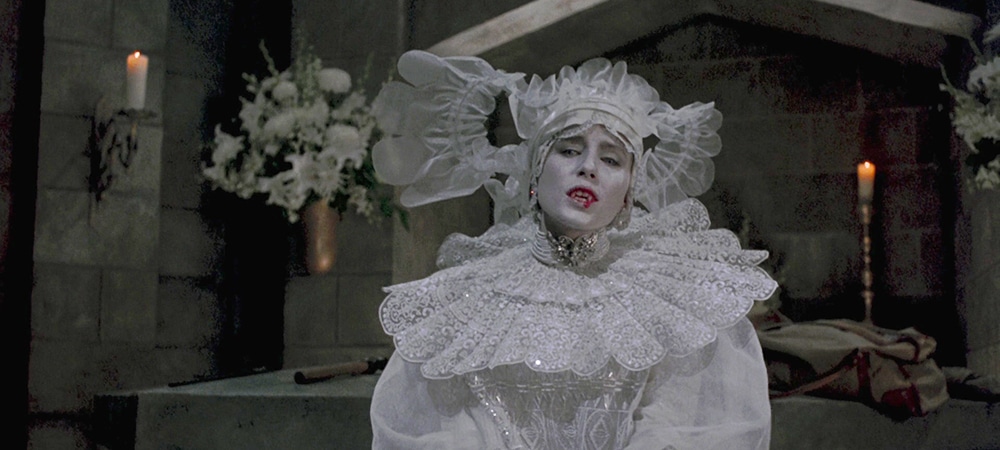
 I may as well be blunt here: it’s a notable book for many reasons, not least of which in how it’s generated so many more creative works down through the years, but I don’t think Dracula is a great novel in itself. The epistolary frame is interesting in terms of structure, and it’s cleverly pieced together, but this keeps readers at a distance from its protagonists; certain characters descend readily into farce (and are played faithfully as such in the film!) and there are a number of thankless questions, making the novel feel a bit like a whistle-stop tour of a fascinating place where you never have long to pause and look about you. Francis Ford Coppola’s Dracula adds some sense and coherence to all of this by motivating its monster with undying love, but it doesn’t then abandon the effective and horrifying scenes from the book, either. Some of these – the creature turning into multiple rats which all flee, the still aged Dracula licking Harker’s blood from a cutthroat razor or impossibly scuttling down the castle’s steep walls – have lost none of their power. It’s these contrasts that allows the audience to see a fully-fleshed antagonist; to feel some ‘sympathy for the devil’, or at least sympathy for a damned being. Against the luxuriant add-on of what’s effectively a reincarnation based love story, it’s an absorbing array of contrasts.
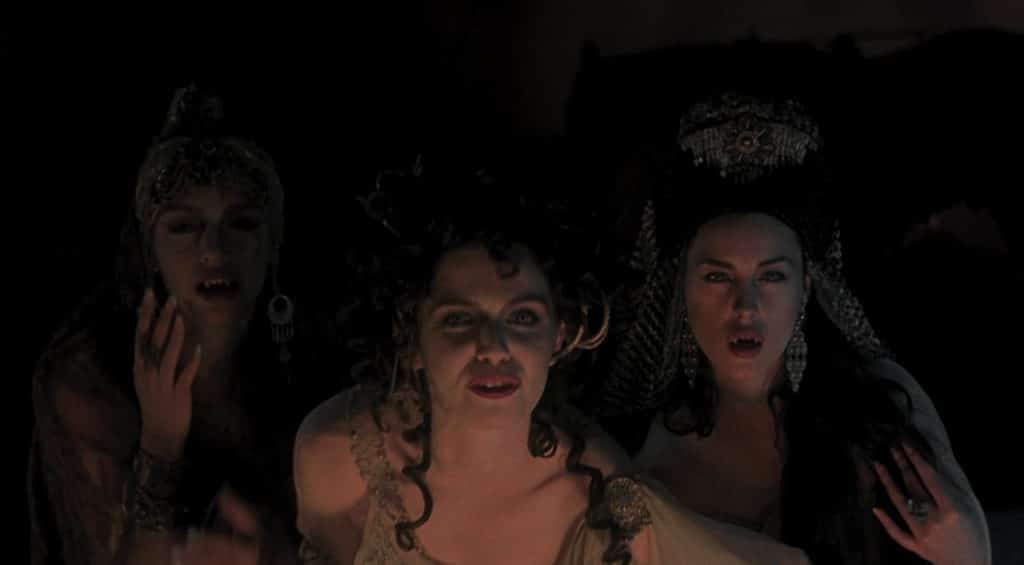 No one can ever accuse Coppola of shying away from things which could only ever be alluded to in 19th Century fiction. The Carmillas and Draculas of the day afforded the tantalising scope to be salacious, but likewise the sexual mores of the day meant calling things to a halt not too long after introducing this possibility of sex, couching even these supernatural encounters in veiled words and glaring omissions. Compare that, to give just one example, to the ‘Dracula’s Brides’ sequence in the 1992 release. Okay, even if the blood-sharing scene between Mina and the Count holds back to an extent (though still sending a million hearts a-flutter, no doubt) then the unholy trinity who make Harker their foodstuff/plaything must have been quite an education for more than a few young men – or women, for that matter. After that, we should be a hell of a lot more understanding as to why Harker’s speech sounds a little off. Then there’s what happens to Lucy Westenra, which is recounted as a ‘mystery illness’ in the novel, but is rendered overtly sexual on screen, in a series of eroticised, if dubiously consensual encounters – in one of which Oldman was advised to whisper scandalous nothings off-screen to actress Sadie Frost in order to encourage her to writhe appealingly. Coppola always intended his film to have this kind of sensory overload, storyboarding about a thousand scenes altogether and insisting that the costumes, alongside the mise-en-scène, underpinned the whole.
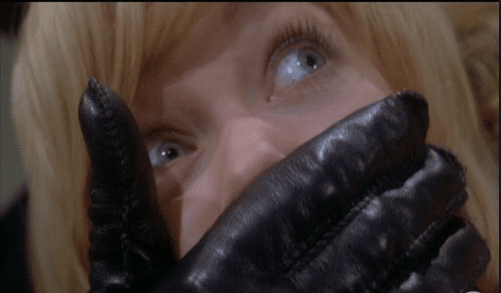 Hammer is best-known for its Kensington Gore and its literary monsters, usually shot against a 60s-coloured 19th Century which is a distinctive aesthetic all of its own; the studio deviated from this formula quite considerably at times, though, in a range of films which seem to have divided critics ever since. Fear in the Night is certainly dramatically different from other projects which had seen director Jimmy Sangster at the helm: the last time he’d worked with Hammer prior to this film, it was to bring us Lust for a Vampire, a film which is itself divisive, but inarguably, classic Hammer fare. Not so with Fear in the Night, with its contemporary setting and extremely slow-burn approach. The film is not without its issues, but it certainly showcases the flexibility of Sangster. There’s ne’er a scrap of flimsy white fabric to be seen.
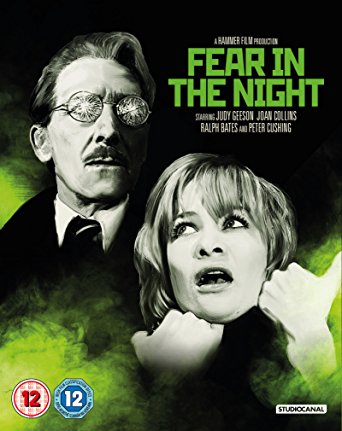 This is a very low-key piece of film, which takes its time establishing the interaction between Peggy’s state of mind and the possible threat to her. Unfortunately, some aspects of Peggy’s character and narrative haven’t aged particularly well; she behaves like a bit of a dupe, going from childlike to catatonic when the going gets tough. Mr. Carmichael’s wife Molly (Joan Collins) refers to her disparagingly as a ‘child bride’, and that is rather how she’s played. Eventually, she seems to withdraw from the plot altogether, every bit as unresponsive as Barbara in Night of the Living Dead. Before we get to that, though, Peggy is apparently primed to simply be ‘a teacher’s wife’, and having no other role, she has ample time to roam the grounds, where she has equally ample time to frighten herself half to death. The script accordingly does lag in several places, perhaps particularly where married life is concerned; perhaps as she is recovering from a mental illness (though we never discover the full nature of this) husband Bob is galvanised in his treatment of her as a lesser being, and the needy/dismissive dichotomy between them can be taxing.