Mayhem Film Festival: Extra Ordinary (2019)

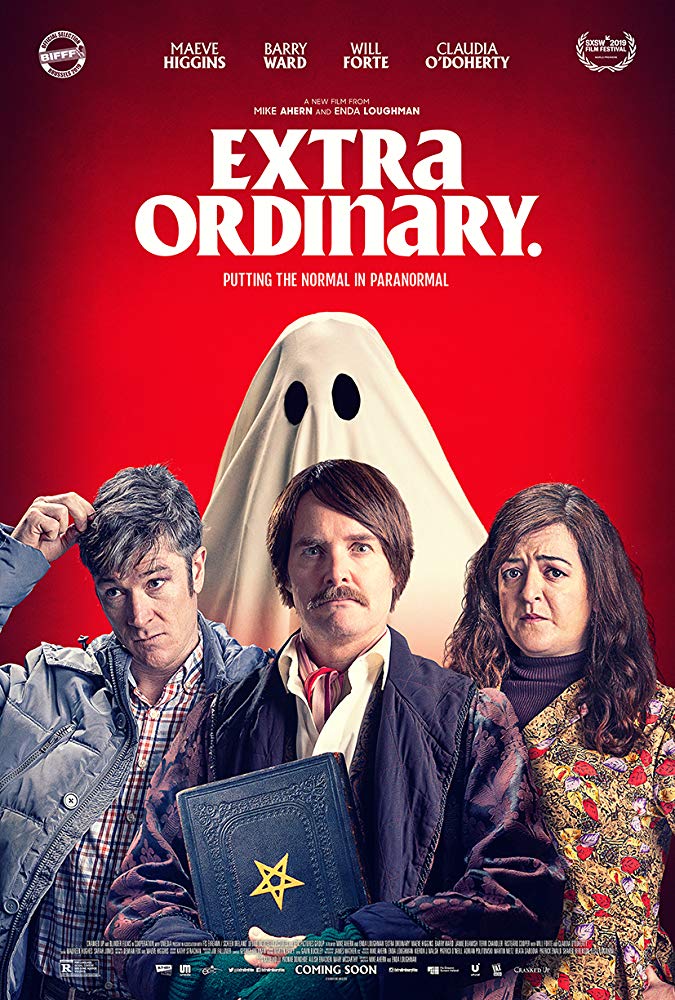
As the point has been made several times before on this site, horror comedy can be a risky venture; when it goes wrong, it can be either not that funny, nor really capable of showing any love for the horror genre either. Happily, neither of these charges can be levelled at Extra Ordinary. The film uses a full, recognisable array of horror tropes, and yet also manages to craft something very plausible, because in the midst of all the madness there are some organic human relationships which work in all their lunatic (usually) dysfunctional glory. There’s also an Irish lilt to the humour, much as the filmmakers deliberately swerved around the use of Irish stereotypes (spoiler: there are no priests here and there’s no boozing either). But for all that, there still is something unique about how the film moves between the very straightforward and the oblique, something which feels very Irish to me and which makes the film the genuinely funny experience it is.

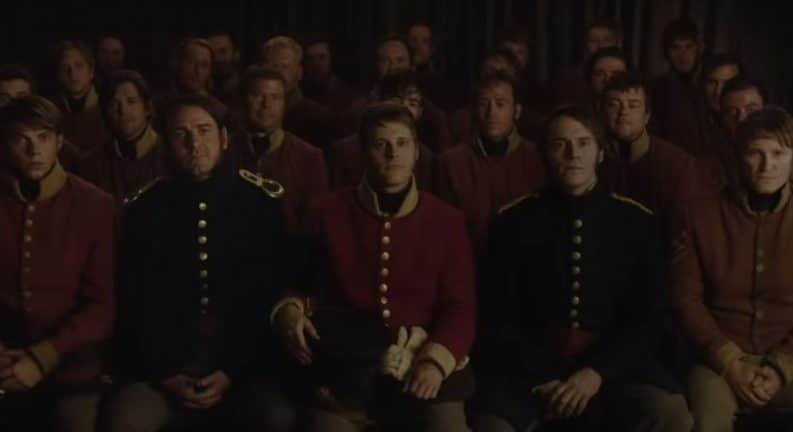
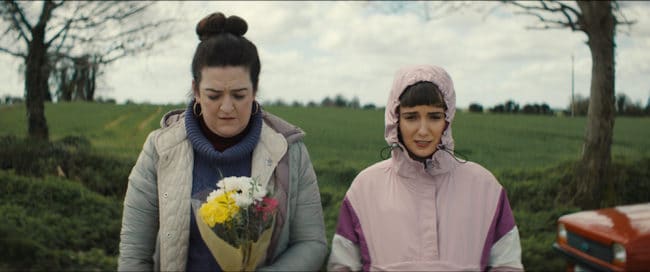
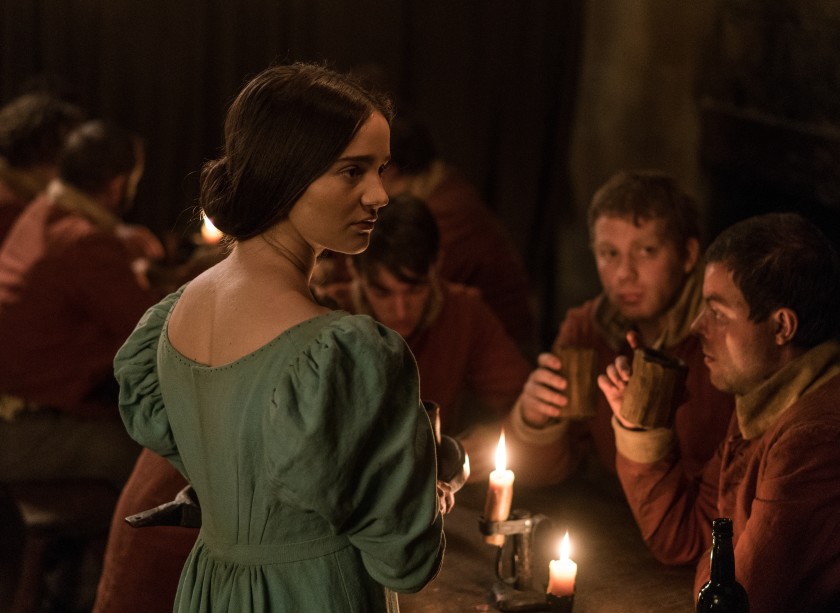
Our first introduction to the Dooley sisters, Rose (comedian Maeve Higgins) and Sailor (Terri Chandler) comes via a VHS clip from the days when their now sadly-departed father investigated the paranormal. We’re shown that Rose blames herself for her father’s death, but Sailor assures her that it was just an accident; in any case, Rose had followed her father into paranormal investigation, but has since opted for a rather more orthodox career as a driving instructor. The problem is, people in the local area are still convinced that they need Rose’s help with their paranormal problems; most of these are hilariously low-key, but then there’s Martin’s case…

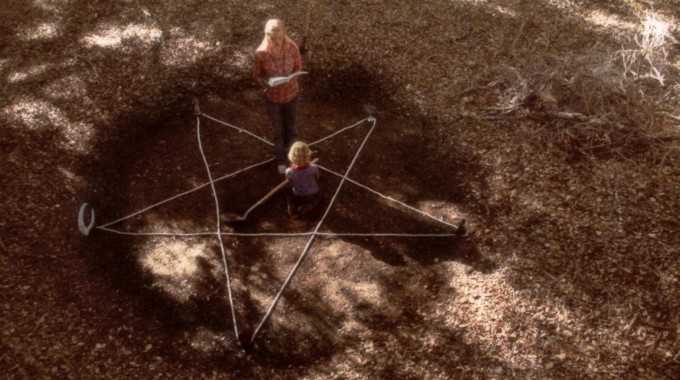
Martin (Barry Ward) is plagued by the spirit of his deceased wife Bonnie. She has strong feelings on what he does around the house, right down to what he wears every day, and Martin has little choice but to follow her wishes. Whilst their teenage daughter Sarah is largely left alone by Bonnie, she can see that her father needs some serious help in order to move on, or to move Bonnie on – which is largely the same thing. Eventually, under the auspices of having a driving lesson (!) Martin gets in contact with Rose. Rose’s own loneliness is a factor in her decision-making. This would be quite enough, but it seems there’s more trouble at hand for the Martin family – and, yep, Martin’s name is Martin Martin. When Sarah is bewitched by a [deep breath] washed-up vocalist whose only big hit was decades previously, leading to his decision to use the Dark Arts to resurrect his career, then Rose feels honour-bound to help them.

So we have a little haunting, a little paranormal investigation, a dash of possession, and some Satanic ritual to boot. There’s even a bit of gore here. I challenge you to be bored. All of that said, the film starts incredibly small in terms of its paranormal phenomena, opening with the point that most hauntings are so insignificant that people don’t even notice them (and Rose’s dad pointing out that even something as small as ‘a gravel’ can be affected gave us an early laugh). It’s just that things don’t stay small. I’ve no wish to spoiler, but, well – you know rituals. Underpinning all of this, and the reason that the film never feels like an aimless sprint through a hell of a lot of plot, is that there’s such plausible, poignant characterisation. Sure, the performance given by faded music star Christian Winter (Will Forte) is as OTT as you’d expect, but this acts as a foil to the performances of Barry Ward and Maeve Higgins. Higgins was offered the opportunity to modify the script to make it sound more natural where she felt it was necessary, and this does add a lot of likeability and depth to the characterisation. In amongst everything else which is going on, you can suspend your disbelief as the people here just work so well.

Extra Ordinary is ambitious in what it seeks to do (and how it steadily reveals elements of its plot in the run-up to its closing scenes) and it has created an original, very engaging story from recognisable horror elements. No complaints here: this is a horror comedy that works brilliantly well, with bags of charm and deserved self-belief.

Extra Ordinary screened at the Mayhem Film Festival in Nottingham in October 2019 and will be released in UK cinemas on 25th October 2019.

3 From Hell (2019)

After the Firefly family got caught in a hail of bullets at the end of their little road trip in The Devil’s Rejects, I don’t think anyone really foresaw a sequel. But it turns out these characters have a life of their own now that defies expectations: House of 1000 Corpses and Devil’s Rejects are the best things Rob Zombie’s ever put out, and the Firefly family – though obviously based in part on other famous horror families – have broken through to garner long-term appeal. So, unlikely it might all be (though it seems silly to quibble over cold, hard facts in what is so obviously a piece of exploitation cinema), turns out Otis, Baby and Spaulding survived the shoot-out, got patched up and sent to jail, where they’ve been languishing ever since. Ten years have passed.

And not that much has changed in the interim. Well, Baby’s covered in jailhouse tattoos now and has gone ever so slightly stir-crazy from spending so long in solitary, but Otis is the same as he ever was and – in a part which was sadly, hastily re-written due to Sid Haig’s health problems – Spaulding is still a wisecracking lunatic who finally meets his maker very early on when he is executed for his crimes. Something has to give from this point on; Otis is sick and tired of jail and doesn’t much relish the same fate as his old man. He begins to formulate a plan, which of course involves a spot of horrendous cruelty and hostage-taking: taking the warden captive, he manages to persuade him to go and get Baby out of her respective cell and bring her out into the world.

Reunited again, the Firefly kids are accompanied on their new jaunt by a relative – Foxy Coltrane (Richard Brake), in a role which was very obviously intended for Sid Haig ; Brake is perfectly respectable in his role and engaging enough on screen, but it really does feel like a hasty swap, and a lot of his lines are noticeably reworked for him. Anyway, now that they’ve murdered and outraged their way through the warden’s house, they need to be moving on pretty quickly. The three decide on Mexico. When they get there, they hole up in the middle of nowhere, but they’re about to find (again) that their host isn’t to be trusted.

In 3 From Hell, Rob Zombie makes it blindingly obvious that this is an homage to the great low-brow exploitation cinema of the 70s and early 80s: the cut scenes, the addition of on-screen text and the shooting style all scream cheap, nasty cinema, even though a lot of the rest of the film is actually rather slick, but if you’re find of that type of tribute – we’ve seen a fair few in recent years – then you’ll likely enjoy what 3 From Hell does with its style. The film feels closer to House of 1000 Corpses than Devil’s Rejects in terms of that style – however, in terms of plot, it is noticeably similar to the 2005 film, to the point of being a re-tread in several key respects. Consider the similarities, even at a basic level: fugitives head onto the road looking for somewhere they feel they’ll be safe, but find out that danger and dangerous people follow them there. The whole home invasion/torment the warden scenes are themselves very similar indeed to the motel scenes from Devil’s Rejects. There’s no great progression here, at least in terms of what happens. If you like the characters and you’re just happy to see more of them, then this won’t be too much of a problem, but if you wanted a brand-new spin, then you won’t find it here. A few tantalising lines offer the suggestion of something more – such as Otis remarking on how traumatised his sister has become since he saw her last, or the remaining siblings commenting on the fact that everyone they loved is gone, with a touching cut scene to Sid Haig with them in the previous outing – but these aren’t developed in any depth, somewhat frustratingly, as this would have been interesting.

Still, if it sounds as if the verdict on 3 From Hell is negative, then really, it isn’t: there’s lots of straightforward, grisly fun here, with Bill Moseley showing once again that he was born to play the part of Otis, and getting the majority of the best lines for his pains. It’s clear he’s having an absolute blast; Brake is able to enact a close relationship with him, too, giving us two characters who are affable as much as they are awful. And that’s what Rob Zombie does very well with his most famous creations; you end up rooting for them, because everyone else is worse anyway. Sheri Moon Zombie does a decent turn as a deeply messed-up individual – that is, worse than she was before, someone used to being toyed with by a malicious warden (Dee Wallace) who has made it her business to destroy her; all in all, it’s just good to see these characters again, and if they’re not reinventing the wheel as they go, then so what? It’s hardly the point. The set pieces alone are enough entertainment.

3 From Hell looks every inch the Rob Zombie movie; its aesthetics follow a familiar pattern, and he seems quite content to just let his characters amble on through their days, resurrected largely to take one more road trip. It is, of course, a real shame that Sid Haig got to spend so little time reprising his role as Spaulding here, as like Moseley, it’s a role he clearly loved playing. So it’s a fairly simple yarn, but 3 From Hell an enjoyable enough nod to the glory days of exploitation cinema, with some warped humour, a chance to see some now-established horror film characters reprise their roles and indulge themselves in a spot of ultraviolence. If you’re happy with that, then you’ll likely be happy with this, even whilst it won’t replace The Devil’s Rejects in your affections anytime soon. And will they be back for more? Without Haig, it would be something of a shame now, but as we’ve learned -never say never.

3 From Hell will be released on 14th October 2019 (UK).

Rabid (2019)

When I first heard that the Soska twins were directing a remake of David Cronenberg’s 1977 movie Rabid, I think, like many people, I wondered what on earth they were going to do with it. Whilst not an obvious choice for a glossy re-imagining, it’s also a film with plenty of potential for a new perspective: given Jen and Sylvia Soska’s rather variable output since their first real calling card American Mary in 2011, however, it was a project which could go either way. Happily, the finished article has lots going for it, forging something which strikes a balance between source material and new ideas. This is a pretty savage body horror of its own sort, brought up to date in a series of ways which don’t feel like mere lip service to modern concerns.

The House of Gunter is a prestigious fashion house with the prerequisite cruel, eccentric owner who gives the company its name; one of his employees, Rose Miller (Laura Vandervoort) might be a talented designer and seamstress, but she is making none too positive an impression. Mousy, uncertain, frequently late, her position is by no means assured, especially at such an important time: Gunter is about to launch his newest range, ‘Schadenfreude’, a range which will in his own words showcase ‘the dark night of the soul’. Rose’s dark night of the soul starts here: when she is invited to a party by the good looking journalist Brad (Benjamin Hollingsworth), she’s flattered, and her friend and colleague Chelsea helps her pick out an outfit. However, at the party Rose overhears that Chelsea put Brad up to it: humiliated, she leaves, gets on her moped and immediately lands herself in a serious traffic collision – not her first accident, given that she already had facial scarring, but this time things are far more significant. Rose is unconscious for a week. When she wakes up, she begs to see what has happened to her face. With a horribly disfigured face and a wired jaw, she can’t even speak to say how she feels.

Despite her earlier meddling, Chelsea wants to show herself to be a good friend, and she offers for Rose to stay with her whilst she recuperates. Rose agrees, glad of the support. Scrolling through her emails one day, she notices one from a clinic offering radical, experimental surgery from a ‘transhumanist’ perspective – but never mind the philosophy, they’re offering free care based on cutting-edge stem cell research in return for some ‘minimal blood work’. Medical care costs a lot of money in America. This is almost motivation enough. Rose and Chelsea go along to see what’s what, and despite her misgivings, Rose decides to undergo their suggested procedure. It works brilliantly, but as with all such successes, there’s a terrific, chaotic price for Rose and those around her.

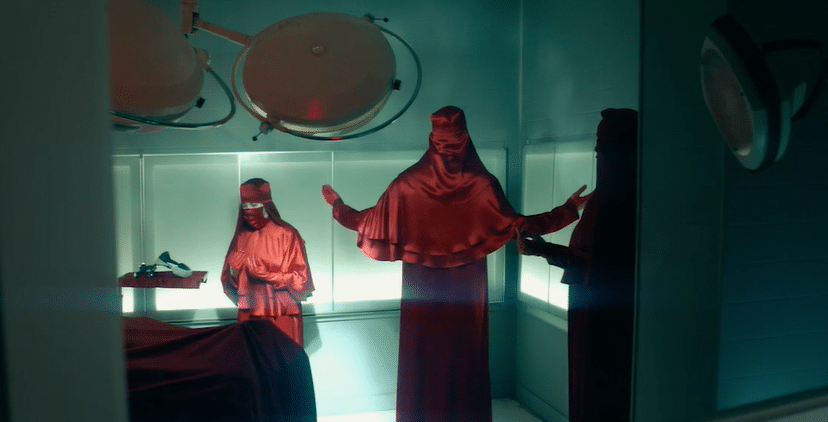
There are many good qualities to admire here: this is a stylish film, well shot and lit with a great eye for colour. If Cronenberg’s Rabid was somewhat dour and grim, then this is the opposite; the use of practical SFX is very welcome, too, with some particularly unpleasant, and therefore skilled depictions of injury and surgery. During their career to date, the Soskas have done a very good job at turning the operating theatre into…well, theatre, and Rabid is no slouch in that respect. Also, on a personal note, as someone who’s had a doubly-broken jaw and reconstructive surgery, some of the footage of a very hungry Rose trying desperately to eat or drink something gave me some mild flashbacks. Ain’t no hunger like the kind where you can’t physically open your mouth (except maybe, the kind which comes later in the film). Speaking of Rose, she is far more of a rounded character for me than ‘American’ Mary, and the film does successfully generate pathos for her situation. In her chosen industry, the forces which drive the emphasis on looks are perhaps even more brutal than elsewhere, and watching people’s sudden warmth towards her when she ‘looks the part’ is well-handled. The film hinges on vanity – its artifice, but also its genuine importance to people.

In other respects, Rabid invokes some very modern demons: it tackles ‘clean eating’ and conscientious consumption, the ubiquity of plastic surgery and – without feeling like you’re being beaten around the head with an agenda – the phenomenon of street harassment of women by men. For all that, key elements of the original are retained, with some nice nods to Cronenberg (look out for them) and that self-same sense of things rapidly spiralling out of control. Whilst some of the new-direction stuff of the end scenes sat a little oddly, and whilst I still can’t be persuaded that the director cameos contribute anything, this is an entertaining horror film.

In effect, Rabid feels like the film which the Soskas shoulda-woulda-coulda made right after American Mary. There are recognisable parallels between that earlier film and Rabid, but with Rabid there is evidence of lessons learned – a defter touch, and a sense of progression which I don’t feel that you get from their other interim projects. It’s pleasing to see, and I really hope that these directors can use Rabid to generate momentum for their next pitch, as it would be a crying shame were this not the case.

Rabid gets a UK release via 101 Films on 7th October 2019.

Groupers (2019)

It seems that gone are the days when social commentary in cinema happened as a matter of chance; more and more, in our hyper-aware times, filmmakers actively tackle hot topics such as attitudes to sexuality, race or class – it’s there from the start, right from the beginning of the writing process. So when I saw that Groupers (2019) was being pitched as a film taking homophobia as one of its key plot points, I’ll admit that I expected something perhaps – how shall we say – intentionally ‘woke’, choc-ful of correct attitudes and lessons learned. And in that rather simplistic expectation I was completely wrong. Yes, this film challenges homophobic attitudes, but it does it in a range of ways from downright savage to fairly oblique. The film shifts from something approximating ordeal horror, to a dialogue-driven skit on human stupidity. In short, it’s immensely ambitious, and most of that ambition pays off.

The film starts with two rather hopeful jocks – the impressively moronic Dylan (Cameron Duckett) and his slightly brighter, but no nicer best friend Brad (Peter Mayer-Klepchick). They’re very pleased to be leaving a club with a pretty girl who intimates that they can both come home with her: just get into this large, empty truck, guys, and I’m yours. Naturally, they do just that. But the journey to wherever they’re going would suggest that she’s not that enamoured of them after all; slamming on the brakes, veering from side to side, oh and donning a gas mask before tossing a gas canister into the back, knocking them both out. When they revive, they’re tied to chairs (!) at the deep end of a disused swimming pool in an abandoned neighbourhood. The girl, who introduces herself as Meg (Nicole Dambro) says that they have been chosen to participate in a very special experiment. To help them make sense of their predicament, she reminds them of someone they might have forgotten…

It transpires that these jocks have been doing what jocks do best, at least if my experience of the school social system in America (which comes exclusively via cinema) has been correct: they’ve been victimising someone weaker than them, in this case for that person’s sexuality. The victim of their bullying, Oren, was Meg’s brother. And she wants to tackle Dylan and Brad’s assertions that Oren (or Aaron, they can’t quite remember his name) brought it all on himself: you choose to be gay, therefore he used his free will to think himself into a state that left him rife for victimisation.

Meg’s ideas for just how to test her own ideas are non-violent but definitely uncomfortable, and had the film began and ended with ‘people tied to chairs learning life lessons from an empowered captor’, then Groupers would for me already be filed with all the rest of the ordeal cinema already out there; also, the notion of a film where minors become the subject of sexual experimentation would be unpalatable or unsustainable to many. Just as an aside, a ‘grouper’ is apparently someone who changes their sexual orientation or gender identity later in life, and as that’s displayed loud and proud at the beginning of the film, it’s not a spoiler to add that detail here. Hold that thought, though. The film quickly breaks up any emphasis on the experiment itself with a number of features which raise this film above what it might otherwise have been.

The pace in Groupers is overall fairly quick, even for a film which comes in at nearly two hours in length. There’s comparatively little focus or fixation on the two boys and what is being done to them, as there’s a lot more plot to follow: it’s a common feature in indie filmmaking now to have your film chaptered, but it’s worth knowing that there are other characters and plot devices to come via this method, with second glances at scenes we’ve already seen; new perspectives and footage are added each time (so there’s no fixation on a single location, which helpfully breaks the film up further). The dialogue itself from all of these characters is sparky and smart, with superb performances (particularly from the driven, charismatic but fallible Meg). There’s far more in here, again obliquely for the most part, than homophobia too. Ideas about bullying in general, our relationships to social media and our attitudes to gender and race all get touched upon. In fact, as things progress, this begins to feel a lot more like a Kevin Smith-style script, an assemblage of odd people and their attitudes, all playing off one another and using just the right amount of dry humour, moving eventually from the sublime to the ridiculous. If the film loses something of its initial impetus across its running time, then it continues to be an engaging, unusual and funny film.

So, contrary to expectations, there are no grandstanding ideas about social attitudes here; attitudes are challenged, yes, but it’s as often implicit as it is explicit. The overarching appeal of Groupers must surely be its utterly unique handling of that challenging subject matter as it spirals out from the initial premise, gathers a whole host of larger-than-life characters then draws them all back together again. It deserves credit for that.

Groupers is on general release in the US from October 1st 2019.

Raindance 2019: Dark, Almost Night (2019)

Winter in Poland. A woman is taking the train from Warsaw back to her dilapidated home town, a part of the world evidently undergoing a spate of child disappearances, given the newspapers and news bulletins we soon encounter. This is Alicja (Magdalena Cielecka), a journalist, who has chosen to return to her old home in order to write about these cases. However, being back in the old family home, now otherwise deserted, evidently raises a few spectres for her; Alicja begins to dream about buried childhood memories, recalling her older sister and her father’s obsession with finding a hidden treasure of sorts – described as a long string of pearls belonging to ‘Duchess Daisy’. As the story unfolds, it transpires that this Duchess Daisy links the fates of several of the townspeople. At this moment in time for Alicja, however, it is simply a memory associated with deep unease.

Still, she has a job to do, and so Alicja begins questioning the families of the missing children. But, whilst she may have been from this neck of the woods originally, she’s very much at a loss at how to engage with the people she meets – her interview subjects, or anyone else for that matter. Not that we should blame her; in some key respects Dark, Almost Night approaches horror or fantasy, and the depictions of the townspeople fall under that category. These people are almost caricatures of oddness, ominously overblown, speaking in riddles and – as with the folk horror genre in particular – all clearly guarding aspects of some secret not to be shared with de facto outsiders. Alicja continues in her task, but things continue to thwart and perplex her.

Before long, someone seems to be terrorising Alicja at the old family home as she works; as she begins to untangle some of the family mysteries present around her (and involving her), links back to the fabled treasure and to those associated with it keep coming up; this leads her to re-examine her own childhood memories at last, forging a series of unenviable links between her town, her home and a wider pattern of child abuse and trauma.

There is a great deal to recommend here. Firstly, the film is intensely menacing, almost from the very opening frames. In no small part, this is due to the phenomenal sound design; nearly every frame is overlaid with a brooding, all-encompassing soundtrack and it’s comparatively rare for a scene to be accompanied only by naturalistic sounds, which somehow underlines the remoteness and silence of the town itself. The wintry setting and the location underlines these dark atmospherics, creating an impression of want, isolation and unhappy people. However, alongside these sound decisions are some very strange ones.

Tonally, the film shifts around rather uncomfortably, with disturbing, unusually graphic depictions of child abuse (good luck getting those past the BBFC if this ever gets a general release in the UK) and domestic violence sitting next to absurd, or otherwise lighter scenes which makes the most gruelling inclusions feel somehow glossed over in some aspects, as if they are moved through quickly and then simply shifted aside for something else. The timing of a fairly random (consensual) sex scene is particularly gauche, for instance. I couldn’t help but wonder if this is intended in some respects to be Poland’s answer to A Serbian Film: it shares some of the same features of allegory (or alleged allegory), the same unflinching eye for sexual violence against women and children, and a desire to display Poland as an impoverished, incestuous, ugly tangle of miserable families and suppressed grief. Certainly, the shock value is there.

So Dark, Almost Night is something of a dilemma. On one hand, its cinematography is superb, and in terms of aesthetics and sound design, this is an artistic and thoughtful project in many respects. The performances given, even when these seem to demand overstated words and deeds, are overall very good too, and even as several ‘reveals’ occur, Magdalena Cielecka successfully strikes the balance between emotion and reason. However, the film’s subject matter is taboo for good call, and in many respects the film takes quite a strange, cavalier approach to it which won’t rest easy with many modern audiences: moving candidly, unflinchingly but brusquely through such things has a peremptory feel which rested uneasily with me, I will admit. However, should you want your expectations challenged, then Dark, Almost Night will certainly do it.

Dark, Almost Night will screen as part of the Raindance Film Festival on Sunday, 22nd September. For further details, please click here.

Raindance 2019: Imperial Blue (2019)

When I read some of the blurb for Imperial Blue and saw that its story revolved around drug use, I expected to get one of two things: either a brutal crime drama, where cartel is pitched against cartel, or else a surreal, even overblown imagining of substance abuse on-screen. In truth, Imperial Blue contains some aspects of each of those, but it certainly doesn’t fall neatly into either category. Instead, it’s a deeply character-centred tale, where we follow the fortunes of someone we most likely aren’t intended to like very much. Drugs might be the nexus here, but really this is all about a stranger in a strange land, unable and largely unwilling to curtail his own ego in his pursuit of illicit thrills and illicit money. Along the way, he creates great waves of havoc, crashing headlong into a foreign culture with little care for the impact. It’s an unsettling viewing experience, and no doubt it’s meant to be.

The film starts in India, with a drug deal which introduces us to our main character Hugo (Nicolas Fagerberg): Hugo is a foreigner, clearly invested in shifting pretty large amounts of various substances, and interested in the ‘next big thing’. He’s introduced to a rare Ugandan blue powder known as ‘bulu’; said to give its users the ability to see into the future, Hugo’s other contacts tell him it’s incredibly hard to find. But, alas, before he can procure any more, there’s a surprise police raid. Hugo escapes intact, but with a sizeable loss of his boss’s money. With little else to lose, he decides to sample the bulu he managed to retain. True enough, it gives him a sequence of unsettling visions, some of which clue him in to imminent events – enabling him to catch up with the guy he suspects rumbled the deal, for instance, because as he hallucinates, he sees where to find him. An abortive homecoming in London follows, but it’s clear that Hugo isn’t welcome at the home of his wife and son and he isn’t flavour of the month with his boss either: his only option is to go on the road again, track down some bulu and get it back into the UK to sell against his significant debt. His boss gives him a fortnight to sort it out.

Meanwhile, in Uganda, the young woman Hugo sees in his vision is very real. Kisakye (Esther Tebandeke) lives in a remote rural area called Makaana. Her father – himself a bulu user and a noted visionary – has just passed away, leaving her suddenly open to eviction by the formidable Pastor Issac and his cronies, who say that they now own the land Kisakye lives on. Kisakye knows how to harvest and prepare bulu; doing so to sell in the nearest large town seems the only way forward for her. Seeking her sister Angela’s help there, Kisakye leaves her village. The stage is set for her to meet Hugo, and an uneasy relationship develops between all three of them – Hugo, Angela and Kisakye – as they each do everything they can to maintain personal control.

There is a real sense of the remoteness of Makaana in the film – it was shot in Kampala, Uganda – and the use of landscape and location helps to underline the sense of Hugo being a complete stranger in this environment. Nor does he in any way seem to measure his behaviour accordingly, seeming for all the world to be eternally arrogant and brash, unable to predict any of the trouble or trials his presence causes: even with a substance which enables him to see into the future, his obsession is how his fortunes fit into that future, rather than particularly how it affects anyone or anything else. Whilst some of the proselytising speeches about the white man and colonialism ring hollow here, the film otherwise makes its case for Hugo being a selfish impediment to life in Makaana, even when he tries – justifiably at times – to help people. The symbolism is crushingly clear. In comparison to the Ugandan cast, Nicolas Fagerberg plays Hugo loud and emphatic, which also emphasises his differences; the rest of the cast, with particular mention to Esther Tebandeke and to Rehema Nanfuka as the worldly-wise Angela, play their roles notably differently, with Tebandeke giving an absolutely engaging, often understated performance which sustains the believability of this young woman’s predicament – now both vulnerable to destitution, and tainted by association with the drug-addled visitor to her village.

Furthermore, the dramatic interplay between Angela and Kisakye – two very different women who have each chosen a different path and lifestyle – lends the film an added level of engagement. It’s interesting and plausible; one young woman has thrown herself into the hedonism which city life offers, whilst the other clings to the traditions and the places which underpinned her earliest years, even when those things have stopped offering her uncomplicated support. Hugo’s presence is the catalyst for what ensues between them, with their relationship undergoing more trials and tribulations because of him. Hugo himself is often oddly aimless through all of this; his mission to source the drug and leave is seemingly quickly forgotten, his preference seemingly to watch what will happen in his life through a haze of narcotics, rather than take action. If we are ‘architects of our own destinies’, then Hugo is more of a witness to his. Perhaps surprisingly, the film doesn’t stray too far into determinism territory; it’s really left to the audience to decide how Hugo really fits in to his world, and how responsible he is for his own destiny. Accordingly, the visions themselves are well-handled, not too schlocky and not too obvious.

Imperial Blue – as clear from the title – offers an intriguing story about human vulnerabilities, and how these play out when strained, unlikely circumstances come into play, but it also works on a more symbolic level too. Through his own selfish pursuits, Hugo represents far more than a mere drug dealer and the film’s interweaving of location, culture, entitlement and the notion of destiny leads to a thought-provoking story.

Imperial Blue will screen as part of the Raindance Film Festival 2019 on 20th and 22nd September. For more details, please click here.

Raindance 2019: A Dobugawa Dream

Tatsumi is a troubled young man. He doesn’t know what he wants to do with his life, and we first meet him at an abortive encounter with a careers guidance officer which sees him, exasperatedly, told to go back to his parents. Yet he doesn’t ask for their advice, either: instead, he withdraws from the world altogether, sitting in the dark in his room and watching old recordings of TV. And so this could easily have become a story about hikikomori, that phenomenon of the young Japanese men who hole up at their parents’ homes and shun any notion of independence, preferring instead to stay in their old bedrooms, hiding from the world. A Dobugawa Dream follows its story elsewhere.

Although Tatsumi says almost nothing, particularly at the beginning of the film, the audience is made aware of the source of his withdrawal. He’s haunted by the suicide of his closest friend, and he lacks the ability to enunciate his feelings about this trauma. And so, one day, he runs – something else he is ill-equipped to do, but run he does, finding himself alone and barefoot in a run-down part of town. Tatsumi is almost catatonic; he simply walks from place to place, encountering others who are like him – peripheral, outside the margins of polite, orderly society, tragicomic people with little rational response to their circumstances. When he crashes an unorthodox funeral service one night, following a group of itinerants following a makeshift procession, it turns out that the man they’re mourning isn’t quite dead. This ‘old man’, never called anything else by Tatsumi, takes the younger man under his wing almost by instinct, vouching for him and even saying that he is his son. Now, Tatsumi joins the ranks of those who have ‘nowhere to go’, well aside from the down-at-heel bar they often frequent. Gradually, this closed-off young man begins to verbalise, interact with the world again, and as we follow him, we begin to piece together the stories of the people around him – although the men don’t speak for themselves and their backgrounds are typically filled in by women. Redemption comes from odd places in this world, and its path is rarely straightforward, but at the heart of A Dobugawa Dream it’s issues surrounding memory, guilt and at a deeper level, masculinity which steadily come to the fore.

This is a Japan rarely seen by Western audiences, and so it comes as something of a surprise to see all of this squalor on screen. With the exception of Sion Sono’s Himizu (2011) and its post-tsunami shanty towns, I can’t recall a story taking place so entirely outside the clean, comfortable Japan usually presented to us. This is poverty, but primarily it’s poverty affecting people who have a variety of reasons for being where they are, clustering together on the periphery of regular life. The stories we glean are very different, but even for those which go unheard, there seems to be a common thread: how people cope, or fail to cope, when something or someone significant departs their life. The backdrop to this might be wretched, but the question remains valid. And there is absolutely no gloss here: most of the film’s frames are literally crammed with garbage. The symbolism seems fairly clear, but then this is a testament to poverty too, with people living side-by-side with garbage, beneath the notice of most. A Dobugawa Dream is almost eerily understated, leaving the audience to pick through this unsanitary setting to get to the key messages. If it reminds me of anything at all, it’s perhaps The Fisher King, another story of men thrown together by tragic circumstance on the outskirts of their own society, but the deliberate humour is absent in A Dobugawa Dream, although the slightly uncomfortable, bizarre charm is definitely intact. The film does delve into some odd absurdist tableaux too, though chiefly to illustrate just how far outside ‘reality’ its characters operate.

Subtle through and through, the film’s handling of closure and moving on is profoundly moving without any attempts to use sentimentalism to get there. With minimal dialogue and exposition, it manages to craft a very engaging and affecting story of sadness and guilt, approaching these obliquely but nonetheless effectively. There’s no high action. There’s no stirring speeches, but A Dobugawa Dream speaks for a hidden, taboo Japan and its inhabitants, particularly its broken men and what becomes of them. How the film concludes is a gentle, sensitive master stroke. This is a highly original piece of work.

A Dobugawa Dream will receive its international premiere at the Raindance Film Festival on 23rd September 2019. For tickets and further information, please click here.

She’s Just a Shadow (2019)

Western audiences have had their pick of Japanese crime thrillers in recent years, as more and more films, old and new, have received releases. This means perhaps that a new generation of audiences has become enraptured by the idea of Japan’s seedy underworld, with its molls and its gangsters, its ultraviolence and its gore. That feels like the case with She’s Just a Shadow, a brand-new excursion into Japan’s underbelly which is in many ways a love note to what has gone before it. In other respects, though, this is a very novel approach to the subject matter, splicing dreamlike states and multiple story threads in with aspects of other genres, notably pinku. It’s an ambitious film which almost trips over itself to include everything it wants to include, but for all that, it’s good to see a director with such an artistic eye lending his own spin to his story.

The film certainly frontloads its intentions in the opening scenes, too, particularly in terms of its adult themes. We witness a cop – or a guy dressed as a cop, at least – who has kidnapped a young woman. He takes her to the train tracks outside the city, where he performs shibari on her before leaving her suspended over the railway line to die. And that’s in the first few minutes, folks. We are then introduced to our main character Irene (Tao Okamoto), who – alongside her mother – comprises one of the doyennes of the city’s crime underworld, facilitating drug deals and working as a madam to fund her lifestyle. Her henchmen, particularly pimp Mr Red Hot (Kentez Asaka) are kept busy protecting her interests from rival gangs, and a gratuitously splattery bar brawl shown shortly afterwards demonstrates how far her boys will go. We’re also introduced to some of the gang’s other most notable players and hangers-on, such as Gaven (Kihiro), a kind of fatalistic binge-drinker who by turns wants to ‘get away from it all’ but, as with the massive majority of addicts with easy access to their substances of choice, can’t quite do that.

Meanwhile, it seems that our guy from the opening scenes is still out there and still a menace to the city’s women; he’s even being referred to as a ‘serial killer’ by this point. Irene has the double jeopardy of sustaining her crime kingdom and protecting her girls who, as prostitutes, are all too vulnerable to the malign attentions of strangers. But the girls must keep working after all. Inevitably, the two worlds will collide. Not only are the girls themselves at risk, it seems as though their madam is, too.

In real terms, She’s Just a Shadow is quite plot-lite, slowly morphing into a revenge story which takes its sweet time to unfold. Along the way, though, there are many interesting sequences and styles, if you can tolerate the slow-reveal style of the film (which comes in at just under two hours, a common enough thing when the writer, director and producer are all one and the same person). I feel that the use of colour, the staging and the larger-than-life characters all look good on screen; the girls here are like mad hybrids of several Japanese subcultures all at once, including (bizarrely) ganguro; the action sequences, when they come, are pretty good too, and I liked the use of illusion and dream sequences along the way.

I’ve seen other reviews which look disparagingly at the use of nudity in the film; I mentioned pinku eiga earlier, but to be honest, She’s Just a Shadow surpasses them in terms of its own content, and of course this kind of content isn’t going to be for everyone. If you see the film as something akin to leafing slowly through a particularly gratuitous graphic novel, then it makes a lot more sense. There are issues with the film, though, the main one of which is the film’s script. On several occasions, the script works against the aesthetic of the film, lending people insincere or nonsensical utterances (sometimes rendered more improbable somehow by the blend of American English and Japanese accents – this is a hybrid of a film made in Tokyo but acted in English, which leads to some language tics). It’s a shame when a killer scene is then overlaid with something garbled. A hazard of the choices made, unfortunately, but it can be disruptive at times.

Still, as a gaudy tale of excess, there’s more than enough to satisfy here. She’s Just a Shadow is lurid, overblown and often dreamlike, with its nods to other films (such as Pulp Fiction, at least in terms of some of the shots used) overlaid with high colour and good choices in music. These features do help to raise a conventional gangster yarn to new, improbable heights, even if there are a few hurdles along the way.

She’s Just a Shadow will be released to VOD (US) on 22nd September 2019.

The Last Testament of Anton Szandor LaVey by Boyd Rice

‘This book is just a little collection of memories, a scrapbook, if you will. No book, however comprehensive, could do justice to, or fully encompass, this man’s life. This is a thumbnail sketch of the Anton LaVey I knew.’ (Boyd Rice)

I was surprised and interested to find out that a new book on LaVey was in the process of being written; like a lot of people my age, I probably discovered ASLV via the wave of artists and musicians who namechecked him in the nineties, speaking his name aloud because, in their own lives, they felt that they embodied key aspects of his Satanic philosophy. In this case, it was Marilyn Manson whom I first remember referencing the Church of Satan, leading to my personal ‘There’s a Church of WHAT?’ before reading LaVey’s own books, as well as the history-and-homage biography, The Secret Life of a Satanist, written by his partner Blanche Barton. Yet, since his death in 1997, the CoS has presided over a slew of defections and beg-to-differs, with new versions of Satanism popping up here, there and everywhere – some more notorious than others. To some extent jaded by all of this perhaps, the CoS has doubled down on its status as the only legitimate Satanism, insisting that only LaVey’s tenets pass muster and challenging the Satanic splinter groups for legitimacy. If I encounter the CoS these days, it’s largely on social media, particularly via their consistent line in Twitter snark. LaVey himself feels decidedly distant from all of this somehow.

Not so in Boyd Rice’s latest book. Whatever I was expecting, I think I was surprised, to a degree, by the clear warmth and affection here. Whilst I would not advise coming to this book prior to a getting a good handle on the other LaVeyan literature that’s out there, as a personal memoir this is interesting, very engaging and deeply respectful throughout. The distance in years between LaVey’s death and this ‘scrapbook’ emerging may have allowed ample time for reflection, but it certainly doesn’t seem to have diminished the sense of loss. This book deals with the man, rather than the archetype. Is it a ‘Last Testament’? No, not in any conventional sense, though it does present LaVey’s own words as well as the author’s and offers hitherto unseen material, as well as reprinted features. The result is a good read.

Firstly introducing how it came to be that Rice first met LaVey, the book next includes LaVey’s last interview, conducted by Rice in 1997. As Rice notes, this was at the stage in their friendship where they could very much finish one another’s sentences; in this lengthy interview, they talk about everything from music to tastes in women to pet hates. Next, there’s a chapter on LaVey’s fascination with true crime, and how his path crossed with the Black Dahlia case and, later, that most affable man of handicrafts, Ed Gein. An examination of how LaVey came to influence pop culture, with nods to his feted relationship with Jayne Mansfield, before a lurid study of what is here called the ‘Satanic zeitgeist’, that tendency to use Satanic imagery to flog anything from martinis to cologne, something which overlapped with the occult revival of the sixties and seventies.

The next inclusion originally appeared in the magazine The Black Flame in ’97: Rice’s obituary is detailed and well-rounded, giving a full picture of LaVey from the pranks to the heartfelt, mutual loyalty felt. A conversation with LaVey’s daughter Karla follows before the final chapters, which comprise an assemblage of LaVey quotes and, ultimately, Rice explaining his involvement with the Order of the Trapezoid, an esoteric order which Rice says LaVey personally asked him to head – although the (somewhat abstract) advertisement in the back would confirm that its establishment in this incarnation is actually very new. What’s next is uncertain, but the thread which joins LaVey’s initial request to the present moment is included and explained, even if some other aspects are less clear.

This lavishly-illustrated book isn’t here to deliver a potted history of Satanism then, and nor does it concern itself with all of the rather torrid revisions of LaVey’s personal history which have been doing the rounds since his death. I note one request for revision of certain facts has already appeared on the Amazon review page, and I imagine there’s always the potential for more wherever something or rather, someone so contentious is concerned. That kind of thing isn’t addressed here. Rather, this is a reverential tribute to a mentor, one which weaves anecdote and imagery to bring the man himself back to the fore. As such, it’s a welcome and timely addition to the canon.

It Chapter Two (2019)

The dour, yet pacy and surprisingly graphic take on Stephen King’s novel IT was a pleasant surprise when it hit our cinema screens a couple of years ago, and the promise of a second, and closing chapter has been something which fans of the film have kept an eye on ever since. Picking up, as per the novel, twenty-seven years after the Losers Club swore they would return to Derry, Maine if ‘It’ ever resurfaced, It Chapter Two delivers a great deal of similar, artful scares to the first instalment. It does a few things quite differently too, however, with a few knowing nods to other genre directors, not least to my mind Sam Raimi, as ‘It’s’ escapades here often veer towards the comedic, as well as the inventive and nasty.

All variously going about their lives away from Maine, the now forty-ish year old group of friends have all largely lost touch with one another, just as typically happens as we grow older and move on. As we see, their adult lives are not particularly happy, but they have by and large gone through the motions of a normal existence – kids, career, partner. All present and correct. What is more strange is that, with one exception, they have all seemingly forgotten about the strange events which united them as children. It’s only Mike (Isaiah Mustafa), who never moved away from Derry and in fact lives in the same house he did as a kid, who recalls Pennywise, and the promise that they would reunite if Pennywise ever came back. He makes a series of phone-calls; Derry is being gripped by violence and disappearances once more, with a man washing up partially dismembered after being thrown into the river one night (making the slightly clumsy point here that, whatever Pennywise is, Derry locals can match, in terms of violence at least).

All at first disbelieving and hesitant, the Losers Club (with one exception) all acquiesce to Mike’s increasingly desperate demands. So, Beverly (Jessica Chastain), Bill (James McAvoy), the still-wisecracking Richie (Bill Hader), Eddie (James Ransone) and the now hot Ben (Jay Ryan) return to town, meeting up in a scene which genuinely conveys a sense of old friends being reunited – this is a brilliantly-cast film, and not just because every actor so plausibly could be the younger cast grown up because of their strong physical resemblances. However, it quickly becomes apparent that Pennywise knows they’re around, and has been waiting for them.

To a large extent, the rest of the film follows the same path as the first chapter. I mean, how could it not? It’s simply that here we have adults with their own baggage, striving to remember the teenagers they were, whilst also contending with the supernatural threat which assailed them back then. To make the comparison, this film opts to use a lot of flashbacks to the first chapter, both reiterating key scenes and filling in certain gaps by adding other sequences which affected the group twenty seven years previously. Some of these are very effective – perhaps there is just something more compelling about a supernatural being who has adapted its appearance to lure children, and therefore is of the biggest threat to them. There is some imaginative work going on here. However, the number and length of the flashbacks to scenes already used in It: Chapter One (made more obvious as we saw both films as a double bill) were a little excessive in places: I think the audience could have been trusted to recall far more of a film which is ultimately only two years old. It Chapter Two runs very long at 170 minutes, and there’s always a risk here of a film overstaying its welcome.

The choice to use what were, to my mind, more obviously cartoonish horror sequences – which put me straight in mind of Evil Dead 2, right down to the appearance of the creatures themselves – is an interesting one, and overall these fit in with the more evident threat scenes, though this mixed tone does seem to be the point at which the second chapter deviates most strongly from the first. There’s certainly no lack of sequences where It manifests, though: following the novel fairly closely, even if opting out of some of the manifestations as written by King, It takes various forms throughout before the ‘big finale’ (though one which, unlike the novel, did seem a little convenient and straightforward, given the havoc being caused by this being.) But hey, throughout, the script riffs on Bill’s career as a horror writer and how people ‘don’t like the ending’ on various of his books. As with the film’s decision to refer openly to other horror and sci-fi films (something I didn’t particularly like, and which took me out of the film at hand temporarily) perhaps we’re being invited to consider our own preferences for how stories end here, too.

There are a few minor gripes then, but all in, It Chapter Two is a fun film and a worthy conclusion to a creative spin on the King novel. It has certainly helped cement Pennywise for a generation of people who never saw, and were therefore not traumatised by the TV miniseries, and it has an abundance of good qualities, not least great performances and an awareness of how to explore some very primal fears on screen.

Crawl (2019)

For most readers of this site, director Alexandre Aja is probably best known for his work within the horror genre. When Switchblade Romance (or High Tension) burst onto the scene in 2003, it very much formed part of the new wave of unflinchingly nasty European ordeal cinema; films made since then, such as The Hills Have Eyes (2006) and Mirrors (2008) have cemented his reputation within the genre. But there’s more to Aja than this, and in Crawl, he turns his hand to something rather different which shares elements of a number of other genres – disaster movie, natural world gone awry, and yes, thanks to how that awry natural world affects the film’s protagonists, a large dash of horror, too. The end result is a reasonably diverting survival movie, which takes a tiny cast and (for the most part) a small-scale setting and does good work at getting the absolute most out of these elements.

Haley (Kaya Scodelario) is a competitive swimmer who can’t quite nail the performance she has been raised to feel capable of; on some level estranged from her father, once her coach, she is particularly feeling the strain because if she loses her team place, she loses her college scholarship too. And, hey, this is Florida: whilst she’s been practising her swim, she’s missed a warning of a tornado about to hit the area. Big sister Beth (Morfydd Clark) tells her to get to safety, but also mentions that she hasn’t been able to contact their father. Sketchy relationship or not, Haley decides to brace the weather and go find him, making sure everything’s okay. That her vehicle is the only one heading towards the coming storm, whilst everyone else evacuates, is just the first facet of a day about to go awfully wrong.

After a bit of a wild goose chase in increasingly worrying weather conditions, she eventually finds her father at the old family home – ostensibly doing some odd jobs in the basement there ahead of its sale. But he’s injured; it seems that the storm has enabled a very large, very irritable alligator to get into the basement through a storm drain, and so injured father and daughter are now sharing a confined space with a pissed off lizard – and the water continues to rise…

It’s always a brave decision to base the biggest part of a story in one small location, but via the use of different camera angles, light and darkness, and some good use of surprise elements without every becoming just another ‘boo!’ piece of cinema, the setting here is effectively handled. To draw the full horror of the situation out of the flooding basement, Aja does opt to have his alligator(s) edge towards the monstrous – seeming ever so slightly malevolent, rather than straightforwardly animalistic – but, hey, with films like The Meg coming along in recent years, it’s not unknown for already big scary aquatic creatures to be granted a bit more malign agency than they would have in real life, just as a way to make a bad situation even worse and a screenplay more entertaining. That all said, the alligator theme is fairly economically used for the post part, I’d say; Crawl plays as much with what can’t be seen as it does with close-up gruesomeness (though that is certainly there). It’s also worth saying that if you are looking for a realistic depiction of how alligators behave, well check those expectations at the door. You may find yourself irritated otherwise by some of the ways the film plays fast and loose with things.

This isn’t simply an animals-gone-rogue flick either, however, and a lot of the film’s charm depends on the natural disaster which has literally propelled the gators into the human domain. The storm itself is very well realised, with a plausible, imminent sense of doom. It’s a kind of home invasion, if you like, with tree branches smashing through windows, flood water pummelling down walls and – living in a flood zone myself, albeit thankfully one which is lizard-free, I can vouch for this – waves of detritus getting swept along for good measure. If I felt that lead actress Kaya Scodelario is on occasion a little less engaging than her father David (Barry Pepper) is terms of how they deal not just with their extraordinary poor luck, but their relationship too, then I certainly can’t fault the physical performances given by each, as you really do get a sense of their vulnerability against dreadful odds. Oh, and pitching her as a pro swimmer is a neat way of adding a little more credence to the physical trials she endures.

So, a film which splices the bloody peril and realism you may already associate with Alexandre Aja with something which skirts close to a monster movie in places, Crawl is a decent film which has more than enough to maintain interest and enjoyment, if enjoyment is the right word for it. Elements of natural disaster are embellished with an additional layer of peril in the critters themselves, and there’s an ultimately decent amount of characterisation and development to keep things worthwhile. You might not find yourself lining up to go and watch it again, but this is a well-made film which offers more than enough to pass ninety minutes.