It’s fair to say we’re fans of Michael Sabbaton. Seeing Lovecraft on the silver screen has always had its ups and downs, but witnessing the encroaching madness of his protagonists on stage is an altogether more all-encompassing experience, and this is exactly what Michael has achieved with his solo dramatic works so far – The Temple, The Statement of Randolph Carter, The Call of Cthulhu and, most recently, Polaris. For his next project, however, we can expect very different fare.
When I interviewed Michael last year he revealed that he had been working on the idea of The Turk for some time; now, he is focusing his energies on preparing a brand new theatre show, based on this idea and phenomenon which simply wouldn’t rest easy. The Turk is intended to premier in the autumn of 2018, before a general tour in the following New Year. It will be based on a rather curious tale…at which point, I’ll hand over to Mr. Sabbaton himself. Engage cut and paste mode:
 ‘In 1770 an incredible ‘thinking machine’ was presented to Empress Maria Theresa of Austria that was to influence and bamboozle the world for over 80 years.
‘A life-sized, mechanical automaton in the fashionable garb of a ‘mysterious’ Turk gazed down onto two opposing armies of chessmen. A key was inserted, the mechanism wound and in a whirring of clockwork The Turk came to life, raising its head and making its move. The Turk appeared an impressive machine but behind the cogs was it all that it seemed?
‘Originally built as ‘a mere bagatelle’ by the court engineer, Wolfgang Von Kempelen, The Turk became such a spectacle that it was soon sent on tour to showcase its performance. All across the chess boards of Europe, The Turk gained a reputation as a masterful player astounding the crowds and only adding to its ever growing mystery.
‘Some years later, after Kempelen had died and The Turk near forgotten, another engineer and maker of automata eventually took possession. Johann Nepomuk Maelzel was more of the natural showman than Kempelen and embarked on worldwide tours eventually settling in Philadelphia. Maelzel was lavish, vain and ethically unscrupulous living fast and promoting The Turk at every opportunity. Maelzel’s shameless and often underhanded opportunism regularly left him in trouble or on the run from those he would exploit. At the end of his life he found himself alone, penniless and diseased with only his past regrets and a solitary case of fine wine to share with his only, automaton friend.
‘Time passed, and eventually forgotten about once again in a corner of a dusty museum, The Turk finally met its own end. Consumed in a fire spread from a nearby theatre, The Turk stared out of the burning pyre and from behind a curtain of flame gave its final bow.
‘With historical opponents from Napoleon to Beethoven, Barnum to Babbage, Benjamin Franklin to Edgar Allan Poe, The Turk’s enigmatic legacy of technology and chess paved the way for the future of computing, automation, artificial intelligence and even magic. In my show, and through the yellow-fevered eyes of a drunken and dying Maelzel, these themes will be presented as a philosophy of being and a morality of life.’
Existence, autonomy, sanity, humanity – all themes which have recurred over and over in literature since this ‘incredible thinking machine’ was first made. You only need look as far as Frankenstein, a word we’ve since co-opted to mean ‘any science which makes us uncomfortable’, to see what anxieties the new sciences and philosophies could and can engender. It’s intended that The Turk will be a real piece of spectacle, with light and sound working together to present audiences with something genuinely innovative and engaging. As it does so, it’ll delve into many of the themes which Michael Sabbaton has already vividly brought to life on stage.
We’re very, very selective about promoting Kickstarters here on the site: it’s rare you’ll ever see us mention them at all, so know when we do, it’s because we feel that the proposed project is something really special. Someone who puts such extraordinary levels of effort into his craft as Michael Sabbaton definitely fits the bill; there aren’t many people out there creating completely original stories like this one, much less within the immersive world of horror theatre. If you feel that you’d like to help The Turk come to life, then please check out Michael’s fundraising page for more details and help spread the word.
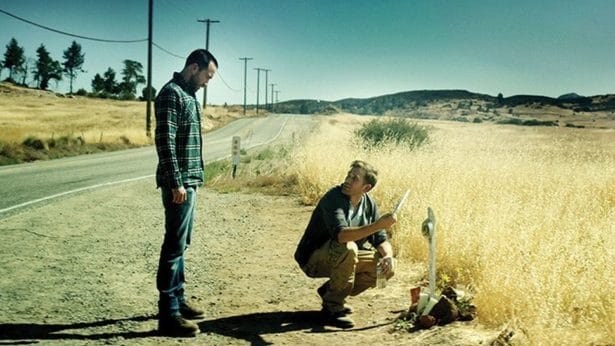 I’ve followed the careers of directors Justin Benson and Aaron Moorhead with interest ever since I covered their challenging and innovative feature debut,
 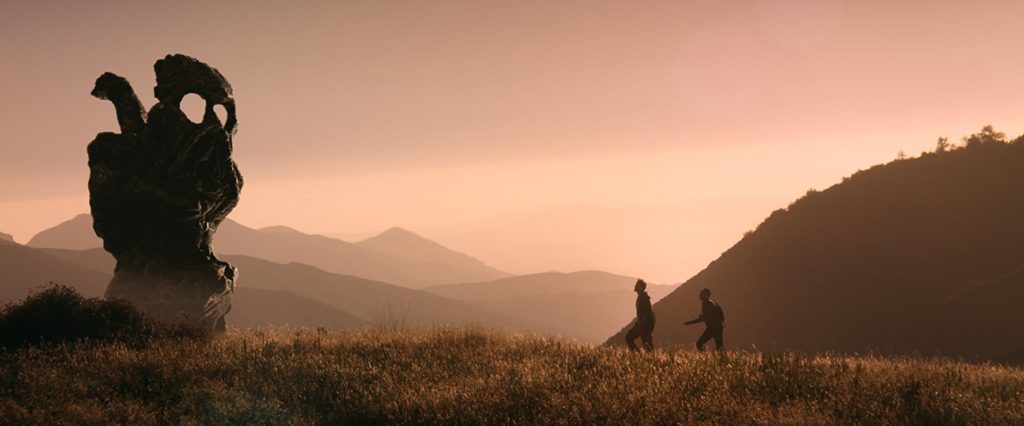 The Endless is not shy of grappling with themes which are terrifying enough in their complexity at the best of times, adding its palpable sense of unease by slow, expertly-wrought degrees. Our vulnerability to something vast and humbling like time itself has long been a source of horror, so the addition of – potentially – a pernicious unknown behind the scenes is both unsettling and ambitious. Linked to this is the idea that personal freedom itself is dubious – something else we don’t like to dwell on, something else that scares us. It would be easy to throw in the word ‘Lovecraftian’ here, and yes, there are a few key moments where that author comes to mind; I’d argue there are some links with his short story, The Unnamable [sic] amongst others. And, like Lovecraft, The Endless knows better than to straightforwardly show its hand. Retaining elements of mystery is key to the film’s success.
 Being a tiny nation, it’s perhaps unsurprising that Iceland hasn’t yet featured very prominently, in its own right, in cinema. Its stunning and evocative landscapes have been used a thousand times in films which simply seek a striking location, but it’s comparatively rare to see Icelandic people, language and stories making their own way to the screen – at least for audiences outside of the country. For this reason alone, it’s welcome to see I Remember You (
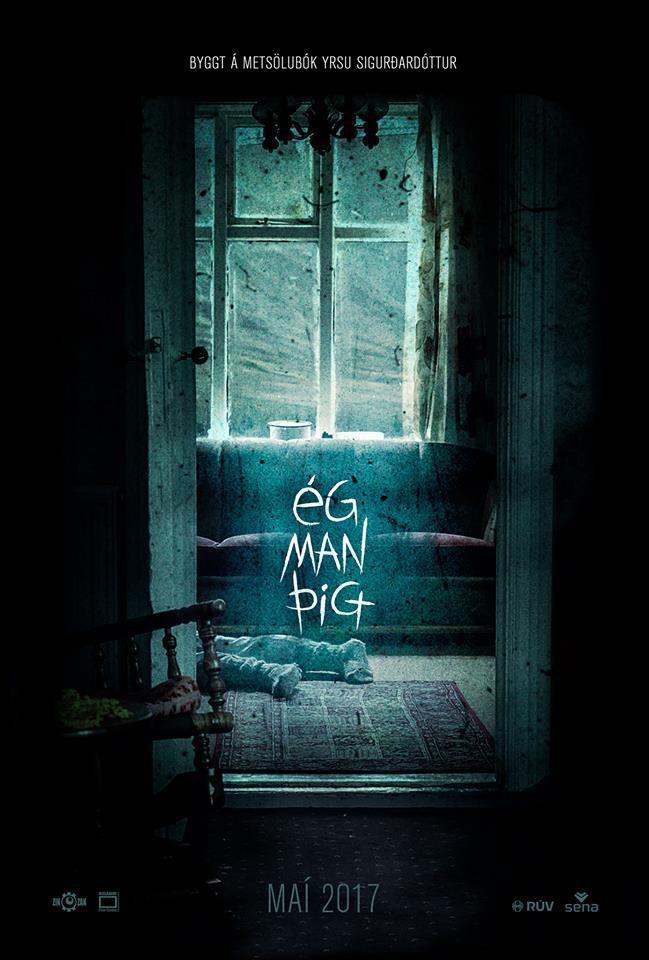 How these two stories will intertwine is kept quiet for a large share of the film, with each story generating its own interest (and several low-key scares); course, you can probably gather that they will, eventually, overlap, and to give credit to writer/director Óskar Thór Axelsson, it’s quite hard to predict the process. That said, it feels like a long road to get to this point: the film runs at 105 minutes, which in today’s climate is not that long at all, but given the deliberation and pace of I Remember You, it feels somewhat longer. If you have patience for these kinds of slow-burn thrillers, then I would say there’s plenty there to reward it, but if you prefer your films more tightly-wrought then you may also feel that this film meanders in places.
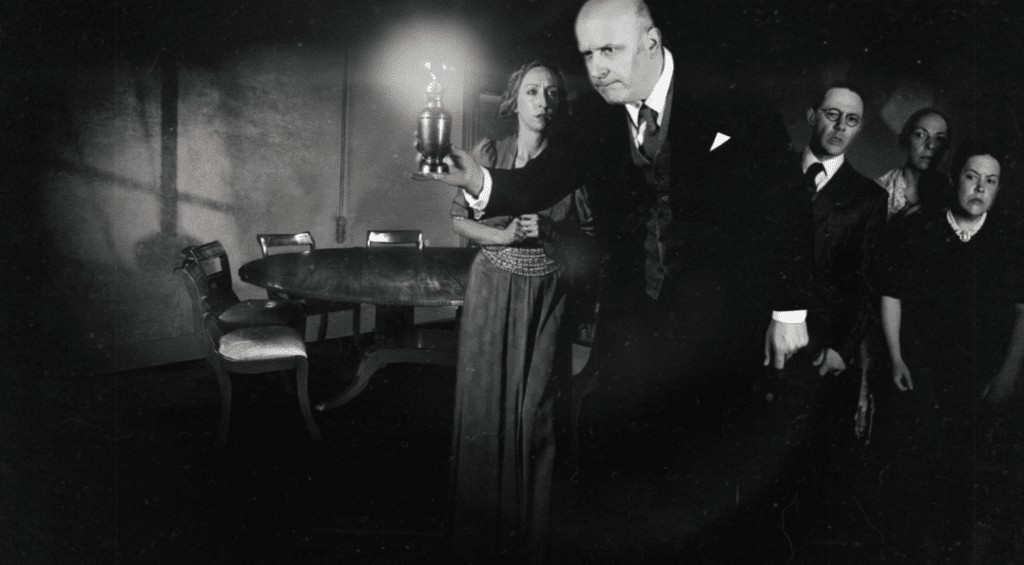 For many of us growing up in the Seventies and Eighties, being terrified by the Borley Rectory hauntings was practically a rite of passage. For my part, I must have been around nine years old, I’d guess, and found out about ‘the most haunted house in England’ from a Readers’ Digest Mysteries of the Unexplained compendium. There were other tales of ghostly phenomena which also fascinated and appalled me – the Matthew Manning story, the Bell Witch case – but the allegedly ghostly scrawls addressed to ‘Marianne’ really fixed themselves in my imagination. I couldn’t bring myself to re-read the section on Borley Rectory for weeks at a time, but thought about it constantly, even beginning to practise my own automatic writing after I read about its use in Borley – thus, terrifying myself even more.
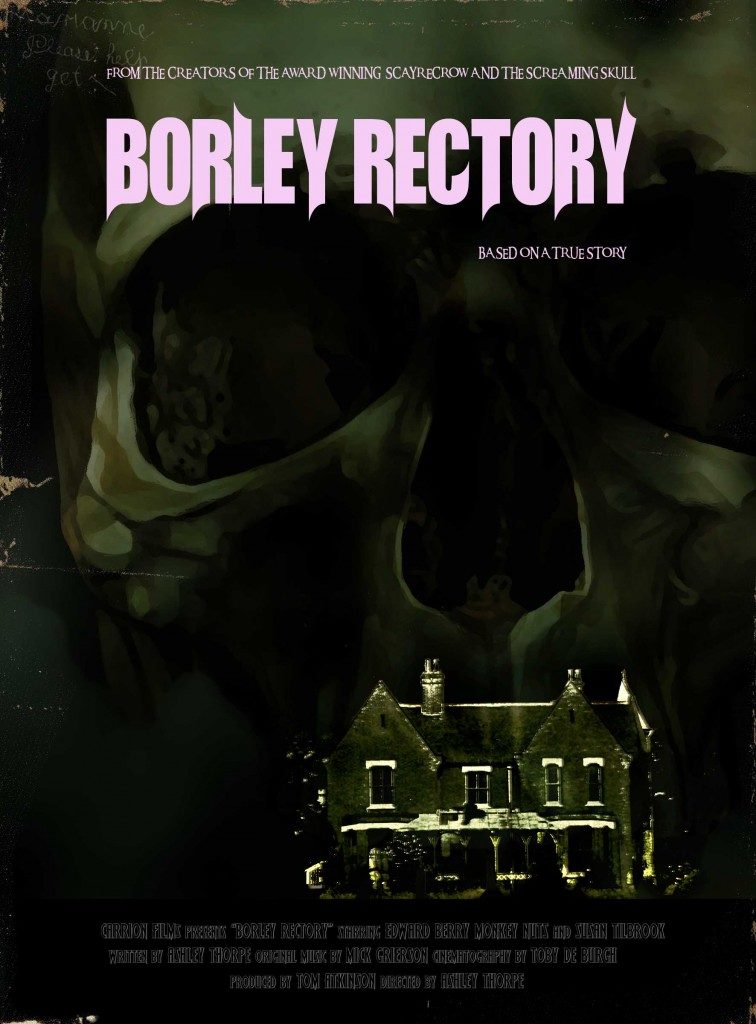 Borley Rectory (2017) is unusually framed as a documentary film, exploring and discussing the events mentioned above in largely linear order with the help of a narrator – none other than Julian Sands. Ashley Thorpe explained at the screening that his film had been heavily influenced by his own childhood nostalgia for spooky 70s TV, such as the works of Lawrence Gordon Clark and the Armchair Thriller series, which had a scary ghost nun of its own. I’m sure I saw some Ghost Story for Christmas artwork tucked away in one of the sequences, too. However, Thorpe also mentioned a love of 1920s and 30s Hollywood horror, which seems altogether heavier in the mix: Borley Rectory is shot entirely in black and white, and the actors wear the heavily stylised costumes and make-up beloved of, say, early James Whale cinema. Whilst it’s somewhat engaging to see some well-beloved actors both dressed in period costume and acting accordingly – with Reece Shearsmith as the Daily Mirror reporter, Nicholas Vince as Reverend Smith and author Jonathan Rigby as Price himself, the rather studied delivery somewhat dwarfs any stylistic links to the barely-glimpsed horrors of Gordon Clark.
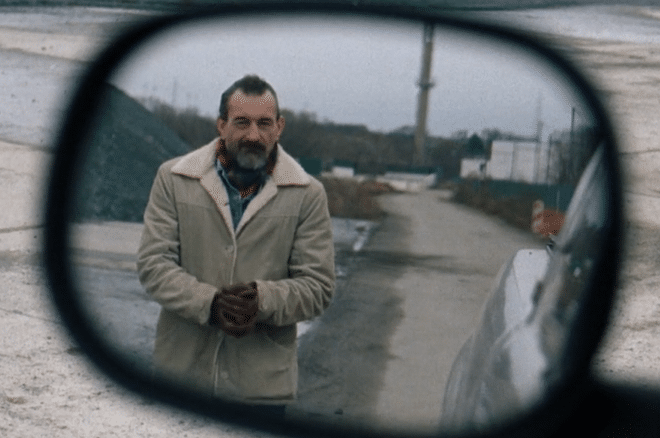 The legacy of Catholicism in French and Belgian left-field cinema seems to mean a strange predilection for Christian themes, although it finds its form in curious ways. In recent years we’ve had Calvaire, made in 2004 (retitled ‘The Ordeal’ for English audiences, which neatly strips it of its Biblical meaning), the Christmas creation horrors of Satan (2006) and of course Martyrs (2008). Now, ten years later, we have something which merges crime drama with something altogether more spiritual and not a little gonzo: voila, Doubleplusungood.
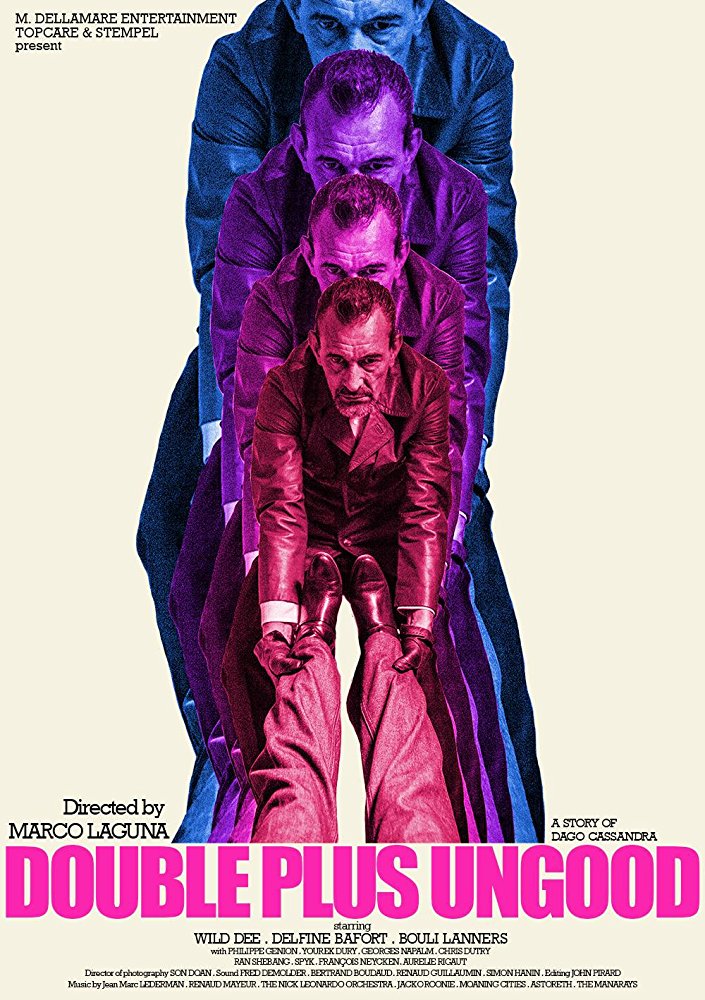 The film, for all its unusual contextual factors, is however broadly linear: it takes its unconventional elements on a pretty straightforward journey through a series of kills, which can feel repetitive, despite the film’s efforts to draw down interest via its inventively-nasty sequences. The film certainly steers away from conventional style or approach throughout: it’s thoughtfully shot, with a wide range of locales and lots of artistic, experimental detail (even veering into psychedelia on occasion). There is undeniably something of the new-wave of French/Belgian horror cinema in the way Doubleplusungood looks, with lots of that blueish colourisation, though it’s still far more of a crime thriller overall. That said, we do see a bit of ‘implement torture’ going on here, which also chimes with those new wave horrors.
 Honestly, I’m the sort of reviewer who thinks that the vast majority of slashers (and many gialli) are better enjoyed as still images than films – being largely an array of stylish, bloody set pieces only loosely linked by some sort of plot – so watching Sergio Martino’s crossover film Torso was an opportunity for me to test my misgivings about this type of catch ’em and kill ’em horror. His other work has been pretty diverse fare in its way, after all, and a who’s who of cult film stars helps to underpin the potential of the film under discussion. Worth a shot, right?
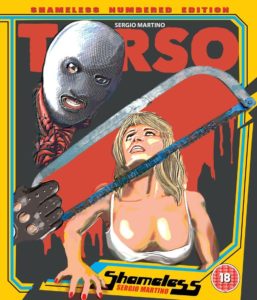 All of that said, Torso does achieve many things which distinguish it against a crowded field of carved-up nubile flesh. It boasts beautiful locations (mind, Italian cities seem to do the hard work by themselves) and some scenes border on the supernatural, in ways beloved of Martino’s near-contemporary Michele Soavi. It’s also an incredibly tactile film, with close attention to small details; whilst the gore FX haven’t aged particularly well, they’re very brief, whilst interesting, unusual shots (such as a woman’s hands palpating mud) show artistic flair. And, after moving all of its pieces into position for benefit of the big whodunnit, the film generates tension very effectively: yes, this takes time, but the closing twenty minutes or so give a good pay-off for all that has come before, resulting in a genuinely gripping finale. I’m not sure I can say that Torso has won me over fully to this style of filmmaking, but certainly, this is an arresting example of its genre, which manages some real surprises, in amongst the various nods to Bava et al.
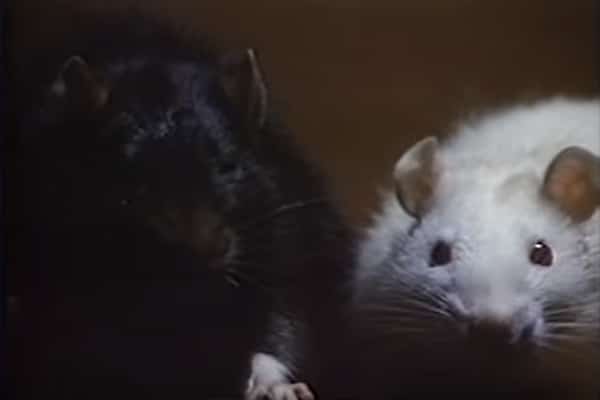 1970s cinema has many noteworthy qualities, but amongst these, the decade is certainly remarkable for its brief, but intriguing phase of imagining animals ‘going rogue’ and attacking humans; some of the resulting films were breakthrough hits, such as Jaws (1975), whereas some, such as Day of the Animals (1977) would be long-lost to obscurity if the DVD age hadn’t decided seeing Leslie Nielsen wrestling a grizzly bear was too good to pass up. Before sharks, bears and other beasts were redressing the natural balance, however, there was Willard (1971) – a film where it’s the humble rat who’s up to no good, though all at the behest of a rather lonely young man. I suppose the initial premise makes some sense: compare the number of people killed by sharks to the number killed by rats over the centuries, and the rat is definitely king – though to be fair to rats, they’ve simply been clearing up after Man for millennia, fighting over the same resources, often dying of the same things, whilst not being particularly deferential along the way.
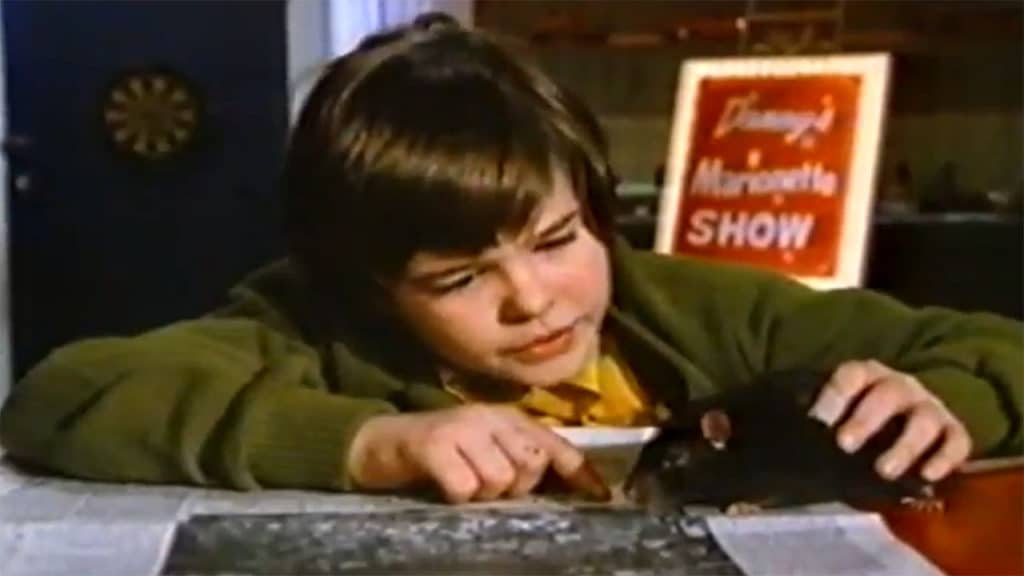 In the sequel, Willard’s rat posse have escaped and decided to go it alone, moving into the sewers beneath the city. Forging a link to Willard before it, people establish that Ben is the leader of the rats via some pages from Willard’s diary (which we never saw him keep, but hey.) This eventually throws them into the path of a young lad, Danny, who is being bullied and suffers from a heart condition: Danny befriends Ben in particular, and Ben – who is already rather comfortable with people – becomes his best mate/avenging angel, protecting him from the bullies. Thing is, Ben the rat isn’t always a force for good. Ben and his crew aren’t too keen on human intervention in their now-habitat, and anyone making the mistake gets attacked by a whirlwind of flying rodents; again, probably not safe terrain for a phobic.
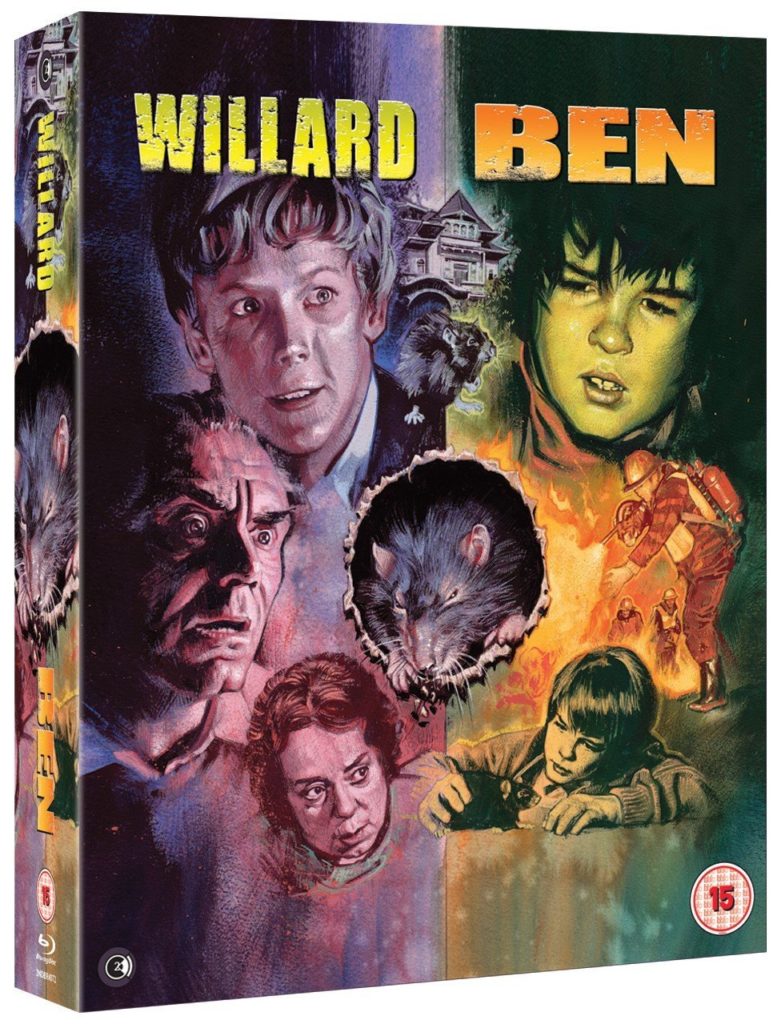 Truth be told, neither Willard nor Ben are superb films and Ben is the weaker, but they’re certainly quite unlike anything else, and they have had some influence elsewhere. Willard even got a fairly glossy remake/’reimagining’ in the Noughties featuring cult actor Crispin Hellion Glover, so its reach was definitely there. Willard, in particular, is also notable for a surprising cast featuring ‘Bride of Frankenstein’ Elsa Lanchester in one of her last roles, alongside Ernest Borgnine as the execrable boss. There’s enough here to entertain and some material which can surprise. Well, you can now own this ratsploitation double bill in an attractive limited edition Blu-Ray box set: the good folk at Second Sight are about to release this, and you can find out more about it
 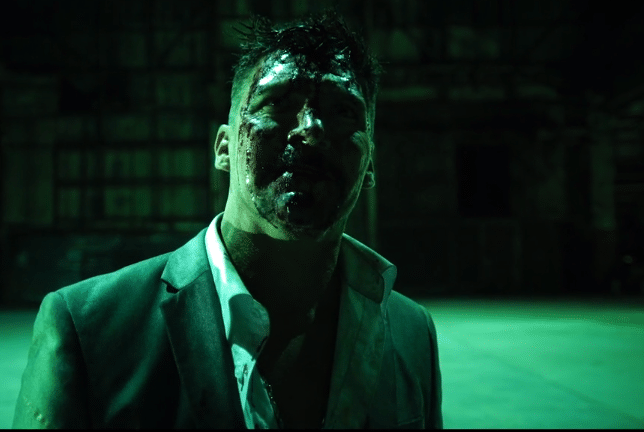 Rather than a straightforward stand-alone short film, Empire of Dirt is intended to introduce characters and themes which will be explored fully in a feature-length offering. As such, no time is wasted: we’re shown, briefly, that these events are taking place in Manilla, 1997, and then we’re straight in to a frantic shootout, followed by a skirmish in a dilapidated building. It seems as though our protagonist is coming to the aid of a desperate, terrified woman, at least on first impressions: whatever his loyalty to her is, he pitches himself into some gritty, bloody and physical action, killing those he finds, with the violence happening both on and off screen. It’s a testament to Mason’s directorial abilities here that, even in a few short minutes, you feel as disturbed by the violence taking place off-screen as you do the violence in front of you.
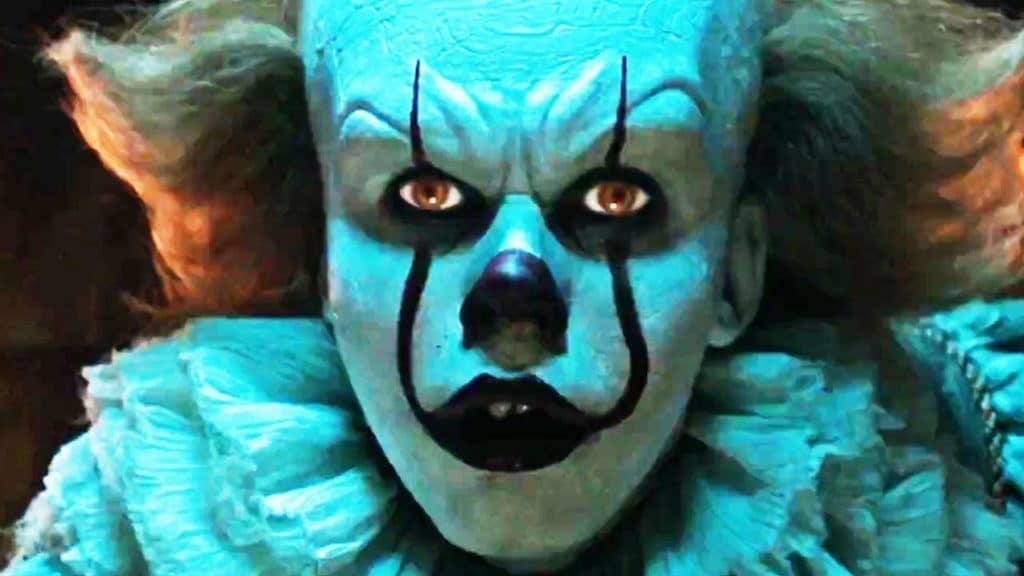 Few writers have had their work adapted for the screen half so much as Stephen King, nor with such variable results, but then this is exactly to be expected when the man himself’s work has varied so wildly over the years. When it comes to the huge tomes from his early days, such as The Stand and IT, the TV miniseries has often seemed to be the way to go, rather than making a feature film. Particularly bearing in mind that epic-length films are really more a contemporary domain, it no doubt made sense, even if for manageability alone, to serialise the events of the books over a period of weeks. The resulting TV version of IT, made in 1990, for all its (now apparent) flaws cemented itself as a formative experience for many viewers, particularly those of us in our thirties. Look at it now, and what you mainly see are the awkward birth pangs of CGI; back then, though, everyone – very few of whom had read the book, and many of whom were children themselves – were frightened of Pennywise the Clown.
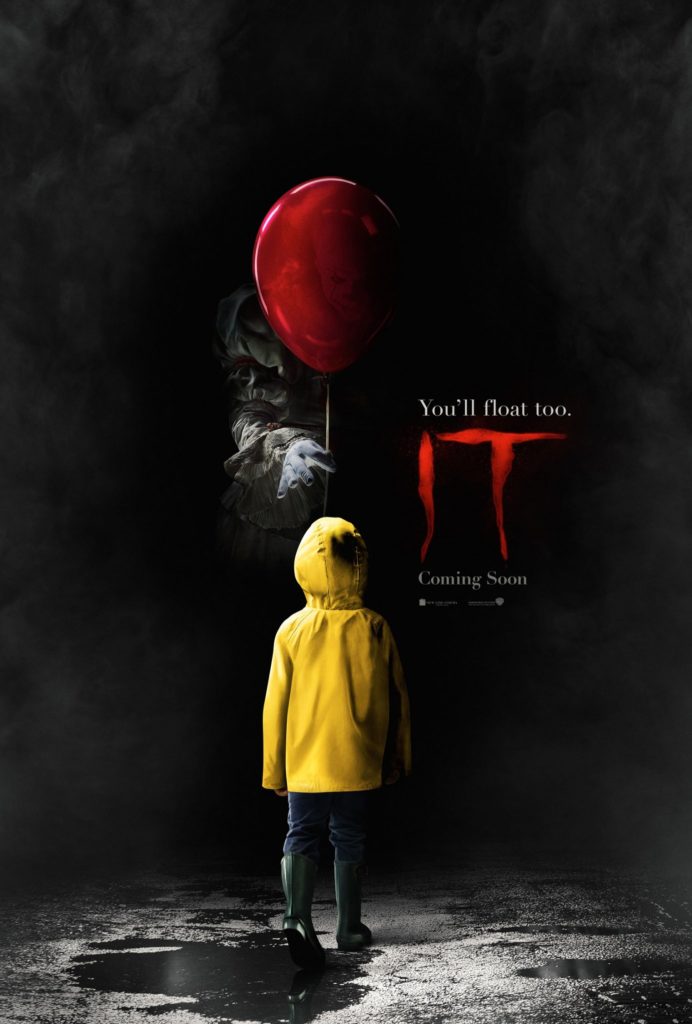 IT also uses its now thirty-years-old setting, a world before health and safety, safeguarding and more concerted efforts to tackle bullying, to present childhood itself as horrific. Sure, these kids didn’t have to prefix ‘bullying’ with ‘cyber’, but no one was tranquilised by mobile phones and social media, either: it plain didn’t exist. Your plight was your own, and your world ended at the edge of town, or went as far as your friendship group – if you had one. It seems to me that knowing all of this – seeing these changes – has also been used to add to the impact of the supernatural horror. (This would have been as much the case had they left the setting in the mid-twentieth century, mind, but fewer of us would now recognise that in the same degree of detail.) As for the adults in IT, and bearing in mind that many viewers are now approximately the same age as them and not the kids, they’re represented as negligent at best, incestuous at worst: they cajole, they medicate, they exploit but most of all, they ignore their offspring completely. Their children are ripe pickings for any sinister force which might come along.
 Festival season is upon us once more, and one by one, the best horror and genre film festivals of the UK are revealing what they have lined up. Myself and co-editor Ben often take ourselves down to Sheffield’s Showroom Cinema for Celluloid Screams: now in its ninth year, it has introduced us to a range of excellent films during the years we’ve been attending, and films we see there have often wound up on our ‘Best Of’ lists at the end of the year – proving that festivals are where it’s at for film fans. This year looks to be no different, with an absolutely stellar line-up coming our way. Whilst there’s often a bit of overlap between festivals of this nature (no bad thing, in my opinion, meaning that most people will be able to get to at least one of the screenings they’re after) Celluloid Screams has also got the steal on some intriguing and exciting new films.
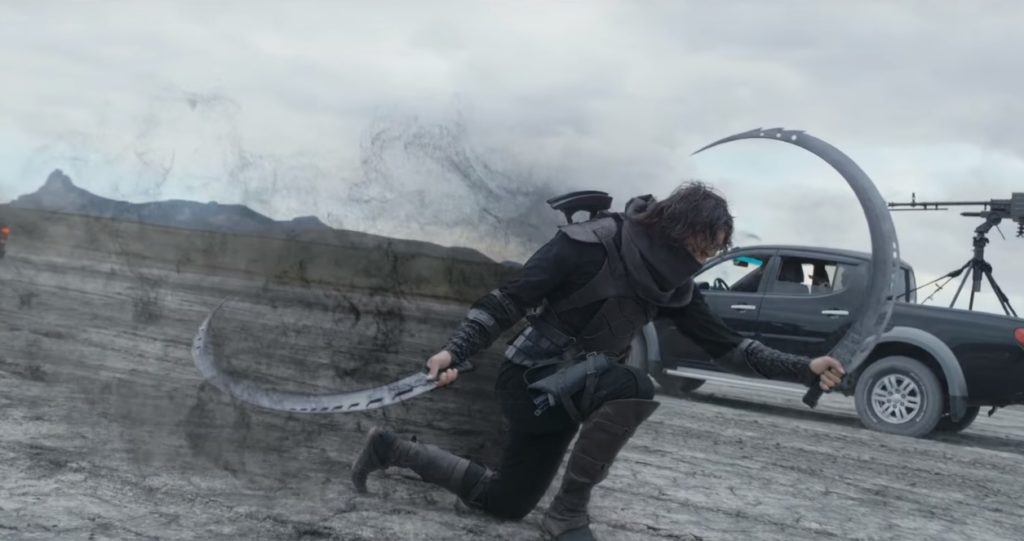 Though a few notable films have bucked the trend, it’s still comparatively rare, at least in Western cinema, that we see so much of a mention of Stalin or the Soviets whilst Nazi bad guys are ten a penny in all manner of horror, sci-fi and exploitation cinema. So, when I saw the promo material for Guardians – a modest budget Russian sci-fi – it seemed that here we’d have a film to buck the trend, what with all the mentions of Stalin taking action in response to the Nazis developing ‘super soldiers’ and what-have-you. It turns out that this context is mainly for the press information and doesn’t really feature in the film at all, however, so aside from some black and white images relative to the Cold War in the opening credits, the film is set squarely in modern-day Russia.
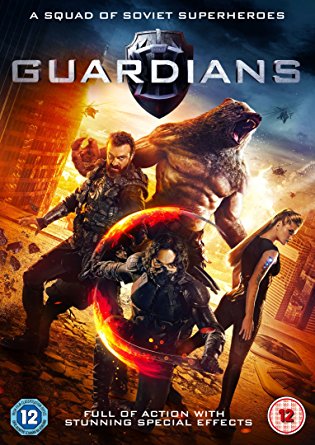 The Guardians themselves, once back together, need to use their slightly odd array of skills to defeat their erstwhile engineer. So we have: Ksenia, a woman who becomes transparent in water, and is impervious to extremes of temperature; Khan, a guy who can move very fast and has some equally speedy swords; Ler, who can make stones move, and (my obvious personal favourite) Arsus, who can turn into a half man, half bear (the top half) or if he’s really up against it, an ENTIRE BEAR, replete with Incredible Hulk style magic reappearing trousers when he becomes a man again. The rest of the film prioritises a number of what look like reasonably budgeted fight/action scenes, with a fair few head-scratching moments regarding the plot: it feels rather as if things are being raced through here, simply in order to introduce some action heroes who are clearly being set up for a sequel by the end credits – which is okay, but if you’re expecting a detailed story, best forget it. In fact, you’re probably already thinking of a certain other franchise at this point, and yes, the similarities to X-Men are manifest, albeit the latter takes more time (or more time makes it to screen) to establish character and motivation. It’s as if director Sarik Andreasyan has looked at all the X-Men movies and got a little ahead of himself, wondering how he could propel his own characters to those heights. This is clearly a film made by a team cognisant of the rage for superheroes ongoing in cinema. Guardians goes at a run throughout, where perhaps it would have established itself better by taking a breath.