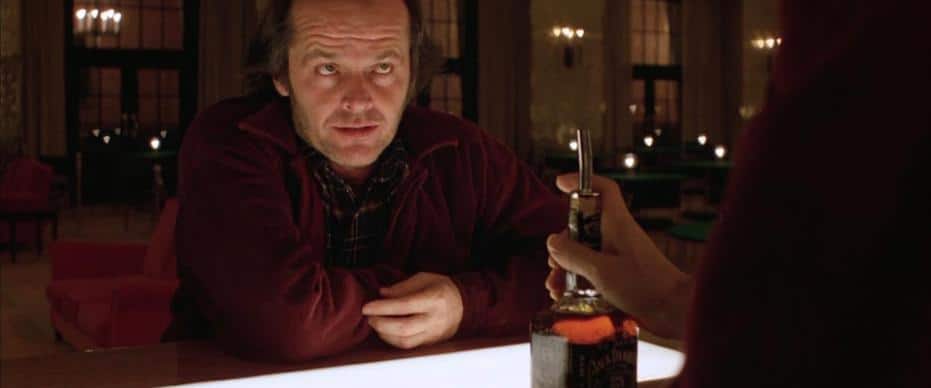
 Whatever the situation was immediately following its release, no single horror film in history seems to have attracted such a proliferating amount of critical commentary as The Shining. And, few films have lent themselves to so much of what many lay viewers would see as frankly barmy analysis; okay, if you’ve ever watched a certain documentary called Room 237, then you’ll know exactly what I mean, and afterwards you might have felt less that you’ve been asked to consider various ‘explanations’ of the film and more that you’ve been up close and personal with delusion. Still, The Shining is a film which can withstand a certain amount of this kind of thing, and if it can sustain being reinterpreted as a metaphor about the Greek myth of the labyrinth with Jack as the Minotaur, then it can handle being critically reinterpreted in a broader sense, as part of the ongoing Devil’s Advocates series. I’ve reviewed several of these titles before: overall, these books strike a good, readable balance between academia and general interest, albeit that academic studies often tread some familiar paths in their analyses. Here, author Laura Mee is up for the task of assessing and discussing this landmark horror film, though one which has often been seen as a cold imposter to the genre, and remains a contested piece of work.
A neat synopsis of the film is straight away linked to the film’s peculiar qualities, in particular the deep sense of unease it often generates. This unease is one of the film’s most striking features, and it is created in a range of diverse ways, though the book starts with the most obvious building-blocks: the colour palette, the interiors and the distinctive camerawork, for example. Adding further detail about the project’s background, Mee elaborates on the interesting process behind Kubrick choosing to adapt the original novel, and the ways that, almost from the first moments, this led to issues for the director.
By electing to make a horror film, Kubrick began to labour under a dual weight of expectations – the heavy burden of auteur theory on one hand, and presuppositions about what constitutes a horror film on the other. As a director whose diverse work had already attracted critical interest and a reputation for lofty symbolism, amongst other things, there was a certain discouraging babble around his decision to make The Shining, a project which didn’t at first seem to reward viewers in a straightforward way. (Earlier on in the book, Mee also mentions a number of academic film writers who have had difficulties with the content of The Shining, though bearing in mind that this difficulty is not typically shared by fans.) If this book has one key strength, then it’s how the author successfully defends Kubrick’s vision – not as something frustrated by outside forces or in any ways a misfire, but as a very deliberately constructed story, sustaining its elements of the Uncanny, black humour, garish aesthetics and overblown characterisation to artful effect.
In order to do this, Mee also spends time rebuffing a few of the main rumours that continue to swirl around with regards to Stephen King, author of The Shining (novel), and vocal, documented critic of Kubrick’s adaptation. Now, given the way that today’s Stephen King devotes so much time online to criticising everything and anything he dislikes, it seems less of a big deal; however, his complaints about Kubrick’s film are notorious, and have long been potentially damaging: can there be anything worse than having the originator of the story disown your version?
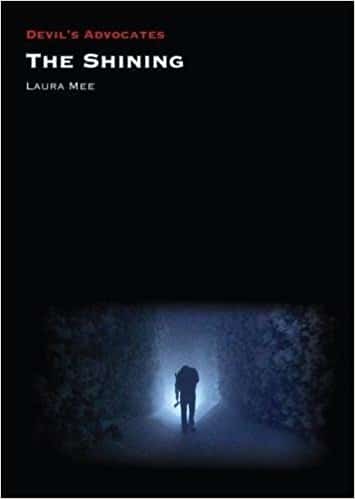 Not only does Mee debunk a lot of King’s strident criticisms of the film by offering recorded evidence which suggests that he, at least initially, really liked the film, but she goes deeper than this and makes an excellent case for judging an adaptation as far as possible on its own merits, rather than seeing it as ‘too different’ from the source material. There’s a fascinating section on what was left out between novel and screenplay and why, with supporting material from Kubrick’s own notebooks. It also seems relevant to note that Kubrick was not the first nor the last to omit or limit King’s more insalubrious sexual content from his screenplay, and for good reason: IT (2017) also springs to mind here. Ultimately, the films are not the books, and it is successfully argued here that transformative decisions are made for good reasons.
Other sections of the book opt for a more tried-and-tested approach and analyse the themes and plot of the film along the lines of viewing the film, variously, as an assault on family, a study of misogyny, and a comment on white racism. It’s usually here that I find myself feeling more and more detached from academic analysis of this kind, and I feel that aspects of this will always alienate non-academic readers to an extent; sure, film studies is always going to be refracted through the social mores of its time, and I do think there are interesting discussions to be had (and are had here) about, say, the family dynamic in the film, but positioning Jack as a “white supremacist” (p.73) because he kills Halloran seems achingly moot. Particularly in a horror film where the embodiment of white, cis-hetero male privilege loses all of his own volition and freezes to death in a maze; it’d be fairly easy to invert a lot of this kind of critique, but no one ever seems to want to…
Still, my gripes with the Devil’s Advocates series so far have been minor, and this is also a minor gripe – the above critical commentary makes up only a small share in what is otherwise a neat, well-researched and accessible text, as well as an enjoyable defence of Kubrick’s skills in adaptation and horror storytelling.
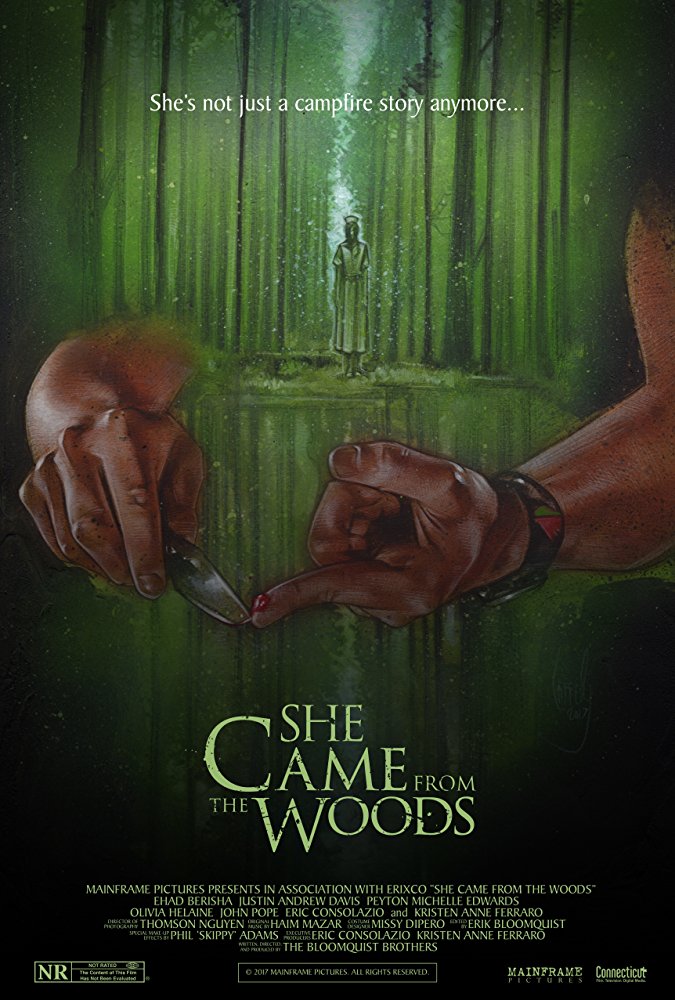 We receive quite a lot of short films overall at the site, and it’s always fun seeing what kind of a calling-card filmmakers have on offer: better still is when films channel formative horror and nostalgia along the way, which is the case with She Came From The Woods (2017).
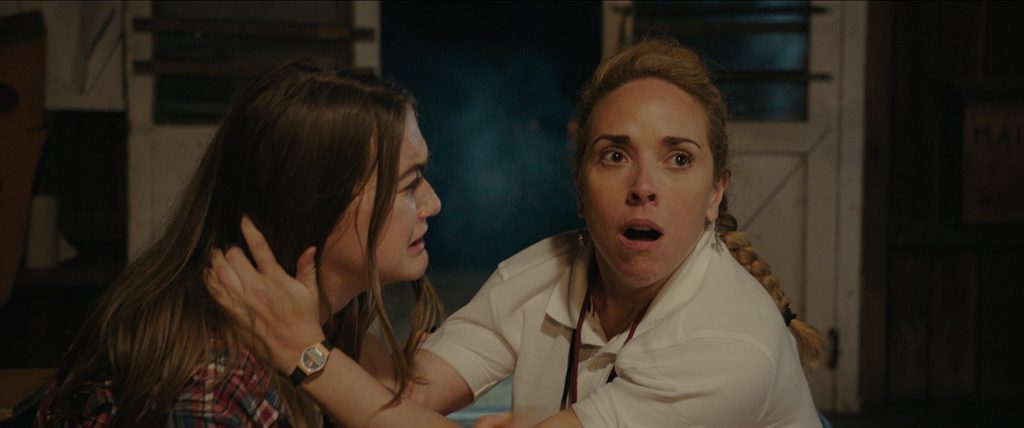 WP: Is the film and its mythos intended to stay a short, or is the story-line one you’d like to revisit at any point in future? I have to say, it feels like it could be expanded into a longer story…
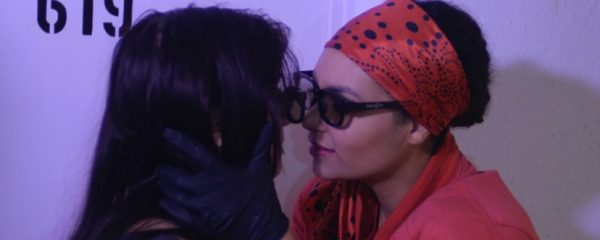 It’s a very rare thing indeed to see a filmmaker working in the styles so far chosen by director Alex Bakshaev in his career to date. His last film, The Devil of Kreuzberg, was to my mind a languid and stylish love letter to Jean Rollin; in S&M, Les Sadiques, we have a film not only openly dedicated to Jess Franco, but one clearly taking its visual cues from Uncle Jess – and on a budget of a mere 250 Euros, working within the confines of a budget which would startle even Franco. However, in common with The Devil of Kreuzberg, there’s so much evident love for source material which doesn’t tend to hold much sway over modern filmmakers, that it’s impossible not to be impressed and to an extent, entranced by the results.
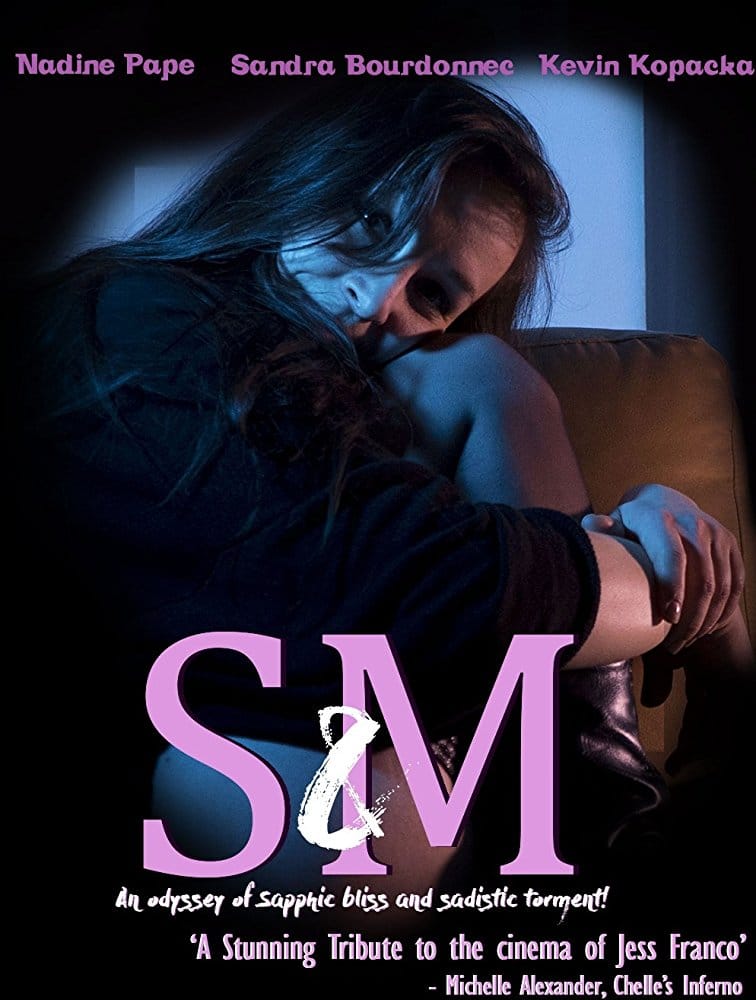 But as much as Jess Franco – and de Sade – are acknowledged influences on S&M: Les Sadiques, the overall style of the film is less uproarious than many a Jess Franco film, generally preferring atmosphere over action, and developing said atmosphere in meticulous ways. Whilst a sexual film in terms of its themes, the director is very selective about what is shown, though without shying away from nudity and encompassing one quite startling and brutal scene, too. The topics of control and consent are de facto explored here, though is a subtle array of ways. There is, again, a touch of magic in how Bakshaev manages to shoot Berlin, making the city look by turns very modern and recognisable, but then timeless, expressed through a series of interesting shots. The atmosphere also owes a great deal to the film’s minimal dialogue – sometimes we do not hear what characters are saying at all as they are not miked – and exposition. We simply accept Sandra and Marie’s relationship grows seemingly out of nowhere, for instance, because it just works that way, and it’s plausible within the confines of the film’s universe. The camera lingers on facial expressions and gestures in a very effective way too, adding to the pleasingly disorientating effect of the filming style overall. This is altogether quieter than the films which have inspired Les Sadiques, but genuinely works well and showcases a confident, ambitious set of attitudes to making cinema. A special mention has to go to Sandra Bourdonnec here, too, who is joined by a great cast but whose magnetism is quite unlike anything else on the screen: the star of The Devil of Kreuzberg exudes the kind of smouldering appeal which would not look amiss in any of the classic Euro horror or arthouse cinema we know and love.
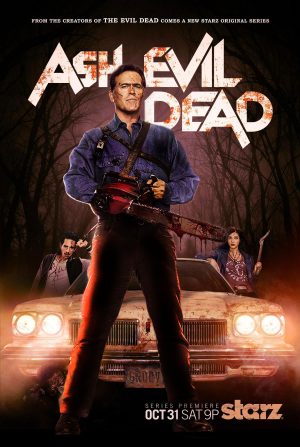 Rumours of an Evil Dead IV have been turning up reliably every few years, but nothing concrete has ever really come along to substantiate these. Personally, I feel like it was an either/or thing with the Evil Dead remake in 2013 – and we ended up with the remake, which aside from that (rather head-scratching) Bruce Campbell cameo after the end credits, moved things in a different direction, even though it ostensibly used the same mythology. Gone was the splatstick and the one-liners which we’d left off with after Evil Dead III; we were back with an altogether grislier spin which dispensed with the comedy altogether. If this was to be our last encounter with the Necronomicon, then we’d be ending on a very different note to what we’d come to expect from Raimi and Campbell – which sat a little awkwardly with many people, myself included.
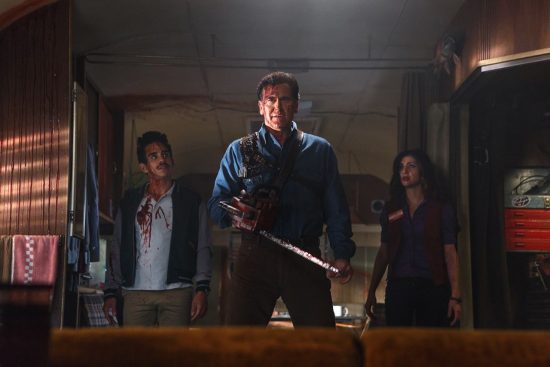 So with all of that said, how come I’m not howling with indignation at the show’s cancellation? Well, part of me is, absolutely, as the tyranny of ‘viewing figures’ is only a limited measure of how a show is doing, really, if you could only wait and see. Movies which sink at the Box Office often rejuvenate on DVD and merchandise sales. But it seems pretty impossible that my indignation here would achieve anything, and now that Bruce himself has closed the door, we would be better off accepting that we’re done here. And, whilst I have confidence in Sam and Ivan Raimi – alongside the rest of the talented writers they’ve worked with on the show – you never know what market forces and other factors can throw at you; a potential universe where we’re on Series Ten and the well is running dry sounds pretty unappealing, even if not quite ‘Dark Ones walking the earth’ unappealing. The worst case scenario is a horror version of The Big Bang Theory, which at least we’re definitely being spared.
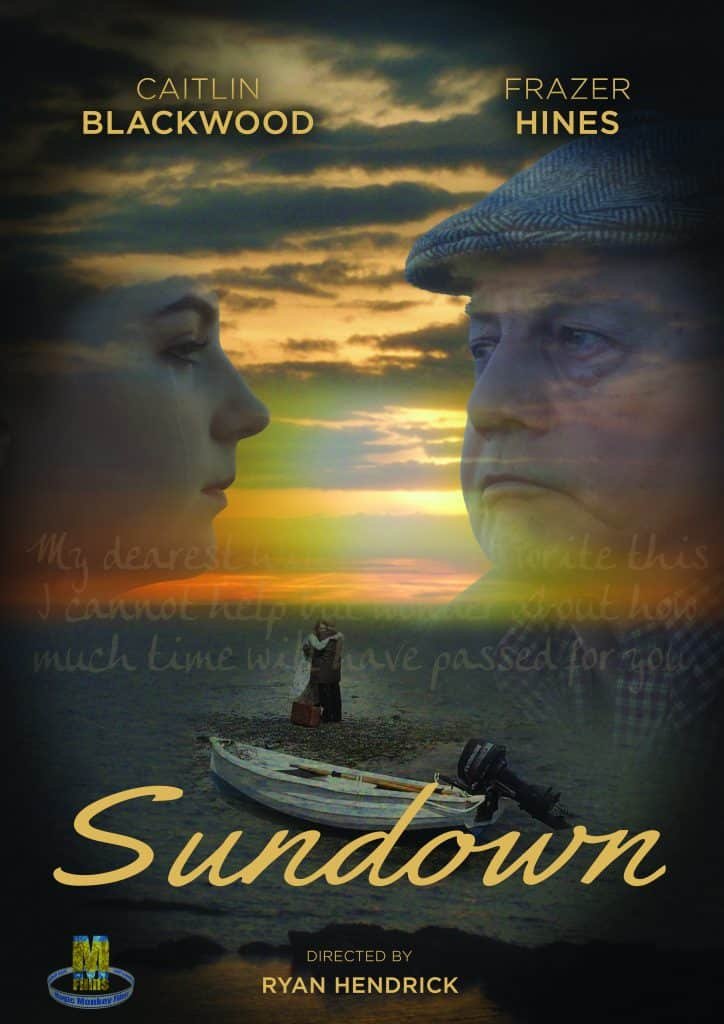 My influences come straight from my emotions. I always start creatively with an emotion or tone I want to convey before exploring a narrative. I am drawn to all sorts of storylines and themes, but they key for me is to tell them with a sense of romantic optimism. Sundown could easily have been a depressing and stark social realistic arthouse film, but I want to inspire audiences, make them feel a range of emotions.
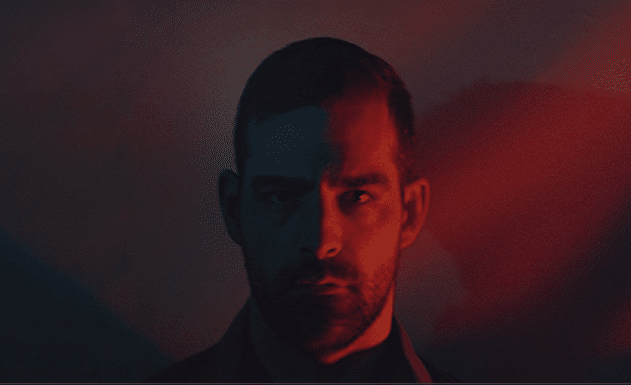 “Where do the ideas come from?” It’s a standard question which, for many people working in the creative industries, there’s probably never a standard answer; however, in the new indie movie A Brilliant Monster, the trials and tribulations of continually coming up with workable new projects is given a dark, original twist. It’s an original idea about getting original ideas, if you will.
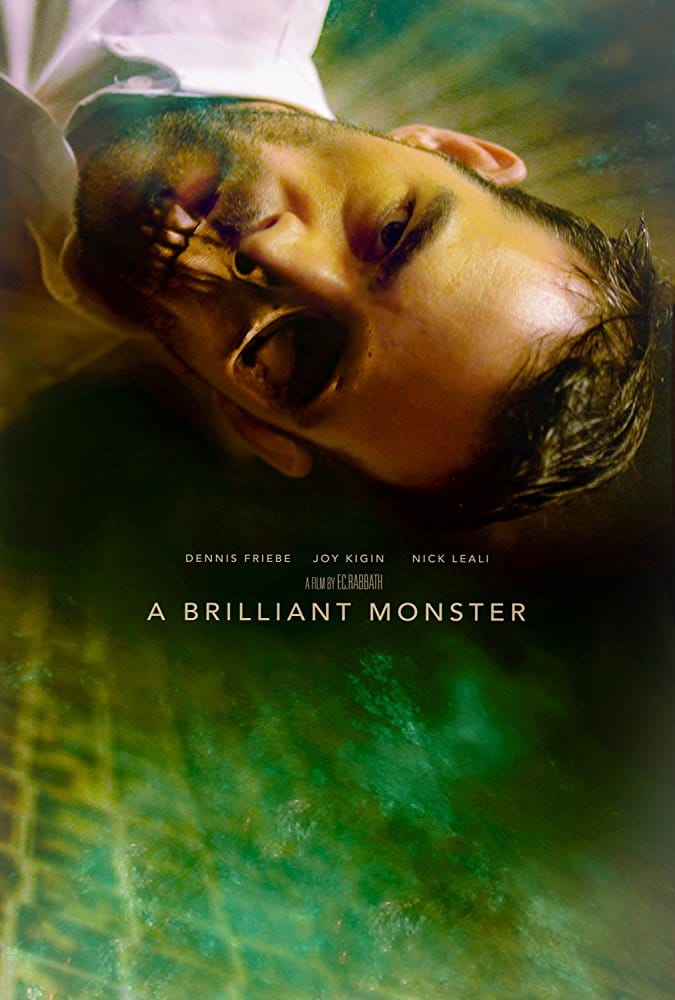 This behaviour is refracted through an earthy, plausible script which generally works very well – a definite plus, given that this film really lives or dies by its dialogue. On occasion, the repetitive “where do you get the ideas?” line coming from different players can be a little excessive – A Brilliant Monster is capable of establishing its themes beyond doubt without this repetition – but otherwise, the script is good at balancing its touches of humour against moving the narrative forwards. Along the way, it asks some interesting questions and raises some interesting points. For example, the film shows how someone’s celebrity status can impair our judgement of them: the first cop on the case cannot really believe that a famous author could behave in a criminal way, later characters feel just the same way regardless of their backgrounds, and this certainty that status = irreproachable conduct is toyed with throughout the film. People are just seduced by Mitch’s fame; they can’t really see any further. But perhaps more tellingly, A Brilliant Monster looks at the grotesque side of the creative process: in this process, women seem to fare particularly badly (a grisly literal riff on the idea of the ‘muse’ maybe) but as the stakes get higher, Mitch is forced to make ever more difficult tactical decisions in return for what he needs as a writer. The relationship between him, his past, his purpose in writing and his inspiration are given an engaging treatment here.
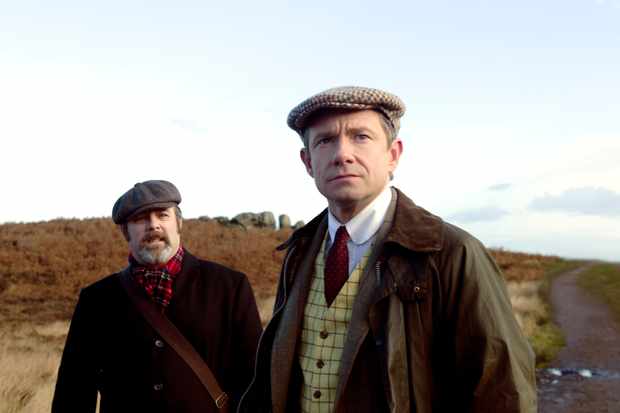 The Ghost Stories film comes to us off the back of a much-praised stage play of the same title by two of our finest writers, Andy Nyman and Jeremy Dyson: at the time it was doing the rounds some years ago, I managed to immure myself against hearing even the barest hint of what it was all about, in the hopes that I’d get to go and see it (which I didn’t) whilst having no expectations which could spoil the show. Happily, I’ve managed to go on hearing nothing at all ahead of seeing the film. This is where I think it’s only fair to extend the same courtesy to anyone who might be reading this. In order to discuss Ghost Stories in any meaningful way, I’m going to have to talk about what happens and how it plays out. This will by no means be a plot synopsis, but nonetheless this review may contain mild spoilers from here on in.
 There are a great many things in favour of this film, and chief amongst those is – for me – in its visual trickery. The flashy BOO! scenes which punctuate the film (no doubt after the stage play, which itself probably picked up a lot of cues from that stalwart of horror theatre, The Woman in Black) I could take or leave. I find them too easy to see coming, too much more about the reflexes than the imagination. However, what these BOO! moments certainly do achieve is to set you on edge, so that your brain is ready to see things which aren’t there. I haven’t read up on the making of the film, but I’m willing to bet all or at least most of these tricks of the eye are deliberate. ‘The brain sees what it wants to see’, and so on. There are also several nods to other classic British ghost tales – which I won’t name here – but these work with the tales at hand, and don’t feel unnecessarily tacked on. I tell you what else I thought of, and I might be alone in this, but if you’ve ever read the (terrifying) series of books issued by Fortean Times called ‘It Happened To Me’, where utterly ordinary people write in with their supernatural experiences – some of the tales in the film are strongly reminiscent of stories I’ve read there, particularly the middle story, though this may of course be entirely coincidental. In any case, it’s great to see a cast of such well-known British actors, often comedy actors, taking on something quite as dark as Ghost Stories and doing a superb job, even managing to blend in a few moments of gallows humour without dissipating the horror.
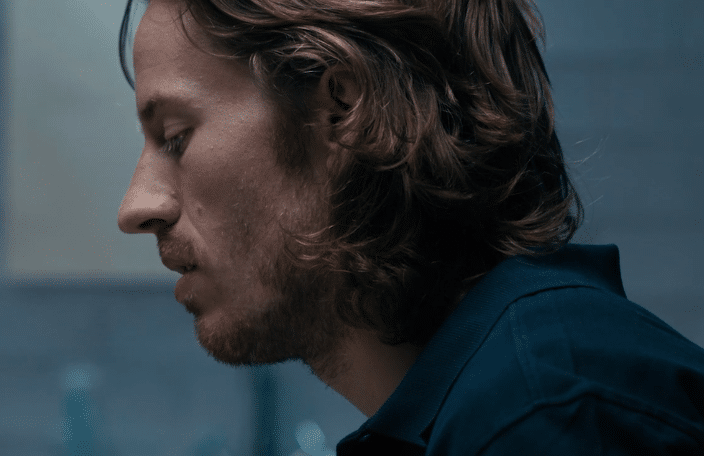 In a stark opening scene, composed largely from a colour palette of black, white, and tiny amounts of red – a young woman awakens. She is in a mysterious room, has crippling injuries to her legs, and is clearly shocked and confused by her predicament. As soon as she wakes up, she’s addressed by a man: he gives his name, explains that she has been kidnapped, and she will remain in this room until such time as she “falls in love” with him. Before leaving her alone, he warns her not to try and escape – her legs are too damaged, the place they’re in is too isolated and she won’t get far.
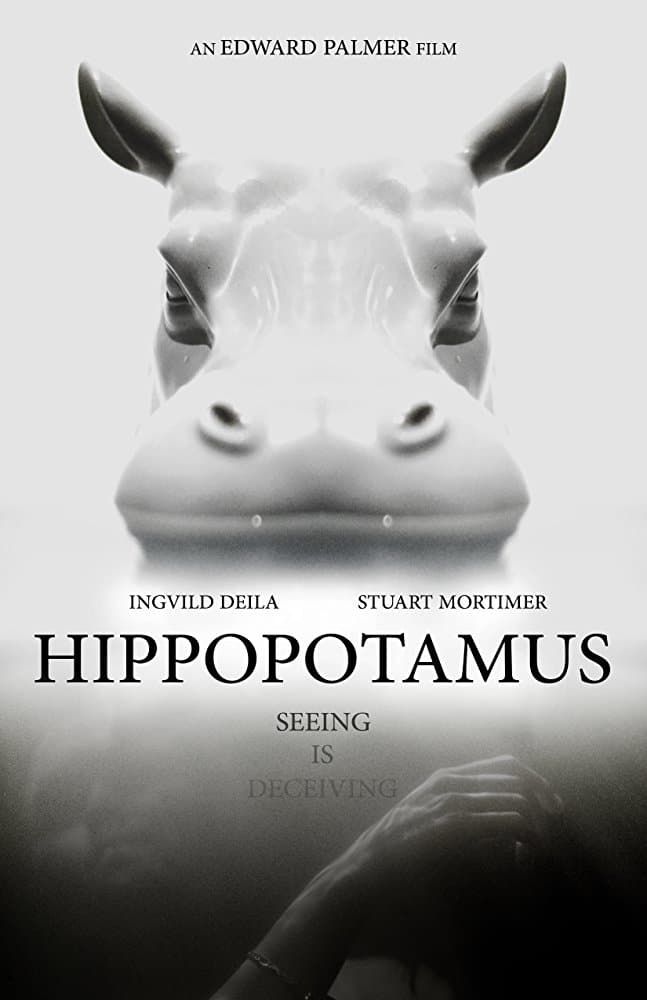 The woman in captivity – Ruby – is told by her captor – Thomas – that she will be following a strict new schedule. She will be fed, she will be given medication, she will be slowly helped to heal, and her sleep will be controlled. It’s soon clear that Ruby has no idea who she is: she keeps looking with wonder at a bracelet engraved with her name, and when she gets to look at some of her possessions, kept in a nearby handbag, she’s confused by them, too. As she begins to feel more well, she begins to ask questions of Thomas, though he is not exactly forthcoming (captors in cinema rarely seem particularly garrulous). He does assure her, though, that he hasn’t kidnapped with any sexual intentions; Ruby can barely believe this, asking several times if she has been assaulted. She doesn’t endure any further cruelty, though, which begins to encourage her to dig deeper; she becomes increasingly confident with this man, and he begins to warm to her.
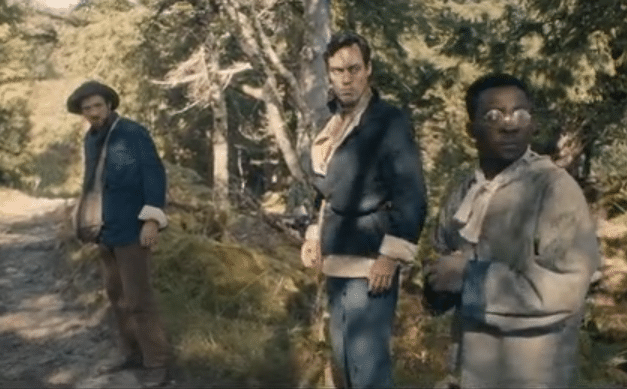 The year is 1846. After surviving a devastating shipwreck whilst en route to America, three men manage to make it to dry land – which turns out to be a remote Scottish island, where only a handful of people seem to live, eking out an existence. However, the first islander to greet them – a man named Fingal MacLeod (Dickon Tyrell) – seems genuinely interested in their welfare, offering them food and shelter whilst asking what exactly befell their vessel. The sailors find that difficult to explain: a sudden turn in the weather made it impossible for them to navigate, they recall, but beyond that, they aren’t sure. Fingal promises to help them get back to the mainland regardless, and suggests they stay at the local farmhouse in the meantime. Grateful for the surly assistance of the Innis household, Oliver (Alex Hassell), Cailean (Fisayo Akinade) and Jimmy (Graham Butler) can do little but wait it out.
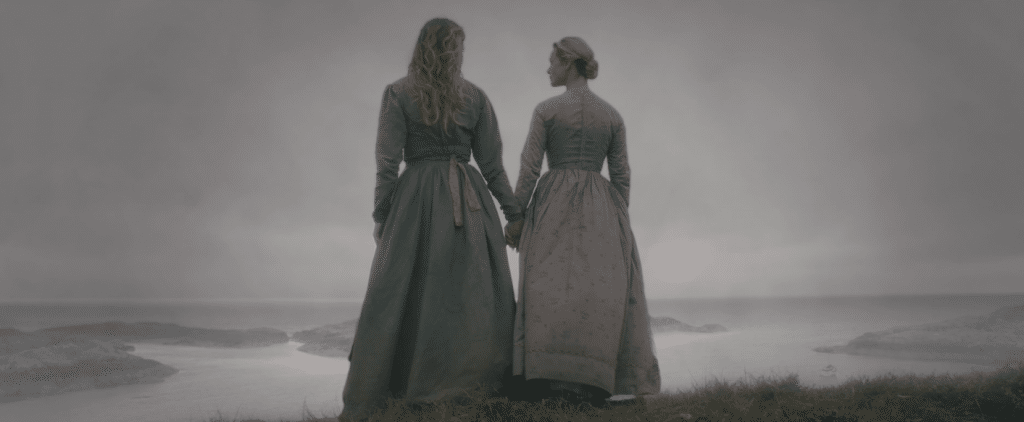 The film also takes its time in establishing characters, allowing them to build in an organic way without using line after line of exposition. Seeing the characters measured against the stark, but beautiful location seems to add a great deal to how we see them, too, and this requires almost no dialogue to be spoken at all. The unmistakeable Scottish landscape dwarfs the people on this island, both outsiders and residents, reminding the audience of how little agency they have in this unforgiving environment. More than this, the rocks, woods and beaches also figure hugely in the narrative: being lost, being trapped and being disorientated are states which propel the plot onwards in their own ways. And, before the film unfolds its surprises, finally revealing its secrets (The Isle’s changes in direction are genuinely surprising and engaging) we are kept on the same level as the characters themselves – never truly sure whether this bleak place can be taken on face value.