The cannibal movie cycle of the late Seventies and early Eighties will forever seem like a strange beast. Splicing stock footage of animals doing their thing with often garish animal cruelty, then layering in gore effects, nudity and any number of practices which would very likely fail to get past an ethics committee today, the resultant films are nonetheless compelling – in their own way. All of that said, I’m a product of my own social climate, and as such I’m very pleased that Shameless Films have openly made the decision to ‘soften’ (their term) the animal cruelty originally present in their brand new version of Mountain of the Cannibal God (1978), making the point that this footage benefits the film’s narrative none. Instead, they’ve worked to restore other missing scenes, offering the usual proviso that this means some of the splicing is bound to be noticeable. And it is, a little, but it’s all in the pursuit of a worthwhile cut of this film, and the end results are very good.
As for the film itself, see above: it opens with a lot of stock footage of animals, many of whom don’t actually live in Papua New Guinea where the film is set, such as orangutans (!) The film was actually shot in Sri Lanka; orangutans don’t live there either, but it’s all part of the spell these films seek to weave; shots upon shots of exotic or potentially dangerous creatures are used to establish that the story will unfold in a remote, hostile part of the world, even if the animals shown have never set foot in the film’s location. Another cannibal horror trope is to claim quasi-factual status, probably owing influences from the ‘Mondo’ cinema which emerged a decade or more before, and Mountain of the Cannibal God establishes its ‘based on real events’ shtick early on, too, with a screenful of text making such a boast. The plot of the story is itself quite straightforward, at least at first. Susan Stevenson (Ursula Andress) arrives in Guinea with her brother Arthur. Her husband has been carrying out some ethnographic research in the region, but he’s disappeared. As the officials who greet her are keen to point out, he lost contact some three months before; he’s bound to be a goner. But when she insists, they suggest she speaks to a local expert, Dr. Edward Foster (Stacy Keach), who might be able to help her find him.
Foster is fairly amenable to helping Susan, and it turns out he might even know where her husband has gone. It transpires that Mr Stevenson was last heard of travelling to a ‘cursed mountain’, because of course he bloody was. Foster even knows the place personally, and it’s a shame he admits that out loud, because Susan immediately asks him to organise a rescue mission with her as part of the party. Foster warns her that this prospective trek would be dangerous enough for a man, let alone a woman, but hold the hashtags folks; it turns out he’s completely right, and Susan is completely hopeless from the first second of the trip, doing nothing except allowing the men to bludgeon various animals to death when she gets too close to them. Still, the group of men, and one inert female mass, head into the interior…
 A haze of ulterior motives, animal scenes and great music ensue. It’s my contention that the best-known cannibal movies have such superb music for this very reason, to offset everything less palatable in a kind of cinematic karma. And as the team approach the mountain, the locals (of course) show this disapproval in all of the ways you might imagine, as well as a few which are, to be fair, very creative and ambitious. On a restricted budget, Martino achieves impressive things here; a lot of the entertainment value of these films comes from smirking at the flaws, and that’s fine, but don’t let that make you overlook the many things which Martino does rather well. The ‘mountain god’ himself looks genuinely gruesome and repellent, and some of those restored gore scenes could still make you flinch.
In fact, for all the elements of this film and others of its ilk which will always stick in my craw, there’s a lot to love in Mountain of the Cannibal God: it’s lots better than I remember it, and much credit for this must go to Shameless for its judicious editing. It does have that sense of a remote locale, it keeps the action flowing reasonably well with few lulls and although Ms. Andress is rather an odd fit (though curious minds demand to know where she bought that jungle-proof mascara) she really ‘comes into her own’ in the film’s denouement, and not just because they get her to Undress. Mountain of the Cannibal God also boasts the most staggering scene of nonchalant cracker-eating that I’ve ever seen, and I don’t mean ‘cracker’ as in ‘stupid white people getting eaten by cannibals’, either. Although granted, there’s some of that too.
It’s less tit-piercingly nasty than its successors, but Mountain of the Cannibal God is still graphic and baffling (pig at an orgy?) in the ways that all bona fide cannibal horrors are. There are also a few unexpected twists along the way. I saw a different print of this many years ago and didn’t find the film all that diverting, honestly, but Shameless have done an excellent job here making the film as cohesive as possible whilst also making it look superb.
Mountain of the Cannibal God is available on Blu-ray now from Shameless Films.
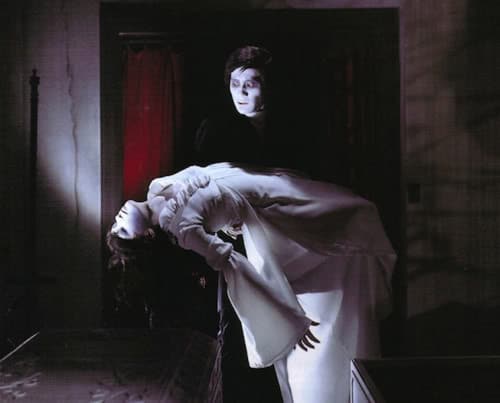 Inspired by the success of Hammer’s lurid horror cinema in the 1960s, the ever-versatile Toho Studios made a sound business decision to make some vampire films of their own. Whilst there is a modest array of films based specifically on Far Eastern vampire lore, the productions overseen by director Michio Yamamoto are rather different, blending Western tropes with a decidedly more Japanese spin on the folklore. The resulting projects, on offer here as part of one package released by Arrow Films, are an aesthetically-pleasing blend of whimsy and clever ideas, and would certainly be of interest to anyone with a fancy for seeing how world cinema does it.
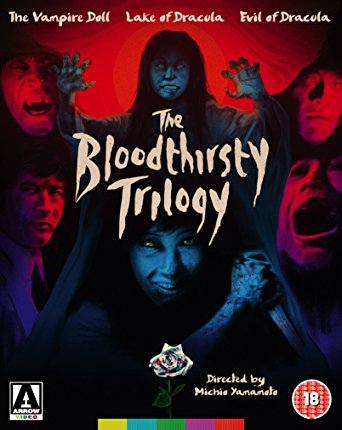 In terms of the cultural melding of East and West, there are some aspects of this to ponder, as well as interesting rationales for the emergence of vampires which are interesting, looking quite different to those in European films (but with similarities too: vampire women love a nice white gown). I rather like the golden eyes which the vampire characters have, too, even if you can’t help but wonder if they ran with that idea once they’d thought of it. However, I don’t think there are massively poignant cultural messages here, not really; there is an explanation in Evil of Dracula for how said count’s influence made its way to Japan, but the Japanese always seem rather relaxed about this kind of detail, and whilst you could ponder the presence of Western houses etc. as having more to say, equally you could just enjoy the spectacle on offer. If there’s one thing I found particularly interesting, it’s the use of hypnotism in the films’ plots; the development of this theme has a lot more in common with Poe than Mesmer himself, and it makes for some interesting denouements.
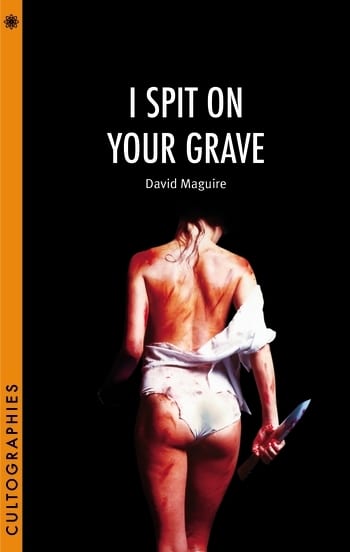 More and more these days, we’re seeing academic studies of what is often regarded as genre cinema; this ties in with the rise and rise of film studies more generally, with horror finally being regularly recognised and brought into the fold. In the past few months alone, for instance, I’ve reviewed books on
 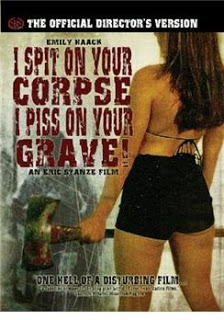 The book follows with exhaustive research into the legacy of ISOYG. There are some genuine surprises here as Maguire identifies a number of very thematically similar films which have emerged since the ‘Ground Zero’ of the genre got its release (including a spoof?!) and then there’s a good long look at the merits and demerits of the remake/subsequent-to-the-remake films, which can be seen as a franchise. He’s very fair, offers a number of well-argued points in defence of ISOYG (2010) and goes some way to dispel what has turned into a dichotomy between original and remake: first film good, remake bad. He is, though, far less kind to the 2013 sequel, a film I cannot comment on as I avoided it like the plague…
 A few years ago, the site (in its old incarnation) was approached with an indie film which looked decidedly different to most films we receive; this turned out to be abundantly and delightfully the case. Whilst we do get a fair range of styles and genres,
  While I embraced Rollin instantly, getting into Franco took a while longer. I can’t quite remember which my very first Jess Franco experience was. It was around the same time as Jean Rollin, again on pirate VHS. It may have been Mari-Cookie and the Killer Tarantula (1998), or Cannibals(1980) with Al Cliver. Neither one is an easy film for a newcomer! It took me some three-four years of frustration to ‘get’ Franco’s cinema. I really started appreciating and obsessing over his work after having seen Exorcism (1974) and Eugenie De Sade (1971) with Soledad Miranda. These films have resonated with me, and have also prompted me to try my hand at more erotic themes. I’ve had the idea of making a film along the lines of Eugenie de Sade for a number of years. I got the opportunity to make that happen in 2016 with S&M: Les Sadiques. My original screenplay was even more closely modelled on Franco’s film, but got altered down the road due to budget restrictions. So yes, my films are very influenced by Rollin and Franco.
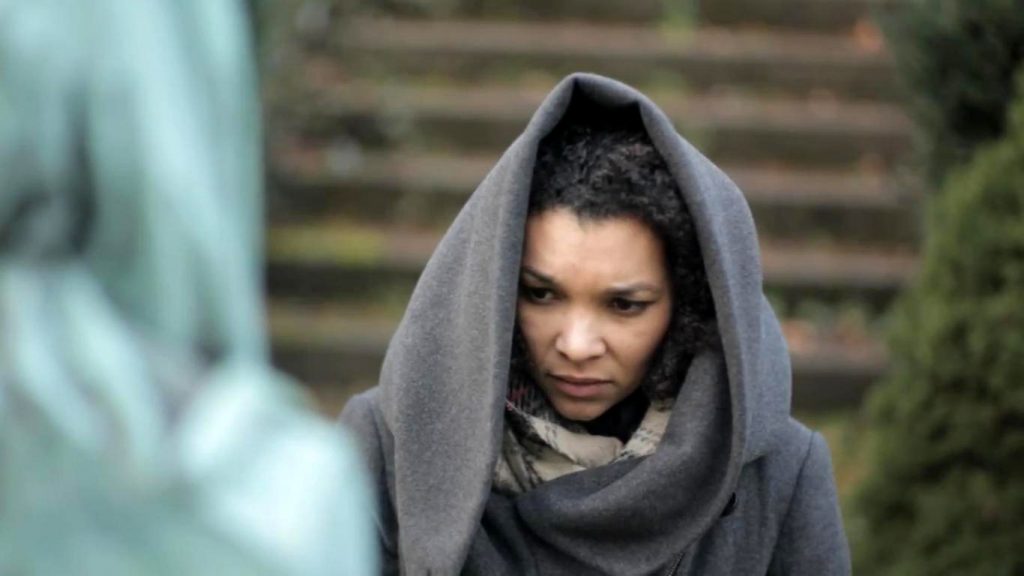 AB: Yes, it’s been a deliberate tactic on my part. Many potentially amazing films have been ruined due to female characters being represented as not having a will of their own, subordinate to males. No amount of beautiful editing or plot twists can atone for that. So in my own work I’m going in the opposite direction, with often un-heroic males and bold, superior females. As for r
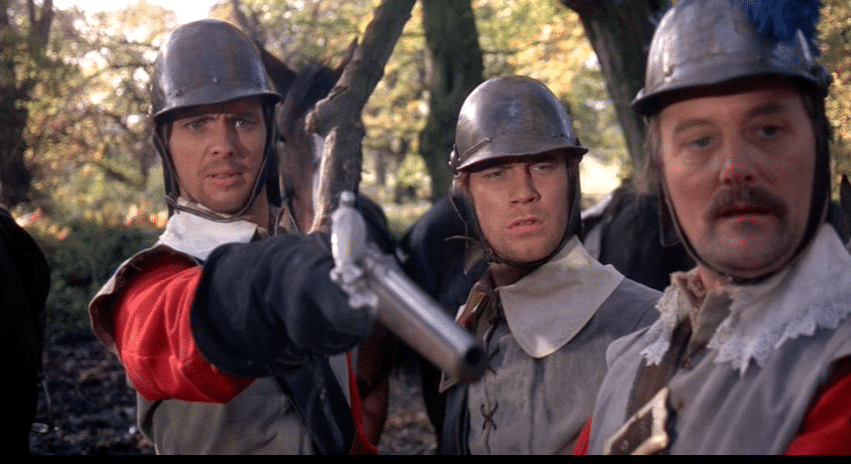 Times of great uncertainty and bloodshed have always seemed to bolster paranoia and irrational thought. Change offers to dispose of the unconscionable practices of the past, but even as old beliefs and practices are on the verge of being swept away, people still to seek them out, retreating into watchful suggestibility any time the pace of change progresses too quickly. You might like to name any number of examples from history, but in terms of the English Civil War – which provides our context here – a countrywide dispute over governance, supported by new warfare and weaponry, continued to cast a long shadow, and people did not simply forget what had gone before; far from it. Suspicions over one’s neighbours were still framed by supernatural suspicions, or at least framed in compelling supernatural language; in a similar way to today, where people gloss over the complex, uncomfortable truths to look instead for clues about conspiracies, the people of the mid-17th Century accused one another of witchcraft. Discerning opportunists, like the ‘Witchfinder General’, Matthew Hopkins, were all too willing to exploit this.
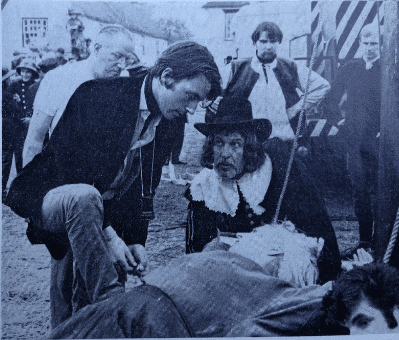 The troubled making of the film is as notorious as the events of the film itself, and much has been made of Michael Reeves’ fury at the studio pressure which forced him to cast Vincent Price in his lead role. It’s well-documented that he was rude and dismissive of Price, whilst Price remembered the experience of making Witchfinder General as the only time he ever really clashed with a director. I can see why Reeves was wary of casting Price, as he was hardly known for the type of film which the younger man was setting out to make, though some of the heated exchanges between them are hardly defensible – but Price’s acknowledged disillusionment with the film lends him a miserable gravitas in-role which is note-perfect. Many of the film’s sinister attributes come directly from Vincent Price’s performance, although the supporting cast are superb. I also feel that the casting of a much older man than the real Hopkins would have been works to the film’s advantage. Price is able to bring a rather jaded, menacing presence to the film, and he acts as a perfect foil for Ogilvy, the young career soldier. The two men are the embodiment of the old and the new, and on screen, the effect is mesmerising. Price himself, once safely back in the California sunshine, was able to acknowledge that Witchfinder General’s troubled birth had in fact led to one of his best-ever performances, and, ever the gentleman, he wrote to Reeves to say so.
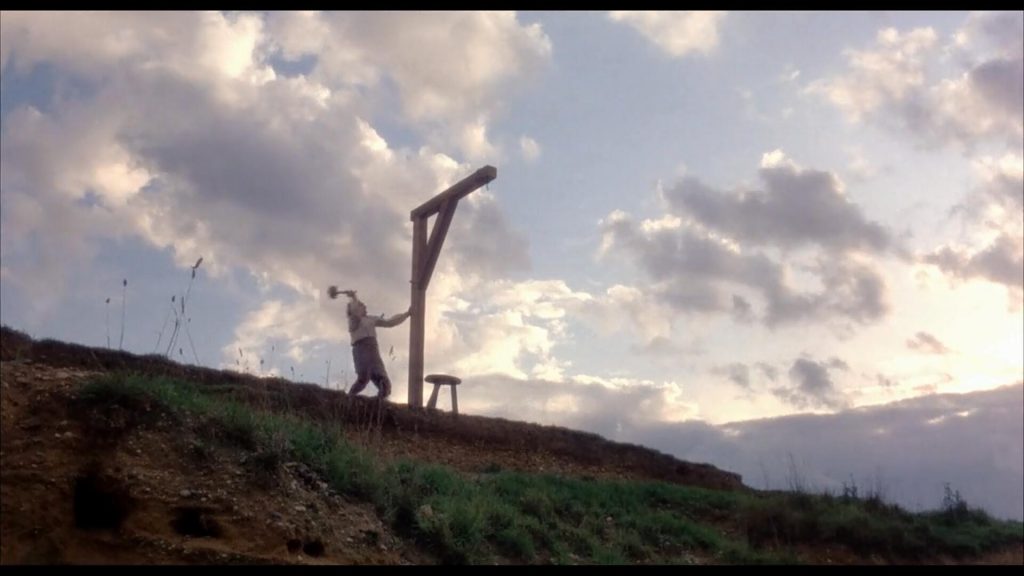 In terms of an English cinematic legacy, Witchfinder General has come to be widely-credited for its influence on what’s now broadly referred to as ‘folk horror’: this is a very broad church overall, but one which often derives its terrors from landscape, seclusion and the pesky resurgence of old gods. Whilst Witchfinder General’s relationship with the supernatural is rather minimal, positioning its witchcraft as a bludgeoning tool of exploitation and repression used by the powerful, its trials and burnings take place in a rural 17th century setting which seems primed for sinister events, offering contrast and incongruity whilst exploring a period in time when fervent Christian belief was meant to be at its apex. If the society of Witchfinder General needlessly burned its witches, then Blood on Satan’s Claw, with its slightly later setting, goes a step further by ploughing up a real devil for people to worship. The thread of sinister communities and historical unreason started in 1968, travelled to Europe in films such as Mark of the Devil, and in the years since, a resurgent interest in these folk horrors has led to modern-day films like A Field in England (2013), also set during the English Civil War. Its characters could almost be contemporary with the characters in Michael Reeves’ film.
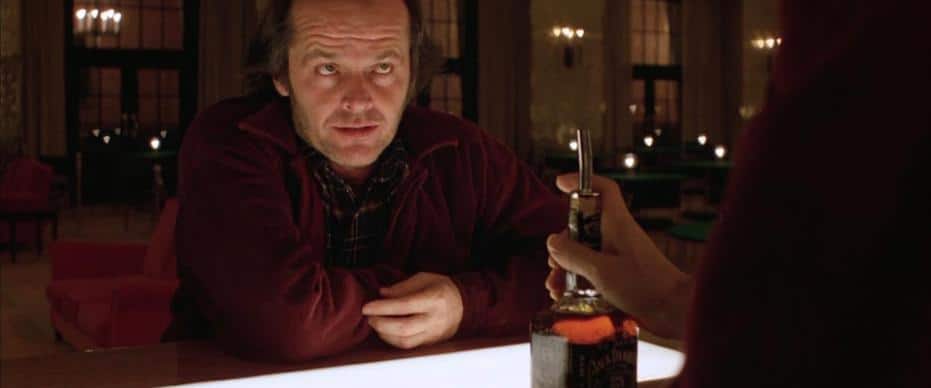 Whatever the situation was immediately following its release, no single horror film in history seems to have attracted such a proliferating amount of critical commentary as The Shining. And, few films have lent themselves to so much of what many lay viewers would see as frankly barmy analysis; okay, if you’ve ever watched a certain documentary called Room 237, then you’ll know exactly what I mean, and afterwards you might have felt less that you’ve been asked to consider various ‘explanations’ of the film and more that you’ve been up close and personal with delusion. Still, The Shining is a film which can withstand a certain amount of this kind of thing, and if it can sustain being reinterpreted as a metaphor about the Greek myth of the labyrinth with Jack as the Minotaur, then it can handle being critically reinterpreted in a broader sense, as part of the ongoing Devil’s Advocates series. I’ve reviewed several of these titles before: overall, these books strike a good, readable balance between academia and general interest, albeit that academic studies often tread some familiar paths in their analyses. Here, author Laura Mee is up for the task of assessing and discussing this landmark horror film, though one which has often been seen as a cold imposter to the genre, and remains a contested piece of work.
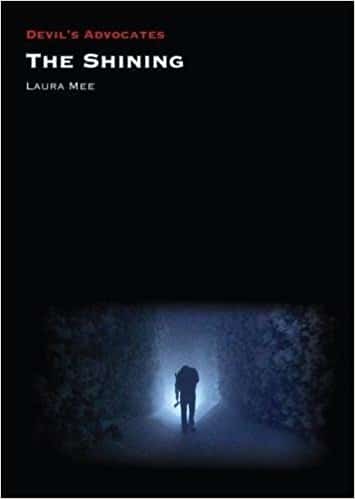 Not only does Mee debunk a lot of King’s strident criticisms of the film by offering recorded evidence which suggests that he, at least initially, really liked the film, but she goes deeper than this and makes an excellent case for judging an adaptation as far as possible on its own merits, rather than seeing it as ‘too different’ from the source material. There’s a fascinating section on what was left out between novel and screenplay and why, with supporting material from Kubrick’s own notebooks. It also seems relevant to note that Kubrick was not the first nor the last to omit or limit King’s more insalubrious sexual content from his screenplay, and for good reason: IT (2017) also springs to mind here. Ultimately, the films are not the books, and it is successfully argued here that transformative decisions are made for good reasons.
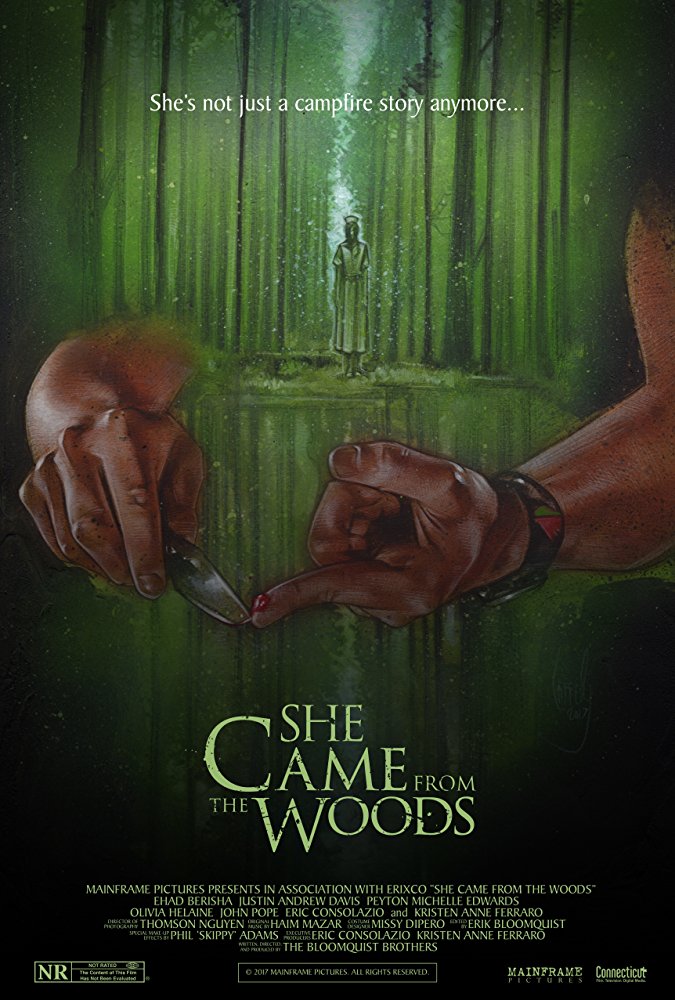 We receive quite a lot of short films overall at the site, and it’s always fun seeing what kind of a calling-card filmmakers have on offer: better still is when films channel formative horror and nostalgia along the way, which is the case with She Came From The Woods (2017).
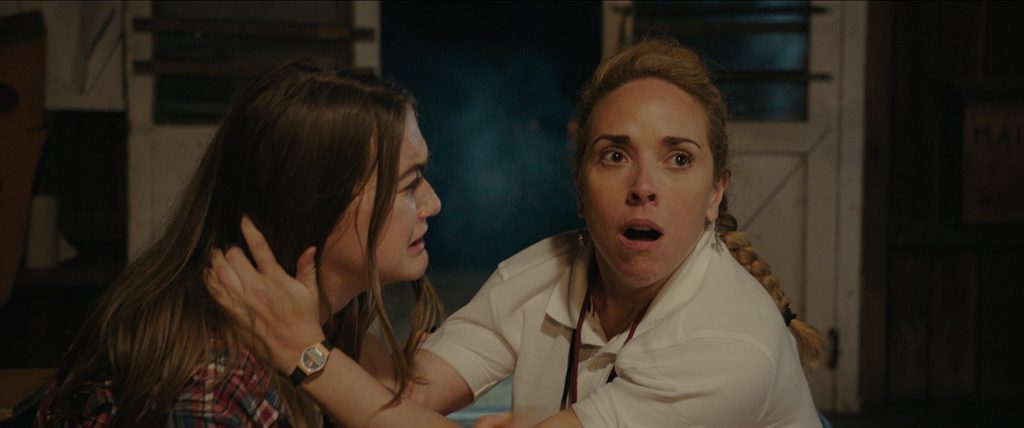 WP: Is the film and its mythos intended to stay a short, or is the story-line one you’d like to revisit at any point in future? I have to say, it feels like it could be expanded into a longer story…
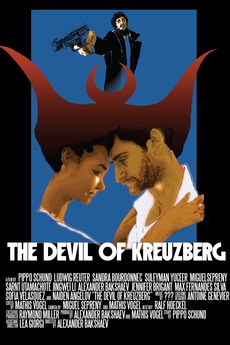
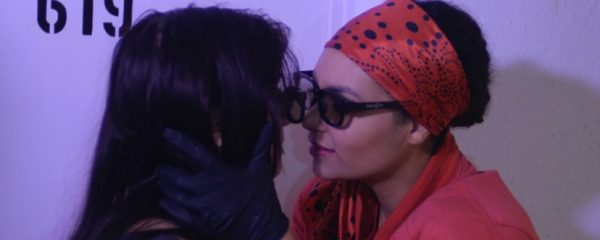 It’s a very rare thing indeed to see a filmmaker working in the styles so far chosen by director Alex Bakshaev in his career to date. His last film, The Devil of Kreuzberg, was to my mind a languid and stylish love letter to Jean Rollin; in S&M, Les Sadiques, we have a film not only openly dedicated to Jess Franco, but one clearly taking its visual cues from Uncle Jess – and on a budget of a mere 250 Euros, working within the confines of a budget which would startle even Franco. However, in common with The Devil of Kreuzberg, there’s so much evident love for source material which doesn’t tend to hold much sway over modern filmmakers, that it’s impossible not to be impressed and to an extent, entranced by the results.
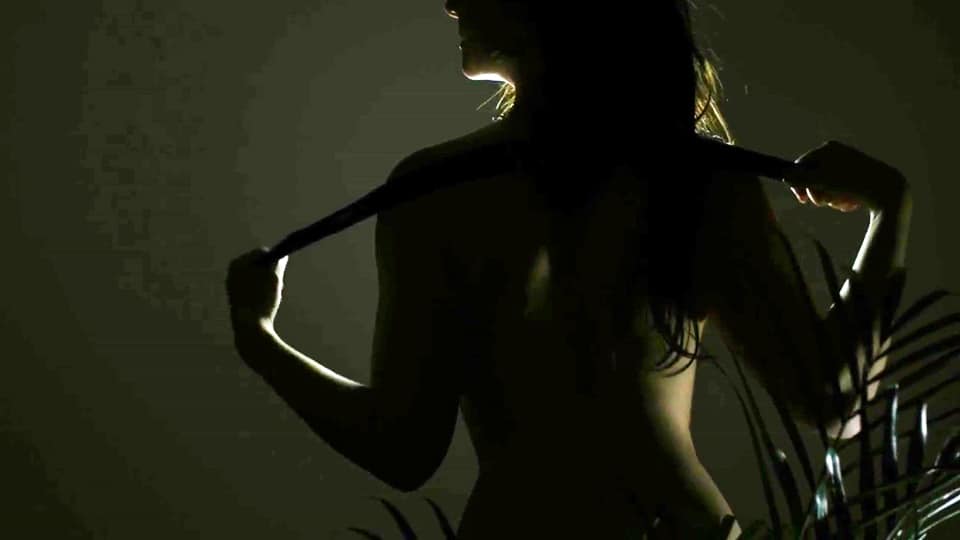
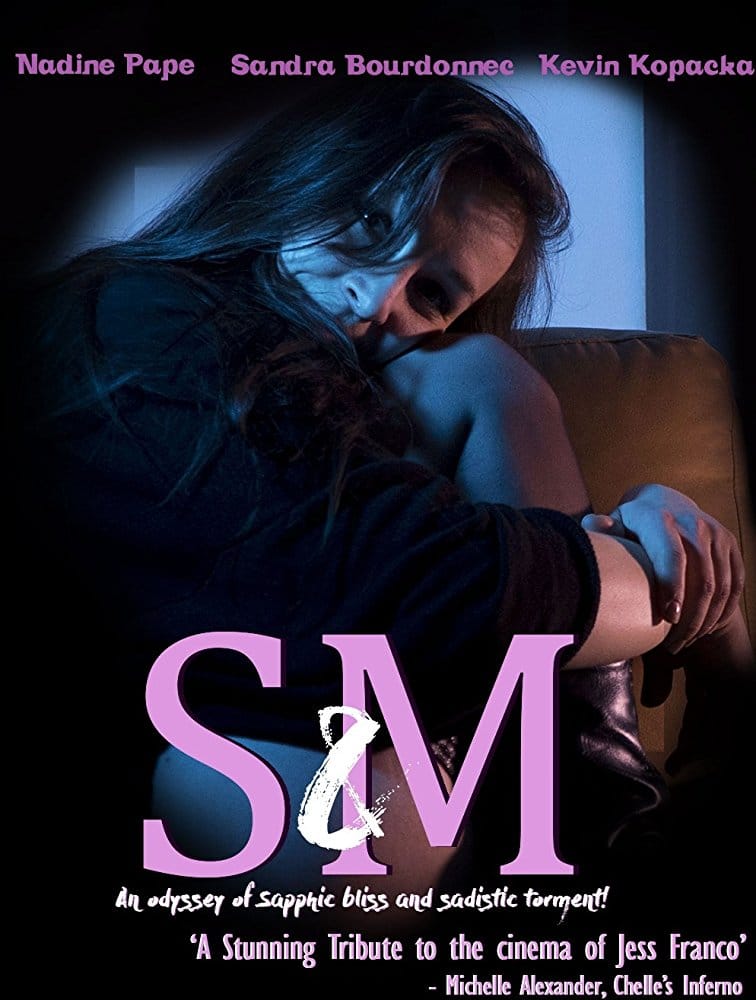 But as much as Jess Franco – and de Sade – are acknowledged influences on S&M: Les Sadiques, the overall style of the film is less uproarious than many a Jess Franco film, generally preferring atmosphere over action, and developing said atmosphere in meticulous ways. Whilst a sexual film in terms of its themes, the director is very selective about what is shown, though without shying away from nudity and encompassing one quite startling and brutal scene, too. The topics of control and consent are de facto explored here, though is a subtle array of ways. There is, again, a touch of magic in how Bakshaev manages to shoot Berlin, making the city look by turns very modern and recognisable, but then timeless, expressed through a series of interesting shots. The atmosphere also owes a great deal to the film’s minimal dialogue – sometimes we do not hear what characters are saying at all as they are not miked – and exposition. We simply accept Sandra and Marie’s relationship grows seemingly out of nowhere, for instance, because it just works that way, and it’s plausible within the confines of the film’s universe. The camera lingers on facial expressions and gestures in a very effective way too, adding to the pleasingly disorientating effect of the filming style overall. This is altogether quieter than the films which have inspired Les Sadiques, but genuinely works well and showcases a confident, ambitious set of attitudes to making cinema. A special mention has to go to Sandra Bourdonnec here, too, who is joined by a great cast but whose magnetism is quite unlike anything else on the screen: the star of The Devil of Kreuzberg exudes the kind of smouldering appeal which would not look amiss in any of the classic Euro horror or arthouse cinema we know and love.
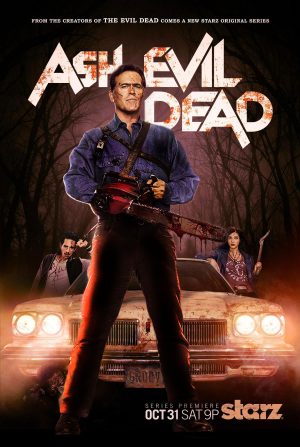 Rumours of an Evil Dead IV have been turning up reliably every few years, but nothing concrete has ever really come along to substantiate these. Personally, I feel like it was an either/or thing with the Evil Dead remake in 2013 – and we ended up with the remake, which aside from that (rather head-scratching) Bruce Campbell cameo after the end credits, moved things in a different direction, even though it ostensibly used the same mythology. Gone was the splatstick and the one-liners which we’d left off with after Evil Dead III; we were back with an altogether grislier spin which dispensed with the comedy altogether. If this was to be our last encounter with the Necronomicon, then we’d be ending on a very different note to what we’d come to expect from Raimi and Campbell – which sat a little awkwardly with many people, myself included.
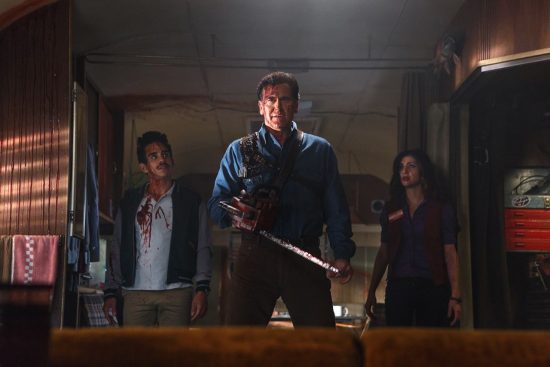 So with all of that said, how come I’m not howling with indignation at the show’s cancellation? Well, part of me is, absolutely, as the tyranny of ‘viewing figures’ is only a limited measure of how a show is doing, really, if you could only wait and see. Movies which sink at the Box Office often rejuvenate on DVD and merchandise sales. But it seems pretty impossible that my indignation here would achieve anything, and now that Bruce himself has closed the door, we would be better off accepting that we’re done here. And, whilst I have confidence in Sam and Ivan Raimi – alongside the rest of the talented writers they’ve worked with on the show – you never know what market forces and other factors can throw at you; a potential universe where we’re on Series Ten and the well is running dry sounds pretty unappealing, even if not quite ‘Dark Ones walking the earth’ unappealing. The worst case scenario is a horror version of The Big Bang Theory, which at least we’re definitely being spared.
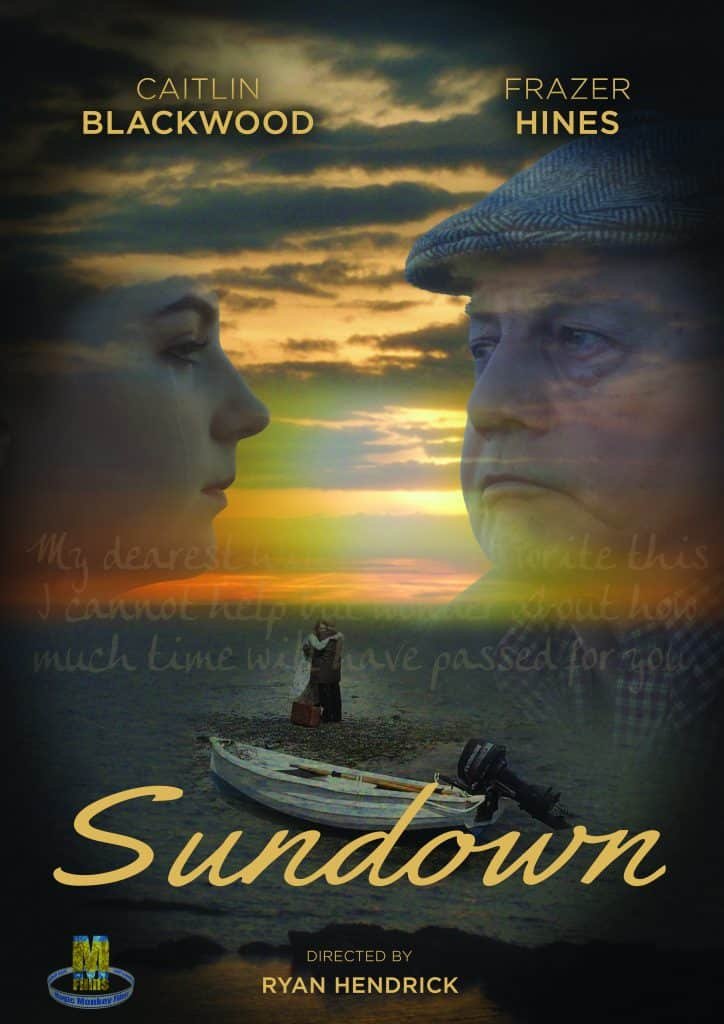 My influences come straight from my emotions. I always start creatively with an emotion or tone I want to convey before exploring a narrative. I am drawn to all sorts of storylines and themes, but they key for me is to tell them with a sense of romantic optimism. Sundown could easily have been a depressing and stark social realistic arthouse film, but I want to inspire audiences, make them feel a range of emotions.