 Times of great uncertainty and bloodshed have always seemed to bolster paranoia and irrational thought. Change offers to dispose of the unconscionable practices of the past, but even as old beliefs and practices are on the verge of being swept away, people still to seek them out, retreating into watchful suggestibility any time the pace of change progresses too quickly. You might like to name any number of examples from history, but in terms of the English Civil War – which provides our context here – a countrywide dispute over governance, supported by new warfare and weaponry, continued to cast a long shadow, and people did not simply forget what had gone before; far from it. Suspicions over one’s neighbours were still framed by supernatural suspicions, or at least framed in compelling supernatural language; in a similar way to today, where people gloss over the complex, uncomfortable truths to look instead for clues about conspiracies, the people of the mid-17th Century accused one another of witchcraft. Discerning opportunists, like the ‘Witchfinder General’, Matthew Hopkins, were all too willing to exploit this.
Hopkins, a notorious figure in his own lifetime, successfully combined the contemporary spirit of enterprise with the old beliefs in pacts with the devil, turning a lucrative trade with a regimented programme which extracted confessions of witchcraft. Little is known of his origins, save where he was born and to whom, but as the son of a Puritan minister he may well have been a believer in the power of Satan to mislead and menace (albeit it’s always seemed odd that Old Scratch did so in such typically low-key ways). But, if Hopkins was pious enough to believe in witchcraft, then he was not such a Christian when it came to poverty and charity, and detecting witches – often with sadistic methods – was a real money-spinner for him. Hopkins was not idle, and he was not cheap. He executed more witches during his brief career than England had dispatched in the previous 160 years, and demanded so much money for doing so that he cost a single town over £3000 in modern money in ‘costs’. Whilst his rapidly-generated wealth couldn’t insulate him from illness and premature death (it’s believed he was dead of tuberculosis by 30), it’s clear to see why his short, hectic career has proved a source of inspiration for literature – and film. In 1968, based on a novel by Ronald Bassett, director Michael Reeves and the head of Tigon Films, Tony Tenser, worked together on a screenplay and script. After a protracted battle with the BBFC over the film’s ‘sadism’, shooting began in England in the autumn. This was itself the start of a turbulent and uneasy process, but the end result has given us one of the seminal horror films of the twentieth century.
“You took him from me!”
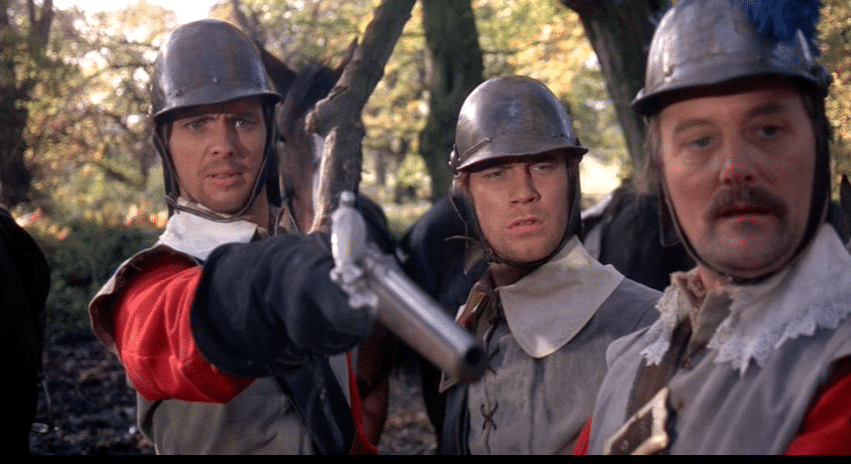
The plot sticks with the turmoil of civil war for its context, and presents us the implications of witch-hunting in microcosm, focusing largely on how the arrival of the now-named Witchfinder General impacts upon one family. Hopkins (Vincent Price) and his assistant Stearne (Robert Russell) are moving from place to place in the English countryside, fuelling intolerance and aggression as they go; meanwhile, a roundhead soldier named Richard Marshall (Ian Ogilvy) is all too aware of the potential risk of Hopkins’ presence, and struggles to balance his duties as a soldier against his desire to keep his fiancée Sarah (Hilary Dwyer) safe from harm. He is utterly unable to do this, ultimately, and finds himself mired in a bitter power struggle against Stearne and Hopkins, vowing vengeance against Hopkins for the torments he goes on to inflict against Sarah and her father.
This, as a plot synopsis, looks oddly thin on the page – but the film’s all-encompassing atmosphere, together with its sense of dread purpose and inescapability, fleshes out its storyline to an unbearable point. Those drab, indifferent landscapes and the marching lines of men all seem to crowd inwards as the plot progresses, whilst the systematic dismantling of the happy future Marshall once anticipated has the power to engender great anger. Ogilvy’s rage that he cannot fully sate his desire for bloody revenge upon Hopkins calls oddly to our sympathy as an audience; he is frozen forever in his moment of supreme frustration, and whilst we do not see what happens to him next, the way in which he is overwhelmed by bigger social and political forces confronts us with the distasteful impression that all rebellion is ineffectual. The young man’s life is effectively over at that moment; we leave the story to the soundtrack of one of the great cinematic screams.
 The troubled making of the film is as notorious as the events of the film itself, and much has been made of Michael Reeves’ fury at the studio pressure which forced him to cast Vincent Price in his lead role. It’s well-documented that he was rude and dismissive of Price, whilst Price remembered the experience of making Witchfinder General as the only time he ever really clashed with a director. I can see why Reeves was wary of casting Price, as he was hardly known for the type of film which the younger man was setting out to make, though some of the heated exchanges between them are hardly defensible – but Price’s acknowledged disillusionment with the film lends him a miserable gravitas in-role which is note-perfect. Many of the film’s sinister attributes come directly from Vincent Price’s performance, although the supporting cast are superb. I also feel that the casting of a much older man than the real Hopkins would have been works to the film’s advantage. Price is able to bring a rather jaded, menacing presence to the film, and he acts as a perfect foil for Ogilvy, the young career soldier. The two men are the embodiment of the old and the new, and on screen, the effect is mesmerising. Price himself, once safely back in the California sunshine, was able to acknowledge that Witchfinder General’s troubled birth had in fact led to one of his best-ever performances, and, ever the gentleman, he wrote to Reeves to say so.
“Turning to poison while the bee-mouth sips” – the influence and legacy of the film
Perhaps predictably, the film was decried for its gruesome “sadism” upon release, even though many of the bloodier elements had been rinsed from the screenplay at the BBFC’s behest before filming even took place. It’s always strange to consider those people who are outraged by the inclusion of grisly scenes which perfectly match the subject matter (and have usually been cleaned up considerably; I’d imagine the real battle of Naseby was worse than anything Reeves could have got on screen). As with the recent, predictable flounce-outs from the new Lars von Trier film in Cannes, you wonder what on earth people expect, or why they go to see anything which they must guess won’t be at all to their tastes.
Longer term, however, audiences began to re-assess, identifying the strengths and the bold decisions, eventually seeing Witchfinder General for the striking, innovative addition to the horror canon which it is. This has taken time, but its reputation is now cemented, and it’s often included on lists of the best horror films of all time. Funnily though, one of its earliest successes was to reinvigorate Edgar Allan Poe as a source of cinematic inspiration, despite Reeves’ original screenplay having nothing to do with Poe whatsoever. AIP, who had part-budgeted the film (and insisted on their most bankable star getting the lead role) re-released it in the US under a different title, ‘The Conqueror Worm’, which is a line from a Poe verse which the author embedded into one of his short stories, Ligeia. To justify the rebrand, the new version of the film was bookended by verses from the poem, though there were no other additions. This new title hardly set the world ablaze on its release, but overall, Reeves’ film led to a minor resurgence in Poe adaptations, including The Oblong Box: it’s not as gaudy or glorious as The Masque of the Red Death, but it’s certainly worthwhile.
 In terms of an English cinematic legacy, Witchfinder General has come to be widely-credited for its influence on what’s now broadly referred to as ‘folk horror’: this is a very broad church overall, but one which often derives its terrors from landscape, seclusion and the pesky resurgence of old gods. Whilst Witchfinder General’s relationship with the supernatural is rather minimal, positioning its witchcraft as a bludgeoning tool of exploitation and repression used by the powerful, its trials and burnings take place in a rural 17th century setting which seems primed for sinister events, offering contrast and incongruity whilst exploring a period in time when fervent Christian belief was meant to be at its apex. If the society of Witchfinder General needlessly burned its witches, then Blood on Satan’s Claw, with its slightly later setting, goes a step further by ploughing up a real devil for people to worship. The thread of sinister communities and historical unreason started in 1968, travelled to Europe in films such as Mark of the Devil, and in the years since, a resurgent interest in these folk horrors has led to modern-day films like A Field in England (2013), also set during the English Civil War. Its characters could almost be contemporary with the characters in Michael Reeves’ film.
Hopkins has even made his way into pop culture, from Terry Pratchett and Neil Gaiman’s Good Omens to TV comedy (via an affectionate pastiche called Scream Satan Scream! in Doctor Terrible’s House of Horrible) and even music: the genre of doom metal has an especial soft spot for the ol’ Witchfinder, naming bands, EPs and songs for him. Many metal fans first heard Vincent Price speak as Hopkins in a certain Cathedral song, years before they actually saw the film…
It’s a shame, or at least I personally think it is, that we never got to see Udo Kier playing Hopkins in his redacted scenes from Rob Zombie’s Lords of Salem – but, now that director Nicolas Winding Refn has purchased the rights to Witchfinder General, we may in future see a new incarnation of Hopkins which is a long way from what Reeves ever envisioned (and no doubt a long way from anything Zombie/Kier had in mind, either). We can be cautiously optimistic about any future developments from Refn, I think, as he’s a talented, distinctive filmmaker who would respect the film’s legacy. But until then, fifty years after its inception, Witchfinder General remains a singularly English chapter in horror. It’s brutal, it’s influential, and in overarching meanness of spirit, it’s a horror film which is still quite unparalleled today.
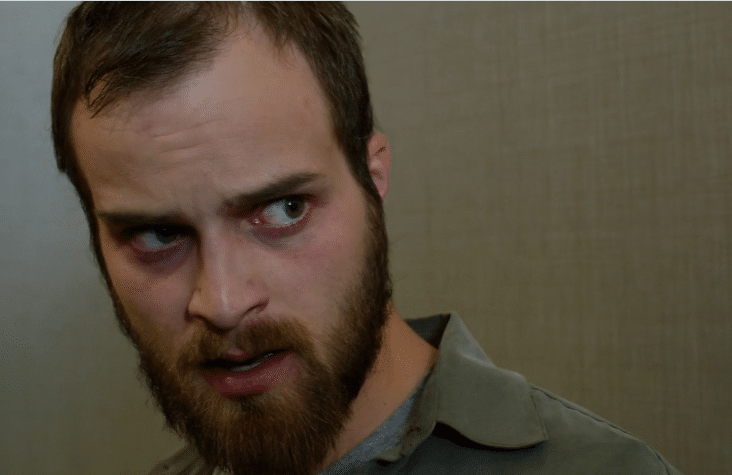 How much can one ninety-minute film reasonably do within its timeframe? Can a film successfully go from awkward laughs to gore, from femmes fatales to OTT-ultraviolence, and from slacker humour to shock? Rondo (2018) believes it’s not only possible, it’s all part and parcel of its overall appeal. Both the ethos and the resulting movie have a few little drawbacks, but overall, I’d say those behind the film manage to balance these things pretty well. Due to its content this will not be a film for everyone, but if you can laugh and squirm at the same time, you might well be okay with this one.
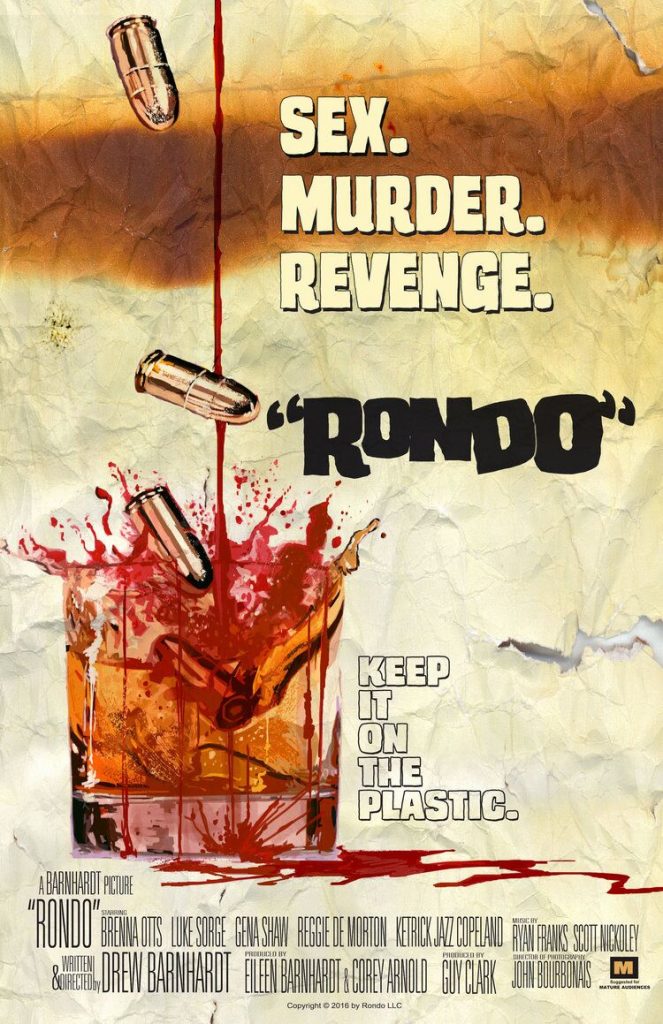 If they weren’t already on your radar, it’s at about this point that the film’s black comedy elements begin to rise. As Paul and some of the other gatherers listen to the ‘rules of the road’ for this party, the script modulates between comedic and downright sleazy; if the film showed half the things it describes, it’d have an X rating, which makes the steady delivery of certain lines by the host, Lurdell (Reggie De Morton) seem all the more uneasily funny. Paul’s suspicions about this place and this set-up are ultimately – and quickly – confirmed, so he decides to disappear. But he can’t just do that, or put this strange night behind him. It’s not as simple as that.
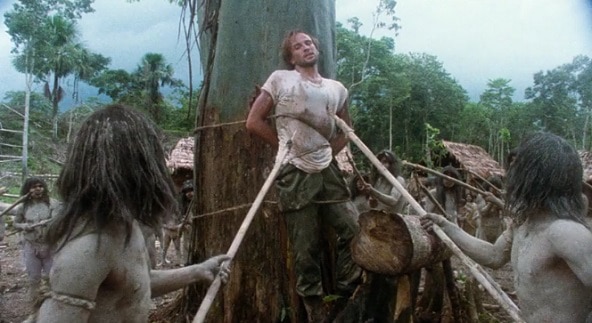 Umberto Lenzi turned his hand to many different kinds of genre film during his career, so it’s perhaps little surprise that he looked to the kind of cannibalism movies being made by his peers (such Ruggero Deodato), making two of them in very rapid succession, after almost a ten-year break between these and the first of his films to nod towards anthropophagy, The Man from the Deep River. Cannibal Ferox and Eaten Alive were made within a year of each other, though I’d suggest that Ferox is still the better-known title of the two, often for some of its more notorious scenes, and perhaps still for its association with the ‘video nasty’ debacle, which has so often led to a long legacy of different cuts and titles.
 In many respects Ferox is a sort-of morality tale, whereby every white person setting foot in the Amazon basin is an irredeemable fool, nasty beyond measure, and so they get served accordingly. Even Gloria eventually fathoms this, bless. However, they don’t simply get picked off in order of awfulness, with some of the better-meaning characters dying way before the worst of them, so it’s not as straightforward as it might be. It’s also worth knowing with these cannibal horrors that a lot of the more notorious and gory scenes are often crammed into a short amount of time, usually towards the end of the ninety minutes: they certainly are here, and in common with
  Given some of the films which have showcased Eastern European locations for American audiences in recent years, you’d be forgiven for thinking that in every disused industrial building in this part of the world, there’s some sort of dodgy sex-and-torment club holding sway. Such is the case in Dark Crimes (2016), which crams quite a lot of breasts and torture into its opening scenes; this scene actually takes place outside of the timeframe of the rest of the film and as such is a little confusing, but quite possibly it seemed a shame not to add it in. These considerations aside, Dark Crimes is probably most noteworthy for its casting of Jim Carrey in the lead role – though it’s languished a while, two years in fact, waiting for a release, which seems surprising given his bankability. Well, having now watched the film in its entirety, let’s just say I’m rather less surprised that it’s been left sitting on a shelf somewhere.
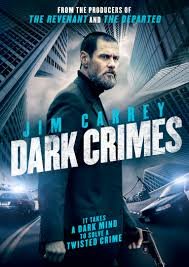 As for Carrey, I suppose you could say this is a change of pace for him – but then again, he’s already proven he can do serious acting elsewhere. Once the initial mild surprise of seeing him looking so dour wears off, you realise he’s being given very little to do here; that dour stare is the whole role. He also veers between a neutral accent (better) and an attempt at an Eastern European one (worse), which just makes it doubly silly. (It’s never really explained why the whole of Poland is conducting its affairs exclusively in English, right down to the TV news. Only the names are Polish in this version of Poland.) Charlotte Gainsbourg has a role here, too, one which grows in importance as the film moves forward, but she essentially reprises the role she’s done several times elsewhere, with a completely unsurprising nude scene/sex scene and a strung-out demeanour overall. To be fair, she isn’t permitted any characterisation for most of the film, so it’s all too little, too late when it finally comes along.
 I don’t know about you, but I always feel a moment of trepidation when I see rock stars’ names attached to film projects – perhaps particularly so when at least one of the rock stars in question has now shuffled off the mortal coil. What would they have thought of the finished product? Did it receive their blessing? What’s the story? That’s very much the case in Sunset Society, a film which boasts an appearance by the legendary, and now sadly deceased Lemmy Kilmister, as well as roles for LA Guns musician Tracii Guns and former Guns ‘n’ Roses member Dizzy Reed. The largest share of Sunset Society seems to be as a meet-up for LA-based musicians and hangers-on who peaked before the 21st century came around, although admittedly that doesn’t really apply to the Motorhead frontman. Director/actress Phoebe Dollar – veteran of a whole host of low-budget horrors in her own right – isn’t an idiot, and Lemmy is accordingly plastered all over the film’s promotional material, because he is quite simply a failsafe currency as far as rock and metal fans are concerned. He’s also mentioned frequently in the script by other characters, though it’s worth pointing out that this is, really speaking, a cameo role, with only a few minutes of screen time for him.
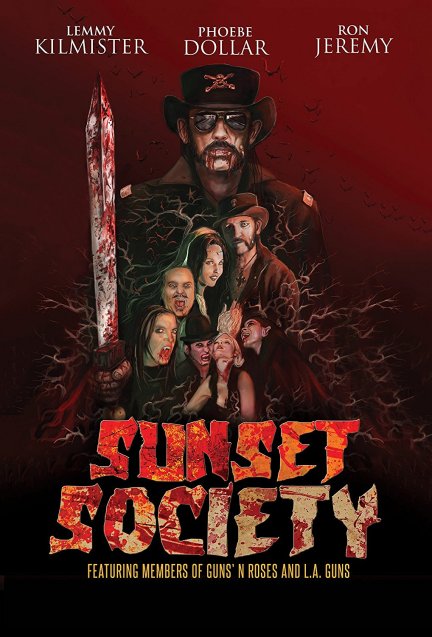 I really, really wish there was more to it than that. Lots of the screen time here seems to consist of only loosely-connected scenes, with little in the sense of a driving force behind the narrative. Sure, some of the aesthetics are pretty cool, some of the city nightscapes look effective and if you like seeing pretty goth girls on screen then you’ll find plenty to divert you, but it all feels more like a protracted music video than a coherent film. Adding to this, lots of the dialogue feels improvised (and some of it has blatantly been messed up, but left in anyway) or there are issues with the script whereby it frequently becomes thin or repetitive. Making a joke out of the repetitiveness itself is not enough to swing it, unfortunately, even if it’s stalwart Ron Jeremy making the attempt: his is another cameo role, with little screen time given. (Oh, and another, more inexplicable cameo? Steve-o from Jackass.) As for Lemmy himself, well as much as it’s good to see him again, his scenes aren’t all that great. He was never an actor by trade and towards the end of his life, he seems he’s struggling to enunciate the lines given to him. The cheap animated interludes hardly help matters.
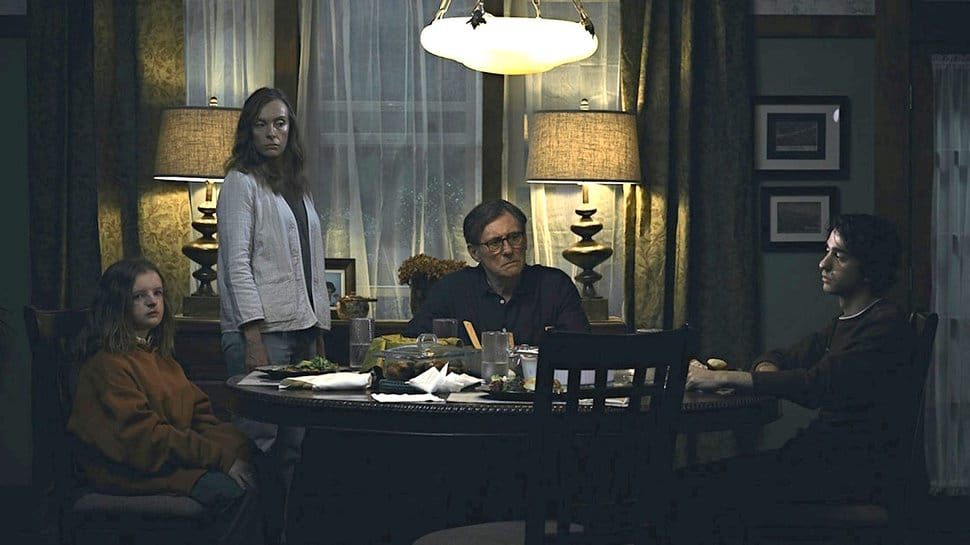 As we’ve seen countless times, the weight of expectation can be an ambiguous gift to a film, but it’s fair to say that few recent horrors have enjoyed such a steadily-building sense of anticipation as Hereditary (2018), which has been running tantalising trailers for the past few months. For one thing, the return of Toni Collette to the horror genre has been a boon – she really is a superb actress for this kind of thing – and for another, we seem to be enjoying a run of supernatural horror; it’s a welcome development for fans, some of whom may have felt somewhat starved of it in recent years. That said, the now-obligatory discussions about whether or not Hereditary is a horror film at all have proved to be a rather tedious add-on, unnecessary and bewildering for fans of the genre, who already know that it can do all of the sophisticated, multi-layered things which seem to come as such a surprise to others that they need to feel around for a new title for it every single time. I tried, as ever, to put all of this to the back of my mind ahead of seeing the film – which lo and behold, is as much of a horror film as I’ve ever seen in my life.
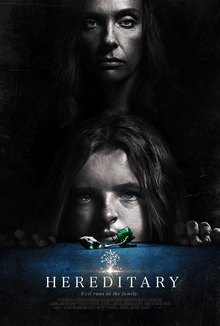 I’m deliberately keeping my plot synopsis brief and a little vague here, as the way in which Hereditary unfolds deserves to be appreciated with as open a mind as possible. It’s unlikely that I’m spoilering by relating to the supernatural elements, though, I hope; so, this is a supernatural horror through and through, where the afterlife is more of a parallel world than a one-way destination, and where its inmates can harbour very, very sinister designs on the living. I was pleasantly surprised to find myself surprised, I think. I’ve seen the film proudly described as ‘this generation’s Exorcist’, or words to that effect, but that seems an odd comparison to make, unless we’re painting in very broad strokes. It’s far closer to the malignity of The Witch, or indeed the assault-by-wicked-forces seen in Drag Me To Hell, though with less of the humour. Although, even Hereditary has its lighter moments. It lobs in a few bong jokes, and some of the family meltdowns grow so hysterical that they verge on black comedy, as do a few of the film’s shockingly graphic moments.
 The cannibal movie cycle of the late Seventies and early Eighties will forever seem like a strange beast. Splicing stock footage of animals doing their thing with often garish animal cruelty, then layering in gore effects, nudity and any number of practices which would very likely fail to get past an ethics committee today, the resultant films are nonetheless compelling – in their own way. All of that said, I’m a product of my own social climate, and as such I’m very pleased that Shameless Films have openly made the decision to ‘soften’ (their term) the animal cruelty originally present in their brand new version of Mountain of the Cannibal God (1978), making the point that this footage benefits the film’s narrative none. Instead, they’ve worked to restore other missing scenes, offering the usual proviso that this means some of the splicing is bound to be noticeable. And it is, a little, but it’s all in the pursuit of a worthwhile cut of this film, and the end results are very good.
 A haze of ulterior motives, animal scenes and great music ensue. It’s my contention that the best-known cannibal movies have such superb music for this very reason, to offset everything less palatable in a kind of cinematic karma. And as the team approach the mountain, the locals (of course) show this disapproval in all of the ways you might imagine, as well as a few which are, to be fair, very creative and ambitious. On a restricted budget, Martino achieves impressive things here; a lot of the entertainment value of these films comes from smirking at the flaws, and that’s fine, but don’t let that make you overlook the many things which Martino does rather well. The ‘mountain god’ himself looks genuinely gruesome and repellent, and some of those restored gore scenes could still make you flinch.
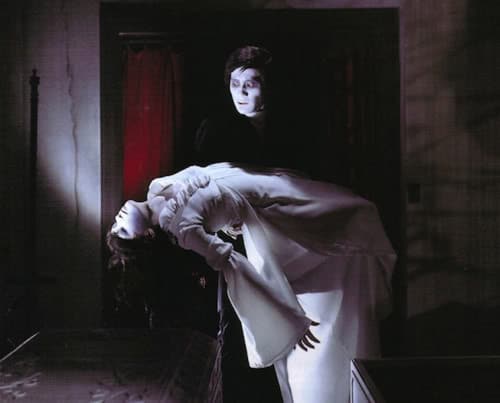 Inspired by the success of Hammer’s lurid horror cinema in the 1960s, the ever-versatile Toho Studios made a sound business decision to make some vampire films of their own. Whilst there is a modest array of films based specifically on Far Eastern vampire lore, the productions overseen by director Michio Yamamoto are rather different, blending Western tropes with a decidedly more Japanese spin on the folklore. The resulting projects, on offer here as part of one package released by Arrow Films, are an aesthetically-pleasing blend of whimsy and clever ideas, and would certainly be of interest to anyone with a fancy for seeing how world cinema does it.
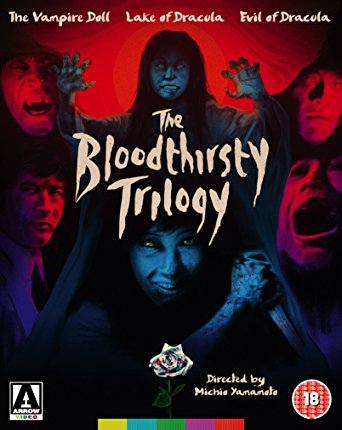 In terms of the cultural melding of East and West, there are some aspects of this to ponder, as well as interesting rationales for the emergence of vampires which are interesting, looking quite different to those in European films (but with similarities too: vampire women love a nice white gown). I rather like the golden eyes which the vampire characters have, too, even if you can’t help but wonder if they ran with that idea once they’d thought of it. However, I don’t think there are massively poignant cultural messages here, not really; there is an explanation in Evil of Dracula for how said count’s influence made its way to Japan, but the Japanese always seem rather relaxed about this kind of detail, and whilst you could ponder the presence of Western houses etc. as having more to say, equally you could just enjoy the spectacle on offer. If there’s one thing I found particularly interesting, it’s the use of hypnotism in the films’ plots; the development of this theme has a lot more in common with Poe than Mesmer himself, and it makes for some interesting denouements.
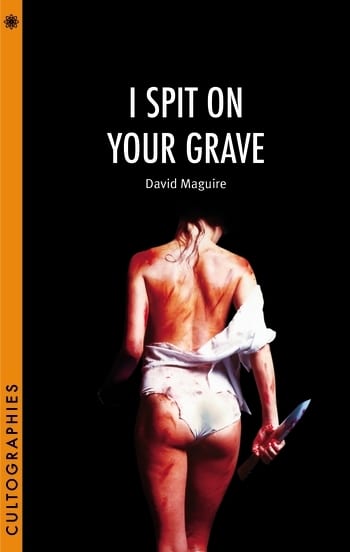 More and more these days, we’re seeing academic studies of what is often regarded as genre cinema; this ties in with the rise and rise of film studies more generally, with horror finally being regularly recognised and brought into the fold. In the past few months alone, for instance, I’ve reviewed books on
  The book follows with exhaustive research into the legacy of ISOYG. There are some genuine surprises here as Maguire identifies a number of very thematically similar films which have emerged since the ‘Ground Zero’ of the genre got its release (including a spoof?!) and then there’s a good long look at the merits and demerits of the remake/subsequent-to-the-remake films, which can be seen as a franchise. He’s very fair, offers a number of well-argued points in defence of ISOYG (2010) and goes some way to dispel what has turned into a dichotomy between original and remake: first film good, remake bad. He is, though, far less kind to the 2013 sequel, a film I cannot comment on as I avoided it like the plague…
 A few years ago, the site (in its old incarnation) was approached with an indie film which looked decidedly different to most films we receive; this turned out to be abundantly and delightfully the case. Whilst we do get a fair range of styles and genres,
  While I embraced Rollin instantly, getting into Franco took a while longer. I can’t quite remember which my very first Jess Franco experience was. It was around the same time as Jean Rollin, again on pirate VHS. It may have been Mari-Cookie and the Killer Tarantula (1998), or Cannibals(1980) with Al Cliver. Neither one is an easy film for a newcomer! It took me some three-four years of frustration to ‘get’ Franco’s cinema. I really started appreciating and obsessing over his work after having seen Exorcism (1974) and Eugenie De Sade (1971) with Soledad Miranda. These films have resonated with me, and have also prompted me to try my hand at more erotic themes. I’ve had the idea of making a film along the lines of Eugenie de Sade for a number of years. I got the opportunity to make that happen in 2016 with S&M: Les Sadiques. My original screenplay was even more closely modelled on Franco’s film, but got altered down the road due to budget restrictions. So yes, my films are very influenced by Rollin and Franco.
 AB: Yes, it’s been a deliberate tactic on my part. Many potentially amazing films have been ruined due to female characters being represented as not having a will of their own, subordinate to males. No amount of beautiful editing or plot twists can atone for that. So in my own work I’m going in the opposite direction, with often un-heroic males and bold, superior females. As for r
 Times of great uncertainty and bloodshed have always seemed to bolster paranoia and irrational thought. Change offers to dispose of the unconscionable practices of the past, but even as old beliefs and practices are on the verge of being swept away, people still to seek them out, retreating into watchful suggestibility any time the pace of change progresses too quickly. You might like to name any number of examples from history, but in terms of the English Civil War – which provides our context here – a countrywide dispute over governance, supported by new warfare and weaponry, continued to cast a long shadow, and people did not simply forget what had gone before; far from it. Suspicions over one’s neighbours were still framed by supernatural suspicions, or at least framed in compelling supernatural language; in a similar way to today, where people gloss over the complex, uncomfortable truths to look instead for clues about conspiracies, the people of the mid-17th Century accused one another of witchcraft. Discerning opportunists, like the ‘Witchfinder General’, Matthew Hopkins, were all too willing to exploit this.
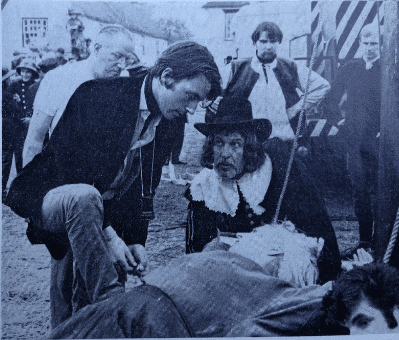 The troubled making of the film is as notorious as the events of the film itself, and much has been made of Michael Reeves’ fury at the studio pressure which forced him to cast Vincent Price in his lead role. It’s well-documented that he was rude and dismissive of Price, whilst Price remembered the experience of making Witchfinder General as the only time he ever really clashed with a director. I can see why Reeves was wary of casting Price, as he was hardly known for the type of film which the younger man was setting out to make, though some of the heated exchanges between them are hardly defensible – but Price’s acknowledged disillusionment with the film lends him a miserable gravitas in-role which is note-perfect. Many of the film’s sinister attributes come directly from Vincent Price’s performance, although the supporting cast are superb. I also feel that the casting of a much older man than the real Hopkins would have been works to the film’s advantage. Price is able to bring a rather jaded, menacing presence to the film, and he acts as a perfect foil for Ogilvy, the young career soldier. The two men are the embodiment of the old and the new, and on screen, the effect is mesmerising. Price himself, once safely back in the California sunshine, was able to acknowledge that Witchfinder General’s troubled birth had in fact led to one of his best-ever performances, and, ever the gentleman, he wrote to Reeves to say so.
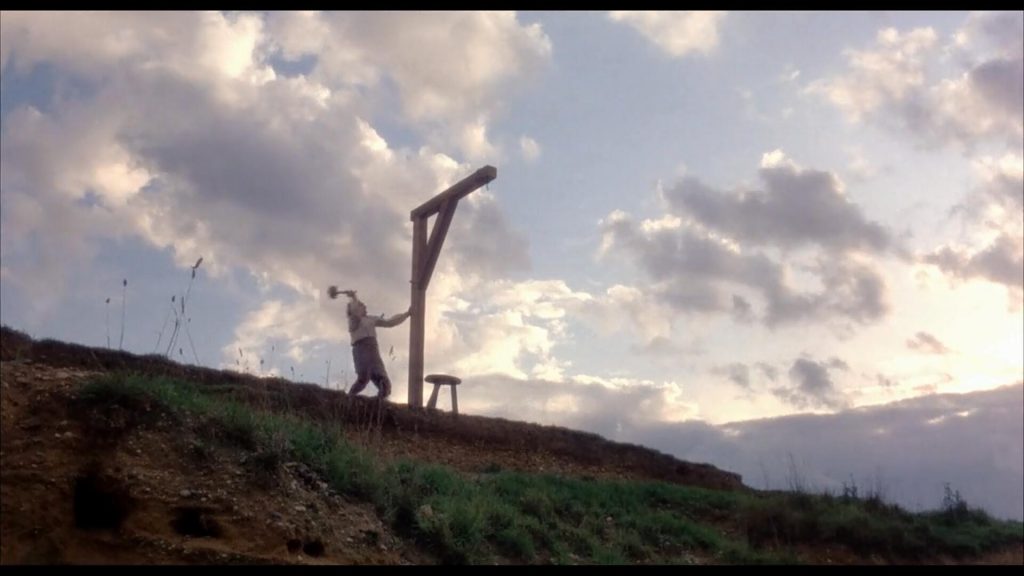 In terms of an English cinematic legacy, Witchfinder General has come to be widely-credited for its influence on what’s now broadly referred to as ‘folk horror’: this is a very broad church overall, but one which often derives its terrors from landscape, seclusion and the pesky resurgence of old gods. Whilst Witchfinder General’s relationship with the supernatural is rather minimal, positioning its witchcraft as a bludgeoning tool of exploitation and repression used by the powerful, its trials and burnings take place in a rural 17th century setting which seems primed for sinister events, offering contrast and incongruity whilst exploring a period in time when fervent Christian belief was meant to be at its apex. If the society of Witchfinder General needlessly burned its witches, then Blood on Satan’s Claw, with its slightly later setting, goes a step further by ploughing up a real devil for people to worship. The thread of sinister communities and historical unreason started in 1968, travelled to Europe in films such as Mark of the Devil, and in the years since, a resurgent interest in these folk horrors has led to modern-day films like A Field in England (2013), also set during the English Civil War. Its characters could almost be contemporary with the characters in Michael Reeves’ film.
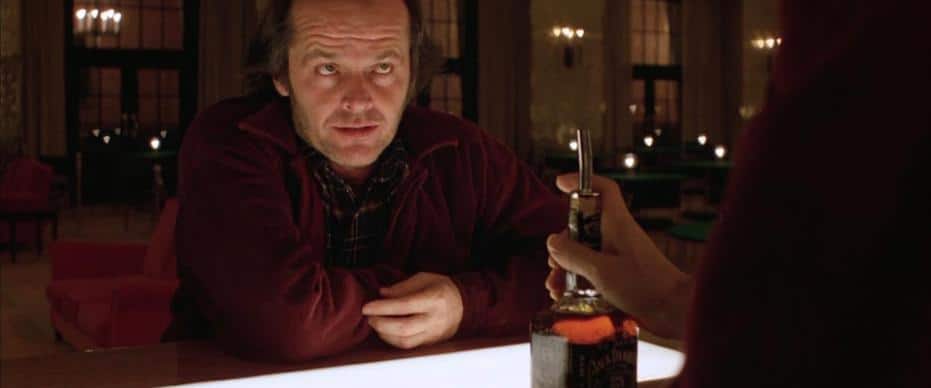 Whatever the situation was immediately following its release, no single horror film in history seems to have attracted such a proliferating amount of critical commentary as The Shining. And, few films have lent themselves to so much of what many lay viewers would see as frankly barmy analysis; okay, if you’ve ever watched a certain documentary called Room 237, then you’ll know exactly what I mean, and afterwards you might have felt less that you’ve been asked to consider various ‘explanations’ of the film and more that you’ve been up close and personal with delusion. Still, The Shining is a film which can withstand a certain amount of this kind of thing, and if it can sustain being reinterpreted as a metaphor about the Greek myth of the labyrinth with Jack as the Minotaur, then it can handle being critically reinterpreted in a broader sense, as part of the ongoing Devil’s Advocates series. I’ve reviewed several of these titles before: overall, these books strike a good, readable balance between academia and general interest, albeit that academic studies often tread some familiar paths in their analyses. Here, author Laura Mee is up for the task of assessing and discussing this landmark horror film, though one which has often been seen as a cold imposter to the genre, and remains a contested piece of work.
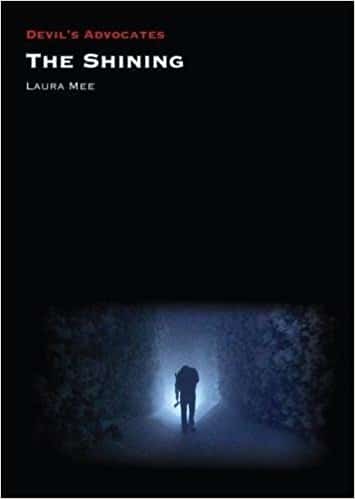 Not only does Mee debunk a lot of King’s strident criticisms of the film by offering recorded evidence which suggests that he, at least initially, really liked the film, but she goes deeper than this and makes an excellent case for judging an adaptation as far as possible on its own merits, rather than seeing it as ‘too different’ from the source material. There’s a fascinating section on what was left out between novel and screenplay and why, with supporting material from Kubrick’s own notebooks. It also seems relevant to note that Kubrick was not the first nor the last to omit or limit King’s more insalubrious sexual content from his screenplay, and for good reason: IT (2017) also springs to mind here. Ultimately, the films are not the books, and it is successfully argued here that transformative decisions are made for good reasons.