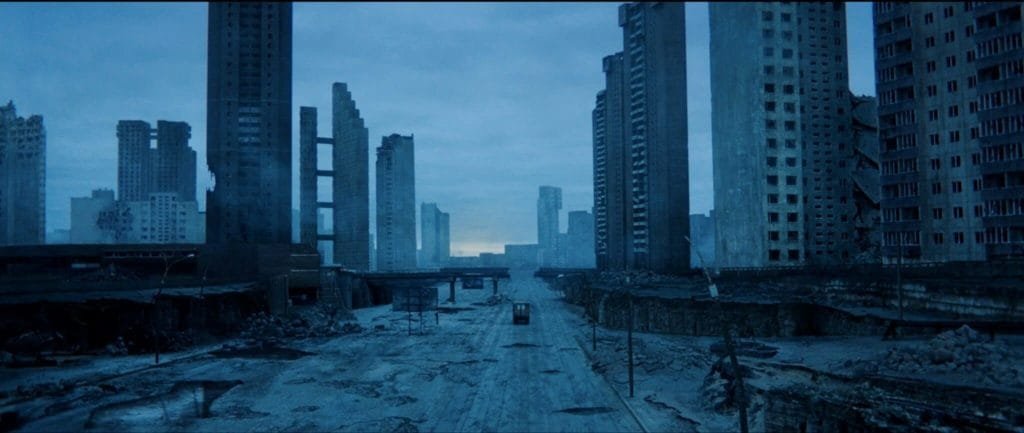
I think I can be forgiven for assuming that Undergods (2020) was another dystopian sci-fi of a certain kind. This isn’t just due to the promo info; its opening scenes feel familiar, with shots of dilapidated buildings, abundant filth and scarce, seemingly feral people; the aesthetic is just what you’d expect from a world post-bomb, -disease or -famine – the likes of which we’ve seen elsewhere on-screen. And the first two characters we meet could quite happily belong to any such world: known only by their initials, K (Johann Myers) and Z (Géza Röhrig) make ends meet by collecting dead bodies from the streets, which they sell on as ‘meat’. It’s a job they seem reasonably happy to be doing and they seem to enjoy each other’s company – hey, gallows humour and all that. As they drive, they begin to exchange stories…and that’s as much of a framing device as you get in Undergods, which turns out to be a stylish, if distended run of fragmentary narratives, some pertaining to what seems to be the same dystopian streets and some belonging elsewhere, though all seem to have the same bleak, often gruelling meanness of spirit in common. In itself, that’s quite an accomplishment.
As K and Z chat, they begin to recount dreams and ideas they’ve had: the first of these takes us to an apartment block where, compared to life for K and Z themselves, seems fairly bearable, at least in terms of basics like food to eat and somewhere to sleep. Maslow’s hierarchy of needs has a few levels on K and Z’s world here. We meet a couple, Ron (Michael Gould) and wife Ruth (Hayley Carmichael) who are disturbed at dinner by an upstairs neighbour who has, it seems, locked himself out. You could be forgiven for thinking Ruth is quite keen to have any other company than her husband, so she suggests they let him in and let him spend the night. One night turns into several; Ron goes backwards and forwards on how to dislodge this stranger from his home (something of a theme in Undergods, if we’re pressed to suggest one) and his decision leads to something which a prospective new neighbour would probably choose not to see. In one of the film’s moments of dipping out of the story, providing us with a new narrator, this new neighbour begins telling a story of his own; it’s clearly no accident that the next story foregrounds a copy of Tales of Hoffman, as the film clearly aims to emulate that author’s fragmentary use of plot markers and resolutions. There are four stories in all, taking in crooked merchants, wronged foreigners, amnesiac spouses, toxic self-help tomes and one of the most excruciating work party scenes since the last one (hey, they’re easy to get right).
This all takes place in a kind of somewhere/anywhere in the continent of Europe, though for all the world looking like the worst of the former Eastern Bloc, at least whenever we get a good look at the skyline. As a matter of fact, the film was shot in Serbia with a very cosmopolitan cast. Against this backdrop, we have a real mixture of European names, some British, some Northern European. Elsewhere, the housing is minimalistic and modern (if belonging to the wealthy) or achingly normal (if belonging to the – at first – achingly normal). This kind of timelessness and rootlessness is a common choice for filmmakers of late. Here though, it works fairly well, and doesn’t feel like it’s closed off a sense of place and time simply for the sake of it. If you like your cinema to look cold, with a palette of greys and blues which would put the New French Extremity movement to shame, then you’ll very much enjoy Undergods: the stark red of the opening title shows a clear understanding of arresting visuals and how to blend elements together, though one of the other common calling cards of today’s indie cinema – a booming electro soundtrack – is far too high in the mix, drowning out speech whenever one overlays the other, which is a minor irritation.
Undergods clearly sets out to cultivate nightmarishness and it does achieve this, cutting in its blaring audio, static shots and quick edits whilst moving in a way which makes many scenes and moments feel like non-sequiturs. It features a very few moments of interaction between its stories, but any sense of a distinct framework is soon dashed, and even in and of themselves, stories lack the expected moments of resolution; some aspects of the film are very engaging, and as an atmospheric venture this is a successful film, but the lack of narrative pay-off does feel unsatisfying – even whilst you accept that the film has made some bold choices by going its own way. If it resembles anything at all then it would be Taxidermia (2006), though again, the latter film has a clearer thread linking its own grim narratives together. Undergods is a couple of stages removed from that, but in terms of the gritty discomfort and oddness it brings, it succeeds. It’s just that its level of detachment from the conventions of tale-telling will not suit every viewer.
Undergods (2020) will be available in theatres and On Demand from May 7th.
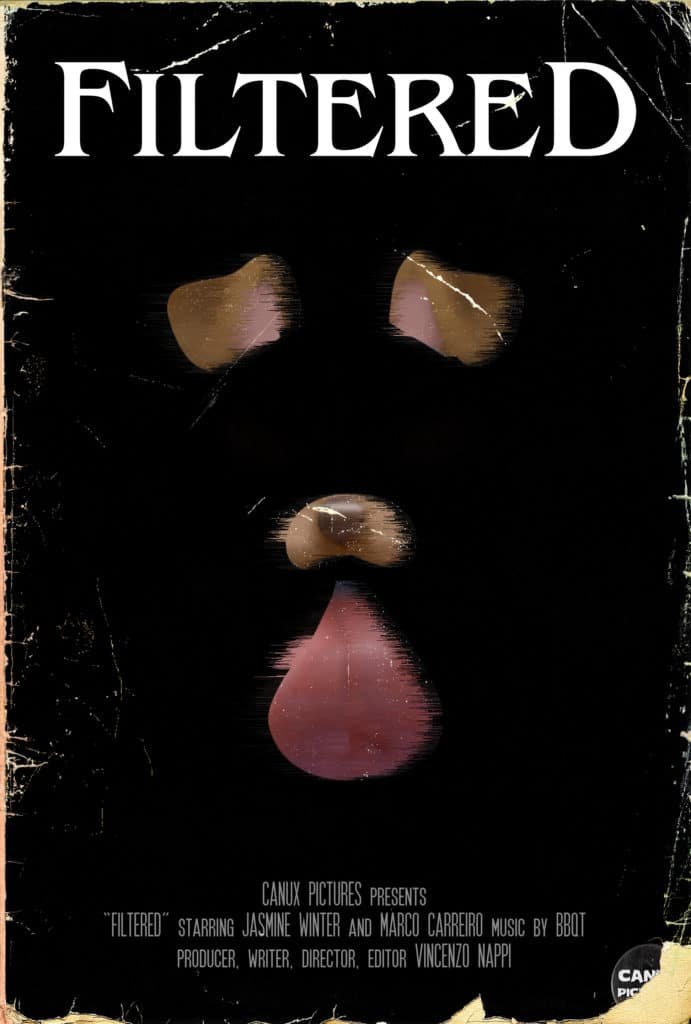
It’s been discussed elsewhere on the site how, via successive lockdowns and the increasing role of social media, the latter has gone from steadily moving into horror cinema to hitting it at some pace. That being said, Filtered (2021) manages something a little different by taking a social media element which is usually trite and harmless, and making it pretty unsettling. The film begins with a real-time log in, which is momentarily alarming in and of itself if you’re sat at a computer; the girl whose desktop you see, Jasmine (the real name of the actress) clearly needs some down time: message threads open on her desktop show us that she’s having a tough time in work, so she opens Messenger and calls a friend for a chat.
Do people really take their phones to the bathroom? Clearly her friend Marco does, so after the usual, recognisable inane and in her words ‘cringe’ catch-up conversation, he starts playing with filters to cheer her up, and possibly to distract her. Fine. Right? Until the filters seem to take on a mind of their own…
It works well to have this come to us via natural, unscripted dialogue and the actors playing under their own names adds a level of plausibility. Filmmaker Vincenzo Nappi, who has worked exclusively in short film so far in his career, now has a knack of making the most of a very limited amount of screen time and here – as with last year’s First Bite – there’s a definite dash of black comedy, too. That being said, Filtered has a solid pay-off and does manage to make its subject matter, momentarily, very creepy. It’s a decent skit on the ‘new normal’ and a film which would make a good companion piece to a feature of similar subject matter; as time goes on, tech horror is turning into a promising subgenre and Filtered manages successfully to show something innocuous gone rogue.
Filtered premiered at the Cabane à Sang film festival on April 24th 2021.
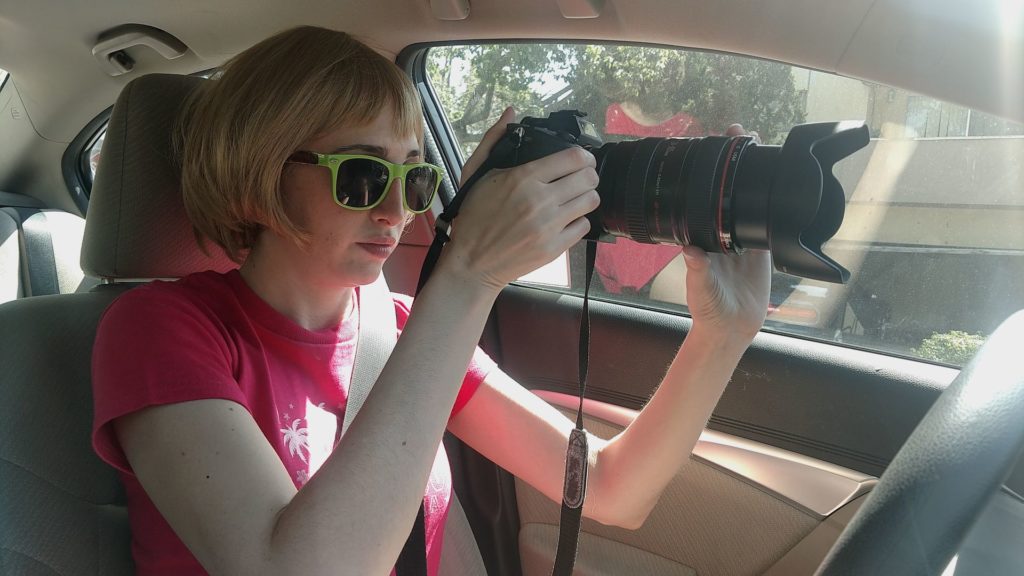
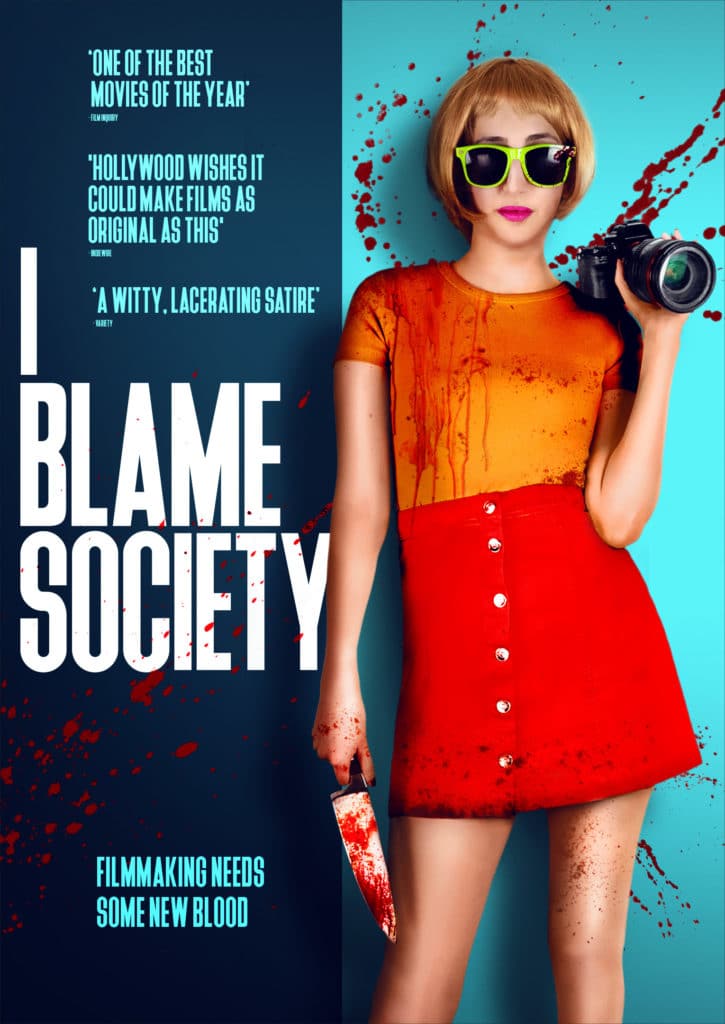
Meet Gillian. Gillian is an aspiring filmmaker, albeit one who could use a content filter; this is clear as she explains to her friend Chase that some mutual friends paid her the unusual compliment of saying she’d ‘make a good murderer’, so she wants to explore the idea by going to his place and elaborating a fantasy of murdering his dreadful girlfriend, using this as the basis of a film project. Few people take kindly to such a notion, so it’s little surprise that Chase’s smile soon fades. Gillian attempts to rescue the situation by digging herself into a deeper hole and…three years pass. Given that this conversation takes place on film, we can only guess at what was said once Gillian finally stopped recording.
Reading between the lines, it seems that the intervening three years have been pretty tough. Being knocked back on a different project by a man who video-calls her with a static shot of his ear, almost as if he can’t even be bothered to match his indifference to the correct conversational medium, Gillian (director and writer Gillian Wallace Horvat) begins to fixate on the old project – the one which saw her falling out with Chase in the first place. She’s now calling it I, Murderer, but boyfriend Keith is soon exasperated with her enthusiasm for what he deems a terrible project which has no future. Gillian defends it; clearly, getting something – anything – completed with her name on the credits is taking on a greater significance, no doubt due to the severe lack of work out there, and with the clock ticking on her career. I, Murderer has to happen, therefore. Perhaps it’s predictable that the project begins to take over Gillian’s life, but with it comes a seismic shift in her personality. Soon, the dividing line between real life and film set begins to blend into one.
I Blame Society is by no means the first film to examine this real life/film project blend, and as such it slots in to a subgenre which counts the likes of Man Bites Dog, Resurrecting ‘The Street Walker’ and perhaps most of all, Strawberry Flavoured Plastic – though its own approach boasts some differences in style, perhaps most notably by centring Gillian throughout, remaining her project, curated only by her. It also uses a fairly acerbic style of comedy which sends itself up more than most films in the subgenre, albeit that this humour is delivered in a range of ways from deadpan to Gillian’s own, it has to be said, rather shrill and affected approach. The film is tonally a little odd in places, and Gillian’s performance is for me the most difficult aspect of the film to warm to, even if the film deserves some credit for presenting a female perspective in a way far from aspirational or uncomplicated. But to be fair, all the characters here are shown in a harsh light, with dialogue which can be funny, but also exasperating, in that it only reveals these people to be worse than they at first seemed. Given the natural emphasis on continually filming, the first half of the film does meander; you do still find yourself pondering why Gillian films absolutely everything, even whilst knowing she is doing so to get as much footage as possible which she could use. The mumblecore elements are patently not for everyone and nor have they ever been; the loose, unfocused build-up in I Blame Society can test one’s patience.
The film’s best elements relate to its treatment of new-school filmmaking practices which are electively all about ‘female perspectives’, ‘intersectionality’ and a number of other buzzwords which are meant to be linked to making filmmaking a more diverse place – represented, as they are here, in the mouths of people who don’t really understand them, and nor have they really shifted their attitudes at all. In this, some of the anger expressed by Gillian (the character) is almost certainly overlapping with Gillian (the director), and it’s the film at its most honest. Current progressive social mores haven’t swept away old favourites like nepotism and general cluelessness; the meetings with the producers not only underline that, but they make for excruciating (if very funny) viewing.
Offering stark comment in some respects and more subtle commentary in others, I Blame Society is a curious tale: a patchwork of dubious characters and motivations, it takes a while to get going, and it isn’t without its challenges along the way. But, as things escalate, it does drive towards a pretty grim finale.
Blue Finch Film released I Blame Society on Digital Download 19th April.
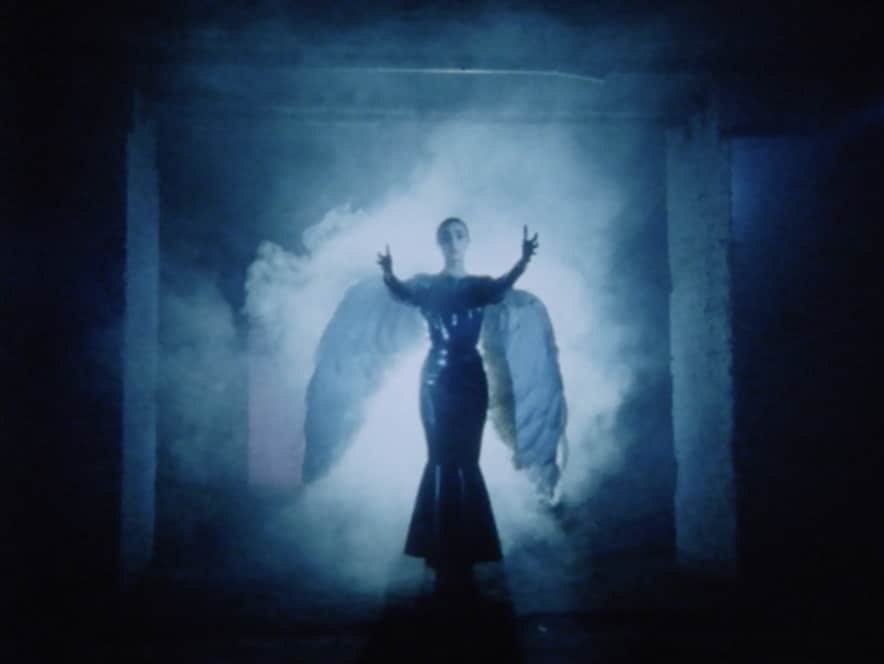
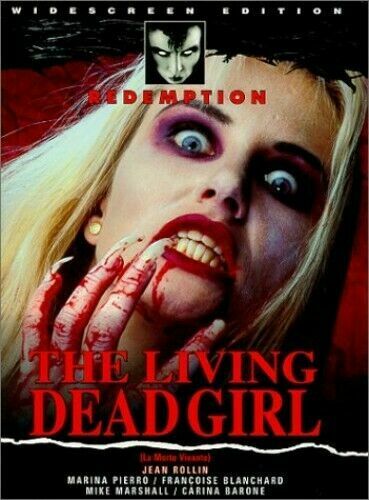
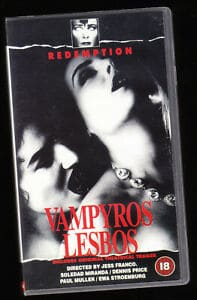
It’s not an exaggeration to say that the Redemption label opened many doors for me – and I’m sure that is the case for many other film fans, too. Were it not for mainstream retailers taking a punt on a certain very visually-arresting array of…well, VHS cassettes, if you go back a bit, then would many of us have discovered the likes of Fascination and The Living Dead Girl? The man behind the label, Nigel Wingrove, is still going strong and rather than accept defeat at the hands of the slow decay of the high street, has diversified, now offering a select streaming service which offers a diverse and growing list of films. And there is much more to come…
Nigel was kind enough to take some time to speak to Warped Perspective about his career to date, his newest ventures and his future plans. Also watch this space for some important news to follow regarding RedemptionTV. In the meantime, over to Nigel…
WP: So the first thing I’d like to ask is – how are you doing in Lockdown number 3? What sort of impact is it having on you? Obviously, this hasn’t been the year anyone could have wished for…
NW: I moved out of London at the end of 2014 and that immediately made my life more insular, although for the next two or three years I travelled back to London so often I might as well have not moved out. However, the isolation and space I found in the countryside enabled me to start working on my art, something that I’ve wanted to do all of my adult life, and was in fact part of my motivation for starting Redemption in the first place. I had naively thought that if I could make it a success financially then that would allow me the freedom to do my art, whereas in reality Redemption took up all of my time; and while my commercial ‘art’ has come to define Redemption as a brand, my personal ‘art’ has pretty much stayed locked up in my head.
So when the lockdown started I was very much ‘locked down’ anyway, I had pretty much stopped coming up to London and was essentially dividing my time between running Redemption and working on two art collections and a book. So if anything, lockdown made little or no difference to me on a personal level. On a business level, however, its initial impact was negative and damaging as the closure of HMV meant a substantial drop to our sales income, but positively, it spawned RedemptionTV.net and soon, PurgatoryTV.net.
WP: Let’s talk about some of the ongoing projects which come under the Salvation Films umbrella: for those readers who might not be fully aware, could you explain the different subdivisions on the roster – how does a Sacrament title compare to a Redemption one, for instance?
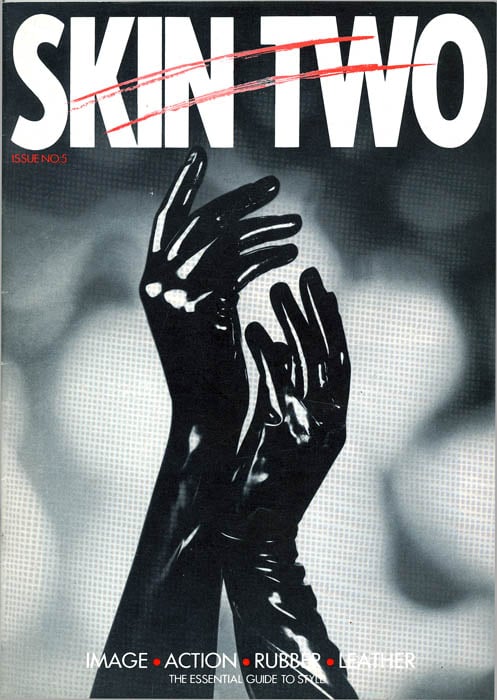
NW: The Redemption label was conceived after my short film Visions of Ecstasy was formally banned in 1990. I had, up until then, made a living designing and redesigning magazines (Skin Two, Nursing Times, Actual) and creating dark erotic images which a girlfriend suggested I should film. That spawned Axel (an 8-minute short with a soundtrack by Danielle Dax) and Visions, both of which I had, or planned to, self-release on VHS as a way of getting my budget back. The ban on Visions had scuppered that and put me at something of crossroads in my life. I could either continue working in magazines and essentially settle down or I could fight the ban on Visions and let fate decide the rest.
Fate actually decided things very quickly by sending the UK economy into a major recession, which meant that publishers cut back on new titles and cut back on redesigns etc. So I was kind of pushed out of magazines and although I continued freelancing and doing general design work, I knew that I had to do something else if I wanted to do more than just survive.
I actually have no idea what made me start a film label, but at some stage in 1990 or 1991, I decided that if I couldn’t release my own films then I could at least release films that I liked and that was it, really. I had no idea how one licensed films, no idea how they were distributed, what the process was or anything? I knew nothing!
To cut a long story short I managed to get £10K together, and asked the British Film Institute how I would license a film, and they helped me to get my first five titles; Mario Bava’s Mask of Satan and Lisa and the Devil, ‘Tis Pity She’s a Whore with Charlotte Rampling, Killer Nun, an old, video nasty, and what was, and still is, one of my all-time favourite films, the Naziploitation sleaze epic, Salon Kitty which I’d seen when I was at art school and never forgotten.
As for creating a label, that, like everything else was an organic decision, as whilst I knew next to nothing about distribution I did know about design and the power of the visual image. I also collected things and having walked around the, then huge, video sections in HMV, Virgin and Tower Records saw that aside from the anime label Manga which had its own section, that films were essentially listed alphabetically or occasionally by genre. There was nothing like Penguin Books’ distinctive green or orange spines or anything to really distinguish one label from another.
So, given that I had no money for advertising, and in 1992 no internet as such, I fell back on what I knew: magazines and more specifically, fanzines. I had produced two zines, one called Stains devoted to punk when I was at art school, and the other, a more professional looking publication called Homage in the early eighties, which was centred around the then-emerging New Romantic scene. I had seen that there were literally dozens of self-produced horror zines available in stores like Forbidden Planet, and decided that I should produce one to tie in with my label.
So in the summer of 1992, I created The Redeemer and decided on a name for my video label: Redemption. With the Redeemer I decided to combine most of what I loved; horror, sex, exploitation and fashion, plus anything else that seemed to fit in. For Redemption, I wanted a look that was completely different to any other labels and used a mock-up I’d created for a new French magazine called Gloria. My design hadn’t been used in the end so I utilised elements of it for Redemption, namely a uniform black, red and white type style combined with specially created black and white cover photographs. I decided on shooting my own covers once I’d seen how poor the stills were that the licensors supplied, and knew that if I relied on them that my videos would look no different from any of the others on the shelves.
I was lucky in that the distinctive sleeves worked as a range and HMV and Virgin (the two main retailers) racked those first five releases together creating mini Redemption sections on the shelves. After about six months I’d been able to license films by Jess Franco and Jean Rollin and the head buyer at HMV decided to take a chance with Redemption and asked me to create dedicated Redemption header boards for their stores, posters and so on and they launched a campaign giving Redemption big displays in their main stores. Looking back, it was fantastic!
In 1994 I launched a sister label to Redemption called Jezebel, which specialised in sexploitation films, many of which had been made by directors like Rollin and Franco who were also represented on the Redemption label. Jezebel was at least as successful as the Redemption label and retailers displayed the two labels together to create even bigger sections within their main stores.
I followed with two more labels: Purgatory in 1996, which was devoted to strong adult erotica, essentially picking up where the Jezebel label left off, and Sacrament, which champions Japanese Pink Cinema, which followed in 2004. The only other label I have currently is the Satanic Sluts which kind of happened, like so many of my projects, organically. Basically, after the brouhaha surrounding the BBC/Jonathan Ross/Russell Brand/Andrew Sachs and the Satanic Sluts died down it became difficult to control events in real life (I used to run a monthly nightclub called Black Mass centred around the Satanic Sluts which was sanctioned by the Church of Satan) and I decided to make films with key girls from the group instead. We’ve made six films so far, so it’s a mini-label, but a label nevertheless.
WP: One burning question I have, given the range of titles you currently carry, is – where on earth do you source them? Many of these titles seem to originate in a hidden world! Even your more contemporary horror titles are often wonderfully unknown quantities.
NW: In terms of the films we release, It varies: when I first started Redemption no one wanted these type of films; there were no other labels after the same films and even the producers who owned them seemed uninterested in them, so for me, I was limited by money, not the availability of content. Now it’s very different as there are lots of labels and companies, many with much deeper pockets all after an ever-decreasing number of films, so I’ve sort of allowed our content to evolve, as always with me, organically.
Much as I love the films of the sixties and seventies it was forty to fifty years ago and I don’t want Redemption to be like all the other companies essentially restoring and releasing the same films again and again. Exploitation cinema has an energy about it, and when a lot of the directors and producers were making these films they were either cashing in on the popularity of a particular genre which had become fashionable through a successful mainstream film, or they were exploiting sex and violence to make a quick buck. Films were made quickly and cheaply, some were crap, some were OK and some were brilliant and it’s the same now.
There are a lot of young and new filmmakers working at the moment and as before some are bad, some are good and some are brilliant and while physical media made it financially too risky to take chances with unknown films and directors, streaming is perfect because the costs are relatively low. RedemptionTV has enabled us to screen new films every week and that in turn makes it easier to pick successfully streamed titles and release them on physical media later on. And because RedemptionTV streams worldwide, we’re getting sent new material from all over the world and some of these films are really, really good.
WP: You are currently running a streaming service – Redemption TV – where the films we’ve just been discussing can now be viewed online. Tell us a little more about this project and how it’s going: how do you think it stacks up against the likes of Shudder, and Arrow, who have just launched their own TV service?
NW: RedemptionTV.net came about because of the lockdown, as simple as that. In March HMV and other retailers closed and our income dropped and I knew that if I just sat in lockdown waiting for the shops to open that we could go under: having kept Redemption going for nearly thirty years, I was damned if I was to be put out of business by some stupid bug! RedemptionTV was formed in April 2020 and was live and online by May.
We launched with about 50 films and now have 150 or so titles available with more added every week. We made Saturday our new film day and have consistently added two new titles every Saturday since we began, something I’m very proud of, especially as we’re a team of three and have to cover websites, social media and physical releases, both in the UK and US, as well.
I knew that RedemptionTV.net would take time, as you have to get people to go to a specific website and then when they’re there get them to pay money to stream a movie and that’s difficult. That said, our monthly streams are slowly building up and as we add even more titles we plan to move to subscriptions over individual PPV, and also get a presence on Prime / Roku etc . I’m also keen to start producing our own product and expanding our culture section to cover alternative art, fashion, music and, possibly, more radical areas… While the original Satanic Sluts have moved on, we now get contacted by a new generation of girls that have grown up online and who have very different ideas as to how they want to be presented, what they want to do and be called. They’re actually pretty radical and creatively dangerous, so expect fireworks – We just have to wait for the right moment to light the fuse…
WP: What are your own personal favourites on the Salvation imprint at present?
My personal fave genre films are Tinto Brass’s Salon Kitty and Caligula, The Other Hell by Bruno Mattei, Immoral Tales and Behind Convent Walls by Borowczyk, and the exploitation masterpiece Deported Women of the SS Special Section, which was directed by Rino Di Silvestro, who, alongside Bruno Mattei, is a true Michelangelo of sleaze. I also love Gialli films. Sadly though, I don’t currently represent any of these cultural gems. However, we do represent some great titles at the moment, including Violent Delights which I just really like. It’s Mexican, is a bit confusing in places, but looks great and has a lot of blood and sex, so works for me.
Other personal likes, aside from Jean Rollin of course, are Renato Polselli’s Black Magic Rites and Luigi Batzella’s Nude for Satan, two of the most fabulously insane films ever made that I’m so proud to own. I also really like Grant McPhee’s Far from the Apple Tree which for some reason made me think of the TV adaptation of The Owl Service when I first saw it.
The other big genres for me now are Japanese pink cinema and strong erotica and both genres include some great titles, including S&M Hunter, which is kind of appalling but so ridiculous it’s OK, Whore Angels, Whore Hospital and Sexy Battle Girls which are all sexy and very funny. My current faves are The Succulent Succubus, Milk the Maid, which everyone assumes is pervy lactation porn, whereas in reality its a sexy comedy about a maid called Milk, and Naked Desire, which centres on a young nun whose chaste world is turned upside down by the arrival of a number of sexually deranged guests.
Finally, we recently signed a new director, Cosmotropia de Xam, whose work I really like. His films are pretty experimental in style and he began as a musical collective centred around Mater Suspiria Vision (his band) in 2009. They essentially pioneered and championed a style of music known as Witch House, which is described by Wikipedia as a ‘dark, occult-themed electronic music microgenre and visual aesthetic’ influenced by the occult, witchcraft, horror movies and, apparently, the visual style of Redemption. Bands associated with it include Crystal Castles, Holy Other and White Ring.
It’s a very visually-led genre and a lot of the visuals produced to accompany the music mix newly-created images with images lifted from horror films and occult books. This is, I understand, how Cosmotropia made the transition from music to film, by making long pop videos that transitioned into videos from which a narrative emerged, and from there, into feature-length films. As I said, his work is very experimental in style and will not be to everyone’s taste, but I genuinely like them and I love the way that they have evolved creatively. He has a team or collective around him and produces and releases his films directly to his fan base. Redemption will be the first company to release them to a wider, more mainstream audience and I’m very excited about it. The first releases on both RedemptionTV.net and physical media on the Redemption label include Acid Babylon, Phantasmagoria, Diabolique and Black Mass of the Brain.
WP: Following on from that question: what do you make of the horror and exploitation cinema we’ve seen in recent years? How much does the film scene continue to engage and interest you?
NW: I’m not really part of it. I don’t say that to mean that I’m in some state of splendid isolation but rather when I started Redemption I kind of clashed with a clique that sees itself as representing horror to the outside world and I knew that Redemption couldn’t or shouldn’t be part of it. So Redemption operates on the periphery of both the horror world and the film world. Sometimes, like the Ross/Brand/Sachs scandal or my earlier blasphemy ban, I or Redemption crosses into the mainstream, but then when things calm down Redemption moves back into the shadows.
That said, Redemption has fans and we also attract interesting and innovative people and when we do, things seem to happen of their own volition: I feel that is beginning to happen at the moment. In terms of the wider horror market, I’m not sure? It’s become quite corporate and formulaic like much of music has, but like music, horror attracts mavericks and rule breakers and I think that’s its saving grace. There are certainly a number of fantastic and innovative horror titles coming through on RedemptionTV – a high percentage of our new additions are very recent features and there are clearly some directors to keep an eye on in the mix.
WP: I always associate the Redemption label with two directors in particular: the late Jess Franco, and of course Jean Rollin. In fact, my first acquaintance with both of these directors came via your label, something for which I’ll always be grateful. If you would, it would be great to know how you came to know and eventually release so many of these long-lost, or certainly underappreciated gems. Particularly in the case of Jean Rollin: am I right in saying that you own the rights to his films?
NW: When I started Redemption, or actually before I’d even acquired or released a film I immersed myself in the genre, buying up not just fanzines but writing to and meeting up with the people who wrote and produced them. I read horror film books and pored over the Aurum Horror Encyclopedia and my own collections of Film Review annuals (I have every one from 1968 to 1984) and runs of Cinema X and Films and Filming and two directors emerged, again and again: Jean Rollin and Jess Franco.
However, when I tried to watch their films I found that they weren’t available, indeed in Rollin’s case, hardly anyone had ever seen his films as, aside from some really obscure video releases in France, they had never had a commercial release. Franco was similar with core fans trading and swapping poor quality bootleg tapes. What was driving the interest were the incredible images from their films: stills from Rollin’s films, in particular, had been reproduced in books like David Pirie’s The Vampire Cinema, an essential purchase at the time, and in the Aurum Encyclopedia etc and I decided that I had to make the unseen available and set about tracking them down.
When I first met Rollin, for some reason I had assumed, given his films that he would be dressed, if not in black, then be alternative in style but he was pretty straight and conventional and lived in a very modest apartment in one of the poorer arrondissements on the outskirts of Paris. I lived and worked in Paris for two years in the eighties so knew it pretty well, and Rollin struck me as someone who lived for his work and lived for it on his own terms. That also meant that by the time Redemption came along that he was struggling financially and lost to obscurity. He had fans of course, but to my thinking, they were a double-edged sword with some commenting that if people saw Rollin’s work that they wouldn’t understand it and might laugh or mock it. In a way, they wanted to keep Rollin in a sort of private ghetto for their personal delectation. Redemption changed that.
We licensed all of Rollin’s core films and the first one we released was Requiem for a Vampire and it sold really, really well; we followed with Shiver of the Vampire and The Nude Vampire and never looked back. The decision to buy and acquire the ownership of Rollin’s films came about because of piracy. Basically, as Redemption grew so did our problems. Essentially we were pioneers as no one had done this before; we had to establish the groundwork and one of our main problems was getting producers to treat these films with even a modicum of respect. Getting them to deliver good quality masters of the full, uncut version of a film in its correct ratio was a nightmare and expensive. So when we found out that people in the US were literally using our VHS tapes as masters to release the films in the states I decided that the only way to stop it was to launch Redemption in the US.
Again, at this time, 1997, only the majors launched in the US, certainly not small indie labels. We had to get a distribution deal and an advance big enough to acquire US rights. We did both and used some of the advance to buy Rollin’s films outright and so have been able to release and promote them ever since. I wish though that Jean had lived longer, as there is so much more that he could have done and I know, as well, that he would have been delighted with the increasing attention and recognition his work is getting.
Jess Franco was a different animal and problematic for very different reasons. My first Franco title was Succubus which was our seventh release, so a very early Redemption film and it was passed uncut by the BBFC, unlike many of our later Franco submissions, which were either cut or banned outright.
I only met him once and he said “Thank God for Redemption”, not because he thought we were great but, as with Rollin, he saw interest in his films skyrocket once we released them, or in many cases, tried to release them. He also smoked more cigarettes in the two hours or so we were together than I thought was humanly possible. At one stage in my life, I smoked between 20 and 60 a day depending on how hyped up I was, so I reckon he was on at least five packs a day! Phew.
The BBFC banned outright Sadomania and Demoniac (aka The Sadist of Notre Dame) and battled us on Female Vampire, and The Awful Dr Orloff, which was incredible given it was made in 1964. The Solicitor General even described scenes from Sadomania as part of their prosecution case against me at the Court of Human Rights in Strasbourg during my blasphemy trial. They hated Franco almost as much as they hated me!
It was though Vampyros Lesbos, not me or the BBFC, that ultimately transformed Franco from an obscure exploitation director to a trendy cult hero. However, it wasn’t the film, great as it is, but the soundtrack, Vampyros Lesbos: Sexadelic Dance Party by Crippled Dick Hot Wax which was released in 1995 to coincide with our release that just took off. It was amazing. After that, everyone wanted a bit of the Franco cake, but having made some 200 films there were plenty of slices to go around so everyone was happy, and Franco most of all.
WP: And finally – of course bearing in mind the given situation, as we roll on through this uncertain year – do you have any projects or schemes which you are hoping to work on? And anything else at all which you’d like to add: please feel free!
NW: Yes. RedemptionTV.net of course, and then PurgatoryTV.net and separately I have, amazingly, been asked to write and direct a follow-up to my nunsploitation epic, Sacred Flesh. I have to write it and everything but for once the funds are available for when I’m ready so I think realistically it’ll happen in late 2021 or early next year, which is exciting.
On the personal side, I am aiming to have completed all my ‘Believe Absolutely‘ exhibition artworks by the end of the year. There will be between 22 and 30 pieces when it’s all finished so that will be a big moment for me 🙂
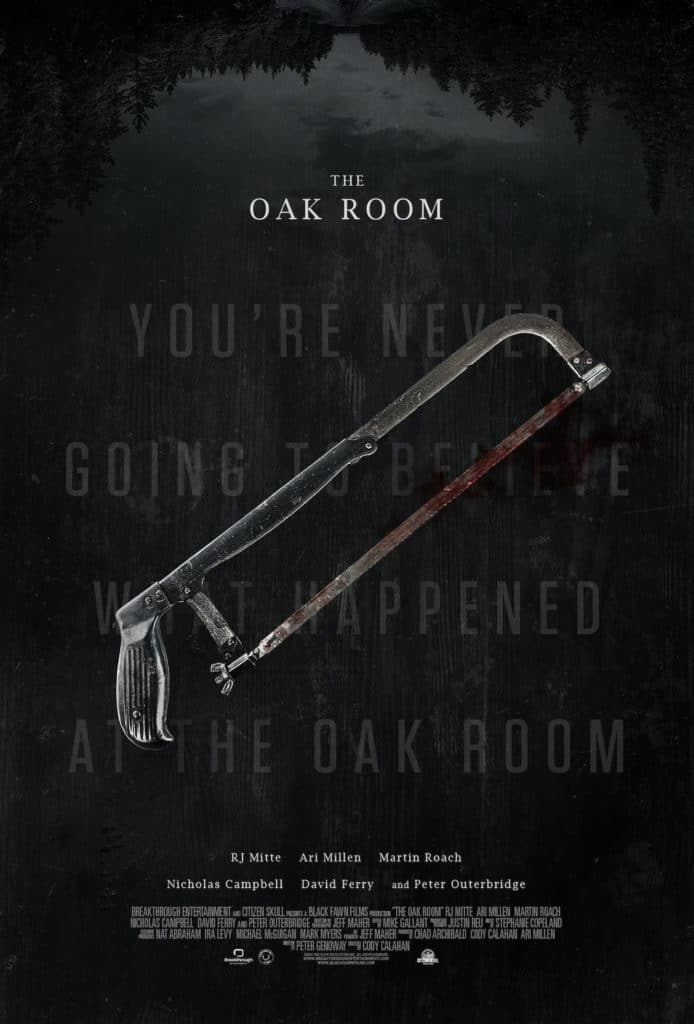
A bar – it could be any bar, albeit it seems to be in a particularly bleak, remote place. It’s snowing outside. A beer bottle, not quite drained, occupies the foreground; unseen but audible, it seems a violent attack is taking place in the background. This first few minutes of coverage sums up a great deal about The Oak Room by showcasing its selected setting, its promise of violence and its resistance to neat, wrapped-up endings: it’s significant that this beer isn’t completely finished but we can still fill in the blanks as to what may be happening here, because we are hardwired to fill in those blanks.
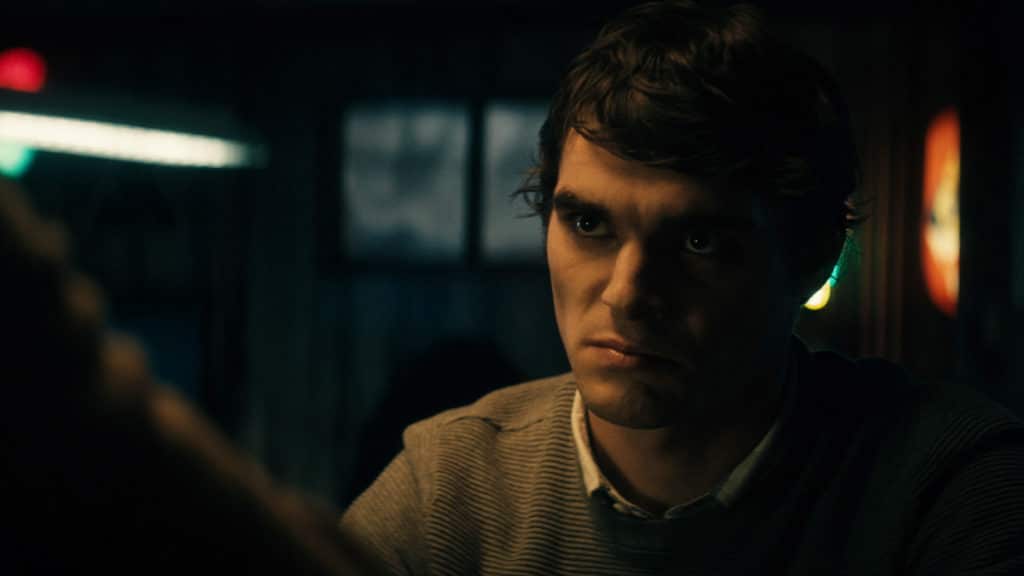
We remain in a bar – the same bar? A different bar? You have to wait to find out, but it’s closing time, and bartender Paul (Peter Outerbridge) is just about ready to lock up for the night when a figure appears, out of the snow, and won’t take no for an answer when he’s told to go. Turns out it’s a local guy, Steve (Breaking Bad’s RJ Mitte) – well, he was local, but he moved away to college and never came back, not even for his father’s funeral. Paul, a lifelong friend of his dad, makes it quite clear that however unwelcome he was to begin with, it’s now doubly so. To compound this, it seems that Steve owes a lot of people, and as he’s here, he needs to clear the debt. Instead of simply paying up, Steve makes an offer: how about he tells a story? It takes place in a different town and a different bar, called The Oak Room, but he assures Paul that he’ll want to hear it. And so we begin: narrative frames narrative frames narrative, with humour, pathos and violence as common threads which hold these stories together.
Handling its selected structure very well and taking no easy linear routes, The Oak Room is, in its own way, an ode to the power of storytelling. Not only does Steve join the ranks of hundreds of literary figures who tried to tell a good tale as a means of getting out of a tough situation, but the film offers up something of a debate about stories themselves; I guess you could call that ‘meta’, if you liked, but in the film characters squabble about the rights and wrongs of how to tell a good yarn, what to emphasise, what to omit, how to get through the beginning, middle and end, and so on. It’s nice, too, that bars and barkeepers figure so highly. At the time of writing, bar-hopping as we know it feels like a distant memory: there’s a particular kind of storytelling in that environment – in which basic truths figure, but not as a priority – which deserves this kind of engaging, knowing tribute. As to what the stories reveal, it has an interesting effect; by drawing away from the first two characters we meet, it adds layer upon layer of circumstances which may, or may not be relevant to that initial situation. But because the stories are told so well, and mesh together so well, it winds up being a particularly rich way of developing the film’s plot – one which is closely geared towards people’s natural tendency to follow stories, and remember them. The film is based on a play and it does retain that feeling of an intimate stage setting, one which depends on guiding the audience.
I would say that the initial acting between the two leads took a little time to get used to; Paul seems rather overblown compared to Steve at first, drifting close to an 80s ‘action guy’ vibe with the sardonic, humorous dialogue to match. But either this was dialled back a little as the film progressed, or I stopped noticing it so much. In any case, it is entertaining, and the other characters who come along seem to reflect that same mismatch in turn, so it feels balanced. And the film feels variously like a game of cat and mouse and then a battle of wills, whoever is on screen: it’s no mean feat to hold the interest so well, given there are never more than two people on screen at one time (with a couple of minutes’ exception). The script jogs along, doing what it does economically enough but making you suspect each character’s motives in turn and the cast is excellent, though you could argue that RJ Mitte and Ari Millen are particularly good – and well-matched, too, despite the fact that they actually (spoiler) share no screen time. I’ve only recently become acquainted with Millen via his star turn in Vicious Fun and I have to say – he’s a force of nature, and definitely an actor to watch. Likewise, director Cody Calahan, also of Vicious Fun: to make and release two films of this calibre inside a year is quite a feat.
Woven into these unfolding tales are some big-hitting topics, as we touch upon generational conflict; past vs present; poverty; the repercussions of cruelty and human failure. I found the whole thing incredibly engrossing and appealing. Something else to note, and again, apologies for the minor spoiler: there are no women in this film. And that’s fine! Not every story, not every conversation has to contain women. The Oak Room does more than enough in grappling with bigger concerns which transcend this as an issue. This is a careful, cleverly-done film which balances the humane with the inhumane: it’s impressive and as charming as it is unsettling.
The Oak Room will available on digital download from 26th April.
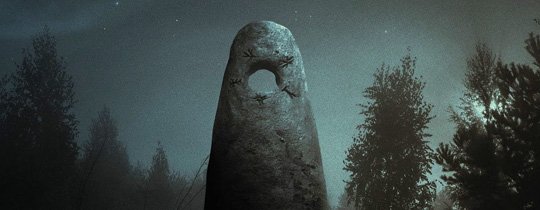
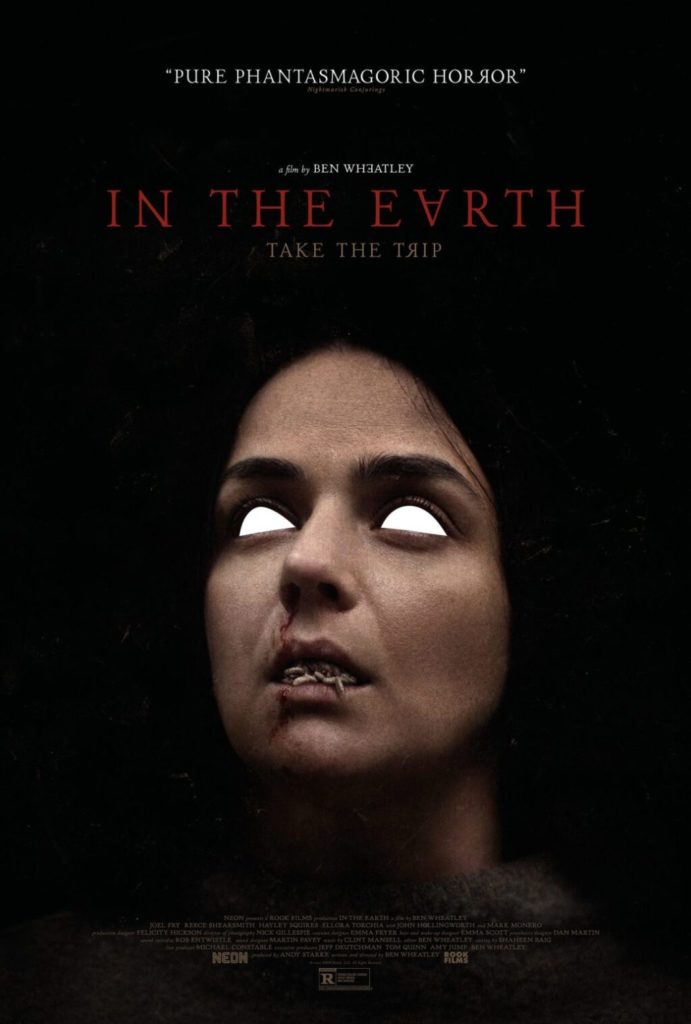
I go backwards and forwards on director Ben Wheatley’s work to date, but I can never resist the promise of one of his passions – folk horror: in that respect, the opening scenes of In The Earth certainly don’t disappoint, foregrounding the promise of ancient practices and beliefs – and things going wrong, at a wild guess – almost immediately. Beneath a looming monolith, an unseen hand makes and plants a shard of flint, covering it tenderly with grass. It’s not clear when this offering is taking place, but the next scene brings us up to date with something which looks rather achingly familiar at this point: Britain, during a pandemic and lockdown situation. Martin Lowery (Joel Fry) is arriving at a research facility, having himself had to undergo a lengthy isolation due to the illness. Whilst the pandemic itself doesn’t figure particularly in the film from this point onwards, it does provide us with an initial hit of an awful, recognisable now-normality, with a facility doing its best to stay open and functioning during extenuating circumstances. This makes what is now familiar look as ghastly as it is; nothing in the film is in a relaxed state, even before things really get going.
Martin is here to liaise with a former colleague, Dr Olivia Wendel (Hayley Squires), with whom he had been regularly corresponding. However, her current project has seen her isolating at a camp which is a long hike away from the lodge; to reach her, he needs the assistance of an experienced ranger, Alma (Ellora Torchia). After a brief stay, during which he discovers something of the local folklore about the ‘unusually fertile’ woodland, they proceed. They are both surprised to find another, abandoned camp way out there; there’s no sign of life, but clearly someone with children has stayed there recently, as there are toys left in the tent. A little perturbed, Martin and Alma move on and set up their own camp for that night.
Things from here begin to escalate; that evening, as they sleep, Martin and Alma are brutally attacked and robbed, leaving them both unconscious; Martin’s shoes are taken, a small and perplexing enough thing which – in this situation – is absolutely crippling, especially when he tears his foot on a rock, and all they can do is proceed, slowly and painfully, to Dr Wendel’s camp. But it seems that someone is watching them (in the first genuinely creepy scene, to balance against the film’s moments of intense physical, grisly nastiness). They meet a man by the name of Zach (Reece Shearsmith) who says that he, too, has been recently attacked; he offers the pair help, inviting them back to his camp. Is he as benevolent as he seems? Martin and Alma’s experience moves rapidly from bizarre to threatening, and in trying to unpick their situation, they necessarily need to understand the goals which unite both Zach and Dr Wendel.
At about the midpoint of In The Earth, it seemed uncertain which direction the plot was going to take – ordeal horror, or occult horror. Come to think of it, ‘ordeal occult’ isn’t a bad label to attach to this film; it definitely balances its unflinching physical horror against something far more esoteric. But things move in a series of unexpected directions from around an hour in, escalating, taking the tropes of sylvan horror and adding a tangle of intriguing lore. One of the film’s most ambitious aspects in how it treats religious/artistic veneration, the kinds of worship and ritual which have long been with us, considering this alongside a kind of quasi-science approach, with advocates for each. It’s in the final twenty minutes or so when the film tries to at least partly clarify all of this which seemed thinnest to me, but it does come accompanied by some very heady, eerie sequences, and it has sense enough to retain a good share of ambiguousness, rather than just scientifically find itself a series of answers. It would depart all too far from folk horror if it did.
All of the actors here do very well, enacting their rising confusion and panic successfully, though most praise must go to Shearsmith, doing an impressive turn here as a kind of affable maniac. But then, there’s method in his madness – or, at least something more cogent than Martin and Alma have, at the point when they first meet. Shearsmith also furnishes the film with a few moments of peculiarly black humour, interludes almost, which are quite discomfiting in their own right given everything else going on. I know it’s a long time since The League of Gentlemen did things on screen which they’d almost certainly not be able to do now, but it does seem that his abilities to meld threat with uncomfortable laughter were honed there. Zach also holds the entire plot together, giving some moments of exposition as well as sustaining the film’s creepier scenes, appearing whenever either of those things are needed.
Most of all with In The Earth, I liked the way it effectively establishes its weird microcosm in the woods, then aims to do so much with it: memories, ritual, worship and the notion of fate come together with bizarre, but intriguing attempts to overlay modern preoccupations like research, data and theory. Ideas begin to topple into one another at the end, but even at its busiest and gaudiest, it remains eerie and intoxicating. Clint Mansell’s overbearingly odd soundtrack and artist Richard Wells’ accompanying artworks all add to the spell.
In The Earth (2021) will be in theatres (US) on April 16th 2021.
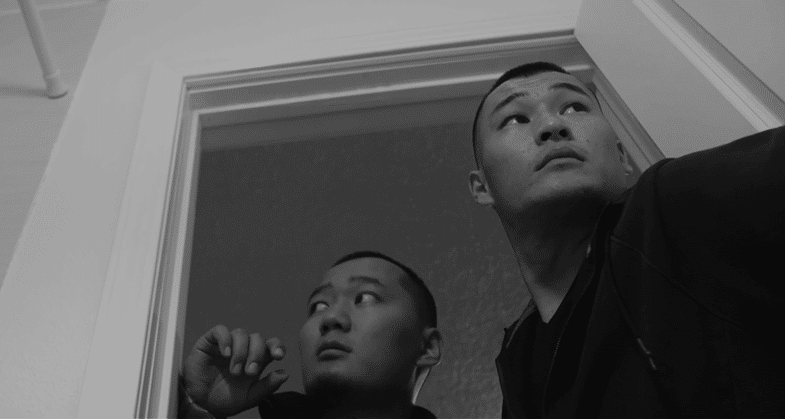
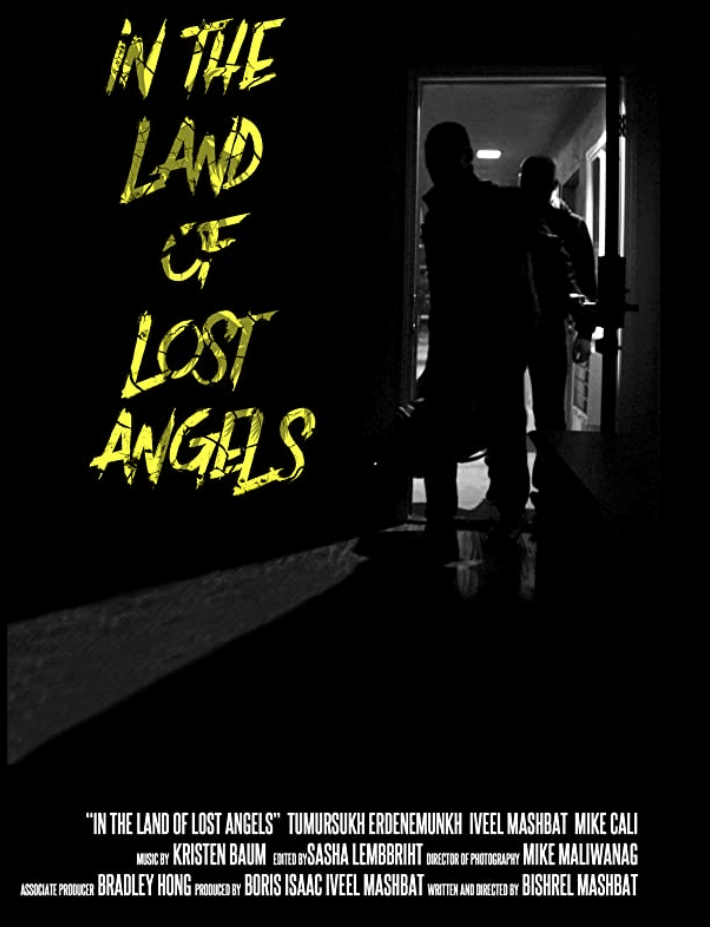
My knowledge of Mongolian cinema, or even Mongolian language cinema is slim to none, so I was interested by the premise of In The Land of Lost Angels, a crime drama which follows the story of two ethnic Mongolians, one an ex-pat, who hit on a way to make some easy money. So begins a vast number of crime dramas, right? There are a lot of familiar elements here, as well as good and not so good development points, though overall it’s an engaging watch, above all else for the ambitious way in which director and writer Bishrel Mashbat splices several genre elements together, usually very successfully.
We start with ex-pat Ankhaa (Erdenemunkh Tumursukh) phoning home, where it seems things are not going so well, with a seriously ill younger brother and parents who fear they will have to sell their house. Don’t worry about that now, Ankhaa reassures his father: I have a great job here in America, and I’ll be able to cover your debts. Uh-oh. As elsewhere in the West, immigrant populations don’t tend to get top pick of the lucrative jobs; and, in its first little bit of circularity, the film has already shown us Ankhaa with another guy, Orgil (Iveel Mashbat) both driving along voicing their fear that there are police around. Let’s just assume that Ankhaa has told his dad a lie, but that his motives are sound. Before long, we see these two clearly preparing for some sort of criminal activity, with Orgil perhaps the more prepared of the two, but they each seem very nervous. These nerves will not serve them well later.
Finally, we see what their big plan is: at some point in the recent past, they have hit upon the idea of a kidnapping, selecting the son of a wealthy man as their target. They’ve got a plan, and they get their guy, taking him to an apartment they’ve booked ahead of time. Things lag a little here as the two men wait around, hoping that Mr. Sanders makes the right decision, and agrees to their ransom demands, However, this section of the film does allow for some ‘comedy of errors’ stuff, which works in its own right, though it again shows the audience that these guys are perhaps not as prepared as they really should be. I did laugh at the exchange: “How is he?” “He’s made some noises a tied-up person would make.” But, by and by, this situation has to come to a head.
So as we’ve already said, the essence of the story here is very familiar: two guys, against the world, committing a heinous crime to get ahead but almost invariably messing up along the way. But there are lots of blends of styles here, impressive in a first feature. It’s shot in glossy black and white with lots of shadow and silhouette, whilst the driving scenes – of which there are a few – look almost noir-ish in places, the long, dark city highways looking quite timeless on screen, despite the presence of 24-hour garages and such. But then on top of that, the film opts for an informal style of dialogue which sounds partly improvised, and includes a lot of kitchen sink style realism, with lingering shots on everyday activities like staring at the TV, ambling through a forecourt, and so on. The camera appears to be handheld. There’s also the ubiquitous on-screen chapters, which I’ve said elsewhere I’m not keen on, but it just goes to show that Mashbat has thrown everything at this film, and taken pains to vary the approaches taken throughout.
The performances themselves are solid, though fairly unemotional – which may be a cultural thing to an extent; on the subject of which, although there are some references to Mongolian culture (and Mongolian is spoken for the biggest share of the film), these are usually fairly oblique. A few comments on ‘white culture’ vs. Mongolian culture, and the fact that it seems ex-pats often need to rely on other ex-pats when in trouble, but in a broader sense, Ankhaa’s and Orgil’s woes could happen to anyone. You do find yourself caring for these two, as flawed as they are; I guess that’s a testament to how they’re both written and acted. That all being said, the film decided to take an equally oblique turn in terms of how this story was all wrapped up, heading in a different direction than expected and fading away, rather than burning out. I was left with a feeling that I would have liked a more firm resolution. Other viewers may feel differently, but the style of the pay-off wasn’t for me.
Regardless of a few issues, In The Land of the Angels has much to offer and it’s a testament to Bishrel Mashbat’s aspirations that he was able to do so much with what I’m guessing was a vanishingly small budget. Fans of crime dramas, particularly crime dramas which opt out of the expected route through, will find a lot to like here and should check this film out.
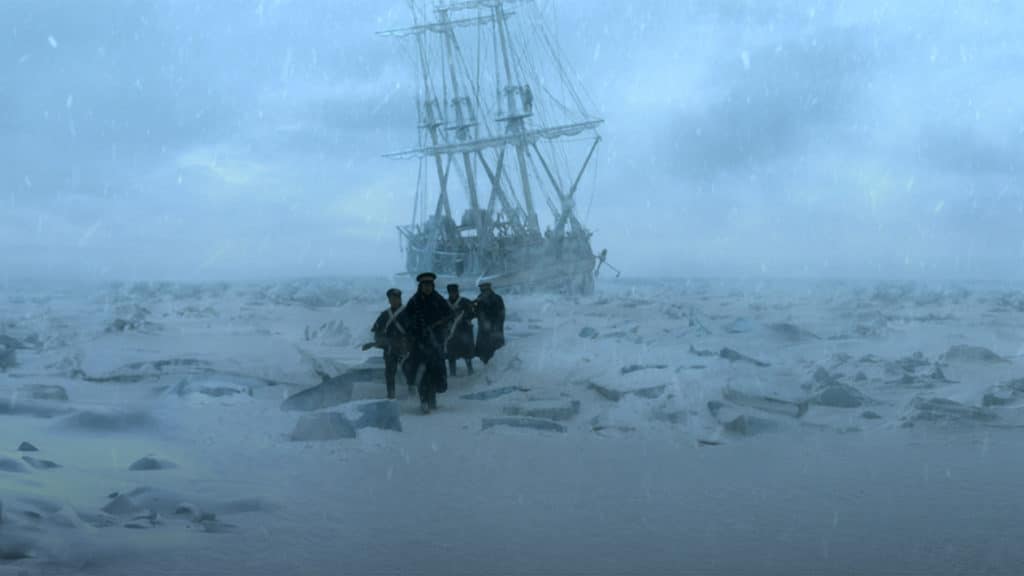
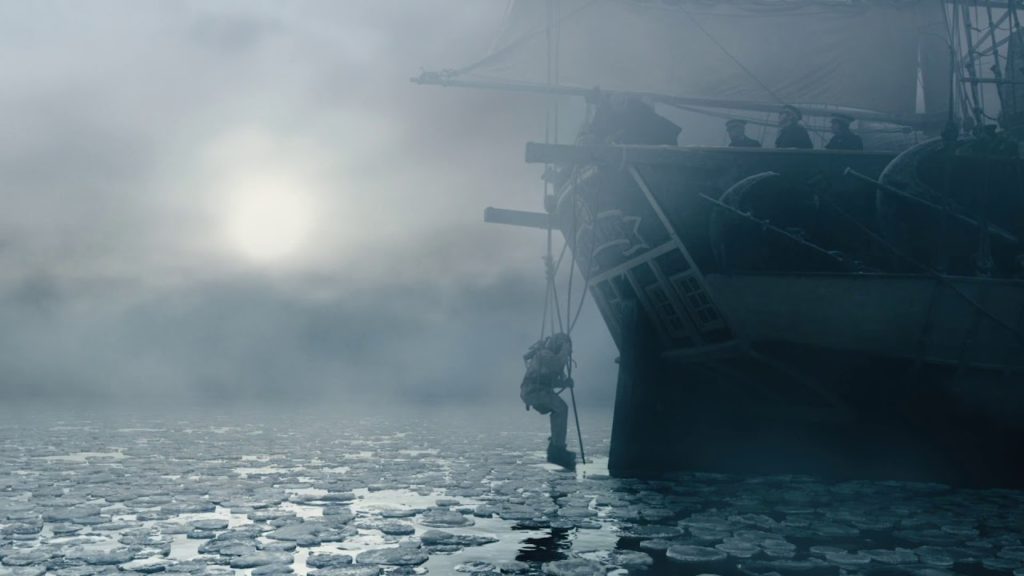
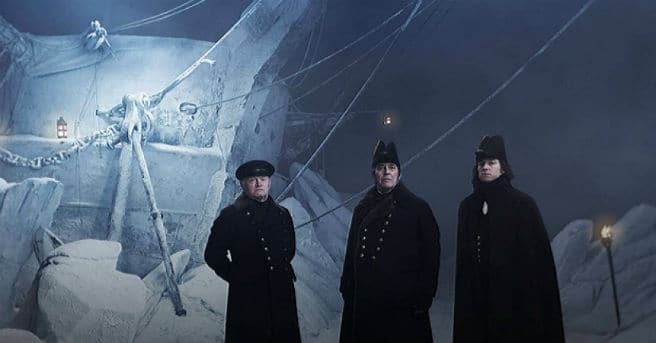
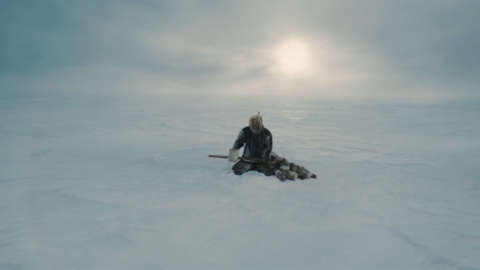
The dismal, disorientating horrors of TV series The Terror have been an antidote to the rolling-on of Spring. This ten-part series is based on a true story, and draws from the Dan Simmons novel of the same title. Set in the Northwest Passage during an abortive mission to find a new shipping passage through the frozen North, two ships – HMS Terror and HMS Erebus – get frozen in sea ice, stranding them for years out of contact with the rest of humanity, with a tainted supply of stored food and dwindling chances of achieving their mission. Their crisis deepens when a polar bear discovers the men and begins to – seemingly methodically – pick them off, but as the men’s paranoia grows, it appears that there is more to this creature than first appears…
A masterclass in slowly-creeping horror, The Terror has a superb cast – Ciaran Hinds, Jared Harris, Tobias Menzies – and is executive-produced by Ridley Scott. You could be forgiven for thinking that Scott has a directorial hand in the series, as some of its most ominous scenes are to the sea and ice what Alien was to space. As it runs across ten episodes, it has the space and time to be a steadily-building drama, slowly developing its characters as well as its plot and moving towards its astounding conclusion.
Want to own a copy? For the chance to win a DVD box set of this series, courtesy of Acorn Media International, all you have to do is email keri[at]warped-perspective.com titling your email THE TERROR and providing your name and address (UK only, sorry folks). The competition will close at midnight GMT on Monday, 19th April and the winner will be drawn at random from the entrants (all personal data is stored securely until the competition’s close and will be deleted once a winner is selected).
Please note: this article discusses key plot points from The Terror and as such contains spoilers. Please don’t read this unless you have already seen the series.
It’s been noted elsewhere that we seem to have developed a taste for isolation horror over the past year or so. Sure, it’s always been a key factor in a lot of horrifying TV and cinema, but you can’t help but notice the sheer relish with which we’ve taken to it since we began dealing with the fallout of the Covid-19 virus, and maybe trying out a little isolation of our own – possibly for the first time. This may go some way towards explaining why The Terror, a ten-part series which was actually made back by AMC in 2018, has finally aired on BBC this year, to great acclaim. Yet there’s far more to it than that: its basis on a horrendous real-life naval mission, augmented by a layer of supernatural content which adds still more to its ‘stranger in a strange land’ story, has been a masterclass in slow-burn, measured tale-telling. Its ten-episode structure was quite possibly a hard sell at first, but it works undeniably well. It allows a large number of characters to grow and develop, it allows the interplay between the men to become suitably complex and emotional, and it means that moments of extreme violence are be rationed very carefully, never replacing the drip-drip-drip of paranoia and certainly never turning The Terror into a high-action affair. This is instead a story of (largely) good people coming apart at the seams, in one of the most hostile environments on earth.
‘Man proposes, God disposes’
The journey from the real-life expedition to the series is an interesting one, coming to us via a 2007 novel by author Dan Simmons. Given that the crewmen of both ships, HMS Terror and HMS Erebus, were lost in around the year 1848, there exist no accurate first-hand descriptions of what happened: the final destination of both crews has instead been handed down piecemeal, reliant on a few statements given by neighbouring Inuit who confirmed that they did see some of the men, but were unable at that stage to really help, and by evidence gathered on subsequent exploratory missions. Simmons saw an opportunity to explore the fate of the Terror and the Erebus imaginatively, wondering what could have befallen them in the long years until it was confirmed that there were no survivors. From this, we get the screenplay, which itself alters some elements of the novel; like any good piece of folklore, it is now difficult to separate fact from fiction. Indeed, from the point of the ships’ loss speculation was rife, with the awful truth only much later getting extrapolated – the evidence of confusion, panic, illness, hypothermia, lead poisoning, even cannibalism. None of these men had quick, quiet deaths. Why were they there, in this place, for year upon year – slowly running out of hope, despite being well-provisioned and prepared? The purpose of the mission was to navigate the as-yet rumoured Northwest Passage, which would have provided a convenient trading route, a boon to British interests and reputation and a point in history when this was of rank importance. Problem was, the winter which set in during the early part of the voyage froze the ships solidly in place – and a thaw did not come. Hundreds upon hundreds of miles away from any help, the expedition floundered, failed, and ultimately led to the deaths of its crews. It’s an appalling waste and a tragedy.
“Not a man. Not a bear. Then what?”
This would, in itself, be sufficient for a gripping series; this environment is so alien, so barren to all but those native people who have spent millennia equipping themselves with the skills to survive, that any examination of this kind of microcosm would, with a cast like the one in the series, be worthwhile. Similarly to a late Victorian novel which begins with an expedition to find the North Pole before its own shift into supernatural content (The Purple Cloud), the descriptions of the voyage itself, and the interpersonal hell of confinement in the ice, is quite horror enough. Why, then, did Simmons and then The Terror’s screenwriters decide to add in the plot detail of the Tuunbaq, the demonic bear-like creature which begins to stalk the men?
It seems to resemble folklore of similar creatures described by indigenous populations, perhaps most notably the Wendigo, another malevolent entity known to Inuit people (and other First Nation peoples): the creature, often supposed to be in a hinterland between ravenous and starving, could consume people, or induce people to consume one another; psychiatry has co-opted this mythology as Wendigo Psychosis, the desire to cannibalise. It’s a possible parallel. The Tuunbaq itself is a creation of Simmons, but its presence in the novel/series emphasises the outsider horror by throwing the already-desperate men into a situation where they are ignorant of the rules, the specific dangers attached to this being. The Tuunbaq ‘belongs’ to an Inuit man, travelling with his daughter; when some of the men accidentally shoot and kill him, the being is then detached and rogue. For the crews of Terror and Erebus, it’s something of an Ancient Mariner moment, precipitating supernatural upon natural disasters.
The men’s increasing dread about being trapped in the ice is now compounded by a vengeful, seemingly unstoppable force – a polar bear, but not a polar bear, as it seems to have humanoid features. It’s an inventive piece of creature design, and the Tuunbaq’s association with a folklore which is closed off to the outsiders places them in an impossible situation. Any hope of truly coming to know the ropes is extinguished by the Inuit woman, now bereaved, needing to take her father’s place as responsible for the Tuunbaq; to symbolise this, she cuts the tongue from her mouth. There’ll be no easy exposition here, then. And, in the meantime, the creature, craving violence rather than food as such, picks its way through the crew. Pardon me another parallel, but there’s a touch of Game of Thrones in the way that The Terror has no compunction about killing off its highest-profile characters, and doing it early. And, graphically.
“An adventure of a lifetime…”
The careful, and shifting relationships between the men is a definite highlight of the series and affords another of The Terror’s positive qualities: by selecting a good cast and allowing their characters to really develop across ten episodes, there’s no sense here that these men – either their namesakes or their fictional versions – are in any way simply bad, or stupid men, or that they’re being punished in a straightforward way for being where they shouldn’t be. You would have to be incredibly heartless to see the plight of these men and boys and feel anything but horror and pity. Yet, this could have been written that way; it could have been a very one-dimensional critique of Empire-building and the people employed in it. This is addressed, sure, but it’s done in a very subtle way which allows the audience to think, rather than being told how to think. Of course, the pursuit of the Northwest Passage was – regardless of the clout and the preparation of the British Navy – disastrous, a decision which had not a little ambition and vanity behind it, ideals which have a tendency to turn out to be vivid, but rather brittle motivators.
Then, the commercial benefits of finding passage perhaps obscured acknowledgement of the risks, particularly hitherto-unpredictable ones. The crewmen, with to some extent the exception of the higher-ranking officers, had little idea what they were getting into, and the greater glory of the British Empire was probably a far lesser impetus for joining the expeditions than more personal reasons, right down to a need for employment and board. Even amongst the higher-ranking officers, it’s clear that there’s little consensus on values and ideals, with Captain Crozier (Jared Harris) on the receiving end of anti-Irish bigotry, both before putting sail and upon arrival. There are crew members who only want to do the right thing, in particular the tragic figure of Dr. Goodsir (Paul Ready), who defends Lady Silence, the Inuit woman (Nive Nielsen) and seeks to learn her culture. His final self-sacrifice is almost saint-like. For every upright assertion over the new, uncharted territory, and to counterbalance moments like the accidental killing of Lady Silence’s father, there’s a moment of sensitivity and vulnerability. Cornelius Hickey’s (or should that be ‘Cornelius Hickey’s’) attempts to claim men and terrain for himself underline the absurdity of attempting any such thing out there, and the desperation of the situation overall – with kudos to Adam Nagaitis for navigating his way from likeable and resourceful to ambiguous to villainous. His journey from unassuming to maniacal perhaps represents the worst of the impulse to conquer, but he by no means represents all of the men, and his comeuppance is a grim, oddly poetic sequence.
For the others, sadly, there is no spectacular ending, and it’s in keeping with the series as a whole that so much of the worst of the misery takes place off-screen. Just as with their historical counterparts, we simply don’t know what their death agonies were like, and somehow allowing that space for imagination makes it all worse. The final episode – with its momentary hallucinations of groaning tables and the beautiful brightness of the natural world – are amongst the series’ most touching moments, a fantasy which reiterates what these men have come to lack. The Terror almost – almost – allows a moment of hope at the end, but the damage done to Crozier has rendered him unable and unwilling to go back to the world he’s known. He lost all of his men – this is an immense, crippling stigma for a ship’s captain – and although Inuit kindness allows him to join their small community, the final shot which lingers on him shows his torment. He has survived, but the cost is great, and he certainly doesn’t miss out on his one opportunity to be saved out of some kind of renegade spirit. “Tell them,” he instructs his Inuit neighbour about to speak to the rescue team, “that we are dead. Gone.” The Terror is a remarkable piece of television.
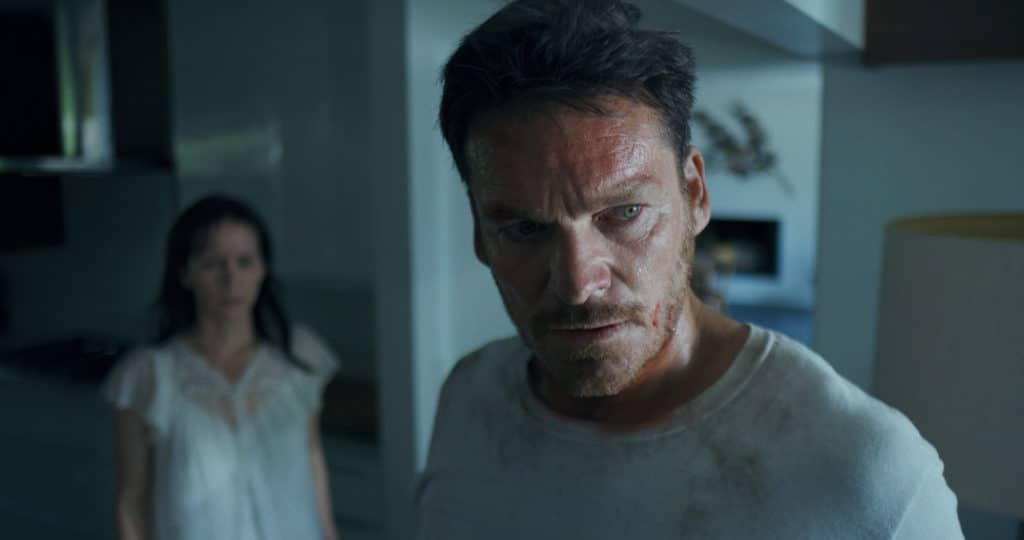
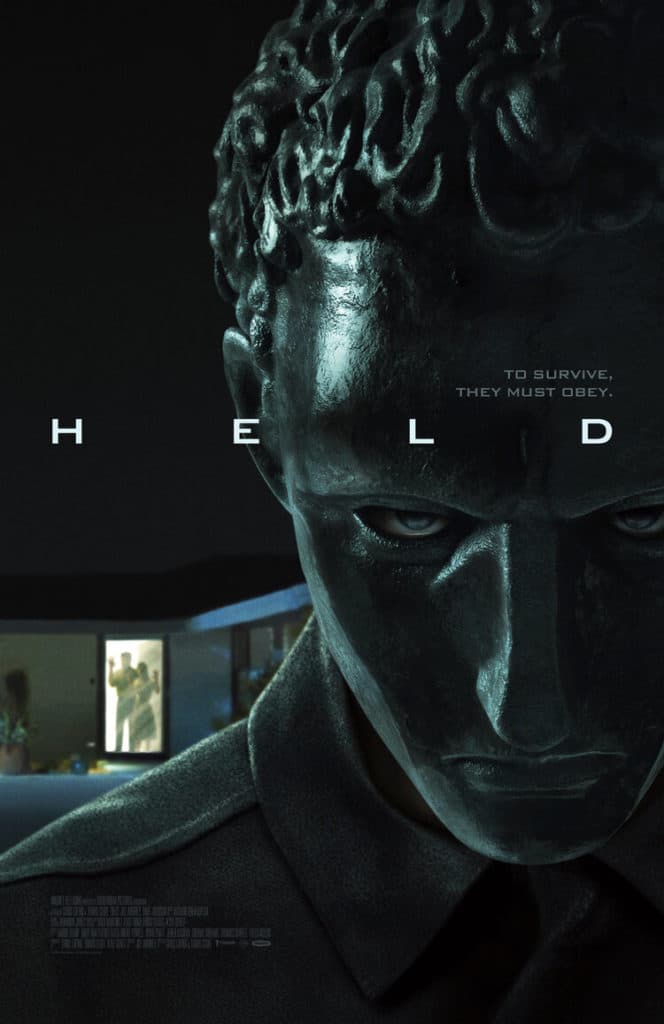
Held (2020) presents us first of all with some uncomfortable scenes relating to women travelling alone: after an initial scene, which we return to later, we begin in full with Emma (Jill Awbrey) who is on her way to a weekend retreat: as she responds uneasily to the taxi driver who asks her if her husband minds her ‘being alone’ in such a place (before demanding a tip), we learn that this is a wedding anniversary treat, or more accurately, a make or break weekend for their struggling relationship of nine years. Anyway, the suspect taxi driver is a red herring perhaps, as she gets to her destination safely. Husband Henry (Bart Johnson) has booked a very nice place for them both; arriving there first, Emma settles in and it seems cool enough, meticulously neat, completely controlled by an internet security system which does all the things people used to be able to manage by themselves such as turning lights on, locking doors etc. (There’s a landline phone, though, which is front and centre from the start, making me wonder if it would in some ways soon be Plot Relevant.)
Anyway, Henry arrives and, despite his best efforts, things don’t immediately go smoothly. There’s clearly something quietly seething away here, which is in the unsaid as much as in what’s said: it turns out a change of bedroom can’t do that much by itself. Who knew? But things quickly gets worse even than that. After drinking some of the whiskey in the house, both Emma and Henry grow woozy and pass out. Emma wakes up the next morning in different nightwear than she went to sleep in; the roses, the anniversary messages, the fresh coffee…someone has been in the house.
Now it seems they’re bereft of their mobile phones and car keys too, the Barretts find they are locked in the house and under the control of an unknown person who begins to dictate to them, controlling their every move. Obedience, they’re told, is key. This unseen person can see them via a network of cameras, and compels them to behave. This begins with an enforced ‘happy marriage’ shtick, which is uncomfortable viewing and – despite the disguised voice telling them what to do which sounds like Jigsaw from the Saw franchise – this discomfort is far more effective than the prospect of noughties-style ordeal horror, though there are some horror elements here, and more as the film proceeds. The treatment of the topic of gender, key here, is interesting: first, each character defaults to the masculine/feminine stereotypes of active/passive, even on top of the dictates of the watching party or parties. This is all interwoven with a real spirit of meanness, removing people’s personal agency and revealing them in their absolute worst light. But things and expectations do shift, leading the film in some ways which I certainly didn’t expect. This is testament to Jill Awbrey who, as well as taking a starring role also wrote Held, and is able to move things in increasingly tense and surprising ways.
It was also good to see some characters in the roughly 35-45 age bracket who are characters in their own rights, not simply there as bit-part players or, more often, as parents, who exist in the screenplay on behalf of others. There are some parallels here to other recent films, most notably the hi-tech house and the strained relationship at the heart of Gatecrash (2020) or the all-controlling technological thriller Shook (2020), and whilst technology is perhaps given a bit more clout in Held even that it has, giving what seems to be omnipotence to its perpetrators, it is used well to explode unpalatable truths about the Barretts’ marriage. Yes, there are some familiar, even tropey elements in the film and a handful of clunky pieces of expositional dialogue, but the way in which Held escalates its action in some surprising ways is every bit as successful as its more subtle, sinister moments. The emotional torments on offer make for phenomenally bleak viewing, but the OTT revelations which follow are very entertaining and successful in their own right. Held offers chilling and exhilarating fare by turns – impressive, entertaining stuff, and well worth a look.
Magnet Releasing will release HELD in theatres and on demand April 9th, 2021.
Science fiction has become very low-key these days, hasn’t it? Perhaps it’s as a result of the way we’re already living with a lot of the technology – and repercussions – which much of classic sci-fi could only imagine. Now, we’re left to play catch-up, wondering what all of these developments and further developments can mean for us. The fantasy elements in sci-fi now often look more familiar, feel closer; they’re taken as a starting point, a new angle for looking at the human side of the equation. I Am (2021) is a very subtle and engaging example of this. If it has an overarching question, it’s probably: who deserves our sympathies here?
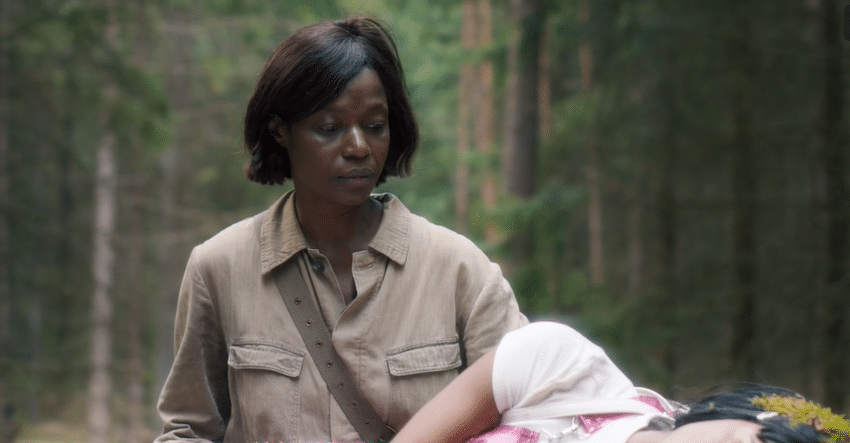
Noé (Sheri Hagen) lives alone and, often troubled by vivid dreams, she seems to live a fairly odd, isolated existence, picking up and fixing old pieces of tech which she finds in the woods. One day, she finds a defunct android (Melodie Wakivuamina), takes ‘her’ home and successfully repairs her. Once restored, the android seeks to orientate herself by seeking a purpose; she wants to work. But she also seems to have some very human fascinations. Noé laughingly asks the android, called Ela, if she has always answered every question with another question; perhaps Ela was programmed differently, she suggests. What is clear is that Ela is seeking some kind of purpose. She and Noé discover more about one another, but this development is ultimately not comfortable, profitable or desirable for Noé, whose good fortune at finding Ela quickly dwindles.
Jerry Hoffman’s direction here, alongside cinematography by Lena Katherina Krause, has lent this film a very attractive aesthetic. Noé’s frequent nightmares take place against the dark blues and purples of the woods outside, contrasted almost instantly against the warm, homely cabin where she lives. There’s a lot of either natural light or low light used, something which creates an appealing contrast against the world without, which is clearly a place of technological advancement, with creations such as Ela apparently littering the ground. Ela herself is very eerie: offering more contrasts, the interplay between the flesh of the actor and the super-subtle inclusion of tech fittings and trappings is very effective, retaining an ability to confuse the eye: one minute you are looking at a girl, and the next an item. Wakivuamina’s performance is highly effective; I felt very wary of what she was not telling. Also, her face gradually humanises over time as she asks the right questions of her new keeper. It’s another barely discernible, but important shift.
Noé keeps her own secrets as best as she can, but as her relationship with Ela changes, their dynamic changes. Their conversations go from a strange, uncomfortable Q&A, to a confessional – which turns out to be ill-advised – through a humorous truce to an unpleasant symbiosis, which Noé resists with some considerable, understandable fear. The origin of her nightmares not only becomes clear, but the film offers the distinct impression that they were in some ways foreshadowing events to come. The narrative here is perfectly fitted to a less-than-thirty-minute run time, taking a minimal number of plot elements and affording them enough time to come to fruition.
For all that, though, I Am holds a few questions back too, only giving us a glance at just what is really out there beyond the tree canopy whilst offering no cut-and-dried moral lesson. Everything which Ela asks of Noé, we could really ask of ourselves; accordingly, this is a surprisingly nuanced short film with a fine balance of visuals, narrative and aesthetics.
I AM (2021) will be featuring at the Cleveland International Film Festival from April 7th to April 20th.