Fantasia 2021: Paul Dood’s Deadly Lunch Break

In thinking about how to begin this review, it feels impossible not to come at it from a British perspective. In so many ways, Paul Dood’s Deadly Lunch Break is the archetypal British dark comedy – sad, sometimes bitter, bittersweet but very funny. And, as it takes us through all of this, it’s more than happy to remind us that many things are, well, a bit crap. This is its central success, as although it also takes some swipes at the world of social media, it’s primarily character-based and sticks with its central character very closely, investing us in his pitfalls and accidental successes. It’s hard not to be charmed by it.

In a terraced street in a smallish UK town lives Mr. Paul Dood (Tom Meeten), talent show veteran. Although he’s in his forties and working by day in a charity shop, he’s still determined to succeed on the stage: his elderly mum (June Watson) is rooting for him too. Now that he’s using a social media platform called Trend Ladder (which is essentially Instagram Live) he holds onto hope that his all singing, all dancing act will find a new audience. Focusing avidly on any and all interactions doesn’t help his time management, though, and he realises whilst at work that he’s got the Talent Ladder Talent Show date all wrong. It’s today, not next week: in a lather, he rushes home, collects mum, and they dash off together.

Their journey to the venue is, and sorry to bring it up again already, the most British farce imaginable. Be it petty little jobsworths, megalomaniac business owners or other politely-bullying individuals, everything which can go wrong does go wrong, and it does so agonisingly slowly. Oh, it’s hard not to shout at the screen, even while enjoying the spectacle. These things mean that the Doods arrive at the audition too late, and it only gets worse from there: what unfolds when they manage to speak to the dreadful host of the show, Jack Tapp (Kevin Simpson), turns the mild-mannered Paul into a very different man. This doesn’t play out as he wants, necessarily, but the film does offer a kind of misguided catharsis; it doesn’t happen in a Falling Down style, but it happens via a number of accidents, incidents and misunderstandings which range from socially cringeworthy to very grisly.
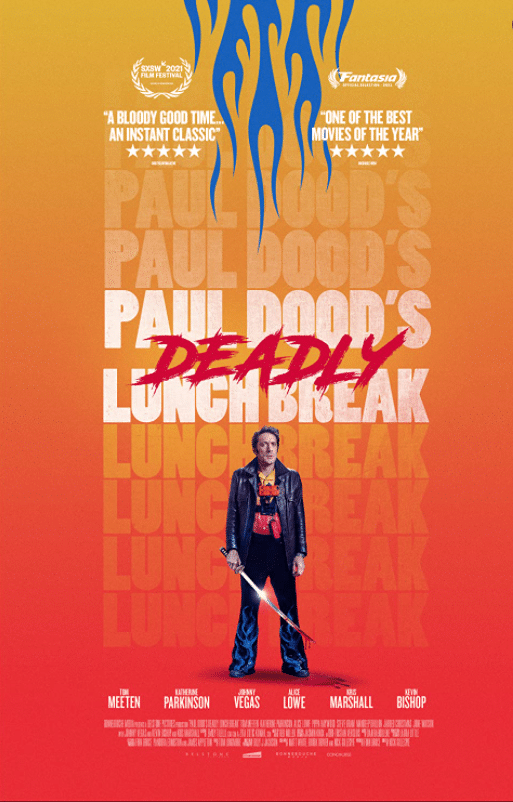
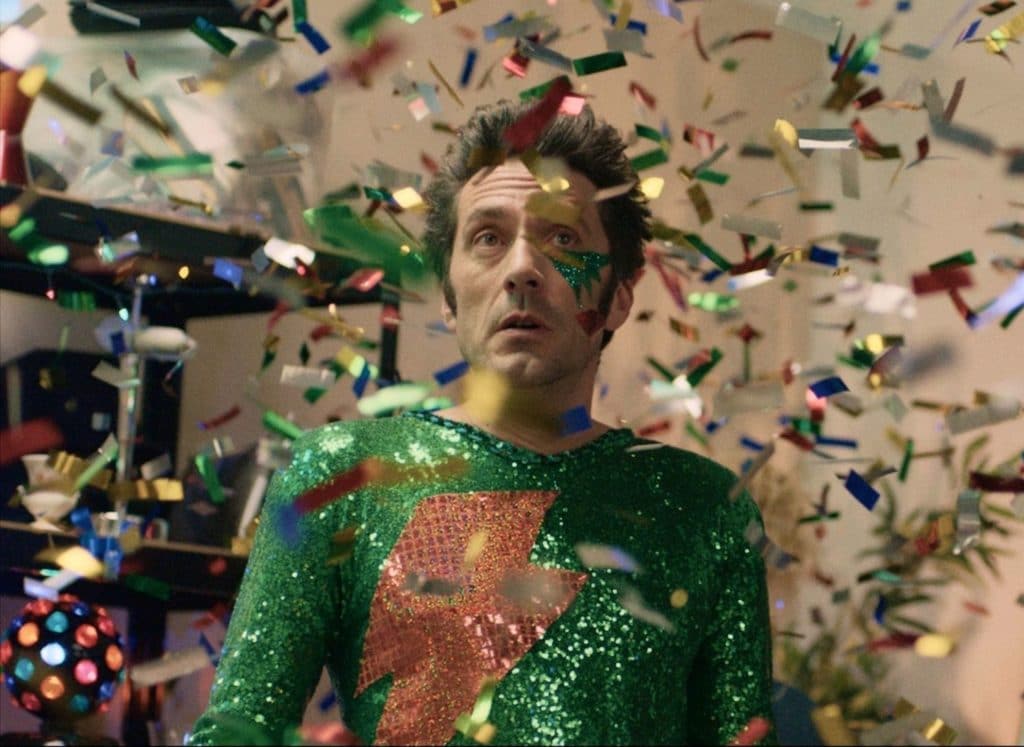
From the ‘clubland style’ performance outfit Paul wears to the phenomenon of the charity shop to the teacake binges, the backdrop for all of this is so, so recognisable – though to international audiences, it may need some explanation. This is a catalogue of the things which often drive us mad over here, and the humour present in this film is an excellent reflection of all that. It’s gallows humour, shown in unlikely situations but everyday language: barring the fact that a handful of the jokes or characters flounder because they’re so obvious, it works very well. It’s hard to get that kind of unpracticed, well-observed speech done right, but writers Brook Driver, Nick Gillespie and Matthew White have nailed it here; it also helps that the film boasts a who’s who of British comedy, and yes, thankfully Steve Oram is in it, as it wouldn’t be proper otherwise.

So Paul Dood’s Deadly Lunch Break nicely satirises a lot of things, but it manages to hang onto a sense of poignancy too. For starters, we’re certainly not alone in the UK in obsessing over talent shows, and this has been the case since way before the internet. Now, the rise and rise of social media has only intensified this urge to get famous, and the likes of Susan Boyle has pushed the idea that anyone, any time can do it (we see a clip of Susan doing her thing in the film). Paul Dood is to an extent a victim of this thinking, but it runs deeper with him: a lot of his desires to make it stem from his close relationship with his mum, wanting to make her proud. Looking further, these godawful shows and their offspring are sold on the notion of instantaneously lifting people out of poverty, something else which affects the Doods, who seem to be ‘making do’ at best. Paul accidentally succeeds in social media notoriety, but it’s because he breaks down under the weight of expectations and grief, and that is genuinely sad in places. You can’t help liking him, whatever he does, because it’s easy to buy into his frustrations and anger. Thankfully, the film’s moments of serendipity are perfect, and balance out the abject misery to give us something incredibly well-handled overall.

It won’t be for everyone, this one. Admittedly it’s dour, it can be bloody and it has a very low-key style of humour. But seeing an everyday guy kicking against the pricks? It’s great, and I haven’t seen it done quite like this before.

Paul Dood’s Deadly Lunch Break (2021) will screen as part of the 25th Fantasia Film Festival. For more details, please click here.
Fantasia 2021: On The 3rd Day

There’s been some great cinema coming out of Argentina in recent years, now joined by On The 3rd Day (2021), a clever and carefully-structured horror film which successfully incorporates several horror tropes without settling into a rut. Taking first one route and then another, the film makes you doubt your allegiances and presents several narrative strands, bringing all of these together as something which is familiar, but feels brand-new. That’s no mean feat.

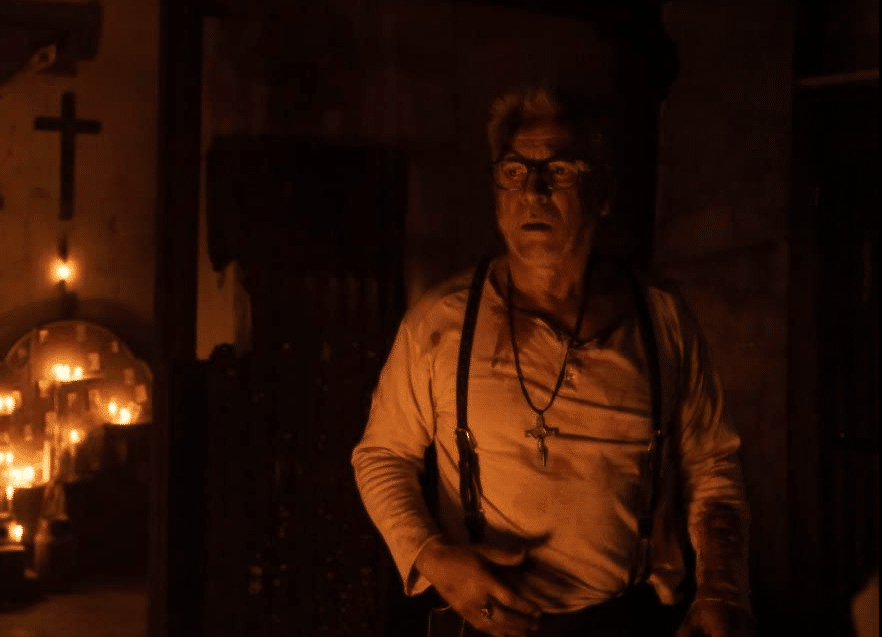
That all being said, I had grave doubts about where things were going at first. ‘Familiar’ can lead to all sorts of issues. The opening scenes introduce us to an older man, Enrique, who receives a mysterious phone call about his ‘cargo’, which he needs to deliver somewhere. He gets ready to go, moving whatever it is onto his truck: the sight of chains and various other items in his dilapidated house provided some misgivings that this was going to turn into something choc-full of torture, which is one modern trope too many, too often. But, the film leaves him behind for the moment and, in a rather brighter, more modern house, a mother and son – Cecilia and Martin – are getting ready to go on a trip by car. As fate would have it, Enrique’s vehicle and Cecilia’s car wind up on the same road at the same time that night: there’s an accident, and Cecilia is somehow separated from her young son, regaining consciousness in a shell of a building somewhere on the side of the highway.

Disorientated, she goes looking for help and is eventually taken to hospital, where she cannot get any of the rest she needs. Somehow, she and Martin had been missing for three whole days, time which she cannot recall. Her dreams are full of her son, and she hallucinates him everywhere, his red coat and hood strongly reminiscent of a certain other horror film where an anguished parent keeps seeing their child. The doctor in charge of her case is mystified by her, but feels drawn to her: he assures her that the police are looking for Martin, but she’s wary, delusional – and flees. She’s not completely alone; Doctor Hernán (Lautaro Delgado) tracks her down to offer further assistance. Other people have a vested interest in finding her, too, and their motives aren’t so good. Eventually Dr Hernán takes her to a friend who has the ability to use hypnosis. Together, their aim is to fill in the blanks and help Cecilia (Moro Anghileri) find Martin.

The first act of the film is where it is at its weakest, or at least its shakiest, but that is largely down to personal perceptions; on a basic level, there are a few unlikely plot developments in the first twenty minutes or so which feel a little thin, and evidently, safeguarding in Argentina is a very different animal to Europe. In terms of what else is going on, after fearing that this was going to be yet another ‘kidnap and torture’ style of film, I then feared that this was going to be a film based entirely on hallucination, a kind of jaded riff on mental illness, as there are some indications that it could be. Rather, these are elements placed there to lead the audience in a series of dead ends or potential leads, laying down clues and giving hints which may or may not go anywhere. It’s a mystery movie as well as a horror, and once the mystery begins to unfold, it’s hard not to be hooked. The film has a solid pace, making you work to keep up and, once it is really underway, it hangs together incredibly well. You have to love a film that, when the credits roll, you immediately look back over spoken lines and scenes and see them differently, now that you know how they fit in.

Visually, this is an interesting film too, combining something of the blue-tinged, Noughties torture-porn rot and grime with some of the stylised, carefully-lit cult horror of the 70s: indeed it draws from aspects of those decades, as well as seemingly directly referencing some classic horror scenes too, and it’s only fitting that the aesthetics reflect that fusion. The performances are excellent, but full credit goes to Moro Anghileri, who is so able to show the contrast between loving mother and terrified amnesiac – and that’s not all she can do, either. It’s also helpful to the bedrock of the narrative that Martin (Octavio Belmonte) is actually a nice, pleasant little kid, and their relationship seems authentically close.

It’d do the film a disservice to describe it any more detail which would give the game away: essentially, On The 3rd Day is full of different elements and ideas, putting its own spin on them whilst showing a wealth of genre awareness. It’s effective, ambitious, and it’s economical, too, with none of this two-hour plus runtime which derails so many other movies. One further note: make sure you watch this right to the end of the credits.

On The 3rd Day (2021) will screen as part of the 25th Fantasia Film Festival.

Fantasia 2021: Tiong Bahru Social Club

Because the world has altered so rapidly over the past twenty years, with new ways of analysing, modifying and recording human behaviour, it’s already quite usual to see this reflected in cinema. The thing is, it’s more often than not treated as a grave concern, coming to us via technological horrors which plump for a series of worst case scenarios. That’s not the only way to do it, as proven by Tiong Bahru Social Club (2020), a charming, light-touch Singaporean comedy; it’s equally possible to just laugh at the absurdity of it all, even whilst learning a couple of gentle lessons too.

Ah Bee (Thomas Pang) has reached a series of milestones when we are first introduced to him: it’s his 30th birthday, he has just left his job at an insurance claims firm (so surely any way is up) and, best of all, he has been accepted to join the Social Club of the title. This is both a new place to live and a new job: their slogan, or at least one of their slogans is ‘putting unity back into the community’, by working as a Happiness Agent to improve the lives of others. Tiong Bahru achieves this by careful monitoring, using algorithms to improve its residents’ experiences and monitoring individual data. This all sounds very hi-tech, and whilst it is, it comes in a very pleasant, pretty package. It’s not often we get to describe films as straightforwardly pretty on this site, but this one is – think the suburbia of Edward Scissorhands (1990) only refracted through the brightest, cleanest and most lush aspects of modern Singapore. Ah Bee is lucky to get into this little utopia.

Still, there is a progression route here, as anywhere else, and in order to move towards promotion Ah Bee has been assigned an elderly neighbour. His job is, simply, to make her happier. His client, Ms Wee (Jalyn Han) is not massively receptive to his almost-mute early overtures, however. Her first proper conversation with him is to take him through a long list of cats she’s known and loved, with added details on how they died. In the wrong hands, this could be a dreadful misjudgement of what to include in a comedy, but in testament to this film’s tone, it’s deeply, darkly funny. When he’s not trying to please the very forthright Ms Wee (oh, she’s glorious) Bee is taking part in happiness-boosting activities…cuddle workshops, team-building mornings in the pool…and his results are soon in. He’s not as happy as the management would like him to be. This begs the question: what happens to people who are just not able to get happy? And what if you reach 100% on the algorithm – then what?

Happy…happiness…these words are used pretty relentlessly throughout the film until they start to come apart at the seams, and in all likelihood this is the point. In inviting us to consider what happiness actually means, the audience is kept on a par with Bee himself, who is ever the sweet, slightly bewildered everyman, taking it all in and trying to make sense of it all. The film is also busy with terms which have, at the time of writing, become ubiquitous: ‘algorithm’, ‘data’, ‘consent’, ‘analytics’ and ‘KPIs’. These are important aspects of modern life, and come complete with a lot of legitimate concerns for us, but in the world of the film these don’t morph into anything monstrous. It’s too subtle for that, picking its more philosophical moments with great care and prioritising its very own brand of gentle humour. The activities which do – and don’t – raise Bee’s happiness data will almost certainly get a knowing laugh, whilst some of the moments are so bizarre and awkward that laughing out loud is unavoidable. Without going into spoilers, Bee’s misinterpretation of the rules of a question and answer game he’s asked to play with some of his neighbours is just superb.

There are some deeper meanings here, but getting to this point through a film so bright, clever and charming is a really pleasant change from the norm. Tiong Bahru Social Club is a warm and eccentric comedy, and one which deserves to be known everywhere as a timely, feelgood film.

Tiong Bahru Social Club (2020) will screen as part of the 25th Fantasia International Film Festival. For more details, please click here.

Fantasia 2021: King Car (Carro Rei)

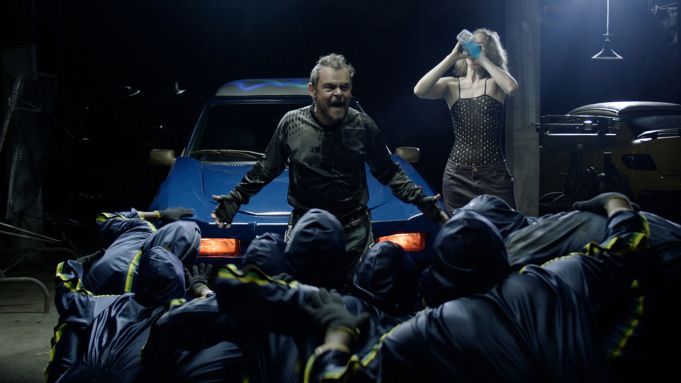
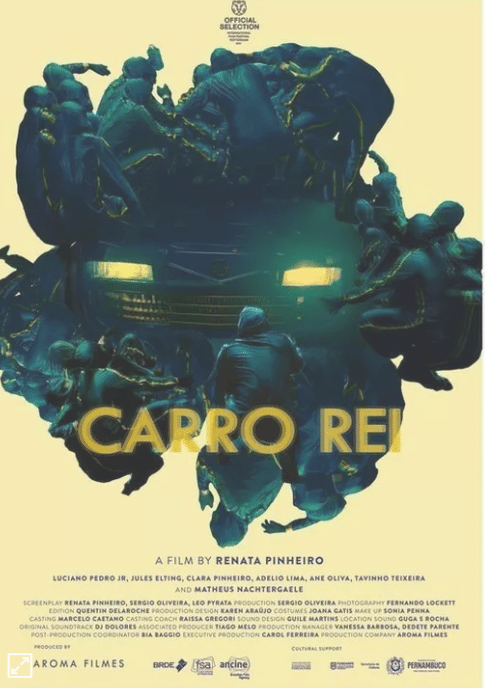
Balancing a dark sense of humour against several other themes and elements of genre, King Car offers an adventurous look at the relationship between man and machine. Sure, we’ve seen sentient vehicles before, but not quite like this. It’s a smart, if zany piece of work, busy, but (just about) giving us something which brings those ideas together.

We start with a glimpse of a Brazil which is rapidly modernising; the municipality of Caruaru is firstly shown with skyscrapers in the distance, but the remains of a rural, agricultural past still clinging on at the outskirts of its growing cities. Cows meander through scrap cars and drift onto the narrow roads, preventing a man from getting his wife, who is in labour, to hospital. In fact, she doesn’t get much further and gives birth in the back of the car. This seems to trigger some unusual ability in her son, Uno, who by the time he is a few years old seems able to communicate directly with cars. One in particular, part of his dad’s taxi fleet, even seems fond of him (though it’s not long before this ‘friendship’ seems suspect, and devastates the small family unit).

As Uno grows up, he seems to lose – or to forget – his abilities and he struggles to take his own path. Emphatically, he doesn’t want to spend his life simply doing what his father has done, and wants to train as a bio-agriculturalist, addressing issues like pollution and food production which have only worsened in the time it’s taken him to reach young adulthood. This causes a rift with his father, coincidentally dragging Uno back to the scrapyards and vehicles he’d left behind in his childhood. Finding his way back to the same, now wrecked cab from before, Uno realises he can still communicate with it. Thinking perhaps that his ‘gift’ can be turned to some purpose or perhaps out of pure curiosity at this stage, Uno enlists the help of his uncle Zé, and they renovate it (think Pimp My Ride meets Lawnmower Man). As it turns out, Uno and Zé have a particular set of skills with all cars, and it’s just in time: these old, fuel-guzzling cars made before a certain date have just been made illegal. It becomes a battle of Building Back Better against The Greater Good.

If the film has one flaw, then it’s in how it gives itself an awful lot to resolve. Its ideas on big topics like sentience, class and power lose some of their more thought-provoking, interesting elements as things settle into a more familiar-feeling good vs. bad narrative. King Car is at its best when it more tentatively explores some select ideas, and this it certainly does, whether or not this is a film which features talking cars as a central plot device. For example, it has a lot to offer on family dynamics, such as in Uno’s home, where tradition and respect bump up against his own plans and hopes but can’t push him entirely away from his father and uncle – for good or ill.

King Car also looks at the complexities of modernisation, which it does very well, examining the idea that ‘better’ is a debatable term and never means better for everyone; the drive to save the environment, for instance, is often decided by people who are negatively affected by it the least, and we get that here, more as a lesson than a lecture as Uno, his friends and family navigate their unprecedented situation. Well, Uncle Zé does a bit of lecturing on the sheer, endless possibilities for the relationship of mankind and technology, though he is represented to us as a rather wired, if largely well-meaning oddball who lives in a junkyard and moves around like Raoul Duke. That’s another thing we probably inevitably get here – comedy. Things shift from the sublime to the ridiculous as the film moves along, but jokes add some much-needed levity to a film which shifts from fantasy to coming-of-age drama right through to something which isn’t all that far from any number of ‘mad scientist’ stories, or ‘mad mechanic’, anyway. It’s a film which makes serious points, but it’s not po-faced.

Director Renata Pinheiro has used her art direction background alongside her previous directing experience to make a very beautiful, visually rich film here, with its fantasy-tinged Brazil looking genuinely superb on screen. All in all, King Car is an energetic, ambitious film which puts its own spin on the role of technology in people’s lives and has a great number of strengths.

King Car will screen at the 25th Fantasia International Film Festival. For more information, please click here.
The Green Sea (2021)

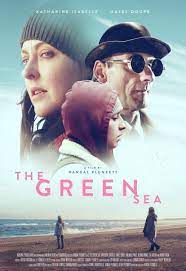
The first and most important character in The Green Sea is, fittingly enough, the landscape: this is made clear by the slow deliberation it is given on screen, as opposed to the interior spaces, which are uniformly chaotic and confining – at least, at first. A drama with some unsettling, uncomfortable content, it makes its way in a quite unorthodox way to a better place, with two great lead characters who do a great deal to reward our attention.

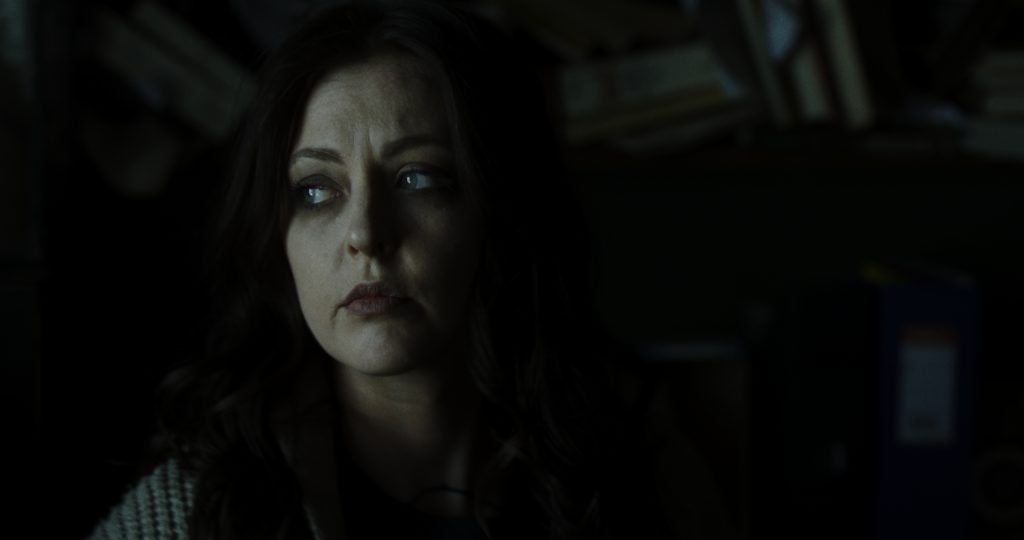
The young woman at the centre of all of this chaos is unnamed for a large part of the story, but for the sake of clarity, she is Simone (Katharine Isabelle). Simone is an American living in rural Ireland; she’s also a hard drinker, a loner and actively hostile to those around her. Her day job is as a writer; the whole process has ground to a halt though, and she can’t get past her writer’s block. When her jeep breaks down and she needs to interact with the local garage to get it fixed, you get a slight glimpse of something deeply destructive as she tries to navigate the situation – she disassociates, drifts off. She’s drunk when she collects the vehicle and, when she drives home regardless, she hits a young girl.

Somehow, they both make it back to the house: the girl is slightly injured, but otherwise okay. Once Simone is sure of this, she drops her off at a nearby bus stop so the girl can make her way home but, hours later, the girl is still there: she has no money, she explains, and isn’t sure where to go anyway. Simone makes her an offer: shelter, in exchange for some help around the house, and so an uneasy kind of arrangement ensues. For every initial moment where Simone relaxes and shows some kind of kindness, she flares up again, pours another drink, and dedicates herself to a helping of oblivion. Theirs is a difficult road, and dreams and flashbacks on both their parts hint at something else, maybe something sinister, but certainly something which does not show its hand at first.

I feel like I’ve done The Green Sea a disservice by adding a regular synopsis like the one above, as the film really doesn’t play out in that linear kind of way. Call it expediency on my part – it’s not an indication of anything else. One of the film’s great strengths is that it tells a story without working through a checklist; it allows itself to play out very slowly and is structured accordingly, not massively reliant on dialogue, holding onto even its most basic elements of information (such as names) and avoiding neat conclusions being drawn.

In the wrong hands, this could all feel frustratingly under-written, and many films have floundered when taking this approach, but for a few reasons that’s not the case here. Katharine Isabelle has more than enough skill as an actor to hold our interest, and doesn’t need to turn into a straightforward character to reward that interest. In fact, she’s frequently cruel and unpleasant, but you can at least to a degree sympathise with her character and wonder at how she came to be this way. Understanding the situation she has found herself in is key, as is her developing friendship with ‘the kid’ (Hazel Doupe). An alcoholic extreme metal fan and a nameless child don’t particularly often wind up as key characters, but it works very well here (and by the way, director and writer Randal Plunkett had the support of Irish metal label and distributor Invictus Productions for the film. If you’re into metal of that kind, you might recognise the odd song or shirt courtesy of Invictus, as well as some of the artworks by Fuil Arsa Art.)

The film uses on-screen chapters, which is a trend at the moment – I never feel they’re necessary, as plot shifts and developments can speak for themselves – but the film is well woven, with a gentle sort of chaos for the most part, showing things dangerously unravelling for characters you have come to care about. In its own way, the film explores the relationship between the creative process and the ways life can get in the way, but it’s also about self-forgiveness and moving on, however that might come to pass. The Green Sea can be unsettling, with some fantastical elements, but ultimately it’s a very beautiful, humane and redemptive film.

The Green Sea is available now on VOD in UK/Ireland c/o Reel 2 Reel Films/Trinity Creative Group.

Kandisha (2020)

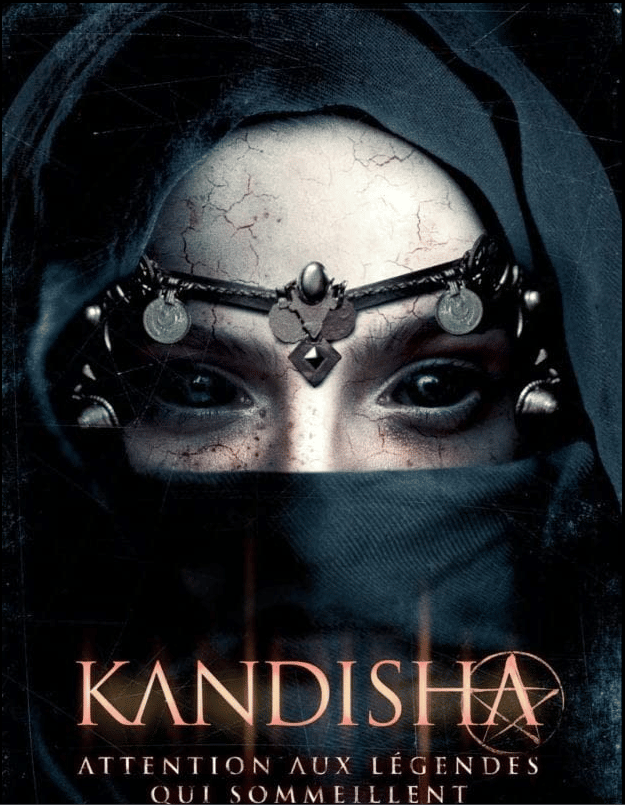
Writing and directing team Alexandre Bustillo and Julien Maury are another couple of filmmakers who, after the initial rise of ‘new French extremity’ in the Noughties, didn’t maintain the same prolific trajectory. Hey, it happens – as I’ve mentioned elsewhere in a feature on Martyrs, once you’ve gone that far, where is left to go? And that’s beside the more standard-issue concerns of funding and budgets, when the economy keeled over not long after the new wave broke. Bustillo and Maury did, however, go on to make more films after the mother-as-monster of Inside in 2007; there was the beautiful magic realism of Livide (2011), an entry in the ABCS of Death short films and a brief foray into Texas Chain Saw territory, before it all went quiet again. This all brings us to Kandisha, a film which opts for a Candyman/Drag Me To Hell style of occult horror, where unstoppable forces have to be, well, stopped. It does this by reaching for Moroccan folklore, emblematic of the modern, multi-ethnic cast of the film, though beyond itself the story still feels very familiar. Kandisha is somewhere between the all-out gore of Inside and the gentler, more surreal Livide, tumbling between these two.

Friends Bintou (Suzy Bemba), Morjana (Samarcande Saadi) and Amélie (Mathilde Lamusse) – or graffiti artists BAM as they like to be known – are enjoying their summer break, turning a disused building into a group art project, swapping gossip and urban myths. When Amélie uncovers the name ‘Kandisha’ during an evening’s painting, Morjana, who is of Arab descent, explains that Kandisha is a female demon, known for taking her vengeance on men. The girls joke around for a while, showing that there’s nothing new under the sun and you can summon Kandisha by simply repeating her name in front of a mirror, a bit like you-know-who. The girls head off home, but when she’s left on her own, Amélie is violently accosted by her ex boyfriend. She gets away, but not before ending up covered in blood. In a momentary rage, she uses the droplets of blood to summon Kandisha more fittingly. It seems to work; minutes later, he runs screaming into traffic and gets hit by a car. But as we all know, summoned demons are not terribly easy to control; the girls must work together to track down a specialist with some old tomes (as someone mentions, what’s going to happen when there are no grimoires left? They carry different information to the Internet.) A race against time to save the men in their lives ensures for the girls, and it would be a very short film if they weren’t reasonably unsuccessful.

Kandisha retains the high production values of previous Bustillo/Maury productions: there’s no denying that they have a great eye for composition, lighting and atmosphere, and all of these contribute to a very attractive film, urban sprawl meets exoticised folklore. But there are some issues with the plot here; I’m perfectly well aware that ‘exotic’ can be a very loaded term when it comes to mythology and folklore, particularly once we start to step away from the Northern European (and by extension North American) stories which are so often relied upon in horror cinema. But the mythology used here isn’t really developed far beyond any other more familiar fare, so it does remain rather thin, ‘just’ an exotic figure, or needs basic description attached, with Kandisha explained as a patriotic, man-hating female entity. Course, we come to Kandisha via a similarly diverse but partially-developed cast of human characters, whose initial friendship is presented to us in quite broad strokes: the girls are initially defined by themselves and to one another in class and race terms. Even accepting the fact that French screenwriters are far more overt about this kind of thing than you’d ever hear in anything British- or American-made, unless the characters using racial language were being set up as straightforward villains, their ethnicity and class are writ so large that it eclipses any more subtle traits for a good share of the film. It takes a while to feel empathy for them, despite solid performances. For the early parts of the script to talk them up, they’re rather rendered down, again in the pursuit of doing more.

The Kandisha myth itself, is, once established, a very familiar one: ask yourselves, what normally needs to happen in a film of this kind, and it probably happens, even if with a few swaps from Latin to Arabic. There are some very well-handled surreal scenes, with Kandisha taking a few different forms and the gore shifting incrementally from understated to very graphic; whilst Drag Me To Hell feels like an obvious comparison, the Raimi film makes it much clearer that it’s meant to be splattery fun, where Kandisha feels less tonally clear. But, hey, for all of these minor quibbles, it’s a perfectly watchable, largely enjoyable film, technically very well made and it doesn’t overstay its welcome by twenty minutes or more, as many films by less experienced hands do. Whilst Kandisha doesn’t break new ground and it’s not the navigation of folklore, identities and cultures it might have been, there’s enough here to entertain.

Kandisha (2020) will be released to Shudder on July 22nd 2021.

Miranda Veil (2020)

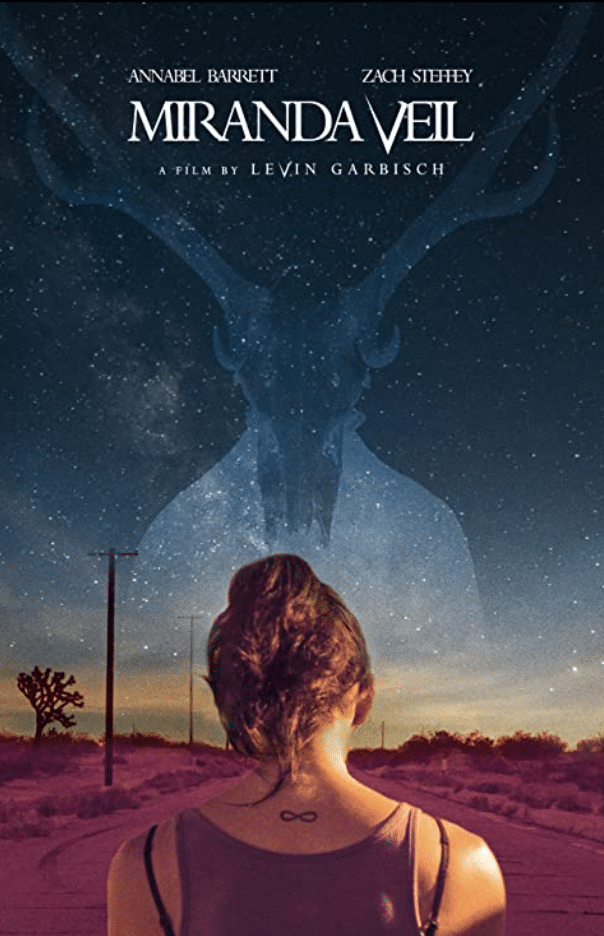
Can we really go anywhere new with the whole guy meets girl, guy kidnaps girl, guy tortures girl horribly thing? Apparently, yes we can. Miranda Veil (2020) has a savvy idea which puts an original spin on some oh-so recognisable elements, shifting its emphasis and focus as it goes. It’s not without a few lesser issues, but overall there is a lot to appreciate here.

As suggested, we start in familiar territory: a would-be serial killer, Soren (Zach Steffey) has confined a blindfolded and bound woman in an isolated location, and he’s debating with an unseen voice about whether or not to go through with the deed (the ‘voice of evil’ in films always sounds pretty similar, no? It’s like having a moral debate with Jesse Ventura.) Anyway, Soren turns out to be a bit of a stickler on the whole savage killing thing: he wants it to mean something, needs some kind of connection with his victim. Accordingly, he decides he can’t go through with it and instead of dispatching the young woman, ditches her on the roadside, fielding bitter recriminations from ‘the voice’ as he flees. Here’s where we first encounter Miranda (Annabel Barrett), a young woman just reaching legal US drinking age and enjoying a legally-hungover weekend to celebrate. It seems Soren has been doing his research on the available young women of Barstow, CA, and Miranda just might be the one he’s looking for. He therefore takes her captive, retreating to the same isolated barn as before.

At this point, the film might have just resigned itself to being another ‘woman tied up and menaced with tools and so on’ – something which would have probably led me to switch it off, honestly. But when Soren finally reaches a decision on whether or not to make his first kill, there’s a snag. This is hinted at from the outset, where it seems Miranda has an unusually high pain threshold; Soren’s attempts to intimidate and harm her result in annoyance on her part, rather than genuine fear. Even Miranda notices the fact that her protestations are more about convention than really feeling and responding to pain. As far as it goes for Soren, though, it gets worse. It seems that Miranda won’t die. Whatever he does, she simply snaps back into life, getting progressively more confused and exasperated when she does: this is kind of a surprise to her as well. For an aspiring murderer, this couldn’t be any worse. What’s a guy to do?

The first hour or so of this film was a genuinely unexpected pleasure. Clearly, writer and director Levin Garbisch has a good awareness of the horror genre but wants to expand it, rather than just respect its confines. Hence we have a hell of a lot of tropes here, but the film is self-referential, confident enough to play around with those tropes and take them in interesting directions. Miranda is no mute victim; rather, she grows into a pleasantly proactive character, and the interplay between her and Soren is engaging, using dialogue to push things about as far as possible whilst remaining within the bounds of acceptability. Miranda Veil knows where it fits in as a boundary-pushing horror film, too, referring openly to other horror franchises and even stepping outside itself to poke fun at horror, in a similar way to Scream (though shorn of the high levels of gore – on a budget of approximately $50,000, there’s only so much you can do, even if you want to do it.)

Accordingly, the film doesn’t stick solely with the premise of being unable to die as a means to explore increasingly grisly attempts at it, and morphs into something far more …philosophical? There are elements of early Kevin Smith movies here via an array of oddball characters which interweave with the main story, and even a little Fear and Loathing, too: well, this is set in the very same Barstow where “the drugs began to take hold” for Duke and Gonzo. There’s a certain hitchhiker scene which really seems to reference the novella. In terms of how this all works on screen, I understand why the film heads in this direction – of course being unable to die would prompt a bit of soul searching – but things do meander from the hour mark, and as the film is around 1 hour 45 altogether, it could have withstood a hard edit, as it does lose some of its initial impetus. The perils of making an indie film, I guess – it becomes your baby and it’s hard to make decisions which cut your screen time. But Miranda Veil still works for me: it comes together for a suitably left-field conclusion, leaving an overall impression of a film which is very smart, often pithy and on the whole, very inventive.

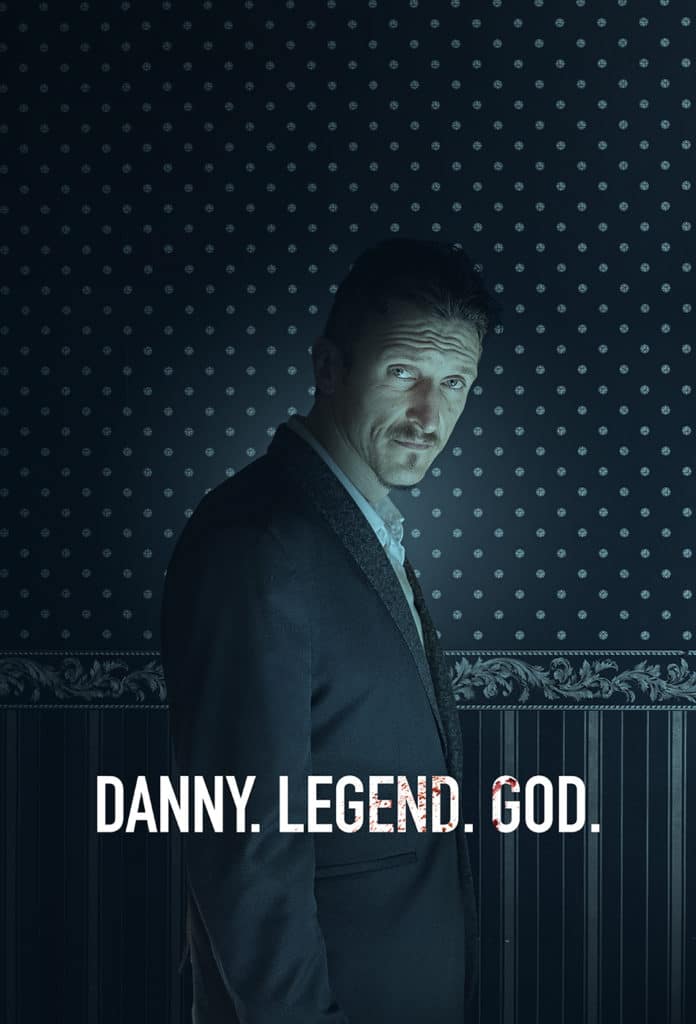
Danny. Legend. God. (2020)

The mockumentary standard was probably set by Man Bites Dog in the early Nineties, and since then the basic format has changed very little. Surprisingly little, perhaps. There’s the renegade subject (usually a man) who forms a dangerous relationship with the film crew, then the loss of control over the creative project itself and an escalating, dangerous situation – these features are usually present to varying degrees, from Resurrecting The Street Walker (2009) to Strawberry Flavored Plastic (2019) and beyond. This all brings us to Danny. Legend. God., a debut feature film with all of those elements, including an inability or unwillingness to really break away from the expected. The resulting film is, at 1 hour 45 minutes long, in need of a damn good trim and some dynamic plot elements, rather than the familiar-feeling trek from a bad situation to a slightly worse one.

Danny (Dimo Alexiev) is a larger-than-life local figure in the Bulgarian town where he comes from, and now he’s the subject of a British film project, with a small crew following him around. He is wealthy and influential, and his wealth stems from…well, as far as we really get with that is a tour around an as-yet derelict chocolate factory, but as Danny owns a hotel, a nightclub, large swathes of land and so on and has a hand in local politics., he has all the outward trappings which you’d assume with corruption and criminality, which of course comes out later on. The team quickly get frustrated with Danny’s blustery, coke-addled refusal to follow any sort of script, but he has his own ideas on what he wants to show to them; team member Susan (Kate Nichols) manages to hang on in there until the forty-minutes-of-footage point, and then bows out, leaving the rest of the team more or less as hostages to Danny’s gregarious, obnoxious persona. Given his criminal roots, the remainder of the film sees Danny and the crew variously moving from place to place, introducing minor characters and observing Danny roughing up people who have crossed him.

And talking. Oh god, the talking. I get it: Dimo Alexiev can patter out those rambling, self-aggrandising monologues alright, and he’s playing a type of character who would be just as self-assured and tiresome: full marks on capturing that likeness, but it doesn’t mean it’s particularly engaging to watch or to listen to. Danny speaks nearly all of the dialogue here, or rather shouts it, and the crew meekly record every syllable of it, only occasionally offering a couple of syllables of their own, either to Danny’s face or during the rare moments when they’re alone. One thing the crew does say, though, is that their film is turning out to be incredibly aimless; again, being aware that they’re aware doesn’t neatly fix the issue of this being true. Lots of the dialogue is in Alexiev’s (and writer/director Yavor Petkov’s) native Bulgarian, too, though the code-switching is a little odd at the start of the film; Danny seems to speak in Bulgarian to the English crew even when he’s hoping to communicate something to them, then shifts to English to speak to a fellow Bulgarian, though it looks like he’s at that moment unaware he’s being filmed.

But I suppose the main issue with this particular mockumentary is a now age-old one, which few films trouble themselves to solve or excuse. In common with the now-waning subgenre of found footage – the mockumentary’s slightly sillier cousin – it’s not entirely clear who has edited everything together, how, or why. Someone has troubled to add incidental music to Danny. Legend. God, but not offered a framing narrative or any other rationale for the film in question, which surely almost any documentary would; director Petkov has explained that he chose not to use a voiceover and preferred Danny’s thoughts and ideas to come across organically, but I do still feel there are unanswered questions with this approach. Many of these mockumentaries are neither quite a completely unpolished chunk of unsorted footage, nor a prepared film as such, and it’s frustrating.

There are some valid questions alluded to here, such as the topic of artistic ownership, the familiar issues of strangers in strange lands, and local corruption in countries where this is so often the norm – but these only come into view here and there, rather than being really debated or explored. There’s just too little here that really feels tangible for me, right down to the ending itself. Once the crew begins to say out loud that they’re ‘accomplices now’, the films slips further into a kind of eerie familiarity. Where have I heard that before?

Danny. Legend. God (2020) is now available on VOD platforms in the UK and Ireland and it will be released in North America on 20 July.

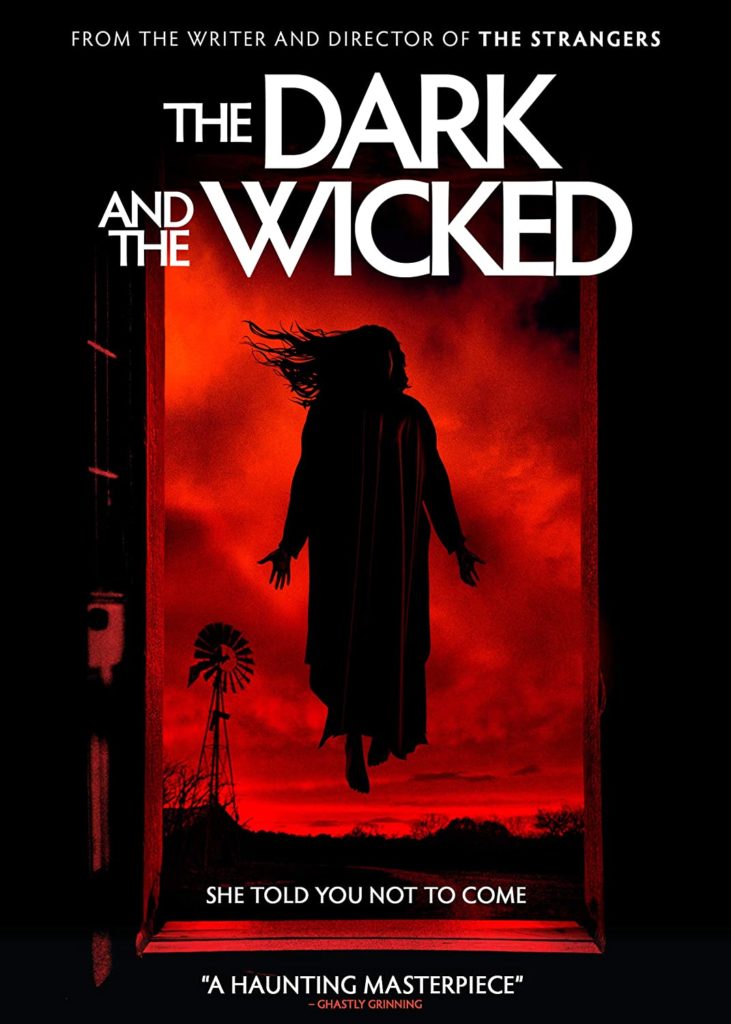
The Dark and the Wicked (2020)

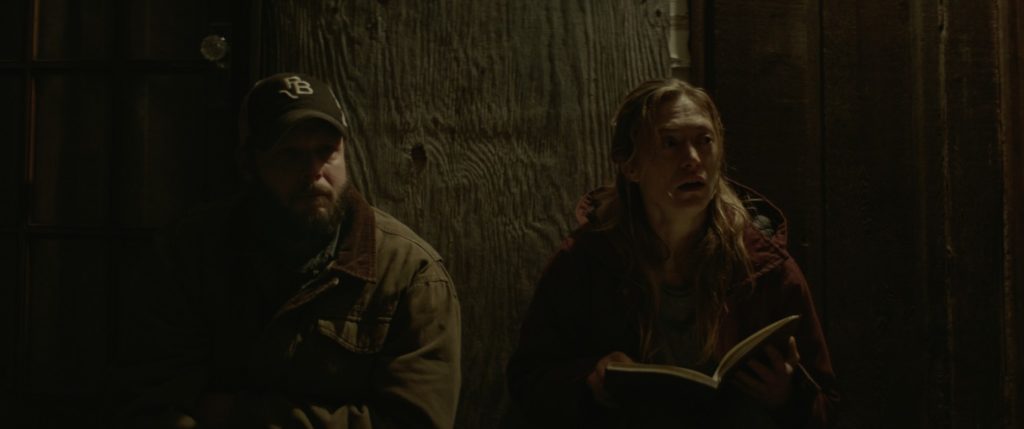
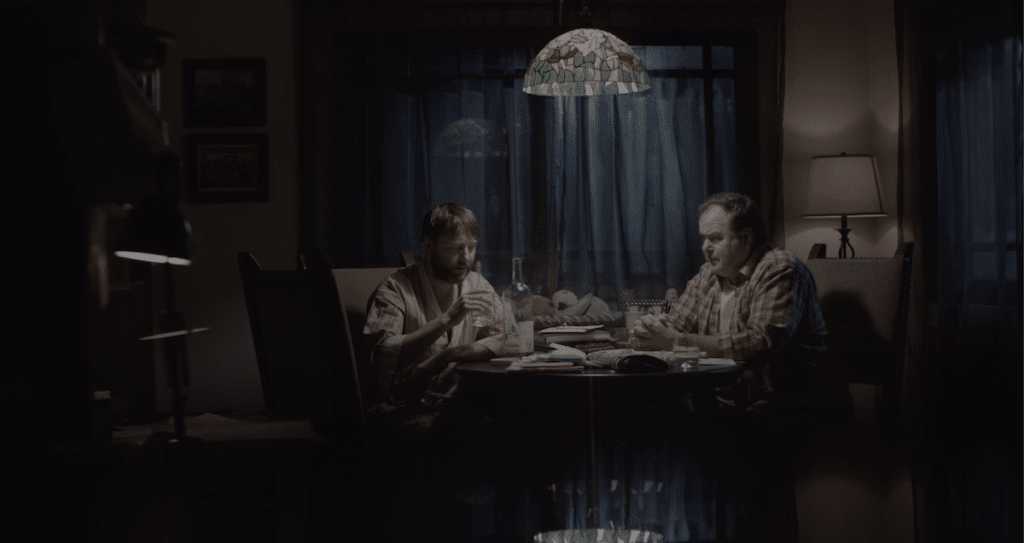
In rural Texas, grown siblings Louise (Marin Ireland) and Michael (Michael Abbott Jr) have returned to the family farm, knowing that their father is close to death. Their arrival is, however, no cause for celebration and the reunion is strained; their mother tells them that they shouldn’t have come at all. Even so, and through their concern for her, Louise and Michael notice that something seems strange about the old place. Here at least they might agree with Mom (Louise Oliver-Touchstone), who has also been hearing things and seeing things on the periphery of her vision. Is this as a result of overweening stress and grief, or something more?

The answer to this, from the matriarch at least, is a resounding ‘yes’, and in her absence, her children try to piece together what has taken place, relying heavily on her old diaries – which talk about a presence, a menacing entity of some kind which has a claim on her and her husband, too. Now Louise and Michael are left with the same ominous phenomena closing in on them, and the not-insignificant issue of what to do with their ailing father. We know little about this brother and sister, beyond the fact that they’ve come from somewhere else back to here, and we can infer that their relationship with their parents has been sparse: The Dark and the Wicked is no character study, but the sense of doom is always tangible.

What the film focuses on is atmosphere, and the film signposts this from the very opening scenes. For example, it denies the viewer clear shots of people’s faces, using shadow, or shifting focus, or macro shots of objects; add to this the frequent use of low light, and you are rarely permitted to get your bearings, or see what the burgeoning horror content is doing to the people in the house (which happens to to be director Bryan Bertino’s own family estate). As a welcome contrast, the outdoor shots are very beautiful, making the best of the film’s rural Texan location and allowing the odd moment of respite.

So the film looks very attractive, and clear care has gone into the framing of its shots. It isn’t always as quiet as it starts out, though. It builds up to a differing, and to an extent competing approach, alternating the ominous elements with sudden shifts in pace which have far more in common with Bertino’s prior work (particular his writing and directing duties on The Strangers in 2008 – there are parallels here). The Dark and the Wicked pulls off some successful shocks and, at least initially, these are a welcome shake-up. A motif is soon established, however; once you have been startled by one figure-who-turns-out-to-be-a-vision-of-evil, you’ll settle down once you realise more are coming, particularly all behaving in a similar way. Thereafter, the movement between ponderous foreboding and fast-edit shock beds in.

The notion of a darkness clustering around a matriarch figure, a rurally-isolated older woman who tries to make sense of her experiences through her own writing, feels so familiar because I reviewed a very similar film called Sator recently; that’s no fault of The Dark and the Wicked of course, but things with the newer release definitely feel like deja-vu in some aspects. Admittedly, Sator is even less clearly-organised around a coherent narrative, but the visuals and atmospherics certainly overlap in a series of ways. Likewise, some of the pitfalls are the same. If you happen to enjoy this kind of relentlessly dour occult horror where its pet scenes take priority over clear, demarcated events on-screen, then The Dark and the Wicked fits the bill: it knows what it is, it unfolds well overall with some effectively creepy scenes and it keeps a careful hold over its strong aesthetic values throughout.

The Dark and the Wicked (2020) arrives on Blu-ray, DVD and digital on 5th July 2021.

Rock, Paper and Scissors (2019)

The death of a loved one is undoubtedly a difficult time, but just as undoubtedly, a lot of the difficulties stem not from straightforward grief, but from the suddenly pertinent issue of money. Only weddings kick up as much dirt. Whether settling debts, distributing legacies, or selling property – or more usually, arguing about all of those things – nothing moves faster than a relative with a claim. Rock, Paper and Scissors (Piedra, Papel y Tijera) takes an oblique look at all of this, and is by turns an unsettling, often darkly funny piece of film, albeit that some of its initial promise dissipates, moving for a long stretch into something more surreal in nature. However, references to The Wizard of Oz abound, and that film’s focus on the importance of home – as well as its child-like, unreal and possibly allegorical world – run throughout, lending Rock, Paper and Scissors a tangible precedent.

After the death of her father, who had been disabled and ill for some time, Magdalena (Agustina Cerviño) arrives at the Argentina home which he shared with her two half-siblings, María José (Valeria Giorcelli) and Jesús (Pablo Sigal). They are politely pleased to see her, though they say they would have been better-prepared, had they known she was coming; Magdalena points out that she’s been ringing and ringing, getting no reply. This, together with María José’s preference for re-watching The Wizard of Oz instead of ever answering the door, indicates that something’s not quite right. Still, Magdalena is invited to stay the night. She’s not planning to be around for long, she tells them, as she’s just there to help them sort out the paperwork relating to the inevitable upcoming house sale and her share in the profits…

This would have gone down poorly with anyone, let alone the siblings who were tasked with round-the-clock care for their father whilst their older sister trod the boards in sunny Spain, but María José and Jesús seem fairly amenable – that is until, oh dear, Magdalena takes a serious fall down the stairs on her way out of the door.

Did she fall, or was she pushed? That is never entirely clear, but she’s badly hurt and gets tucked up in bed to recuperate (hospital is apparently out of the question). She’s now very vulnerable to the attentions of her brother and sister, who seem to each take turns, one seeming reasonable, one seeming unhinged; although the initial high action quickly dissipates (hard not to when someone is essentially confined to their bed) things remain tense, as each character’s motivations remain doubtful. Maria is a dutiful nurse, but a woman completely detached from the outside world; Jesús is far more well-rounded and sympathetic, right up until he isn’t, and each of these three vacillate in their feelings about one another. Comparisons to Misery (1990) are hard not to make, and there are many similarities in the basic set-up. Certainly, Annie and Maria aren’t a million miles apart, each obsessing over a fantasy, whilst getting on with the hands-on business of looking after a vulnerable person who may well be in that state because of them in the first place. But things get more interesting where Magdalena starts to exploit weaknesses and doubts in these family relationships; they all know one another and have axes to grind. This gives the film many of its strongest developments, and personally, I think there was scope for more here – the shifts between the unfolding situation and Jesús’ attempts at filmmaking, surreal add-ons though they were, felt less engaging overall. This is really a story of family relationships and there was definitely more to explore, preferably through Magdalena’s pithy psychological warfare.

Still, as a film unfolding in one setting, you’d hope that the house itself provided plenty of interest, and it does. Somewhere between grand and quaint (with marble floors but mundane clutter), it’s both homely and yet bizarrely cut off from the outside world, an outside world we never ever see. Alongside the references to Oz, religion underpins the film too, in the house’s Catholic iconography and in the beliefs of its inmates – this is as close as we get to another place outside the front door. Against this backdrop, alliances are forged and broken, characters shift and change and Magdalena does whatever she can to escape the situation she is now in. Narrative events are slow to come along during the middle act of this film, but in the meantime, the characters do have enough about them to keep you wondering about their eventual fates, as well as the back stories which are only hinted at.

Rock, Paper and Scissors is, after all, a slow-burn family drama, one which dips into dreamlike horror in some respects. Solid performances, particularly from the ambiguous María José, and strong visuals help to sustain the film’s ghastly spin on family politics. And, if it has any lessons for us at all, it’s to always pack the correct phone charger when heading off to see estranged relatives. You just never know.

Rock, Paper and Scissors will be available On Demand on July 6th 2021 from Dark Star Pictures.

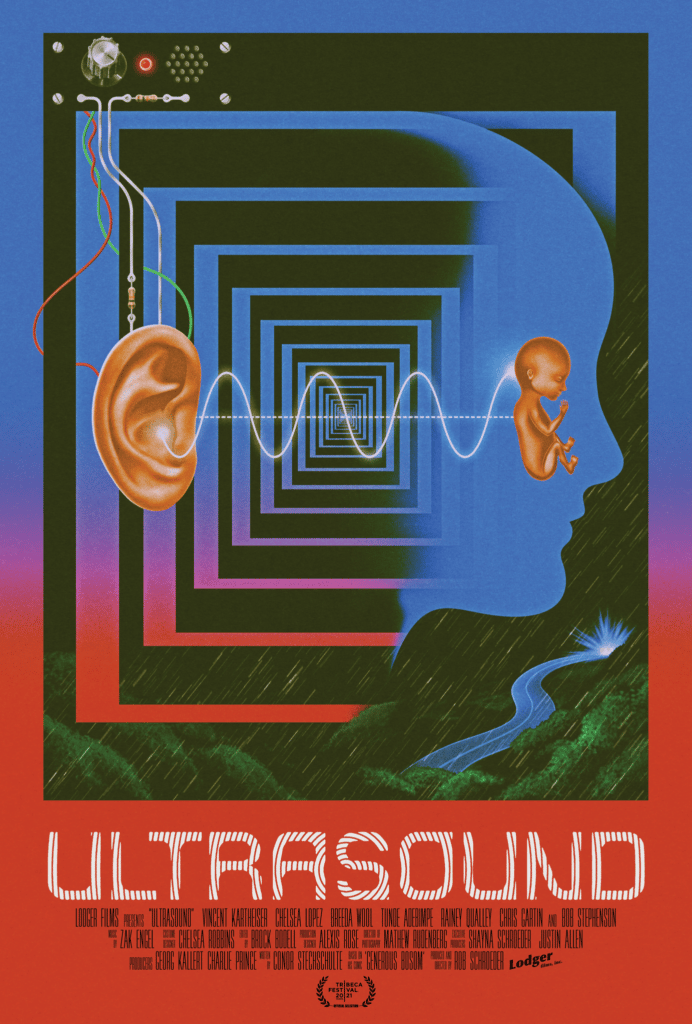
Ultrasound (2021)

Science fiction has become increasingly sombre of late. That’s not to say it hasn’t always explored the intricacies of human interaction in some pretty heavy ways, but it at least feels as though this more often happened against a backdrop of bigger-picture world building, rather than the more intimate films we see more now. Step forward, Ultrasound (2021), an intricate and sensitive, if often gruelling, exploration of memory and certainty. It’s by no means an easy watching experience, but it is strangely compelling, and would certainly have much to reward a second viewing. Just as its key characters are often perplexed by events unfolding around them, so the audience is, too.

Through film noir levels of rain and darkness, a car, already driving erratically, hits a discarded piece of wood spiked with nails and gets a flat. The driver, Glen (Vincent Kartheiser) finds himself stranded, and so seeks shelter at a nearby house. In one of the film’s rarer light-hearted sequences, the homeowners are very sympathetic and helpful; given the late hour and the lack of garages anywhere near, Art (Bob Stephenson) and his young wife Cyndi (Breeda Wool) suggest that Glen spends the night. They actually seem to relish having a guest; well, Art does, though Cyndi is more reticent. The affable Art cracks open a bottle and he and Glen pour a few drinks. Glen soon starts to feel woozy, whether through the alcohol or the sudden impact of the car accident, but he’s about to feel more disorientated when Art suggests that Glen should take the bed in the master bedroom, while he sleeps on the couch. Oh, Cyndi’s in there, but not to worry; Art says he’s seen the way they looked at one another, and he’s not jealous.

Few things are crystal clear in this film, but the sense of something potentially sinister going on is very carefully doled out, expressed in conversations which are very organic and low-key, never grandstanding. Glen feels that he can’t really say no, in these odd circumstances, but he gets talking to Cyndi, and does feel a connection with her and her quiet, sad history. The story of Glen, Cyndi and Art begins to overlap with other story elements: there’s Katie (Rainey Qualley), a woman who would love a greater share of time and respect from her boyfriend, whose political position is keeping him away – or is there a different reason behind his behaviour? Stranger still, all of these interactions seem to be of interest to an at-first unseen group of people with some kind of experimental interest in Glen and Cyndi; it even seems that conversations between the latter are somehow known to those who watch them, or even under their control altogether. But where does Art fit in? And Katie?

Revelatory moments are held back in Ultrasound, either presented in a blink-and-miss-it format to be revisited later, or avoided altogether for as long as possible – so that characters blur together, events are never really stable, and elements of the narrative overlap. It’s not until over an hour into the film that I could get any sort of a handle on proceedings, with the experience up until this point feeling like a puzzle box – not easy, not necessarily straightforward, but engaging, even if frustrating too. From that hour until the film’s close, the ideas and the explication move rather more quickly, with more familiar fare as the role of science and to an extent, pseudoscience is examined: its highly ambiguous, manipulative aspects are, it turns out, the bedrock of what has been going on here.

There’s a lot of scope within the film’s central premise, and it’s largely carefully constructed, even when close to bursting with ideas which just needed a bit more explication to really round things off. Ultrasound takes concentration, though it still successfully places itself as a discomfiting watch – especially with its later positioning as an auditory nightmare. If it has any precedents, I’d think of last year’s Possessor, with its own study of the struggle for bodily and psychological autonomy, the idea of ordinary people suffering for others via technological developments. There’s less emphasis on body horror here, though, and more of a study of very ordinary people against increasingly alienating subtexts. I’ve seen it described elsewhere as pulpy, but its tone didn’t feel that way to me.

Ultrasound is director Rob Schroeder’s first ever feature, and a great leap apart from the short films he’s directed previously in terms of style and genre; alongside a first-time writer, Conor Stechschulte, they’ve clearly set out to do a wealth of things with this project, most of which land. As a cold, cynical exploration of human interactions, it’s definitely the ticket, and certainly fits in with that more introspective, detached style of sci-fi taking hold of the genre now.

Ultrasound (2021) receives its world premier at Tribeca Film Festival, Tuesday June 15th. For more information please click here.