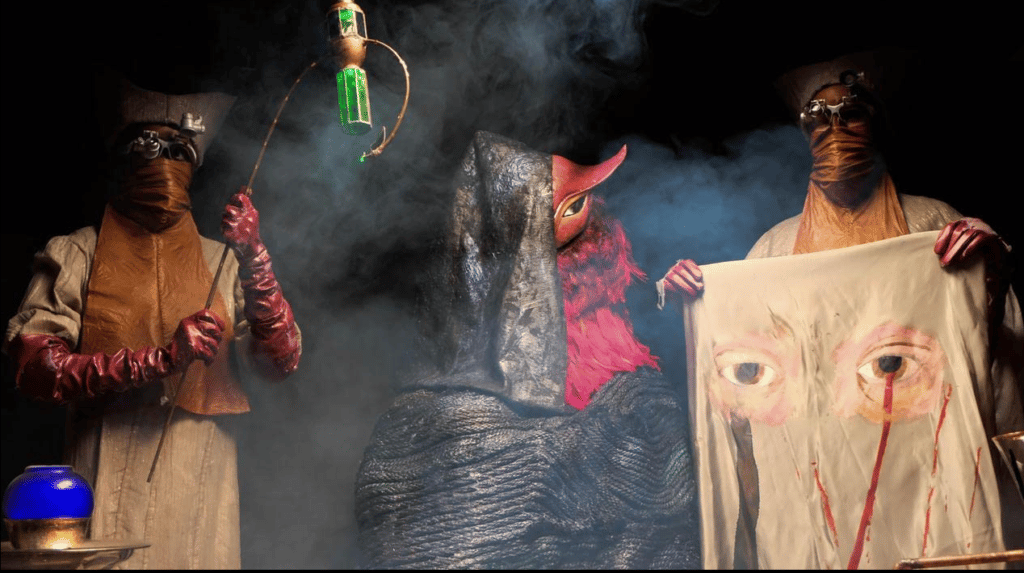
Frightfest 2022: Follow Her

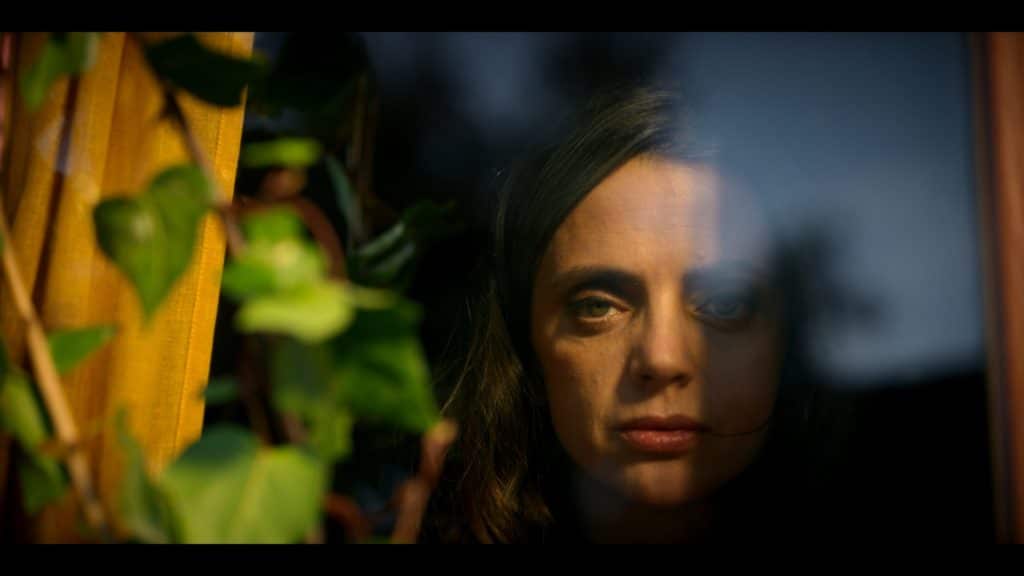
The rise and rise of social media has definitively blurred the line between consent and content. Good horror films were quick to realise this, as horror so often is: by looking at the continual blurring of reality and unreality, persona and person, horror has invited us to think about a new, updating number of worst case scenarios. This brings us to Follow Her (2022), a brutal, succinct and fast-paced story about some very modern anxieties.

The film starts as it means to go on – by inviting the audience to ponder what we’re seeing, leading us one way and then another. There’s a guy in a box, see, being tormented by a woman (Dani Barker), but when her phone pings, she ends the session: ah, it’s a session. Jess, a social media influencer (and hopeful actress) who seems to live-stream everything she does – including, or perhaps especially locking guys in boxes – has to head into the city for an audition. On the ferry, as she scrolls through the live feed comments from her most recent encounter, she spots one less than adulatory comment asking her how she would like to be watched all the time – but hey, this is the internet. She gives it a moment’s thought, but she’s clearly quite hardened to this: to get work, she seems to mine the darkest depths of Craigslist (or a very close facsimile) and you don’t do that for too long without developing a thick skin. And anyway, business is brisk – well, at least in terms of the amount of time Jess spends interacting with her phone; sadly, it’s not as lucrative as it is time-consuming.

It gets worse when she realises that, on a new upload, the filter which is meant to obscure faces has failed, revealing the guy she was with. Clearly, she has been using these filters in lieu of actually asking these guys if she can use her footage, or indeed if she can film at all. Jess ponders whether take the video down, or keep accruing clicks, comments and revenue. The video is doing great. She needs the money. Not only is she a professional disappointment to her father, but she might be on the verge of losing her place to live. And besides, she has another job to go to, and of course to livestream.

This job sounds a little different, even though Jess assumes that, once it comes down to brass tacks, it’s likely to be another unsavoury set-up masquerading as something else. But, at least ostensibly, the job is a request to work on a screenplay: a Hitchcock-aspiring writer needs the expertise of a beautiful woman (don’t they all?) to help him write a specific character, thus enabling him to complete the project. Jess agrees to meet the writer, Tom, in a rural upstate area and all’s well, at first – they even seem to be hitting it off – until she reads the script, and begins to suspect that there is more to this project than meets the eye. A kind of cat and mouse ensues – one augmented by Tom and Jess each trying to surveil one another as much as they try to outwit one another – and as this unfolds, the narrative broadens into a far bigger exploration of a certain modern, hectic, high-risk way of living. Tom begins to openly question this manner of existence, as embodied by Jess; we the audience are also invited to see the issues with this, because, even if the film begins to make use of more established horror tropes, it all feels like a very timely examination of the pitfalls of a life refracted through the internet. Jess is no mere victim in this though, and never acts like one: fighting over self-determination is not unknown to her, and she uses it.

Improvisation and its nature becomes an important plot point, and the dialogue throughout seems at least in part to be improvised too, which provides the film with one of its examples of circularity: added to that, the rapport between Jess and Tom is very plausible, with plenty of self-deprecation and charm from each. Luke Cook as Tom deserves a great deal of credit for his performance here, as he vacillates between plausible and sinister and right back again. It’s a very discomfiting, if engrossing feature of the film. But then, every element here seems to have been put together very carefully to achieve its selected effect. The shooting style is layered, switching between handheld mobile phone video, laptop and more traditional camerawork; however, because the film takes the trouble to make us question who is or isn’t shooting, the usual safe remove enjoyed by an audience – confident that they are very much outside a story looking in – breaks down. We can never feel confident about who is filming, where or why. It’s another effective feature, and it works.

There have been other films which morph into ruminations on filmmaking itself, but never quite as acerbically as Follow Her: it offers a very measured insight into its subject matter, one which works well alongside the pace and energy it sustains throughout. I wondered if some of the on-screen text needed a proofread or whether that was done to deliberately emulate online grammar horror shows (surely it’s ‘mindless drivel’, not ‘dribble’?) but hey, it could be either: follower counts win these days, right? This is a sharp, savvy film and a timely one, too. There’s a lot to like here.

Follow Her (2022) screened as part of Frightfest 2022. For more information on the festival, please click here.

Frightfest 2022: A Wounded Fawn

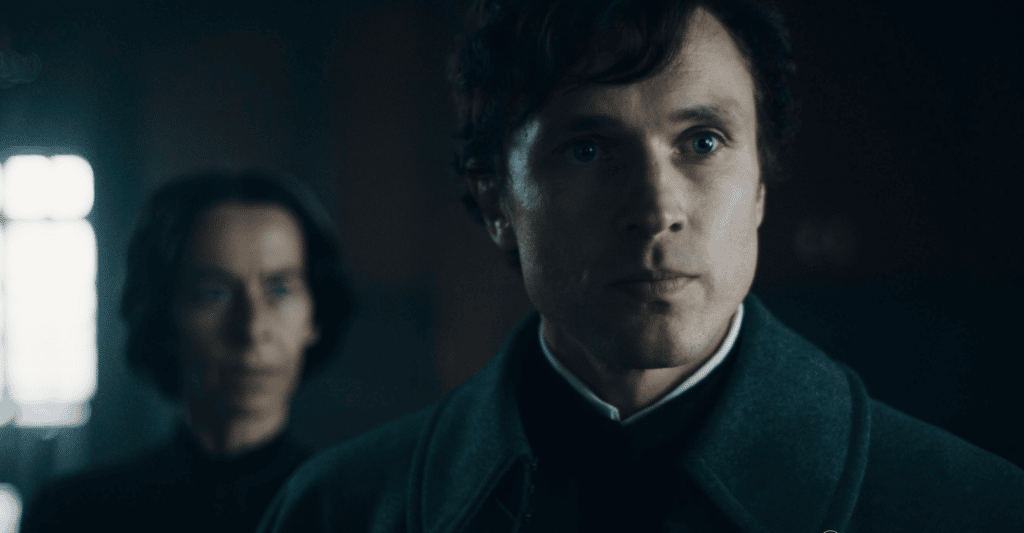
Who knew the art world could be this dangerous? Expensive? – absolutely. Elitist? Sure. But actively harmful? A Wounded Fawn (2022) opens on a prestigious auction, where a rare Greek bronze is being sold via an array of buyers primed to get the sale and get their commission. This frenetic, competitive environment prepares us for what will follow, and also introduces us to bidder Bruce (Josh Ruben), who tracks down the successful bidder, Kate (Malin Barr) and – allegedly acting on behalf of his clients – makes her another, lucrative offer she apparently can’t refuse. Kate looks to be a successful, clever young woman, but Bruce’s offer (and charm) sway her from her initial, completely appropriate defensiveness about strangers breaking professional and personal boundaries by rocking up at her door. Just consider how many films start this way, with a woman who has clearly made a success of her life, but loses it because she chooses to accommodate some random man’s feelings.

Well, we soon know what sort of a man Bruce is. This sets us up to expect the worst, particularly when we meet Meredith (Sarah Lind), another woman who owes her career to the art world, and who first appears on screen talking with a counsellor, discussing her personal progress away from a tough, abusive relationship. But she feels ready to date again (oh my god) and she’s heading away for the weekend, with a handsome fella she’s just met. We’ve just met him, too.

Here we go then, with two damaged individuals, heading to the horror-familiar territory of a remote cabin in the woods – albeit they don’t usually have as much natural light, expensive furnishings and objets d’art as this one, including that expensive, rare bronze of the Furies. Meredith is very surprised to see it sitting on the coffee table, given her museum had recently helped to establish its provenance, though Bruce insists that it’s just a good copy. It’s not the only strange thing about this place: soon, the usually level-headed Meredith begins to see and hear things, including seeing a woman, striding past one of the windows. Bruce insists that nothing of that nature has ever troubled him, and her questions trigger an angry response from him; whatever was going to happen here, it simply seems to be triggered early by Meredith’s behaviour. A brutal game of cat and mouse begins, flipping first in favour of one, and then another of our main characters – but it seems that Bruce’s behaviour as a killer and a thief has triggered something which seems to emanate from one of his most recent steals.

Above all else, A Wounded Fawn is a queasy watch (its title is reminiscent of The Killing of a Sacred Deer, and it coincidentally shares some of the same kinds of queasiness). It always seems to be threatening more discomfort, and its own particular supernatural content affords the layering of surreal and nightmarish content, allowing the film to experiment throughout. In terms of aesthetics, the film’s colourisation and grain recalls a lot of late 80s and early 90s VHS-era horror, whilst the use of uncomfortably close shots lend the film a claustrophobia and paranoia which cements its unreal, uneasy progression. There are some subtler visual clues in there to enjoy, too; we see those red flags.

There are also issues, however: that almighty flip from what at first seems to be a largely realistic narrative to a largely surreal one can feel repetitive in places, as well as submerging the original, very promising character study almost totally: this then all needs to be wrapped up rather abruptly, which results in the sense of two films struggling to come together as one. Inevitably, this will be divisive, and as much as A Wounded Fawn finds a hitherto-underused seam of mythology to explore, it does attempt a to do a lot with it which doesn’t always land, or throws in symbolism which becomes less clear. The film will perhaps appeal most to lovers of late-80s Eurohorror, and fans of Soavi in particular – and not just for the most obvious reason, either. Those who enjoy increasing doses of eccentric, surreal horror which adds a dash of absurd humour will be amply rewarded. For everyone else, the film’s highly experimental nature may be a challenge at times, but to its credit, a good share of that approach does pay off, and it does disrupt a fair few expectations.

A Wounded Fawn will screen as part of this year’s Frightfest. For more details, please click here.

Frightfest 2022 teaser: The Eyes Below

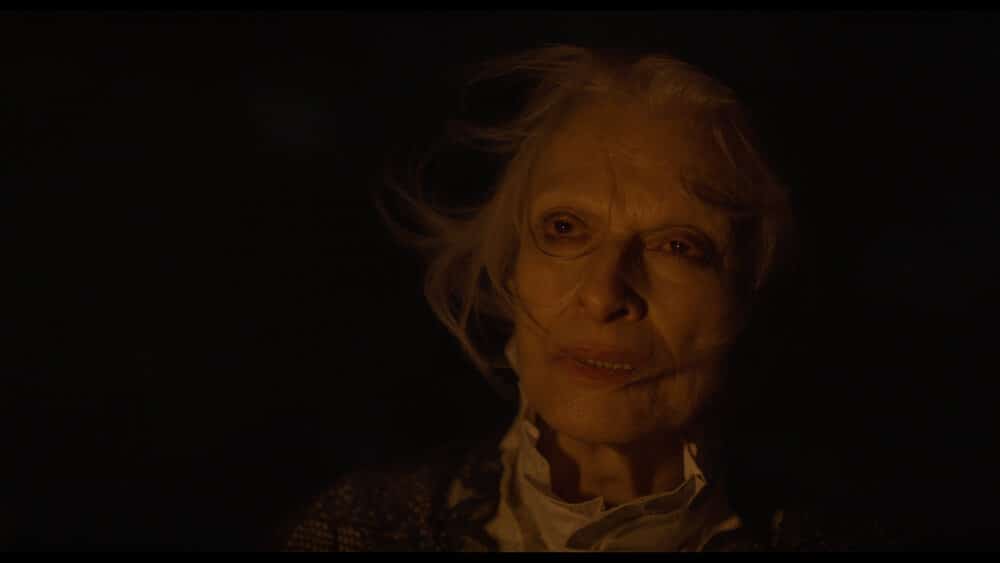
In many respects, horror cinema has always taken the stuff of our nightmares and drawn them out into fully-fledged stories, but also, horror has often explored the phenomenon of the nightmare itself. The Eyes Below – the second feature by Alexis Bruchon, whose debut The Woman With Leopard Shoes made quite an impression on me a couple of years ago – is a film about nightmares. However, with characteristic Bruchon economy and creativity, it doesn’t stop there: instead, the film explores the collision between waking and dreaming nightmares, and how these overlap.

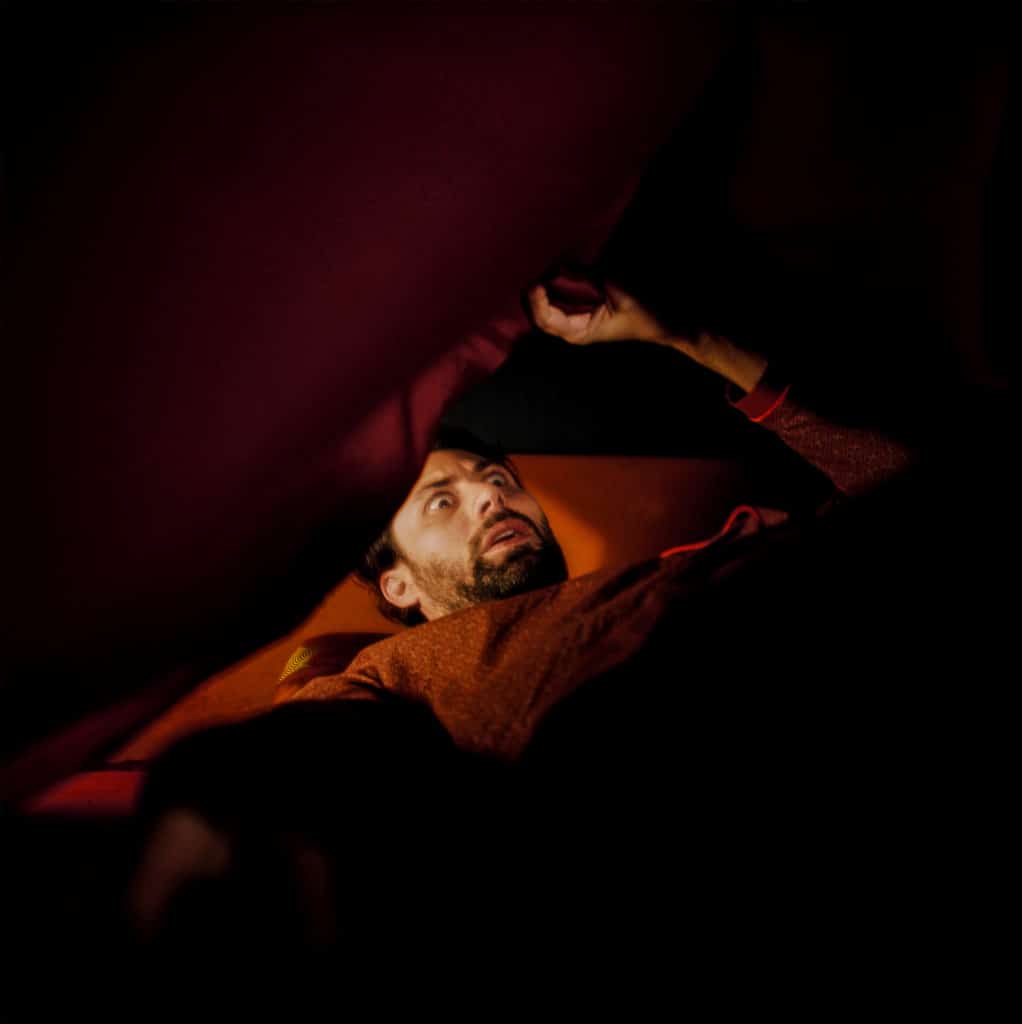
Despite the cosiness of his bedroom, we are introduced to a young man, Eugene (Vinicius Coelho) who is terribly troubled by his dreams. However, even when he awakens, the dreams seem to linger awhile; his bedroom seems to remain odd to him somehow, and he even thinks he sees someone still lurking there. This isn’t so unusual with certain kinds of nightmare, particularly night terrors, but it’s made clear that whatever is troubling Eugene is spilling out into his waking world too. This is impacting upon his career as a journalist, but it seems that he is on the verge of breaking a big corruption case which won’t wait, so – tired or not – the work goes on. (He also seems to add to his nightmare fuel with his other literary pursuits, spending time after hours reading up on mythology and folklore.) Evidently then, he has had a lot on his mind, and the film seems to set up a collision between adult concerns and a kind of fear of bedtime which feels very much like a childhood terror; Eugene’s professional angst could well be feeding into his sleep disturbance, but by night he is as terrified as a child. There are some other intimations of health issues, so clearly there is plenty here to suggest reasons for a broken night.

If anything, though, the subsequent night is even worse. The glimpsed figure of the night previous is back, stronger, and seems determined not to let Eugene rest. He feels pinned to the bed by an immovable weight, or worse, tormented by the mute presence which weaves in and out of view, with regular items in his room changing in size and scale; his room becomes a very different place. He is afraid, but the rational adult in him tries to reason his way out of this situation, looking for clues as a way of rationalising his way out of this perhaps physically harmful dream.

Bruchon has made an artform out of the unsettling here: he clearly understands that nightmares are essentially very lonely, with elements which distance the individual from all the trappings of normality. Everything here, from the panning shots to the camera angles, the interplay between dark and light, right through even to the opening scene focus on the psychedelic-seeming pattern on the bedding – these all establish a weird, foreboding atmosphere. The film looks a little Expressionist in places, and there are a few nods to pre-existing films or literature (The Grudge and The Yellow Wallpaper, for example) but where Bruchon really establishes his own style is via the multimedia aspects he adds to his stories. The importance of written text, which was key to The Woman With Leopard Shoes, is again used here and it turns some elements of the film into a puzzle, one the audience can interact with. Interestingly, the film’s written aspects are presented in lieu of dialogue, which makes for a demanding role for Coelho. He is more than equal to it though, veering between blind panic and a determination to understand. And again, interestingly, this forms another element of overlap with Expressionism as, despite being highly colourised, we come to reply on the written word for our plot explication.

The Eyes Below is, in many ways, a simple idea done horrifically well. It’s a visually stylish collision of rational and irrational, and another exploratory, pithy piece of film by Bruchon.

The Eyes Below will feature at FrightFest 2022. For more details, please click here.

The Feast (2021)

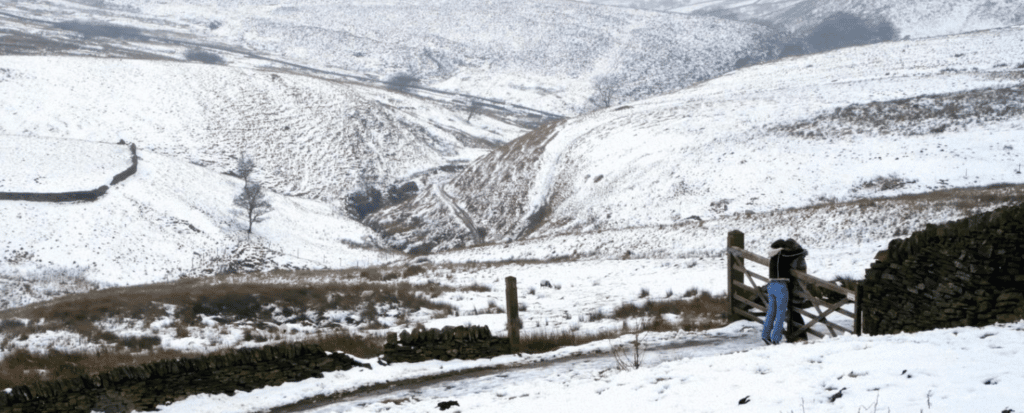
The Feast (Gwledd) is a Welsh-language horror about place and ‘progress’; as such, it bears many of the hallmarks of folk horror, though it never neatly expounds all of these elements. It doesn’t divulge everything; perhaps it doesn’t need to. However, its message is still bloodily clear and familiar: tradition and folklore are more than just stories here. Instead, they are positioned as codes, there to keep those in the know safe – and to punish transgressors.

In an immaculate, modern house in rural Wales, a woman, Glenda (Nia Roberts) and a young man, son Gweirydd (Sion Alun Davies) show that they have the time and means to indulge themselves; it’s a stark, isolating kind of luxury, but luxury still, and this is a big day for the household. Glenda and her husband Gwyn (Julian Lewis Jones), who is the local MP, have a big dinner planned. To facilitate this, they have hired a local girl called Cadi to assist, as their usual helper is unavailable. Cadi (Annes Elwy) doesn’t make a great first impression: she arrives late, her hair still wet, and overall a little dishevelled (regular horror viewers will raise an eyebrow at her crisp, pristine white shirt, because we all know it ain’t staying like that.) Preparations for the meal begin: Glenda has a long list of expectations, it seems, which Cadi has to take on board very rapidly. Clearly, though, there are some issues with Cadi: she mutely receives the demands made of her, is prone to flights of fancy and seems overall to regard everything in the house as a new experience, although she reacts with revulsion when Gwyn arrives home with a brace of rabbits he lies about having personally killed.

In the meantime, the strained family dynamic becomes clearer; both Gweirydd and his brother Guto (Steffan Cennydd) are not exactly willing residents at home, and between father, mother and sons there is a tangle of issues – disappointments, secrets, frustrations. What better, then, than the nexus of the dinner table to bring these issues to light? The dinner is important because two of their guests are involved, wittingly or otherwise, in Gwyn’s plans for the farmland they are exploiting for resources. Already the old family farm – where Glenda grew up – has been flattened to make way for the new house, but this is by no means the end of the process as they see it. Cadi’s presence begins to exacerbate the tensions – there is an element of sexual unease around her role in the household – and the meal becomes a nightmare of symbolic, horrific proportions, though it feels as though some level of ‘nightmare’ was coming regardless of how, exactly.

This house – actually an architectural project by John Pawson called the Life House, in Llanbister – is a great location, used well to show how this family has made an artform out of artifice. Nothing seems anything more than superficial, whether it’s Glenda peeling off a face mask in the sanctuary that guest Mair regards, astounded, as a self-built ‘prison cell’, or it’s would-be triathlete Gweirydd preparing for the race on a static bike, albeit set up outside. Questions about these people bubble to the surface and linger. Stains and scuffs disrupt the surface perfection throughout the first act of the film, overtly suggesting more disruption to come. The visual clues are many.

There are some issues with the film’s approach in places: there’s some disparity between the swathes of slow-mo symbolism and the upfront awfulness of dinner guest Euros (Rhodri Meilir), for example, as he rattles out a list of his status symbols as soon as he turns up (which, now I think of it, is not even the first scene which reminded me, tangentially, of American Psycho – the same empty-headed materialism is there). The chaptering of the film is a needless affectation, as it always is – but regardless of this, this is a very beautiful film with a developed awareness of how to compose shots, how to light them, and where to focus. To add in another point of comparison, some of the shots and subject matter are similar to Ruth Paxton’s A Banquet (2021), though The Feast takes its own direction, becoming more overt in its horror. It remains slow-burn, though, never fully giving way to the more graphic, shocking content, even while it tantalises it.

Perhaps most of all, the film succeeds in making an allegory out of a modernising Wales; of course, many other countries have similar stories, but The Feast explores what happens to a country – symbolised by the family – which embraces change to the point of regarding the past as, to quote Glenda, “primitive”. That’s especially resonant as a South Walian, where – by the 1960s, when the Valleys and surrounding areas were at the peak of their industrial wealth – the majority of the young population spoke almost exclusively in English. Case in point: I couldn’t understand more than a handful of words in The Feast, as both a Welsh native and non Welsh speaker, something which has always torn at both the romantic and pragmatic sides of my nature. But I digress: the shifting use of the language has certainly been associated with a modernising, changing country – for good or ill – and as such, the use of Welsh in the film is, I think, significant: Wales is and has long been a quietly contested place, a country with a turbulent and often self-effacing history, one which is often overlooked, even within the UK. It lacks the greater bombast of Scottish history and identity perhaps, and of course has suffered nothing like the open warfare seen on the streets of Northern Ireland, but Welsh history has more than enough to anger, to shock, to sadden. The Feast uses the symbolic language of horror to illustrate something of this, and it’s in this that I think it really shines. Anxieties over the land, family, tradition, mythology and values seep slowly through the film; these are familiar in many respects but also, somehow, inextricably Welsh. It’s a visually rich, beguiling watch.

The Feast (2021) will be released in cinemas on August 19th 2022.

Prey (2022)

Predator (1987) is one of those action/sci-fi films of the 80s which feel like almost perfect movies: no lulls, no tedious side-plots, but enough focused writing to pit plausible characters against hitherto implausible adversaries. It’s no surprise then that the original film has presented tantalisingly rich pickings for subsequent films, whether reboots or add-ons (and it’s no surprise either that another almost perfect action sci-fi movie, Aliens (1986), provided the means for one of those add-ons, specifically one of those ‘vs’ films which were briefly rather popular). Now, we have a prequel: without namechecking Predator, Prey (2022) is nonetheless a Predator movie, this time going back to the 18th Century to look at a Predator’s early expedition to Earth (and it’s hard not to see them as…kind of like enclosure hunters, to be honest, which is a shame, because who wants to associate anyone or anything with those fat cowards?)

Set on the American/Canadian border, the Predator encounters the Comanche tribe (several hundred miles north of where they were actually based at the time) but in his frenetic run of skull-sourcing, he doesn’t bank on the diligence and fighting skill of a young Comanche woman called Naru (Amber Midthunder). Never before has ‘final girl’ been foreshadowed quite so hard – but, all in all, despite a gathering pile of minor misgivings, the film works pretty well as a fairly straightforward, but reasonably paced film with lots of well-handled action sequences.

Naru isn’t like the other women in her tribe; to be fair, it’s not beyond belief that a spirited young woman could wish to rail against women’s work, which is presented here as tedious – vital, but tedious nonetheless – with the same morning routine, as all the women move out to gather petals and somesuch (one woman is shown twice to have a baby on her back – I mean, god). It’s all represented as something Naru can’t handle any more. She prefers to hang out with her brother Taabe (Dakota Beavers) and his friends, hunting out on the ridge line. They hone their skills by hunting…well, most wildlife, to be honest, which didn’t quite chime with this reviewer’s notions of Native Americans as only taking from the land what they really need. That’s not for here. Eagle? Fuck you, eagle! Mountain lion – let’s have you. Rabbit! Harmless possum! They just shoot them all, but let’s be charitable and assume they do in fact then prep them and eat them, rather than just indiscriminately filling all of the local fauna with arrows.

When she’s not deflecting her brother’s friends’ sexist quips, Naru becomes aware of something else out there, and a sizeable threat too, to judge by the tracks she finds: she begins to associate it with the strange flash of fire she saw in the sky, which she had taken as a spiritual sign rather than evidence that they are about to be rather comprehensively turned over. The Predator here, whilst not quite contemporary in a tri-corner helmet, is clad in different gear to the fella who appeared on the planet in the 1980s, by which time there were probably package deals. Nonetheless, he’s as wildlife-averse as the Comanche and once he’s satisfied that it’s a case of Predator hunting predator, he begins tearing the local predators asunder in ways I found genuinely quite upsetting, despite having a full awareness that this is a case of CGI vs CGI. It matters not. Who wouldn’t be Team Grizzly? The film could have ended with something more like that scene in The Revenant (2015), and it would have been just fine. Groundbreaking.

Obviously that doesn’t happen: the Predator turns his attention to the humans, and despite a few early missteps when she’s actually faced with formidable foes out in the wilds (including some obligatory Dreadful Whites, a band of French-speaking furriers), Naru learns quickly. The skills she has been practicing as a kind of surreptitious two-finger salute to prescriptive gender roles come in handy; she correctly assesses how this creature is hunting and spots an opportunity to prove her worth to her tribe by eliminating this clear existential threat. Now, to do so, and also in the general establishment of her prowess as a physically strong fighter, the film plays very fast and loose with the physical capabilities of a girl who looks to be…maybe twenty, and about 125lbs. Sure, this isn’t a work of exacting realism – and yes, there’s a massive alien stalking the plains – and this is certainly not the first film to pit relatively tiny females against hulking great males and have them win; it’s gotten to the point now that real life almost expects this to really be true: the fantasy (see also the entire ‘final girl’ idea) which started as a mishmash of wish fulfilment and catharsis now stands as a kind of bizarre truism.

But okay: if we surrender to the notion that Naru can not only kick the cack out of her brother’s quip-ready mate, but also pit herself against a creature who has just literally ripped his way through an entire camp of grizzled, armed men – even if this necessitates a spot of threat disparity along the way – then the resulting battle is very entertaining. The creature effects are handled well and the scale of the location is used to great effect, with a well-developed sense that this natural world was a tough enough environment anyway; things have escalated, sure, but this huge challenge to the ingenuity of the Comanche people works in many respects because you believe that they have already adapted to a tough, often vulnerable life. Guns and ammo – even rudimentary ones – are no match for a wily understanding of the world on the edge of camp. It would have been good to get just a little more characterisation of the Predator – which, again, demands comparison with the near-perfect 1987 film – but all in all, Prey is a decent spectacle, gritty and grim enough, and an ambitious take on the mythos. (Making the film so difficult to actually get hold of is a question for the ages, and beyond our remit here, but this would have been great at the cinema.)

Prey (2022) is available on streaming services Hulu and Disney Plus.

Glorious (2022)

Here’s what you might already know about Glorious: it’s set in a toilet. What you might not yet know (or perhaps you do) is that you can explore some pretty profound ideas in this setting. Think microcosm-macrocosm, where big ideas can be played out on the small scale, but tell us a lot about the bigger picture. Wes (Ryan Kwanten) has just undergone a painful break-up: as he hits the road, nodding off at the wheel, then later when he makes a rest stop, taking out his frustrations on a vending machine, it’s clear to see he’s a mess. Another stranger clocks the piled-up belongings in his car and correctly guesses that he might well be sleeping in it. Well, Wes goes one better than that and – when his umpteenth call to his ex Brenda goes unanswered – decides instead to drink an entire bottle of booze and burn everything he’s brought with him.

Minor spoiler: he’s no happier when he awakes (on the asphalt) the next morning, only now he’s hideously hungover too – and has burned his trousers. That kind of hangover. Feeling none too well and still trouserless, he pays a visit to the rest room to ‘call Ralph’ and – it seems he’s not alone in there. Someone in the next cubicle, overhearing his distress, politely asks if he’s okay. Although Wes protests that he’s “not much of a bathroom talker”, they do end up in conversation: the guy next door is friendly enough, even oddly friendly given their circumstances, but things take a turn when he insists on formally introducing himself. And this is just the beginning: he insists that Wes must hear him out: they have something important to discuss.

This is such a smart, savvy film: it’s also surprisingly colourful given its setting, and without losing any of its forward momentum, the script moves from darkly funny to deeply meaningful and back again. It starts with that commonplace human urge to avoid awkwardness and difficult conversations – where better to envision this than in a strange public bathroom? – but it builds on this, showing that this urge has far more serious repercussions, even existential significance.

All of this necessitates a very intense and committed performance from Kwanten, who must remain plausibly contested and nervy throughout; this he does admirably, especially considering he fills most of the shots most of the time, and a large proportion of the dialogue is on him. He spends a lot of time talking himself around; who wouldn’t? There’s also plenty of humour here. It’s maybe too much to see Wes as a kind of everyman, but certainly up to a certain level his confusion and bemusement are recognisable. There are a lot of physical aspects to this role, too – again, perhaps surprisingly, given the limited set – but they all play out well, with Kwanten usually going back and forth between amused and disgusted, until even these defaults will no longer do. As for ‘the voice’, we have veteran actor J. K. Simmons to thank for that. Given that he’s concealed, it’s impressive just how much gravitas he can conjure, playing the opponent just as well as he plays the rather more apologetic messenger.

The film also offers up flashbacks and dream sequences, so although the film remains in its key limited setting, we get lots of context and depth from elsewhere – all of which allows the film to gradually add in its deeper significances, even aspects of its own mythology (the blend between mythology and acumen puts me in mind of the work of directors/writers Aaron Moorhead and Justin Benson in places). I’m at pains not to genuinely spoiler anything here, but look: Glorious winds up being a diverse, richly-layered and entertaining narrative, whilst it’s impossible to be fully confident on where you think it’s all going. It’s a clever film, testament to director Rebekah McKendry’s love and knowledge of genre, particularly horror, and her confidence in playing around with the different elements. Whether you choose to focus on the weird and wonderful comic-book plot pieces or to see it as a grand, grisly parable about the self, both are valid. Glorious is bold, sharp as a tack, and seriously inventive.

Glorious (2022) played at the Fantasia International Film Festival 2022 and the film will be available on Shudder from 18th August.

The Fight Machine (2022)

Based on a novel by Craig Davidson – who also writes under the pen-name, Nick Cutter – The Fight Machine (2022) is, by some strange chance, the second of Davidson’s/Cutter’s novels to get adapted for the big screen, with both films appearing at this year’s Fantasia (The Breach being the other). It’s a pulpy, often brutal story about two unconnected lives and how they come into contact via the sketchy world of bare-knuckle boxing. That all being said, the brutality is concentrated into a few major fights, and the film as a whole is more of a ‘journey, not destination’ affair, considering ideas of masculinity and male social roles along the way. It doesn’t really delve into the more philosophical leanings of the most obvious comparison, Fight Club (1999), but there is a little of that in there.

The film starts with a voiceover, deliberating on the level of change which is actually possible to an already-formed personality; it suggests that your average man can only change by about 5% (and no, I have no idea what the criteria are for measuring that). But the point is – even that insignificant-sounding change can mean a seismic alteration to a man’s character. It’s the essence of what takes place for our two male leads here, but particularly for Paul (Greg Hovanessian). We meet Paul in a nightclub, and we quickly get a sense that cash and coke have given him a false sense of his own security: he mouths off at a guy chatting to his date, and for his troubles, he gets an absolute pasting outside. To paraphrase that Mike Tyson quote, everyone has a plan, right up until they get punched in the mouth. This experience leads to a kind of epiphany in Paul; the way to fix his dented self-esteem (and face) seems to be to get himself fit by: joining a gym, getting bullied by the staff and – all in one session, mind – trying to take a shortcut to success, via some under-the-counter performance enhancers. Before long, he’s eyeing the boxing gym.

Elsewhere, up-and-comer Robbie (Dempsey Bryk) spends his time training for an unavoidably glowing career in boxing. He operates under the watchful attention of his father (and actually Dempsey’s real father, Greg Bryk) and his uncle Tommy (Noah Dalton Danby), but he feels very divided on his fated boxing career; he’s a quite gentle soul with other interests outside of the sport. This may be partly to do with his uncle moonlighting as an illegal boxer; he therefore sees all of the downsides to this pastime, and knows that Tommy is pretty desperately trying to claw back some income and kudos this way; theirs is not an easy road.

Now, you can no doubt guess that these worlds are going to overlap. We have two young men, each with a different burden of personal pressures, each with markedly different backgrounds, each with different perspectives on boxing and what has brought them to it: there are only so many underground boxing fraternities to go around after all. But boxing definitely operates as a kind of locus for proving oneself, whether imposed or self-selected according to which character we are currently with. Of course this means that there are a number of very graphic fight scenes, with well shot, lit and soundtracked fights; The Fight Machine is, however, a very dialogue-heavy film too, with lots of deliberation on what all of this means. The film also allows itself to dip into black humour, which at first was unexpected: tonally, some of the earlier scenes were a little difficult to read, until it became clear that the film was definitely up for laughing at itself in places, with a whole gamut of eccentric fringe characters and absurd developments. Yes, this is a deliberation on masculinity, it’s just that some of that turns out to be self-deprecatory. See also: the use of fantastical scenes, one of which strongly resembles a scene in Fear and Loathing in Las Vegas (1998) – it’s another unexpected element, but considered as part of the whole, it works. Getting hit in the head/imbibing performance enhancers can have an impact on your perception, after all; that’s a reasonable thing to include.

On the whole, the different elements which are put to use here work well towards the film’s overarching pulp fiction feel. This is a discourse about masculinity – with interesting takes on what this means, and how maybe now being ‘a man’ means being fitted for different types of success – but it isn’t simply a po-faced, or reductionist yarn about those themes. It successfully makes the points it sets out to make, and does so creatively in places. The film has a great cast, too: a special mention has to go to Michael Ironside as Lou, the boxing trainer: it’s always good to see him on screen.

The Fight Machine (2022) premiered at the Fantasia International Film Festival: watch out for a general release later this year.

Fantasia 2022 short films: Born of Woman

Anteroom

Rounding off our Fantasia 2022 coverage, we have a glance at another run of short films – this time, directed exclusively by women. And it’s a varied, often very dark collection of films, touching upon subjects such as superstition, statelessness, secret worlds, the afterlife, friendship, love and trauma.

Lily’s Mirror operates in a ghastly early 90s analogue world where men not only dominate the world, but seem to cut, hack and murder their way through it too. On a dinner date, Lily (Linnea Frye) gets her hand chopped off by her partner; the really scary thing here is, no one seems to particularly mind. It’s just a quirk; all guys do it at least once, it seems. In dealing with the aftermath of this, Lily undergoes a kind of dark night of the soul, fearful of people (understandable!) and getting odd, phantom pains in her missing hand. A sympathetic doctor introduces her to a mirror box; by looking at the reflection of her remaining hand, she can train her brain to recognise that the other hand is not actually there. Well, it turns out that the mirror box can do more than that. There’s a great idea at heart here, and a sharp, satirical edge to it too: a peculiar fantasy, sure, but one which uses fantasy to question the world we do in fact find ourselves in.

Everybody Goes To The Hospital is the only 100% animated film in the collection, but despite the presence of this, and a child narrator, the film is in fact a very bleak exploration of childhood trauma; it’s just done using the language, form and symbolism that children would recognise, and it’s based on a real childhood experience. Little Mata is ill; after a week of ‘flu’, her parents realise that she’s suffering from something far worse, and so they take her in to hospital to get examined. It turns out that she needs an operation, and the situation escalates even further once she’s under surgical care; the film really illustrates the helpless, frightening aspects of being a small child, especially where it emphasises the vast chasm between adults and children. It’s a thought-provoking, and rather sad story which I hope was cathartic in some way.

Wild Card is named for the dating agency which features in the story, but it’s a wild card in its own right too: it eschews a neat narrative arc and leaves the audience wondering what happens after the credits roll. We meet Daniel, a man looking to meet a special someone via what used to pass as Tinder back in the 80s – namely, a video dating agency, where you record a message and the cassettes get sent out to prospective partners. And, by the way, analogue technology is everywhere in this film collection; tech nostalgia is a kind of rite of passage in a lot of independent film now. Anyway, Daniel gets lucky, getting picked out by a kind of earthy femme fatale by the name of Toni; sometimes she’s enticing and mysterious, and sometimes a little spit-and-sawdust. But Dan is intrigued enough to follow her – somewhere…

Similarly, Punch Drunk is a snapshot rather than a fully-formed story, but what it does provide is a glimpse into the everyday details of life for a woman where sex and gender intersect in often unpleasant, attention-draining and even traumatic ways. Nora is a sparky, no-nonsense character working at a bar; she has to grit her teeth and get through her shift, despite some time-of-the-month-plus issues which are bothering her; it’s no fun trying to interact with the world whilst bleeding through your clothes. But whatever nerves she feels about an upcoming gynae procedure – which she discusses quite openly with her colleague and partner at the bar – it seems that the bar itself harbours some unpleasant memories; the whole film just proves that you can’t always get away from sources of anxiety and discomfort in life. What we get here is a likeable character living through some inescapable and unsettling experiences, where the subject matter is handled unflinchingly, but carefully.

Stained Skin

Stained Skin is a very artistic concept, a blend of very beautiful animated sequences and contrastingly, a tough, unforgiving real-world environment; these two worlds collide via the art of storytelling. In a grim commercial laundry, a woman tells stories to her friend – as a means of escapism for them, at first. She tells her all about a girl called Nanami, who was taken to the bottom of the sea and put to work gathering pearls; however, although this is a fantastical world, it seems that many of the story’s elements overlap with the women’s reality: there is forced labour, imprisonment, escape, wealth, class and crisis. Eventually, when the story seems to run out without an ending, the other woman picks it up, and it becomes a symbol of hope and rebellion, a source of comfort. This is a visually very strong film with beautiful music which successfully conveys a sense of two separate but linked worlds.

Daughters of Witches

The Anteroom is a Spanish language film so I confess, I will have missed the finer points of the dialogue with my extended Spanish vocabulary of about ten nouns, but here’s what is clear: it is a low-key sci-fi film where a woman and baby seek refuge at a mysterious sanctuary. Gaining access to it is a challenge, and certain conditions must be met; a disembodied voice assesses the woman’s suitability, aware that she is the last survivor of a group. But carrying a baby into this room is, we gather, considered a significant negative. To get to safety means a set of risky tasks where nothing is certain. This is a dark, ominous film, one of that new gamut of science fiction visions where the sci-fi itself is rather minimalist, but no less effective and ominous for that. Again, there are no comforting certainties at close of play.

In Daughters of Witches, an exhausted new mother, Clara, has just travelled from her home in the US back to Mexico at the behest of her family. Apparently, it is customary for new baby girls to undergo a particular ritual, and this is the familial and cultural expectation, although Clara – who has been away from this world for some time – is worried about it, as it means leaving her baby daughter out in the woods. Despite the assurances of her close family, she is scared. The reason for all of this is, however, sacred: the first animal to approach the child at dawn will represent the child’s spirit animal, and protector for life. Charming? Or eerie? The interplay of multiple anxieties takes hold of the film as the ritual unfolds in ways which feel wrong, somehow: could it all be down to the absence of the family matriarch, who passed away without meeting baby Iris? The performances here are excellent, and the photography of the rituals by night are very evocative, with a perfectly ambiguous ending.

Don’t Go Where I Can’t Find You is a very diffuse, mood-infused piece of film which interrogates ideas about grieving, love and loss. When her partner Freya dies unexpectedly, composer Margaret attempts to channel both her own sadness and Freya’s protestations that there was something supernatural going on in the house; before her death, she claimed that the spirits of the house were coming for them. Margaret believes that through her music, she can hear Freya; revelations of guilt begin to filter through this grand new musical project, for reasons which are slowly revealed. There are some nods to The Yellow Wallpaper here, as well as some evocative use of ideas around EVP and spirit recordings; music is, of course, integral and its role as elegy and invocation sounds very much fit for purpose. Aesthetically and aurally beautiful, the film stands as a evocation of grief.

Don’t Go Where I Can’t Find You

Finally, Kin takes us back to 19th Century America and a homestead in the middle of nowhere, where sisters Ida and Annabelle have ‘put down shallow roots’, as the older girl describes it later in the film. They are looking after their infant brother John; clearly their parents are deceased or otherwise absent, and Ida handles the family dynamic in a very terse, strained way, laying claim to a particular responsibility. We soon appreciate why; she seems to be haunted by something, though whether that is all in her head or otherwise remains to be seen. The film starts with straightforward deprivation and desperation but moves somewhere else entirely, to a place where family ties are tested in unexpected ways. Kin tantalises at a back story which could easily form the basis of a feature, but it works well in a short film format because just enough is done to actualise the threat to the family. Reminiscent of It Follows in some respects, this is an effective and understated story with a genuinely effective hook.

Interview: Rodrigo Gudiño

As a long-term fan of both Rue Morgue magazine and his film career to date, I was thrilled to get the opportunity to chat to RM founder and director of recent feature, The Breach – Rodrigo Gudiño. The Breach got its world premiere as part of this year’s Fantasia International Film Festival and will be headed for a wider release at the end of August: in the meantime, we talked about the process of making this film, as well as plans for the future.

WP: Firstly, thank you very much for finding time to talk to Warped Perspective! Talking about The Breach first of all: what appealed to you about using the Nick Cutter story of the same title as your basis for the film, and what were the challenges of adapting this story?


RG: Thank you! I learned about this project when I was offered the script. At the time, I had actually not read Nick Cutter, so I just took the script on its merits, which were strong. Nevertheless it did require some massaging to get it to the level of something that could be shot, so I proposed changes that thankfully Craig (aka Nick) and the producers at Hangar 18 were enthusiastic about. But in the end, because were pressed for time, I never ended up reading the book. For me, the script always came first.

Gudiño (left) on the set of The Breach

WP: The Breach contains elements of several different genres, but it feels in some ways like an updated take on the haunted house, albeit the source for the phenomena is different. This feels like a theme you enjoy exploring, as it also forms part of your first feature-length, The Last Will and Testament of Rosalind Leigh. What is it which appeals to you, personally, about this horror theme? And do you/did you have any particular inspirations from pre-existing films, TV or literature for your feature-length films to date?


RG: Yes this is a recurring theme for both movies, but that’s pretty much where the similarity ends. In Last Will, the ghost story was a device for exploring ideas related to how people can haunt and be haunted by grief. In The Breach, it was a plot device to add a layer of scare and to keep the audience guessing as to what the real story was. So there were very different motivations for each. The Breach was a departure for me as I normally write my own material, so my approach here had less to do with my personal concerns or obsessions and more to do with simply trying to make the story I was given work. In the end, this allowed me to experience the process in a really different way which was quite pleasant and stress free. But the haunted house as a trope is obviously fascinating to me, partly because ghosts walk the fine line between fact and fiction. There is a lot of mystery and natural fear there. I suppose I am quite drawn to those two things.

WP: There’s a lot of practical SFX work in The Breach. This is something which inevitably draws debate – and strong feelings – amongst horror fans! Were you always going to work in practical effects to this extent, and are you happy with the outcome overall?


RG: Yes absolutely, I’m very old school in this regard and pretty much always prefer practical to digital effects. That said, all the practical effects you see in The Breach are enhanced with VFX so really it’s a marriage between the two. And yes, I am happy with the outcome, especially in the context of the first two acts of the movie.

WP: Sometimes audiences may not be aware of the story behind a particular scene, an element of a scene, or other specific features which the filmmaker and team wish they could tell their viewers about and/or get them to fully appreciate. Are there any examples of that in The Breach you could tell us about?


RG: Absolutely! One thing that people seem to get a kick out of is the conditions under which we shot The Breach, which of course was in 2020, at the heart of the pandemic. The streets and parks were empty at the time and when I arrived in Perry Sound to shoot I thought, excellent, we’re going to have the run of the place. Nothing could be further from the truth as we weren’t allowed to shoot anywhere. The result is that we had to build the house from scratch in the ballroom of the hotel we had taken over. We converted the hotel kitchen into a morgue as well and generally stretched our creativity to the limit. Parts of the river scene were obviously shot on the river, other parts were shot in the hotel parking lot. It was certainly challenging but worked out in the end.

WP: You started out making short films: your short, The Facts in the Case of Mister Hollow, is a really accomplished use of the format, a clever idea which emerges via getting the audience to look again, and again, and again until realising they’ve been told a very different story to what they initially expected. But storytelling unfolds differently between short films and longer-format films; do you have any preference for one or another, and do you expect to make more short films – or stick with features?


RG: I love short films and would love to make more. The problem is that there is no real market for them so unless they are a part of an anthology they are hard to justify. That said, in my writing I sometimes to tackle a scene as a short. My thinking is, if this scene was taken out of the film, could it still function as a complete story? Obviously you can’t do that always, but at times it can be something to go for. It keeps the writing sharp and can add a really interesting dimension to the scene. I would love to return to the short format if the right opportunity presents itself, but right now I am only working on feature films.

WP: How do you feel – if at all – that your experiences as Rue Morgue’s founder and editor has affected your work as a filmmaker?


RG: Rue Morgue was my horror university – I kind of learned everything I know from my time here. I got to meet all my hero directors and sometimes spend time with them on set and ask them penetrating questions about their work. Not to mention all of the horror films I have been exposed to over the years from all over the world. My genre vocabulary is due entirely to my time at Rue Morgue.

WP: Looking to the future, now that you have successfully completed The Breach, do you have any concrete plans ahead – or any dream projects which you hope to get going?


RG: Yes: I have recently completed the script of a Spanish language horror film I would (ideally) love to shoot in Mexico. It’s very elaborate and dark. I also have another smaller project I am working on right now that is a horror drama based around some very nasty people with very bad intentions. I have a lot of other stories kicking around in my head (and my desk drawer); it’s tough to pick the next one.

Many thanks to Rodrigo Gudiño for his time!

Fantasia 2022: What To Do With The Dead Kaiju?

Remember that meme from a few years ago which pointed out that if you run Godzilla backwards, it’s the story of a benevolent lizard who builds a city before moonwalking into the sea? Yeah, yeah, but it raises a valid point: you have to wonder, in those many fine films where a city gets decimated by a kaiju, what the hell happens next. Well, wonder no more: director Satoshi Miki takes this scenario for his starting point in What To Do With The Dead Kaiju? (2022) – but there’s far more to this than just a bizarre logistical problem.

As a voiceover explains, Japan had been under attack by a kaiju but – after being struck with some sort of mysterious light – it’s upped and died, and is now an ex-kaiju, lying prostrate out on the outskirts of Tokyo. This has left Japan with an issue, or several: people had responded to this cause, conscriptions into the army were underway and society was working well as a whole, united against a common foe. The foe has been taken away: now what? The army hasn’t instantly been stood down, because you never know what’s coming next; the kaiju is no longer a threat per se, but people are still being advised to stay indoors, so the streets are still deserted. It’s a source of frustration for many Japanese people, who are keen to get back to normal, rejecting what has been termed the ‘kaiju-normal’.

And then there’s the governmental nightmare of how to handle this new situation. You can’t just leave a colossal creature to decompose into Japan’s waterways, but no one wants the job of disposing of it: a recce of the death site by helicopter reaffirms just what an impossible job this is going to be, one which is ideal to… nominate someone else to do. Various ideas and solutions get mooted, all of which get chewed over by a cabal of government ministers – and the JSF, the Japan Special Force, a special military division which suddenly finds itself without a clear function. Alongside all of this, we have a Gojira-worthy love triangle in the form of the Prime Minister’s aide Amane (Gaku Hamada); his wife Yukino (Tao Tsuchiya), secretary to the environmental minister and former lover of – JSF wunderkind, Arata (Ryôsuke Yamada).

This film could have been developed in a number of different ways: what it turns out to be, perhaps surprisingly, is a gentle, but pointed social satire. It mocks Japan and especially Japanese governance, but also Japan’s relationship to the rest of the world, with a few neat nods to our global post-pandemic situation, particularly in the public’s perceived reliance on government to promote the ‘right’ narrative. The government definitely sees it as part of its remit to manipulate people, albeit with good intent (giving the dead kaiju a name, ‘Hope’, both to ensure ownership over it in a globalist world and to promote it as a potential Japanese tourist destination, is particularly funny).

The film also teases the US-driven military model, playing with some of the same iconography and imagery familiar from the end of WWII; in a similar vein, the JSF resemble a kind of kaiju Top Gun in some ways, always at odds with the establishment, but begrudgingly needed, even admired. Most of all, though, the film makes fun of bureaucracy – its self-importance, self-promotion and buck-passing. The government is chaotically self-serving and whilst some phrases may be lost in translation (even if some of the Japanese characters seem pretty baffled by some of the same aphorisms) the cumulative effect is the same: the film is primarily a humorous, self-effacing farce. The situation is extraordinary, but the responses are human, all too human; it doesn’t scrimp on physical humour either.

The kaiju itself may be stone dead, but it’s still quite a presence: there are still some cool creature FX, with decent CGI and a sense of the scale of the creature, which works well overall. So a sense of scale, a sense of threat, and the ick factor: these are all in there. At just shy of two hours that’s an overabundance of scale, threat and ick perhaps (the film’s excessive length is its biggest issue) – but on the whole, What To Do With The Dead Kaiju? offers an entertaining perspective on an aspect – and a burning question – of Japanese genre cinema.

What To Do With The Dead Kaiju? (2022) appeared at the Fantasia International Film Festival.

Fantasia 2022 short films: Small Gauge Trauma

Let’s cut to the chase here: we’re big supporters of short film as a medium here at the site, but whether you’re a regular reader or not, surely you’d agree that the presence of short films is of tremendous benefit to any film festival. The storytelling is pared back by necessity in a short film – some are only minutes long – but flair, ingenuity and style are very much still present. Fantasia’s Small Gauge Trauma package is a great way to see the evidence of that. Consisting of variously humorous, disturbing and otherworldly snapshot stories, the variety and vision on offer will provide something for everyone; should you be attending a festival later this year, then you may be lucky enough to see a few of these titles for yourselves. Bear them in mind! And seek them out!

Cruise is a very dark satire about the world of work, inviting audiences to consider the feelings of the telemarketer you would probably be inclined to dislike and ignore. We’ve all done it; whatever claims they make, we doubt they could ever be true. Cruise starts with a very nervous telemarketer doing his level best to give away tickets for a Hawaiian cruise – yes really – but no one believes that he really has one to offer. Why so nervous? If workplace appraisals and targets are enough of a bind, then consider what else could be going on behind the scenes to make the guy making the calls work extra hard; these ‘market forces’ are brutal. Cruise is a funny, cynical story with sharp touches, plus a protagonist you instinctively like. You only want the best for him.

In Good Boy, a dogsitter arrives at a house with little idea of the panicked packing going on upstairs. The couple are on their way out of the door before the sitter can really ask too many questions, but a glance around the place reveals that the household seems to be run for the benefit of the (very cute) dog. “Dog people”, right? And the dog seems…actually, what is up with the dog? Good Boy teases out a few horror tropes – clearly it knows horror well – and it blends these with a very funny, very physical storyline, all whilst gently mocking a few social stereotypes along the way. Nicely done.

Scooter takes a few unexpected twists and turns – in itself a feat, given the running time – but it also hands out some much-needed comeuppance, good and bad, to its main characters. We start with a quarrelling couple, leaving a party thrown by his employer: he, Heston, isn’t pleased with girlfriend Adrienne’s behaviour at the party, but we can soon read through the lines: her behaviour was entirely innocuous, and he’s obnoxious – so much so that, when she fails to apologise adequately, he drives off and leaves her in the middle of a suburban area with no way of getting home. So she grabs a deserted kid’s scooter, and heads off on it. If that feels like light relief after being in Heston’s company for even a few minutes, then be assured that the rest of her evening unfolds into something even weirder. The film manages some adept bait-and-switch moments and some enjoyable redemption, too, which sees Adrienne move from downtrodden to assertive.

Rooted is an interesting film: it has a wealth of ideas, each of which has its own context and back story, but it – just about – manages to compress these down into a succinct short film, one which raises some uneasy, creative ideas about a particular modern preoccupation. Kay (Nican Robinson) is a musician; his ideas of heritage are clearly important to him, as they find expression in his music. However, it seems he’s gone a step further by seeking the services of a DNA analysis firm called Rooted: we see the results come in, which not only assure him in detail of his African heritage but also include a gift – a beautiful West African tribal mask. He can’t resist trying it on, but what he sees when wearing it disturbs him; he attempts to set it aside, but girlfriend Sky (Riley Dandy) wants to know more, and her bemused outsider’s curiosity leads to a crisis for both of them. Rooted examines the place between past and present, exploring our often flawed vantage points on the latter whilst presenting an uneasy, alienating horror.

Breathe is, coincidentally, another story which examines the relationship between heritage, ethnicity and self, again through supernatural means. In a devout Christian household, a young girl, Justina, is tasked with overseeing an exorcism: we first of all hear her, intoning a prayer to herself, just as if she’s been directed to learn it by rote. The exorcism is a frightening place for a child, particularly given what the possessed woman claims out loud, but Justina takes ownership of it, even if to bring things to an end. But this means more and more pressure for her. The film focuses closely on Justina; clearly she wants a normal life, and a determined performance by the lead actor draws you to her side. You want redemption for her, on her behalf, and also for her to break away from the weight of familial, spiritual and social expectations which steal her joy.

Darker (Donkerster) is probably the most successful and compelling of all the films in this block, at least from this reviewer’s perspective: whilst utilising some recognisable elements of magical realism, it carefully builds a sober, dour mythology of its own. It is weighty, aesthetically pleasing and compelling. The film starts with a bedside story: Rhena (Adriana Bakker) hears from her father of a tree called ‘Atlas’ which, he tells her, collects the stories of all living beings; this is why the dying seek it out, to preserve something of themselves. He tells her how she can listen to their stories. But that same night, Rhena’s father walks into the woods himself, and does not return. An absorbing performance from Bakker, whose love for her father obliterates all other concerns, leads the audience through a strange and engrossing array of liminal spaces; it is a sensitively-written and shot story, with much to recommend it.

I Call Upon Thee starts innocently enough, but manages to ratchet quickly through the tension until it ends up somewhere seriously unpleasant; it goes places which will surprise you, condensing down every cautionary tale and piece of folk wisdom on occult practice into one sharp, unsettling place and time. We meet sisters Nia (Anna Cooke) and Jo, the younger sibling (Asher Bryans), on their way home: they are reciting through some sort of invocation which Nia ‘got from a girl at school’. It all sounds innocent enough, like something someone could have picked up from The Craft or similar, and Nia keeps getting at Jo for getting it wrong. Given their home life, this seems like some harmless escapism for the girls, but hang onto this question, asked by Jo: what if it works? My word, this is a bleak, acerbic story. It has vivid touches and visual flair, but ultimately it gets incredibly dark, particularly having established this little family as essentially sympathetic and normal. It’s a very effective use of the running time available.

Hysteric is technically and visually excellent, though it feels like more of a calling-card than a fully-formed story in its own right. What it does do exceptionally well, though, is to generate tension. Invoking the paranormal phenomenon of ‘The Hum’ – a mysterious noise heard by some people, in whom it has been reported as causing physical and psychological symptoms – we shift to coastal Oregon. A little girl has been disturbed by a strange noise; she looks out at the lashing storm and the slowly-cycling light of their lighthouse tower, but soon determines that the noise came from inside, not outside. Ever-so-slowly, she makes her way across the landing, with the camera at her shoulder (we usually see the world from this little girl’s point of view) – and then the pace shifts. Her discovery of the source of the sound creates a rapid upsurge in the film’s tension and graphic horror content; linking ‘The Hum’ to the event provides some rationale for what unfolds, without explaining it away.

Finally, Lucienne in a World Without Solitude – the longest film here at around thirty minutes – is a strange, unsettling deliberation on selfhood. Starting with a relationship breakdown, Lucienne (Stéphane Caillard) seems to part amicably enough with her boyfriend, Paul (Cédric Kahn) – but as the camera pans back, it seems Lucienne is seated with her twin sister. Paul, too, has a twin (also present). In this remote part of France – or possibly the world; this isn’t addressed – everyone is one of a twin, and people only interact with the world alongside their sibling. Anything else is treated as dangerously subversive, so when a solo man is spotted getting food late at night from the supermarket where Lucienne and sister Emmanuelle work, it’s a case for security. However, Lucienne thinks she knows who it is, and by extension, who is now without their twin. Her craving for a different sort of relationship, one she never before considered was even possible, gets her thinking about the concept of individuality, though this isn’t a straightforward story of emancipation and self-realisation. This pretty, rural town plays by brutal rules and expects only one mode of behaviour from its inhabitants. The film’s unorthodox world-building is strangely compelling.