 Much as they have at the multiplexes, Marvel have carved out a real niche for themselves with their Netflix shows. Whilst their big screen ventures remain resolutely big budget, globe/universe-hopping fantastical adventures bringing the comic label’s most grandiose superheroes to life, these small screen offshoots, while ostensibly still set in that same (buzzword alert) cinematic universe, centre on smaller, street-level characters fighting rather more grounded battles. 2015’s first season of Daredevil established right away that these New York City streets (on which all the Marvel Netflix shows have been primarily set) are a considerably rougher place where superpowers are far less prominent, and brutal, bone-crunching, blood-spattering violence is the rule of law.
All this being the case, The Punisher was a natural addition to this particular corner of the MCU. The character, created in the mid-70s by writer Gerry Conway and artists John Romita Sr. and Ross Andru, has long been something of an oddity in Marvel Comics. Completely free of superpowers, he’s a skilled but deeply troubled war veteran who, following the murder of his family, turns vigilante; but unlike just about every other Marvel hero you could name, he deals out his brand of justice with guns and ammo, and has no qualms whatsoever about leaving anyone that crosses him dead. As such, The Punisher hasn’t always been cast as the good guy, so it made sense that the Marvel Netflix shows introduced him as an antagonist in Daredevil season two; and now, with the character established, they saw fit to give him a show of his own.
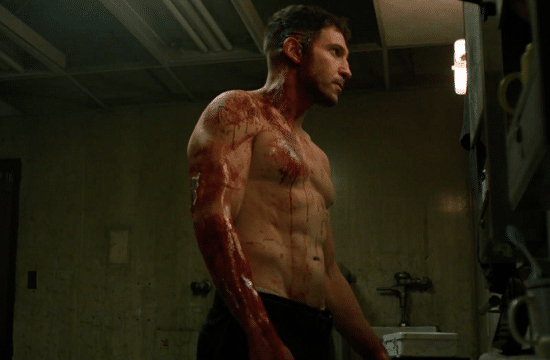
 Not that you necessarily need to have watched Daredevil season two, or indeed any of the other Marvel Netflix shows (i.e. Jessica Jones, Luke Cage, Iron Fist and The Defenders), in order to watch The Punisher. All the shows have stood apart to a certain extent, but none more so than this one; beyond the presence of Deborah Ann Woll as Karen Page (who first met The Punisher in Daredevil), and some very brief references to events of the earlier shows, you’d be forgiven for not having the first clue that these characters are meant to exist in the same world as The Avengers. Indeed, perhaps it’s better to put all thoughts of those characters to one side – much as it’s better to put aside whatever recollections you have of the existing screen iterations of The Punisher, as portrayed by Dolph Lundgren, Thomas Jane and Ray Stevenson in the earlier films. Jon Bernthal’s take on the character is something altogether different. Where his predecessors tended to play him as a steely, methodical, near-emotionless killing machine, Bernthal plays him as a roaring, rampaging animal, leaving us under no illusions that this is an utterly unhinged human being whose experiences have left him shattered, robbing him of almost all his humanity. The question of just how much, or how little, of the man that was remains is at the heart of this 13 part series.
We join Bernthal’s Frank Castle some untold length of time after he disappeared, and was officially declared dead, at the end of Daredevil s2. Now living under an assumed name with several months’ worth of hair growth on his head and face, he’s making ends meet in a low-level construction job, venting his bottled-up rage with a sledgehammer and doing his utmost to avoid interaction with others. However, neither Frank’s past nor his inner nature has much chance of staying buried for long, and after a criminal element of his co-workers pushes him too far, he’s back in full-on punishing mode. However, his activities do not go unnoticed, and soon Frank finds himself contacted by a mysterious stranger (Ebon Moss-Bachrach) who knows who he is, and demands his assistance. A begrudging partnership ensues, all tied up in an unresolved war crime from some years beforehand, in which Frank and his unit had a key role to play; and which, you guessed it, turns out to be the key reason Frank’s family was assassinated.
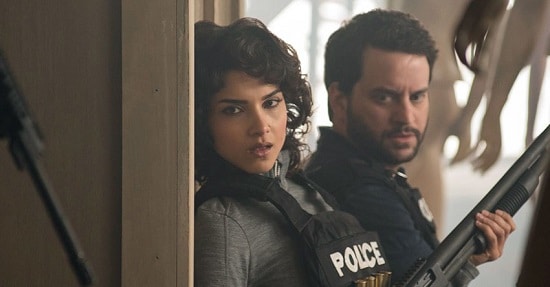
As might be apparent from this synopsis, the series takes The Punisher in a political thriller direction, centred on a government/military conspiracy; a welcome change, as the character’s previous screen outings (not to mention the existing Marvel Netflix shows) have tended to centre more on gang wars. That having been said, if you have been keeping up with the Marvel Netflix shows, you’ll be forgiven for noting a clear pattern. The Manhattan skyline is constantly in the distance, the action instead taking place largely in the less touristy areas of NYC. Lengthy, expository duologues, of which there are many, routinely take place by the side of the Hudson in what look to be sub-zero temperatures (come on guys, Game of Thrones always does these bits naked in bed, it’s way more fun). Then we cut away to the supporting characters in plush-looking offices, in this case Homeland Security agent Dinah Medani (Amber Rose-Revah), a hard-nosed careerist obsessed with a long-cold case which suddenly heats up again when she is contacted by the same mystery man on Frank’s tail. While we may not be able to work out all the ifs and buts along the way, it’s readily apparent that, however things get resolved, it’s going involve Frank killing a whole lot of people.
 A lot can be said about the contemporary resonance of The Punisher. Its release had at one point been brought into question in the wake of the recent Las Vegas mass shooting; but let’s face it, if real-life acts of terror dictated whether or not violence could be shown on screen, we’d never see anything but rom-coms. I’m not about to get into the gun control debate (for one, I live in England, so it really isn’t my place to do so), but The Punisher naturally touches on the subject, and while it doesn’t come to any easy conclusions it does ask some interesting questions. Also, in perhaps the most compelling subplot of the series, it tackles the problem of PTSD in war veterans, actor Daniel Webber giving a brilliant, sympathetic performance as a traumatised young ex-soldier who, in his own mind, sets out to follow in Frank Castle’s footsteps in the name of the Second Amendment. In addition, it’s hardly accidental that, in Rose-Revah’s Medani, we have an Arab-American protagonist, whose prime motivation is to solve the murder of an innocent Muslim framed for terrorism (although, if I recall correctly, the words ‘Muslim’ and ‘Islam’ are never uttered).
Then, of course, there’s the question of the violence. As noted earlier, Marvel’s Netflix shows significantly upped the ante on bloodshed – and, for that matter, sexual content – by comparison with the movies, and The Punisher is no exception: indeed, it’s quite possibly the most brutal Marvel show yet, and certainly the most grounded given the complete absence of any superpowered characters. In particular contrast to Daredevil and Iron Fist, extravagant martial arts battles are thin on the ground; the fights here are much more down and dirty, and as likely to be resolved with a bullet as a fist. Still, while such sequences are definitely among the grisliest Marvel have produced (the use of a 28 Days Later-esque music cue in the penultimate episode is clearly no accident, given the finishing move utilised), in the contemporary TV climate they’re not necessarily the harshest things you’ll ever see. Indeed, given how full on The Punisher gets with violence, it feels a little odd that Marvel still play a bit coy when it comes to nudity and swearing; as with the other Netflix shows, they shy away from dropping the F-bomb, and while sex does come into the mix, they still make a point of preserving the modesty of the actors. Feels strangely imbalanced, given how unrelentingly graphic the violence is. (I could make some snide remark about misplaced American values, but I already said I wouldn’t do that…)
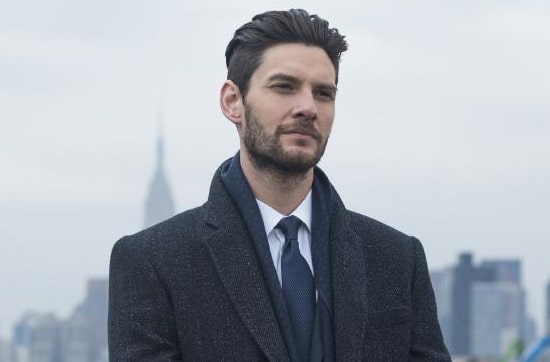 At 13 episodes, The Punisher is perhaps a little more drawn-out than it really needs to be. The conspiracy plot may twist and turn in the usual twisty-turny way, but ultimately the real villains are never that hard to spot: I don’t consider it a spoiler to say that the presence of Ben Barnes as Frank’s one-time best buddy, now a suit-clad charmer running a private military company, should set alarm bells ringing immediately. (For one thing he’s called Billy Russo, the character who becomes the villain Jigsaw, previously portrayed by Dominic West in Punisher: War Zone.) Then there’s Paul Schulze as Rawlins, a high-ranking CIA official with a bald head and ocular scar; yes, all he’s missing is the white cat. Still, as grounded and layered as The Punisher may be, it’s still ultimately a comic book superhero tale, and that demands clear-cut bad guys who will ultimately meet their just desserts in a very direct fashion. This is part of what draws us to these stories, and we shouldn’t belittle The Punisher for delivering this.
Yes, Frank Castle remains (another buzzworld alert) problematic as a protagonist, and without doubt elements of the series may upset viewers on all sides of the political spectrum, but I think showrunner Steve Lightfoot and company have done a good job crafting a balanced, relatively neutral show that can be enjoyed by right and left-leaning audiences alike. Above all else, the series certainly confirms Jon Bernthal’s take on the character to be the best we’ve had to date: human, sympathetic, relatable, yet absolutely terrifying, leaving you in no doubt that he could, and probably would, blow your head off as soon as look at you. That’s The Punisher through and through, and it will be interesting to see where they take the character from here, working on the entirely reasonable assumption that further seasons are in the offing.
All 13 episodes of The Punisher are available to watch on Netflix now.
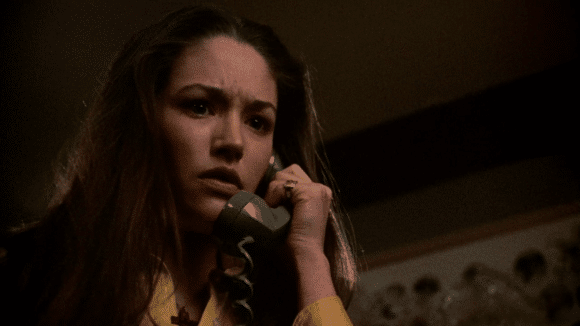 For a filmmaker largely forgotten by the wider audience, the late Bob Clark’s directorial career had a surprising impact. With 1981’s Porky’s, he blew the doors wide open on the teen sex comedy boom; and I understand 1983’s A Christmas Story is something of a perennial festive favourite in the US (I myself have never seen it). Of course, nine years earlier Clark had already tackled the holiday season in Black Christmas, a sorority house shocker sometimes argued to be the real birthplace of the slasher movie subgenre which came to dominate horror by the end of the decade. Whilst everyone agrees John Carpenter’s Halloween perfected and popularised the format, there are those who feel that Clark’s film deserves credit for establishing a great many of the key motifs that endless slashers have repeated, to wildly varying degrees of success, in the years since.
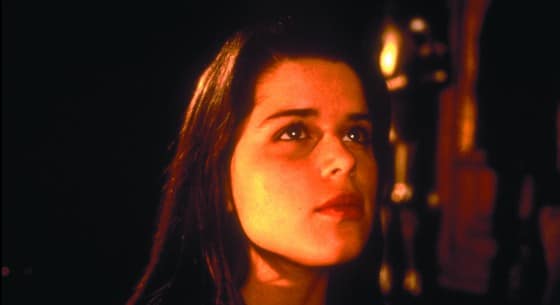 Any horror fan of a certain age can tell you that 1996 was a big year for Neve Campbell. Off the back of that year’s The Craft and (more pointedly) Scream, the then-23 year old Canadian actress was elevated from “one of the girls off Party of Five” to a genre movie star, a status she retains to this day thanks to the enduring popularity of both aforementioned films. However, many of us (including, until very recently, myself) may be unaware that Campbell made a third venture into spooky territory that same year, starring alongside Patrick Stewart in a modernisation of Oscar Wilde’s novella The Canterville Ghost. The comparative obscurity of this one isn’t too great a surprise; for one, it was made for television, and by stark contrast with Campbell’s other 1996 films it’s resolutely family-friendly. Yet while it may not carry the same status in the popular consciousness, and is by no means without its obvious problems, The Canterville Ghost is in its own way a very endearing, old-fashioned take on a traditional ghost story.
 Campbell is Ginny, a teenage girl who, because of her father’s work as a professor of physics, finds herself moved with her family from their native Indiana to a huge old country house in England, Canterville Hall. Being a teenager, Ginny is very sullen about it all, even if her parents and her little twin brothers seem thrilled. We might wonder how a simple physics professor can afford so grandiose an abode, yet it seems the rent on the property is unusually low as tenants tend not to last that long, as the property is said to be haunted. While Ginny’s parents naturally dismiss this as an old wive’s tale, she and her brothers encounter the ghost, Sir Simon de Canterville (Stewart), on their very first night. While at first their energies are focused on a) trying to convince their parents of his existence and b) get him to stop haunting them, Ginny’s explorations around Canterville Hall lead to a deeper understanding of Sir Simon’s tragic situation, and a resolve to help him find the eternal rest that has eluded him for over 400 years.
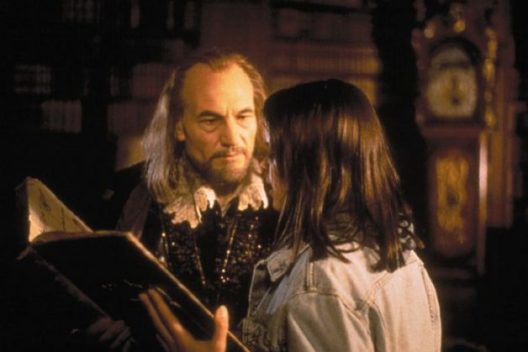 However, whilst The Canterville Ghost might not be so lavish as a theatrical production, much of the cast certainly lifts things up a few notches. Most vital, of course, is Patrick Stewart. Ever the Shakespearean, Stewart’s in full-on theatrical mode here, speaking in iambic pentameter, projecting to the back row at all times, and no doubt having a blast while doing so, even if the SFX utilised to convey his ghostliness are sometimes a bit slapdash. British viewers are also likely to thrill to the sight of Carry On veteran Joan Sims as the housekeeper, not to mention such other old national treasures as Donald Sinden and Leslie Philips. Indeed, according to Robert Benedetti’s interview in the extras, the entire cast and crew bar Campbell and himself was British; and unfortunately this proves to be one of the film’s main problems, as some of the American accents, notably those of the child actors playing the younger brothers, are a bit shaky.
 Johannes Roberts has long been a director we’ve held in high esteem around these parts. 2010’s F was one of the most attention-grabbing British horror movies of the past decade, and he’s been steadily on the ascent in the years since. 47 Metres Down would seem to be his highest profile film yet, with a somewhat chequered history as its arrival coincided with that of last year’s similarly-themed
  Siblings Lisa (Mandy Moore) and Kate (Claire Holt) are vacationing together in Mexico. For Kate, a few days in an exotic locale isn’t anything too out of the ordinary, but apparently it’s quite the change of pace for the elder, more reserved Lisa, who reveals to her little sister midway through their holiday that she’s been dumped by her longtime boyfriend, and came to Mexico because she wanted to do something impulsive in the hopes of seeming like a more adventurous person. After a couple of days in the sun and nights at the club, Kate talks Lisa into something very adventurous indeed; a shark-spotting trip out at sea, where they’ll be lowered beneath the surface in a cage to see the majestic creatures up close. Sure, Lisa’s never scuba-dived before, the crew that take them out seem a little unprofessional, and the boat itself looks like it’s seen better days, even if it is captained by Matthew Modine. But what could go wrong, eh? The crew will bring them up at the first sign of trouble, and in any case, they’ll only be lowering the cage five metres. However – as you might possibly have ascertained from the title – something does go wrong, and the cage winds up going a whole lot lower than intended: all the way to the ocean floor, in fact.
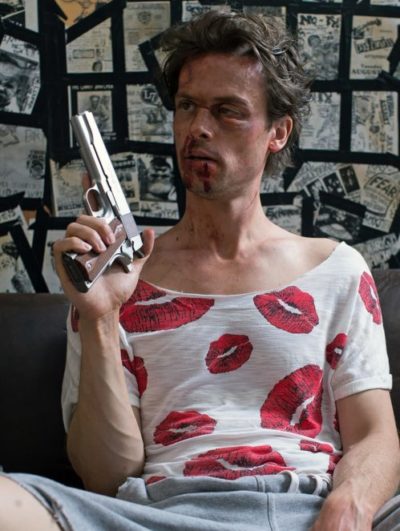
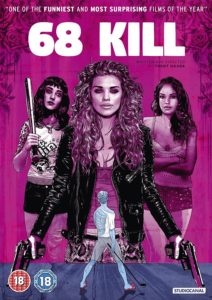 Still, while McCord and her fellow femme fatales Alisha Boe (Paranormal Activity 4) and Sheila Vand (A Girl Walks Home Alone At Night) may dominate the poster/DVD cover, the real central character in 68 Kill is a guy – who, wouldn’t you know it, has a major weakness for beautiful women. Matthew Gray Gubler (Suburban Gothic, TV’s Criminal Minds) is Chip, a trailer park resident who works part time in sanitation and has very little going for him, aside from his stunning girlfriend Liza (McCord). However, calling her ‘stunning’ doesn’t just apply to her looks: she’s an impulsive, aggressive character, enormously over-enthusiastic in the bedroom, and rather demanding of her more mild-mannered lover. When we meet Chip, he’s covered in bites, scratches and bruises from the night before, but it seems that not all of this is purely from rough sex. Though he seems unwilling to admit it to himself, Chip is trapped in an abusive relationship; but, believing himself to be in love with Liza and doubting he’ll ever get so lucky again, he can’t help but bend to her will. However, this reserve is pushed to breaking point when Liza bullies him into helping her rob the home of her wealthy landlord, who she has learned has $68,000 stashed in his bedroom safe. Naturally the heist doesn’t go quite as smoothly as planned, and Chip soon finds himself on the run from the woman he loves – but Liza isn’t the only beautiful and insane woman he’ll cross paths with in the long, eventful 24 hours ahead.
 Inevitably, any film that hinges so heavily on a man’s encounters with a succession of women will invite some discussion of its sexual politics, and in some moments these do leave a bad taste: while we’re quite reasonably invited to be outraged at young women being forced into sex slavery, the sexual abuse that Chip endures is more than once played for laughs. At the same time, given that much of the film centres on Chip getting payback on the women who have wronged him, there are doubtless some who might condemn 68 Kill as a misogynistic fantasy endorsing violence against women.
 Sadie and McKayla (Brianna Hildebrand and Alexandra Shipp, both veterans of the X-Men series and as such likely to attract interest from a wider teen audience) seem at a glance to be the textbook high school popular girls – cheerleaders, prom committee – but their real passion is their vlog/social media enterprise called, you guessed it, Tragedy Girls: essentially an amateur true crime investigation site covering the recent spate of murders in their sleepy middle-American home town. However, you may by now have ascertained the twist, made clear within the first few minutes following a very standard slasher movie intro: Sadie and MK are the ones doing the murdering, pursuing their lifelong dream of becoming legendary serial killers, whilst using their online following to promote their heinous misdeeds. To this end, they capture a hulking slasher movie madman who’s been doing the rounds locally (okay, so the girls aren’t the only ones doing the killing) in the hopes that he can impart some good homicidal wisdom their way. However, high school life and social politics have an annoying habit of impeding their progress.
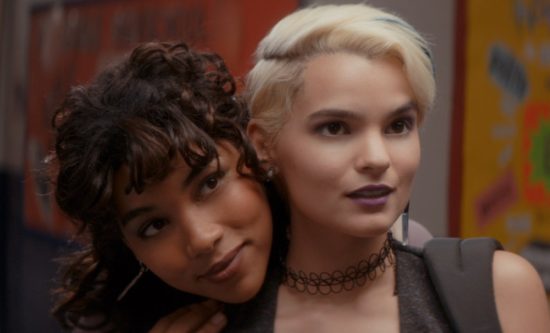 Given we’re working broadly within the parameters of the slasher movie, I’ve no doubt academics are going to have a field day with how Tragedy Girls subverts Carol Clover; whilst Men, Women and Chainsaws convincingly argues that slasher audiences are compelled to identify with the women in peril rather than the killers (as is so often claimed by reactionaries), in this instance there can be no question that it is the killers we’re meant to identify with, and this lends Tragedy Girls a transgressive quality we might not anticipate from something that initially seems so glossy and mainstream-friendly. While, as with many slasher movies, the early victims are largely unsympathetic caricatures of whom the audience can feel comfortable laughing at their demise (notably – minor spoiler I suppose – some scene-stealing cameos from Josh Hutcherson and Craig Robinson), things do get a little closer to the bone as we reach the final act. There are moments when it looks as though some eleventh-hour moralising and forced remorse might pop up – but happily, Tragedy Girls has the good sense to avoid such sentimentality, never faltering from its joyfully morbid course. Hildebrand and Shipp are compelling, endearing, charismatic leads throughout, and even when they’re at their most diabolical we can’t help wanting to see them succeed.
 Almost 60 years on, the director and every key cast member other than the 100 year-old Douglas are gone, but Fleischer (going by his words on the special features, and the excerpt from his book Just Tell Me When To Cry in this disc’s accompanying booklet) always felt that the original script would have been the superior film. To my mind, though, this is hardly a point worth dwelling on. Whether or not The Vikings is an entirely accurate reflection of the historical period it represents is of minimal significance next to the question of how successful it is as a rollicking adventure movie that stirs the blood; in this the film is an unequivocal success, and doubtless of huge influence on a great many swashbuckling adventure movies that have come in the decades since.
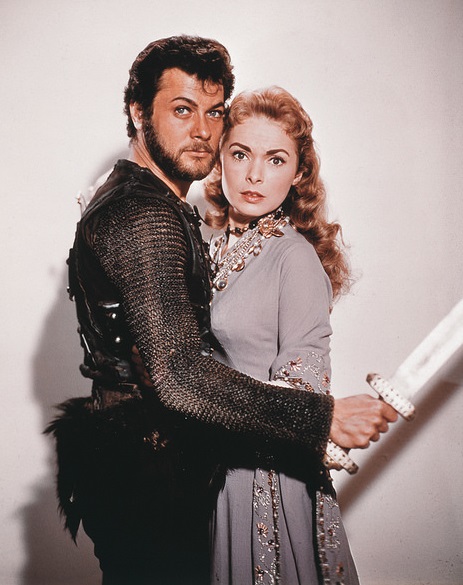 All this notwithstanding, in its own way The Vikings is a curiously subversive and progressive film. It’s made clear to us from the very beginning that the title characters are complete and utter bastards: sadists, thieves, sexists, murderers, rapists; and perhaps even more shocking for the time – and to this day in some quarters – they don’t believe in the Bible (because, as we all know, adhering to the latter means that absolutely none of the aforementioned sins are of any consequence whatsoever, right?) Even so, they are presented as the heroes of the film, and we are invited to root for them in their battle to overthrow Aella, who – while not by any means a sympathetic character – doesn’t necessarily come off as any worse. This curious romanticisation of outright twattery is most pointed in Einar; Douglas, being the biggest star of the show, goes to lengths to put himself centre stage as often as possible, when from a narrative standpoint it would generally make more sense of focus on Curtis’s Eric. Still, Curtis does get plenty to work with, notably in his happily reciprocal love scenes with Leigh’s Morganna, who, in one of the film’s most fascinating scenes, questions whether the two could ever really be together when she is Christian and he is Pagan; yet the film seems to conclude that love is love irrespective of personal faith, and by extension does not condemn Eric or any of the Vikings for their worship of Odin. How’s that for freedom of religion?
 Wallace is Diane, a recent widow bringing her grown children – three daughters, a son and two husbands – back together for one last Christmas in the family home before she sells it and moves on. This is the cause of some tension between her children; but whatever grievances they may have, these pale in comparison to those of the troubled, hooded stranger named Cletus who unexpectedly arrives on their doorstep on Christmas Day. Wishing to be hospitable, Diane allows the stranger into the home, but his increasingly unnerving words and actions soon lead them to throw him out. But of course, this isn’t the last they’ll see of Cletus, who has one specific gift to give them all: bloody vengeance.
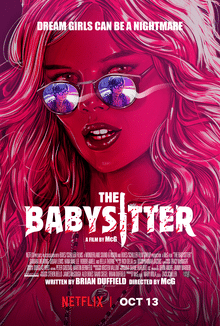 Cole (Judah Lewis) is your standard awkward young male on the cusp of adolescence. Routinely picked on at school and very low on self-confidence, he’s also the only kid his age still left with a sitter when his parents go out. However, as the sitter in question is smoking hot high school senior Bee (Samara Weaving of Ash vs Evil Dead and Mayhem), Cole doesn’t consider that such a bad thing. In fact, Bee seems to be pretty much his best friend, never belittling him, sharing in his interests, teaching him to believe in himself, and not getting too weirded out by his obvious schoolboy crush on her. However, when Bee stays over one Friday night while his parents are away, Cole – at the urging of the girl across the street, Melanie (Emily Alyn Lind) – stays up to see what his babysitter gets up to once he’s in bed, on the suspicion that she might have a boyfriend around to, y’know, do it and stuff. But it turns out Bee’s doing a lot more than that: she has a whole bunch of friends around, and what at first seems to be a raunchy game of spin the bottle turns out to be some kind of