
By Matt Harries
Roky Erickson’s passing on May 31st rightly saw a wave of recognition from those touched by his life and works. Musicians especially have been quick to acknowledge the influence of his band, The 13th Floor Elevators, as progenitors of psychedelic and garage rock, as well as Erickson himself as a shining example of the wild energy of underground music in the formative days of its rise into the heart of the Sixties countercultural explosion. The story of Roky Erickson is well-known in broad terms but to a degree that, to me at least, still feels somewhat underappreciated. His life was like the tale of the Sixties encapsulated in one man; the raw, naive idealism and hedonism that swept like a wave across America and the Western world in particular, eventually breaking apart on the savage rocks of the Establishment, the Moral Majority and the Seventies.
The notion of the Psychedelic itself, the tripped out, mind-expanding kaleidoscope of energy from that era, was never completely destroyed. It merely became more diffuse, surviving and gradually infusing itself throughout multitudinous sub-cultural tropes in the decades that followed. Roky Erickson, whose light shone so brightly and whose subsequent downfall felt like a retributive strike from the conservative hegemony (in fact on some level it probably was), did not stay down but rather fought on and on and did enough to make a lasting impression on many of today’s musicians. Witness for example, Chelsea Wolfe’s rendition of ‘Night Of The Vampire’ or Joshua Homme’s words on social media upon news of the great man’s death – ‘I believe in Roky Erickson.’
Despite the admiration of such high profile musicians, a quick look at IMDB reveals that You’re Gonna Miss Me, Keven McAlester’s 2005 film about Erickson, has a little over 900 ratings. Compared to some other music documentaries, for example Dig! (over 5000), A Band Called Death (over 3000) and The Devil & Daniel Johnston (over 8000), it seems as though this story has perhaps not fallen on the same number of ears as the music and influence deserves. If you have an interest in acid culture, the Sixties counterculture or the ongoing story of psychedelic rock ‘n’ roll; or if a tale that combines the tragic demise of Syd Barrett with the plot of One Flew Over The Cuckoo’s Nest sounds appealing – then you really should give this film a chance.
It essentially has two distinct elements, the most expected being a recounting of the saga of The 13th Floor Elevators. To this end we hear from a host of ‘originals’; from drummer John Ike Walton, whose experiences with LSD led to him quitting the band, to Erickson’s ex-wife Dana, as well as other luminaries such as Powell St.John, Chet Helm and Billy Gibbons of ZZ Top.
The Elevators formed in the fertile Austin scene in 1965 when Roky Erickson left his first band The Spades and joined up with future bandmates including lyricist and jug player Tommy Hall and (still criminally underrated) guitarist Stacy Sutherland. By the autumn of the following year they were touring the West Coast and subsequently released their first album The Psychedelic Sounds Of The 13th Floor Elevators, a huge favourite of the countercultural movement. A raw slice of garage rock and the newly coined ‘psychedelic’ rock, it is also notable for Hall’s sleevenotes, which espouse the use of drugs to ‘chemically alter [mankind’s] mental state’ on a ‘quest for pure sanity.’

Despite the success of their debut, follow up Easter Everywhere was, despite being widely regarded as their best work, not enough to repeat the national success of its predecessor. The band’s use of drugs, notably LSD and peyote, saw drummer John Ike Walton and bassist Ronnie Leatherman leave and by 1968 they were having to perform without Erickson due to his frequent hospitalisations, including an eventual diagnosis of schizophrenia. While his use of psychedelic drugs is well documented, Erickson also fell victim to that old musician’s scourge, heroin. His excesses with both drugs were becoming a thing of local legend, much to chagrin of the local police. So it was that law enforcement came down hard on the singer. Arrested for possession of a ‘matchbox’ of marijuana, the erratic frontman found himself being sent to Rusk State Hospital for the Criminally Insane. For a man described by first wife Dana as ‘just a little boy’, known in earlier years for his unfailing politeness and innocent charm, this was a heavy-handed gesture to say the least.
Erickson’s former psychiatric doctor recounts how his charge was a quiet presence who seemed content simply to write music, which he noted down in a legal pad as he sat in the hospital corridors. Eventually, galvanised by his presence, a collection of inmates decided to form a band of their own. Alongside the musician were a collection of murderers, rapists and violent offenders. ‘You tell me how that makes sense,’ asks Dr X. ‘Because it doesn’t.’ There were more than just potentially uncomfortable associations to come for Roky though, as Doctors chose to treat his psychosis with a combination of forced electric shock treatment and thorazine injections. It would be four years before he was finally released.
Interspersed with the recounting of this story, we are also shown the results of years of dubious diagnosis, ongoing drug and mental problems and ineffective treatments. Roky in person, or rather, to borrow another eccentric artist’s nomenclature, The Non-Artist Formerly Known As Roky Erickson is by now living amid a sea of electronic sound-emitting equipment, from musical keyboards and toys to television sets and alarms; a cacophonous cloud of white noise and bleeps and static hiss. This is the only environment in which Roky, now a portly, shuffling but harmless individual of 53 or so, can find the mental quietude that allows him to sleep. The only person he answers to is his mother Evelyn. She is an interesting lady herself; indeed in some way the film is as much about her as it is about Roky. A chance, as she herself puts it early in the film, to give her own side of the story, after ‘being judged for my sons.’
Evelyn’s story is recounted by her using a collection of large cardboard displays of photos, hand written notes and assorted ephemera that she had created over the years in an attempt, she admits, to reassure herself she had done the right thing as a mother to five sons. Marrying young, she gave her best years to her boys, of whom Roky was the oldest, with a gap of around twenty years to youngest son Sumner. Physically and mentally exhausted after Sumner’s birth, and faced with a husband who simply refused to talk to her, she gave up alcohol and ‘withdrew sexually’, choosing instead to focus for once upon her own recuperation and spiritual growth. Her devotion to her sons was however such that she inevitably became warden to Roky in the years, beginning around 1980, when increasingly he turned away from music and inwards to his tangled thoughts and impenetrable inner logic.
In the decade following his release from Rusk and legal readmission into the ranks of the ‘sane’, Erickson continued to pursue his music, his heart’s desire and his unfortunate predilection for drugs, but the previous years of substance abuse, heavy treatment and confinement had left him prone to paranoid delusions. Perhaps chief among these was the infamous notion that he had been inhabited by a Martian, thus rendering him an alien and furthermore an ongoing victim of psychic attack by humankind. There were failed marriages that in their brief terms saw lucidity and structure inevitably dissolve. The mind of Roky Erickson began to seek some kind of predictable pattern in the lives of others, as he developed an obsession with the post, one time even being arrested for taking his neighbour’s mail into his house in huge quantities (the charges were later dropped after he pleaded that he didn’t actually open any of it).
Eventually he stopped taking his psychiatric medication – something he had been prone to do all along. In this he was supported by his mother Evelyn, who believed (not unreasonably) that drugs ‘hide your real feelings’ and that a clean living, spiritually rewarding life could help Roky live with some modicum of independence. For several of the other Erickson boys, this behaviour was symptomatic of the overly controlling behaviour of their mother from the early stages in their lives. Perhaps the most disgruntled was Sumner, the youngest, who had virtually become estranged from Evelyn and had made it his one goal as a young man to leave the Erickson household and move as far away as possible. In future years he made a success of his own life in music, as a classically trained tuba player. He never forgot his oldest brother, but his desires to have meaningful contact foundered upon his ever-strained relationship with his mother.
The childhood home was an environment that evidently left a lasting impression upon several of the sons. Chaos and clutter abounded. The pool a stagnant green puddle, the yard a confusion of abandoned junk and overgrown plant life. The kitchen a playground to rats until the lights were turned on, the cats and dogs of the house scrambling over each other and around anyone wanting to make food. Given Evelyn’s own cluttered home, filled with musical instruments, endless letters, paintings and photographs, Roky’s own junk-filled abode seems to have less roots in his psychic turmoil than we initially assume. On a darker note, brother Don, who himself admits to struggles with alcoholism and an attempt to commit suicide in the late Eighties, refers obliquely to his mother telling him of seeing his father alone in the bedroom with one of the other boys. It’s a memory he chose not to pursue, deciding to leave the unknown horrors of his mother’s partially formed revelation buried in the depths of the past.

Finally, in the pivotal act of the film, the past and present lives of the Erickson brood converge. As Evelyn dips her toes in the flowing waters of a nearby river, Sumner and accompanying officers of the law swoop and persuade Roky to leave with them. This repatriation to Sumner’s home in Pittsburgh, for all the shock waves caused within the family itself, provides an opportunity for something that at one time seemed at best an impossible dream. Afforded the proper treatment, both in terms of modern psychiatric medicine and for his potentially fatal dental ailments, and crucially now resident within the stable environment of his youngest brother’s home, Roky Erickson defies every expectation of a tragic ending, and returns to health and amazingly, to his music.
In the last 15 years of the Roky Erickson story, he would return to the recorded and live arenas on many occasions. In 2015 in Texas, he took to the stage with Tommy Hall (the jug playing psychedelic guru whose absence from the entirety of You’re Gonna Miss Me is its most glaring omission), John-Ike Walton, Ronnie Leatherman and his own son Jegar. The 13th Floor Elevators defied time and any kind of reasonable logic to perform again, over 50 years since their fiery heyday. A remarkable twist in the story of a man who seemed to live many lives during his time on earth; loving son, interdimensional voyager, wayward parent. One of the founding fathers of psychedelic music and the spirit animal for countless like-minded experimental musicians the world over. No matter how enduring the man himself, he who returned again and again from so many trials, the musical legacy of Roger Kynard ‘Roky’ Erickson will surely continue long into the future. I will leave the last word to a contemporary of Roky’s, a certain Doctor of Journalism and fellow psychedelic traveller;
‘History is hard to know, because of all the hired bullshit, but even without being sure of “history” it seems entirely reasonable to think that every now and then the energy of a whole generation comes to a head in a long fine flash, for reasons that nobody really understands at the time—and which never explain, in retrospect, what actually happened.’ (Hunter S.Thompson).











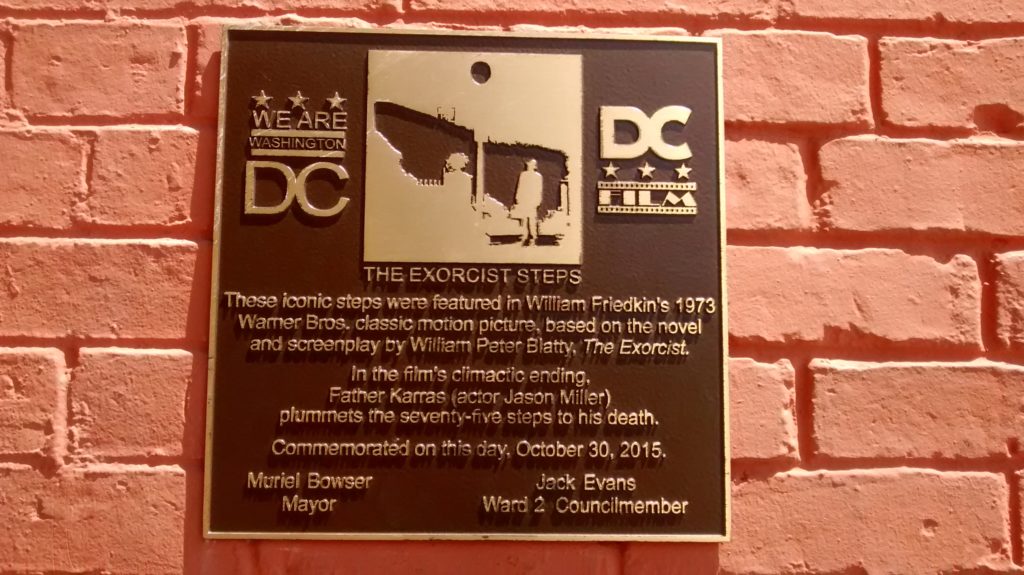 I first watched The Exorcist aged 14, a couple of years before it was withdrawn from UK home video circulation after being refused an 18 certificate under the 1984 Video Recordings Act. Its esteemed director, William Friedkin, has been forthright in claiming he intended the film to be an “emotional experience”. That concise précis perfectly describes my personal attachment to the picture, for numerous reasons. You see, up until viewing The Exorcist, my horror edification had largely been through gore-tinted glasses as I indulged in Video Nasty culture on VHS. But just a few minutes into Friedkin’s masterpiece, I was overcome with the sense I was watching a ‘serious horror film’.
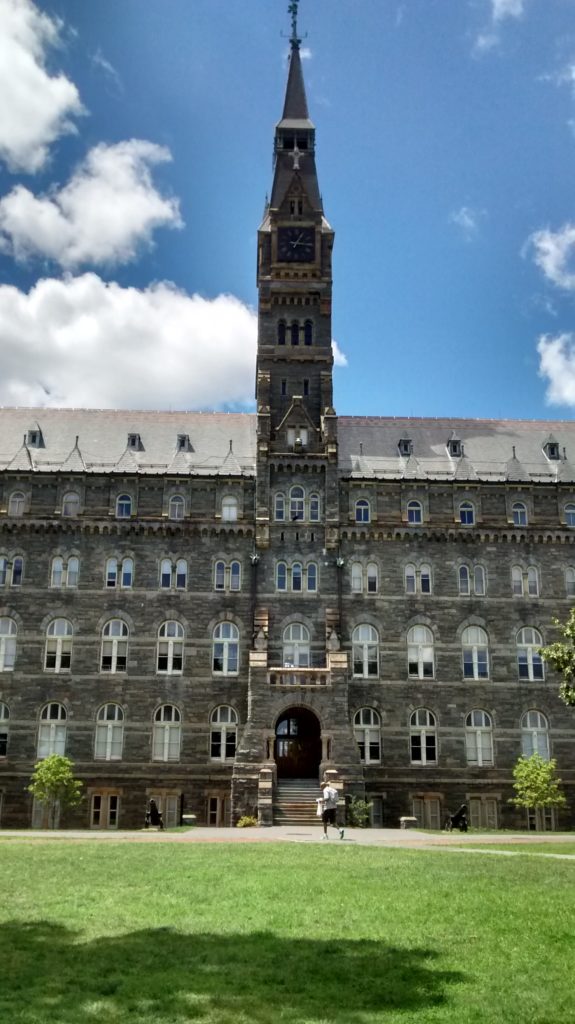 Before long, the almost regal facade of the Georgetown University Campus stood proudly before me. Its Georgian brick architecture and proud steeple seemed to radiate a sense of history. Originally a Jesuit private university when founded in 1789, the structural design has remained intact despite the proud evolution of the buildings’ function. The campus site is of course briefly featured in the ‘movie within the movie’ sequence that serves to establish Chris MacNeil and Burke Denning’s characters and relationship. The liberal grassy zones in front of the eminent structure were now patently evident, as opposed to being crowded with the ‘demonstrating public’ in the movies preliminaries.
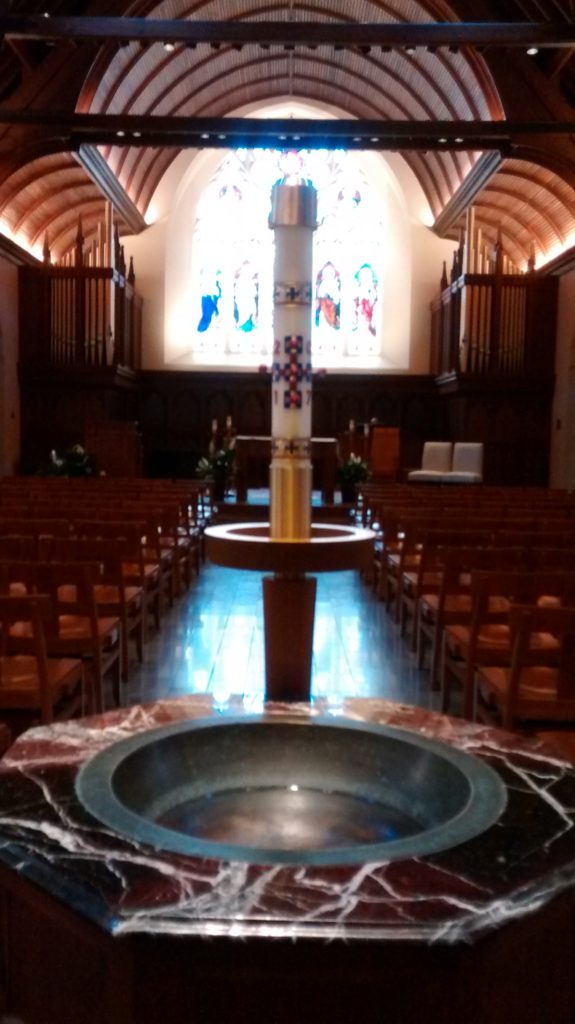 Despite the overtly sanctified status of the edifice, I was saturated with blasphemous cravings when I entered the vestibule. I couldn’t refrain from polluting the serene atmosphere with a puerile demonically whispered “it burns” as I placed my hand in the font of ‘holy water’, much to the embarrassment of my younger, yet considerably more mature cousin.
 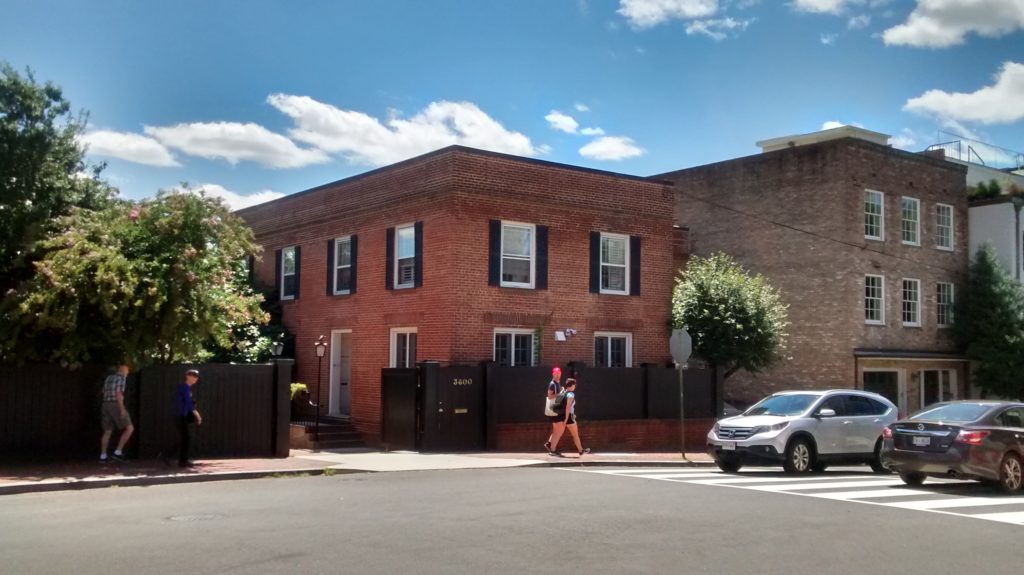 Obviously this is the property frequently referred to as the “Exorcist House” due to its portrayal as the MacNeil residence in the movie. The distinctive black metal railings that separated the property from the sidewalk have been predictably forfeited in favour of a solid wood privacy fence, no doubt due to pesky groupies such as myself.
 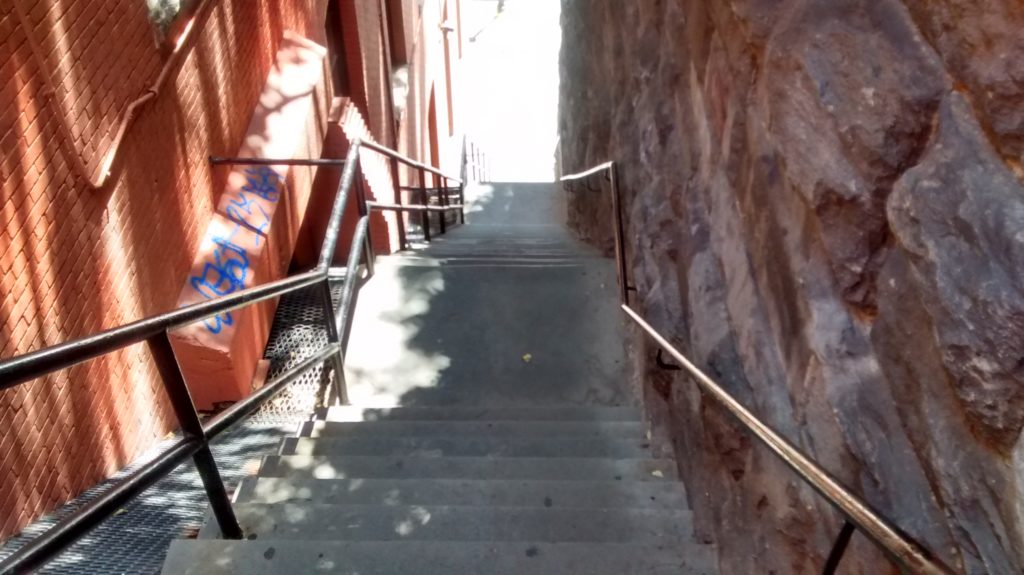 The concrete staircase is offset from the house and it’s a renowned fact that an extension was temporarily built onto 3600 Prospect Street to give the impression that Regan’s bedroom indeed lingered above the 75 steps. Surveying the palpably steep descent from the landmark’s apex, I was instantly struck with just how impressive the stuntman’s plunge was, considering the precipitous concrete was only mitigated by a mere half inch of rubber at the time of filming.
  Scrutinizing scenes in the film where the stairwell featured, I noticed the scarlet word “PIGS” apparently sprayed onto the wall just over the stairs railings. This had now been replaced by unreadable blue graffiti. The same ‘artist’ had seemingly added the obligatory “Fuck Trump” protest to the tourist attraction!
 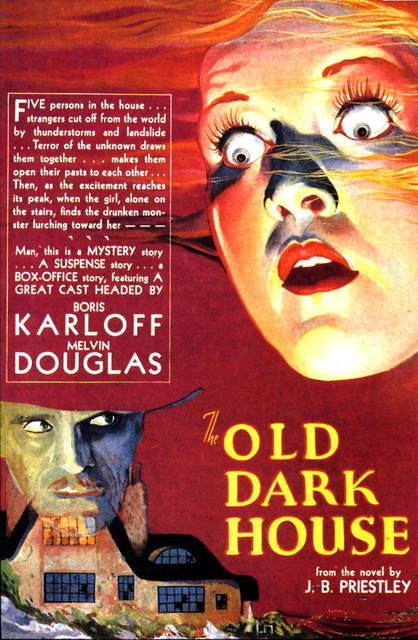 Keri: When Universal Pictures set about cementing the developing horror genre with a series of tales – both old and embellished – the small country of Wales, in the United Kingdom, was oddly integral to this process. The ‘Old Dark House’ (1932) was set in deepest, darkest Wales, the rain lashing, forcing the house’s inmates to stay put until escape was possible; The Wolf Man (1941), which spawned a new horror archetype, silver bullets and all, saw its central character get ‘the bite’ in Wales, before running amok through its landscapes. Why was Wales, a country which has – let’s be fair – struggled to gain recognition as a country in its own right, chosen as the backdrop for these American productions? Was it just remote enough to serve a purpose?
 Wales also has a history of social protest and insurrection, which perhaps has some perhaps troubling pagan overtones – maybe prompting the question – how well does one know one’s neighbours? Welsh protest moments are, by any accounts, a strange phenomenon. The ‘Scotch Cattle’ of the early 1800s blended theatricality with real menace. Consisting of groups of men unhappy with their treatment at the hands of bosses or colleagues, they would gather at night for what were called ‘midnight terrors’, often wearing animal skins, blackened faces, with some blowing horns and many bellowing like cattle. This was intended to intimidate, and no doubt, it worked. The Cattle would damage property and machinery if they felt it was necessary to their aims, and they sent dramatic warnings to their peers – often written in animal’s blood. A message left as a warning to blacklegs (strike-breakers) stated, after naming the men responsible, “we are determined to draw the hearts out of all the men above named, and fix two of the hearts upon the horns of the Bull…we know them all. So we testify with our blood.”
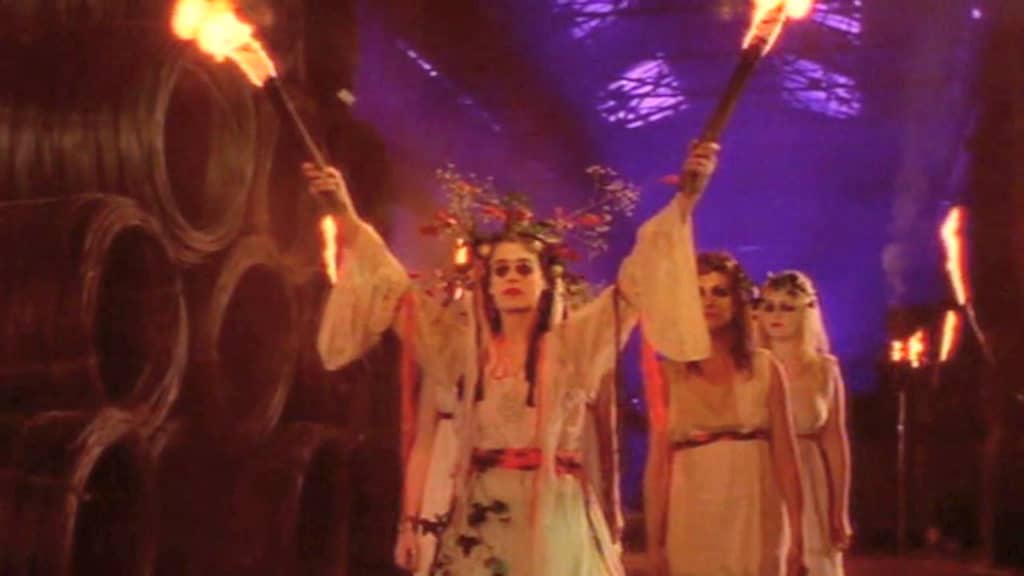 The so-called Rebecca’s Daughters also challenged the social order in a theatrical manner, this time wrecking and burning the tollgates designed to generate income on Welsh roads, at the expense of many of the poorest in society. Dressing as women, led by a ringleader – ‘Rebecca’ – these men turned their actions into something of a dramatic performance, complete with a script. Surely, on some level this kind of history fed into the film Darklands (1996), albeit the film chose to explore cult consciousness rather than straightforward protest. Even the name, ‘Darklands’, corresponds with the so-named ‘Black Domain’ in South Wales, where many of the protest movements mentioned above took place, and in this film the amassed strangers with their rituals seem to call to that strand of Welsh history.
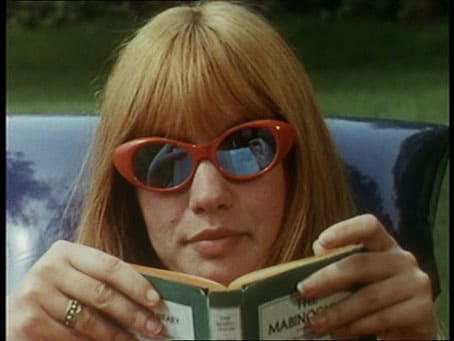 Branwen might be primarily tragic romantic history, but there are some profoundly horrific elements to it that would make for riveting – and entertaining – viewing. Likewise, there is some phenomenal body horror in characters such as Blodeuwedd, a woman created from flowers, a character whose ultimate fate some may vaguely know via Alan Garner’s
 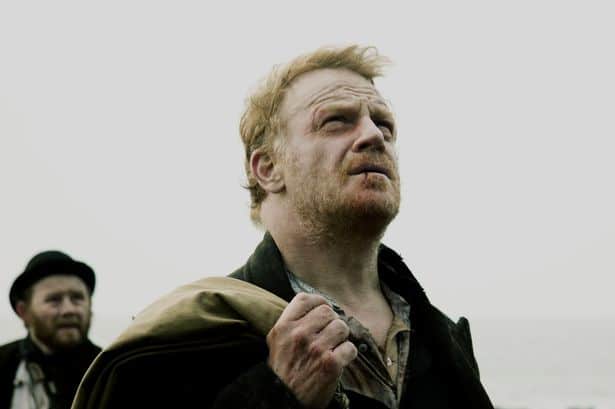 Director Chris Crow has a track record for imbuing his filmmaking with a sense of history and his most recent feature, The Lighthouse, is a really magnificent example of what can be achieved with notions of folk. By no means a traditional folk horror film, The Lighthouse draws on a singular moment in Welsh history and enlivens it with a tremendous sense of time, place and identity. The two men, trapped in the lighthouse in question, could well represent a rather traditional idea of the Welsh psyche befitting its period setting – God-fearing and self-loathing. Another recent example is Yr Ymadawiad (The Passing), a Welsh-language film which very strongly draws on Welsh history and landscape in such a wonderful way that to say too much rather spoils the film.
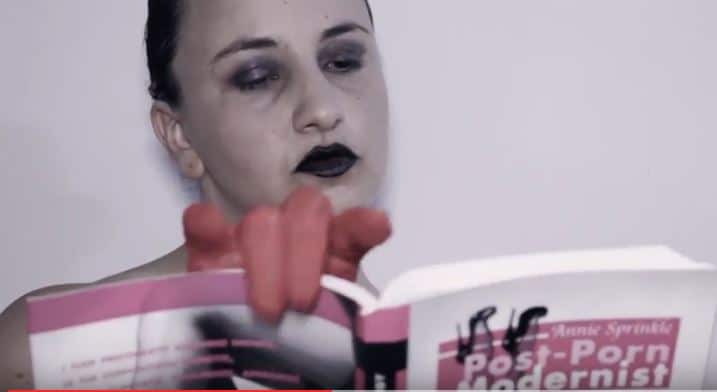 ‘A passionate tribute to the cinema of Fulci’? It’s words like these which act like bait to writers like us, so when this statement was attached to the press release of a new film, Sexual Labyrinth, my curiosity was piqued. That the press release also mentioned paying homage to Joe D’Amato (ah yes, he) and Luigi Atomico (no idea) only made me wonder more what the film could possibly have in store. Well, spoiler alert: this ‘vision of female sexuality’, again words used in the press release, has nothing whatsoever to do with Fulci that I can see, from his early sex comedies all the way through to his horrors. Nada. Joe D’Amato? Not an expert on his stuff, though I’ve seen a few D’Amato films, and I suppose the rough-shod human flesh on display throughout wouldn’t have looked too amiss in some of his work – though I’m not sure that this is particularly ambitious on the current filmmaker’s part, or complimentary on mine. I think the best thing to do here is to say a bit more about what is on offer.
 By Marc Lissenburg
 By Keri O’Shea & Nia Edwards-Behi

