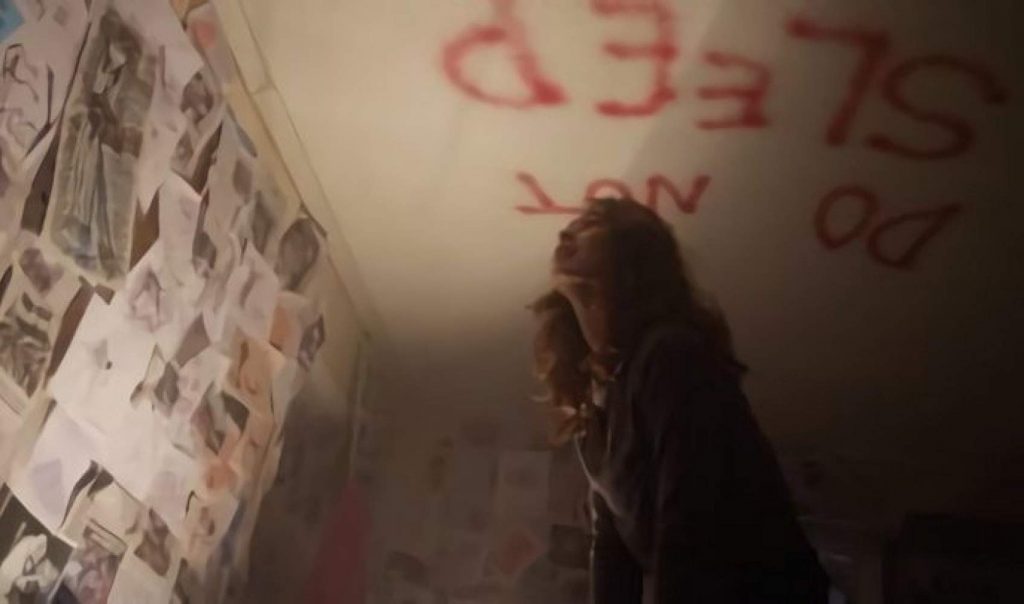
 When I heard that Mara was a horror story invoking sleep paralysis as a key element of its plot, as a sufferer I was immediately interested. Sleep paralysis is well understood in the modern age, just as sleep and dreams are generally, but anyone who has ever had a significant nightmare, or a waking nightmare will know that reason and rationality are furthest from your mind when undergoing this kind of terror; therefore, these experiences remain ripe for solid on-screen explorations, offering lots of potential. Happily, director Clive Tonge and writer Jonathan Frank have shown themselves more than up to that task in Mara, a film which weaves a mythology around sleep paralysis, but balances this against far more grounded and mundane preoccupations which trouble people in their sleep.
The film begins with a child, Sophie Wynsfield, who is woken one night by strange sounds. She investigates, looking for her mother, but when she finds her she also finds her father, lying dead, frozen in terror in his bed. Mother Helena is soon charged with his murder as the only possible suspect who had access to him that evening. Images of the ‘night hag’ which then appear during the opening credits help to forge the link between what we now acknowledge as night terrors with something more purposeful and malign. Many cultures around the world have personified this kind of nightmare as a hag, spirit or demon, in keeping with a common symptom of the experience, the sensation of something (or therefore someone) pressing down on you and restricting your breathing. With this as context, we meet our main character, Dr. Kate Fuller (Olga Kurylenko), a rookie psychologist called in by the police to help deal with this complex case. She tries to win the terrified Sophie’s trust, and for the first time, as psychologist and child speak about the events of the night before, Sophie mentions a name – ‘Mara’.
When Helena is later interviewed, she also invokes the name Mara, referring to it as a ‘sleep demon’ and the real murderer of her husband. Perhaps it’s her immersion in the case, but Kate, too, now begins to experience unsettling waking dreams as she begins to piece together whatever she can about this strange case. Using the scrawled notes she found at the scene, she investigates further, coming into contact with more and more people who believe that their sleep is being disturbed by this sleep demon. In particular, an attendee of a support group by the name of Dougie suggests that he knows how Mara operates, and can predict what she will do next – and to whom. Naturally law enforcement aren’t much taken by this kind of supernatural explanation for deaths like Matthew Wynsfield’s, and Dougie’s involvement with a now growing list of premature deaths puts him in the frame. To clear his name, he has to reveal to Kate what he knows. By this stage, Kate is herself embroiled in something she cannot understand, or escape.
From the outset, Dr. Fuller seems to have a strange, borderline unprofessional level of interest in the Wynsfield case, throwing out promises to Sophie which she must know she cannot keep. This suggests trauma lurking in her own background, even from the very beginning of the film. Kurylenko, in a decidedly unglamorous and challenging role, plays her part with a suitable blend of self-contained gravitas and moments of barely-repressed emotion. The film as a whole depends very much on her, her responses and impressions; as her own back story comes to the fore, her focus on the case makes additional sense; she also attracts more sympathy, as hers is a troubled lot. The sleep paralysis scenes themselves are also very effective. Sheer helplessness is communicated simply but plausibly, and the escalating horror is successful because the director understands that the supernatural belongs on the periphery; some of the most unsettling scenes are barely there at all, but they make your skin crawl nonetheless.
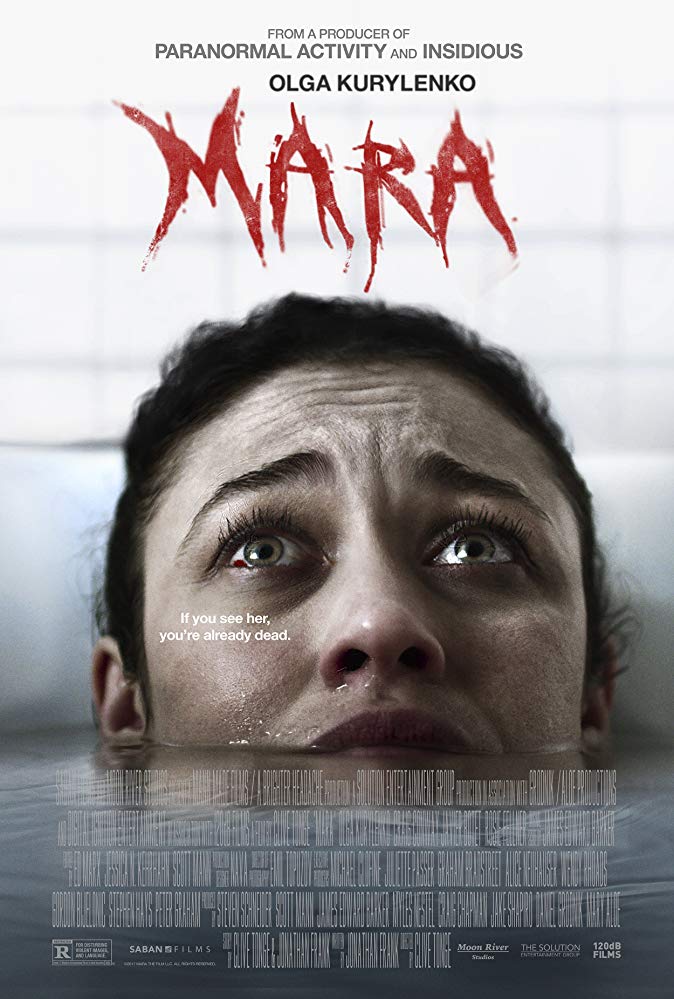 Something else which is very interesting in this film comes via another of its core plot developments – that Matthew Wynsfield somehow puts himself in danger by seeking help for his sleep paralysis issues. Rather than that vague modern panacea of ‘support’ ridding people of their problems, here in the form of a support group, in Mara it exposes people to more harm. In effect, a potential cure, one we believe in on an almost religious scale today, lays people bare to a threat, which itself stems from an innovative blend of folklore, the supernatural, and something between a good old-fashioned curse and psychological breakdown. It’s pessimistic in the extreme, and it’s handled with genuine ingenuity here.
Whilst sleep has been used as the basis for horror many times in horror cinema – something which the film acknowledges and openly alludes to by namechecking Freddy Krueger at one point – Mara is an altogether different animal. This is a very, very slow-burn movie, taking its time and allowing the sensation of inescapable, ratcheting tension to pervade. A range of effective performances underpin this throughout, with special mention to horror monster diehard Javier Botet and Kurylenko has just the right degree of vulnerability set against strength, a modern woman struggling to recast events in safe, predictable scientific language. Carefully paced and moving deliberately throughout, it captures sleep paralysis well, weaving elements of mythology around it and keeping us guessing. Supernatural horror, shorn of the endless jump scares, is so much more worthy of time and attention, as Mara shows in abundance. It’s clever, brooding and hideously effective.
Mara (2018) will be released in US cinemas on September 7th 2018.
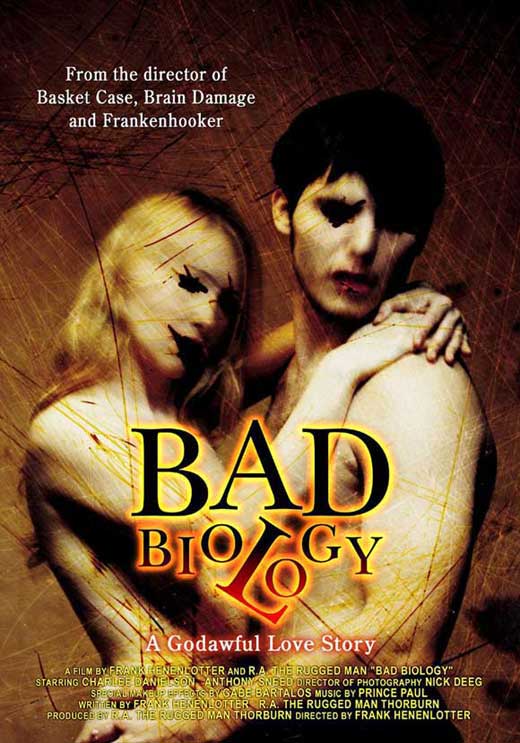 By anyone’s standards, sixteen years is a hell of a hiatus for a filmmaker to take between films. Yeah, from time to time this happens (Herschell Gordon Lewis went a staggering thirty years between The Gore Gore Girls and his next film) but overall, it’s still unusual. After all, if you’d taken that long a break, would fans still be into your work? Would your stuff still seem current? And would you be able to appeal to new audiences altogether? Well, it seems to me that if Frank Henenlotter gave any consideration to the above questions, he ended up deciding to throw them out altogether, and to make a film so outlandish and, let’s face it, alienating that only the truly dedicated, or else the truly unhinged would still be with him by the end. Hence Bad Biology (2008) starts as it means to go on, opening with the line, “I was born with seven clits…”
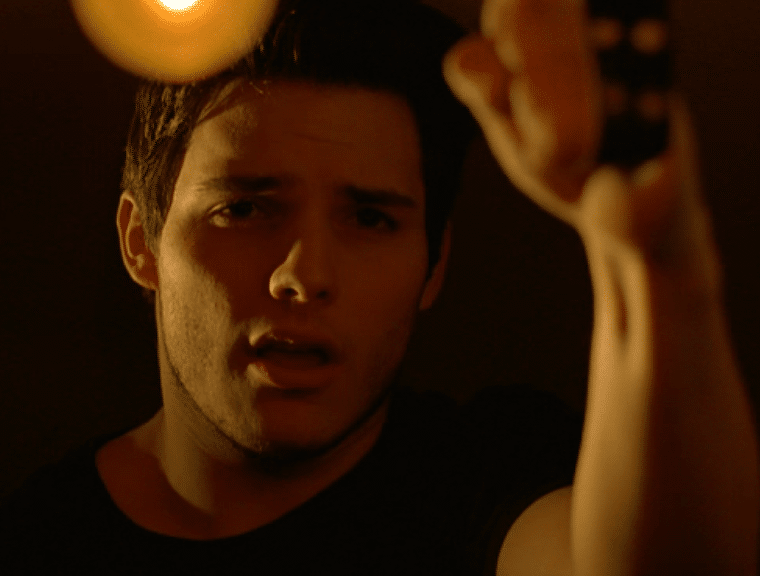 As for attitudes to women, hmm. I don’t think you’d go to a filmmaker like Henenlotter expecting his work to reflect our modern preoccupations with gender, but those inclined would probably raise an eyebrow here. Lots of men in the film try to police Jennifer’s behaviour, slinging insults at her, acting like they’re the ones in control: it’s only thanks to her unorthodox make-up that she’s able to turn it around. She even turns their ‘little deaths’ (or actual deaths) into photographic essays. Past emotional attachments have ended up going badly wrong for her, so she now steers clear of them; she also shies away from that old adage ‘women have sex to get love’. She definitely doesn’t, and avoids it like the plague. All of that said and done, she does turn into a hysterical, irrational mess on occasion, and other women in the film dodge between being inert sets of boobs, and prostitutes. Honestly, I think it’s only the film’s elective preposterousness that has saved it from a glut of Vice articles about how a disembodied penis breaking into women’s apartments to sleep with them is deeply problematic. But all of its problematic content is just a facet of the film’s overall puerile nature, in my opinion. If women are characterised rather thinly, then so’s everyone else we meet.
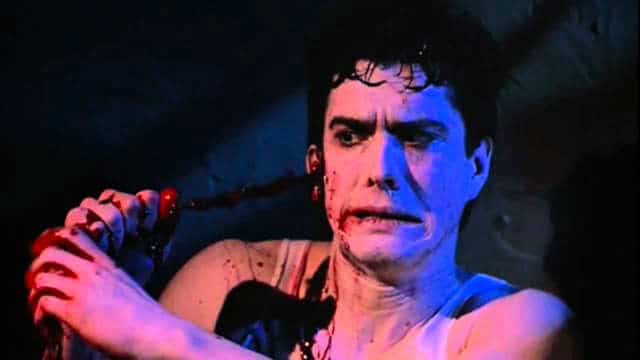 If you didn’t already know from your experience of watching Basket Case that bad things are almost certainly around the corner, then you could be forgiven for thinking that the beginning of Brain Damage (1988) features a perfectly respectable elderly couple, in a well-decorated New York apartment, doing something perfectly reasonable. Sure they’re feeding…something, but that’s probably a lhasa apso or something. Dogs eat anything, so they’d surely eat, umm, brains… from an ornate china plate…erm…in the tub…pets, eh?
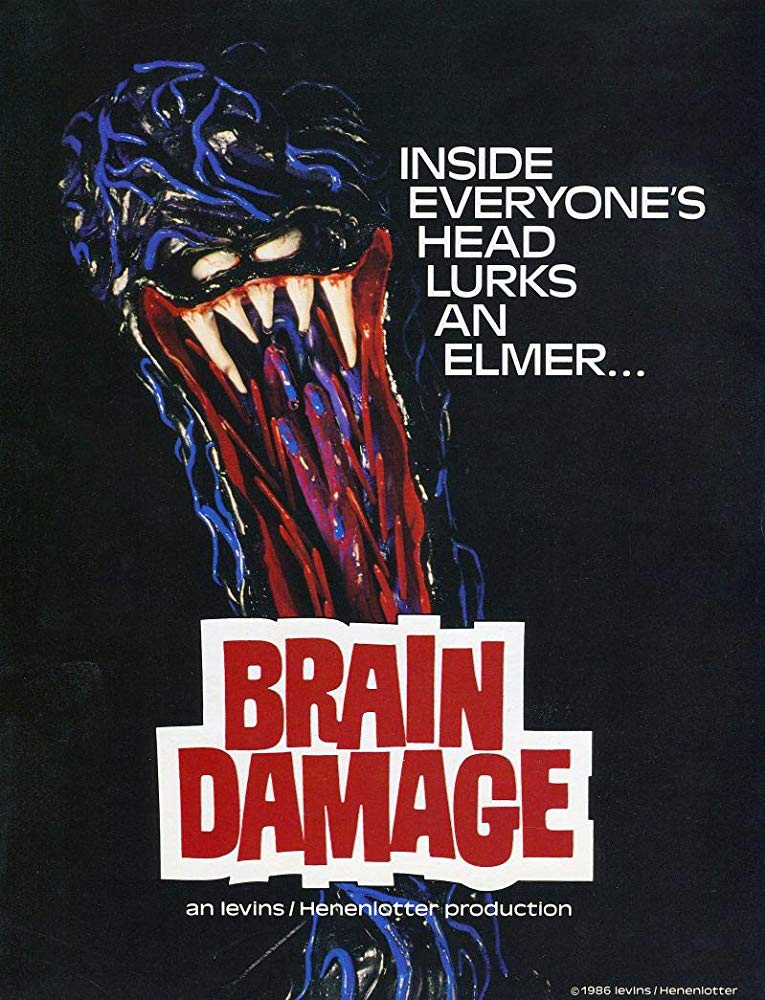 It hardly needs saying that Brain Damage could work as a hideous metaphor for addiction. The highs, the lows, the people hurt, the desperate measures – they’re all in there. In fact the film seems to invite us to see Brian in this light on several occasions: as he prepares to head into the new wave gig where he meets the unfortunate fellatio brain-munch girl, for instance, there’s a back-and-forth shot of him getting his hit with an alcoholic down-and-out standing just a little way away, drinking from a brown paper bottle. Their ages are different and the substances are different, but these are both people with their dependencies.
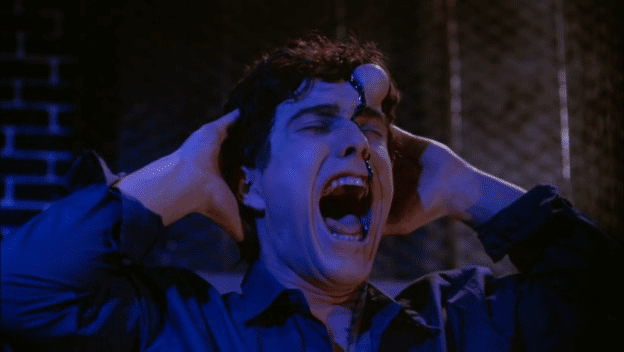 As much as I love all of Henenlotter’s films, Brain Damage is really my favourite. On a low budget, and with inexperienced actors (this was Rick Hearst’s first film) it achieves a great deal, striking a good balance between authentic horror and horror-comedy. It has a lot of the gritty, grimy nastiness of Basket Case, with the same mean streets and locations, content so graphic that it was excised from early cuts of the film, and horrible subject matter: in some respects it’s like Basket Case in reverse, with an unwitting joining-together of two sentient creatures, one ‘normal’ and one not, instead of an enforced coming-apart. So this whole symbiosis theme is pretty grim, and gives us some unpleasant scenes throughout.
 A few years ago, at the Dead by Dawn horror festival in Edinburgh, I was invited to take part in a ‘play dead’ competition with the rest of the auditorium. Quite unusual as a pastime, you might think, even for a horror fest.
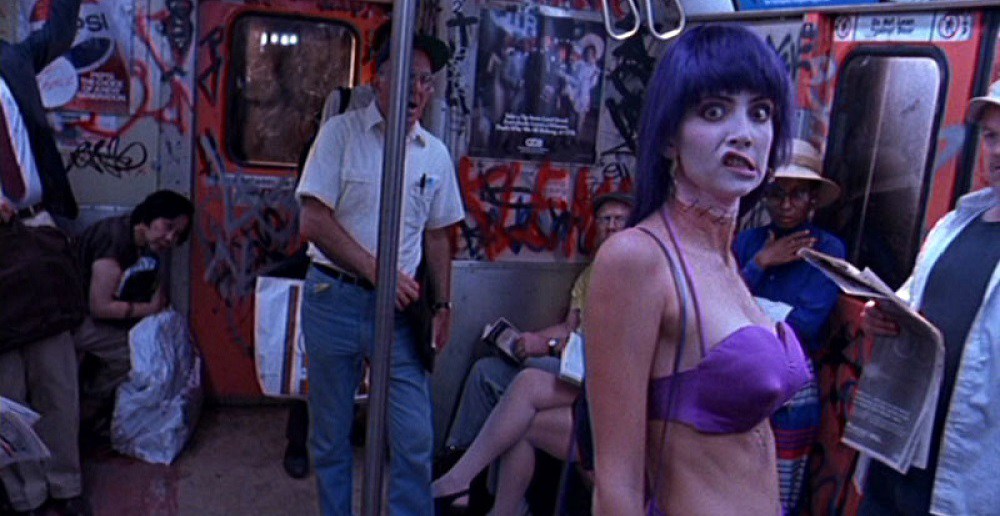 Henenlotter has not made a vast array of features during his career, though via his work with Something Weird he’s shown he’s as happy to save other people’s films from oblivion as he is to make his own. Altogether, he’s made eight original films, together with some documentary work, and at the time of writing his name is attached to a couple more shorts. Some directors crank out a film a year, but Henenlotter has never joined their ranks; there’s even been a sixteen-year hiatus between features. None of that means the impact of his work has been any less, and in a few very notable films in the 80s and 90s in particular, he’s made his name as a director of ‘body horror’, where the physical body can be invaded, mutated, updated and quite open blown apart by a whole host of bizarre phenomena. Some body horror is genuinely unsettling: close contemporary David Cronenberg, for instance, renders his compromised bodies the stuff of nightmares. It’s horrific, yes, but sublime. Henenlotter has a different approach – he opts to go straight from the sublime to the ridiculous. Sure, you can wince at some of the things he does on screen, but any deeper considerations are usually grabbed out of your hands by the next scene coming, which does something so hideously outlandish that all you can do is laugh. It is, as he suggests, pure exploitation, and it’s terrific entertainment, as well as immensely formative for many of us of a certain age, who grew up with these films on VHS and later, DVD.
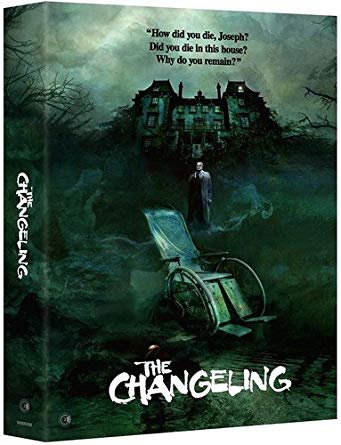 Winter, upstate New York. The Russell family are on vacation, but their vehicle has broken down in the snow. As father John (George C. Scott) crosses the road to call for help, an out-of-control truck careers towards his wife and daughter. A simple and effective cut to John, alone and back in the city, tells the audience all it needs to know; it’s the first understated moment of the film which shows that director Peter Medak trusts us to understand what’s going on without spelling everything out for us. The family home is now boxed up, with only flashbacks to show us what it once was.
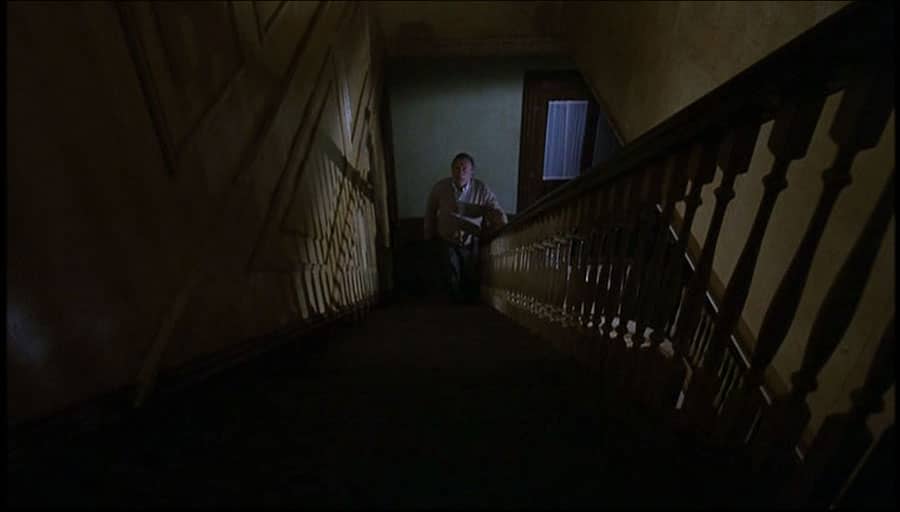 Everything is handled with a sensitive pace, allowing characterisation to blossom without having Russell say everything he’s thinking; slowly and surely, he picks his way through a story which effectively leads him/us down a few blind alleys, arriving at its surprising denouement cautiously. I’d also argue that in the best supernatural horrors, the haunted place – usually a house – seems to operate as a character in its own right. Before we can safely attribute phenomena to a specific entity, we can only interpret the strangeness of the haunted place itself. It is the source of the phenomena, so it needs to seem almost sentient, as well as striking in aesthetics and atmosphere. The house in The Changeling has all of this in abundance, too. Camera angles are shot from the house’s perspective, and it’s described by Russell himself as having wants and preferences. Again, it’s simple stuff I suppose, but done well it’s very effective. The film does more, too, by linking its supernatural to real-life events, which calls up far older ideas that ‘justice will out’ to a very modern tale of corruption.
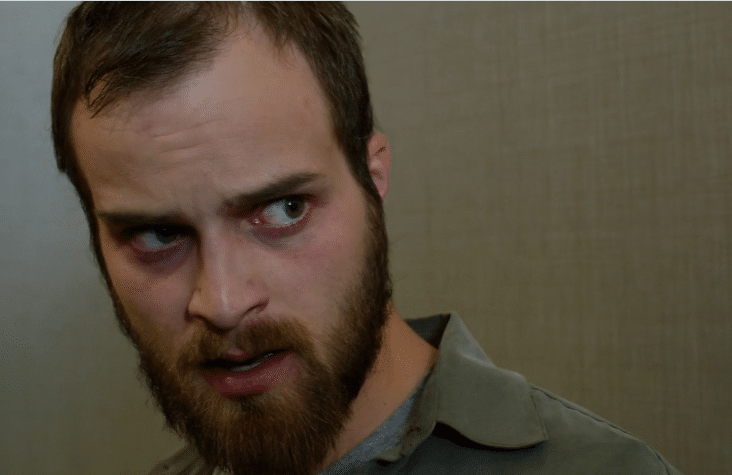 How much can one ninety-minute film reasonably do within its timeframe? Can a film successfully go from awkward laughs to gore, from femmes fatales to OTT-ultraviolence, and from slacker humour to shock? Rondo (2018) believes it’s not only possible, it’s all part and parcel of its overall appeal. Both the ethos and the resulting movie have a few little drawbacks, but overall, I’d say those behind the film manage to balance these things pretty well. Due to its content this will not be a film for everyone, but if you can laugh and squirm at the same time, you might well be okay with this one.
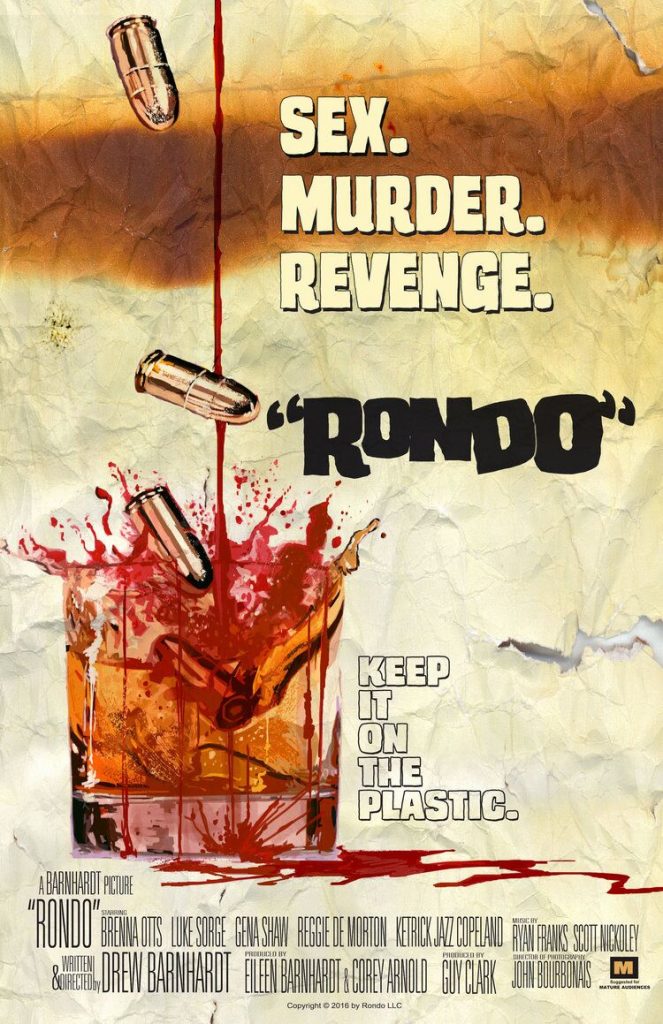 If they weren’t already on your radar, it’s at about this point that the film’s black comedy elements begin to rise. As Paul and some of the other gatherers listen to the ‘rules of the road’ for this party, the script modulates between comedic and downright sleazy; if the film showed half the things it describes, it’d have an X rating, which makes the steady delivery of certain lines by the host, Lurdell (Reggie De Morton) seem all the more uneasily funny. Paul’s suspicions about this place and this set-up are ultimately – and quickly – confirmed, so he decides to disappear. But he can’t just do that, or put this strange night behind him. It’s not as simple as that.
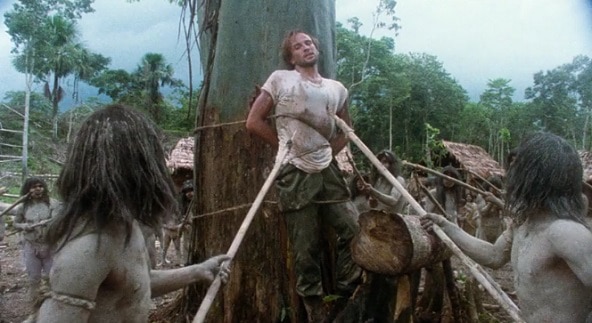 Umberto Lenzi turned his hand to many different kinds of genre film during his career, so it’s perhaps little surprise that he looked to the kind of cannibalism movies being made by his peers (such Ruggero Deodato), making two of them in very rapid succession, after almost a ten-year break between these and the first of his films to nod towards anthropophagy, The Man from the Deep River. Cannibal Ferox and Eaten Alive were made within a year of each other, though I’d suggest that Ferox is still the better-known title of the two, often for some of its more notorious scenes, and perhaps still for its association with the ‘video nasty’ debacle, which has so often led to a long legacy of different cuts and titles.
 In many respects Ferox is a sort-of morality tale, whereby every white person setting foot in the Amazon basin is an irredeemable fool, nasty beyond measure, and so they get served accordingly. Even Gloria eventually fathoms this, bless. However, they don’t simply get picked off in order of awfulness, with some of the better-meaning characters dying way before the worst of them, so it’s not as straightforward as it might be. It’s also worth knowing with these cannibal horrors that a lot of the more notorious and gory scenes are often crammed into a short amount of time, usually towards the end of the ninety minutes: they certainly are here, and in common with
  Given some of the films which have showcased Eastern European locations for American audiences in recent years, you’d be forgiven for thinking that in every disused industrial building in this part of the world, there’s some sort of dodgy sex-and-torment club holding sway. Such is the case in Dark Crimes (2016), which crams quite a lot of breasts and torture into its opening scenes; this scene actually takes place outside of the timeframe of the rest of the film and as such is a little confusing, but quite possibly it seemed a shame not to add it in. These considerations aside, Dark Crimes is probably most noteworthy for its casting of Jim Carrey in the lead role – though it’s languished a while, two years in fact, waiting for a release, which seems surprising given his bankability. Well, having now watched the film in its entirety, let’s just say I’m rather less surprised that it’s been left sitting on a shelf somewhere.
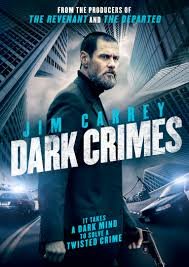 As for Carrey, I suppose you could say this is a change of pace for him – but then again, he’s already proven he can do serious acting elsewhere. Once the initial mild surprise of seeing him looking so dour wears off, you realise he’s being given very little to do here; that dour stare is the whole role. He also veers between a neutral accent (better) and an attempt at an Eastern European one (worse), which just makes it doubly silly. (It’s never really explained why the whole of Poland is conducting its affairs exclusively in English, right down to the TV news. Only the names are Polish in this version of Poland.) Charlotte Gainsbourg has a role here, too, one which grows in importance as the film moves forward, but she essentially reprises the role she’s done several times elsewhere, with a completely unsurprising nude scene/sex scene and a strung-out demeanour overall. To be fair, she isn’t permitted any characterisation for most of the film, so it’s all too little, too late when it finally comes along.
 I don’t know about you, but I always feel a moment of trepidation when I see rock stars’ names attached to film projects – perhaps particularly so when at least one of the rock stars in question has now shuffled off the mortal coil. What would they have thought of the finished product? Did it receive their blessing? What’s the story? That’s very much the case in Sunset Society, a film which boasts an appearance by the legendary, and now sadly deceased Lemmy Kilmister, as well as roles for LA Guns musician Tracii Guns and former Guns ‘n’ Roses member Dizzy Reed. The largest share of Sunset Society seems to be as a meet-up for LA-based musicians and hangers-on who peaked before the 21st century came around, although admittedly that doesn’t really apply to the Motorhead frontman. Director/actress Phoebe Dollar – veteran of a whole host of low-budget horrors in her own right – isn’t an idiot, and Lemmy is accordingly plastered all over the film’s promotional material, because he is quite simply a failsafe currency as far as rock and metal fans are concerned. He’s also mentioned frequently in the script by other characters, though it’s worth pointing out that this is, really speaking, a cameo role, with only a few minutes of screen time for him.
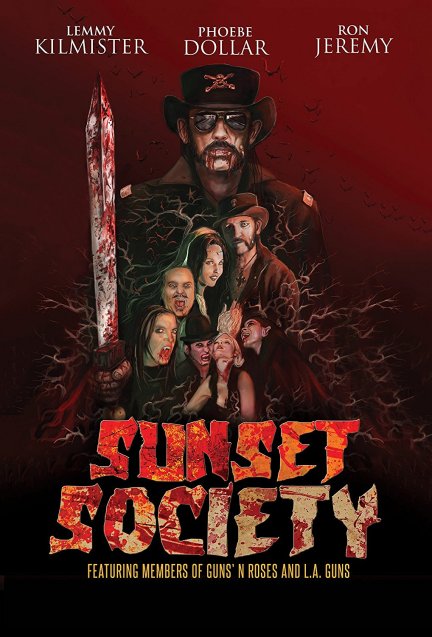 I really, really wish there was more to it than that. Lots of the screen time here seems to consist of only loosely-connected scenes, with little in the sense of a driving force behind the narrative. Sure, some of the aesthetics are pretty cool, some of the city nightscapes look effective and if you like seeing pretty goth girls on screen then you’ll find plenty to divert you, but it all feels more like a protracted music video than a coherent film. Adding to this, lots of the dialogue feels improvised (and some of it has blatantly been messed up, but left in anyway) or there are issues with the script whereby it frequently becomes thin or repetitive. Making a joke out of the repetitiveness itself is not enough to swing it, unfortunately, even if it’s stalwart Ron Jeremy making the attempt: his is another cameo role, with little screen time given. (Oh, and another, more inexplicable cameo? Steve-o from Jackass.) As for Lemmy himself, well as much as it’s good to see him again, his scenes aren’t all that great. He was never an actor by trade and towards the end of his life, he seems he’s struggling to enunciate the lines given to him. The cheap animated interludes hardly help matters.
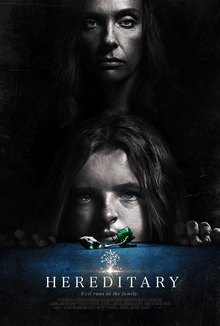
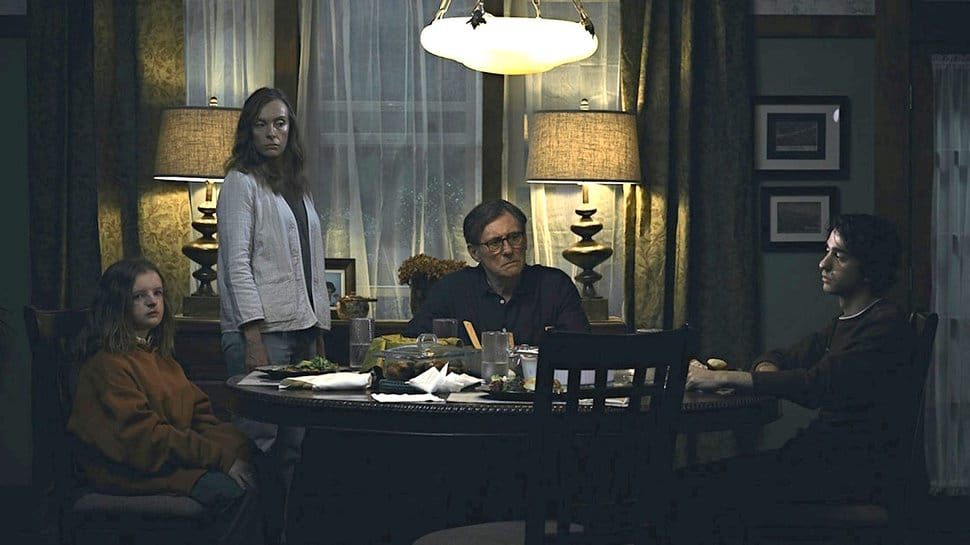 As we’ve seen countless times, the weight of expectation can be an ambiguous gift to a film, but it’s fair to say that few recent horrors have enjoyed such a steadily-building sense of anticipation as Hereditary (2018), which has been running tantalising trailers for the past few months. For one thing, the return of Toni Collette to the horror genre has been a boon – she really is a superb actress for this kind of thing – and for another, we seem to be enjoying a run of supernatural horror; it’s a welcome development for fans, some of whom may have felt somewhat starved of it in recent years. That said, the now-obligatory discussions about whether or not Hereditary is a horror film at all have proved to be a rather tedious add-on, unnecessary and bewildering for fans of the genre, who already know that it can do all of the sophisticated, multi-layered things which seem to come as such a surprise to others that they need to feel around for a new title for it every single time. I tried, as ever, to put all of this to the back of my mind ahead of seeing the film – which lo and behold, is as much of a horror film as I’ve ever seen in my life.
 I’m deliberately keeping my plot synopsis brief and a little vague here, as the way in which Hereditary unfolds deserves to be appreciated with as open a mind as possible. It’s unlikely that I’m spoilering by relating to the supernatural elements, though, I hope; so, this is a supernatural horror through and through, where the afterlife is more of a parallel world than a one-way destination, and where its inmates can harbour very, very sinister designs on the living. I was pleasantly surprised to find myself surprised, I think. I’ve seen the film proudly described as ‘this generation’s Exorcist’, or words to that effect, but that seems an odd comparison to make, unless we’re painting in very broad strokes. It’s far closer to the malignity of The Witch, or indeed the assault-by-wicked-forces seen in Drag Me To Hell, though with less of the humour. Although, even Hereditary has its lighter moments. It lobs in a few bong jokes, and some of the family meltdowns grow so hysterical that they verge on black comedy, as do a few of the film’s shockingly graphic moments.
 The cannibal movie cycle of the late Seventies and early Eighties will forever seem like a strange beast. Splicing stock footage of animals doing their thing with often garish animal cruelty, then layering in gore effects, nudity and any number of practices which would very likely fail to get past an ethics committee today, the resultant films are nonetheless compelling – in their own way. All of that said, I’m a product of my own social climate, and as such I’m very pleased that Shameless Films have openly made the decision to ‘soften’ (their term) the animal cruelty originally present in their brand new version of Mountain of the Cannibal God (1978), making the point that this footage benefits the film’s narrative none. Instead, they’ve worked to restore other missing scenes, offering the usual proviso that this means some of the splicing is bound to be noticeable. And it is, a little, but it’s all in the pursuit of a worthwhile cut of this film, and the end results are very good.
 A haze of ulterior motives, animal scenes and great music ensue. It’s my contention that the best-known cannibal movies have such superb music for this very reason, to offset everything less palatable in a kind of cinematic karma. And as the team approach the mountain, the locals (of course) show this disapproval in all of the ways you might imagine, as well as a few which are, to be fair, very creative and ambitious. On a restricted budget, Martino achieves impressive things here; a lot of the entertainment value of these films comes from smirking at the flaws, and that’s fine, but don’t let that make you overlook the many things which Martino does rather well. The ‘mountain god’ himself looks genuinely gruesome and repellent, and some of those restored gore scenes could still make you flinch.