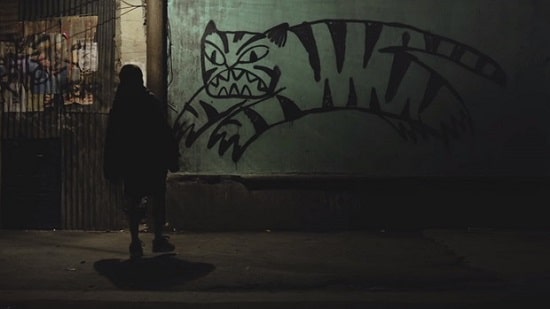
 Tigers Are Not Afraid spins some uncomfortable truths about life in Mexican border towns into a fantastical yarn. In so doing, it embeds its characters in a fairy tale, inviting the audience to see the tale through to the end, and to look for tropes we all recognise. The besieged princess, the ogre, the magical creatures, the three wishes…all present, but all interlaced with realistic horrors. It’s an interesting film which accomplishes a great deal.
We start exactly as we go on for the duration of the film, where an everyday scene is conflated with something magical, before violence and terror break through into the scene and take their place alongside. Estrella (Paola Lara) is in the midst of a school lesson about storytelling, and she and her classmates are in the middle of planning fairy tales for a creative writing session when a cartel shoot-out sees the children and teacher diving for cover. Depressingly, as frightening as all of this is, the children know the drill, clambering under their desks and waiting for the gunfire to end. Estrella’s teacher, aiming to comfort the girl, reaches out to her and hands her three stubs of chalk, telling her that they represent magic wishes. It’s a kind gesture Estrella which is happy to accept, and it seems as though she has escaped unscathed, finally making her way to the home she shares with her mother.
But her mother isn’t home. Estrella is confused, and then scared. Her mother hasn’t left a note, and Estrella has no way of knowing where she’s gone. She decides to use one of her wishes, but quickly learns that these wishes have a bitter aftertaste; her mother does return, but in spectral form, driving her now-orphaned daughter out of the house. Hungry and lonely, the girl ventures out into a town completely dominated by the local gang, the Huascas; her only hope of support is from other children in a similar position, living rough as they steal to feed themselves; there’s no infrastructure here to protect them. A local gang, led by the fierce and indomitable Shine (Juan Ramón López) reject her at first – he and Estrella have already had a run-in – but later he begrudgingly lets her stay with them. If only things were even that simple.
Shine, in a moment of madness brought on by his own grief at losing his own parents the same way everyone seems to lose their parents round here, has stolen a gun and a mobile phone from one of this ghost town’s most infamous gangsters, Caco (Iannis Guerrero). When Caco sobers up, he sets about getting his property back with all the monomania of a powerful man, as he and his associates both know and own these streets (one of the film’s most poignant, and teeth-setting moments is when the children seek the help of some local police, to no avail; these cops are nothing compared to the cartels, so they don’t even try). The gang is looking for the children, and when they find them, they drive them out of the ramshackle cabin they’ve pieced together, a place where they’ve even stolen and set up a few luxury items like TVs. Yet fleeing this place is the only way they escape with their lives.
Clearly, there’s something very special about this phone. Shine won’t part with it, and Caco won’t rest until he gets it. Goodness knows why, as it seems very unlikely anyone would dare to do anything with the phone; perhaps it’s more a case of having his own way. If his gang can’t kill the children, then they’ll cage them and use them for…well, it’s intimated that bodily organs are being traded, and also that children are being sold into slavery. This is just one of the ways in which urban legend collides with evidence that these things are going on; the children whisper about them, but if they don’t move fast, then they fall victim to them. Desperate, and also a little resentful of the new girl, Shine tells Estrella that the only thing they can do now is to kill Caco. Somehow, she agrees, taking his gun into his house…but someone has got there before her. She lies about this, enjoying a brief moment of glory which can’t and doesn’t last. But soon another gangster wants that phone, and the children have to run again…
 All the while, more and more supernatural phenomena are plaguing Estrella. The ghosts of the Huascas’ victims are following her, terrifying her as they implore her to bring them the gang that murdered them. Blood literally and metaphorically begins to course through the children’s lives; dragons and tigers leap from walls and objects; the dead return and speak. Eventually fantasy and reality overlap, stories come to life, but at great cost to people who have already lost a great deal.
Magic realism of this kind allows us to see social issues through a new lens; key aspects of a story are brought into focus via the supernatural. For instance, The Lovely Bones allows the reader a new portal into grief and longing by making its narrator, Susie, deceased, having her introduce herself by saying, “I was fourteen when I was murdered…” The impossibility of her being able to reflect upon her own death in this way allows a new perspective on the lives of those left behind; it’s magical realism, and done well. This is also used to great effect in Tigers Are Not Afraid, which also allows unorthodox reflection upon death and loss, though perhaps its closer similarities to the work of Guillermo Del Toro, and specifically Pan’s Labyrinth, steal a little of its thunder: some scenes converge rather closely. This is unsurprising, given the earlier film also features an alienated girl, trying to navigate fraught times by trying to make sense of a fantastical world which only she can access. I also gather that director Issa López will now be working alongside Del Toro in future, which makes sense given their similar directorial styles.
However, whatever similarities there are, nothing can take away from the excellent performances given by the children of Tigers Are Not Afraid: you believe in every moment of peril and every moment of warmth. Seeing the little family unit get chased down is genuinely depressing, just as the adults here seem only able to vary between inert, maniacal, and dead. Just whilst I’m in the process of forging links to other works, it’s not hard to see commonality with Peter Pan and the Lost Boys. It seems like Tigers Are Not Afraid is steeped in fantasy elements, all brought to bear on a part of the world which has real monsters, often ignored by those not immediately faced with them. And maybe that’s the point. A stylish, savage and resourceful film, Tigers Are Not Afraid is well made and well-paced, definitely deserving of a watch, and even whilst you might be able to note its influences, it certainly does enough to stand on its own merits.
Tigers Are Not Afraid just screened at Sheffield’s Celluloid Screams; our thanks to all at the festival.
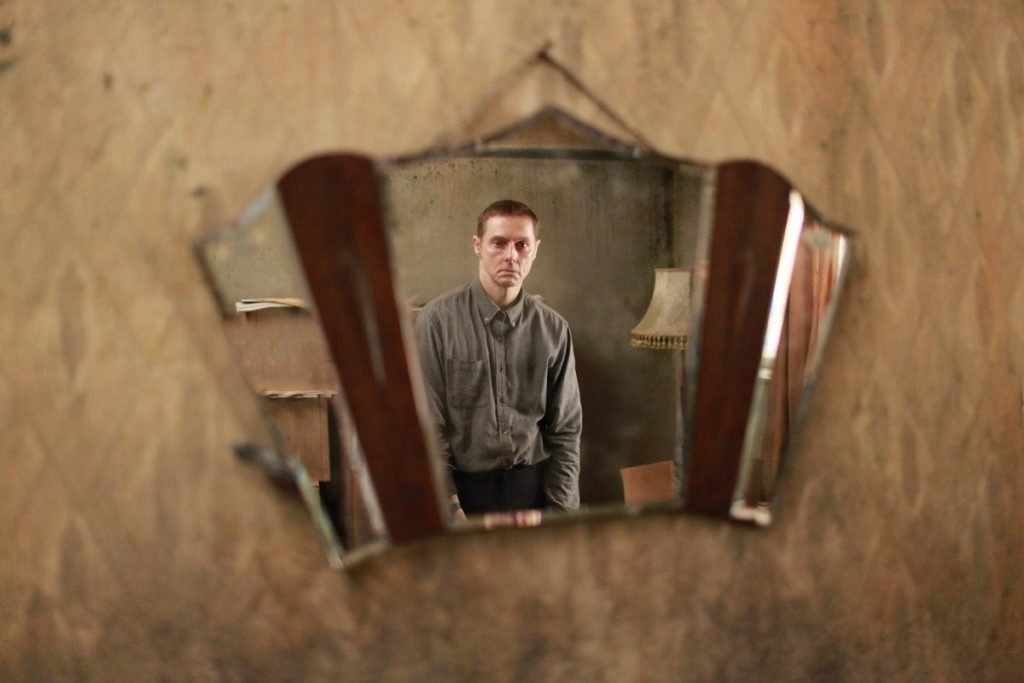 Some films excel at that kind of grimy, disconcerting quality which Possum (2018) has in abundance. Every frame of this film makes your skin crawl: it’s a love letter to abandoned places and anonymous spaces, swept through with dead foliage and rot. This, in and of itself, makes the film fairly challenging viewing, even whilst you can appreciate the skill which went into arranging its sets and locations throughout. Add to this an arachnid puppet which seems to stand in for a grown man’s arrested development and mental trauma, and you have a fairly gruelling viewing experience. However, Possum doesn’t lend itself particularly readily to a coherent narrative – with the result that those not hypnotised by its interesting looks might find the whole experience as frustrating as it is unsettling.
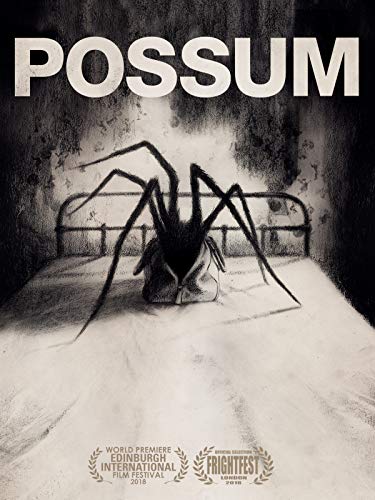 As the film progresses, Philip looks authentically more and more haunted by Possum, and seemingly more and more in need of getting things off his chest. It is certainly impressive to see how Harries manages to enact this increasing sense of oppression, as he almost disappears inside himself during the film’s progress. He also looks authentically ill, which is testament at least to the turmoil he’s feeling, even if he describes it very little indeed. In some respects Possum reminds me of the underappreciated Tony (2009), another film with a troubled, but unseemly male main character. As for Philip, his desperation to burn or to ditch the horrible puppet thing is, we see, useless; the more he seems to try to deal with this nightmarish situation, the more Possum appears, spider-limbed and vicious, in his dreams. Some of the sequences in Possum are genuinely unsettling, capturing something of those helpless childhood fears which so many of us seek in the horror cinema we watch as adults. Director/writer Matthew Holness clearly appreciates a good, creeping scare, and can bring a certain sense of a child’s powerlessness to the screen.
 A noir-ish montage of images and a voiceover ruminating on the immorality of Hollywood introduces The Queen of Hollywood Blvd, a self-professed crime drama which promises to pitch a hard-bitten club owner against the tactics of a gang of organised criminals. On paper, the film does just this – but the style and tone involved are not what many would expect, and indeed anyone expecting a high-action piece of work would find themselves feeling all at sea after watching this movie. Your tolerance for this take on a crime story depends very much on your tolerance for slow-burn, almost art-house cinema generally.
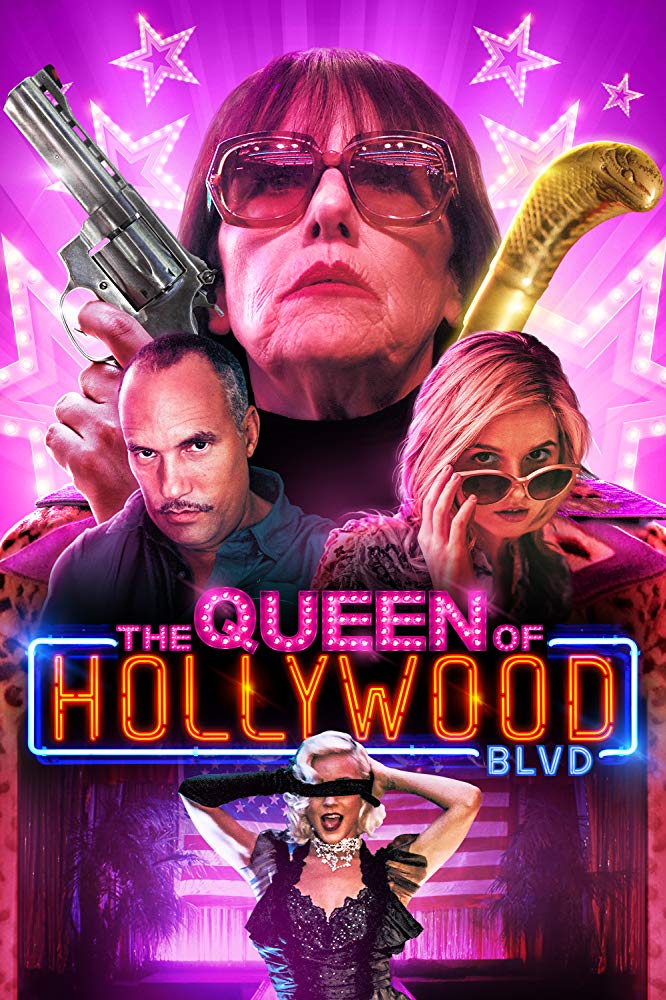 I also found that some minor issues caught my eye; some continuity issues are in there, but then a bigger issue is that the film’s position in time was unclear. I found myself wondering why, say, one of the crooks had a framed picture of Reagan on the wall and VCRs figure in the plot, but then the streets are full of modern vehicles and the girls at the club have very modern-style tattoos. It could be that the film has opted quite deliberately to belong to that timeless, rootless type of setting which focuses fashionably on the lo-fi and doesn’t want us to know when these events are taking place, but I always find this distracting personally, an attempt to ignore time which makes me wonder about nothing else. (It Follows, I’m looking in your direction here.) But all of these things would be minor, were it not for the fact that The Queen of Hollywood Blvd is, I am afraid to say, quite so slow and ponderous as it is. Its deliberate pace and minimal action means that very little happens within the first hour; unless the atmosphere is note-perfect and engrossing, then this can be alienating. It even risks an audience’s engagement completely, something which worked against it in my case.
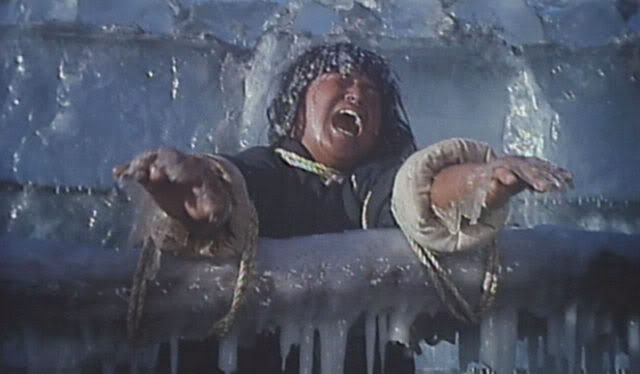 Editor’s note: this discussion of Men Behind the Sun contains spoilers.
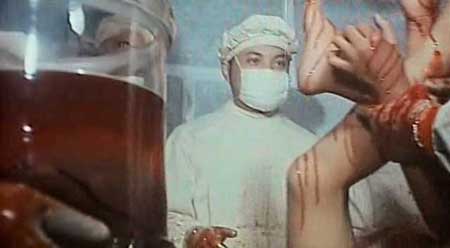 To make this scene (one amongst many) even more skin-crawling, rumours that this scene contains a real autopsy turns out to be quite true. When a local child died in an accident, Tun Fei Mou somehow prevailed upon the doctors performing the child’s post-mortem to allow him to use footage: the deceased was about the same height and weight as the child actor for the scene, so it has that unsettling note of veritas. The doctors (incredibly) accommodated his request, even dressing in Japanese uniform to complete the procedure. The organs we see being removed are, so we’re told, pig organs rather than human, though it seems an odd concession to modesty when we’ve just seen a real child’s corpse being cut into. Likewise, the notorious ‘rats can overpower a cat’ scene where a cat is apparently mauled to death by rats is now being denied as real by the director, though it looks very, very much like an animal genuinely dies here. This sort of thing could of course never, ever happen today, and it’s bizarre that it ever did, but even if we can’t quite accept it, we can perhaps explain it by the fact that at this time, there was no SFX industry in China, and Tun Fei Mou felt it was of the utmost importance to show the experiments as they really were. He couldn’t have found anyone to make rubber models for key scenes, and even if he could, perhaps this would have gravely affected the film he was trying to make.
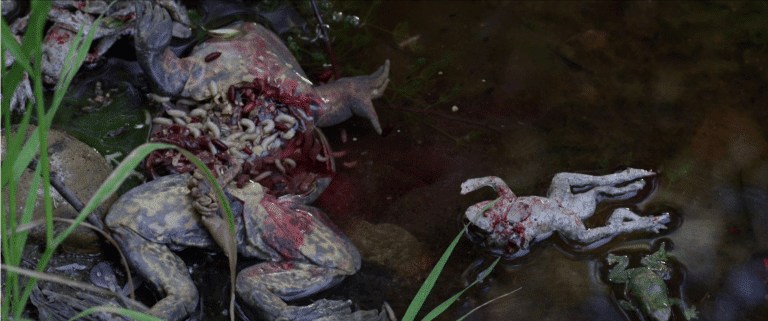 There have been many horror films about environmental havoc over the years, but it seems as though frogs have not figured prominently in these. Aside from the game-changing (or even life-changing) Hell Comes to Frogtown and a short cameo in Baskin, frogs have been largely overlooked, so I’ll admit: the press information for Strange Nature won me over via its apparent novelty, speaking of mutant frogs and the like. It’s possibly strange that we’ve seen so few amphibians in horror cinema; frogs have to live with us, have to cope with whatever we flush into the water, and their habitat has an immediate effect on them. This brings us to rural Minnesota, where the story begins.
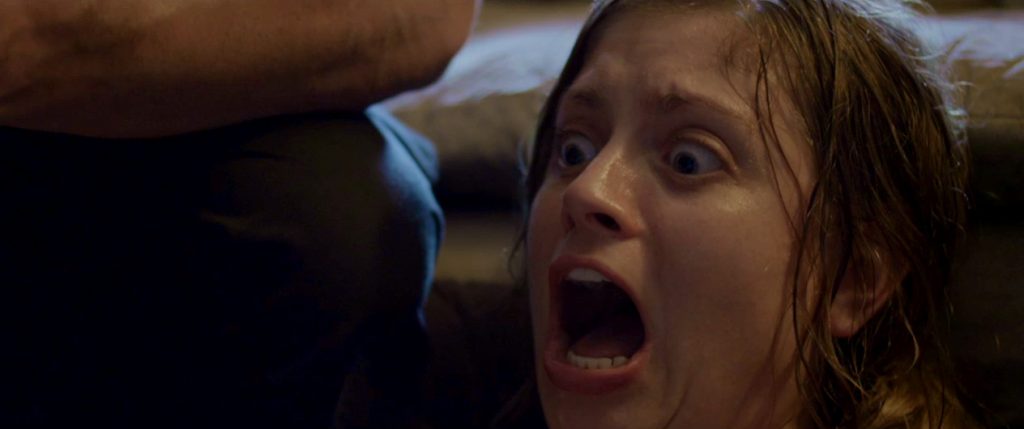 The film at this juncture could have gone, to my mind, in one of two ways. Either it could have gone all out with glorious excess, using its environmental theme as an excuse to hurl froggy gore at the screen, or else elected to look quite seriously at the topic of pollution and its aftermath. Perhaps surprisingly, at least to my mind, the film largely opts for the latter. This is a very script-heavy film with a lot of dialogue employed to develop character and motivation, though thanks to this it feels a little slow in the middle act, and after Tiffany Shepis departs proceedings very early (she’s criminally underused here, and generally deserves more appreciation for sheer work ethic alone) it feels as though we’ve just been tantalised with the promise of some huge aggressive monster-creature. Instead, Kim is all about exorcising her demons as a former pop singer who made the mistake of insulting the denizens of Tuluth before heading off to a better life, and so she ends up working with the local elementary school science teacher to understand the situation and hopefully alert the locals to what’s happening before it’s Too Late.
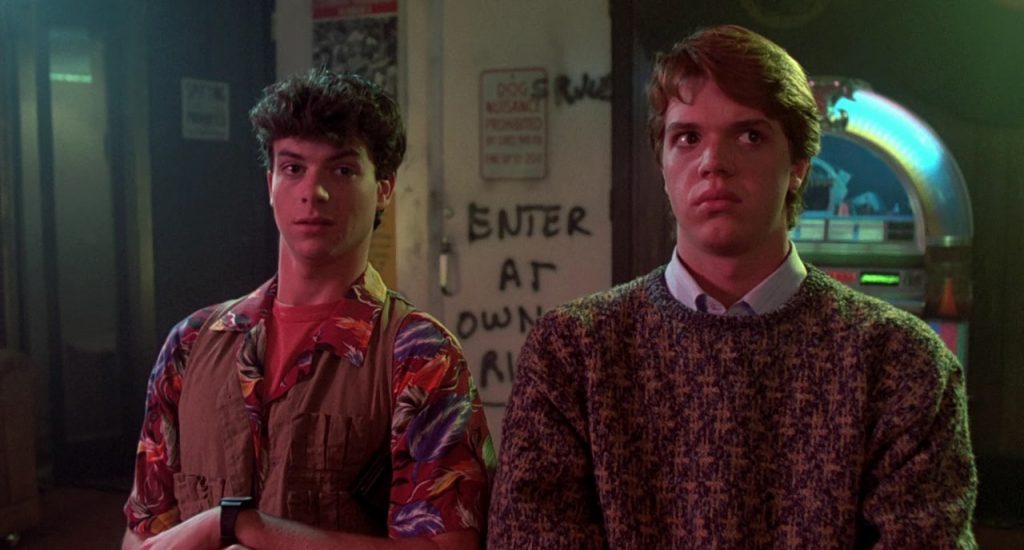 You have to hand it to director and writer Fred Dekker. Not only has he made some of the most straightforwardly entertaining films of the past forty years or so, but those films are – for many people – forever wedded to the 1980s, so forming part of people’s nostalgia for a decade when many of them were growing up and experiencing cinema for the first time. Even for those who didn’t see his films within the decade they were made (I never saw the film under discussion here until I was well into adulthood) the effect and the charm seems the same. Dekker might not have set out to set down the 80s for future audiences, but he captures something about them perfectly nonetheless, even when he was imagining a dystopian future, or a time in the past. Although his directorial work is sadly minimal, he has also worked on a number of seminal movies in the capacity of a writer, and he has a very distinguished style which
 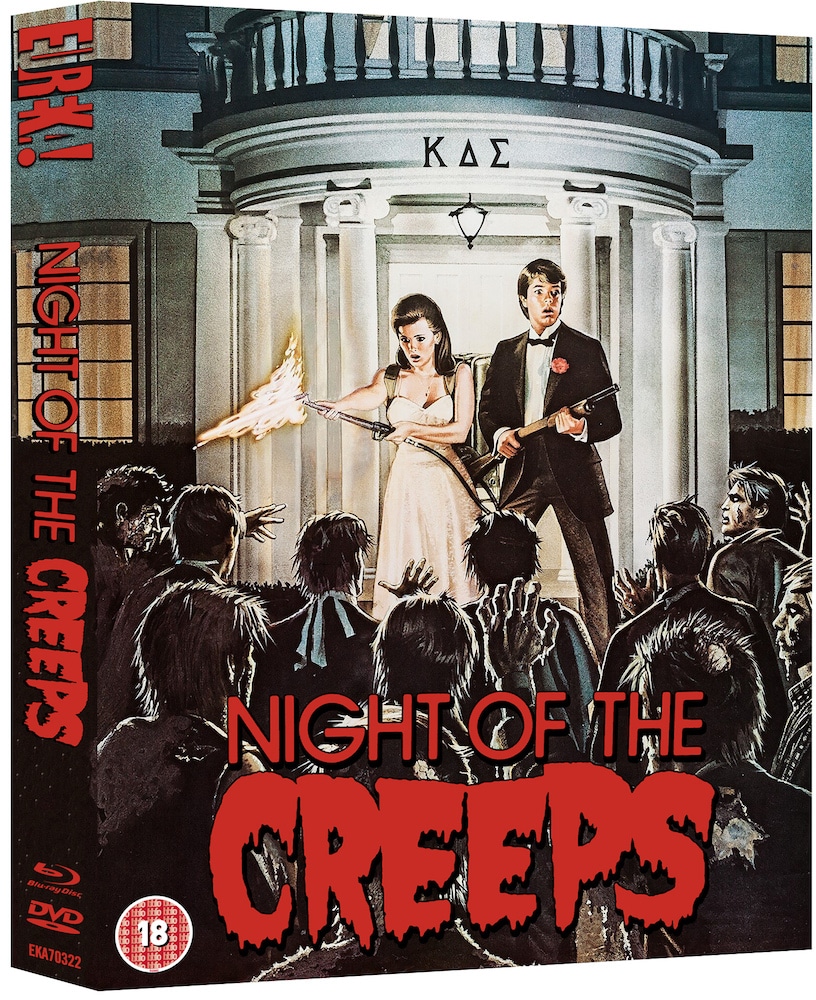 Night of the Creeps starts in the 1950s, when an alien skirmish taking place in the skies above Earth results in a mysterious capsule being jettisoned from the craft. It falls to Earth, where it soon threatens to interrupt the romantic pursuits of a group of white-bread young college students, two of whom see it land (and, being idiots, simply have to go and investigate). Oh, there’s a crazed axe murderer on the loose on the same evening; it never rains but it pours. After we see the worst happen with respect to both of these events, we cut to 1986. The weird, weird world of US college life is getting into full swing for that academic year, including the traditions of potential fraternity and sorority house inmates undertaking dangerous/stupid things as ‘pledges’ (seriously, America: why do you do it to yourselves?) Two outsiders, ‘dorks’ Chris (Jason Lively) and best friend J. C. (Steve Marshall) are doing their best to navigate through this new, potentially fraught social situation, as well as hankering after beautiful, probably inaccessible girls like Cynthia Cronenberg (Jill Whitlow). Sadly for them, it turns out that to get anywhere either socially or romantically, they’ll have to actually sign up for a pledge of their own – as set by a group of probable future Republican party candidates, who make it good and difficult. Their task? To break out a cryogenically frozen corpse from the local hospital.
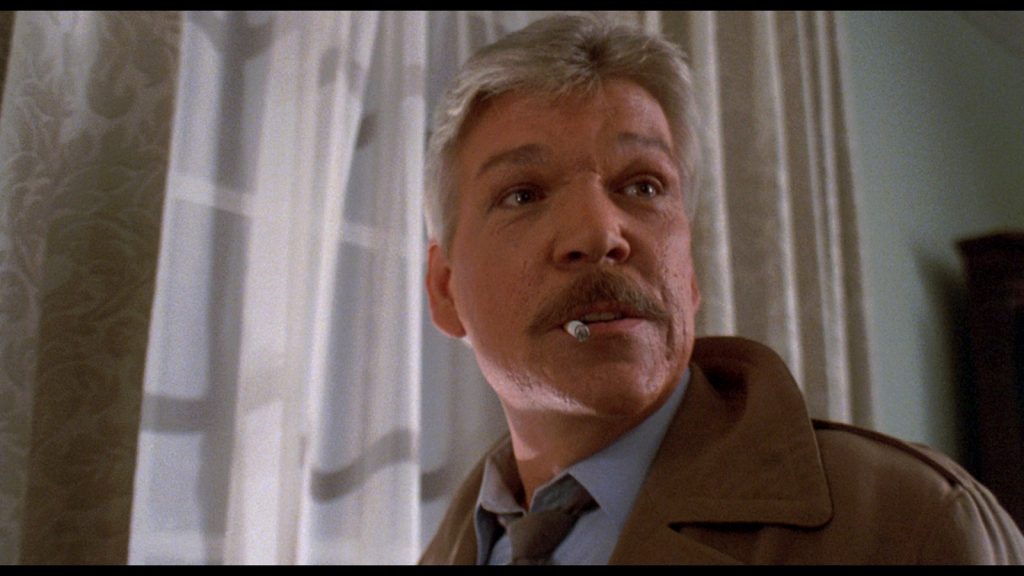 Night of the Creeps also boasts what I think we can now call a classic Dekker script, somewhere between plausible and humane in places, obviously crafted in others, with catchphrases and black humour throughout. It’s a film where you can laugh at the exchanges between Chris and J.C, but also get a true sense of their friendship, right down to a genuine feeling of pity when they’re torn apart. Tom Atkins, one of the most recognisable and beloved figures in cult cinema, is at his best here (in what he’s termed his own favourite film which he appeared in). He’s such a vivid character, but again, when not camping it up and yelling “Thrill me!” down the telephone, the guy can really act. I think that’s it: up against these preposterous turns of events, all of the cast do such a great job, and lend a kind of deserved gravitas to their roles. Their respect for the subject matter makes the storytelling all the more entertaining. Sure, the end of the film (with this ending) tantalises for a sequel which never came, but Night of the Creeps is more than sufficient. As pure entertainment, I can’t fault it.
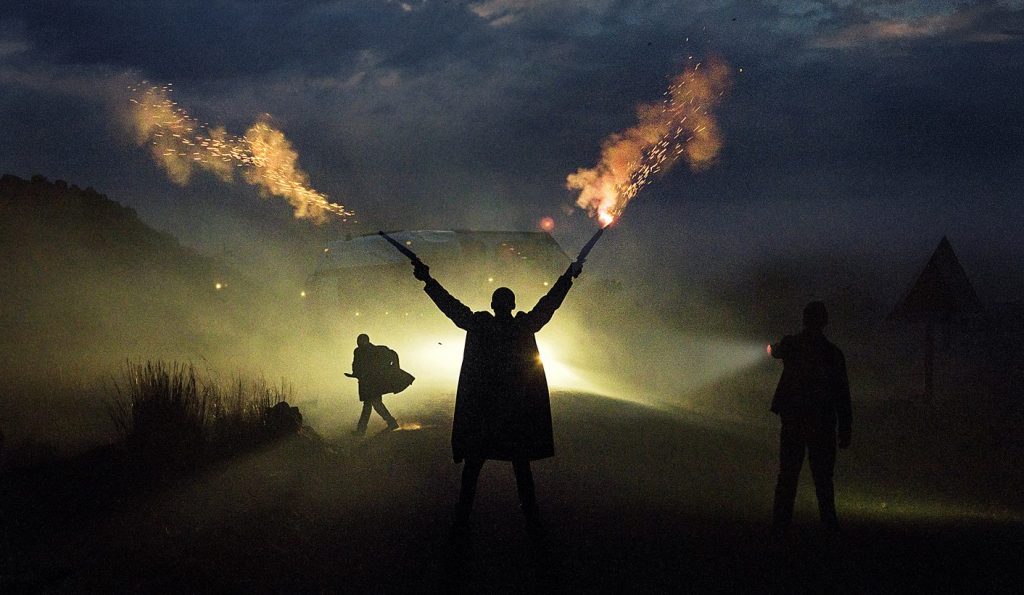 The Western, pioneered by the likes of Sergio Leone and Sam Peckinpah, is a format which has spawned cinema around the world, with recognisably Western-style filmmaking appearing everywhere, even in the likes of the Convict Scorpion films in Japan during the 70s. However, I think it’s probably fair to say that South Africa isn’t greatly known for Westerns. Given the Western’s emphasis on lawlessness and vigilante justice, though, it’s clear why director Michael Matthews decided to give it a whirl in this setting. That this is his first feature is incredible; the resulting film, Five Fingers for Marseilles, eight years in the making, is a skilled piece of work, if a challenging, weighty experience.
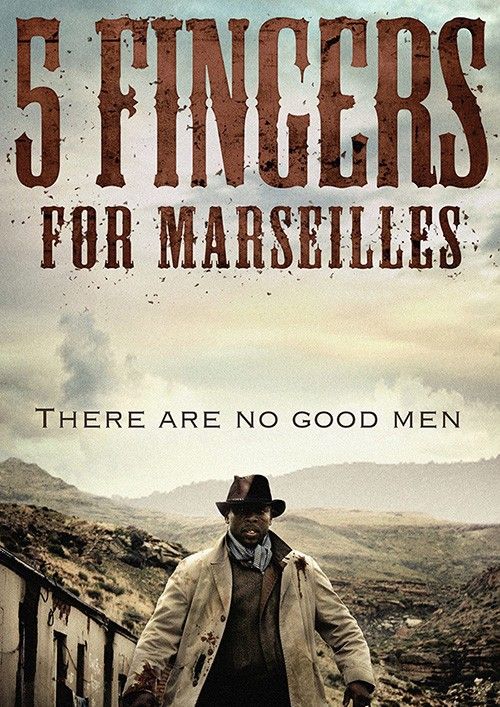 All of this is convincingly, and very movingly carried on the shoulders of the lead actor Vuyo Dabula as Tau, a man who displays a staggering gamut of emotions whilst barely saying a word; he oscillates between rare moments of joy and desperation, and it’s a very absorbing performance throughout. But he is ably supported by his old friends, in particular Zeto Dlomo as the gang’s old sweetheart Lerato, now a grown woman desperate for life to improve for her and her ailing father. A devastating musical score pulls on the heartstrings even more, with its long, low incidental notes underscoring the tragedy unfolding on-screen. I do feel that the film plays out as a tragedy in many respects, because for all of the nods to the great Westerns of the past, there’s an overarching dour atmosphere here of impending doom, right from the start, where any expectations we might have for a gang of children on our screens are ultimately taken in a different direction; I don’t think you ever feel that people are going to ride off happily into the sunset. The film looks spectacular, an engaging visual blend of landscape and townscape, myth and reality – with certain characters, such as the ominous gang leader, seeming almost supernatural in some scenes. Commentary on the presence of ‘the land’ as the ultimate arbiter of man’s affairs even leans towards folklore, albeit ultimately played out in gritty, hard-hitting and realist fashion. It’s also interesting to get a film which plays out in a variety of different languages: English is a lingua franca, but the characters code-switch throughout, using Sotho and Xhosa in turn, too. This helps to ground the action in its setting, as well as bringing native languages to the fore, as spoken by the people who live in these areas.
 Spoiler warning.
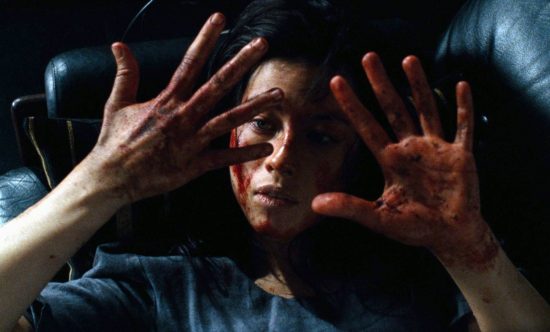
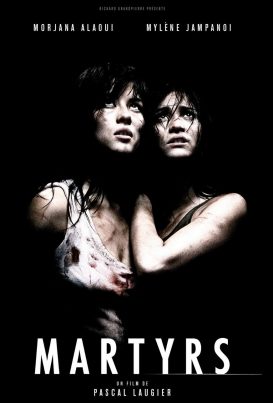 I reference the ‘cut-and-shut’ idea above because one criticism of Martyrs is how it shifts from the intimation of supernatural horror to something altogether different in its second act, as the film’s supernatural content gets closed off not just to the audience, but also to the people trying to coax supernatural evidence out of their victim. Lucie’s campaign of vengeance (abuse-revenge rather than rape-revenge) is punctuated by visions of a tortured girl rendered almost demonic by her determination to attack Lucie. We are left wondering, at this stage at least, whether Lucie is undergoing a pure hallucination: the gravity of the attacks on her push the idea of this being ‘all in her head’ about as far as they could conceivably go. In this respect, Martyrs seems to draw together a lot of the quite disparate threads which were drifting along together in horror cinema at the time, and it does so in a way which is quite unique and challenging.
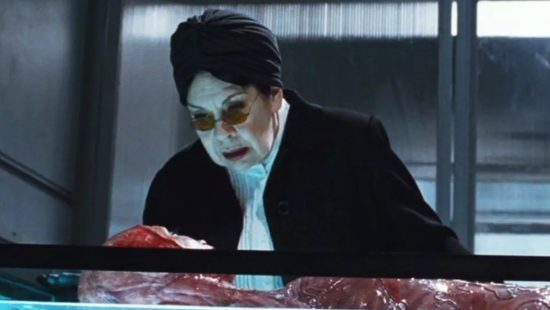 Similarly, the world we continue to occupy is all too ready to grant us protracted violence and dismal conclusions, with our own spectres ready to rise up and greet us. Dig just a little, and you can find footage of human beings still being burned alive or executed for some thinly hopeful spiritual reason or transgression; if Martyrs’ most appalling scenes once seemed too extreme or absurd, then do they now, under a continued torrent of evidence which we have to work to avoid, rather than seek out? Any internet search does it. And, as our population ages (it’s notable that so many of the seekers in Martyrs are elderly) we are going to be brought up against the all-but-certain nothingness at the end of it all. As for networks of people tormenting and abusing children – well, it’s notable that the word ‘historic’ has now undergone a kind of pejoration, so often have we heard it in its new guise; it’s now often wedded to cases of organised child abuse going back decades, happening just beneath the surface of the everyday. In effect, life can be wonderful, but for so many it can be a bleak and thankless existence, and the film encapsulates perfectly that compulsion to find purpose, by whatever horrible means. I don’t mean to be trite here: Martyrs is, after all, just a film, but perhaps it has taken root because of the way it cast about for unpalatable elements in the real world and condensed them into a startling and – whatever your take on it – unforgettable horror movie.
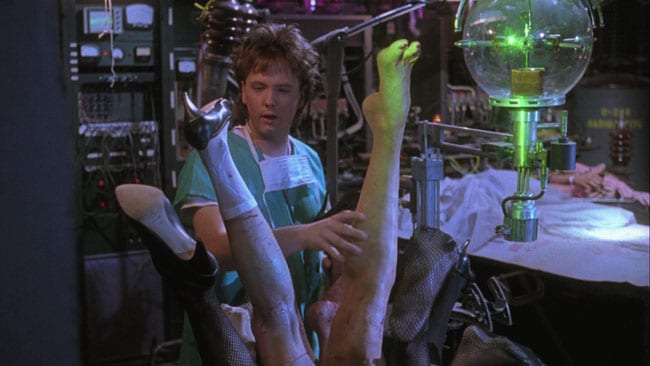 You know a film still has something, however many years pass, when you consider what would happen to it if it was pitched today. So at a guess, and alongside most of the best horror and exploitation films ever made, a film which involves exploding drug addicts and reanimated hookers via bad science would be unlikely to get a pass – at least, not from anyone with a considerable budget or say-so. This is the very basic plot of Frankenhooker (1990), a film which feels like it nicely rounds off Frank Henenlotter’s period of film releases during the 1980s, albeit that Basket Case 3
  By adulterating crack cocaine, of course. Once inhaled, it will cause the women to explode. He knows this because he practices on a guinea pig. Although he has a moment of conscience which almost prevents this from happening, gladly it does happen, in one of the most absurd, brilliantly excessive sequences ever filmed. Oh Frank Henenlotter, how we love you for it. But actually getting the parts is only the beginning. Jeffrey next has to assemble them, do the obligatory lightning reanimation thing (as much as a staple of Frankenstein movies as the monster itself) and then hope against hope that his deceased fiancee is mentally coherent and even grateful that he’s rebuilt her out of a panoply of prostitutes’ limbs, all selected because he likes them better than her own! What woman wouldn’t be charmed and flattered, I ask you?
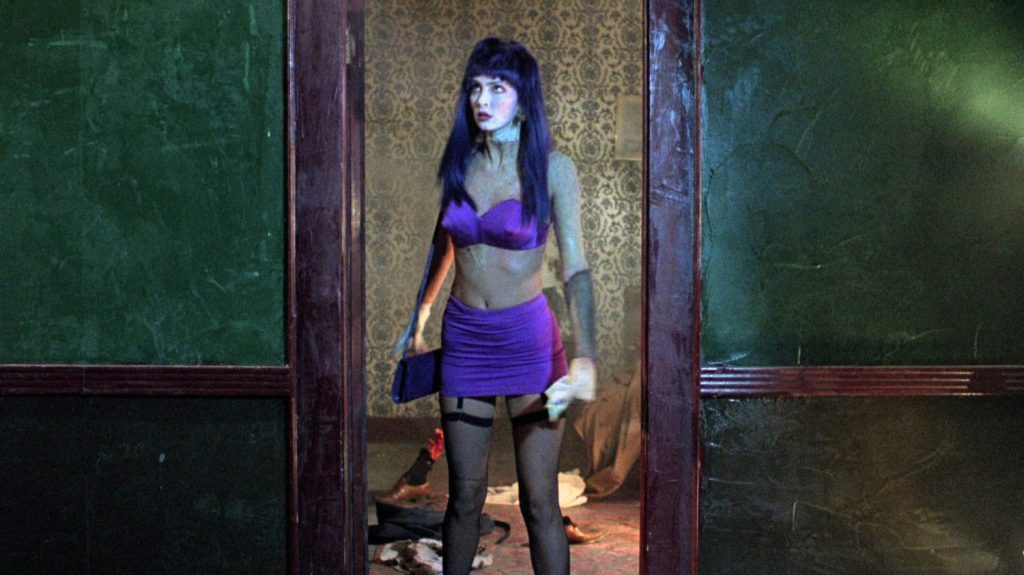 For a film about a hybrid undead prostitute running amok on New York’s streets, and for all that it had an exceptionally modest box office reception, Frankenhooker seems like Henenlotter’s most accessible film of the bunch. Hear me out: regardless of the subject matter, it doesn’t feel quite as skeezy as Basket Case or Brain Damage, despite sharing a lot of shooting locations and being made within a few short years. The NY streets are still sleazy but brighter, less oppressive-feeling somehow, and besides the film veers between there and the leafy suburbia over the bridge, as well as feeling a lot more modern with its TV talk show skits and the Never Say No song, which pokes fun at a lot of late 80s social anxieties. With the exception of what I’ll refer to as the ‘fridge scene’, the body horror is less grotesque here, too; Elizabeth has a few stitches, but otherwise she certainly doesn’t look as grim or warped as Belial or Elmer. It’s also a rather bloodless film, even oddly so, thanks to the novel limb-gathering technology Jeffrey deploys – which cauterises the wounds rather well. The horror overall is overshadowed by what creeps into soft-core territory in places, perhaps giving us a peek at the kind of horror/exploitation ratio Henenlotter most prefers. All in all, Frankenhooker keeps things cartoonish, and never quite as dark as either Basket Case or Brain Damage. It’s very much its own beast with its own laugh-out-loud atmosphere and outlandish, fleshly excess, and it’s yet another enjoyable foray into a world where bodily integrity spoils the fun.
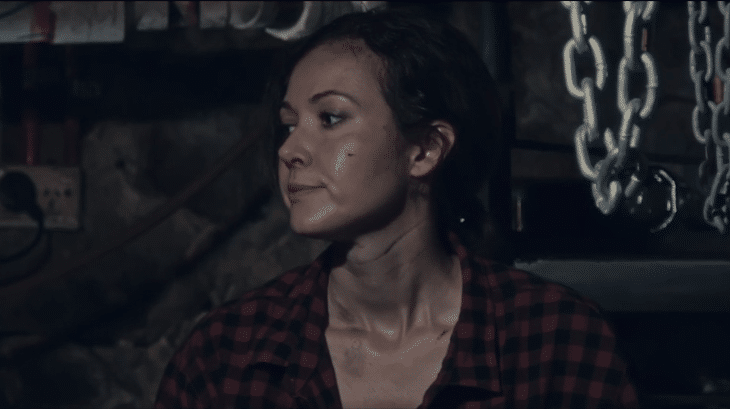 Anthology films – often three short tales with a common framework – are nothing new, even if the format isn’t used all that often today. We have, however, seen some interesting variations on the anthology film in recent years, perhaps most notably with The ABCs of Death in 2012, which made a minor stir and spawned a second edition. Certainly, what this anthology showed was that there’s acres of potential in the idea that a film can comprise several shorter chapters, whether or not these chapters are linked in the way that, say, the old Amicus portmanteau films were. As we know, sometimes a film’s cardinal sin is overstaying its welcome, or stretching a meagre idea over ninety minutes. Short filmmakers can’t get away with that. So, I was very optimistic when I came to watch Blood Clots, an anthology film which has taken the unusual step of compiling seven horror tales. Whilst the stories themselves aren’t linked, what they have in common is a punchy, decisively entertaining approach and enough variety to please any number of viewers.
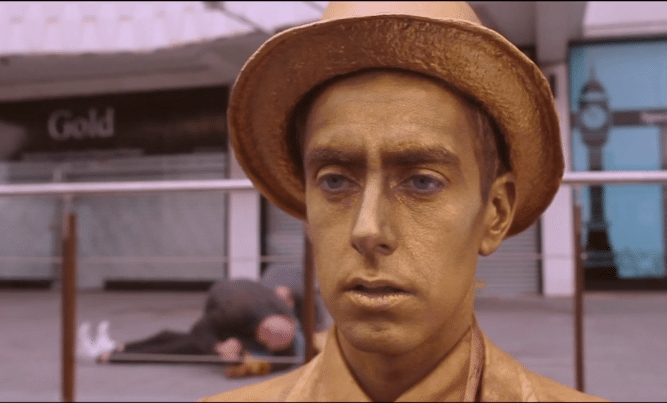 Time to Eat is next, a short, sweet spin on the ‘something in the basement’ idea, followed by Still, which is a genius idea whereby a street performer – you know, the guys who stand stock still in city centres for the edification of tourists – is stuck, rooted to the spot during an incredibly gory zombie outbreak. We’re treated to his internal monologue as all of this unfolds, and this is a film both very camp and very slick in its delivery. Hellyfish has a daft central idea worthy of SyFy, as the unlikely couple of a Russian femme fatale and an Iranian jihadist look for a missing H-bomb off the coast of the US. We all know what ‘nuclear’ means where there’s any manner of ecosystem around, so before long this goofy skit on ‘B’ movies old and new winds up terrorising the beach with…well, nothing more needs to be said, I’m sure.
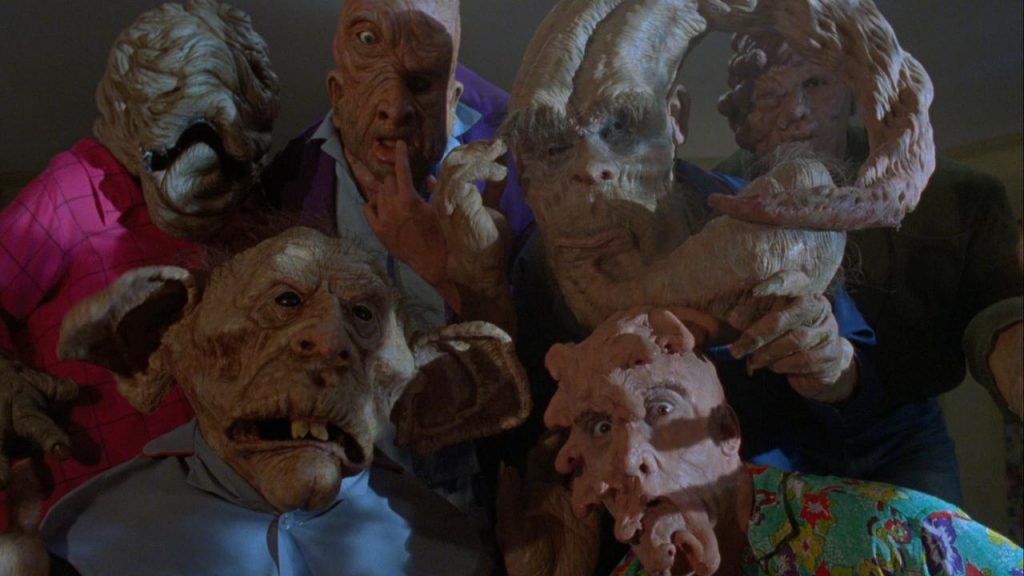 If you freeze-frame in the opening reels of Basket Case 2, a curious thing happens. You can almost – almost – sense the utter surprise on Frank Henenlotter’s part that he’s making a sequel to his surprise grindhouse hit at all.
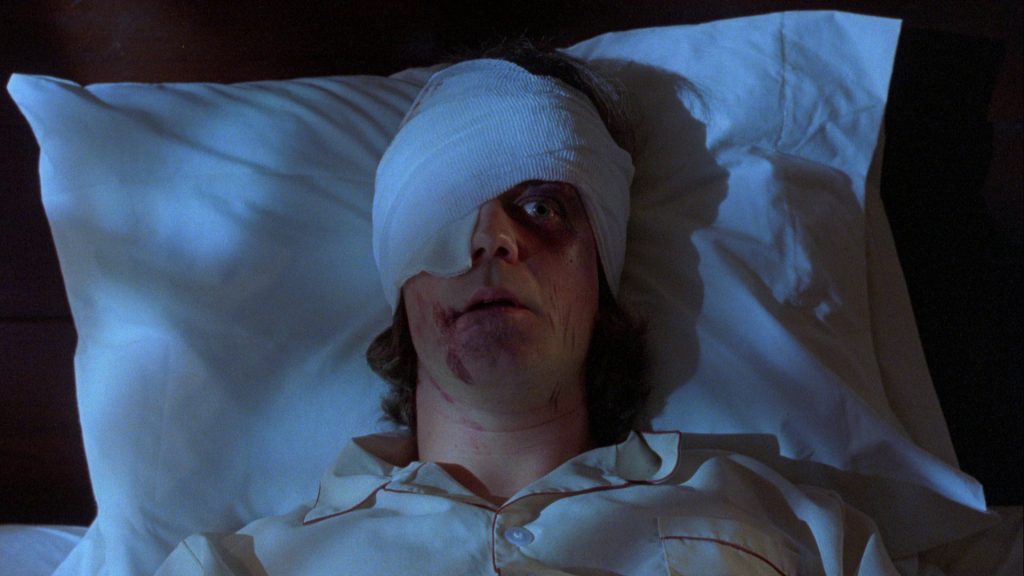 Made in the same year as the uproarious Frankenhooker, Basket Case 2 feels like a perfect blend between opportunism and kicking back – grabbing the chance to make a sequel while the going’s good, but not labouring under any illusions either. Henenlotter is clearly in a mind to go to town on the special effects here, with the result that the film feels to be around 60% latex, and there’s a whole host of new characters being given screen time. Eerily, Belial looks a hell of a lot more like Kevin Van Hentenryck in this incarnation, which somehow makes him look even nastier, even though Van Hentenryck himself has a perfectly amiable face: that lends itself very well to the whole good twin/bad twin thing. In terms of subject matter, things feel a lot more jokey overall in Basket Case 2, but there are still characteristically grim moments. This isn’t a simple moral high ground thing where the poor put-upon ‘freaks’ are mistreated; they aren’t terribly nice to outsiders either, maintaining what seems to be an unspoken Henenlotter mantra: “most people are assholes”, whether or not they have the conventional two arms, two legs, one head.
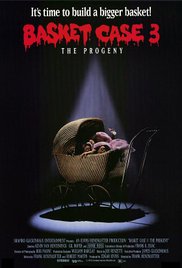 Basket Case 3: The Progeny was made the following year, and wrapped within a month. Being made so close to the last film, it hardly needs the lengthy flashback which harks back to BC2, but what this does make clear is that the memorable sex scene sequence isn’t forgotten yet; it’s going somewhere. We find out that Eve (Belial’s girlfriend) is in the family way, no one’s quite sure what her birth will entail, and Duane has meanwhile been locked in a padded cell for trying to re-attach his brother. These are, by the way, not words you’d ordinarily find yourself typing.
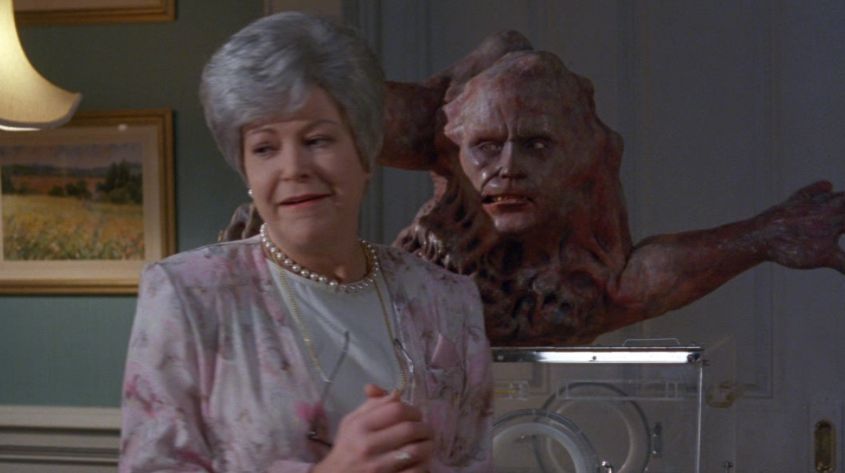 Each successive Basket Case film seems to reach a little higher, from an already lunatic premise, to new heights of creature FX and bizarre ways for these FX to get invoked. For instance, the birth sequence in BC3 is a fun exercise in excess, throwing in catchphrases like “ovarian ovation”, then matching this with a dream sequence for Belial (reprised after the end credits). The last visit to the world of Belial and Duane shows them not as outsiders, railing against the world, but somewhat bewildered members of an extended family group, dealing with family issues. In this respect, BC3 couldn’t be more different to BC; the fact that all of the planned gore was more or less excised from BC3 at the request of the producers further alters the film’s tone, making it generally more playful and allowing it to give the odd nod to other films (the ‘mad inventor’ shtick had just done a turn in Frankenhooker; Belial’s contraption also looks a little like a certain scene in Aliens, though perhaps that’s just me, going a little mad here?)