
Chloe (Lexy Kolker) isn’t allowed to play outside. Her front door is barricaded and sealed; every window is covered and she is under strict instructions not to ever, ever attempt to go outside. The world is a terrifying place, her paranoid father (Emile Hirsch) keeps on telling her. But Chloe has no sense of this danger on a personal level; she’s very young, and any risk her father has incurred for her sake seems lost on her. He might be planning for someone else to maybe take care of her in the future, but Chloe just wants to be a regular kid.
However, it’s soon made apparent that this is absolutely not going to happen. What at first seems as though it’s going to be yet another zombie-style horror, where Something or Someone Bad is trying to get inside and the inhabitants of a house have to literally put up a blockade to stop this happening, is soon something else entirely. When Chloe peers out of a corner of a window, she sees birds flying – but there’s something odd about their flight; they seem to be moving out of time with everything else. Her dad is acting increasingly coyly, ramping up his warnings about the outside world, while failing to answer his daughter’s questions about whatever became of her mother. The house seems to have odd manifestations in it, too, which seem somewhere between hallucination and memory, from what it seems. And, far from there being hordes of undead or otherwise diseased/obviously dangerous people roaming around, the first other person that she sees is…a guy with an ice-cream truck (Bruce Dern), who seems to be trying to get her attention. He even posts her a neat pop-up book; is he really so bad? By this point in the film, I’d gone from having one set of expectations (oh, not another zombie flick) to another (oh, not another parental paranoia trip) but, gladly, whenever I thought I knew what I was watching, the film had to nous and ambition to change its narrative.
If you can say one thing with certainty about Freaks – wherever its plot ends up going, and it goes a long way – it’s that this is a superb family drama at heart, with believable relationships, superb performances and bags of confidence, sustaining humour against pathos. Many of these kinds of stories sink or swim on the child performances, and I’m glad to say that Lexy Kolker does an impressive job here, reminding me in some respects of Angourie Rice as Rose in Australian end-of-days drama These Final Hours (2013), with similar work to do enacting innocence and a desire for family life against everything going to hell, whilst the grown-ups do their best to make sense of it all. In many respects, because Chloe is struggling to understand what’s going on in her world, the audience is kept at the same level for a large part of the film. As she starts to understand, so do we, and I don’t feel that there was really a point in the film when I ever leapt too far ahead of her. This works really well, keeping the plot unfolding in gradual stages.

It’s also a pleasure to see Bruce Dern getting stuck into a genre film role here, working very well with all the cast, but particularly with Kolker (he said that she reminded him of his daughter Laura at that age) whilst getting a large number of the best lines. Oh, did I mention that Freaks allows itself a few jokes along the way, as well as revealing a family in unique and genre-bending jeopardy? Directors/writers Zach Lipovsky and Adam B. Stein clearly had a lot to do here, but it all works together seamlessly well. The sci-fi content here is engaging and important, but it’s how it affects the family which really matters, making for something warm, intricate and very clever, with space enough to lighten the mood in places too. However, and again thanks to a performance by a talented child actress, it all concludes with questions hanging in the air, a touch of ambiguity to take away.
I’m working hard here not to spoiler Freaks, as it’s one of those films you need to see unfold in its own way, but rest assured there is more than enough here to justify your attention. This is what genre film is all about, and it’s why, after initially eyerolling at the thought of watching yet another derivative piece of work, it’s so refreshing and rewarding to find a film like this one. Even where you can recognise some of the film’s elements, it does something new with them and makes them matter.
Freaks (2018) screened at Frightfest Glasgow on Saturday 2nd March 2019.


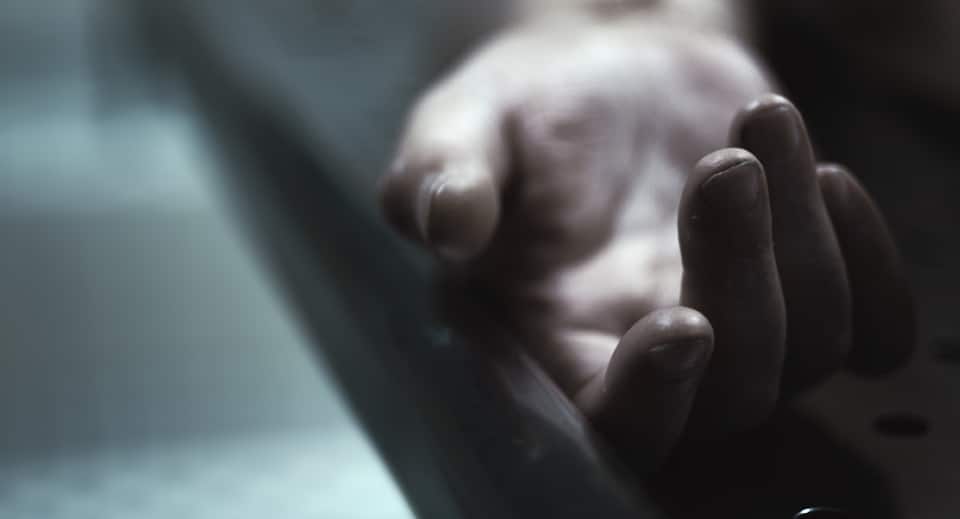
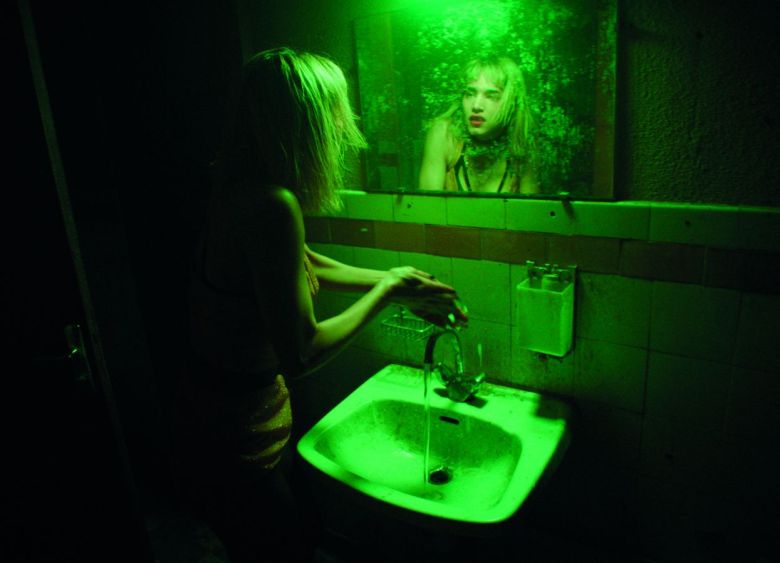

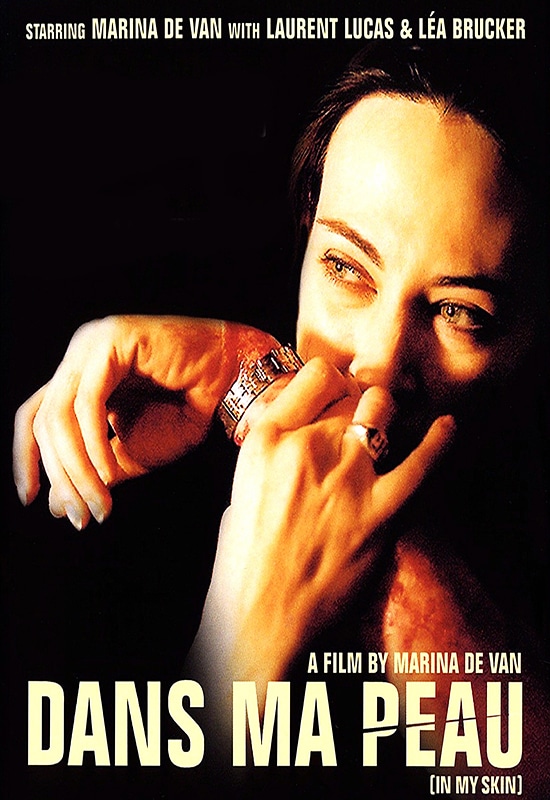 It’s been nearly fifteen years since Dans ma Peau (2004) was released, duly taking its place in the canon of New French Extremity, and garnering a great deal of justifiable praise for its transgressive nature and clarity of vision. These features alone – both the film’s age and its reputation – give us good enough reason to revisit it now. However, looking back, I wonder if its inauguration as a Noughties French horror perhaps worked against some of its strengths. For the horror crowd enamoured of the blue-hued, unflinching gore of the decade, it perhaps seemed not quite a horror film; for those engaged by its domestic and personal themes, perhaps it was too much of a horror film. But these genre-straddling films are often the most rewarding, even if difficult to categorise. Dans ma Peau is absolutely a film which has stayed in my mind – one of those rare birds where I’ve never found my recollection of the film reduced down to a gist memory. it is in so many respects a radical film, and now perhaps more than on my initial viewing, de Van’s tale bloody portrayal of mental breakdown feels like a story for our times.
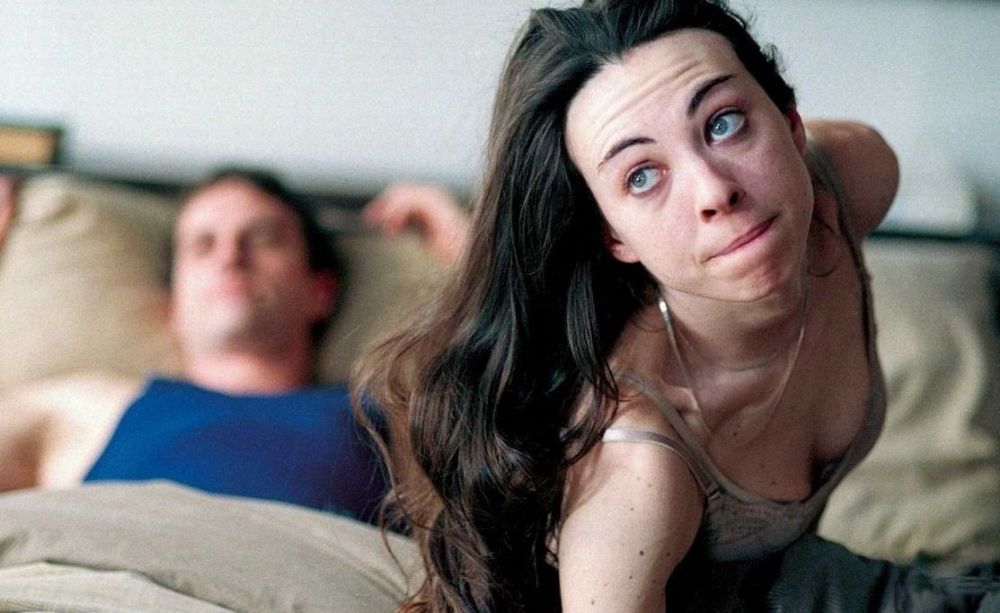 The France of the film is a fast-paced, rather fraught world that we could all probably recognise. Everyone seems stressed by their work, everyone wants more ‘recognition’ and everyone seems to be struggling to conceal their feelings of anxiety and professional ennui. When the ‘real’ is exposed – such as when Esther’s injury bleeds through a pair of expensive (borrowed) trousers during the poolside scene – misery and vulnerability ensue. People do not like being exposed as different, but they want recognition for being different. It’s the tightrope which many must walk. Outside of the office, the carefully-domineering Vincent is difficult to watch. Whatever germ of genuine concern he might have for Esther, it quickly translates into a need to police her body. The only way a miserable woman can be stopped from self-harm is, evidently, to physically prevent her doing so. His logic is, almost inevitably, part of the problem here. Esther, faced with these escalating situations, feels the need to shut down further. When she cuts herself, she performs the film’s only tender, loving scenes. The camera lingers on these; it’s macabre, but it’s a kind of affection which is absent elsewhere, and the contrast is clear. It’s also heartbreaking that so many of the avenues which seem to be open to Esther either seem lost to her, or self-sabotaged. The hallucinatory sequence at the restaurant, for instance, is a particularly dismal distillation of that feeling, “I don’t belong here”. Hence, you end up making sure that you don’t belong. This all takes place, ironically, as the white-collar dinner table conversation extols the supreme virtues of Paris over other European cities; sadly, Esther’s Paris has few virtues for her.
 The thing is though, as far as Esther is concerned, once you can live one lie, you can live more than one. Not effectively, but you can. Esther is willing to perform great feats of concealment to excuse her physical condition; later, de Van’s series of split screens encapsulates Esther’s great divide between real self and unreal self. Only later do they conjoin and show us what Esther’s doing – a kind of performance art of mutilation, done on the quiet in a sequence of ever grubbier, anonymous hotel rooms. It’s in one of these rooms that we finally leave her, having thought at first that, even given her final physical condition (with large cuts and abrasions on her face, and at least one severed piece of skin which she wants to preserve) she is about to attempt to return to her job.
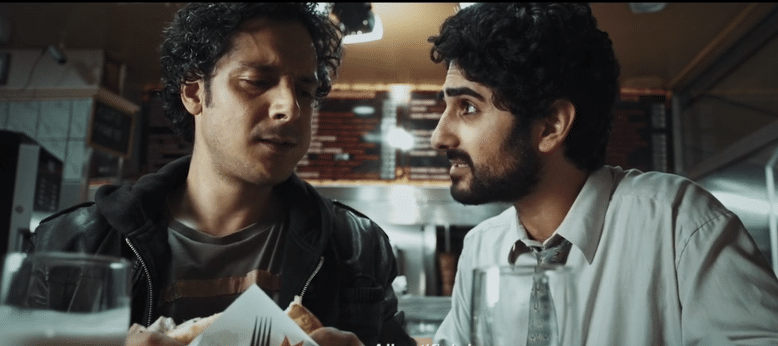 The first clue that all is not well with friends (and fast food connoisseurs) Tan and Javid is that, as they leave a Berlin kebab restaurant which has apparently not passed muster, they have to step over a lot of dead bodies as they go. In a neat move, then, Snowflake establishes key elements in its modus operandi: naturalistic dialogue, strong links with the criminal underworld and a little dash of absurdity which works broadly well with all of the rest. But there’s more. Snowflake is, as a voiceover tells us briefly, a ‘true story’ – well, sort of a true story. It’s coming to us from a point in the near future, actually, and a Berlin where law and order has entirely broken down, so much so that people are left desperately trying to go about their day-to-day business as lunatics and hitmen run the streets. Tan and Javid belong to that world.
 It’s always a risky business, making these kinds of films which have been described as ‘meta’: not for nothing did ‘meta’ become an insult fairly soon after it was first used to describe films which for instance step outside the universe of the narrative, suggesting other things at play and, to a certain extent at least, manipulating audience expectations. This approach can lead to great films, but it’s a divisive strategy which can backfire (and lob in some mumblecore elements, as here, to really take a gamble). Happily, Snowflake feels less like it’s aching to show off how self-aware it is and far more interested in telling a weird, unusual story, which helps it to make a success of this approach. There are many things to recommend it. To start with, this is a well-shot and aesthetically-pleasing film, but beyond its good looks it handles its many at first disparate elements with a wry, often subtle humour which works well, never seeming arrogant or smug. Snowflake is organically very funny, and there’s a sense of confident handling, of close control over where the film is going and how the audience might respond. Added in to that mix is some erudite commentary on the creative process – writer’s block, finding an ending, making the story work. Or, is it all about fate?