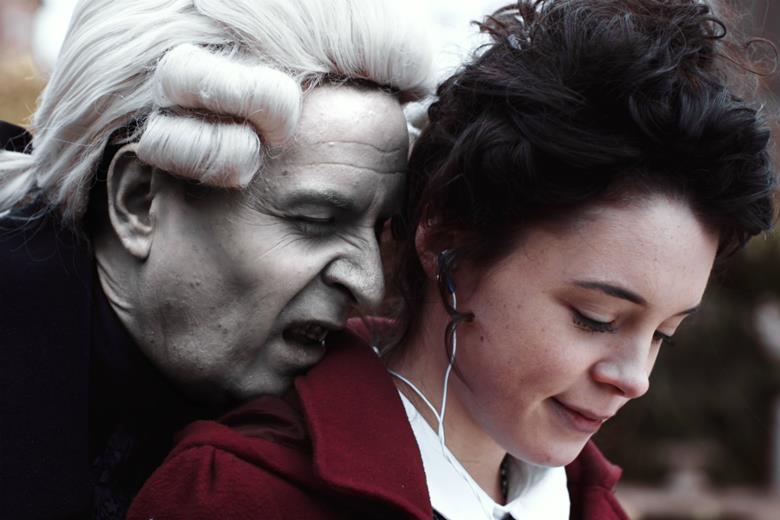
Climax (2018)

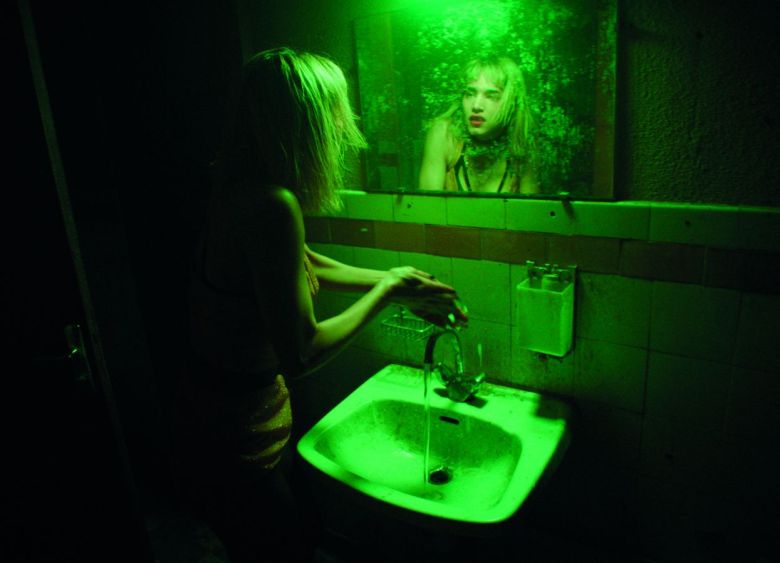
A confession: I am not familiar with the work of director Gaspar Noé, despite his presence as a notorious, divisive figure in the cult cinema scene. The verdict on 2002’s Irreversible was so split amongst people whose opinions I trust that I’ve still never sought the film out, and as such I’ve never caught up with anything else of his, either. All of that has changed with Climax (2018), which I am led to believe is a fairly accessible film compared to Noé’s other work, and I’d agree that there’s nothing absolutely insurmountable here for a rookie, in terms of its style and content. However, having seen Climax, I think I do now understand what all the fuss is about. It showcases a sizeable talent, with a vivid and daring array of shooting styles, overlaid with music and a building atmosphere until the film’s intended nightmarish aspects are palpable. Clearly, from the very first moments, Noé is both aware of his own skills, and keen for his film to be a disruptive experience. This he certainly achieves.

The film begins – after a sequence of what would usually be end credits, something I understand that Noé usually does – with a series of audition tapes showing a number of hopeful twenty-somethings hoping to join a modern dance group. Here’s the first way in which the film disrupts; we are clearly led to believe, via the VCR used to play the audition tapes and the big box VHS cult and horror films framing the TV screen, that this film takes place somewhere in the mid-nineties. However, in other respects, our film feels bang up to date, even without the ubiquitous presence of smartphones. Everything else – clothes, hair, style – feels like it could have been captured just yesterday. Alongside the almost expected presence of on-screen chapter titles, the tendency to blot out too many obvious markers of modernity seems to be a contemporary obsession; perhaps this, in itself, marks a film out as brand new. Anyway, these bright young things who love to dance have evidently got the job, and they head to an isolated location to practice, where they spend three days.

Things seem to have gone well and the group has seemingly bonded very well, so that after a full run-through of their act (which even if you regard most dancing as a kind of well-pruned seizure still constitutes an extraordinary long take) it’s time to unwind. They decide to have a low-key party at the rehearsal location, with a little buffet and a punch bowl of sangria, and the dancers begin to pair off, discussing everything from drugs to sex to God, with the drink still flowing. Gradually, the banter seems to be giving way to more unfriendly vibes which are billowing beneath the surface – but the real clincher is when it becomes apparent to everyone that the sangria has been spiked with a hallucinogenic. Now fearful and rapidly becoming paranoid on their way to a complete psychedelic meltdown, reproach and anger begins to ripple. The rapidity with which the party turns into a nightmare is quite something, and – in a series of sequences which are quite unrehearsed and unscripted – people demonstrate just how nuts and irrational things can get, and the film strides quite boldly from naturalistic to histrionic. It really is a force of nature, incredibly immersive and well-crafted.

Noé’s notoriety stems in large part from the themes he has tackled thus far, but he’s as well-known for his exploratory camera work, and although many of his shots here are quite low-key, he also varies this with a broad range of different aspects here. Undertaking such things as following different actors on a rig, then swapping to actor’s-eye-view and back again, all contributes hugely to the overall atmosphere and showcases a meticulous eye for detail. Then, the camera may perform a switch from ground level to ceiling, shooting the host of (amateur actors and) tripping dancers from above. There doesn’t seem to be a shot or a sequence wasted; it all flows effortlessly, but nonetheless feels like something ornate is being crafted. If the film reminds me of anything else at all, it’s of some sort of unholy matrimony between Suspiria (dance as some sort of malign link and currency) and Aronofsky’s 2017 film mother! (chaos escalating from the ridiculous to the sublime, as well as threats to an innocent child). However, I’d say I enjoy Climax’s lunacy more than I did mother! – Climax has more of an enjoyable journey towards its own casually cruel, heady final fallout.

Climax is a jagged piece of filmmaking, showcasing incredibly acuity throughout its pared-down running time, including wherever this means that vagueness and confusion contribute to its overall effect. As much a feat as a feast, it concerns itself far more with impressions than linear storytelling with a neat beginning and end, although what it achieves is immersive enough to keep you gripped anyway. In essence, it’s a simple enough yarn, but made into an effective and lurid cinematic experience. Yeah, despite a few initial misgivings, I was pleasantly blown away by this film and I can see that Arrow are again the right people to showcase this release at its best. Fans of synth/dance music will adore the soundtrack, too.

Climax will be released by Arrow Films on 11th February 2019.

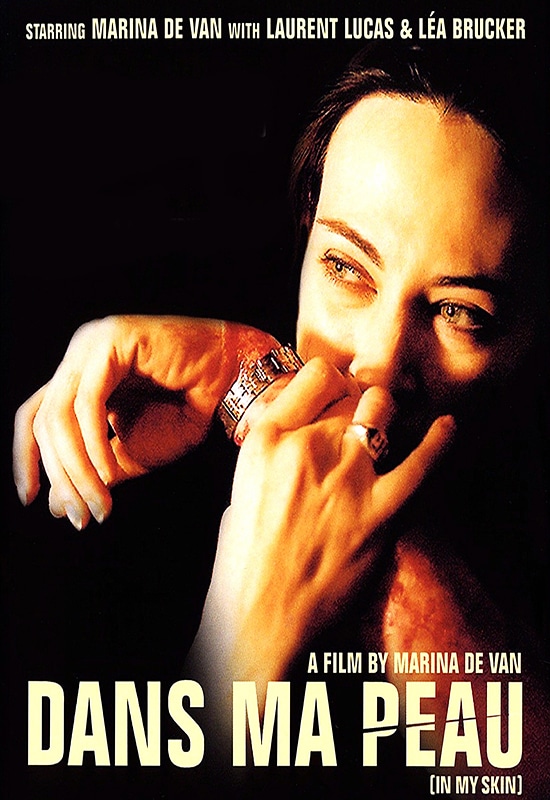
Dans Ma Peau (In My Skin): a Retrospective

It’s been nearly fifteen years since Dans ma Peau (2004) was released, duly taking its place in the canon of New French Extremity, and garnering a great deal of justifiable praise for its transgressive nature and clarity of vision. These features alone – both the film’s age and its reputation – give us good enough reason to revisit it now. However, looking back, I wonder if its inauguration as a Noughties French horror perhaps worked against some of its strengths. For the horror crowd enamoured of the blue-hued, unflinching gore of the decade, it perhaps seemed not quite a horror film; for those engaged by its domestic and personal themes, perhaps it was too much of a horror film.  But these genre-straddling films are often the most rewarding, even if difficult to categorise. Dans ma Peau is absolutely a film which has stayed in my mind – one of those rare birds where I’ve never found my recollection of the film reduced down to a gist memory. it is in so many respects a radical film, and now perhaps more than on my initial viewing, de Van’s tale bloody portrayal of mental breakdown feels like a story for our times.
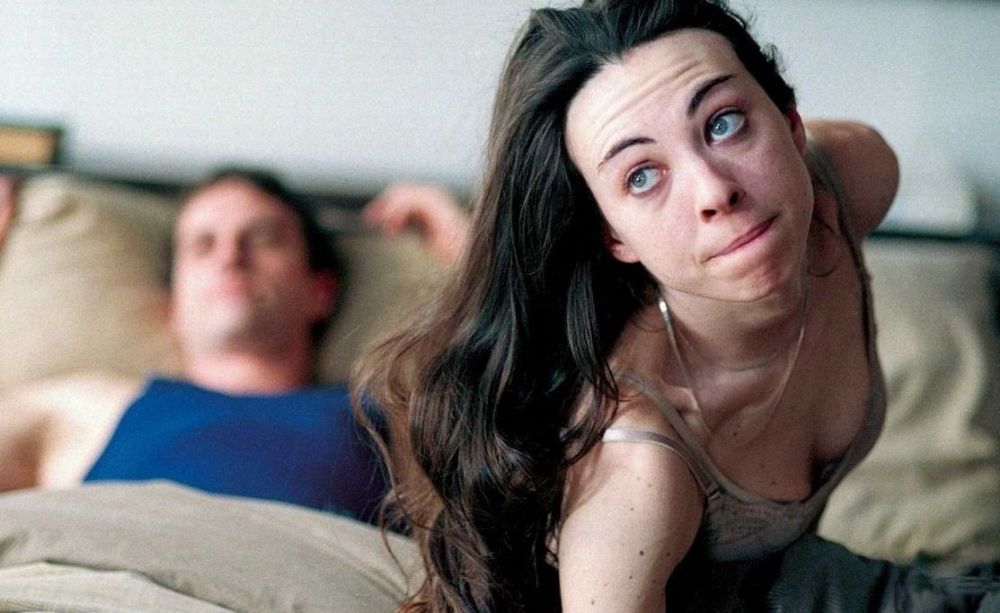
The film follows Esther (also the director and writer, Marina de Van), an ambitious young woman seeking greater things – a better job, a better place to live – all the things you catch yourself saying you want, when you get to a certain point. When we first meet Esther, she’s in the throes of negotiating greater professional responsibility; it’s on her mind as she and her friend Sandrine (Léa Drucker) head to a house party. Esther, impressed by the size of the house, heads outside to check out the garden. Whilst she’s out there she stumbles and cuts her leg. Only later does she realise she’s bleeding – quite badly. This immediately distances her from her peers: she covers up the extent of the wound, saying nothing when people comment on the anonymous trail of blood through the house, and she only takes herself to A&E when the night is over anyway.

“Does this leg belong to you?”

Her interaction with the doctor tasked with stitching her up is indicative that something has seismically shifted in Esther’s psyche. She prevaricates about how painful the wound was at the time she received it, giving this as the excuse for not coming to the hospital sooner (we happen to know that the injury hurt when it happened). Her excuses don’t quite ring true with the doctor, who teasingly comments on her lack of ordinary sensation before bandaging her leg and sending her home. Esther, however, has started to re-evaluate her relationship with her own flesh and blood, pinching and pricking at her skin, investigating the leg wound with a strange fascination. There are clues as to why this may be the case. Her boyfriend Vincent (Laurent Lucas, who reprises the body horror in Raw in 2016) takes even the barest glimpse of Esther’s leg as proof positive that she shouldn’t be allowed out to do things on her own without him; she needs to be looked after, he insinuates, thus breezily making a grab for her autonomy. He, on the other hand, has just been headhunted for a new job, and he makes it clear that he sets the agenda in their conversation (and, by extension, their lives). And there we have it, that little gem of doubt and revulsion that so many women feel in their relationships when, were they to speak in open revolt against such gaslighting, they’d be deemed ‘unreasonable’. Little wonder many turn their attentions inwards. Esther’s revolt just happens to be unspeakably graphic.

Pressure – at work and at home – now begins to manifest in (at first) managed, but no less savage sequences of self-harm for Esther. There’s a kind of urgent glee to her actions, a logic almost, which makes them understandable, even if you’d choose not to emulate them. Those close to her, like Sandrine, advocate more conventional means of control, such as pills, but as her career really seems to take off at last, Esther finds that the only way to make life bearable is to continue to exploit her new-found fascination with her body, hacking away at it and even part-consuming it. It is, of course, clear that this cannot continue, but Esther’s determination to balance her job and her self-treatment move forward together. It’s an uncomfortable, but a no less poignant thing to observe.

The France of the film is a fast-paced, rather fraught world that we could all probably recognise. Everyone seems stressed by their work, everyone wants more ‘recognition’ and everyone seems to be struggling to conceal their feelings of anxiety and professional ennui. When the ‘real’ is exposed – such as when Esther’s injury bleeds through a pair of expensive (borrowed) trousers during the poolside scene – misery and vulnerability ensue. People do not like being exposed as different, but they want recognition for being different. It’s the tightrope which many must walk. Outside of the office, the carefully-domineering Vincent is difficult to watch. Whatever germ of genuine concern he might have for Esther, it quickly translates into a need to police her body. The only way a miserable woman can be stopped from self-harm is, evidently, to physically prevent her doing so. His logic is, almost inevitably, part of the problem here. Esther, faced with these escalating situations, feels the need to shut down further. When she cuts herself, she performs the film’s only tender, loving scenes. The camera lingers on these; it’s macabre, but it’s a kind of affection which is absent elsewhere, and the contrast is clear. It’s also heartbreaking that so many of the avenues which seem to be open to Esther either seem lost to her, or self-sabotaged. The hallucinatory sequence at the restaurant, for instance, is a particularly dismal distillation of that feeling, “I don’t belong here”. Hence, you end up making sure that you don’t belong. This all takes place, ironically, as the white-collar dinner table conversation extols the supreme virtues of Paris over other European cities; sadly, Esther’s Paris has few virtues for her.
The thing is though, as far as Esther is concerned, once you can live one lie, you can live more than one. Not effectively, but you can. Esther is willing to perform great feats of concealment to excuse her physical condition; later, de Van’s series of split screens encapsulates Esther’s great divide between real self and unreal self. Only later do they conjoin and show us what Esther’s doing – a kind of performance art of mutilation, done on the quiet in a sequence of ever grubbier, anonymous hotel rooms. It’s in one of these rooms that we finally leave her, having thought at first that, even given her final physical condition (with large cuts and abrasions on her face, and at least one severed piece of skin which she wants to preserve) she is about to attempt to return to her job.
But we don’t see this happen. We’re left instead with Esther staring, motionless, down the camera, from the ‘green room’ we thought she’d left for good. Did she ever really leave the room – did she retreat? Or did she have to check in there again after the almost inevitable end of her pretences? Is she, in fact, finally free of the things which drove her to this behaviour in the first place, and back at the room as a free agent? Given her joyless expression, this seems unlikely. There’s little evidence of a redemptive ending here.

Dans ma Peau is a film which subverts expectations whilst offering surprisingly sensitive handling of mental turmoil and, although it hinges de rigeur upon a woman’s bloodied body, the agent of this violence is the woman herself, not some nameless, faceless assassin. Coming out of what we can call the ‘torture porn arc’, it’s interesting to note that here the unflinching, even fetishistic focus on bodily injuries comes to us as an individual’s attempts to cope with their life. Usually, people seek to flee injury. In this film, Esther flees towards it.  Her fate is ambiguous, sure, but the justifications for the on-screen violence here must stand alone. Dans ma Peau has a great deal to distinguish it from its peers. It also strikes me now as a film which has an awful lot to say about people’s lives, using its extreme violence to hold a mirror to the other things which people do to themselves in order to cope with the various screeds we live by. If not physically slashing at ourselves, what else do we do? And does it work?

Dans ma Peau a singularly uncomfortable film to watch, then, commanding sympathy whilst also repelling us. The violence is far more implied than shown, but Dans ma Peau still settles on the mind as a particularly nasty film. But ultimately, I think it affects me most as a deeply sad film, a film which I care about the protagonist and will always wonder about the end of the story. In that respect and to that extent, I don’t think anything approaching it has really followed in the past decade and a half.


Snowflake (2017)

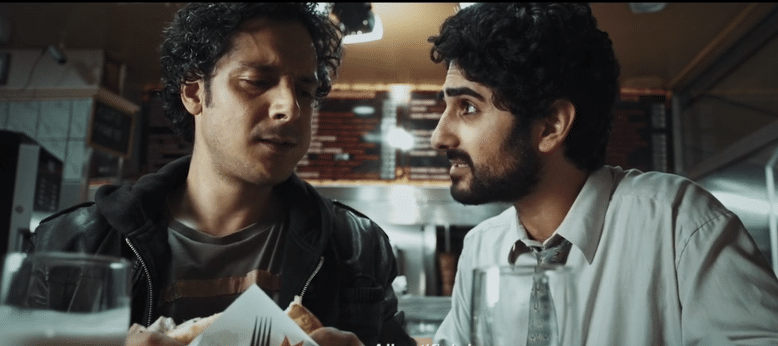
The first clue that all is not well with friends (and fast food connoisseurs) Tan and Javid is that, as they leave a Berlin kebab restaurant which has apparently not passed muster, they have to step over a lot of dead bodies as they go. In a neat move, then, Snowflake establishes key elements in its modus operandi: naturalistic dialogue, strong links with the criminal underworld and a little dash of absurdity which works broadly well with all of the rest. But there’s more. Snowflake is, as a voiceover tells us briefly, a ‘true story’ – well, sort of a true story. It’s coming to us from a point in the near future, actually, and a Berlin where law and order has entirely broken down, so much so that people are left desperately trying to go about their day-to-day business as lunatics and hitmen run the streets. Tan and Javid belong to that world.
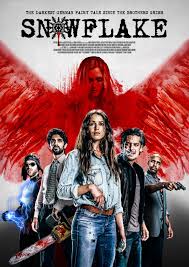
It seems at this point as though we’re going to segue into another story altogether – films over the past few years seem to love adding text titles to their different chapters, and we get a few here – but then we cut back unexpectedly to Tan and Javid. In a car they’ve just stolen, Javid finds an incomplete screenplay, stuffed down behind the passenger seat. As he glances through it, he realises something strange: everything he’s reading relates to the scene at the kebab restaurant; every word they exchanged is already right there, on the page. Disconcerted to say the least, the two men decide they have to find the guy whose car they stole, to ask him what the hell is going on. It turns out he’s a dentist (well, I mean, you can’t live on writing!) and he already knows off by heart every word they’re about to say. They take a copy of his updated draft and make a run for it; clearly, whatever is going on has enormous import for them.

Now that it’s clear to us that nothing is as it seems, we revert to the snippet of the new narrative which we glimpsed earlier on. In it, a young girl is looking for a way to avenge the murder of her parents, who were accidentally killed by some of the hitmen who run things in the city. The girl, Eliana, needs to exploit the family’s links to this criminal fraternity in order to make things happen her way. But there are yet other chapters, which are about to intersect with Javid and Tan’s script experience in a series of intriguing ways, as these two try to discern the relationship between screenplay and reality.

It’s always a risky business, making these kinds of films which have been described as ‘meta’: not for nothing did ‘meta’ become an insult fairly soon after it was first used to describe films which for instance step outside the universe of the narrative, suggesting other things at play and, to a certain extent at least, manipulating audience expectations. This approach can lead to great films, but it’s a divisive strategy which can backfire (and lob in some mumblecore elements, as here, to really take a gamble). Happily, Snowflake feels less like it’s aching to show off how self-aware it is and far more interested in telling a weird, unusual story, which helps it to make a success of this approach. There are many things to recommend it. To start with, this is a well-shot and aesthetically-pleasing film, but beyond its good looks it handles its many at first disparate elements with a wry, often subtle humour which works well, never seeming arrogant or smug. Snowflake is organically very funny, and there’s a sense of confident handling, of close control over where the film is going and how the audience might respond. Added in to that mix is some erudite commentary on the creative process – writer’s block, finding an ending, making the story work. Or, is it all about fate?

All of that said, and all of the film’s strengths duly noted, could Snowflake stand to lose some of its two-hour running time, without risking those strengths? Honestly, yes. Two hours is a very long time to juggle all the elements which Snowflake has, and in the last act, the film comes very close to losing some of the suspense and interest it has built up. Happily, this idea about when and how to end things feels like part of the joke/point/central idea about the screenplay anyway, which no doubt helps.

Snowflake is a challenging tale of revenge, counter-revenge and inevitability; punctuated with violence and lofty ideas in equal measure, it’s a film which needs careful following and may well not be for everybody. But, overall, for fans of crime thrillers which have ambitious twists, it’s time well spent, and a credit to the imaginations of directors Adolfo J. Kolmerer and William James, not to mention Arend Remmers – the real writer, only played by an actor in the film. It’s just another one of the ways in which Snowflake pushes the envelope!

Snowflake is available now via Artsploitation Films. 


Best TV of 2018: The Haunting of Hill House

This feature discusses the series in full and as such may contain spoilers.

Mike Flanagan gets it. He gets the power of horror, and he doesn’t seek to delegitimise that power by needlessly talking it up or talking it down; with his work adapting Stephen King, his films such as Oculus and (the rarely-mentioned, but superb) Absentia and now, his work directing and co-writing an innovative rendition of Shirley Jackson’s novel, The Haunting of Hill House, he’s successfully established himself as one of the most ambitious and sensitive directors currently working out there. Already, there is some discussion of a second season of The Haunting of Hill House, this year’s big TV horror hit and the subject of this feature. It’s difficult to envisage quite where this could go, or from what point, or indeed how, or if the ill-fated Crain family could be a part of this second season, but we know enough by now to know that whatever Mr Flanagan might turn his hand to would be worthwhile. Mike Flanagan gets it.
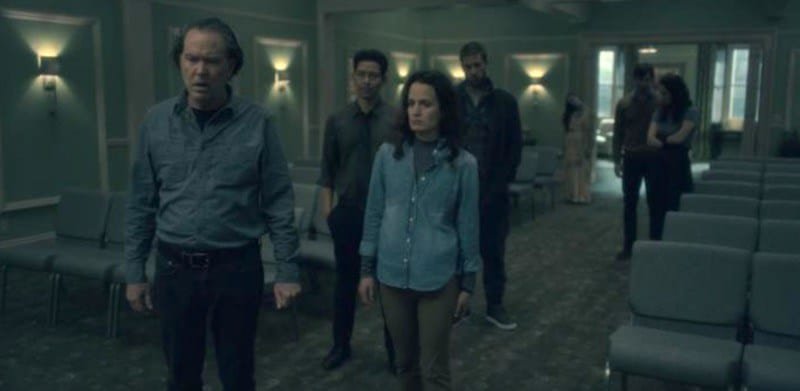
I saw the original film version of the Jackson novel many years ago: re-titled simply The Haunting, this 1963 film acts as an early, very effective mesh of psychological trauma and supernatural horror, an excellent working model for the 2018 series albeit that writers Flanagan and Averill’s go far further, reinventing characters, redistributing character names and taking the implied idea of fatality forward in a series of deft, traumatic, engrossing ways. In the series, the Crain family – father Hugh, mother Olivia, and children Stephen, Shirley, Theodora, Luke and Nell – are a family of hopeful fixer-uppers, hoping to renovate the vast, stately Hill House they get at a steal, turn it over at a good profit and then plough the profits into their ‘real’ home, their ‘forever home’.

This concept of putting down roots, usually an admirable, even humdrum modern ambition, is tacitly questioned and turned around in the series, working in tandem with Jackson’s/Flanagan and Averill’s personification of Hill House and asking the question: what if the house chooses you? The Crains are often referred to as a ‘meal’ for the house; it can’t bear to leave the meal unfinished, and it wants to digest them utterly, calling them back long after (most of) them escape. To what extent they are ever able to assert themselves against this demented, relentless drive is something I’m still digesting myself, and the series conclusion is still not completely settled. However you feel about its close may well impact upon any predictions you have for a further series.

The Haunting of Hill House does so much so well, it’s difficult to know where to start, but certainly its handling of characterisation is a high point. Things are gradual. You soon identify that many of the adults in the story are also the children in the story: running these time periods parallel both makes perfect sense, and adds to the slightly disorientating feelings encouraged by the narrative at every turn. It also begs many questions, and only slowly allows us to understand the justifications for the things these children go on to do with their lives – the childhood traumas that lead them to push against death, or psychic ability, or life in general.
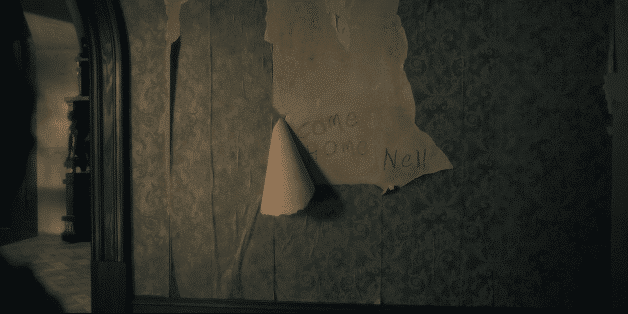
The Crains are also made relatable by their eagerness to dismiss the ostensibly supernatural things they see in their adulthoods, with Stephen in particular making an artform and a living out of denying there were ever ghosts at Hill House, his work as an author stripping back the layers of what he views as mental instability and irrationality, nothing more. And yet, he still wrestles with what he still sees. Nell is particularly vulnerable, haunted by a ghost which seems only to target her, but even the cool-headed Shirley and Theo see their share of spectres. They also try to do what adults mostly do: they block them out, they shrug them off. They can’t be real. But if, as the series asserts from the beginning that “a ghost is a wish”, then this turns the ghosts into something closer to predictions, which makes it all more vivid and terrifying.

This comes to the fore with maximum effect in Episode 5, ‘The Bent Neck Lady’. Since childhood, Nell has been afflicted with a malevolent visitation at night – a woman, face obscured, with her neck fixed at an unnatural angle. With a child’s literalness, the so-named ‘bent-neck lady’ seems to appear only to Nell, terrifying the child and driving her out of her bedroom, only to follow her downstairs to appear to her again. We follow Nell into adulthood and the events which subsume her, her short-lived happiness dissolving as her old roommate begins appearing again. This episode neatly encapsulates many of The Haunting of Hill House’s strongest features: it links ideas about time being not linear, but episodic, fate being inescapable, and the house getting its way. Poor Nell only truly understands all of this in the last frames, with that horrific ‘clunk’ as one scene rolls back in time, then back again. It truly is a staggering piece of television. Episode 8: ‘Witness Marks’ is another stand-out component of the overall series for me, with its invitation to think again about what has been seen, and is therefore ‘real’. There’s a sense of things and people unravelling here, which for me generates the strongest feeling of inescapability and a sense that the house will get everything it wants. Many of the ghosts (again, are they indeed ghosts?) are fully lit, fleshly bodies in this episode; we are encouraged to doubt them, and to think back across things we may have accepted throughout the series, before doubting everything. In less subtle terms, this episode also contains a jump scare like no other: whilst I’m not ordinarily a fan of these, it disrupts brilliantly here. I don’t think I’ve ever screamed out loud like that at anything I’ve seen on a screen, but my god, it’s a powerful shock.

One of my only issues with the series stems from the fact that it does something else very well, only to retreat from it (at least by a few steps). The Haunting of Hill House raises the idea of death as a state of utter nothingness – a Choronzon-worthy level of emptiness. Theodora, who protects herself from ‘reading’ people with her hands by hiding them with gloves, attempts to read her sister, Nell, by touching her body. She feels absolutely nothing – just a void, a heavy, unspeakable nothingness which infects her too, and she agonises about whether her mother and sister are out there somewhere, filled with these sensations. Nell’s brother Luke, too, ‘feels’ Nell’s death in his limbs as a cold, painful, horrifying ache. However, the resolution to this story dissipates a lot of this promise of emptiness, a promise which seems to justify the army of ghosts staring dispassionately, or even maliciously at the living. What happens to this feted feeling of void? Although the story’s handling of grief is exploratory whilst also achingly grounded in reality, some of this was lost through the end episode’s touches of sentimentality and, yeah, even some elements of whimsy. The overriding last sensation is a long stretch from happily ever after, but it certainly doesn’t feel like the expected end point, either. I wasn’t sure what to think and feel as the door closed on the ‘awoken’ Crains, but it looked an awful lot like togetherness of a kind which jarred a little against the ratcheting scares of the preceding episodes.

Still, the conclusion of any good story is a risky moment. With its blend of sudden and subtle horrors, its hidden ghosts to trick the eye, and what after all amounts to a deeply-involving story of family and loss made doubly jagged by the manifestations around them, The Haunting of Hill House has been superb. I can easily anticipate watching the whole thing again, to doubtless pick up on things I missed the first time, and to test how effectively the scares get me all over again.

The Haunting of Hill House: 5 best scenes

5 – Nell in Stephen’s apartment

Stephen is irritated; he’s just arrived at his apartment to find he’s being robbed by his younger brother and drug addict, Luke. Saddened, he gives him some stuff to go and sell, and sends him on his way. Up in the apartment, he finds Luke’s twin sister Nell, looking confused. What, were you just going to stand there and let him rob me? Stephen asks.

Nell isn’t really there. But she is trying to tell him something…

4 – Bent-neck Lady – “No, no, no, no, no, no…”

Nell is not about to sleep in her bedroom, after being woken by the ghost of a lady who seems to be fixated on her. But as she sleeps on the couch downstairs, something alerts her. As she looks up, there’s the ‘bent neck lady’ again, floating parallel above her – as we realise as the camera pans around. She’s feebly trying to speak to Nell; what she says makes horrible sense later.

3 – The man with the cane

A ghost which primarily affects Luke during an episode in his childhood, this one really affected me; there’s something about the unnatural shape and size of the figure, its drifting limbs, and the silent errand it seems to be on (never take strange hats, I guess; the owners might come to retrieve them). The way this curious ghost ducks down to look at the hidden, terrified little boy when he hears him make a sound made my skin crawl.

2 – The thing in the cellar

Oh, Luke. Your subsequent drug use makes perfect sense, given some of the things which happened to you as a kid. This time, the twins are playing with the dumb waiter in the kitchen, which is electronically-operated (oh-oh). Luke, who wants to ride in the dumb waiter, finds himself in an unlit, cluttered cellar room that the family never knew existed. Something, disturbed at last, crawls eagerly towards him…

1 – Road trip

This scare worked perfectly because it was so unexpected; Shirley and Theo, on their way to Hill House, are quarrelling in an escalating and angry way, but it seems as if it’s only going to be about the human drama. You relax into the fight, you forget about the circumstances. And then, in a second, a grotesque face appears between them – an absolute, horrifying, unbeatable moment of utter terror. Well played, Hill House. Well played.

Opera (1987)

I start this review with something of a confession: it has only dawned on me in the past few years, really, that my liking for Dario Argento’s work is based on a very small number of his films. And it’s awful – as well as terribly unpopular these days, given the vicissitudes of the likes of ‘film Twitter’ and so on – to have to start a piece of writing on a negative note, but I still can’t help but wonder whether a lot of Argento’s cult following stems from blind luck and happy accidents, rather than a cogent approach and intention on his part from the beginning of his career. Yes, he has a strong aesthetic style, often distilled into a number of notorious key scenes per film, but given time and money, he has never really scaled to the heights of Suspiria (1977) in his subsequent work. This brings me, then, to Opera (1987), made a full decade after Suspiria, and a film that, whilst showcasing some of that Argento magic, flounders in a number of ways which ultimately break the spell.

True to the title, we start in rehearsals for an opera performance – with the leading lady, Mara, none too happy with the ways things are being done, much to the exasperation of the crew and musicians. Eventually, annoyed beyond the point of self-control, Mara flees the venue – straight into the path of a car, incurring injuries which take her out of the performance altogether. In true cinematic style, it’s opening night, but any panic is assuaged by the fact that there’s an understudy, all ready to go. Betty (Cristina Marsillach) goes through the rigmarole of saying she doesn’t want to, but before too long she’s getting into her (bloody weird) costume and preparing to take to the stage.

Things are, of course, going on behind the scenes: someone is stalking the stalls, and once you see the ubiquitous black leather gloves on whoever-it-is, you know that the person in question can’t have good things in mind. Betty successfully gets through a storming debut, but it seems that she already has a stalker fan who is methodically dispatching anyone who seems close to her. Their issues seem bound up with sexual attraction/jealousy, and they have a predilection for making Betty watch whatever they’re doing. This gives us this film’s own key infamous visual, as the killer takes to sellotaping pins beneath Betty’s eyes to stop her blinking and missing any of the brutality. Opera is of course, akin to its giallo cousins, essentially a grisly whodunnit where the audience is encouraged throughout to guess at the guilty, replete with (if you know of some of Argento’s other work) a certain sense that it’ll be someone improbable. Is this correct, in this case? Well, it wouldn’t be for me to say…

There were a few of these ‘performances of performances’ horror films during this era; everything from Waxwork to Demons could qualify. However, Opera’s closest comparison piece is almost certainly StageFright, directed by Argento’s associate and countryman Michele Soavi and released earlier the same year. The links are clear: Stagefright also boasts a mysterious killer stalking around an arts venue, seemingly fascinated by elements of the performance itself whilst picking off the performers and crew in a series of ways which happened to give good set pieces. Opera broadens its remit rather more widely than StageFright in the end, moving the action beyond the opera house and following Betty wherever she goes (which turns out to be quite a long way indeed) but I have to say that I think StageFright has the edge on Argento’s offering. For me, it’s more tightly plotted and coherent, lacking some of the frankly oddball decisions which are perhaps intended to lighten the mood in Opera, but dilute the appeal instead. For instance, why the former leading lady Mara appears in the film as nothing more than a shrill voice and a pair of legs is beyond me; it put me in mind of the ‘mammy’ character from Tom and Jerry, which isn’t a comparison I expected to make here. Then, even given my usual delight in viewing an 80s (or indeed any era) time capsule, the costumes are distractingly weird, the script is wincingly stilted and there are even some weak, clownish moments, which rest uncomfortably with the eventual grisly content. Opera simply underlines for me that Argento depends on atmosphere, with a good eye for key shots which underpin this atmosphere: plot/dialogue so often falls flat.

I can’t deny that the use of macro shots and some ingenious framing have some charm in the film, and actually, so much of this falls to actress Cristina Marsillach, who is put through a great deal of these shots and a great deal of other things too. Had she been less engaged in her role, then I doubt very much anyone beyond serious completists would really be talking about Opera today. Hopelessly, plausibly naive, but also putting in a lot of quite physical graft, Marsillach admittedly does a good turn here. She’s had absolutely nothing to do with the horror genre since Opera, mind; this is a shame, and ours not to reason why, but she seems to be known for this role and this role only outside of her home country, perhaps proving that success in the genre is a mixed blessing at best.

Still, regardless of the fact that Opera has a few interesting moments and a good lead actress, I doubt very much whether this could ever be a film to win Argento any new fans. Existing aficionados of his work will, I am sure, appreciate this clean, tidy print from CultFilms, which also boasts directorial involvement with its 2K restoration and a number of extras, including a brand new interview with Argento and a behind-the-scenes film showing the film being made. For the rest of us, we may like the more stylish and innovative moments here, but perhaps not be altogether engaged by this nearly two-hour movie.

Opera (1987) will be released on Blu-ray on the 21st January 2019 by CultFilms. It is now available to pre-order.


Josie (2018)

It must be incredibly hard to carve a new niche for yourself as an actor when you’re largely known for one role, but – as Game of Thrones is about to enter its final ever season – this is something the cast are going to have to negotiate; that is, unless they’re doing it already. Josie, starring Sophie ‘Sansa Stark’ Turner, is at least a fair attempt by this actress to do something rather different, and – on paper at least – it’s an interesting premise, promising ‘rural noir’ and dangerous obsessions spilling over into action. We know that bad things are definitely going to happen, as the opening scenes show us police kicking their way into a room; the only question, then, is how we get to this point. Unfortunately, the journey which takes us there isn’t able to sustain the initial promise.

Loner Hank (Dylan McDermott) lives a quiet life, albeit for his well-meaning neighbours intruding on his space from time to time. He goes fishing, he takes his boat out, and he keeps tortoises? When a teenage girl, Josie (Turner) moves in, however, something about this young woman, living independently at such a young age, is a clear spur to action, as Hank grows increasingly protective of her. Josie, meanwhile, busies herself with settling into her new school, making friends with a boy called Marcus. Marcus and Hank already know each other, and the arrival of Josie into their lives inflames the tension between them further. Still, Hank and Josie develop a friendship of sorts, one shot through with jealousy, but in some ways it’s good for Hank: he gets out and about a bit more, and starts to interact more. A push/pull ensues, with Josie seemingly not quite at home amongst adults nor amongst people her own age. And as things progress, it transpires that Hank has his demons, although not the demons imagined for him by the locals, including young Marcus.

Calling Josie ‘noir’ is an odd decision by those marketing this film, as it sets up the immediate issue that this isn’t really noir at all, nor does it seem to have any elements I’d associate with the genre. In fact, it plays a few of its scenes for laughs, which sits a little uncomfortably with the other, more brooding content. Tonally, it feels a little off, and doesn’t add a great deal to the film other than making it feel a little uneven. The characterisation could be more pronounced, too, even if the lack of this is justified by the film’s ending. There are lulls, and I feel as if the film is holding onto its surprise twist in ways which make the rest of the film feel a little like treading water. This is a shame, as McDermott’s Hank has promise, as a character which could have stood a lot more scrutiny.

As for Sophie Turner, she does a reasonable job with the script and the direction she’s given, but she doesn’t quite cut it as a Lolita character which, frequently, the film seems to be implying she is – but any sexuality is shied away from, or takes place off-screen, leaving the allure which is integral to her motivations and her interactions with the men in her life a little lacklustre. The film waves through her rather unconvincing Southern accent by having her say she’s lived all over the country, but this is another factor which holds the audience at bay; she just isn’t quite in the role, to me, and I really don’t think that this is the role to silence Sansa for good.

One of the issues with writing this review up is that I realise I’ve actually got rather less to say about the film than I’d usually find to say. This is absolutely because it’s a very run-of-the-mill, unremarkable film I’m afraid, something to wash over you, neither actively bad enough to draw comment, nor good enough to have lots of strong points to discuss. It all unfolds in a neat (and much appreciated) ninety minutes, at least, but Josie as a whole film is more awkward than brooding, unsure whether to encourage us to laugh at its characters or feel sympathy, and holding onto its big reveal at the expense of doing very much else. It’s all too easy to poke holes in that ending, too, after everything. Overall, this was a slow and frustrating watch, and all of the actors involved could do far, far better.

Josie is released on VOD, DVD and EST on 14th Janurary 2019. 


Deadbeat at Dawn (1988)

I’ve really only encountered director Jim Van Bebber thus far through his art-house spin on The Manson Family (1997), a film which I confess didn’t quite gel with me – but I’ve never, until now, seen his first feature Deadbeat at Dawn, made around a decade earlier but filmed over four years altogether. Deadbeat at Dawn is certainly more linear than The Manson Family, but it’s still a surprisingly multi-layered spin on your standard gang movie, with some hints of the art-house approach yet to come. All in all, it makes for a gritty but expansive experience, something quite unlike any of the other 80s gang movies made during the decade, whilst still recognisably part of that sub-genre.

We start with a young woman named Christy (Megan Murphy) seeking meaning in her life from a visit to a clairvoyant. This facade of abstract questioning and inspirational guidance very soon gives way to something far more brutal. As Christie leaves her appointment, she is assaulted on the street by a rough named Danny who mentions her boyfriend, Goose, by name. Evidently, this city is in the throes of a gang war, where the members’ women are the unfortunate collateral.

Danny’s gang the Spiders are soon going hell for leather with their rivals, the Ravens – with a pitched battle in a cemetery between Goose (Van Bebber himself) and Danny (Paul Harper), resulting in Goose getting hurt. He’s all for immediate vengeance, but his long-suffering girlfriend tells him she’s getting sick of the strain of wondering if he’s going to get home alive every day. After some resistance, Goose agrees; it’s time to quit the life. However, once it’s known that he’s no longer in his gang – soon finding out that the Ravens and the Spiders have decided to set their differences aside to work together – he’s apparently a marked man. And so, apparently, by extension, Christie is in danger too. Goose misses his moment to protect Christie, and, traumatised by this event, he takes some time to gather himself. But when he’s conveniently roped back in to the Spiders/Raven gang to take part in one last heist, it’s the perfect opportunity to play.

There’s a pleasing patina of grime from the very first frames of Deadbeat at Dawn; its whole charm is that it’s wholly and gloriously unreconstructed, never stopping short of sex and violence – even if intimated – in a way that most of the more slick, conventional contemporary films of similar ilk would needs must. The 1980s of the film in general looks very much pre-clean up, pre-gloss, with every interior and every alley looking authentically grim, and a largely amateur cast add more veritas to all of this. Alongside, there’s a seam of cynicism running through the film which works really well. Christie is into New Age beliefs, coming across as some sort of gurgled last gasp of Age of Aquarius thinking which looks incredibly feckless by contrast against all the bloodshed going on around her. The religious guy at a diner later in the film also suggests something of a sneer, as an oafish man berates a waitress for not also making a breakfast for God when she serves him his. There are a few of these knowing moments.

But then, the film does far more than make a series of knowing nods here and there in-between the fight scenes. The gang warfare itself veers from plausible to risible in some places: Goose’s training sequences look oddly choreographed, for instance, and dialogue spoken by some of the Spiders sounds rather stagey. In effect, lots of elements of Deadbeat at Dawn play out like modern Grand Guignol: this is definitely performance, but the subject matter is ferocious and no one gets off lightly. The worst of the violence might not be on-screen in the nature of the ‘torture porn’ which followed the film around a decade or so later, but the well-timed glimpses and insinuations of the horrors inflicted upon people work just as well as the longer sequences (saved for an incredible later pay-off which very definitely shows us the works, with Van Bebber more than paying his dues by doing his own stunts during the course of the action). Yes, there are a few lulls as Goose falls back and regroups, but these add a lot to his character. In the end, you do find yourself rooting for this anti-hero, which is no small thing given his behaviour throughout the film.

It’s genuinely easy to see how Deadbeat at Dawn has garnered a cult following amongst exploitation fans. Made thirty years ago, it’s aged well, it looks good (insert the usual compliments to Arrow Films here) and above all else, it’s immensely ambitious. That comes across…I was going to say ‘even now’, but perhaps particularly now, with our jaded appetites and a glut of by-numbers indie movies which soon fade from the memory. I don’t think that’s going to happen here. Admittedly a meld of dream sequences, hallucination and gang violence will not be for everyone, but I do hope the new Arrow release helps to bring the film to a new generation of viewers. I’d say it’s very much deserved.

Deadbeat at Dawn (1988) is available from Arrow Films now. 


Hang Up! Talking with director/writer Richard Powell

Every year, if we’re lucky, we’ll encounter a short film at a festival which just blows us away. The affordances and limitations of the short movie medium provides so many opportunities for filmmakers to showcase their ideas, making them render these ideas in an economical manner, but nonetheless – if successful – weaving a story which indelibly stays with the audience. This is very much the case with a short film I encountered at this year’s Celluloid Screams Festival in Sheffield, UK. Hang Up! takes a very simple idea – that of someone making a mobile phone call by accident, just like we all have – and takes this idea forward, escalating the tension in a series of hand-over-mouth shocking ways, as husband Gary finds himself listening in on a conversation his wife, Emelia, is having about him. It turns out that his happy, stable life is anything but – and his wife doesn’t feel about him the way she has been enacting over the years. It’s a plausible, everyday set-up – and director/writer Richard Powell develops this horrid, believable framework in an engrossing manner.

I was fortunate to get to talk to Richard about his film; our interview follows. And, if you get the opportunity to support Hang Up! or any of the other ventures up and coming from Fatal Pictures, have at it. You won’t be sorry.

WP: So my first question…where did the idea for this short film come from? 

After working on several considerably more expensive short films over the years, I realized I just wanted to keep working and creating without all the intense cost and time restraints which a larger, FX-driven horror short would entail. I wanted to go back to the basics of filmmaking. I wanted to do something where all we had to rely on was my writing and direction and the performances; no flashy FX or cinematography, just meat and potatoes filmmaking. So that’s what I set out to do, then I had to conjure up a suitable concept – and out of the ether came HANG UP!

WP: As with many good short stories, in film or in print, Hang Up! takes a straightforward idea and plays it out in an increasingly shocking way…did you always have a firm idea of how far you were going to take the plot? Or how you were going to end the film?

I know I loved the simple set up of a butt dial you keep on listening to. I had that, but not what would be heard on the other line. All of the hack ideas came to mind first; a kidnapping or a murder or the like but all that stuff which comes easily to me was ignored because it comes easily for a reason. I sat with the idea until the concept of a disgruntled wife hiring a hitman to kill her husband came up. That was better but still a bit too obvious, but the kernel of a maniacal wife stuck and grew into Hang Up!

WP: Something really impressive about Hang Up! is how you create so much empathy for Gary, who finds himself listening to his wife’s real thoughts about him. Yet he doesn’t really speak. Similarly, Emelia, the wife, communicates an incredible amount of hate and duplicity without even being present in the film! How challenging was it to achieve all of this?

I don’t think it was difficult at all. Relationships/marriages are inherently dramatic and relatable because we’ve all been in them at some point. We can all understand the horror of Gary’s situation, the sheer unexpected shock of it. I also think many filmmakers overestimate what it takes to grip an audience and entertain them. Give me an interesting actor or two and something with some kind of truth in its message, campy or not, and I’m sold. I don’t need much more than that and I don’t give much more than that in Hang Up! and that was exactly my aim. I’ve got kinetic, off the wall ideas up my sleeve but I’m as much in love, if not more so, with quiet human stories.

WP: I think one of the reasons this film really landed for me was how it showed how even our closest relationships are often rather tenuous. Not to the extent described in Hang Up (hopefully!) but certainly, we might think we know someone, but not really know them at all. Was this something you aimed to explore?

To be honest, this theme is something I’m starting to realize I’m subconsciously obsessed with. I have four short films and two feature length scripts that explore this material in some form or another. The idea of a hidden or suppressed self and all the ways that can implode or explode is fascinating to me. I guess it stems from my feeling that most of the conflict and trauma in our lives doesn’t come from external forces, but from internal ones. In the case of Hang Up! Had Emelia simply voiced her frustrations early to her husband they wouldn’t have warped and twisted her into the thing she has become as our film begins.

WP: How have responses been to the film? Personally, I felt like I’d been punched in the gut by the end – pretty impressive for a film a few minutes long…

The response has been great! I think the film is unique, especially in today’s short film climate. I’m asking an audience to wait and listen and be patient, and that isn’t something they are used to in the short film medium. I think that alone creates a rewarding experience. I’ve watched people watching the film and it holds them, despite how static and paced it is; there’s a kind of perverse voyeurism in spying on Gary as his life falls apart while spying on his wife. You feel like you’re hearing and seeing things you shouldn’t be and there is a thrill to it all. I also think the film is darkly funny which makes it palatable considering where it ends up going. I just love that I can have a theatre full of people watch what is essentially a 14 minute monologue and be entertained and disturbed with words and acting and careful shot selection!

WP: Where next for Hang Up! – where else is it going to screen?

Who knows! We will keep sending it out and getting screenings around the world with some kind of eventual release on Blu-Ray, iTunes or Youtube. The film will be touring our home province on Ontario, Canada as part of the Blood in the Spring film Festival next however. We will make sure to post all the information about that and what is next on our social media pages including Twitter. You can find us at @fatalpictures for more!

WP: And finally – what next for Fatal Pictures? 

Fatal Pictures is ready to start making feature films, so hopefully you’ll be seeing news of a FAMILIAR feature film based on our short film of the same name soon. We also have plans for a smaller, self financed micro budget feature in the vein of Hang Up! This project will have a similar tone, style and intention as Hang up! but on a larger scale. It’s tough to say what comes next but I’ve got a lot of writing done and to do. I can wait to start getting into the world of feature films where I can really stretch my legs creatively and play with the medium in new and fun ways!

Mandy (2018)

Nicolas Cage has to be one of the most divisive actors out there, as well as one of the most hard-working; in fact, these days it’s actually pretty odd for an actor to garner the kinds of mixed feelings which he inspires, but everyone seemingly has an opinion about his extensive body of work. For me, he swings from borderline unwatchable (Vampire’s Kiss, ack) to phenomenal (Leaving Las Vegas is simply brilliant, just as an example). All I knew then, going in to see Mandy, was one thing: I knew nothing at all about the plot, but I did know that I could expect to see ‘peak Nicolas Cage’ in the film. And, oh my, this is the case. Gloriously so. Mandy also happens to be a perfect vehicle for its lead actor, and one of the best films I’ve ever seen him in. Whilst fairly plot lite, the film’s pace and ambience makes for a thrilling, engrossing viewing experience. I’d say that this could be the best film I’ve seen this year.

Set in the 80s, the story begins with Red (Cage) and Mandy, his wife, who are living an idyllic life in the boonies in their lakeside home (and what a home: I wanted to curl up and watch that analogue TV with them). Mandy divides her time between her art and a dependable, quiet job as a store clerk; Red’s a lumberjack. So far, so steady, and although we don’t spend too long in this calm, relaxed mode, you do get a genuine sense of the affection between these two. But a chance encounter with a busful of cultists propels Mandy into a brief, brutal nightmare, when they see her by chance from their vehicle. Tracing her to her home, and motivated by the ‘connection’ which cult leader Jeremiah feels he shares with Mandy (aided and abetted by the industrial strength hallucinogens which the cultists seem to like) Jeremiah tries to recruit the girl. Mandy is dosed and held captive, as is Red, but when she laughs at her would-be leader, it’s more than he can take, and so he punishes her. Red is forced to ensure seeing his beloved killed in front of his eyes, before the cult members depart, leaving him essentially for dead.

Traumatised and wounded, Red’s first thought is not however for calling the cops. It’s for revenge. Stalking the group, and the bizarre leather-clad biker gang who help them to do a lot of their dirty work, he starts to pick them off, one by one, with an increasingly diverse array of grisly methods. That’s it, in a nutshell.

I told you it was plot lite and it is, but this is by no means a bad thing; Mandy is more of an aural/visual experience than it is a detailed story, and the characters’ predilection for mind-altering substances gets passed on to the audience via the film’s incredible colour palettes, detailed asides into fictional worlds, pulsing soundtrack and overall talent for hyperbole. Red glowers, grimaces and screams his way through his ordeal, turning into more of a supernatural force than a man. Likewise, the cult members are larger than life themselves, and no pushovers. The biker gang are more like cenobites than regular beings, and the overblown, quasi-religious psychobabble coming from the cultists is matched against their extraordinarily cruel behaviour – Jeremiah in particular (played with full frontal aplomb by Linus Roache) is a deeply menacing figure, very arresting on screen. It’s interesting that the film takes for its title the name of a character who isn’t actually in the film for very long: however, it feels as though Mandy (British actress Andrea Riseborough) is present throughout, even if only as the driving factor behind Red’s escalating lunacy. The film’s quick, almost frenetic pace after the initial assault, supported by varied approaches such as animated sequences and on-screen text, make the film dreamlike, like a fractured memory of something so outlandish it could hardly be believed.

All of that said, I can understand why opinions on Mandy tend to fall into one of two camps – utter love for the film, or rejection outright. Your sentiments on Mr. Cage losing his marbles as only he can will have some impact on this, but also, the film’s refusal to do anything neatly, keeping characterisation on the down-low and prioritising atmosphere over any of the usual story markers could be challenging for some viewers. I would strongly suggest coming to Mandy with an open mind if you can, preparing yourself for the fact that this is an unorthodox tale which can and will make your head throb. If you can do that, then you can just allow the stylised violence to pour over you, and bask in the ambience. Mandy is an impressive, immersive piece of work; I absolutely adored it.

Knife + Heart (2018)

The opening scenes of Knife + Heart feel achingly familiar: how many films start with a woman in peril, running alone through the dark? Well, this is a film which doesn’t mind turning things on their head, even if the surprises are momentary. Anne (Vanessa Paradis) isn’t running from an assailant; she’s having a minor breakdown instead, and when she phones her girlfriend Lois for moral support in the early hours, it proves to be the final straw for her partner of ten years, who breaks off their relationship. It seems as though these drink-fuelled meltdowns are not so unusual. Anne is devastated, but we don’t see her showing weakness to this extent again. She simply gets back to work as a gay porn director, always looking for novel ideas and approaches to use in her films. She regularly sees Lois, who is also her film editor, but she’s trying to get on with her life whilst respecting Lois’s wishes, so they keep a discreet distance.

This is all disturbed by the disappearance of one of her key talents, whom we see getting dispatched during a liaison with a masked man. Before long, it seems as though someone is specifically targeting her enterprise, as more actors go missing, soon turning up horrifically butchered. Whilst Anne first appeals to the police for help, it seems as though they aren’t too motivated to assist her, citing the fact that the young men she routinely works with are often drifters with complex personal lives, and batting her away with faint reassurances. Eventually, in the face of what is happening she turns sleuth, and begins to investigate what is going on for herself. Her investigation takes her on a strange journey where she eventually uncovers an equally strange, and sad story, albeit one which threatens her friends, loved ones and her own life, as well as her livelihood.

Along the way, the film also plays with ideas of whether art imitates life, life imitates art, or whether the whole process is somehow cyclical. Anne, always the experimenter when it comes to her work, begins to use the unfolding case as a the inspiration for a very unusual kind of film, writing the real life goings-on into a script and filming a weird new hybrid of erotica and horror. It also transpires that the rest of her filmography plays a key role in the plot, too. All of this – bearing in mind that Knife + Heart is set in 1979 – allows for some glorious visuals. Sequences from Anne’s films are all refracted through plausibly vintage camera and celluloid, though the film itself is just as carefully framed and styled, with rich use of colour and a careful eye for stylistics. The M83 soundtrack is great, too, and fits really well. Paradis, a veteran actress albeit primarily in Francophone cinema, fits the bill perfectly here: whilst you don’t get particularly close to her character, I think that works given the context of the plot, and she looks great, with (and pardon me this observation) a fantastic aesthetic and wardrobe. In fact, it’s nice to see that the two lead female actresses are somewhat older, whilst it’s the guys that are far younger; it’s not an inversion which will change your life, granted, but it’s somewhat refreshing nonetheless, and I didn’t feel that this was simply driven by our current predilection for ‘subverting expectations’ by dithering with gender roles. It just works nicely. There are some very angry user reviews on IMDb complaining about the gay content, though I have to say that after the initial mild surprise of it being men not women getting it on FOR A CHANGE, it too simply settles down as a plot device, a reasonable framework for the rest of the film which allows interesting exploration of its themes.

My only minor gripe with Knife + Heart is that it undergoes a few tonal shifts where the film almost seems to invite you to laugh; if not laugh outright, then (for instance) some of the new film project scenes go from the sublime to the ridiculous, to the extent that you are taken out of the film as a whole for a moment, and made to ponder how seriously you ought to be taking things. Perhaps this is intended as a little light relief, or perhaps I just read it that way, but ultimately, a lot of the classic giallo cinema which clearly influences Knife + Heart does very similar things, particularly when it comes to plot exposition. Many has been the time when the ‘who’ of the whodunnit has been both impossible and impossibly silly. In that respect, director Yann Gonzalez could be said to be emulating the greats, paying lip service to his influences – though not, at least, by turning the ending of his film into a farce; things eventually play out in an engagingly tragic, trippy, grisly manner.

Overall, then, Knife + Heart is a lavish visual gift with a remarkable soundscape and plenty else to recommend it. It’s wholeheartedly recommended to fans of giallo cinema, and it does enough to set itself apart from the whole host of love letters to that genre which have popped up of late – mainly by having its own story to tell, rather than simply prioritising the aesthetics and hoping that the rest falls into place.

Knife + Heart played at the Sheffield Celluloid Screams Film Festival in October 2018. 


Tigers Are Not Afraid (2018)

Tigers Are Not Afraid spins some uncomfortable truths about life in Mexican border towns into a fantastical yarn. In so doing, it embeds its characters in a fairy tale, inviting the audience to see the tale through to the end, and to look for tropes we all recognise. The besieged princess, the ogre, the magical creatures, the three wishes…all present, but all interlaced with realistic horrors. It’s an interesting film which accomplishes a great deal.

We start exactly as we go on for the duration of the film, where an everyday scene is conflated with something magical, before violence and terror break through into the scene and take their place alongside. Estrella (Paola Lara) is in the midst of a school lesson about storytelling, and she and her classmates are in the middle of planning fairy tales for a creative writing session when a cartel shoot-out sees the children and teacher diving for cover. Depressingly, as frightening as all of this is, the children know the drill, clambering under their desks and waiting for the gunfire to end. Estrella’s teacher, aiming to comfort the girl, reaches out to her and hands her three stubs of chalk, telling her that they represent magic wishes. It’s a kind gesture Estrella which is happy to accept, and it seems as though she has escaped unscathed, finally making her way to the home she shares with her mother.

But her mother isn’t home. Estrella is confused, and then scared. Her mother hasn’t left a note, and Estrella has no way of knowing where she’s gone. She decides to use one of her wishes, but quickly learns that these wishes have a bitter aftertaste; her mother does return, but in spectral form, driving her now-orphaned daughter out of the house. Hungry and lonely, the girl ventures out into a town completely dominated by the local gang, the Huascas; her only hope of support is from other children in a similar position, living rough as they steal to feed themselves; there’s no infrastructure here to protect them. A local gang, led by the fierce and indomitable Shine (Juan Ramón López) reject her at first – he and Estrella have already had a run-in – but later he begrudgingly lets her stay with them. If only things were even that simple.

Shine, in a moment of madness brought on by his own grief at losing his own parents the same way everyone seems to lose their parents round here, has stolen a gun and a mobile phone from one of this ghost town’s most infamous gangsters, Caco (Iannis Guerrero). When Caco sobers up, he sets about getting his property back with all the monomania of a powerful man, as he and his associates both know and own these streets (one of the film’s most poignant, and teeth-setting moments is when the children seek the help of some local police, to no avail; these cops are nothing compared to the cartels, so they don’t even try). The gang is looking for the children, and when they find them, they drive them out of the ramshackle cabin they’ve pieced together, a place where they’ve even stolen and set up a few luxury items like TVs. Yet fleeing this place is the only way they escape with their lives.

Clearly, there’s something very special about this phone. Shine won’t part with it, and Caco won’t rest until he gets it. Goodness knows why, as it seems very unlikely anyone would dare to do anything with the phone; perhaps it’s more a case of having his own way. If his gang can’t kill the children, then they’ll cage them and use them for…well, it’s intimated that bodily organs are being traded, and also that children are being sold into slavery. This is just one of the ways in which urban legend collides with evidence that these things are going on; the children whisper about them, but if they don’t move fast, then they fall victim to them. Desperate, and also a little resentful of the new girl, Shine tells Estrella that the only thing they can do now is to kill Caco. Somehow, she agrees, taking his gun into his house…but someone has got there before her. She lies about this, enjoying a brief moment of glory which can’t and doesn’t last. But soon another gangster wants that phone, and the children have to run again…

All the while, more and more supernatural phenomena are plaguing Estrella. The ghosts of the Huascas’ victims are following her, terrifying her as they implore her to bring them the gang that murdered them. Blood literally and metaphorically begins to course through the children’s lives; dragons and tigers leap from walls and objects; the dead return and speak. Eventually fantasy and reality overlap, stories come to life, but at great cost to people who have already lost a great deal.

Magic realism of this kind allows us to see social issues through a new lens; key aspects of a story are brought into focus via the supernatural. For instance, The Lovely Bones allows the reader a new portal into grief and longing by making its narrator, Susie, deceased, having her introduce herself by saying, “I was fourteen when I was murdered…” The impossibility of her being able to reflect upon her own death in this way allows a new perspective on the lives of those left behind; it’s magical realism, and done well. This is also used to great effect in Tigers Are Not Afraid, which also allows unorthodox reflection upon death and loss, though perhaps its closer similarities to the work of Guillermo Del Toro, and specifically Pan’s Labyrinth, steal a little of its thunder: some scenes converge rather closely. This is unsurprising, given the earlier film also features an alienated girl, trying to navigate fraught times by trying to make sense of a fantastical world which only she can access. I also gather that director Issa López will now be working alongside Del Toro in future, which makes sense given their similar directorial styles.

However, whatever similarities there are, nothing can take away from the excellent performances given by the children of Tigers Are Not Afraid: you believe in every moment of peril and every moment of warmth. Seeing the little family unit get chased down is genuinely depressing, just as the adults here seem only able to vary between inert, maniacal, and dead. Just whilst I’m in the process of forging links to other works, it’s not hard to see commonality with Peter Pan and the Lost Boys. It seems like Tigers Are Not Afraid is steeped in fantasy elements, all brought to bear on a part of the world which has real monsters, often ignored by those not immediately faced with them. And maybe that’s the point. A stylish, savage and resourceful film, Tigers Are Not Afraid is well made and well-paced, definitely deserving of a watch, and even whilst you might be able to note its influences, it certainly does enough to stand on its own merits.

Tigers Are Not Afraid just screened at Sheffield’s Celluloid Screams; our thanks to all at the festival.