Blood in the Snow 2020: The Return

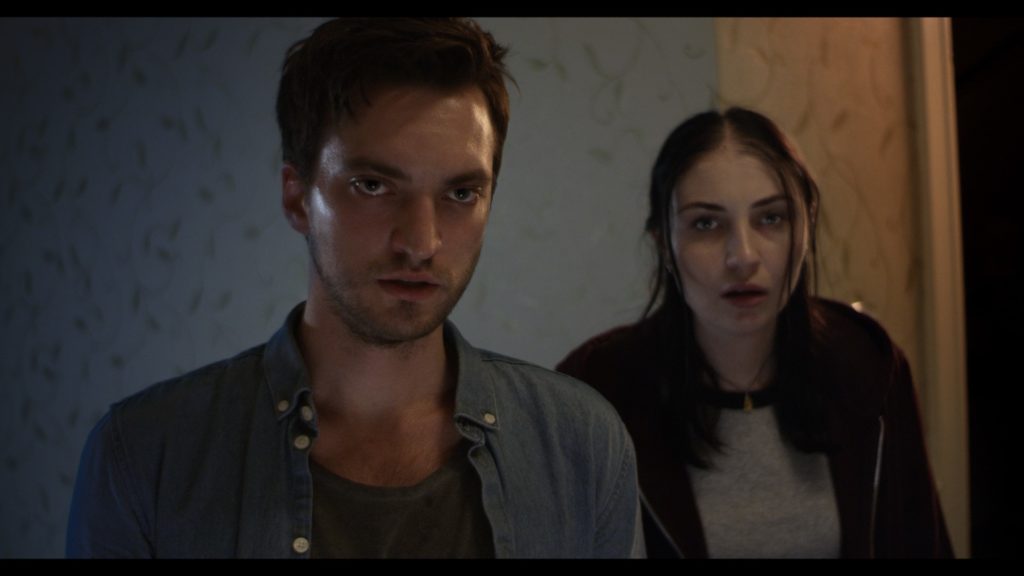
Many supernatural horror tales make the audience wait for any sort of ‘big reveal’, opting to use sound design, blink-and-miss-it visuals and false starts, tantalising the viewers before offering up the big scares. This is not the case with The Return (2020), a film in which the opening scene plunges straight into a nightmarish childhood…dream? Recollection? In any case, it’s something finding its way into college student Rodger’s present, ahead of a trip back home; his father has lately died, and it’s down to Rodger, as the last living member of the immediate family, to tidy up his affairs. Alongside girlfriend Beth (Sara Thompson) and old friend/third wheel fit for a Penny Farthing, Jordan (Echo Porisky), Rodger (Richard Harmon) and the others head back to the old family home. Childhood trauma has been signposted strongly and early; it only remains to see how this will all play out.

Upon arriving at the old abode, a solicitor confirms with Rodger that his father has left him everything – the house is now his. To his great surprise, in the process of sifting through the house, Rodger uncovers a psychiatric evaluation from his childhood; he has no recollection of this, but it seems to have taken place around the time that his little sister Amelia died. The house has plenty of other oddities. Strange shadows, shadowy figures, and other phenomena which would have most people running for the hills – yet Rodger and co. are now more interested in filling in a backstory he never realised he had. At the funeral, Rodger realises that one of the attendees is the child psychiatrist named on his psych evaluation: he makes it his business to speak to this Dr. Roberta Cox (Marina Stephenson Kerr) in the hopes that she can help him to unravel a childhood which seems to have been littered with bereavement – his mother, too – and disappearances. It gets worse; it turns out that he had an imaginary friend at a young age – of whom he was absolutely terrified. All of this is unfolding as the ‘haunting’ (let’s call it that) grows increasingly intense and malignant.
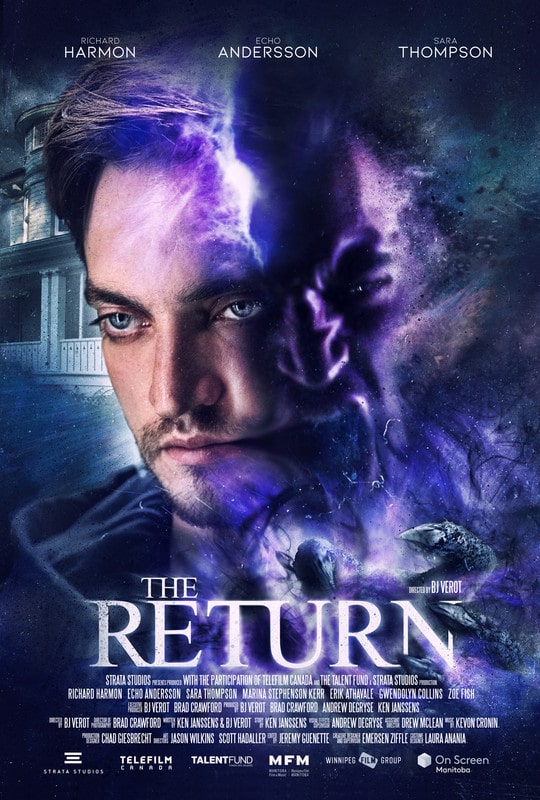
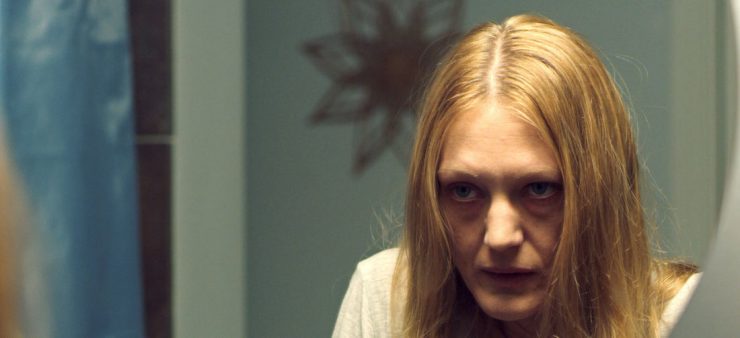
The Return moves along at a largely steady pace for its first hour or so; realising, no doubt, that it has frontloaded its scares, it never bothers to try and hold back on them after this point: the manifestations are pretty full on, albeit that the figure which appears typically looks very…typical, all long black hair, long limbs and glowing eyes. This manifestation does shift its form at a later point, for reasons a little unclear, but it does at least add to the range of effects and scares on offer. By and large, the film dispenses with the kind of denouement which viewers may expect from a film seemingly choosing to take its aesthetics from other ghostly yarns. It shifts more into the mode of a mystery to solve, using a range of flashbacks, dreams, hypnosis and found footage (if hacking a computer file can really be classed as ‘found footage’). It is strange, though, just how well Rodger and his friends seem to take some pretty full-on phenomena; the old ‘thing glimpsed in the mirror’, for example, hardly raises an eyebrow, even when this is one loud, overt spectre. Even at its worst, Rodger seems to find it all more of a mild annoyance than a terrifying experience, even when it reaches its absolutely most serious.

There are some other decisions here which I found baffling; the whole girlfriend-plus-best friend trio feels like it goes easily awry, Rodger’s relationship with his girlfriend soon rendered down to a hastily-treated plot device. But it’s the presence of Jordan which both baffled me most and stretched the script to its absolute thinnest; I’ll not blame actress Echo Porisky for this, whom I’m sure is acting the part as written, but Jordan is a very strange character indeed. At first she seems extraneous, presumably meant to be light relief in some fashion as Beth and Rodger go their own way in their relationship. But her growing role in events as they unfold shifts her significance without making her more plausible, and urges more and more unlikely or unfathomable dialogue from her; when she makes Rodger promise not to leave her alone to face the house’s phenomena by herself, she does so by telling him, ‘if I take a dump, you’re coming to stinktown’. This, and other lines like it are a bizarre fit, to say the least.

So the film – batty dialogue and all – ticks over the hour mark, unfolding its mysteries in a timely way up to this point. We know there’s something terrifying and malign in the house; how the film attempts to distinguish itself from the old ‘unquiet spirit’ shtick is, to give it its due, ambitious. However, it necessitates a rapid increase in the exposition which both moves away from what has come before and yet matches it in just such an overblown style. The last thirty or so minutes of The Return might add a new dimension to the meaning behind the film’s title, but it all happens very fast and sacrifices clarity, veering wholesale into Bad Science in an effort to depart from Generic Ghosts. How you will feel about all of this will depend entirely on your reserves of patience for surprise endings and how busy you can take your last acts, though there is at least a nice, low-key last scene.

The Return seems to offer us a weighing-scales of sorts, with the heavy use of supernatural tropes at the beginning of the film eventually balanced against the film’s unexpected finale. There are issues here, but seeing out an about-face in the plot which at least shows ideas and drive is no bad thing I guess, seeing as this is a first feature by director and co-writer Bj Verot; some script edits and some reining-in of the sheer amount going on in any next venture would no doubt make his wealth of ideas read just a little clearer.

The Return (2020) will feature at the Blood in the Snow Festival. For more information, please click here.

Eraserhead 4K

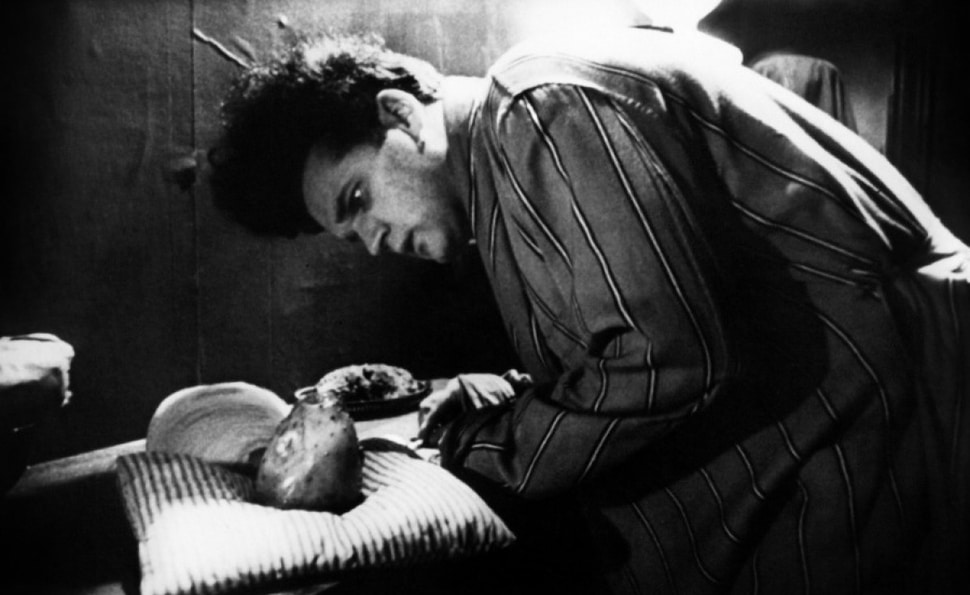
Eraserhead is a film which has been around for over four decades now: its influences can be traced down through all of those decades, in projects by creatives as disparate as Frank Henenlotter and Peter Gabriel (I’d argue, anyway). So it’s difficult to know how to introduce the film, assuming anyone reading this feature hasn’t already seen it. I’ll try, but no promises. It’s a definite oddity, born out of film school and art school ‘let’s try it’ mentalities, experimental to the point of more or less ditching dialogue in favour of prioritising fantastic photography and aesthetics (its script was a mere 22 pages long). As such, a film like this is never going to be for everyone. Looking back, it feels like as much of an anomaly now as it must have then. In an era of gaudy exploitation cinema and lurid colour, it opted for black and white; in an era of extremes where extreme cinema was balanced by box office schmaltz, it eschews both approaches. If it has anything in common with anything, then I guess it’s Godard at his most surreal, but again – that hardly comes close either. How is this going so far?

So much as Erasherhead has a plot, it follows the everyday existence of one Henry (Jack Nance), a printer at a factory, though he’s ‘on vacation’ when we meet him. Some vacation: he knocks around on the outskirts of an industrial sprawl, the only flora sprouting haphazardly out of parts of his apartment. He’s dating a sweet girl called Mary (Charlotte Stewart) but a meal round at her and the folks’ goes badly awry when it transpires she’s recently given birth to a…well, she’s given birth to something, and poor Henry is apparently the father. This hastens their union, and they both begin doing their best to look after the little critter, its continual mewling soon driving a wedge between them. Still, at least there’s some escapism for Henry, in the form of a lady who lives behind the radiator and performs songs. Is this heaven? Possibly. Up against the other settings here, it’s as good as it gets.

That such a humdrum yarn – albeit one with absurd twists to it – should still be so engaging is testament to the film’s strangely-involving feel. It moves quite languidly through whatever action it offers, but then pauses to ponder over some meticulous, if inexplicable little detail. We end up pondering over same. In this film, you can chart the development of Lynch’s intense, fever-dream kind of emphasis on internal states; things always feel about to lurch into the ugly or incomprehensible, a dream which starts one way but spins off in another. Then, a moment of ebullient insanity will pop up, and the mood lightens, temporarily. All of this takes place against a backdrop of soulless urban misery, literally overshadowing the chintzy remnants of a 1950s lifestyle. Whilst all of this is going on, Henry looks as confused and nervous as we are, a kind of everyman in a mad world. The theme of male anxiety, particularly with regards to child-rearing, is written all over this film and it’s almost touching, even where the film veers into body horror. Lynch’s daughter Jennifer has suggested that her own difficult babyhood (she was born with club feet which needed surgical correction) fed into the Eraserhead vision, and its wide-eyed protagonist’s struggles with the baby’s needs. It’s possible, but then again, the ratio of real life to film will probably never be known decisively.

This Criterion Collection restoration has been done with the director’s blessing: it looks great, with sharp definition, rich blacks and heavy shadows. Nothing is washed out, everything is punched in. However, in those scenes where there is some film grain, this hasn’t been destroyed and all in all, this transfer is good quality. It sounds great, too, albeit that its proto-industrial soundscape is almost unbearable in places. (Good. It should dwarf everything.) Alongside the feature, there are a number of Lunch short films included on the release. These date from the 1960s, some not much more than fragments, and some more fleshed-out. We get: Six Men Getting Sick; The Alphabet; The Grandmother; The Amputee, and Premonitions Following an Evil Deed. There is also a section containing ‘supplements’, archive features which include an 85-minute ‘Making Of Eraserhead’ feature, narrated by Lynch himself. The package looks great, the film is timeless, and if you’ve put off purchasing Eraserhead so far, then this would be the definitive buy.

Eraserhead 4K will be released by The Criterion Collection on October 19th, 2020. For more information and to pre-order (UK) please click here. For US orders, please click here.

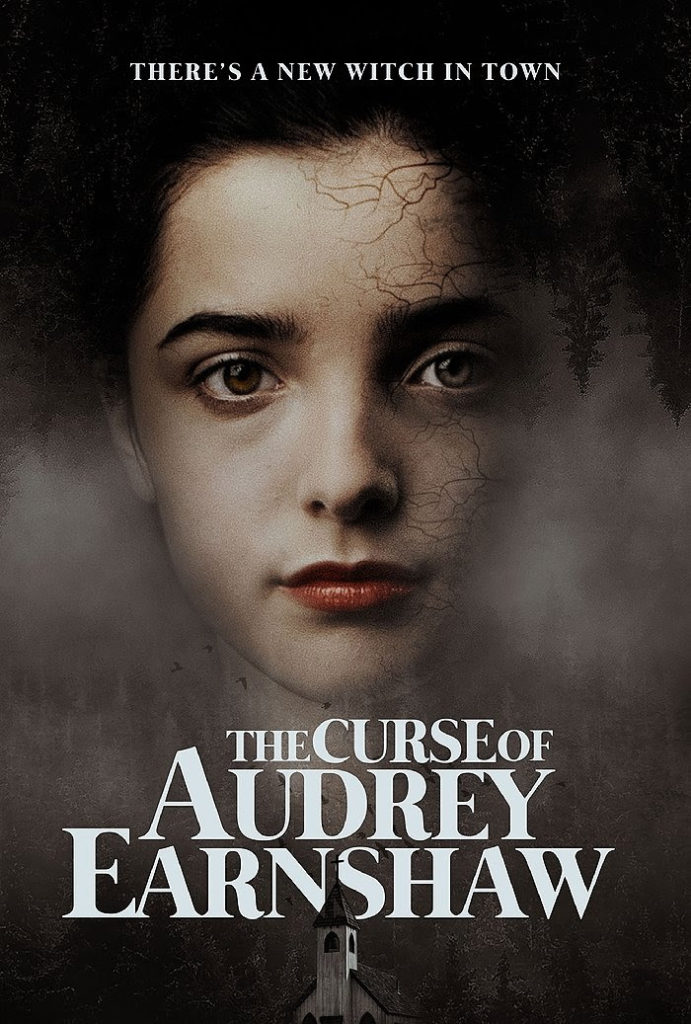
The Curse of Audrey Earnshaw (2020)

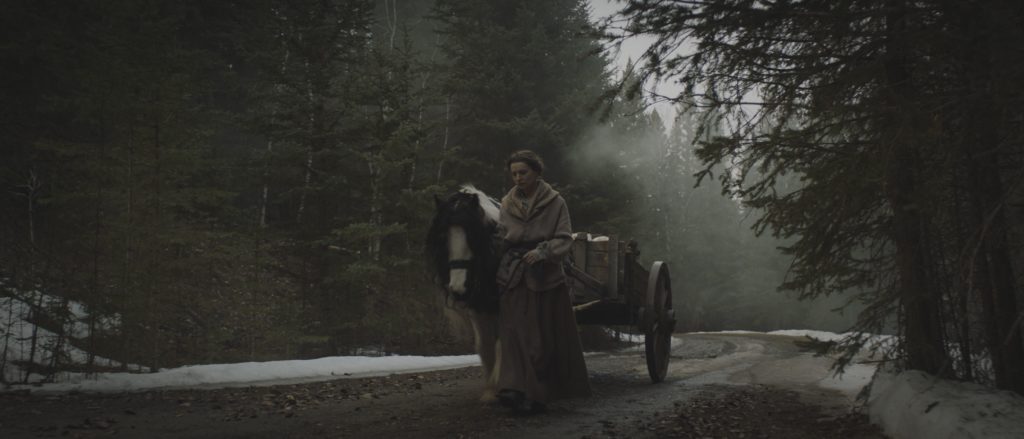
A curious set-up introduces us to The Curse of Audrey Earnshaw: is it a period piece? It certainly looks like one, but the on-screen text explains that, although the Irish colony appearing in the film arrived in the US in 1873, they have remained isolated from the modernising world outside – through the Fifties, when an ‘eclipse’ was linked to the spread of a strange plague which decimated human and agricultural life alike. That is, with the exception of one woman, Agatha Earnshaw, who gave birth to a daughter during this catastrophe. Whilst her farm alone prospered, she kept her daughter’s existence secret, distrustful of the small community on her doorstep.

Scoot forward to 1973. Audrey is now seventeen, and her mother has continued to keep her hidden – telling the girl that the townsfolk wish her harm. When a near neighbour arrives, desperate and hoping to sell some goods to support his own family, Agatha is having none of it, and Audrey – believing what she has been told – hides away, although seems incredulous afterwards that the man in question was a genuine threat. Still, shortly thereafter when Agatha (with Audrey concealed in her wagon) accidentally crashes a local child’s funeral with a heaving cartful of fresh produce, it’s perhaps understandable that the grieving father confronts her, albeit hitting her in the face. Audrey sees enough and is appalled – these people might just be as bad as mother said they were (though to be fair, rolling a tonne of food past a starving, grieving funeral party – and god knows where this hermit-woman is going with it – is a bit of an awkward faux pas, and it’s odd that this sensitive young girl kinda misses that point, whatever else takes place).

We’re soon afterwards shown proof that Agatha and Audrey are estranged from the local community for more than mother’s social missteps. They’re shown taking part in some sort of ritual, with people who don’t seem to be the same townsfolk we’ve already encountered. Afterwards, Audrey awakens outside on the ground, alone: it’s not clear how much she understands of what’s happened to her or why, but it seems to signal a shift in her behaviour.

She speaks to one of the cabal later, asserting her desire to hex Colm Dwyer, the bereaved father who assaulted Agatha; she takes a risk by finally being seen by another of the townsfolk but regardless, makes it her business to get into Colm’s house, posing as a fainting maiden on his property before stealing an item and using it to curse Colm’s wife (rather than him directly – there’s no justice or balance in the magic unleashed here). Malignancy soon plagues an already-devastated town, with death and madness on the rise. Audrey, whose abilities certainly seem good to go, tells her mother that she’s ‘ready’. Great timing, seeing as word of her existence is now travelling around the town. A collision course is set.

There are good elements in The Curse (or in some versions, The Ballad) of Audrey Earnshaw, but there are some odd stylistic and narrative choices too which hamstring the film in key respects. This is a shame. For starters, the unnecessarily complex narrative frame, whereby we have an Amish-like isolated community of Irish people – for some reason living in the days of grindhouse – seems a wholly odd choice. The 1970s setting here is largely, almost completely irrelevant; if there was meant to be any sort of conflict between old and new, traditional and modern, then it is blink-and-miss-it here. For all intents and purposes, this is 19th Century Ireland – it looks like such, operates as such and stays as such, excepting some tiny hints in the dialogue about ‘science’ out in the world somewhere and one rather detached scene at the end. Perhaps this is one of those attempts to render the film timeless, as other independent films have taken to doing by opting for analogue tech and so on, but this always feels to me like taking a lot of trouble to achieve very little. There are other visual elements which break the spell: the ‘starving community’ who all look incredibly healthy and well-fed; the presence of blindingly-obvious cosmetic fillers on a woman who has ostensibly lived her life beyond the reach of a beautician. I could also gladly bin the chapters; films being carved into fairly arbitrary chunks with a big piece of on-screen text to tell us what they’re called is another trend which interferes with the storytelling.

So there are issues here, many of which are born of idling down the path which so many other filmmakers have taken – a mistake, maybe due to the fact that this is a first feature. But likewise, this is a beautifully-shot film, which for the most part sustains a watchable amount of ambiguity: is this witchcraft? Or the paranoia and misfortune of a remote group of people pushed beyond duress? The film thrives most when it isn’t giving the answer. There’s an oppressive atmosphere, sometimes to the point of discomfort, and the small cast are given a great deal to do which, by and large, they achieve against an attractive backdrop and evocative landscapes.

To me, there are several clear parallels to The Witch in this film, 70s frame or not; the main difference is that the exiles from the larger community are the ones who prosper – at first, anyway. Otherwise, the bleak agrarian landscape refracted through natural light, the fear of witchcraft, the inefficacy of Christian faith, the presence of the old world in the New World and the way in which the story is centred on an adolescent girl all took me back to Robert Eggers’ vision of 2015. The Curse of Audrey Earnshaw is not dreadful by any means, but it misfires based on its at-times baffling decisions and derivative aspects, particularly when these call to a minor classic which avoided same.

The Curse of Audrey Earnshaw screens in limited theatres from 2nd October and is released on VOD on the 6th October 2020.

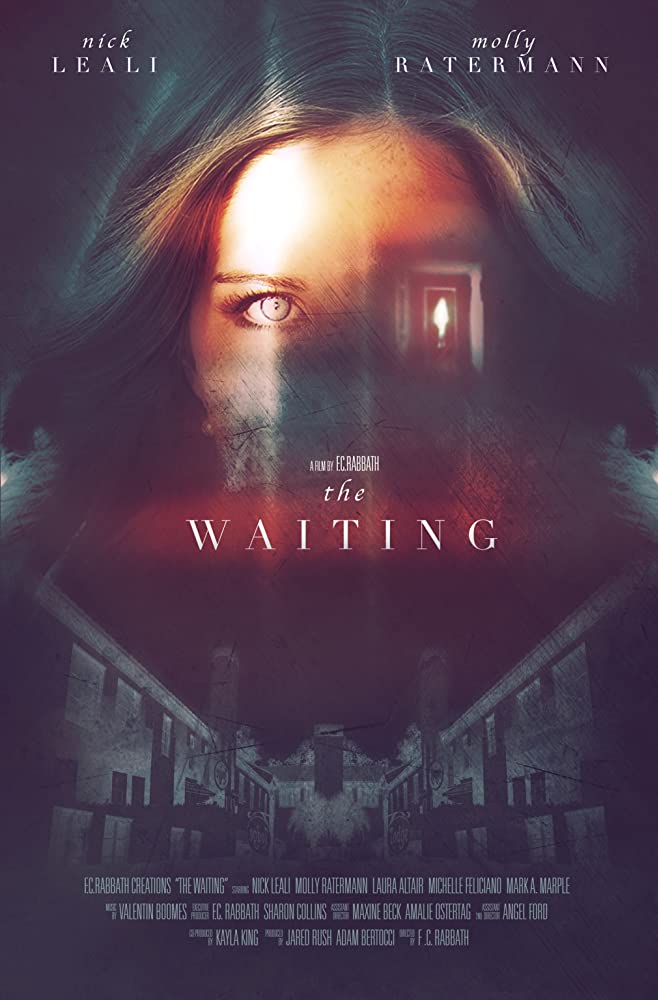
The Waiting (2020)

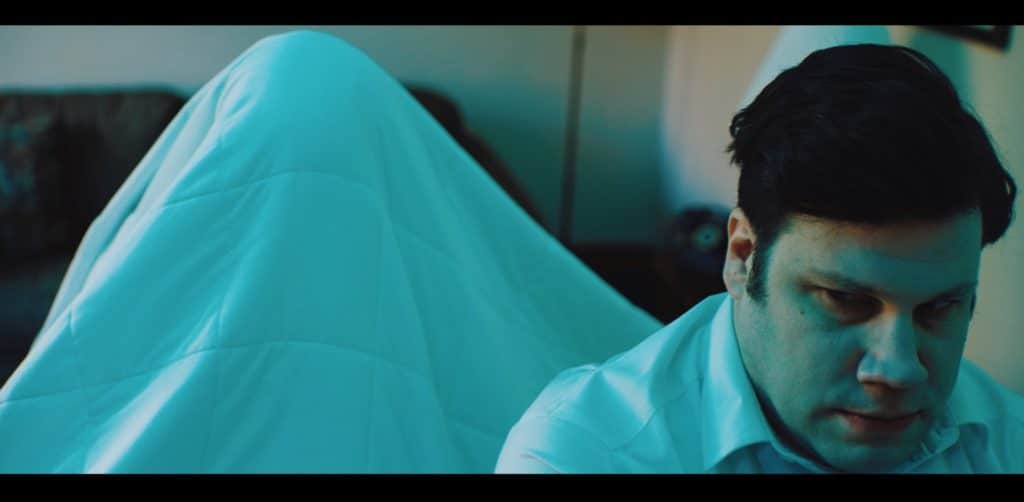
Ghosts have feelings too. That’s been one of the most noticeable shifts in supernatural horror (and other genre-straddling) films in the past couple of decades, from the fairly high-profile film The Others at the start of the century, through to the likes of A Ghost Story, a largely-mute, but very poignant story from 2017. (There’s another film which very much fits this bill, but I will hold off on discussing that one until later on in this review, for reasons which will become apparent.) So we’re gradually getting used to considering a story from a ghost’s perspective; this takes us part of the way to The Waiting (2020), itself a genre-busting independent film which offers a largely successful, rather ambitious spin on the ‘haunted house’ idea, taking us from what looks at first to be a standard haunting through to something else entirely. By turns comical and sad, it stretches itself rather thinly in places, but overall renders a watchable, effective yarn.

It starts in a haunted hotel, rather than someone’s home – though thankfully The Innkeepers this ain’t, and we briefly meet a couple of housekeeping staff rushing along the corridor to the notorious Room 101. The room is never made available to the public, but somehow it needs fixing up every day: they give themselves sixty seconds to put it right, after which time, apparently, a ghostly figure appears. Lucky for them, they get in and out before faced with this – but the presence of a spectre is known about anywhere The Lodge is mentioned. No wonder it’s making a loss.

From here, we move along and meet Eric (Nick Leali), an unlucky-in-love everyman figure who seems to be on a run of dreadful online dates, whilst in actual fact he’s still pining for the one who got away – his ex, who left him with no explanation or further contact. Still, he’s cautiously optimistic about some of the other new factors in his life. He has a new job in a local hotel, and a chance to get some money beside him. Eric has high hopes, but gets off to a rough start in his new role and, when the boss turns up, a glib comment to Eric about wanting him to make the place more lucrative gets him thinking. In trying to familiarise himself with every aspect of the place, Eric discovers the rumours of the haunted room. He investigates, and wouldn’t you know – the apparition of a woman appears to him. Drawn to the strange history of this woman, named Elizabeth (Molly Ratermann), Eric cannot resist going to the room again. Whether he can get to the bottom of the mystery, and its appeal to him, before the underperforming hotel has more worldly concerns to contend with is another matter entirely. Likewise, his seeming connection with the ghost there is a complicated issue…

At first, the tone of The Waiting was quite difficult to unpick: this is largely due to some overblown performances in the early scenes, in what was possibly intended to be shorthand for ‘people here are terrible’ compared to Eric, who is signposted as a nice, affable guy throughout. Some of the rudeness he experiences from his new colleagues and guests alike – for example – made little sense at first, and made it difficult to get a handle on what kind of story I was watching; thankfully, the characters bed in and things improve. The film soon becomes a kind of mystery, a puzzle to solve, whilst also gradually upping its focus on human (and post-human) relationships. Whilst this all takes time to get going, with some minor issues along the way, the film’s steadily-increasing array of neat touches and ideas engages the audience more and more. There is a sense of real warmth here which is commendable.

I mentioned that films which consider a ghostly perspective have made their presence felt in recent years; it’s one of those unfortunate coincidences, then, that The Waiting has appeared within a handful of months of another film, A Ghost Waits (2020), with which it has considerable thematic overlap. This happens; two films, unrelated to each other, often unknown to either filmmaking team, happen to contain lots of crossover, and it must be very galling. Still, each film differs in their approach to the point where they each have merit; The Waiting has a different sort of humour, looks different enough and moves away from the very limited cast used in A Ghost Waits, whilst eschewing the latter’s rationale for the haunting which is taking place. It’s no bad thing, either, to have two films which successfully incorporate such touching aspects. Perhaps The Waiting could have reined in its last five minutes or so, but overall, there’s a lot to recommend here.

The Waiting (2020) will be released in December.

The Swerve (2020)

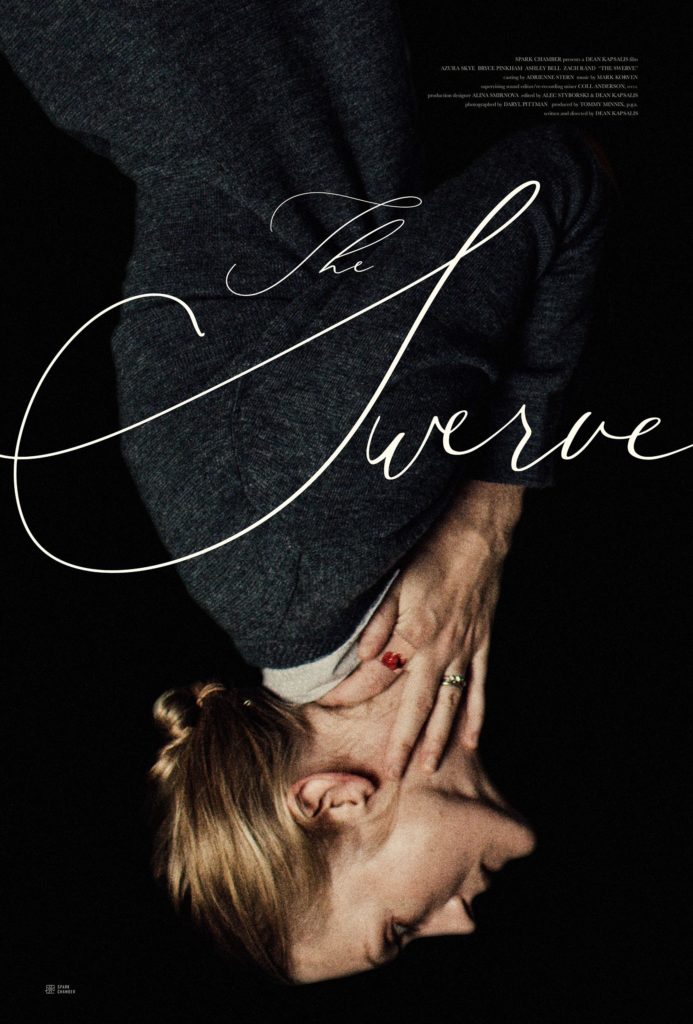
Insomnia – hand in hand with its best friend, anxiety – is a bizarre experience. A fundamental inability to do the most basic, fundamental thing your body requires; like the snake which eats its own tail, the complex brain which requires rest and recuperation is the very thing which prevents that, via its own complex functions, its exhausting neuroses, its endless alliances with doubt. Dreams, if and when they come, make you afraid of being asleep – or unsure if you are asleep at all. Insomnia and anxiety underpin The Swerve (2018) throughout – but it’s by no means the only neurosis, the only anxiety wreaking its quiet havoc here.

Holly (Azura Skye) is a married woman with two all-but-grown sons. Her life is predicated on looking after them, and she does so from a barely-there supporting role – cook, launderer, general servant – her smile and demeanour all strained, weak jollity. When not kept busy with all of this, she teaches English at a local high school: perhaps she gets a little more regard from her students, with one in particular, a boy named Paul (Zach Rand) taking an interest in her, but it doesn’t seem enough to redeem the rest of her support-role life.

Her equilibrium is further disturbed when, one morning, she sees a mouse in her kitchen: fixated on getting rid of it, she begins seeing it in other rooms of the house. It even bites her – she thinks – when she tries to retrieve something in the bedroom. Husband Rob (Bryce Pinkham) gets quickly exasperated by her fixation on it, and life has to go on: they are due to visit Holly’s parents where they encounter her smiling, passive-aggressive sister Claudia (Ashley Bell) for the first time in a while. Things spiral further; Holly begins to make attempts to reclaim some personal agency, leaving the family gathering to drive home alone, but it’s immediately wed to a troubling fantasy that she has cut someone up on the road and caused a fatal accident. From here, fantasy and delusion bleed into a barely less-gruelling reality; it’s an agony to watch, but it’s a quiet, domestic, understated agony.

The Swerve is one of those films that you find yourself revisiting in your mind, thinking over key scenes and developments and re-evaluating them. Did that really play out that way? Did this really happen? And of course, looking back at it overall it’s difficult not to see it as anything other than a tragedy. It’s more Miller than Medea – though you can certainly chart the overlap – but as this narrative progresses, it’s pure modern tragedy, fatal flaw, anagnorisis and all. Being set in the modern age, and shining a light on the suffering of a very ordinary, everyday woman, it lingers over the domestic. Shopping, cooking, cleaning – these get long, almost languid scenes in a way which belies Holly’s fraught energy. The editing shifts and becomes quick as her mind begins to unravel; the film takes on the feel of a fever dream, uncomfortably close to the feeling of sleep deprivation.

Holly is equally uncomfortable to watch; she looks genuinely nervy, exhausted and deeply hurt at being so ignored. No one thanks her, for anything. The contrast established between the rosy-cheeked, smiling toddlers who now exist only in picture frames and the sullen, rude and entitled teenagers who barely look at her marks out the divide between the ideal of family life and the reality, as I’m sure it genuinely feels for many people: this film affords me Babadook-levels of gratitude for not having children. The one person who seems to actually look at Holly and appreciate her, albeit on a warped level which is itself potentially harmful, she’d really benefit from avoiding. It’s a sad, complex situation, and I really wanted some vindication for Holly, despite her flaws. Watching what happens here is relentless. The only way forward for her seems to be to regress, but even that causes her more harm. It reminded me in some aspects of Dans Ma Peau (2002) – a woman shrinking from real life, devalued by her partner, going through the motions. This is the horror is of an intelligent woman who finds herself confronted with the reality of belonging to a servant class, only having the nous and sensitivity to, finally, see it as inescapable.

The Swerve is not an easy watch. It has few moments of light. It may have none, on reflection. But it is a triumph of telling a simple story in an extraordinarily sensitive way – a horror story with real, recognisable proportions. That this has been achieved in a first feature by a relatively inexperience writer/director? Remarkable.

The Swerve (2018) will be available on VOD/Digital on September 22, 2020.

Why Haven’t They Fixed the Cameras Yet? (2020)

Office parties. Not even once, in an ideal world. But, the thing is, sometimes they’re unavoidable, if you want to get on in your career – that seems to be the case with the unnamed protagonist of Why Haven’t They Fixed the Cameras Yet? Using an internal monologue, she ruminates over an evening that would have been better spent elsewhere. Her workplace is a joke, she thinks. The security camera is still broken, the parking lot is known to be a dangerous place for women and how many women, exactly, need to get hurt before something is done?

Why Haven’t They Fixed the Cameras Yet? is a pithy little calling card, an economical yarn which manages – inside five minutes of running time – to play through some contemporary anxieties and concerns which many of us would recognise. But it manages a twist, too: the dismal workplace with its dismal colleagues is one thing, but just maybe all is not as it seems here, and the little about-face it performs is honestly pretty gruelling, adding a horror dimension and conclusion to an otherwise recognisable, relatable set of circumstances. As the first film by director Travis White, it’s a neat indicator of more to come.

Got a few minutes spare? You can take a look at the film here.

Win Koko-Di Koko-Da on Blu-ray!

We don’t do this very much, but – want to win a copy of Koko-Di Koko-Da on Blu-ray?

To celebrate the recent release of this unusual, often challenging and often poignant horror (check out my review here) we have a copy to give away. If you would like to be in with a chance (provided you are 18 or over), please send your details to keri@warped-perspective.com. The winner will be drawn at random on 18th September 2020 at 23:59 GMT and notified via email. Good luck!

Please note: this is for UK residents only: sorry folks.

GDPR compliant: your details will be stored until the time of the competition on a secure connection and deleted after the draw. Your details will not be shared or further stored after this point.

Fantasia 2020: The Columnist

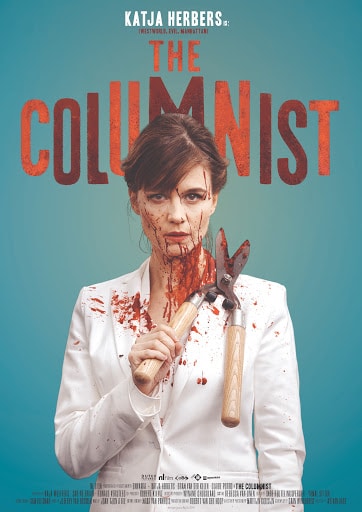
Social media, being a hellworld of our own making, is inevitably creeping into horror cinema; The Columnist (2019) is unusual, however, as it focuses on the implications of online trolling before riffing on what for many people is probably pure wish fulfilment – finding and punishing the worst offenders. In this regard, it mixes social media with elements of the slasher: that’s not to say it doesn’t have some heart, too, and a few bigger ideas to ponder.

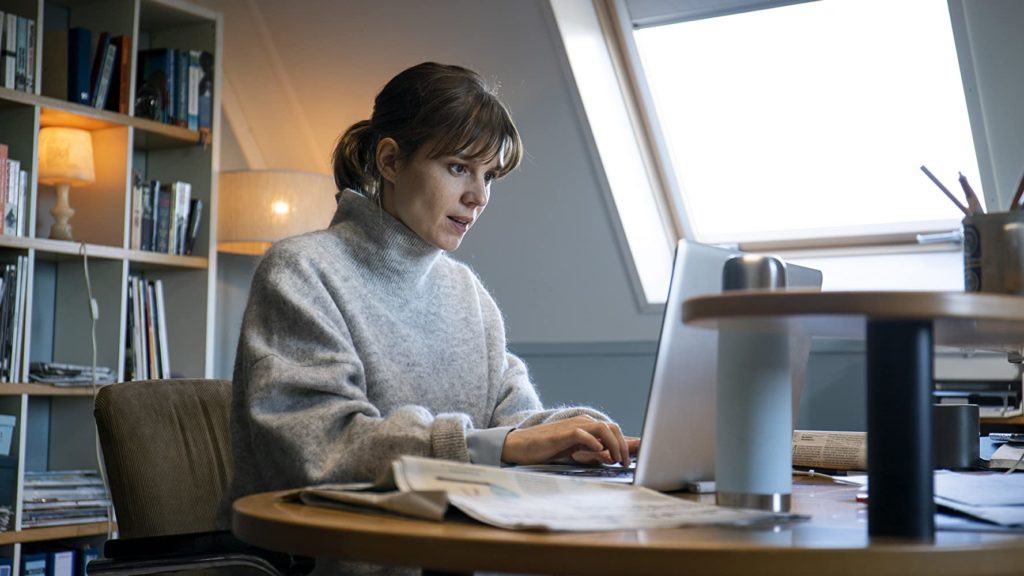
Journalist Femke Boot (Katja Herbers) writes a column in a Dutch newspaper; as a woman who – let’s be frank – is no stranger to an inane column or a high internet presence, she receives more than her share of vile internet comments. Art imitates life, so the most vitriolic of these appear after she writes a column imploring people to be a bit nicer. She decides to call it a day, making the decision to – ulp – get off Twitter altogether. Meanwhile, her literary agent is concerned that there’s just not enough of a ‘buzz’ around Femke to generate interest in her upcoming book. She is told to crack on with it regardless, but she is clearly hitting a bit of a professional impasse. Even her teen daughter Anna (Claire Porro) is reading professional rival Stephen Dood’s books now – that’s ‘Stephen Death’ in English, with Mr Death himself a bit better-versed in separating his persona from his personhood. Before long, the frustrated Femke is back to poring over savage internet comments, to the exclusion of a lot else.

This situation tips over from ‘annoyance’ to ‘opportunity’ when she recognises the gurning userpic attached to one of the worst attack-dog profiles: it’s her new neighbour, Arjen, who has thus far seemed pretty reactionary but otherwise a reasonable enough bloke. The first warning sign that Femke is about to take a turn for the worse is when she decides to hack down his brand-new fence. But, things escalate, and when she spots him doing some work on his roof, she cannot resist making him pay a bigger price…

Whilst the sudden escalation into violence is a rather jarring turn given the careful realism of the characters to this point, it does at least establish the film’s central tenet: if you can find some way of exorcising your demons, then you can get along a lot better. Or maybe it’s just a horrible warning about reading the bottom half of the internet? Still, with Femke getting it out of her system, she can now focus on her writing and begins making good headway. Alongside her new mojo is a new relationship – again, our Stephen is quite a nice fella outside of his gothy persona – and a newfound, improved relationship with Anna. The question is obviously – how long can this last, and what will be next?

It’s certainly true that people in the public eye get all manner of absurd, cruel and unnecessary bile hurled at them, and The Columnist is on-the-money with this – there does seem to be a peculiar subset of men out there who will reply to literally anything an uppity woman says online by avowing that she’s too ugly to sleep with, as if this was ever an option theirs to refuse in the first place – but whether the film is actually critiquing this, or the ways in which people fixate on it, is a tad less clear; there’s no reason it can’t be obliquely about both of those things, of course, as it’s her tendency to get strung out by commentators which hamstrings Femke’s ability to work, but then she becomes arguably a hell of a lot worse than her detractors by, well, maiming and killing them. That’s another interesting thing here: whilst some of the Twitterers she catches up with seem authentically unpleasant, others amongst them are…not so bad. Again, there’s that disconnect between real life and online life, but it reminds us that most of the guys furiously typing ‘choke, bitch’ probably have unremarkable, largely inoffensive lives. Not only that, but they have family and friends. When Arjen’s wife and young son watch the hearse roll away and Femke’s response is cold at best, it shows the horrors which are possible when finding it possible to excuse injury to everyone else.

You could choose not to engage wholesale with any of that, mind (though it would take a little of the belligerence on display in the plot) and see this simply as a decent film with some plausible, often likeable characterisation, all wrapped up in some grisly tableaux. Still, things get undeniably darker as the film progresses towards its conclusion, and as much as anything else the ending is sad – it’s about people’s lives breaking apart, and a short-lived happiness which allows you to infer far greater sadness coming after the credits roll. It was always going to come unstuck: a grim, but visually-appealing ending moves the worst violence off-screen finally, but you are left in no doubt.

It doesn’t try to be exhaustive, it doesn’t necessarily hold up greater truths, but The Columnist meshes current issues and concerns with a kind of gore vibe which is either cathartic or cautionary, depending – I’m sure – on who you ask. Overall, it’s a satisfying and worthwhile watch,

The Columnist appeared at the Fantasia Film Festival 2020.

Fantasia 2020: The Block Island Sound

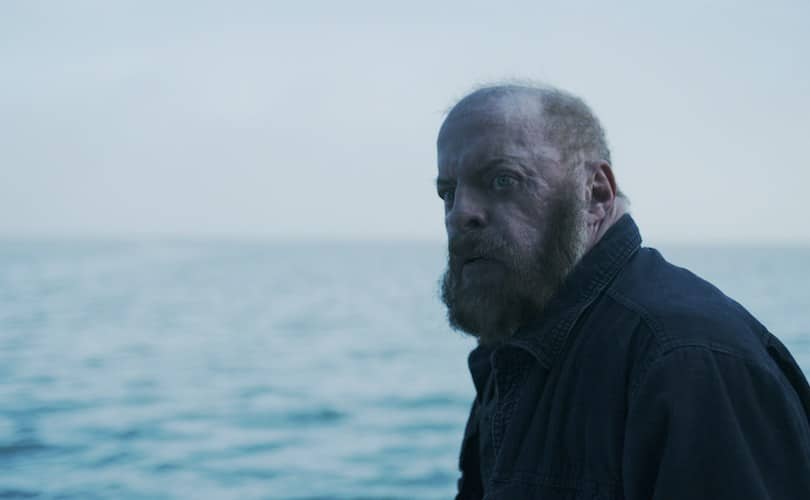
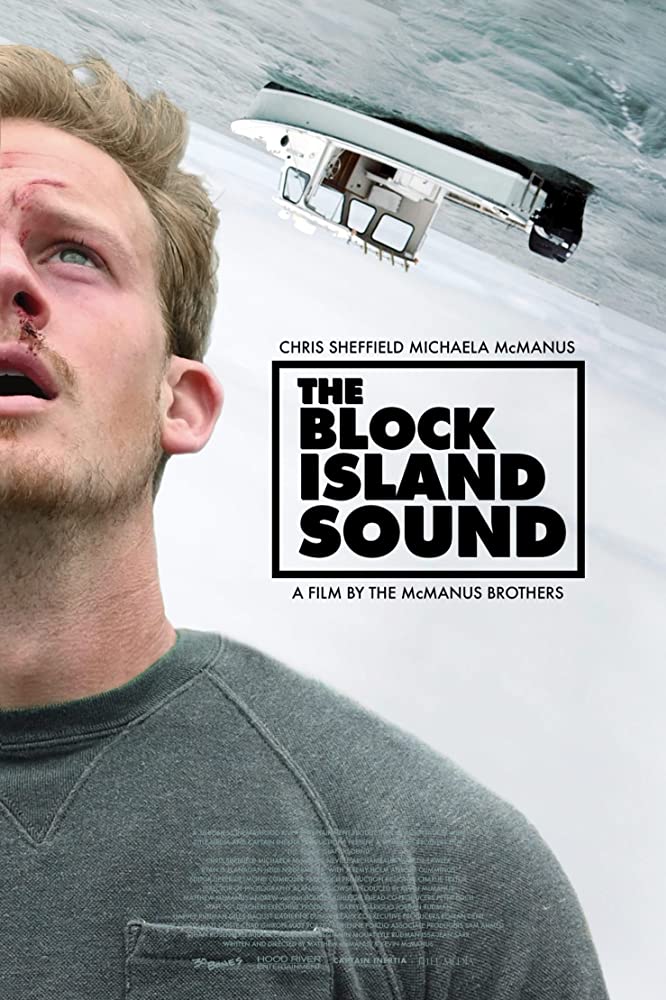
A boat drifts, its lone crewman (Neville Archambault) coming to and shocked by the disarray on board. A horrific, guttural sound attracts his attention…this all takes place within the first few moments of The Block Island Sound, a neat, often inventive horror which splices a kind of eco-horror with something altogether more supernatural, though it never quite gives up its secrets.

Back onshore, we are introduced to the boatman’s son: Harry (Chris Sheffield) is hanging out in a bar with his friends, giving conspiracy theorist pal Dale a ride home when their car strikes a bird, which they watch, flailing on the windscreen. You get the sense that this is the shape of things to come. Back at the house, his father is alive and well but acting strangely, zoning out from time to time and seemingly not in control of his actions when undergoing this experience. Harry puts it down to sleepwalking, but he doesn’t seem convinced by it, and his father’s new tendency to take his boat out in the middle of the night is alarming.

Meanwhile, Harry’s sister Audry (Michaela McManus) her partner and young daughter are making a rare visit home because her role as a marine biologist is of relevance in a part of the world where tonnes of fish have started to wash up, dead. It’s an awkward reunion – Harry is a kind of manchild writ large, always on the verge of losing his temper – and she is very alarmed by her father’s behaviour. When he disappears altogether, Harry will not accept it and goes looking for him; soon he is suffering from the same mysterious symptoms, hearing the same inexplicable noise. What is this?

The Block Island Sound strikes a balance between the kind of eco-horror of The Bay (2012) and something else; the raucous sound which afflicts father and son does make it clear, though, that there is something otherworldly going on (the mention of a certain American city might also put you in mind of a particular kind of horror, though that is never nailed down nor alluded to further). You would hope in a film which begins this way that the soundscape elements would be well-developed and that is the case; from the mysterious ‘noise’ itself to the Paul Koch score, the film sounds fantastic, incredibly eerie and ominous. There are some heavily-signposted scenes – one of which, Audry’s justification to her daughter for the cruelties of her role – is handed back to the audience in the film’s later scenes, but it’s a ‘reveal’ which works. Elsewhere – the allusions to mind control, conspiracy, the dying bird – the symbolism is pretty straightforward.

Whilst there is a lull around the middle of the film, as Harry begins to dominate proceedings, his journey towards understanding unfolding slowly – The Block Island Sound more than rewards attention, with its good, inventive moments and a genuine, unsettling thread of horror which holds things together. The use of amnesia is well-handled, and the expanses of the sea itself – shown as containing some unknown, malevolent force – works well on screen. The moments of snappier horror are very unsettling, because they are used sparingly. Exposition is held back – the film doesn’t speak all its truths – and it ends in a clever final moment. A well-realised, inventive piece of work, The Block Island Sound is a nicely handled piece of storytelling.

The Block Island Sound premiered at the Fantasia Film Festival 2020.

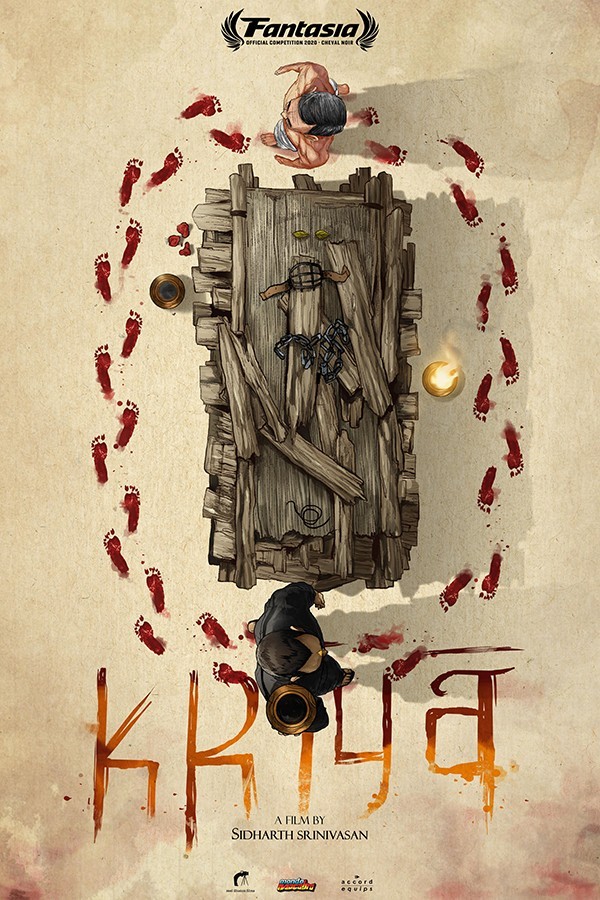
Fantasia 2020: Kriya

During the opening credits of Kriya, on-screen text tells us that in Hindu tradition, it is the son who must be the one to perform a father’s last rites. We cut straight from this into a modern club scene: in this way, the film establishes straightaway that old and new India will find themselves in discord here. Kriya is a film which uses horror as a conduit to ask big questions about Indian cultural life. In some aspects – given the style of this treatment, and some of the themes which emerge – Kriya could be classed as an Indian Gothic.

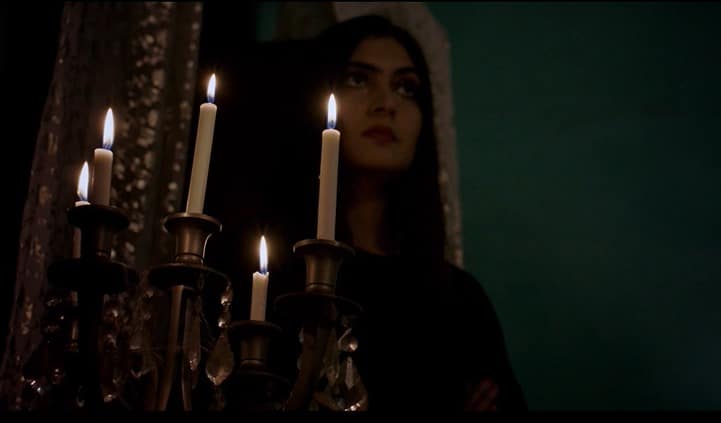
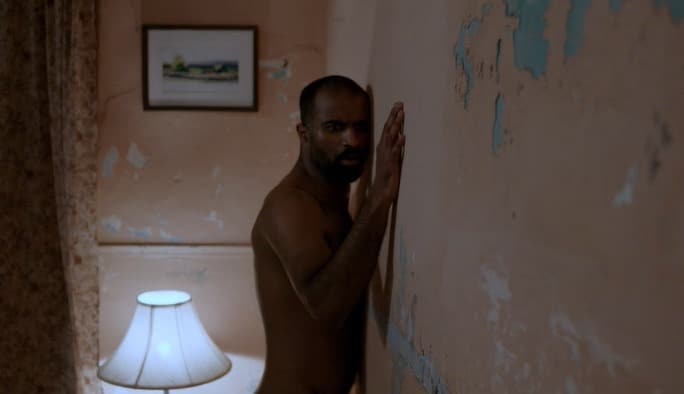
Neel (Noble Luke), a DJ at the club, finds himself making meaningful eye contact across the dance floor with the beautiful Sitara (Navjot Randhawa). It’s a long sequence, brought down with a bump by the pair, some time later, trying to find somewhere to be intimate. Sitara suggests that they drive to her rather grand, though decaying family home – a dead ringer for the House of Usher – but Neel is suitably disbelieving that this could ever be okay with her family. Well, there’s certainly an issue to contend with, but not what he expects.

As the pair enter, they find Sitara’s father, prone and on the verge of death, surrounded by the other members of the family: mother Tara Devi (Avantika Akerkar), younger sister Sara (Kanak Bhardwaj) and holy man Panditji (Sudhanva Deshpande), whose interest in the family seems more than a strictly spiritual one. Rites are already being read over Sitara’s father, whose death is imminent; as eldest daughter, Sitara quickly begins to participate, as the rest of the family, rather begrudgingly given his outsider status, insist that Neel joins in with the prayers.

He begins to participate as best he can, but soon he’s struggling under the complex social and cultural norms of high-caste traditions such as these; this is exacerbated by Tara Devi’s anger at him as ‘improper’. Worse, it seems that Sitara bringing him here has been deliberately timed, given the length of her father’s illness and the vital importance of a male ‘family member’ to complete the rites. Neel wishes to leave, but nightmarish episodes of his own begin to afflict him, even whilst he gets increasingly drawn into this secretive family group.

The subtly off-kilter behaviour of this family, particularly evident between mother and eldest daughter, makes Kriya an almost immediately bewildering, discomfiting experience. Combined with the intricate finer points of religious practice, we are kept at a distance here – though the sheer weight of these, overwhelming in many respects, does become clearer as the film progresses. It’s important to note, though, that Neel is far more like the audience than he is like the family; he’s as alienated and taken aback by the goings-on of the evening as we are, and this helps to make him a very plausible outsider, someone with whom it is easy to empathise. There are other degrees of strangeness woven in here, some of which are potentially more shocking to Western audiences; our relationship to death is often rather distant, medicalised. Sitara’s tactile behaviour with the corpse of her father, cradling him, grabbing at him and later, completing acts which require her to open and close her father’s mouth, for instance – these things are not things we routinely do in the West. It adds significantly to the sense of unease.

Kriya is further notable for the way it seems at first to have positioned a man at the centre of its horror. Manipulated and effectively captured – albeit with language rather than physical force – Neel wants nothing more than to get away from this place, but he becomes trapped in a web of the expectations placed on males. The female characters, at least at first, seem to be in command; light touches, such as Sitara’s use of formal Hindi against Neel’s English, underline the gender and class differences between them, and in some respects, this is a subversion of expectations. However, when you understand more about the family’s motivations and the issues which afflict them, then it becomes apparent that here we have women using the means available to them to rally against an impossible situation, one that absolutely requires a male presence. This is one moribund gilded cage.

By its close, Kriya is a tale of fractured identities and the steady loss of personal control. The subversive elements used are far more than just ‘gotchas’, there to play with generic expectations; they’re wedded to the narrative, providing for a sometimes challenging but ultimately rewarding horror tale. Not every question in the film is answered, but Kriya is no less a film for that.

Kriya (2020) premieres at the Fantasia Film Festival on Wednesday 26th August 2020. For more information on the film, click here.

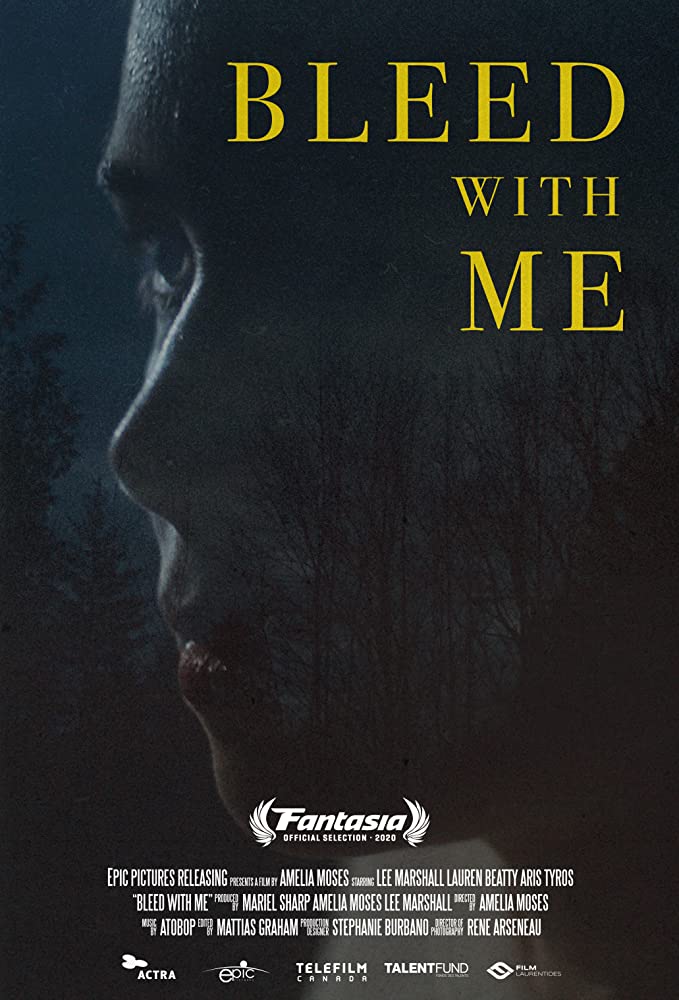
Fantasia 2020: Bleed With Me

When I read the synopsis for Bleed With Me (2020), my mind jumped straight to ‘body horror’ – but that’s a term reminiscent of jarring, even ludicrous extremes, from Tetsuo to Videodrome. In truth, though, there are many quieter entrants into that genre with their own questions to ask; this brings us to Bleed With Me, where reality and dream meet very uneasily at the margins of the female body in an ambiguous, claustrophobic and economical tale. It tackles female agency and friendship in a low-key, but nonetheless at-times unbearable fashion.

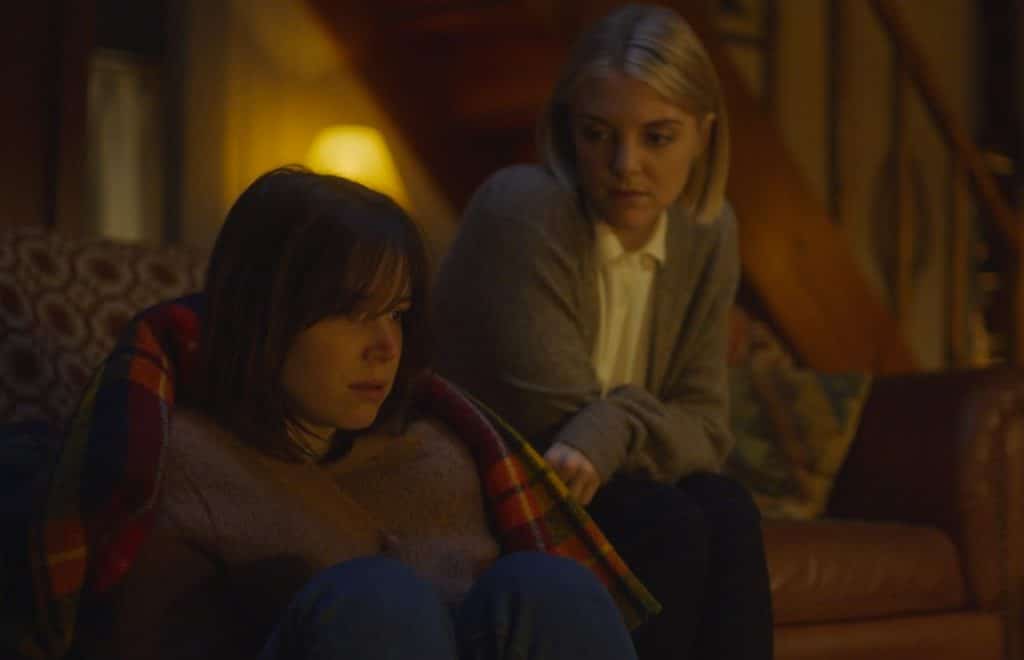
Two friends, Rowan (Lee Marshall) and Emily (Lauren Beatty) head into the Canadian woods for a weekend getaway at Emily’s cabin. Yes, it’s a cabin in the woods – but it’s a cosy, well-loved family retreat, and so the site – rather than the source – of what later unfolds. Emily’s boyfriend Brendan (Aris Tyros) is already there to greet them, and things get off on a good footing. It’s clearly a fairly new friendship between the two girls, but all seems fine. At first. When Rowan thinks she sees something or someone outside the cabin whilst she’s preparing food, she accidentally cuts her finger; Emily’s reaction is a little overzealous, shall we say, but there’s no major cause for alarm at this point. The wine flows, maybe a little too much, but a generally pleasant evening is had.

However, Rowan – clearly a damaged young woman, as the film oh-so subtly reveals to us – has some (deserved) misgivings about cramping the couple’s style, soon aided and abetted by Brendan. Her escalating anxiety gives way to disturbed sleep, and the following morning, Rowan wakes to find an unexplained wound on her forearm. She has no recollection of it; the mystery is compounded when she also sees spots of blood on Emily’s nightclothes. The cabin and its inmates begin to feel actively hostile to Rowan: is it paranoia, or a plot?

Bleed With Me is an incredibly slow burn, unsettling piece of film. For the most part, this stems not from what is shown, but from what is not: the gentle lighting, hushed dialogue and long periods of stillness, taking in the natural beauty outside, belie the ratcheting uneasy inside the cabin’s walls. It’s a very attractive film which establishes one aesthetic, only to bring this into direct contrast with the cold, blurred world of Rowan’s dreams (if dreams they are). Director and writer Amelia Moses has a skill in making the run-of-the-mill very intense and alienating.

Much of this is communicated through Rowan’s own eyes, but the film raises a number of queasy questions regarding female friendship, questions which seem to be more than solely Rowan’s. Each of the girls is keeping quiet on their true motivations; doubt and unreason begin to filter through into every word and gesture. As Rowan’s night terrors begin to segue into her days, her proliferation of strange wounds are a symbol of her unease as much as they are a cause for concern in and of themselves. The steady increase in uncertainty achieved here is quite something. Some of Rowan’s terror of her companions’ real motivations has echoes of Rosemary’s Baby, another film where a woman is left vulnerable because it’s unclear who to believe. In other respects, the film reminded me of the short story The Yellow Wallpaper – again, featuring a woman who projects her own suffering onto external phenomena. However, Bleed With Me expands these ideas, using blood as a locus for unmistakably feminine concerns, where friendships simmer and boil out of control.

This is a film which never gives up all of its secrets, and as such it may be too low on exposition for some – personally, I found it a very affecting piece of work which allows intrigue to remain, contributing to the atmosphere and style of the film as a whole. That all of this is done in one setting with a total cast of three people is all the more remarkable.

BLEED WITH ME will premiere at Fantasia International Film Festival – 2020 Digital Edition. August 26, 2020 at 7:10 p.m. EST and play again on September 1, 2020 at 3 p.m. EST