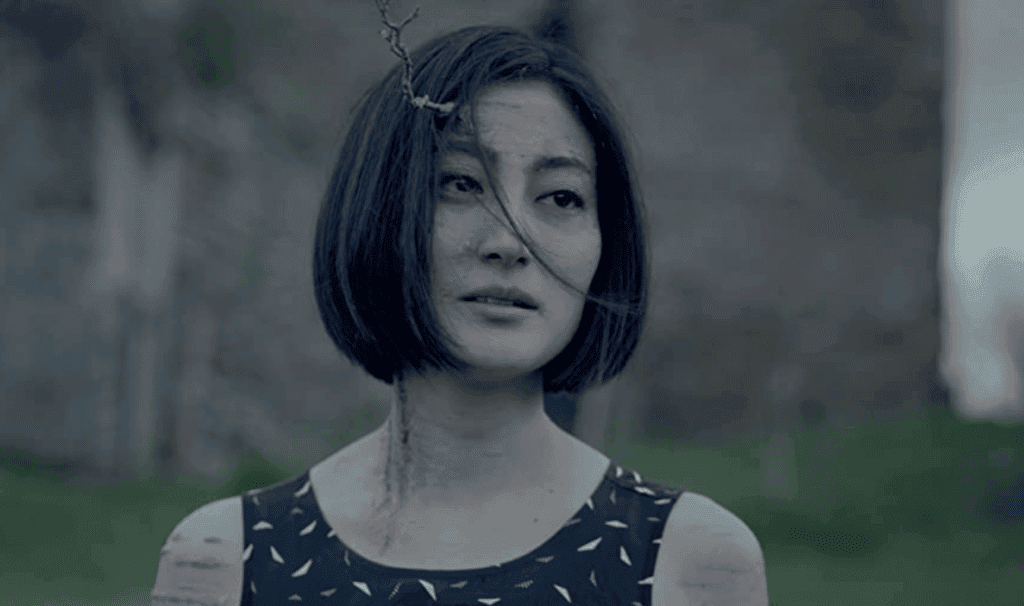
Subverting the Maternal in Raised by Wolves

The TV series Raised By Wolves follows a battle being fought in microcosm, but the resources which are being fought over surpass the usual struggle for land, wealth and power. Having been forced to abandon Earth – now on the verge of destruction, if not already past that point – a small contingent of militant theists, the Mithraic, have created a vessel called an Ark, which they hope to take into deep space in order to settle another planet. However, their adversaries on Earth, the hardline atheists, are fighting back: a tiny lander, equipped with two androids – ‘Mother’ and ‘Father’ – and a number of viable human embryos, has beaten them to a barely-hospitable alien world, Kepler-22b. The territory itself might be contested here, but the real fight is for the future of human life; in such times as these, any notion of a traditional, nuclear family has necessarily been abandoned.

Viable life, and importantly, life which follows the appropriate ideology, takes precedence, and as these two things are hard to come by, it takes precedence by any means. In many respects Raised By Wolves keeps its focus on parenting and the survival of the young, whilst also shining an often unpleasant light on the whole childbearing and child-rearing process, here seen as fraught, duplicitous, flawed – and even circumvented altogether. It’s a pretty bold move, but one which you’d absolutely expect from a producer like Ridley Scott, who has a long history of disrupting the mother/child relationship…

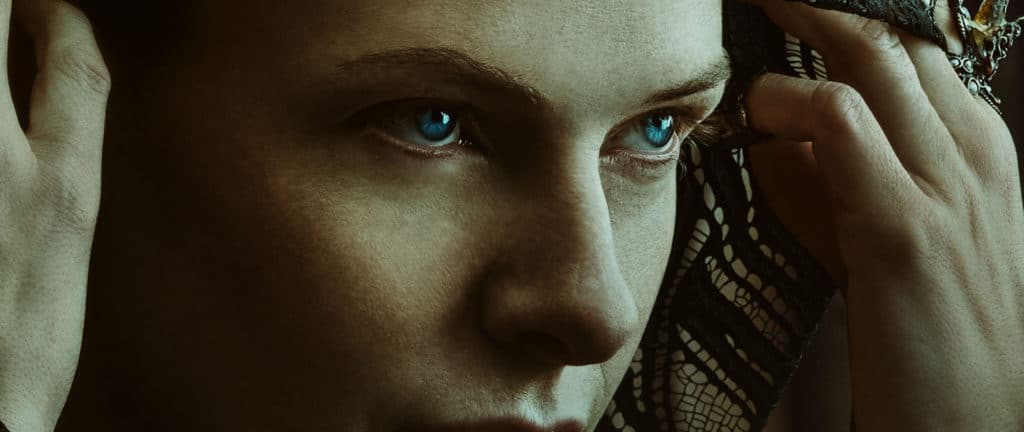
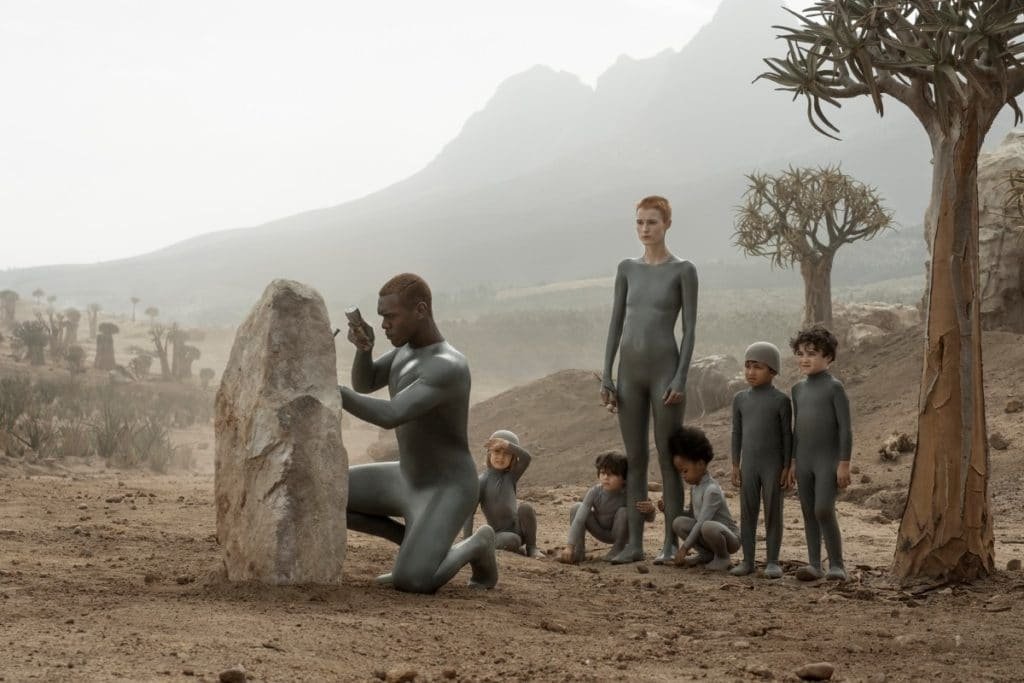
The first scenes of the show give us Mother (Amanda Collin) and Father (Abubakar Salim) busying themselves with what they have been tasked with doing: firstly they need to incubate a number of the embryos, whilst also establishing a rudimentary colony (and despite the hi-tech means which brought them to the planet, there are no ultra mod cons beyond the lander. They elect to eke out an existence which looks little beyond Neolithic.) Of course, Mother and Father themselves are not human – this is made abundantly clear given the way in which Mother incubates the embryos – but Father, at least, has been programmed to be an affable companion and not much more: he bears the children’s antics with patience, he tells jokes, and he acts as a helpmeet to Mother, who dominates proceedings. However, it is Mother who eventually breaks out of her careful programming as a nurturer (and we see evidence of how long this process took, in flashback, later in the show). The arrival of the Ark into the planet’s orbit – and the presence of a theistic landing party, which stumbles upon the settlement – triggers a glitch in Mother’s programming: she is in fact, and in one of the show’s moments of bleak irony – actually a Necromancer, a type of android designed to destroy life and one designed for use by the Mithraic against the atheists. Necromancers have the power of flight, and can use the pitch of their voices (actually a banshee-like scream) to maim and kill; faced with the old enemy, Mother shows herself to be vengeful and unpredictable. You have to wonder at why, exactly, her creator/reprogrammer felt that this model of android was the best model to mould into a cooing maternal figure, but maybe he liked a challenge.
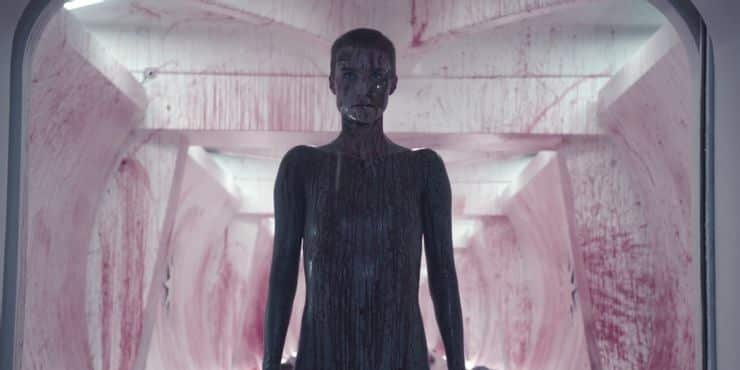
It’s not a perfect revamp, in any case, and Mother takes it upon herself to destroy the Ark in its entirety; although she was reprogrammed not to blindly persecute the ‘wrong’ humans, old habits die hard. But, to restock her own depleted brood, she first kidnaps the Ark’s ‘children’, which seems to mean anyone under the age of eighteen. The majority of her own batch of children have already died as a result of a series of rookie errors: it hadn’t occurred to either Mother of Father to properly test the only food source they’d been able to find and cultivate, meaning a creeping dose of radioactivity (as well as the issue of huge, nearby craters) has done for all but one of them, Campion. In effect, an android purposefully rehabilitated into a matriarch has allowed her family to eat poison or fall to their deaths; when faced with other humans, she has murdered hundreds of them on principle, forgetting her new programming temporarily and terrifying her sole remaining ‘son’, as well as kidnapping a number of young Mithraic, with the aim of deprogramming them. It doesn’t seem to occur to either her or Father to plunder the remains of the Ark for any resources which would help them; Mother’s sole interest in the Ark relates to herself, as she chooses to interact with a simulator – in order to access her own, carefully-stored and hidden memory files. It’s telling that Mother, for all her maternal strengths, is so flawed: she gives her name as ‘Lamia’, a mythical monster believed to prey on human beings and drink the blood of children. Is this a moment of self-awareness, even humour on her part? Or is she aware that she is still a risk to the children, as well as everyone else? What we see here is a being redesigned to nurture, but deviating from her path in a series of ways, either by incompetence or design. This adoptive mother is usually well-intentioned, but challenged. She feels compelled to do the right thing, but often struggles.
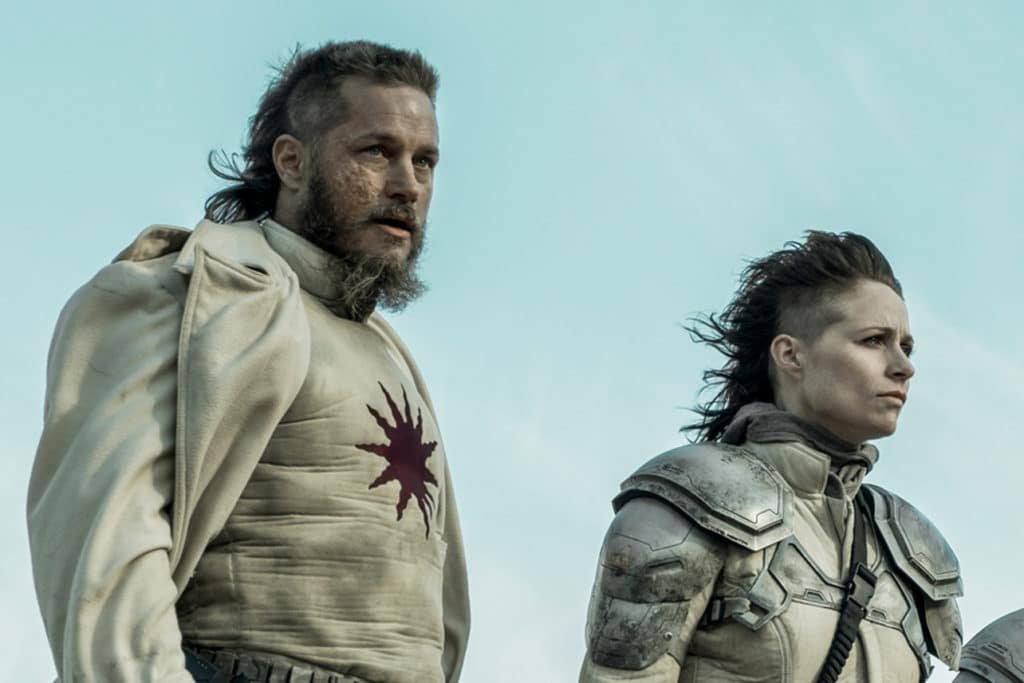
There is another adoptive mother in the show, this time human: the aptly-named Mary (Niamh Algar), who alongside husband Caleb (Travis Bickle). These two atheists killed a man and a woman whilst fleeing the Mithraic on Earth; they then realised that these two were Mithraic officials, with a place on the Ark reserved for them. Using the means at their disposal, they decide to alter their facial features to look like the two deceased, and manage to trick their way onto the vessel. But the people they have replaced, Marcus and Sue, have a young son, Paul: at this stage, he is none the wiser that his real parents have been murdered by the people tasked with looking after him. Both the adults feel a pang of responsibility for Paul, now orphaned by their hands, but it soon becomes more than that, with a sense of affection springing up – one which we are led to believe was wholly lacking from Paul’s life with his real parents. Elements of this story arc are genuinely quite touching; Paul and his ‘father’ discover how to play, and the boy gets showered with affection. But the straightened circumstances on Kepler, not to mention the hints at something seemingly supernatural at play, begins to sway Marcus, making it increasingly difficult for him to inhabit his old identity. He begins to believe that ‘Sol’, a version of the monotheistic God we’re probably all familiar with, is really speaking to him; rumours of a prophecy, which he at first thought might alight on Paul, he now begins to claim for himself. This has a dark influence on his behaviour, towards both his wife and his son, and it also leads to him becoming indiscriminately violent, killing several of the handful of Mithraic who have survived – in times when the survival of the human race is paramount, this looks as deranged as it is.

The show’s only human nuclear family unit, then, flawed as it is, quickly comes apart at the seams, with Sue/Mary fleeing her now-unpredictable husband, leaving him to his now dissatisfied, suspicious body of soldiers. As for Paul, Sol allegedly tells him the truth, leading him to attack Mary; he sees her now only as a killer, and this obliterates what has gone before. This is particularly sad, as Mother – who correctly ascertains that Mary is not Paul’s biological mother, and seems even to taunt her momentarily for it – had only just, grudgingly, told Mary that she was nonetheless a ‘good mother’. Mary had also revealed that she is infertile; the injury Paul causes to her abdomen is perhaps symbolic.

In Season One, we only see one human, biological pregnancy taking place – and, in another of the show’s uniquely dark twists of the knife, it is the result of a rape. The girl in question, Tempest (Jordan Loughran) was assaulted whilst in stasis, and so unable to fight back; she is also part of the group of stolen Ark children, so it’s assumed that she is below the age of consent as we’d understand it, but perhaps in the 22nd Century this differs. Needs must. Regardless, Tempest is very young, and extremely traumatised; Mother’s immediate, borderline obsessive interest in her pregnancy upsets her greatly, and the girl is so desperate to abort her foetus that she attempts suicide. Mother, as representative of her programming, wants to support Tempest through this pregnancy by any means and her well-meaning attempts to get the girl to put her experience behind her comes across as extremely, if unwittingly crass. Mother fails to understand, in the ways that lots of humans fail to understand. The rapist in question, a ranking Mithraic, is also still alive, having survived the Ark’s crash; he is being punished for his actions, but he still finds a way to get around this, threatening Tempest and attempting to escape. His defence, that Sol wanted him ‘to be fruitful’, is a particularly sinister touch, given that this uses religious tenets to override consent. At least the Mithraic were having none of it, though this is small comfort to Tempest, and although she gets her moment, it doesn’t rid her of the pregnancy.

There is of course one more pregnancy in Season One, and thankfully it isn’t the standard sci-fi ‘whaddya know? You CAN have a baby!’ curveball which it seemed to be at first – a plot device as old and weary as time. Mother herself – as a result of interfacing with her memory files – undergoes an experience where she seems to become pregnant; apparently, this capacity was always in-built, and she comes to understand via the interface that her human brood was only ever intended as a kind of practice run. This, though? This is the real deal. This plot development had the capacity to be a tad disappointing; one of the series’ most interesting aspects is in watching Mother navigate her maternal feelings as a ‘creation’ and not a ‘creator’, so to suddenly turn her into the thing she thinks is impossible could have been a rather obvious move. But it’s not so: Mother’s pregnancy is horrific; whatever is in there needs plasma for food, so for instance Mother has to ransack the Ark for sources of this – it’s hardly a picture-book pregnancy, and there are some graphic sequences as Mother tried to balance the foetus’s needs against her own rising sense of concern. However, the survivors of the settlement attempt to help her as her pregnancy develops; there’s a sense of wonder hanging over it, perhaps a belief that this is, in any measurable sense, a miracle.

The ways in which the show’s writers quite abruptly scupper this is a great tour de force. With some ideas clearly in keeping with the Alien franchise – perhaps particularly Alien 3 and Alien: Resurrection – Mother’s baby is no baby at all, android or human. It is instead likely to be a being which no one on the planet has yet seen, except as fossilised remains; one of the great snake creatures, presumed extinct (but never make that assumption on Kepler – there seem to be a few species lurking in the shadows). Or is it? The show gives little away. Here, a wealth of prophecy seems to have come to the fore, and there are hints that Mother, Father and the others are predestined in this; Mother’s horror at what she has created leads to her taking the initiative, attempting to kill herself and the creature. Is it successful? The show closes with a certain level of ambiguity over that, but what is certain is that Mother seems to be about to die replaying memories of Campion, not her ‘birth child’; her human brood did not seem to be some less-worthy experiment in the end, if it is the end at all…

Raised By Wolves, right down to its symbolic title, is about world-building, but key to that process is nurturing and raising children. To do this, traditional models of parenting may be present in some aspects, but they are also overthrown, at least to an extent, for a range of reasons: fate, necessity, emotion, guilt, lack, loss and in Mother’s case, as a means of exploring her sense of ‘selfhood’, her programming, and what it all means. The answers to these questions have not yet been given, and doubtless this will be explored in Season Two, but just as old ideas of marriage and family life are becoming obsolete, traditional ideas about caregiving and nurture will remain crucial.

Raised By Wolves – Season Two – will premiere on 2nd February 2022.
Below The Fold (2021)

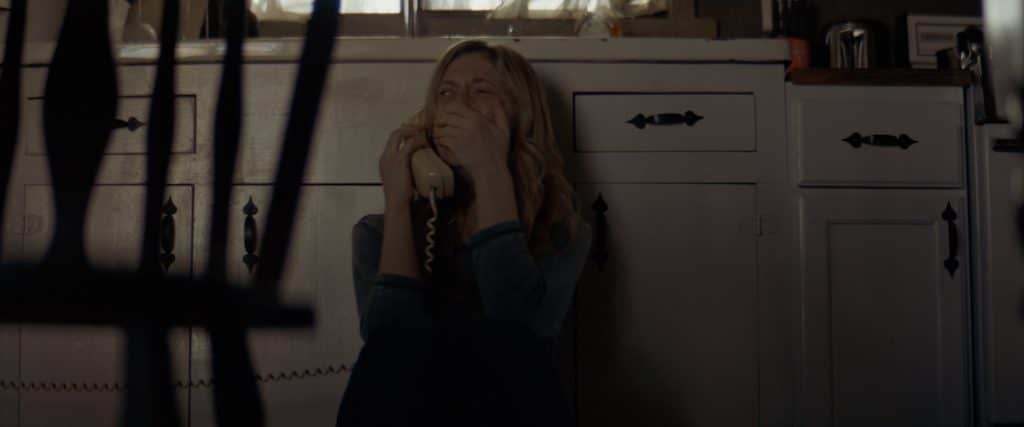
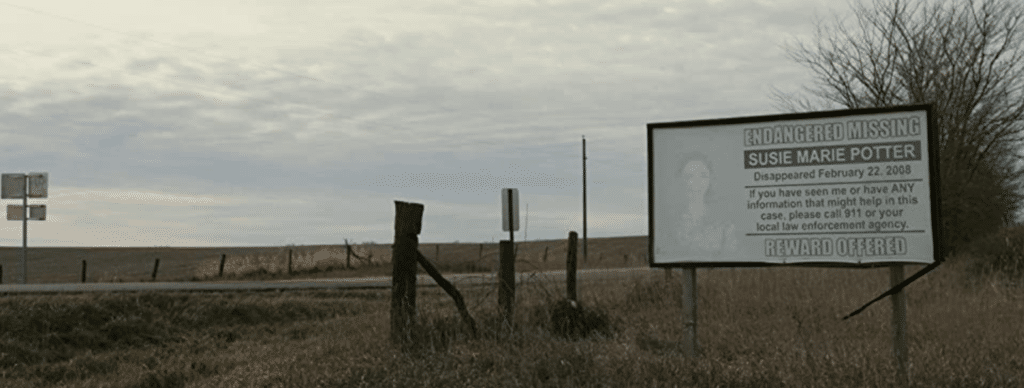
It’s a crime thriller, but Below The Fold starts with what could easily be a horror film opening. It’s an ominous take where it seems something sudden and shocking has happened: the TV is left on, showing nothing but dead air, a telephone receiver lies abandoned. What is this? We’re not told immediately – we’re not told anything immediately – but we cut to a slow news day in the press offices of Maryville, Missouri, where there’s some debate about covering a tractor pull competition. That gives us some sense of the relative peace and quiet here, but it turns out there might be a story worth covering. Turns out that, ten years previously, a young girl went missing in neighbouring Skidmore but the case went cold. Journalist David (Davis DeRock) gets the job of following it up, though it’s no tractor pull (the term ‘below the fold’ refers to stories printed in the bottom half of a newspaper page, and so automatically less visible, or deemed less interesting, to readers).

This is all complicated somewhat when a new reporter joins the team, and it is immediately apparent that David and new girl Lisa (Sarah McGuire) have some history. Nonetheless, she soon wants in on the Skidmore story, and so they go to speak to the missing girl’s sister – who explains that, age twelve, Susie went to the car to retrieve her Bible one evening and simply vanished into thin air. A later incident suggested that someone, likely the responsible party, was still watching the family: significant and annotated pages from the Bible were delivered to their home. And is someone watching the journalists, too? As they go on with their investigations, they meet a very tangled web of silence, proffered clues, red herrings and dead ends, but it seems that something sinister is at play here. Suggested links between Susie’s disappearance and the murder of another local girl complicate this picture further.

All of this unfolds slowly, and this is by no means a good choice of film for people into high action. Consider yourselves warned. The suspense here is doled out very carefully and steadily, and though some of the film’s initial drive subsides a little in the last thirty minutes or so, overall the pace is handled well; it’s in keeping with the tone and style overall. There are some genuinely unsettling scenes along the way, and the film is rich on mood. A lot of its success in this aspect stems from the strong camera work: there are no wasted or needlessly wheeling shots, and the edit is equally strong. Shots of rural decay in this neck of the woods – abandoned and tumbledown homes, beautiful but remote and barely-populated landscapes – makes some links to American Gothic with its own mysteries, isolation and secrets. The most frightening aspect of the film is in the horror of remote communities, but this comes across without resorting to caricature. It more focuses on what happens to people living this way when the threads that hold them together – Christianity, for example – begin to come apart? Linked to this is the question of when close-knit becomes constrictive; there’s certainly some class commentary in here, though, again, it’s kept on the downlow. Don’t expect acres of exposition, as that is left to the audience.

If the themes and motifs here have been seen elsewhere in other films, albeit perhaps looking a little different or playing out differently, then so be it. This is a good piece of filmmaking in any case, by a first-time feature director and writer, made on an indie budget with (I’m sure) all of the subsequent issues and hurdles to get past. Perhaps the biggest sticking point for viewers used to the kind of denouement they’re used to – even the kind that they demand – will come with the ending, and I’ll admit to a moment of real surprise myself at that point. It’ll be divisive. On reflection, I think it’s actually very brave, not to mention worldly – Below The Fold is a piece of fiction, but it comes with a reminder that life doesn’t follow any narrative rule book.

The Last Thing Mary Saw (2021)

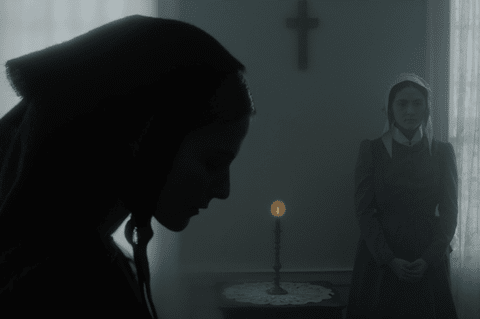
There have been a fair few gloomy period pieces floating around over the last few years, and though it’s somewhat beyond the scope of this review, it would be interesting to ponder why: what is it about oppressive religious belief and isolated family groups which has such ready appeal for writers? We can’t possibly hand every credit to the pandemic. But, for whatever reasons, the likes of The Witch, The Curse of Audrey Earnshaw and The Family spring to mind; The Last Thing Mary Saw has some similarities with these, but – despite early suggestions – it sidesteps the perhaps expected supernatural aspects, instead opting for a character-focused tale where any horror is equally attributable to them.

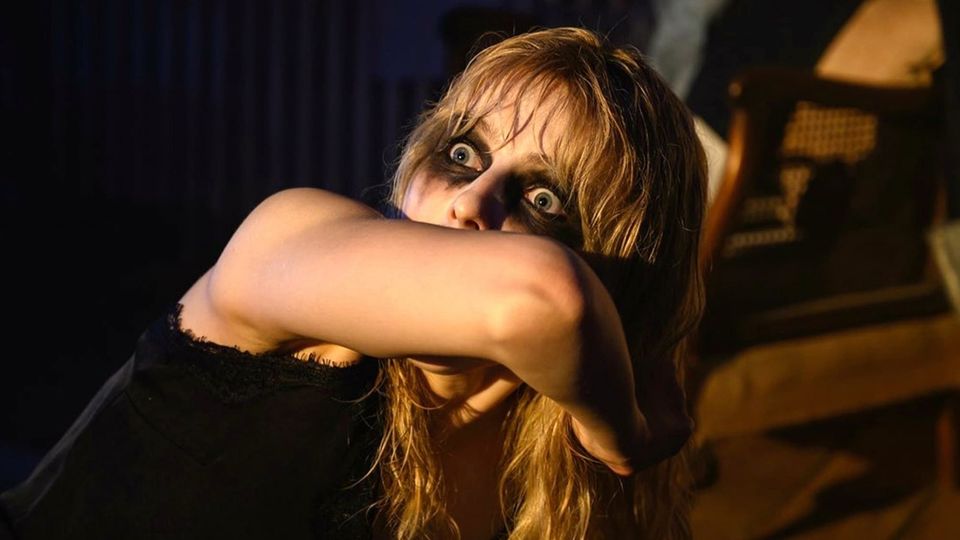
Early use of a quote by professional nerk John Calvin (“All events whatsoever are governed by the secret counsel of God”) clues us in to the brand of Christianity which is on offer. The year is 1843: in Southold, NY a young woman is brought before an impromptu court and executioner, charged with being in league with the Devil. It may have been relatively late for beliefs in witchcraft or secret covenants, but these kinds of things tend to persevere in remote or otherwise isolated communities, where there’s no fun or ease to wash them away. Things certainly look bad for the girl, Mary: she is blindfolded, but her eyes are streaming with blood. To test her affiliation or otherwise with Old Scratch, the men ask her to recite The Lord’s Prayer – something which those who have gone over to the devil were thought not to be able to do. Mary (Stefanie Scott) nails it first time. The men lower their loaded weapons.

So what has happened to her? Why has she been brought to this place, under arrest? The film begins to backfill her story, returning to the trial proceedings here and there. We first see Mary’s desperate parents asking for help from the family’s fearsome matriarch (Judith Roberts). Mary’s sin seems to be, ahem, fraternising with the housemaid, Eleanor (Isabelle Fuhrman, probably best known as Esther in Orphan). Unusually, and perhaps given the insular nature of this extended family group, they don’t just ship the maid off to an unwitting household some distance away, or marry off their daughter. Instead, they deem it fit that both girls should be punished. This only seems to strengthen the girls’ resolve, and they have to think more creatively to find time together – but it’s dangerous in a house where everyone seems to be lurking and watching. Their best efforts clearly have a limited timespan ahead, and so they have to escalate matters in an appropriately mood-laden, sombre way, of course.

Spying, surveillance and moral judgement are so strongly foregrounded in this film that they very nearly crowd out everything else: on the flip side of that, the film is also largely about the perils of curiosity, which in its way reflects the austere Christian values cherished by the family. Curiosity affects almost everyone here, and the film is rife with people peeping around corners, through ceilings, or rifling through items not their own. It’s fair to say that nothing particularly good comes out of any of it either, for anyone. Whilst taking lesbianism as a key plot point is an unusual one as much as it’s a somewhat thin one, the film is just as interesting in its treatment of class – because there’s no equality in the eyes of God here. Eleanor is treated mercilessly differently on account of her status in the household.

The film is chaptered, because every film which purports to have any moral weight seems to be – it’ll be as easy to age this clutch of films as it is to age someone by a tribal tattoo – but the importance of literacy and reading at least offers some links to this motif. Furthermore, there are lots of excellent stylistic choices which look good. This is a very tactile film, which lots of close-ups on hands. The period detail looks good – there’s lots of that soft candlelight which was front and centre in The Witch – and understandably, given the title, the film focuses closely on Mary herself. Stefanie Scott successfully enacts a look of barely-suppressed sadness and rage very well. Eleanor (Fuhrman) is good too, though they are more plausible as individuals than – crucially – smitten to the point of madness with one another. The sense of rapport does develop as the film progresses, but overall it’s a little tricky to accept, which is a shame, as so much hinges upon this.

Still, overall The Last Thing Mary Saw comes together very well. Whilst it does have aspects in common with other period dramas and horrors, it has a lot going for it in terms of its deliberate, morose pace, strong visuals and determination not to simply ape a gazillion supernatural yarns. It’s not what you’d call an uplifting experience – it feels a lot like getting rained on in a cemetery – so despite the fact that there just may be a small handful of pitch dark humour in some moments, there’s no real let-up in the gloom here, making The Last Thing Mary Saw a pretty effective slab of quasi-historical bleakness. Think the weightiest elements of The Go-Between mixed with Wisconsin Death Trip.

The Last Thing Mary Saw is out on Shudder from 17th January 2022.
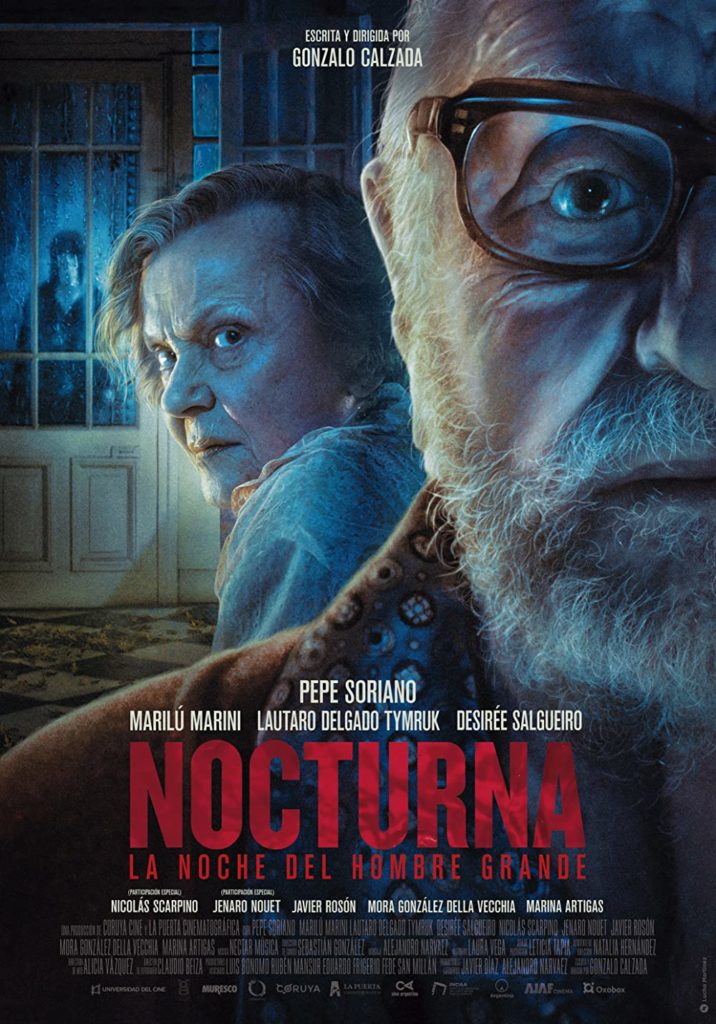
Nocturna: Side A – The Great Old Man’s Night & Side B – Where The Elephants Go To Die

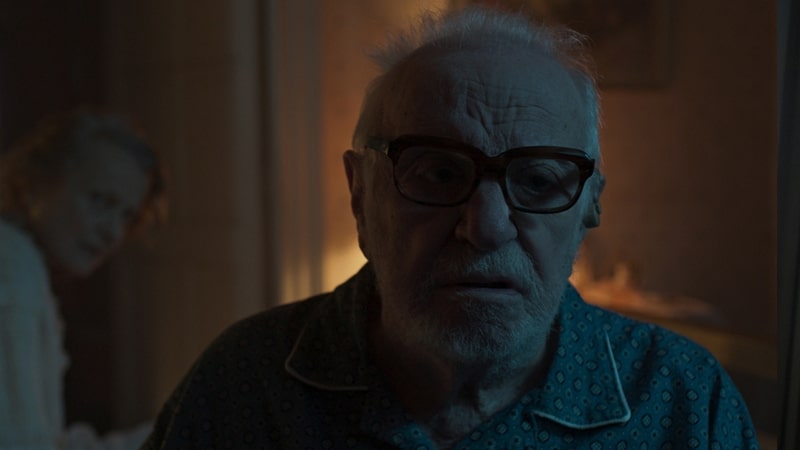
“What am I doing here?” – it’s a simple line, but this early line in Nocturna: Side A sums up the terror and disorientation of old age, particularly when old age is accompanied by dementia – something which the film excels at. When you are losing even the merest anchors of your identity, right down to the reason why you are stood in your own hallway on a particular day, then that is – without a doubt – true horror. The film offers up a terror of – and respect for – the vulnerability of old age, its recriminations and regrets, and it finds varied and unsettling ways to explore a ‘dark night of the soul’. This really is a staggering film, which left me inconsolable at certain points.

From the moment the film starts, then, particularly where it conflates the young boy with the old man, this film is minutely focused on the plight of an elderly man, Ulises (Pepe Soriano) – in his nineties, and now struggling with the details of the everyday. The sense of sadness and empathy is somehow immediate, the strained patience of his neighbour/superintendent self-evident when Daniel (Lautaro Delgrado) finds Ulises, dumbfounded, outside his door. The older man makes his way back to the apartment without the groceries he set out to get; his wife, Dalia (Marilú Marini) is irritated with him, but forgets this particular irritation to focus on a greater worry: that their days in the block are numbered, and that the housing association is going to find a way to get rid of them; they ‘don’t want old people there’. On a similar note, they both live in fear of intruders, thieves, anyone forcing their way into their home, a home which is their whole world. The world grows very small when you are elderly.

Both of these people are frustrated with their lot, but Ulises differs from his wife because he feels he has more left to do – he wants to live, he wants to put things right in the limited time he has remaining to him. He mentions an estranged daughter and grandchild; the memory of them reinvigorates him, but Dalia is scornful of them, and of him. However, for all this, it seems that their fears of their home being infiltrated by outsiders may be coming true when, in the early hours of the morning, there is a noise outside. Then someone begins hammering at their apartment door, claiming to be a neighbour in need. Ulises tries to handle this situation, but he can scarcely keep it together – he quickly grows anxious and confused. The whole thing becomes an ordeal, but as it unfolds, it reveals far more: what is real? Who can be trusted?

The relationship between Ulises and Dalia and the outside world is a sad, fractious and often frightening one: their anxieties impinge more and more upon their small sphere, and drive a wedge between them at times, too. But, in following Ulises closest of all, the film in some aspects reminds me of Death of a Salesman. Although Ulises is far older than Willy Loman from the Arthur Miller play, the sheer relatable nature of the tragedy of an everyday man, struggling with hallucinations and flashbacks as he reflects on his errors – the standard of observation is similarly acute, and the emotional weight is huge too. However, the growing emphasis on pure fright, with possible supernatural elements introduced, adds a particular, different colour to the pathos being generated. Ulises’ uncertainty and his inability to cope with someone trying to batter their way into his home reminded me strongly of my own grandmother who, as dementia took her, repeatedly claimed that someone was trying to break into her house. It frightened her but we brushed it off. Forgive the personal detail – this just feels like a deeply personal film, which I hope excuses it – but the film made me understand her anguish in a different way, and as such it’s quite the emotional gut-punch, and rightly so. It is scary.

The film retains its meticulous eye for the personal impact of ageing and dementia throughout; it’s unflinching, but it’s tender, and it achieves this from the very beginning with even the easiest moves (the close focus on Ulises’ face for example, and Soriano’s effortless performance, is enough to generate empathy). In a genre-busting piece of work, it also includes the great frustrations that ageing can cause to everyone affected. It can be maddening and frustrating – but making a humane film means you have to be honest about everything which makes us human. The film can be difficult to bear, it’s an agonising watch, and the addition of scares only underlines that, with an added complication to bring to bear on the key players.

Nocturna Side A is phenomenal, and certainly one of the greatest I have seen on this topic (if I may, I’d also recommend the short film ‘Ark’ by Grzegorz Jonkajtys; it’s another heartbreaker). Whilst it could absolutely stand alone, it forms part of a double bill: Nocturna B is being released alongside the first. As for Nocturna Side A, it is very definitely a recommended film, if with the proviso that it packs an unprecedented emotional punch.

Nocturna Side B: Where The Elephants Go To Die is, though, an oddity – one which doesn’t work except as an experimental shadow of the first film; it’s definitely no standalone. It covers the same timeframe as Side A, though taking a rather art-house approach to the characters and themes, revisiting them through a highly-edited and filtered array of alternative perspectives: shots zoom, frames jump, scenes repeat. A voiceover addresses many of the by-now recognisable themes, albeit it in quite abstract language (which is, dare I say, rather lofty, with a lot of hyperbole and platitudes). There’s a possibility that, given the sheer amount of voiceover used in Side B, some things have been lost in translation, which perhaps has an impact on how significant all of this feels. It’s not an unattractive film, but it’s a strange film, and it has none of the power or pathos of the first – its existence is a curiosity, all told. However, anyone wishing to observe the events of the first film refracted through a very different style and approach may find something to love here. For the rest of us, Nocturna Side A neither gains nor loses anything through the presence of the second part, and it’s Side A which deserves all the praise.

Nocturna Side A: The Great Old Man’s Night and Nocturna Side B: Where The Elephants Go To Die are available on digital from 18th January 2022 with The Nocturna Collection released on February 1st.

Beyond the Infinite Two Minutes (2020)

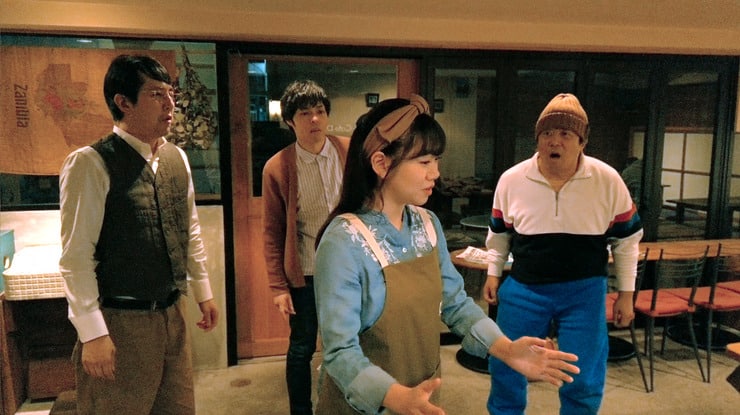
Most of the time, when a film engages with the theme of time travel, it tends to be a bit po-faced. Sure, it can be epic, but the basis of that is usually dystopian futures, mercenaries, world-ending wars and glimpses of horrific alternatives – and no, I swear I’m not just thinking of Terminator. It doesn’t need to be this way. It really doesn’t. Beyond the Infinite Two Minutes is the definition of a low-budget film; it has limited sets, a small cast and no flashy SFX whatsoever. And it doesn’t need any of that; it has the nous to present a wholly different kind of time travel film, though, which turns out to count for a lot.

We’re in Kyoto, Japan: café owner Kato (Kazunari Tosa) lives a simple life. When he’s not in work, he’s at home (he lives upstairs, so it’s a short commute) and he passes the rest of his time playing music. This is all well and good, and the film wastes no time establishing Kato as a kind of pleasant, harmless everyman – but things are about to get more interesting for him, whether he wants it to or not. In his flat, he sees himself on his computer monitor: he’s…downstairs, and apparently, addressing himself from the future. The lag between computer monitor and shop cam is two minutes, hence this is a whole two minutes ahead of the present. So Kato explains this to Kato, and then asks him to come downstairs. He does this, just in time to see himself, upstairs, where he explains this to the past version of himself…

Confused? Confusing? Will this loop go on and on? Never fear: somehow the film manages to steer the time travel aspects very well, and – as other people appear and discover what is going on, right down to conversing with themselves – they realise that they have Time TV on their hands. Time TV! Oh, the possibilities! All of this unfolding – with the characters in the film working out what’s going on at about the same rate that the audience is, with the camera acting like one of the gang – is a lot of fun, with a nice, engaging focus on the smaller details of all of these goings-on. It gives a different spin on more than a few very everyday social dilemmas, too, with future selves giving advice on what to do (in the next couple of minutes, at least). And this is where it begins to get more interesting; as people begin to think of new ways to play with their newfound skills, the scope for mishaps grows and grows.

This is a very cleverly put-together film with what feels like a very light touch, and I could be wrong, but I feel sure this took some fairly strenuous writing and re-writing, and it pays off. The story emerges very steadily, but the tone is always sparky and lively, and the presiding mood is glee – for the most part, anyway. This is an interesting thing that’s happened, and people want to play around with it. Of course they do. This film has a running time of just one hour ten minutes, and this is fine; it means that things never slip, or lapse into a dull middle chapter – there’s no time for that, and things move forwards in just the right way. The dialogue is very funny, too, losing nothing in translation, and the way in which that script unpacks the finer points of the goings-on is a joy in itself. It’s an aspect that’s normally wholly missing from any use of time travel. After all, as an example, would you not try to prank yourself, if you got to talk to yourself in the past?

There’s some peril, sure, and the film probably does need a bit of that to add some extra variety, but this is still in keeping with the rest of proceedings, sticking close to a comedy of errors. For all that, the film keeps something up its sleeve…a few head-scratching moments do occur, but overall, Beyond The Infinite Two Minutes takes a quirky, refreshing approach to its subject matter, and it’s a refreshing experience. Here we are then: a feelgood, low-key sci-fi, and a joyful tribute to some fine writing and acting. Thank god for wireless monitors, too: now they really are the future. Take a look at this film when it hits digital release – you’ll be glad you did.

Beyond the Infinite Two Minutes (2020) will be available on Digital HD and Cable VOD from January 25th 2022. Physical copies are available via Third Window Films.

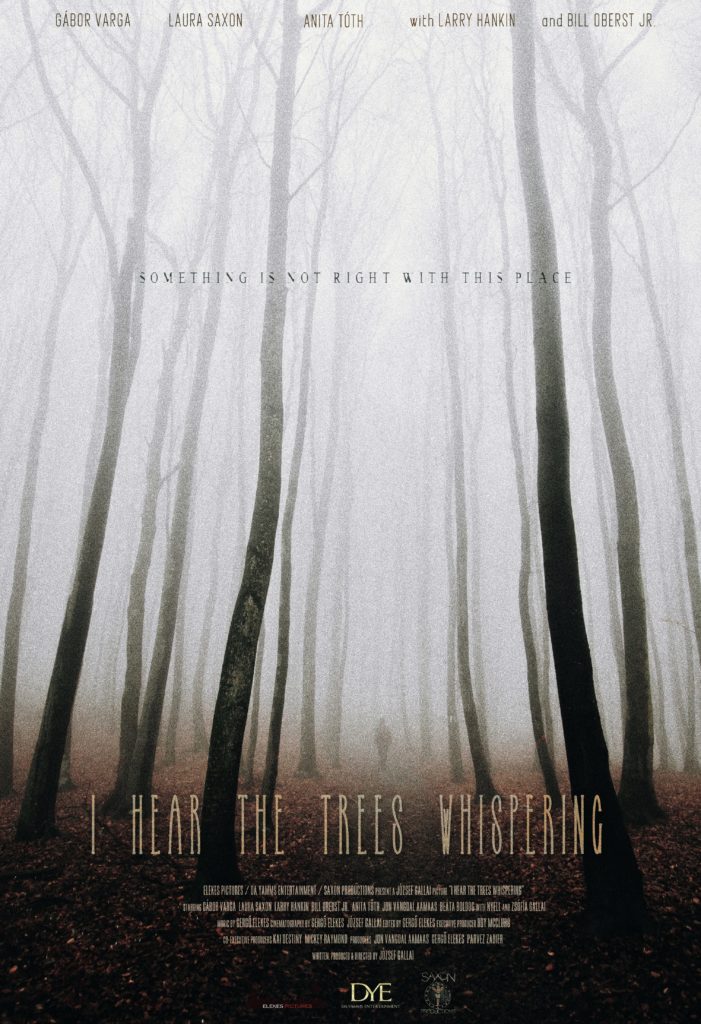
I Hear The Trees Whispering (2022)

I Hear The Trees Whispering is a strange experience. It’s certainly the case that there are ideas in here, but whether these land is quite another matter. The film comes off as a bit of a cut ‘n’ shut, with a first two thirds or so which comes across as a standard, and dare we say, tedious ‘found footage’ style film, though it slowly becomes apparent that there is something else afoot. The final act of the film moves into something else entirely, which is clearly intended to shed new light on the first hour or so. And does it? It does not. You have to build a very secure foundation to be able to launch into something meta, which simply isn’t the case here.

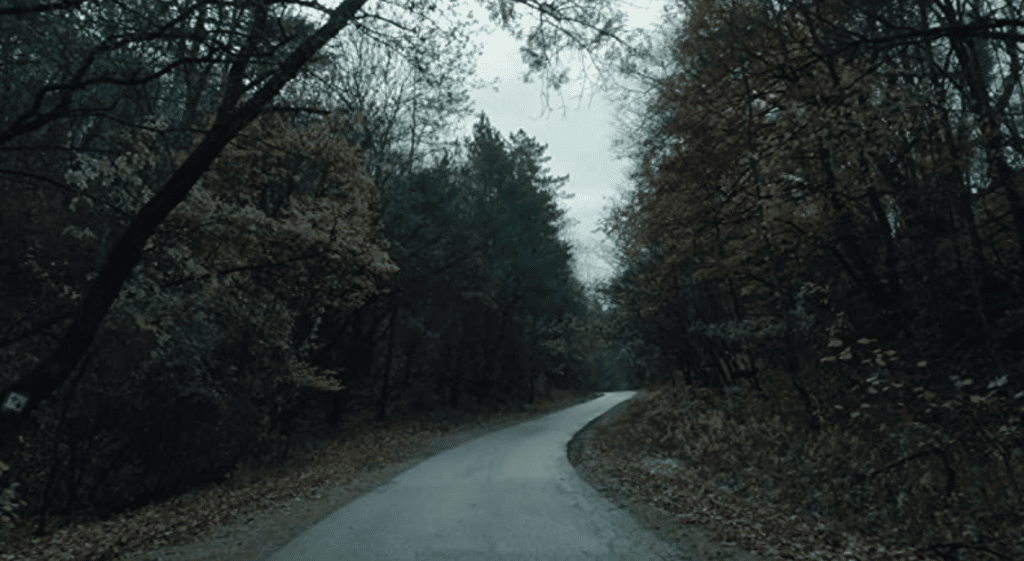
We start with a long, radio-accompanied car ride through autumnal rural roads (the film was made in Hungary, but is seemingly intended to come across as North America, at least to judge by the American English radio channels which the driver skips through, as well as an early mention of ‘mountain lions’. But then there’s a …castle.) It takes a good few minutes, but then we’re out of the car – no dialogue just yet – and tramping, tramping, tramping towards a cabin in the woods, all the time with a man’s eye view, which we will depend on for most of the rest of the film. He, our guy, eventually finds a key and heads into the cabin; it’s decidedly rustic, but with a hi-tech headset left for him on the table, which he immediately uses to contact someone. Through this, as he chats to what is apparently his new boss via the headset, we find out his name is Will, and he’s taken a new job here as a ranger. It’s a job which has, apparently, been vacant for well over a year.

In rather stilted accents (this is clearly someone speaking in a second language) Will (Gábor Varga) discusses his reasons for taking this job in the middle of nowhere: along the way, he takes it upon himself to be fairly rude to his (American) boss, June, perhaps guessing that he’s unlikely to get sacked? So far, it looks like your standard found footage outing, with someone incomprehensibly filming their every waking move as they wander around the woods, but there are clues that something else is going on here – even if these clues render the entire exercise pretty problematic, i.e. as you persist in seeing this as video footage, because this is what it seems like, you have to wonder how dream sequences suddenly crop up – but crop up, they do. These seem to be flashbacks to a happier time, a standard kind of family life which, for reasons Will will eventually elaborate on, are now past tense. We also have heavy use of title cards, six in total, which is a lot given the film runs for just over an hour and a quarter: as is by now usually the case, these just pause the film and pre-empt a few lines of dialogue for us, without offering any real reason for doing it.

During one of his interminable sojourns outside the cabin one day, Will hears a chainsaw: he investigates, and finds both the chainsaw and an abandoned rucksack. Hmmm. A bit of a mystery, but not one which immediately changes the course of the film: we’re soon nonetheless back to walking, driving, walking. Things eventually take a turn, though, as we glean, through the headset conversation of course, that a bad guy is on the loose and may be in the vicinity. Here, the film could have segued quite easily into horror – the ground work seems to have been done for it – but this isn’t to be, at least, not as such. We’re instead encouraged to see this event as a factor in Will’s soul-searching, as he gradually talks through his trauma and, later, we are launched into something entirely different, which elects to override everything up until that point as an event contained within another, framing narrative.

Films, whatever their shooting style, wherever they end up going, have to build a solid framework – a plausible narrative, plausible characterisation and an engaging script. Without these things, the minutes bloat and meander. I Hear The Trees Whispering first of all misses the chance to create any engagement between characters by reducing them to voices only – we never see either June or Will, so we resort to simply listening to them talk, and this isn’t zingy, or otherwise effective enough to hold attention. Language and intonation is an issue. It also doesn’t help that these conversations quite clearly aren’t taking place at the same time, or on the outside chance that they are, it certainly doesn’t sound that way; there’s no real relationship here, accordingly. Even given the ‘twist’, it doesn’t make sense that Will is clearly wandering through the woods for much of the film – that is the premise, at least – but you cannot hear him breathing, getting out of breath, or reacting in any way to his environment. He continues speaking over a cut in one instance, too, which may be intended to disrupt our expectations – if I’m being charitable – but just seems clumsy. And, having failed to establish a relationship between Will and the audience, it suffers even more once the shift takes place, and the same audience are asked to cast doubt on the already doubtful, i.e. everything up until that hour mark. It’s a big ask.

In terms of plus points, there’s no question that this is a very attractive locale, and the autumnal woodland looks nice on screen at least. I can oh-so nearly see what director József Gallai is trying to do here, but there are too many issues and basic mistakes for the twist to work; by that point, patience had long been exhausted, which, at a running time of 77 minutes, is not a good thing. It feels for all the world like someone had a brief window of time to make a film and just decided to go for it, script and plot be damned: this is the result. It’s a shame, as I quite liked his earlier film A Guidebook to Killing Your Ex (albeit with some reservations) but it seems many of the same pitfalls I noted then, are still present now.

Woodlands Dark and Days Bewitched (2021)

The phenomenon of ‘folk horror’ has been with us for some considerable time – you might argue for as long as storytelling has existed – but, at least in terms of folk horror cinema, there does seem to have been a real explosion of interest in the last decade or so. This has found expression in a spate of books, articles and other more academic pursuits, as well as in newer filmmaking, which perhaps has a sense of continuing this tradition. There’s even a certain amount of ubiquity to it all now, as interesting an area as it is. The documentary Woodlands Dark and Days Bewitched: a History of Folk Horror has set itself the mammoth task of looking at all of this – fandom and analysis – via looking mainly at film and TV. As you might imagine, there’s an awful lot to consider, and this is borne out by the sheer length of this film: at well over three hours, it’s not a casual sit-down watch, and its running time is its greatest sticking-point. Still, there’s no doubt that this is a love letter to an expansive, important and enduringly creepy genre, with plenty of care and attention shown throughout.

The first ninety minutes or thereabouts is the tightest section of the film: with a well-selected opening montage of scenes, it is quick to posit something which seems fairly well accepted, that folk horror represents the ‘return of the repressed’, with old ways and practices finding their way to the fore. As such, it has a clear shape and sense of direction at the start. It also offers a useful history of the term ‘folk horror’ itself, which is great, with lots of old newspaper articles and such which had likely been unseen by most people up until this point (reviewer very much included). The film then moves in a largely chronological way through the heyday of British folk horror cinema and the ‘trinity’ of films usually agreed on as seminal. It lingers on, for example, The Blood on Satan’s Claw and its nihilistic, jagged anxieties about sexuality and belief, offering interesting context from 1970s Britain and suggesting how contemporary events could have fed into the horrors being imagined.

Heading back in time to look at examples of both British literature and television, the film offers up a theme to which it returns several times: the importance of the land itself to folk horror. From here, it spreads its net ever wider, and begins to do what it does a great deal thereafter: reference a number of titles which are not widely known. There are simply scores of films, not just from the English-speaking world but elsewhere, and so many clips that these begin to feel a little overwhelming, even though the commentators always do a good job at suggesting reasons for their inclusion. The film goes on to walk us through sections on witchcraft, American folk horror, and finally, folk horror around the world. By this last section, which seems to operate as a catch-all for any other intriguing clips and themes which had or hadn’t been included yet, it begins to feel like a series of diminishing returns, causing a kind of snow-blindness to all the slinking witches and shadowy rituals. You can have too much of a good thing.

Woodlands Dark and Days Bewitched certainly has an impressive roster, with Lynda Hayden and Ian Ogilvy on board for poetry reading (!) as well as a serious array of talking heads, going beyond just the usual suspects – taking in, for example, Geraldine Beskin, proprietor of the Atlantis Bookshop; Alice Lowe, Pete Tombs and Jeremy Dyson. Other speakers are other authors, directors, actors and presenters, and amongst these, writer Jonathan Rigby comes across as particularly listenable and knowledgeable, with a knack of conveying what he has to say in a very straightforward manner. The film’s director, Kier-La Janisse, also appears in the film as well as providing some voiceover in places, though the film keeps this to a minimum and usually lets the footage speak for itself.

The film is undeniably well made, not just busy with clips and commentary, but also collage and animation sequences, plus a great use of fitting dark folk music and recitation to add some texture to proceedings. It’s chaptered, but in this case, this absolutely has a purpose; you could suggest that, particularly once you get to the catch-all Chapter 7, this may have worked better as a standalone documentary with more of a shape and sense of direction, and this approach could have worked as well in other parts of the film, too. But, as it stands, these are useful points to pause and really do mark a shift in focus.

Whilst a late claim that folk horror’s appeal stems from its links to what cannot be analysed – given we have three hours of the analysis of folk horror here – might just raise an eyebrow, there’s a lot to admire and enjoy. If nothing else, you will come away with a whole list of obscure films to seek out. Given the amount that’s gone into this film, it’s difficult to call it anything but definitive, all told.

Woodland Dark and Days Bewitched premiers on Shudder on Monday, January 10th 2022.

2021: the best short films

It’s been said on the site many times before, but it’s a real shame that short films are so rarely seen outside of the festival circuit. I would certainly welcome compilations of short horror films – these could quite easily be organised by theme or subgenre – and it’s surprising that these kinds of compilations come along so rarely, particularly given the modest successes of the ABCS of Death some years ago. The moment seems to have been lost, it seems. It’s a real detriment to film fans that short films are not more seen – and appreciated, because they are often able to convey something novel in ways which often elude feature-length productions. This year has seen some superb, pithy, imaginative work: here are some of my favourites from this year.

TROPAION

Tropaion is a testament to atmosphere, establishing a grim dystopia where people eke out an existence according to draconian rules. The word itself – from which we derive our word ‘trophy’ – means a battlefield tribute to victory, to which prisoners would be attached. It seems that in the world of the film, some terrifying presence in the woods requires sacrifice. Amidst all this, a young girl is dedicated to the care of her brother – they are alone and unsupported in this bizarre world. It is a very stark, very beautiful film for all that.

HABITAT

The horrors of technology have permeated horror in the last couple of decades, and Habitat plays with our apprehension about an online existence (particularly where this replaces real, face-to-face interaction). In Habitat, a man works tirelessly to generate clicks, at the behest of an array of adverts and notices which flicker across his computer screen. If he can just get to 100,000 clicks, then…then? The promised prize must surely be worthwhile. Well, it’s quite something, as the film deviates into something altogether more surreal than it begins. An unseemly, sinister piece of filmmaking by first-time lead director Jaime A. Calachi.

ARIA

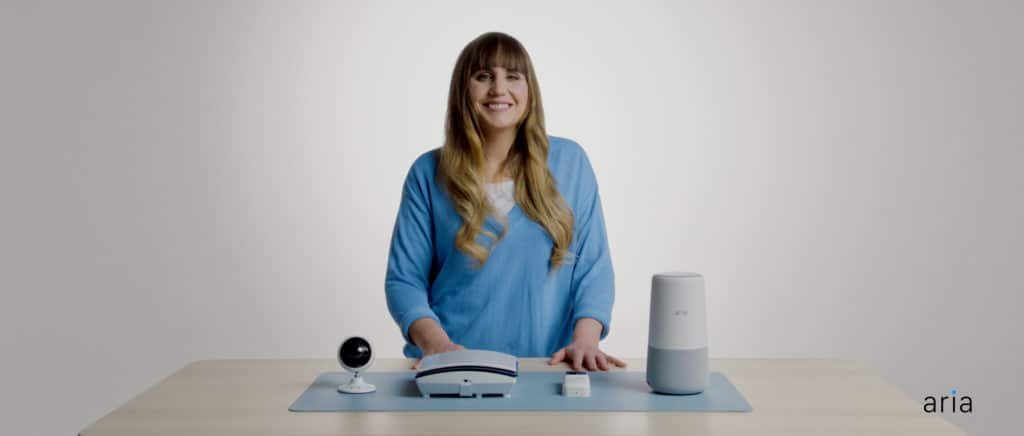
More techno-horror here, though with a few flashes of humour to break up what is otherwise a pretty unsettling premise, and one which, again, is recognisable. Installing a new voice-operated home system (think Alexa), young couple Jenny and Tom are content with it – at first, before the ‘smart security’ set-up begins to act like it has a mind of its own. Soon, Tom is certain there is something very wrong with Aria. With a strange and unsettling conclusion, Aria manages a good balance of observational humour and an escalating feeling of dread.

LAIKA

Let’s be clear here: Laika absolutely broke me. Not to be confused with the animated short film of the same title, this is a horror-infused piece of sci-fi which takes as its premise the real life story of Laika, the dog sent into space by the Soviet Union (and left there to die). Adam Fair’s short film not only underlines the slow torment of this, creating real pathos, but adds in an ending to this story which is utterly redemptive, even if shocking. A young boy, with his father, watches the launch; as a man, an astronaut, he must flee an explosion on the ISS – where, in his fractured state, he is confronted with his country’s past deeds. Absolutely riveting, heart breaking stuff.

THE LOVERS

The great thing about Avra Fox Lerner’s short film The Lovers is in its effortless-seeming storytelling. The friendship between the key players, Hazel and Andy, is entirely natural and plausible; the situation which unfolds outside the home is equally charming and the pacing throughout is excellent. I have read reviews by writers who said that they guessed the twist here; I must say I did not, and in any case I thoroughly enjoyed its engaging treatment of an age-old horror trope. A very female-centric story which teases out a few anxieties and fine details in its relationships, to say the least.

THE LAST MARRIAGE

Another relationship drama via a horror theme, here, and it’s probably the closest any of the films on this list get to light relief. The Last Marriage concerns a married couple living as well as they can in a post zombie apocalypse scenario. They get on with things okay, or at least it seems so: turns out, though, that being trapped in the house with the same fellow human being can be a bit of a bore. In fact, divorce could be on the cards. The Last Marriage is a darkly funny, grisly, entertaining film which also conveys some nicely-observed points about long term relationships, even if the situation is an extraordinary one.

YOU’RE DEAD HELEN (T’es morte Hélène)

This film manages to run the whole gamut, from very funny, through to some scares, and finally onto something rather moving. Max (Théophile Roux) is being haunted by the ghost of his girlfriend. As time goes on, he becomes increasingly frustrated by her presence, and decides he has to move on – an idea which is not exactly popular, particularly when he heads out on a date with someone else. As the film unfolds, it reveals to the audience what created this situation, and so the film goes from one mode to another, ending on a genuinely poignant note. Charming performances, too.

THE TENANT (Inquilina)

Some of the finest short films are successful because they understand the power of economy, and The Tenant is definitely one of them. I adore it for its great simplicity, done brilliantly well and delivering a note-perfect punchline. When Mia wakes up one morning, her leg feels…odd. It’s numb, and she struggles to move around. As she’s making her way down the street later, a woman approaches her and tells her that her leg feels this way because something has attached itself to her. Thinking the woman must be mad, Mia dismisses her – but begins to wonder. With not a wasted second, The Tenant is a subtle and effective horror story.

STANDING WOMAN

We started this feature with dystopia, and we’re going to end it there. In the very modern, very everyday world of Standing Woman, it’s been decided that, rather than being imprisoned, those who offend against the state will instead be requisitioned and turned into plants – which is better for the environment, see. It’s a bizarre, unsettling idea, but in the world of the film it seems that most people are all for this measure; it takes very little time at all for people to begin persecuting those going through the arduous, unpleasant process, either, as they are essentially permitted to see these criminals as lesser than human. The film focuses on a young couple who are torn apart when Mari is found guilty of a crime, and sentenced. Her struggle to hang onto her humanity is incredibly chilling and affecting; it’s definitely one of those films which sticks around for a while, creeping back to mind when you least expect it.

Interminable: The Wheel of Time

Amazon is not an organisation known for its tight budget, so it was no surprise to find out that its recent exclusive TV series The Wheel of Time – according to some sources – has cost an eye-watering $80 million to make. Based on a series of so-called ‘high fantasy’ novels by author Robert Jordan, some might suggest that these were never a good candidate for adaptation at all. With a vast array of characters (numbering in the thousands!) and a kind of world-building which apparently hovers between impressive and derivative, it stands on the brink of alienating Jordan fans, and not winning over anyone else, who might well see The Wheel of Time as Game of Thrones without the fun. It turns out that yet another world of monsters and corsets isn’t as diverting as you’d hope.

For the record, I’m in the latter camp; I haven’t read the Jordan novels as they sound horribly overbearing to me, and the moniker ‘high fantasy’ almost always makes me think of the unpopular kids who tried to choose their own nickname. What’s high about this, exactly? The ‘high’ aspect is, apparently, meant to designate all the monsters and corsets as somehow speaking the truth to power, a symbolic slab of world-building which calls to higher, deeply human truths. Appreciably, the term may be more the work of fans than the novelist, and in many ways this series wasn’t really intended for me, but it still begs the question: what is the higher truth here? What wisdom does The Wheel of Time endow which sets it apart from the rest?

Here’s what I’ve seen, by seven tedious episodes in and with one to go. There’s a journey of some kind. Tick. There’s the suggestion that, through fate – tick – five young people in a remote village could be the ‘Dragon incarnate’, which means that they will at some point in their near futures have the choice to either make or break the world as they know it. We don’t know which of them is the Dragon, and sadly it seems that the term ‘Dragon’ is being used symbolically here, which has so far deprived the series of a bloody good, great big monster to quell the tedium; even the final season of Game of Thrones, shorn of plot, at least had a real, city-felling dragon. Hope is now dwindling for this in The Wheel of Time. But anyway, a mysterious magician – tick – has ridden into the village promising to help guide these young people – even if she can’t tell who, exactly, is the fated one out of the five of them – on an Unexpected Journey. Tick. This journey is prompted by a heinous attack on their sleepy hamlet by some critters called trollocks, sorry, trollocs, NOT orcs, and stop laughing at the back, Brits. So off they go, getting split up, getting back together again, and that has taken no insignificant amount of time.

What can possibly justify this effort? Rather than a higher truth, what this looks like is a basic re-tread of Lord of the Rings – and that’s one thing which could quite easily be done without.

Fantasy writers so often seem to settle into the same pattern, the same clichés, and I say that as a (primarily) horror fan who has lived through the found footage era. But, even that churned up some more variety than a hell of a lot of fantasy, high or bloody otherwise. Tolkien probably never intended to spawn a thousand bedroom writing projects from bearded and/or braided people who often hold his work in higher esteem than any religion, but he has, and he’s established some by-now incredibly worn trammels which no one seems to really question, or even mind all the repetition. The fantasy genre so often seems to present a kind of Medieval Europe with funky add-ons, hanging onto a predictable array of accessories – buxom wenches, tyrannical knights, sword battles, cloaks, awkward afternoons at the tavern, a pre-technology hearthside or two – but augmenting them, perhaps taking the rather more historically-dubious claims of wyrms and witchcraft from real manuscripts and making them flesh. Medieval Europe was Christian, and the hangover from that is a long one: there’s usually some diabolical figure of chaos who threatens the world, like that lad from the Bible, and some mortal force for good to push back – ditto.

In many ways, fine, there’s space for this kind of storytelling, it’s as old as the hills in fact, and in many ways this forges an interesting link between the hazy world of early European history and a modern, limitless filmmaking which can paint something really grand out of all that. Certain series exceed these trammels because the character writing is so good – think The Witcher. But: if this re-treading is happening over and over, with newer incarnations each seeming successively rinsed of novelty and characterisation, then it’s time for a change. The Wheel of Time is guilty on both fronts of this weak, derivative storytelling.

The first issue is that it is practically impossible to care about these would-be Dragons. They are personality free zones, collapsing under the weight of their names, which each read like a bad hand at Scrabble – with the exception of the unusually pedestrian name of Matt, or ‘Mat’ for one of them, but (spoiler) he seems to be a bit of a bad lot, as you’d expect with such a common name. Matt? That’s a name from the local paper, if ever I heard one, whether you drop a ‘t’ or not. If in doubt when naming, bang in a few vowels; that makes names more exotic, apparently. Each of these people seems to be dressed exclusively in ethically-sourced cotton, they’re all wild-eyed with a lack of understanding, and they each do a manageable number of stupid things per episode as they proceed on their journey. Ostensibly there to guide them to what look an awful lot like the Oblivion Gates from the Elder Scrolls is Moraine Damodred, a member of the equally voweltastic Aes Sidai, which is a female-only magic organisation. Yes, it’s progressive, as only women can really do magic, but ‘progressive’ here seems to mean ‘what we give, we take away’, which isn’t really all that progressive at all.

For starters: the magic itself is a bit hit and miss. It’s rare, mostly insipid and bloody dull to watch when it is there. It seems to entail a hell of a lot of effort to generate a few wisps of cobwebby Forces, or do some suitably feminine healing: any more than this and the spellcaster seems utterly incapacitated, just like a fainting maiden who has over-exerted herself by looking out of a window or trying to dress herself, or something. The other, younger women, when not fighting with every bit as much physical strength as the bigger, heavier, more muscular males in the story, natch, are also capable of this magic, but again – it’s hit and miss. On a similarly progressive note, clearly a lot of time and care has been put into selecting an ethnically-diverse cast here, and that’s fine: there’s no sense or purpose in quibbling over the ethnic makeup of a society in a world where wispy magic exists.

But what is given, is taken away: why, then, do the only Irish accents in this belong to a band of itinerant tinkers? Is that not a stereotype, one which a large proportion of Irish people would like to query? Some stereotypes, some omissions, some creative decisions are more resilient than others, and they’re left in there, because deeply cosmetic priorities are endemic at this stage. Similarly, the Aes Sidai aren’t really allowed to fraternise with menfolk unless it’s in the form of the woman’s personal steward – think Tails scampering after Sonic – but they are allowed to have sexual-ish relationships with other women; we get to see a bit of that. This is progressive, see, but then they seem to rely on their stewards to travel anywhere; admittedly, the resilience of da patriarchy is openly discussed in the script, but it’s still in there, even in this particular fantasy, and unaddressed in any depth. It seems relevant that the Aes Sidai ‘cannot lie’, but they are free to bend the truth; that’s how the whole series to date feels; this is an attempt to do something with due diligence which nonetheless relies on twisting that into a recognisable form, whenever it’s expedient.

Rosamund Pike, saddled here with the lead role and the task of précising an unwieldy amount of back story, simply cannot do her usual, metaphorical magic (I would also question how the hell something can cost millions of dollars, but a bad wig still look like a bad wig; now this is the tale as old as time). Her presence on-screen to some extent helps to corral some kind of purpose and personality out of her young charges, but she’s not infallible, and her character often looks as perplexed by their torpor as many of us must surely be. Once you’ve zoned out of the pretty scenery, there is almost nothing of quality here, and what’s left is just a slab of Amazon TV filler, both overly busy and empty, a paragon of more money than sense.

The Wheel of Time is a plodding, derivative and toe-curling fantasy series which will win the novels no new devotees, and may put off a few existing fans, though Serious Fans will probably just enjoy seeing characters and places from their favourite books rendered in 3D. Good for them.

That time again: Keri’s favourite films of 2021

Anyone feeling a sense of deja-vu?

Well, if at the end of 2020 anyone optimistically thought we’d be back to some kind of normal by now, it seems – sadly – it’s not yet to be. And perhaps it’s never to be at all…that’s not to suggest that we will forever be completely under the sway of a cycle of virus outbreaks and lockdowns (god forbid) but it’s hard to imagine a time when various health authorities decide they needn’t be concerned with Covid variants or their implications anymore, either. So, this might be a new cycle of relative freedoms and relative restrictions, a time when the winter is most likely to see us ousted from cinemas and film festivals, and who knows? The concentration of horror film festivals around Halloween might become a kind of de facto end-of-year party before the coldest, darkest months limit what we can feasibly do.

But never mind what might happen: what has all this meant for film fans in 2021?

To start on a positive note, it’s meant the absolute pleasure of a return to seeing films on the big screen, which has absolutely had an impact on at least two of my favourite films of this year, and maybe a few more of them, too. No one watches anything in a vacuum, after all, and after a period of months away from the cinema, it was genuinely really exciting to be back. Film festivals themselves have largely operated under a blended system again this year where online passes have been offered alongside in-person viewings, even if the latter have had to be limited for social distancing reasons. This has worked very well; there will always be an appetite for in-person fests, but there have also long been reasons that many interested parties have been unable to attend in person, so in some respects – despite the extra work for organisers – this has worked out pretty well. As for films themselves, a few big blockbusters have yet again been delayed, if not by Covid itself, then by the potential knock-on effect which makes promoters fear for their profit margins. Streaming services have been getting hold of new releases a lot more reliably, but then that has its own knock-on effect, right to the highest level.

At the other end of the spectrum, it’s perhaps inevitable that low-budget cinema, especially horror, has been shaped by the pandemic, and these effects are clustering in two main ways. Firstly, I’m thinking of the sheer number of films ‘made under lockdown’ and as such boasting next to no cast, an often hastily-assembled plot/screenplay and deserted locations. Secondly, it’s not as if horror has ever been averse to using the theme of contagion, but that has still escalated in the last year or so, as the real-life situation has fed into, and been transformed by, horror storytelling. This is understandable, though there’s been a minor wave of very similar stories, potentially meaning the best of these have been submerged under the rest. Them’s the breaks when you opt in, by accident or choice, to a response of this kind.

However, the calibre of films at some of this year’s festivals has so often been exceptional: whether made during a lull in the cycle of lockdowns, or a while ago, but finally seeing the light of day in 2021, there have been some truly creative and worthwhile films out there. Many of these missed out on a general release and played at festivals only: in this case they are well worthy of seeking out, and I hope they get the decent releases they deserve. Others managed to get a general release, and more power to them. Here are my favourite films of the year.

10: A Quiet Place: Part II

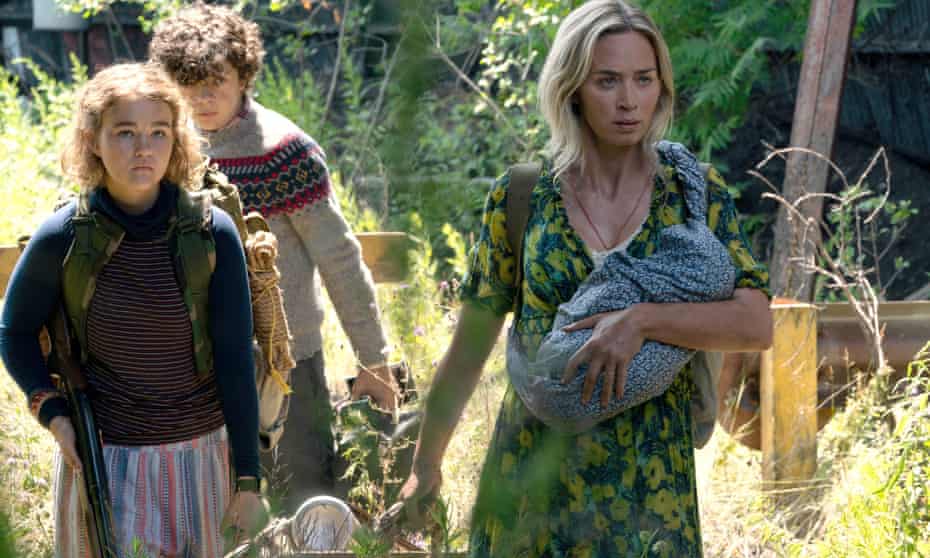
As mentioned, this was one of the films I managed to see in a conventional cinema setting, something which felt like a rare enough treat when I did it. But for all that, this sequel is a very competent, tense, well-delineated film which hands us some of the back story from Part I without compromising too much on the mystery of it all. If it has any lessons – not that it’s there to moralise – it’s to point out just how suddenly life can change forever, on whatever scale that might be. A Quiet Place: Part II is a great survivalist story which picks up seamlessly from the first, expanding the universe and giving us some much-appreciated context; it’s a great monster movie too. Out of the minor wave of sensory deprivation horrors which came along in fairly close succession, it’s certainly the best, and it’s gratifying that there should be another (final) part to this story coming soon. You can read my full review here.

9: The Green Sea

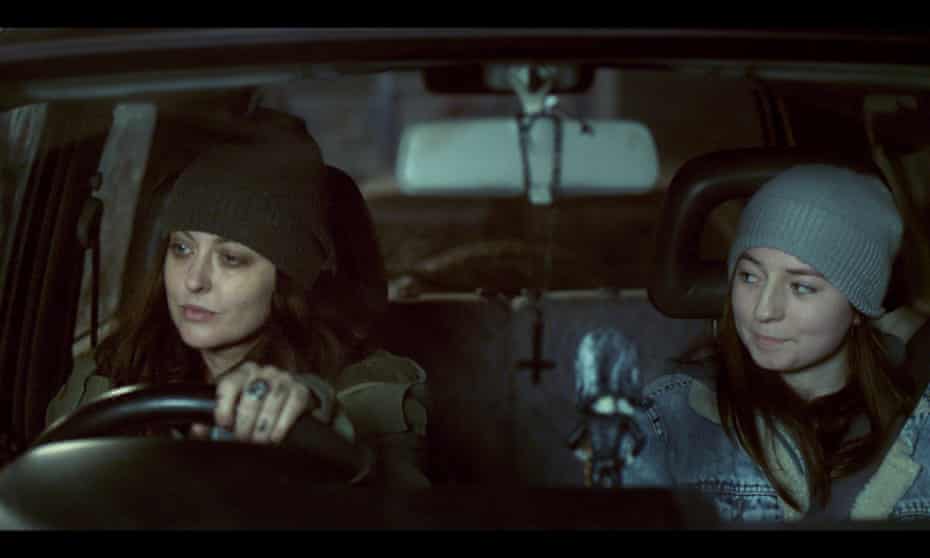
The Green Sea could so easily have been one of those films which offers just too little conventional structure to really engage the viewer, but thankfully that isn’t the case in this studied, cautious and ultimately sensitive story: if it keeps a few secrets, then you can all the same feel sure that there is some order at work here, an order which ultimately impacts upon the character of Simone – ably played by Katharine Isabelle, here a hard drinking, often vicious and damaged woman who has isolated herself from the world for reasons at-first unknown. When she gets behind the wheel one evening, drunk, and hits a little girl, she panics, taking the injured girl home with her; they begin to form a bond, and it seems that this girl has come into Simone’s life for a purpose. Shot in beautiful parts of the Republic of Ireland, The Green Sea utilises its remote setting and charming, if self-destructive lead actor very well; it’s hard not to be moved by the end. You can read my full review here.

8: Censor

Looking back on the year that was, I half feel that Censor’s success has in some respects worked against it; it’s after all an entertaining, lurid film which can be enjoyed as much on those basic terms as it can by being refracted through rather conflicted articles in The Guardian, social media saturation and cinema screenings upon cinema screenings. If you’ve yet to see it – if you weren’t at any of the screenings, perhaps – just know that it’s an engaging skit on the role of the film censor, with its lead character, Enid (Niamh Algar) getting increasingly drawn into a dark, shady world where – as the rumours always went and always will go – there’s real murder in them video nasties. Weaving personal tragedies into her quest to find out the truth, there’s an overall decent balance of Enid’s characterisation to practical gore whilst the film, a love letter to analogue tech almost by its nature, still looks great with good lighting, framing, splatter and trippy, nightmarish scenes. There are nice details throughout, too. You can read my full review here.

7: Vicious Fun

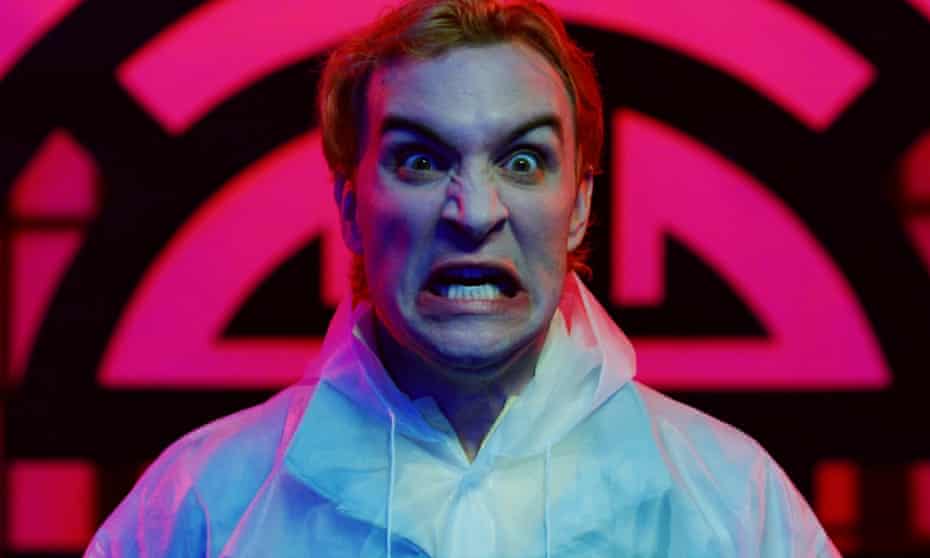
Vicious Fun deserves its place in this list for several reasons, but just to start things off: rarely has a film so lived up to the promise in its title, and also – it has Ari Millen in it, which is always a reason to sit up and pay attention. He has a subtle kind of magnetism (though sometimes not-so-subtle, see above) which makes him a great bad guy, and he plays a great bad guy here. The premise is this: Joel, an unlucky-in-love horror journalist (perish the thought) has an unrequited crush on his housemate, Sarah, and decides, in his wisdom, to trail the good looking guy she’s stepping out with, hoping to find out that he’s a bad ‘un. It’s a bad plan, made worse when he follows Sarah’s beau Bob (Millen) into a bar, gets utterly, accidentally drunk with him and then trapped in a cupboard until after hours. Well, we’ve all been there. But when he emerges, he realises that Bob – and some others – are there for some kind of group meeting; the question is, what exactly are they there to discuss? A lively, well-paced comedy of errors, Vicious Fun manages that tricky balance between gore and comedy very well; it’s a skill which eludes many filmmakers. You can read my full Frightfest Glasgow review here.

6: Last Night in Soho

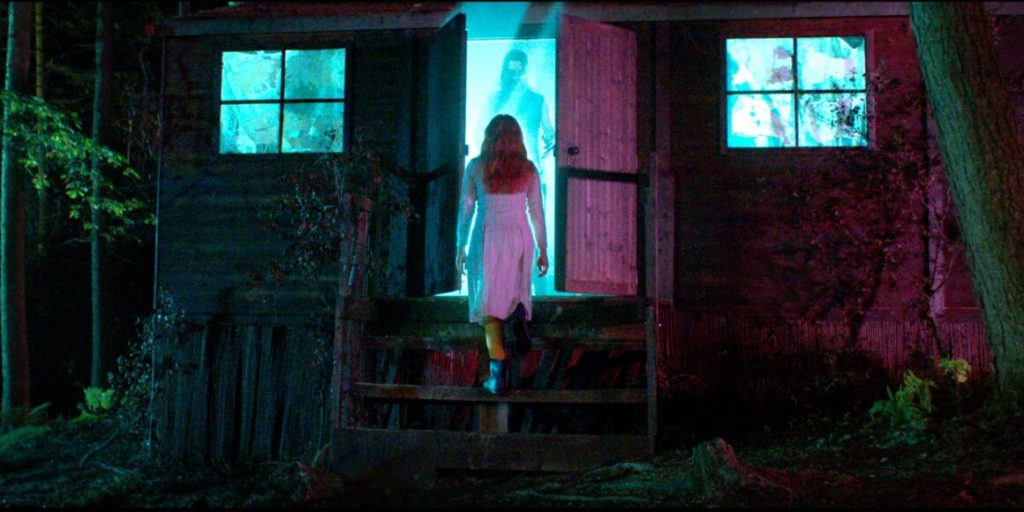
I wasn’t sure if I was going to like Last Night in Soho, as 2021 has seen me reach a certain saturation point with nostalgia, but it did at least have a different kind of nostalgia at its core. Indeed, the 1960s London which is weaves together is carefully done, looks gorgeous, and works brilliantly as a mirror image of today’s Pret-saturated London, always retaining its mystery and danger. It also plays with conventions of supernatural cinema incredibly effectively, and once it gets past its neck brace-inducing nod to Me Too, it’s a far more thoughtful, often brutal story of a past which leaks its way insidiously into the present. Superb acting, a story which would no doubt yield new surprises on repeat viewings and a real feast for the senses, Last Night in Soho absolutely deserves to be seen and enjoyed. You can read my full review here.

5: Dune

Dune is every inch the blockbuster, has a budget which would certainly dwarf nearly all of the other films on this list, and as such, may feel like an odd fit here. It’s also been a while coming, what with concerns over the film not recouping its budget, so in many ways it’s at odds with films of lower budgets which have been pushed into distribution as soon as humanly possible, but let’s not get too mired in a discussion about the impact of Covid on profit margins; Dune, directed by Denis Villeneuve, is an absolute masterclass in how to get a multi-layered fantasy of this kind done and done well. Of course, David Lynch, albeit dogged by difficulties, made a version of the same story back in 1984: I’d go toe-to-toe with anyone who declares that this is a bad film as it certainly has its own charms, but Villeneuve – unhampered by the expectation that the entire story had to fit into one movie – has handled his subject matter differently, both showcasing great skill at rendering a multitude of worlds, peoples, languages, cultures and beliefs cogent, and also detailing his individual characters in a sensitive way which makes their journeys, if you’ll pardon me that overused buzzword, significant. For a detailed article on Dune from a huge fan of the books and as such Warped Perspective’s resident authority, check out Helen’s feature here.

4: Martyr’s Lane

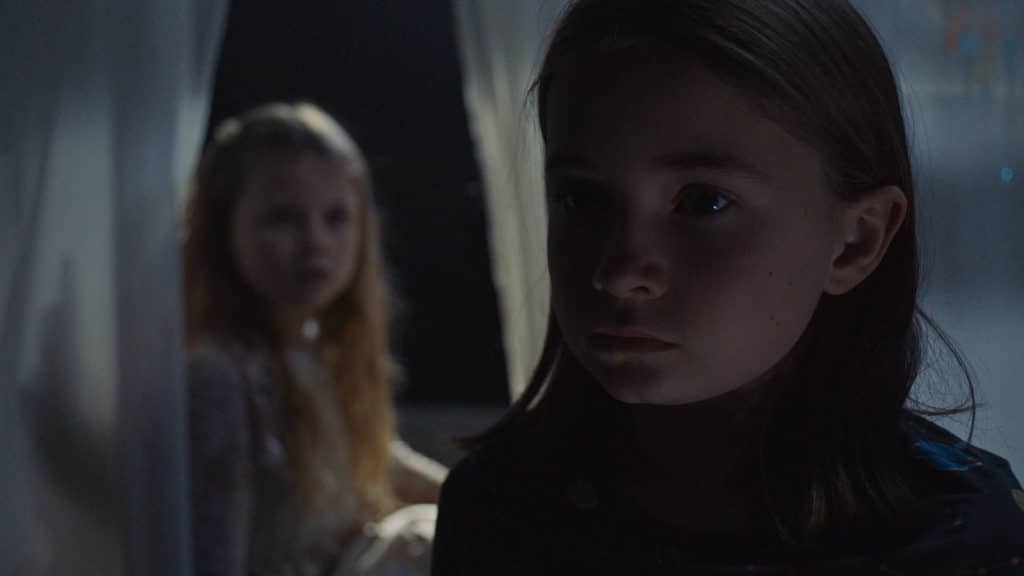
Having had time to reflect on Martyr’s Lane in the time since I viewed it, I can honestly say that it has stayed rather uncomfortably with me – in some respects for personal reasons, as its particular exploration of childhood fears and losses hits very close to home indeed, for reasons I’ll leave off the internet – both to avoid spoilers and to avoid that whole mea culpa thing. Perhaps that’s something quite specific to me that other viewers wouldn’t get, and I understand that. But beyond that proviso, Ruth Platt’s storytelling really effectively skates the line between a careful, sensitive exploration of childhood loneliness and a very menacing tale of the supernatural. For all that, its supernatural elements are not presented to the audience as inherently malign: it’s just that all the child characters here, played with immense sophistication and pathos by young actors Kiera Thompson and Sienna Sayer, want something more from the adults in their lives. The strained, almost unbearable tension at home yields up its truths on a child’s terms: clues are left, knowledge is shared, and grown-ups only slowly share their truth. This is a well-paced and well-made film and if you want to support female directors and writers, may I suggest that this is a fine place to do just that. You can read my full Fantasia 2021 review here.

3: We Need To Do Something

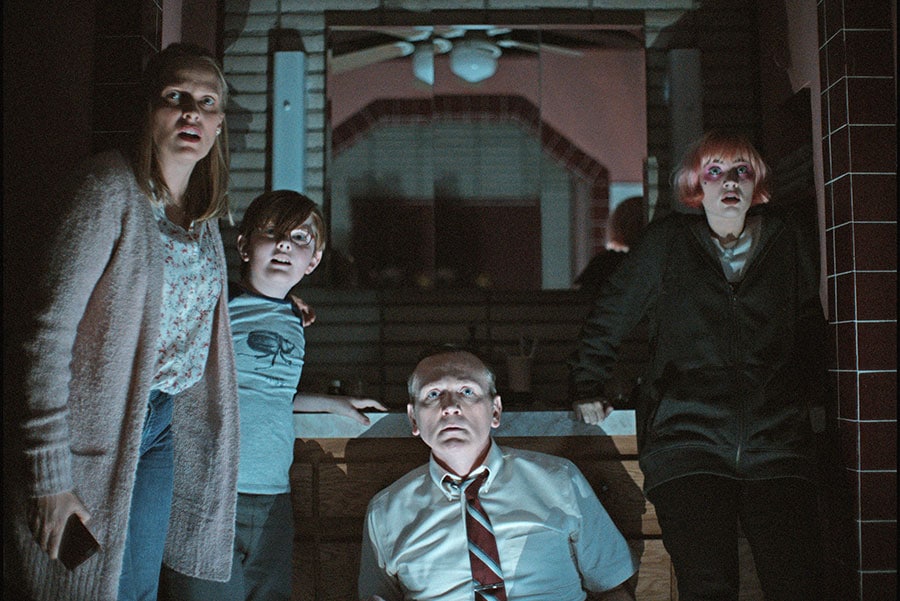
Oh, man. As I said when I reviewed this film after Celluloid Screams, it takes some real chops to get away with setting your entire film – by and large – in one room, particularly when that room is the family bathroom. But, through a pacey unfolding story which segues from what could simply be isolation+extreme circumstances into something quite, quite different, We Need To Do Something is never dull. Not at all. It’s effective because it has the confidence to play with its time frame, doling out, little by little, an incredibly overblown, incredibly dark back story for the events which are now unfolding. Everything connects well, and new context is provided for scenes and conversations we’ve already seen; add to that a jet black sense of humour and some absolutely disgusting gore and you might just have yourselves the perfect midnight movie.

2: Possessor

The realisation that Possessor took up residence in my brain less than a year ago troubles me. I went back and checked the dates; I went back again and looked at last year’s top ten films, as I knew it would be on there if I’d seen it in 2020. Not a bit of it. This is a still relatively new film to me, then, but it has indelibly burned its way into my synapses in a very suitable way, given the subject matter. It’s everything I cherish in good, dystopian sci-fi: a recognisable world, in many respects our world, but with a key twist which places all of the key characters under significant, terrible pressure. In his work thus far, director Brandon Cronenberg has focused on loners, people on the periphery of normal life; Syd March in Antiviral tries to exploit his unique position as someone with access to an array of do-little celebrities which his society fawns upon, and it backfires horribly on him; in Possessor, Tas (Andrea Riseborough) moonlights as an assassin, so we have another shady character, but she does it by temporarily obliterating the selfhood of others, occupying them and manoeuvring them to do her work. Such an assault on the self is bound to go wrong, and it’s no spoiler to say yes, Tas finds herself eroding under the weight of her role, as does everyone else in contact with her – whether in contact willingly, or otherwise. This is a stone cold piece of filmmaking and please, let it not be another eight years until Cronenberg makes another one. You can read my full review here.

1: Mad God

Mad God is a film which has languished, partially completed, for (and this is no exaggeration) decades. Three decades. In fact, it’s pretty amazing that it’s ever made its way into a finalised form, as it could so very easily have stayed on the shelf forever. A little context: this stop-motion animation is the horrible, horrible brainchild of Phil Tippett, the SFX maestro who has been behind the likes of Star Wars, which I gather did alright. But the shift towards CGI in the early Nineties convinced Tippett that the film would never find an audience, and so he reluctantly left the project alone, only rekindling it in the 2000s when Kickstarter became a viable funding source.

The resulting film is a vivid, repellent, mesmerising slab of fantasy where an explorer is deposited on the surface of a monstrous planet (Earth? An alien world? It hardly matters). This is, however, just the first piece of visual trickery which the film has to offer: Mad God constantly plays with scale and threat, one moment the explorer dwarfing the creatures around him, the next appearing as a speck against the gargantuan statues and structures either on, or under the ground. The disorientating impact of this film barely pauses, and if it does pause to examine some improbable creatures doing improbable things, then it’s soon off again, sometimes inviting us to laugh at the sheer cruelty of this place, but moving onwards to some as-yet unforeseen point, before exploding even that small amount of certainty. I came out of the screening – which took place at an odd, jarringly early time in the day – wondering what in the hell I’d just seen. I’m still wondering. I want to do it all over again though, and this is without doubt the best film I’ve seen this year. Should you need further persuading, be sure to check out my Celluloid Screams review here.

Honorary mentions: Hors Du Monde (an unseemly, disturbing examination of a man’s fractured psyche and the horrors he commits); Titane (a bizarre fantasy which becomes something akin to heartwarming, with Agathe Rouselle very ably taking us there), The Dark and the Wicked (an exceptionally dark and brooding supernatural horror which achieves some knockdown terrifying scenes) and Guns Akimbo (forget the negative hype, if you can, as this is a super-charged, fun piece of modern exploitation cinema).

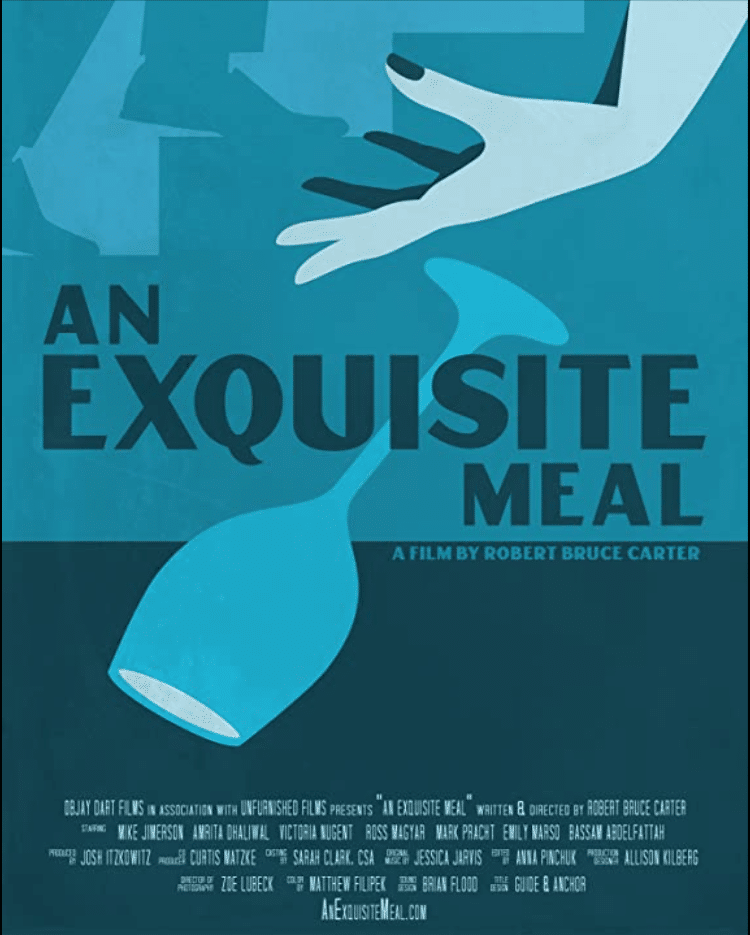
An Exquisite Meal (2020)

The affectation and awkwardness of the dinner party has never been particularly appealing – and, if you already share those feelings, An Exquisite Meal (2020) is really not the film to change your mind. It’s a surreal, deliberately alienating glimpse at an especially abortive evening in. If your tastes can tolerate this particular kind of unravelling, narrative-lite filmmaking, then there may be just enough narrative to go around but, if you value coherence, this is another dinner party to avoid.

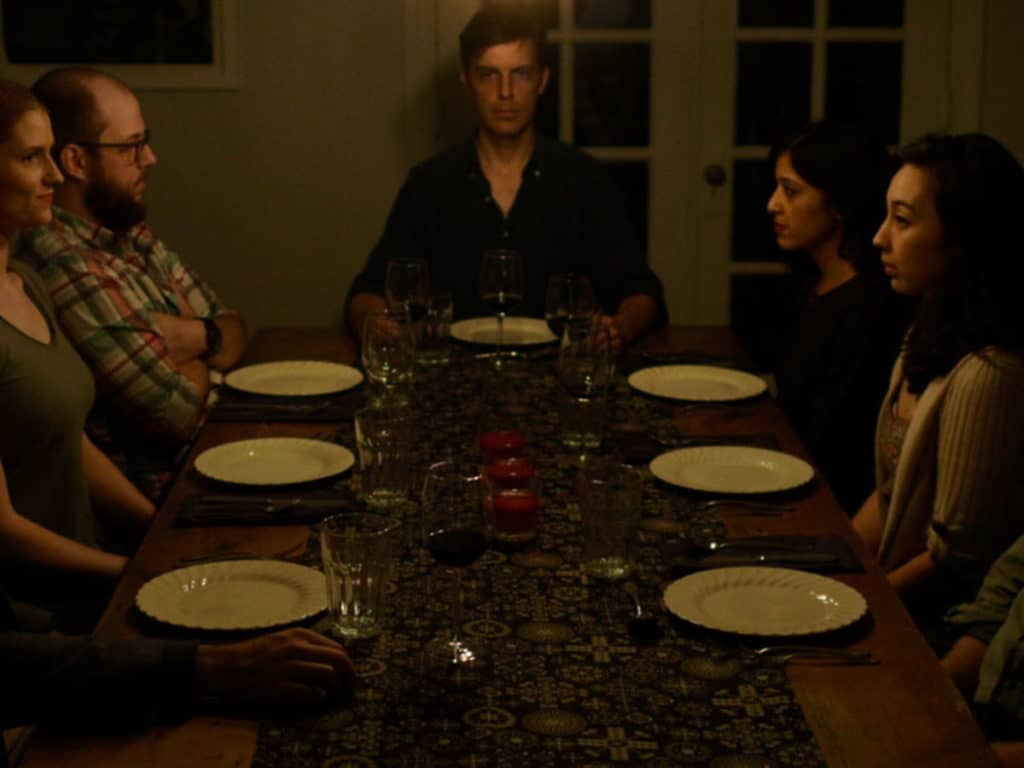
The opening credits, whilst stylish, give little sense of what is to follow (blending 60s-reminiscent animation with grainy, black and white shots of pots and pans). Well, it’s clear a meal is about to take place at least; we skip into colour and the present day, and we have the first of our dinner guests about to step into a very particular kind of suburban home where evidence of global travel is very much front and centre and there to be discussed. Our guests are the stereotypical unhappy couple Beth (Victoria Nugent) and Mark (Ross Magyar), who can’t even agree on the wine they’ve brought. Their hosts are intrepid voyageurs Irene (Amrita Dhaliwal) and chef for the night, Dave (Mike Jimerson).

A few competitive conversations later, Paul, a friend of a friend arrives…then the friend Paul gained access by claiming to know arrives, and finally, some French stranger arrives, but he seems appropriately highbrow to get a place at the table anyway. The stage is therefore set for some sort of disaster to unfold – no one makes films about nights which run smoothly – but it takes some time to determine what precise form this disaster will take.

The truth is, there is no precise form. If the film does anything consistently at all, it’s to pour scorn on the kind of moneyed middle classes who forever talk about what they’re doing, but get around to doing very little. An Exquisite Meal is certainly observant in key respects, even if its targets and topics are so recognisable as to be unsurprising: people boasting about holidays, showboating about exclusive cooking ingredients, talking about yoga retreats or considering IVF purely as a ‘non violent conception option’…well, okay, that last one was a little more out there, but the others are familiar enough, a safe array of irritating genteel pursuits.

The film is very dialogue-heavy and most of its running time consists of these kinds of chats; it’s yet a little too practiced to be funny, for all that, particularly given some of the issues which dog the performances. Some of the actors here are so overblown as to be approaching caricature, whilst some others mumble their way through: it’s as if they’re in different films to one another. The personal disconnect between Dave and Irene may be deliberate, but it feels like their very different ways of speaking their lines are more accidental. And there’s more. There’s loud, persistent incidental music which doesn’t seem particularly meaningful, or fitting. The film – barely an hour long – is divided into chapters, which as ever is a completely meaningless, trendy conceit bringing nothing to the table (yeah, sorry).

Perhaps more importantly though, An Exquisite Meal is difficult to place in terms of a genre; it’s not quite a drama, not really a comedy, certainly not a horror, and not much of anything else except a kind of dinner party version of Waiting For Godot, with all of the Absurdist fixations on purposelessness and deliberate oddness. That is ambitious, in its way, and certainly ambitious for a microbudget film, but a little like the characters in the film, the ambition is compromised. Proceed with care, and only if your tolerance runs to this kind of episodic, non-conventional cinema.

An Exquisite Meal (2020) is available On Demand and Digital from December 28th 2021.