The Darkness of the Road (2021)

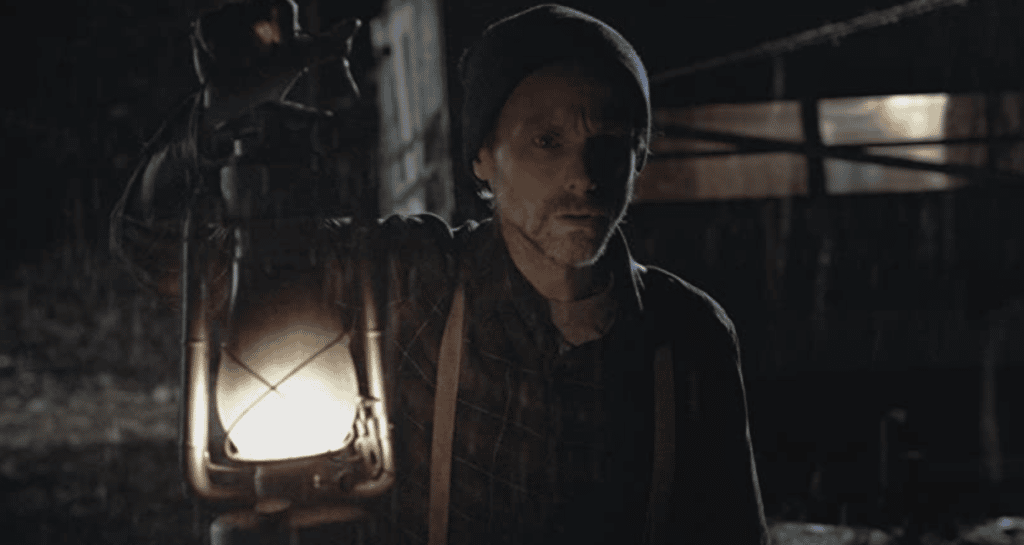
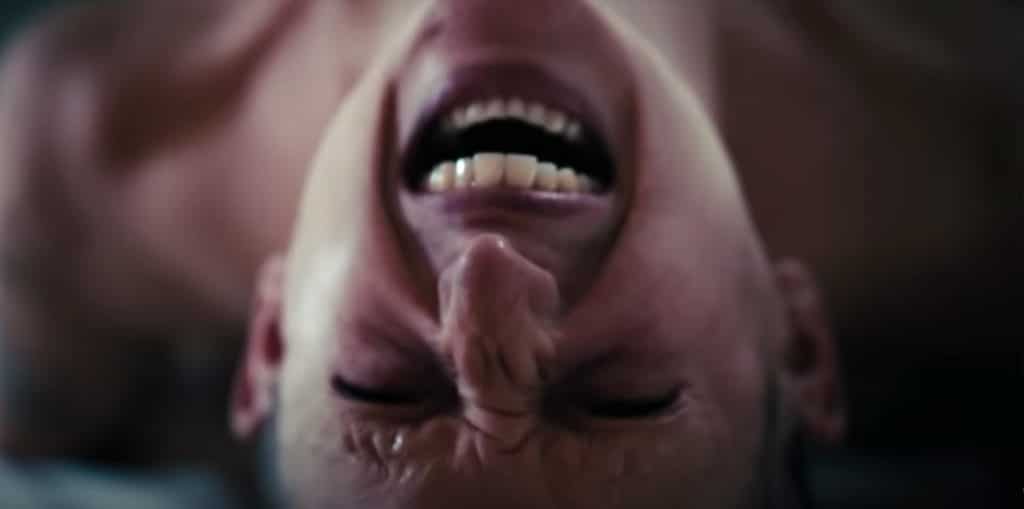
The Darkness of the Road (2021) takes a few risks in how it composes its particular brand of existential horror. With a very limited set (long shots are curtailed by, well, the darkness of the road), a tiny number of characters and a disrupted narrative arc, the film sacrifices a lot of the usual plot drivers in order to focus on its nightmarish, often surreal style. There are a couple of lags and a couple of outstanding questions but, if you wait for it, it does join the dots in a reasonably successful – and certainly a striking – way.

The film starts with a young woman, Siri (The Stylist‘s Najarra Townsend) and her young daughter Eve, who are both out on the road in the back of beyond somewhere late one night – it seems they’re heading out on a remote highway towards a new life. They stop off at a small garage, where Siri runs into a peculiar pair of clerks: one is older, and about as responsive as her sleeping child, whilst the other is more ‘chipper’, asking the inevitable questions about where her boyfriend is, sneeringly overcharging her and so on. A minor comedy of errors ensues, which ends up with car trouble and a girl from the service station hitching a lift out of there, as it seems she’s also trying to get away from her old life.

The two women hit the road and talk: however, they are soon jerked out of their conversation by a sudden turn of bizarre events, seemingly culminating in the realisation that little Eve is no longer in the back seat of the car. In a panic, Siri and her passenger try to navigate this situation, but whether in the broken-down-again vehicle or in the unlit wilds, they realise their precariousness. It’s soon apparent that the timeline here is disrupted, and things quickly feel disorientated, but key questions linger: what is out there? And how much of Siri’s perceptions can be trusted?

Clearly director and writer Eduardo Rodriguez is very deliberately foregrounding atmosphere here, and he achieves this in various ways. Firstly, the film looks very striking, and whilst it could have been drab and under-lit and perfectly plausibly so, given most of the film takes place in the dead of night, it instead looks very painterly, with lots of vivid, rich colours and contrasts, night scenes or not. For example, the blue of the night is incredibly intense, and contrasts with the pale yellow of the car’s interior light very nicely. There’s much more of this too, and care has clearly been taken with how the shots are composed, how they are lit and how they all interconnect. This dreamlike atmosphere also relies to some extent on the very fractured nature of the story as it unfolds, which means a fair few gaps in logic and a rather jagged feel – not for everyone, sure, but something which overarches the whole movie.

There are some horror staples, too, such as the ever-malfunctioning mobile phone trope, but to be fair, the film still manages to instil a decent pace early on, hurling different elements at the screen. Based on the first ten or fifteen minutes, The Darkness of the Road could have gone in a few different directions: the survivalist perils of a remote location, the perils of abrasive, likely dangerous locals or the perils of supernatural terrors. (It helps, I think, to go into this film blind, like this reviewer did.) In the end, it shifts away from any of that, at least in any straightforward sense, though there are some grisly and disturbing scenes. Actresses Najarra Townsend and Leah Lauren are more than equal to this, though it’s Townsend who bears the brunt of the ordeals; her character is perhaps somewhat more accepting of various hideous sequences than many of us would be, but that’s in keeping with the film as a whole. The whole balance of the film – performances included – is about disorientation, which eventually gives way to grim understanding.

This female-led film doesn’t answer all of the questions it raises, and maybe a little more on the relationship between the two women would make the conclusion more satisfying, but in terms of the never-ending bad dream it sets out to explore? It certainly does that. If you like it introspective and bleak, though framed and displayed in a visually very effective way, then there is a lot here to like.

The Darkness of the Road (2021) is available on DVD, Digital and On-Demand now.
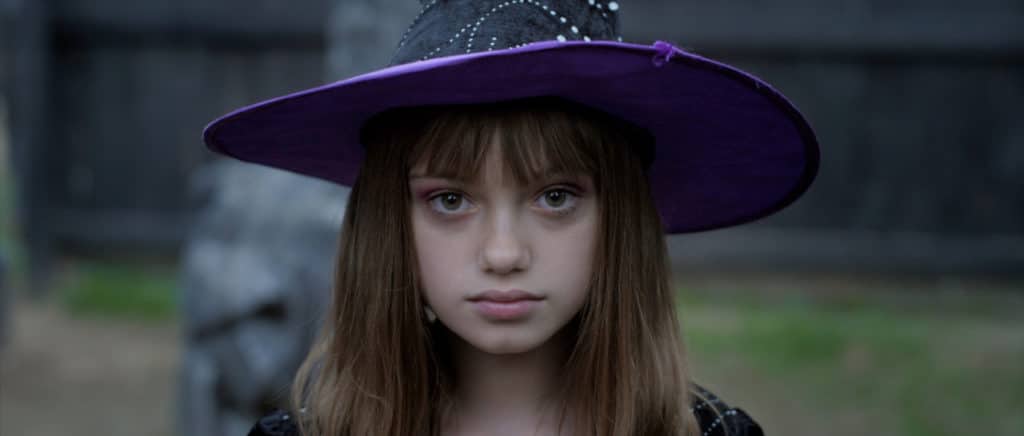
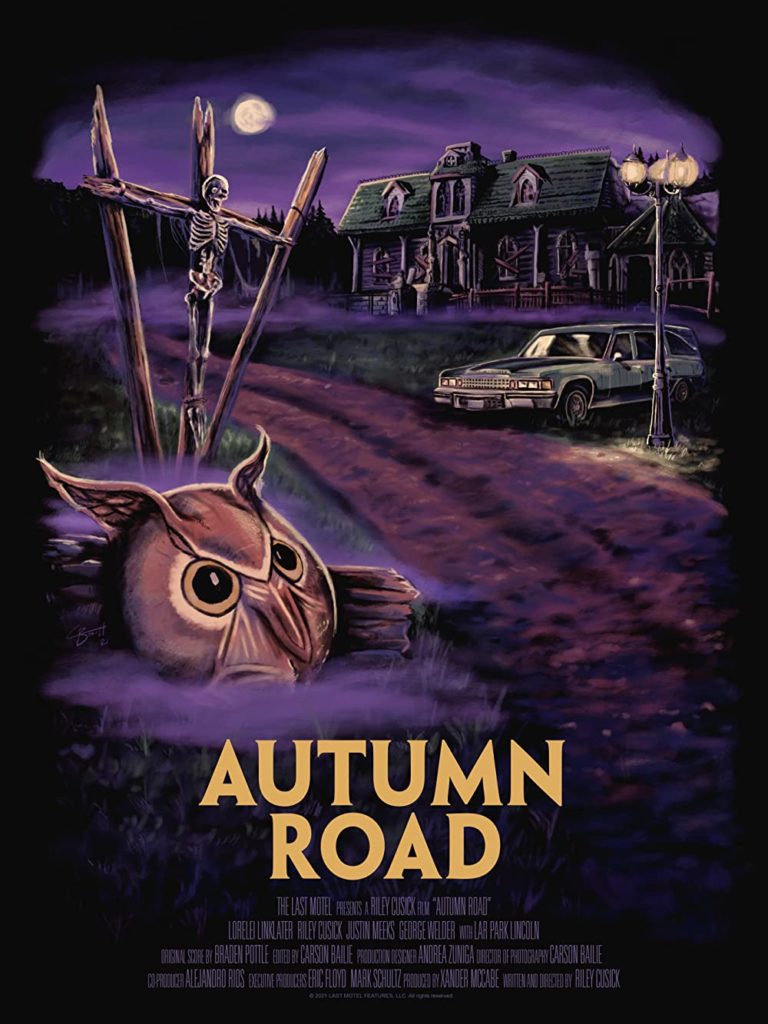
Autumn Road (2021)

There is a germ of a decent idea in Autumn Road, a film which comes across, at least at first, as a love letter to small town Halloween. Indeed, it’s an attractive film, with some great settings, and some careful sleight of hand which provides some interesting sequences. Unfortunately, all the Halloween aesthetics in the world can’t stand in for a plot or good performances, nor can they replace a script or a judicious edit. This is a film which, although coming in at just over the sanctified ninety minutes, feels far, far longer.

It starts reasonably enough, with two brothers, Charlie and Vincent, whose dad runs a Halloween attraction. Their friend Winnie (Maddie-Lea Hendrix) spends a fair bit of time at the Graystone house, and heads off to Trick or Treat with Vincent, with Charlie making his excuses. When they get back, Winnie goes to see Charlie, who likes hanging out in a hearse; she gives him one of her candy bars, on the grounds that she is severely allergic to peanuts – but then seems to forget this life-threatening ailment when she lets Charlie kiss her, triggering her anaphylaxis. Charlie flaps about, darting out of the car to ask his brother to help – which, for reasons which still elude me, he declines to do, letting the girl die and promising Charlie he’ll ‘take care’ of the situation. Charlie seems to take this sudden turn of events quite well too: it simply makes no sense. But anyway, we now move forward in time.

We’re privy to an audition going really quite badly, something which I thought was deliberate to show that the actor in question really couldn’t act – but then this standard of performance continues throughout the film with an oddball, flat and detached delivery from Lorelei Linklater (it gives me no pleasure to say as much, but it really is staggering). Laura – for it is she – doesn’t get the gig, and her roommate tells her they should just write a film of their own, which they begin to do before a (presumably, completely unintentionally hilarious) accident cuts this plan short, sending Laura back to her home town to reconnect with her mother. When she gets there, she instead reconnects with the now grown-up Charlie (director and writer Riley Cusick): turns out Laura is Winnie’s sister, and she has such a rough time getting on with her mother as a result of the girl’s disappearance that fateful Halloween. So there we have it: Charlie has lived this whole time largely untroubled by being an accomplice to his brother, Vincent (also Cusick, for they are twins) is the unpredictable, violent one, and Laura understandably has questions about her sister’s disappearance.

That’s it. The possibility that Laura was going to continue to write her screenplay, working through her own trauma in the process, or supernatural phenomena was going to lead her to Winnie, or even that she was simply going to find out what happened to her, does not come to pass as expected. There is a lot of talking, and a lot of head-scratching moments which compound the initial, unbelievable plot point where two kids preside over a death by layering on other, smaller, equally implausible scenes. The guy Vincent punches in the face, simply wandering off without being particularly bothered by his assault…the girl who angrily quits her job but is right back there the next day…Vincent heading off to attack one of his co-workers wearing a disguise that the same co-worker would see him in every single day at work…these sorts of things just need to be ironed out when reading through a screenplay, but then when the writer, director and acting lead is one and the same person, this process often becomes diffuse, it seems.

There are, eventually, some answers, but by this point the relative lack of plot and the wildly differentiated performances (where Laura is flat, Vincent is depicted as a wild-eyed, leering danger) have extinguished the film’s initially engaging premise. This is a shame, as there was a lot of potential here with a setting which would do any horror fan’s heart good, but it’s not enough on its own. It’s not immediately clear what the title refers to, either, but really, that’s not the most pressing of concerns.

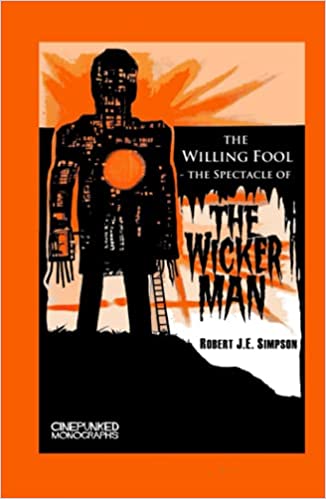
The Willing Fool: the Spectacle of The Wicker Man by Robert J. E. Simpson

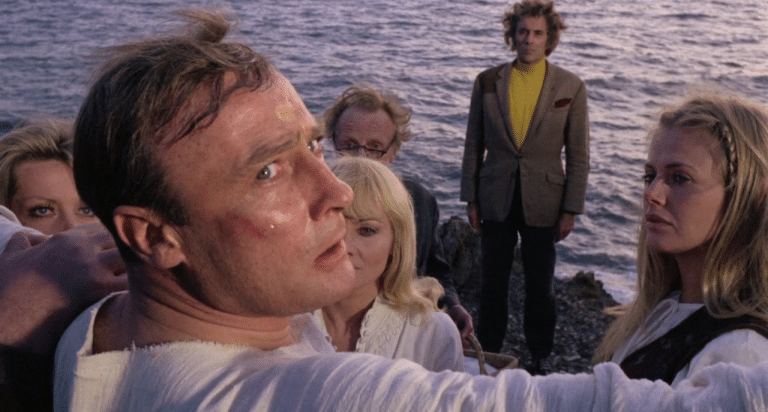
The Wicker Man (1973) continues to hold its place as one of the best-beloved British horror films of the past fifty years, with new viewers and fans emerging as the years pass. This speaks to its many strengths, and the way in which it works on many levels, offering the potential for new readings and responses from new viewers as well as its existing fans. As such, Robert J. E. Simpson’s charming, well-informed and engaging monograph on the title has a great deal to offer and makes for an interesting, thought-provoking read. As a long-time fan of The Wicker Man, it certainly gave me new ideas and ways to interpret.

The book has an interesting pedigree – as explained in the introduction – whereby it started life as an academic project but then, for a number of reasons, ended up on the back burner for a period of some years. Finally completed when the pandemic landed us all with rather more time that we would have had, the book occupies a somewhat liminal position between academic writing and the pleasure of writing about a film which is clearly dear to the author. There’s always a danger with academic writing that researchers focus so closely on the component parts of whatever they’re studying, they lose sight of the sum of those parts. In other words, they stop enjoying the film as a piece of entertainment, which always shows in the writing. That isn’t the case here, and although academic ideas are brought to bear on the film (for instance, Roland Barthes and the relationships between visuals, music and text) these are always kept accessible, footnoted and most importantly, blended carefully with the overall considered, but warm and enthusiastic tone of the text. This helps the more academic, ‘meta’ type ideas to really land; there’s no danger of the text turning into something abstract, too far removed from a fan’s perspective on the film.

When I say the film, of course the book is largely focused on the ’73 original, but it also draws some interesting comparisons with the much-maligned remake of 2006 and also looks at the perplexing ‘sequel of sorts’, or else extension of the Wicker Man universe, The Wicker Tree (2011). This is all handled fairly, though the author largely seems to reflect positively on the greater subtleties of the 1973 film as a result – again, which seems fair.

The Willing Fool is also structured in an interesting way, rather than with the more conventional description, information on casting and so on before moving into a closer study of the film; it is organised, in keeping with its avowed focus on the spectacle of The Wicker Man, by symbol, visual focus, character, specific settings and frameworks (such as the ‘documentary’ claims in the introduction). It’s an approach which works well, an intuitive style which breaks the spell of the expected, formulaic standpoint used in film writing. In this respect the book emulates what it identifies in the film itself, in its disruption of a conventional, distanced, separate approach from the Wicker Man narrative. It’s also a positive, all told, that whilst the book takes in ideas about folkloric precedents, it doesn’t simply take a ‘folk horror’ approach. The rise and rise of folk horror as a discipline has led to some fine writing, but it needn’t replace other ways of seeing, or speak for them all. (Film credits, an article on The Fantasist and an interview with director Robin Hardy are included in the appendix).

Coming in at just over 120 pages, this is a slim illustrated volume, well-focused with just the right level of range and detail. Even for those who may have pored over The Wicker Man a hundred times, there will be information and critique here which will be of interest. Full disclosure: I have worked with Robert Simpson over the years, but that changes nothing about this recommendation! You can check out ways to purchase The Willing Fool here.

Blood in the Snow 2021: The Family

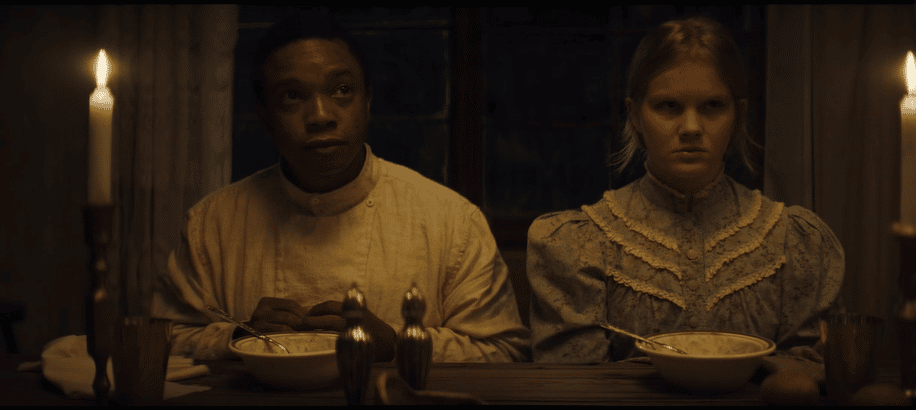
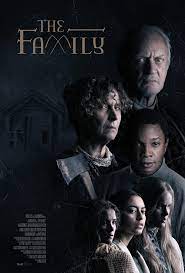
Toil – in the Biblical sense – sets us going on the very first scenes in The Family. This is an immediately bleak, dirt-encrusted tale of life inside an insular and grimly religious household, with an undisputed – and cruel – patriarch presiding over the children’s labours. ‘Father’ (Nigel Bennett) is not averse to smothering his wayward offspring in mud, if they can’t or won’t work any more. The dour intensity here is, then, immediate. But is Father paranoid, or simply vigilant? He presses for the isolation of his family to continue, but he stresses that it is vital; at prayer, and at chapel, the family are apparently aware of an ‘interloper’, mentioned by name as Abaddon, who wants nothing more than to steal these people’s souls. Son Caleb (Benjamin Charles Watson) is on the verge of adulthood, to be recognised as a man hereafter – but this doesn’t grant him more power, but seemingly less, as he struggles to understand what his new role actually means. The drive to ‘keep out the darkness’ seems to become even more urgent.

Fundamentalist religions and cults, like this one, have long been selling passes to a very selective afterlife and purporting to stave off cunning spiritual foes; the question here is what really exists on the outskirts of the compound. As Caleb checks the animals traps one evening, he crosses the threshold into the ‘forbidden’ outside and hears a sound. It sounds like a woman, singing, and he finds a mysterious dwelling a little way off, too. Frightened, he retreats, and it seems for good reason: his transgression is punishable, his sin of crossing the sacred threshold held up as a great danger for everyone else. Again, if this is purely down to Father’s rod of iron approach, it’s notable that not long afterwards, the peace – such as it is – gets disturbed. This is deemed all part of Eitan’s plan – Eitan being the version of God the family worships. A further change in the family dynamic is around the corner, and a new arrival complicates dynamics and statuses. For Caleb, faithful but unaware of Eitan’s grand schemes, his suffering will become the crux of the action.

Several other films have tackled this idea of the isolated family unit and how faith can present horrors of its own, but The Family does so excellently. The escalating strangeness is handled carefully and quietly, with subtle but innovative developments and surprises, even if you might be tempted to guess at where things are going (this reviewer never felt quite confident enough for that; the nature of the family is such that certainties are in short supply). For such a mood piece, the tone and pace work well together. The film is chaptered – into…seven parts? This is de rigeur, but as usual this particular lofty tic doesn’t add a great deal, feeling unnecessary given the skilled ways in which the narrative is moved on by words and deeds in the script.

One of the ways in which the film succeeds is via its excellent performances. Benjamin Charles Watson as Caleb gets the majority of the screen time, and he’s certainly equal to it; he is an innocent, always trying to discern the best ways to behave and being stymied by his father’s cruelty. Father, though, is not just a straightforward villain, however sinister he can be. There are odd moments of what look like warmth and concern, or is that a ruse which tricks us, too? No wonder Caleb is disorientated. Able support comes from the other siblings, particularly Abigail (Jenna Warren), who has her own limits; Mother (Toni Ellwand) is seemingly every bit as vicious as Father. A rock solid script with no glaring anachronisms, which I’ve seen in other period films helps cement some excellent casting (The Family looks like a 19th Century conservative Christian family, and they sound like it too).

Be this a 19th Century setting, rather than (say) a 17th Century one, but there are some similarities here to The Witch, a film which is similar aesthetically, with the same period detail, use of natural light and an isolated family farmstead, but The Family is nonetheless no re-tread of the influential earlier film. True, it has a similar feeling of never quite being fully abreast of the mysteries unfolding, and there’s that self-same sense of sexuality, hovering over both stories, but in key respects, The Family has more questions to ask. It’s a mysterious film and feels no lesser a film for alluding to, rather than answering everything.

The Family is a brutal yet thoughtful film, meticulous in its details and impressive in how it marries atmosphere with tension. It’s also a film which shows that in folk horror, it’s often the folk themselves which are the source of the horror. Very impressive.

The Family will screen as part of the Blood in the Snow Film Festival on November 23rd. For more details, please click here.

Prisoners of the Ghostland (2021)

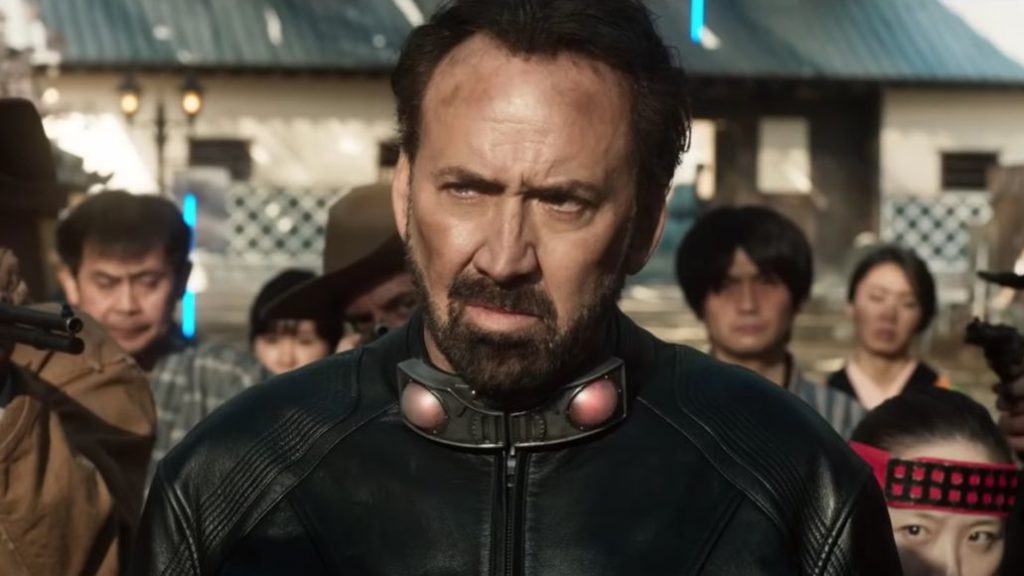
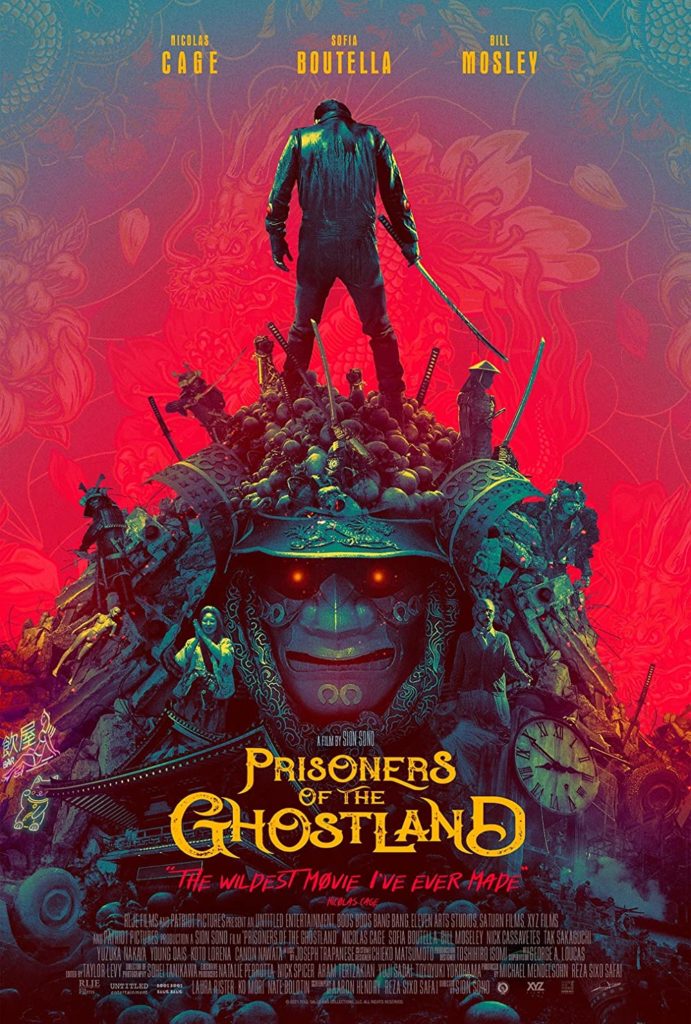
It’s not entirely clear what has happened to Sion Sono in the past decade. Shorn perhaps of whatever inspiration was behind discomfiting, outrageous gems like Guilty of Romance and Love Exposure, he seems to have dedicated himself to being a filmmaker making films about filmmaking, and on and on it goes – a kind of gentle pissing against the fourth wall, settling into a comfortable rut with only the odd foray into anything more interesting. So, when I read the blurb for Prisoners of the Ghostland, it was massively encouraging. Frankly, the blurb would do anyone’s heart good: Nicolas Cage, as an unwilling vigilante, sent on a mission where, should he fail or deviate, his bollocks (and other bodily organs) will explode? Sign us up, right? Finally, Sion Sono was back to the kind of madcap project which brings out his best; with cast members including Cage, Bill Moseley and Sofia Boutella, it would be very hard indeed to ruin this.

Well buckle up, because somewhere along the line, this Grade A exploitation cinema idea came all to naught. It’s almost impressive, and a big, bold lesson about the perils of optimism.

The film begins in what we eventually learn is a kind of shanty town called Samurai Town. Is it a parallel universe, a dystopia, or what? This isn’t really dealt with – but what we can just about determine is a place which splices East and West: geisha mingle with cowboy types, samurai wander around and occasionally smack-talk one another, and so on. Not everyone seems to like living hereabouts, however: a young woman, Bernice (Boutella) decides to high-tail it one night, taking a couple of friends with her – to freedom!

Freedom! – is in a place just up the road, another kind of shanty town, but one which seems to be marginally worse. This is the Ghostland, a time-frozen zone, and Bernice’s freedom there is of that eternal kind: she is now able to lie around in rubble in a nightdress, ruminating on her decisions. Back in Samurai Town, her grandfather the governor (Moseley) wants her back. To achieve this, he employs a nameless character (Cage, referred to as ‘Hero’ in the credits, as the naming choices here are straight out of arcade games in the 90s). This fella has been languishing in jail for some years after his involvement in a bank heist which went badly wrong – like, shooting innocent bubblegum-consuming kids wrong – but that’s what you get when you hang around with people named things like Psycho (John Cassavetes). Never go on a bank job with anyone called Psycho; it’s a recipe for these kinds of kid-slaying disasters. And, if you didn’t get the magnitude of this bank heist, don’t worry: that scene will be along as a flashback a few times over, so you can really enjoy its profundity and plot relevance.

So, famously, the unnamed-Hero-Cage is prepped for his mission with a special leather suit which has small explosives attached to it: these will be triggered if he takes too long, if he has impure thoughts, or if he strikes or impedes someone vulnerable. Good idea, right? Were this played with Cage’s usual madcap vigour – of which a little goes a long way, but still – then it’s an idea which really could have worked, and there were a few brief scenes where a little of that exploitation cinema promise was fulfilled. However, overall, Cage is not himself here, neither really brooding nor really animated. Even the lines which were clearly intended to be catchphrases fall oddly flat, and for the most part he swaggers from place to place looking rather lost. Yes, we’ve finally found it: after a period of time which has given us Mandy and The Color Out of Space, here is a barely-there performance by everyone’s favourite over-actor.

Could this be because of the nature of the shoot? After the testicle-exploding suit, the film is probably best-known as ‘Sion Sono’s first English production’. In practice, this means a lot of Japanese actors chewing through their lines in English, very likely by rote (or at least with limited understanding of what they’re saying). Hurl this up against a number of American or other English speakers plodding through their own lines in an inexplicable, barely-clear situation, and you get less of an innovative blend between Eastern and Western and more of a babble, hard to follow and deeply unengaging. Making this in English – or even mostly in English – was a silly mistake. Foreign language films don’t automatically flounder in the West these days (just look at the massive success of Korea’s Squid Game) but dreadful films will always flounder everywhere, or at least they should. This is a dreadful film.

Hero finds Bernice relatively easily – well, she only seems a brief distance away, to be fair – and the rest of the film concerns getting her back, and what happens then, power games, redemption, etc. Great. So plot isn’t a priority, and nor is acting, legibility, or pace; the whole film billows clumsily throughout with very long, almost slow-mo sequences which really test one’s patience. What else do we get, for the film’s 90+ minutes of running time? Very little, save for a few discordant, tokenistic moments of gore and, incomprehensibly, acres and acres of actors who dance, sing and mime various elements of the back story. This is particularly annoying as, alongside the rest of the film, everything feels lazily under-edited, with long, jerky, unpolished takes of these extras who contribute so little here. Every scene feels like it’s been done in one take before moving on, to be fair, but save for showcasing how large the open-air sets are, a succession of extras miming seems to add insult to injury, taking us out of the small amount of plot we have to play with and making us watch people dancing instead.

Just to be clear: Prisoners of the Ghostland is so bad as to be insulting. Its storyline is famine-thin; its performances veer from a complete waste to dreadful; the sets are cheap; the English language thing is ludicrous and unnecessary; every good idea is buried beneath pointless choreography and flabby takes and the whole thing has the unpolished feel of a vainglorious mistake. This isn’t a film so bad, it’s good; in fact, it’s borderline unwatchable, and don’t let any intimation of exploding testicles charm you otherwise.

Prisoners of the Ghostland will be released on Shudder on November 19th 2021.

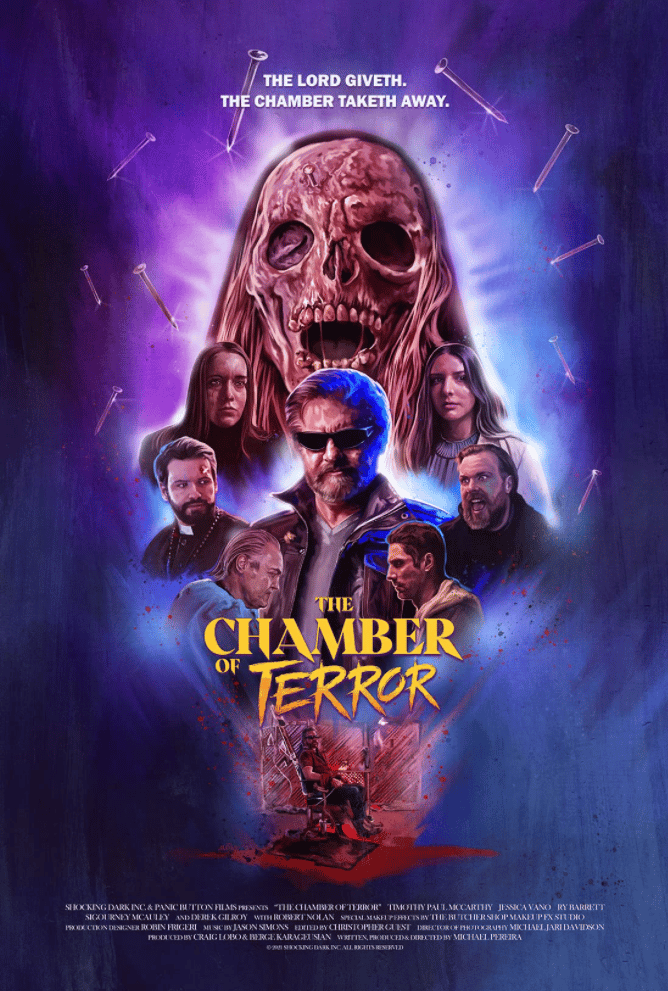
Blood in the Snow 2021: The Chamber of Terror

In a darkly comic film which seems to strive to fit in as much practical gore FX as possible, The Chamber of Terror suffers to an extent for its ambition, but on balance, achieves much of what it sets out to do. You can’t really criticise its enthusiasm, even if there are a few missteps along the way.

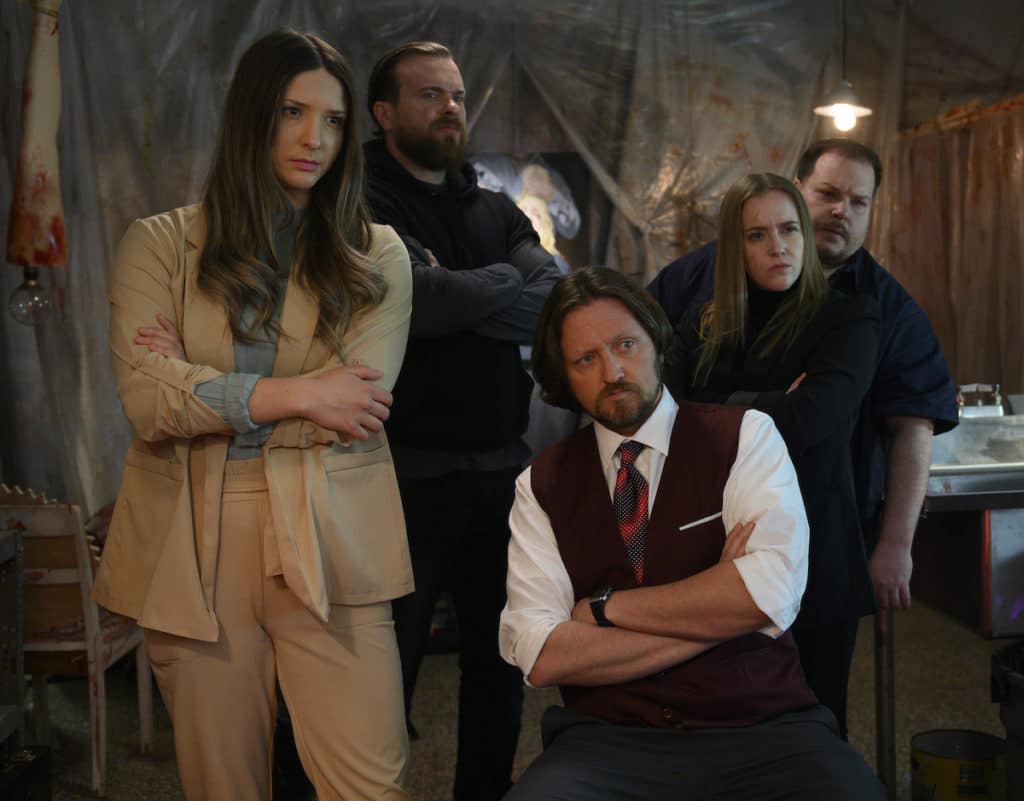
We start with what is clearly intended to be a franchise character – one Mr Nash Carruthers, who has a ‘shit list’: this means gathering up a number of people and putting them through some pretty unpleasant situations, and all in the name of personal vengeance. It wouldn’t be much of a shit list otherwise. We see some of this going on before the credits even roll; this is another love letter to 80s horror in many respects, right down to the title font, and certainly in Carruthers’ badass characterisation. And, it seems that Carruthers has the son of a local mobster in his sights. He tortures one Tyler Ackerman, hammering him into a box and leaving him there. We’re led to believe that Tyler’s a goner, and that’s that: we’re primed for Carruthers doing more of the same.

Instead, a month passes: Carruthers is still at large, but his down time gets disturbed by a couple of masked intruders. They’re not entirely pros, but they’re still able to capture Carruthers and take him to the Chamber of Horrors itself, a torture set-up in a safe house which is being overseen by Ava Ackerman, Tyler’s sister. The Chamber of Horrors has a long standing, and Ava is prepared to use it to find out where her brother is. Carruthers is taking it all rather well; it even seems like he’s enjoying himself.

As Ava strives to take control of the situation, things take an…unexpected turn. Not only does Ava get the information she wanted about her brother, but there’s more taking place, meaning that this is no longer a straightforward torture horror – which it could have been, all told. The film changes tack completely, transforming into a very gory homage to a hundred and one existing horrors, and perhaps one of its issues is that it does try to fit so much in, swinging the plot away from one thing to something else entirely. There’s clearly affection for the genre, though this does veer towards self indulgence in some places; there’s a lot of dialogue, but it takes some time for the characters to really ‘stick’, which holds the film back in the earlier acts to some extent. Some characters are there, loud, and then they’re gone, which can be a little jarring. But it knows what it’s doing in terms of how it paying lip service to horror, openly alluding to it in the script on more than one occasion. You may or may not enjoy this approach, but it’s loud and proud at least, and it does manage the about-face rather well, turning into a different genre of horror entirely.

Whilst the film could have used some cuts where it starts to dawdle – the hot-cold-hot game, for example – when it gets going, its change of direction makes it into a dead cert festival crowd pleaser, the sort of thing which elicits cheers from an audience. It spends a lot of time setting up what is essentially a gore fest, and perhaps sacrifices some plot to get there, but the SFX is very good fun, as well as nicely done on the film’s limited budget. There are viewers for whom this kind of back-to-basics gore is the most important element of their horror cinema, and it’s clearly close to the heart of director Michael Pereira, here directing his first feature-length film, but with a back catalogue of similarly OTT fare in his filmography. So yes, there are a few lulls and a few choices which could be questioned along the way, and its self-referential style may not be for everyone, but there’s plenty of ambition here, as well as – overall – enough going on to keep The Chamber of Terror entertaining.

The Chamber of Terror will screen as part of the Blood in the Snow Film Festival on 20th November 2021.

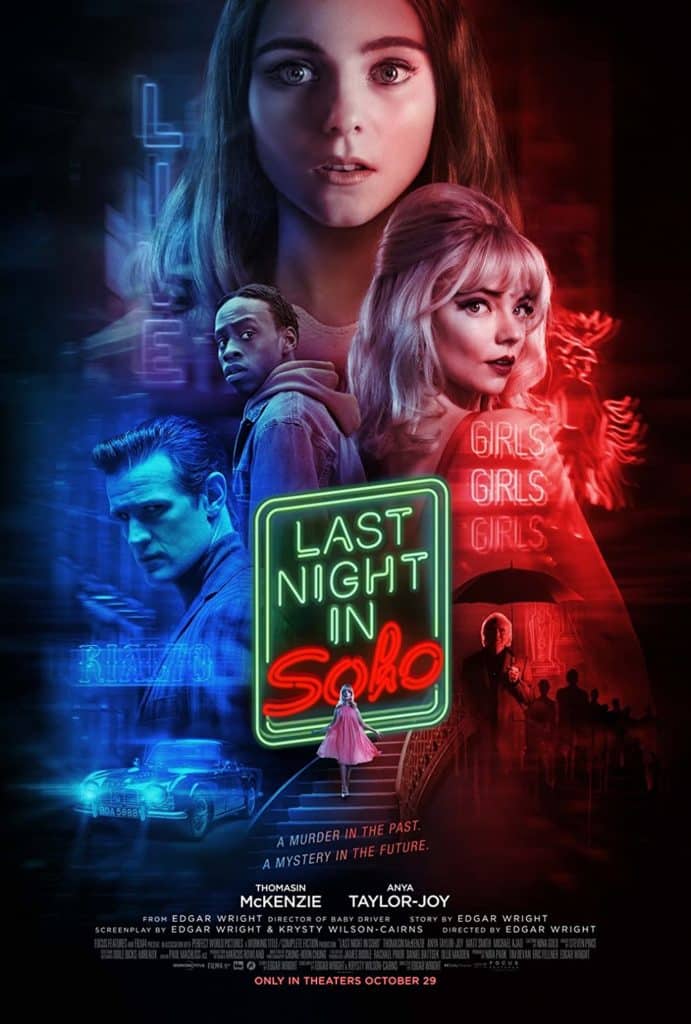
Last Night in Soho (2021)

There’s already been abundant proof of Edgar Wright’s love of horror, but his most recent film, Last Night in Soho, changes tack from what we may have seen already; it’s a ghost story, but it pushes at the boundaries of what a ghost story can be; it’s a kind of 60s-glam spin on The Mezzotint in some respects, and a very modern, hardline assault on selfhood in others. Or, is a time travel story? Perhaps finally it’s a cautionary tale about wallowing in nostalgia which is not your own, or at least, the perils of living vicariously. All in all it’s a fascinating and engrossing story and whilst some aspects of the plot are laid on rather thickly at first, it’s so carefully constructed and paced that you want to go wherever it takes you.

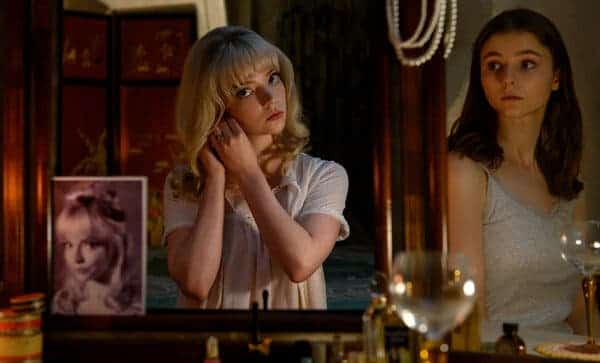
The psychically-sensitive Eloise (Thomasin McKenzie) has inherited her gran’s tastes in music, fashion and cinema; when she receives news that she has been accepted into the London College of Fashion, she’s thrilled and can’t wait to take her 60s inspirations away with her. We know that she lost her mum at a young age; she sees her, sometimes, and feels her mum’s approval. Batting away grandma’s concerns about London as a kind of entity which swallows people up, Ellie moves out, very excited for her future. Needless to say, this rather naïve young girl should have listened to her gran (Rita Tushingham). A few crude encounters later – with a pervy taxi driver who jokingly tells her he’s going to lurk around her Halls of Residence and stalk the girls living there (!) and her wonderfully awful, if cartoonish new roommate Jocasta (Synnove Karlse) – and suddenly Ellie isn’t so sure about big, bad London. She soon makes the decision to find somewhere else to live and happens upon a dated little bedsit not too far away: it’s perfect. The landlady, Miss Collins, is a bit of a stickler, but that suits Ellie just fine. She begins to feel like she could do this.

Once she has moved in to her new place, though, Ellie begins having odd visions – lucid dreams of the old Soho, a world which looks almost impossibly glamorous and classy. In this, her aesthetic paradise, she sees the reflection of a young woman about her own age and begins to follow her; she is in awe of her confidence and charisma, finding her incredibly aspirational as she charms her way into the life of a club booker called Jack (a dapper Matt Smith) and, seemingly, commences a career as a singer. But the girl – Sandie (Anya Taylor-Joy) – is not on the trajectory that Ellie first supposes she is. Soon, Ellie’s visions are intrusive rather than tantalising, and they begin to crowd out her real life, tentative as it already is. Ellie no longer feels like a bystander, and feels somehow that she has to find out what happened at the end of the story which she has, to some extent, been living.

The beginning of the film has some very clunky male characterisation which feels like it has taken on the message of #MeToo and run amok with it, though thankfully later developments balance this out. The instant addition of the bad man in the taxi and some of the godawful men Sandie encounters in her life, for instance, are eventually balanced out by a screenplay which begins to weave something far more considered out of its initial elements. Last Night in Soho is at its best once it has established its key players and plot points and is then in a position to weave everything together in a fascinating way, with surprises and developments which encourage viewers to think again about what they’ve seen. The little visual link-ups, and the use of references which make new sense in light of something we’ve already been shown are truly skilled, subtle and effective – far more skilled, subtle and effective than any number of ‘Easter egg’ type packages beloved of lesser screenwriters and directors, whilst showing a level of trust in the audience to understand and appreciate them. And, at the risk of wallowing in nostalgia which is not my own, either, 60s Soho looks absolutely phenomenal: it’s rendered incredibly well, it makes for a superb backdrop to the story and it’s every inch the gorgeous fantasy. Note the addition of photo comparisons with London now, which use some particularly unflattering shots taken during Covid lockdown, but make their point. Doesn’t it look soulless, lonely? No wonder Ellie gets drawn in to the old Soho, however brutal and malign it is beneath the surface.

The performances here are solid, with McKenzie offering up a suitably blank slate character at first, one who runs the gamut of emulation and self-determination. Anya Taylor Joy is really in a supporting role here, but exudes the kind of magnetism which makes her appeal – and everything else which befalls her – very plausible, whilst Michael Ajao – carrying the flag as the film’s Sole Straightforward Good Bloke – is good to watch because, frankly, he’s the only humane fellow student enrolled on Ellie’s course, so thank god for him. But as is so often the case it’s the older actors who really have the gravitas here, namely the wonderful Terence Stamp and of course the much-missed Diana Rigg, here in her swansong performance and perhaps appropriately starring in a film set – in part – during her heyday as an actress. She will, probably, be remembered in her later years as the Queen of Thorns, but Miss Collins is a great role with some great lines. Responding to Ellie’s distress that something terrible may have happened in the past in her room, she retorts simply, “This is London. Someone has died in every room in every building…” Her worldliness, her eyeroll-realism is an important part of the film, and she plays it beautifully: the film is dedicated to her memory.

Fans of the era will of course absolutely adore the music, the cars, the clothes, but beyond all that, Last Night in Soho is a bloody effective, creative and classy take on supernatural storytelling. It would certainly merit a rewatch, and this would no doubt turn up more evidence of Wright’s brilliant, meticulous ideas.

Last Night in Soho is in UK cinemas now.

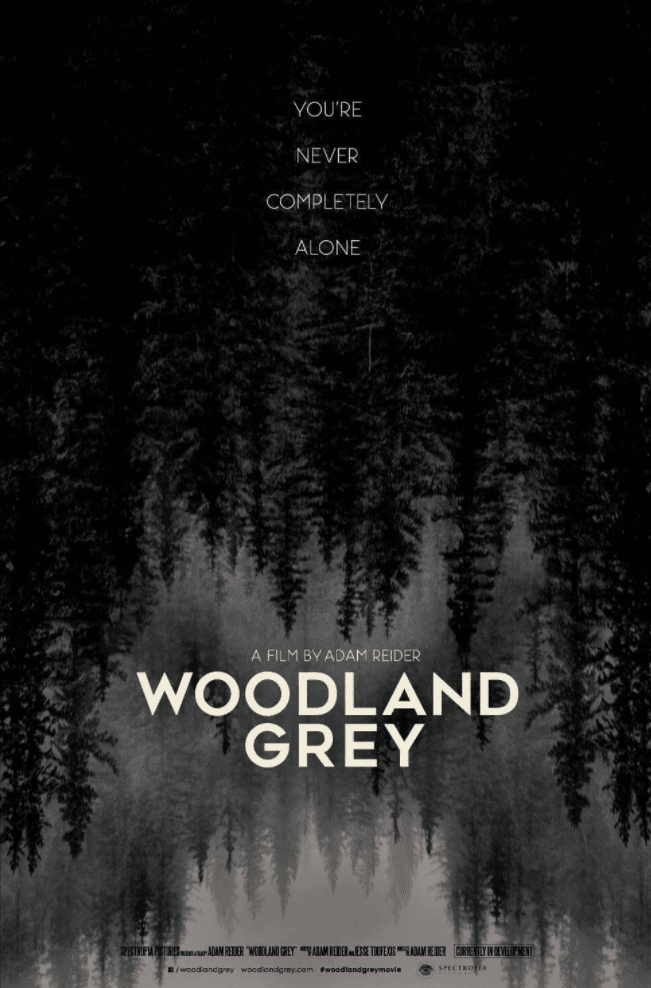
Blood in the Snow 2021: Woodland Grey

In many respects, a good way to sum up the sylvan horror of Woodland Grey is with the old adage, ‘the road to hell is paved with good intentions’. It’s an unusual film, calling on some familiar horror elements, but then in other ways completely rejecting these, in order to create something far more introspective, fractured and surreal.

From the very beginning, the film asks questions, questions, questions. It begins in the middle of some mysterious, stressful event, with a man (Ryan Blakely) leaving his rundown trailer in the woods to investigate a strange sound… we don’t, at this juncture, discover what is going on. The next day, life seems to go mutely on – he hunts, he makes a fire – but he’s given to casting odd looks towards a small, locked-up building a little way away from his camp. This may be yet another of the film’s already growing list of questions, questions, questions, but a rather more pressing one comes with the nameless man’s imminent discovery of an unconscious, injured woman in the woods.

He brings her home. She revives, disorientated and scared of course, but, as her injuries won’t allow her to move very much, she reluctantly accepts the man’s help. He is not used to company, and finds her conversation quite a challenge – but it’s when this girl, Emily (Jenny Raven) herself discovers the locked building (and what seems to be inside it) that their relationship becomes more… strained. Steadily, as the film adds additional information about why Emily came to the woods when she did, the plot weaves together in a very interesting way – pulling audience loyalties here, there and everywhere. Emily’s early attempts at conversation with the man are tonally odd and stilted, and whilst the man is still an unknown quantity, this troubled, loner character seems most deserving of sympathy. But, through careful plot layering, this response shifts. Characterisation is expansive here, able to subvert expectations, even whilst dialogue and exposition are doled out very sparsely.

Sylvan horror is always a favourite. Best of all is where films are able to embed ‘the woods’ as a character in their own right, and even where ideas and development are lacking, some nicely-shot woodland scenes are often enough to contribute at least some decent atmosphere. ‘The woods’ are definitely character-worthy here, with some intriguing exposition. Ideas are certainly not lacking and it is pleasingly difficult to predict where things are going. Actually, though, for the most part the film feels quite claustrophobic, and any sense of the scale of the woods is held back for most of the running time, with the camp and its environs really feeling like a very very small space hemmed in by trees, to the point that it’s inescapable.

The plot’s progress, with gradual invocations of something very weird, profound and all-encompassing, is able to hold interest, albeit there’s a slight lull around the hour mark as the characters reset before being drawn further into their own nightmare scenarios. Along the way, and as per the title maybe, this is a pale, washed-out, cold looking film, very sparse in its beauty. It’s almost dwarfed by its soundtrack in places, which offers a varied blend of delicate and looming; you are led to understand that you will feel unsettled via the soundscape on offer, which works very well with the tone of the film.

Woodland Grey is difficult to review without spoilering, but suffice to say that it is a largely low-key, reality-disrupting film which draws you in to its strange world. It could have done without some of the looping false conclusions, perhaps, and its increasingly surreal direction will lose some viewers, but many more will enjoy picking through the deeper meanings here, appreciating that the film dodges the expected. Regardless of a couple of minor issues, this film is disconcerting, smart and creepy.

Woodland Grey (2021) will receive its World Premiere at the Blood In The Snow Film Festival on Monday, November 22nd 2021. For more information, click here.

Celluloid Screams 2021: Titane

Note: unusually for the site this review contains mild spoilers – words failed me else – so read on with caution.

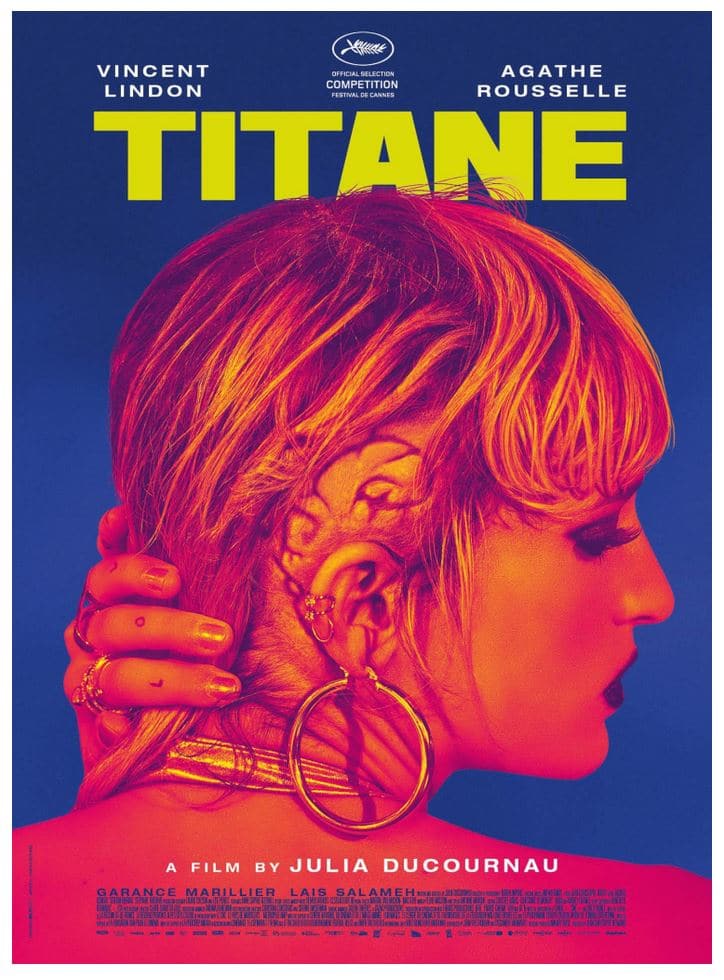
On first consideration, Julia Ducournau’s new film, Titane (2021) is quite unlike Raw (2016), her last feature and, for most people, the most familiar point of comparison. To put it mildly, Titane is an odd beast, where much remains unexplained; on first impressions alone, it all feels rather thinner than Raw, with less clear subtext and symbolism. However, there is some overlap, with many of the most satisfying moments of the newer film stemming from this: the twisted, but oddly redemptive family dynamic, the strong, if often mystifying female lead and the excruciating focus on the body all lead to some satisfying sequences. My main criticism of Titane is that it does feel like a series of sequences rather than a solid storyline, but in the madness of how it all unfolds, there’s a great deal to make your jaw drop. It’s very uneasy viewing, and it keeps you guessing at where on earth it’s all going. (You may not feel that you know the answers to those question when the credits roll, mind you.)

As the film begins, we’re certainly not encouraged to like Alexia, played first as a little girl (and compellingly so by Adèle Guigue). Alexia decides to distract her father whilst he’s driving; not long after the film starts, this causes an accident, after which the seven year old girl has to have titanium plates put into the side of her head. She glowers at her father after the operation, not seeming to understand that she played no small part in this, but one thing’s for sure – this is no loving, conventional family home. Flash forward: Alexia is now a woman (the rather intimidating Agathe Rousselle). She still lives at home, to dad’s clear dislike, and makes a living bumping and grinding on a car as a dancer. Apparently, this is a thing, and imagine that conversation with the insurance. Alexia is more or less silent and closed off, but knows how to dance, coming alive when she does – then closing down again when the music ends, a strange, formative sex scene involving a car notwithstanding. We see a dark side to all this when she’s pursued by a man who doesn’t seem to understand ‘no’, and we also see that Alexia will take strong measures to defend herself, perhaps reasoning that only ultraviolence will reset the balance.

Any expectations that this will be a linear consideration of how women navigate the world and its male entitlement are soon scuppered, however; for whatever reason, it seems that Alexia has had enough of her lot, but to make her escape from it, she begins to progress through different roles. The first is as a grand failure at human empathy, leading to scenes of barbaric, inexplicable violence against people who do not deserve it (one criticism I have about the film is in how it seems to lob in characters only to dispatch them, whilst simultaneously reaching for deeper significance which eludes it precisely because of its unwavering focus on the suffering of innocents). After this, she flees her old life by disguising herself as someone else – a son, Adrien, who has been missing since childhood, reuniting with his father. More ultraviolence accompanies this transformation, but then the film segues more into an examination of how Alexia behaves as Adrien, whether she can maintain the pretence – and why she chooses to.

Shades of Calvaire (2004) creep in here, as the wonderful Vincent (Vincent Lindon) persists on believing Alexia is his son, leading to some strange comedy of errors moments but showing that Vincent, too, is a damaged man who would believe in his son come what may. The very male environment of the fire station over which Vincent presides affords some funny moments, particularly when Alexia resorts to type and dances for ‘the guys’ just like she would have done as a girl. But there are also lots of poignant moments, too. Gradually, these two strangers develop an affinity for each other which is very pleasing, and counterbalances the rather jagged first half of the film.

Much has been made of the gender subtext used in Titane, but despite the very real issues relating to Alexia convincingly appearing as a male, it seemed more about expedience than anything else – a convincing disguise as a means of escape. This is something, though, which would certainly withstand a second viewing, as more may yet come to the fore. First impressions? Gender is there, but deeper significance seems to have been mooted, rather than anything else. Similarly, the fantastical elements are entertaining, but left unexplained, and these at times jar against the plausible human relationships which spring up later. It’s a feature which may need more unpacking with a revisit. Should a film need multiple viewings to work fully? It depends, probably, on what comes out on these multiple viewings.

So at the end of this admittedly meandering review, the first-viewing verdict is mixed on Titane, despite it being a film which can take some pondering. That is perhaps its saving grace, that it generates a lot of reaction, even if some of that is questioning. For all the bellyaching, it was a fascinating watch and the more I’ve tried to pull it apart, the more I like it, on reflection. Extra credit to Rousselle, here in her first film role, terrifying and vulnerable by turns. Ducournau may have changed tack here, but it’s another impressive, thought-provoking piece of work.

Titane (2021) screened at the Celluloid Screams film festival in Sheffield, UK.

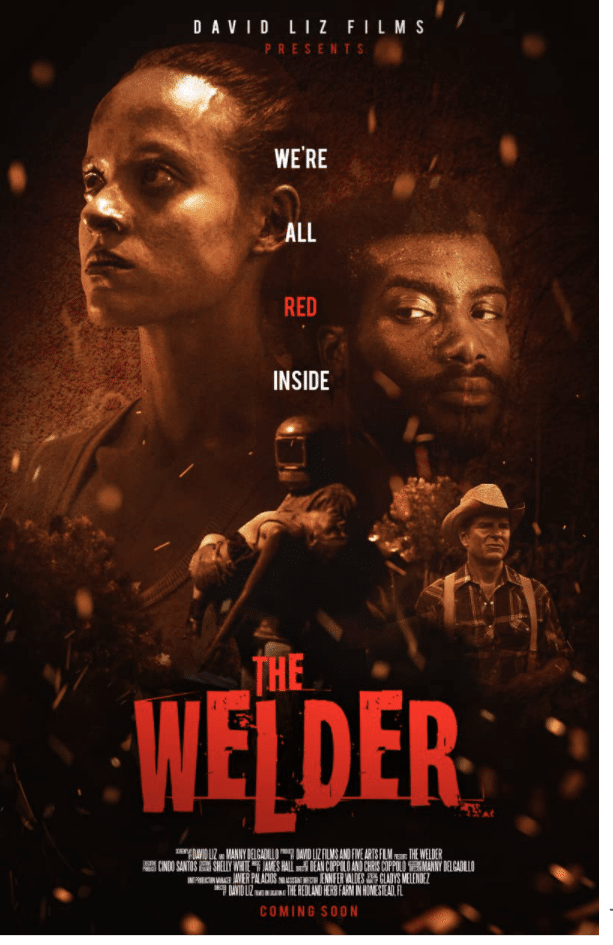
Raindance 2021: The Welder

Given the success of Get Out a few years ago, it was inevitable that we’d get a few follow-up, socially conscious horror movies. Likewise, it was inevitable that some of these would fall short of Get Out: it turns out that balancing a political message with elements of fantasy is not all that easy to get right. This brings us to The Welder (2021), a film which unfortunately doesn’t get this right; in trying to tackle racism, it seems to hunker down, hanging on to the kinds of oddball attitudes it purports to critique. It’s not without ideas, for sure, and it looks great throughout. However, my resounding feeling, come the end, was a kind of mortified confusion.

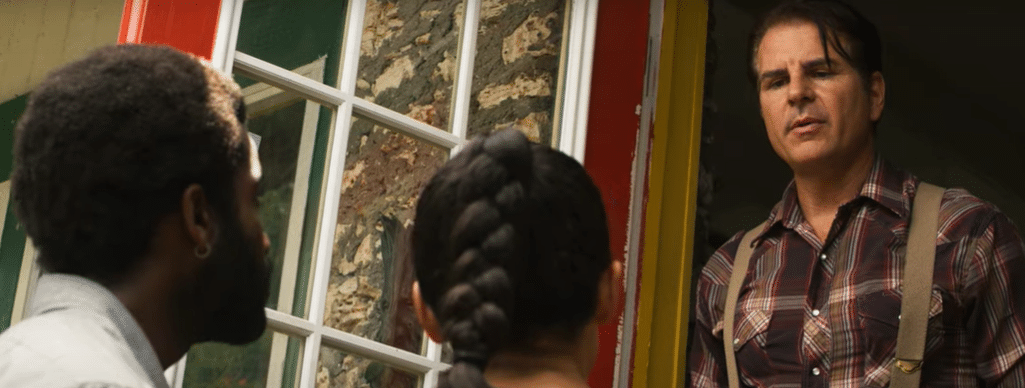
With quite an abrupt beginning, commencing with some sleepwalking and a partial flashback to an as-yet unknown traumatic event, we meet Eliza (Camila Rodríguez), ex-Army (we know this because she has ‘ARMY’ printed on her shirt in the flashback). Her boyfriend Roe (Roe Dunkley) retrieves her from the porch, where she has wandered; the next day, they discuss what’s best to do and decide a holiday at a remote ranch would be the best course of action. They pack and head off, with their dialogue establishing and re-establishing the fact that this place is Secluded (a similar thing happens in the script when they try and fail to access the Wi-Fi, though that comes later.)

They arrive at their destination. Sadly, it seems that the person we’ve seen in short cut scenes throwing pieces of raw flesh around is the proprietor, but he greets them politely enough and introduces himself. This is William Godwin – no relation to Mary Shelley – and he takes a particular interest in the pair, not least because they are mixed race; Godwin’s wife was herself black, which seems to make him feel kinship with Eliza and Roe. Godwin has a companion in the almost-catatonic but otherwise benign Don (Cristian Howard), who helps him manage the estate; if he knows any more details about whatever tragedy befell Godwin’s wife, then he isn’t saying so yet.

What we do know is that Godwin has made it his life’s business to ‘eradicate racism’. Fair enough, it’s a well-intentioned aim, even if one person working alone on a ranch in the middle of nowhere would have limited influence, you’d think. But then you discover how he plans on achieving this aim, and – well, you wouldn’t credit it. It would be great to discuss it here, but that would spoiler the film’s key plot point, the single thing the film deems worth hanging onto. So let’s just refer back to the film’s title, and leave your imaginations to run with it. (Some of the press literature dispenses altogether with worrying about spoilers, mind you, so beware.)

There are good features here. Director David Liz’s experience as a cinematographer shines through in how the film looks: aesthetically, it’s rock solid, with great locations, aerial shots, great lighting and composition – the technical prowess is all there. However, atmosphere alone cannot sustain a film entirely, and in many respects it is peculiar. There are strange disparities in how the dialogue is delivered, with Roe seeming to overdeliver his lines as Rodríguez barely gets hers out; there are some odd moments of comic relief here, which don’t quite marry together with the rest of the film, which is otherwise a protracted, but still rather flat affair: glances are held too long, incidental music blares, quick edits dominate, but there feels like too little plot here, right up until the lurch towards a big, bizarre reveal. If this unsettled, shifting effect is deliberate, then it’s a success. Everything feels off.

All in all, The Welder is an attractive film which overreaches, either scrimping on the narrative and character development, or changing tack altogether, offering up something too preposterous to fit into the film as a whole. It’s likely that this is all coming from a place of compassion, and let’s assume that it is, but in trying to cram a weak social message into a barely-realised horror story, it simply underlines its own flaws. If the film is critiquing a well-meaning but piecemeal attempt to tackle racist attitudes with a well-meaning, piecemeal attempt to tackle racist attitudes, then that simply reiterates the issues, rather than advancing any meaningful exploration.

The Welder (2021) will screen on November 2nd as part of the Raindance Film Festival. For more details on the festival, please click here.

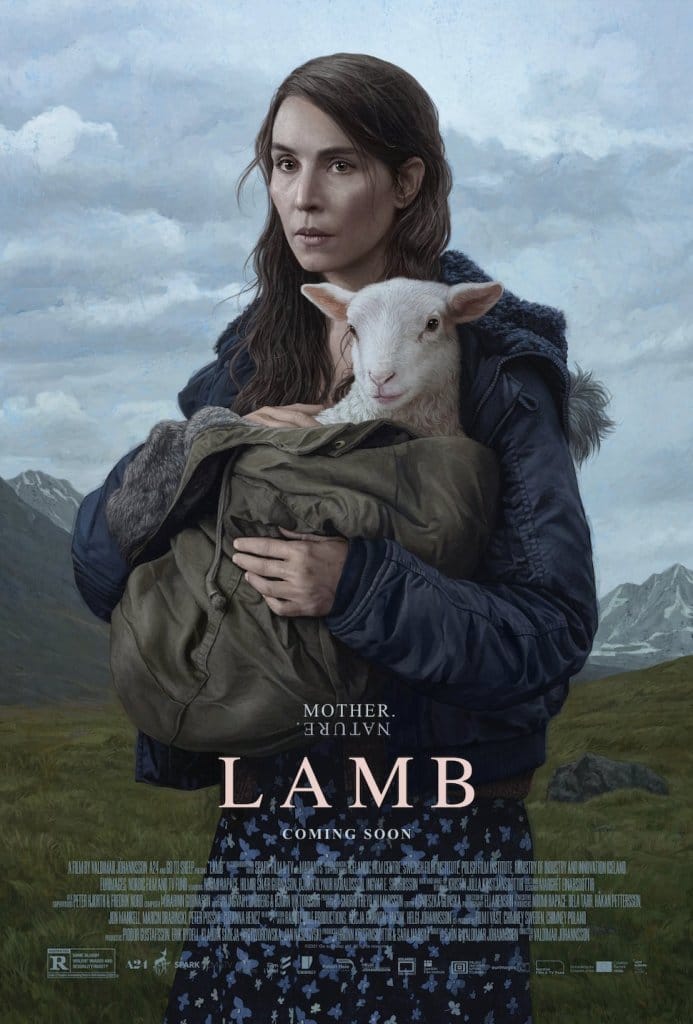
Celluloid Screams 2021: Lamb

There no other obvious way to start this review than by saying: Lamb is an odd one. Beautiful; sure. Evocative; yes. However, it only tantalises at the mythology or events which underpin the narrative, and as such the world it offers is a partial one. How forgiving you are of this will depend on how you weight aesthetics and mood against old fashioned coherence.

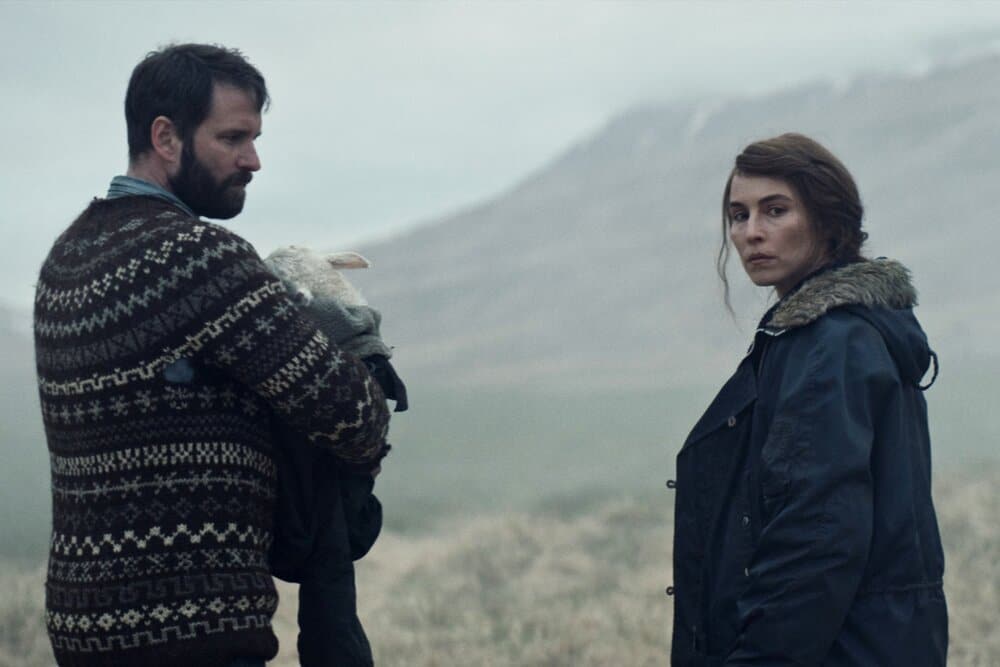
Lamb is loosely based on a story from Icelandic folklore – though you would only know that if you’d read the film’s ‘liner notes’ – and it features a married couple, Maria (Noomi Rapace) and Ingvar (Hilmir Snær Guðnaso). They are sheep farmers somewhere in remote Iceland, a thankless enough task, but one underpinned by a certain lack of communication between them; they simply get on with the jobs at hand. Other critiques have noted their relationship as characterised by deep misery, though this reviewer didn’t read it as anything that severe, more a kind of unsaid acceptance of their lot. Things are about to change, however. At winter, something ‘other than normal’ seems to be threatening their flock (and one of the things which this film does amazingly is to show animals apparently getting into their acting roles). Come lambing season, one of their ewes delivers a lamb with some sort of as-yet unseen difference. Rather than placing the lamb back with its mother, Maria takes it – wrapping it with a shawl as if it was a human baby. This all happens very early on in the film, by the way, so hopefully isn’t a spoiler; more anon.

At this point, her decision to do so is a mystery; likewise, the acceptance of this lamb, christened ‘Ada’ by Maria, simply takes place with a largely accepting response from Ingvar. Maria’s maternal jealousy swiftly shapes events for the worse, but it’s the fact that Ada seems to be some kind of human-sheep hybrid which begs the most questions; neither ‘parent’ questions it. The return of Ingvar’s brother Petur (Björn Hlynur Haraldsson) affords the script one or two opportunities to question this bizarre course of events, but other than generating a handful of suggestions of some kind of sexual undertone between Maria and Petur, simply slots another family member into this set-up. We simply observe what Ingvar refers to as their “happiness” in raising little Ada.

The film is sweet and considerate of this happiness, and this is one of its key strengths. Indeed, Lamb did not turn out as I expected, which was either as a symbolic exploration of the pain of loss, or a riff on the perils of nurturing unnatural offspring – something like Grace (2009). Lamb is neither of those, and Ada – even as a CGI-generated entity – is a pleasant little critter; director Valdimar Jóhannsson has done a great job capturing the nuances and commonplace gestures of small children, even if said small child isn’t your average child (can we also assume that putting Ada in a wool sweater was an example of the film’s few moments of dark humour?) But in focusing on this meandering family bliss, the film omits things, choosing to say almost nothing about bereavement or the impact of it. There are gaps, which prioritise atmosphere, but at some expense to how easy it is to engage with these events. Given that the film opts for the trendy device of adding on-screen title chapters, there must have been some awareness of providing structure and linearity, but it doesn’t really arrive. (That being said, do not watch the film trailer, which condenses down all the measurable plot points and therefore ruins them in ways which no review has done).

Lamb has many merits – its performances, its terrific setting, its quite unique strangeness – but it can’t quite offset its omissions with these. Taken as a whole, though, it’s a gentle and considerate piece of work which will charm many viewers with its careful ambience.

Lamb (2021) screened as part of the Celluloid Screams film festival in Sheffield, UK.