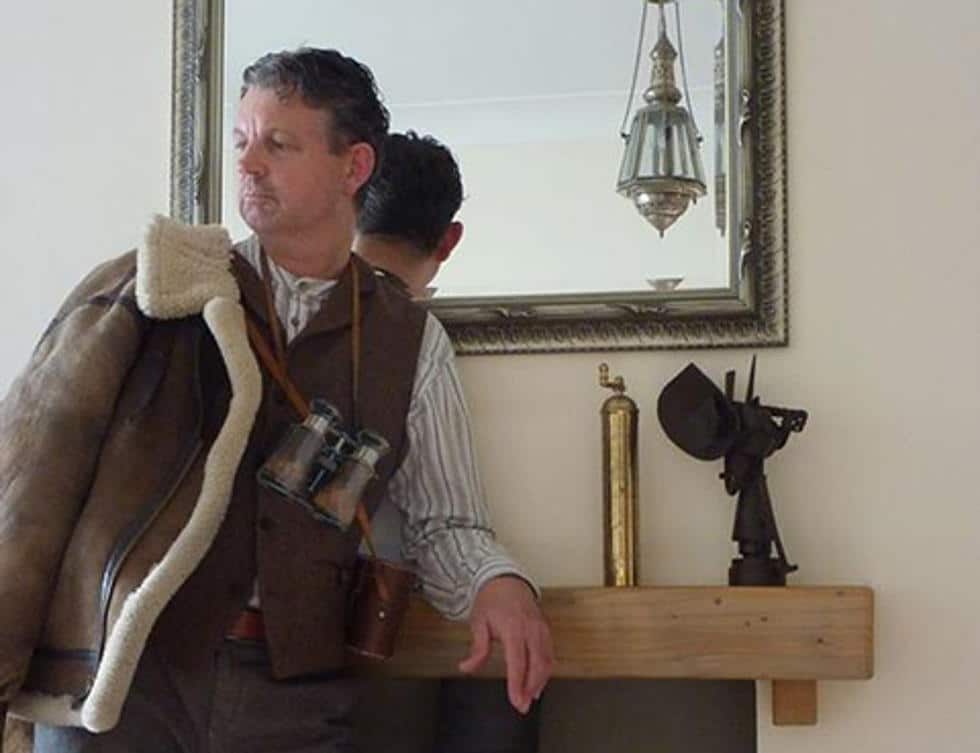
Drumming with Dead Can Dance & Parallel Adventures – Peter Ulrich

Dead Can Dance have long been a deeply resonant, exploratory presence on the outskirts of alternative music. Never comfortably existing in one genre or another – no surprises there, given their incomparably wide range of musical influences – they have nonetheless formed a kind of breathing and thinking space for an array of punks, goths and even metal fans who, on occasion, want and need to step outside the usual. This state of affairs has, by the by, always been a source of surprise for the band themselves. Drummer Peter Ulrich joined the band in 1981, and has since then contributed to the band in different ways – not just musically, but in a management capacity, too. When not directly musically or professionally involved with Dead Can Dance, he has taken a turn as a ‘fan with a backstage pass’, alongside a solo career and collaborative involvement with other projects, such as This Mortal Coil. No one is better placed, then – in terms of close relationships and different perspectives – to provide insight into the history of DCD, and a career in music more broadly, during a period in time which will almost certainly never be paralleled. This memoir and history takes in a great deal, offers unprecedented levels of detail, but does so with a very affable, honest tone throughout.

With a brief but perfectly-formed foreword from DCD’s Lisa Gerrard, we start in the early 80s – with a tanking economy, leading to Ulrich losing his arts job just at the serendipitous time that musician Brendan Perry was looking for a drummer. Fitting in with an already eclectic musical style caused a brief shock to the system, but it began to work: friendships developed, and after a retelling of how a nascent DCD first relocated from Melbourne to London, Ulrich pauses to consider his own musical history: what influenced him, and what brought him to this point in his life. It’s an endearing personal story and – without necessarily trying to be – a reminder that this kind of introduction to music, with all its vital formative power, seems to have been transformed beyond all recognition today. Later in the book, Ulrich is magnanimous about the future of music in the digital age, though even taking the most optimistic view, it seems clear that something very specific has been lost, or at least irrevocably altered. But back to the book: a lot of Ulrich’s clearest early memories relate to learning the drums, but not exclusively: alongside this, the musical landscape is fleshed out with anecdotes about early record buying, musical lessons, genres, gigs and early forays into bands. Of particular interest here: a level-headed appraisal of the importance of punk in its own time, from the perspective of an outsider. There’s no fawning, no vitriol, but a considered weighing-up of punk as a genre. Also notable is Ulrich’s comment on what he calls the “dark broodiness” of Joy Division having an especial appeal and influence.

We get back to DCD here, taking a look at their creative processes and approaches to writing, then onto their early recording experiences, the band’s fruitful relationship with the 4AD label – and of course, early forays into touring, which always make me feel that local touring bands should get footballers’ wages (try a band member accidentally having full mains voltage flowing through them after a mishap with a continental plug). Incidentally, here’s something else which seems to have been largely lost, though on this occasion for the good: it sounds as though groups of skinheads at alt gigs were essentially like wasps, always with the potential to rage and ruin any event not to their liking. Goodness me.

The absolute wealth of information and recollection as we go along, largely in a linear way from this point, is exhaustive to the point of being quite bewildering in places; there’s so much here, from tour dates and venues, to anecdotes, to descriptions of new albums and recordings. It must have taken a great deal of cross-comparison to piece all of this together. It’s in the detail that the book really succeeds in weaving all of these dates, facts and figures into something engaging and cohesive: the local flavour, the sketches of notable people encountered along the way. Ulrich comes across as very personable, with plenty of rather wry humour and – underpinning all of that – a sense of genuine surprise and delight at being part of a diverse music scene, including a by-now pretty extensive solo career. It’s also charming to note that snippets of reviews and comments, even from the unfiltered world of YouTube and the like, make it into the book: clearly Ulrich reads them and reacts to them. Again, there’s that sense of appreciation.

Clearly, fans of Dead Can Dance will love this book: it takes you straight to the band’s formative years, influences and developments, following them to the present day. But, given the wide range of other bands and musicians who have briefly or otherwise flitted in and out of DCD’s orbit, it could well appeal to more general readers and music fans too, as Ulrich has really put together a kind of time capsule in some respects, whether that was an aim or not. His is an honest, knowledgeable voice, one which doesn’t omit things, or add a gloss to them: he simply describes his experiences, and the result is a very engaging read. The book also includes a number of photos and artwork, with an Appendix offering a guide to World Music (something more or less unknown to a lot of us) and an extensive discography.

Drumming with Dead Can Dance and Parallel Adventures will be published by Red Hen Press on November 15th. For more information, including how to order, please click here.

**Update** Since writing this book – and since the impact of Covid made its presence felt on live music – Peter has written an addendum to Drumming with Dead Can Dance and Parallel Adventures. With Peter’s blessing we have added his addendum to this post, but you can see the post in its own location here.

Such is the process of bringing a book into being, two years drifted past between my completion of my memoir and its publication in November 2022. A significant chunk of this period saw the world on pause while health organisations struggled valiantly to contain and control Covid 19, then tentatively emerging from its bunker. As we now head into 2024, another year and a bit has escaped since publication, and this overall extended period has thrown up some further ‘parallel adventures’ and reflections from which I offer this addendum:

April 2022. Following enforced cancellations of tour on tour, Dead Can Dance finally hit the road on a re-scheduled European Tour. Shortly beforehand, I heard from Brendan that preparations had been thrown out of kilter when Lisa went down with Covid while touring with Hans Zimmer’s orchestra, and a bad reaction caused her to miss virtually all the DCD rehearsal period – both a nasty scare for Lisa and a significant issue for Brendan who was introducing new arrangements of several DCD classics.

Percussionist David Kuckhermann was not available this time – principally because of commitments to his young family (ah, that rings a bell) – so Brendan was also re-arranging and redistributing percussion parts. For the support act, long-established DCD touring band members Astrid Williamson and Jules Maxwell would step into the breach, taking turns to open the shows with selections from their respective solo catalogues. In the months preceding the tour, I’d tried to help Jules arrange a couple of low-key warm-up gigs in England, but my efforts had fallen on stony ground, largely again because of the reluctance of venues to commit while the Covid threat still lurked menacingly in the wings.

The tour was scheduled to open in Glasgow on April 7th. As this would be DCD’s first ever show in Scotland, a couple of days later was our daughter Ellie’s birthday, and we (Ulrich family) had long wanted to visit the lands north of the border, Nicki booked the trip. In the foyer of the Royal Concert Hall before the show I was re-acquainted with Looby – the first time we’d seen each other since he’d toured with us back in 1987. Despite the passage in time, we recognised each other instantly, though he immediately demanded to know what had happened to the slug that used to live under my nose – an appendage which I hadn’t sported for nearly as long as I’d not seen Looby, and which we agreed had never been a good look (despite Confucius maintaining that ‘A man without a moustache is a man without a soul’). Also in the foyer was old DCD stalwart Tony Hill, making me envious as he was planning to get along to several shows on the tour while this would be my one and only.

I’d assumed Astrid would provide the opening set in her native land – albeit she’s a Shetlander – but it was Jules who took the stage, and surprised me with a set of folk songs rather than the more ambient, filmic repertoire I’d expected. Then, as the houselights dimmed, I waiting curiously to see how DCD would be greeted in Glasgow – notoriously difficult to win over! The initial reception was very warm, then took a while to properly lift-off, but ultimately the audience brought the house down for the encores as Brendan apologised that ‘it’s only taken us 40 years to get here!’ For a tour opening night, the performance was remarkably relaxed, with both Brendan’s and Lisa’s voices already hitting the highs, Astrid and Jules front of stage either side, Dan providing the percussive bedrock, Robbie flitting seamlessly from instrument to instrument as ever, and Richard supplementing his bass playing with some accomplished forays into the percussion department. The set covered pretty much the entire 40 year span of DCD’s canon and included seven or eight of the pieces we’d played live back in my drumming days. Amongst the new arrangements, I particularly liked how Brendan had breathed new life into “In Power We Entrust…” and “Severance”.

After the show we managed a quick chat with Brendan, Jules and Robbie before the DCD tour bus rolled out of town, leaving us with a couple more days in Glasgow, then a few days up around Loch Lomond. While our Tartan adventure was great, I was curious to know how DCD had fared the following night in Manchester Cathedral. Cathedrals can offer magnificent settings, but the acoustics can be very difficult to manage. I badgered Tony Hill for a report from the front line in the knowledge that, as a Manc, he’d be there on home soil. He’d been surprised – and in turn surprised me – to find that the audience was all standing, and reported that there’d been some mildly aggravated jostling around the Cathedral’s great pillars for a better view of the stage. But Tony had found the sound to be ‘special’ and considers that night’s rendition of “The Host of Seraphim” to be the best live version he’s ever encountered.

Back home, and rummaging around Norwich vintage emporium ‘Loose’s’, I came across an old bass (kick) drum case concealed under a rack of hanging rugs. I pulled it out to find the name ‘The Monochrome Set’ stencilled across the lid, a band I never saw, and whose path DCD didn’t cross during our early touring, but who are on my radar from having featured on the seminal and wonderful 1979 Cherry Red compilation album “Pillows and Prayers”. Both case and drum inside were in ‘heavily used’ condition, but after a light bit of bargaining, I secured it for 40 quid. Although the heads were knackered and a few of the tensioning bolts had seen better days, the shell was sound and it is, I believe, an old Tama Swingstar model, which will bring a tear to the eye of a fair few drummers from back in the day. With the noble efforts of Tristan who runs Drum Attic somewhere in deepest Somerset and keeps an heroic stock of salvaged parts from days of yore, and the purchase of a new pair of Evans EMAD heads, the Tama’s restoration is nearing completion, ready to feature in an upcoming recording. It seems to add something that there’s a bit of history behind it.

It’s been widely reported that Covid lockdowns caused much hardship to musicians prevented from earning their crust through live performance and having to rely on income from sales and airplay. This, in turn, brought back into sharp focus the issue of the pitiful level of payments squeezed out to songwriters by the various download and streaming services. Glancing through my own statement for the April 2022 royalty distribution from the PRS (the UK’s Performing Right Society) gave me a reminder close to home. To pick just one example, my song “The Scryer and the Shewstone” had registered a total of 215 streams/downloads across monitored European territories in the previous accounted quarter. As sole songwriter, I retain a relatively high 75% of the income on that song (the other 25% going to the publisher) – yet in total for that, I received the princely sum of 15.62 pence

At much the same moment, I happened to read a newspaper article which referenced a tweet by former Undertones singer Feargal Sharkey from March 2021 that a UK musician would need to register 7,343,157 streams per month just to pocket the legal ‘minimum wage’. The same article observed that, while eight out of 10 music creators earn less than £200 per year from streaming, the average base salary for Spotify employees in the UK is (or was then) £60,563 per annum, while in late 2023 it was widely reported that Spotify Chief Financial Officer Paul Vogel resigned his post after cashing in $9.3M worth of shares in the company. In Europe, new copyright regulations should now be starting to bring musicians an increased share of the proceeds of digital streaming, but thanks to the UK’s near-suicidal ‘Brexit’ vote and a government with its thoughts elsewhere, British musicians are back to square one. ‘Mad’ and ‘world’ spring to mind.

May 2022 brought down the curtain on the English Premier League football (soccer) season which saw Norwich City claim the dubious honour of becoming the most relegated club – having now managed the feat six times in the League’s 30 year history. I attended all but three matches, only missing two of those because I contracted Covid on the away trip to Newcastle and had to self-isolate for 10 days. I was lucky, thanks to the vaccinations, to get away with a few days with a bad cough. In a generally dismal season, the outstanding highlight was a 3-0 away win at Elton John’s Watford back in January, but ultimately both teams went down. Sir Elton apparently didn’t bear a grudge as Norwich’s Carrow Road stadium hosted a concert on his Farewell Yellow Brick Road tour in June.

When embarking on my memoir, I had no idea of the grief that lay in store when it would come to tracking down the images I wanted, and gathering the necessary signed permissions. It was epic – writing the book had been the easy bit! At final reckoning, we ended up with 32 illustrations and – I think – a decent balance between images already well-known to DCD fans, and others newly revealed. Several I found and would like to have used eluded me, but one in particular still bugs me. I didn’t even know of its existence until after I’d finished writing the text and Brendan emailed me a photo he’d found online with the subject line: “Hardly recognised you!” It had been taken at an in-store “meet’n’greet” in Paris in 1989 to which I’d accompanied Lisa because Brendan didn’t want to do it. The picture is amusingly odd in that, despite being over 30 and already a father when it was taken, I appear to be about 12 years old. I’m looking over Lisa’s shoulder as she signs an autograph, and there’s a promotional backdrop of “Serpent’s Egg” album covers behind us. The photo is (or was) uploaded on the Pinterest page of a user called only ‘Yaroslava’, but all attempts to contact her failed or were ignored, and in any case, it looks to be a picture she probably downloaded from a third party source, though we could find no trace of an original. It would have been very different from all the other images in the book, and it neatly illustrates a specific event described in the text… but it wasn’t to be.

DCD announced another European tour for the autumn/fall of 2022, and confirmed the re-scheduled US/Canada/Mexico dates for spring 2023. While the Americas tour broadly set about reinstating the shows cancelled and re-cancelled through the pandemic, calling the autumn tour ‘European’ was a little misleading. Although it would kick off down well-trodden paths through France, Germany and DCD-fanatical Poland, there would be debuts in the capitals of Lithuania, Estonia and Finland, and first times back in Oslo and Stockholm since our Scandinavian mini-tour in 1984.

In June 2022, former Cocteau and 4AD label-mate Liz Fraser emerged from self- imposed exile with the fruits of a collaboration with partner Damon Reece (drummer in stints with Echo and the Bunnymen, Spiritualized and Massive Attack) – both project and EP called “Sun’s Signature”. At pretty much the exact same moment Kate Bush – apparently without lifting a finger – reached number one in the UK charts (and, indeed, around the world) with her 1985 single “Running Up That Hill” – a mere 37 years after release. This record-busting feat – the longest ever period between release and hitting numero uno – was the result of the song being prominently featured in Netflix TV series “Stranger Things” which poured it down the collective throat of a global audience. Even at the pitiful royalty rates I bemoaned a few paragraphs earlier, with Spotify logging well over 300 million streams and with the song reportedly appearing in around two million TikTok creations by the end of June, a startled Kate found her bank balance expanding by substantially more than minimum wage. The phenomenon also makes her the oldest female singer to attain the chart summit at 63. Keen-eyed fact-absorbers will have noted that I’m the same age as Kate so, probably illogically, I’m rather chuffed. I’d also like to point out that my 1990 single “Taqaharu’s Leaving” would love to be rediscovered should anyone…

In support of the charity our daughter Ellie then worked for, Nicki and I went to a fund-raiser for Prostate Cancer UK at London’s Royal Albert Hall on June 22nd hosted by Jools Holland and his big band which provided our first live sightings of an array of big name guest performers, including Sir Rod Stewart, Sir Van Morrison and ‘Sir-in-waiting’ (perhaps – though he might not accept if offered) Paul Weller. Highlight of the night, though, was an appearance by Celeste, disappointingly limited to a single song. I’m not sure if she was ‘new’ to a lot of the audience, but there was a discernible ‘electric’ surge through the gathered mass during her performance and, while I’d been mightily impressed when I’d previously seen/heard her on Jools’s TV shows, it was genuinely thrilling to hear her sing live. The same week ended with the post-Covid return of the UK’s Glastonbury Festival. DCD have never played it, and I’ve not been as a punter – a quarter of a million people in a field doesn’t fire my desire – but it’s always compulsive TV viewing. Top spot went to another senior knight of the realm – Sir Macca still rocking as he turned 80 and became the oldest ever headliner (hats off to that) – but a smart bit of scheduling saw the previous night fronted by the Festival’s youngest ever headliner – Billie Eilish (at 20) – whose set I really enjoyed.

The World Wide Web continues to veer between indispensable information source and purveyor of utter tosh. I was alerted to a site called ‘allfamousbirthday’ which purports to dish the dossier on celebrity folk, and wherein I’m apparently worthy of a listing on account of being a ‘famous percussionist’. Initially the personal details were correct, having been lifted directly from my verified Wikipedia entry, until the website’s algorithm determined that my August birthdate renders me a ‘Capricorn’ (if you don’t know, look it up). This early clue to questionable content was then royally trumped by the revelation that my parents were Grand Duchess Anna Petrovna of Russia and Charles Frederick, Duke of Holstein-Gottorp, and my spouse is, or was, Catherine the Great. Presumably then spotting that Catherine the Great died in 1796, the no-flies-on-me algorithm advised ‘as of May 2022 Peter Ulrich is not dating anyone’. The site further confessed not to know my shoe size (though tantalisingly my body measurements ‘will update soon’), but revealed my net worth to be ‘approximately $1.5 Million’. Bouyed by this wonderful news, I ordered a luxury yacht…. but then failed the credit check. Pah!

August 2022 bestowed grandparenthood on Nicki and me, courtesy of daughter Louise and partner Chris introducing baby Anna to the world. Utterly joyful – enough said. Later the same month came a new album from Lisa’s ongoing collaboration with composer Marcello De Francisci, this called “Exaudía” and said to be inspired by the expulsion of Sephardic tribes from Spain in the late 15th to early 16th centuries, and their subsequent dispersal around the perimeter of the Mediterranean. The album’s seven pieces give great breadth to both Lisa’s vocal styles and Marcello’s compositions, ranging from gentle, tender passages to moments of swirling drama, and have a thematic base in that heady cooking pot where the musics of Andalusia and northern Africa meet, which I love. As a small aside, there’s an interesting interview with Lisa and Marcello on YouTube with our friend and great music supporter Claudio Bustamante on his Fairfax City Music channel – worth checking out!

For the final months leading up to publication of my book, I was deeply back into my old press & promo role, compiling e-lists of music and literary reviewers, sifting through old contacts, drafting my news releases, designing a postcard, identifying retailers who might support it, checking out upcoming literary festivals, and so on. In late October my parcel of author pre-publication copies landed on the doorstep and there I was holding a copy of my first book in my hands – much akin to the thrill of receiving my first vinyl record decades earlier. Publishers Red Hen Press had done a fabulous job – the cover which I’d only previously seen in e-form looked great, and there’s a lovely kind of sheen matt finish on it which doesn’t fingermark. This moment suddenly made the exhaustive process a reality, and shortly after, on November 15, 2022 – publication day arrived.

There was no launch party, no fanfare and no blaze of publicity, but a websearch of the title quickly revealed that Red Hen’s distributors had also done an amazing job – my title was listed by booksellers across the planet. I’ve no idea if it sells in Norway, Switzerland, Chile, Columbia, Taiwan or Korea (to pluck a few retailer locations I’ve seen at random), but it’s out there! Reviews have rolled in steadily ever since and have really exceeded my expectations. I won’t regurgitate them en masse here – suffice to say that, happily, as well as bestowing high praise, they broadly bought into what I was trying to achieve, a few examples of which include:

‘…so different from the typical sex-and-drugs-and-rock-and-roll memoir…really smart recount of a life in music’
Eric Alper, That Eric Alper Show, SirusXM

‘…detailed descriptions of the band’s [DCD] unusual songwriting and recording processes left me pretty enthralled’
Greg Fasolino, Goth and Post-Punk historian

‘deftly weaving in tales of life… a vast musical landscape’
Jane Cornwell, Songlines Magazine.

Happier still, the response from DCD fans across online forums and social media has been overwhelmingly positive, for which I’m hugely grateful. It’s very exciting to create that connection with people who have supported our music over the years and to provide a means for us all to relive the experience. I was also somewhat unexpectedly thrown back into contact with various characters from the plot. Brendan put me in touch with Ivo Watts-Russell for, I think, the first time in around 30 years, triggering a very touching email exchange. Ivo really enjoyed the book and particularly felt I’d captured the serendipity of those early 4AD years when everyone was winging it, acting on gut instinct and clinging onto the stone that had been set rolling down the Alma Road hill in London SW18. Steve Webbon of Beggars Banquet independently gave me much the same response, while Ivo tipped off former Cocteaus and 4AD manager Colin Wallace who then similarly embraced the retro ride and memories. Former v23-er Tim O’Donnell sent a hearty thumbs-up from Pennsylvania, while original DCD bassist Paul Erikson sent his seal of approval from DCD birthplaceMelbourne. Piano Magic’s Glen Johnson was in touch, having received the book as a birthday gift from his brother to bring his own memories flooding back, and we met up at London’s Barbican Centre for him to interview me for his ‘Arcane Delights’ website. Projekt’s Sam Rosenthal loved a story I recount in chapter seven about a dinner one evening in Venice, and then give Lisa’s quite different recollection of the same event, thus confirming his belief that all memory is faulty and there is no reality… a somewhat questionable endorsement for a memoir!

While all this activity was a pure delight, my big opportunity to ‘shift some units’ was going to be the merchandising for DCD’s upcoming tours of Europe and North America. I was in planning for this, as well as hoping to fly over to the States with Nicki to catch a few shows, when news of the cancellation came through. In my fan capacity, I immediately regretted not having attended more shows in the 2022 tour, but this was also a big blow to sales. The American tour was due to play to 60,000+ people, and losing the opportunity to put my memoir right there in front of all those fine folk… well, no need for explanation. Along with the DCD fraternity, I awaited news.

Continuing to check my memoir’s availability across the globe, I found it offered on the website of American supermarket giant WalMart then, scrolling down the page, nearly toppled off my drumstool on encountering a suggestion panel headed ‘Similar items you might like – based on what customers bought’ proffering “Spare” by Prince Harry. Really…??? I clicked through to “Spare” to see if the Duke of Sussex’s readership might be returning the interest, but disappointingly my tome was nowhere to be seen.

March 2023 saw the release of a debut album by an artist unfamiliar to me – Lucinda Chua. What caught my eye was a review in the UK Observer newspaper which began: ‘Signed to 4AD (home to the Cocteau Twins and Jenny Hval)…’ and how curious it seemed that 4AD might be summed up thus. Thinking about it further, I guess writer Tara Joshi had simply chosen to bookend the label’s output with one of its earliest acts and one of its most recent. In April, Cincinnati kids The National – who had inadvertently become a 4AD act following a reshuffle within the Beggars Banquet stable back in 2009 – released new album “First Two Pages of Frankenstein” featuring a guest appearance by global superstar Taylor Swift, which somehow seemed an extraordinary stretch from those early ’80s days! Then in May, 4AD alumni Nick Cave unexpectedly (I suggest) popped up as an invitee to the Coronation of King Charles III of the United Kingdom and its Commonwealth Realms. Old Nick was spotted entering Westminster Abbey in deep conversation with former Archbishop of Canterbury Rowan Williams, prompting one journalistic wag to speculate they may have been discussing Cave’s lyrical disbelief ‘in an interventionist god’. Cave was later reported to have been ‘extremely bored’ during the ceremony, begging the question what exactly was he expecting?

Old 4AD connections seemed to be flavour of the moment. In April a contestant on the BBC’s renowned quiz show “Mastermind” nominated ‘The 4AD Record Label’ as his specialist subject for two minutes’ worth of hard grilling by presenter Clive Myrie. Much to the glee of a swathe of the old guard, Colin Wallace emerged as the answer to one of the questions, setting off a chain of messages including Tanya Donnelly and Emma Anderson posting on their respective Instagrams. In May Glen Johnson invited me to contribute some percussion and sundry bits to tracks for his project Allegory of Vanity, in which old Wolfgang Presser Mick Allen was also due to participate, though ultimately that fell through. And in June, a friend of mine – writer and filmmaker Juliet Jacques – secured a slot for her to interview me about my memoir at the prestigious Stoke Newington Literary Festival in north London, where I discovered on the programme for a couple of days later was Miki Berenyi discussing her memoir “Fingers Crossed”.

June saw Lisa awarded an Order of Australia Medal for ‘service to the performing arts through music’ in the King’s Birthday 2023 Honours List – richly deserved say I, and she seemed mightily chuffed. June also brought the announcement that filming had finally started on “Gladiator 2” – the movie having reportedly been in planning for some 20 years! Way back in this process, word circulated that Nick Cave had been contracted to write the script and had submitted a time-warped tale under the working title “Christ Killer” in which central character Maximus – revived and cursed to live forever – battles his way through the Crusades, World War II, the Vietnam War, and ultimately winds up in The Pentagon. Somewhat disappointingly, Cave’s concept didn’t fly, and it’s reported that the eventual storyline, written by David Scarpa, gives the central role to a now grown up Lucius, being played by Irish actor Paul Mescal. Whether or not Lisa will be involved in creating the soundtrack again I cannot say – principally because, at time of writing this, I genuinely have no idea. Then a while later, in a nod to a hitherto little aired string of 4AD’s bow, I spied a ‘Q&A’ in the UK’s Guardian newspaper with Jane’s Addiction frontman Perry Farrell in which, when asked his choice of best song to have sex to, he replied ‘anything by Cocteau Twins – every song sounds like an orgasm’.

On the flip side, a headline caught my eye in a Songlines circular in July: ‘MARRS supporting Iranian musicians at WOMAD’. It turned out to have nothing to do with pumping any volume up, and – more as a sad sign of the times – this current acronym is for ‘Musicians Artists at Risk Resettlement Scheme’, an organisation established in Northern Ireland in response to persecutions under regimes which censor or even outlaw music. It seems we are going backwards, rather than making progress.

Suddenly the online DCD community was buzzing frantically with the news that Lisa had given a couple of interviews stating that DCD was no more, dashing hopes that previously cancelled tour dates were being rescheduled behind the scenes. I’d been out of touch with both her and Brendan for a while, so thought to let the dust settle a little. Then Lisa contacted me asking how the book was doing and if there was anything she could do to help – she gave it a fresh shout-out across her social media which generated a lively response. And then, following a YouTube blog session I recorded with fellow Projekt alumni Bret Helm and post-punk aficionados Frank Deserto and Greg Fasolino comprising a two hour long appraisal of the DCD back catalogue, Brendan emailed to say he’d seen it and really enjoyed it, then shared it on the DCD Facebook page. That both these wonderful friends are still looking out for me after all these years is something very special.

Among various themes in my memoir, classification and ‘pigeon-holing’ of music pops up a few times, and 2023 has emerged as a year to bring that strangely elusive category of ‘Goth’ back into focus, at least here in the UK. In July the publishers of ‘Uncut’ magazine issued their ‘Ultimate Genre Guide’ to Goth, with a front cover listing the eight bands/artists it apparently sees as its most prominent flag-bearers:

Siouxsie and the Banshees
The Cure
Nick Cave
Bauhaus
The Cult
Joy Division
The Sisters of Mercy
The Cramps

The inclusion of Joy Division in this Top 8 surprised me as I’ve never thought of them as ‘Goth’ and can’t recall having seen them previously categorised thus. The Cramps were ‘psychobilly’ until becoming aware they were gathering some goth following and swiftly coining the additional category of ‘gothabilly’ to welcome them in. Emerging from a clutch of ‘Goth’ books – rather oddly issued in the height of the UK’s summer months – publication of original Cure drummer/keyboardist Lol Tolhurst’s retrospective entitled ‘Goth: A History’ might seem to confirm their credentials, until he revealed in an interview with the Observer newspaper in September: ‘there are loads of fans who are going to say ‘What? No, the Cure were never goth!’ In fact, the original title for the book wasn’t Goth. I wanted to call it The Lesser Saints, but the publishers said: ‘What’s that about?’ I tried ‘Post-Punk’ on my editor, but he said that was too broad.’

I’ve previously said in the early days of Dead Can Dance we were surprised – albeit very grateful – to be so taken to heart by the Goth community, and my memoir explains Brendan’s thinking behind the DCD name which had no intended Goth connotations at its inception. But, having been firmly planted in the heart of Goth territory by so many commentators, I combed through the 124 pages of Uncut’s Ultimate Guide and initially thought we’d been overlooked. A second trawl through revealed I’d missed the inclusion of “Severance” in a Guide to the Top 50 Goth Club Anthems tucked away on page 112, describing Brendan’s opus as “The ‘Jerusalem’ of the late-1980s goth scene”. If I’m honest, I would have been miffed if DCD had been entirely omitted!

To many it appears the currently emerging primary issue facing musicians (and artists/creators/performers more widely) is Artificial Intelligence – ‘AI’. It polarises opinion between the highly alarmed and the dismissive, and personally I’m inclined towards the latter. Polly Jean Harvey makes an interesting point in a recent interview in The Guardian newspaper: ‘I can’t imagine that the imperfection of the human touch will be outridden by the perfection of a computer. I think there’s something beautiful about imperfections and failings of us as human beings.’ I guess AI proponents would counter that imperfections can simply be programmed in to mimic human frailties where desirable – perhaps so, but I’m still not convinced. To me, AI in the music world is just another songwriter and performer. There are millions already out there, and that doesn’t prevent any of us continuing on our creative paths. For decades songwriters have tried to bottle the formula of what makes a ‘hit’, but while some clearly churn out more chartbusters than the average, nobody has ever come close to a definitive blueprint. And they won’t, and I’m highly doubtful AI will either. As regards another application of AI, while avatars may be harnessed to great effect to bring back to life and re-imagine performances of artists and bands no longer with us, would that ever entirely replace the live shows of human beings? And OK, I appreciate that ‘deep fake’ videos in which artists can be replicated and misrepresented are bad news, but those artists (and their management people) are going to get wind of such incidents almost immediately, and can issue disclaimers to their legions of followers and complain to the hosting media – seriously annoying, sometimes upsetting, and a sad reflection on elements of our society, but still not an overly-daunting threat to the artistic community… is it?

The last album of The Peter Ulrich Collaboration’s trilogy – 2019’s “Final Reflections” – opens with the song “Artificial Man”, whose lyrics were written by chief among my cohorts Trebor Lloyd, and in which the protagonist is ’empty of all feeling’ and ultimately confined to an ’empty hell’ – ironic, perhaps, that Trebor found a source of creative inspiration in the robotic world. The clue is in the tag – the ‘Intelligence’ is, by definition, ‘Artificial’. Sorry to bang on, but can a computer be given the ability to create a catalogue of music as widely varied as that of Dead Can Dance – from (and I pluck randomly) “The Trial” to “The Host of Seraphim”, to “The Ubiquitous Mr Lovegrove” to “Kiko” to “Dance of the Bacchantes” – but incorporating the intangible essence of what makes all those pieces intrinsically DCD? And even if it can, what really would be the purpose? And can AI clone and re-project Lisa’s spine-tingling live renditions? I’m doubtful, but in any case, isn’t that just like offering people the chance to go and see a virtual tribute act? Maybe I’m missing some greater point, but I’ll stick with the real world and its imperfections… thanks!

Updates from Lisa’s world find her remaining in insatiable demand for movie soundtracks. Another intriguing collaboration with Marcello De Francisci has spawned the music for a Nepalese film “Gunyo Cholo”, while a return to her earliest big screen collaboration saw her contribute to Michael Mann’s latest blockbuster “Ferrari”. I still love that Lisa’s voice can sit with equal comfort in such extraordinarily different worlds!

Returning to another theme of my memoir, it seems that sales of physical music formats are going from strength to strength, with 2023 seeing a rise in vinyl sales for the 16th consecutive year while CD and cassette sales continued to hold up. Seemingly an increasing number of people weaned on the disposable, background noise of streaming are newly discovering the joys of getting immersed in an ‘album’ and properly ‘listening’ to music. And for those readers who recall my particular frustrations with UK music retail chain HMV, it was bought out of administration by ‘Canadian tycoon’ Doug Putman in 2019 and is being revitalised with a greatly increased emphasis on vinyl sales. Symbolic of this rebirth was the recent re-opening of the original HMV store on London’s Oxford Street, originally opened in 1921 and whose closure four years ago had previously seemed terminal. The album format has long-since infiltrated my DNA, and its resurgence inflates my optimistic sails.

Talking of albums… just as I was about to sign this additional chunk of memoir off, Brendan has leapt back into the spotlight with a retro classic. His beautiful first solo album “Eye of the Hunter” has been re-mastered and re-released in a package together with his live solo performance at London’s ICA in 1993. I wax lyrical about this performance in Chapter Eight of my memoir, but hadn’t previously realised it had been recorded, then the tape stashed away in the proverbial attic. It’s wonderful to be transported back these 30 years later and re-live the experience. And I believe I’m right in saying that it’s reunited Brendan with 4AD for the first time this century. Anyway, it’s been on repeat play in our house since I got my hands on a copy, and I can’t recommend it strongly enough. That feels like a perfect point on which to end.

©️ Peter Ulrich 2024
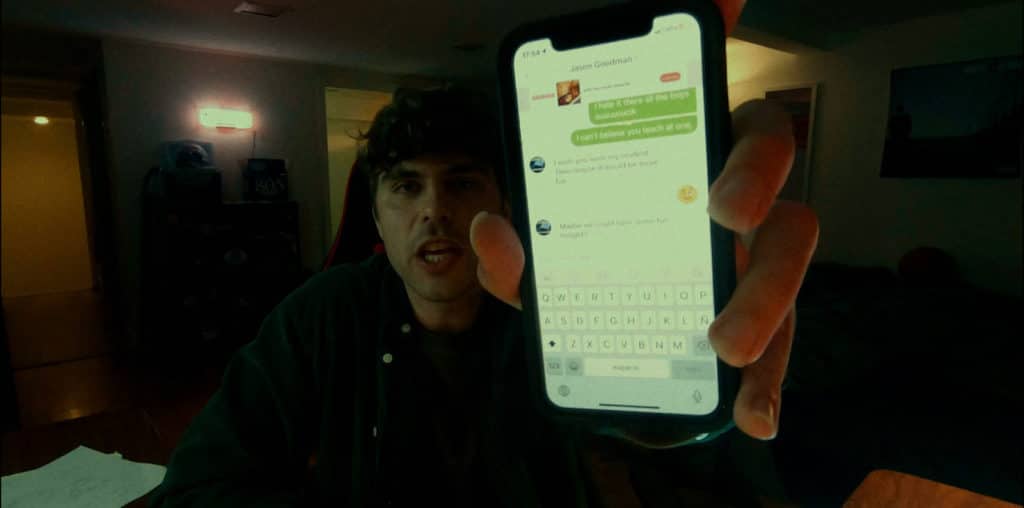
Raindance 2022: Low Life

In the days of the YouTube famous, everyone wants a gimmick to get them noticed – even if it means an element of personal risk. It’s a way to get ahead, right? This phenomenon has steadily started to make its way into cinema, where looking at what people are prepared to do, and at what cost, is a source of modern fascination. Though of course, a lot of the things people do on their channels are themselves inspired by examples from film and TV, so art imitates life imitates art. Low Life (2022) is an ambitious spin on this, though the social media aspect of the film acts more as a framing narrative than as an integral plot device; really what this film does, and does well, is explore a series of unfortunate events.

Benny (Wes Dunlap) has a channel called Creep Dunk: it’s essentially his own DIY spin on To Catch a Predator – the TV series – only rendered down into abrasive snippets as per the expectations of an online audience. Creep Dunk is a source of exasperation for the local police, whose cases it keeps jeopardising. This doesn’t bother Benny; in fact, he sees the negative attention as a badge of approval, a sign of his growing notoriety, and so he keeps going. He masquerades as underage girls and hooks people in, although it can be an abortive process at times – as shown by an embarrassing early encounter. Still, he thinks he’s found a live one: a local teacher, who has been messaging what he seems to think is a Grade 7 girl, asking ‘her’ for explicit selfies. Benny takes a big risk, reaching out to this man and – out of desperation to get a big hitter, by any means – sharing his address, inviting this man to come over. This is all partly motivated by the attentions of a young fan, Nicole (Lucy Urbano) who found him this guy, a father of a friend. She also ends up involved in one way and another, and as she has aspirations to actually work with Creep Dunk, her awareness of the scheme adds another complicating factor. The stage is therefore set for a range of flimsy plans to collapse, though the extent of all of this – when it finally comes – is quite something.

The film moves quite quickly from being handheld, i.e. when Benny is actually recording for his channel, to a more conventional shooting style. This tells us that, really, it’s Benny’s story which is being told here, and the shift between a film made by him and about him helps the film’s overall readability, as well as getting rid of the issues around what would have been called ‘found footage’ once, but is now just filmed footage, shorn of a lot of the issues which were around before it was quite so easy to edit, adjust and present filmed material. There are some issues in the first thirty minutes or so of the film, however: a lot of the dialogue could be tighter, as it feels aimless; the poker game as a visual metaphor is rather laboured, and it’s really at this stage that the film risks becoming diffuse. Thankfully, the film begins to add in twists, starting more low key, but steadily escalating as errors, misunderstandings and shock developments occur.

A large share of this developing tension comes from a further exploration of Benny’s character, though it’s also at this point that some viewers may begin to struggle with the film, because: Benny is far from easy to watch. He’s clearly a liability, and assuming the film wants us to see that, then it succeeds. It’s just that not everyone may be up for that particular journey, as vital as it is to gleaning what is really going on and why. Make no mistake: Benny makes your nerves jangle. At first you can put that down to the ‘big voice’ of the small time vlogger, but nope, he’s like that all the time. He is an irate, frustrated and unstable young man, whose promising career as a basketball player disintegrated; this is something he clearly hates, as he continues to hover on the periphery of the sport, as if in a kind of arrested development. His channel and his attempts to ‘out’ these men speak to various needs, not least of which is as a way to lash out at a world which he feels pushed him aside. Other than that, he measures himself by how right or how liked he feels himself to be. Certainly, he is a challenging central character, and his positioning himself on a moral high ground is simply bound to come crashing down. But as much as it feels like Benny is bound to get himself in an inextricable fix, the film does an overall impressive job of playing this out. Once you understand what motivates him, you…can’t quite see past his character flaws, but you can understand them.

Whilst the film hangs onto a kind of ambiguity for a large part of its running time, it certainly doesn’t skimp on the action: this escalates further still in the last act, by which point this reviewer was fully drawn in. All in all, and by the end, Low Life feels like a modern-day parable; it brings its own lessons to bear on a scenario which feels, at least at first, plausible, recognisable.

Low Life (2022) featured as part of the 30th Raindance Film Festival.

Triangle of Sadness (2022)

If Triangle of Sadness (2022) could be rendered down to one message, it’s this: society’s new ‘aspirational’ goals are just as likely to come crashing down as everything else. The film offers up a world of floating wealth, glamour, vanity and privilege, calls the whole shebang into question and then glories in pulling it down. The resulting film is very, very funny and (usually) trusts the audience to get what it’s doing without shepherding them towards The Point. But it’s also a surprisingly dark film, which hammers its daft but essentially harmless protagonists into the sand in ways which can be as gruelling as they are engrossing. It offers a very well-observed causal link between farce and social commentary, hinting at the oh-so plausible idea that they’re often one and the same, given the society in question.

Carl (Harris Dickinson) is a male model: he’s had some moderate success in the industry, judging by his portfolio, but we’re shown in no uncertain terms that his job is, well, a bit silly. Parading around shirtless with a host of other young men distinguishable only by their ethnicity – the height, the hairlessness, the pout are all the same – he’s trying to get a gig where he has to showcase a certain kind of facial expression, as well as such tasks as – walking in a line. ‘Get rid of your triangle of sadness’, one of the panel suggests, meaning the frown lines around his brow. It’s good advice in terms of getting hired (which he doesn’t seem to be on this occasion) and also tough advice which he struggles to follow throughout the film, given the scenarios which unfold around him. Through it all, Carl has the vibe of a man who doesn’t quite know what’s going on, and can only trade in his good looks, because nothing else is exactly certain.

That being said, his good looks get him places, sure, but don’t immure him from being exploited and dismissed. Girlfriend Yaya (Charlbi Dean) is also in fashion – well, sort of, as an Influencer – and she has perfected the art of never seeing an unpaid restaurant tab; Carl has a go at railing against this, but they make it up of course. Theirs is chiefly an Instagram marriage of convenience, a relationship being conducted to get followers and to sell a lifestyle. Carl’s blithe confidence that Yaya will really fall for him one day seems to underestimate her as-yet untested commitment to the two-dimensional. For her, it’s a business thing, but she’s confident enough to peek out from behind this at times, knowing that even her complete honesty about her motivations won’t break this at-times very lucrative bond.

It’s a bond which gets them tickets aboard a very exclusive yacht trip. Not too shabby, given Yaya’s credit card was recently declined, but that seems to be the wages of Influencing – the ability to go somewhere nice for free, to do more of it. The rich and privileged aboard – a disparate bunch, but most of the older travellers seem to have made their fortunes actually doing something, even if you don’t like what that something is – are there to play, sit at the captain’s table, and occasionally acknowledge the crack team of staff hellbent on serving their every whim. Boss of the middle layer of humans, Paula (Vicky Berlin) takes these responsibilities very, very seriously, though she’s openly motivated by the promise of tips and praise nonetheless. But it’s worth remembering that the ship isn’t divided into two – masters and servants, to put it crudely. There’s another social class here, and one which goes largely unseen until their presence becomes very noteworthy indeed. The Filipino crew members – tending the engine room, cleaning the loos – are as invisible to those people in crisp white shirts as the crisp white shirt wearers are to the idle (if retired) wealthy above deck. It all feels like a very modern microcosm. There’s always someone getting their hands dirty, while another group of people enjoy all the appearance of hard graft on their account.

Things begin to go badly wrong on account of two key factors. First, the captain (Woody Harrelson) won’t leave his quarters, and Paula is horribly suspicious that he’s drinking in there. This could jeopardise the much-vaunted Captain’s Dinner, which is meant to be a highlight of the trip. (It’s also rather charming that, despite being hidden behind a door for much of the film, Harrelson’s character still dominates proceedings; it only takes hearing his voice at first, which is credit to what he does with this role.) Secondly, a storm is about to hit: it’s a hell of a storm, too, and it precipitates one of the funniest, most unexpected segues into physical comedy I’ve seen in a while. (Has anyone seen Taxidermia? Yeah.)

Would that have been enough? This well-executed shift into a more physical disruption of how the good times roll? Actually it would, but as much as director Ruben Östlund takes his time over this element of the plot – there’s more. Add in a captain who would rather fight the system he ends up supporting, a charmingly earthy, rags-to-riches Russian millionaire still very able to roll with the punches, a host of morally dubious but personally completely likeable guests navigating the hellish after-effects of the storm; still there’s more. Triangle of Sadness is not only able to shift its location, but uses this to take more time underlining the almost perfect fecklessness of the Influencer generation, now in an extreme situation. The ruined yacht and then the introduction of yet another outsider agency to question this tenuous class system is pitch perfect, and the final act of the film offers an engaging, perfectly ambiguous conclusion to all of this. It’d be remiss not to mention the character of Abigail (Dolly De Leon) who showcases that fecklessness by comparison, but when she asks her companions if they could catch fish, make a fire, cook – could she not be asking the audience, too? Most of us have more in common with the beachgoers, if we can call them that, than we do with Abigail. Then, at the heart of all this, there’s Carl again: is he being sincere, or is he just using his physical charms to get by – again?

This is a film able to sustain moments of charm and warmth alongside pitch-black humour and grotesque observation. The death of its star, Charlbi Dean – it goes without saying perhaps – is a tragedy: as a genuine former model who brings her insider knowledge of the industry to bear on her performance here, she is perfect, sweet and mean and honest and dishonest by turns. You can – just about – pity Carl, even whilst being eminently frustrated by him, and held apart from him. This is a film which leaves some big questions hanging without compromising on its verve and wit.

Triangle of Sadness (2022) is at cinemas now.

Raindance 2022: Pamfir

Somewhere in rural Carpathian Ukraine, just before a significant local festival: dad Leonid (Oleksandr Yatsentyuk) is back in his home village after an unspecified period of time ‘working away’, much to the delight of his adolescent son Nazar (Stanislav Potiak). It seems at first that he’s been in jail perhaps, or otherwise prevented from being around; whilst that doesn’t turn out to be true, we do glean that he has a history of cross-border smuggling which has kept him elsewhere, but he wants to leave all of that behind. Leonid is, or wants to be, a changed man. This all sounds very much like the detective who has one day left on the job, doesn’t it? The penitent criminal, wanting to be around as a good role model for his son, wanting to finally listen to his wife’s advice; however sensitively all of this is done, it feels immediately clear that something ominous is on the horizon. Pamfir (2022) excels, however, in the careful, often subtle way it draws this cautionary tale together.

When it comes to Nazar, his mother Olena’s attempts to steer his path – mainly through getting him involved with the local church – leads to an unfortunate accident: on his watch, after an abortive choir practice, there’s a fire. This precipitates a large debt on the pastor’s behalf, because the church building itself is rented – not to mention a central part of life in this remote part of the world, which means things need to be put right as soon as possible. Leonid feels he has to shoulder this debt, showing a good example to his family and making things right again. This can be achieved via a quick return to crime – which can, in turn, be arranged via his own family: criminality here comes with a skeleton crew, and nearly everyone in the village seems to have a hand in things somewhere along the line. Leonid now starts to go by his old nickname of Pamfir again, and whilst it seems to be a small change, it marks something far more significant beyond itself – as well as precipitating re-entry into a world of scheming, backstabbing and violence.

Whether set in rural Ukraine or anywhere, elements of the ‘one last big scheme’ are of course familiar in film, but it also comes with its differences here: this is a world where the only legitimate work is back-breaking – Leonid/Pamfir digs wells by trade – and necessitates paperwork, work permits. The villagers have a sense of community, but theirs is a subsistence model of living, where one hefty criminal deed could be the only practical means to solve an otherwise insurmountable financial issue. So, elements of the story as old as time intermingle with something which feels very much rooted in a specific locale, with its own set of problems and expectations (and a film which ironically, due to the Russian invasion, had to be completed outside the country it so clearly springs from). There is perhaps a dash of A History of Violence (2005) in Pamfir in terms of the constraints on real personal change from bad to good, but there’s far more besides. The film is minutely observed, with quick, plausible moments of warmth and humour which run through the whole family, grandparents too; Leonid is a plausible, if flawed paterfamilias in a sparsely populated but ultra-macho universe, where he pops steroids to rev himself up enough to see him through a day or night’s illegal work. (He’s a big guy too, and the fight scenes are refreshingly free of those ringing Hollywood punches; here, things look and sound painfully realistic).

At heart, Leonid clearly loves his son, though absence and his own reflections on his lack of education make things difficult: Leonid and Nazar have an imperfect, tangled but loving relationship, exacerbated by Leonid’s own troubled relationship with his own father. The film maintains its careful, modest touch, and in so doing, successfully engages audiences with the fate of this family. The sense of growing peril weighs very heavily, and all whilst the film’s symbolism is allowed to dawn on you, rather than to land on you. Pamfir is full of the tragedy of the common man, his fight against corruption, and his subsequent struggles. All of this comes largely through beautiful wide shots, providing a sense of space and remoteness without absenting the people at the heart of the drama: characters are always held at the centre here, aesthetically and narratively. This is an impressive, painstaking film, made under terrific pressure but appearing as a confident, seamless piece of storytelling.

Pamfir (2022) features as part of the Raindance Film Festival.

Brooklyn Horror Film Festival: Old Flame (2022)

There’s a battle of the sexes on its way in Old Flame (2022), as is abundantly hinted by the opening seconds of the film. A woman’s screams immediately cut to a video call between a father, Calvin (Andy Gershenzon) and his two young children; Daddy is away for a few days at a college reunion, an event serious enough to require a fair bit of organisation, speech-writing and all. After what seems to be a perfectly loving chat with his kids, Calvin turns to a bit of a boys’ club of a keynote speech; there are other features of his time alone which suggest that he isn’t simply a cut-and-dry family man, of which more anon.

Things get more interesting when, as he prepares the main event room the next day, another attendee arrives very early: her name is Rachel (Rebeca Robles) and it seems that there’s some romantic history between her and Calvin, from way back. This prompts one of those rather awkward ‘long time no see’ chats, where the gap between the present and the past is bridged with a certain level of bravado – primarily on Calvin’s side, true, but not exclusively. Falteringly then, these two catch up: they share details about their subsequent relationships, careers and whereabouts, and decide to meet up again later.

Is this wise? Already the conversation – under Rachel’s guidance – has skirted uncomfortably close to sexual on several occasions; whilst this only adds to the generally fragile nature of their rapport, it seems to be an important way for her to vent, as she discusses things which have happened to her and mattered to her over the years. This in turn brings them both very much up to date, as it seems that Rachel has quite distinct reasons for attending this reunion weekend, which she then unfolds.

Old Flame is not an instant success; it takes time to get going, revving the engine through two distinct acts. Yep, the film uses intertitles to divide itself into ‘Acts’, which, by the by, stays on screen too long and comes with signature music: as ever, it’s an unnecessary tic, a trend which supposes audiences can’t know that the plot has moved on without something to read to that effect. And there’s more. To establish that these two characters are indeed college-educated, the script gives them a certain level of (no doubt deliberate) obnoxiousness, largely conveyed through clunky vocabulary choices (‘hyperbolic’ gets a good run) and long sequences of bickering over student politics, albeit that a lot of the lessons from Gender Studies courses are entrenched in everyday speech by now – but regardless, squabbles about intersectionality are not particularly engaging, even if accurately observed. Similarly, some of the steps towards understanding that Rachel isn’t simply a benign presence can feel quite clunky; honestly, because this is a film with so much dialogue, odds are that not all of it is going to land. However, when the tide suddenly turns, it really turns; suddenly the vibe changes, becomes sharper and surpasses the preamble.

The camerawork supports this shift very well, moving in and in as the distance between the characters – for good or ill – become less and less. Thanks to this, things become almost unbearable in places in an increasingly claustrophobic experience. At the same time, the narrative becomes more interesting, with shifting certainties and – sometimes – sympathies, as each character gives their version of key events. It’s here that the film oh-so nearly has the audacity to really push some of the genuinely challenging and unsettling realities around sex, memory and consent from different perspectives; it does, however, settle back down, opting for a (the?) more expected outcome, because however striking the imagery gets, a palatable resolution which reflects progressive modern mores is a necessity.

Still, Old Flame does all of this and raises all of these talking points in an economical ninety minutes and with a cast of just two actors. Not a horror per se, it is instead a steadily-ratcheting drama with a few engaging flashes of finesse, which go some way towards making up for its issues.

Old Flame features as part of the Brooklyn Horror Film Festival 2022. For more details on the festival, check out their Twitter.

V/H/S/99 (2022)

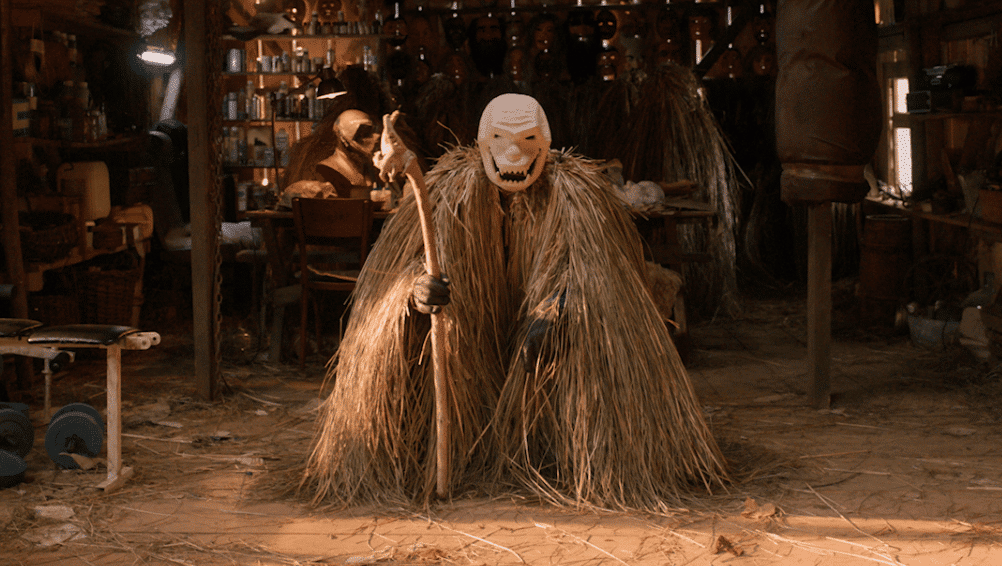
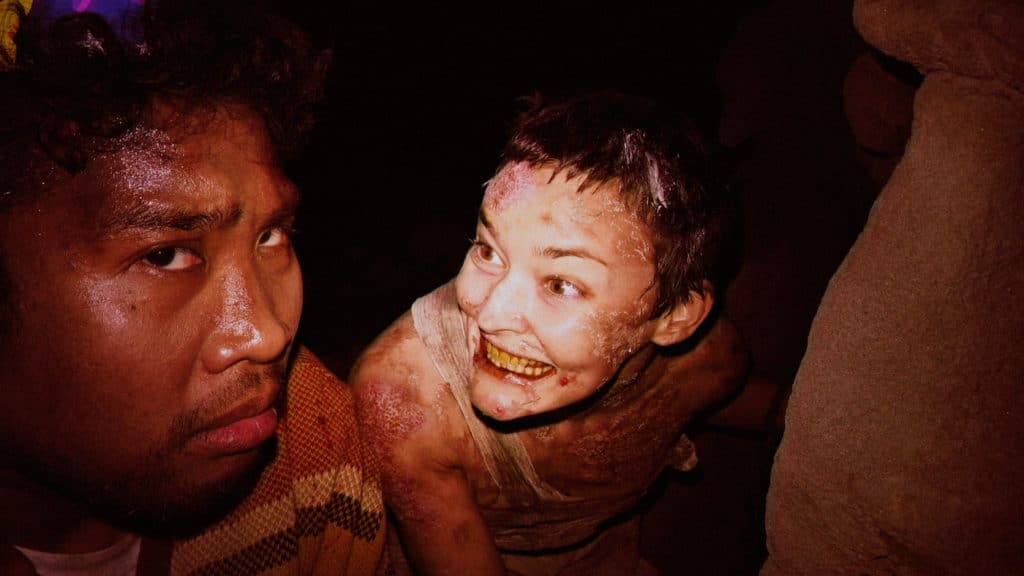
V/H/S/99 – Photo Credit: Shudder

Even those people for whom nostalgia seems to be a kind of tragic full-time job would likely struggle with V/H/S/99 (2022). Okay it’s better than V/H/S/94, but surely that’s damning with faint praise. It clings onto the same silly tics in any case, with the same religious devotion to all those shitty elements of analogue technology which were annoying the first time around. Second, third, fifth, seventh time around, seeing ‘TRACKING’ or watching a frame dissolve into snow as part of the chosen framing device of a brand-new film – well, you can only admire the singlemindedness. Use it to pad out five individual films of wildly varying quality, come what may, and that is some fighting spirit.

The annoying thing here (or one of the annoying things) is that one of the segments turns out to be rather good; one more is passable; the rest are dreadful. But they alternate, so although we get some much-needed variety and quality in the mix, the overarching film feels uneven: it goes bad-good-bad-okay-indifferent. It’s a big fat curate’s egg, essentially, and it takes nearly two hours to chow through. Then the individual films – despite having different directors, as usual – all share plot similarities, as they’re almost all about: pranks, teenage peer pressure, being the butt of the joke and finally, the supernatural, which rides in at the end like the cavalry. And although the dreaded wraparound feature looks to have been left out, we still get a silly conceit about a game of toy soldiers (evidently made to look as though a kid has made an animated film of his own) which feels like a wraparound, as it pops up – as if it’s been taped over, natch – again and again. Light relief? Or padding? Let’s go with padding. It felt like padding. A film which is one hour, fifty minutes long does not need padding.

The first segment, Shredding, is another group of young ‘uns trying to make their own film, which largely consists of pranking one of their number in particular as they enjoy the usual pastimes of skateboarding, being in a band, Hot Topic goth fashion and bursting in on one another on the toilet. When not doing that they share a tale of an urban legend, about a band called Bitch Cat (or Kat – should really be Kat) who died, alongside a number of their fans, in a club fire. Cool, let’s go see! So they go see, and it’s everything you might expect. Because this film is so weak and it’s the first one people will see, it operates as a kind of litmus test: it’d be interesting to know who turns the film off at this point. That’s an issue with this framework: as a Shudder original anthology, it seems to trust that the constant jibber-jabber and people talking over one another won’t be minded at all by its audience, who may well be doing the same. But you still need some surprises or some big scenes, and there aren’t any here, aside from the enthusiasm with which people setting films way back in time seem to relish the opportunity to throw in language which wouldn’t fly in 2022. There’s more like that in other segments, too.

The next film, thankfully, is mean-spirited and SFX-laden enough to distinguish itself from all of the other segments here, and it’s nice that the director in question is Johannes Roberts, who clearly understands how to fit a lot of horror into a short amount of time without the endless dialogue. Suicide Bid satirises the bizarre American tradition of putting those hoping to join a fraternity/sorority through hazing rituals; people have genuinely died as a result of these, and they have a reputation for being anything from spectacularly stupid to incredibly dangerous. Pulling this existing phenomenon into a horrific fantasy universe, we have the story of Lily (Ally Ioannides), who’s is told by her would-be sisters that she has to spend the night in a coffin: she can ask for help, but if she does, she can’t join, so the pressure’s on to go the distance. Oh, and just before time, the girls tell her all about a local urban legend about a girl who tried it and didn’t make it… It looks like there are a few nods to Fulci here – spiders, in-coffin camera shots – but even if this is a mere coincidence, then it certainly prevents a lot of the static shots in the film becoming turgid, and kudos for the very good SFX work which brings things to a decent conclusion.

Segment three is Ozzy’s Dungeon, and it looks like something between The Running Man and Pat Sharp’s Funhouse – being a cable TV gameshow where kids compete in increasingly grisly and ill-advised games to have their ‘dreams come true’. When a game goes badly wrong, a disgruntled parent decides to get their own back on the host. There’s some potential subtext here in the form of Ozzy’s blatant exploitation of his participants, but most of that gets parked so that the film can focus on what seems a lot like proto-ordeal horror, then not much more than a glint in James Wan’s eye of course. It’s all so shouty, though, and suffers a lot by essentially repeating the cable show sequence twice, before segueing into a plot twist which felt like a bridge too far – shifting the tension away from the initial key players, fine, but diluting the sense of involvement and interest in the initial story arc.

The Gawkers is interesting in the way it splices two key things together: permission for a group of deadbeat boys to spy on their ‘hot piece of ass’ neighbour – because ‘it’s 1999’ – with what feels like a completely obvious about-face where they get their comeuppance – because it’s 2022. The cast all fall asleep at one point, which isn’t a good sign in a short film, even if director Tyler MacIntyre does this in a knowing way. But there’s some modest fun to be had with this, if you suspend your critical eye for the effects used – effects even a VHS palimpsest can’t quite obscure.

Finally, there was hope when it turned out that Joseph and Vanessa Winter directed To Hell and Back, as their film Deadstream is an updated, improved descendant of this kind of found-footage style, which shows how far we’ve come, in real time. It starts off on the eve of Y2K, with a group of people preparing for an occult ritual in suburbia; fair enough, it was expensive to get tickets for things. It starts with a reasonably light touch and some humour, though it moves the action elsewhere (you may guess where) in what looks like another nod to Fulci; the problem is that the humour and characterisation begin to feel rather opaque against this rather samey, but all-encompassing background. That all being said, you wouldn’t envy any film being placed at the end of this anthology. By this point, after five with significant thematic overlap, minutes devoted to a frame which contributes nothing much, and irritating inclusions around the films themselves, the conceit has worn very thin.

Everything about the Y2K setting feels overdone, but equally, a waste: only one film even touches upon what was an interesting point in history, with real anxieties about the possibilities of missiles falling out of the sky. With the exception of a nod and a wink from the Winters – although little else substantive – the 1999 thing is only used as a last-chance opportunity to use the VHS framework before DVD comes in properly and wrecks the game. Beyond that, we get some gleeful word choices ‘from back then’ and some black lipstick (and, by the by, if you’re going to fixate on getting the jewellery and make-up right, remember that girls at the time plucked their eyebrows into incredibly tiny arches; all of the massive 2020s eyebrows can only give the game away. It’s a minor point, but it’s still noticeable). Of course, you can make the argument that the VHS thing is all meant to be part of the charm. You could even say it’s the point; it does feel like that in places. Fine. But if you take these stories for what they are, trying to forget the VHS frippery draped everywhere, then they are for the most part dilute and unremarkable. A few high points aside, V/H/S/99 is a hot mess, and it should be the last of its line.

V/H/S/99 (2021) will be released on Shudder on Thursday, October 20th 2022.

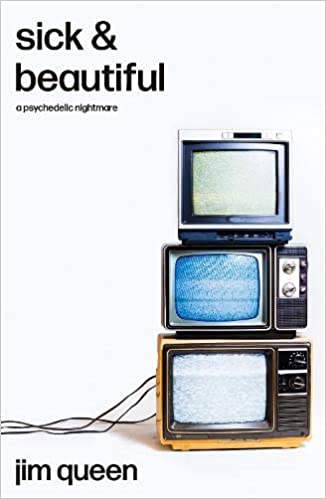
Interview: author of Sick & Beautiful, Jim Queen

Having recently read and reviewed Jim Queen’s debut novel, I was also keen to run an interview: it’s such a heady, hedonistic book, for starters, that it begs many questions. But more than that, I was interested in its back story, so to speak: it’s a book which feels both very alienating and yet very personal, so I knew that hearing about the process behind it would be intriguing. Jim was kind enough to oblige, and so without further ado…

WP: Before writing Sick & Beautiful – your debut novel – you’ve worked as a non-fiction writer, a journalist and copywriter. Talk to us about making that leap from one kind of writing to another: is fiction something that you’ve always wanted to do? And how challenging has it been to move from one into another?

Writing (and re-writing) such a beefy piece of work between the gaps of daily life is undeniably the biggest challenge. But I’d say the leap between each discipline isn’t a huge one. Journalists are never truly objective. They’ve also utilised fictional techniques since the 1960s New Journalism movement. Copywriting for brands and advertisers follows the same rules: you’re aiming to evoke an emotional response with a toolbox of verbal and visual tricks, just like a hack or a novelist. And the best fiction always reflects reality. This is what enables your readers to connect with the characters, even when your narrative tailspins into the surreal and fantastical. In that sense, I’ve always wanted to write a novel, but I’ve never wanted to write fiction.

WP: Your protagonist, David, is also a journalist who finds his way into a dreamlike world, where truth and fiction overlap. It’s an often dizzying sensory experience, written in such a way that David often comes across as quite vulnerable to what overtakes him. Was this your intention? And how hard was it to balance David’s very real traumas and feelings against the fantastical events which occur?

From blurring past, present and future, to overlapping reality with nightmares and drug-induced hallucinations, I wanted David’s first-person view to be capricious and disorientating. I don’t think there’s anything more powerful in storytelling than an unreliable narrator. But my desire to muddy these boundaries isn’t just to make the reader draw their own interpretations: it’s to make them question the borders of their own reality.

This intent was inspired by a quote from JG Ballard, speaking about his experience living in a civilian prison camp in Shanghai: “The realities that you took for granted – your comfortable day-to-day life, school, the home where one lives, familiar streets, the trips to the swimming pool and the cinema – were just a stage set. They could be dismantled overnight.”

The notion that everyday reality might not be what we assume, that it can all be altered or taken away, is fascinating and frightening. This possibility crushes David. It heaves him between fearless hope and hopeless dread. Ultimately, David’s vulnerability (and his growing awareness of it) is his biggest strength. Even as he transforms into a monster, his vulnerability makes him more human.

WP: Rachel Garland, who precipitates (or seems to precipitate) a lot of the novel’s developments, is an interesting character: what inspired this muse-like woman – if that’s a fair way to describe her? How do you think you intend your readers to think about her, or the relationship between her and David?

There’s a wonderful line from Lisa Taddeo’s Animal: “There is nothing in the world better than the past.” This is how we can understand Rachel. We never truly know who she is – instead, Rachel is an effigy of David’s hopes, fears, aspirations and memories. She implores us to question the muses and vocations in our own lives. Are the people and ideologies we latch ourselves onto what we assume? Or are they a mirror of our obsession, a symptom of a culture that renders individuals into objects? Like David, Rachel reflects those uncomfortable (and sometimes unbearable) truths.

WP: Sick & Beautiful, wherever else it takes us, is rooted in London – it suggests a deep knowledge, and a fondness for London. Please tell us more about this – why was it important to you as a key setting?

London isn’t just a location: it’s a character. And the architecture and personality of that character drives the narrative. It warps and informs David’s emotional state – an endless tug-of-war between infatuation and repulsion. It also facilitates an environment where atrocities can occur every minute, every hour, every day. This setting illustrates how humanity is a carousel of death and violence. The city, as well as the events of Sick & Beautiful, are just a snapshot of this grotesque merry-go-round. We can watch our senseless destruction with disgust and horror, but we can’t reverse or escape it.

WP: Your love of the horror genre is clear in the book, and you have included some horrific set pieces which would not be amiss in horror cinema. The book as a whole seems to idolise cinema, writing cinematic knowledge into your characters’ back stories and using locations which would be known to film fans – to name just a few of the connections. Why was this important to you?

I’ve been a horror fanatic since childhood (and, admittedly, I spent more time watching Blockbuster rentals than reading books). I don’t believe there is a genre more qualified to exhume darkness and beauty than horror. The role of horror cinema in Sick & Beautiful, and David’s fetishisation of it, is a device to cloud the peripheries of reality. But it’s also a love letter to an artform I idolise. This novel is my way of giving something back, and hopefully something unique, to the horror canon.

WP: What was the most challenging part of this writing journey? And where do you hope to go next, in terms of your writing?

Something Chuck Palahniuk underscores in Consider This: “I’ve known fantastic writers who never finished a project. And writers who launched incredible ideas, then never fully executed them.” In short, the biggest challenge is finding the time to write your first draft, shredding it to pieces, and then re-rewriting and proofing it more times than you can count.

That writing process, at least in my experience, is chaotic, unromantic and spiritually draining. But it can be absolving too. Nothing is more cathartic than killing characters you loved, writing without fear or shame, and allowing people to critique what works in your story (and, most vitally, what doesn’t).

I’ve taken these lessons onboard for the next book and, so far, the journey has been less painful. But the story itself? It’s weird. And it’s frightening. Really frightening. I just want to get it out of my brain so the nightmares will go away again.

Many thanks to Jim Queen for his time!

Brooklyn Horror Film Festival: Repulse (2021)

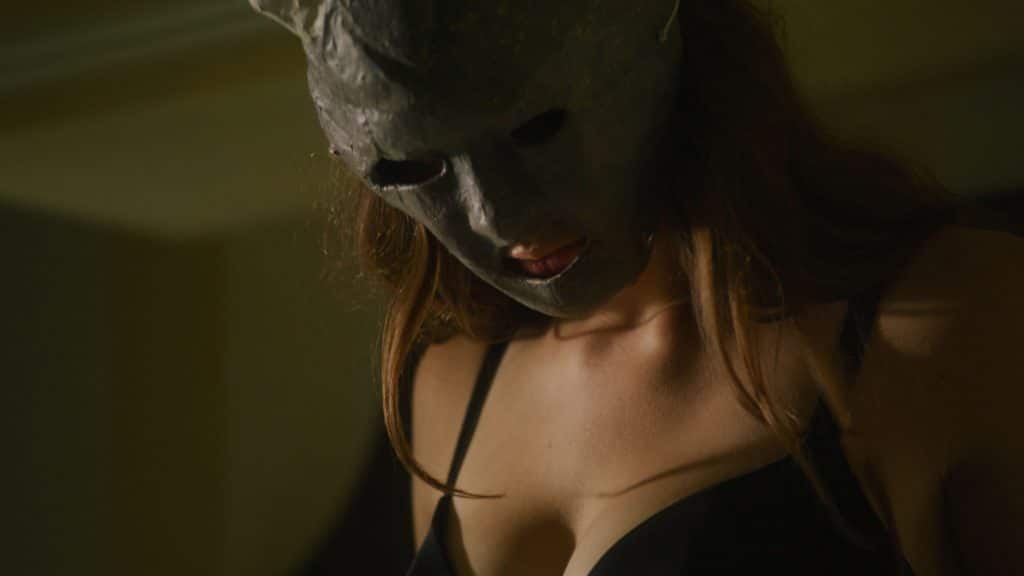
Clues that we are seeing the aftermath of violence are what introduce us to Repulse (2021): shattered glass, a trashed vehicle, a discarded hammer. But no sooner has this eerie calm unfolded, than it’s being disrupted by an angry scream; then we’re elsewhere entirely, now actually witnessing violence taking place. This episodic, fitful structure is here to stay and it’s unsettling, though its consistent handling weaves together a genuinely gripping narrative. It doles out the facts in this narrative very carefully.

The facts are these: firstly, we are made privy to a bitterly broken marriage. You can’t quite call this wealthy, modern home a gilded cage – it’s too minimalist for that – but what we do glean is the deep unhappiness of wife Katerina (Pavla Gajdosíková), so it’s a cage nonetheless. Husband Robert has found evidence that she’s been having an affair; as he alternates between cruelty and sifting through the house in a pair of black latex gloves, you can’t blame her for seeking any outlet other than this peculiar, cruel man. Meanwhile, elsewhere, we meet a man named Viktor (Stepán Kozub), living not only in a diametrically-opposed kind of poverty, but evidently dealing with the death of an as-yet nameless, faceless woman. That she matters to him in some way is clear; everything else is murky, but he does not appear to be the archetypal maniac in the dilapidated house; it seems that, as the timeline gradually comes together, he has been victimised, too.

It’s clear that these two worlds could quite easily have continued in their separate ways, each as miserable as the other, but an accident occurs after Robert leaves the marital home with daughter Sara – which brings them both into contact. The clash itself, and how events then unfold, comprises the rest of the film. That we are expected to piece all of this together, like a puzzle, adds an additional layer of cruelty to proceedings, perhaps. It is an engrossing device, however, and it successfully draws the audience into two very different, though equally alienated, unpleasant situations.

Horror tropes are openly, consciously selected throughout the film, but you can never depend on them. They can be teased apart, repurposed. Aesthetically, elements of Repulse look more than a little familiar; this would be a weakness perhaps, were the plot to just mirror these. But it doesn’t; it goes further than the sum of its parts, leading to a profound moral cold which hangs over the film throughout. Aside from the usual horror movie motifs – the masks, the cuffs, the general degradation – the film introduces other symbols. Cars mirror cars; broken glass peppers both the poor house and the rich one. Dead and damaged flowers often seem to be on the periphery. What’s being routinely trampled underfoot seems to be as important as what we see elsewhere, it appears. Overarching all of this, it also seems clear that the collision between these two families happens via momentary adaptations, sudden changes in direction, rather than via longer-held plans (such as in the similarly family-orientated horror, See No Evil). This works to Repulse‘s favour; tenuous connections become seemingly inescapable, and chance is key. This is, in itself, a fearsome idea. If it’s been done elsewhere, then it has rarely matched this level of detail.

The writing, directing and editing of this film must have meant an incredibly meticulous process, so its status as a first-time feature by Emil Krizka is all the more impressive. He has balanced intricacy against genuinely unsettling, frightening scenes, letting events and images slowly come together. Dialogue is minimal throughout, but boy, can you see every thought process going on in Gajdosíková’s head; Kozub, too, rarely explains himself, but you can envision a world of pain and trauma behind his own cruelty. He’s no two-dimensional monster. Nothing in this film is two-dimensional. Repulse is, in short, a massive achievement: it feels like a new, clever, confident kind of dark modern horror.

Repulse (2021) is part of the Brooklyn Horror Film Festival: for more details, please click here.

Brooklyn Horror Film Festival: Mother Superior (2022)

The opening scenes of Mother Superior (2022) do a couple of things: not only do they establish the film’s esoteric subject matter via the newspaper clippings, photos, art and symbols shown to us, but they also forge links to a German horror tradition which has, in effect, shaped horror cinema itself since its inception a century ago. Take away the colour (and the quick segue into a sequence showing us 70s-era analogue tech) and this feels like a clear and recognisable nod to early horror cinema; it captures something specific from the early-to-mid 20th Century which contextualises our story. As such, the film sets out its stall as an occult horror period piece, but it also has enough modern tricks and a sense of the cinema which has appeared in the interim between then and now to distinguish itself.

We get to the story itself via different forms of media; after the clippings, we next witness a police interview. A young woman, Sigrun (Isabella Händler) is having her interview recorded. Yes, this pushes the technological likelihood to breaking point given the 1975 setting is made abundantly clear, but it does allow an engaging narrative framework to come into being. Sigrun explains the events of recent months: she details a recent job she took at a dilapidated manor house called Rosenkreutz Manor. (Rosenkreutz – now, if ever there was a significant German name, that’s one.) Sigrun took a job there as a nurse, assisting the elderly Baroness Heidenreich (again with the symbolic names) who suffers from Parkinson’s Disease. We then switch perspectives, arriving at the pile alongside Sigrun, and thereafter, by and large, seeing the story unfold in a more conventional way.

The Baroness is exacting, with a long list of house rules and requirements, including an edict that Sigrun must stay out of the abandoned wings of the house – for safety, of course. Groundskeeper Otto (Jochen Nickel) helps to enforce all of these rules, apparently regarding the young nurse with suspicion. But, slowly, relationships begin to build, and the Baroness reveals that she herself was involved in medicine once. It transpires that she means her past role as head of a Lebensborn (‘spring of life’) hospital during the War, an SS project to both support and, to an extent, enable Aryan births. This is of particular interest to Sigrun: she never knew her own parents, having been born in a Lebensborn unit herself.

Her interest and investment are piqued enough to lead her to begin searching the old house for information, particularly on the identity of her mother. This, it seems, was always her goal in going to the house, though there are no sudden or easy answers for her. The weeks and months pass, and there’s more: whatever the Baroness’s old interests in the occult, it seems that they are not over, and much about the house corroborates this. Sigurd becomes increasingly drawn into the house, the household and what it potentially has to offer to her: this leads her to leave behind her old life, which was, after all, an alienated kind of existence, if a conventional one: ideas of destiny, belonging and magic begin to swirl.

There’s such a wide-ranging blend of horror elements and influences brought to bear on this economical, rather beautiful and purposeful film (albeit that it means things are rounded up quite abruptly; the film is a mere 1 hour, 11 minutes long, after all). Aside from the crumbling, remote house, the mysterious characters and the tantalising allusions to magic, there’s an even more interesting aspect; the solid horror tradition of younger women taking care of older, ailing women. Dolores Claiborne (1995) and Saint Maud (2019) spring to mind; there are of course many more. This motif is so interesting because the power balance is never straightforward; youth and beauty can be derailed by money, knowledge or power, and you can never suppose that an older or an infirm person is ever a spent force; they usually retain some peculiar means.

The story thereafter opens up to take on a fantastical direction, one which feels very familiar in some ways, but it’s bold enough to explore the historical Nazi preoccupation with völkisch magic – though it also departs quite radically from this, too. There may be some viewers who find these links unpalatable in any case; it would be a mistake to dismiss the film on these grounds, however, even though the film also humanises Baroness Heidenreich, with Inge Maux getting her performance tonally just right. It’s worth remembering that cinema has long utilised, explored and disrupted aspects of Nazi lore in a range of genres, from stony drama to lurid exploitation. Mother Superior is neither of these, though it is heady in some respects, surprisingly compassionate in others: beyond this it is also a fairly familiar-seeming search for belonging, with folk horror vibes which just happen to be quasi-Germanic – with some perhaps surprising feminist messaging, too, before we’re done.

Mother Superior will screen on 14th October at the Brooklyn Horror Film Festival. For more details on the fest, please click here.

Brooklyn Horror Film Festival – shorts: Creeping Terror

Ah, short horror films. Let’s assume that people are still making films about what they’re most afraid of these days; if so, then the Brooklyn Horror Film Festival’s Creeping Terror package brings us remote families, spirit incursions, bodily breakdowns, wicked imposters and a healthy dose of paranoia along the way. All of the titles achieve a great deal in their 15-20 minute running times: this is, and will remain, a formidable format when it comes to focused, innovative storytelling.

First up, Listen to Mother starts out with a brief introduction to trepanning, the procedure by which – from ancient times until relatively recently – people plagued with melancholy would drill holes into their brains. Now, this isn’t some preamble to a piece of pure gore; trepanning was believed to offer a spiritual dimension, literally ‘letting the angels in’. Take what you will from this; we are next introduced to a grieving mother and son, reflecting on the loss of a younger child. Leaving the room, it seems that the mother makes a significant decision about the grief she is suffering. But grief isn’t confined to this family; elsewhere, nearby, a social worker reflects on her own loss. Perhaps it is this which spurs her on, as she investigates the wellbeing of our first family.

Listen to Mother

Earnest performances underpin this story. It has also balanced its scares with palpable sadness, and this is what brings its story to life; you can genuinely empathise with all of its characters, however flawed or warped their decision-making. My only complaint here would be with some of the dialogue: it was unclear if we were meant to be able to hear all of it or not, but I couldn’t. All in all, though, this is a successful use of the format, with careful pacing and a very humane touch.

Shut, a Dutch film, joins the ranks of the excellent, thought-provoking horrors which have of late explored anxieties around ageing. And, like many of the best of these, it adds the potential for something monstrous, calling into question whether the horrors which unfold are linked purely to ageing, or indicative of more.

Shut

Jonas (Sanne den Hartogh) is heading to visit his father Arend (Jack Wouterse). Arend is getting on in years, but he isn’t frail: nonetheless, when Jonas arrives to an empty, dark house, he fears the worst. His sister Liese has been begging her father lately to move somewhere less remote; this disappearance seems to chime with her fears. But Jonas finds Arend out back – hammering a door tightly shut. He’s completely preoccupied with this task, and seems to be afraid; when he finally properly sees that Jonas is there, he seems scared of him, too. But why? Ultimately, Shut manages to sustain its powerful sense of ambivalence, though its tension ebbs and flows nicely, shifting our sympathies around.

OST has some things in common with other, reasonably well-known films. In its central plot focus, it shares some common ground with Berberian Sound System; in its female protagonist who gets drawn into a film – a world within a world – it is a little like Censor. However, all of that being said, OST does more than enough to distinguish itself, messing with horror norms by giving us not a damsel in distress, but a film professional, tasked with composing a score for an upcoming horror film. Jay (Prapamonton Eiamchan) is a perfectionist: she composes, and ditches, several versions of her work, to the despair of the film’s director. However, when she realises that the film itself is playing with aspects of Thai folklore, the project takes on a whole new significance. She has been raised on this lore; she knows that the spirits themselves have exacting standards when it comes to how their stories are told. This is an interesting idea which could be called meta – or, just enjoyed for the ways OST proves able to layer its different elements so successfully.

Tistlebu has a beautiful, if stark Norwegian setting and uses Norwegian actors; it also adds in elements of folkloric beliefs, though whether these have any pedigree beyond the film has not been easy to discover. But in any case, many of the elements explored will feel familiar; this is at heart an eco-horror which uses aspects of folk horror. A young couple, Sanna (Sacha Slengesol Balgobin) and Karl (Sjur Vatne Brean) arrive on a remote sheep farm to help stake out a new pasture for the recently-widowed Anne (Oda Schjøll). They are also tasked with tending something hidden in one of the farm’s outbuildings: it’s called a Tursemorkel, and it’s believed to protect the farm.

Anne shows them what to do; they seem to take these duties on quite readily, though the audience may well start working on their list of questions at this point. Work on the farm goes reasonably happily, at first. The Morkel has a strange influence on both Sanna and on Karl, though, each of whom deal with it independently. There are notable, if dysfunctional sexual overtones attached to the Morkel, but more than that, it begins to change, and to change them. Tistlebu conveys lessons about nature and belonging before it is done, albeit that these lessons end on a slightly odd beat; whilst it still works fine as a short film, here there did feel like there was at least some more still to tell.

Tistelbu

Finally, Miltown brings along some familiar faces: if you saw Hellbender a couple of years ago, then you might recognise some members of the Adams Family – its directors and stars. Here, they also play a family, but it’s a move away from the more conventional(ish) occult themes of Hellbender, under the direction of Chris Beyrooty and Connor Martin (who also wrote the Miltown screenplay).

This is a great little excursion into a hell/handcart situation, with engaging twists and turns, flashbacks, and moments of corroborative doubt which cast a shadow over eldest son, Bobby (Henry Lynch). Bobby rushes into the family home one evening, certain that his father cannot be his father; he swears to the rest of the family that this is the case, explaining his reasoning in seemingly convincing detail. But is he right? Miltown throws some sci-fi and good old-fashioned monster film elements into its modest runtime, adds in some humour and even some action sequences, and really does achieve a great deal along the way. It’s fun, but it’s also smart, keeping the audience as confused as scared as our key player, right until the end – when the conclusions we can draw deliver one final blow.

‘Tis the season: Brooklyn Horror Film Festival 2022

October is a busy month for genre film fans, and for folks on the East Coast it’s happily no exception as the Brooklyn Horror Film Festival prepares to launch this year’s event. Running from the 13th October to the 20th, it promises both a run of classic cinema and brand new titles. (Warped Perspective is covering a few of them, so please do watch this space.) For those of you who will be in attendance, or for those of you on the look-out for titles which are hopefully coming your way at a later point, check out the following five…

Nocebo

Eva Green, via her work on the wonderful Penny Dreadful series, is already known to many viewers as a magnetic and talented actor who seems rather comfortable around darker themes. So far, so good. Put her in a film directed by Lorcan Finnegan, whose film Vivarium has become a long-term source of anxiety and fascination for this reviewer, and the festival opener Nocebo looks to be a folk horror which throws up some important talking points too. Blending themes such as illness, hypochondria, folklore, class and power, it’s no doubt a title to seek out.

Mother Superior

A film whose story spans the decades between the 1940s and 1970s, Mother Superior is the story of a young nurse, Sigrun, whose origins are a mystery to her; she never knew her parents. When she takes a job caring for an ageing Baroness in a sprawling and dilapidated manor house, she becomes aware that the older lady may be able to cast some light on her story – but it is not without its price. Warped Perspective will be running a special review of this title during the festival.

The Weird Kidz

There are labours of love in film, and then there are hand-drawn animated features which take eight years to complete; The Weird Kidz fits into that last category, by the way. It’s a coming-of-age story, which in some respects overlaps with those other popular franchises and standalone projects made by people who also want to creatively explore the trials and tribulations of growing up in the 80s and 90s. But aside from its long and heartfelt development time, The Weird Kidz also stands ready to tell a heartfelt and creative horror-comedy tale all of its own.

Repulse

I have a feeling that Repulse is going to pack a punch. Boasting family dysfunction, minimal dialogue, unsettled chronology and a whole raft of weighty horror tropes, this debut film by filmmaker Emil Křižka explores what happens when two unconnected, but troubled families have their worlds collide in ways which are inescapable. All it takes is a chance event…

Warped Perspective will be running a feature on Repulse very soon.

V/H/S 99

Oh my, has the world of horror nostalgia got as far as 1999 and Y2K? You know what this means, folks. Soon the 2000s will be old enough to mythologise, and then it’s really time to look forward to the glue factory. Anyway, the V/H/S anthology movies have been popular and divisive enough to leave an indelible mark on horror cinema and its fandom; this latest instalment will likely do the same thing. Boasting a roster of directors from Johannes Roberts to Tyler MacIntyre (Tragedy Girls) to the team behind Deadstream, there is a real range of approaches and styles which should keep things interesting. It’ll be out on Shudder soon, and a review should also be forthcoming for this one.

Other highlights: the festival will be running a tribute to Lucio Fulci with screenings of some of his classic horror titles: A Cat in the Brain, Manhattan Baby, Zombie, The Beyond, City of the Living Dead and The New York Ripper are all screening, alongside a 50 year anniversary showing of Don’t Torture a Duckling. There are some excellent short film packages too – Creeping Terror will be receiving coverage here – and a few titles which we were lucky enough to see via the Fantasia International Film Festival: check out the grim and haunting Megalomaniac and also The Harbinger, a film born very much of a certain world-altering pandemic…