Hellraiser (2022) – the good and the bad…

The Hellraiser franchise is the thing that won’t die. Decades after its inception in the 80s, and since one excellent sequel in the form of Hellbound (1988), it has morphed and been sold on and changed and spoiled and (partly) redeemed down through the subsequent years. The original story’s Cenobites have walked the city streets, orbited the planet, even rocked up rather awkwardly to offer a rather banal plot explanation, hither and yon. But Hellraiser fans are loyal, and the speed with which they have historically thrown in their lot with the likes of Hellraiser: Inferno (2000) and Hellraiser: Deader (2005) speaks to their resilience as much as their passion. Even when you hate where it goes and what it does, you find yourself lining up to see it. Completely appropriately, the Cenobites inspire their own jaded brand of faith.

Rumours of a full ‘reimagining’ have been drifting around for years, though in more recent years we haven’t got much further than Hellraiser: Judgment (2018), as notable for swapping Doug Bradley for Paul T. Taylor in the role of Pinhead as for its own plot path. As for a true remake, or a ‘reconfiguration’, as Clive Barker referred to it? Rumours of directors have been attached to a potential project for years – Bustillo and Maury, Laughier – but nothing has ever come to fruition. So when Hulu, via Disney+ of all things, began mooting a new film, the general response was of muted excitement with some justifiable background levels of cynicism. The trailer was late to appear, given the looming release date – which caused some commentators to doubt it was coming at all – and then there were some murmurings regarding the casting of actress Jamie Clayton as Pinhead (I keep the gendered noun ‘actress’ here quite deliberately, as it was Clayton’s gender which contributed much to these murmurings). But then – bam – it was out, it was real and it was…not too bad at all, actually, albeit with a few key reservations.

The following feature is less a conventional review and more of a set of reactions to key elements in Hellraiser (2022) – as suggested above, the good and the bad – as felt by a lifelong Hellraiser fan who, yes, has sat through every single sequel, occasionally boring my co-viewers with unrequested comparisons to the novella, observations about Easter eggs and a general ruckus of heartfelt opinions. As such, the following article contains spoilers, so please don’t delve until you’ve actually seen the new film (which, by the way, I’d misread as being a TV series on first encounter, and can’t help but think that this would have been a great way to dole out the scares and the plot reveals in a more digestible format: a different approach to slow-burn tension, character development and general satiety. But enough about that thing which turns out not to exist; we have an actual film to discuss.)

The Good: Euclidean Architecture

The film wastes no time establishing that a key player here is jaded rich collector Voigt (Goran Visnjic), whose obsession with the…well, what we’d have known until now as the Lament Configuration box (more anon) has induced him to devote his entire home to the structure. This echoes initial ideas – and some, limited exploration – of the possibilities of the box as a blueprint for a building or buildings; previous films have hinted this, though it has not turned out to be integral to their stories (as you’d perhaps expect it to be). There were also some ideas about forging a link between the Cenobites and a bordello; these did not reach the point of filming, though the imaginative possibilities are quite something.
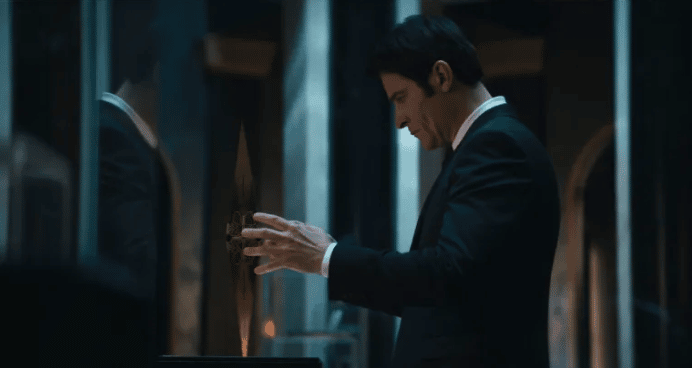
But back to the present: occultist Voigt understands a significant amount about the Cenobites and what they can offer; he has refigured his expansive home along these lines, with the aim of controlling and subduing them to his will. Bold. God grant us the singlemindedness of a rich, white man; one tried to solve war in Europe with a Twitter poll this week. Whilst comparisons to the Thirteen Ghosts (2011) remake come thick and fast here, there’s no denying that the aesthetics of this place are strikingly effective: the shifting panes of glass, the cages rattling down on polished marble, the overall use of space and lineation. This recurs elsewhere in the film though, so it isn’t simply down to Voigt’s money and (limited) abilities to control his fate. Straight lines and forced perspectives pop up throughout; even the kids’ playground where poor dupe Riley passes out early in the film turns into an intermeshed array of lines and angles. This might suggest that hidden agencies of order are at play in a disparate and alienated modern world or, you know, it might just look really, really good on camera, but the background design work in the film is a treat: it recalls aspects of Hellraiser (1987) but expands them, filling the screen, dragging angles and lines into impossible points in the distance and disrupting everything with geometric shapes filled with absolute black, with absolutely no light within. Beautiful.

Of course, this geometric obsession transfers onto the flesh, too – both of the Cenobites, and of those unfortunate enough to encounter them.

The Good (-ish) – 21st Century Cenobites

Speaking purely in terms of appearances here, this new array of Cenobites are good – or in parts, at least, they’re good. We have finally reached a point now, after riding out more than a few wilderness years – where CGI seemed to actively hinder illusion rather than permit it – where computer graphics genuinely augment certain scenes, blending more or less flawlessly with practical FX. These new Cenobites are rather dapper, by extension. Their pins and scars glitter with pearl and precious stones. Their heavy drapery has been replaced by quite scanty garments; you could go for a light walk in these (which they do, kinda). All in all, these Cenobites probably shop on Etsy.
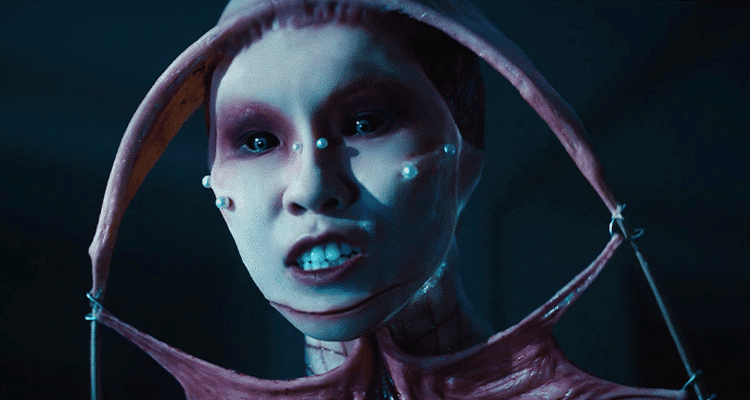
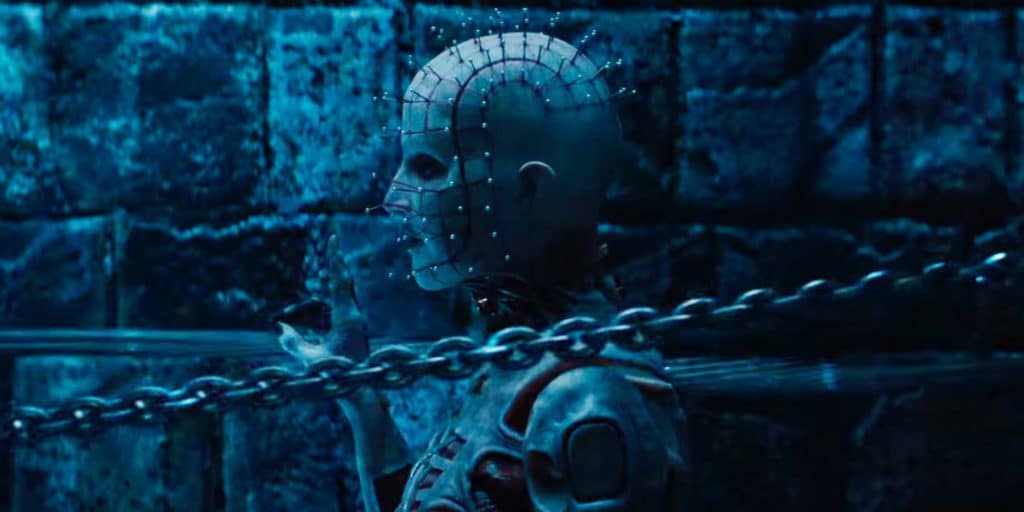
As for Clayton as Pinhead, she is a real highlight of the film (any concerns that, being a woman, she was going to speak her lines with an overtly feminine pitch turn out to be ill-founded: she does not). Hers is the only Cenobite role which has some soul, however. Perhaps this is to be expected, as Pinhead has always been regarded as the de facto spokesperson for the Order, and Clayton gets to deliver some of the film’s most memorable, even poignant lines by the end. She looks marvellous, too: director David Bruckner has understood the old lesson that less is more, not allowing us more than a peek until the film is around an hour in, so she comes as a real surprise – familiar enough, but new enough to pique interest. It’s also nice that the original Pinhead, Doug Bradley – who has on occasion said that he feels strangely protective of the character – sent Clayton his wholehearted support.

So far, so good. But in amongst all of these aesthetically-pleasing decisions and carefully-controlled reveals, sadly the rest of the Cenobite gang are rather forgettable. Yes, they’re dressed to the nines, but there is little sense of them as characters, or even as formidable entities at all. They just pop up on the periphery, walk around slowly and get quickly, threat-disparagingly outpaced; there are more of them than there are in the 1987 film, which is fine, but as such, they desperately need to feel more momentous when they are there. Another issue, for me, is that they seem to all act quite autonomously; there’s little sense that the Cenobites are an Order, working together. In the 1987 film, one key strength was in how it felt like The Gang’s All Here when all four of the Cenobites were in shot. But even separately, they felt more to me like they were operating as part of a cohesive group – which was somehow more frightening. They had both vivid personal characteristics, and shared goals. That is significantly eroded in the 2022 retelling. Their flayed flesh is oddly bloodless, too (albeit said from the perspective of someone who has absolutely no idea how bloody flayed flesh actually is). The first Cenobites looked mortifyingly injured, dank and dark; the new Cenobites have clean, clear bones and neat wounds all visible. They have been cleaned up. Who’s cleaned them up? Surely a formidable bunch in their own right.

The Good: New Configurations

One of the most successful changes in the film comes in the form of the new, remodelled puzzle box, a new spin on that key to a new dimension with its own horrific codes and rules. It was always a fearsome proposition, honestly – a true testament to Clive Barker’s skills as an imaginative writer, and also to what he achieved on a limited budget with essentially no filmmaking experience in 1987. The Lament Configuration box took on a life of its own in films thereafter, but it retained one essential quality: namely, that by solving the puzzle, the Cenobites would be summoned. That was it. Beauty is truth, truth beauty; that is all ye know on Earth, and all ye need to know. The box itself didn’t have too many different modes though. By finding the right combination of pressure points on its surface, it could be made to shift into a couple of different shapes, opening a door in the process. Similarly, by doing the same thing again, it could send the Cenobites back. Horribly simple.

Skip to 2022, and the lore of the Lament Configuration has been overhauled: this adds a genuinely interesting and creative layer to this storyline. The box, by the by, looks fantastic: there’s a real sense of its having carved elements, more possible modes to contend with and more potential for direct threat (now that it operates as a malign presence in its own right, rather than an inert puzzle box which really needs human interaction in order to do anything at all). It switches through an array of different shapes now, and more than that, its configurations each have their own associated mythology. The configurations are intricately linked to the fates of those who get to grips with them, who unlock them.

Voigt knew this much, and had focused his research on them, running through the usual horror trope of recording his findings in sinister monochrome in a sequence of bound notebooks (no one ever writes this shit down on dayglo Post-Its). This information is eventually gleaned by the film’s key protagonist, Riley (Odessa A’Zion) when she tracks down Voigt and his legacy, though hers is a hard-won series of lessons, fractured and confusing at first. The practical lessons are more memorable, but cost her far more: nonetheless, she finally avails herself of configuration lore, understanding enough to play the Cenobites at their own game, come the end: she can’t simply solve the box again, however. Her bargain with them strikes a balance between learning and self-sacrifice. It is only via this that we even hear the phrase ‘lament configuration’; it’s only one of the potential outcomes. This is a rich and clever idea which builds purposefully on the pre-existing mythos, doing something meaningful with it. The puzzle box is a character in its own right now.

The Bad: chance, rather than choice?

That all being said, it’s as an offshoot of the whole new configuration idea that the film, for me, stumbles badly. That the puzzle box has new potential tricks, sequences and powers is fine; this allows for some truly expansive elements, with some engaging scenes. However, the fact that it operates as if it has aspects of sentience – that creates some issues.

The overarching idea behind encountering the Cenobites has always placed the character flaw with the human who is stupid, or bold enough (depending on your outlook) to mess about with the puzzle box. Some of those did so because they were jaded decadents seeking the next sensory adventure; Frank Cotton may not have known exactly what he was letting himself in for, but he knew something, and he tried to solve the box anyway. Kirsty, Tiffany – their cases were more tragic, but the uniting factor was that they did try to solve the box, and this was enough, at least at first. Kirsty only initially avoids being torn to pieces because she has can bargain with a strange and glaring omission on the Cenobites’ part – the fact that Frank escaped them. Others are not so lucky. A whole wardful of unwitting guinea pigs are given boxes to solve in Hellbound; by definition, these people haven’t given their consent because there’s no way they usefully could. But we only ever get hints that the box is somehow in on all of this. Like your standard Devil’s bargain, it requires people to make the first move.
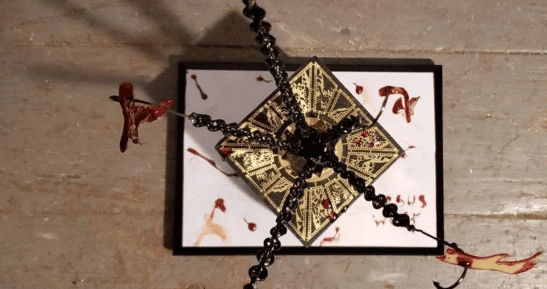
Not so the new puzzle box, which has some qualities in common with the device in Cronos (1993), right down to the eccentric millionaire who eventually tells its story. It’s far more overtly involved in Cenobitic machinations here. Essentially, the new puzzle box can send out a blade and ‘mark’ someone by drawing their blood; somewhat like a zombie bite, something akin to a pyramid scheme, the only way to escape the subsequent appointment with the Cenobites is to procure a number of other victims at their behest. Quantity over quality? Maybe, but the whole idea of the box catching people by injuring them feels so different to the old mythos that it simply doesn’t work that well. It all feels a bit It Follows, only it’s the Cenobites who are following, even though they’ve never really needed to drum up numbers, because the whole point is that people are fallible enough to offer themselves up to them.

That whole initial set-up (which worked a charm, by the by) where pretty boy Trevor (Drew Starkey) tricks Riley into nabbing the still-mysterious unclaimed artefact: wouldn’t that have worked just as well, on many levels, by luring her in on its own terms as a mystery object, especially given her own relative poverty, and addiction issues which could at the very least have clouded her objectivity? The whole addiction motif is otherwise an odd thing to centre, as its only other purpose seems to give us a reason to believe Riley’s brother wants to look out for her (which of course he could have done anyway) and to drum up one scene where she has a minor relapse, although we all know that the Cenobites don’t particularly require people to be in altered states beforehand; it’s kind of their job to alter states. Sure, there has been an element of Lament Configuration as bait in the past, but never quite like this; a number of the main protagonists in the 2022 story get picked off largely as a result of a moment’s bad luck. Mercenary, sure, but less well-rounded, the richly-layered world of the Configurations could have come to fruition in this film by means other than pure chance.

Another unwelcome aspect of the new film which also relates to how the horror has always been centred on human error: the Cenobites are liars now. They never lied in the original film. They never lied in the sequel. There were rules. Even in Hellraiser III: Hell on Earth (1992), a film which has long divided fans of the franchise, Pinhead’s deal with poor, desperate Terri is on own terms, legitimate: she gets what he promised. She can dream. What he requires in exchange is service; job done. Move forward thirty years, and the Cenobites are far less averse to telling fibs to get what they want, which seems to be – victims. More victims. The selection process has been dramatically opened up, and the recruitment process has been relaxed accordingly.

Perhaps this goes hand in hand with this new world order, where they ensnare the unwitting through the sudden spasmodic movements of the puzzle box. But it feels off; it may be more in keeping with a more Biblical take on demons and bargains, you could say, though this is a big shift away from the more recognisable mythos which many of us love. It also leads to rather a lot of muddying where the plot is concerned: the Cenobites’ motivations are less acute, the level of threat which they can drum up is less consistent, and it takes a lot of rather jagged plot reveals in the final act to come to a meaningful conclusion (which it does, however, muster).

Conclusions

At least some of these issues, I’d argue, come from ambitious, but at times inconsistent changes to the story’s fundamentals. Funnily enough, whilst they have cleaned up the overall look of this film – clean, delicate, often light – they’ve balanced it out with a few markedly opaque, even murky plot sequences. Perhaps the Hellraiser series still has a quota of murk to fulfil. On balance, I’d rather it was aesthetic, but on the whole, I did quite enjoy Hellraiser (2022). Sure, it’s not perfect, but it has a decent array of imaginative developments and ambition, and the fact that it exists before us is in itself a blessing, given its long lifespan as little more than a rumour. Will it recruit a new generation of fans, given its Disney+ streaming release? Perhaps, perhaps not, but let us hope at least that it will come as an almighty shock to a few people clicking ‘play’ on this unknown quantity. For the rest of us, it’s a largely welcome addition to a beloved mythos which, because of our fondness for it, makes us very discretionary. It’s a brave team that even takes this on but – overall, I’m glad they did.
Two Witches (2021)

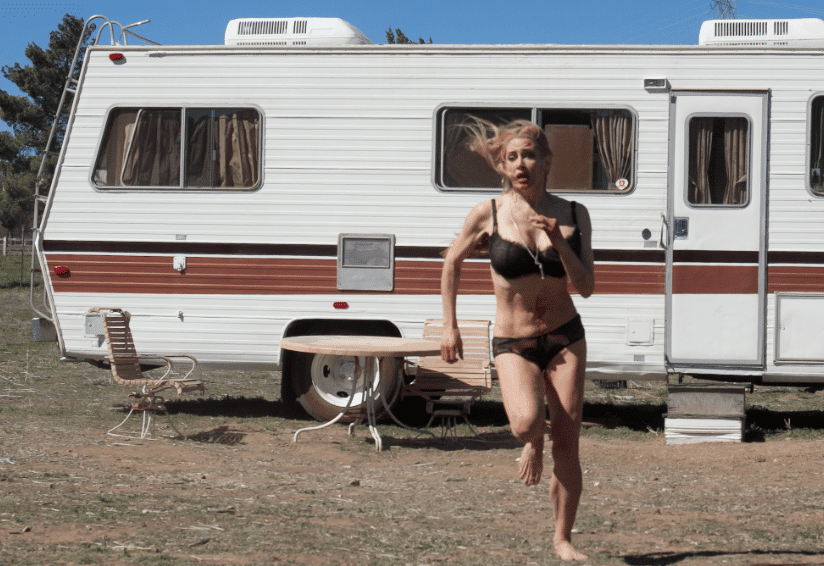
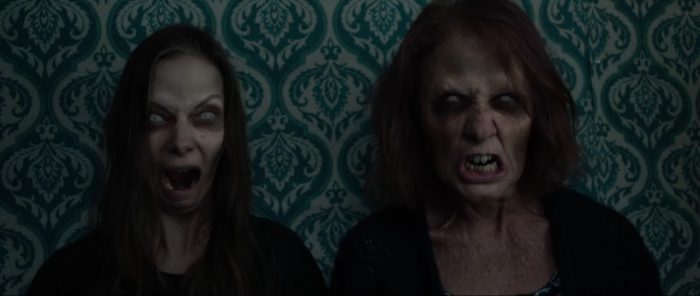
There’s no time wasted in Two Witches: it lays out its approach straight away, making it clear that this is going to be a quick-paced, overblown brand of occult horror, in places almost more of a montage of witchy scenes quite nominally linked together, rather than a film with much of a complex overarching story or structure (though presumably the ‘Two Witches’ of the title refers to the two separate chapters which make up the film). That’s all well and good; there’s room in the world for these kinds of immoderate horrors. If you crave slow-burn and atmosphere, then you may – on balance – be disappointed. If you’re good with a big melting pot of scenes and influences from Sam Raimi, Dario Argento, Rob Zombie and even a dollop of Anna Biller (yeah, you heard), then you’ll be more than happy. After all, a lot of the best films by those directors are more blood and gore than War and Peace.

So we’re soon acquainted with Sarah (Belle Adams) and her boyfriend Simon (Ian Michaels), who are out at a restaurant for the evening. Sarah can’t help but notice a distinctly unfriendly woman sitting at a nearby table, who stares at her continually: Simon puts her feelings of distress down to her pregnancy, a pregnancy he’d completely forgotten about a few moments earlier when asking Sarah what wine she wanted with her meal, but which serves as a great catch-all excuse for anything outlandish she goes on to say or feel. It’s an excuse he’s soon turning to, again and again: after the restaurant experience, Sarah’s convinced that the strange woman has given her the ‘evil eye’ somehow, and claims that she is being stalked by her. Could her pregnancy be a factor, though? The audience is already clear that this scary woman has designs on newborns – we’ve seen it. In fact, we saw it before the opening credits ran. Perhaps Sarah is being targeted by someone, or something, after her baby.

Luckily – or sort of luckily – Sarah and Simon go to visit some friends of theirs, and find Dustin (Tim Fox) and his partner Melissa (Dina Silva, who looks rather uncomfortable in the gothy makeup she wears for the role) far more amenable to the idea that something paranormal could be going on. That being said, their attempts to help her seem to exacerbate the phenomena, as always happens: seances, even unsuccessful seances, just wind spirits up. It moves things along even more quickly, though: soon it’s all going down, with the power going on and off, eyes rolling, spasmodic physical movements, aural hallucinations, jerking jump scares – you name it, and it’s in there. This ordeal is only one part of the film, however, as events shift elsewhere, picking up with a different story arc and ideas of witchcraft as hereditary.

The film’s speed-dating approach doesn’t leave a lot of time to get into characters, particularly in the second chapter (yes, chapters still prevail) and plot is always rather thin, but all in all, the film seems to do what it sets out to do. Its love of the malign feminine has shades of Suspiria, Lords of Salem and Drag Me To Hell throughout. Speaking of the gender divide: yes, it’s blown up to fairly large proportions here with no need for more subtle inference, but in that, it matches up to the rest of the film and fits perfectly well. Any points about female sexuality and the occult are more aesthetic than anything else; that’s okay. There’s plenty to enjoy, even if you start to miss neutral facial expressions by the end of the film. It also enjoinders the audience to expect another film at some point, which could be interesting, though would probably necessitate some of the answers we can fairly happily do without for now.

Director and co-writer, Pierre Tsigaridis, is something of an unknown quantity; with only one short film under his belt as director prior to this, his has been a pretty sharp career arc; he clearly loves horror, though, and this is a promising first feature which shows off that affection. It’s also a big plus point that another of the writers here, Kristina Klebe, not only acts in Two Witches but has a long and detailed horror filmography in her own right. There’s a lot of fun to be had here, and a second instalment would definitely be appealing.

Two Witches (2021) is available now on Arrow Player in the US, Canada, UK and Ireland.

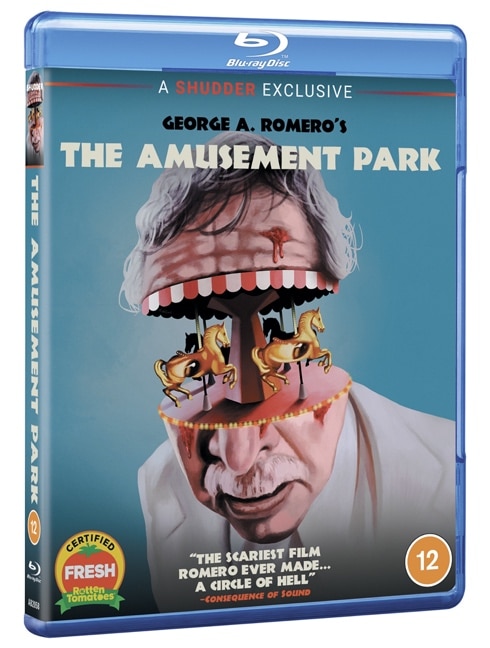
Win Romero’s ‘The Amusement Park’ on Blu-ray!

We all know the late George A. Romero as the pioneer of the zombie in horror cinema – a cinematic monster which has sustained appropriate levels of longevity in modern culture. But there was far more to his career than that and he found far more ways to critique the society he lived in than just through zombie horror. One of his lesser-known titles is The Amusement Park (1975), a suitably sad and surreal exploration of ageing.

In the film, an elderly man (Lincoln Maazel – Martin) goes for what he assumes will be an ordinary day at the amusement park, only to find himself in the middle of a hellish nightmare. Amid the rollercoasters and chaotic crowds, he becomes increasingly disoriented and isolated; as the pain, tragedies and humiliations of ageing in America are played out before him… 

Of all Romero’s films, The Amusement Park is one of the least well-known, by even his most ardent fans. However, via the Shudder Exclusive roster and Acorn Media International, it’s now up for release on 17th October 2022. If you missed its short stint on cinema release in 2019, or even if you made it, you can now purchase this special Blu-ray with a wealth of extra features including: a Michael Gornick audio commentary, a special feature – ‘Re-opening the Park’ – with Suzanne Desrocher-Romero, panel interviews, a special brochure and the film’s script. Better still, Warped Perspective has a Blu-ray to give away.

UK readers: if you would like to be in with a chance of winning, please email the site (keri[at]warped-perspective.com) with The Amusement Park as your email title. Include your name and postal address. The competition will be drawn on Friday 14th October at 18:00 GMT. (All personal information will be stored securely until the competition is over and then deleted.)

Thank you and good luck!

Deadstream (2022)

Investigations of haunted houses or places have been a horror staple since the inception of cinema. And, whilst in many cases (with some notable exceptions) the allegedly haunted house/place itself has remained unchanged, the means of investigation themselves have changed and developed as the years have passed. You could even argue that technological developments have revolutionised our ways of seeing altogether. In The Blair Witch Project (1999), a herald of this new kind of experience, ghostly phenomena are refracted through Heather’s video camera, which she is using for the purposes of making a student film; the camera offers some welcome distance, somehow, from the unreal horrors which she witnesses. We see what she sees, as she sees it: we are reliant on her as the intermediary, and we are limited by her experiences. It was a sign of things to come.

Well, step forward Deadstream (2022), which shows us, first and foremost, that things have come a long way since The Blair Witch Project. Deadstream recognises this line of progression, as its protagonist – livestreaming sensation Shawn Ruddy – is shown trying to hawk some merch which references Blair Witch’s own publicity slogan. But now, with smartphones, streaming platforms, editing software, multiple cameras, infrared settings, custom music and of course a live feed, the relationship between filmmaker and audience has been thoroughly revolutionised. This immediacy is very energising, bringing the film bang up to date as well as offering us a lively, multi-layered take on a classic horror movie trope.

Shawn (played by director and co-writer Joseph Winter) is an internet personality who’s been on an involuntary six-month hiatus after an unspecified fall from grace. It must have been bad: he lost all of his monetisation in the process, and so is determined to reclaim it with a comeback special. This entails a special livestream on his platform of choice, LivVid.TV, as he visits a haunted house, location as-yet secret. This place, not-at-all ominously known as Death Manor, comes with a suitably excessive back story: here, at the end of the 19th Century, a woman called Mildred took her own life in mysterious circumstances. Perfect! Shawn heads into the house to explore and monitor any paranormal activity. He vows to investigate any mysterious goings-on he hears, sees, or picks up on his pretty extensive array of kit: this is part of his shtick, something best described as competitive stupidity – which aims to keep his attention-span deprived followers on his stream for as long as possible. It’s his followers who, in-between keeping up an insulting stream of comments or declaring themselves bored, double-dare him to ‘provoke the spirits’.

Of course this all goes to hell in a film which is by turns creepy, grisly and Raimi-nasty, but it’s in how it gets there that Deadstream really shines. It gets the right things right: good location, effective twists, humour which is knowing but not eye-rolling, and a central performance which could conceivably all be part of an act, so used to performing for the camera does Shawn appear to be. Winter really captures something here; even if you don’t personally engage with livestreamers and Influencers yourself, you’re likely by now to have some idea what makes them successful, and high on that list is a kind of jovial artifice, amplified even beyond the artifice we’ve seen on TV for decades because self-made media personalities have to crow that little bit louder to get noticed. Shawn Ruddy is a very plausible figure for our cynical times, ‘working on himself’ but motivated by hard cash, apologising multiple times for his misdeeds but only believably so on a handful of those occasions. It’s very difficult to see a real person underneath that rock-solid veneer – until circumstances prevail, of course. This is like something Goffman could have come up with on the presentation of self, had he lived long enough to see what a good smartphone could do. For all that, Shawn isn’t wholly unlikeable, though. Even at his worst, he probably doesn’t deserve what he gets – he’s an idiot, but an idiot partly formed out of his ongoing interactions with millions of other idiots.

This dialogue with his followers is a genuinely interesting feature of the film, one which places it in the here-and-now and which will one day be as interesting a time capsule as Blair Witch is now, because surely we can’t be far away from a horror film made entirely in the Metaverse. Shawn’s ability to reflect on his film as it’s being made, and on the impact it might be having, is a very new phenomenon in its own right: he keeps in mind that he is crafting a piece of media, and he makes the most of the means at his disposal to make it as good a film as it can be; his preoccupation with different angles, cameras and of course custom soundtracks shows that. The ways in which he fights to keep control of his film reminds us that he is aware, at all times, that his relationship with his followers is an ongoing negotiation, and his struggle is as much to retain creative control as it is the rather more pressing need to stay alive. It’s also worth saying that Deadstream is able to dispense with some of the so-quickly hackneyed issues of the ‘found footage’ subgenre, the main one being ‘who edited this, and when?’ Here, we know. We are also done with grainy, unclear footage: this film is surprisingly bright, colourful and sharp throughout. Oh, to be a ghost hunter in the 2020s…

Whilst some of the in-script revelations towards the end of the film spell things out more than really necessary, on the whole, Deadstream is an engaging, richly-textured and often self-deprecating film which provides a sense of progression in horror, as well as paying tribute to films which have brought us to this point. It’s a lot of fun, and Shudder have done well to nab it.

Deadstream (2022) will be released on Shudder on 6th October, 2022.

Pig Killer (2022)

With a title like Pig Killer, you know you’d be mad to expect a philosophical work, some light moral lessons or charming whimsy. That much is perfectly clear. What you may be less prepared for, though, is just how deliberately low the film aims. Wherever the ‘acceptable level’ is, it elects to nosedive past that, landing in a morass of body parts and blaring incidental music some distance further down.

Now, depending on your outlook, you may feel that this is a stirring recommendation; if so, have at it. Lots of people love their horror splattery and a certain kind of provocative; director and writer Chad Ferrin has you covered. For others, living through a period in time where dramatic explorations of the serial killer phenomenon have grown increasingly sensitive, well-written and (mostly) respectful, Pig Killer may well feel like a bizarre throwback. It is, after all, based loosely on the real story of Canadian serial killer, Willy Pickton: this marks it out as something other than a straight-up fantasy about a bad man who kills women. When the inspiration is perfectly real, when victims’ families may well be still alive, it will make it far more difficult to nod this stuff through – for many viewers, at least.

We start as we mean to go on, with a long sequence running through the opening credits of pigs tucking into human body parts, as an as-yet faceless man oversees. This is pig farmer Willy (Jake Busey) who later unwinds from all of this with a visit to a local bar. It seems he’s planning a big party, or a ‘piggy pow-wow’ and has printed out flyers for the occasion; it’s a last hurrah before he completes the sale on his land, it seems. After that, it’s off to the red light district to pick up an Asian stereotype and to murder her – then to have sex with her, with one of the film’s prosthetic penises appearing on camera for the occasion. (Or perhaps it’s the same prosthetic penis, passed around between several actors.) Anyway, as he does this, he stops seeing his victim and starts to see his mother in her place (played by Ginger Lynn). This use of flashback recurs regularly, filling in the back story of an unhappy childhood and its key events. It’s also a stock way of reaffirming Willy’s disturbed mental state; the notion, though, is a tried-and-tested one: abnormal experiences of sexuality have made him the man he is today.

It’s also made clear to us, via dialogue and cut scenes, that one of the other punters at the bar, a troubled young woman called Wendy (Kate Patel) and our pig farmer are going to cross paths. We know she’s already asked after the farmer; a friend fills her in on his dark reputation. We also know about the rumours that ‘women go free’ to these parties, and don’t all come out again. A lot hinges on the planned pow-wow then, which will go ahead come what may – despite the fact that talk of selling the farm kicks up a lot of dirt between Willy and his slightly more functional brother David (Lew Temple), who are reminded of their unhappy memories of the place.

It starts gratuitously, and so it can never be said that the film lulls its audience into a false sense of security, or indicates that it will be one thing and not another. It seems to be channelling a lot of those slightly mysterious VHS films you could stumble upon, back in the day, and only wonder at how in the hell anyone had managed to make something so apparently organically disturbing; there was a genuine sense of curiosity then, back when films could surface and disappear and there was no IMDb to lend context to what you had just watched. Things are different now, and even homage has to work carefully. To take this approach today suggests intent: it suggests that all of the film’s key elements – script, performances, scene selections, plot – have been chosen here in full knowledge of a few things, not least that the relationship between the real case and this film may raise eyebrows.

‘Cartoonish’ is a bold stylistic decision to go for then, given all of this, but this is a nonetheless a bizarrely cartoonish film, but one which feels neither genuinely challenging nor compelling, certainly not across two hours – which is far, far too long to sustain interest. The blaring background and incidental music drown out the dialogue a lot of the time, which doesn’t help. There are issues here, then. That’s not to say that Busey doesn’t give it his all, or that he isn’t supported well by the rest of the cast, who no doubt do exactly what they were directed to do. This isn’t a bad looking film, either, with a range of shots and some ingenious uses of practical SFX on a clear budget. It’s just that, overall, these kinds of two-dimensional rape and murder-fests feel dated; if ‘dated’ is the aim, then fine, but they still need more than this because even shock value is a far trickier customer today.

Pig Killer (2022) premiered at the Sydney Underground Festival and will continue its festival run through October.

Book – Sick & Beautiful: A Psychedelic Nightmare

David Temple is a journalist – well, a photojournalist, with a grisly specialism; he specialises in crime and accident photography, so there’s lots to do, especially in his resident city of London. The book starts on New Year’s Eve; David is unexpectedly called to dash out of the Knightsbridge pub where he’s drinking to photograph a bloody dive from a hotel balcony – whether a possible suicide, accident or even a murder, the resulting photos are newsworthy because the diver ‘might be famous’. He makes his way to the scene: it’s a film producer by the name of Rupert Wreath who is now a twisted wreck on the pavement, but after he has discharged his professional duties, David is fascinated by a woman whom he sees approaching Wreath’s body (a police cordon is not forthcoming here). The woman then quite nonchalantly exits the scene – barefoot – heading through the perpetual rain to a nearby hotel bar. Intrigued, David follows.

And thus begins Sick & Beautiful, an intricate, grisly and existential horror story about horror stories. The book does a lot: it’s a deliberation on the creative process, a blurring of boundaries between real life and imagined worlds and an often caustic, cynical picking-apart of fame and its trappings. But, threading through it all, this is an impressive piece of world-building in its own right, with moments of direct homage and reference to horror melding with new, graphic, alarming ideas. It’s London as only a Londoner – born or adopted – could know it, but it comes overlaid with a heady, nightmarish other London, and much more besides.

David approaches the strange woman – Rachel Garland – and they talk, a conversation which marks the beginning of a frenetic, frustrating connection between them. They first discuss the accident (accident?) and Rachel’s self-perceived role in it. A verbose, abstract conversationalist, the claims she makes about Wreath’s accident are outlandish, supernatural even: this would be alarming enough, perhaps, but David has had similar experiences to the ones she describes; this all feels fated somehow. In particular, he has dreamed of a similar figure to one she mentions: a ghostly man, distinctively dressed in a bowler hat, who seemed to be trying to communicate with him. David is a jaded figure, but he feels an irrevocable pull towards Rachel and the story of her life, seeing something significant in it. And of course, this journalist has always wanted to be a novelist; he believes he has now found his creative angle, his muse even. A new life – of one kind or another – beckons. But it comes at a cost: Rachel’s mysterious, horrifying visions begin to overtake his life too, eroding his memory and his own sense of self, criss-crossing between his waking and dreaming states. The ‘Paradise’ which soon overshadows his work on the book and consumes his thoughts is an ambiguous prospect: is it a place? A state of being? Or a curse?

This is a carefully-constructed book which sculpts its otherworldly atmosphere out of fantasy, nightmare, flashback and impression. Written in the first person, it is through the character of David – clever, damaged, ambitious and vulnerable – that we must unpack real from unreal, or else, drift along with the book’s slowly-unfolding lessons. Despite the different kind of narrative voice used, I couldn’t help but think of Steppenwolf in places: a man in existential crisis, a mysterious woman, a tantalising invitation to a semi-mythical and profoundly self-altering place, a painful search for meaning. This comes with some Clive Barker elements – surely we can use Barkerian as an adjective by now? – as Sick & Beautiful unleashes moments of pure, physical horror; peeling faces, lacerated torsos and glistening wounds. Being a London novel, it’s appropriate that the book comes with an array of compelling names – Wreaths, Garlands, Temples, even a Scythe – just as Dickens might have written, and the dark, glowering, rain-soaked London of the book doesn’t feel a million miles away from the literary London underworld of the Victorian era, either, save for the neon and the high-rises. These are all very literary characters, too: people use elaborate turns of phrase, or open with introspective, multi-clausal salvos which don’t ordinarily feature in polite conversation. Well, it depends who you talk to, of course. This is all entirely in keeping with the style of the book overall, as it’s beautifully written – elaborate but not gaudy – and a piece of artistic endeavour used to debate the idea of artistic endeavour.

David makes connections between life, death and entertainment throughout, not least by his self-reflective comments on the lot of an author. Crises have cinematic qualities; tragic real-life deaths turn into spectacles, like modern-day public executions; the narrative becomes a script which becomes a narrative again. In many ways the book within the book – also titled Sick & Beautiful – serves as an intermediary between life and art. Rachel, its inspiration, makes claims which could be real, or could be fake. She’s an actress, or so she says: what’s more open to debate is where the world of film breaks with the world around them. Knowledge of the horror genre, by the by, is everywhere here, with titles and scenes from well-known movies edging into the world of the book, punctuating it with a moment’s real-world respite. That’s author Jim Queen’s core audience here: the kind of people who could see a description of a scene from Braindead (1992) as a welcome reprieve. So of course, horror film fans would find a great deal to admire in this novel. Sick & Beautiful is vast and ambitious in scale, with a weaving, cyclical structure, dark flashes of humour and some sickly moments of pathos, too. It’s mesmerising, weird and provocative.

Everyone Will Burn (2021)

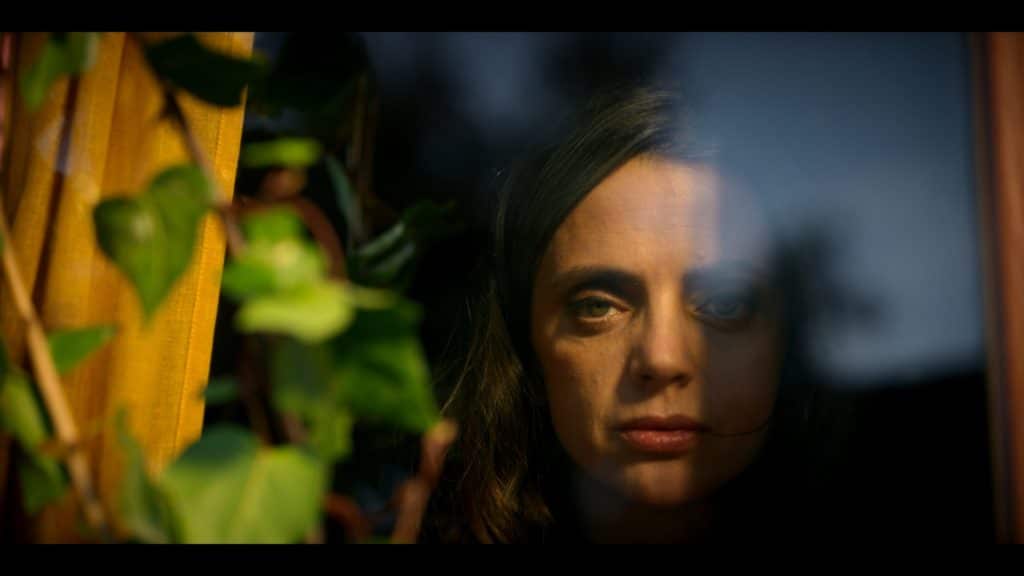
Everyone Will Burn (Y todos arderán) is a film of many modes: it moves from distressing content to bizarre, skittish black comedy, from historical curse to pastiche of small-town life. It divides up its rather abundant two-hour (or as near as damnit) running time between horror tropes and the self-indulgence of blasting a righteous hole right through an unfeeling, unsympathetic community. But above all else, it starts with one unpleasant, questionable scene which will almost certainly invite regular horror viewers to ponder one particular plot possibility. María José (Macarena Gómez) has endured years as a local pariah since the death of her son, and has finally decided to commit suicide: the film opens without her in shot, but her tortured breathing, as she gazes down from the ledge of a bridge, tells us that this decision is agony. She is suddenly disturbed by a child’s voice: a little girl approaches her, calling her ‘mama’.

It is such an outlandish event that María José climbs back down and tries to help the child, who is dirty, dishevelled, and unable to account for herself – her name, her parents, or what she is doing out there. The girl seems to have achondroplasia, which makes her frilly (if filthy) clothing a little hard to read, age-wise; still, a nervy, gabbling, still-living María José feels she has little choice but to drive back to town with her, where she plans to seek police support to reunite her with her parents. Well, the police end up coming to her for one reason and another, but the girl has strange abilities to get rid of anyone who stands in her ‘mother’s’ way. The only thing which matches this surreal and threatening situation is in how María José instantly adapts, taking the girl home. True, the girl – who eventually gives her name as Lucia (Sofía García) – won’t be readily countermanded, but the new normal lands strangely quickly.

María José does, of course, try to decipher what’s going on when she can, and even seeks spiritual guidance from local minister Father Abelino (Germán Torres) but consolation is not forthcoming in Rozas del Monte; he’s less interested in her personal plight and more interested in…a strange prophecy, natch, which declares that ‘two souls created under torment will become one’. This prophecy is noted in the opening credits, and accounts for many of the events which later follow. Unluckily for María José, her new surrogate family is at the centre of this – no doubt abetted by her outsider status, which has made her vulnerable to far more than local pranks and gossip. Little wonder that, after the initial shock, María José seems perfectly happy for Lucia to disrupt the norms of this dreadful town. However, other residents are readying themselves to restore order, at the cost of a long silence of necessity.

From the outset, the dynamic of the film feels warped, hovering between uncomfortable character study and – much as it sounds unlikely – a kind of bleak farce, inviting us to dislike Rozas del Monte’s small-town vibes and people as much as Lucia clearly does. We see significant things getting overlooked and petty things taking centre stage; it’s an age before we really get to the heart of what is unfolding here, so much time do we spend on pancake recipes, intra-female feuding and the dangers of the suburbs. Perhaps we do need that breathing space around some of the plot developments. It does feel, though, that the Catholic context which runs throughout the film can be partly lost on those who have limited knowledge about Catholicism, as much as we’re all well-prepped for devils and demons to rock up in horror films by now; some of the resolutions offered were, for this reviewer, a little hard to read. There’s a lot more to it here though, from investigating officers who pause to admire custom crucifixes to a priest who attends emergencies alongside the police – surely a step beyond the regular church duties – right through to the opening gambit about nuns, prophecy and prophecy-adjacent violence. The scriptures are both a beloved guide and counsel, and a portentous warning about bad things to come. People accept all of this as normal, because at least a large share of it probably is.

Macarena Gómez and Sofía García are a surprisingly tight duo here, with Gómez playing her part like a jangling, tightly-wound spring (albeit very stylishly dressed) and García – in what looks like her first acting credit, ever – successfully staying ambiguous, perhaps a force for evil, or perhaps a force for good; here to comfort a woman left with nothing or perhaps here to wreak havoc. Running throughout the film are insinuations, if we can call them that, about Lucia’s dwarfism, which are rather uncomfortable – she is referred to as monstrous, a ‘thing’ and worse, in ways which probably wouldn’t ordinarily survive the script edit, certainly in the UK or North America. But our sympathies eventually lie more and more with her, and certainly with María José, despite the issues which begin to affect the film. Things become unnecessarily protracted. Heavy with dialogue (and badly-bodged subtitles on the screener, which are awash with failed HTML tags), the film slows significantly around the ninety-minute mark and struggles to accommodate a raft of different elements. So Everyone Will Burn does lose its way, then struggles to bring everything together in meaningful terms; that being said, it does hold onto a few pleasing scenes, which it places well. Ultimately, the initial shifts in tone – compounded by the film’s length – stop it from being a straight-up success, but seeing Gómez doing her best Isabelle Adjani has its merits, whilst García is a great player throughout.

The North American debut of Everyone Will Burn (Y Todos Arderan) will take place at Fantastic Fest in Austin. For more information, please click here.

Raven’s Hollow (2022)

The mysteries surrounding Edgar Allan Poe’s life seem to make him as attractive a subject for a mystery yarn as anything he wrote about – which is particularly interesting, given his role in the development of the genre itself. The relationship between Poe’s art and Poe’s life is just too tantalising to ignore. The Raven (2012) blended Poe’s life and works in a fairly effective piece of horror, and a decade on, Raven’s Hollow (2022) has done much the same thing, with many of the same positives and negatives held in a similar balance.

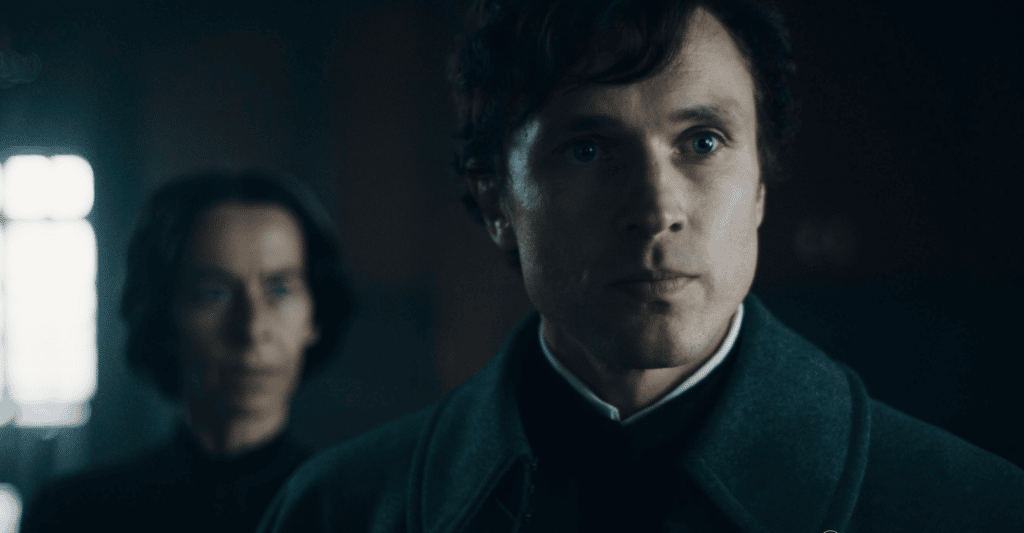
The film starts with what looks like a fairy story scene (and not the only nod to a scene in The Beguiled) as a little girl gathering food in the woods has to flee from a malign something, which soon turns out to be no respecter of a locked and barred door. Perhaps the same malign force has something to do with the body of a young man, oddly strung up in the trees, which is discovered by a small group of military cadets travelling in the area. Edgar Poe (William Moseley), one of their number, insists on taking the body down and taking it home, reasoning that ‘home’ must be thereabouts. Just before expiring, the man had intoned the word ‘raven’ to Poe; there’s a small town nearby called Raven’s Hollow, which Poe suggests will surely take receipt of the man’s remains.

When the men arrive, the townspeople are reticent to say the least, though this may be due to the fact that they are already mid-way through a burial (and/or maybe aren’t all that used to strangers turning up carrying dead bodies). They claim not to know the young man at all. Poe, a sensitive and observant soul, disbelieves these claims and wants to know more about this place. Besides, it’s cold and getting dark: the men therefore decide to stay the night at the local inn. It’s an opportunity to ask more questions, which they do, though they find themselves laughing off the legend of a ‘raven’ which feeds on people; this creature is recently responsible for a small spate of deaths, it is claimed. They also discover that this folkloric creature is an old belief, far older than the settlement itself. Whatever their cynicism, strange events quickly do begin to overtake the men: even as different townsfolk emerge and recede as suspicious figures, risk and danger begin to impact upon the cadets and it seems they must solve the mystery in order to escape.

Step forward, Eddie Poe: never quite on the level with the other cadets, he holds a different viewpoint and seems open to different phenomena (this offers some justification for the isolated, troubled man he would become – Poe really was a cadet and really spent a few tumultuous years in the military). He is able to ask more pertinent questions and to gain the trust of several of the townspeople, even if for the short term: there are also hints that he is already rather more open to the kind of mythology or experiences which allegedly haunt Raven’s Hollow. The script here is very simple, though it does what it needs to do: it doles out its reveals rather carefully and in such a way that – with only a couple of brief lulls – the pace of the film holds fast, weaving together different strands of the mystery. There are some very gruesome set pieces, too, which have clearly been put together with some care.

As this takes place, there is a lot of period detail to enjoy: abundant mourning clothes, wine-coloured walls, dark wainscoting, tumbledown buildings and a consistent, pleasing sort of prim decay which characterises the film throughout. It’s far more Eggers than Corman; forget that very lurid latter kind of Poe adaptation, as that is not for here (and, as a result of all the natural low light and candlelight used, this is a very dark film overall). So aesthetically, the film is a delight – if you like that sort of thing. There are a few missteps as Raven’s Hollow moves along with its famous literary figure in tow, however. Whilst the simplicity of the script is notable, and certainly never makes Poe himself a particularly verbose figure, as may be expected, by the same token some of the chunks of exposition are a little too simple; a character gets a few minutes to fill in a raft of back-story, for example, which can feel rushed. Some of the lip service to Poe lore is a little clunky, too, even if you momentarily enjoy catching these moments as they go by.

Still, some minor reservations aside, this is a fairly enjoyable mystery story which makes Poe into an engaging character in that particular mystery. Moseley does something engaging with the role, Kate Dickie (in a supporting role here) is always dependable, and this is perhaps above all an interesting change of direction for director/writer Christopher Hatton, who has tended towards sci-fi and even a spot of kids’ animation in his other projects. No one can deny that segueing into a literary origins story like this shows a bit of versatility, or that taking on a canonical writer like Poe shows courage.

Raven’s Hollow (2022) will be released on 22nd September, 2022.

The Last Thing Mary Saw (2021)

By Guest Contributor Chris Ward

In Southold, New York in 1843 a young woman named Mary (Stefanie Scott) is being interrogated by the local authorities about what has happened in her family’s mansion house. The thing is, Mary is blindfolded and behind the blindfold there is blood trickling down her face, and as she starts to tell her story of how her matriarchal grandmother died and then what happened to the rest of her family, we get to see a tale of a family ruled by religious oppression, fear and other, more supernatural forces. But at the crux of it is Mary’s forbidden relationship with housemaid Eleanor (Isabelle Fuhrman), a love that Mary’s God-fearing family have tried to suppress by various punishments but to no avail, and as Mary reveals what went on in the house her own fate is made abundantly clear.


The Last Thing Mary Saw is perhaps one of the most authentically gloomy and atmospheric horror/drama movies of recent times, and let’s be honest, there have been quite a few to choose from. With that in mind the movie does fit neatly into the slow-burn period piece category made popular in the mainstream by titles such as The Witch and The Woman in Black, and it does feel a lot longer than its 85-minute running time, but writer/director Edoardo Vitaletti’s use of natural light and candles is impressively rendered, so much so that you do feel like you are watching a real-life event unfold from 1843, as opposed to a 21st century movie.


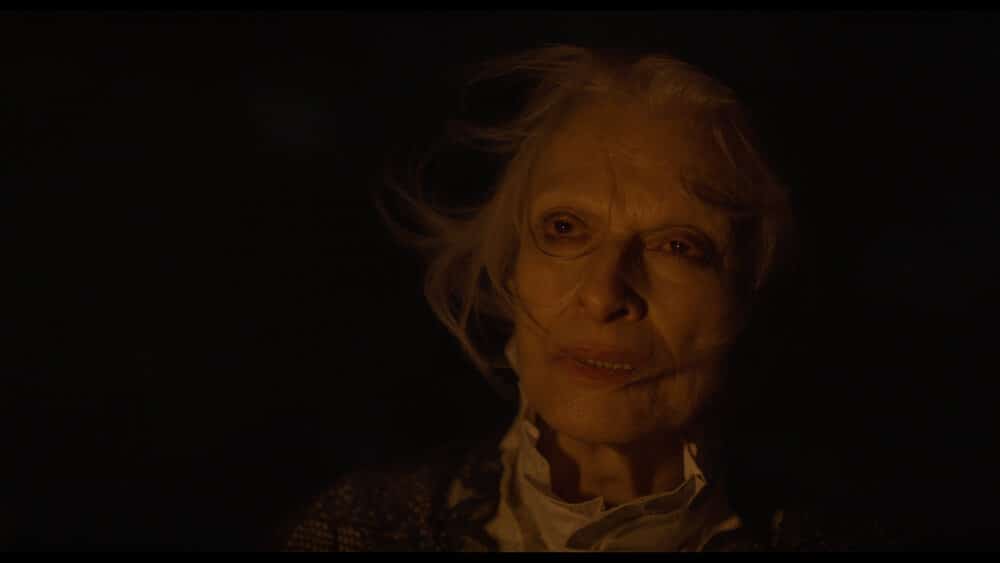
The other strengths are the performances from Stefanie Scott and Isabelle Fuhrman, whose forbidden love is entirely believable given that they do have a chemistry whenever they are onscreen together. Not necessarily a sexy chemistry, but something that says these are two people who belong together, who would flourish in an environment away from the tyranny of Mary’s family. Credit must also go to Judith Roberts as Mary’s grandmother, who is credited only as The Matriarch, which gives you a clue as to her character. Her presence is the evillest and gives the movie its supernatural edge, and if there were an award for most convincing and frightening old lady in a horror movie then The Matriarch is a sure contender.


But despite the strong production values – especially given the tight budget – and even stronger performances, The Last Thing Mary Saw never quite hits the spooky highs it teases during its first act, playing up the drama aspect more than the horror. Yes, horror movie fans will be drawn to this thanks to the dark and brooding setting, the occasional scenes of torture (kneeling on rice sounds extremely painful) and the Hammer Horror-style ending that finally rewards your patience, but there is a sense of restraint during the second act when the movie should have indulged a little more in its darker and more gruesome aspects to add an edge to the story that would have intensified the drama and made the journey a bit more satisfying. Instead, we get Rory Culkin turn up as a random stranger who may or may not have some knowledge about what is going on, try to steal some food, get his finger cut off and have a monologue about his facial scarring that doesn’t really play into anything other than the suggestion of the belief in evil. It could have been something, but the writing in this part of the movie is too vague to offer anything other than suggestion, and we already have enough of that thanks to scary grandmothers and secret lesbian lovers.


All of which makes The Last Thing Mary Saw a little underwhelming, especially on the first watch. However, once you realise that the horror aspects have been played down and you know what you are getting then repeated viewings are a little more fulfilling. There is something dark and potentially horrific pulsating at the heart of The Last Thing Mary Saw, and perhaps a bigger budget or another draft of the script may have brought that out, but as it stands, for a debut feature it does show promise for future endeavours, even if it is a little too unbalanced to truly deliver on its promise.

The Last Thing Mary Saw (2021) is available on DVD and Blu-ray from Acorn Media International on 19th September, 2022. To find out more about Chris Ward’s writing, please click here.

Wild Bones (2022)

Dancer Faye (Roxy Bugler) lives an isolated existence in a remote cottage, where she is largely untroubled – at least, by other people. From the opening seconds, it’s clear that she has some unexplored trauma of some kind: even her dance moves and stretches quickly give way to tortured-seeming movements and gestures. Wild Bones (2022) charts the course of this trauma as it unfolds and develops, making several significant stops along the way; it is very much an experimental, and at times challenging, unreal kind of a journey.

One evening, Faye receives a phonecall from her estranged half-sister Alice (Mary Roubos), who informs her that their father’s estate is ready to be divided up. In other words, their father is officially dead, and they inherit his house: here’s the first clue that all is not as it should be, because Faye assumes that Alice has ‘spoken to dad’ somehow. In any case, this revelation prompts a reconnection of sorts between the two women. Alice comes to the house, accompanied by her partner? No, friend? – Gary (Tom Cray). It’s the depths of winter, and so – however unwittingly – Faye invites them both to stay awhile, making it clear that she is not comfortable with having guests. She remains distracted, awkward: the first conversation she has with Gary certainly has its painful moments. What does emerge, however, is the extent of the connection Faye had enjoyed with her late father. It still overshadows her life, and perhaps keeps her so detached from the rituals and habits of the day-to-day.

More to it than that? Certainly, her refusal to deal with the topic of the inheritance or any other family business suggests that she is more than just grieving her father’s loss; she is unable to hang onto memories reliably, and drifts into a dream state where those memories are painfully called into question. Alice tries to help her, encouraging her to deal with the new circumstances and to move on, but the (surprising) emergence of Gary as a new romantic partner for Faye seems to act as an additional trigger for her issues.

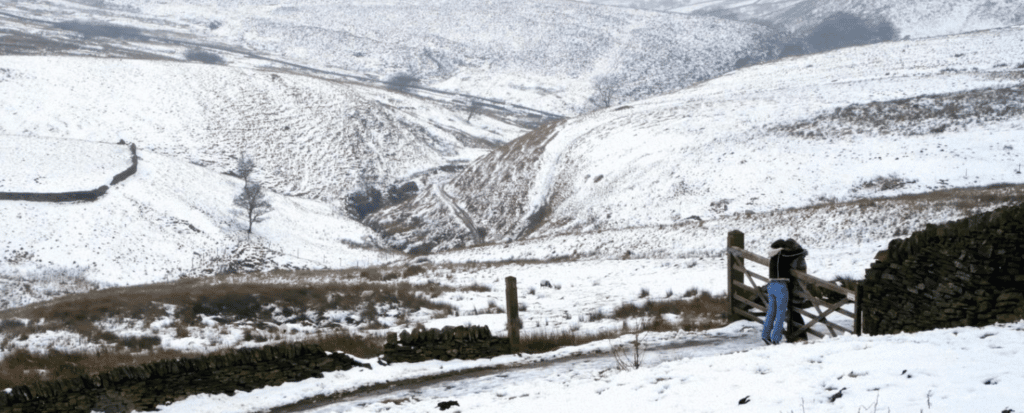
Given what has been said so far in this review, surely no one would be greatly surprised to find out that Wild Bones does not contain a neat, linear narrative arc, and is instead comprised of episodes and impressions – all of which hinge upon Faye and her dreams, preoccupations and anxieties. Sure, these episodes are connected by the same trauma, but play out quite differently: the whole film feels like an exercise in unwitting introspection. Faye herself is a kind of ghostly presence, hovering between the real and the unreal. For every conventional shot of her, there seems to be an echo – Faye painted in nightmarish colours, or refracted through different camera effects. As a means of bringing her internal feelings out into the external world, it looks very effective. Similarly, whilst presenting the on-screen nightmare has long held a particularly challenging appeal for filmmakers, when it’s done here, it’s done with nicely striking, visually rich scenes. Director Jack James is also very good at capturing that half-glimpsed, half-heard aspect of nightmares, where they blend with the waking world and blur with it, making you doubt what you have seen and/or heard. Other visual factors are just as compelling: Wild Bones is a lockdown baby, shot with a small cast in an isolated location, but even if there wasn’t an element of ‘needs must’ behind that, the wintry, remote location has a severe kind of glamour all its own. Conversely, the house interiors are warm and homely, with crackling fires to balance out the howling winds outside. It’s another sensual, often tactile film.

Perhaps the film’s clearest issue is just how audiences may define it: it doesn’t sit in any one genre, unless we plump for the very large catch-all category of ‘experimental film’. There are moments of horror, but they only punctuate the rest of the film; states of mind dominate over events; strange, hyperreal conversations provide only uncertain glimpses of a solid back-story. Like Malady, James’s first feature, Wild Bones broods over unconventional relationships, family losses and consequent anxieties. This is film as metaphysics, which can be a challenging, if intriguing watch.

Denkraum (2020)

Denkraum (2020), an independent film which operates very much in an experimental vein, differs from many experimental films in its choice of subject matter. The rather more expected deliberations on life, the universe and everything are refracted through a new kind of social media here: this is the ‘Denkraum’, or experimental space, of the title: Denkraum itself operates not just as a social network, but as a nightmare-filled space which goes one further than many existing social media platforms. Denkraum‘s levels of experimentation will not be for everyone because they never are, but if your tastes turn to more abstract, symbolic and deliberative material, then there is lots to admire in its almost painterly and progressive style.

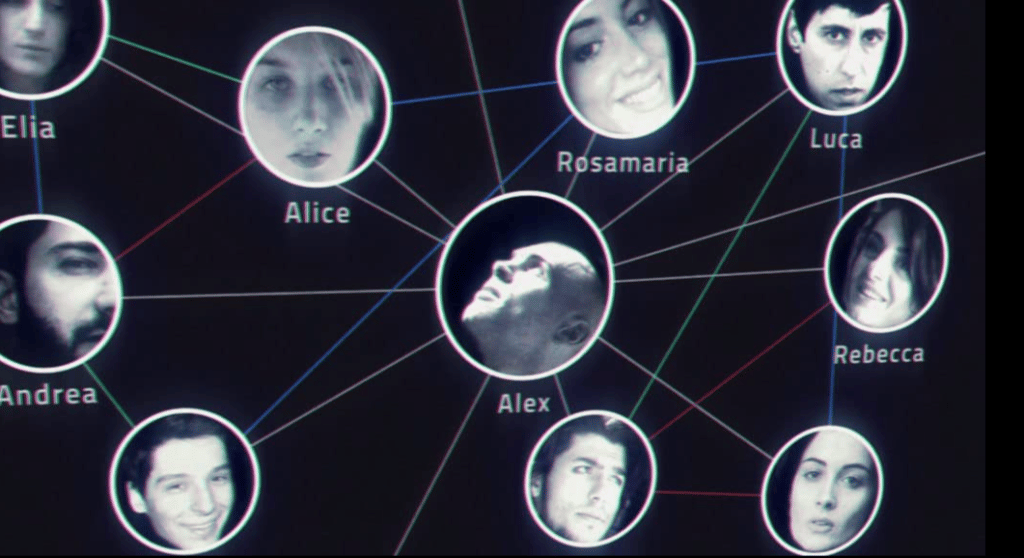
Alex (Manuel Melluso) is obsessed with his ex partner, Alice: not only does she control his thoughts, but by way of some sort of unpleasant balance he uses his expertise in computers to monitor her life, albeit this makes his feelings of longing and anger worse than they might have otherwise been. Be careful what you wish for, I guess. In his pursuit of her, he has come up with the entirely new Denkraum platform, a video/textual platform, and seems to be in a position of power because of its special affordances. He watches Alice (Alba Barbullushi) on hedonistic nights out, reading text messages and keeping an eye on her friends. He continues to contact her too, though she begs him to forget her; he has the temerity to claim that his controlling behaviour is for her own good, but he does seem to try to move on, at least notionally.

However, fantasy and reality are, by this point, on a collision course. In much the same way that thieves always think people are trying to rob them and adulterers always worry that their partner will cheat on them, Alex starts to feel that he, too, is being monitored. He receives contact from ‘Jacob’, who not only knows what he’s been up to but evidently understands what makes Alex tick. Alex’s abortive forays into a life outside of Denkraum and Alice grow increasingly mixed up and hostile; Alex, already somewhat of a neurotic outsider, becomes increasingly paranoid.

This is only a loosely narrative piece of film – think an art-house Black Mirror with some shades of reality TV The Circle, at least in how the use of text, video and personae all meld together here. There are definitely nightmarish aspects throughout: Denkraum doesn’t simply offer a regular kind of platform for people to interact (admittedly all of those places can tend towards the nightmarish on occasion) but rather heads straight for people’s more hidden concerns, preoccupations and fears. Towards the end of the film, Denkraum also seems to suggest some of the ways that, in a social media-saturated world, we tend to give ourselves over to quasi-religious, even cultish behaviour too. As much as the film indulges itself in philosophical meanderings – some of which are, unfortunately, a little lost in translation, on a semantic or syntactical level – it is nonetheless quite busy, with text messages, images, and voiceover all overlapping. It also often segues from deliberations on life and love into tonally very different, explicit conversations (intercepted, or otherwise) on sex and sexuality. In short, for a film which runs for less than ninety minutes, there is rather a lot to take in.

It is, altogether, interesting to see social media get the experimental treatment, and first-time feature director Luca Paris has certainly not played it safe here: that deserves credit. He has also pulled together a visually appealing, crisp, colourful film, an enigmatic, modern spin on the old trope of ‘the nightmare’ – and an enigmatic performance from Melluso, who fits the role perfectly.