 The last time I saw Danielle Harris run around a hospital looking anxious for 90-odd minutes, it was in 2014’s See No Evil 2, an utterly bland and formulaic slasher sequel. However, while new release Inoperable offers up the same leading lady and a similar hospital setting, story-wise it’s a somewhat different kettle of fish. With an outlandish, Twilight Zone-ish premise and more twists than a plate of fusilli, director and co-writer Christopher Lawrence Chapman’s film is an ambitious attempt at a more creative and cerebral brand of microbudget horror. Unfortunately, it falls flat on its face, for the simple reasons that none of it makes a lick of sense, and – rather more importantly – it’s just not very interesting.
Our central protagonist Amy (Harris) is having the weirdest day of her life. One moment she’s sitting in her sweet vintage car stuck in a traffic jam, the next she’s lying in a hospital bed hooked up to an IV. When her calls for help get no reply, Amy ventures out of her room, but she finds the hospital largely empty, and on the TV news there are reports of a major weather emergency: it seems a hurricane is coming, and the surrounding area – including the hospital – has been evacuated. However, just when she thinks she might be alone, Amy crosses paths with two strangers, Ryan (Jeff Denton) and Jen (Katie Keene) – yet they cannot see or hear her. Moments later, Amy’s back in her car wondering what the hell happened; and moments after that, she’s back in the hospital bed again. Slowly but surely, Amy comes to the somewhat shocking realisation that she’s caught in some sort of time loop. Nor is this the only shocker coming her way, as it transpires the remaining hospital staff are not as benevolent as you’d hope. Suddenly finding herself able to communicate with Ryan and Jen, Amy sticks close to them in the hope that they can figure out a way to break the cycle before the sinister forces within the hospital kill them all.
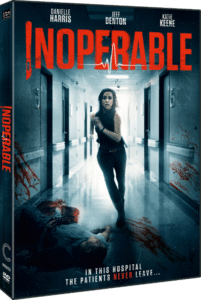
It’s a very busy premise, but not necessarily a bad one. Considering how frequently microbudget horror falls back on tired, overused set-ups and over-familiar plot beats, Inoperable is to be admired for trying something a bit different. It’s also quite stylishly shot for a microbudget film, with an unusually fluid, fast-moving camera following Harris around at all times; it almost feels like The Shining at a sprint. Gorehounds are also likely to appreciate the numerous grisly surgery sequences, even if these tend to feel a tad bit tacked on specifically to curry favour with the horror die-hards.
So where does it all go so horribly wrong? Well, for starters Inoperable really isn’t very well acted. As I said when See No Evil 2 arrived (and that was almost four years ago), Harris has done this final girl routine so many times she could do it in her sleep by now, and the role of Amy really doesn’t get anything new or interesting out of her. As for her co-stars, very little can be said in favour of any of them; there are certain moments that are aiming for high emotion, mental breakdowns and fits of hysteria, but it all comes off really amateurish, and dangerously close to inadvertent humour at times. Nor is this the only capacity in which Inoperable feels amateur: yes, the camerawork’s pretty good, but the film still has a pretty bland and lifeless look which has sadly become all too familiar with films shot on DV. Of course, the other thing about digital is how crystal clear it makes everything, not least how heavily Harris is plastered with make-up every time she wakes up in a hospital bed.
But the real crux of the problem with Inoperable is simple, and it’s the very reason why M Night Shyamalan’s career trajectory descended so rapidly in the 2000s: films based first and foremost around plot twists are, with very few exceptions, total crap. In this instance, things seemed to be shifting and changing direction with such regularity that I quickly lost any notion of what the hell was going on, and I had little to no interest in trying to make sense of it all given my total lack of investment in any of the characters. But then, to top it all off, Inoperable does the classic twist move by giving us a conclusion that renders absolutely everything that has gone before as completely invalid. Sometimes, if there’s been the right build-up to such a climactic about-face, it can work, the obvious example being The Usual Suspects (sorry, I know we’re not really supposed to praise anything by Bryan Singer or Kevin Spacey anymore); but in most instances, such an ending leaves you feeling utterly cheated, and wondering why the hell you wasted your time with the film. Given that I’d already been thinking that by the time I was half an hour into Inoperable, the last thing it needed was a climax of that nature.
If you’re an utterly devoted Danielle Harris fan, or a particular admirer of downward spiral-era Shyamalan (to each their own), then by all means give Inoperable a look; otherwise, steer well clear. Irredeemable might have been a better choice of title.
Inoperable will be available in the US on DVD, cable VOD and digital HD from 6th February.
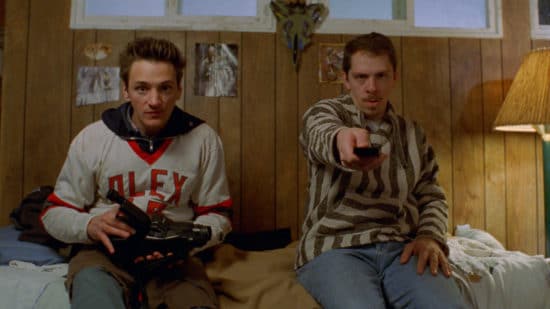 John Hawkes is a pretty fascinating figure in film. For many years, he was most likely to be known for his brief appearance as the liquor store guy in the first scene of From Dusk Till Dawn; or, if you’re a real Robert Rodriguez completist, for his scene-stealing supporting turn in Roadracers. However, more recent years have seen him take on considerably more serious work to major acclaim, like Winter’s Bone (which won him an Oscar nomination), Martha Macy May Marlene, and most recently a small but hugely impactful role in
 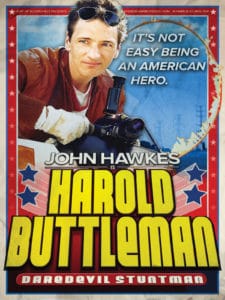 Hawkes, as you might have ascertained, plays the title role; a young-ish man who lives in his parent’s basement and works as a tuxedo fitter, but who harbours a lifelong dream of becoming a superstar stunt performer in the vein of Evel Knievel. His day to day life is pretty normal: going to work, hanging out drinking with his buddies, going out on humdrum dates with his girlfriend Wendy (Anita Barone). It’s just that, whenever he has down time, Harold and his best friend Doug (Stephen Falk) are out planning his next daredevil feat to capture on camcorder, with the ultimate goal of putting together a pilot episode for a TV show which they hope will catapult them to fame and fortune. The problem is, Harold and his friends don’t actually know the first thing about stunt work. Yet through it all, Harold remains perpetually optimistic that the big break is on the horizon. The clock’s ticking, though, as Harold’s parents (Leon Russom, and the sadly missed Karen Black) need him to move out, and Wendy is getting a little impatient with his dreaming and wants him to make the traditional honest woman out of her.
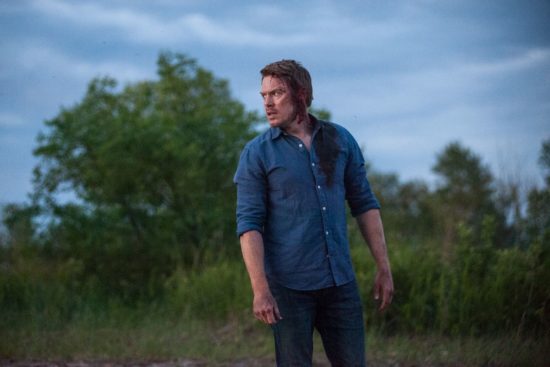 Going into a film with no foreknowledge beyond the fact that it’s from the producers of Turbo Kid, one might be forgiven for not expecting anything too serious-minded. However, this film is an altogether different breed of Canadian sci-fi horror. Written and directed by Caroline Labrèche and Steeve Léonard, Radius is a compelling and inventive movie which makes the most of a low budget by presenting us with science fiction based not around spectacle, but ideas. Hand in hand with this, it’s often a satisfyingly taut, suspenseful affair, thanks largely to the effective lead performances of Diego Klattenhoff and Charlotte Sullivan. And, just to make things tricky for anyone writing a review, it’s a film whose enjoyment largely hinges on going in without spoilers and letting things unfurl naturally.
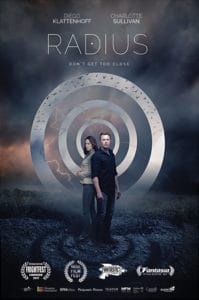 Others have already described Radius as having something of a Twilight Zone/Outer Limits vibe about it, and this is a very apt description. The central conceit, of which I’m loathe to reveal anything more, is gradually brought to light in a very effective manner, really building intrigue, and it’s all the more impressive considering that, at least for much of the opening scenes when Liam is on his own, it’s conveyed largely without dialogue. When Sullivan’s character – ultimately dubbed ‘Jane,’ as in Jane Doe – arrives on the scene, it may initially seem like this undermines matters (not unlike when all those other survivors show up in I Am Legend/The Omega Man). However, this soon proves to make the whole set-up even more intriguing. We’ve all seen plenty of amnesia movies which pair up a man and a woman, and more often than not the woman is there purely to help the guy out, Bourne Identity-style; but in Radius, we have the added curiosity of two amnesiac leads, who quickly grow to urgently need one another – despite the fact that neither one of them has the faintest idea what their relationship was beforehand.
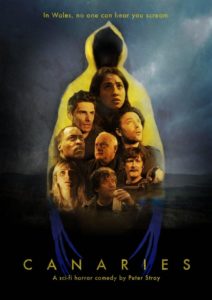 London DJ Steve (Craig Russell) returns home to the Welsh village of Lower Cwmtwrch in a bid to win investment from Nav (Richard Mylan), brother to his friend Sunita (Sheena Bhattessa), by showcasing his talents at a New Year’s Eve party. However, his friends back home, including Huw (Steven Meo) and Ryan (Aled Pugh) aren’t really giving him the platform he was after, with a disappointing house party guest list. Elsewhere, the US secret service have received numerous reports of alien activity and Special Agents Miles Kendrick (Rob Karma Robinson) and Marcie Gilman (Tsilala Brock) find evidence to suggest the next alien event will be taking place in Wales…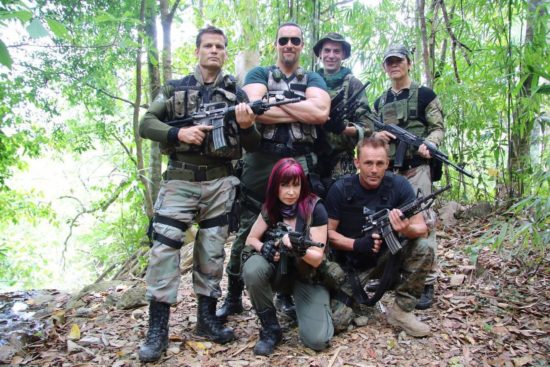
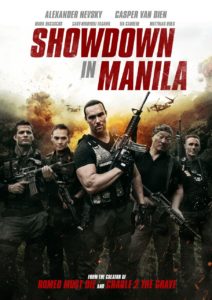 This time around, Carrere is the wife of FBI agent Matthew Wells, briefly played by Dacascos himself, who is murdered by Tagawa’s crime boss, known as The Wraith, while the couple are vacationing in Manila. This leaves her with a score to settle – and she isn’t the only one. Two years earlier, The Wraith was also responsible for ending the career of our lead, Manila police task force leader Nick Peyton (Russian bodybuilder-turned actor Alexander Nevsky, also co-writer and producer). Now, Nick has gone into business as a private investigator, alongside ex-LAPD officer Charlie Benz (good ol’ Caspar Van Dien). Fearing that too much of the Manila Police may be on The Wraith’s payroll, one of Nick’s more trustworthy former colleagues brings Mrs Wells (yes, that’s literally the only name Carrere is given) directly to him with the case. Although it’s a somewhat bigger job than Nick and Charlie are accustomed to taking on, there’s no way they can pass up the chance for some sweet payback.
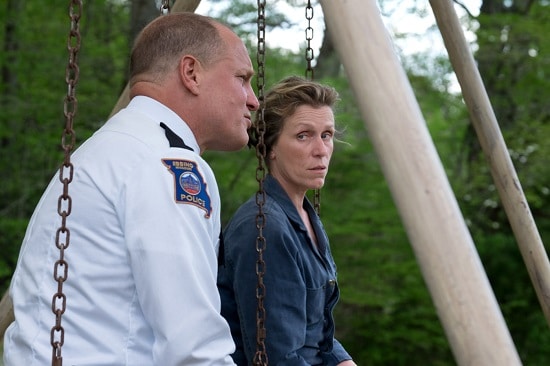 When a new movie arrives in a haze of awards season fever, it can be hard to know what to expect. So many films seem specifically designed to pick up the coveted film industry gongs (Gary Oldman in a fat suit playing Churchill, anyone?) However, Three Billboards Outside Ebbing, Missouri might have plenty of that buzz about it, but it certainly isn’t your standard awards bait. Unsurprising, given it’s the third feature film from Martin McDonagh, British playwright-turned-filmmaker behind the magnificent In Bruges and the more modestly successful Seven Psychopaths. While it’s by far the most grounded, serious, hard-hitting big screen work McDonagh has given us to date, it still has plenty of the distinct sensibility – and, more to the point, the distinct sense of humour – that has defined his body of work thus far. It also boasts one of the most impressive contemporary ensembles you could ask for, all of whom are at the top of their game.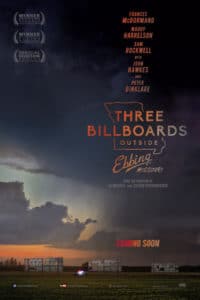
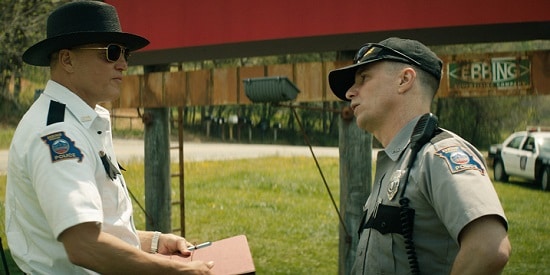 Nor, despite initial appearances, does the film present Mildred as being entirely in the right, and the cops entirely in the wrong. Seeing Harrelson in another cop role, you’d be forgiven for expecting a repeat of his turn in True Detective, but Willoughby is way over the other end of the spectrum; an affable, well-meaning family man, who it turns out has some major problems of his own on top of that one big unsolved case. Rockwell’s Dixon, on the other hand, seems to fit far more comfortably into textbook bad cop territory: a violent, bigoted idiot who takes his badge to be a licence to do whatever he wants. However, even here some grey area can be found. What makes the film so intriguing and moving is how it suggests that people who start out hating one another might learn to make peace and let the grudges of the past die. Crucially, it does so without ever getting syrupy, or implying that such transitions will be in any way easy.

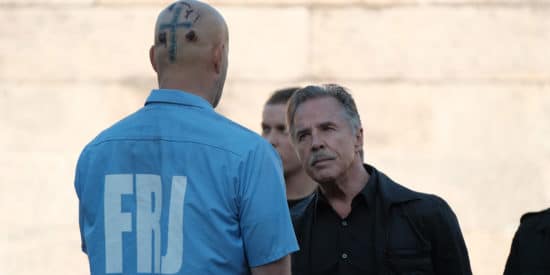 From the title and premise alone, you’d be forgiven for expecting nothing more here than a simple prison punch-up exploitation thriller. In a way, Brawl in Cell Block 99 offers up exactly that; the essential plot beats and the level of violence would feel entirely at home on a 1980s video store bottom shelf. However, this particular jailhouse beat-’em-up takes 135 minutes to reach its blood-drenched conclusion, and doesn’t even land its protagonist behind bars until around an hour in. Following on from his attention-grabbing debut Bone Tomahawk, writer-director S Craig Zahler’s sophomore feature leaves behind the old west setting but continues down a similar path of masculine contemplation, tackling questions of honour and integrity in the face of the harshest adversity – and, while it does not explicitly address the current political climate, there’s no avoiding a sense that it is very much a product of 2017, and a highly provocative work at that.
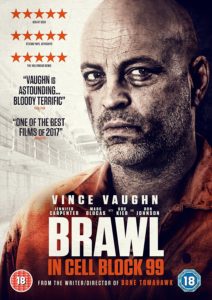 One of the first things that needs to be stressed about Brawl in Cell Block 99 is that at no point are you likely to look at the leading man and say, “oh look, it’s that affable non-threatening everyman guy from Dodgeball, Wedding Crashers and all that.” Between this, True Detective and
 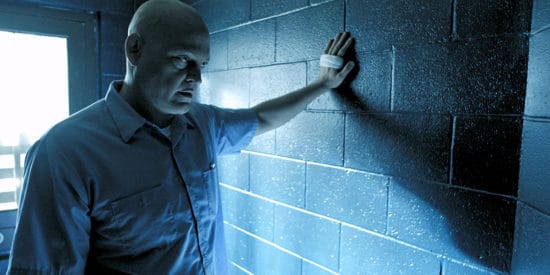 This, again, is where Brawl in Cell Block 99 would seem most likely to divide audiences. Yes, Vaughn’s Bradley Thomas is a working class white male from the deep south who proudly flies the American flag on his doorstep, and literally wears his religious faith out there for all to see: in other words, all that’s missing is a Make America Great Again cap. It’s inconceivable that a 2017 film could centre on such a protagonist without it being in some way intended to make a statement; but I can’t deny I’m struggling to pin down exactly what it is that the film is trying to say. However, given that Vaughn – himself an outspoken conservative* (though I know nothing of Zahler’s political leanings) – has taken on the role and clearly put so much heart into it, I’m left with the impression that this is an entirely sincere celebration of that value system. Moreso, the film goes to some effort to dismiss certain preconceptions about southern white conservatism: Bradley listens to soul music, gently chastises his employer for use of homophobic and racist slurs, and goes out of his way to approach everyone with politeness, in the first instance at least. Even so, we can’t overlook that those who cross Bradley tend to be those who don’t mirror his ethnicity: Hispanic and Asian convicts, a black guard, and of course the none-more German Udo Kier. When the shit hits the fan and Bradley takes out his rage on these people (though it should be noted his fists meet a few white guys too), it’s not hard to see racist viewers feeling validated, and whooping and cheering unironically the way so many of them did at American Sniper. And I can’t say with any certainty that this is not the desired effect.
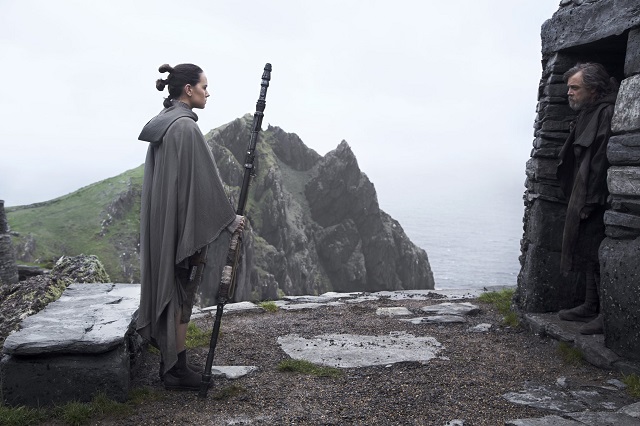
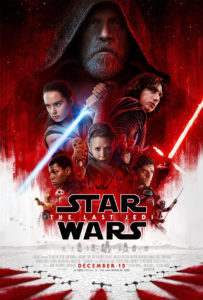 Not so. Where JJ Abrams’ Star Wars Episode VII: The Force Awakens was met with some reasonable criticism for how closely it adhered to the structure of the original Star Wars (AKA A New Hope), Johnson’s The Last Jedi breaks with series convention in some very big ways. While there are without doubt echoes of The Empire Strikes Back, this is in no way, shape or form a beat-for-beat retread. This is a bold, inventive, sophisticated film that’s loaded with new ideas, and while it delivers everything you’d expect from a Star Wars movie, it also manages what many of us might have thought impossible: it leaves you genuinely surprised, with very little idea where the series might go from here.
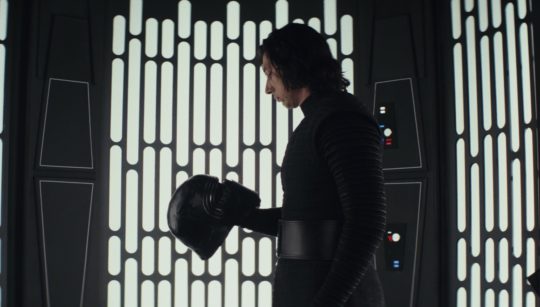 Okay, as you can tell there’s a lot going on here, so if you’re not already fluent in Star Wars lore this clearly isn’t the film to jump on with. Familiarity with The Force Awakens is required at least, although the film does refer back to the original trilogy, with even a few nods to those dreaded prequels. What makes The Last Jedi work is how it takes the core concepts of the series – the on-going battle between Empire/Sith/First Order and Rebels/Jedi/Resistance, and the power of the Force itself – and delves into them in a way no series entry before has done. After all the talk of last year’s Rogue One being the riskiest, most mature Star Wars film ever, The Last Jedi puts all that in the shade (not that I mean to put down Gareth Edwards’s film; all in all it was a fine piece of work). This is by far the most introspective Star Wars movie to date, which takes a lot more time not only to focus on the characters, but also to question their motives, and really delve into what it is that compels them to do the things they do.
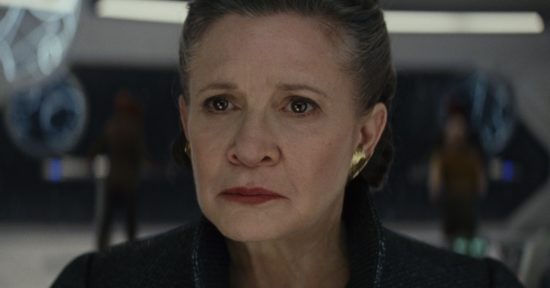 Above and beyond all this, though, The Last Jedi is a highly emotional film. The plot developments have weight because of our investment in the characters, and while much of that is rooted in the audience’s enduring love for Mark Hamill’s Luke and Carrie Fisher’s Leia, it also has to be said that (with credit also due to Abrams and The Force Awakens) an excellent job has been done bringing the new protagonists to the forefront; and it’s a pleasant surprise to see Kelly Marie Tran’s Rose prove such an endearing addition to that ensemble. Of course, there’s no avoiding the fact that a lot of The Last Jedi’s emotional impact is down to the fact that this is Carrie Fisher’s final performance. It’s not spoiling anything to say that many of her scenes have an unmistakably elegiac tone, which would have been moving even if the actress had lived; but, in the knowledge that she’s no longer with us, I fully expect that many fans like myself will be taken beyond the brink. I can recall very few occasions on which I’ve openly wept in cinema, but I’m happy to admit The Last Jedi was one of those times.
 When a director comes from independent beginnings and works their way through to the mainstream, it’s always interesting (and sometimes disheartening) to see how much or how little of the filmmaker’s personality survives the process. In this respect, Steven Soderbergh is one of the most notable figures of the past three decades. His 1989 feature debut and Cannes Best Picture winner Sex, Lies and Videotape arguably set the tone for the American indie cinema of the 1990s (blazing the trail for Linklater, Tarantino and co.), and just over a decade later Soderbergh would have a Best Director Oscar and a number of major box office hits to his name. His prolific career has also seen him take on a surprisingly diverse range of projects, encompassing crime thrillers (Out of Sight, the Ocean’s 11 movies), science fiction (his remake of Solaris), martial arts action (Haywire), and male strippers (Magic Mike), as well as the more grounded dramas on which he made his name.
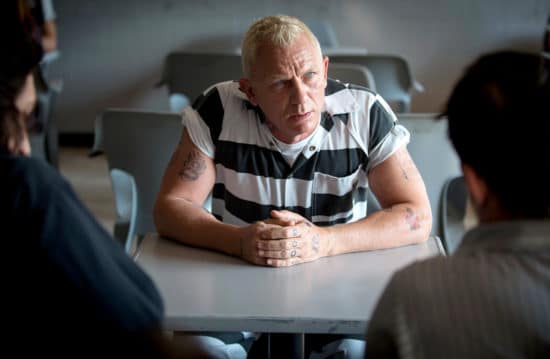
 Soderbergh’s more mainstream work has always been interesting, in that he’s taken projects which could easily have been realised in a considerably glossier, blockbusterish fashion, yet managed to keep a vaguely arty edge to proceedings. It’s not that his films are necessarily art house, more that they fit an older definition of what a mainstream movie is. In the case of Logan Lucky, it’s not hard to envisage a very similar film being made in the 1970s with, say, Burt Reynolds or Steve McQueen in the lead. Just about all the typical blockbuster story beats are hit – a path to personal redemption, reconciliation with family – but with Soderbergh calling the shots and keeping things relatively grounded, we avoid the kind of sentimentality and excess theatrics that can sour material of this kind.
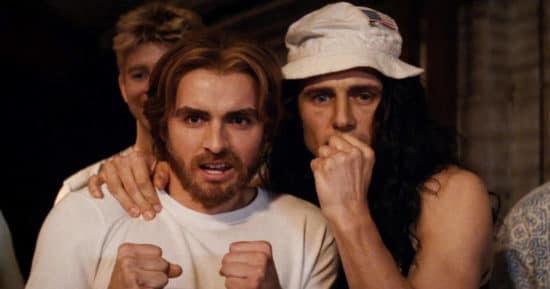 Follow your dreams. It’s arguably the one message Hollywood has sold us most consistently over the decades. Passion, determination and perseverance will ultimately pay off, they say, so long as you’re true to yourself and stay strong in the face of adversity. Alas, as years of singing-based TV talent shows have so sadistically emphasised, ambition and willpower don’t always go hand-in-hand with self-awareness and actual ability. Sure, you can put yourself out there for all to see, step out before an audience and/or a camera with your heart worn proudly on your sleeve, and give it all you’ve got; but this doesn’t guarantee anyone’s going to like it, or that it’ll actually be any good.
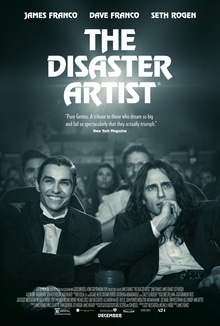 The younger, top-billed Franco is Greg Sestero, a young San Franciscan model-turned-actor, struggling to find his feet as he suffers stage fright. However, one night at acting class he witnesses fellow student Tommy (Franco the elder) – an enigmatic loner with a flamboyant quasi-Goth dress sense and an unplaceable accent – give a wildly unrestrained take on a few words from A Streetcar Named Desire. Impressed, Greg approaches Tommy for advice on how to emote, and a slightly awkward friendship ensues; Tommy seems happy to take Greg under his wing, but is unwilling to reveal much about himself or his past. This proves challenging, as so much about Tommy begs questions: where is this anonymous oddball actually from, how old is he, and how does he have seemingly inexhaustible supplies of money?
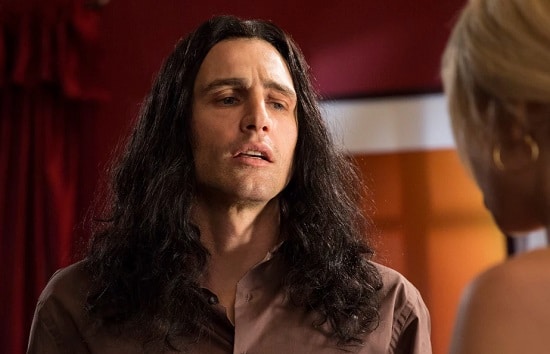 Which brings us to the matter of James Franco, and his performance as Wiseau. It’s not hard to see why any high-profile actor would want to take on such a role: he’s a fascinating, bizarre character, and the cult status of The Room almost certainly owes more to his performance than anything else. Watching The Disaster Artist, it may leave one half surprised that Johnny Depp didn’t get in there before Franco, given the opportunity to put on a wig and some prosthetic make-up, and talk in a funny accent. The curious thing is, whilst the wig, make-up, contact lenses and of course the voice may render Franco almost unrecognisable, they don’t make him a picture-perfect facsimile of Wiseau either. In a strange way, the overall effect is reminiscent of Will Smith in Ali; rather than striving for the most accurate impersonation possible of the real person, Franco simply plays Wiseau as a character, hitting similar notes and evoking similar mannerisms, but really doing his own thing with it. Whether or not this is a problem may depend on the viewer’s familiarity with The Room, but it’s fair to assume that even those unfamiliar with the source material will still be able to watch and enjoy The Disaster Artist just fine; much as was the case with Tim Burton’s Ed Wood, the film’s most obvious kindred spirit.