“COMPLETE US THE CIRCLE!” STORIES OF STANDING STONES
The numerous standing stones of Britain are familiar, beloved points on our landscape: Stonehenge is now an integral part of the British tourism trade, for instance, bringing in visitors from around the world. There are examples of monoliths and circles throughout the country – over 300 in England alone (and far more in Scotland, that old ‘Other’ for so many horror films.) But, still, comparatively little is known about the purpose of these structures. We can glean that they marked, in some ways, the significance of the seasons, but the finer points of this significance are left to educated guesswork – the kind of guesswork which draws people to these sites for solstice celebrations today. Going back in history, only Romans such as Suetonius and Julius Caesar were there to pass comment on the rites of the Ancient Britons, and they were hardly unbiased commentators. Today, standing stones seem to do two things: they function as markers (of when life was different) and they provide mystery (how did our forebears use these places?) In horror, their importance extends further still: we know that they are in some ways temples to the old gods, but even if we have lost sight of those rituals and those gods, have those gods lost sight of us?
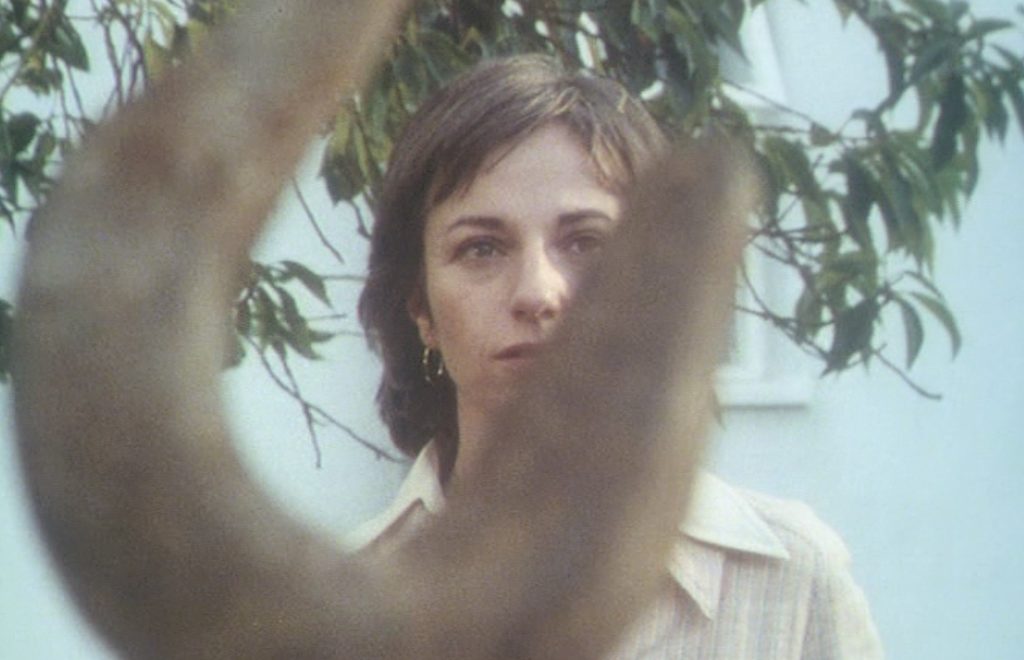 Consider the implications of interfering with a stone circle in 1977’s Stigma, written by Clive Exton and directed by Lawrence Gordon Clark, who directed several other of the above-mentioned Ghost Story for Christmas TV episodes. It’s also relevant to say that, throughout the TV and cinema of the 1970s, Avebury (the location of Stonehenge and a number of other monuments) crops up several times. In Stigma, a young couple moves into a remote country house, which just so happens to be in the middle of a stone circle. Their renovations – which shift a standing stone – disturb a force that has been long buried, with the resultant action focusing on wife and mother Katherine’s body and what happens to her as a result of this modern transgression. A flawed narrative perhaps, but a story that points directly to the risks of breaking a stone circle, even in the twentieth century – with links arising between Katherine and an uncovered burial beneath the dislodged stone, presumably a ritual sacrifice. This dark side to picturesque and harmless ancient monuments would occur again during the decade.
“HAPPY DAY!”
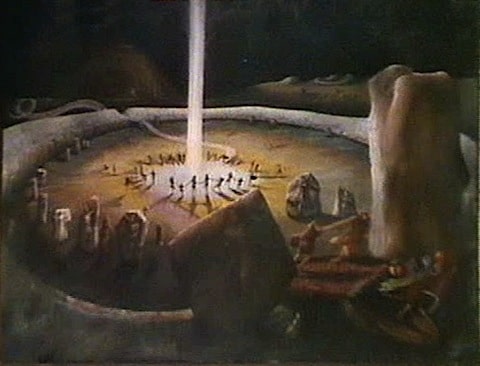 In Psychomania (1973), the group of bikers thwarting the rules of life and death do so in wide-shot locations that feature a stone circle, just to underline the strangeness and otherworldliness of the plot in a film which we would probably not otherwise consider here. Along similar lines, and something which definitely seems to fit with the current discussion, it’s still incredible to me that The Children of the Stones (1976) was ever aimed at children, although one of the hallmarks of the 1970s seems to be that the distinction between kid-friendly and adult-friendly content was less clear. Even the public information films of the decade, which intended to caution children against dangerous behaviour, are often remembered today as akin to horror film viewings. I saw Children of the Stones for the first time in the mid-eighties, and it really got under my skin. The story of the village of Milbury – built in the midst of a stone circle (and again set, and filmed, in Avebury) makes for a strange new home to son Matthew and his father, Adam. A creepy story of indoctrination and weird psychic phenomena (and yet another sinister patriarch) ensues, with the stones themselves at the crux of the plot, whereby the circle has come to exist in some sort of time loop, making its influence seemingly inescapable. I have not revisited the series in many years; a mish-mash of terrifying music, blank-eyed schoolfellows and that painting usually drift to mind first when I recall it now.
Here, I’d find it remiss not to mention Season of the Witch (1982), a sadly underrated horror story which has long suffered for the baseless link to the Halloween franchise made by the title. It’s not a film usually included in discussions of folk horror (at least to my knowledge) but it’s a neat little nexus for some of the anxieties we’ve been discussing in these features.
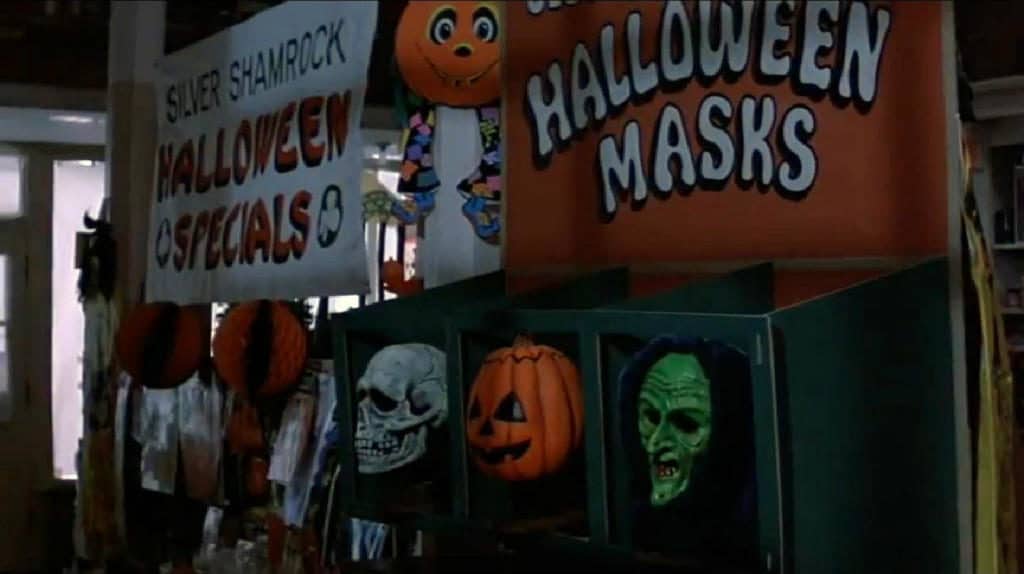 As a clash between the modern and the ancient, first of all, I’d argue that Season of the Witch is second to none: here, fragments of a Stonehenge stone are being added to mass-produced Halloween masks in order to control the wearers via a mass media trigger – TV. The reason given for this is simply to rejuvenate the festival of Samhain, which we modern folks have co-opted as Halloween, a festival where, as antagonist Conal Cochran sneers, people simply send their children “begging for candy”, ignoring the bloodshed and sacrifice originally associated with the Celtic New Year. Well, no more. Here, not only is a standing stone – from the most famous standing stones in the world – integral to the horror, but also it’s physically been transmitted to the New World, where the intention is to wreak havoc – old against new, misunderstood tradition against crass modern. Moreover, not only is America in danger, despite the distance between it and the British Isles, but its beloved free market and TV media are the things being used to promulgate that danger. Never were old and new brought to bear on one another in such a clear, direct way. Witches, Jack O’Lanterns and skulls – magic, ritual and death – via mass sale – transmit the destructive magic of a British standing stone to a crowd of naive and distant victims. Like Count Dracula and his native earth, as he purchases a property in England via modern and legitimate channels, it seems that this malign monolithic power (as it’s imagined here) can be carried and established in a new terrain simply by manipulating the modern system.
“IT HAS A POWER…”
This set of concerns is at the heart of a great deal of folk horror: a past believed long-buried and ‘safe’ rears its head again, jutting into a world believed to be so calm, predictable and dependable. Rational people are made to reconsider their values in horrific circumstances; closed communities hold sway, and unsound practices either win out or resume (or often, both). At the heart of all of this is the land itself. Whether it’s what the earth conceals, or the powers it can confer; whether it’s what springs from the earth or the ancient monuments upon it, the land itself is key, and something sinister can always be unearthed…
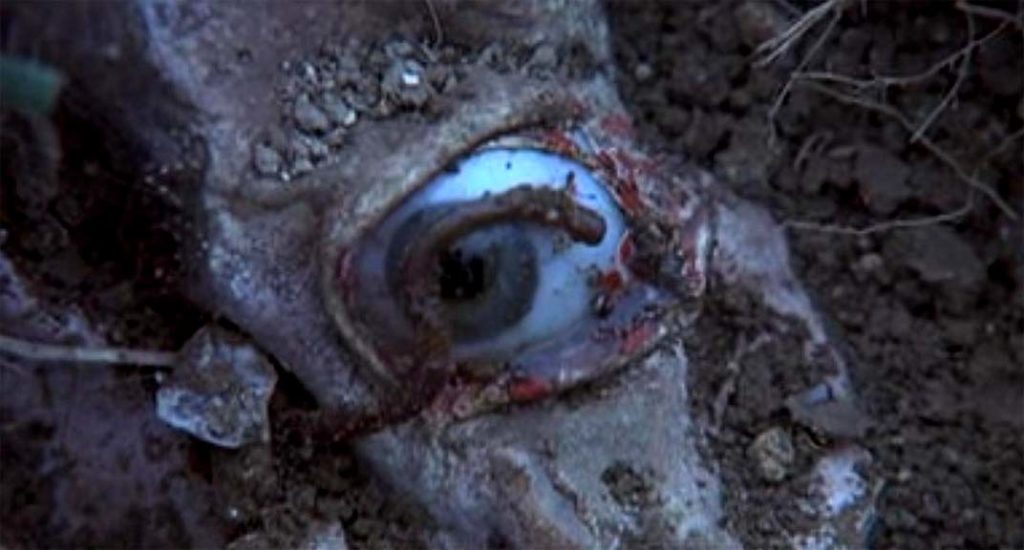 No film better understood (or embodied) the idea that you could quite literally unearth an evil than The Blood on Satan’s Claw (1971). In this seminal film of its kind, it’s the process of ploughing the land which turns up something unexpected – the remains of something ungodly. This simple act, in a fraught rural agrarian society, pushes the whole of that society to the edge of a precipice, as the village’s young people begin to fantasise about the remains and turn away from their fraught relationship with the Church towards more carnal forces. (The Church’s shortcomings are also explored in another contemporary film now held up as canon in folk horror tradition, Witchfinder General). It’s interesting that, in her book, Looking For The Lost Gods of England, author Kathleen Herbert identifies two things which are relevant to The Blood on Satan’s Claw. Firstly, the age-old importance of the soil in pre- or very early Christian times, where it was seen as a conduit between man and god, and secondly, accounts of rituals which incorporated the plough as a means of making offerings to the land – by literally ploughing offerings to the gods into the dirt. The spectres of these practices were retained by early Christianity, though – typically – shorn of any pagan significance. In The Blood on Satan’s Claw, the camera acknowledges the importance of the soil, and a deliberate decision was taken to place the camera on ground level or even beneath the level of the dirt. This tactic gives the land a prescience and a menace, which is borne out by later events – the accidental discovery of physical, but supernatural remains.
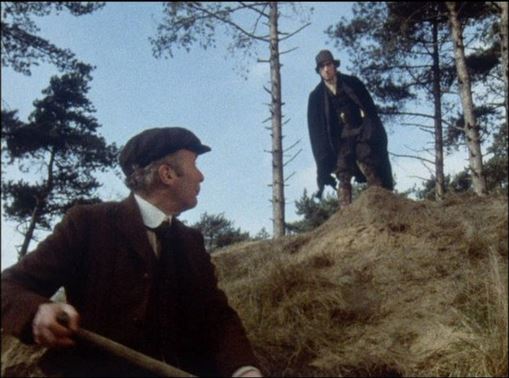 If something is unleashed simply via turning the land over, then what happens when something is deliberately placed in the ground? The master of quiet English horror, M. R. James, grappled with these possibilities in some of his best short ghost stories: he fills his tales with barely-tangible ancient terrors, which creep into view (almost) when modern interventions permit them. Some of these are summoned, accidentally or otherwise; some are malign entities which simply take their moment to escape. There are a number of stories which process these fears. In An Episode of Cathedral History – bearing in mind that cathedrals were often built on sites which formerly had other, pre-Christian ritual purposes – the tale tells of a mysterious tomb, whose disturbance causes strange phenomena to occur in the town and (possibly) releases a supernatural force, a ‘lamia’ – a term meaning a monster, or a witch. Whatever the creature is, it’s certainly something which Christianity would prefer locked safely away in hallowed ground (and there, we have the idea that the dirt of the earth can be sanctified with a Christian blessing, which speaks volumes to the beliefs of the past.) Perhaps the most famous James story, however, apart from ‘Oh Whistle and I’ll Come To You’, is A Warning to the Curious; the unearthing a Saxon crown, buried in the earth for the protection of the land, leads to severe repercussions for the amateur archaeologist who digs it up. Albeit in a simplified form, A Warning… was filmed as part of the superb A Ghost Story for Christmas series in the 1970s, as one of several Jamesian yarns adapted for television. The sense of a something relentless, a portent of doom, is married perfectly to a sense of the dispassionate, but harmful British terrain.
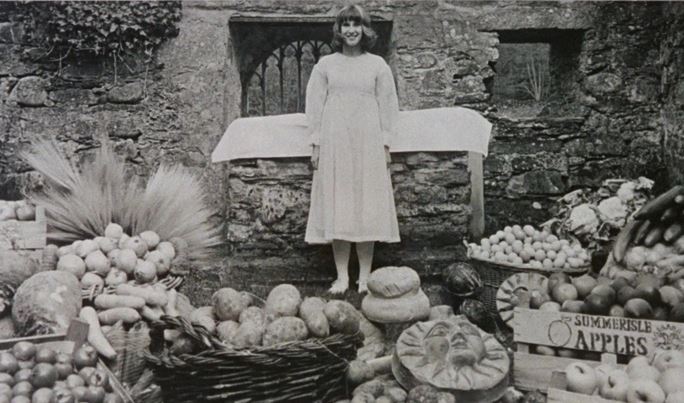 The clay can work wonders: it can manipulate people, birth terrors, and remind us all that the old gods hold sway. Perhaps we’re slower to see the significance of the soil in one of the folk horror classics, The Wicker Man (1973). Many of the elements we associate with the sub-genre are of course there – the pagan practices, the closed community and the threat to Christian outsiders, but at its heart, The Wicker Man is as a tussle between science and unreason, with the land of Summerisle itself at the kernel of the clash. The film only really discusses this element at its close. Howie, as he pleads for his life, has a moment where he invokes rational scientific argument to attempt to dissuade Lord Summerisle from doing what he’s about to do. The crops have failed, he points out, because the soil on the remote Scottish island is completely unsuited to growing apples – gulf stream or not. They were bound to fail.
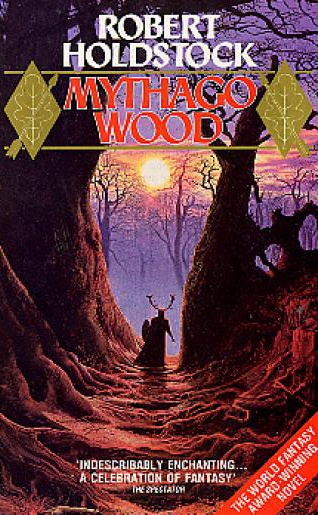 As well as what’s happening below the soil, the trees and structures on top of it have also figured significantly in folk horror. Woodland – which once covered huge swathes of the British Isles – has long been the stuff of nightmares, but it perpetuates British cultural identity, too: most children still know the stories of Sherwood Forest, for instance – an area that is still around today, though greatly depleted. Taking this link further still, the novel Mythago Wood (1984) encapsulates the idea that ancient woodland embodies our history: the woodland described here is a parallel universe, inhabited by archetypes of the British consciousness, from Celts to knights, through to monsters and magic. This can be a thrilling place, but it can also be menacing.
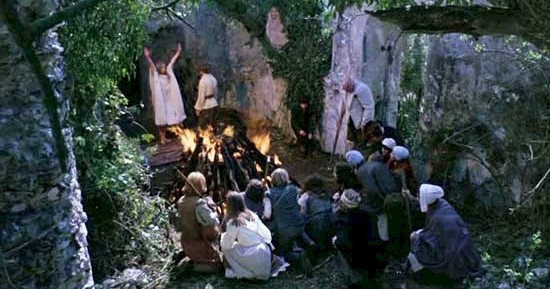 We owe our use of the term ‘folk horror’, if I’m not mistaken, to the writer and actor Mark Gatiss who used the term in his History of Horror TV programme. Nevertheless, even if Gatiss came up with a pithy, recognisable shorthand, albeit that director Piers Haggard also referred to ‘folk horror’ in describing his own work, then his umbrella term took hold because it described a sub-genre already beloved of film fans. Those three key films chiefly associated with folk horror – The Wicker Man, Witchfinder General, The Blood on Satan’s Claw – established a new kind of uncanny cinema, where the vulnerabilities of established Christian thought were exposed to unreason. Considering the enlightened times in which these films were made, they seem to represent a hankering for a magical past, or at least for something both more powerful and mysterious than the current order had to offer. It’s possible, too, that the Age of Aquarius and the new wave of magical thinking found its portrait in the attic in at least some of the folk horror which emerged from the late 60s through the 70s. If magic was indeed back, and if young people were turning their backs on the norms of their parents’ generation, then what could all of this mean?
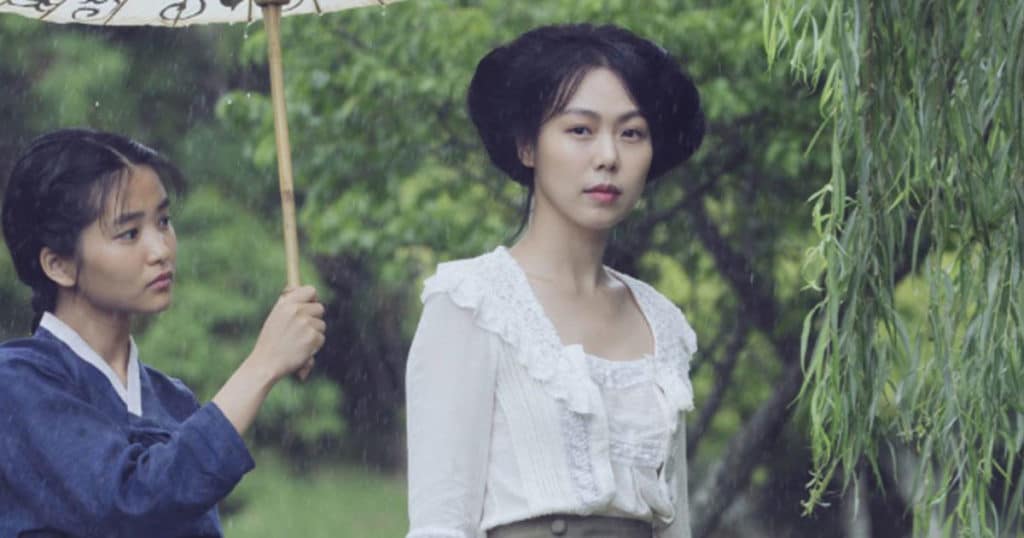 The film is set in 1930s Korea: while Europe was grappling with the rising possibility of another war with Germany, the Japanese had already extended their empire to include China and Korea, occupying the latter from 1910. A young Korean girl, Okju, is told that she’s been selected for the role of handmaiden – or a lady’s maid – for a wealthy Japanese heiress, Hideko, who lives with her uncle at a grand Korean mansion. Okju – going by the Japanese name of Tamako for her new role – is both spellbound and intimidated by the place, a weird mish-mash of Japanese and Western architecture, and at first can only gather scraps of information on her new mistress, who is apparently much-afflicted with her nerves. Tamako’s first meeting with her is after Hideko has a violent nightmare, but the new maid can’t help but be warm and informal with her from the outset, doing her best to calm her. Thus, a peculiar friendship is born.
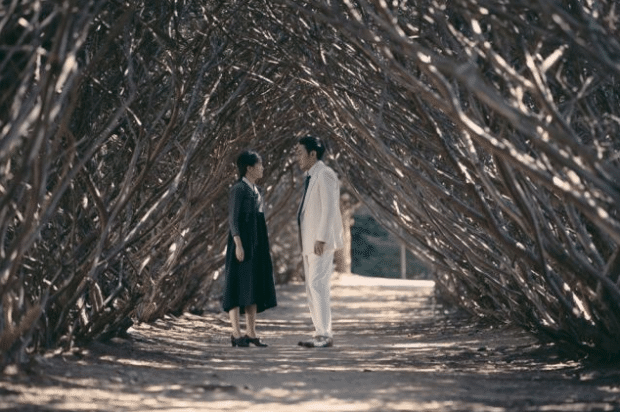 The Handmaiden is also a beautiful piece of film, where every fragment of every scene looks sublime. From the characters themselves – I’m sure Min-hee Kim is carved out of marble – to their clothing, to the interior shots and the landscapes, it looks as though some kind of mathematical formula has been used to perfectly compose every moment. Even someone eating a grain of rice turns into a vision. And if you think I’m exaggerating, well – you need to see it, then you’ll believe it.
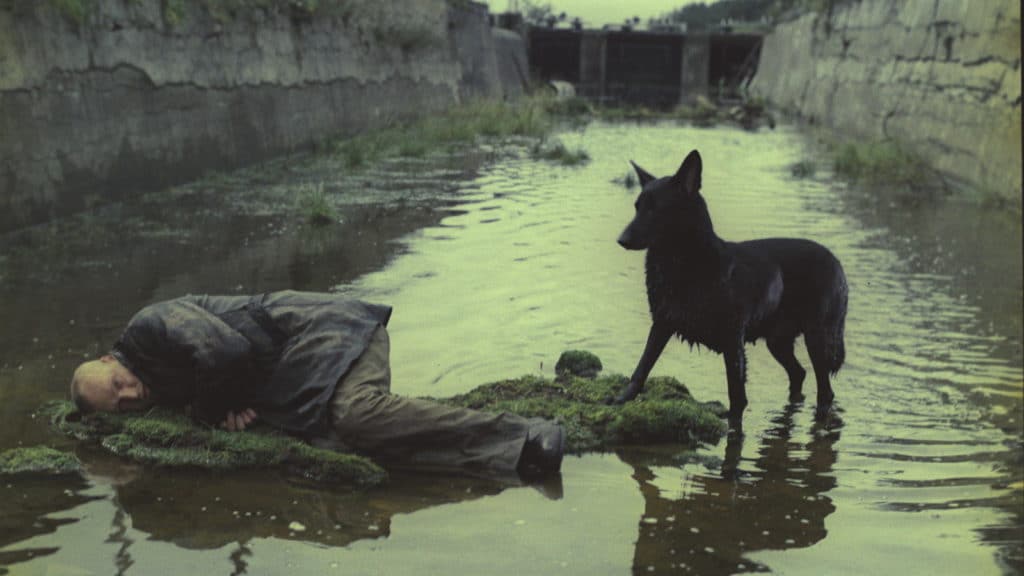 Together with two other men – known only as ‘The Professor’ and ‘The Writer’ – the stalker takes them through deserted, waterlogged streets and nearer to their destination, avoiding gunfire along the way. The further they go, the more the landscape seems to be post-apocalyptic in some way; everything is broken, or derelict. Absolutely everything is flooded. The route is dangerous, they are low on resources and the soldiers keep up their assault on them, but eventually, they are able to reach the outskirts of the Zone.
 Being art-house orientated, Stalker successfully looks very striking indeed, positioning its characters against abandoned places and post-War bunkers (the film was shot on location in Russia and Estonia, each of which still bore the marks of conflict, even in the 1970s.) It also boasts a painterly approach, with lingering shots, creative uses of colour and a camera which deviates from the inner turmoil of the three men to pan over interesting, and clearly composed tableaux of potentially symbolic objects. Stalker is massively lo-fi, however, with an emphasis on rather cerebral dialogue about ‘the meaning of it all’ and an appropriately obtuse Soviet conclusion where we learn only not to ask again in future. La La Land, this categorically ain’t.
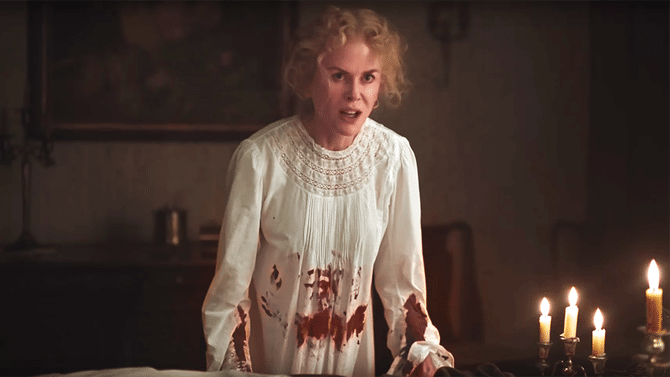 I will say I was rather surprised to see that The Beguiled had been remade. Not frothing-at-the-mouth indignant that anyone could ever remake such a film, but more intrigued that anyone would want to do it: the 1971 original, starring Clint Eastwood, was a strange project which probably didn’t find its audience upon release and it’s struggled to get due recognition since. It’s not a romance, and it’s not a war film, it’s incredibly tense, but it’s low on action. These trope-defying films have a hard time and they’re a hard sell. So why return to the subject matter all over again?
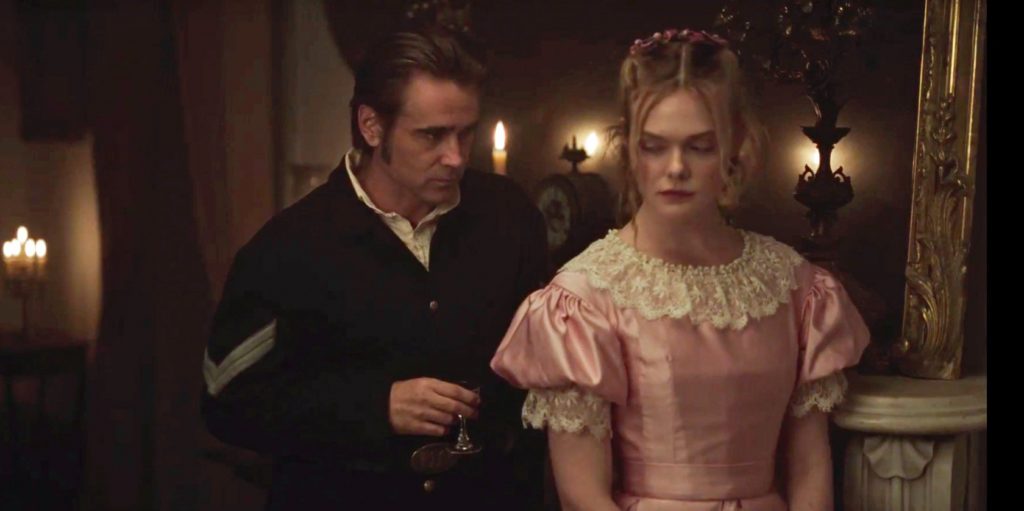 Having no great moral impetus – beyond hard cash – to get back to the battle, he sets his morals aside completely, happy to manipulate each of the women for – is it his own vanity? For sport? Or simply to secure their Southern hospitality for as long as possible? It seems that it’s any or all of those reasons in turn, but what’s certain is that the power shifts in The Beguiled move one way, then another, like a needle and thread through a tapestry (or any of the other less orthodox fabrics we see when we encounter this women’s work in the film). First McBurney is powerless – completely prone, after his injury, and the women who tend to him seem to enjoy his powerlessness: Miss Martha cleaning his (almost) naked body is turned into a queasily erotic tableau where a man potentially about to die of his injuries becomes some serious eye candy: furthermore, the enjoyment she gains from looking at him and touching him is ratcheted up by the use of microphones which pick up the rapid changes to her breathing, a trick the film employs elsewhere with the other women. Then, McBurney takes full stock of his situation, flattering and cajoling the women – particularly Miss Edwina, who Dunst effectively plays here as a living powder-keg. She’s an insular and downbeat character (teaching will do that to you) but her emotions reflexively spark into life when it transpires that she’s been lied to. Thus, the power shifts again, and again after that.
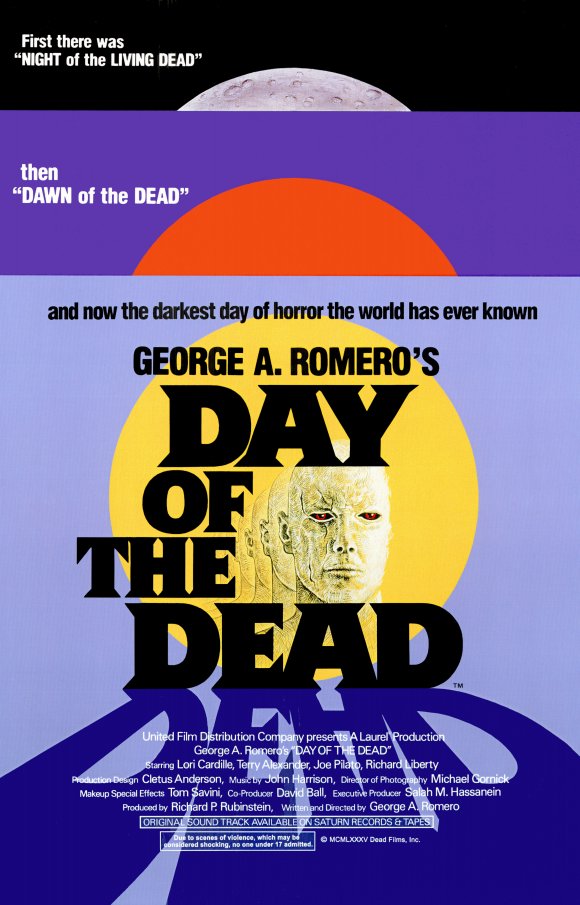 A return to the zombie genre later in his career lacked the verve and the impact of his earlier work, with his later films Land of the Dead, Diary of the Dead and Survival of the Dead never attaining the same organic sense of social commentary, but people were delighted to see him working again after such a long hiatus. Still, it’d be incorrect to see him solely as ‘the zombie guy’ anyway, and would do him a disservice. The Crazies – which pre-dates Dawn of the Dead – is a great, manic film, and the underrated (and very subtle) vampire horror of Martin is a whole world away from the zombie genre. Whilst Romero’s filmography isn’t vast, he made enough films to show that he could indeed be versatile.
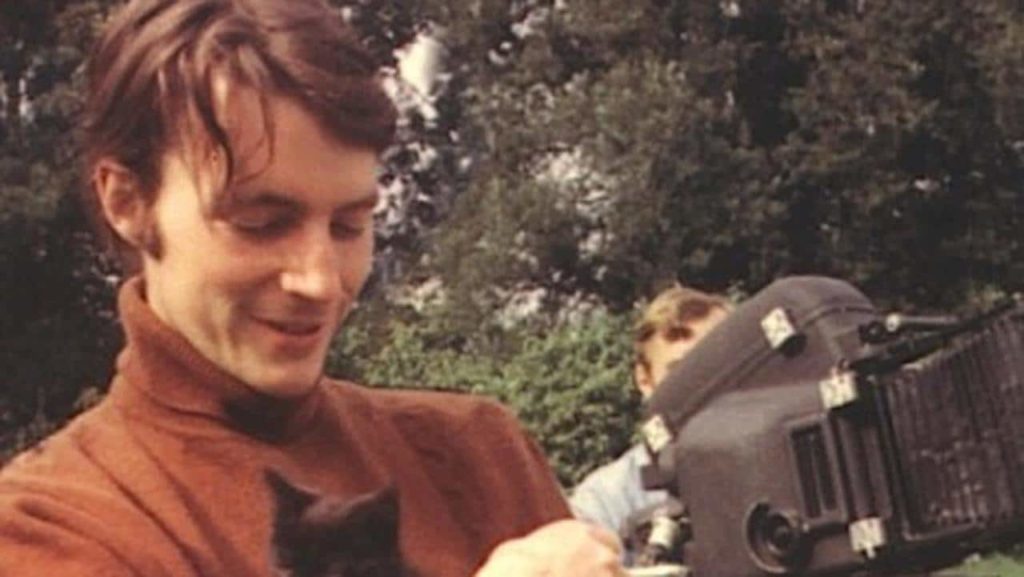 Personally, out of the entire publication, I most enjoyed Jon Towlson’s feature on British director Michael Reeves. Reeves, who directed two phenomenal films (The Sorcerers and Witchfinder General) died as a very young man following an overdose. Towlson’s feature focuses on the psychogeography of Reeves’ life, looking at the homes and pubs which were not only close to his heart, but probably integral to how he lived. These spaces were where he socialised, threw ideas around and – towards the end – grappled with what he saw as the deeply wrongheaded criticisms of his work, particularly the then much-maligned Witchfinder General, now considered a classic of its genre. It’s an interesting perspective, looking squarely at the seeming incongruity between Reeves’ films and his surroundings but always remaining sympathetic and engaged. It’s hard to disagree with the conclusion of this piece – that the death of Michael Reeves so very young was a phenomenal loss.
 Exquisite Terror doesn’t seem to have an overarching editorial policy, meaning there’s no impetus to toe a line, one way or another. This boosts the variety of features on offer – a good thing – though of course it also means that I, like anyone else, will always prefer some articles to others. God Bless America: Stephen King’s Shining by Jim Reader comes to mind here I’m afraid: there’s nothing whatsoever wrong with how this piece is written, as it flows well, but the claims it makes about Kubrick’s seminal horror film seem based on very tenuous evidence. These feel like pre-existing tenuous claims, too, as many improbable interpretations of The Shining already featured in the frankly bonkers documentary film Room 237 (2012), which at the very least made me wonder what it is in particular about The Shining that bears such strange fruit. The premise – that Kubrick’s film is a commentary on the historical treatment of Native Americans, based on two lines of dialogue and some incidental images of Native Americans – is no more convincing now that I encounter it for the second time here. On a similar note, Once Bitten: The Queerness of Becoming Other ostensibly features a ‘queering’ of a handful of werewolf films, but what’s counted as lycanthropic in nature seems a little broad. Also, to my eye, some of the interpretation seems somewhat awry (I don’t know Der Samurai, but one of the key scenes mentioned as evidence of the links between queerness/othering seems to have firm markers of hetero-, rather than homo-erotic lust.) Finally, if you say that werewolf films reflect the anxieties about the AIDS panic of the 80s, then I think we need specific examples.
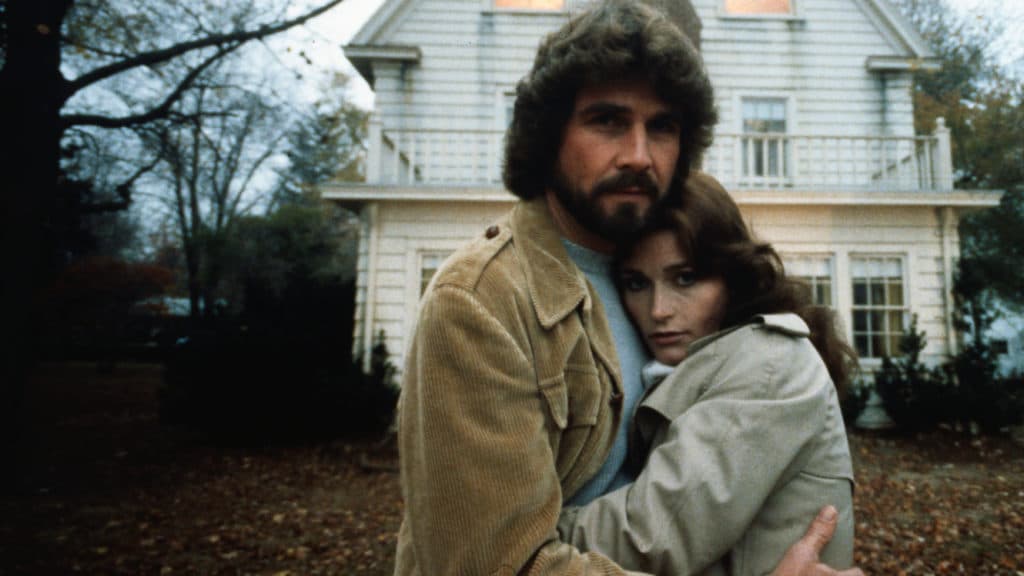 For someone not given to supernatural beliefs, I have a fascination with supernatural horror, and there are few supernatural horrors more famous than The Amityville Horror; close to forty years after it first appeared, there are still films getting made which carry the Amityville moniker. One of the key reasons for the success of the original film was the link between the screenplay and the ostensibly ‘true story’ of the Lutz family, whose experiences are dramatised in the film. The Lutz haunting is itself well known, and a fascinating, terrifying story in its own right, comprising a bizarre blend of testimony from the family themselves and a host of others who had become involved with them, such as the self-styled ‘demonologists’ Ed and Lorraine Warren, whose case films have incidentally turned up elsewhere in horror cinema – such as in The Conjuring (2013) and Annabelle (2014). Any description of a haunting as ferocious as the one recounted by the Lutz family always seems to me to be a detective story, too: people corroborate or contradict one another, recount or re-assert what they experienced. Still, the film itself doesn’t much trouble with these ambiguities, preferring to play out many of the events described by the Lutzes on screen, in as straightforward a way as you can muster when those events include inexplicable phenomena.
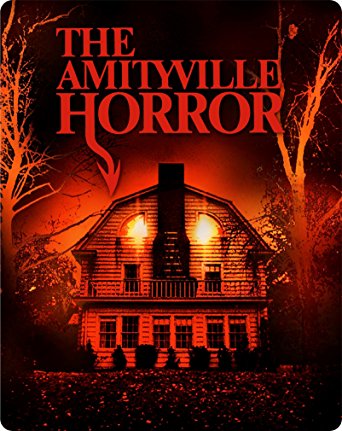 …And there are some successful elements – the ‘red eyes’ scene still works well, for instance – enough so, that the film has enjoyed great influence on other horror films which have followed in its wake. The impact of these key scenes is always increased, for me, when you remember that an adamant family was convinced that these phenomena were real – enough so that they eventually fled the house, leaving all of their belongings there, even leaving food on the table. The whole ‘based on a true story’ preamble, which we’re so used to now, owes much to the success of Stuart Rosenberg’s movie, as does the ‘real time’ unfolding of events, a technique still integral to many scare stories (it’s relevant to note that much ghostly ‘found footage’ embeds real time via its shooting style.) Sure, there’s some back-and-forth between banality and histrionics, but The Amityville Horror is an important chapter in the genre and is worth a place in your collection.