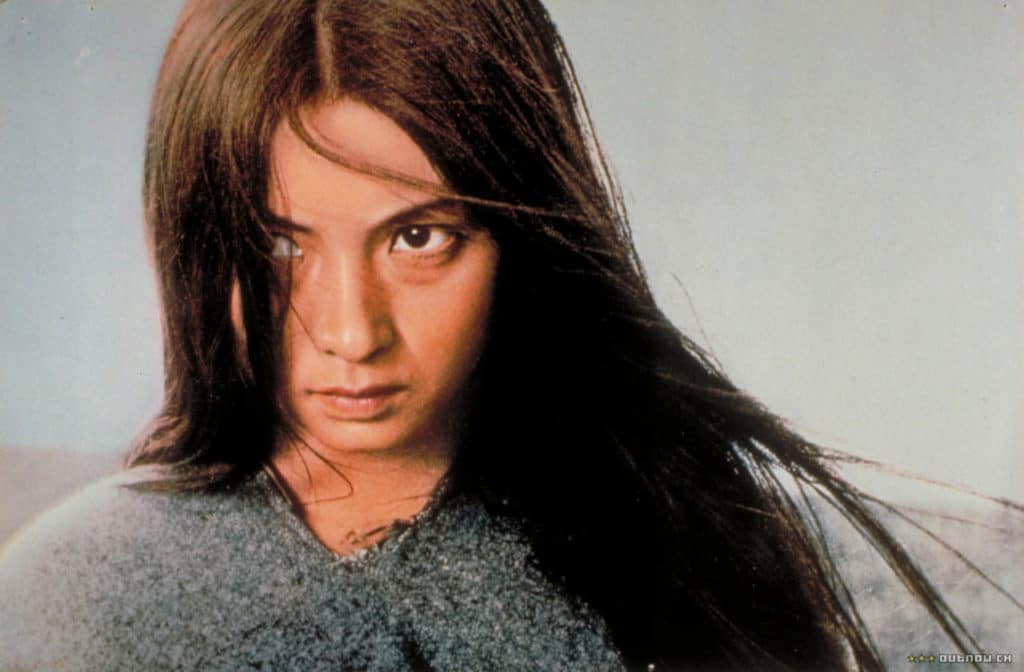
 Meiko Kaji is, from a Western perspective, one of the most unmistakable and recognisable Japanese actresses of all time, but this comes with a significant proviso. Most of us know just a tiny fraction of the films she has ever made; only a handful of these nearly one hundred films have really made it over here anyway, and even out of that, we tend to think of her in one of a couple of key roles. Either Meiko Kaji is ‘Scorpion’, the largely mute and indestructible prison inmate of the Female Prisoner series, or she is the sword-wielding agent of doom in Lady Snowblood. This is a state of affairs acknowledged by author Tom Mes in his neat Meiko Kaji book Unchained Melody, available now on the Arrow Books imprint (and thus an extension of the work which Arrow has so far done in publicising Kaji’s work via their existing range of Meiko Kaji releases.)
Mes provides here a meticulous and exhaustive filmography, starting at the very beginning of Kaji’s career with her shortcomings as an ojo-sama, or a ‘well-bred young lady’, the kind of girl generally sought-after in the Japanese cinema of the early 1960s, and how this soon led to rather meatier and more challenging roles – even though this doesn’t mean she was ordinarily as taciturn as she seemed in the Female Prisoner films, and the book does well to point this out. As a means of adding structure to the book, Mes has closed each chapter with a mini-biography of a number of significant directors with whom Kaji has worked – the likes of Masahiro Makino, Yasuharu Hasebe and of course Shunya Ito all figure. He also talks us through her work for a range of successful Japanese studios, each with their own key styles and themes, each who had to adapt, or sink as audience tastes altered. There are also other chapters, one on Kaji’s TV work – a complete void to me, and probably to many other readers – and a chapter on her musical career, although this of course goes hand in hand with her film and TV work. It’s nonetheless interesting in its own right.
There is a tremendous amount of knowledge on display in this book: it’s almost overwhelming in places, perhaps because a lot of these projects are so broadly unknown to us, but for anyone with a desire to know more about Kaji’s career then this book would be an excellent roadmap to guide them through. The emphasis here is very much on the acting work itself, however: this is not a biography in anything but the loosest sense, with little comment on what may have been going on in Kaji’s personal life during her career, for instance. The author’s initial recounting of an interview with the actress in Tokyo in 2006 was clearly a defining moment for him (and I’m not bloody surprised) but it feels unclear whether any specific parts of this interview thread their way through the rest of Unchained Melody; I suspect a lot of existing commentary, from a variety of sources, has been brought together here too. It’s not that the book doesn’t feel personal, exactly, just that the author’s fandom is revealed via his comprehensive knowledge and a range of interesting asides about Japanese culture pertaining to various films and audience trends along the way. This can mean footnotes which would just as comfortably fit into the main body of text, but it all goes to show that Tom Mes knows his stuff and wants to share as much as possible.
This is, despite its detailed approach, a slim volume: it comes in at just over 150 pages, including references, acknowledgements and so forth, in a compact and bijoux 17 x 14cm format. It’s an appropriately attractive book too, with a number of full-page colour images, a large range of hitherto-unseen stills and behind-the-scenes pictures, even including Meiko Kaji grinning (!) out of a Sunsilk shampoo print advert from the 1970s. Unchained Melody also boasts excellent custom colour cover illustrations by artist Nat Marsh.
Unfortunately the book can’t (and doesn’t attempt to) answer the big question, which is: why aren’t current directors, Japanese or otherwise, falling over themselves to hire Meiko Kaji now, considering her documented avowed desire to act again? This is even after her name reappeared in the limelight in the wake of Quentin Tarantino’s Kill Bill series, and even allowing for a couple of unhappy incidents which took her out of the running for a few projects in the noughties. Ah well, we can only hope that renewed interest in her career, coming across through ventures like this book, might lead to audiences seeing her again in cinema. In the meantime, this is a solid piece of work and a definitive guide to Meiko Kaji’s career – hopefully her career to date.
You can find out more about buying Unchained Melody: the Films of Meiko Kaji here.
 I have a real love/hate thing going with Japanese director Sion Sono. On one hand, his so-called ‘hate’ trilogy contains, for me, some of the most genius, subversive films I have ever been immersed in; they’re absolutely jaw-dropping, to the point that I don’t know if I can feasibly revisit Guilty of Romance for fear of washing away that initial impact. He’s also made brilliant cinema with a far more playful edge, albeit for the fact that there’s usually a grim, self-referential message tucked away beneath the many layers of flying limbs and arterial gore. But on the other hand, when I sat down to watch his manga adaptation – usually an indication that things are about to go straight over my head – by the name of Tokyo Tribe, I have to confess I could stand to watch so little of it that I had to abort watching it at all. And I can usually make it through anything. It kind of goes with the territory. Yet here I was, switching off a film by someone I claimed was one of my favourite directors. A straightforward antipathy to hip-hop isn’t quite enough to explain that one.
 But whilst the justification for all the things which befall our protagonists feels rather hasty and unconvincing in the end, and perhaps a very short hop from the ultimate cop-out of saying it was all a dream, I think what we have here is, overall, a decent Sion Sono film which joins up with many of the styles and preoccupations he has explored previously and feels, at least, a lot truer to form. Really, he’s getting up to his usual mischief here. He’s splicing ultraviolence and cartoonish splatter with questions about, oh you know, selfhood, free will, memory, fate, all the small stuff, even if not dipping into his passion for literature along the way this time. What’s more, Sion Sono is doing all of this with his usual fantastic imagery, set pieces and symbolism – that innovative bridal bouquet is a clear winner – and, to come back to gender for a moment, he’s executing a meticulous disruption of the old archetype of the ‘y
 It’s always a privilege, in these social media-saturated times, to walk into a film screening without the faintest idea of what it’s all about. As I hadn’t even looked at the Celluloid Screams programme before we sat down to watch Habit (and as I almost immediately mix up titles and synopses anyway) it definitely felt like a boon that I had zero expectations, allowing the film to speak entirely for itself. I’m about to stop this being the case for anyone reading, though, by offering the barest of synopses here: Habit is a dark urban crime thriller which gradually adds horror elements, a claustrophobic and nightmarish tale which perhaps overstretches itself in some key regards, but still deserves credit for many of the things it does very well.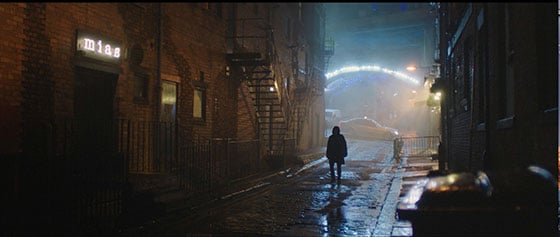
 However, as engaging as this new treatment of the cannibalism theme is in We Are What We Are, it brings with it some issues. A little, even just a little more explanation would have benefited the film/s enormously; this doesn’t mean that all loose ends need to be tied up, but some of this would have added a deeper level of understanding for the characters and their motivations. Now, here is where someone on the Habit filmmaking team contacts me to tell me that none of them have even heard of We Are What We Are, so perhaps – perhaps – this may be pure coincidence, but to my mind, the issues which dog the older film cause some of the same issues in Habit. I’d like to know just that shade more about what motivates the characters, or how ‘the family’ were brought together in the first place. If their behaviour makes them feel alive in some new and exciting way, then why, and how does it do so? Admittedly, I don’t know the novel which Habit is based on – this may reveal far more, but going by the film alone is what many, if not most of the film’s viewers will be doing.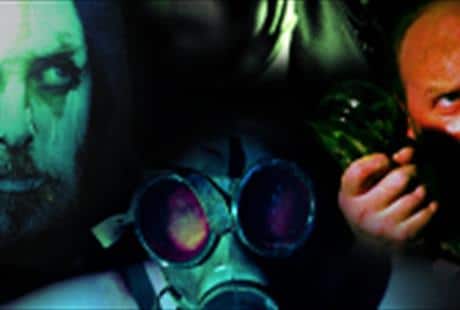
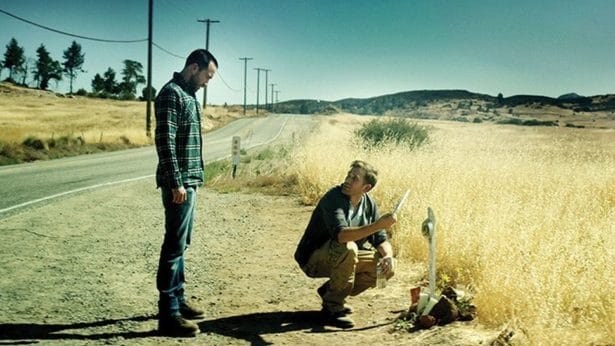 I’ve followed the careers of directors Justin Benson and Aaron Moorhead with interest ever since I covered their challenging and innovative feature debut,
 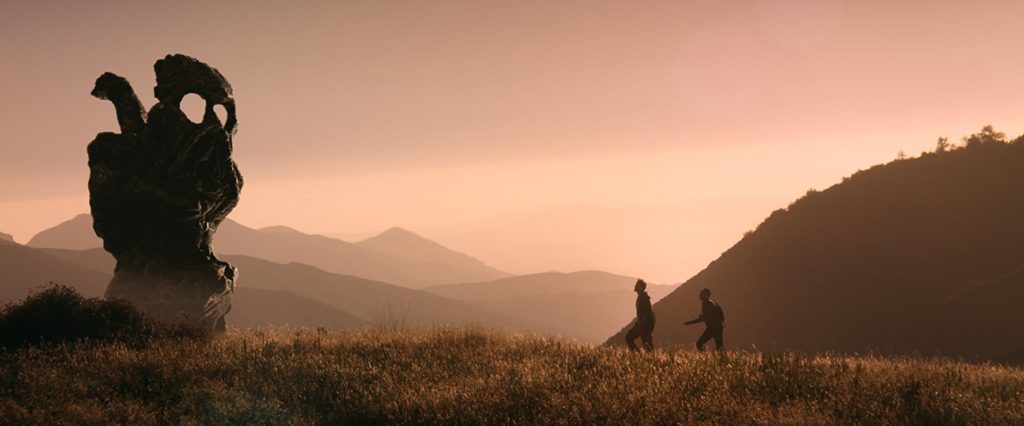 The Endless is not shy of grappling with themes which are terrifying enough in their complexity at the best of times, adding its palpable sense of unease by slow, expertly-wrought degrees. Our vulnerability to something vast and humbling like time itself has long been a source of horror, so the addition of – potentially – a pernicious unknown behind the scenes is both unsettling and ambitious. Linked to this is the idea that personal freedom itself is dubious – something else we don’t like to dwell on, something else that scares us. It would be easy to throw in the word ‘Lovecraftian’ here, and yes, there are a few key moments where that author comes to mind; I’d argue there are some links with his short story, The Unnamable [sic] amongst others. And, like Lovecraft, The Endless knows better than to straightforwardly show its hand. Retaining elements of mystery is key to the film’s success.
 Being a tiny nation, it’s perhaps unsurprising that Iceland hasn’t yet featured very prominently, in its own right, in cinema. Its stunning and evocative landscapes have been used a thousand times in films which simply seek a striking location, but it’s comparatively rare to see Icelandic people, language and stories making their own way to the screen – at least for audiences outside of the country. For this reason alone, it’s welcome to see I Remember You (
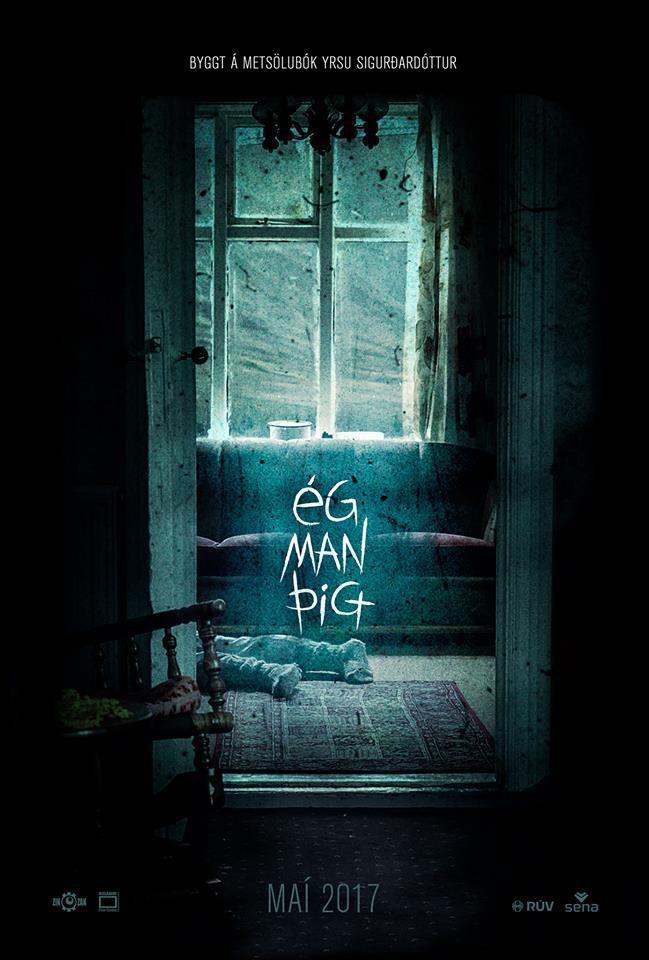 How these two stories will intertwine is kept quiet for a large share of the film, with each story generating its own interest (and several low-key scares); course, you can probably gather that they will, eventually, overlap, and to give credit to writer/director Óskar Thór Axelsson, it’s quite hard to predict the process. That said, it feels like a long road to get to this point: the film runs at 105 minutes, which in today’s climate is not that long at all, but given the deliberation and pace of I Remember You, it feels somewhat longer. If you have patience for these kinds of slow-burn thrillers, then I would say there’s plenty there to reward it, but if you prefer your films more tightly-wrought then you may also feel that this film meanders in places.
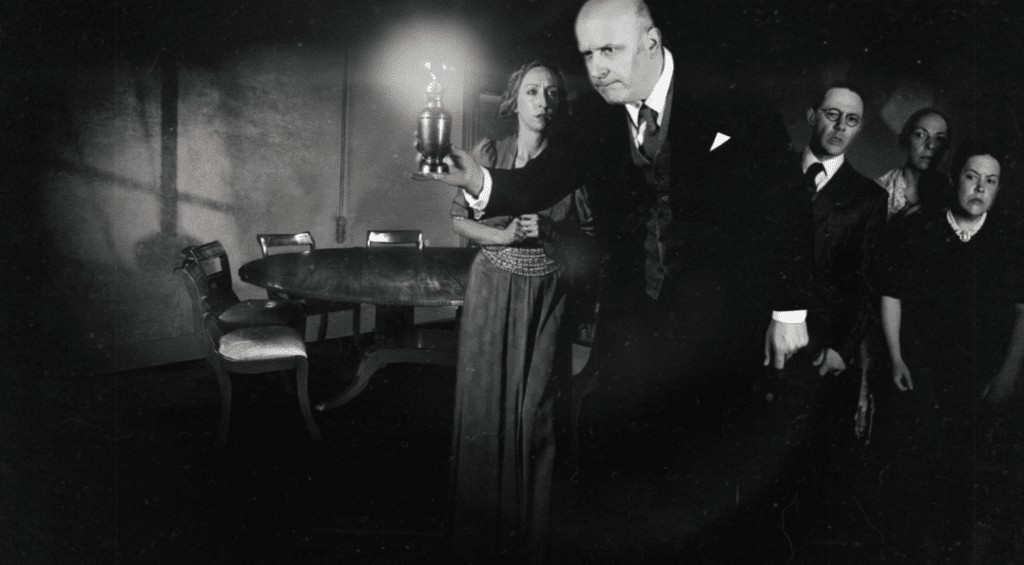 For many of us growing up in the Seventies and Eighties, being terrified by the Borley Rectory hauntings was practically a rite of passage. For my part, I must have been around nine years old, I’d guess, and found out about ‘the most haunted house in England’ from a Readers’ Digest Mysteries of the Unexplained compendium. There were other tales of ghostly phenomena which also fascinated and appalled me – the Matthew Manning story, the Bell Witch case – but the allegedly ghostly scrawls addressed to ‘Marianne’ really fixed themselves in my imagination. I couldn’t bring myself to re-read the section on Borley Rectory for weeks at a time, but thought about it constantly, even beginning to practise my own automatic writing after I read about its use in Borley – thus, terrifying myself even more.
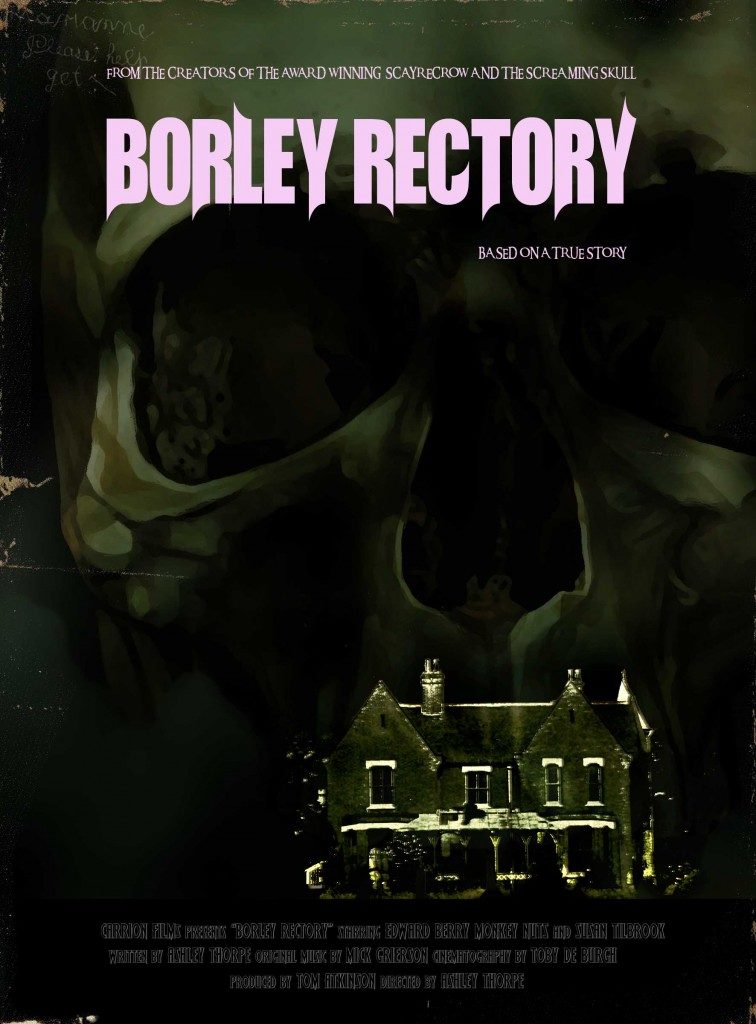 Borley Rectory (2017) is unusually framed as a documentary film, exploring and discussing the events mentioned above in largely linear order with the help of a narrator – none other than Julian Sands. Ashley Thorpe explained at the screening that his film had been heavily influenced by his own childhood nostalgia for spooky 70s TV, such as the works of Lawrence Gordon Clark and the Armchair Thriller series, which had a scary ghost nun of its own. I’m sure I saw some Ghost Story for Christmas artwork tucked away in one of the sequences, too. However, Thorpe also mentioned a love of 1920s and 30s Hollywood horror, which seems altogether heavier in the mix: Borley Rectory is shot entirely in black and white, and the actors wear the heavily stylised costumes and make-up beloved of, say, early James Whale cinema. Whilst it’s somewhat engaging to see some well-beloved actors both dressed in period costume and acting accordingly – with Reece Shearsmith as the Daily Mirror reporter, Nicholas Vince as Reverend Smith and author Jonathan Rigby as Price himself, the rather studied delivery somewhat dwarfs any stylistic links to the barely-glimpsed horrors of Gordon Clark.
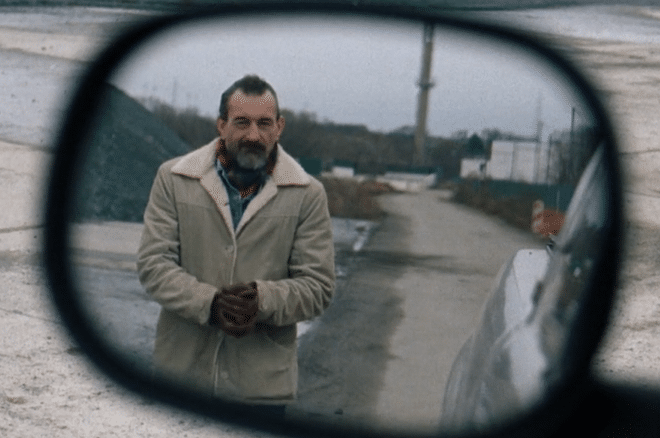 The legacy of Catholicism in French and Belgian left-field cinema seems to mean a strange predilection for Christian themes, although it finds its form in curious ways. In recent years we’ve had Calvaire, made in 2004 (retitled ‘The Ordeal’ for English audiences, which neatly strips it of its Biblical meaning), the Christmas creation horrors of Satan (2006) and of course Martyrs (2008). Now, ten years later, we have something which merges crime drama with something altogether more spiritual and not a little gonzo: voila, Doubleplusungood.
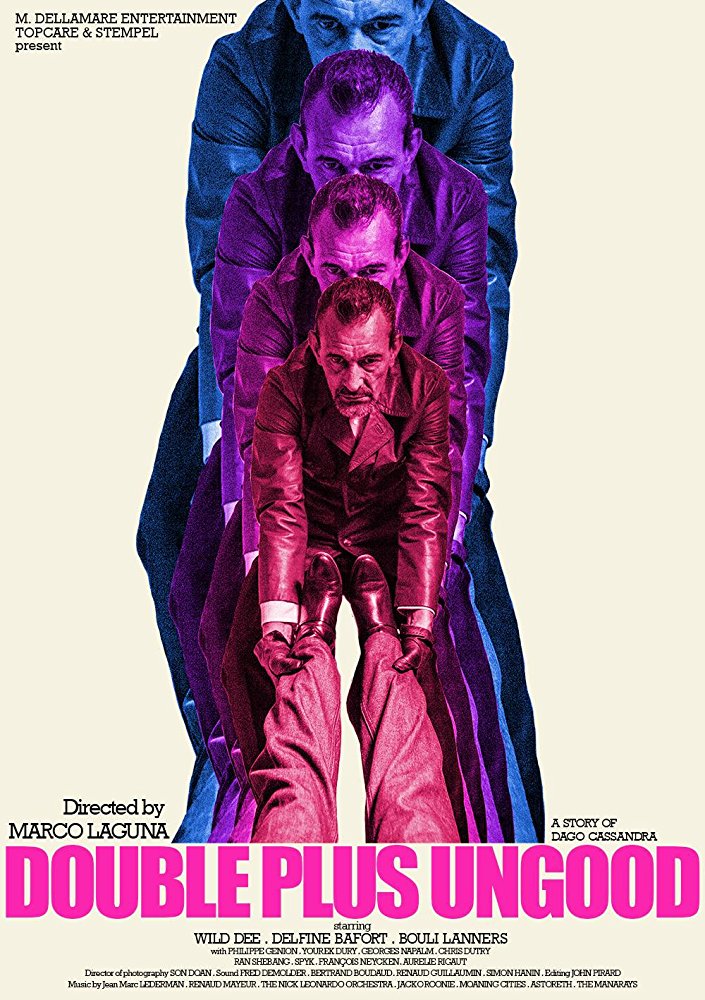 The film, for all its unusual contextual factors, is however broadly linear: it takes its unconventional elements on a pretty straightforward journey through a series of kills, which can feel repetitive, despite the film’s efforts to draw down interest via its inventively-nasty sequences. The film certainly steers away from conventional style or approach throughout: it’s thoughtfully shot, with a wide range of locales and lots of artistic, experimental detail (even veering into psychedelia on occasion). There is undeniably something of the new-wave of French/Belgian horror cinema in the way Doubleplusungood looks, with lots of that blueish colourisation, though it’s still far more of a crime thriller overall. That said, we do see a bit of ‘implement torture’ going on here, which also chimes with those new wave horrors.
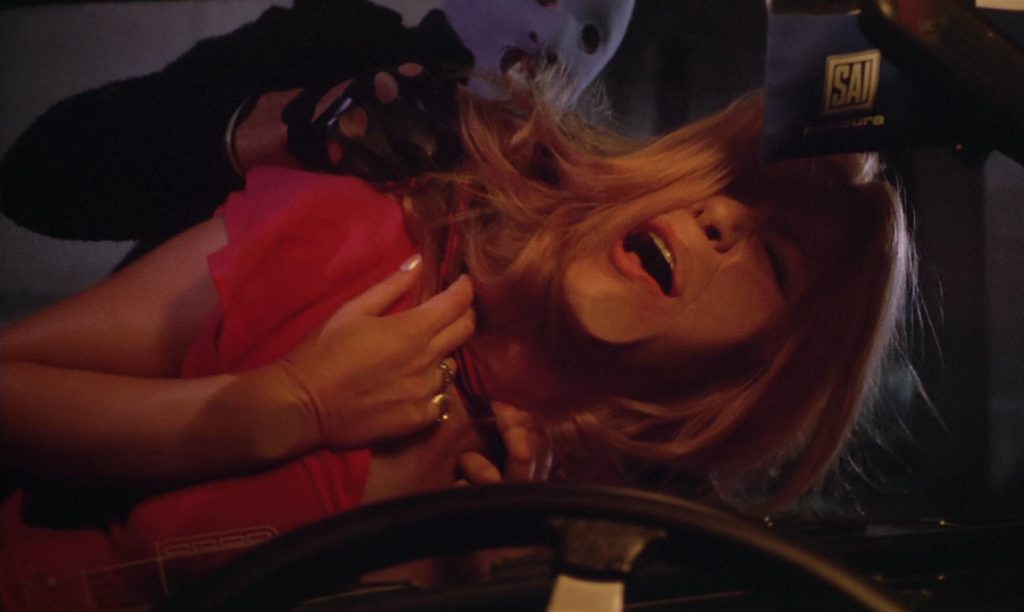 Honestly, I’m the sort of reviewer who thinks that the vast majority of slashers (and many gialli) are better enjoyed as still images than films – being largely an array of stylish, bloody set pieces only loosely linked by some sort of plot – so watching Sergio Martino’s crossover film Torso was an opportunity for me to test my misgivings about this type of catch ’em and kill ’em horror. His other work has been pretty diverse fare in its way, after all, and a who’s who of cult film stars helps to underpin the potential of the film under discussion. Worth a shot, right?
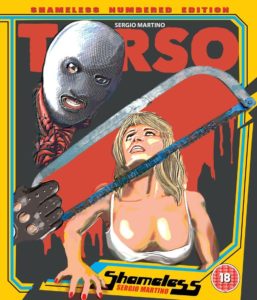 All of that said, Torso does achieve many things which distinguish it against a crowded field of carved-up nubile flesh. It boasts beautiful locations (mind, Italian cities seem to do the hard work by themselves) and some scenes border on the supernatural, in ways beloved of Martino’s near-contemporary Michele Soavi. It’s also an incredibly tactile film, with close attention to small details; whilst the gore FX haven’t aged particularly well, they’re very brief, whilst interesting, unusual shots (such as a woman’s hands palpating mud) show artistic flair. And, after moving all of its pieces into position for benefit of the big whodunnit, the film generates tension very effectively: yes, this takes time, but the closing twenty minutes or so give a good pay-off for all that has come before, resulting in a genuinely gripping finale. I’m not sure I can say that Torso has won me over fully to this style of filmmaking, but certainly, this is an arresting example of its genre, which manages some real surprises, in amongst the various nods to Bava et al.
 1970s cinema has many noteworthy qualities, but amongst these, the decade is certainly remarkable for its brief, but intriguing phase of imagining animals ‘going rogue’ and attacking humans; some of the resulting films were breakthrough hits, such as Jaws (1975), whereas some, such as Day of the Animals (1977) would be long-lost to obscurity if the DVD age hadn’t decided seeing Leslie Nielsen wrestling a grizzly bear was too good to pass up. Before sharks, bears and other beasts were redressing the natural balance, however, there was Willard (1971) – a film where it’s the humble rat who’s up to no good, though all at the behest of a rather lonely young man. I suppose the initial premise makes some sense: compare the number of people killed by sharks to the number killed by rats over the centuries, and the rat is definitely king – though to be fair to rats, they’ve simply been clearing up after Man for millennia, fighting over the same resources, often dying of the same things, whilst not being particularly deferential along the way.
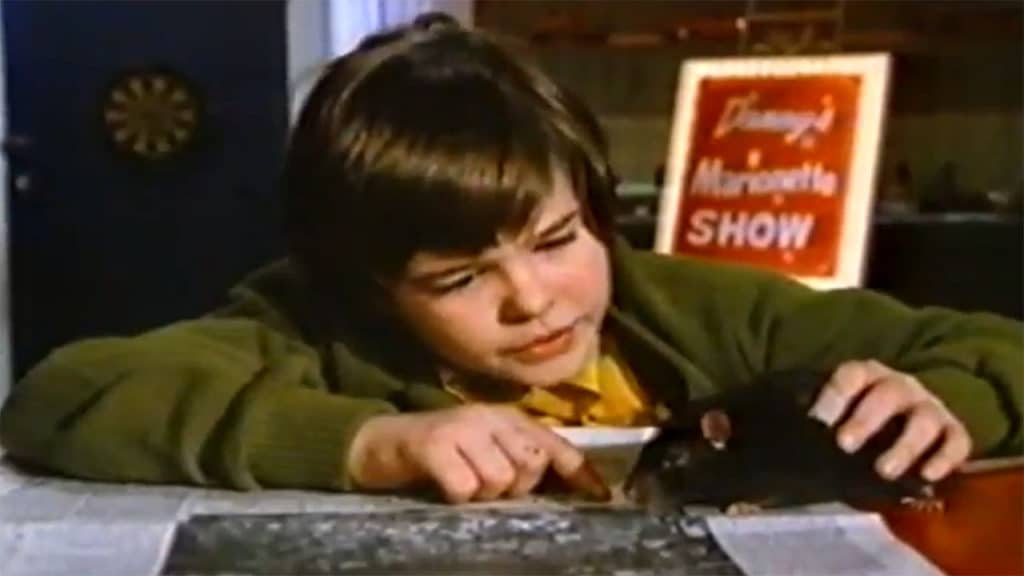 In the sequel, Willard’s rat posse have escaped and decided to go it alone, moving into the sewers beneath the city. Forging a link to Willard before it, people establish that Ben is the leader of the rats via some pages from Willard’s diary (which we never saw him keep, but hey.) This eventually throws them into the path of a young lad, Danny, who is being bullied and suffers from a heart condition: Danny befriends Ben in particular, and Ben – who is already rather comfortable with people – becomes his best mate/avenging angel, protecting him from the bullies. Thing is, Ben the rat isn’t always a force for good. Ben and his crew aren’t too keen on human intervention in their now-habitat, and anyone making the mistake gets attacked by a whirlwind of flying rodents; again, probably not safe terrain for a phobic.
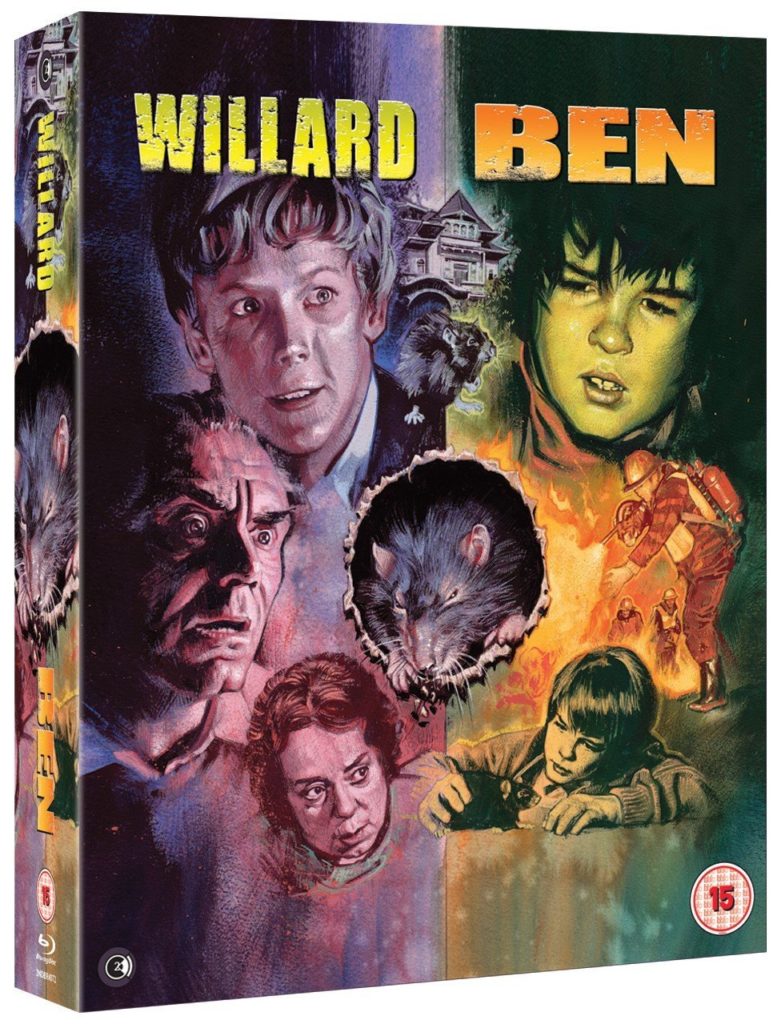 Truth be told, neither Willard nor Ben are superb films and Ben is the weaker, but they’re certainly quite unlike anything else, and they have had some influence elsewhere. Willard even got a fairly glossy remake/’reimagining’ in the Noughties featuring cult actor Crispin Hellion Glover, so its reach was definitely there. Willard, in particular, is also notable for a surprising cast featuring ‘Bride of Frankenstein’ Elsa Lanchester in one of her last roles, alongside Ernest Borgnine as the execrable boss. There’s enough here to entertain and some material which can surprise. Well, you can now own this ratsploitation double bill in an attractive limited edition Blu-Ray box set: the good folk at Second Sight are about to release this, and you can find out more about it
 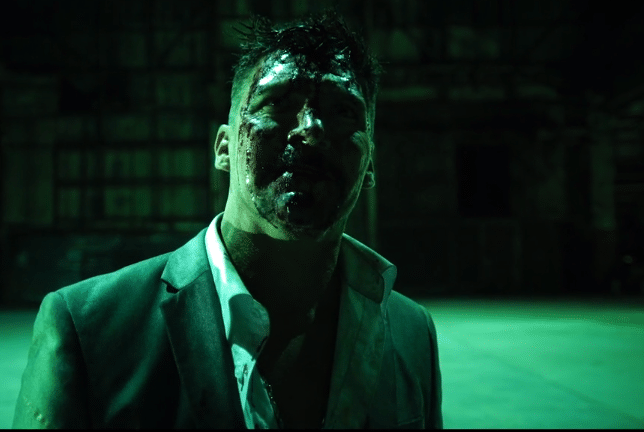 Rather than a straightforward stand-alone short film, Empire of Dirt is intended to introduce characters and themes which will be explored fully in a feature-length offering. As such, no time is wasted: we’re shown, briefly, that these events are taking place in Manilla, 1997, and then we’re straight in to a frantic shootout, followed by a skirmish in a dilapidated building. It seems as though our protagonist is coming to the aid of a desperate, terrified woman, at least on first impressions: whatever his loyalty to her is, he pitches himself into some gritty, bloody and physical action, killing those he finds, with the violence happening both on and off screen. It’s a testament to Mason’s directorial abilities here that, even in a few short minutes, you feel as disturbed by the violence taking place off-screen as you do the violence in front of you.