 I first encountered the cinema of Jean Rollin via the UK’s Redemption Films, whose founder, Nigel Wingrove, became good friends with Rollin over the years; the film company deserves far more awareness of the great service they did by bringing so many of these films into the common consciousness in the Nineties, making the films themselves into an artefact worth having with an array of stylish, distinctive video covers marking them out. Until that time, any knowledge I had of the director’s work came via still images in magazines, and there it probably would have stayed until, in all likelihood, the films resurfaced – though probably not as well-presented – during the earlier years of the DVD revolution, when there was a real surge of hitherto-unknown releases. But however the films may or may not have made their way to our shelves, it’s taken some time for Rollin criticism to follow in print, although Immoral Tales first re-assessed Rollin’s work in the nineties, and more recently, David Hinds published his Fascination: the Celluloid Dreams of Jean Rollin. But is there more to say?
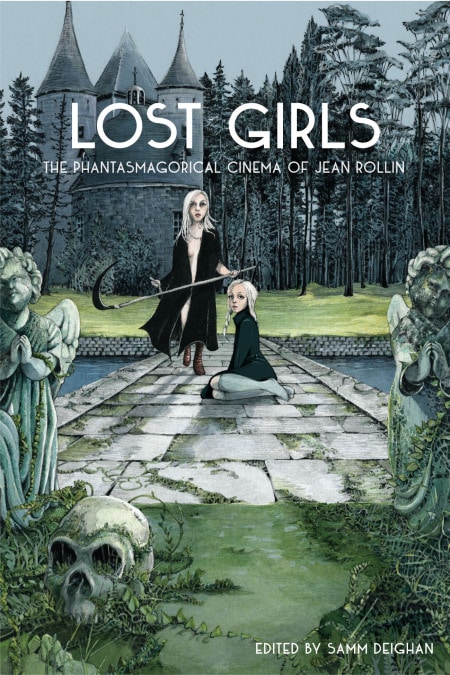
Lost Girls: the Phantasmogorical Cinema of Jean Rollin has been very much promoted for its all-female authorship, something which I’ll admit I was surprised by: editor and writer, Samm Deighan, hasn’t exactly been a fan of promoting women-only agendas in the past, but publicity for Lost Girls has asserted that women are a minority in genre writing, deserving greater recognition. Well, everyone is free to change their minds of course, though this idea of a lack of ‘recognition’ doesn’t chime with my personal experience as both a woman and a writer, as I’ve said many times before. However, undoubtedly true is the fact that Rollin adored women, frequently making films from the perspective of female characters, and this is something else behind the rationale of Lost Girls -a female perspective on his uniquely female perspectives.
A brief foreword by actress Françoise Pascal (of The Iron Rose) is a pleasing addition here, and the book overall is attractive, heavily illustrated in colour and black & white with a custom artwork cover illustration. There are a variety of writers offering their views, and as the chapter titles might give away, the tone here is rather academic – though not to the extent of being inaccessible to the lay reader, and by and large all the chapters are clearly written, avoiding the cardinal sin of academic writing – incomprehensibility. However, links are forged between Rollin’s films and all manner of ideas; prepare to see his work linked to Nietzsche, Milton and Satan, to name but a few. Furthermore, the approach taken throughout the book is that Rollin was not about titillation, not featuring nudity for its own sake or to take pleasure in it on its own terms, but rather using female flesh in a range of pioneering ways, revolutionising tired tropes such as vampirism with his work. I’d be inclined to say that the truth lies somewhere between those two positions, personally. Yes, he was pioneering, but he also simply enjoyed filming and working with beautiful women, often coincidentally without a stitch on; I don’t think we do Rollin or his work any sort of disservice for acknowledging that. And lest we forget, Rollin also made pornography (though to be fair, Samm Deighan casts her eye over the likes of Anal Hospital in a chapter dedicated to Rollin’s ‘other’ films).
Happily, the book does far more than seek to reclaim Rollin as a proto-feminist. A large number of the essays in the book seek to re-position Rollin’s work by drawing parallels between it and other, comparable phenomena, such as 19th Century occultism. It’s an ambitious aspect of the book, and I certainly learned something; I hadn’t realised Rollin’s association with the poet Corbière, for example, so Marcelline Block’s study of the parallels between them was very enlightening. Alison Nastasi’s essay on The Iron Rose is also a definite high point in the book. A real sense of enthusiasm for the subject matter with an easy sense of knowledge combine to render something very readable (and the phrases “supernatural thrum” and “bellow of the human soul” are things of beauty.) The Iron Rose is an extraordinary film, a strangely gentle and barely-peopled story where a couple, trapped in a cemetery, confront the notion of their mortality via an erotic lens, and Nastasi captures this. Samm Deighan’s study of fairy tales is an engaging read, as is Virginie Sélavy’s detailed appraisal of Rollin’s use of castles in his films: whilst the same films are considered by separate writers, different aspects are explored.
I do have some issues with the book, however. Many of the essays carry the same message: that Rollin was a liberator of women by allowing his characters to escape the shackles of predatory male sexuality – often via a fantastical device (usually vampirism). To make this point, there is often a comparison made with existing vampire tropes in cinema. These comparisons perhaps unsurprisingly elevate Rollin, though sometimes at the expense of the older material. Promoting Rollin by rubbishing, as one example, Hammer seems unnecessary – as so frequently pointed out in Gianna D’Emilio’s opening essay on Le Viol du Vampire, they’re hardly comparable and dismissing Dracula Has Risen From The Grave as having an ‘antiquated Madonna-whore paradigm’ seems a rather heavy-handed dismissal; it’s perfectly possible to love and appreciate different takes on the vampire myth in cinema, and you don’t salvage the reputation of one film to the point of lionisation by knocking another.
There’s also a similar issue to the one I identified in Satanic Panic – a tendency to have the same information repeated, because several essayists each want to mention the same thing: for example, we read several times that vampirism is an alternative to bourgeois society, and then there is repetition of plot synopses throughout the chapters, but, also in common with Satanic Panic, perhaps reading the book from cover to cover isn’t the optimal approach to take and it’s better to just dip in from time to time.
This is certainly an unusual book with much to reward its readers, though it is very much in the feminist criticism category, which patently isn’t going to be for everyone. I don’t particularly feel that the much-vaunted women-only authorship has given rise to something which could never have been achieved with men on board, but what we do have here is a collection of interesting and ambitious essays on a unique filmmaker, academic in tone, but showcasing the genuine enthusiasm of the writers too.
You can pick up a copy of the book from Spectacular Optical here.
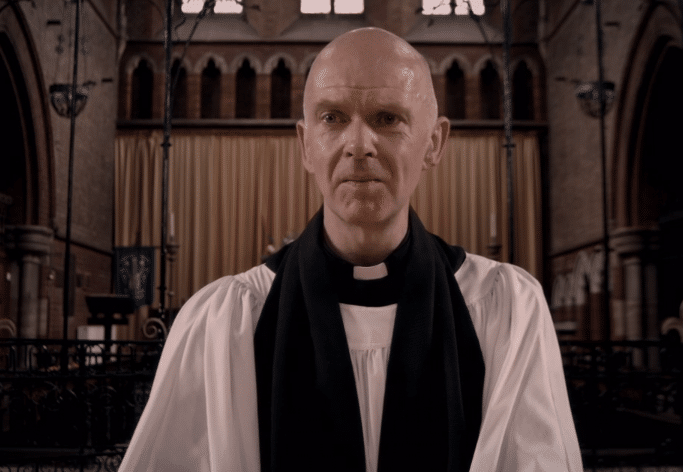 Vampirism is something monstrous, something impossible, but it’s a broad enough kind of monstrosity to mean it can be explored in a number of ways on screen. Unto Death, by director Jamie Hooper, uses the vampirism theme to explore a relationship, and how it is put under extraordinary pressure by the most extraordinary of circumstances. The resulting film is a subtle, but affecting piece of human drama.
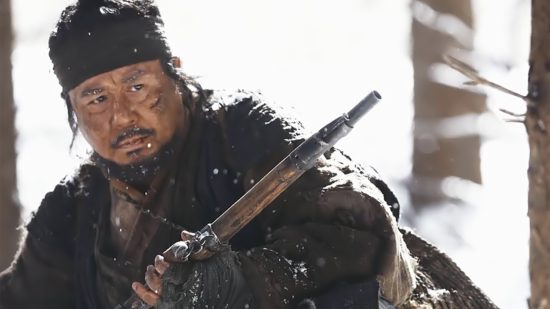 Sometimes a film self-consciously goes for the ‘epic’ tag, and it’s clear from the very outset that this is the case with Park Hoon-jung’s 2015 movie The Tiger. With its sweeping Korean vistas, Sturm und Drang musical score and lone figure set against an unforgiving world it clearly fits the bill, and actually that’s just fine: it’s a genre which seems to suit actor Choi Min-sik, perhaps best known for his work in the groundbreaking Oldboy (2005) which was in many ways an ordeal horror epic, when you think of it now, a decade or so on. However, in its painstaking attempts at detail in this rather artistic study of cruelty, the film is certainly an epic-length two hours, forty minutes in duration. This is more and more the trend in cinema these days, but I strongly feel that The Tiger could have curtailed one or two hunt scenes, for example, and retained or even improved much of its impact.
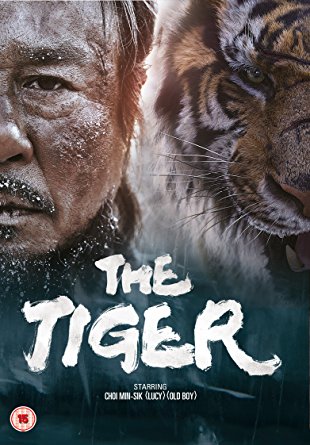 This whole ‘man vs beast’ aspect of the film feels rather like The Revenant in places, a film which is its 2015 contemporary. Unlike the outraged mama bear in The Revenant, though, the ‘Mountain Lord’ here is more than an animal in many respects; the film plays fast and loose with animal realism in its (well-utilised) CGI sequences, and although the film is unsettlingly gruesome in its hunt scenes, there is a certain level of disparity of threat here too, as on occasion, the tiger becomes semi-mythic, something akin to a moral arbiter of the characters, killing savagely sometimes, but interacting rather differently sometimes. This shifting identity is something of a sticking point in the first half of the film; it’s not clear, for much of this time, what the tiger actually is. Still, eventually, a parity is created between the hunter and the tiger, which makes ever greater sense as the narrative progresses.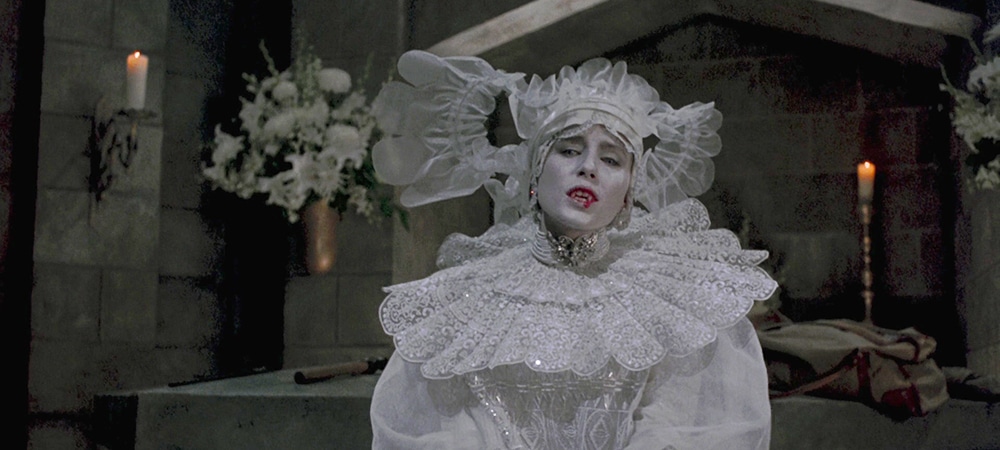
 I may as well be blunt here: it’s a notable book for many reasons, not least of which in how it’s generated so many more creative works down through the years, but I don’t think Dracula is a great novel in itself. The epistolary frame is interesting in terms of structure, and it’s cleverly pieced together, but this keeps readers at a distance from its protagonists; certain characters descend readily into farce (and are played faithfully as such in the film!) and there are a number of thankless questions, making the novel feel a bit like a whistle-stop tour of a fascinating place where you never have long to pause and look about you. Francis Ford Coppola’s Dracula adds some sense and coherence to all of this by motivating its monster with undying love, but it doesn’t then abandon the effective and horrifying scenes from the book, either. Some of these – the creature turning into multiple rats which all flee, the still aged Dracula licking Harker’s blood from a cutthroat razor or impossibly scuttling down the castle’s steep walls – have lost none of their power. It’s these contrasts that allows the audience to see a fully-fleshed antagonist; to feel some ‘sympathy for the devil’, or at least sympathy for a damned being. Against the luxuriant add-on of what’s effectively a reincarnation based love story, it’s an absorbing array of contrasts.
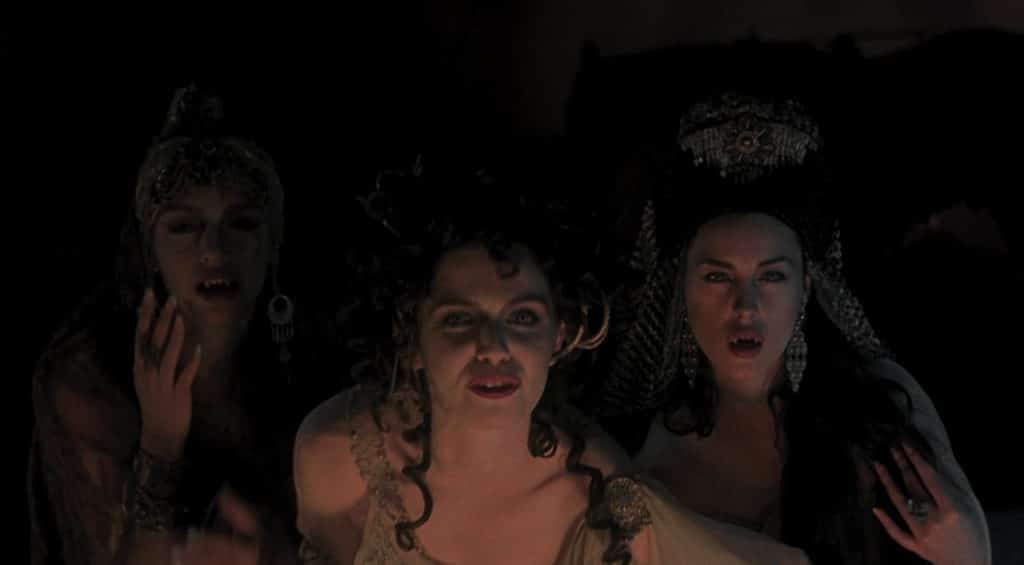 No one can ever accuse Coppola of shying away from things which could only ever be alluded to in 19th Century fiction. The Carmillas and Draculas of the day afforded the tantalising scope to be salacious, but likewise the sexual mores of the day meant calling things to a halt not too long after introducing this possibility of sex, couching even these supernatural encounters in veiled words and glaring omissions. Compare that, to give just one example, to the ‘Dracula’s Brides’ sequence in the 1992 release. Okay, even if the blood-sharing scene between Mina and the Count holds back to an extent (though still sending a million hearts a-flutter, no doubt) then the unholy trinity who make Harker their foodstuff/plaything must have been quite an education for more than a few young men – or women, for that matter. After that, we should be a hell of a lot more understanding as to why Harker’s speech sounds a little off. Then there’s what happens to Lucy Westenra, which is recounted as a ‘mystery illness’ in the novel, but is rendered overtly sexual on screen, in a series of eroticised, if dubiously consensual encounters – in one of which Oldman was advised to whisper scandalous nothings off-screen to actress Sadie Frost in order to encourage her to writhe appealingly. Coppola always intended his film to have this kind of sensory overload, storyboarding about a thousand scenes altogether and insisting that the costumes, alongside the mise-en-scène, underpinned the whole.
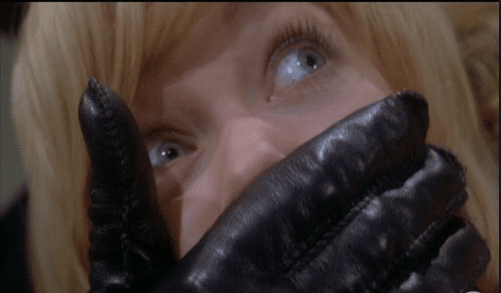 Hammer is best-known for its Kensington Gore and its literary monsters, usually shot against a 60s-coloured 19th Century which is a distinctive aesthetic all of its own; the studio deviated from this formula quite considerably at times, though, in a range of films which seem to have divided critics ever since. Fear in the Night is certainly dramatically different from other projects which had seen director Jimmy Sangster at the helm: the last time he’d worked with Hammer prior to this film, it was to bring us Lust for a Vampire, a film which is itself divisive, but inarguably, classic Hammer fare. Not so with Fear in the Night, with its contemporary setting and extremely slow-burn approach. The film is not without its issues, but it certainly showcases the flexibility of Sangster. There’s ne’er a scrap of flimsy white fabric to be seen.
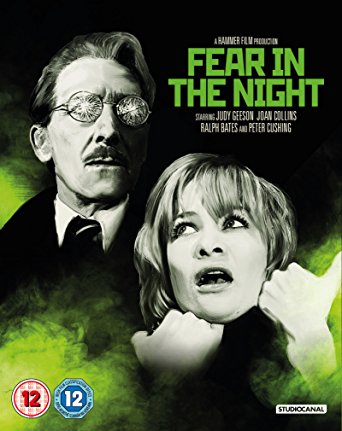 This is a very low-key piece of film, which takes its time establishing the interaction between Peggy’s state of mind and the possible threat to her. Unfortunately, some aspects of Peggy’s character and narrative haven’t aged particularly well; she behaves like a bit of a dupe, going from childlike to catatonic when the going gets tough. Mr. Carmichael’s wife Molly (Joan Collins) refers to her disparagingly as a ‘child bride’, and that is rather how she’s played. Eventually, she seems to withdraw from the plot altogether, every bit as unresponsive as Barbara in Night of the Living Dead. Before we get to that, though, Peggy is apparently primed to simply be ‘a teacher’s wife’, and having no other role, she has ample time to roam the grounds, where she has equally ample time to frighten herself half to death. The script accordingly does lag in several places, perhaps particularly where married life is concerned; perhaps as she is recovering from a mental illness (though we never discover the full nature of this) husband Bob is galvanised in his treatment of her as a lesser being, and the needy/dismissive dichotomy between them can be taxing.
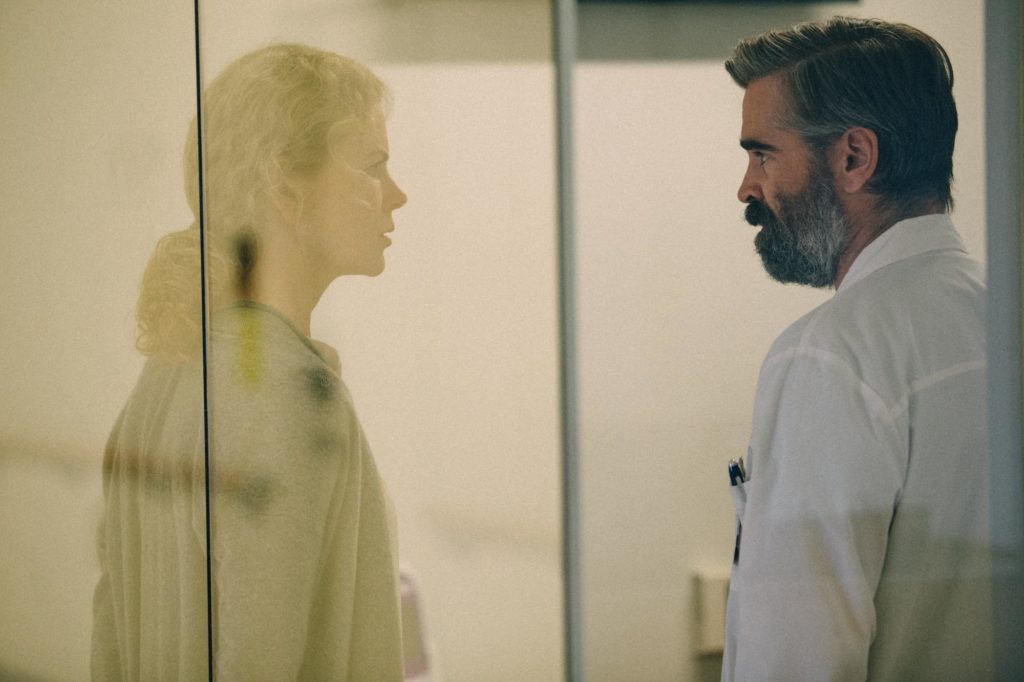 I will confess that I have had no prior experience of director Yorgos Lanthimos’s work, but based on his most recent film, The Killing of a Sacred Deer, I’d imagine that a little goes a long way. That isn’t to say that I wasn’t completely drawn in to this twisted story of unhappy families, but that it’s left an unseemly, faintly uncomfortable after-effect; I found myself squirming in (rewarded) anticipation of horrible violence, and soon after, laughing at things I definitely didn’t feel I should be. It has all conspired to create a queasy sensation, one which clearly took work to establish, and isn’t going away in a hurry.
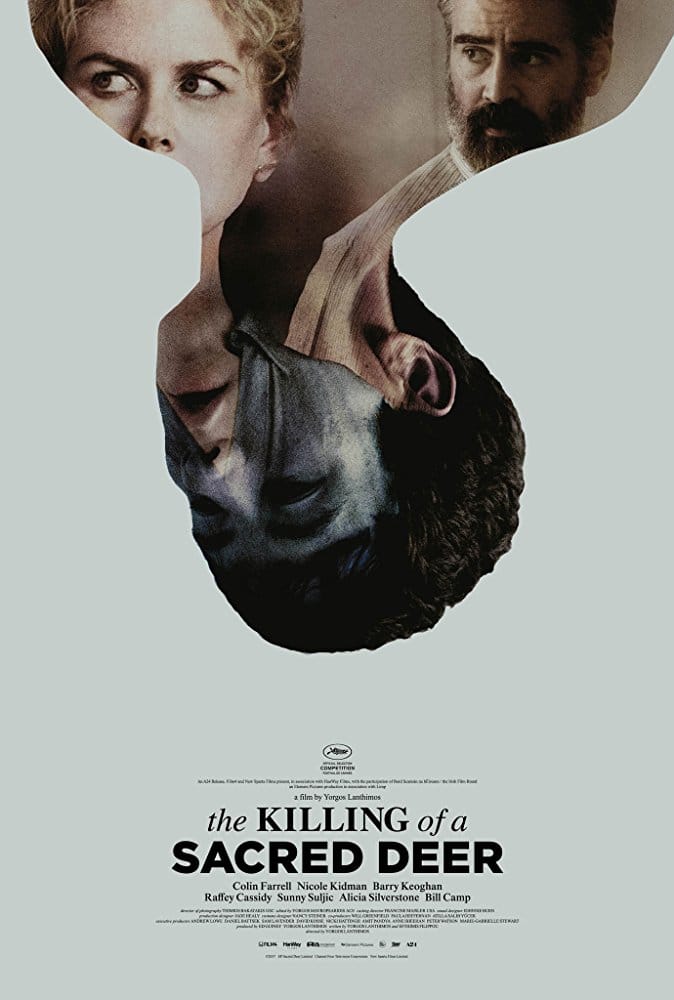 Although loosely based on the Greek myth of Iphigenia – hence the title – The Killing of a Sacred Deer is right up to date, and full of very modern anxieties. Medicalisation, medical procedure, professional practice, wealth inequality and bereavement; here, these things are weaponised. As presented here, accompanied by an overwhelming, atonal soundtrack, the film is a fever dream anyway, but it sticks with the theme of sacrifice, pulling the already loosely-linked Murphy family apart via its genuinely effective, creepy central performance by Keoghan. The physicality of this young actor is – with apologies to the guy – well-suited to the role. He has a sly, usually emotionless face and a voice which betrays no emotion either, no matter what he says. He comes across as deeply unpleasant, and this eventually squeezes some terror and rage out of the Murphys – Steven becomes utterly unreasonable, whilst Anna turns into a conniving nightmare.
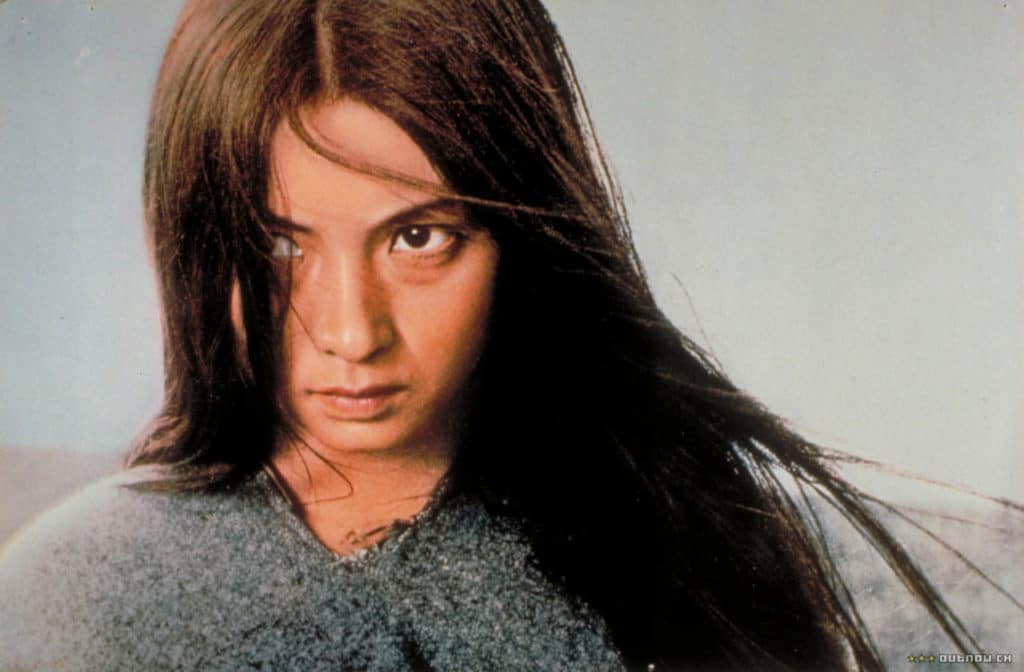 Meiko Kaji is, from a Western perspective, one of the most unmistakable and recognisable Japanese actresses of all time, but this comes with a significant proviso. Most of us know just a tiny fraction of the films she has ever made; only a handful of these nearly one hundred films have really made it over here anyway, and even out of that, we tend to think of her in one of a couple of key roles. Either Meiko Kaji is ‘Scorpion’, the largely mute and indestructible prison inmate of the Female Prisoner series, or she is the sword-wielding agent of doom in Lady Snowblood. This is a state of affairs acknowledged by author Tom Mes in his neat Meiko Kaji book Unchained Melody, available now on the Arrow Books imprint (and thus an extension of the work which Arrow has so far done in publicising Kaji’s work via their existing range of Meiko Kaji releases.)
 I have a real love/hate thing going with Japanese director Sion Sono. On one hand, his so-called ‘hate’ trilogy contains, for me, some of the most genius, subversive films I have ever been immersed in; they’re absolutely jaw-dropping, to the point that I don’t know if I can feasibly revisit Guilty of Romance for fear of washing away that initial impact. He’s also made brilliant cinema with a far more playful edge, albeit for the fact that there’s usually a grim, self-referential message tucked away beneath the many layers of flying limbs and arterial gore. But on the other hand, when I sat down to watch his manga adaptation – usually an indication that things are about to go straight over my head – by the name of Tokyo Tribe, I have to confess I could stand to watch so little of it that I had to abort watching it at all. And I can usually make it through anything. It kind of goes with the territory. Yet here I was, switching off a film by someone I claimed was one of my favourite directors. A straightforward antipathy to hip-hop isn’t quite enough to explain that one.
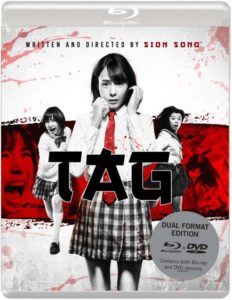 But whilst the justification for all the things which befall our protagonists feels rather hasty and unconvincing in the end, and perhaps a very short hop from the ultimate cop-out of saying it was all a dream, I think what we have here is, overall, a decent Sion Sono film which joins up with many of the styles and preoccupations he has explored previously and feels, at least, a lot truer to form. Really, he’s getting up to his usual mischief here. He’s splicing ultraviolence and cartoonish splatter with questions about, oh you know, selfhood, free will, memory, fate, all the small stuff, even if not dipping into his passion for literature along the way this time. What’s more, Sion Sono is doing all of this with his usual fantastic imagery, set pieces and symbolism – that innovative bridal bouquet is a clear winner – and, to come back to gender for a moment, he’s executing a meticulous disruption of the old archetype of the ‘y
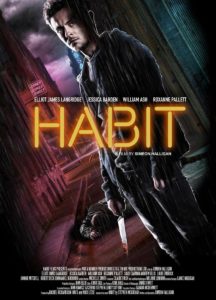
 It’s always a privilege, in these social media-saturated times, to walk into a film screening without the faintest idea of what it’s all about. As I hadn’t even looked at the Celluloid Screams programme before we sat down to watch Habit (and as I almost immediately mix up titles and synopses anyway) it definitely felt like a boon that I had zero expectations, allowing the film to speak entirely for itself. I’m about to stop this being the case for anyone reading, though, by offering the barest of synopses here: Habit is a dark urban crime thriller which gradually adds horror elements, a claustrophobic and nightmarish tale which perhaps overstretches itself in some key regards, but still deserves credit for many of the things it does very well.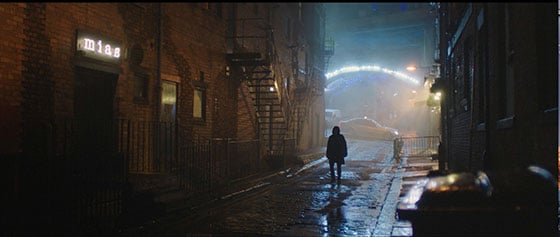
 However, as engaging as this new treatment of the cannibalism theme is in We Are What We Are, it brings with it some issues. A little, even just a little more explanation would have benefited the film/s enormously; this doesn’t mean that all loose ends need to be tied up, but some of this would have added a deeper level of understanding for the characters and their motivations. Now, here is where someone on the Habit filmmaking team contacts me to tell me that none of them have even heard of We Are What We Are, so perhaps – perhaps – this may be pure coincidence, but to my mind, the issues which dog the older film cause some of the same issues in Habit. I’d like to know just that shade more about what motivates the characters, or how ‘the family’ were brought together in the first place. If their behaviour makes them feel alive in some new and exciting way, then why, and how does it do so? Admittedly, I don’t know the novel which Habit is based on – this may reveal far more, but going by the film alone is what many, if not most of the film’s viewers will be doing.