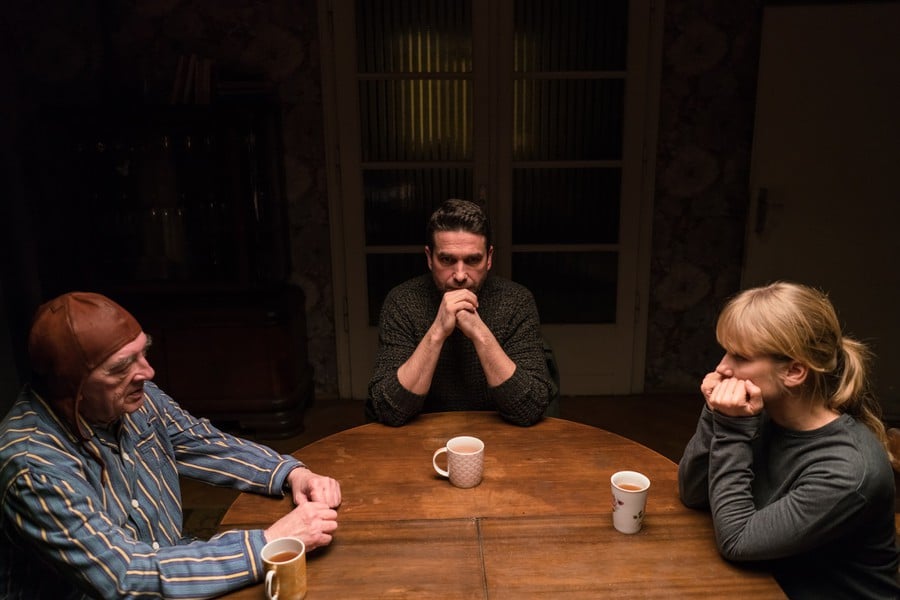
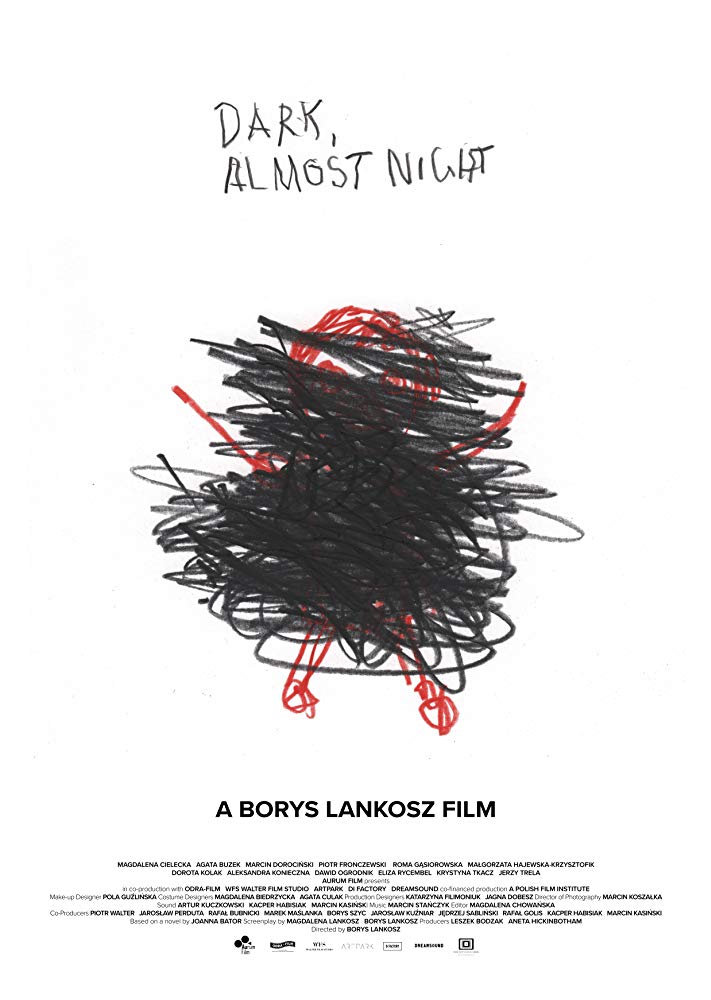
Winter in Poland. A woman is taking the train from Warsaw back to her dilapidated home town, a part of the world evidently undergoing a spate of child disappearances, given the newspapers and news bulletins we soon encounter. This is Alicja (Magdalena Cielecka), a journalist, who has chosen to return to her old home in order to write about these cases. However, being back in the old family home, now otherwise deserted, evidently raises a few spectres for her; Alicja begins to dream about buried childhood memories, recalling her older sister and her father’s obsession with finding a hidden treasure of sorts – described as a long string of pearls belonging to ‘Duchess Daisy’. As the story unfolds, it transpires that this Duchess Daisy links the fates of several of the townspeople. At this moment in time for Alicja, however, it is simply a memory associated with deep unease.
Still, she has a job to do, and so Alicja begins questioning the families of the missing children. But, whilst she may have been from this neck of the woods originally, she’s very much at a loss at how to engage with the people she meets – her interview subjects, or anyone else for that matter. Not that we should blame her; in some key respects Dark, Almost Night approaches horror or fantasy, and the depictions of the townspeople fall under that category. These people are almost caricatures of oddness, ominously overblown, speaking in riddles and – as with the folk horror genre in particular – all clearly guarding aspects of some secret not to be shared with de facto outsiders. Alicja continues in her task, but things continue to thwart and perplex her.
Before long, someone seems to be terrorising Alicja at the old family home as she works; as she begins to untangle some of the family mysteries present around her (and involving her), links back to the fabled treasure and to those associated with it keep coming up; this leads her to re-examine her own childhood memories at last, forging a series of unenviable links between her town, her home and a wider pattern of child abuse and trauma.
There is a great deal to recommend here. Firstly, the film is intensely menacing, almost from the very opening frames. In no small part, this is due to the phenomenal sound design; nearly every frame is overlaid with a brooding, all-encompassing soundtrack and it’s comparatively rare for a scene to be accompanied only by naturalistic sounds, which somehow underlines the remoteness and silence of the town itself. The wintry setting and the location underlines these dark atmospherics, creating an impression of want, isolation and unhappy people. However, alongside these sound decisions are some very strange ones.
Tonally, the film shifts around rather uncomfortably, with disturbing, unusually graphic depictions of child abuse (good luck getting those past the BBFC if this ever gets a general release in the UK) and domestic violence sitting next to absurd, or otherwise lighter scenes which makes the most gruelling inclusions feel somehow glossed over in some aspects, as if they are moved through quickly and then simply shifted aside for something else. The timing of a fairly random (consensual) sex scene is particularly gauche, for instance. I couldn’t help but wonder if this is intended in some respects to be Poland’s answer to A Serbian Film: it shares some of the same features of allegory (or alleged allegory), the same unflinching eye for sexual violence against women and children, and a desire to display Poland as an impoverished, incestuous, ugly tangle of miserable families and suppressed grief. Certainly, the shock value is there.
So Dark, Almost Night is something of a dilemma. On one hand, its cinematography is superb, and in terms of aesthetics and sound design, this is an artistic and thoughtful project in many respects. The performances given, even when these seem to demand overstated words and deeds, are overall very good too, and even as several ‘reveals’ occur, Magdalena Cielecka successfully strikes the balance between emotion and reason. However, the film’s subject matter is taboo for good call, and in many respects the film takes quite a strange, cavalier approach to it which won’t rest easy with many modern audiences: moving candidly, unflinchingly but brusquely through such things has a peremptory feel which rested uneasily with me, I will admit. However, should you want your expectations challenged, then Dark, Almost Night will certainly do it.
Dark, Almost Night will screen as part of the Raindance Film Festival on Sunday, 22nd September. For further details, please click here.
When I read some of the blurb for Imperial Blue and saw that its story revolved around drug use, I expected to get one of two things: either a brutal crime drama, where cartel is pitched against cartel, or else a surreal, even overblown imagining of substance abuse on-screen. In truth, Imperial Blue contains some aspects of each of those, but it certainly doesn’t fall neatly into either category. Instead, it’s a deeply character-centred tale, where we follow the fortunes of someone we most likely aren’t intended to like very much. Drugs might be the nexus here, but really this is all about a stranger in a strange land, unable and largely unwilling to curtail his own ego in his pursuit of illicit thrills and illicit money. Along the way, he creates great waves of havoc, crashing headlong into a foreign culture with little care for the impact. It’s an unsettling viewing experience, and no doubt it’s meant to be.
The film starts in India, with a drug deal which introduces us to our main character Hugo (Nicolas Fagerberg): Hugo is a foreigner, clearly invested in shifting pretty large amounts of various substances, and interested in the ‘next big thing’. He’s introduced to a rare Ugandan blue powder known as ‘bulu’; said to give its users the ability to see into the future, Hugo’s other contacts tell him it’s incredibly hard to find. But, alas, before he can procure any more, there’s a surprise police raid. Hugo escapes intact, but with a sizeable loss of his boss’s money. With little else to lose, he decides to sample the bulu he managed to retain. True enough, it gives him a sequence of unsettling visions, some of which clue him in to imminent events – enabling him to catch up with the guy he suspects rumbled the deal, for instance, because as he hallucinates, he sees where to find him. An abortive homecoming in London follows, but it’s clear that Hugo isn’t welcome at the home of his wife and son and he isn’t flavour of the month with his boss either: his only option is to go on the road again, track down some bulu and get it back into the UK to sell against his significant debt. His boss gives him a fortnight to sort it out.
Meanwhile, in Uganda, the young woman Hugo sees in his vision is very real. Kisakye (Esther Tebandeke) lives in a remote rural area called Makaana. Her father – himself a bulu user and a noted visionary – has just passed away, leaving her suddenly open to eviction by the formidable Pastor Issac and his cronies, who say that they now own the land Kisakye lives on. Kisakye knows how to harvest and prepare bulu; doing so to sell in the nearest large town seems the only way forward for her. Seeking her sister Angela’s help there, Kisakye leaves her village. The stage is set for her to meet Hugo, and an uneasy relationship develops between all three of them – Hugo, Angela and Kisakye – as they each do everything they can to maintain personal control.
There is a real sense of the remoteness of Makaana in the film – it was shot in Kampala, Uganda – and the use of landscape and location helps to underline the sense of Hugo being a complete stranger in this environment. Nor does he in any way seem to measure his behaviour accordingly, seeming for all the world to be eternally arrogant and brash, unable to predict any of the trouble or trials his presence causes: even with a substance which enables him to see into the future, his obsession is how his fortunes fit into that future, rather than particularly how it affects anyone or anything else. Whilst some of the proselytising speeches about the white man and colonialism ring hollow here, the film otherwise makes its case for Hugo being a selfish impediment to life in Makaana, even when he tries – justifiably at times – to help people. The symbolism is crushingly clear. In comparison to the Ugandan cast, Nicolas Fagerberg plays Hugo loud and emphatic, which also emphasises his differences; the rest of the cast, with particular mention to Esther Tebandeke and to Rehema Nanfuka as the worldly-wise Angela, play their roles notably differently, with Tebandeke giving an absolutely engaging, often understated performance which sustains the believability of this young woman’s predicament – now both vulnerable to destitution, and tainted by association with the drug-addled visitor to her village.
Furthermore, the dramatic interplay between Angela and Kisakye – two very different women who have each chosen a different path and lifestyle – lends the film an added level of engagement. It’s interesting and plausible; one young woman has thrown herself into the hedonism which city life offers, whilst the other clings to the traditions and the places which underpinned her earliest years, even when those things have stopped offering her uncomplicated support. Hugo’s presence is the catalyst for what ensues between them, with their relationship undergoing more trials and tribulations because of him. Hugo himself is often oddly aimless through all of this; his mission to source the drug and leave is seemingly quickly forgotten, his preference seemingly to watch what will happen in his life through a haze of narcotics, rather than take action. If we are ‘architects of our own destinies’, then Hugo is more of a witness to his. Perhaps surprisingly, the film doesn’t stray too far into determinism territory; it’s really left to the audience to decide how Hugo really fits in to his world, and how responsible he is for his own destiny. Accordingly, the visions themselves are well-handled, not too schlocky and not too obvious.
Imperial Blue – as clear from the title – offers an intriguing story about human vulnerabilities, and how these play out when strained, unlikely circumstances come into play, but it also works on a more symbolic level too. Through his own selfish pursuits, Hugo represents far more than a mere drug dealer and the film’s interweaving of location, culture, entitlement and the notion of destiny leads to a thought-provoking story.
Imperial Blue will screen as part of the Raindance Film Festival 2019 on 20th and 22nd September. For more details, please click here.
Tatsumi is a troubled young man. He doesn’t know what he wants to do with his life, and we first meet him at an abortive encounter with a careers guidance officer which sees him, exasperatedly, told to go back to his parents. Yet he doesn’t ask for their advice, either: instead, he withdraws from the world altogether, sitting in the dark in his room and watching old recordings of TV. And so this could easily have become a story about hikikomori, that phenomenon of the young Japanese men who hole up at their parents’ homes and shun any notion of independence, preferring instead to stay in their old bedrooms, hiding from the world. A Dobugawa Dream follows its story elsewhere.
Although Tatsumi says almost nothing, particularly at the beginning of the film, the audience is made aware of the source of his withdrawal. He’s haunted by the suicide of his closest friend, and he lacks the ability to enunciate his feelings about this trauma. And so, one day, he runs – something else he is ill-equipped to do, but run he does, finding himself alone and barefoot in a run-down part of town. Tatsumi is almost catatonic; he simply walks from place to place, encountering others who are like him – peripheral, outside the margins of polite, orderly society, tragicomic people with little rational response to their circumstances. When he crashes an unorthodox funeral service one night, following a group of itinerants following a makeshift procession, it turns out that the man they’re mourning isn’t quite dead. This ‘old man’, never called anything else by Tatsumi, takes the younger man under his wing almost by instinct, vouching for him and even saying that he is his son. Now, Tatsumi joins the ranks of those who have ‘nowhere to go’, well aside from the down-at-heel bar they often frequent. Gradually, this closed-off young man begins to verbalise, interact with the world again, and as we follow him, we begin to piece together the stories of the people around him – although the men don’t speak for themselves and their backgrounds are typically filled in by women. Redemption comes from odd places in this world, and its path is rarely straightforward, but at the heart of A Dobugawa Dream it’s issues surrounding memory, guilt and at a deeper level, masculinity which steadily come to the fore.
This is a Japan rarely seen by Western audiences, and so it comes as something of a surprise to see all of this squalor on screen. With the exception of Sion Sono’s Himizu (2011) and its post-tsunami shanty towns, I can’t recall a story taking place so entirely outside the clean, comfortable Japan usually presented to us. This is poverty, but primarily it’s poverty affecting people who have a variety of reasons for being where they are, clustering together on the periphery of regular life. The stories we glean are very different, but even for those which go unheard, there seems to be a common thread: how people cope, or fail to cope, when something or someone significant departs their life. The backdrop to this might be wretched, but the question remains valid. And there is absolutely no gloss here: most of the film’s frames are literally crammed with garbage. The symbolism seems fairly clear, but then this is a testament to poverty too, with people living side-by-side with garbage, beneath the notice of most. A Dobugawa Dream is almost eerily understated, leaving the audience to pick through this unsanitary setting to get to the key messages. If it reminds me of anything at all, it’s perhaps The Fisher King, another story of men thrown together by tragic circumstance on the outskirts of their own society, but the deliberate humour is absent in A Dobugawa Dream, although the slightly uncomfortable, bizarre charm is definitely intact. The film does delve into some odd absurdist tableaux too, though chiefly to illustrate just how far outside ‘reality’ its characters operate.
Subtle through and through, the film’s handling of closure and moving on is profoundly moving without any attempts to use sentimentalism to get there. With minimal dialogue and exposition, it manages to craft a very engaging and affecting story of sadness and guilt, approaching these obliquely but nonetheless effectively. There’s no high action. There’s no stirring speeches, but A Dobugawa Dream speaks for a hidden, taboo Japan and its inhabitants, particularly its broken men and what becomes of them. How the film concludes is a gentle, sensitive master stroke. This is a highly original piece of work.
A Dobugawa Dream will receive its international premiere at the Raindance Film Festival on 23rd September 2019. For tickets and further information, please click here.
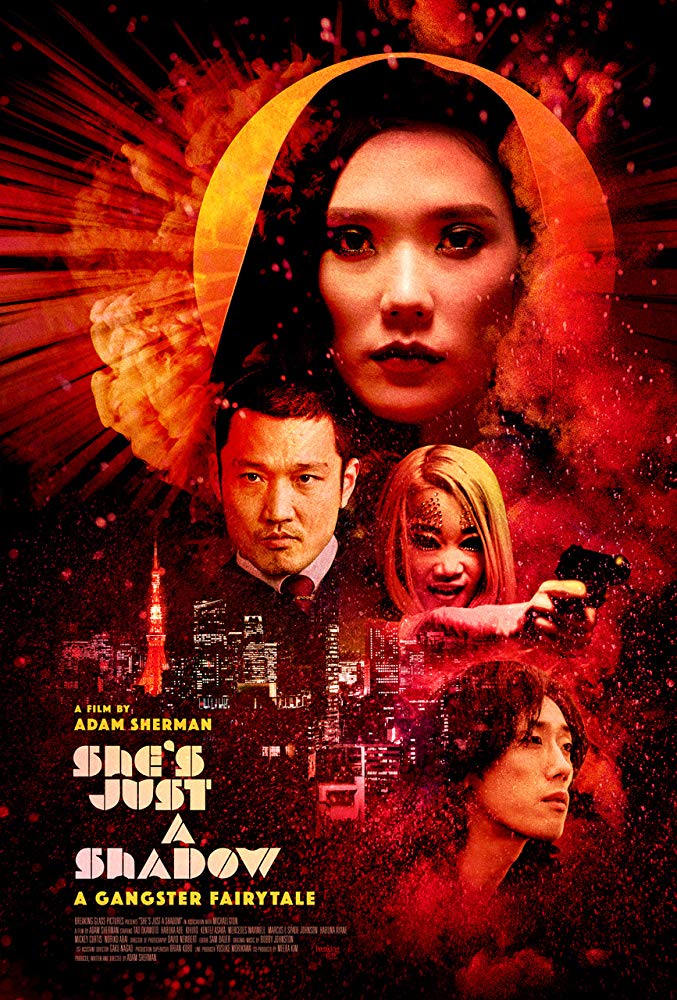
Western audiences have had their pick of Japanese crime thrillers in recent years, as more and more films, old and new, have received releases. This means perhaps that a new generation of audiences has become enraptured by the idea of Japan’s seedy underworld, with its molls and its gangsters, its ultraviolence and its gore. That feels like the case with She’s Just a Shadow, a brand-new excursion into Japan’s underbelly which is in many ways a love note to what has gone before it. In other respects, though, this is a very novel approach to the subject matter, splicing dreamlike states and multiple story threads in with aspects of other genres, notably pinku. It’s an ambitious film which almost trips over itself to include everything it wants to include, but for all that, it’s good to see a director with such an artistic eye lending his own spin to his story.
The film certainly frontloads its intentions in the opening scenes, too, particularly in terms of its adult themes. We witness a cop – or a guy dressed as a cop, at least – who has kidnapped a young woman. He takes her to the train tracks outside the city, where he performs shibari on her before leaving her suspended over the railway line to die. And that’s in the first few minutes, folks. We are then introduced to our main character Irene (Tao Okamoto), who – alongside her mother – comprises one of the doyennes of the city’s crime underworld, facilitating drug deals and working as a madam to fund her lifestyle. Her henchmen, particularly pimp Mr Red Hot (Kentez Asaka) are kept busy protecting her interests from rival gangs, and a gratuitously splattery bar brawl shown shortly afterwards demonstrates how far her boys will go. We’re also introduced to some of the gang’s other most notable players and hangers-on, such as Gaven (Kihiro), a kind of fatalistic binge-drinker who by turns wants to ‘get away from it all’ but, as with the massive majority of addicts with easy access to their substances of choice, can’t quite do that.
Meanwhile, it seems that our guy from the opening scenes is still out there and still a menace to the city’s women; he’s even being referred to as a ‘serial killer’ by this point. Irene has the double jeopardy of sustaining her crime kingdom and protecting her girls who, as prostitutes, are all too vulnerable to the malign attentions of strangers. But the girls must keep working after all. Inevitably, the two worlds will collide. Not only are the girls themselves at risk, it seems as though their madam is, too.
In real terms, She’s Just a Shadow is quite plot-lite, slowly morphing into a revenge story which takes its sweet time to unfold. Along the way, though, there are many interesting sequences and styles, if you can tolerate the slow-reveal style of the film (which comes in at just under two hours, a common enough thing when the writer, director and producer are all one and the same person). I feel that the use of colour, the staging and the larger-than-life characters all look good on screen; the girls here are like mad hybrids of several Japanese subcultures all at once, including (bizarrely) ganguro; the action sequences, when they come, are pretty good too, and I liked the use of illusion and dream sequences along the way.
I’ve seen other reviews which look disparagingly at the use of nudity in the film; I mentioned pinku eiga earlier, but to be honest, She’s Just a Shadow surpasses them in terms of its own content, and of course this kind of content isn’t going to be for everyone. If you see the film as something akin to leafing slowly through a particularly gratuitous graphic novel, then it makes a lot more sense. There are issues with the film, though, the main one of which is the film’s script. On several occasions, the script works against the aesthetic of the film, lending people insincere or nonsensical utterances (sometimes rendered more improbable somehow by the blend of American English and Japanese accents – this is a hybrid of a film made in Tokyo but acted in English, which leads to some language tics). It’s a shame when a killer scene is then overlaid with something garbled. A hazard of the choices made, unfortunately, but it can be disruptive at times.
Still, as a gaudy tale of excess, there’s more than enough to satisfy here. She’s Just a Shadow is lurid, overblown and often dreamlike, with its nods to other films (such as Pulp Fiction, at least in terms of some of the shots used) overlaid with high colour and good choices in music. These features do help to raise a conventional gangster yarn to new, improbable heights, even if there are a few hurdles along the way.
She’s Just a Shadow will be released to VOD (US) on 22nd September 2019.
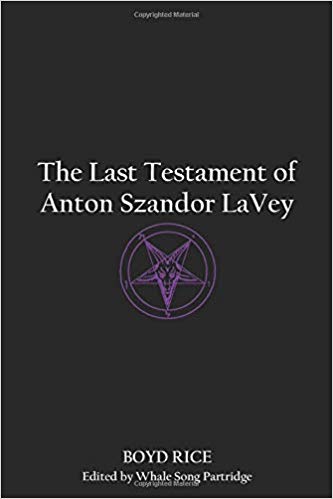
‘This book is just a little collection of memories, a scrapbook, if you will. No book, however comprehensive, could do justice to, or fully encompass, this man’s life. This is a thumbnail sketch of the Anton LaVey I knew.’ (Boyd Rice)
I was surprised and interested to find out that a new book on LaVey was in the process of being written; like a lot of people my age, I probably discovered ASLV via the wave of artists and musicians who namechecked him in the nineties, speaking his name aloud because, in their own lives, they felt that they embodied key aspects of his Satanic philosophy. In this case, it was Marilyn Manson whom I first remember referencing the Church of Satan, leading to my personal ‘There’s a Church of WHAT?’ before reading LaVey’s own books, as well as the history-and-homage biography, The Secret Life of a Satanist, written by his partner Blanche Barton. Yet, since his death in 1997, the CoS has presided over a slew of defections and beg-to-differs, with new versions of Satanism popping up here, there and everywhere – some more notorious than others. To some extent jaded by all of this perhaps, the CoS has doubled down on its status as the only legitimate Satanism, insisting that only LaVey’s tenets pass muster and challenging the Satanic splinter groups for legitimacy. If I encounter the CoS these days, it’s largely on social media, particularly via their consistent line in Twitter snark. LaVey himself feels decidedly distant from all of this somehow.
Not so in Boyd Rice’s latest book. Whatever I was expecting, I think I was surprised, to a degree, by the clear warmth and affection here. Whilst I would not advise coming to this book prior to a getting a good handle on the other LaVeyan literature that’s out there, as a personal memoir this is interesting, very engaging and deeply respectful throughout. The distance in years between LaVey’s death and this ‘scrapbook’ emerging may have allowed ample time for reflection, but it certainly doesn’t seem to have diminished the sense of loss. This book deals with the man, rather than the archetype. Is it a ‘Last Testament’? No, not in any conventional sense, though it does present LaVey’s own words as well as the author’s and offers hitherto unseen material, as well as reprinted features. The result is a good read.
Firstly introducing how it came to be that Rice first met LaVey, the book next includes LaVey’s last interview, conducted by Rice in 1997. As Rice notes, this was at the stage in their friendship where they could very much finish one another’s sentences; in this lengthy interview, they talk about everything from music to tastes in women to pet hates. Next, there’s a chapter on LaVey’s fascination with true crime, and how his path crossed with the Black Dahlia case and, later, that most affable man of handicrafts, Ed Gein. An examination of how LaVey came to influence pop culture, with nods to his feted relationship with Jayne Mansfield, before a lurid study of what is here called the ‘Satanic zeitgeist’, that tendency to use Satanic imagery to flog anything from martinis to cologne, something which overlapped with the occult revival of the sixties and seventies.
The next inclusion originally appeared in the magazine The Black Flame in ’97: Rice’s obituary is detailed and well-rounded, giving a full picture of LaVey from the pranks to the heartfelt, mutual loyalty felt. A conversation with LaVey’s daughter Karla follows before the final chapters, which comprise an assemblage of LaVey quotes and, ultimately, Rice explaining his involvement with the Order of the Trapezoid, an esoteric order which Rice says LaVey personally asked him to head – although the (somewhat abstract) advertisement in the back would confirm that its establishment in this incarnation is actually very new. What’s next is uncertain, but the thread which joins LaVey’s initial request to the present moment is included and explained, even if some other aspects are less clear.
This lavishly-illustrated book isn’t here to deliver a potted history of Satanism then, and nor does it concern itself with all of the rather torrid revisions of LaVey’s personal history which have been doing the rounds since his death. I note one request for revision of certain facts has already appeared on the Amazon review page, and I imagine there’s always the potential for more wherever something or rather, someone so contentious is concerned. That kind of thing isn’t addressed here. Rather, this is a reverential tribute to a mentor, one which weaves anecdote and imagery to bring the man himself back to the fore. As such, it’s a welcome and timely addition to the canon.
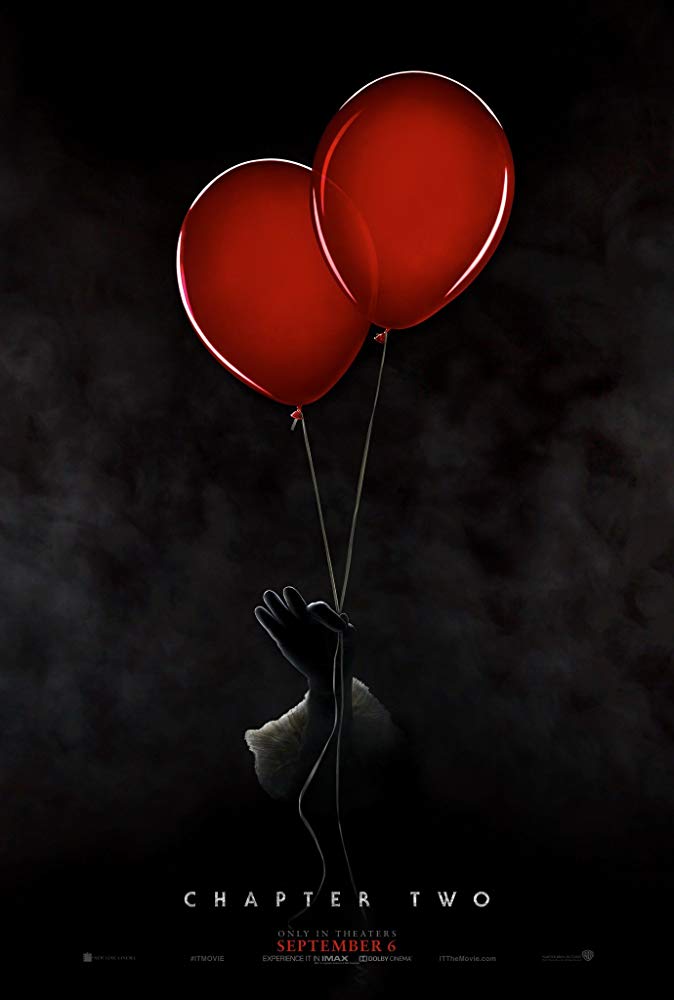
The dour, yet pacy and surprisingly graphic take on Stephen King’s novel IT was a pleasant surprise when it hit our cinema screens a couple of years ago, and the promise of a second, and closing chapter has been something which fans of the film have kept an eye on ever since. Picking up, as per the novel, twenty-seven years after the Losers Club swore they would return to Derry, Maine if ‘It’ ever resurfaced, It Chapter Two delivers a great deal of similar, artful scares to the first instalment. It does a few things quite differently too, however, with a few knowing nods to other genre directors, not least to my mind Sam Raimi, as ‘It’s’ escapades here often veer towards the comedic, as well as the inventive and nasty.
All variously going about their lives away from Maine, the now forty-ish year old group of friends have all largely lost touch with one another, just as typically happens as we grow older and move on. As we see, their adult lives are not particularly happy, but they have by and large gone through the motions of a normal existence – kids, career, partner. All present and correct. What is more strange is that, with one exception, they have all seemingly forgotten about the strange events which united them as children. It’s only Mike (Isaiah Mustafa), who never moved away from Derry and in fact lives in the same house he did as a kid, who recalls Pennywise, and the promise that they would reunite if Pennywise ever came back. He makes a series of phone-calls; Derry is being gripped by violence and disappearances once more, with a man washing up partially dismembered after being thrown into the river one night (making the slightly clumsy point here that, whatever Pennywise is, Derry locals can match, in terms of violence at least).
All at first disbelieving and hesitant, the Losers Club (with one exception) all acquiesce to Mike’s increasingly desperate demands. So, Beverly (Jessica Chastain), Bill (James McAvoy), the still-wisecracking Richie (Bill Hader), Eddie (James Ransone) and the now hot Ben (Jay Ryan) return to town, meeting up in a scene which genuinely conveys a sense of old friends being reunited – this is a brilliantly-cast film, and not just because every actor so plausibly could be the younger cast grown up because of their strong physical resemblances. However, it quickly becomes apparent that Pennywise knows they’re around, and has been waiting for them.
To a large extent, the rest of the film follows the same path as the first chapter. I mean, how could it not? It’s simply that here we have adults with their own baggage, striving to remember the teenagers they were, whilst also contending with the supernatural threat which assailed them back then. To make the comparison, this film opts to use a lot of flashbacks to the first chapter, both reiterating key scenes and filling in certain gaps by adding other sequences which affected the group twenty seven years previously. Some of these are very effective – perhaps there is just something more compelling about a supernatural being who has adapted its appearance to lure children, and therefore is of the biggest threat to them. There is some imaginative work going on here. However, the number and length of the flashbacks to scenes already used in It: Chapter One (made more obvious as we saw both films as a double bill) were a little excessive in places: I think the audience could have been trusted to recall far more of a film which is ultimately only two years old. It Chapter Two runs very long at 170 minutes, and there’s always a risk here of a film overstaying its welcome.
The choice to use what were, to my mind, more obviously cartoonish horror sequences – which put me straight in mind of Evil Dead 2, right down to the appearance of the creatures themselves – is an interesting one, and overall these fit in with the more evident threat scenes, though this mixed tone does seem to be the point at which the second chapter deviates most strongly from the first. There’s certainly no lack of sequences where It manifests, though: following the novel fairly closely, even if opting out of some of the manifestations as written by King, It takes various forms throughout before the ‘big finale’ (though one which, unlike the novel, did seem a little convenient and straightforward, given the havoc being caused by this being.) But hey, throughout, the script riffs on Bill’s career as a horror writer and how people ‘don’t like the ending’ on various of his books. As with the film’s decision to refer openly to other horror and sci-fi films (something I didn’t particularly like, and which took me out of the film at hand temporarily) perhaps we’re being invited to consider our own preferences for how stories end here, too.
There are a few minor gripes then, but all in, It Chapter Two is a fun film and a worthy conclusion to a creative spin on the King novel. It has certainly helped cement Pennywise for a generation of people who never saw, and were therefore not traumatised by the TV miniseries, and it has an abundance of good qualities, not least great performances and an awareness of how to explore some very primal fears on screen.
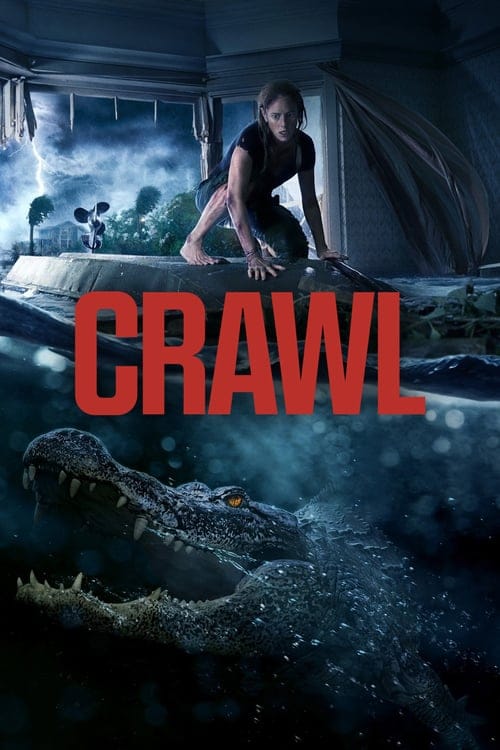
For most readers of this site, director Alexandre Aja is probably best known for his work within the horror genre. When Switchblade Romance (or High Tension) burst onto the scene in 2003, it very much formed part of the new wave of unflinchingly nasty European ordeal cinema; films made since then, such as The Hills Have Eyes (2006) and Mirrors (2008) have cemented his reputation within the genre. But there’s more to Aja than this, and in Crawl, he turns his hand to something rather different which shares elements of a number of other genres – disaster movie, natural world gone awry, and yes, thanks to how that awry natural world affects the film’s protagonists, a large dash of horror, too. The end result is a reasonably diverting survival movie, which takes a tiny cast and (for the most part) a small-scale setting and does good work at getting the absolute most out of these elements.
Haley (Kaya Scodelario) is a competitive swimmer who can’t quite nail the performance she has been raised to feel capable of; on some level estranged from her father, once her coach, she is particularly feeling the strain because if she loses her team place, she loses her college scholarship too. And, hey, this is Florida: whilst she’s been practising her swim, she’s missed a warning of a tornado about to hit the area. Big sister Beth (Morfydd Clark) tells her to get to safety, but also mentions that she hasn’t been able to contact their father. Sketchy relationship or not, Haley decides to brace the weather and go find him, making sure everything’s okay. That her vehicle is the only one heading towards the coming storm, whilst everyone else evacuates, is just the first facet of a day about to go awfully wrong.
After a bit of a wild goose chase in increasingly worrying weather conditions, she eventually finds her father at the old family home – ostensibly doing some odd jobs in the basement there ahead of its sale. But he’s injured; it seems that the storm has enabled a very large, very irritable alligator to get into the basement through a storm drain, and so injured father and daughter are now sharing a confined space with a pissed off lizard – and the water continues to rise…
It’s always a brave decision to base the biggest part of a story in one small location, but via the use of different camera angles, light and darkness, and some good use of surprise elements without every becoming just another ‘boo!’ piece of cinema, the setting here is effectively handled. To draw the full horror of the situation out of the flooding basement, Aja does opt to have his alligator(s) edge towards the monstrous – seeming ever so slightly malevolent, rather than straightforwardly animalistic – but, hey, with films like The Meg coming along in recent years, it’s not unknown for already big scary aquatic creatures to be granted a bit more malign agency than they would have in real life, just as a way to make a bad situation even worse and a screenplay more entertaining. That all said, the alligator theme is fairly economically used for the post part, I’d say; Crawl plays as much with what can’t be seen as it does with close-up gruesomeness (though that is certainly there). It’s also worth saying that if you are looking for a realistic depiction of how alligators behave, well check those expectations at the door. You may find yourself irritated otherwise by some of the ways the film plays fast and loose with things.
This isn’t simply an animals-gone-rogue flick either, however, and a lot of the film’s charm depends on the natural disaster which has literally propelled the gators into the human domain. The storm itself is very well realised, with a plausible, imminent sense of doom. It’s a kind of home invasion, if you like, with tree branches smashing through windows, flood water pummelling down walls and – living in a flood zone myself, albeit thankfully one which is lizard-free, I can vouch for this – waves of detritus getting swept along for good measure. If I felt that lead actress Kaya Scodelario is on occasion a little less engaging than her father David (Barry Pepper) is terms of how they deal not just with their extraordinary poor luck, but their relationship too, then I certainly can’t fault the physical performances given by each, as you really do get a sense of their vulnerability against dreadful odds. Oh, and pitching her as a pro swimmer is a neat way of adding a little more credence to the physical trials she endures.
So, a film which splices the bloody peril and realism you may already associate with Alexandre Aja with something which skirts close to a monster movie in places, Crawl is a decent film which has more than enough to maintain interest and enjoyment, if enjoyment is the right word for it. Elements of natural disaster are embellished with an additional layer of peril in the critters themselves, and there’s an ultimately decent amount of characterisation and development to keep things worthwhile. You might not find yourself lining up to go and watch it again, but this is a well-made film which offers more than enough to pass ninety minutes.
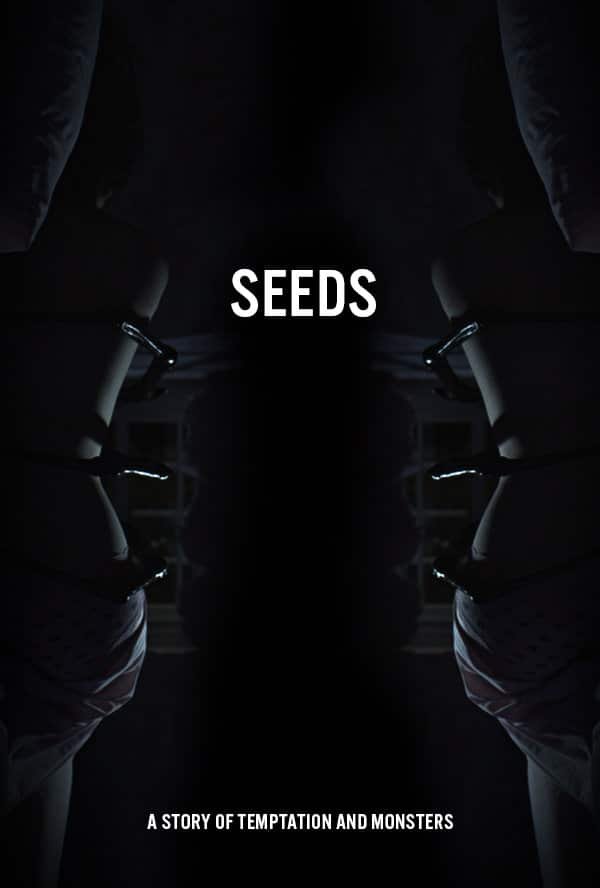
Placing monsters on screen – as in your vampires, or your aliens, or so on – has its own share of challenges, but at core, there’s a fairly obvious requirement to, well, get the monsters on screen. When you are aiming to represent monstrous behaviour or thoughts, however, this can be rather more tricky, even whilst allowing a great deal of scope for how this is done. This brings us to Seeds (2018), a thoughtful, very sombre examination of a damaged man, as he comes to terms with the path he has lately taken. It’s not a particularly easy watch, though this has to rank as one of the film’s key strengths.
An idyllic family beach scene opens the film, though cedes very rapidly into something altogether darker – our key character Marcus (Trevor Long) is taking part in a sexual game which goes badly wrong, requiring the intervention of a friendly fixer-upper to take care of the aftermath. Marcus then leaves the scene, heading away to the old family home on the coast of New England, presumably to recuperate and to gather his thoughts. This should be the ideal place. His brother and family live nearby, and the house itself is rather grand and comfortable – the perfect place to recover from whatever sequence of unfortunate events recently befell him. However, a few neat visual clues soon show us that all is not as it seems here. Yes, the idyllic beach of the opening reels is this beach, and the little girl running back to the house with a hermit crab to show to her family is all grown up now – this being Marcus’s niece Lily (Andrea Chen). But this is no simple family reunion; his brother Michael and wife Grace are having a tough time, the isolation of the small close-knot community is taking its toll, and as if this wasn’t enough, there’s something as-yet unspoken going on between Marcus and his long-time-no-see niece. When Lily and her younger sibling have to come and stay with Marcus unexpectedly, this source of anxiety begins to shift and develop. Marcus’s already rather slippery grasp on right and wrong is about to let loose altogether, and from here on in, Seeds becomes more and more of a horror story – even if continually very subtle and ambiguous.
This is a film which layers discomfort on top of discomfort, and as it tackles the spectre of incestuous feelings, it certainly isn’t subject matter to relish – by no means will this be for everybody. But, thankfully, Seeds is far more than just a version of Lolita set elsewhere and in a different time, and it does a range of interesting things with its themes, contemplating what these contested emotions could do to a person. In effect, if a person acknowledges something monstrous is in them, how can this be shown to an audience? Seeds opts to be very dialogue-lite, with a very deliberate pace and atmosphere which is occasionally disrupted by a sudden, shocking sequence; this tactic helps to underline key developments along the way. Visual representations of trauma are, largely speaking, very subtle, threading together elements from the past and elements we recognise from the present moment. All of this is very beautifully packaged, shot on film (which looks great) with an artistic eye and a wide range of shots, from macros to landscapes, and some great soundscapes. These all showcase high levels of skill, and overall this care and attention helps the film to deliver.
Perhaps my main criticism would be with regards the quandary faced by filmmakers when dealing with the concept of exploring an underage relationship. On one hand, they can’t throw in a genuinely underage actor to subject matter of this kind in this day and age, and nor should they – that would be all kinds of unpalatable to modern audiences. However, to get the audience to believe in the relationship aspect, the actor still needs to…look younger. It’s a sizeable divide, with no real easy way around. So, whilst Andrea Chen does a good job with her role as Lily, it is still somewhat difficult to see her as a vulnerable teen, as she must surely be intended to be, being as she’s in fact around thirty at the time of filming. By no means is this an issue unique to Seeds. But it is something of an issue in the suspension of disbelief, at least part of the way.
So, this issue notwithstanding, and also accepting that Seeds is not a film which will be to everyone’s tastes, I very much appreciated its handling of mood and atmosphere, which evidently rank as highly as the narrative aspect of the film. If it reminds me of anything at all, it’s Possum (2018), wherein another damaged man returns to the old family home to try and tackle something disturbing in his own past, which itself takes on some literally monstrous aspects. A series of understated performances combine to deliver something gorgeous and grotesque here, which is certainly something to be applauded. As a directorial debut from Owen Long, this really does promise good, if rather ominous, things to come.
Seeds (2018) will receive a theatrical release (US) on September 13th 2019.
As this is a detailed examination of the film, it contains spoilers.
Seldom has the sole creation of one person travelled so far and changed so many times as the story of Frankenstein (1818). Sure, horror is populated with multiple vampires, mummies and zombies, but even the best-known stories have often been woven out of pre-existing folklore. Mary Shelley’s story was, at the time in which it was written, unique; Romantic ideals about man’s relationship with nature, the burgeoning scientific developments of the day and Mary’s own distorted, mournful experiences of creating new life conspired to develop a horrific tale without real precedent. And yet, her story has itself always been pulled into new forms when brought to the screen – which it has been, often, since cinema’s earliest inception, with the first ‘liberal adaptation’ of the novel arriving as early as 1910. Subsequent generations have always want to emphasise (or even add or replace) key elements of the original novel in their own ‘liberal adaptations’. So it’s surprising that it took until as late as 1994 for a film to make the claim that it was ‘Mary Shelley’s Frankenstein’, and to declare that it would follow the novel very closely.
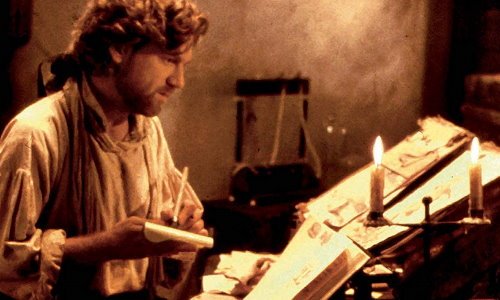
Step forward, actor and director Kenneth Branagh. Best-known for his direction and performance in Shakespeare productions, Branagh certainly had the literary pedigree to tackle the book, although he was at the time a relatively inexperienced director beyond Shakespeare – in some respects, this shows, and the film’s rather mixed reception has often commented on its tonal shifts between horror and drama which don’t always sit well. However, for all of its flaws, Mary Shelley’s Frankenstein has many redeeming qualities, and does some things very well indeed. Looking back at it from a quarter of a century on, it’s interesting to note these, as well as to re-examine the film overall. For me, in a nutshell, the film’s a mixed blessing: the period setting, the cast and certain elements of faithfulness to the original plot are very bold. In other aspects, its deviations and decisions are a little exasperating. Here’s a look at how, and why.
“Strange and harrowing must be his story…”
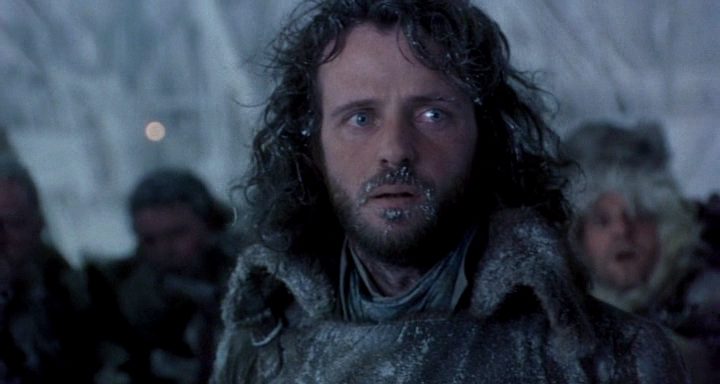
For those unfamiliar with the novel, Frankenstein is an epistolary tale, where the fantastical story is relayed via a ship’s captain, Walton, writing to his sister Margaret back in England. The 1994 film retains Walton and the North Pole setting, keeping faith with the crew’s encounter firstly with a strange, unnatural man, and then with a stranded and seriously ill gentleman – Victor Frankenstein, who says he is pursuing the strange figure. They get him on board and he soon forms a friendship with Walton – another man of ambition, whose determination to pursue his voyage against terrific odds leads Victor to tell him his cautionary tale. Taking in his early years, his studies in Ingolstadt and his subsequent successes in the field of human biology, Victor’s greatest achievement would be his downfall. Whilst his description of his method is scanty, he acknowledges that he makes a man out of salvaged body parts – the spoils of the charnel house and the dissecting room. When the unnamed creature awakens, Victor flees in terror.
He finally returns to his lodgings and the creature is gone; assuming it will have crawled away and died somewhere, he rather naively dismantles his scientific apparatus and hopes the whole thing was something of a nightmare. Instead, the creature survives, holes up in a shack alongside a cottage in the woods, and begins to learn from the inhabitants. As the creature learns language, he learns about man’s cruelty, and man’s hatred of any being so malformed as he. Learning of his creator’s name from the journal he blindly stole from Victor’s lodgings, as well as learning of Victor’s horror at what he has created, the creature vows to seek him out, satiating his rage on members of Victor’s family and inner circle, before finding Victor himself and demanding that he makes him a female companion so that he may absent himself from the world of men for good. Victor initially agrees, but at the last possible moment, reneges: the creature therefore avenges himself in the most brutal manner, and Victor, now bereft of his family and his wife, chases him North. An artful game of pursuit ensues, one which ends in the frozen wastes, where Walton finally encounters Victor.
“The accomplishment of my toils…”
The vast majority of adaptations of Frankenstein dispose altogether with the framing narrative and concentrate on the story of Victor Frankenstein and his creation. It is heartening that Branagh and screenwriter Steph Lady retain the section of the story which takes place in the frozen North, as there is lots of subtle horror to be inferred from the isolation of this extreme environment; it also provides a justification for Victor’s narrative, as he would presumably never have shared this tale unless he wanted to warn his new friend of the perils of ambition. I would quibble over the creature’s early cruel behaviour (to the sled dogs) as this doesn’t necessarily chime with his character overall, but I can see that it allows him to be viewed as potentially incredibly destructive, which is relevant. The stage is then set for the more typical examination of Victor Frankenstein’s life and loves, which comes via a superb cast and care and attention to details of setting that are of great importance. The backdrop of the Alps, for example, is an important contextual point, offering natural beauty and perilous enormity in equal measure, reflecting character moods and dispositions and also, the location of Victor’s first meeting with his now lucid creature. It’s heartening that this is retained; it couldn’t really be ‘Mary Shelley’s Frankenstein’ without this nod to the dynamics of Romanticism, which influenced her so profoundly.
Other key strengths in this version could in some respects be seen as a little clumsy, but in the limited time available to flesh out the story on screen, they still work. For example, having Caroline Frankenstein – Victor’s mother – dying in childbirth, rather than of scarlet fever, does at least allow the film to establish Victor’s warped obsession with birth and death, a visual cue for a plot point which is even a little obtuse in the novel. The frequent allusions to some future wedding-night for Victor and Elizabeth are equally a little blunt, but given that the wedding-night scene is this film’s chief deviation from the novel, and contains several of the more horrific elements in the film, then evidently it was felt that the audience had to be prepped for its conclusion.
“…The tremendous secrets of the human frame…”
When films adapt Frankenstein, in so doing they often devote a large share of the screen time to the ‘science’ of the creature’s ‘birth’, and the style and focus of these scenes often tells us a great deal about the era in which the film is being made – our own mores always have an impact on what science, and how, we get to see, which inevitably however involves lightning (something never mentioned in the novel, although the development of galvanism, a new understanding of the relationship between electricity and muscle stimulation, was certainly an influence on Mary Shelley). In Mary Shelley’s Frankenstein, the ‘birth’ scene is both interestingly novel and frustratingly formulaic, with a few curious details that don’t quite work.
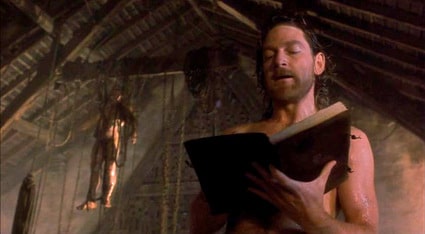
Rather than simply have Victor piecing together a man from component parts, Branagh links back to the trauma of childbirth (particularly given his mother’s grisly demise) by showing us Victor collecting amniotic fluid; it is this substance that he uses to immerse the creature, connecting birth and science here in a very literal way. This is an interesting enough motif, but then the film still goes ahead with the whole lightning shebang, emulating films which had gone before it, right down to the “It’s alive!” line, which has by now become a complete cliche. Homage? Possibly so, but it seems strange to dip back into Universal horror tropes when making ‘Mary Shelley’s Frankenstein’. In other respects, the film definitely feels like it belongs to the world of the novel. The body parts ‘gathering scenes’, where parts were often taken from hanged criminals (a change in the law meant that practitioners of human dissection could claim criminal remains for their experiments, a fact which struck terror into the hearts of the general population – and was meant to) work pretty well; the decision to take materials from people known to him underlines Victor’s blind passion for his project, at least, even if there is no intimation of this in the book; the creature himself (played very ably by Robert De Niro) looks original, and very disturbing. Why Victor works so hard to revive the creature and then grieves momentarily when he seems to die is a strange choice, as surely it is Victor’s success that appals him – but otherwise, the creature’s birth has a reasonably strong impact overall. Much as it seems unlikely that an egotist like Victor Frankenstein would work alongside someone senior in years and expertise on a project such as this – and also his isolation in it drives much of the story – there is therefore a startling choice to be made when his partner is killed, which adds to the film’s much-needed horror.
For me though, however many minor gripes I find with the film, possibly its greatest strength is its inclusion of the De Lacey family – the impoverished inhabitants of the woodland cottage where the creature initially finds himself and hides. Watching him slowly begin to learn speech, and via language, self-awareness, is very compelling. The creature’s initial profound goodness in the face of horrifying human cruelty never fails to move me, and when he is driven out of the cottage after his hope of acceptance is so brutally snuffed out, weeping like a child in his isolation, you can understand perfectly why he turns his face from the goodness he knows he has. It is a harrowing, upsetting scene. In a film which has boundless overacting in several places (why speak quietly when you can just shout character names across the set?) De Niro provides the film’s greatest performance. He is plausible, pitiable and very human, ironically enough for a character who bewails his differences from mankind. Deviations from this level of tender detail harm the film, inevitably. Making Victor Frankenstein a bit sexy is needless (for example, having Justine Moritz look upon him as a love interest?!) but De Niro, for me, saves the day. The quieter moments in the film are the best it has to offer, too.
“I keep my promises…”
We have looked at some of the film’s key deviations from its source material, and so we come to the greatest deviation of them all – the wedding-night scene. And, although it plays fast and loose with the novel, I still feel it’s quite a clever move overall. In the novel, Victor, unable to interpret the creature’s threat that ‘I will be with you on your wedding-night’ as anything other than a threat against him (see? egotist) spends the early part of the evening on watch for the creature’s inevitable attack. The creature instead gains access to the bedchamber, where Elizabeth, Victor’s new bride, is waiting for him. He then strangles her, thus avenging himself on Victor by killing the person he loves the most. Grief thereby compels Victor to pursue the creature, hoping weakly for revenge.
In the 1994 film, the creature also murders Elizabeth – but the horror ante is upped by having him plunge his hand into her chest, ripping out her heart, just as Victor enters the room. In his desperation, Victor now sets about reanimating Elizabeth – she becomes the de facto Bride of Frankenstein, mutilated and partly burned by a fall into her bedside candle, making for an impressive set of make-up effects and a truly striking female creature. Rather than the anonymous female creature which Victor makes in Orkney in the novel, destroying her when he sees the creature looking on expectantly through the window, here we have all sorts of potential for deeper questions to be explored – will Elizabeth remember Victor? Love him still? Or will her awareness of her new state compel her towards the creature, with whom she has ghastly common ground? Helena Bonham Carter – who is also compelled to shout a lot during the course of the film, when she can do rather better than that – manages to communicate great anguish and hurt during her few moments as a reanimate corpse, and she does it all without recourse to language. Also, Victor’s blindness to her new, monstrous appearance shows how far gone he is by this point – willing to compete for her attentions with the creature, who of course believes her beautiful, because she resembles him. This sequence allows the film to repeat an earlier scene – where Victor and Elizabeth dance, whilst the camera circles them. Now when they dance, the camera circling them again, it is as a mockery of the past; Elizabeth is dead, Victor is too far gone to ever belong to society again, and the creature even appears to have the upper hand for a moment – before Elizabeth opts out of her grotesque situation, burning herself alive rather than belong to either of them. It’s the first real agency she’s able to display, and it makes for a thrilling, very dramatic plot point.
So could the film have stuck to the novel’s version, and conjured such a dramatic sequence out of the undoubtedly violent, but rather briefer way in which Elizabeth departs proceedings there? I don’t think it could. It’s a bold shift in many ways, not to mention a gamble, but it pays off. It’s also economical – dispensing with the protracted part of the novel where Victor and his friend Clerval tour around mainland Europe and Britain until Victor finds a suitably isolated spot to make a female creature. The revised version keeps things far closer to home, without dispensing with the important plot point that is the female creature.
Hideous Progeny
Mary Shelley’s Frankenstein (1994) was by no means the first on-screen adaptation of the novel, and it certainly hasn’t been the last: numerous new films have emerged since its release, each of them utilising the source material differently. I imagine many more will follow, too, as this is a story which always seems malleable in times of crisis, reflecting and refracting our contemporary unease over whatever big questions of life and death trouble us currently. And, whilst the 1994 film is a film which begs many questions in terms of its method and manner, I still feel that its many strengths continue to make it worthwhile; it does stick closely to the novel in a number of ways, just as it claimed it would, and many of these ways contribute positively to the film, creating a sumptuous period piece which still looks very good today. Whilst some of its elements are bewildering, which is a shame, it is still a decent movie, one which perhaps deserves a re-visit, or even to find a new audience altogether as it enters its twenty-fifth year.
Sometimes the loss of an actor just gets you somehow, because you automatically associate that actor with a role which is highly important to you. So, yesterday, it was hardly surprising that, with the news that Rutger Hauer had passed away at the age of seventy-five following a short illness, the internet was quickly awash with Blade Runner images, celebrating Hauer’s performance as Roy Batty in one of the finest sci-fi films ever made. Batty’s last words – delivered in such a way and at such a time that you are made to debate just what being human means – will obviously take on additional prescience, when the superb actor who delivered them (and indeed helped script them) has themselves died. It was the first thing which came to mind for me, and for many others.
But Rutger Hauer’s legacy certainly didn’t begin, or end with Blade Runner.
It simply helped to place him, for many genre film fans, as a great performer who could put his heart and soul into the job. Perhaps he is chiefly associated with dark sci-fi and dystopia for a lot of us, working as he did on films like Salute of the Jugger and far more recently, Sin City, but Hauer got his teeth into a wide variety of roles over the years across film, TV and advertising.
There was a lot of love for Ladyhawke when the news broke yesterday, and this is another film beloved to many folk from their earlier years; on a completely different tack, who could forget Hauer in The Hitcher? It’s a film which taught us true dread, a role played brilliantly ominously and a sterling example of the menace he could bring to the screen. His performance in the TV version of Salem’s Lot completely revolutionised the character of Barlow, remodelling him into something not a monster, but still utterly monstrous. And, in 2011, Hauer surprised us with his role in Hobo With a Shotgun – a lowbrow, fauxploitation movie sure but, as with many of these films contemporary or homage, it had a heart, not least because of the lead role and how it was played. These are just a handful of the roles which spring to mind, and there’s a vast legacy of performances I confess I have yet to see – bittersweet, given the reminder.
It’s genuinely sad, therefore, to have lost such a versatile, dedicated and by all accounts, decent man. RIP Rutger Hauer and we thank you.
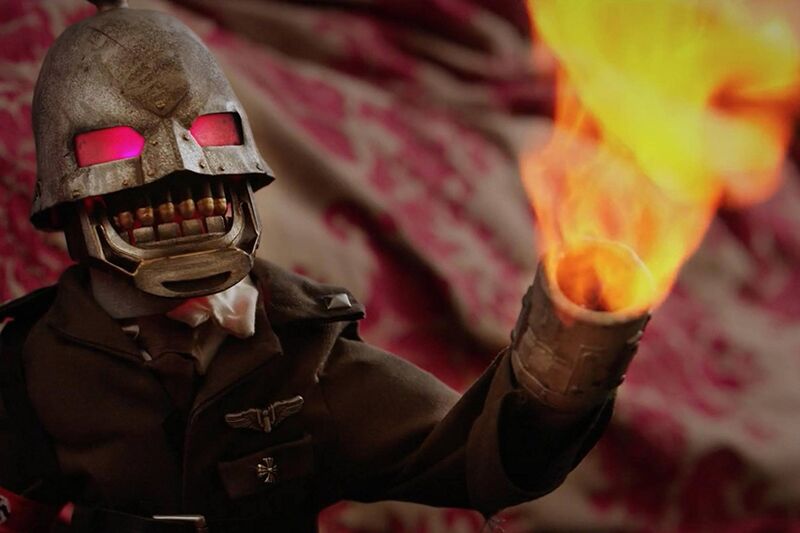
If it comes in miniature and could conceivably be evil in nature, chances are Charles Band has probably used it as the basis for a schlock horror film (even ‘worry dolls’ have gone very, very wrong in his hands). And, in terms of success stories, the Puppet Master franchise has probably been one of his most successful; it’s the gift that keeps on giving, certainly, spawning numerous films over the past thirty (!) years. Even though Band himself doesn’t have such a direct hand in The Littlest Reich, it uses many of the same puppets we know and love – even if I’ve never quite gotten over the early retirement of Leech Woman. I may not have known quite what to expect from a film with such an indecorous title, but it turns out that this Fangoria project is a lot better than I could ever have expected. It knows not to overflex, but it has buckets of ingenuity, as well as a range of gory sequences which, yeah, you can half-imagine were there before the plot filled in around them, but you love them no less.
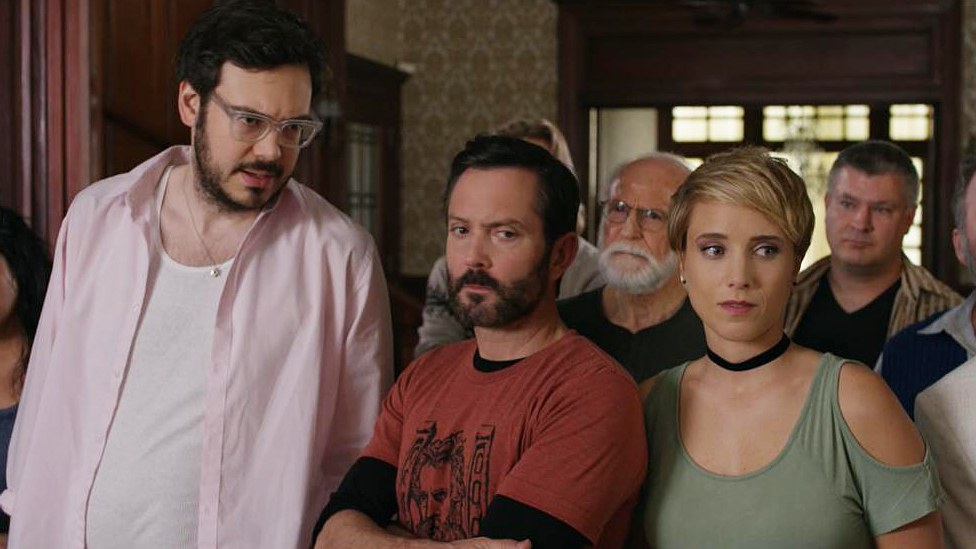
To join the new film to the first, we start back in the late 80s, where a mysterious stranger arrives and spooks a barmaid and friend…and hang on, that’s Udo Kier in a fun cameo as the ‘puppet master’ himself, Andre Toulon. This European visitor is a little socially awkward, appropriately facially scarred and none too keen by witnessing their lesbianism, so off he goes, back into the night. But not before the two girls suffer through his invocation of his puppet minions, in one of the film’s first, cards-on-table practical gore effects. After a fun animated sequence over the opening credits fills us in on the intervening years, we’re bang up to date: we see a divorced fortysomething, Edgar (Thomas Lennon) moving back in with his parents, into a room which has been frozen in time decades previously after the death of his brother. His dad is clearly none too impressed with his son as things stood before the divorce: Edgar works in a comic book store, which is beyond the pale. and dad doesn’t much like him going through his brother’s old toys either, despite being equally displeased that they’re all still in the house in the first place. Still, Edgar finds one old thing which looks like a collectable; he decides to find out when he accompanies new girlfriend Ashley (Jenny Pellicer) and boss/best friend Markowitz (Nelson Franklin) to a very special convention…
In another link to the original franchise, this convention is all about the Toulon Murders. A cop involved in the case, Officer Doreski (Barbara Crampton) leads tours for those interested in the case, the history of Toulon’s exodus from Europe is explained and this very select group of interested parties bring along examples of their own Toulon puppets. Except, no sooner is everyone checked in to the hotel, than a lot of the puppets go missing. Oh come on, that’s not spoilering really. This simply the frame for the highly entertaining hell which breaks loose…
Firstly, the relationship between the main characters of Edgar, Ashley and Markowitz is very sweet, plausible and well-written, with some genuine humour. The argument about not playing grindcore in the car made me laugh, certainly. Their interplay, along with the interplay with the supporting cast also fills the plot gaps in an effective, if none-too-subtle way (well what did you expect?) so that the premise for all of the rather ingenious slaughter is established. The gore is the film’s stand-out feature, and the CGI is kept deliberately low in the mix in order for the camera to linger on the set-up and the pay-offs. Also, the path is paved for the second half of the film to be a complete bloodbath at the hands of a bunch of marauding, RACIST killer puppets. I can only imagine watching this film with an audience; many of these sequences are genuinely laugh-out-loud funny, and whilst there are a few head-scratching moments, I can’t imagine anyone would really mind; there’s gratuity at the expense of intricacy, let’s say. The one-liners peg everything together just nicely too.
If you like splatter and silliness but appreciate decent characters to see both of those things along, then The Littlest Reich is indeed worthwhile. It dandled the promise of another sequel at the end, and this would be extremely welcome. Retro nostalgia meets graphic, cartoonish violence. Sometimes you can ask for nothing else.
Puppet Master: The Littlest Reich is available now from Exploitation Films.