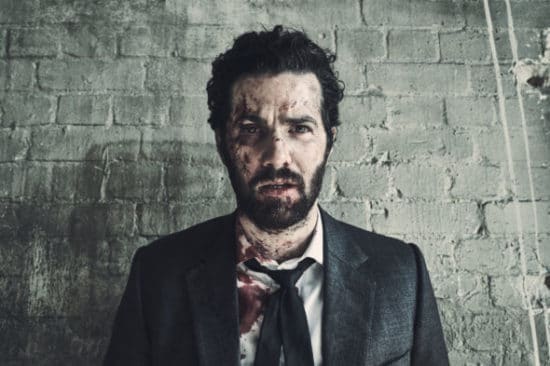
We’ve all heard of post-apocalyptic drama – literature, film and television which look at life after the End of the World as We Know It – and we can all name a few noteworthy examples, I’m sure. Well, the recent BBC series Hard Sun reinterprets this idea, giving us something rather different: ‘pre-apocalyptic drama’. It’s a new one on me. But, using this idea of a modern world poised on the edge of something catastrophic has – at least on paper – some bite. How would knowledge of some impending doom alter the behaviour of people waiting for it to come?
Set in modern London, Hard Sun begins its life as a standard cop drama, with DI Elaine Renko (Agyness Deyn) being drafted to a new constabulary for the shady purpose of investigating her new colleague, Charlie Hicks (Jim Sturgess), who is in the frame for murder. Of course, Hicks doesn’t know about this, so at first he can focus on being suspicious about the swap for more nebulous reasons. Renko, meanwhile, who is living out of a hotel after her estranged teenage son tried to kill her and burned her house down, is ‘happily’ getting on with her undercover role when the apparent suicide of a computer hacker throws both her and Hicks into a whole new world of trouble. It seems that there’s a conspiracy afoot to keep a piece of devastating news from the public – news which the hackers found, and unwittingly brought into the public domain via a certain flash drive, which the powers-that-be are desperate to get back.
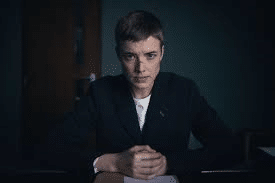
The flash drive contains detailed information about an inevitable natural event codenamed ‘Hard Sun’. Evidence has suggested that, five years in the future, a solar flare will destroy life on Earth. Is there a plan to save humanity? Well, nope, not really. But the secret service know what’s around the corner – the panic, the mass migrations, the pitched battles over food and resources – and they’ve decided they would prefer people not to know about all of this; after all, the knowledge won’t benefit them in any way. It’s a very British way to face down the end of days: keeping completely mum. Along those lines, this is why the flash drive remains a bone of contention; Renko and Hicks have to work fast to keep themselves out of danger, and in its pursuit, the softly-spoken secret agent Grace (Nikki Amuka-Bird) shows she will stop at nothing to cajole, intimidate and threaten the pair and their families.
This isn’t it, though, and as some partial accounts of this so-called ‘hard sun’ event almost inevitably filter through to the public (although dismissed as ‘fake news’ and a hoax) people begin to alter their behaviour. The series is in many respects a more standard cop drama with cases to crack, albeit that these cases seem to have been initiated by a kind of desperate wondering about what might or might not be around the corner. Hence, all the while that damn flash drive is being sought after by increasingly desperate, violent means, we are shown religious angst giving way to serial murder, patricide and ad-hoc surgery on suicidal people to make them feel ‘better’ – to name a few. Almost impossibly grimy and violent from the outset, this series is shot through with broken glass, sharp implements, gratuitous use of night-sticks and an almost unreasonably number of scenes in which former Vogue cover girl Agyness Deyn gets punched in the face. The poor woman spends most of the series with a bloody nose. How much you take to all of this is, of course, down to you.
There are many strengths here: the attention to little details works well, with portentous graffiti warning of the ‘hard sun’ beginning to appear all over London. This is a neat touch, which adds to the increasing sense of something being wrong, if not openly discussed; London on the whole looks like an intimidating, alien space for most of the time it’s shown on camera. There’s a bit of mischief involved, too: some of the character names refer to folklore (Grace’s surname is Morrigan – Celtic goddess of death) and we even have a Herbert West in here for good measure, which fits quite well with his particular plot line. These may be entirely coincidental, I suppose, but it seems unlikely. As for the performances; I’ve read quite a lot of criticism of them, and yes, they tend towards being rather overblown (with the exception of Amuka-Bird, who is so calm and collected for the most part that a plot twist where she turned out to be AI wouldn’t have been too much of a leap). But, for most of the characters, the overblown style doesn’t seem to be so bad a fit, given the mode and the topic at hand. It’s all a bit like a London manga, more about spectacle than slow-burn, or indeed plot coherence.
All of that said then, Hard Sun labours under a lot of the issues which have waylaid so many BBC flagship series of recent years – a thinness of plot, a determination to rattle through ‘key scenes’ at a rate of knots, afraid to pause and offer any real explanation for events. This urge to show the audience as many shocking or dramatic scenes as possible, often without taking the time to blend these scenes particularly well into the narrative, may show that writers are now attempting to cater to shorter attention spans, or they want to generate something Tweetable, but I’d say series will always do better when they take their time and build plausible, absorbing stories.
This great urge to jump from one thing to the next, navigating via a few killer lines here and there, seems like one of the issues which makes the later series of Sherlock borderline unwatchable, and caused a few gripes with Hard Sun writer Neil Cross’s best-known series Luther, come Series Four. It’s all too easy to linger over the daft decisions in Hard Sun, too: the action often lacks common sense. For instance, if you were chasing a suspect and carrying a gun, would you run up to within a foot of them before attempting to use it? If you were undertaking a clandestine investigation of a colleague and you lived in a hotel, would you think to climb into the hotel roof-space and store your sensitive data there? Little head-scratcher moments like these did detract from the impact of the drama overall, as it seems they were either overlooked entirely, or plot coherence is being sacrificed simply so that the drama can plough onto the next big thing.
Still, a cliffhanger ending and Cross’s own assertion that he’d like to write further series means we may well get to know more about the Hard Sun in future. My overall impression of Series One is that this is a novel idea which has received somewhat problematic treatment, making it an entertaining, but often frustrating blend of inspired and scatty.
Hard Sun is available to watch as a complete box set on the BBC iPlayer now.
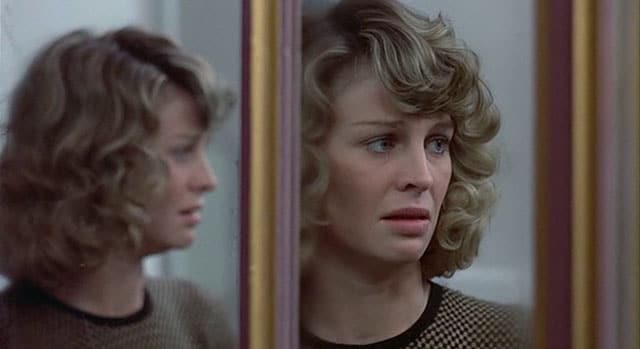
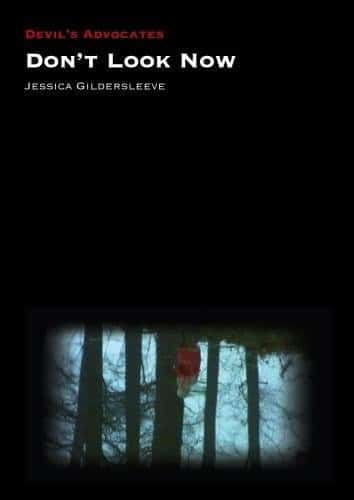
Don’t Look Now is a strange and rather wonderful horror film: routinely featuring on ‘best films of all time’ lists, it clearly made (and continues to make) a resonant impression on viewers, whether those who saw it upon release or those who have come to it later. It’s this lasting appeal which has prompted some serious consideration in print in recent years, with this edition of the Devil’s Advocates series by author Jessica Gildersleeve marking an upcoming addition to the fold.
Gildersleeve argues that Don’t Look Now is remarkable, firstly, because it seems devoid of the tropes which characterise other, more notorious horrors of the 1970s. When it comes to horror cinema, the Seventies tend to be feted for films like The Texas Chainsaw Massacre, The Exorcist or Halloween, Gildersleeve argues – films which are spectacularly bloody, graphic or otherwise vivid assaults on the home. Don’t Look Now, although it may (to me) sound like another movie of the type mentioned above (one of the many ‘Don’t’ titles of the era) is altogether more subtle and restrained, at least for the most part. Whilst she acknowledges that the film can and does include shocking scenes, Gildersleeve’s opening gambit is that Don’t Look Now relies on the awful realisation of ‘knowing too late’, something which riffs on the breakdown of the modern family throughout.
Continuing with this, she suggests that horror can be particularly responsive to social anxieties – an idea which countless of us would no doubt agree with – and that Don’t Look Now was made at a particularly malleable time in history. Noting that whilst many of the tropes we now know and recognise were being developed in the Seventies, the film wasn’t overly expected to join forces with these, as things were still relatively new, experimental. However, the movement of horror from the crumbling Gothic castle to the modern urban setting allows Don’t Look Now to exploit particular pressures surrounding parenthood and belonging, in a contemporary sense.
Perhaps the main body of the book and its arguments, however, is devoted to the film’s specific treatment of trauma; this certainly isn’t your standard book which devotes a chapter to the director, then a chapter to the key actors, and so on. In order to retain her chosen focus, Gildersleeve uses something she refers to as ‘contemporary trauma theory’, and it’s at this juncture that the book really hikes up its academic tone. Of course, the Devil’s Advocates series tends towards the scholarly, granted, but I do feel that, in comparison with the last title in the series which I read, the discussion of Don’t Look Now on offer here is much more didactic. It also soon segues into an emphasis on psychoanalytical theory, a school of thought which – personal bias on the table here – I don’t find particularly enlightening, even if some interesting points are raised. Continuing the focus on trauma via discussions on repression, gender, othering and similar topics, the writing here is heavily referenced and footnoted throughout, which shows depth of analysis, but can make it slightly tougher in places to glean a sense of Gildersleeve’s own voice from amongst the parentheses.
However, the main gripe I have is that the discussion on offer becomes rather repetitive. Clearly the idea of trauma is fundamental to the book, but the same comments crop up. The author herself reiterates the phrase ‘as I have already shown’ in several places, which is a clear indication that material is being restated. For an example of the kind of repetition I mean: very similar comments recur about how the Venetian hotel occupied by the Baxters has been shut up, symbolising how the season is over and how unwelcome they seem to be. An interesting point, and this kind of repetition may be a deliberate tactic to affirm and reaffirm the author’s viewpoints, perhaps, but – as a lay reader – I would have preferred more breadth than depth, and not to have the same points being made.
However, close analyses of key scenes are very engaging indeed, with some interesting discussion of symbol and setting. Clearly, the book is well-researched and there is a huge range of further reading and viewing material in the bibliography, meaning that the book could lead onto other things. The book can also be read in a sitting: it’s helpfully chaptered and bite-size. Many aspects of the book render it useful and reader-friendly.
Certainly, readers who would appreciate a different, scholarly perspective on Don’t Look Now will find many rewards here, and completists who love the film will find a wealth of finer details, perhaps taking them into unforeseen directions. It may be preaching to the choir for many, but what we are seeing is a wealth of new commentators re-examining horror and finding it compelling for a whole host of new reasons, which is – by and large – refreshing to see.
Don’t Look Now (Devil’s Advocates) by Jessica Gildersleeve is now available to order via Auteur Publishing.
This must be a boom time for dystopian sci-fi and horror; I cannot imagine why. Over the past few months I’ve received either information about upcoming projects or screener links for a range of dystopian cinema, whether films about worlds poisoned by tech, gripped by environmental havoc, or somewhere between the two. God knows, I haven’t even been able to get around them all. Even that fail-safe low-budget staple – the zombie – seems to have taken a back seat at this moment in time. Maybe this is just a trend, or maybe people are just sweating the small stuff, such as the US President using social media to goof around on the topic of nuclear annihilation. What a time to be alive! Still, I’m sure people aren’t using their films to play with some of their anxieties, because sci-fi and horror have never been used in such a way. Nope.
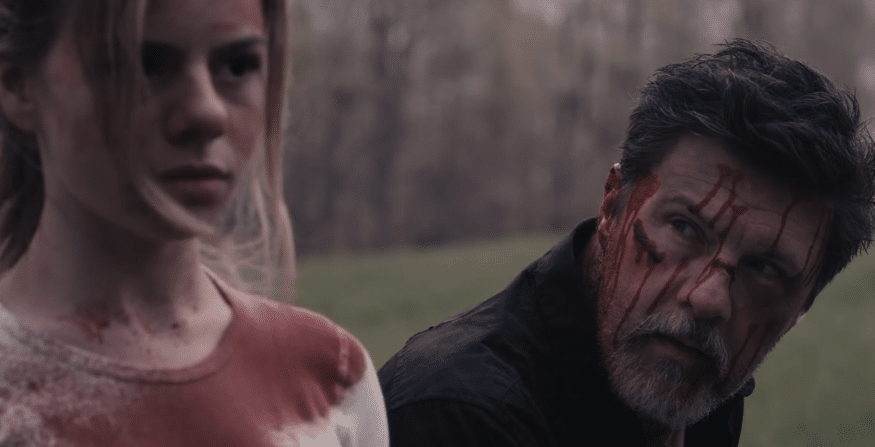
Anyway, Defective (2017) is one such film, and appears to be set in the very near future. This can certainly be a positive thing for films of this kind; alter one key element in a recognisable world, and things can feel a lot more horrifying. Set in a familiar-unfamiliar part of Canada, the state seems to be under the sway of a draconian government, supported and maintained by a Security Enforcement Agency (SEA) which has pioneered a mechanised police presence, and has access to every citizen’s vital information – which it uses to enforce the rules. This is the main difference between their world and ours; everything else is relentlessly similar. People spend their time poring over websites, using their phones, popping pills and working onerous jobs which take place in claustrophobic, generic cubicles. One of our key protagonists, Rhett (Colin Paradine) seems to have fallen foul of this regime. He has a number of warnings and penalties against his name, and so when he sees a woman who “knows too much” getting executed by the powers-that-be, he gets picked up, taken down town. It seems he’s seen too much now, too. Once there, he declares his intention to leave the state; he’s told this is impossible.
Meanwhile, in one of the soulless cubicle jobs, new boy Pierce (Dennis Andres) is incredulous at the level of acceptance amongst his soulless governmental job colleagues for the police state they’re living in. At first, it appears that his co-worker Jean (Raven Cousens) has fully accepted this fate, but a chance glance at some paperwork has her hurrying out of the office. It transpires that Rhett is her estranged brother, and when she realises he’s in trouble, she goes to find him. She arrives in time to see him deemed ‘defective’ – the equivalent of being outlawed, it seems – and she decides to stick with him. Perhaps being a fugitive is preferable to the desk job. Pierce seems to think so, too.
To judge by the information available on IMDb, Defective had a tough time on the budget front, eventually working with only half of what they’d pegged to get the film made. Unfortunately, the low budget is quite noticeable: for instance, the film isn’t slick, there is some slight echo in places, and there are obviously constraints on the setting/locations which, to an extent, detract from the believability of this version of the world, albeit if we do accept that this dystopia is not that far in the future. At times, there’s a disparity of threat: people can attack the metal-clad enforcers and every time, this seems to hurt them despite their armour. However, the shots used are generally good, even innovative in places (a sequence where people are pursued down a stairwell looks great, for instance) and the performances are decent. Had the film had an abundance of money to play around with, then, would it have been a completely different experience?
To an extent, being able to implement special effects which can only be hinted at in the film as it stands would have contributed. (Spoiler: the giant robots in the poster are not in the film itself.) With that said, there are few surprises in terms of subject matter, even if the film adds several character twists in the second act. Defective is a perfectly watchable, but tried and tested ‘rebel individuals vs evil corporation’ story, by and large, and one which is played straight. I liked some of the film’s elements: the idea of a population synchronised via their own devices and the perils of information sharing are explored nicely here, and not a little eerily familiar. In other respects, though, it also feels eerily familiar.
So, it’s probably fair to say that Defective is decent, even if it doesn’t revolutionise its genre – despite one last, final push to add another element. Still, its saving grace is that is does show ambition. That the film has been completed at all when the team were clearly hamstrung by circumstance, is the real surprise. Defective is a testament to the indie filmmaking spirit, so I do hope it’s onwards and upwards for Reece Eveneshen and his cast/crew.
Defective will be released on 13th February 2018 (in Canada).
Frankenstein’s Creature is one of the true modern horror archetypes. Like the vampire or the ghoul, it’s an enduring and versatile monster, ready to reflect whatever set of anxieties we currently have; its ghastly stitched flesh and tendons are durable enough to withstand whatever we seek from it. And yet, unlike the vampire – which was popularised by literature and the likes of Le Fanu and Stoker later in the century, but existed in myth in various forms for centuries beforehand – this reanimated man made of men stems from the imagination of one person: a teenage girl, Mary Godwin, later Mary Shelley. Although she wrote throughout her life, it is Frankenstein for which she’s famous, and its legacy is quite unprecedented. And, as cinema developed, it was one of the first horror stories ever to be adapted for the screen, where it has returned in a wide array of forms over the past century.
“What terrified me will terrify others…”
The circumstances behind this extraordinary story are by now quite well-known. A group of exiles from England – Mary included – arrived at a Swiss villa on the banks of Lake Geneva in the spring of 1816. The party consisted of Mary, her lover, the radical poet and atheist Percy Shelley, Mary’s stepsister (and both Shelley and Byron’s lover at times) ‘Claire’ Clairmont, the notorious Lord Byron, and his physician, John Polidori. A group of intelligent, educated people, at odds with their own society, found themselves together abroad, and frequently kept indoors by rain and storms which lashed the villa (this gathering itself has been the subject of a horror film – Gothic, directed by Ken Russell, so evocative has the thought of it all become). Eventually, after getting into the habit of sharing ghost stories by night, Byron proposed a competition: the inmates of the villa were to write ghost stories of their own.
Mary initially agonised over this, struggling to find a subject, until a bizarre, conglomerate dream of all of the lofty topics they had taken to discussing, alongside the probable emotive effects of the ghost stories themselves, presented her with not quite a ghost story, but certainly an original idea imbued with elements of science fiction as well as more conventional scares. She finally saw in her mind’s eye, ” the hideous phantasm of a man stretched out, and then, on the working of some powerful engine, show signs of life, and stir with an uneasy, half-vital motion.” Thus the Creature was born.
The circumstances of this gathering at the Villa Diodati are of course interesting and relevant, but sometimes there’s a tendency to see this event in a sort of vacuum, forgetting all that had come before it and how this may have impacted upon the psyche of the precocious but very young girl who went on the pen the tale of Frankenstein; or The Modern Prometheus, which was completed as a full-length novel the following year, and published the year after. Even Shelley catches himself wondering, in an article for the Athenaeum in 1832 (after he had re-edited the book), “what could have been the series of thoughts – what could have been the peculiar experiences that awakened them – which conduced, in the author’s mind, to the astonishing combination of motives and incidents, and the startling catastrophe which compose this tale.” Possibly this is a rhetorical question, or perhaps he was simply not fully aware of the impact of the preceding years on Mary, because by the time she reached the villa, she had endured a whirlwind of events which were highly likely to have coloured her tale of creation gone awry.
“My hideous progeny…”
Mary Godwin met Shelley when she was just seventeen years old: he was an ardent disciple of her radical philosopher father, William Godwin. The younger man soon disappointed the expectations of the older; Mary and Percy fell in love, ‘staining’ his daughter’s reputation irrevocably, as Shelley was already married. The psychological impact of being a ‘fallen woman’ at this young age, shunned by polite society for decades to come, must have wounded this naturally bright, though naive girl. Shelley’s subsequent, immediate abandonment of his pregnant wife, Harriet, does him no credit (Harriet later committed suicide) and after the lovers had professed their ardent feelings for one another, the story goes that Mary lost her virginity in a churchyard soon thereafter.
An elopement to France followed, which had to be curtailed due to penury, and when Mary – pregnant, sick – returned to England, even her forward-thinking father would no longer assist her. Her first child was born prematurely in the following year, and died without even receiving a name. Plunged into a depression, Mary wrote in her journal of a “dream that my little baby came to life again; that it had only been cold, and that we rubbed it before the fire, and it lived.” Already in Mary’s life and in her imagination, even by the standards of the early nineteenth century, birth and death seem to be interlinked and interchangeable. Mary quietly bemoaned her frequent further pregnancies, complaining of how they stripped her of vital energy and health; only one of her children ever reached adulthood, and Mary nearly died of a miscarriage. Her own mother, the feminist Mary Wollstonecraft, had written to Godwin towards the end of her pregnancy with Mary that she expected “the animal” was about to be born; when the animal came, it left Mary Wollstonecraft with an acute infection which killed her within days. Doubtlessly, very female anxieties underpin the horrors of Frankenstein, just as much as anxieties about male-dominated science; the terrors of bringing new life in into the world do not start and end with Victor Frankenstein’s new methods.
“My workshop of filthy creation…”
In fact, Mary Shelley says more about the potential method for reanimating the Creature in her introduction than she has her protagonist, the brilliant, singular Victor Frankenstein, ever say in his own account – and she says very little herself. This idea of ‘the working of some powerful engine’ she describes, that idea which has furnished filmmakers with all manner of bizarre quasi-scientific scenes – sometimes the means overpower the ends in film – isn’t mentioned by Frankenstein. He says only that he has pieced his Creature out of materials from ‘charnel houses’, ‘the dissecting room’ and the ‘slaughter-house’ and then that, on one fateful day, he accomplishes his toils; there’s no mention of lightning, or amniotic fluid, or any of the other cinematic tropes which have steadily grown around interpretations of this rather mysterious process. The real horror comes with his success: suddenly, he sees the creature he has created as hideous – and abandons it. The Creature is to all intents and purposes a newborn who requires his basic needs to be met before he can begin to process language, which he does by imitation; in his later life, his outrage is against his ‘father’, the man who gave him life but rejected him outright, leaving him ill-equipped to manage the tumult of emotions and the thirst for revenge.
I’m sure that to a greater or lesser extent, Mary Shelley’s story was an oblique criticism of aspects of male behaviour, though perhaps as much as anything, the story is a warning about the arrogance of bending the world and its natural laws to human will. However, given that women did not yet have the right to attend university, and that a female protagonist could not feasibly have been placed in the situation in which Victor Frankenstein finds himself – remember, Elizabeth remains at home – Mary Shelley was still writing within and about the social order at this point. I don’t think it’s enough to say that Mary Shelley is simply warning of the perils of men, not women creating life: remember that Victor Frankenstein destroys the ‘mate’ he is making for the creature when he reflects that they could potentially then have children of their own, spawning a new, onerous type of humanity. In retaliation, the Creature strangles Victor’s new bride Elizabeth, circumventing the ‘happy family’ once again.
Essai théorique et expérimental sur le galvanisme, by Giovanni Aldini, 1804.
Whatever your interpretation of the story’s background, though, it’s clear that the early nineteenth century was fertile ground for a scientific horror story such as Frankenstein. The onward march of science on one hand – with experiments in galvanism, for instance, seemingly reanimating dead flesh – and the old hang-ups of superstition on the other, positions Frankenstein’s creature somewhere between the two. Mary Shelley herself speaks about galvanism, and was familiar with the pioneering works of Humphrey Davy and Erasmus Darwin, and listened to Byron and Shelley discussing what it takes to bestow life, and how this could be subverted. Science was moving forward in gigantic, intimidating leaps and bounds. But perhaps the most telling phenomenon which spanned the divide in real life was that of the ‘resurrection men’ or body-snatchers, who stole interred bodies from the hallowed ground of the churchyards for sale to men of science; it’s notable that Victor Frankenstein refers to himself as ‘a student of the unhallowed arts’ and possibly relies on these methods for himself.
There are many other reasons why Mary Shelley’s story has endured. A complex epistolary novel, it speaks to us of myriad other concerns which have stayed with us. Although it reaches for biblical interpretations – the idea of ‘playing God’, still of great interest in a Post-Enlightenment world – today, it perhaps affects a largely secular society more deeply in its themes of neglect and responsibility, prejudice against appearance and the consequences of ‘othering’. These concerns were present from the outset, too: rarely do other monsters of literature seem to seek nurture, and to weep when it transpires that no one is coming to them. Mina Harker may have had a moment’s concern for a creature ‘so hunted’ as Count Dracula, but it never approaches this sense of a child being abandoned.
“It’s alive! It’s alive!”
Horror cinema has at various times examined all of the themes above in different combinations, but one thing is true: filmmakers can’t quite bring themselves to wake the Creature quietly. The procedure itself seems to have become a key focus of Frankenstein on film from its very earliest inception, and the laboratory which harnesses the weather to generate electricity is as familiar to us as the standard-issue Frankenstein’s Creature established by Universal Studios. Even the very earliest short film – itself now over a century old – takes that approach (see below), and you could argue that James Whale puts more into the process than he does into the philosophical agony behind the process, which comes to the fore in the novel. Why this focus on the sparks flying? Why does Frankenstein himself start to wear something akin to a lab coat?
It seems to me that, once Frankenstein had started appearing on the new phenomenon of the cinema screen, both the novel and the new medium quickly became a distorting mirror for particularly twentieth century anxieties about twentieth century science. Universal Studio’s Frankenstein was released in 1931; by 1945, nuclear warfare would change world politics forever, and to this day ‘Frankenstein’ is an ongoing shorthand for worries about the direction science is heading – remember the ‘Frankenstein foods’ slur used against GM-crops when anxieties about this hit their peak about fifteen years ago? For early twentieth century viewers, with escalating world tensions, new methods of mass destruction and a constantly-refigured understanding of their place in the world, it seemed that monstrous things really did happen in labs. Frankenstein’s creature became a monster not of the ‘unhallowed arts’, but of bad science, and it’s a phenomenon which still recurs today.
Select Filmography
Frankenstein (1910) – evidence of the urge to retell horrible or fantastical stories as soon as cinema became a possibility, this short film, released by the Eddison company, has a more redemptive ending than the book itself, but interestingly toys with the idea of the ‘creature’ as an other self.
The Bride of Frankenstein (1935) – following on from the introduction of Boris Karloff as ‘the creature’ in 1931, a performance (and make-up) which has crafted our image of the creature ever after, The Bride of Frankenstein is not only more bleak, but runs with the notion that the ‘monster wants a mate’, an idea which, in the novel, Victor rejects. In the film, it’s the female Creature who rejects the male creature, leading to one of his most despairing, poignant lines: “we belong dead!” The ‘new world of gods and monsters’ is a cruel place.
The Curse of Frankenstein (1957) – it’s perhaps inevitable that Hammer Studios would get in on the act once their X-rated horror cinema came into being, and this film kick-started a number of Hammer interpretations of the source material, though seeing Peter Cushing as Frankenstein and Christopher Lee as the Creature is always a thrill.
Flesh for Frankenstein (1973) – imagine, if you will, Frankenstein being played by a German genre film superstar as a deranged Serbian nationalist hellbent on making an idealised male and female creature; add the veneer of incest and of course the glorious Joe D’Allesandro and you can truly fuck life in ze gall bladder, as Frankenstein implores us to do – in 3D! Often paired with director Paul Morrissey’s other camp interpretation of a horror classic – Blood for Dracula – and you have yourselves a good night lined up.
Frankenhooker (1990) – to go even further than the above: when a horror trope can be used as a joke, then it’s truly wormed its way into a culture, and director Frank Henenlotter plays fast and loose with it here, as a budding scientist reconstructs his sadly-deceased girlfriend (dead of a freak lawnmower accident) out of a horde of body parts retrieved from prostitutes who exploded after smoking contaminated crack. Now I see it written down that way, it seems more wrong than it looks on screen. I can’t help but wonder what Mary Shelley would have made of it.
Mary Shelley’s Frankenstein (1994) – we move full circle with this film, as this was represented as a close interpretation of the novel. To be fair, I think it’s a great film, even if Branagh can’t resist making himself the star and for bizarre reasons made himself a love interest. Robert De Niro, as the Creature, is both pitiable and execrable in the role, which is exactly how I read the character and which moves entirely away from the 1931 archetype, showing that there is still much scope for versatility in how the Creature can be interpreted.
Frankenstein’s Army (2013) – Nazis engineering super-soldiers out of body parts by using a certain Dr. Frankenstein’s journals to assist them? I think it would be rude not to, frankly. A daft and enjoyable piece of body horror, which has more in common with Henenlotter than it could ever have with Branagh.
Penny Dreadful (2014-16) – It’s easy to scoff at the trend for literary mash-ups – you know, the likes of Pride and Prejudice and Zombies – but Penny Dreadful, which shows us a Victorian London peopled with a whole host of famous literary monsters, is a triumph of interesting developments and love for the source material. Frankenstein’s Creature is played in the series by Rory Kinnear: his is an outstanding representation which brings us right back to the start. Kinnear’s creature is humane, intelligent and persecuted but utterly monstrous, tormenting his Creator and destroying his other work. However, Victorian London was awash with misfits and malformed, and the Creature escapes, seeking to build some sort of a life amongst others rather than fleeing for the wilderness. His subsequent association with the theatre is a fitting development, a final link between novel, screen and performance.
It’s comparatively rare these days to go into a film viewing with no idea of what to expect, so often your best chance at this is to gain access to an online screener – particularly if these screeners come via film festivals which, for good or ill, have a fairly selective audience until such time as their films get a general release. In the case of Rabbit (2017), which first screened at Toronto After Dark last year, I got the chance to see this film with a completely blank slate – and I’m very glad I did. From the opening scenes, the film weaves a clever and nightmarish spell, eschewing gratuitous horror or torment in favour of something far more subtle.
That said, the film makes quite the opening impact, with a cacophonous wall of sound and a nightmarish, stylised forest: a woman is fleeing, clearly distressed, and seeks refuge at a nearby guest house. In this place, the people who let her in behave in an oddly banal way, but when she tries to leave again, the tension (and that noise!) escalate further. So far, so familiar, you may think: women have been running through forests since time immemorial, and they’re usually in a bad way when they do. However, the unnatural angles and odd inmates of this area of woodland make the film feel surreal, rather than conventionally menacing. Furthermore – it transpires that this is all a dream, being had by the missing woman’s twin sister Maude (Adelaide Clemens). Cleo has disappeared, and Maude cannot shift vivid images of her sister being terrorised… somewhere. It has escalated to the point that it’s impacting upon her everyday life, so it’s recommended that she return home to Australia from med school in Germany to recuperate.
Awkward, awkward family exchanges ensue: her parents, it transpires, have already had a makeshift funeral for Cleo, but increasingly, Maude feels that her twin sister is still alive. Were they close? That’s complicated, but whatever was between them, it’s increasing its hold on the remaining twin. She also begins to appreciate the ripple effect that her sister’s disappearance has had on other people close to the case; the cop who failed to find her is now on an extended period of leave to recover, and Cleo’s fiance Ralph (Alex Russell) even says that he has shared some of the same feverish dreams about her. Cleo has preoccupied them all – but only Maude, as she soon begins to assert, can find out where she is, and she vows to bring her home. Together, these three begin to unpick the strange dream, aiming to trace Cleo to her last known whereabouts.
It’s actually pleasant not to be able to dismiss a film as ‘another sylvan horror’ or ‘another boondocks horror’ and so on, even though Rabbit has blended some elements of these together. It takes identifiable tropes – as we’ve already identified – but skews them, just enough that you can’t substantially guess where you’re going with all of this: if you can categorically say anything at all, then this is a mystery story, one where no one’s motivations are clear, but where everything is imbued with a low-key air of malevolence.
This is maintained artfully throughout Rabbit, because every line of dialogue and every gesture has a somewhat practised air: I’m trying to avoid invoking the name of a certain director, but there are some unmistakable resemblances to Mulholland Drive in the first half of this film. Things do progress in a slightly more tried-and-tested way in the second act, admittedly, although the atmosphere sustains the impression that this is not just another horror. Overall, there’s a convincing sense that some conniving intelligence with grim intentions is manipulating events, something which horror has played to great effect in recent years, from Martyrs to Starry Eyes to Get Out – though none of these films have utilised mise-en-scène quite so well. Director Luke Shanahan and cinematographer Anna Howard have set up a series of gorgeous, unsettling sequences which you barely glimpse, but which are deeply unsettling. The film is fraught with menace, and it all seems to operate in that pre-digital space which is equally beloved of modern horror. Perhaps for modern audiences, this symbolises an unfamiliar terrain where help is not at hand; in any case, a lot of films seems to have dispensed with phone trouble as a plot device.
The eventual direction is largely a surprise too, although for a few moments towards the conclusion, another, notorious film’s influence made itself clearly felt. I’m struggling enough to review this film without giving the game away, and if I mention this film by title I’ll have done just that, so I’ll just say that for a short time, the film dances closer to something which has gone before. This is only a minor criticism, though, as Rabbit finds its way to a conclusion by unusual means throughout. It arrives at an interesting overarching theme with barely a drop of blood spilled, and Clemens believably enacts a range of emotions in increasingly bizarre situations, leading to an altogether heady, ethereal sensation.
Rabbit is the first new film I’ve seen in 2018, and I have a sneaking suspicion that it’ll remain one of my favourite films of this year. My attention never wavered, and to the end credits, I felt unable to settle into any expectations. This is an elaborate, artistic and unnerving fairy story: let’s hope to see it released very soon in 2018.
I’ll spare you the full preamble where I say how fast the year has flown, or that I haven’t been to the cinema as much as I’d have hoped, or that [current year] wasn’t all that great for films; in actual fact, I’ve seen some excellent films this year, in some cases from entirely unanticipated directions. On these lines, I never expected to enjoy a film so much that is based on Greek myth, blending horrible realism with farce and potentially supernatural elements. The Killing of a Sacred Deer is my first outing with director Yorgos Lanthimos and it’s certainly been memorable; rarely does a film get under my skin quite so much. From the outset, the affluent white collar Murphy family reeks of the unseemly and the unhealthy; Nicole Kidman playing with necrophile fantasies to assuage her jaded husband’s tastes shows us that, in no uncertain terms. And then, the strange relationship which Steven Murphy (Colin Farrell) has established with the son of a deceased patient, the sublimely creepy Martin (Barry Keoghan), throws one more element of creeping chaos into the mix. As the Murphys begin to sicken under his influence, Steven has to make a decision. Every line of this film feels as though it’s imbued with some sort of malign power, and medicalisation as a rogue force runs through the film in abundance. It’s an unusual, bold and disturbing vision of family breakdown. You can check out my full review here.
In one of those cases where I’ll just be adding my voice to the choir, Get Out is another of my picks of this year, and it actually has some similarities to The Killing of a Sacred Deer. Director Jordan Peele caused something of a stir on his Twitter feed recently when he declared that Get Out ‘is a documentary’. It isn’t, of course, if we’re to take him at face value at least, but it’s a seamless blend of social commentary and supernaturalism; the fantastic elements of the film lead it into conflict with realism, but in so doing, they underline a few distinctly uncomfortable truths about race in America in a way which only fantasy can really achieve. Daniel Kaluuya does a superb job as Chris, a black guy who just happens to be in a relationship with a white woman, Rose (Allison Williams). They’re about to visit her parents for the first time and he’s naturally a little apprehensive as to whether his race is going to be an issue. At first, the issue seems to be that they’re tripping over themselves to prove that it isn’t an issue whatsoever, which leads to some incredibly uncomfortable cinema as Rose’s dad insists he would have voted for Obama a third time, if he could. But for all their achingly liberal pretensions, the Armitages have black servants – black servants who behave decidedly oddly. As Chris finds out what’s going on, the horror escalates in a series of quite subtle but effective ways. Raising lofty and complex issues such as comparative power in society, though interweaving moments of comedy for some much-needed light relief, Get Out is an innovative and, I’d say, an important film, whose reputation will surely build and build. Me and Ben discussed our take on the film at the time we first saw it; you can take a look at that here.
I’ve been a fan of directors Aaron Moorhead and Justin Benson since they cut a swathe through indie cinema with Resolution, and I’ve enjoyed everything they’ve done since. These guys are ambitious enough to develop their own mythologies (see: Spring) and they’re not afraid to subvert audience expectations either: I had no idea what to expect from their newest film The Endless, but yet again, it’s a film which I found genuinely gripping and far-reaching. In it, the two directors also take the starring roles, as two brothers who escaped a religious cult in the past. Their lives as ‘free’ men are tough and unfulfilling, though, and when they receive a strange video from the group which seems to be them saying goodbye, Aaron decides he wants to go back. They visit, and things seem fine, actually, with no indications that the group are going anywhere. However, there are other forces at play here, and Justin and Aaron’s survival seems to depend on how successfully they can interpret these space/time-defying phenomena. Another very clever film from Moorhead and Benson, that these two aren’t currently rolling in money and getting to make whatever the hell they want next is a sad indication. The Endless is great, and answers some of the questions an earlier film of theirs asked. My full-length and spoiler-free review is here.
Here’s another of those ‘preaching to the choir’ moments, as I’m going to mention a film which has met with ample acclaim, and rightly so. Well, saying that, there were a number of people who seemed to feel that Blade Runner 2049 was ‘boring’. Ordinarily I can manage other people’s opinions, but that seems a bizarre assessment in my book. Blade Runner 2049 was the sequel we’d dared to hope for. In a world of tawdry remakes and pissant prequels, this entrant into the Blade Runner universe was absolutely superb. It asked questions, but it didn’t drag the audience right up to the thing they were meant to notice; from the importance of having a name, to the impact of commodification, to selfhood, to what constitutes humanity – it was all in there, but refracted through an almost silent and self-possessed main character, and a dystopian world which veered between garish superficiality and the drabness of a meagre, lonely existence. The most human relationships in the film weren’t between humans at all; humans clung to what made them ‘special’, but their own special status made them behave like animals. As for the film’s gender politics – another sticking-point for some viewers (as ever, it seems) – firstly, the film is under no obligation to show us an idealised future, what with being a dystopia and all; more to the point, it seems to me that in an overcrowded, desperate, but ultimately technologically-advanced universe, sex would be just another commodity, just as it is in countless places around the world today. An uncomfortable truth perhaps, but just another facet of the film’s uncompromising investigation into how people behave (allowing for the fact, of course, that no one is ‘just’ a sex worker in the film). Blade Runner 2049 is also an aesthetic and an aural odyssey, with something humbling happening on every beat. I for one cannot wait to see this film again when it gets its general home release in January, and if you’ve missed out so far, then maybe Ben’s full review can sway you.
It’d be remiss of me to get to the end of this article without mentioning IT – probably the most straightforward horror film to make it into this year’s list, but an absolute romp from start to finish. No doubt this film was engineered in some respects to appeal to people of roughly my age who grew up during the 80s, but it’s a visual treat in any case, and there are good performances from the young cast to pit against Bill Skarsgård as Pennywise the Dancing Clown. Harder-hitting than the 1990s TV miniseries, and bleaker too perhaps, the new film still retains that level of fairy story type fantasy, where the boogeyman can clamber out of books, projectors, creepy houses to menace children, whilst their parents are completely oblivious to what’s happening to them. It’s a loud, proud horror film which doesn’t let up for its entirety. This is unashamed entertainment, which is sometimes just what we need.
However, what has turned out to be my favourite film of the year is something altogether quieter. It’s just as bleak, and it also spends time unpacking the things which make us tick, but A Ghost Story is possibly the most understated film I’ve ever seen. For all its gentle, minimalist touches, though, I’ll admit it’s got to me on a level which still feels surprising; something about its unconventional spin on the horrors of time passing touched a nerve, as well as the representation of the afterlife as utterly purgatorial, inescapable, mute and powerless. The nameless, married couple at the film’s heart (played by Casey Affleck and Rooney Mara) are planning a house move, but his untimely demise in a car accident destroys all of their plans. He does not simply die, though, and returns to the house, shroud in place, where he can do nothing but watch the woman he loves silently disintegrate. But time is a great healer, as they say, and when she moves on, he cannot, remaining – alone – in the house. Playing with traditional Western ideas about the nature of hauntings, but adding elements of nihilism and isolation, I’m still trying to register how a film where you can’t even see the facial characteristics of the lead actor, let alone hear him, could ever have become such an affecting performance. But it is, it really is, and I was absolutely riveted by it. Forget the fact that this film got lumped in with that ludicrous ‘post-horror’ tag and see it – it’s extraordinary. You can read more about A Ghost Story in my review.
Notable mentions:
I Remember You – Icelandic scandi-noir, reminiscent of The Orphanage in its slow-burn supernatural horror story about a missing child.
Habit – British crime thriller with a disturbing (and unexpected) about-face. An engaging dose of lurid inner-city storytelling.
Tragedy Girls – not the pastiche on social media I was expecting perhaps, but an enjoyable and very bloody film about two teenage girls balancing their friendship against their lust for notoriety.
This year’s absolute howler:
Alien: Covenant. I thought Prometheus set the bar pretty high for grievous crimes against cogency, but then Alien: Covenant came along. A hopeless cut-and-shut of successful elements from the Aliens films, sham-married to weak characterisation, monstrous stupidity and laugh-out-loud dialogue which should never have got through a first reading. Michael Fassbender is a hazy beam of light in what is otherwise a mire of bad decisions. If you’d like to see me (justifiably) ripping into it in more detail, then by all means read my full review here.
Spectacular Optical books really seem to be cornering the market when it comes to diverse, broadly academic but accessible collections of essays linked by a horror theme; this time around, we have an incredibly varied compendium all about that strange phenomenon, Christmas horror. Or, as you’ll realise after reading, it’s modern culture that’s the strange one: it’s incredible that we’ve ever come to think of Christmas as a routine, safe and sentimental time of the year. The Coca Cola truck only rolled into town fairly recently, after all; with that in mind, the book takes a look at the many films, television series and one-off specials we’ve been enjoying for a far longer period of time, with a few examinations of cultural archetypes like Krampus and the likes of Sinterklaas along the way.
Thinking about how such a wealth of ambiguous or even traumatising folklore never quite made the leap from Old World to New, the book makes a good point: the old Winter traditions of ghost stories and ‘things that go bump in the night’ seem to have migrated to earlier in the year once they reached America, where they’re now far more associated with Halloween – albeit that Halloween has its roots in Europe, too. Nowadays, Europe emulates the American schedule, with skeletons in October and schmaltz in December. This seems a shame, as the darkest days of the year seem an ideal time for ghosts; happily, then, Yuletide Terror sets about restoring something of that old order, simply by virtue of the wealth of material it covers.
We go straight into the essays themselves – there’s no introduction and as such, no overall proposed direction – and we start where you may expect, with slasher classic Black Christmas (1974). Stephen Thrower, one of my favourite film writers, provides a detailed history of the film alongside what to me seems even more interesting, a wealth of accompanying comments on the film’s reception (there were some highly amusing comments in the press about the indecency of female characters swearing). Likewise, you would probably expect to see a feature on Silent Night, Deadly Night (1984) and the book fulfils that too: this material is engaging enough, though probably less interesting for me than other fare as I’m just not that into slashers (although fans of slashers often spend a great deal of time defending slashers against being simplistic, which is the case here too. Where you stand on that depends on your own tastes, of course.)
My personal highlights in the book come with the likes of Florent Christol’s study of ‘the fool’, as refracted through nerd-revenge flicks of the 70s and 80s – with a special focus on Christmas Evil (1980). Christol forges some fascinating links between vengeful fools in film to the role of the fool in fiction, via Edgar Allan Poe’s ‘Hop Frog’ back to the phenomenon of the ‘charivari’, a noisy mock procession dating back to the 14th Century. Some words are also reserved for the ‘Lord of Misrule’ tradition. Amanda Reyes’s appraisal of Christmas horror anthologies – the likes of Tales from the Crypt – shows how they interlink with A Christmas Carol, a novella which has definitely worked its way into the cultural consciousness. This section is exhaustive, and covers far more anthologies than I’ve even seen. Co-editor of Yuletide Terror, Kier-La Janisse, interviews the affable Fred Dekker here too.
Derek Johnson’s attempt to answer the question ‘why do we tell ghost stories at Christmas?’ covers a huge range of those Christmas Specials which include darker, even supernatural elements; I found out that UK police drama series The Bill once ran a Christmas Special along these lines! I’d have liked this particular essay to be longer, actually, but gladly, Janisse is back to take an in-depth look at the BBC’s Ghost Story for Christmas series, at its peak during the 1970s. On a similar note, it’s good to see some love for Robin Redbreast, a spooky and as-yet underappreciated folk horror. Of course, given its welcome return to our screens just this week, Owen Williams’s chapter on the League of Gentlemen Christmas Special is both welcome and timely; never before has a British television series shown that the divide between comedy and terror is as paper-thin as it is.
And as for Santa…Zack Carlson’s words on Santa at the ‘B’ movies are a scream, as well as lightening the tone of a few of the chapters which came before it, adding heaps to the overall variety. There’s an interesting rundown of some of the more malign (or at least ambiguous) folkloric gods and imps which influenced the idea of Santa in Europe and Russia, too.
Whilst I would have liked to see a bit more on films like Sint (2010) and Rare Exports (2010) and a bit less on Silent Night, Deadly Night – though was delighted to see a discussion of Sheitan (2006) and its deeply-warped spin on the nativity – overall this book is immensely engaging and far-reaching; from minor folklore to the best-known festive horrors, a read of this provides education and entertainment, and I’m sure its reputation will grow and grow from here.
An ancient curse, probably Chinese in origin, ran something like this: ‘May you live in interesting times’. It’s a wry old phrase. The insinuation is that when things get interesting, then it’s often a useful code for bad news, so via a play on meanings, and without saying so outright, it’s a hex that seethes with its true intent. Subtle, veiled…so it probably wouldn’t generate a Twitter storm or begin the only process which now seems to matter – breaking the internet.
We live in times whereby what’s ‘interesting’ hinges almost entirely on taking an approach which is deliberately simplistic, contrary, and – intentionally or otherwise – often misrepresents something of the topic at hand, allowing a flood of corrections from people who feel all warm and glad inside to be able to say so. This is the sort of thing which now dominates; a pinch of bullishness, a determination to find a new angle and a fight to get it recognised. This process has become known as the ‘hot take’; it happens fast, it happens often and it’s largely to the detriment of debate of any kind – in my humble, and not-so-novel opinion, of course.
As a fan writer, I’ve always tried hard not to get embroiled in the versions of this which spill over into film fandom. But, as someone who also uses Twitter, I do though sometimes pick up on whatever novel approach has just been grafted onto cinema by new commentators who arrive, amazed, to discover that films made fifty years ago on occasion display the opinions and attitudes of their own social milieu, or, those who hit on an unpopular mindset and realise enough to know that they can sail it on a ship to some sort of minor fame. With the former approach, I always find myself thinking of another idiom – that a little learning goes a long way. Well, now it can be #trending a few hours after it issues forth, particularly if it segues with something else which is currently exercising the masses. For the latter, it takes a little resilience, as they’ll in turn get pulled apart, examined and discussed in a number of new hot takes, but it can get the debate going! Everyone will know them! And yeah, I’m aware of the weak irony of using an editorial piece, like this one, to state a contrary opinion about a modern trend, like this one. More and more, though, having anyone read your work depends solely on whether or not you have ‘an angle’. We apparently don’t have time to digest anything without ‘an angle’. The ‘hot take’ has fundamentally reshaped the way we write and the way we read today.
I’m not an idiot, or at least I hope I’m not. I can see how it works. Over the past…god, thirteen years or so that I’ve been uploading articles and reviews onto the Information Superhighway, on my own behalf or via sites belonging to others, it’s never been the case that any of my pieces have in any way ‘gone viral’. It very soon became apparent to me that very few people were ever reading, and this is the case to this day: thankfully, if that’s the right way to put it, I’ve never depended on writing for any sort of an income as I have a job which pays the bills with some spare; had I needed writing for anything other than a hobby, then who knows? This may have shifted the sands, changed how – or if – I wrote at all. I hope I wouldn’t have become a member of the Comment Police, and I hope I wouldn’t have spent my time doing the impossible – trying to change people’s minds or prove them wrong, to no purpose other than a flicker of personal gratification that I Turned Out To Be Right.
But I love writing, and it’s a hobby I’ve had since childhood. I love cinema too, so it makes perfect sense for me to write openly and honestly about films. On occasion, this has pitched my opinions very much against the rest of the ‘horror community’, and we have joked about our contrary natures here at the site for years. But it’s not a tactic; it’s not what we do to generate site traffic. If it was, then we’d have a hell of a lot more people stopping by than we do. No one can ever write entirely free from whatever buzz or hype is happening, sure, but, largely speaking, Warped Perspective’s writers try to steer around it as far as possible. A minimalist approach is the best way, in my book: find out enough about a new project via the channels we’ve come to depend on, but back away from other people’s reviews to get to the film intact and with an open mind. We want to be honest, and we want to write honestly about what we think. I think that’s fair.
Now, if I wanted to send the internet into a wobbler, then a crude attempt to draw people in would stand a far better chance than a lot of my more honest ramblings. Let’s take an example; and before anyone delightedly leaps all over this, it is not an example I happen to believe. But if I were to hack out a piece entitled ‘REASONS WHY JOHN CARPENTER IS A LOUSY DIRECTOR’, with a bit of judicious promoting, people would read it. They’d hate it, but they’d read it. People would ‘Quote Tweet’ and add some hyperbole about how I was a clown who clearly didn’t know how to appreciate the bleak wonder of The Thing (1982). The retweets could be retweeted. Eventually, someone would chip in to say I didn’t go far enough, and that Carpenter’s actually worse, he’s a [insert unpleasant and socially damning label here]. It would rumble on for a while, and enough people – even if a handful at first – would remember Warped Perspective, and be primed for my next piece, DARIO ARGENTO: A REAL LIFE DANGER TO WOMEN? It would only take a little, a very little imagination and a modicum of knowledge to do this sort of thing, and I maintain that there are many people out there who take this approach as a matter of course. It’s their modus operandi, no doubt aided and abetted by editors who want to get themselves on the map by any means and treat their writers as useful idiots.
So, is this the point of writing now? If you write an article and no one either feverishly agrees or ‘calls you out’ for being a bozo, then is it really an article at all? Some would undoubtedly say – no, not really. For my part, this is a tricky one for me because – although as I’ve acknowledged the numbers of people who read my work are small in comparison to many, many sites out there – some part of me is narcissistic enough to want them to be read. There’s no other reason for posting them where people can see them. I have notepads at home; I write my reviews here.
What I actually want from this process is harder for me to identify. On some reflection, I think a lot of my motivation is authentically just to share my enthusiasms, and on occasion, to vent my frustrations, because writing can be cathartic, too. Do I enjoy it when people respond to my writing? To an extent I do, yeah. I’ll maintain that I never deliberately court controversy, but speaking honestly, it can feel disheartening when pieces you felt proud of simply disappear into the ether, and people you feel would have enjoyed them will probably never, ever read them. I think maybe that’s it: the feeling of involvement, of adding to discourse about a beloved subject in even a small way. The way in which I part company so sharply with what counts as ‘debate’ today therefore relates to the nature of that debate; what people call a discussion is often nothing more than a tally of likes, and these can be mutually exclusive things. It’s not looking likely that we’ll ever generate the sorts of hits which would qualify us for Rotten Tomatoes here, then. But a glad word from a new director or a friendly comment from a reader feels an awful lot like it has more substance.
So, the curse of these ‘interesting times’ seems to be that what we deem worthy of notice nowadays has perhaps used invidious means to get there. We probably shouldn’t be too surprised, given that far more significant things than fan writing now live and die by social media (like, ahem, world politics) and very likely this article itself will reside in the TL;DR category. If you’re with me so far, though, we could start to deprive these features of the oxygen of assumed publicity. We could start to resist the pull of the clickbait, if we haven’t already. And as for writers, if you’re ever asked ‘what’s your angle?’ try to take a step back. None of us write in a vacuum, but hopefully we still have sight of our own impressions and ideas, and I wish that the world of online writing was more honest than this pitiable thing we’ve distilled it into. Surely, there’s still more to life – and what we like doing – than ‘likes’.
Alongside the likes of Ring and Audition, Ju-on: The Grudge was one of the first Japanese horror films to ever grace my collection. I still contend that it’s simply one of the finest supernatural horrors of the past twenty-five years, though perhaps unfairly, it’s now often seen as so much less than that – a victim of its own success, then its ubiquity. But Ju-on: The Grudge, though not the first film in the Ju-on series, did significant work: firstly, it brought the ancient idea of a haunting into a modern setting, turning light, airy urban spaces and modern technology into easily-infiltrated vehicles for its terror. Beyond this, it introduced Western audiences to a totally new rationale for a haunting: as the on-screen text tells us at the very beginning of the film, the events all hinge on someone dying whilst in the grip of rage, which passes on a kind of curse, which affects all the places in which that person once lived.
The Devil’s Advocates series is a collection of slim but studious volumes examining notable horror cinema: here, author Marisa C. Hayes takes us through an intimate, authoritative and long-overdue study of director Takashi Shimizu’s 2002 film. As Hayes notes, whilst Ju-on: The Grudge had a huge impact, it still gets less consideration in print than, for example, Ring. Placing the film at the heart of the rise of what’s known as ‘J-Horror’ here, Hayes builds a solid and readable case, showing how Ju-on both belongs to, and revitalises a tradition of ghost stories.
Blending knowledge of Japanese folklore and custom with acres of social context, the book told me a great deal that I didn’t already know. For example, I wasn’t aware that Takako Fuji, the actress who plays the female ghost Kayako, is also a voice actress who worked on the decidedly less-traumatic anime, Princess Mononoke. There’s much more in this vein; a section of the book forges links between the film and things such as Kabuki theatre, Butoh, a kind of modern dance (observable in the motions and gestures of the spectres) and even the significance of the long, dishevelled hair motif is explored and historicised. Hayes also takes in the influence of Lafcadio Hearn, a European who naturalised as a Japanese citizen and set about recording and popularising Japanese folklore, which eventually fed back into Japanese cinema – perhaps the first example of Japanese and European horror fusion, the likes of which we’ve seen in abundance during the late 20th and early 21st centuries. There’s even a section on cats in Japanese culture (which, by the by, reminded me of that otherworldly yowling cat cry made by Toshio in the film which still sends shivers down my spine.) Want more? The book has fascinating content on the film’s links to Buddhist belief, contagion, Japan’s epidemic of domestic abuse, its ageing population…all of which are neatly linked to the film in a series of engaging and cogent ways.
Whilst broadly academic in tone, the book is definitely accessible; although there’s a brief mention of academic-reference stalwarts like the clever-if-odious Foucault, and Bataille, Hayes ensures that this approach doesn’t dominate, and she has clearly spent just as much time trawling fan sites and blog posts, no doubt occupying the overlapping space between both worlds herself. This shows throughout in an approach which balances detail, enthusiasm and knowledge. In fact, probably the biggest compliment I can pay to the book is that it’s reminded me of just how fresh and exciting Ju-on: The Grudge was when it first appeared, and made me want to watch it again. As if that wasn’t enough, the book also runs through all of the other chapters in the franchise, too. It’s the definitive deal.
If you have a love for J-Horror, or even if you simply want to know more about the background of a film which has wound its way into horror culture over the last decade and more, then this book is heartily, definitely recommended. This is exactly what film writing should be.
The Devil’s Advocates series is available via Auteur Publishing. You can find out more here.
I first encountered the cinema of Jean Rollin via the UK’s Redemption Films, whose founder, Nigel Wingrove, became good friends with Rollin over the years; the film company deserves far more awareness of the great service they did by bringing so many of these films into the common consciousness in the Nineties, making the films themselves into an artefact worth having with an array of stylish, distinctive video covers marking them out. Until that time, any knowledge I had of the director’s work came via still images in magazines, and there it probably would have stayed until, in all likelihood, the films resurfaced – though probably not as well-presented – during the earlier years of the DVD revolution, when there was a real surge of hitherto-unknown releases. But however the films may or may not have made their way to our shelves, it’s taken some time for Rollin criticism to follow in print, although Immoral Tales first re-assessed Rollin’s work in the nineties, and more recently, David Hinds published his Fascination: the Celluloid Dreams of Jean Rollin. But is there more to say?
Lost Girls: the Phantasmogorical Cinema of Jean Rollin has been very much promoted for its all-female authorship, something which I’ll admit I was surprised by: editor and writer, Samm Deighan, hasn’t exactly been a fan of promoting women-only agendas in the past, but publicity for Lost Girls has asserted that women are a minority in genre writing, deserving greater recognition. Well, everyone is free to change their minds of course, though this idea of a lack of ‘recognition’ doesn’t chime with my personal experience as both a woman and a writer, as I’ve said many times before. However, undoubtedly true is the fact that Rollin adored women, frequently making films from the perspective of female characters, and this is something else behind the rationale of Lost Girls -a female perspective on his uniquely female perspectives.
A brief foreword by actress Françoise Pascal (of The Iron Rose) is a pleasing addition here, and the book overall is attractive, heavily illustrated in colour and black & white with a custom artwork cover illustration. There are a variety of writers offering their views, and as the chapter titles might give away, the tone here is rather academic – though not to the extent of being inaccessible to the lay reader, and by and large all the chapters are clearly written, avoiding the cardinal sin of academic writing – incomprehensibility. However, links are forged between Rollin’s films and all manner of ideas; prepare to see his work linked to Nietzsche, Milton and Satan, to name but a few. Furthermore, the approach taken throughout the book is that Rollin was not about titillation, not featuring nudity for its own sake or to take pleasure in it on its own terms, but rather using female flesh in a range of pioneering ways, revolutionising tired tropes such as vampirism with his work. I’d be inclined to say that the truth lies somewhere between those two positions, personally. Yes, he was pioneering, but he also simply enjoyed filming and working with beautiful women, often coincidentally without a stitch on; I don’t think we do Rollin or his work any sort of disservice for acknowledging that. And lest we forget, Rollin also made pornography (though to be fair, Samm Deighan casts her eye over the likes of Anal Hospital in a chapter dedicated to Rollin’s ‘other’ films).
Happily, the book does far more than seek to reclaim Rollin as a proto-feminist. A large number of the essays in the book seek to re-position Rollin’s work by drawing parallels between it and other, comparable phenomena, such as 19th Century occultism. It’s an ambitious aspect of the book, and I certainly learned something; I hadn’t realised Rollin’s association with the poet Corbière, for example, so Marcelline Block’s study of the parallels between them was very enlightening. Alison Nastasi’s essay on The Iron Rose is also a definite high point in the book. A real sense of enthusiasm for the subject matter with an easy sense of knowledge combine to render something very readable (and the phrases “supernatural thrum” and “bellow of the human soul” are things of beauty.) The Iron Rose is an extraordinary film, a strangely gentle and barely-peopled story where a couple, trapped in a cemetery, confront the notion of their mortality via an erotic lens, and Nastasi captures this. Samm Deighan’s study of fairy tales is an engaging read, as is Virginie Sélavy’s detailed appraisal of Rollin’s use of castles in his films: whilst the same films are considered by separate writers, different aspects are explored.
I do have some issues with the book, however. Many of the essays carry the same message: that Rollin was a liberator of women by allowing his characters to escape the shackles of predatory male sexuality – often via a fantastical device (usually vampirism). To make this point, there is often a comparison made with existing vampire tropes in cinema. These comparisons perhaps unsurprisingly elevate Rollin, though sometimes at the expense of the older material. Promoting Rollin by rubbishing, as one example, Hammer seems unnecessary – as so frequently pointed out in Gianna D’Emilio’s opening essay on Le Viol du Vampire, they’re hardly comparable and dismissing Dracula Has Risen From The Grave as having an ‘antiquated Madonna-whore paradigm’ seems a rather heavy-handed dismissal; it’s perfectly possible to love and appreciate different takes on the vampire myth in cinema, and you don’t salvage the reputation of one film to the point of lionisation by knocking another.
There’s also a similar issue to the one I identified in Satanic Panic – a tendency to have the same information repeated, because several essayists each want to mention the same thing: for example, we read several times that vampirism is an alternative to bourgeois society, and then there is repetition of plot synopses throughout the chapters, but, also in common with Satanic Panic, perhaps reading the book from cover to cover isn’t the optimal approach to take and it’s better to just dip in from time to time.
This is certainly an unusual book with much to reward its readers, though it is very much in the feminist criticism category, which patently isn’t going to be for everyone. I don’t particularly feel that the much-vaunted women-only authorship has given rise to something which could never have been achieved with men on board, but what we do have here is a collection of interesting and ambitious essays on a unique filmmaker, academic in tone, but showcasing the genuine enthusiasm of the writers too.
You can pick up a copy of the book from Spectacular Optical here.
Vampirism is something monstrous, something impossible, but it’s a broad enough kind of monstrosity to mean it can be explored in a number of ways on screen. Unto Death, by director Jamie Hooper, uses the vampirism theme to explore a relationship, and how it is put under extraordinary pressure by the most extraordinary of circumstances. The resulting film is a subtle, but affecting piece of human drama.
Thomas and Luke – although not named during the film, just in the credits – have an idyllic relationship, and are clearly in love. We see enough of them spending time together to understand the closeness of their bond. Thomas is a clergyman, and a sermon which he is giving acts as a voice-over, gradually linking the content of his speech to the events in the film. Religious motifs are, given the day job, therefore to be expected, and religious iconography fills the film; at first, crucifixes are just part of the decor, but they become more ominous as the film progresses. Luke, we are shown, has been attacked by a mysterious assailant. The wound he incurs during this causes him to sicken, and to change.
There are no prizes for guessing, perhaps, the nature of this injury, but the way in which it occurs is interesting. Inverting the expected ‘female victim’ narrative is a bold idea: as long as vampires as associated with sex, then we are always going to be faced with a glut of passive female flesh in horror films of this genre. I could name dozens. Not so with Unto Death, a fact which gives us one of the film’s genuine strengths. It works seamlessly to dispense with the old trope, giving us a predatory female and – something which is still unusual – it’s a gay couple under siege, meaning that the sexuality of the vampire simple doesn’t figure here. The after-effects of this attack are treated modestly by the film, with comparatively little in the way of a study of the symptoms; the point here is to engage with the emotional state of the characters, with Thomas in particular demanding answers of his faith as well as grieving for his partner, who says nothing during the film – he can only be seen in the act of moving away, losing his humanity, and edging towards becoming a monster himself.
Accomplishing some interesting things and flexing its imagination along the way, Unto Death is an engaging short film which shows that there’s mileage in the vampirism motif yet, and that it can – with careful handling – still surprise. The story told here isn’t necessarily complex, but it paints a plausible picture of a love story being torn apart by a sensitively-handled horror element.
 We’ve all heard of post-apocalyptic drama – literature, film and television which look at life after the End of the World as We Know It – and we can all name a few noteworthy examples, I’m sure. Well, the recent BBC series Hard Sun reinterprets this idea, giving us something rather different: ‘pre-apocalyptic drama’. It’s a new one on me. But, using this idea of a modern world poised on the edge of something catastrophic has – at least on paper – some bite. How would knowledge of some impending doom alter the behaviour of people waiting for it to come?
 There are many strengths here: the attention to little details works well, with portentous graffiti warning of the ‘hard sun’ beginning to appear all over London. This is a neat touch, which adds to the increasing sense of something being wrong, if not openly discussed; London on the whole looks like an intimidating, alien space for most of the time it’s shown on camera. There’s a bit of mischief involved, too: some of the character names refer to folklore (Grace’s surname is Morrigan – Celtic goddess of death) and we even have a Herbert West in here for good measure, which fits quite well with his particular plot line. These may be entirely coincidental, I suppose, but it seems unlikely. As for the performances; I’ve read quite a lot of criticism of them, and yes, they tend towards being rather overblown (with the exception of Amuka-Bird, who is so calm and collected for the most part that a plot twist where she turned out to be AI wouldn’t have been too much of a leap). But, for most of the characters, the overblown style doesn’t seem to be so bad a fit, given the mode and the topic at hand. It’s all a bit like a London manga, more about spectacle than slow-burn, or indeed plot coherence.
 Don’t Look Now is a strange and rather wonderful horror film: routinely featuring on ‘best films of all time’ lists, it clearly made (and continues to make) a resonant impression on viewers, whether those who saw it upon release or those who have come to it later. It’s this lasting appeal which has prompted some serious consideration in print in recent years, with this edition of the Devil’s Advocates series by author Jessica Gildersleeve marking an upcoming addition to the fold.
 Perhaps the main body of the book and its arguments, however, is devoted to the film’s specific treatment of trauma; this certainly isn’t your standard book which devotes a chapter to the director, then a chapter to the key actors, and so on. In order to retain her chosen focus, Gildersleeve uses something she refers to as ‘contemporary trauma theory’, and it’s at this juncture that the book really hikes up its academic tone. Of course, the Devil’s Advocates series tends towards the scholarly, granted, but I do feel that, in comparison with
  This must be a boom time for dystopian sci-fi and horror; I cannot imagine why. Over the past few months I’ve received either information about upcoming projects or screener links for a range of dystopian cinema, whether films about worlds poisoned by tech, gripped by environmental havoc, or somewhere between the two. God knows, I haven’t even been able to get around them all. Even that fail-safe low-budget staple – the zombie – seems to have taken a back seat at this moment in time. Maybe this is just a trend, or maybe people are just sweating the small stuff, such as the US President using social media to goof around on the topic of nuclear annihilation. What a time to be alive! Still, I’m sure people aren’t using their films to play with some of their anxieties, because sci-fi and horror have never been used in such a way. Nope.
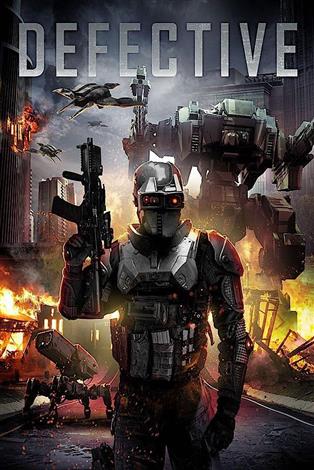 To judge by the information available on IMDb, Defective had a tough time on the budget front, eventually working with only half of what they’d pegged to get the film made. Unfortunately, the low budget is quite noticeable: for instance, the film isn’t slick, there is some slight echo in places, and there are obviously constraints on the setting/locations which, to an extent, detract from the believability of this version of the world, albeit if we do accept that this dystopia is not that far in the future. At times, there’s a disparity of threat: people can attack the metal-clad enforcers and every time, this seems to hurt them despite their armour. However, the shots used are generally good, even innovative in places (a sequence where people are pursued down a stairwell looks great, for instance) and the performances are decent. Had the film had an abundance of money to play around with, then, would it have been a completely different experience?
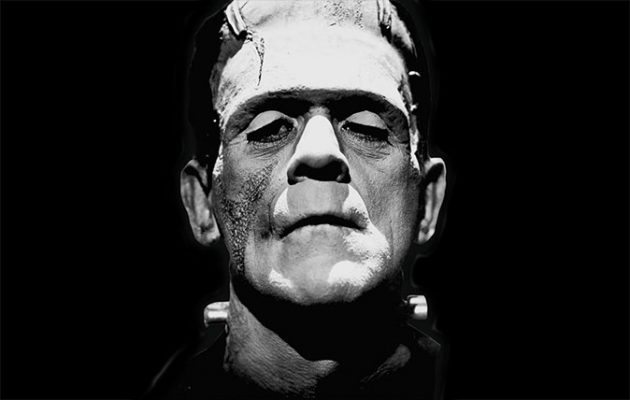 Frankenstein’s Creature is one of the true modern horror archetypes. Like the vampire or the ghoul, it’s an enduring and versatile monster, ready to reflect whatever set of anxieties we currently have; its ghastly stitched flesh and tendons are durable enough to withstand whatever we seek from it. And yet, unlike the vampire – which was popularised by literature and the likes of Le Fanu and Stoker later in the century, but existed in myth in various forms for centuries beforehand – this reanimated man made of men stems from the imagination of one person: a teenage girl, Mary Godwin, later Mary Shelley. Although she wrote throughout her life, it is Frankenstein for which she’s famous, and its legacy is quite unprecedented. And, as cinema developed, it was one of the first horror stories ever to be adapted for the screen, where it has returned in a wide array of forms over the past century.
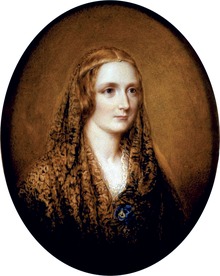 An elopement to France followed, which had to be curtailed due to penury, and when Mary – pregnant, sick – returned to England, even her forward-thinking father would no longer assist her. Her first child was born prematurely in the following year, and died without even receiving a name. Plunged into a depression, Mary wrote in her journal of a “dream that my little baby came to life again; that it had only been cold, and that we rubbed it before the fire, and it lived.” Already in Mary’s life and in her imagination, even by the standards of the early nineteenth century, birth and death seem to be interlinked and interchangeable. Mary quietly bemoaned her frequent further pregnancies, complaining of how they stripped her of vital energy and health; only one of her children ever reached adulthood, and Mary nearly died of a miscarriage. Her own mother, the feminist Mary Wollstonecraft, had written to Godwin towards the end of her pregnancy with Mary that she expected “the animal” was about to be born; when the animal came, it left Mary Wollstonecraft with an acute infection which killed her within days. Doubtlessly, very female anxieties underpin the horrors of Frankenstein, just as much as anxieties about male-dominated science; the terrors of bringing new life in into the world do not start and end with Victor Frankenstein’s new methods.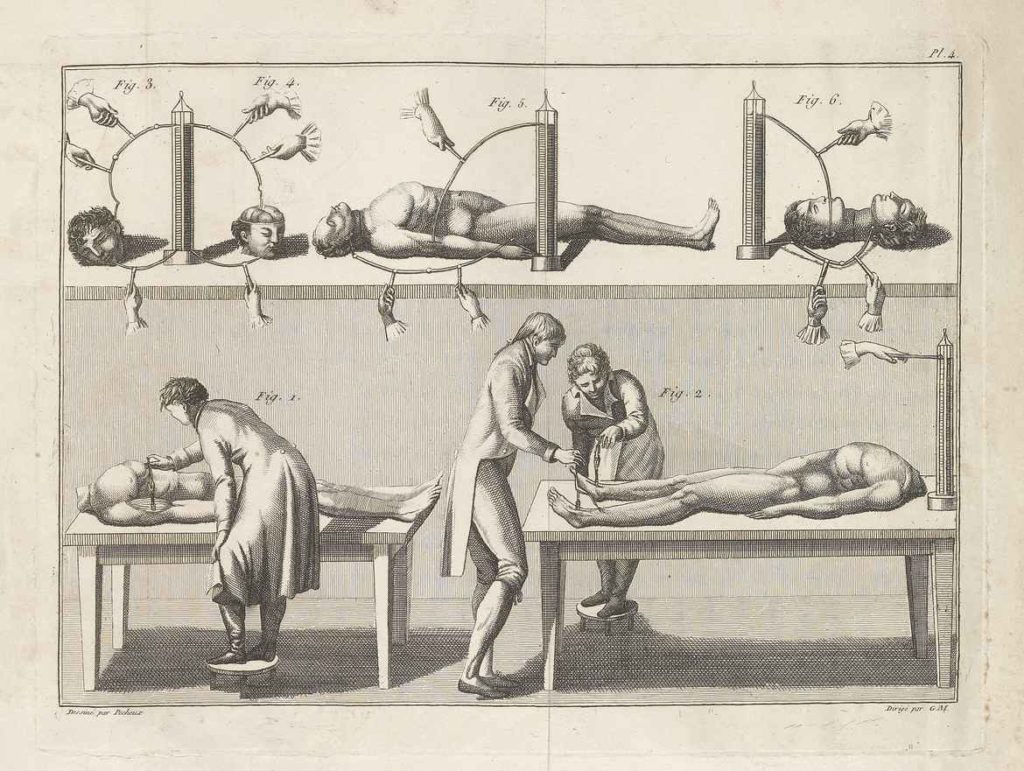
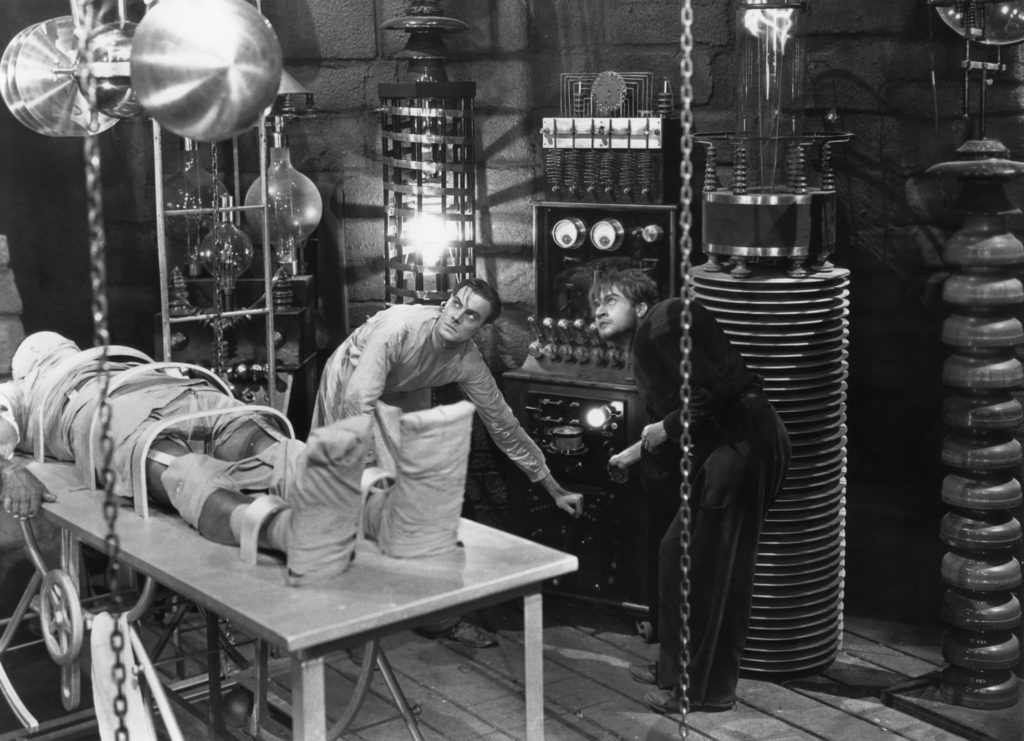 It seems to me that, once Frankenstein had started appearing on the new phenomenon of the cinema screen, both the novel and the new medium quickly became a distorting mirror for particularly twentieth century anxieties about twentieth century science. Universal Studio’s Frankenstein was released in 1931; by 1945, nuclear warfare would change world politics forever, and to this day ‘Frankenstein’ is an ongoing shorthand for worries about the direction science is heading – remember the ‘Frankenstein foods’ slur used against GM-crops when anxieties about this hit their peak about fifteen years ago? For early twentieth century viewers, with escalating world tensions, new methods of mass destruction and a constantly-refigured understanding of their place in the world, it seemed that monstrous things really did happen in labs. Frankenstein’s creature became a monster not of the ‘unhallowed arts’, but of bad science, and it’s a phenomenon which still recurs today.
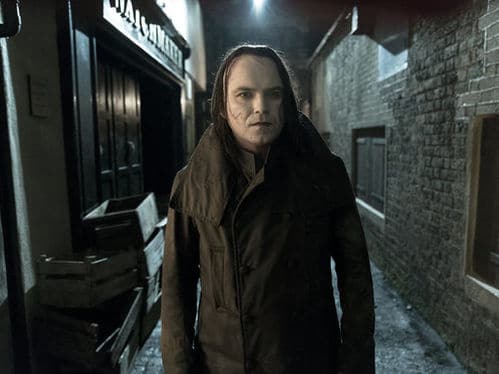 Penny Dreadful (2014-16) – It’s easy to scoff at the trend for literary mash-ups – you know, the likes of Pride and Prejudice and Zombies – but Penny Dreadful, which shows us a Victorian London peopled with a whole host of famous literary monsters, is a triumph of interesting developments and love for the source material. Frankenstein’s Creature is played in the series by Rory Kinnear: his is an outstanding representation which brings us right back to the start. Kinnear’s creature is humane, intelligent and persecuted but utterly monstrous, tormenting his Creator and destroying his other work. However, Victorian London was awash with misfits and malformed, and the Creature escapes, seeking to build some sort of a life amongst others rather than fleeing for the wilderness. His subsequent association with the theatre is a fitting development, a final link between novel, screen and performance.
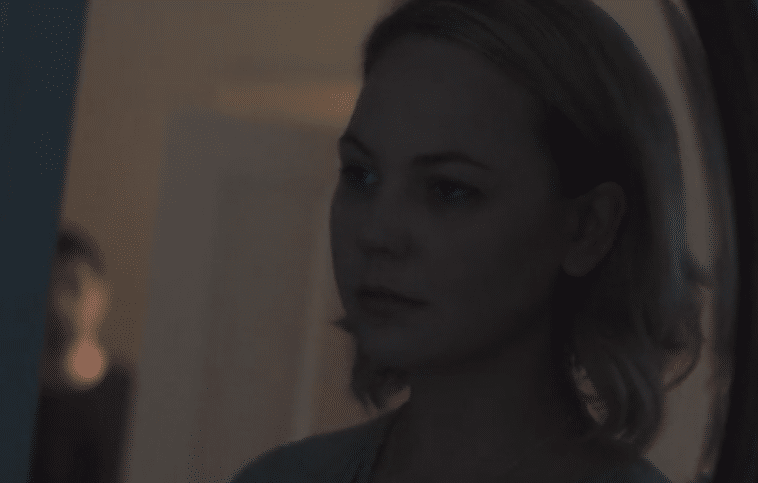 It’s comparatively rare these days to go into a film viewing with no idea of what to expect, so often your best chance at this is to gain access to an online screener – particularly if these screeners come via film festivals which, for good or ill, have a fairly selective audience until such time as their films get a general release. In the case of Rabbit (2017), which first screened at Toronto After Dark last year, I got the chance to see this film with a completely blank slate – and I’m very glad I did. From the opening scenes, the film weaves a clever and nightmarish spell, eschewing gratuitous horror or torment in favour of something far more subtle.
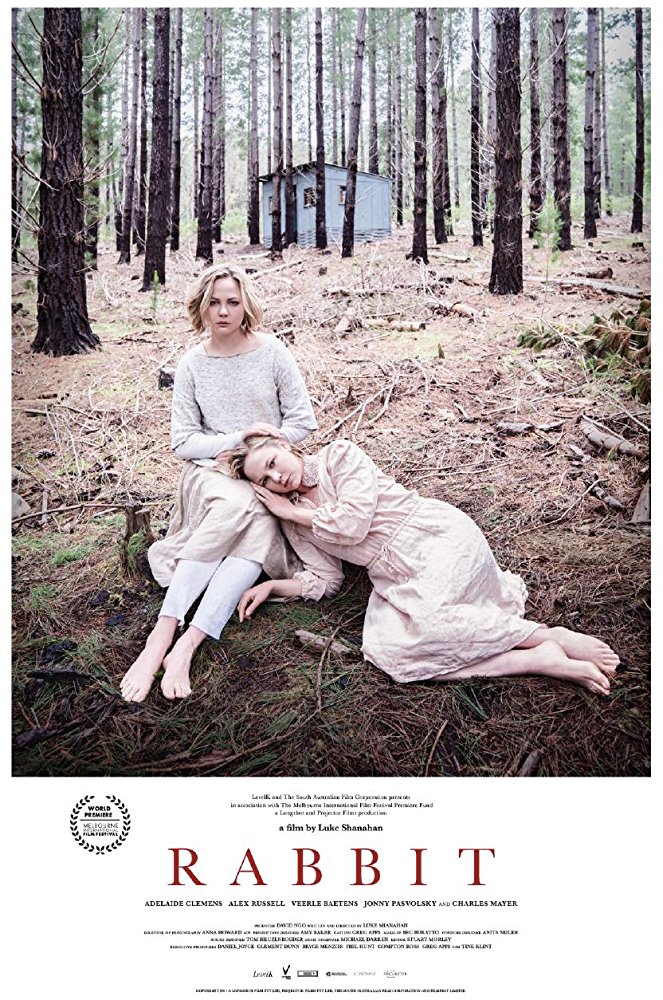 This is maintained artfully throughout Rabbit, because every line of dialogue and every gesture has a somewhat practised air: I’m trying to avoid invoking the name of a certain director, but there are some unmistakable resemblances to Mulholland Drive in the first half of this film. Things do progress in a slightly more tried-and-tested way in the second act, admittedly, although the atmosphere sustains the impression that this is not just another horror. Overall, there’s a convincing sense that some conniving intelligence with grim intentions is manipulating events, something which horror has played to great effect in recent years, from Martyrs to Starry Eyes to Get Out – though none of these films have utilised mise-en-scène quite so well. Director Luke Shanahan and cinematographer Anna Howard have set up a series of gorgeous, unsettling sequences which you barely glimpse, but which are deeply unsettling. The film is fraught with menace, and it all seems to operate in that pre-digital space which is equally beloved of modern horror. Perhaps for modern audiences, this symbolises an unfamiliar terrain where help is not at hand; in any case, a lot of films seems to have dispensed with phone trouble as a plot device.
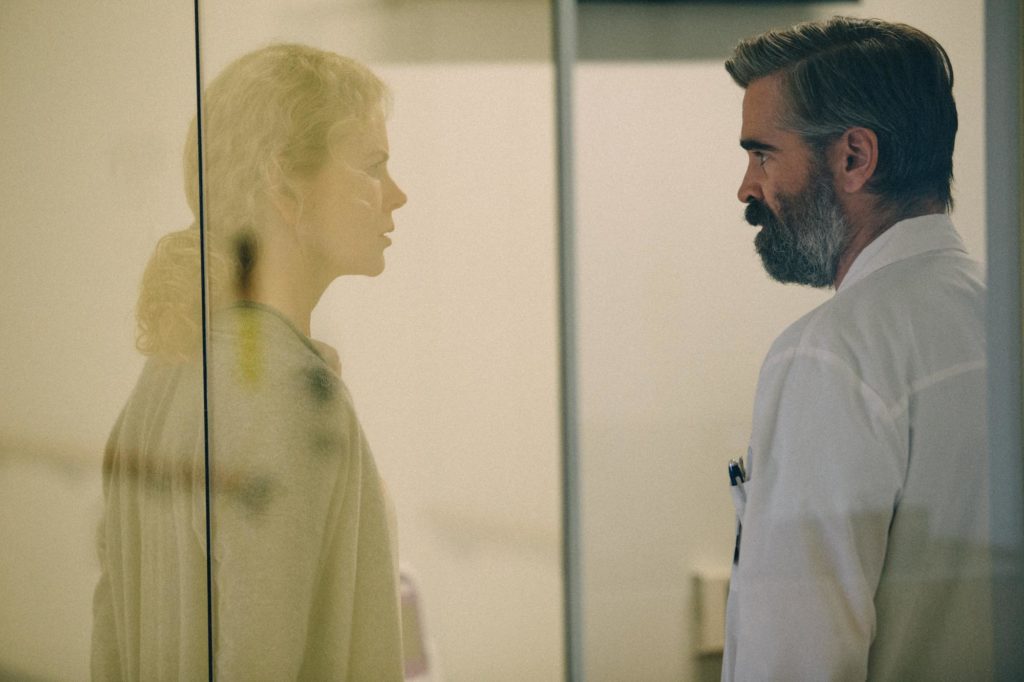 I’ll spare you the full preamble where I say how fast the year has flown, or that I haven’t been to the cinema as much as I’d have hoped, or that [current year] wasn’t all that great for films; in actual fact, I’ve seen some excellent films this year, in some cases from entirely unanticipated directions. On these lines, I never expected to enjoy a film so much that is based on Greek myth, blending horrible realism with farce and potentially supernatural elements. The Killing of a Sacred Deer is my first outing with director
 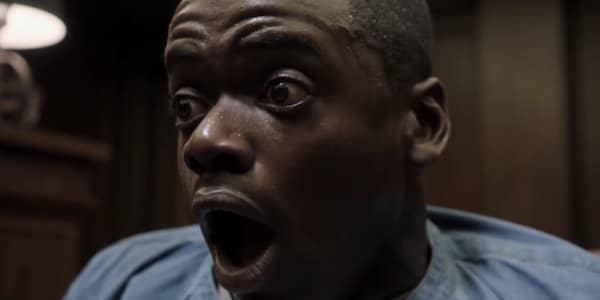 In one of those cases where I’ll just be adding my voice to the choir, Get Out is another of my picks of this year, and it actually has some similarities to The Killing of a Sacred Deer. Director Jordan Peele caused something of a stir on his Twitter feed recently when he declared that Get Out ‘is a documentary’. It isn’t, of course, if we’re to take him at face value at least, but it’s a seamless blend of social commentary and supernaturalism; the fantastic elements of the film lead it into conflict with realism, but in so doing, they underline a few distinctly uncomfortable truths about race in America in a way which only fantasy can really achieve. Daniel Kaluuya does a superb job as Chris, a black guy who just happens to be in a relationship with a white woman, Rose (Allison Williams). They’re about to visit her parents for the first time and he’s naturally a little apprehensive as to whether his race is going to be an issue. At first, the issue seems to be that they’re tripping over themselves to prove that it isn’t an issue whatsoever, which leads to some incredibly uncomfortable cinema as Rose’s dad insists he would have voted for Obama a third time, if he could. But for all their achingly liberal pretensions, the Armitages have black servants – black servants who behave decidedly oddly. As Chris finds out what’s going on, the horror escalates in a series of quite subtle but effective ways. Raising lofty and complex issues such as comparative power in society, though interweaving moments of comedy for some much-needed light relief, Get Out is an innovative and, I’d say, an important film, whose reputation will surely build and build. Me and Ben discussed our take on the film at the time we first saw it; you can take a look at that
 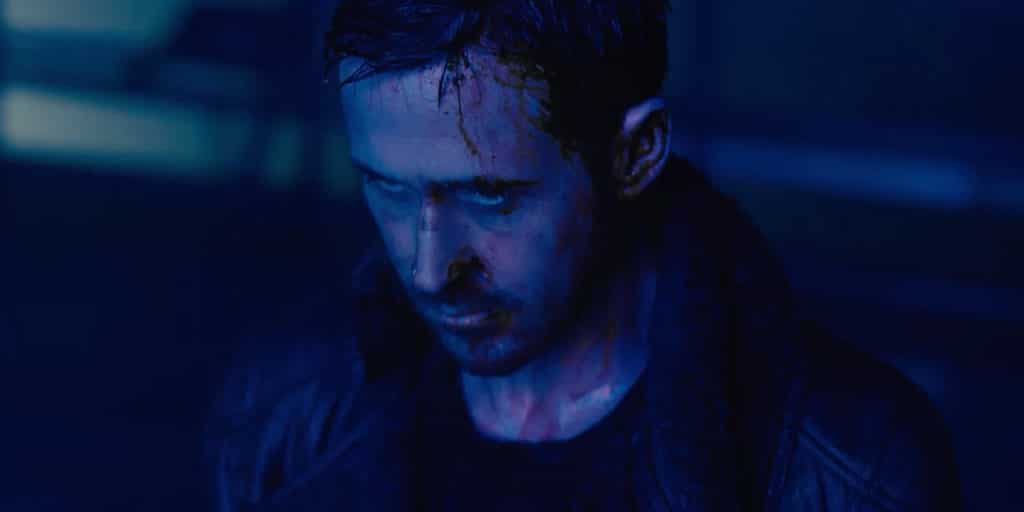 Here’s another of those ‘preaching to the choir’ moments, as I’m going to mention a film which has met with ample acclaim, and rightly so. Well, saying that, there were a number of people who seemed to feel that Blade Runner 2049 was ‘boring’. Ordinarily I can manage other people’s opinions, but that seems a bizarre assessment in my book. Blade Runner 2049 was the sequel we’d dared to hope for. In a world of tawdry remakes and pissant prequels, this entrant into the Blade Runner universe was absolutely superb. It asked questions, but it didn’t drag the audience right up to the thing they were meant to notice; from the importance of having a name, to the impact of commodification, to selfhood, to what constitutes humanity – it was all in there, but refracted through an almost silent and self-possessed main character, and a dystopian world which veered between garish superficiality and the drabness of a meagre, lonely existence. The most human relationships in the film weren’t between humans at all; humans clung to what made them ‘special’, but their own special status made them behave like animals. As for the film’s gender politics – another sticking-point for some viewers (as ever, it seems) – firstly, the film is under no obligation to show us an idealised future, what with being a dystopia and all; more to the point, it seems to me that in an overcrowded, desperate, but ultimately technologically-advanced universe, sex would be just another commodity, just as it is in countless places around the world today. An uncomfortable truth perhaps, but just another facet of the film’s uncompromising investigation into how people behave (allowing for the fact, of course, that no one is ‘just’ a sex worker in the film). Blade Runner 2049 is also an aesthetic and an aural odyssey, with something humbling happening on every beat. I for one cannot wait to see this film again when it gets its general home release in January, and if you’ve missed out so far, then maybe
 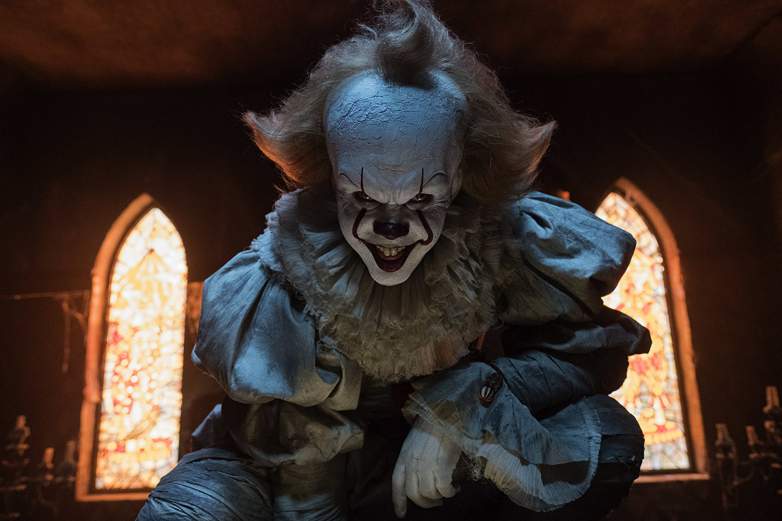 It’d be remiss of me to get to the end of this article without mentioning IT – probably the most straightforward horror film to make it into this year’s list, but an absolute romp from start to finish. No doubt this film was engineered in some respects to appeal to people of roughly my age who grew up during the 80s, but it’s a visual treat in any case, and there are good performances from the young cast to pit against Bill Skarsgård as Pennywise the Dancing Clown. Harder-hitting than the 1990s TV miniseries, and bleaker too perhaps, the new film still retains that level of fairy story type fantasy, where the boogeyman can clamber out of books, projectors, creepy houses to menace children, whilst their parents are completely oblivious to what’s happening to them. It’s a loud, proud horror film which doesn’t let up for its entirety. This is unashamed entertainment, which is sometimes just what we need.
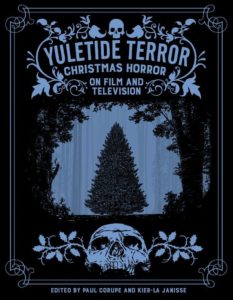 We go straight into the essays themselves – there’s no introduction and as such, no overall proposed direction – and we start where you may expect, with slasher classic Black Christmas (1974). Stephen Thrower, one of my favourite film writers, provides a detailed history of the film alongside what to me seems even more interesting, a wealth of accompanying comments on the film’s reception (there were some highly amusing comments in the press about the indecency of female characters swearing). Likewise, you would probably expect to see a feature on Silent Night, Deadly Night (1984) and the book fulfils that too: this material is engaging enough, though probably less interesting for me than other fare as I’m just not that into slashers (although fans of slashers often spend a great deal of time defending slashers against being simplistic, which is the case here too. Where you stand on that depends on your own tastes, of course.)
 An ancient curse, probably Chinese in origin, ran something like this: ‘May you live in interesting times’. It’s a wry old phrase. The insinuation is that when things get interesting, then it’s often a useful code for bad news, so via a play on meanings, and without saying so outright, it’s a hex that seethes with its true intent. Subtle, veiled…so it probably wouldn’t generate a Twitter storm or begin the only process which now seems to matter – breaking the internet.
 The Devil’s Advocates series is a collection of slim but studious volumes examining notable horror cinema: here, author Marisa C. Hayes takes us through an intimate, authoritative and long-overdue study of director Takashi Shimizu’s 2002 film. As Hayes notes, whilst Ju-on: The Grudge had a huge impact, it still gets less consideration in print than, for example, Ring. Placing the film at the heart of the rise of what’s known as ‘J-Horror’ here, Hayes builds a solid and readable case, showing how Ju-on both belongs to, and revitalises a tradition of ghost stories.
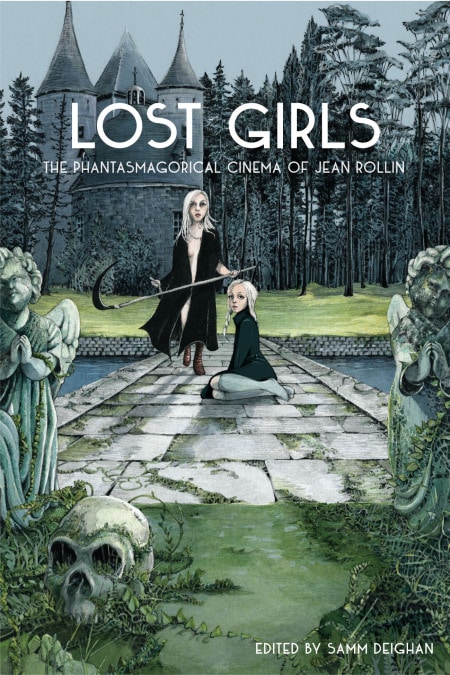 I first encountered the cinema of Jean Rollin via the UK’s Redemption Films, whose founder, Nigel Wingrove, became good friends with Rollin over the years; the film company deserves far more awareness of the great service they did by bringing so many of these films into the common consciousness in the Nineties, making the films themselves into an artefact worth having with an array of stylish, distinctive video covers marking them out. Until that time, any knowledge I had of the director’s work came via still images in magazines, and there it probably would have stayed until, in all likelihood, the films resurfaced – though probably not as well-presented – during the earlier years of the DVD revolution, when there was a real surge of hitherto-unknown releases. But however the films may or may not have made their way to our shelves, it’s taken some time for Rollin criticism to follow in print, although Immoral Tales first re-assessed Rollin’s work in the nineties, and more recently, David Hinds published his Fascination: the Celluloid Dreams of Jean Rollin. But is there more to say?
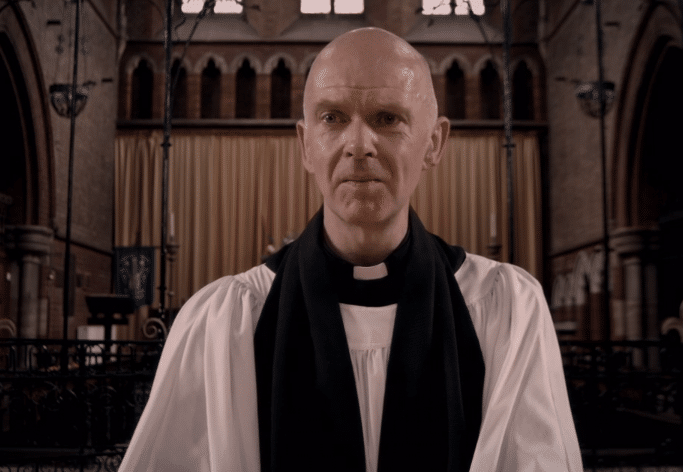 Vampirism is something monstrous, something impossible, but it’s a broad enough kind of monstrosity to mean it can be explored in a number of ways on screen. Unto Death, by director Jamie Hooper, uses the vampirism theme to explore a relationship, and how it is put under extraordinary pressure by the most extraordinary of circumstances. The resulting film is a subtle, but affecting piece of human drama.