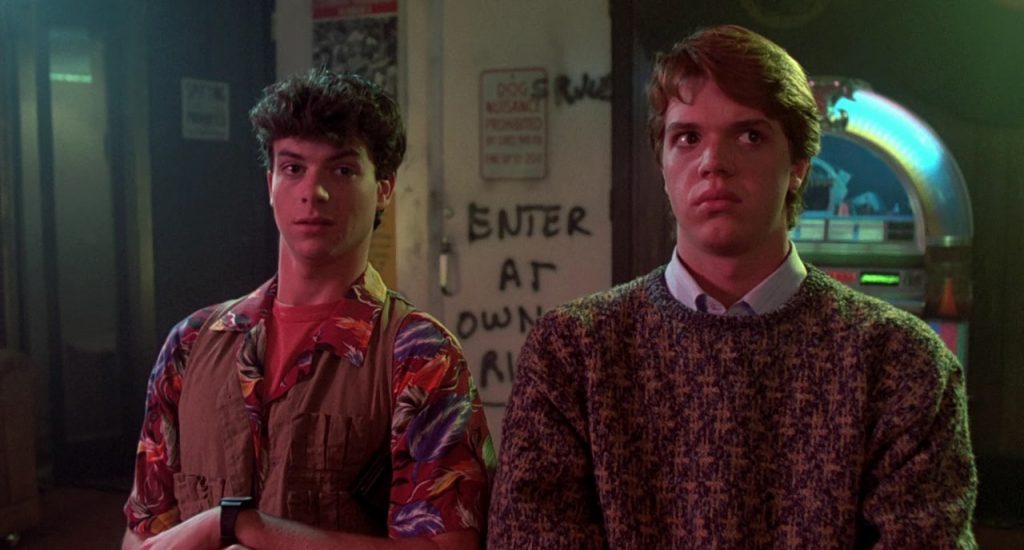
 You have to hand it to director and writer Fred Dekker. Not only has he made some of the most straightforwardly entertaining films of the past forty years or so, but those films are – for many people – forever wedded to the 1980s, so forming part of people’s nostalgia for a decade when many of them were growing up and experiencing cinema for the first time. Even for those who didn’t see his films within the decade they were made (I never saw the film under discussion here until I was well into adulthood) the effect and the charm seems the same. Dekker might not have set out to set down the 80s for future audiences, but he captures something about them perfectly nonetheless, even when he was imagining a dystopian future, or a time in the past. Although his directorial work is sadly minimal, he has also worked on a number of seminal movies in the capacity of a writer, and he has a very distinguished style which is recognisable to this day. Night of the Creeps, which he did direct as well as write and which is about to receive a brand new Eureka! release, is a firm favourite with genre fans for good reason. It’s funny, it’s innovative and it’s immensely ambitious.
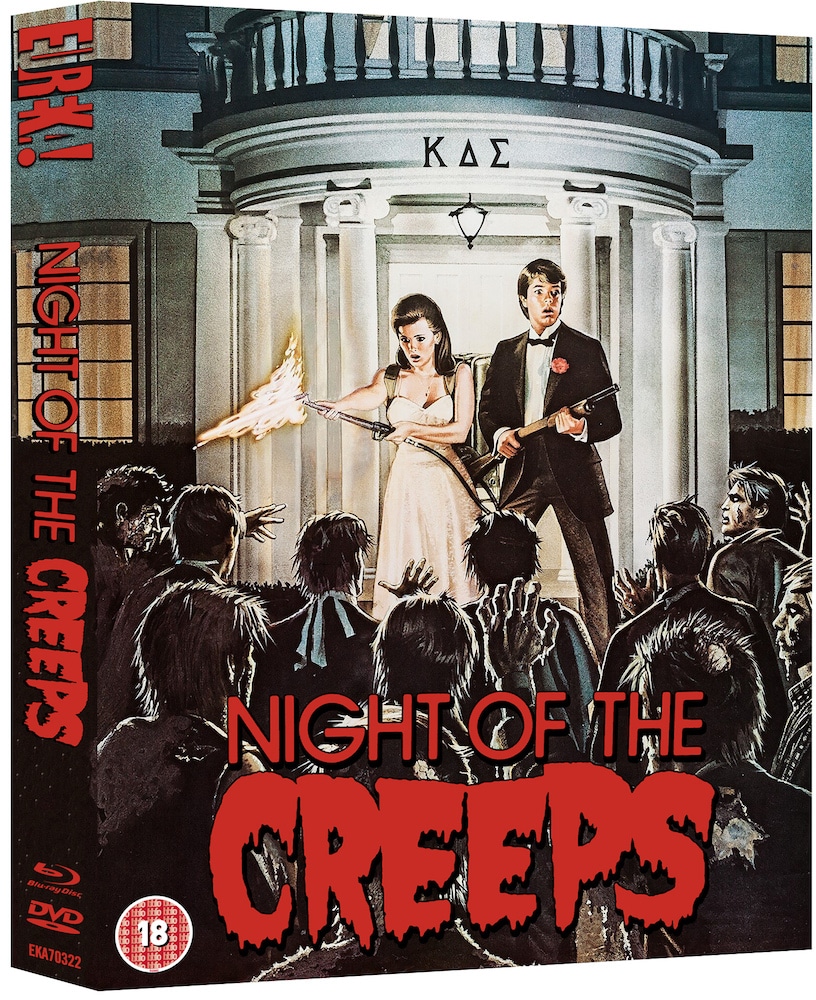 Night of the Creeps starts in the 1950s, when an alien skirmish taking place in the skies above Earth results in a mysterious capsule being jettisoned from the craft. It falls to Earth, where it soon threatens to interrupt the romantic pursuits of a group of white-bread young college students, two of whom see it land (and, being idiots, simply have to go and investigate). Oh, there’s a crazed axe murderer on the loose on the same evening; it never rains but it pours. After we see the worst happen with respect to both of these events, we cut to 1986. The weird, weird world of US college life is getting into full swing for that academic year, including the traditions of potential fraternity and sorority house inmates undertaking dangerous/stupid things as ‘pledges’ (seriously, America: why do you do it to yourselves?) Two outsiders, ‘dorks’ Chris (Jason Lively) and best friend J. C. (Steve Marshall) are doing their best to navigate through this new, potentially fraught social situation, as well as hankering after beautiful, probably inaccessible girls like Cynthia Cronenberg (Jill Whitlow). Sadly for them, it turns out that to get anywhere either socially or romantically, they’ll have to actually sign up for a pledge of their own – as set by a group of probable future Republican party candidates, who make it good and difficult. Their task? To break out a cryogenically frozen corpse from the local hospital.
As you might have guessed, this is no regular corpse. Nope – this guy has been preserved since that fateful night in the 50s when the guy in question, Johnny, fell foul of whatever the hell was in that capsule. As soon as Chris and J.C. open his pod, he seems to revive: obviously he’s been preserved as the authorities try to figure out what the hell happened to him, but the reanimated Johnny wanders out into the night, terrifies a few people – Chris and J.C. included – and then his head splits open, releasing a number of what can only be described as space slugs. Uh-oh. These odd goings-on soon demand the attention of the police, headed by the grizzled Detective Cameron (Tom Atkins), whom it later turns out has some personal issues tied up with this town. Whether this will help him or hinder him remains to be seen, but certainly hell is breaking loose: the space slugs are seeking new hosts, and when they find them, they zombify them.
“If you take it seriously, you just get depressed all the time, like you! Fuck you!”
Fred Dekker set out to cram as many B-movie cliches as he could into this film, and I’d say he was pretty successful at that: the film is very busy, moving at pace through a series of cinematic ideas both familiar and strange. The concept of aliens endangering the Earth was very well established, even a little old hat by this stage, but audiences would definitely have recognised the idea of something coming from beyond the stars which could render people mindless and dangerous. It’s just the mechanics of that process were, shall we say, different in ’86. Science fiction had shown people alien parasites, but never quite like this, and one of the strangest legacies of Night of the Creeps is that it kickstarted a minor space slug subgenre which culminated twenty years later with Slither (2006); the director of that film, James Gunn, reckoned he’s never seen Night of the Creeps, but if that’s true then it’s a bloody outlandish coincidence, as much as Slither’s a great film in its own right. The space slugs aren’t the be all and end all, though: this film is an unashamed love letter to horror and sci-fi in lots of different styles. In Night of the Creeps you can also see echoes of zombie horror, a couple of nods to Re-Animator (or at least I’d argue so; the cat and the dog in the film could easily have wandered out of Dr. West’s lab) and even a tip of the hat to the slasher subgenre, with our escaped lunatic with an axe cropping up not once but twice. This is also a very gory film in places, as you’d expect where parasites explode out of people’s heads and only shotguns or flames seem to knock the unwitting hosts back. I’m glad Dekker didn’t shoot the entire film in black and white as originally planned; we’d have lost a lot of the ‘ick’ factor, which is integral to the entertainment in a film which refuses to take itself seriously. And all of this in less than ninety minutes, which only makes me hanker for the days when filmmakers could routinely tell a story so economically.
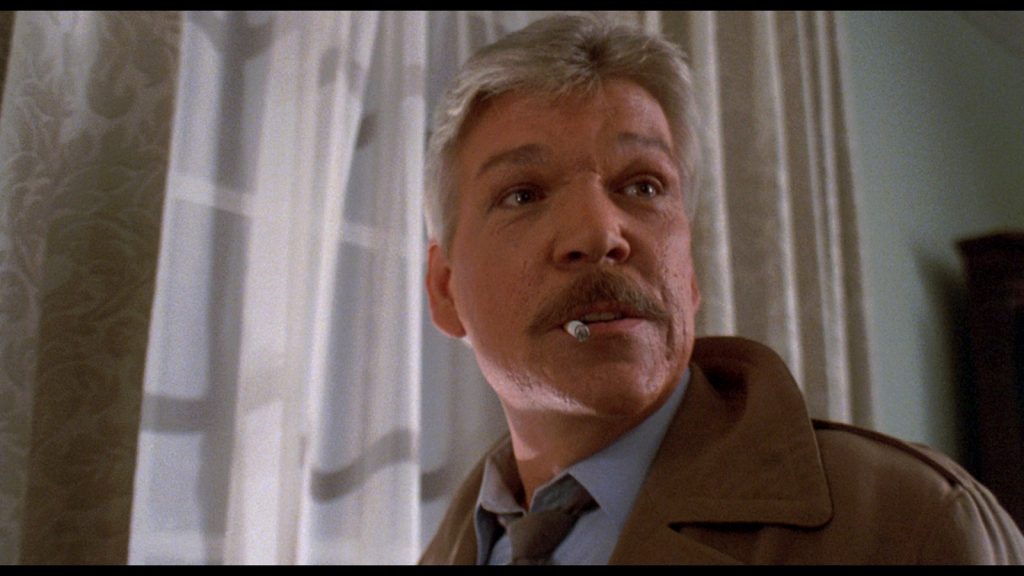 Night of the Creeps also boasts what I think we can now call a classic Dekker script, somewhere between plausible and humane in places, obviously crafted in others, with catchphrases and black humour throughout. It’s a film where you can laugh at the exchanges between Chris and J.C, but also get a true sense of their friendship, right down to a genuine feeling of pity when they’re torn apart. Tom Atkins, one of the most recognisable and beloved figures in cult cinema, is at his best here (in what he’s termed his own favourite film which he appeared in). He’s such a vivid character, but again, when not camping it up and yelling “Thrill me!” down the telephone, the guy can really act. I think that’s it: up against these preposterous turns of events, all of the cast do such a great job, and lend a kind of deserved gravitas to their roles. Their respect for the subject matter makes the storytelling all the more entertaining. Sure, the end of the film (with this ending) tantalises for a sequel which never came, but Night of the Creeps is more than sufficient. As pure entertainment, I can’t fault it.
This upcoming release looks superb too, with a crisp cut and a great audio track. There are also some interesting extra features (more Tom Atkins can never be a bad thing) and, all in all, if you don’t yet have this film in your collection, this Blu-ray release is happily recommended.
Night of the Creeps will be released by Eureka! Entertainment on 8th October 2018.
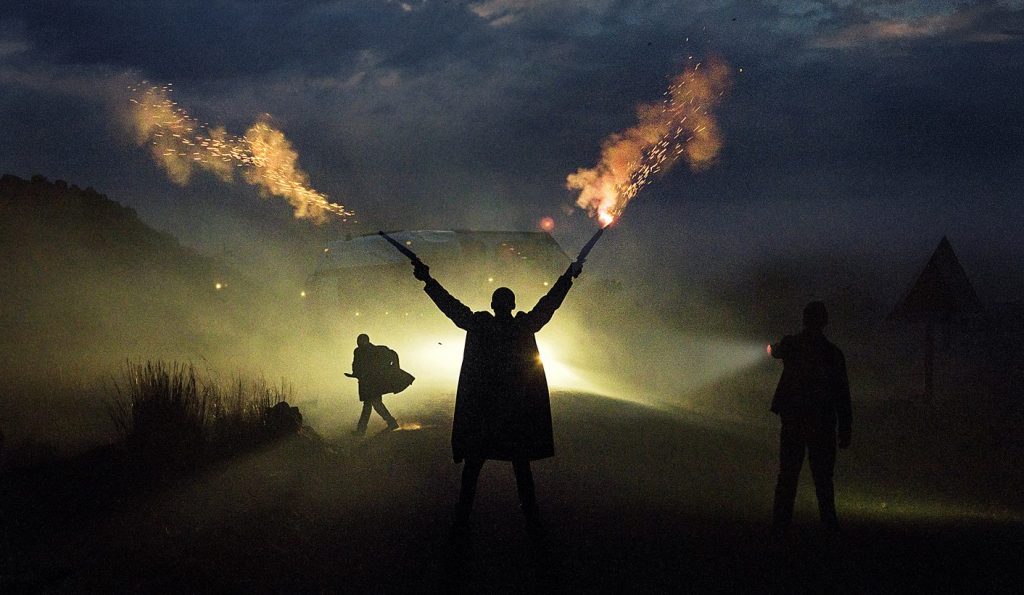 The Western, pioneered by the likes of Sergio Leone and Sam Peckinpah, is a format which has spawned cinema around the world, with recognisably Western-style filmmaking appearing everywhere, even in the likes of the Convict Scorpion films in Japan during the 70s. However, I think it’s probably fair to say that South Africa isn’t greatly known for Westerns. Given the Western’s emphasis on lawlessness and vigilante justice, though, it’s clear why director Michael Matthews decided to give it a whirl in this setting. That this is his first feature is incredible; the resulting film, Five Fingers for Marseilles, eight years in the making, is a skilled piece of work, if a challenging, weighty experience.
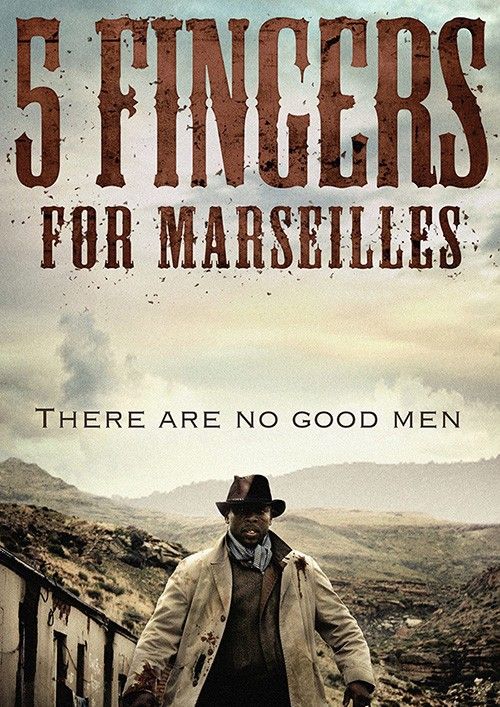 All of this is convincingly, and very movingly carried on the shoulders of the lead actor Vuyo Dabula as Tau, a man who displays a staggering gamut of emotions whilst barely saying a word; he oscillates between rare moments of joy and desperation, and it’s a very absorbing performance throughout. But he is ably supported by his old friends, in particular Zeto Dlomo as the gang’s old sweetheart Lerato, now a grown woman desperate for life to improve for her and her ailing father. A devastating musical score pulls on the heartstrings even more, with its long, low incidental notes underscoring the tragedy unfolding on-screen. I do feel that the film plays out as a tragedy in many respects, because for all of the nods to the great Westerns of the past, there’s an overarching dour atmosphere here of impending doom, right from the start, where any expectations we might have for a gang of children on our screens are ultimately taken in a different direction; I don’t think you ever feel that people are going to ride off happily into the sunset. The film looks spectacular, an engaging visual blend of landscape and townscape, myth and reality – with certain characters, such as the ominous gang leader, seeming almost supernatural in some scenes. Commentary on the presence of ‘the land’ as the ultimate arbiter of man’s affairs even leans towards folklore, albeit ultimately played out in gritty, hard-hitting and realist fashion. It’s also interesting to get a film which plays out in a variety of different languages: English is a lingua franca, but the characters code-switch throughout, using Sotho and Xhosa in turn, too. This helps to ground the action in its setting, as well as bringing native languages to the fore, as spoken by the people who live in these areas.
 Spoiler warning.
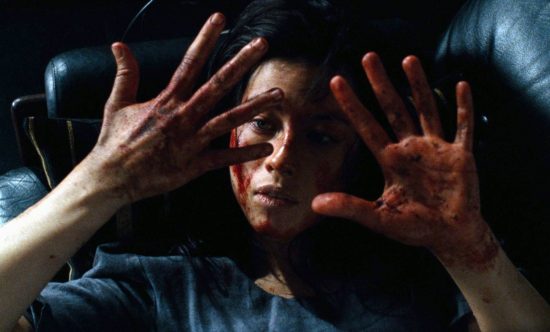
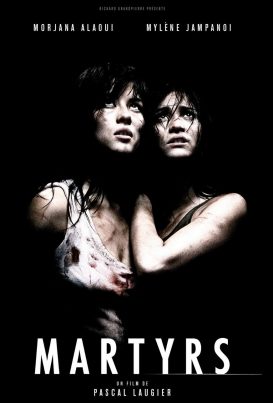 I reference the ‘cut-and-shut’ idea above because one criticism of Martyrs is how it shifts from the intimation of supernatural horror to something altogether different in its second act, as the film’s supernatural content gets closed off not just to the audience, but also to the people trying to coax supernatural evidence out of their victim. Lucie’s campaign of vengeance (abuse-revenge rather than rape-revenge) is punctuated by visions of a tortured girl rendered almost demonic by her determination to attack Lucie. We are left wondering, at this stage at least, whether Lucie is undergoing a pure hallucination: the gravity of the attacks on her push the idea of this being ‘all in her head’ about as far as they could conceivably go. In this respect, Martyrs seems to draw together a lot of the quite disparate threads which were drifting along together in horror cinema at the time, and it does so in a way which is quite unique and challenging.
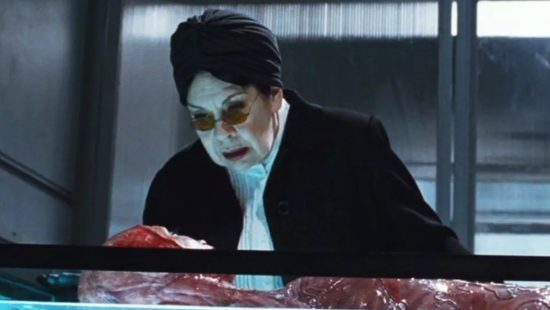 Similarly, the world we continue to occupy is all too ready to grant us protracted violence and dismal conclusions, with our own spectres ready to rise up and greet us. Dig just a little, and you can find footage of human beings still being burned alive or executed for some thinly hopeful spiritual reason or transgression; if Martyrs’ most appalling scenes once seemed too extreme or absurd, then do they now, under a continued torrent of evidence which we have to work to avoid, rather than seek out? Any internet search does it. And, as our population ages (it’s notable that so many of the seekers in Martyrs are elderly) we are going to be brought up against the all-but-certain nothingness at the end of it all. As for networks of people tormenting and abusing children – well, it’s notable that the word ‘historic’ has now undergone a kind of pejoration, so often have we heard it in its new guise; it’s now often wedded to cases of organised child abuse going back decades, happening just beneath the surface of the everyday. In effect, life can be wonderful, but for so many it can be a bleak and thankless existence, and the film encapsulates perfectly that compulsion to find purpose, by whatever horrible means. I don’t mean to be trite here: Martyrs is, after all, just a film, but perhaps it has taken root because of the way it cast about for unpalatable elements in the real world and condensed them into a startling and – whatever your take on it – unforgettable horror movie.
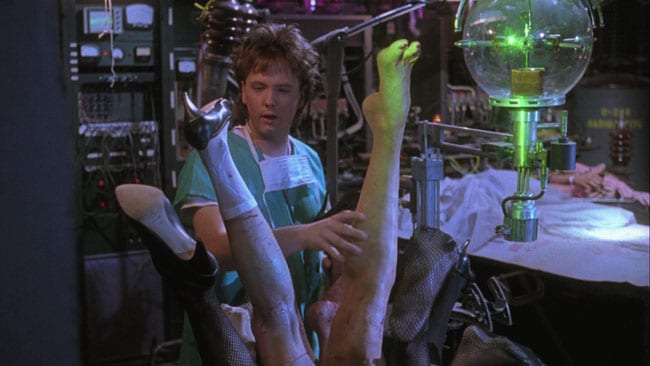 You know a film still has something, however many years pass, when you consider what would happen to it if it was pitched today. So at a guess, and alongside most of the best horror and exploitation films ever made, a film which involves exploding drug addicts and reanimated hookers via bad science would be unlikely to get a pass – at least, not from anyone with a considerable budget or say-so. This is the very basic plot of Frankenhooker (1990), a film which feels like it nicely rounds off Frank Henenlotter’s period of film releases during the 1980s, albeit that Basket Case 3
 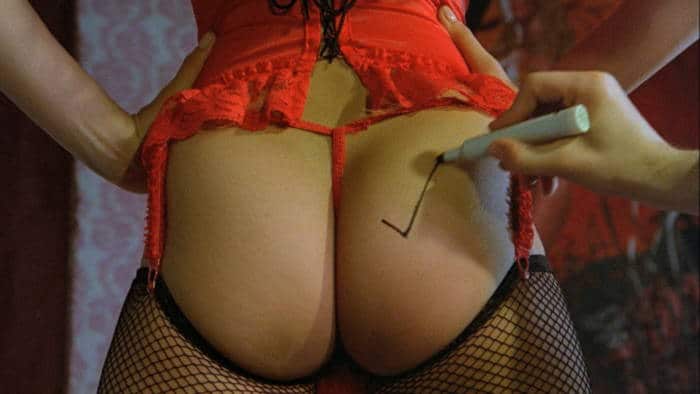 By adulterating crack cocaine, of course. Once inhaled, it will cause the women to explode. He knows this because he practices on a guinea pig. Although he has a moment of conscience which almost prevents this from happening, gladly it does happen, in one of the most absurd, brilliantly excessive sequences ever filmed. Oh Frank Henenlotter, how we love you for it. But actually getting the parts is only the beginning. Jeffrey next has to assemble them, do the obligatory lightning reanimation thing (as much as a staple of Frankenstein movies as the monster itself) and then hope against hope that his deceased fiancee is mentally coherent and even grateful that he’s rebuilt her out of a panoply of prostitutes’ limbs, all selected because he likes them better than her own! What woman wouldn’t be charmed and flattered, I ask you?
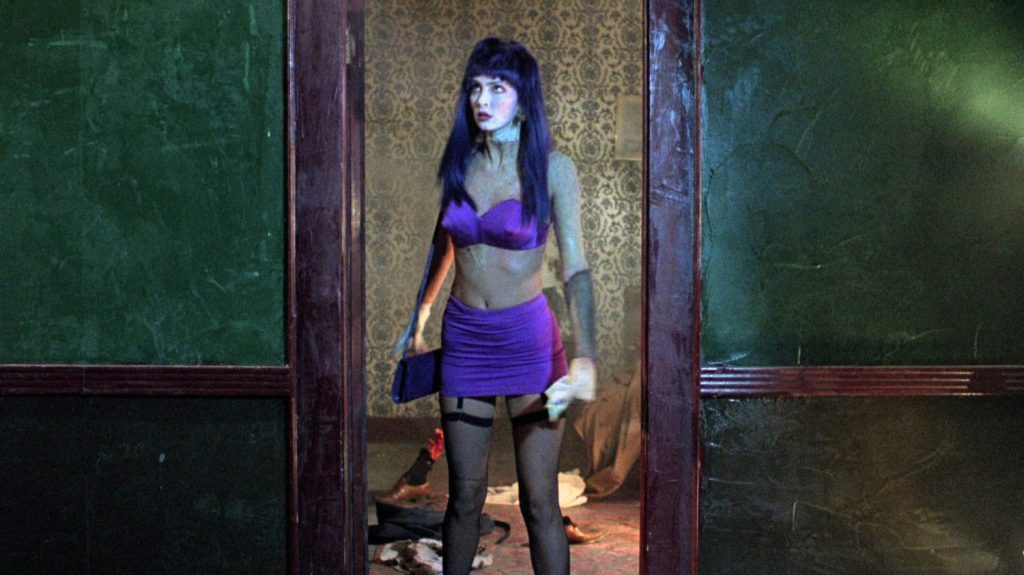 For a film about a hybrid undead prostitute running amok on New York’s streets, and for all that it had an exceptionally modest box office reception, Frankenhooker seems like Henenlotter’s most accessible film of the bunch. Hear me out: regardless of the subject matter, it doesn’t feel quite as skeezy as Basket Case or Brain Damage, despite sharing a lot of shooting locations and being made within a few short years. The NY streets are still sleazy but brighter, less oppressive-feeling somehow, and besides the film veers between there and the leafy suburbia over the bridge, as well as feeling a lot more modern with its TV talk show skits and the Never Say No song, which pokes fun at a lot of late 80s social anxieties. With the exception of what I’ll refer to as the ‘fridge scene’, the body horror is less grotesque here, too; Elizabeth has a few stitches, but otherwise she certainly doesn’t look as grim or warped as Belial or Elmer. It’s also a rather bloodless film, even oddly so, thanks to the novel limb-gathering technology Jeffrey deploys – which cauterises the wounds rather well. The horror overall is overshadowed by what creeps into soft-core territory in places, perhaps giving us a peek at the kind of horror/exploitation ratio Henenlotter most prefers. All in all, Frankenhooker keeps things cartoonish, and never quite as dark as either Basket Case or Brain Damage. It’s very much its own beast with its own laugh-out-loud atmosphere and outlandish, fleshly excess, and it’s yet another enjoyable foray into a world where bodily integrity spoils the fun.
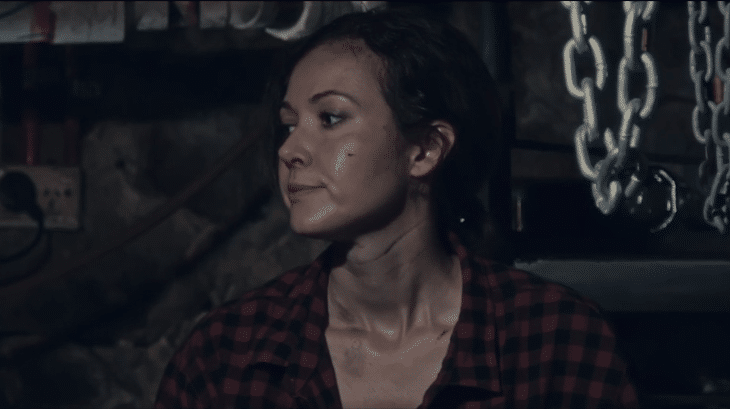 Anthology films – often three short tales with a common framework – are nothing new, even if the format isn’t used all that often today. We have, however, seen some interesting variations on the anthology film in recent years, perhaps most notably with The ABCs of Death in 2012, which made a minor stir and spawned a second edition. Certainly, what this anthology showed was that there’s acres of potential in the idea that a film can comprise several shorter chapters, whether or not these chapters are linked in the way that, say, the old Amicus portmanteau films were. As we know, sometimes a film’s cardinal sin is overstaying its welcome, or stretching a meagre idea over ninety minutes. Short filmmakers can’t get away with that. So, I was very optimistic when I came to watch Blood Clots, an anthology film which has taken the unusual step of compiling seven horror tales. Whilst the stories themselves aren’t linked, what they have in common is a punchy, decisively entertaining approach and enough variety to please any number of viewers.
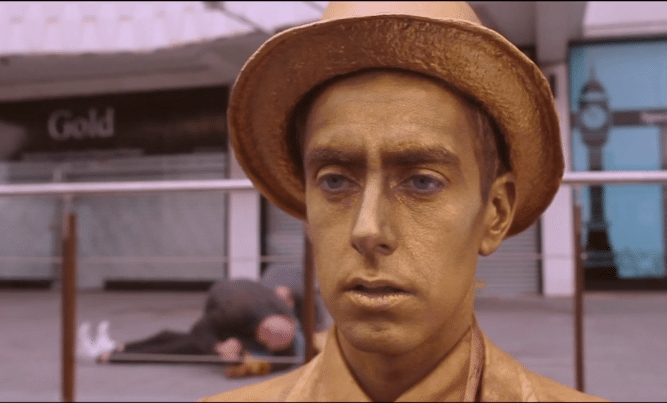 Time to Eat is next, a short, sweet spin on the ‘something in the basement’ idea, followed by Still, which is a genius idea whereby a street performer – you know, the guys who stand stock still in city centres for the edification of tourists – is stuck, rooted to the spot during an incredibly gory zombie outbreak. We’re treated to his internal monologue as all of this unfolds, and this is a film both very camp and very slick in its delivery. Hellyfish has a daft central idea worthy of SyFy, as the unlikely couple of a Russian femme fatale and an Iranian jihadist look for a missing H-bomb off the coast of the US. We all know what ‘nuclear’ means where there’s any manner of ecosystem around, so before long this goofy skit on ‘B’ movies old and new winds up terrorising the beach with…well, nothing more needs to be said, I’m sure.
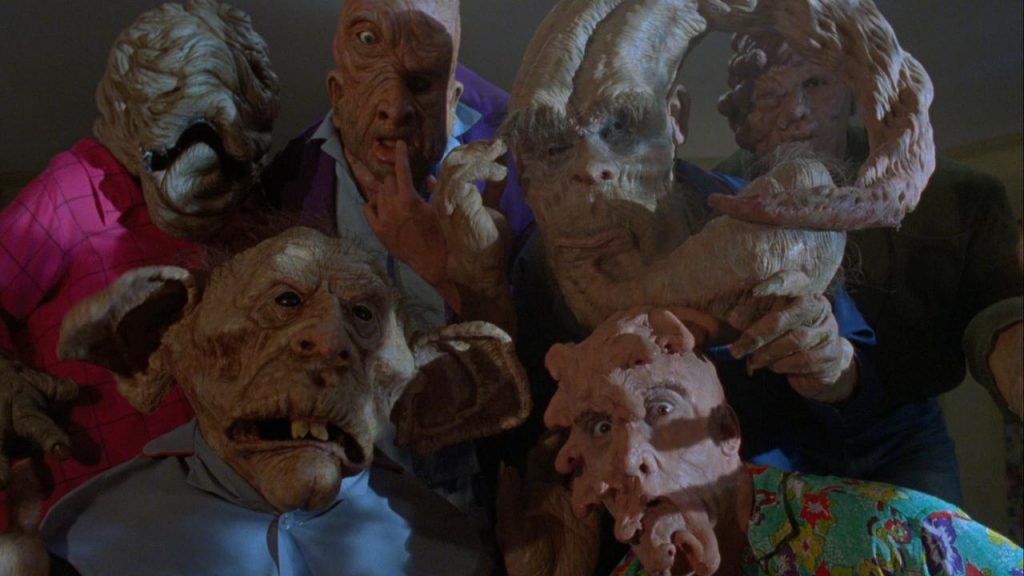 If you freeze-frame in the opening reels of Basket Case 2, a curious thing happens. You can almost – almost – sense the utter surprise on Frank Henenlotter’s part that he’s making a sequel to his surprise grindhouse hit at all.
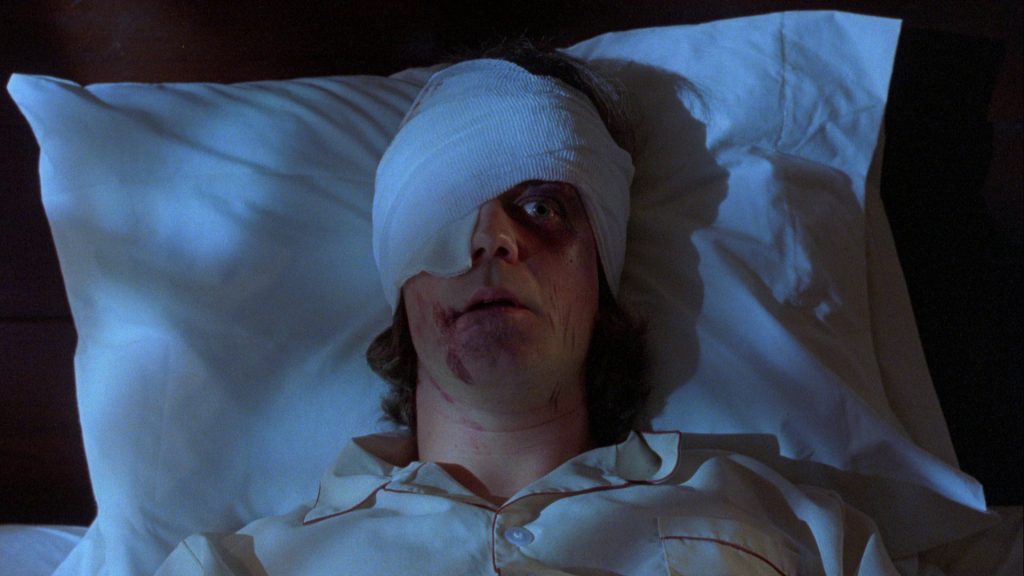 Made in the same year as the uproarious Frankenhooker, Basket Case 2 feels like a perfect blend between opportunism and kicking back – grabbing the chance to make a sequel while the going’s good, but not labouring under any illusions either. Henenlotter is clearly in a mind to go to town on the special effects here, with the result that the film feels to be around 60% latex, and there’s a whole host of new characters being given screen time. Eerily, Belial looks a hell of a lot more like Kevin Van Hentenryck in this incarnation, which somehow makes him look even nastier, even though Van Hentenryck himself has a perfectly amiable face: that lends itself very well to the whole good twin/bad twin thing. In terms of subject matter, things feel a lot more jokey overall in Basket Case 2, but there are still characteristically grim moments. This isn’t a simple moral high ground thing where the poor put-upon ‘freaks’ are mistreated; they aren’t terribly nice to outsiders either, maintaining what seems to be an unspoken Henenlotter mantra: “most people are assholes”, whether or not they have the conventional two arms, two legs, one head.
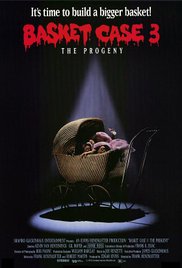 Basket Case 3: The Progeny was made the following year, and wrapped within a month. Being made so close to the last film, it hardly needs the lengthy flashback which harks back to BC2, but what this does make clear is that the memorable sex scene sequence isn’t forgotten yet; it’s going somewhere. We find out that Eve (Belial’s girlfriend) is in the family way, no one’s quite sure what her birth will entail, and Duane has meanwhile been locked in a padded cell for trying to re-attach his brother. These are, by the way, not words you’d ordinarily find yourself typing.
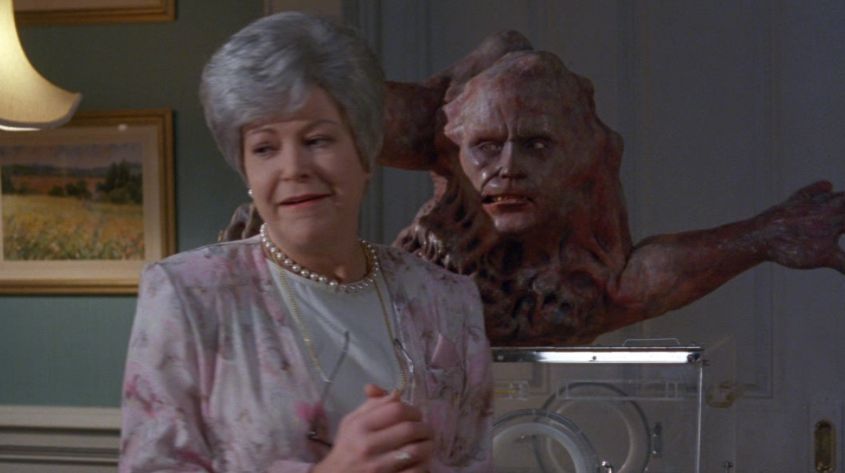 Each successive Basket Case film seems to reach a little higher, from an already lunatic premise, to new heights of creature FX and bizarre ways for these FX to get invoked. For instance, the birth sequence in BC3 is a fun exercise in excess, throwing in catchphrases like “ovarian ovation”, then matching this with a dream sequence for Belial (reprised after the end credits). The last visit to the world of Belial and Duane shows them not as outsiders, railing against the world, but somewhat bewildered members of an extended family group, dealing with family issues. In this respect, BC3 couldn’t be more different to BC; the fact that all of the planned gore was more or less excised from BC3 at the request of the producers further alters the film’s tone, making it generally more playful and allowing it to give the odd nod to other films (the ‘mad inventor’ shtick had just done a turn in Frankenhooker; Belial’s contraption also looks a little like a certain scene in Aliens, though perhaps that’s just me, going a little mad here?)
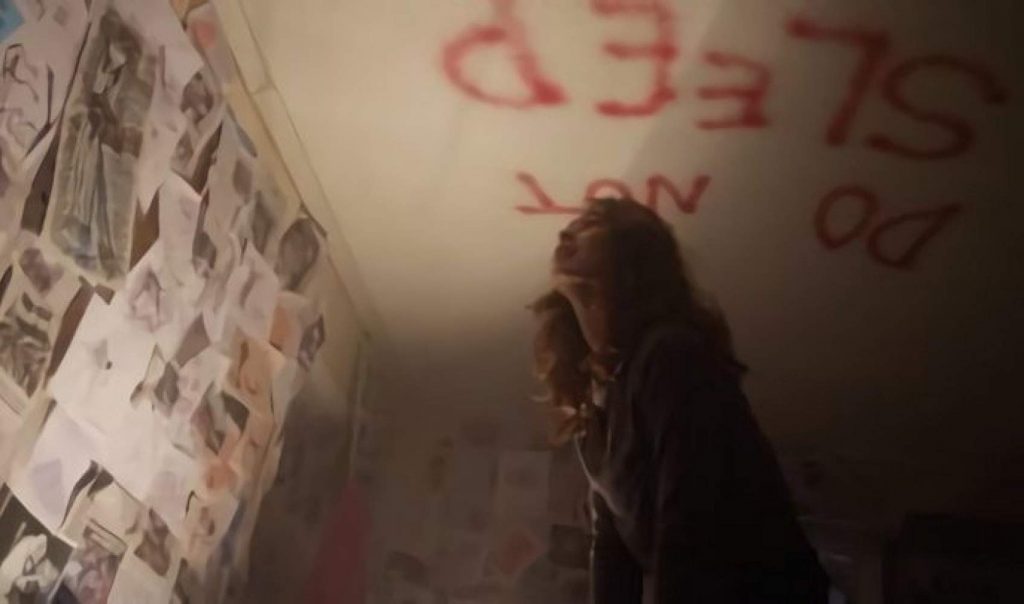 When I heard that Mara was a horror story invoking sleep paralysis as a key element of its plot, as a sufferer I was immediately interested. Sleep paralysis is well understood in the modern age, just as sleep and dreams are generally, but anyone who has ever had a significant nightmare, or a waking nightmare will know that reason and rationality are furthest from your mind when undergoing this kind of terror; therefore, these experiences remain ripe for solid on-screen explorations, offering lots of potential. Happily, director Clive Tonge and writer Jonathan Frank have shown themselves more than up to that task in Mara, a film which weaves a mythology around sleep paralysis, but balances this against far more grounded and mundane preoccupations which trouble people in their sleep.
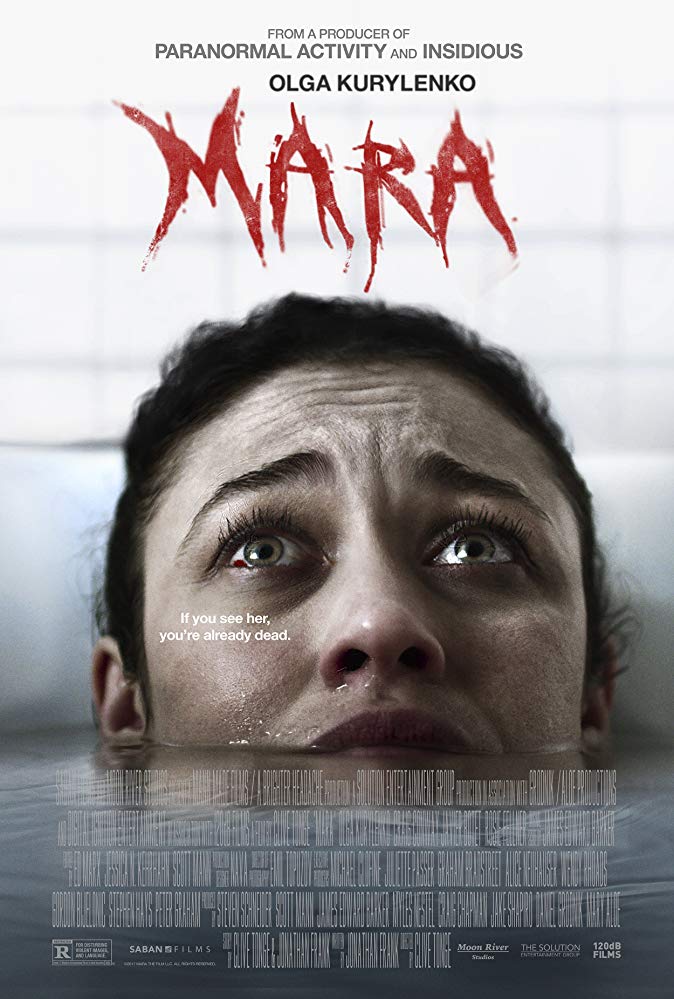 Something else which is very interesting in this film comes via another of its core plot developments – that Matthew Wynsfield somehow puts himself in danger by seeking help for his sleep paralysis issues. Rather than that vague modern panacea of ‘support’ ridding people of their problems, here in the form of a support group, in Mara it exposes people to more harm. In effect, a potential cure, one we believe in on an almost religious scale today, lays people bare to a threat, which itself stems from an innovative blend of folklore, the supernatural, and something between a good old-fashioned curse and psychological breakdown. It’s pessimistic in the extreme, and it’s handled with genuine ingenuity here.
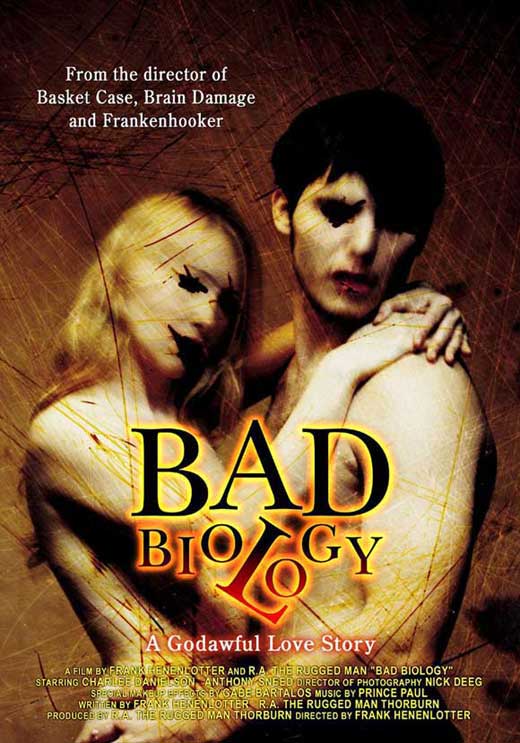 By anyone’s standards, sixteen years is a hell of a hiatus for a filmmaker to take between films. Yeah, from time to time this happens (Herschell Gordon Lewis went a staggering thirty years between The Gore Gore Girls and his next film) but overall, it’s still unusual. After all, if you’d taken that long a break, would fans still be into your work? Would your stuff still seem current? And would you be able to appeal to new audiences altogether? Well, it seems to me that if Frank Henenlotter gave any consideration to the above questions, he ended up deciding to throw them out altogether, and to make a film so outlandish and, let’s face it, alienating that only the truly dedicated, or else the truly unhinged would still be with him by the end. Hence Bad Biology (2008) starts as it means to go on, opening with the line, “I was born with seven clits…”
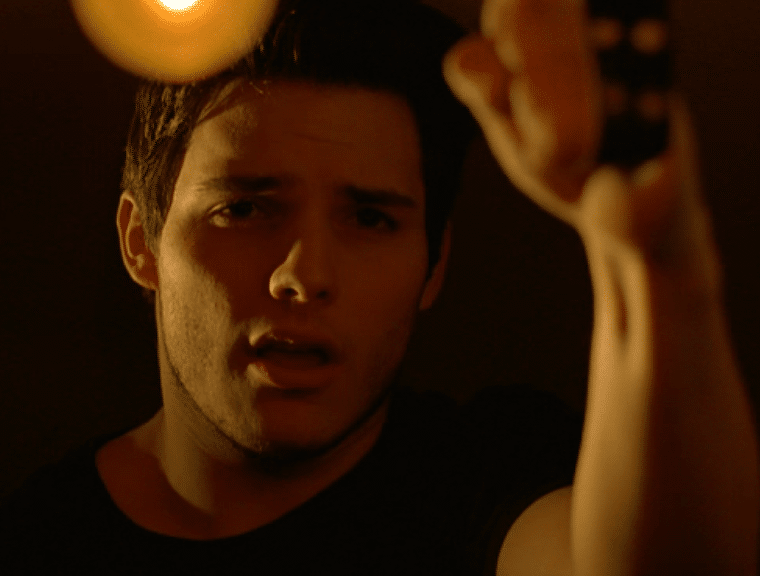 As for attitudes to women, hmm. I don’t think you’d go to a filmmaker like Henenlotter expecting his work to reflect our modern preoccupations with gender, but those inclined would probably raise an eyebrow here. Lots of men in the film try to police Jennifer’s behaviour, slinging insults at her, acting like they’re the ones in control: it’s only thanks to her unorthodox make-up that she’s able to turn it around. She even turns their ‘little deaths’ (or actual deaths) into photographic essays. Past emotional attachments have ended up going badly wrong for her, so she now steers clear of them; she also shies away from that old adage ‘women have sex to get love’. She definitely doesn’t, and avoids it like the plague. All of that said and done, she does turn into a hysterical, irrational mess on occasion, and other women in the film dodge between being inert sets of boobs, and prostitutes. Honestly, I think it’s only the film’s elective preposterousness that has saved it from a glut of Vice articles about how a disembodied penis breaking into women’s apartments to sleep with them is deeply problematic. But all of its problematic content is just a facet of the film’s overall puerile nature, in my opinion. If women are characterised rather thinly, then so’s everyone else we meet.
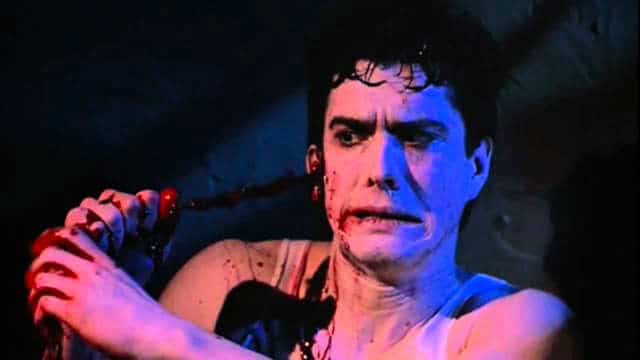 If you didn’t already know from your experience of watching Basket Case that bad things are almost certainly around the corner, then you could be forgiven for thinking that the beginning of Brain Damage (1988) features a perfectly respectable elderly couple, in a well-decorated New York apartment, doing something perfectly reasonable. Sure they’re feeding…something, but that’s probably a lhasa apso or something. Dogs eat anything, so they’d surely eat, umm, brains… from an ornate china plate…erm…in the tub…pets, eh?
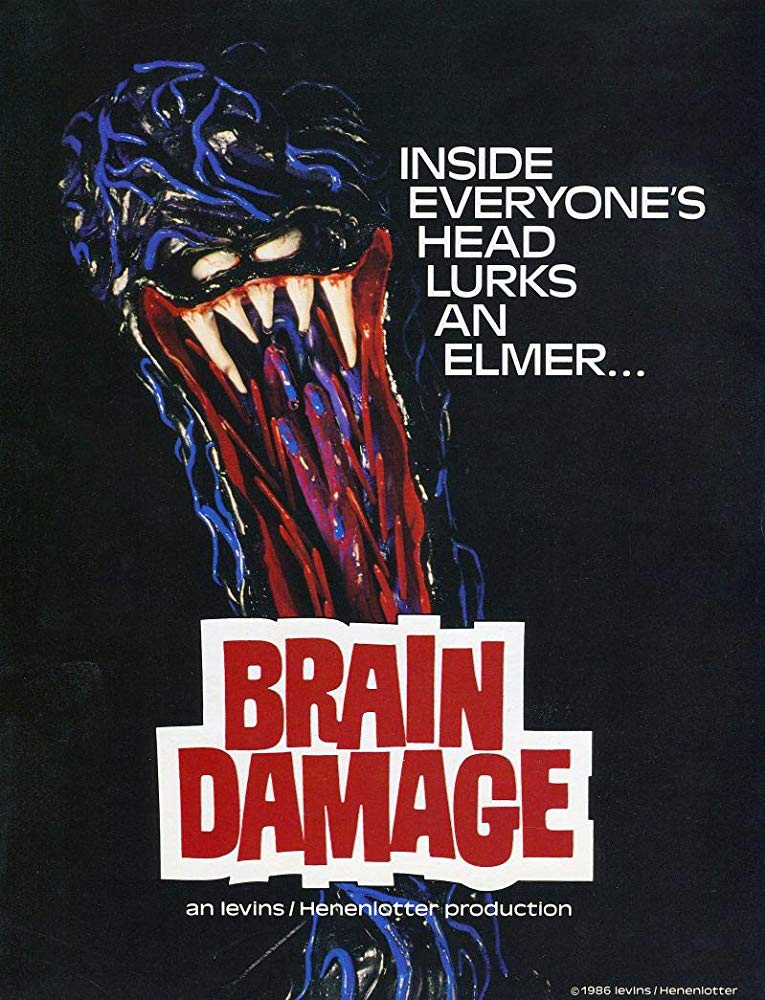 It hardly needs saying that Brain Damage could work as a hideous metaphor for addiction. The highs, the lows, the people hurt, the desperate measures – they’re all in there. In fact the film seems to invite us to see Brian in this light on several occasions: as he prepares to head into the new wave gig where he meets the unfortunate fellatio brain-munch girl, for instance, there’s a back-and-forth shot of him getting his hit with an alcoholic down-and-out standing just a little way away, drinking from a brown paper bottle. Their ages are different and the substances are different, but these are both people with their dependencies.
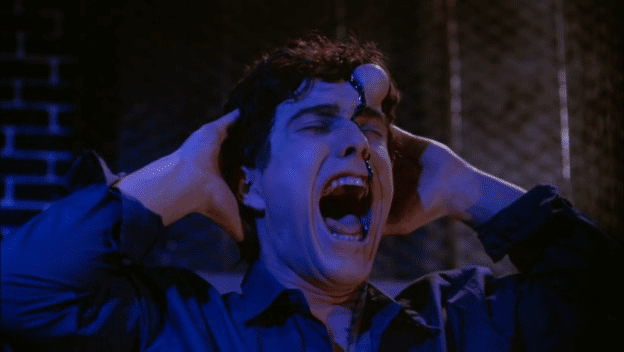 As much as I love all of Henenlotter’s films, Brain Damage is really my favourite. On a low budget, and with inexperienced actors (this was Rick Hearst’s first film) it achieves a great deal, striking a good balance between authentic horror and horror-comedy. It has a lot of the gritty, grimy nastiness of Basket Case, with the same mean streets and locations, content so graphic that it was excised from early cuts of the film, and horrible subject matter: in some respects it’s like Basket Case in reverse, with an unwitting joining-together of two sentient creatures, one ‘normal’ and one not, instead of an enforced coming-apart. So this whole symbiosis theme is pretty grim, and gives us some unpleasant scenes throughout.
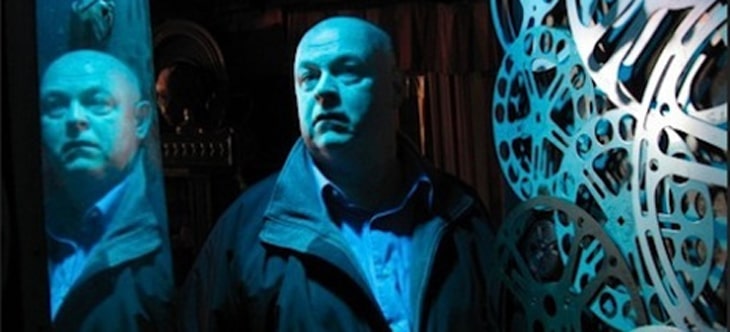 A few years ago, at the Dead by Dawn horror festival in Edinburgh, I was invited to take part in a ‘play dead’ competition with the rest of the auditorium. Quite unusual as a pastime, you might think, even for a horror fest.
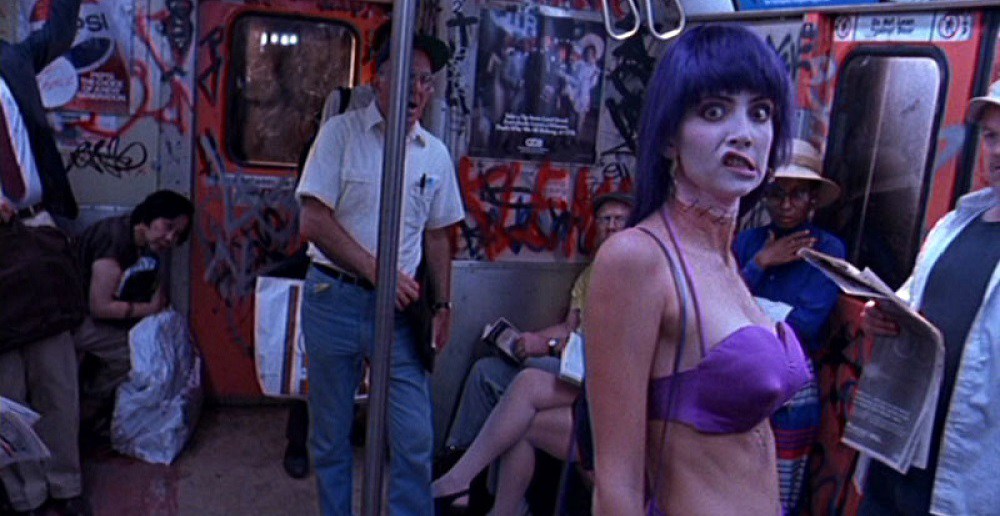 Henenlotter has not made a vast array of features during his career, though via his work with Something Weird he’s shown he’s as happy to save other people’s films from oblivion as he is to make his own. Altogether, he’s made eight original films, together with some documentary work, and at the time of writing his name is attached to a couple more shorts. Some directors crank out a film a year, but Henenlotter has never joined their ranks; there’s even been a sixteen-year hiatus between features. None of that means the impact of his work has been any less, and in a few very notable films in the 80s and 90s in particular, he’s made his name as a director of ‘body horror’, where the physical body can be invaded, mutated, updated and quite open blown apart by a whole host of bizarre phenomena. Some body horror is genuinely unsettling: close contemporary David Cronenberg, for instance, renders his compromised bodies the stuff of nightmares. It’s horrific, yes, but sublime. Henenlotter has a different approach – he opts to go straight from the sublime to the ridiculous. Sure, you can wince at some of the things he does on screen, but any deeper considerations are usually grabbed out of your hands by the next scene coming, which does something so hideously outlandish that all you can do is laugh. It is, as he suggests, pure exploitation, and it’s terrific entertainment, as well as immensely formative for many of us of a certain age, who grew up with these films on VHS and later, DVD.
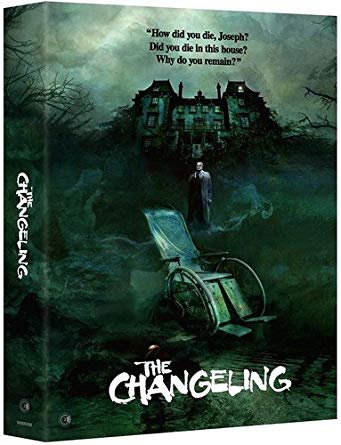 Winter, upstate New York. The Russell family are on vacation, but their vehicle has broken down in the snow. As father John (George C. Scott) crosses the road to call for help, an out-of-control truck careers towards his wife and daughter. A simple and effective cut to John, alone and back in the city, tells the audience all it needs to know; it’s the first understated moment of the film which shows that director Peter Medak trusts us to understand what’s going on without spelling everything out for us. The family home is now boxed up, with only flashbacks to show us what it once was.
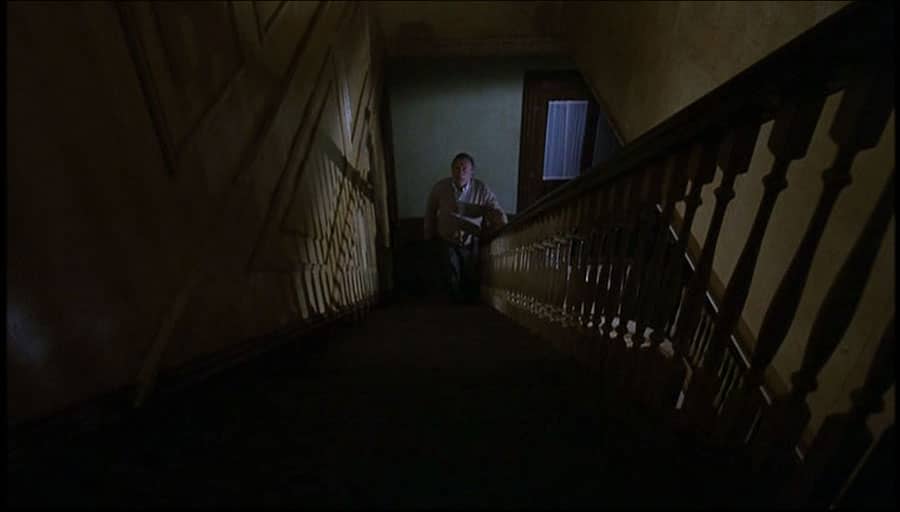 Everything is handled with a sensitive pace, allowing characterisation to blossom without having Russell say everything he’s thinking; slowly and surely, he picks his way through a story which effectively leads him/us down a few blind alleys, arriving at its surprising denouement cautiously. I’d also argue that in the best supernatural horrors, the haunted place – usually a house – seems to operate as a character in its own right. Before we can safely attribute phenomena to a specific entity, we can only interpret the strangeness of the haunted place itself. It is the source of the phenomena, so it needs to seem almost sentient, as well as striking in aesthetics and atmosphere. The house in The Changeling has all of this in abundance, too. Camera angles are shot from the house’s perspective, and it’s described by Russell himself as having wants and preferences. Again, it’s simple stuff I suppose, but done well it’s very effective. The film does more, too, by linking its supernatural to real-life events, which calls up far older ideas that ‘justice will out’ to a very modern tale of corruption.