The Turk

Actor Michael Sabbaton has some impressive form portraying tortured male protagonists; his work to date enacting stories from HP Lovecraft more than prove this, and it’s something of a theme he has explored further in his newest one-man theatre show, The Turk. However, quite unlike Lovecraft, in this original piece of work Sabbaton has allowed himself to engender pathos for his character, Maelzel. There are even a few moments of levity, as he reflects on some of the most curious moments in a long career. The overarching effect is of a well-rounded tragic figure, with an unusual and engaging story which forges links to genuine history along the way.

On what will no doubt be his final voyage, the showman Johann Maelzel has holed up in a cabin with his scanty belongings and a surfeit of bottles of wine. His only companion – if such it can be called – is the head of the ‘Turk’, a chess-playing automaton which he came by some years before and which has helped to make his name in the salons of Europe. Originally made in the 18th century, ‘the Turk’ has long amazed audiences with its eerie abilities, beating the great and the good at the game and even voicing ‘échec’ (‘check’) after making a move. This idea is, strangely enough, rooted in truth: there was a real vogue for automata in the 18th century (and even earlier) as people’s understandings of life processes grew and the old mysteries of the divide between body and soul were thrown into new crisis by this additional understanding of physicality. People experimented with building these ‘thinking machines’, items which did indeed draw crowds. Nascent science always feels a lot closer to mysticism than to the dispassionate science we know today, and that’s borne out in the play, operating as it does as a kind of Gothic sci-fi. The ‘digesting duck’ mentioned in the performance was real, too; truth is usually stranger than fiction…

However, in the case of the Turk, all the renown has long come at a cost, drowning out the other achievements of its original maker at a great personal cost to him, and since coming into the possession of Maelzel, it has consumed him, too. Finally, in debt, drunk and bereft, Maelzel ruminates on his long relationship with the automaton, and what it has cost him. His own personal circumstances are revealed very gradually, in the usual masterly way Michael Sabbaton has with pace, and Maelzel is a fascinating character, very strongly delineated and utterly plausible, with the showman’s flair for words and gestures rendered down into what very much feels like his final act. He’s tragicomic through and through, which again, works very well, providing us with a man who is well aware of his shortcomings and of the sheer ridiculousness of elements of his life, as well as absorbed by his own sadness. This is a cleverly-written play, meticulously constructed and grounded.

And interestingly, given that the play interrogates the ideas of sentience and existence, I found my eye continually drawn to the head of the Turk during the performance; there just is something hardwired into us whereby we attribute personality and purpose to objects, if they are shaped in such a way that they look human, or can respond in a humane way. I can only imagine the trials and tribulations to come, as artificial intelligence continues to make great leaps. And in the play, the Turk seems to take on significance as a character in its (his?) own right, too, despite being silent and (mostly) inanimate. This only adds veritas to what Maelzel is going through, as he half-asks himself, and half-asks the Turk daunting questions about the meaning of life. Where is the soul? What is thought?

The Turk manages to sustain many things at once, and as ever it’s testament to the skill of the writer and performer that this works so effectively. Combining existentialism and personal tragedy with strands of comedy, history, self-parody and even music (definitely marking a break with the Lovecraft!) I was fully immersed by this. It’s always a pleasure to see ambition succeeding in practice, and this is a highly original and engaging piece of work.

The Turk appears at the Sheffield University Drama Studio on March 28th 2019. For any further news and performances, visit michaelsabbaton.com

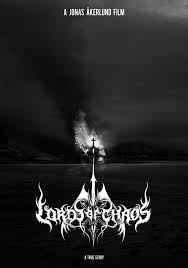
Lords of Chaos (2018)

Whatever way you look at it, Michael Moynihan and Didrik Søderlind’s book Lords of Chaos: The Bloody Rise of the Satanic Metal Underground has been responsible for some serious myth-building in metal circles, not least in the minds of many of those involved in the spate of arson and violence which enveloped the emergent underground metal scene in Scandinavia in the early nineties. I’d go so far as to say that the book has even helped to shape what black metal has become. But it’s not a history which immediately leaps to mind as a prospective film, and I was surprised when I heard that a film loosely based on these events was in the pipeline. Evidently, though, this has been a troubled project, getting passed from director to director over a period of years, before finally landing with music video director Jonas Åkerlund. (Japanese enfant terrible Sion Sono was in the frame to direct for a while; I can only guess at what he could have done with this, and with respect to Åkerlund, I can’t help but feel sorry that I’ll never find out.) The resulting film is sure to divide metal fans, as it’s an often frustrating mix of high camp and unflinching violence – in trying to encapsulate a great deal, it positions itself rather awkwardly between tragedy and farce.

I commented in another recent review that films which begin with their closing scenes – meaning we know from the start that the film will run full circle, back to this point – are risky ventures. With Lords of Chaos, there is never any question about how the story will end; even if you’re only vaguely familiar with events, you’ll know that Mayhem musician Øystein Aarseth, better known as Euronymous, was murdered at his Oslo apartment by sometime bandmate Kristian Vikernes, probably best known as Varg Vikernes. Thus culminated an escalating period of tension and aggression between the two men, their rivalry already spilling over into various criminal acts up until this point. Unusually, the film starts with, and returns to, the use of a voiceover – Euronymous (Rory Culkin) pointing out that things don’t exactly ‘end well’ for him. The film proper begins in the late eighties, with Euronymous’s first forays into playing metal, his influences, and his early years with Mayhem.

And here’s the film’s key flaw: its yawning tonal shifts. A lot of the scenes involving early band practices, these young men crafting their stage presences, and of course the ubiquitous metal! parties! are somewhere between This is Spinal Tap and Wayne’s World, all giddy excess and the standard stereotypes of metal fans as, well, a bit stupid and superficial. Which Euronymous and his band mates might indeed have been, at that age: I have no point of reference for Euronymous the man, having only really encountered him in print or in his music, so there’s little for me to go on personally, but I think Culkin does his best to try to sustain what’s pretty well documented about Euronymous – that, yes, he was self-important and interested in being as kvlt as possible, had a lot of theatre about him, but for all that, he was a key player in the development of the Norwegian black metal scene, and his record shop Helvete was a genuine hub of activity. So there’s a lot here which sends up these key players, pushing things towards comedy in places. And by the way, surely to God the director could have found some Scandinavian actors and still sold the film? The ‘bye, mom’ Americanisms really grate here. But then, in a beat, the film turns gratingly, horrifically nasty. Former Mayhem vocalist ‘Dead’ hangs cats, and one hangs from his ceiling for the duration; he slashes his arms and throat; his suicide scene is intensely graphic (he shot himself in the head) and – as with all the death scenes in this film – inescapably sad, particularly given Euronymous’s behaviour when he discovers his body (the film’s attempts to square this with him as an essentially decent guy fall flat, and don’t seem to be really rooted in reality, either). Lords of Chaos is akin to ordeal horror in places, then, and then breaks into parody in others; it’s a disorientating experience because of this, and it means that neither element really works. Even if the black metal of the day did have a bit of parody to balance its horror, it doesn’t work for creating a coherent narrative on screen.

I was, though, genuinely quite surprised at how pro-Euronymous the film is: the story is told largely from his perspective, the voiceover is his, and the story begins and ends with him. If you feel any sympathy for anybody here, then it’s engineered to be Euronymous. The book on which this is all based spends a lot more time unpicking (and let’s be honest, creating) the world views held by many of the people involved in the so-called ‘Black Circle’, giving a disproportionate amount of time and space to Varg Vikernes – who always claimed that he murdered Euronymous in self-defence, and has since served the maximum jail sentence for the crime in Norway, before relocating to France. In the film, there’s no sense of reverence for him whatsoever: Vikernes gets an absolute drubbing throughout, so for anyone who wishes to see him painted as superficial, emotionally-challenged and yeah, as thick as mince, then look no further. (He gets a disproportionate number of sex scenes too, mind you, which I could have happily done without.)

The film works its way through its key plot points with an odd blend of a keen eye for detail and a few glaring errors (for example, Euronymous had no time for life-affirming thinkers like Crowley and La Vey, yet there they are, their pictures pinned to his noticeboard). But one thing I feel the film did more or less miss out is the sense that the safe, secure, prosperous Scandinavian life enjoyed by these young men probably conspired to bore them to tears, and it always feels like a factor in the powder-keg they went on to create. But then, that’s just my take: ask twenty metal fans what they would want to see from this film, and you’ll get at least twenty different answers. I suspect at least a few of them wouldn’t want the film made at all.

I suppose my overarching sentiment, having finally caught up with Lords of Chaos, is bewilderment at how this plays out. Åkerlund has considerable prowess making music videos, but he’s struggled to make this feature work; trying to represent what’s essentially a pretty grotty history in any meaningful way over a two-hour running time would challenge anyone, not least someone who doesn’t usually work with the format. There are some well-observed scenes here, and it can’t have been easy to try and capture these ‘interesting times’ on film, but overall Lords of Chaos doesn’t work well. Maybe the tangle between truth and lies acknowledged by the film has just become too inextricable – even too unwieldy – by this point.

Next of Kin (1982)

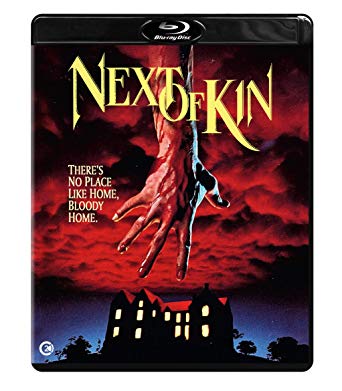
It always seems to me a bold move – and a risk – to start your film with what are evidently the closing scenes, but that is just what we get with Next of Kin, a mystery mixed with a horror, and the sole foray into genre film from director Tony Williams. A young woman, smeared with blood, is about to get into her car and flee the scene of a small town diner, where things have clearly gone down. A voiceover briefly explains that this young woman, Linda (Jacki Kerin) has recently inherited all of her late mother’s estate – which includes a large residential care home, Montclare. It’s an ominous overlay, and we’re primed for things to go wrong for this woman; it only remains to be seen how this is going to happen over the course of ninety minutes.

Montclare itself is a sprawling place with a lot of sitting tenants, but Linda makes herself at home, even getting involved with some of the care duties (hey, these were innocent times – people didn’t trouble themselves with things like safeguarding). There’s a small team of staff at hand, including a doctor on call, and things seem okay to begin with. However, before long there’s a death – and as Linda gradually begins to work her way through her mother’s papers, reading about her mother’s anxieties about something strange going on at Montclare, Linda begins to experience similar things, her nostalgia now tinged with fear. She begins to investigate the history of the house, but more and more, she’s convinced that someone is keeping an eye on her.

Next of Kin is a strange one. On one hand, it holds off on the plot exposition, leaving Linda to face things on her own and keeping the audience as much in the dark as she is, wondering whether the scares she is experiencing are supernatural in origin, or not. The film is very much centred on Linda, with not that much coming from the other characters in the film really, and to be fair to Kerin, she does a decent job, although her responses to what is happening to her can be hard to relate to; things which ought to have her in bits seem not to, whereas quite ordinary things generate hysterics. But on the other hand, after keeping things on the down low for the largest share of the running time, Next of Kin motors through the denouement, more or less having Linda happen upon the very page her mother’s diaries that tells her what she needs to know before things get spelled out very rapidly in the end scenes, and so we’re suddenly back to where we started. This is odd, given that the film is such a slow burner, for the most part; very little actually happens over the first hour. This could be a challenge for modern audiences, perhaps as a symptom of our shrinking concentration spans, but then again, it is better to have a little more action as a motivation to engage with the plot before we run out of film. There are some very effective scenes here, nonetheless (the corpse in the bath made me wince) and the film allows these to settle on the audience, allowing them their impact.

The Australia of Next of Kin feels very familiar: it’s a place unusually populated by RP English speakers, not unlike Patrick (1978) actually, which had been made just a few years previously. Now that I think of it, an isolated young woman being made to face down frightening events in an isolated setting – there are other parallels. No doubt Patrick’s modest successes had an impact on subsequent genre films being made in the country. The sets here are effective, and you do get a sense of the isolation of the place, which is important in how things play out. Williams also has a keen eye when it comes to setting up some of the scenes, and this is a well-made film from a technical point of view, which will appeal to many on those grounds.

Overall, this is a film which very much has its moments, throwing in some surprising ultraviolence too, though some of the disparity in pace dents the goodwill somewhat. Also, sadly, there were a few issues with the transfer on my screener which meant I couldn’t see some of the key scenes at the end; hopefully this is a just a tic, and the rest of the discs are fine, though it was a little frustrating, having waited for things to get going. Next of Kin will reward people who like their horrors more understated – well, up until a point in time, at least.

Next of Kin will be released by Second Sight films on 25th March 2019.

Freaks (2018)

Chloe (Lexy Kolker) isn’t allowed to play outside. Her front door is barricaded and sealed; every window is covered and she is under strict instructions not to ever, ever attempt to go outside. The world is a terrifying place, her paranoid father (Emile Hirsch) keeps on telling her. But Chloe has no sense of this danger on a personal level; she’s very young, and any risk her father has incurred for her sake seems lost on her. He might be planning for someone else to maybe take care of her in the future, but Chloe just wants to be a regular kid.

However, it’s soon made apparent that this is absolutely not going to happen. What at first seems as though it’s going to be yet another zombie-style horror, where Something or Someone Bad is trying to get inside and the inhabitants of a house have to literally put up a blockade to stop this happening, is soon something else entirely. When Chloe peers out of a corner of a window, she sees birds flying – but there’s something odd about their flight; they seem to be moving out of time with everything else. Her dad is acting increasingly coyly, ramping up his warnings about the outside world, while failing to answer his daughter’s questions about whatever became of her mother. The house seems to have odd manifestations in it, too, which seem somewhere between hallucination and memory, from what it seems. And, far from there being hordes of undead or otherwise diseased/obviously dangerous people roaming around, the first other person that she sees is…a guy with an ice-cream truck (Bruce Dern), who seems to be trying to get her attention. He even posts her a neat pop-up book; is he really so bad? By this point in the film, I’d gone from having one set of expectations (oh, not another zombie flick) to another (oh, not another parental paranoia trip) but, gladly, whenever I thought I knew what I was watching, the film had to nous and ambition to change its narrative.

If you can say one thing with certainty about Freaks – wherever its plot ends up going, and it goes a long way – it’s that this is a superb family drama at heart, with believable relationships, superb performances and bags of confidence, sustaining humour against pathos. Many of these kinds of stories sink or swim on the child performances, and I’m glad to say that Lexy Kolker does an impressive job here, reminding me in some respects of Angourie Rice as Rose in Australian end-of-days drama These Final Hours (2013), with similar work to do enacting innocence and a desire for family life against everything going to hell, whilst the grown-ups do their best to make sense of it all. In many respects, because Chloe is struggling to understand what’s going on in her world, the audience is kept at the same level for a large part of the film. As she starts to understand, so do we, and I don’t feel that there was really a point in the film when I ever leapt too far ahead of her. This works really well, keeping the plot unfolding in gradual stages.

It’s also a pleasure to see Bruce Dern getting stuck into a genre film role here, working very well with all the cast, but particularly with Kolker (he said that she reminded him of his daughter Laura at that age) whilst getting a large number of the best lines. Oh, did I mention that Freaks allows itself a few jokes along the way, as well as revealing a family in unique and genre-bending jeopardy? Directors/writers Zach Lipovsky and Adam B. Stein clearly had a lot to do here, but it all works together seamlessly well. The sci-fi content here is engaging and important, but it’s how it affects the family which really matters, making for something warm, intricate and very clever, with space enough to lighten the mood in places too. However, and again thanks to a performance by a talented child actress, it all concludes with questions hanging in the air, a touch of ambiguity to take away.

I’m working hard here not to spoiler Freaks, as it’s one of those films you need to see unfold in its own way, but rest assured there is more than enough here to justify your attention. This is what genre film is all about, and it’s why, after initially eyerolling at the thought of watching yet another derivative piece of work, it’s so refreshing and rewarding to find a film like this one. Even where you can recognise some of the film’s elements, it does something new with them and makes them matter.

Freaks (2018) screened at Frightfest Glasgow on Saturday 2nd March 2019.

Automata (2019)

It’s been close to six years since I reviewed director Lawrie Brewster’s second feature film, the cryptozoological horror Lord of Tears; at the time, I was impressed with the film’s imagination and its sense of a reverence for classic horror fare, but found it a sometimes muddled film in which certain sequences should have been cut out completely. Having recently seen his newest film Automata (again scripted by close collaborator Sarah Daly) I have a strong sense of deja-vu. Automata is also bursting with ideas, and seems to be hearkening back to the glory days of the likes of Amicus. Its subject matter, indeed, is worthy of that studio, as well as certain others of the era, which I gather were influential on this production. However – and it’s a big however – the way in which the plot is developed and realised is nothing short of garbled, or even downright barmy.

The film begins with a period setting, which in itself is pretty bold on a budget: a band of 18th century soldiers transporting a mysterious trunk are ambushed by an army who wants whatever’s inside it. Many men soon afterwards lose their lives, but we never get to see the trunk’s contents for all that. Instead, we move to the current day. Historian Brendan Cole (Jamie Scott Gordon) is approached by a wealthy collector who wants his expertise on what’s been assumed a folk story about a clockwork doll known as ‘the Inferno Princess’. (This, we can assume, is what was in the trunk 300 years previously.) Cole has written extensively about the Princess, but he’s staggered by his would-be patron’s claim that he may have found the doll itself – intact, functional and needing only to be verified by an expert – i.e. him. Being offered a million pounds for the job, which will take a week, he can hardly refuse. He takes his grown-up stepdaughter Rose (Victoria Lucie) with him to the house in question, and begins to run his tests on the doll.

Of course, the doll has a mysterious power of its own, and begins to affect both Brendan and Rose. The Princess doesn’t really look like an automaton of the day, and it’s hard to get a sense that this is a clockwork effigy of a person without any SFX beyond cosmetics, but there are some neat aesthetics here. Gradually, Brendan and Rose are able to piece together the sad history of the doll; it’s an effigy of a noblewoman with a tragic story. Her likeness was captured at its most perfect, but it seems the relationship between the model and the automaton project was never an easy one and all sort of things went wrong along the way. As they gather the finer details, ghostly goings-on begin to overtake the house, and the influence of the doll – or Talia, the woman copied for the doll – threatens them both.

All of this would be perfectly fine, perfectly reasonable and enjoyable fodder for a horror yarn, and I always want to give credit where filmmakers come along with ideas for an original mythos of their own. Seriously, it would be very easy to make something perfectly saleable out of tried-and-tested ideas, but Brewster doesn’t do that. That’s worthy of respect. But it’s frustrating when these ideas are brought to the screen in ways which either don’t make sense, blow any sense of intrigue or mystique along the way by questionable handling, or worst of all, descend into farce. Whilst AIP etc. had elements of camp, they were more practised than they were hokey, and the dialogue tended towards melodrama. That worked perfectly for films like The Masque of the Red Death, and part of me wishes that was the approach taken here. Instead, during the screening, there was that sickly-awkward feeling whereby the audience slowly collapsed into laughter as the film progressed – all the time knowing that the cast and crew were sat in the same screening. Brewster and his team acknowledged the film’s elements of camp afterwards, and said that they were deliberate; some of them might have been, but I seriously doubt all of the lines sending people into meltdown were really meant to do so. This film is/was in desperate need of someone to say, ‘You can’t put that in, that sounds ridiculous.’ A camp classic this may well become, but I cannot believe it was all intended and – sorry – the script in places is utterly dire. It jeopardises everything else the film could have achieved and undoes the work being done elsewhere.

Sadly, there’s more. The relationship between Rose and Brendan – stepfather and stepdaughter, remember – is incredibly cringe-inducing, with flirtation, ass-slapping and even the beginnings of a sex scene, though thankfully things stop short – just. I’m not sure of the thinking behind this, and why this quite honestly couldn’t have just been an estranged couple with no deceased mother/partner thrown into the mix; the screenplay’s incestuous leanings add nothing here, except another layer of awkwardness. But I could maybe – maybe – forgive the script giving time to this, if I felt that I really understood what had happened in the plot by the end; sadly, the film feels like it ends multiple times, and scoots over key things that I felt I needed to know anyway. On the altar of atmosphere is much coherence sacrificed.

So it’s a frustrating experience, this film. Automata – is there some meaningful reason behind using the plural form in the title? I’m unsure – has ample ideas, a sense of where it comes from, great locations, clear potential and bags of ambition. Everything is set for a great, original British horror. But the performances, the stylistic decisions and most of all, how the plot tumbles out via a jaw-dropping script turns this potential into a bizarre skit, I’m sorry to say. Whilst there’s plenty of entertainment to be had in this film, I have a horrible feeling it’s through laughing at it, not with it.

Automata screened at Frightfest Glasgow on 2nd March 2019.

Black Circle (2018)

Horror films have often invoked different kinds of physical media as conduits or access points for dark forces, and given the significance of music in our culture, it’s little wonder that records have figured fairly highly over the years, particularly in decades gone past. There have been some great stories which feature records, or other kinds of music recordings; however, what you notice is that certain kinds of music typically feature, and heavy metal is usually high up on the list of culprits. Black Circle is refreshing in a number of ways, but key amongst these is how it takes that old, familiar idea of audio as a gateway to something dangerous, but flips it on its head. In this film, it’s not metal, but an old self-help recording which triggers something malevolent.

Using an array of (highly convincing) 70s TV advertisements to introduce the kind of self-help it means, the film introduces a very old idea, one ostensibly re-imagined here for Age of Aquarius thinkers. Mesmerism was one of the very earliest melds between rational, ‘scientific’ thinking and supernaturalism, and on the TV reels it’s depicted as just another facet of the mind expansion, self-knowledge and self-actualisation popular in the decade. This brings us onto a very special recording, put together by an institute of master mesmerists in Sweden in the 70s, intended to be played whilst the recipient sleeps. Listen to this record, so the spiel goes, and you will become your best self. Presumably not a huge hit at the time, the record must have then have sunk without trace, but a few copies remain – one of which finds its way into the modern day and the possession of a young woman called Isa (Erika Midfjäll).

When Isa’s younger sister Celeste (Felice Jankell) visits her after a period of estrangement, she finds Isa (Erika Midfjäll) a transformed woman. She has a new job, she’s smartly dressed and seems to have it together; Celeste, who is struggling to finish her degree and get by, is stunned. Isa tells her that it’s all because of a certain strange self-help LP she has inherited, and recommends Celeste to take it home to try herself. Doubtful, but definitely drawn to the prospect of a quick fix, Celeste agrees. And it seems to work for her, too. She wakes up having expunged all the negative traits which had been holding her back, just like the record said she would. Suddenly she can focus, she can plan and she is making great headway with her thesis. But, as we see, Isa’s own moment in the sun seems to have been short-lived. When we next encounter her, she’s not the confident young professional we saw at first. Celeste is soon to go the same way – things start to appear on the periphery of her vision, she’s troubled by strange dreams and a dreadful feeling of paranoia. Is something following her? How can she account for this strange feeling of being watched?

Once she’s able to track down her sister, who seems by now to have disappeared from her everyday routines completely, the girls decide they have to find help. They look for the mesmerist behind the record, Lena (Christina Lindberg), now an older woman no longer working for the institute, but someone who still very much believes in the power of the techniques, and in fact now recognises the troubling power behind the recording she made decades previously.

Firstly, Black Circle creates a fascinating universe out of a blend of esoterica, mysticism and new science, all ideas which were huge in the 60s and 70s; beyond this, though, it reaches back a lot further, playing with ideas about selfhood and identity which were current in 18th and 19th century literature and which have frequently gone underused in horror, at least in recent years. All of these threads are then drawn into the 21st century to yield an engrossing story. Taking a variant of hypnosis as a key plot point, it’s cohesive enough to build a very hypnotic atmosphere, with a brilliant original score pulsing through the film and underpinning the mood of the narrative. The ratcheting sense of jeopardy is nicely-handled, and the fine line between hallucination and something, shall we say, more solid is kept going; there’s an attached world of strange science-ritual which provides some heady, original scenes. The cast at the core of all this are perfectly convincing. It’s also a privilege to see 70s exploitation actress Christina Lindberg acting again here for the first time since the 1980s. Lindberg joked at the screening that she was always known as the ‘girl who never smiles’, and that’s at the heart of her role here – she’s a stern, authoritative and deeply knowledgeable character, and her inscrutability works: Lena is somewhat troubled, but focused on what she can do. The two backpackers who turn up are the only possible weak link here, as the justification for their initial appearance is rather thin, although to be fair, they do become more necessary as the plot moves on.

Financial constraints there might have been, but Black Circle is an impressive film which has made the absolute best of its key elements; the splicing of the 70s advertisements and info reels adds a great deal of atmosphere and everything is meticulously realised, whether meant to appear four decades old or contemporary. I’m unsurprised to see Pete Tombs of Mondo Macabro down as a producer, as he’s a guy who knows a thing or two about that 70s look they’ve captured here. But apart from the strengths of the story on a surface level, and even apart from its aesthetics, the film also conjures up some interesting anxieties about ‘living your best life’, something which is achingly modern and fraught, as well as a rich source for a horror story – as so well-realised in Black Circle.

Black Circle screened at FrightFest Glasgow on 1st March 2019.

Here Comes Hell (2019)

Have you ever sat through one of those Old Dark House style movies, where everyone speaks in RP and smokes continuously through ornate cigarette holders, and thought to yourself – this is fun, but wouldn’t it be glorious if the social niceties and subtly barbed comments gave way to something else entirely? We’ve had a few genre mash-ups in past years, starting with Pride and Prejudice and Zombies, and now it seems that we’ve moved out of the 19th Century and into the 20th. So we come to Here Comes Hell, an Agatha Christie-style meeting of friends and strangers in a dilapidated manor house in the back of beyond which…goes elsewhere, shall we say, and has tremendous fun as it does.

The premise is simple (and recognisable) enough: Elizabeth (Jessica Webber) is off to a gathering with her ghastly fiancé Freddy; it seems that gay bachelor Victor – in the old sense of the word – has just bought not only a manor house, but one which had previously been owned by a notorious and conveniently dead occultist, Ichabod Quinn. Victor has planned some drinks, conversation, and then, obviously, trying to contact Ichabod Quinn’s spirit, but all in good time. First, there is the difficult dinner conversation to be had: Victor’s sister Christine (Margaret Clunie) has a few withering class-based put-downs to deliver, there’s a drawling, hangdog American millionaire called George Walker Jr (Tom Bailey) who goes to show that money doesn’t buy you happiness, and then of course there’s Madame Bellrose (Maureen Bennett), who’s along as the guest-appearing spirit medium they’ll need for the more nefarious goings-on.

The funny thing is, when Madame Bellrose successfully contacts Ichabod Crane, he doesn’t just fancy a quick catch-up. He’s more interested in completing the work which he started whilst on the other side of the veil – opening a hellmouth, and damning the whole world to destruction. Isn’t it always the way?

Things are a little slow to start, as many of the best of the old dark house (or ‘shit vintage dinner party’) films of the 1920s and 30s genuinely were, but hang on in there. Here Comes Hell makes the best of its budget and once we get to the séance, things escalate pretty rapidly. The team behind the film made the conscious decision to do as much in the way of practical effects as they could muster on an admittedly miniscule budget, so – even though the film itself is in black and white – the séance opens the floodgates, in a pretty literal way. Other reviewers have mentioned The Evil Dead and it’s a shame to feel I’m parroting this, but it’s difficult to think of another film which so closely fits the bill here, from the demented ‘Deadite’ style characters we eventually get right through to the first-person camera work being used. It’s pure homage, to my mind, but this is both engaging and very smart; one classic style segues very quickly and very brutally into another, and they both happen to be pretty well beloved of genre film fans. The team here also have a fair idea of just how much silliness they can get away with, which turns out to be ‘a lot’; I won’t say too much about one of the bizarre ‘mutations’ one of the characters suffer, but look out for it. Actually, scratch that – you can hardly miss it…

Yes, there are a few lapses in suitable hairstyles and accents – with the exception of Timothy Renouf as Freddy, who both sounds and looks as if someone’s airlifted him in from 1931 – but you can see that there has been research done here and that the cast/crew have tried to embody the kind of poise and dress of the era. To be fair, I feel that Here Comes Hell have created a more plausible early 20th century world than Borley Rectory did, and I appreciated the great shooting location used, which needed very little done to it. Green screen or any sort of post-production work is kept very much to a minimum. Here Comes Hell doesn’t seek to reinvent either of the genres it splices together, and it works around its constraints to do good work in the realms of pure entertainment. Some viewers might feel that black and white isn’t the obvious choice for a splatstick, but I think it’s more important in terms of setting up the first few acts, meaning the rest follows on fittingly.

I will say that this is definitely one of those films which derives a good share of appeal from a group viewing, so see it with others if you can. You may even get to see it on the big screen, in which case, definitely go for it: many of the best SFX sequences are tailor-made for group laughs. But in any case, it’s laudable to see something quite as prim and grisly by turns as Here Comes Hell, and it’s equally good to see something which is so happy being pure entertainment. The crew looked like they were having fun making it, which makes it all the easier to have fun watching it. There are no pretensions here.

Here Comes Hell screened at Frightfest Glasgow on 1st March 2019.

The Dead Center (2018)

Of late, there seem to have been a fair few films which focus on what happens to the human body in the interim period between death and burial – in particular, the inner workings of the morgue and the postmortem examiners who are employed there. More and more, too, horror audiences are interested in looking beyond the mundane, if grim realities of this period in people’s existences, with supernatural explorations of bodies figuring in several of the best recent films of this ilk; maybe this is because, for most of us, this deals in the doubly-hidden. The process of all things postmortem, and then the possibilities of what goes on beyond even that. This brings us to The Dead Center (2018), an ambitious horror story which weaves a few new elements in amongst some more familiar ideas in its own exploration of what happens beyond the slab.

Medical examiner Edward Graham (Bill Feehely) is called in to assist with the examination of an unnamed male suicide case. (And, considering males make up the vast majority of suicide cases it’s refreshing – if that’s the right word – to have this story about male bodies, not female.) However, before he can get to the corpse, it disappears. We see the abject terror and confusion in our John Doe as he finds himself revived, but for now, Graham has no idea where he is. Meanwhile, John Doe finds his way into a ward, where he’s soon thereafter dispatched to the local psychiatric hospital and placed under the care of Dr. Daniel Forrester (Shane Carruth). Forrester is a caring, if flawed individual who is under observation for some of his rather ad-hoc decisions on care. The presence of this intriguing new case only escalates these tensions.

So, his trip to the other side unknown to Dr. Forrester, he and his team start trying to work with this disoriented, often violent man. John Doe lurches from catatonic state to fury very readily, and conventional medicine does little to assuage these tendencies. But there’s more to it than that, and Forrester has begun to sense this; soon, those close to John Doe for any length of time are beginning to die. It now becomes a battle against time for Graham to track down his cadaver – identify him – but most importantly, work out what is going on with this enigma.

The Dead Center offers no real let-up, putting all of its characters through the wringer, but via this, the film provides good characterisation and some excellent performances all round. At heart, both of the professionals who become personally involved with the case want the best outcome for all those concerned, particularly John Doe himself (so far as they feel able to help him). It’s not easy to enact such changeable emotions as the key actors have to here, particularly perhaps in the case of Jeremy Childs as our John Doe, but he’s a formidable on-screen force.

I do feel that the film naturally falls into two halves, however, with a very slow-burn establishment of the plot motifs in the first half and a much louder, higher action resolution; in places, this means falling back on quick edits and strobe-y effects which are very different from the earlier style used. For me, the first half of the film is by far the strongest out of these, with the paranoia it kindles a key strength of the film overall. In fact, some of the flashier sequences towards the end could have been replaced by just a tiny bit more exposition, for my tastes, and I feel this would have balanced things out, but I did nonetheless feel engaged by the story throughout, and impressed by its sustained menace.

Although you can see how The Dead Center fits in with the small but significant sub-genre of toe-tagged horrors, such as Unrest (2006) and to some extent The Autopsy of Jane Doe (2016) , this is a well made film in its own right which definitely has its own way of suggesting something malevolent beyond the veil. That it doesn’t give us all of the answers is by no means a failing. This is a horror film – in the sense of horrific – through and through, a grim mystery which grows ever and ever nastier.

The Dead Center screened as part of Frightfest Glasgow on March 1st, 2019.

Level 16 (2018)

Even on first glance, something seems to be terribly wrong with the Vestalis Academy. Its premises are falling down and in disarray, save for the state-of-the-art CCTV everywhere, and although it’s ostensibly a boarding school for girls, the education they receive is all about feminine propriety; their treatment is clinical and brutal. Unless the girls can learn how to embody attributes such as obedience and cleanliness, they are told, they will never be selected for adoption by one of the prospective families waiting for them to graduate from the school. The girls, constantly separated and combined into new groups to prevent them from forming friendships, pin all of their hopes on this eventual escape. They don’t question why it takes so many years to get to the stage of being adopted. The Vestalis Academy is a terrible place, although they’re all encouraged to see it as a lifeline by the skeleton staff of the formidable Miss Brixil, the resident Dr Miro and a host of guards. They’ve never known anything different, but they long to know what’s outside those walls all the same.

Level 16 is the final stage and the girls are 16 years of age by the time they reach this floor of the Academy. Still borderline illiterate at this age – the education they receive doesn’t stretch to this kind of learning – there seems to be a new emphasis on biology, encouraging the girls to tend to their complexions and take daily vitamins – a kind of Handmaid’s Tale but with medicalisation rather than scripture. But one of the girls, Sophia (Celina Martin) remembers a new arrival into Rose Hall, one of the dedicated zones in Level 16; Vivien (Katie Douglas) helped her once on an earlier level and received punishment for it. So Sophia warns her, although Vivien is reluctant to listen at first: don’t take the vitamins. This is enough to stir some kind of suspicion in Vivien’s mind. The two girls begin to form something uncomfortably like a friendship. It seems that many of the things they thought they knew about the only homes they’ve ever known are false. What else could be going on behind the scenes?

Throughout, Level 16 is a formidably morose piece of cinema. There are moments of respite, largely stemming from the friendship which comes to exist between Vivien and Sophia, with a great performance from the young cast, but even so, the tension never de-escalates and the mood never lifts. To the end credits of this film, you can never fully believe that things are going to be okay, such is the weight of the feeling of conspiring forces here. Tonally, if it resembles anything at all it’s the weird-familiar, alienated world of Antiviral (2012), though made all the more galling here that it’s girls barely beyond childhood who are the key protagonists. And the crumbling, dimly-lit environment where they live is a key component in maintaining this mood.

The idea of traditional ‘feminine accomplishments’ come in for none too subtle critique here, with the quality of the girls’ education reduced down to keeping them, essentially, malleable and mute. Vivien’s faltering efforts to read the names of her peers may underline this with a particularly heavy hand, but it’s interesting to see how director Danishka Esterhazy shows us how completely the girls are disempowered by all of this. Throughout, they’re in information deficit and have to fight twice as hard to overcome the escalating horror of their surroundings. Later, this critique of femininity is linked to another aspect of typically feminine preoccupation in a particularly graphic manner, though to describe this here would spoiler, so I’ll just say that with this reveal the narrative arc is at its most strained – but, it’s more symbolic than completely plausible, perhaps, and still packs a punch (see also: morose tone, above). Certainly the horror aspects of this otherwise grim science fiction kick into a higher gear with this big reveal, though the scale of paranoia by this point is substantial anyway.

Level 16 is not a comfortable viewing experience and for some viewers it may be just too sombre, too plodding: its almost slo-mo cruelty demands a good deal from us as viewers. However, there’s a great deal to reward us too and a lot to unpack regarding big ideas of gender, culture and ethics. This is what sci-fi does best, after all – invite us to pick up some of the threads from its fantasy and see how they relate to our own world. And, ultimately, in the end this is a very pro-female film where two girls fight to transcend their limitations.

Level 16 screened as part of Glasgow Frightfest on March 1st 2019.

Digging up Mother: a Love Story by Doug Stanhope

I first got introduced to Doug Stanhope’s brand of comedy a few years ago with his skit on trying to ‘sleep sober’ and the ensuing carnival that kicks in when you try; as an insomniac, even if one who tends to be sober when attempting to sleep for reasons of silly day job, it struck a chord and I liked what I saw enough to look for more. Since then, he’s become one of my favourite comics, always with the right blend of the ascerbic and the brutally honest. I’d heard him speak about his mother Bonnie during his stage shows, but I was honestly unaware of what happened at the end of her life until I heard about the book. I was also completely unaware that Stanhope was such a talented writer. Digging up Mother is both Bonnie’s and Doug’s story (and you come out of the experience feeling as though you could, in some ways, be on first-name terms with them both).

The book begins where it ends, with Stanhope’s mother making the decision that she wasn’t going to just wait around for her terminal lung disease to kill her: instead, she decides to swallow as many pills as she has been able to stash away for just such an occasion, ditching sobriety for one last round of cocktails to wash them down. Her son and his girlfriend facilitate this, with Doug praising her courageousness for making this decision; so, yep, it’s worth knowing that the book begins with someone assisting a suicide. We don’t tend to discuss death very readily in our culture, electing for euphemism and platitudes, of which there are absolutely none here. Elements of this are, inevitably, shocking and surprising, but then the whole topic is met with a kind of warmth and unfussed levity, a desire to just tell the tale candidly, as a debt of honour to Mother’s memory. Out of this comes plenty of laughs, too, from Mother’s last words, even to Stanhope’s description of his own, standard-issue drinker’s confusion the morning after his mother’s suicide. But all of this is just a small part of his mother’s story and so the rest of the book comprises an autobiography – one which combines Doug’s story with his mother’s.

A great deal of the book is a kind of interrogation of what made Bonnie the woman she was, as if her son needs to suss this out to be able to make sense of it all and that makes for an often stark read, alongside all of the genuine love and warmth. The book never sugar-coats anything and it refuses to deal in language which prettifies. However, in other respects this is a regular memoir, going back to Doug’s childhood, the various jobs and city changes which happened along the way and eventually, how he made the leap into stand-up comedy (this always seems like a job without a standard career arc, but exposure to AA circle-meets, bar work and telesales are all there along the way and you can see some of those things impacting on Doug’s comedy act).

And it’s funny. It’s incredibly funny. The school psychiatrist episode is a high point, just as one example, but there are tonnes of things here that made me put the book down so I could belly-laugh. It’s not just the nature of the anecdotes, either, it’s the phrasing too. You can hear Stanhope’s voice throughout this book; he’s all about sending himself up as well as reflecting on his own behaviours down through the years, so a lot of the jokes are on him, but he also speaks really candidly about people who are in or have been in his life. The overall result is of a very honest, self-aware author who knows his craft. Nothing’s off limits. If you know his comedy work, then you’ll know what to expect here.

But perhaps what you get most of all is something you might not get from Stanhope on-stage ordinarily, and that’s a real and rare sense of a son’s love for his mother – a woman who he acknowledges as flawed in many respects, but perhaps that makes it all the more poignant. I didn’t expect the book to be as moving as it was, which is perhaps a bizarre thing to say when you know damn well it’s going to be about a death, but you get such a sense of the closeness between mother and son throughout the book and then the end, when it comes, is handled with the same detail and honesty. I think it’s very brave to applaud a woman’s bravery in ending her own life the way that Doug Stanhope does at the end of this book; people don’t tend to say it out loud, much less about their own parents. But this isn’t a conventional yarn or writer, and it is really a ‘love story’. I wholeheartedly recommend it.

Juice Campbell vs Army of Dankness

Now, far be it for us to make assumptions about the kinds of folks who visit this website, but it doesn’t seem like too much of a leap to imagine that some of you might like to imbibe a cool beer as you watch your movies, be these brand new movies or the stone cold classics. So it’s therefore quite likely that you might like to know about a new beer which celebrates the one, the only Bruce Campbell and his role as Ash Williams – in particular, Ash’s attempts to thwart the Deadites once and for all in 1992’s Army of Darkness.

The resulting beer – which goes by the name of Juice Campbell vs The Army of Dankness (do you see what they did there?) has been developed and prepared by Brew York, a relatively young brewery which has so far invoked a fair few of the brewers’ pop culture interests to help shape their beers, so naturally, a love of all things Evil Dead has in due course led to this hard-hitting, resinous New England IPA, which comes in at a weighty 7.1% ABV. More than strong enough to make you feel like a primitive screwhead…

Juice Campbell vs The Army of Dankness is due for release on the 7th February at the Brew York premises on Walmgate, York, kicking off at 7pm. For a tenner, you get a chance to try a can of the beer, listen to a Meet the Brewer talk where the guys behind the brew get to talk about the ideas behind the beer, and a cool poster too. Oh, and there’s a screening of Army of Darkness to enjoy, quote, and basically enjoy as you enjoy a drink. Dryanuary is over; it’s time to get back on it, and this is a superb beer to see you on your way.

For more information on this, check out the event over at brewyork.co.uk. Not able to get to York for the event itself? Well, that’s a crying shame, but now that the brewery are able to deliver their beers around the UK, perhaps you can get a few in anyhow. Hail to the King!