Celluloid Screams 2025: The Occupant of the Room

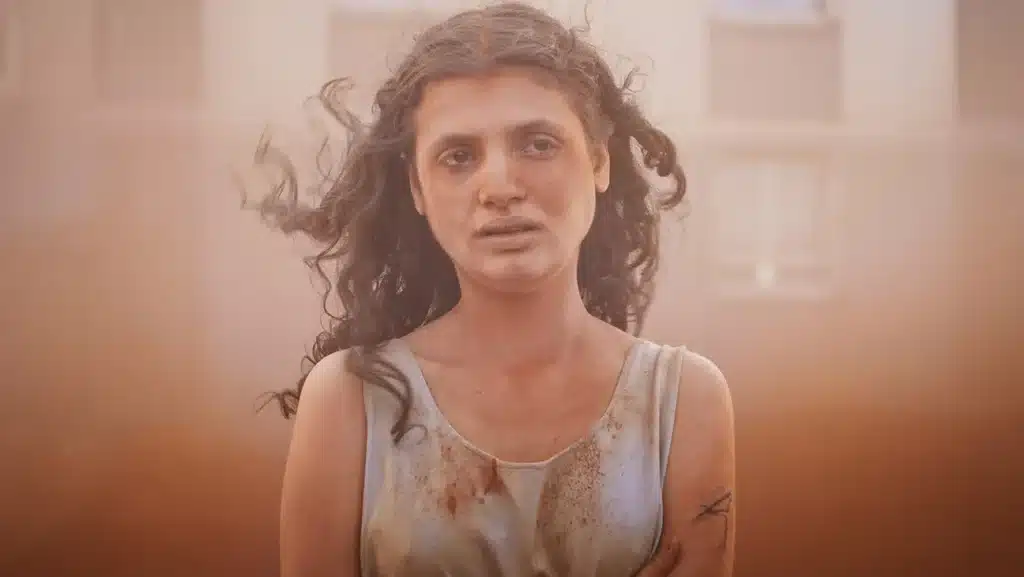
In the history of Ghost Stories for Christmas – at least of the most familiar, British and televised variety – M R James is the author who has tended to be most strongly represented. Which is fine, and fitting; Jamesian horror, with its subtleties and horrors intruding onto the ordered lives of (almost invariably) British gentlemen, has a timeless charm. However, when it comes to the storytelling genre, there are many other authors of a similar vintage who offered their own, innovative takes on similar situations, one of whom is Algernon Blackwood. His take on the ‘stranger in a strange land’ motif in his 1909 short story The Occupant of the Room forms the basis for a new ghost story adaptation, here from author and director Kier-La Janisse. The result is a respectful homage to the ghostly TV and cinema of its Seventies heyday, but it’s not just an homage at all; it actually feels like it bridges the gap between vintage and modern, with its own, innovative features and inclusions.

The screenplay itself is reasonably simple, and like the original story, rather sparse: a gentleman (Don McKellar) arrives at a remote inn in the Alps, believing that he has a booking. It’s cold; it’s nowhere near anywhere; the inn really is his only hope. However, the strangely recalcitrant staff inform him that the inn is full; he has no booking after all. They don’t suggest he might like to hunker down for the night, either, but instead tell him to try his chances elsewhere.

After some fluster and delay, and given his understandable reluctance to wander out into the precipitous dark, the hotel’s manager tells him that he can, if he wishes, take one of their rooms after all – but it is in the strangely liminal state of being occupied – sort of. It was originally taken by a visiting Englishwoman, an ‘experienced mountaineer’ who nonetheless set out two days previously and has not yet returned. The staff are as upset by this as they are about the gentleman’s lack of booking – not particularly, it appears – but, for an increased fee, he can take the room after all, on the proviso that the unhappy woman may, possibly, return. In his desperation and exhaustion, he agrees, but his time in the room not quite his own becomes an insular and profoundly dreadful experience.

That’s the setup, and it’s a recognisable setup for the inevitable series of disconcerting events, but the trick is in how this is expressed on screen. The story itself is rather minimal – that’s part of its appeal – but Janisse is able to add additional layers of dread whilst remaining largely faithful to the story, and thankfully, without padding out the story itself to feature-length (which wouldn’t work well), sticking to around the thirty-minute mark. She turns the story’s elements into a peculiarly introspective nightmare, paying due diligence to Blackwood’s quaint, nightmarish style, but also making it into something which, in just thirty minutes, carries a great deal of emotional weight as a piece of at-times experimental film. There are footsteps, noises, strange dreams, sure – but refracted through a framing device, whereby both broad vistas of the surrounding countryside and close focus on its details conspire to create an odd, heavy feeling (exacerbated by the film’s use of black and white) and a world in which people and their motivations are dwarfed by the blind, pitiless indifference of something profound, waiting out there. The use of paintings and photography which are not present in the original story makes for an ominous addition.

Making it all the more weighty perhaps, the people who form the heart of this story – one present, one present-absent – seem to be punished in the story for wilful decisions and behaviours. It’s a cautionary tale, particularly for one written in a brand-new century, another ‘who is this who is coming’ from another author preoccupied on some level with the dismal horrors to follow, horrors which spill out of the film and lend awful weight to the story’s own conclusions.

There’s a twist in this tale too, but its sudden reveal towards the close of the film only feels like the last shock in a sequence of bleak existential messages. Whilst sadly some of the dialogue is lost towards the end of the film in its crescendo of ominous strings, the film’s trippy, inventive climax is more than able to land. This both shows its awareness of its source material and also shows it striking out in some respects on its own. In some respects it feels similar to 2023’s To Fire You Come at Last – Janisse was executive producer on this project – another economical, respectful tribute to period horrors of the past which also feels bang up to date, with the same kind of layering of nostalgia and something more modern, brooding and knowing.

The Occupant of the Room featured at Celluloid Screams 2025.

Frankie, Maniac Woman (2025)

There’s a serial killer on the loose in LA. As a shock jock-type DJ jokes about it being someone with ‘mommy issues’, your thoughts turn pretty quickly to the standard: a man who loathes women. Which, to be fair, it usually is, but not today: the killer we see dispatching a terrified woman on the city’s outskirts is also a woman. No great shock, perhaps, given the film’s title, but a shock overall. We then skip back in time, meeting the same woman – Frances, or Frankie (Dina Silva) – working out at the gym before heading into town to play a gig. The security guy won’t let her in, openly disbelieving her when she says she’s ‘with the band’. Actually she’s in the band, a struggling, if talented singer and musician hoping against hope to get a residency out of tonight’s performance. Straight away, it’s turned into Frankie’s fault if the band isn’t successful in this. She hasn’t been doing enough to work on her appearance; she doesn’t even look like she’s lost any weight. And so on.

Sadly for Frankie, this treatment she’s getting from others is starting to manifest in an open hatred of women who, for her, have made the prohibitive grade: they’re slim and beautiful, whereas she’s not and whatever she gets told quite openly by the people around her, her as-yet unseen alter ego says aloud in even stronger terms. There are more reasons behind this than simply the fact that she’s sick of hearing that she needs to lose weight, but for now, that’s where her frustration lies.

One day, she decides she can’t take any more but, as she attempts to end things once and for all, a strange figure emerges out of the scrub nearby. He seems to know Frankie, and seems to know a lot about her, too. Rather than encourage her in her abortive suicide attempt, he seems to want to instil a different approach. This man appears to embody something of Frankie, mirroring her to an extent. Is it just her alter ego in a different form? Or something else?

In any case, he’s quite keen to urge her on to some pretty shocking ultraviolence, and Frankie isn’t particularly resistant to the message. At first it all seems to be a grand redress of the unfairness which has dogged Frankie for years, but actually it turns out to be a lot more scattergun than that, a kind of indiscriminate lashing out at everyone Frankie perceives to ‘have it good’, whoever they might be, male or female. It’s an equal opportunities gorefest, if you like, and one which is absolutely brutal in plenty of places.

Frankie, Maniac Woman marks a break from director and co-writer Pierre Tsigaridis’s prior work: so far, he has tended towards no doubt grisly, but supernatural plotlines, whereas this is much more of a cynical, even darkly comic slasher fantasy. If this means the risk of tackling big-hitting topics like suicidal ideation in places, then it’s all in the service of a film, as a whole, which strives to balance its key moments of absurdity against material which, if not exactly profound, is still knowing and unflinching. Certainly, we have seen a lot of equally graphic and unpleasant scenes down through the years, and often perpetrated against women: at least Frankie, Maniac Woman dispenses with the rather hackneyed final girl motif to give us a key character who is both villain and victim. As an audience member, it feels tragic that she’s going after people who are as much at the mercy of what feels like a rigged system as she is – at least in some respects – but the great meaninglessness of the violence is part of the point. Frankie has nowhere else to go.

There is something of a pause before the film moves into a final act, but on the whole, there’s very little let up. Lead actress (and co-writer) Dina Silva is great throughout, likeable despite everything she does, able to play up to the film’s more humorous moments, but equally plausible as a violent tour de force with a well-aimed kettlebell. If The Stylist put a feminine spin on the kind of horror we saw in Maniac, then Frankie, Maniac Woman carries on with that same journey, even if eschewing the emphasis on frailty which is there in spades in Jill Gevargizian’s film. Frankie has her moments, and we see the origins of some of her instability, but she’s not written in such a way that she comes across as easily breakable. This isn’t a film which paints in fine strokes, but then nor is the world it’s critiquing (at least in its incarnation here), so its big, bold, visually-ambitious display has an irreverent charm of its own – even if there are some minor lulls and stumbles too. The only really unforgiveable thing would be if the film wallowed in the same aggressive misogyny it purports to loathe, but it doesn’t do that – even if all it chooses to do (and do well) is to point out its indignities in singular, eye-popping fashion.

Frankie, Maniac Woman (2025) premiered at Grimmfest UK on Friday 10th October.

The Ugly Stepsister (2025)

Elvira (Lea Myren) is a young girl in love with the idea of being in love. More specifically, she’s in love with the idea of one Prince Julian, an eligible royal who just so happens to be a published poet: she pores over his verse incessantly. Briefly back in the real world, she, her younger sister Alma and her mother Rebekka are about to move in with her mother’s new husband-to-be in a very fine ancestral pile in Swedlandia – but it’s not a complete deviation from Elvira’s fantasy, as you can see Prince Julian’s castle from the window. On a tour of the new digs with her new stepsister Agnes (Thea Sofie Loch Næss), Elvira expresses her desire to marry the prince, looking longingly across the valley to where he lives.

Such an aim becomes something more akin to a duty, however, when her new stepdad dies nearly instantaneously, and like all good aristocrats, it seems he was actually penniless. He has that in common with his new wife and her daughters, who perhaps misrepresented their own wealth just a tad. Someone has to marry well, and quickly.

There’s a snag. Elvira is too plain to be a catch. Poor kid; she’s actually very pretty, rudimentary braces and all, but she has more of a doll face than the noble mien of, say, her stepsister, who fits in far more with the ideal: she’s tall, slim, blonde and dignified. When Prince Julian announces that he will be holding a prestigious ball in a month’s time, this only adds to the pressure for Elvira, both from herself and her mother: what’s a diligent parent to do, except dodge the funeral expenses for her newly-deceased husband in order to splurge on a few tweakments for her daughter, or in other words, her best hope for a luxurious retirement?

As the film progresses, we get a blend of 19th Century aesthetics and finishing school values with a 21st Century determination to embody them. Elvira and a whole host of other young hopefuls attend deportment lessons and a dance school; Elvira also undergoes separate ordeals, getting fake lashes (oh my god) and even a nose job, all blurring together as the only real course of action for a desperate, and genuinely lovesick teen. In all her hopeful, anxious glory, Elvira undergoes everything asked of her, even though she’s not a natural, and even though she’s soon shown that the ideal of the untouched bride and the loving, respectful partner are equally contrived. The film spares no blushes when it tackles the economy of women’s appearances; it spares no blushes when it deals with the sexuality at its core, either, with a few sex scenes which are genuinely, surprisingly graphic and about as far as it’s possible to get from the glib romantic verse Elvira likes so much. Given the period setting, the body horror which steadily increases as the film rolls on is set against what was a very real pressure on women to marry, and marry well. It was the only way to survive, let alone prosper in this era.

From the dark, panelled walls serving as a background for the hot pink opening titles, The Ugly Stepsister is all about the contrasts. This is a beautiful world of ringlets, cameos, satins and silks; it’s also riven with worms – there are lots of worms in this film, and in different forms – as well as blood, splattery gore and spoilage. As such, it’s made clear early – and often – that there’s a lot of darkness at the core of seemingly quaint fairytales, forcing us to notice (or to find out) that, when you look closely at some of the details which are glossed over so that the happily ever after can come to pass, traditional bedtime stories are potentially stacked with violence. There’s no sanitisation here, and director/writer Emilie Blichfeldt has a lot of grim fun with narrative gaps and overlooked character perspectives. It gets clearer what is going on here as the film progresses, but as we proceed, there’s a wide range of likeable characters to enjoy, even when they’re behaving deplorably. Agnes undergoes a horrible ordeal, as much as Elvira’s mania causes her serious harm and heartache, too. If the older women here are harsh and mercenary – which they really bloody are – then the point is still made that they’ve been ground down at the same mill as their daughters and pupils.

If, after an hour, you find yourself wondering where we can go next, then The Ugly Stepsister does not disappoint once we get to the batshit mad marketplace that is the ball itself. This event, and its fallout, leave us in no doubt of the film’s bigger message, even whilst drawing us on through it – a little reluctantly, perhaps, once all this bodily perfection starts to break down in graphic and often very audible ways too. This film feels like a Brothers Grimm (or Charles Perrault) mash-up with The Substance, this time for younger women, all reflected in the distorting mirror of a well-known fairy story – sometimes inventively, but sometimes very faithfully. The resulting film is a great success: this is a provocative, painterly body horror, shining new light on old ideas and ideals in engrossing and often darkly comic ways.

The Ugly Stepsister (2025) is available to watch on Shudder.

Scurry (2024)

It’s all going on in the opening scenes of Scurry (2024) as a calamitous event tears a literal hole in the fabric of an American city. At the bottom of a sinkhole which has opened up, an unfortunate man regains consciousness. He’s injured, but he has phone signal, and daylight is auspiciously close. Never mind that: due to a few other unexpected developments, his only option is soon to retreat further into the darkness where, to his shock, he discovers somebody else: a woman. She is almost inevitably injured, too, but there’s more. Unlike Mark (Jamie Costa), Kate (Emalia) has more than a clue about something else which is down there with them.

Kate initially isn’t much interested in teaming up with Mark (and it’s worth adding that their names aren’t given until much later in proceedings; this isn’t a social event). Her reasons for this aren’t delineated at first, but his seemingly paternalistic attitude towards her doesn’t help. He’s not at first much motivated to listen to he what she knows. Needs must, however, and as these two try to make an escape, now via the tunnels beneath the city. They soon come up against a strange, alien threat – a lifeform (a bloody familiar-feeling lifeform, actually).

There are some issues with Scurry, one of which is that it’s hard to keep things interesting once it establishes – very early on, hence no compunction about mentioning it here – that there’s something down there with them in the dark. It’s dark; it’s dangerous; this being known, the film has to work its way through a few rather contrived events to keep the peaks and troughs of peril coming, with a number of false hope moments (instantly recognisable by when exactly they occur in the film’s 100-minute runtime). The threat itself feels a little uneven, too. Is this creature deadly, or just as ill-at-ease down there in the dark, liable to get trapped or outwitted with comparative ease?

However, here’s another horror/sci-fi film with a skeleton cast, limited set and ample darkness which still does enough to potentially endear it to creature feature fans. It’s obviously a very claustrophobic film; possibly, it’s banking on an audience horrified by enclosed spaces and in that, it delivers. The long take approach works too, unfolding in real time with worsening jeopardy, or at the least the strong intimation of that, and decent performances. The fact that Mark and Kate are not instant buddies allows an extra complicating later to be added, and means their character development is more interesting than it might have been.

It’s possible that, based on what’s been written so far, it may be easy to spot a few similarities to other projects. Chief amongst those is The Descent, even if there’s not much descending overall, but there are shades of Cloverfield here, some Glorious in places, and without a shadow of a doubt, the creature design resembles a certain semi-comedic, militaristic creature flick from the 1990s, which hardly needs to be named. The creatures themselves, mostly rendered in CGI, are unfortunately a real weak link in the film, but it’s not the design per se; it’s the clear and obvious way that they’re not really there, and thus hard to read as a real threat. Similarly, the most significant injuries are CGI too, so there’s a surprising paucity of blood and dirt in a film where people are being menaced by bugs underground.

But, hey: even without reinventing the genre, Scurry clearly has some affection for it, and is written in such a way that a range of developments can unfold across the runtime. Fans willing to overlook a few things for the sake of a new film in their genre of choice will find enough here to entertain them, even if it’s unlikely to convert new viewers to the joys of subterranean sci-fi all by itself.

Scurry (2024) hit digital platforms on October 3rd.

The Severed Sun (2024)

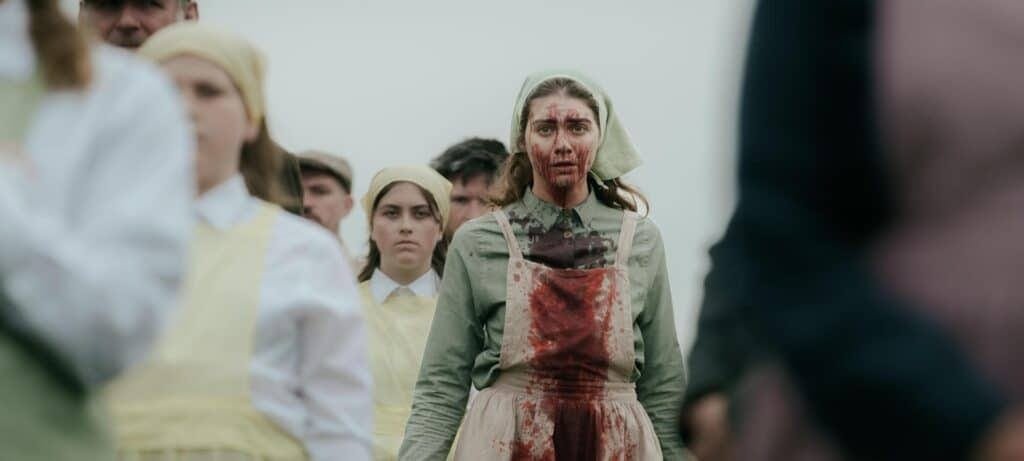
The Severed Sun (2024) opens in a remote religious community, just prior to a calamitous event. A young woman named Magpie (Emma Appleton) has, presumably with the tacit approval of her bruised and battered elder stepson David (Lewis Gribben), concocted a plan to poison her monstrous husband. Husbands tend to be monstrous, by the by, round these parts. A vase of foxgloves perhaps provides a clue as to how he’ll be dispatched; this appears to be a pre-industrial society, one where people lack access to any kinds of mod cons.

Or is it? At first, the sunlit uplands of The Severed Sun seem timeless, though perhaps with some clues – clothes, buildings – that this could be the early 20th Century. However, a few momentary inclusions disrupt this impression; this could be now, or it could be in the unspecified future. The film is never safely grounded in a specific timeline. What is certain is that this small group of people have put themselves under the power of an unswerving pastor – who just so happens to be Magpie’s father. This doesn’t seem to mean she enjoys special treatment; the pastor (Toby Stephens) has especially high expectations of her, as her dutiful behaviour is so enmeshed with his own soft power. When Magpie and both of her boys absent themselves from prayer meetings after her husband’s untimely, and very much accidental death, grief can only be used as an excuse for so long. There’s also work to be done: these people are subsistence farmers, working the fields by day.

However, something else is stirring here. Magpie seems touched by unsettling, fragmentary visions of some kind. She begins to succumb to sinful behaviour, seemingly at the behest of a dark ‘Beast’ figure. There’s something in the soil, Magpie asserts, but its influence begins to reach out, affecting both her and those close to her.

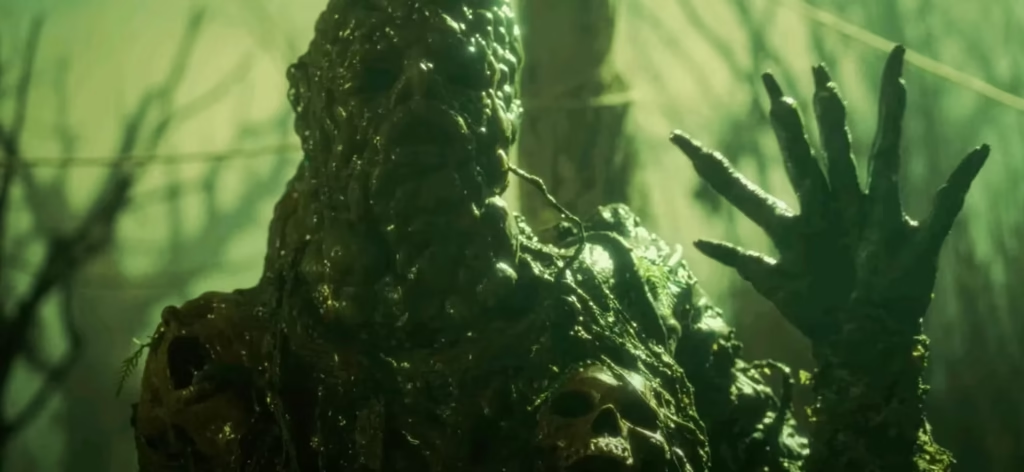
If this brief synopsis sounds familiar, then yes: there are folk horror elements here which read as familiar. In practice however, The Severed Sun has much to recommend it, and weaves a striking atmosphere while it steadily transforms many of the more expected, core ideas. Here, folk memory is all about the trappings of a lost civilisation, but a very particular version of civilisation, one which seeks to retain the most conservative, paternalistic elements of what came before – marriage, faith, authority. The world has reverted to a feudal system, blurring into religion at its edges, true, but mainly as a means to entrench old, regressive systems. In some respects, The Severed Sun reminds me of the Jim Crace novel Harvest (and I can’t comment on the recently-released film, only the book). There’s the same need to glean clues about an indistinct timeline; there’s a corrupt lord of the manor, exploiting supernatural belief as a new means (or at least an attempt) to further consolidate his pre-existing political power. The sight of the clan worshipping amidst the ruins of a church building is also reminiscent of Harvest, with its own village which never got around to building one. There are shades, too, of more typically dystopian ideas – of a future which has lost sight of many of the meanings in its past. Is that why the Beast comes into being? – Is this a repressed atavistic urge, an amalgamation of a horned god, Pan, Satan – or something else? The pastor certainly sees an opportunity in the appearance of the Beast (played by James Swanton), but perhaps this is a force which cannot be so easily harnessed.

It’s hard to comment on any folk horror (or even folk horror-adjacent) films made in a post-Midsommar (2019) world without mentioning Midsommar and its own isolated rural community. On first glance, there are some aesthetic similarities, but The Severed Sun is quieter, less grandiose – even if just as beautiful, and suffused with soft, golden light throughout (the film was actually made during a heatwave). The emphasis on the supernatural is different in the younger film, too, with something very clearly present, an embodiment of covert lusts and disobedient impulses. Sex and sexuality are important in the film, but a broader urge to question the system itself is important, too. And, if we’re talking genres, there are allusions to nature ‘resetting the balance’ here: if there’s been some event, some catastrophe, then in the world of the film memories of that event, too, are lost, save for a new creation myth and this remote, picturesque, stifling place. Is this, then, an eco-horror, where people’s attempts to reassert old, unfair systems trigger some kind of response from Nature itself? Maybe, and it’s an engaging possibility, but the film holds back on providing easy answers.

For funding reasons, shooting on The Severed Sun had to be scaled back to just 12 days, with a whole script rewrite at very short notice. More was planned here, with more overt elements and more exposition, but honestly, its real charm lies in the pared-back approach which director and writer Dean Puckett has taken, whether by necessity or otherwise. The narrative gaps provide space for interpretation; the light touch itself feels very purposeful, allowing the story to develop and meander into interesting places. All told, The Severed Sun is a beautiful, raw, singular piece of cinema, with superb performances, too.

The Severed Sun (2024) is currently on a limited cinema run ahead of its UK VOD release.

Fantastic Fest 2025: Coyotes

Coyotes (2025) opens in the most affluent part of LA, the bit near the big letters, and in so doing wastes no time establishing a tone for what’s to come: money and means are going to come into crashing conflict with a highly unlikely, but entertaining series of events.

We start with influencer Kat (Katherine McNamara) and her matching-outfit little dog, clearly signposted as victims-in-waiting when Kat pauses to take a selfie whilst walking said chihuahua and picks up a drooling, growling coyote in the frame (the coyotes look more like wolves, but what do I know? I’m from the UK; most of our animal fatalities are caused by cows). However, as with much of the rest of the film, the surprisingly enraged and intelligent coyotes often end up working in tandem, accidentally or otherwise, with other phenomena. Kat isn’t with us long (sorry, but this happens within minutes), dispatched by a hit and run driver as she runs from a coyote, only to then get partially eaten by a coyote.

Oh. So who else lives around here? Meet family man Scott (fan favourite Justin Long), whose minimalistic and no doubt very expensive home is apparently being plagued by rats in the walls; we meet him as eccentric exterminator, Devon, is suggesting that only the fullest response possible can really get rid of rats. Wife Liv (Kate Bosworth) and teenage daughter Chloe (Mila Harris) are, at that moment, more concerned by an incoming storm; we also hear about the recent wildfires which have been terrifying the residents of LA.

We have a few big possibilities for a crisis here then, although – given the title and the pre-credits sequence above – we happen to know which will dominate. The other unfortunate incidents simply provide added pressure, making escape more or less impossible and by necessity holing up a number of wacky neighbours in their respective houses, ready for their home invasion scenarios. Again, it’s quite clear that not all of the people we meet will be around at the end. We can be okay with that, even whilst pondering that way that no one seems to close doors in this universe; you’ve heard of open plan living, well. This film has an extreme version.

Coyotes takes a little time establishing what it clearly can’t wait to do: picking people off in a range of increasingly gory ways whilst simply enjoying being a creature feature. Sure, the characters initially feel quite thinly-drawn, right down to the feckless father and ‘keeping it all together’ mom who are our main focus, but of course this film doesn’t really need to be a sensitive character study. It just needs to get its pieces into play and to give us just enough to believe in. By using a range of techniques such as a knowing script, a building pace, props, split screen and a range of self-referential moments, it is soon able to launch into the action proper. Whilst coyotes are (as yet) underused as agents of human destruction in cinema, the film is still a grab-bag of familiar elements, drawn from a pretty encyclopaedic knowledge of genre cinema, much of which is made clear to the audience.

There are some weaker aspects here, however. Firstly, it’s always feels off when independent films make free use of clips from Night of the Living Dead, bearing in mind what happened to that film and why, exactly, it never made money for its own director. On the other side of the spectrum, some of the SFX/CGI work in Coyotes looks awfully like AI. If it isn’t AI, then the resemblance is unfortunate and will likely draw some fire, because some of the FX here undoubtedly has an Unreal Engine vibe which will emphatically not be for everyone.

If you are happy to look past this though, then it’s all good. You could suggest that there’s some social or environmental commentary going on, but if so it’s pretty light-touch in the mix. The film on the whole is a quirky, grisly tale of improbable perils and a likely crowd pleaser – particularly for a festival crowd, which makes its premiere at Fantastic Fest a sound choice. Sure, there are familiar notes and tropes being used, but for anyone with room in their hearts for something midway between Cocaine Bear and Day of the Animals, then Coyotes has more than enough to offer.

Coyotes (2025) received its premiere at Fantastic Fest and receives a general release on October 3rd.

Ash (2025)

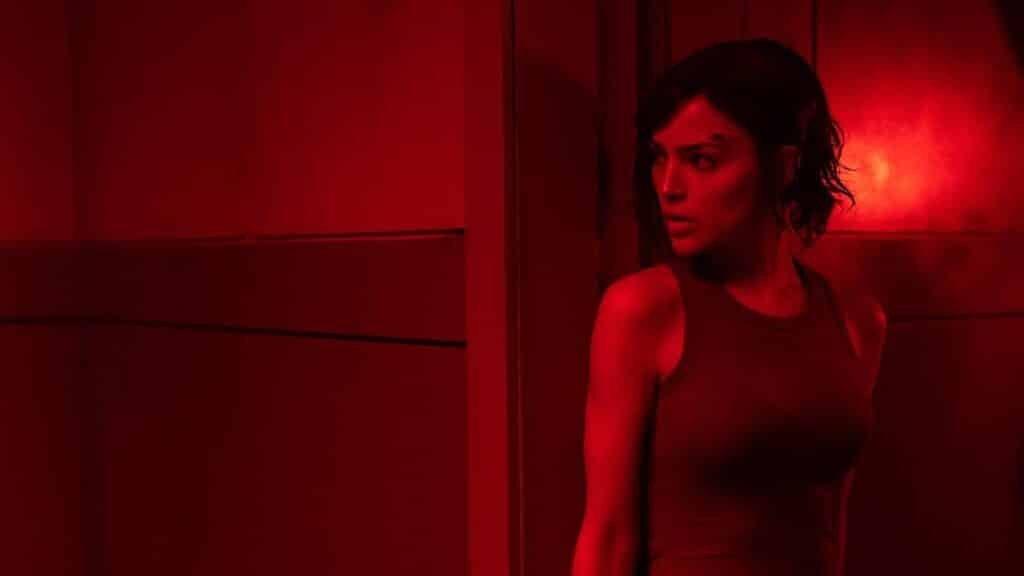
Ash (2025) is, for the most part, as much about thoughts, impressions and experiences as it is a conventional piece of narrative film. It comes in like a space-age fever dream, all body horror and blaring noise, before pausing on the lone, prone figure of Riya (Eiza González), injured and amnesic on the floor of a remote space station. Something catastrophic has happened: the computer keeps on euphemistically intoning that “abnormal activity” has been detected, though it’s some time before Riya sees the worst of whatever went down during her unexplained unconsciousness. There are bodies – the bodies of the rest of the crew, seemingly dispatched in a range of graphically cruel ways.

Directed by Flying Lotus – who also directed one of the chapters in the horribly laboured portmanteau film V/H/S/99Ash is, thankfully and appropriately, worlds apart from the earlier offering. The first impression is that the director saw and enjoyed Blade Runner 2049 in all its sumptuously colourful, brooding intensity and thought: yeah, how do we do that, only more? The result is, even if we’re only talking aesthetics, a triumph. We follow Riya as she explores first the station, then the barren, volcanic vista outside. Sensory overload is starting to kick in even before the opening title appears, so it’s a brief relief to get some flashback scenes, meeting the still living crew back before whatever horrors which occurred in this place.

The film feels deliberately written to be intense and lonely; González, thriving in a film which never gets too heavy on the dialogue, is more than up to the role, though things change very suddenly when another crew member appears. Working in orbit until now, Brian (Aaron Paul) is responding to a distress call, so he arrives expecting the worst, and duly receives it. Whilst his presence helps to some extent to fill in the blanks – it turns out it was Riya, for example, who actually made the distress call – it also prompts Riya to reveal that she can’t really remember anything. Not just in terms of the deaths of the crew; she can’t remember where she is, or who she is. Brian tries to reassure her that this kind of soul-searching has long been a part of her personality, but it’s small comfort to a young woman intermittently plagued with half-glimpsed memories and a building sense of trauma. She does, though, keep coming back to one idea: Clarke (Kate Elliot), whose body seems to be missing, may just be the one behind all of this.

Maybe, maybe not; nothing is real out here, except one fact which Brian is keen to press home: the station is irreparably damaged, and they need to leave if they’re going to survive. Taking some cues from the hostile planets of other sci-fi universes – clearly, terraforming is a mug’s game and it shouldn’t be attempted – they only have a brief window in which they can take off to safety. The mystery of the station may need to remain unsolved; Riya finds this idea impossible. She has to know what happened if she’s to move on, or even if she’s to find some peace of mind within herself.

Ash strives to balance its more spiritual concerns, if we can call them that, with a broader and more familiar plotline of exploration and settlement against the odds. This does mean that in places, the balance feels somewhat awry – not quite an existential tale, not quite a conventional tale – but Ash definitely rallies itself, setting aside its comparatively minor thematic and pacing issues to drive towards an assured and grisly, if increasingly familiar-feeling plot shift. As well as a successful and largely satisfying bigger picture, it also does well on the minor details. It’s hard not to mention Blade Runner again here, though the 1982 one this time: such as, the use of spoken Japanese by machines used by an English-speaking team, which is a puzzler, but also an engaging contrast with the tech which makes use of it, tech which is a mix of barbarous and quaintly functional, even oddly archaic. It’s even funny in places. Prometheus (2012) couldn’t do funny (at least on purpose).

There are arguably lots of sci-fi influences on Ash: moments or ideas from games like Starfield, films like Dead Space and Moon and even TV episodes such as The Very Pulse of the Machine can all be charted in this film, which, if nothing else, shows that it has a lot of independently excellent and diverse influences altogether, or that it is channelling similar, complex ideas. In places, perhaps Ash casts its net a little wide, but it has so many superb qualities that it hardly matters, come the end. It’s so startlingly beautiful, for one thing, that you can forget any minor concerns over its more obtuse elements – and then, its finesse and vision more than carry it to its ending. The more I think about it, the more it feels like this could be a cult classic in waiting, and a film which will eventually garner an enthusiastic fan following.

Ash (2025) is available to stream on Shudder.

Traumatika (2024)

We have an unusual and specific start point in Traumatika (2024): Egypt, 1910. A man crosses a stretch of desert, clutching something he clearly wants to bury and forget, as he’s haunted by visions of his deceased son. This death – this murder – is linked to the object he’s carrying, a statuette of a pagan entity known as Volpaazu (relative of Pazuzu, maybe).

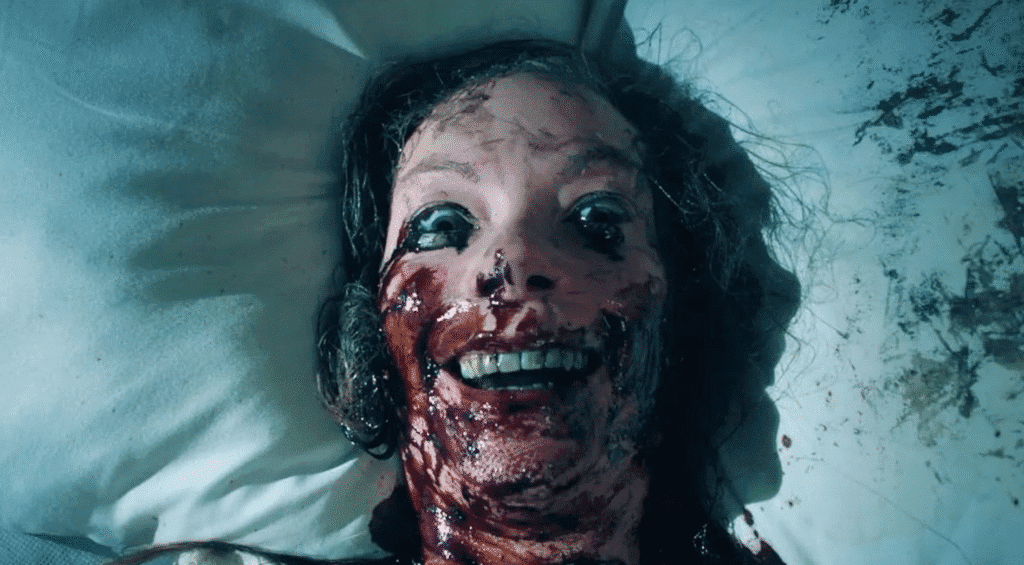
You get the distinct impression that the buried item will somehow find its way out of the sands of Egypt, and you’d be entirely right, at least to judge by what we first see once we have moved forward to our next chapter: California, 2003. We listen to a child making a 911 call, begging for help because his ‘mother is a monster’. He’s not wrong; it’s moments before we get this idea. Abigail (Rebekah Kennedy), as she stalks around the dilapidated, shadowy property, is terrifying: there’s no question permitted here. Covered in blood, gore and sores, scuttling around like a woman possessed, it turns out she is, in fact, a woman possessed.

Director Pierre Tsigaridis has form for these kinds of deliberately overblown horror spectacles, even if we can accept that, in Traumatika, he is reaching for far more emotive and emotional subject matter along the way. Two Witches (2012) was one big love letter to Sam Raimi and the excesses of supernatural-tinged gore, the kind of thing you either adore or abhor. Here, he has unashamedly done it again, this time invoking demonic possession in all its screeching, laughing, crawling glory, albeit forging interesting links between demons, sacrifice and contagion, which makes for a more than acceptable horror premise. Rebekah Kennedy starred in Two Witches too, and here she’s back, cementing her reputation as a damn fine genre actress, giving a lot to the role – whether this be the crazy physicality necessary, or the emotional vulnerability. The latter is important, because there’s more at play here than a relatively simple story of artefact-derived madness.

The film backfills its occult story with a story of family trauma, with the demonic entity handily finding purchase in a family already steeped in trauma and abuse. It’s deliberately grim and challenging in places, and an obvious criticism to level here is that the more emotive aspects can feel like an uncomfortable fit in places: intergenerational trauma married to the film’s relentless kind of splatter (particularly in the film’s first half) might not sit well with everyone. Personally, the film’s relentless early pace allows little time for these concerns, and personally, its good, even great qualities are enough to hold things together.

Whilst the fact that 2003 is presented here as a remote, historical era (right down to the Skinamarink-style retro kids TV footage) is a little galling, Traumatika has a lot to give. It’s a gory, violent, colourful, beautifully-shot, thumping great clout of a film, giving an initial dose of sensory overload which helps to set out its stall; perhaps the final leap forward to the present day is a leap too far for the modest eighty minute runtime, but it only starts to drift a little towards its close. What has come before can sustain it. It utilises a range of shooting styles, with the child’s eye view a particularly effective (and unsettling) motif, and there are great, horror-friendly sets throughout, good performances and a genuine sense of everyone being fully on board.

So whilst Traumatika is sometimes cluttered, sometimes a little free-falling, it’s only occasional, and it’s hard to deny Tsigaridis’s zeal and affection for the horror genre. He has striven to do more here by building on Two Witches, linking (surprisingly given the title) trauma with his more expected OTT elements, whirling us through a decently made and, in places, ambitious film.

Traumatika (2024) opened in select theatres (US) on September 12th.

Darkest Margins is coming soon – check out our crowdfunder

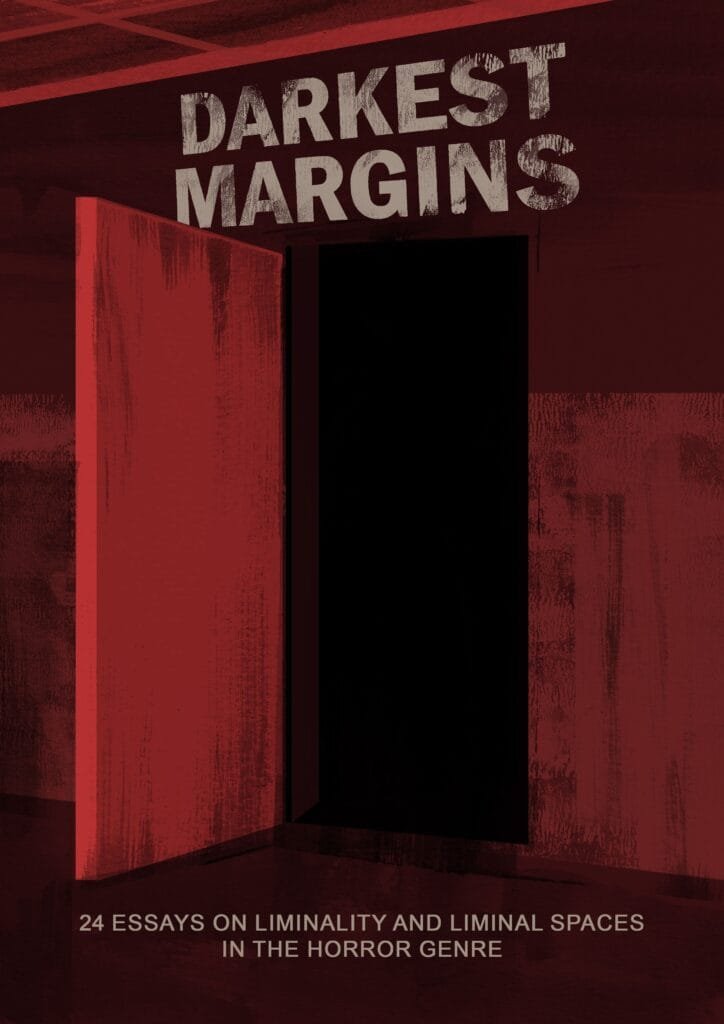
For those of you who still have affection for print media – and why on earth wouldn’t you? – Darkest Margins: 24 Essays on Liminality and Liminal Spaces in the Horror Genre is a completed and upcoming project to watch. Cards on the table: I’m fortunate enough to have a chapter included in the book, because I’m not one to waste an opportunity to talk about The Blood on Satan’s Claw (amongst other titles), particularly from the perspective of…actually, take a look at the link itself, if you would like to find out more. That way, you can also read about all the other essays included, covering such diverse subject matter as Dario Argento’s Inferno, Flatliners, The Blair Witch Project, Hellraiser, Yellowjackets, Skinamarink, I Saw the TV Glow and many more.

The focus of the book is the idea of liminal space – those ambiguous, disorientating places and states which have proven so vital and important in the horror genre. Liminality is a broad church and this is represented through the sheer range of essays, across TV, film, literature, art and video gaming, as well as across geographical, anthropological and psychological spaces. The tone is academic, but all of the contributors are fans first and foremost – meaning detailed, analytical but always enthusiastic perspectives.

The idea behind the crowdfunder is simply to help cover the print costs whilst offering a number of perks – each linked to a specific chapter – which you will then receive alongside your copy of the book itself. Everything from stickers to comic books to art prints to eerie children’s toys are available; simply pick the perk you like the best, and it’ll be included with your copy of the book. There are some other perks available: Darkest Margins editor and contributing writer Matt Rogerson is also offering the chance to pick up a bundle deal including his two other books to date: The Vatican vs Horror Movies and his newest, Fulci’s Inferno: Faith in the Films of a Horror and Giallo Auteur. Included in this bundle deal will be a copy of my brand-new forthcoming book Celluloid Hex: The Witch in Horror and Genre Cinema, which I’ll be posting about in more detail soon.

There are a range of perks to choose from, dependent on budget and preference: why not click on the link and take a look? Your support is massively appreciated and Matt, 1428 Publishing and the writing team can’t wait to bring this book to its audience. Thank you.

Here’s a link to the crowdfunder itself…

And here’s a link to the 1428 Publishing social media account, which is probably the easiest place to find out more.

Celluloid Screams 2025 is coming!

Deathstalker

After the notable outlier that is London’s FrightFest, the autumn is when a large share of the UK’s horror and genre film festivals tend to get going. And, in its usual late October slot, Sheffield-based fest Celluloid Screams has recently announced its full 2025 programme, with weekend passes about to go on sale (midday on Saturday 13th September). As ever, it looks great: the festival will be showing a blend of home-grown and world cinema, mystery grindhouse, classic horrors and a sizeable roster of short films (which often wind up being my favourite films of any festival).

Before mentioning some of my own highlights from the programme, it might be useful to mention a few points about Celluloid Screams which might sway people who are interested, but don’t know Sheffield very well. Firstly, if you don’t drive, the venue for the festival is about two minutes’ walk from Sheffield’s main railway station, or a couple of minutes longer from the bus station. There’s reasonably priced parking, lots of cheap places to eat within walking distance of the venue, or a decent cinema café serving alcohol, coffee and meals. There are lots of hotels nearby, some of them budget, and the passes/tickets themselves are very reasonable, considering a weekend pass will also get you into all the extra events – speakers, exhibitions and so on (more below). If you’ve heard of the festival but ‘never got around to it’ for any reason, it’s well worth a look and it’s hosted by a friendly, knowledgeable bunch who have been at it for years – you really couldn’t ask for a better crew or a nicer, more appreciative audience.

Onto the programme…

Queens of the Dead

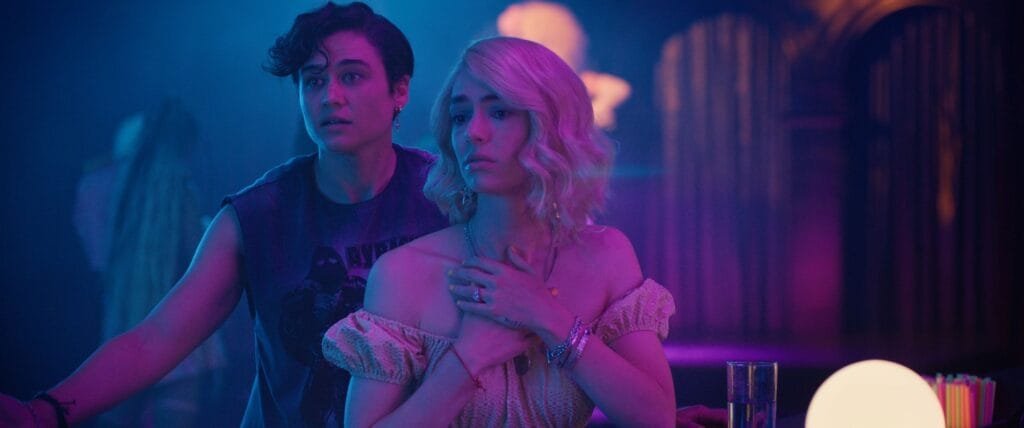
This year, the festival’s opening gala screening is none other than Tina Romero’s first feature Queens of the Dead. If her father enjoyed giving screentime to various and quite diverse zombified members of the public (I’ll always wonder about that Hare Krishna guy), then Tina Romero has gone a little further by placing her take on a zombie outbreak at the doors of a drag show at a Brooklyn nightclub. On a similar note, and one of the most fun, noteworthy spins on the zombie genre in its own right, the festival will also be showing Return of the Living Dead in honour of its fortieth anniversary: if Tar Man doesn’t get a round of applause, I’ll be very surprised…

There are other classics: look out for Seventies portmanteau horror in the form of Tales From The Crypt (with Joan Collins proving she was every bit a horror starlet before she dedicated her time to soap opera) and – yes, it’s nearly twenty years old – there’s a 4K restoration of Pascal Laugier’s raw, philosophical and bloodily divisive Martyrs. There will also be a mystery 35mm grindhouse screening just before midnight on Saturday – last year it was Pieces, so that gives an idea of the type of film which tends to occupy this slot…

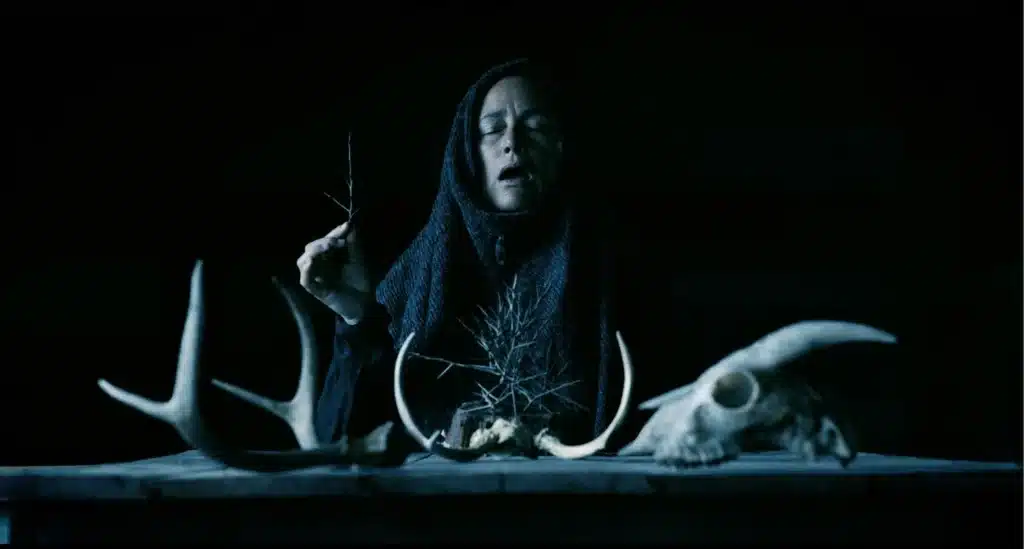
New titles include Mother of Flies, the newest title by festival alumni The Adams Family – with John and Lulu Adams around to introduce their film and host a Q&A after the screening. Witchcraft on film – and what is arguably a newer, more savage renaissance of this subject matter in the past decade or so, is of particular interest to this writer, so the Adams family take on the topics of illness, magic and belief can’t come soon enough.

There’s more uncanny and disquiet in Kier-La Janisse’s The Occupant of the Room (based on a classic story by Algernon Blackwood), and a discussion with the director and writer herself afterwards.

Heading into more modern horror terrain, Man Finds Tape (directed by Paul Gandersman and Peter S. Hall) offers a spin on the modern horror fascination with recorded footage, particularly analogue footage – as siblings discover a series of mysterious video recordings which suggest a disturbing secret, threatening their Texas town.

There’s also been a big uptick in sensory horror of late, from Birdbox to The Undertone, and the UK premiere of Noise (directed by Kim Soo-jin) a character with a hearing impediment, haunted by sounds which seem to relate to her sister’s disappearance.

Mother of Flies

If you prefer a bit more fantasy and OTT fare then the name ‘Steven Kostanski’ alone should do you; this year, his new title, the fantasy epic Deathstalker will be screening. There’ll also be a new instalment of unintentionally-hilarious Public Information films in the form of Scared Safe Vol. 2 (the festival ran a compilation of PIFs a decade ago, and oh god, they’ve found a load more!)

The closing gala this year belongs to festival favourite Julia Ducournau, whose film Titane took off the roof when it screened four years ago. This year, her new feature Alpha promises to follow another uniquely troubled teen on her own path to reckoning – and it’s sure to be an experience. Will it be divisive? Almost certainly, given the discourse and discussion already out there. Will it be worth seeing and experiencing? Absolutely.

Alpha

This is of course just a snapshot: head over the festival website now to check out the complete programme and for those all-important festival passes, you need the Showroom Cinema site – with day passes and individual tickets going on sale later. Happy purchasing!

The Balconettes (2024)

The Balconettes (2024) is an odd customer. It perhaps starts with the title, a slightly clunky translation of the French title, Les femmes au balcon – choosing a word which may indeed mean ‘women on the balcony’ but is more likely to conjure the word ‘bra’ for most Anglophone audiences. It’s not the last time that the film seems to foreground undies, when it really ought to be focusing on its more serious points more seriously – but we’ll get to that.

The film is set in Marseilles; there’s a heatwave, and we start with the camera roving over some apartment frontages, looking at the residents trying to keep cool. It lingers on a woman called Denise, who was flat out on her own balcony until her loutish husband decided to hurl water over her to get her up on her feet: he’s ‘hungry’, and apparently unable to fend for himself. Denise sees red at this intrusion – clearly this is the final straw – and decides to deck her hubby with a heavy iron dustpan, making sure to finish the job. This, by the by, is only briefly relevant: Denise may have been au balcon, but she’s not a balconette.

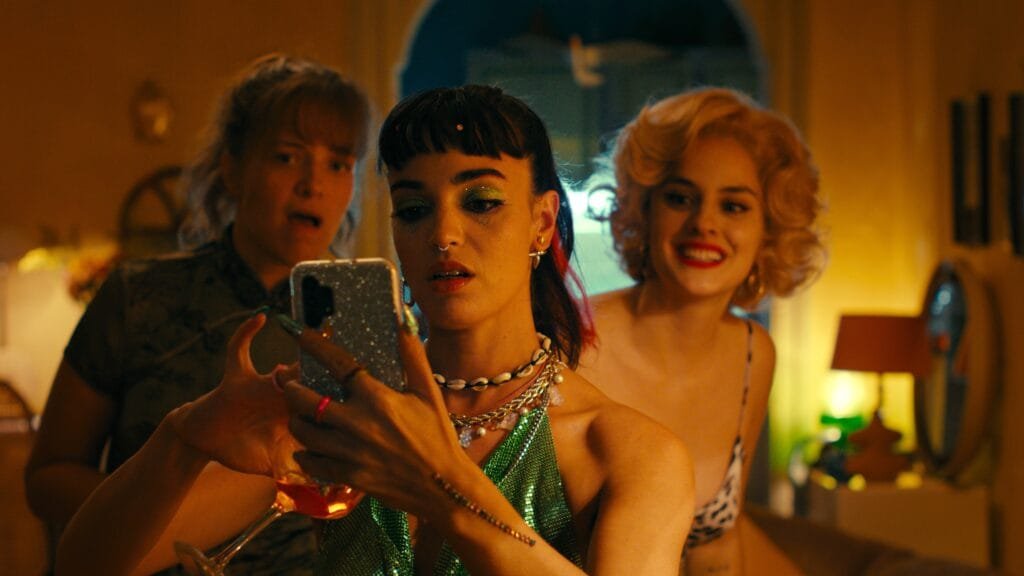
Instead we have Nicole (Sanda Codreanu), a struggling writer; Ruby (Souheila Yacoub), a free spirit/camgirl, and Élise (also director and co-writer Noémie Merlant), an actress, who spends a share of the film dressed as Marilyn Monroe, after hurtling from Paris to Marseille to get away from her overbearing husband. The three young women enjoy being reunited, drinking and dining on the balcony of their apartment. While they’re out there, they start communicating with the Hot Guy From Opposite who has, unbeknownst to him, already started to become the inspiration for Nicole’s new novel.

Despite the brief outbreak of violence at the start of the film – and Denise (Nadège Beausson-Diagne) doesn’t really spend much time with the other women, save for popping in and jokily confessing her crime to an equally jovial Nicole – The Balconettes endures a painfully quirky start, all told. The giggly reunion, the unspoken crushes, the mild voyeurism and the colourful underwear airing everywhere (this is a very knicker-rich environment) all suggest a romcom kind of affair, and when the girls are finally invited over to Hot Guy’s apartment opposite, the giggling and the drinking continue. However, the better they get to know the Hot Guy From Opposite, who turns out to be a photographer, the more things start to become complicated. He asks to photograph Ruby; she agrees; she stays behind – and the film takes a much darker turn.

The Balconettes could easily withstand this about-face, and to an extent it does, but things dwindle here, as each woman separates and goes her own way for a while. Issues occur as the film elects to park the mystery of that fateful night, leaving us with a negative space in the film which takes up time and pace before handing down even the most basic answers. Even if you can guess what’s going on, it still feels like it runs out of steam. It elects to provide more backstory for some of the characters, which is why we get this shift in pace, but in the main this means presenting all of the men – with the exception, also somewhat quirkily, of a kindly gynaecologist – as comic obstacles at best, but more likely stroppy, overbearing and terminally horny monsters. This isn’t without precedent, in film or in discourse more broadly, but given the ways in which the film drifts further and further into big, uncomfortable topics, the film’s colourful, idiosyncratic approach sits uncomfortably at times. There’s feminine bonding and clashing fashions; then there’s gore, there’s splatter, there’s some surprisingly explicit content, and then it goes from realist moments to outright supernatural fantasy; the film is both diffuse in places, and yet very crowded more generally.

For all that – and for all of the genre-straddling goings-on, which will almost certainly make it harder for this film to find a large and receptive audience – there’s enough bizarre energy and ambition here to make The Balconettes oddly, dementedly appealing in enough ways for me to say: it’s somehow impossible to really dislike it. It’s eccentric, overdrawn, and at its worst it makes light of male-on-female violence, which is a tough sell. But its acid colour aesthetics, its great locations and sets, its moments of real warmth between friends and its attempts to combine horror, comedy and Millennial liberation speak at least to big aspirations on the part of Merlant, who’s guilty of throwing a lot at this one, but not of playing it safe, at least. Are the fart jokes a bridge too far? Maybe. But whilst The Balconettes is uneven, it’s charming, and weaving that kind of charm together counts for a good deal.