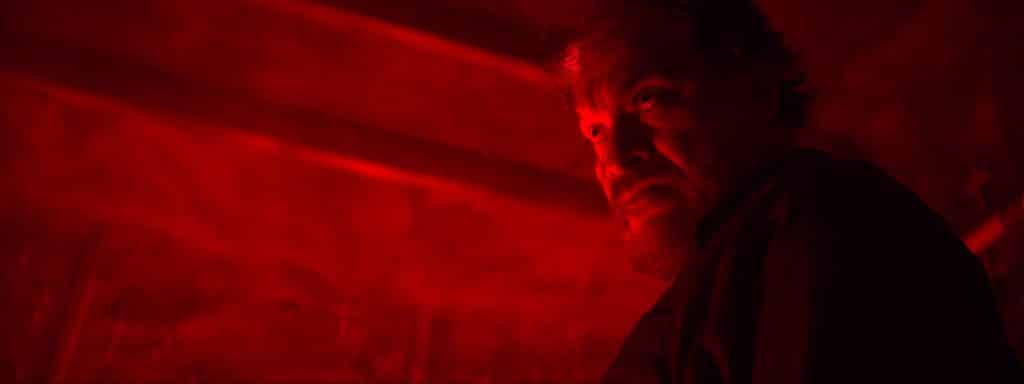
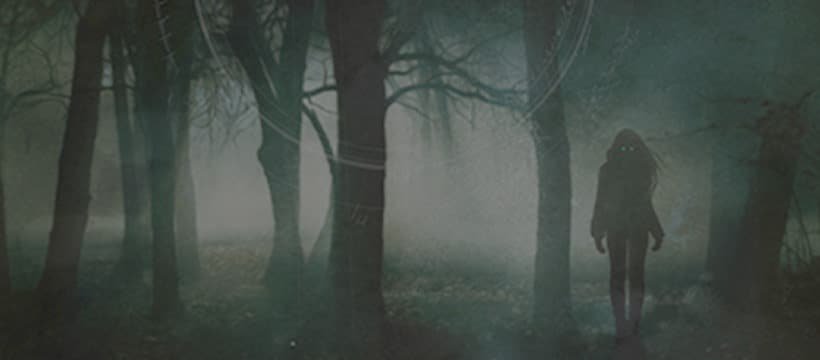
Hell’s teeth – quite literally, as it happens; two competitions in one week? Well, lucky you, as we also have a copy of Belzebuth to give away. For fans of Mexican horror (which always seems to be ramped up to a level that evades non-Mexican horror), Belzebuth melds the tragedy of a school massacre with a decidedly occult potential explanation for the massacre, as the recently-traumatised Detective Ritter (Joaquín Cosio) investigates. Then the Vatican shows up – something which rarely bodes well in horror, let’s be honest.
UK readers: to win a copy, simply email the site with ‘Belzebuth’ as the email title. It couldn’t be simpler to potentially get some Latin American-flavoured demonic darkness into your lives.
If you are successful, you will be contacted after 12pm (GMT) on Thursday, 23rd September. (GDPR compliance: all identifying information will be removed from our server after the competition closes.)
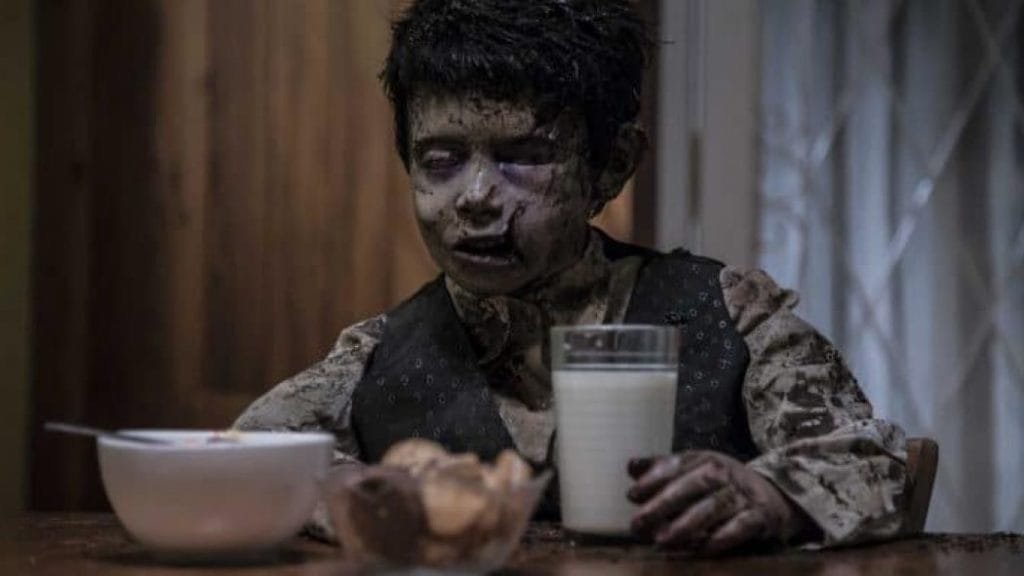
Out now from Acorn Media International, and yours to win on Blu-ray comes Terrified, a Shudder Original title set in Buenos Aires. When a cop calls in two paranormal investigators to explore the strange goings-on on this city street, things go from bad to worse as they attempt to untangle this flurry of manifestations. This supernatural horror plays with the ‘haunted house’ motif, focalising its scares into separate stories (and houses on the street) and showing the importance of personal perspective on how these phenomena are perceived. It’s very atmospheric and choc-ful of eerie, unsettling supernatural content, and all UK readers need to do to win a copy of the film is to answer one simple question:
What is the Argentinian title of Terrified?
Email your answers to the site email address by no later than 12pm (GMT) on 21st September, 2021.
GDPR compliance: correct entries will be chosen at random and all personal details will be deleted immediately after the competition closes.
At the risk of repeating myself, as I’m sure I have down through the years on the site, short films are often where it’s at in terms of promising new ideas, styles and approaches. When I watched Standing Woman as part of FrightFest’s recent short films digital package, I thought how well the film encapsulated all of that, taking a novel idea and addressing some fundamental human concerns in its brief but effective dystopian vision.
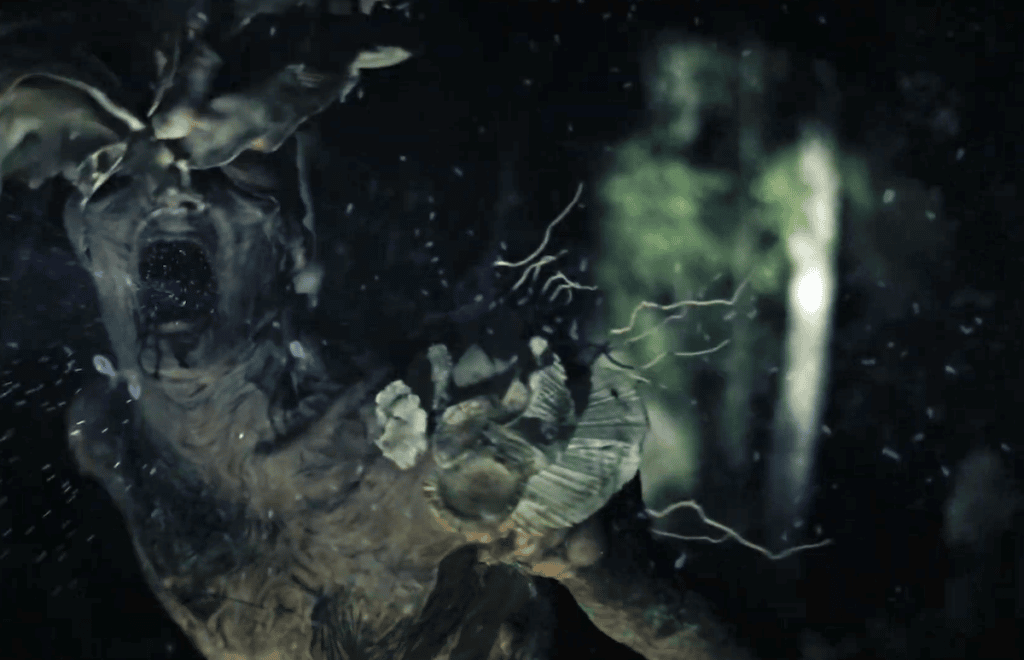
It’s often said that ‘the road to hell is paved with good intentions’, and that is very true in the world of the film. Here, the government have decided on a novel approach to punish prisoners, not imprisoning them anymore, but by making them part of a new environmental campaign – literally turning them into plant matter, planting them in the ground and using a new process to change them. What happens to a person’s humanity in this brave new world? Once again, in a theme which is finding its way onto our screens more and more regularly, this is a piece of eco-horror as well as an unsettling vision of a world moving from the ridiculous to the sublime, and all in an ostensibly good cause.
I was delighted to connect with the director of Standing Woman, Tony Hipwell, who kindly answered a few of my questions.
WP: Firstly, more a comment than a question, but congratulations on Standing Woman. It is a fantastic piece of work, communicating so much in such a short running time. Tell us how you came to be involved in the film – an adaptation of a Japanese novelist’s work, if I’m correct?
TH: I became involved with Standing Woman when a friend of mine, Max Gee, sent me a screenplay she was working on as part of her PhD. She had come across a short story by Yasutaka Tsutsui and adapted it largely for personal enjoyment. She sent it to me for feedback and because she thought I’d enjoy it. She was right. I was immediately enraptured by the world it presented.
I knew we could make it despite the challenges of creating the tree people and so Max and I began a passionate pitch to Yasutaka Tsutsui to acquire the screen rights and produce the film. His work has been adapted into acclaimed anime films in the past, so we were nervous of being able to achieve our goal; but after many months of careful negotiation we were granted the rights. What followed was several years of script development and deep conceptual design to develop the look of the tree people and build a budget, while we assembled an incredibly talented crew.
WP: Standing Woman has been screening at a few acclaimed film festivals this year, such as Fantasia and FrightFest. How has that been going?
TH: The festivals have been great. Fantasia was digital for many, but they did an amazing job of creating social spaces for filmmakers to meet online and provided an incredible selection of films to view. I don’t think I’ve ever watched as many films in as short a time frame as I did with Fantasia. FrightFest was especially enjoyable as it was our UK premiere and the first time we’d been able to see the film on the big screen ourselves. It was also the first major film festival to be back at full capacity in the UK and the atmosphere was fantastic. It also meant I could meet other filmmakers in person, which was a treat after the last 18 months! We’re excited to see where the rest of the run takes us!
WP: As mentioned above, the film could be said to fall broadly under the category ‘eco-horror’ – a dystopian vision of the near future where care and concern for the environment takes a dark turn. Could you tell us any more about that – did you draw inspiration from any other films or TV, or any other sources other than the screenplay?
TH: The chief inspiration for the film was the screenplay and short story. It was a rare case where practically everything you needed was on the page. That said, there were a lot of stylistic and aesthetic inspirations that drove the approach. Given the source material, I was very keen to bring a Japanese voice to the film and that came through some of the cast and crew as well as the vast amount of anime and Japanese cinema, material that I’ve been influenced by for most of my life. Broader inspiration came from filmmakers like David Cronenberg and Paul Verhoeven. Their approaches to body horror and political satire had a huge impact on me when I was growing up and I couldn’t imagine another way of tackling the tone that didn’t harken back to their work.
There was of course the political climate. The film took five years to produce and the world saw a great deal of upheaval in that time. What went from quite a far-fetched scenario suddenly started to feel very possible, should the technology become real. It’s been interesting that we’ve had a lot of comparisons to Black Mirror, which is very flattering, but it was not something we were trying to copy as I felt it was something many had tried to do and failed. We simply tried to focus on the drama and reality of the story and characters rather than force a style on them.
WP: How challenging is it to generate empathy and to make an audience care for your characters in a short film format? You’re an experienced short film maker – what have you learned along the way?
TH: The simplest thing I’ve learned in terms of empathy is to focus on character. It’s something that I’m always trying to improve, be it on the page, how I work with an actor or place the camera and time the edit around them. It is always challenging to generate empathy because it needs to feel effortless. You don’t want the audience to feel the mechanisms at work that are coaxing them to feel something in particular. It should all feel natural and somewhat inevitable and a large part of that comes from life experience. The longer you’ve been around, the more people you encounter and the more that feeds into the stories you tell. As long as the audience can recognise something of themselves in the characters, you will gain their empathy. Hopefully we have succeeded in that with Standing Woman.
WP: Short films, in my opinion, are often unfairly under-viewed as they tend to screen at festivals, and then go without a wider release. Do you have anything to say regarding that? How do we get people to see the film?
TH: The issue of discovering short films is something I’m actively discussing right now. There does seem to be a frustrating inability to readily find them. There are of course platforms like YouTube, but that feels like a complete lottery for discovery and other platforms like Vimeo suffer from a small audience footprint. There are some great channels like DUST and ALTER or Arrow which champion Sci-Fi & Horror work. If you can get acquired by those channels, it gives you better visibility which is what shorts are often designed for – be it to boost your profile or that of a project. There is also the anthology route, which seems to be something audiences enjoy, albeit within specific genres. There is sadly no one-size-fits-all approach. For our part, we are very interested in either of those routes mentioned if we can and it will be something we’ll be considering very carefully as we move forward.
WP: Finally, you have recently completed what I think is your first feature-length, which I believe will be screening at Dead Northern here in York, UK later this month. Tell us a little about that…
TH: My feature playing at Dead Northern is actually my second. Both are co-writing and directing efforts. The first was Whoops! about an accidental serial killer, which premiered at Raindance and was the only British film selected that year for Raindance on Tour. My new feature, Zomblogalypse, is based on a web series I started with Hannah Bungard and Miles Watts back in 2008. A film version is something we’ve been wanting to make for a long time and we finally hit on an idea that we felt worked for a feature.
The film follows the same characters as the web series and picks them up ten years into the apocalypse where they have become so bored by it, they decide to make a film to commemorate their exploits and pass the time. Little do they realise that making a film at the end of the world is even more difficult than it was before. It’s essentially an apocalyptic mockumentary. If you crossed Shaun of the Dead with Tropic Thunder you’re halfway there. It was shot entirely in Yorkshire with a local crew and is the complete opposite of Standing Woman in terms of tone and style.
WP: Thank you very much for your time!
TH: I hope those answers work for you! Thanks!
Keep your eyes peeled on the autumn film festival schedule to stand a good chance of seeing Tony’s work and as/when we know more, we’ll say so on social media.
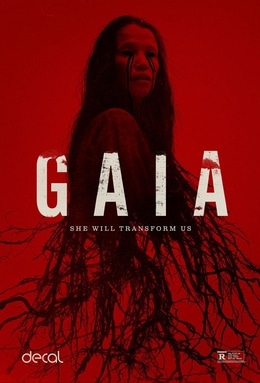
It’s perhaps little surprise, as discourse about man’s relationship with the natural world becomes more and more urgent, that the phenomenon of ‘eco-horror’ is appearing more on screens, too. Whilst audiences have long been warned not to go into the woods, it’s the natural world itself which now poses the threat. But Gaia (2021) is a little more complicated than that, offering a mysterious culture and practices of its own, navigable only by a tiny number of adherents to a new, pantheistic system. The worldview which it weaves is by turns beautiful and ghastly.
Two rangers, Gabi (Monique Rockman) and Winston (Anthony Oseyemi) are undertaking surveillance in an unexplored area of forest in a region of South Africa. Their use of a drone to record and explore – right up until this technology fails them – is a useful indicator of what’s to follow. The two rangers become separated and it seems they’re not alone here, either: Gabi accidentally sets off an animal trap set by father and son Barend (Carel Nel) and the nearly-mute Stefan (Alex van Dyk). Her leg is badly injured, but when they realise what has happened, Barend and Stefan take her in. Theirs is a strange, insular lifestyle; it’s an extreme version of living off grid, something triggered by the loss of Stefan’s mother to cancer some years before. But the forest is more than beloved to them for her memory’s sake, as it seems these two have a belief system of their own out here, and Gabi’s presence is very soon a complicating factor. Before she can heal up and move on, though, something which Barend is very keen on, Gabi is confronted by what is out there in the forest, and the claims it makes on Barend and Stefan.
Gaia could have worked perfectly well as an intense character study, looking at what isolation has brought to bear on these two men and the implications of welcoming an outsider – particularly given the impact of sex and sexuality here, a theme which persists throughout. But there is a great deal more here, a very meticulous and appealing, if horrific mythos where the forest itself dictates human behaviour, demanding sacrifices, or very literally consuming people. This process resembles those eco-friendly ‘mushroom suits’, a great idea which is nonetheless very creepy, or in some respects the Arcimboldo paintings from the Renaissance era, but with a much headier, trippier and nastier edge to it – the unwilling absorption of body and mind is not a pleasant thing to see.
It seems that as we learn more about the impact of fungal spores on ecosystems, we find ourselves with more scope to interpret this process as invidious, and a great opportunity for a horror story; the cultural links between mushrooms and poisons, as well as hallucinogenics, are also ripe for use. It’s no doubt just unfortunate timing that Gaia has appeared so soon after Ben Wheatley’s film In The Earth; on paper, and in some respects in how they are directed, there are many similarities. However, where In The Earth is quite raw in places, with black humour cropping up throughout, Gaia is altogether more intricate and intimate, with nature itself choc-full of that blind, pitiless indifference we’re so afraid of – a Mother Nature who exploits, as well as nurtures. By the end of the film, you’ve been shown a worldview where people are fast becoming obsolete. It takes its time, but it’s pretty damning.
Gaia (2021) screened as part of Arrow Video FrightFest 2021.
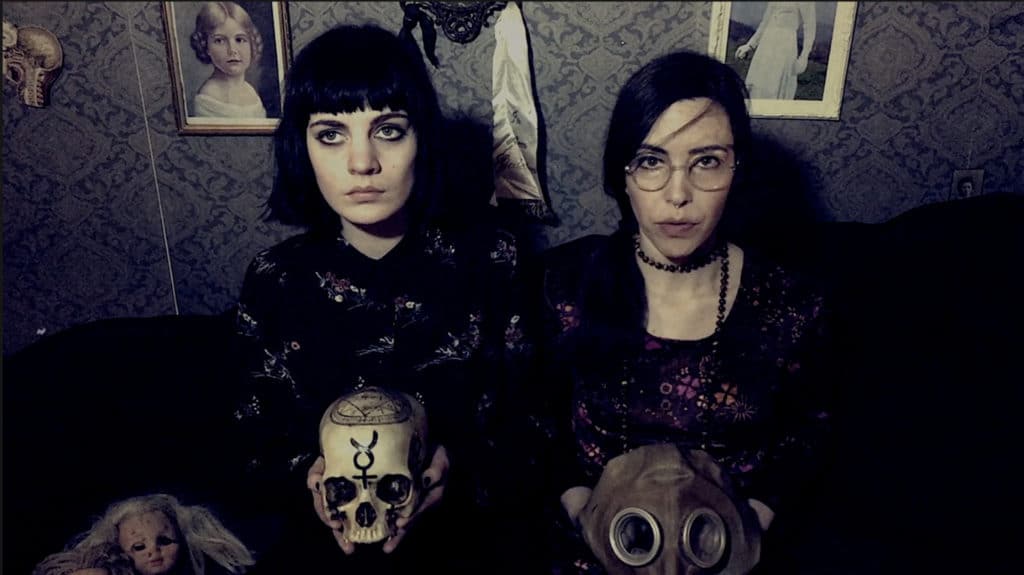
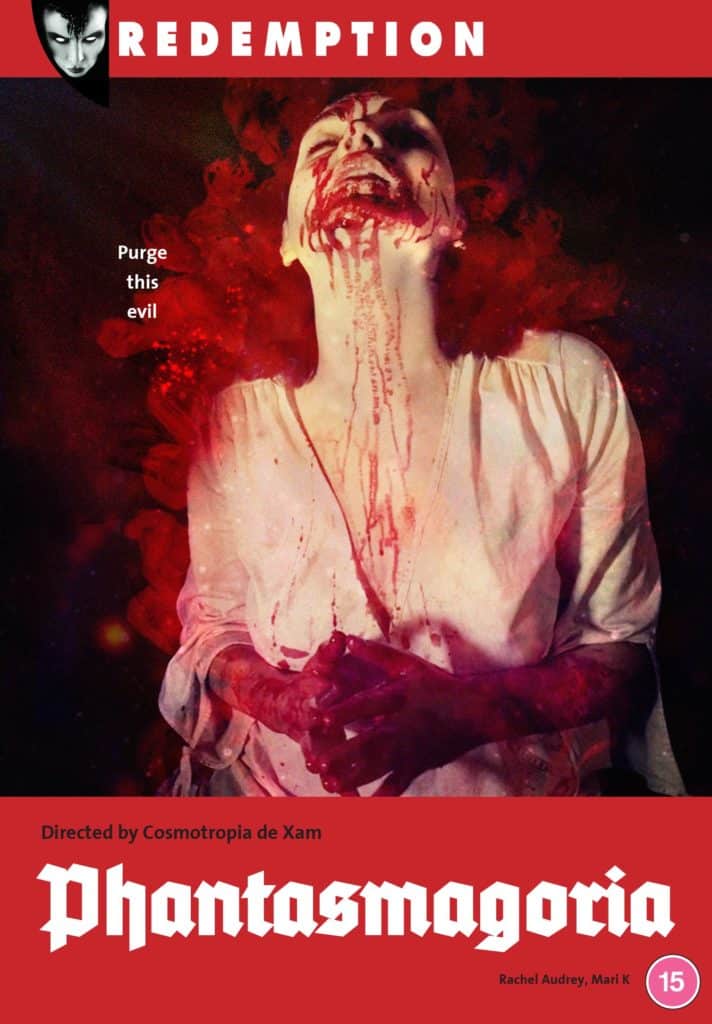
Phantasmagoria is a film which shows, from the very beginning, that it has no truck with conventional storytelling. And how you feel about that will depend on your taste for this level of experimental fare – not just in the sense of a film dispensing with signposted narrative, or character, but also in how you deal with films that shift in tone from one thing to another, at least initially. For example: at the beginning of Phantasmagoria, and in a none-too-subtle nod to Twin Peaks, ‘Diane Cooper’ (Rachel Audrey) records herself about to go on a trip to Poland to investigate some mysterious phenomena. Except it looks as though she’s already in Poland…and the airport she rocks up to is not an airport…then she chooses some washing detergent as a tasty in-flight beverage, before looking straight to screen and joining in with the canned laughter. There’s no question here of being allowed to settle in to the viewing experience. It’s not meant to be comfortable.
That all being said, that early dark comedy largely passes away as the film progresses, and horror elements move to the fore, providing something very strange and visually-strong. I can see entirely why director Cosmotropia de Xam’s music and film have been enthusiastically snapped up by Nigel Wingrove at Redemption/Salvation, as Phantasmagoria chimes perfectly with Salvation. And so to what actually happens here: once in ‘Poland’, Diane begins looking for the strange phenomena she’s heard about. At first, there’s nothing – she thinks this may all be the proverbial ‘something in the water’, and she’s mystified by the almost empty streets and dilapidated buildings (as a paean to Brutalism, the film is quite something in its own right).
But then Diane encounters a strange young woman in a case of ‘who’s investigating who?’ The girl is called Valentina (an unashamed love-letter, in name and appearance, to the Valentina comics of Guido Crepax). Valentina tries to explain that there is something evil here, making claims of a ‘beast’ which has not only followed her for years, but threatens everyone else as well. Diane is at first nonplussed by this claim, but madness is contagious, and Diane soon gets swept up in it too.
How best to define all of this? It’s not easy. The first thing which springs to mind is, given that the film doesn’t rely on dialogue very much, but rather opts to put a lot of very striking visuals front and centre, you could almost dispense with the dialogue that is here and just stick with the Mater Suspiria Vision soundtrack as an accompaniment (MSV being the director’s musical project, so unsurprisingly a very good fit here). You can read the situation via the actresses and their increasingly nightmarish visions and asides rather well. In terms of film, Phantasmagoria is somewhere between the very early experimental short films of David Lynch and Jean Rollin, had Rollin ever directed a Coil video. The Gothic or horror elements – bloodied women, nuns’ habits, a presence in the woods – are all present here, interwoven through a bizarre sequence of events and riddles. It is also worth saying that, where a thousand indie directors have tried – and failed – to make their films look authentically like some 70s reel found in an attic somewhere, Cosmotropia de Xam has done it very successfully.
Phantasmagoria is very much a piece of outsider art which defies easy categorisation, but may be of interest to those amongst you who enjoy films which are more sensory than perfunctory, so with all that in mind – go for it. I also recommend Mater Suspiria Vision for anyone whose tastes turn to abstract, dark instrumental music.
Phantasmagoria is available via Salvation Films: click here for more information.
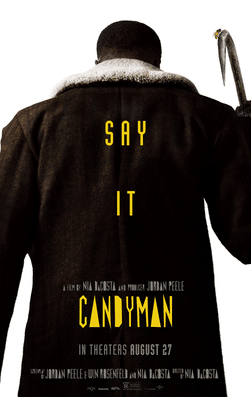
News of a new Candyman film came as quite a surprise; the 1992 film, like a good ghost story itself refracted over time through a Clive Barker short story and a novel before becoming a screenplay, has over the years become a classic, a piece of supernatural cinema which has deeper significance seething underneath all of its gruesome horror. Besides a brand-new Candyman film being a surprise, the nature of the film was a little hard to catch, too; it’s not quite a remake, but positioned in real time, thirty (!) years or so after the ’92 story; it’s not quite a reimagining, as there is significant overlap with Bernard Rose’s screenplay; perhaps the best description of the new film is as an add-on to the mythos of the original film – an expansion pack, if you like. The result is a perfectly watchable horror yarn with some very good features and solid performances, though there are issues here, too. One is the sheer weight of ambition. By opting to explore a certain aspect of the Candyman folklore, the film gives itself far too much to do in its final act. Its other key issue is in its determination to explore race and racism not as a subtext, but as a primary calling – but then, Jordan Peele is involved, and he trusts his audience less and less to get ‘the message’, let alone to get a subtle message.
Painter Anthony (Yahya Abdul-Mateen II) and his curator girlfriend Brianna (Teyonah Parris) live in an affluent area of Chicago which, as a visitor points out to them as they are railing against the evils of white-driven gentrification, is itself part of a gentrified Cabrini Green, a formerly-deprived borough of the city. (This is one of the few moments in the film when there is any deviation from the narrative that white people are sinister bastards and perhaps social class is a consideration, by the way, so it’s worth bringing up). Anthony is struggling to create new work; motivation finally strikes after Brianna’s comic-relief brother Troy tells them a version of the Candyman story after dinner one evening.
Engaged by the mixture of urban legend and the prospect of seeking out something authentic, Anthony heads off into what’s left of the old Cabrini Green with his camera. Here he encounters a local, Burke (Colman Domingo) who has been there longer than the encroaching high-rises, a friendly, helpful guy who fills him in on the changes to Cabrini over the years. However, his information begins to draw Anthony further into the mythos. In a similar way to how Helen Lyle’s academic ambitions drew her closer to the ruinous attentions of Candyman, Anthony’s artistic ambitions prove a kind of devil’s bargain, whereby he gets his inspiration and begins creating new work, but at the expense of the lives of people in his orbit. And again, he has to decipher his role in all of this if he is to protect people he cares about.
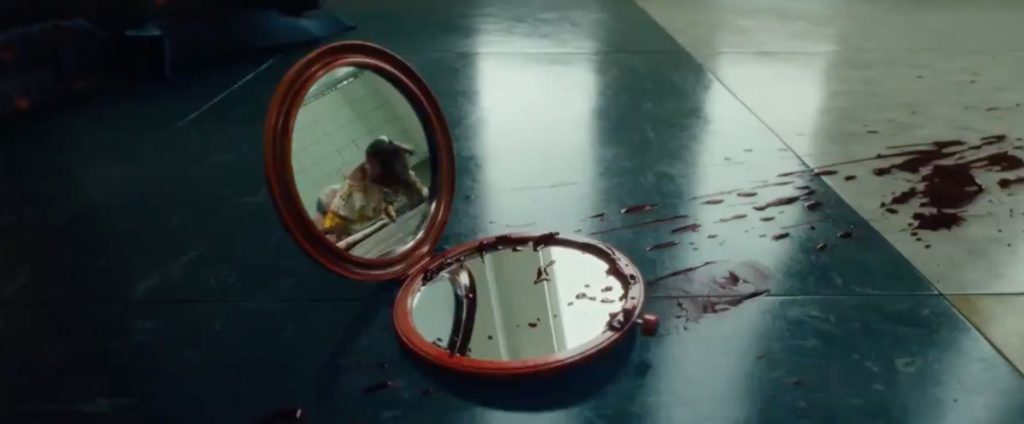
Anthony’s direction of travel in this film contains few surprises, really. In this respect, it emulates the 1992 film, right down to an overlap with Helen Lyle and her grisly fate as Anthony’s research brings him into contact with her file. Helen’s fate, after all of the misery entailed upon her by stumbling into a mythos and a community interesting at first only as ‘research’, contains far more pause for thought than anything in the new film, by the way. But the 2021 film does have some interesting, creative aspects to it too, with some fantastic shots which generate unease; the mirror-writing in the opening credits, that upside-down view of the skyscrapers – repeated throughout – which gives the impression of drifting or being dragged backwards. These are good, stylish touches. I also liked the use of reflection throughout the film (mirror reflection, that is). Director Nia DaCosta shows a good appreciation both of horror tropes and more creative uses of the motif, which is encouraging, given her filmography has limited horror in it. But perhaps the most original aspect of this film is also one of its key snags.
Candyman ’92 raises the idea that the Candyman mythos stems at least in part from the needs of an overlooked community to deal with hardship – providing stories, rules, rituals, things to hold people together. Candyman ’21 picks up on this idea and extends it, developing the relationship between folklore, history and community, coming close to suggesting that the figure of the Candyman – in all the various permutations which the film briefly suggests – offers a variant of folk horror, incarnating down through the years, a kind of obligatory presence. It’s an intriguing premise, providing some neat tie-ins to the original, though sadly the film does not have enough time to develop this very much. There are questions left dangling throughout; not in a way which suggests that Peele wanted to tantalise us, but more in the sense of these points being overlooked in the rush to get to a big finale. By the final scenes, several necessary plot points had been left out altogether, leading to a lurch towards grotesque body horror which needed to take a short cut in order to approach the gruesome, but fulfilling end scenes of the ’92 story. In the rush, questions about Anthony and Brianna’s family background, suggested to be relevant to their characterisation and the plot, were brushed aside. Together with the sudden shift in Anthony’s character come the final act, the rush feels like it has a significant impact.
Perhaps devoting less time to characterising every single white character variously as a chancer, a creep, a bully or a murderer – whilst giving over a fair wad of the film’s run time to have them announce as much in their spell-it-all-out lines – would have allowed more attention to be paid to the film’s more interesting supernatural content. Peele can’t help himself, and in a different article it could be interesting to unpick this approach from this particular filmmaker. This film is far more about acrimony than allegory, and it makes for a crude element of ‘Candyman-as-avenger’ which detracts from Candyman’s better qualities. Still, production values here are decent overall, and there is enough going on to make this a perfectly watchable, entertaining film, albeit one which throws the merits of the original into even sharper relief.
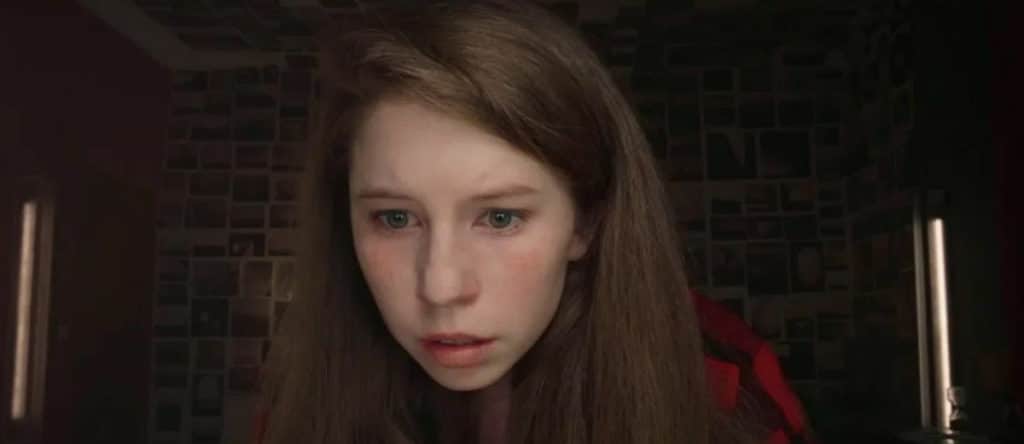
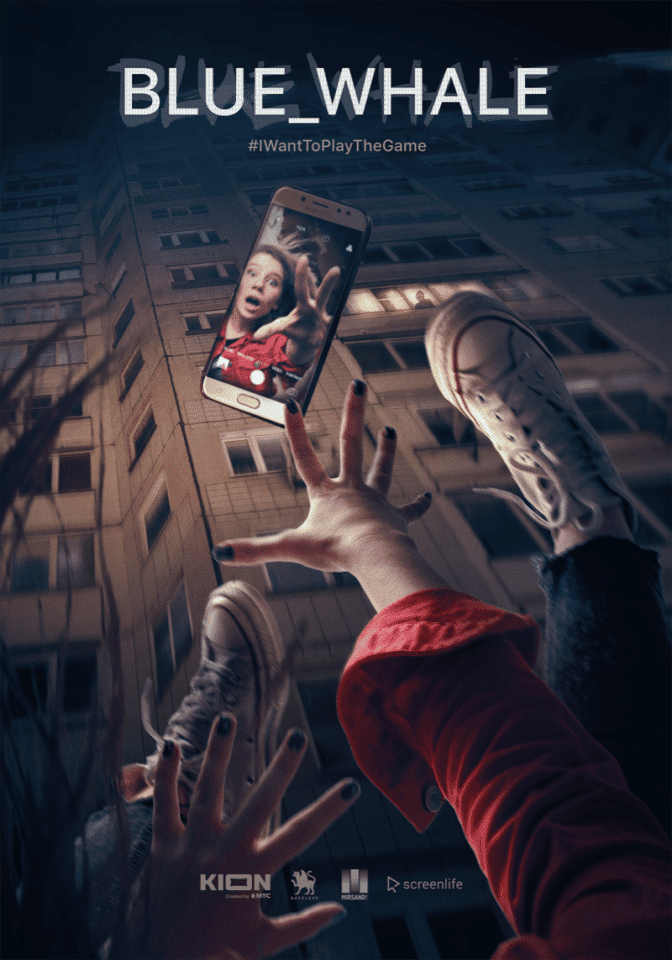
Blue Whale is a film which very much starts as it means to go on, throwing the audience into a high-paced, often frenetic online world where we quickly meet two teenage sisters – Yulya and Dana – who are fighting over a device, dropping it and breaking the screen as their long-suffering mother attempts to keep the peace. There we have it: the importance of an online presence, the need for secrecy, the pros and cons of living this way and the generation gap between these teens and everyone else, which encapsulates several of the film’s themes in a few seconds. Everything we see in the film is refracted through software – social media platforms, live videos and direct messages. But to shift things along, the time frame of the film suddenly skips forward by a few months.
Yulya is not laughing now. She begins a livecast and films herself, committing suicide by train. We whoosh through the online tributes and then we’re back to Dana (Anna Potebnya), who now wants to find out why her sister did this. Quickly she uncovers a secret, sexualised account and a run of interactions which are themselves a little threatening – but that’s not it. Dana spots a mention of some kind of online game called ‘Blue Whale’, something which has been linked to these kinds of suicides. Alongside mutual friend Vika, Dana begins to investigate, starting with a video clip of another shock teen suicide, which she finds on Yulya’s own desktop. Tracking down an online alias of someone whose avatar keeps on cropping up, Dana gets hold of a folder which contains the ‘rules’ of the Blue Whale game. This escalates a chain of events, leading Dana further into the game and its increasingly harmful tasks. Fifty tasks, fifty days…
This film is fast, fast, fast. This could be a tribute to the kinds of multi-tasking short attention spans which are prominent in the online generation, or indeed just due to the sheer weight of what this film wants to get across. The film unfolds in quick-fire succession on screens, taking its cues from the surprisingly successful early-entrant digital horror Unfriended (2014), and I gather Blue Whale comes to us from the same production company, which makes a lot of sense. This shooting style has its pros and cons wherever it is used, and Blue Whale is no exception. The realism is, for the most part, communicated successfully, and the immediacy of this format is a definite benefit, though it’s a bit of a shock to the system at first. It takes a little while to bed in because you rarely get a good look at the key protagonists when phones and webcams are dancing around, pointing here, there and everywhere. It’s a similar feeling to watching found footage, when this was done on cameras of course, this is an update of same, with the same pitfalls – though Dana does effectively develop as a character as the film progresses.
There’s also that minor issue, seen elsewhere too, where there’s no explanation within the world of the film for why all of these Russian teenagers speak in Russian, but type exclusively in English; outside the world of the film, the issue of international saleability is the clear motivation, but then it is a slight ‘dip’ in the artifice as a whole even when events in the film stretch plausibility elsewhere. Again, perhaps this is in keeping with the basis for Blue Whale, which does take its cues from a real, or rumoured online game which was linked to teenage suicides back in 2016. That swirling mix of fact, fiction and everything in-between reflects that world of rumour and hearsay which often surrounds online mythologies.
The film is equally as hectic with fairly obvious references to pre-existing horrors, from Ring (1998) to Suicide Club (2001) and any number of slasher flicks – but there is a backbone of something original here, in its rate of movement, in the way it captures a specific melee of paranoia and fear and in its sensory and overwhelming approach. Also, in how it captures the transient nature of online relationships, with friendships being made and broken based on a few typed lines, the film does an excellent job: in many ways, this vulnerability is what forms the real basis of the horror. The fantasy elements just help to define it.
Certainly, by the last act, Blue Whale is beginning to overreach, but overall, it’s an exhausting, but compelling story to follow. Even if hardened horror fans soon have their suspicions about what’s going on here, watching it all unfold in its own dizzying way is a lot of fun.
Blue Whale features as part of the Fantasia Film Festival.
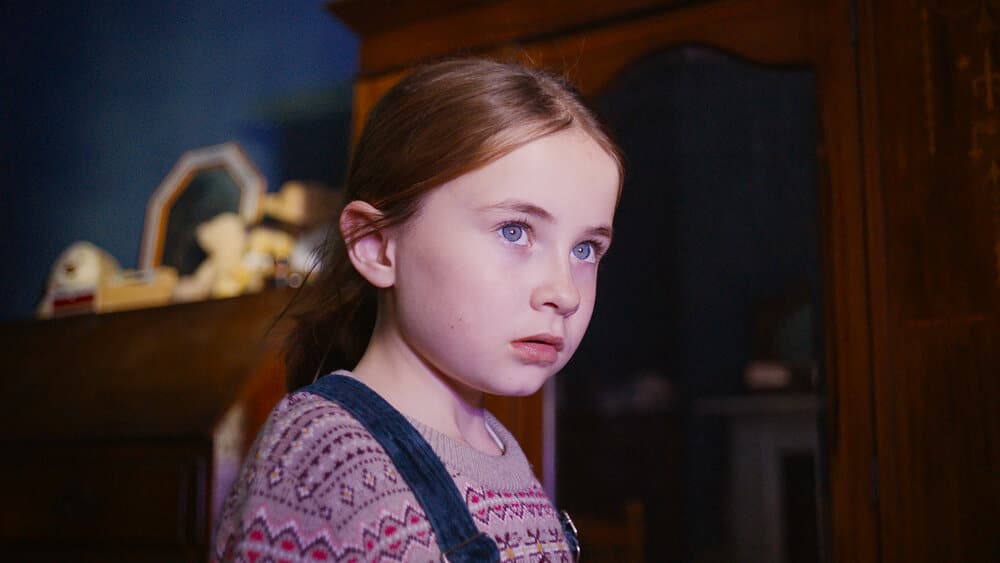
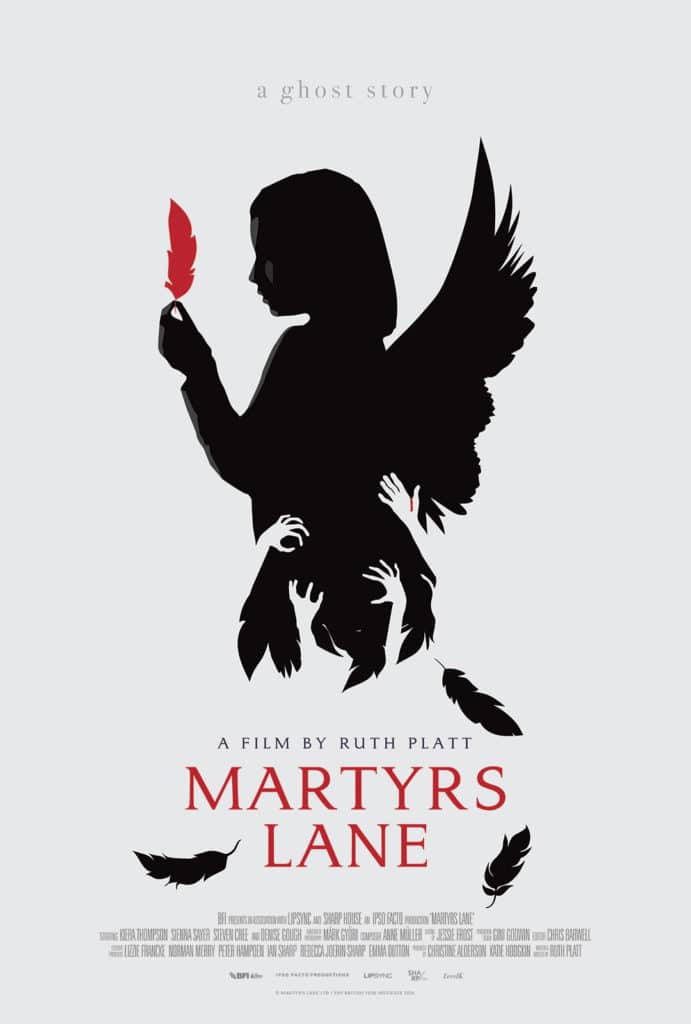
Any expectations I had for Martyrs Lane (2021) were very quickly blown out of the water; it’s a ghostly tale which in many ways feels like it comes from an earlier time, having more in common with the subtle horrors of the 60s and 70s than the flashier, quick edits of modern cinema. This is a heartbreaking and very intimate domestic drama, centred plausibly and sensitively on the experiences of children, perhaps between Paperhouse (1988) and The Others (2001) in terms of its content and tone. But it is very much its own story, too.
Leah (the superb Kiera Thompson) is an isolated little girl who seems to be troubled by a fear of the dark and ominous dreams at night. By day, she seems to exist as something between invisible and a nuisance to the adults in her life. She’s about to be Confirmed at the local church, where her father is the minister, but there are early hints that her religious feelings are quite genuine and not just part and parcel of her father’s role, family pressure, or anything like that. She believes in angels, or what she perceives to be angels, and seems fascinated by stories about them.
One day, this bright but conflicted little girl sees another child in the woods near her house – not long after big sister Bex has been trying to scare her with stories of Tudor ghosts who walk again at night. This isn’t scary, though; the little girl seems to be about her own age, and, innocently, Leah tells her she can come to her house, if she wants to. That evening, she does, tapping on Leah’s bedroom window and asking for her help.
A different filmmaker might have continued the Wuthering Heights similarity here in grisly fashion, just like the novel, but Martyrs Lane director Ruth Platt isn’t about that. No blood washes down the window panes here. The new friendship between the two children – and what ensues – makes for a deeply sophisticated story, blending familiar aspects of ghost lore with cultural beliefs about the special abilities which children have to see things which, as adults, we say aren’t there. Think of all those stories we share about ‘invisible friends’, and what they could be. But it isn’t just a ghost story. It’s underpinned by other plot devices, and these work together to make Leah’s story a rich, intricate and often unbearably tense one. For example, the family dynamic here is incredibly strained, particularly between Leah, mother Sarah (Denise Gough) and Bex (Hannah Rae). There’s an unpleasant, simmering tension which manifests itself in a variety of ways, said and unsaid. At first, the conversation between the two little girls is very open and natural by comparison; it makes a pleasant change to some of the other exchanges which take place, even if it doesn’t remain that way.
The film really excels in its representation of that gap between adults and children; it’s a representation which, in places, makes for difficult viewing. It’s not comfortable to watch. Firstly, this is because it can be difficult to recall the specific nature and intensity of childhood fears: we’re largely socialised out of them. Martyrs Lane brings them back, doing so from the perspective of a little girl you can’t help but empathise with, whether she is anxiously using a torch to look for whatever might be making a noise in the dark, or (most poignantly of all) struggling to gain any recognition from the people in her life who should love her. Again, the film handles this brilliantly. The camera frequently stays at Leah’s height, or at least it does early on in the film, which helps to demonstrate the physical distance between her and the adults. It also often peers down at her, making her seem all the more vulnerable. The sound design is really important too, as it keeps adult conversations distant, a miserable babble which breaks off here and there only to scold Leah, or at best to trot out all the usual things people say to kids to get them to behave. It feels genuinely like relief when an adult is kind to her.
Leah, does, thankfully, get a little more interaction as the film moves on, though that tension and distance is always there on the periphery, in much the same way as Leah is – always on the threshold, looking in. So Martyrs Lane successfully captures both a child’s susceptibility to strange phenomena but also aspects of their powerlessness, but it also knows it’s being watched by adults: some of the moments of peril make you cringe as any adult would, watching a child steadily putting themselves at more and more risk.
As the film progresses, you may be able to make an educated guess at the backbone of the plot, but that does not take anything away from how the story unfolds. Elements of mystery, particularly the use of objects and clues, are used carefully as scares and revelations are doled out just as carefully, but they’re no less unsettling for that; some developments here are deeply unpleasant and unsettling. Ultimately, Martyrs Lane takes an oblique, almost delicate approach to grief, family and childhood in a thoughtful, confident way. It never misses a beat, and it sticks with you perhaps a little uncomfortably after viewing.
The WorldPremiere of Martyrs Lane will take place at the 25thFantasia Film Festival.
An exploration of Indigenous folklore and myth offers rich and often unknown, or lesser-known potential for horror stories. Don’t Say Its Name (2021) interweaves aspects of folkloric belief with real-time concerns and anxieties afflicting a small First Nations community; in doing so, it has many merits, though in time resorts to very broad strokes and more recognisable tropes which dispense with the film’s earlier subtleties.
On a remote Canadian First Nation reservation, a young woman is knocked down and killed one night in a hit and run incident. This death rocks the small, close-knit community; slowly, it’s revealed that it’s especially tragic as the victim, a girl named Kharis (Sheena Kane), had only recently returned to that community after enduring a lot of hardship whilst living away. Her identification, and the reactions of her family and friends, are unusually tender, going a long way towards establishing a real sense of togetherness amongst these people, making for a commendable start to the narrative.
The loss of Kharis is a shock, but it’s not the only issue facing this community. Their fate is being threatened in other ways. Surveyors are in the area on behalf of a mining company known as WEC; they want to unlock the rich potential of the area, but most of the local residents are shocked by what this would mean for their land and their way of life. Two surveyors taking a look at a proposed site come under attack by something unidentified, unseen; these mysterious attacks continue, usually targeting outsiders. The newly-deputised ranger Stacey (Sera-Lys McArthur) is agreed to be the best person to try to track whatever is causing these attacks, whilst the Sheriff’s Department, led by Betty (Madison Walsh) try to figure out the links, as the killer now seems to be targeting locals, too. Why them?
The beautiful, snowy landscapes are shot to good advantage here and Don’t Say Its Name is certainly atmospheric, creating a community which is vulnerable by nature of being so remote. There are some interesting explorations of the divide between First Nation and Caucasian residents, though the script tends towards simplicity in this respect; the crude racism and sexism, for example, of one of the surveyors edges things towards caricature, which detracts from some of the finer points which the film seeks to make. A man smilingly claiming to be bringing hard cash to the ‘squaws’ seems too obvious to be believed, at least in terms of characterisation. Also, as the film moves towards its final act, much of the mystery surrounding the invisible attacks dissipates, blurring the lines between natural and supernatural in some ways which affects the nature of the threat itself, reducing it, or at least radically changing it. There are a few other tics which are rather distracting: the representation of the WEC as quite simplistic bad guys denies the possibility of an interesting discourse, whereas the character of town elder Carson – the only character really given a more nuanced perspective on the events unfolding in his community – has that voice stripped away regardless. Some of the other choices, such as the electric guitar incidental music, and the ‘sounds of war’ shortcut to represent a character’s military PTSD to us, feel rather clumsy and less in keeping with the terrific beauty and power of the setting itself.
The film segues into some good action sequences before its finale, and there are some hints at the cause for all of this which add a new layer to the storytelling, but all told, subtlety is not the name of the game in Don’t Say Its Name. Perhaps this was never the aim; if director and co-writer Rueben Martell wanted only to tell an entertaining, suitably-paced horror yarn with a few novel plot developments, then Don’t Say Its Name fits the bill very well. It does offer something which overlaps to a degree with existing folklore, but adds its own elements and gives it context by making links to very real anxieties over the environment, land rights and autonomy.
Don’t Say Its Name will feature at the 25th Fantasia Film Festival.
Short films are always a highlight of the film festival calendar, and as we’ve been saying on this site for years, it’s such a shame that they don’t often get seen outside of the festival circuit – with the odd exception, such as ABCs of Death. Hopes were high that this would kickstart a new appetite for short films to get releases, but sadly, so far, it hasn’t happened. The Small Gauge Trauma collection of ten short films would work brilliantly well in the form they’re presented in here: they’re varied, they’re without exception brilliantly done, and a couple of the films in question achieve what features often cannot – the element of surprise. We get technology anxiety, body horror, new mythologies and new treatments of old mythologies, science fiction and lashings of dystopia across the collection.
With a well-known British cast, Aria satirises our surveillance and high-tech society with a young couple setting up a new smart home system (Aria being a version of Alexa, and look out for Natasia Demetriou as the friendly product guide). There are a few teething troubles, but then Tom (Daniel Lawrence Taylor) keeps getting notifications at night that the doorbell is detecting something. The film plays up the divisive potential of this kind of technology, with one partner affected by the phenomena far more than the other, and there’s a funny, dark and surreal conclusion to it all. Thumb has a lot going on in the background which is only explored to a degree, but there’s more than enough in this narrative to justify a longer film; after the death of her performance artist mother, ‘Thumb’ (Kate Adams) has taken on her estate. Packing and going through her things brings up details of this tense relationship, which she explains to her mother’s former partner Red (DeMorge Brown). Steadily, it seems that her mother’s spirit hasn’t gone anywhere, and has more demands to make on Thumb: there are some surreal touches here, and all in all it’s an examination on where performance begins and ends, with a very grisly punchline.
One of my two absolute favourites in this collection, The Tenant does everything which you would hope of a short film. It’s a terrific calling card, very unsettling and creepy. A woman awakes with a strange pain in her leg. As she limps through her day, she’s approached by a stranger who tells her that the reason she’s limping is because the ghost of an old woman has attached itself to her; she gives her advice on what she needs to do to get rid of it. The woman is scornful, but as events unfold, she begins to believe the advice she was given. A neat, economical piece of horror, the final scene of this is perfection. Another Spanish language film, The Darkness commences with a woman dragging herself from a body of water. She is in some kind of trance; automaton-like, she gathers her things and makes for civilisation, arriving at a school where, it seems, she works. Why was she in the water? What has happened? The principal is unsurprised to see her, but their dynamic is about to shift: there are a number of intricacies in this story, and I enjoyed what the film didn’t explain, as it provides more than enough for the audience to fill in those blanks.
Habitat reverts to the terrors of technology, blending outdated tech with a version of the world where you collect ‘clicks’ in order to make purchases – the spirit of Black Mirror is strong with this one. A man sits, alone, obeying the commands of adverts and website promising him a killer prize when he gets up to 100,000,000 clicks – and he’s nearly there. The film grows increasingly oddball and disturbing, eventually becoming a satire about loneliness and the horror of the mundane. There’s much to unpack and consider here. Tropaion continues in a dystopian vein, explaining that our word ‘trophy’ comes from the notion of the tropaion, a tribute to victory raised at the battlefield where prisoners – living and dead – would be attached to it. A young girl living amongst a small group of disorientated, scared people tends to her brother, but whatever is in the woods demands some sort of tribute. This film hangs onto its mysteries and it’s very understated, but it’s a beautiful, stark vision.
Laika grapples with one of the toughest real-life stories of the space race, which in itself takes some bravery; when the Soviets sent a living dog into orbit, they sent a terrified animal to a slow death in the name of progress. It’s a story which made me cry as a child, still does so now, and its bold handling as a basis for a particularly dark piece of sci-fi is inspired here. Watching the shuttle blast off, a child called Oleg will one day become an astronaut, and we’re thrown straight into the mayhem of a terrible accident at the ISS, with Oleg barely escaping into a pod. But something is accompanying him. The tense, effective opening scenes here are worthy of any sci-fi blockbuster, and whilst there are a few seconds of CGI which didn’t work so well, the film overall is incredibly strong and unsettling, whilst also being vindicatory. An overwhelming, ambitious piece of film.
The Relic feels very much as though its world-building could be explored much further, possibly in a feature-length film, but what it provides as a short film is engaging in its own right. Starting mid-event, a person is being brought back to a remote shelter covered in blood; another member of the party is missing, and there are hints of a ‘something’ monstrous in pursuit. The wintry setting crossed with the rising paranoia and tension, not to mention the practical SFX, calls to mind The Thing: the addition of some creative moments of body horror reinforce the feeling that there is a lot here still to explore. The Last Marriage shifts the tone dramatically, offering a well-observed black comedy against a backdrop of our old friend, the zombie outbreak. In rural Sweden, a husband and wife bicker about their domestic situation, where if chores aren’t done there is quite a lot at stake: that electric fence isn’t going to maintain itself. Things get worse: Marie (Emma Molin) thinks she might want a divorce. Janne (Christopher Wagelin) is a little put out by this, seeing as how he’s probably the last man on Earth. Gently funny and well observed, The Last Marriage shows how much character development can happen with a great script and good performances.
You’re Dead, Hélène closes this collection, and keeps the surprises coming. Starting as something very caustically funny, it shifts its tone incredibly successfully throughout, becoming quite moving as it does so. We start with a couple at a cinema screening; the problem is Maxime’s girlfriend has already passed away, but won’t part ways with him. He is at a loss, unsure how to ever move on: channelling Nina Forever, Hélène seems to enjoy his dissatisfaction, interfering in all his plans. Things grow darker and darker as he tries his hardest to get on with his life, before becoming rather poignant: we are made privy to the chain of events which brought both characters to this point. With a few clear nods to existing horror classics along the way, this is a sure fire festival success, but in its own right it’s a superb piece of storytelling.
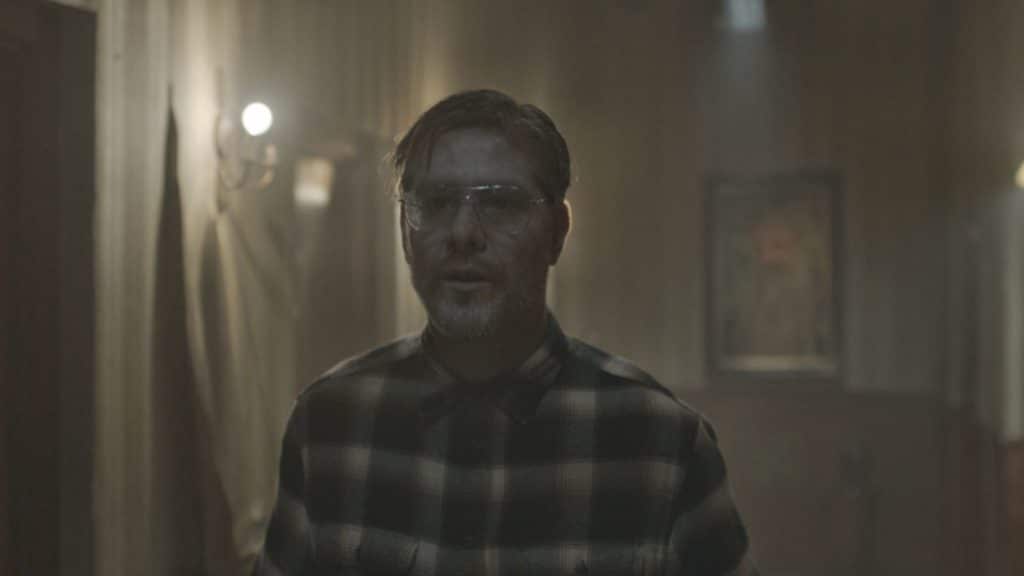
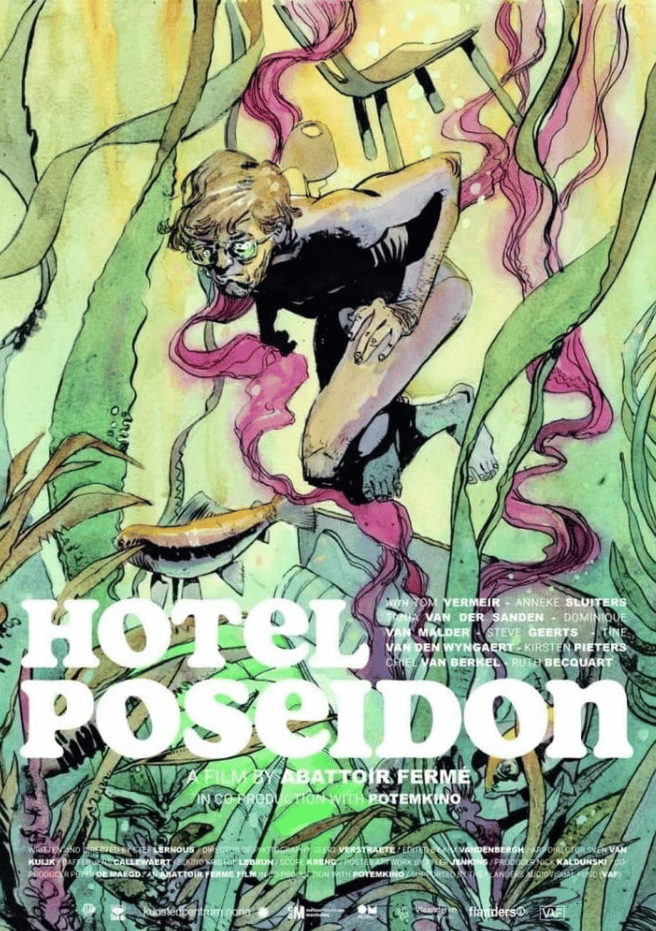
Hotel Poseidon (2021) begins with an almost-mute man listening to some strangely motivational speech-making from the room next door; hard to imagine why someone would be quite this optimistic, given the dilapidated environs, but then this is a strange film and Hotel Poseidon itself is an odd, decrepit place, the sort of place Possum‘s Philip might go on holiday. The listener is a bloke called Dave (Tom Vermeir), who turns out to be the hotelier. He gets himself up and ready to face his day, but bear in mind that Dave is a man who listens to a head cleaning cassette on his Walkman in order to relax (ask your parents).
Dave is a reluctant participant in the hospitality industry, to put it mildly. He’s not overly keen on guests at all, but later that day, a young woman called Nora (Anneke Sluiters) manages to talk her way in; she’s somewhat put off by the spectacle of Dave’s deceased Aunt Lucy in the corner of one of the rooms, a fact that Dave hadn’t noticed and is perturbed by, as he relies on Lucy’s pension to keep the place going. Anyway, despite the surprise, Nora hangs around. Then there’s Dave’s associate with big plans for the place, promising live music, an elaborate buffet – basically, a range of things that Dave would rather not do. An assortment of overblown characters steadily encroach upon his time and personal space, leaving him perplexed and desperate to get away – but where on earth to go?
Evident care has been taken over the way this film looks and feels; this kind of rot and decay is difficult to achieve at scale, but here every inch of the hotel and its denizens is in keeping with that ‘past its best’ vibe. The camera makes the most of it as well, with lots of long takes and deliberation over the finer details. Of course, this means an array of analogue tech, which is something which virtually all indie films of late seem to favour, and you can be hard pressed to find a film which doesn’t have a big telly or a Bakelite phone somewhere. Here, at least, it makes some sense as the whole hotel is a garish time capsule, last updated in around 1988, if that. The sound design is an important component here, too, lending a steady, heavy and ominous presence throughout.
Hotel Poseidon is avowedly ‘experimental’; in practice, this often means that films will do similar things, things which are easily recognisable here. Step forward stilted dialogue, limited narrative progression and a heavy focus on visuals, rather than a story as such. In effect, Hotel Poseidon is more of a sensory experience than it is in any conventional ways a narrative. Right down to the characters themselves, wearing gaudy face paints, the film maintains its surreal atmosphere and style throughout. Tom Vermeir’s turn as Dave, with all the growing confusion and panic he feels as he loses control of his quiet, ordered existence, is nicely done and in places I was put in mind of Mother! (2017), with that similar inclusion of home invasion and the horror of other people. There’s something of Eraserhead (1977) too, again in terms of a man being swept along by demented events beyond his control.
I’m sure many will read Dave’s plight in a metaphorical sense, too, seeing Dave as a kind of feckless Everyman, events simply overtaking him when he would much prefer a quiet life. For this reviewer however, all the practiced weirdness did begin to wear rather thin; this is a film which looks and sounds great, but personally there isn’t quite enough substance here to sustain interest across the film’s running time. Your enjoyment of Hotel Poseidon will depend entirely on how willing you are to balance this kind of existential viewing experience against more conventional on-screen components, such as plot. If you favour the former, then there is much here to love.
Hotel Poseidon will feature as part of the 25th Fantasia Film Festival.