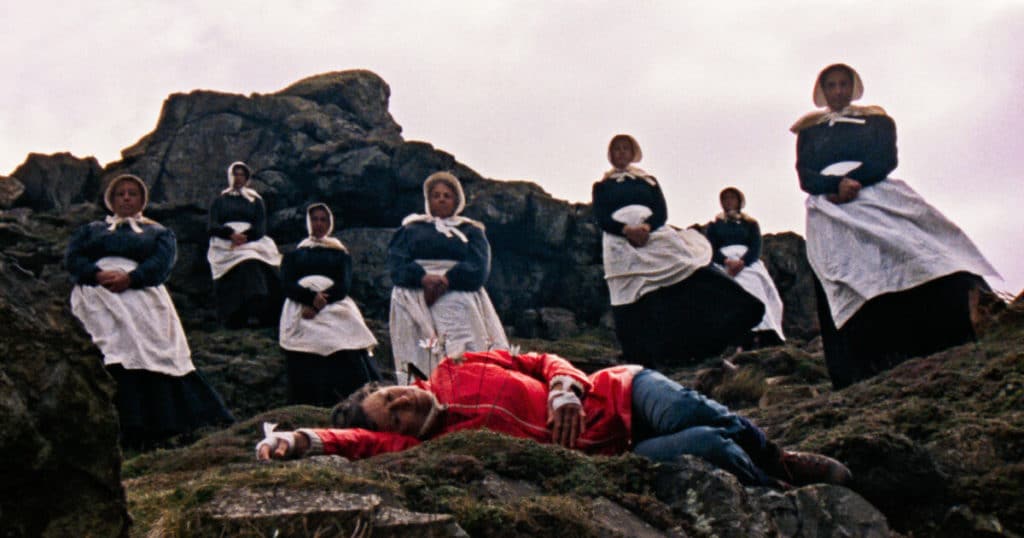
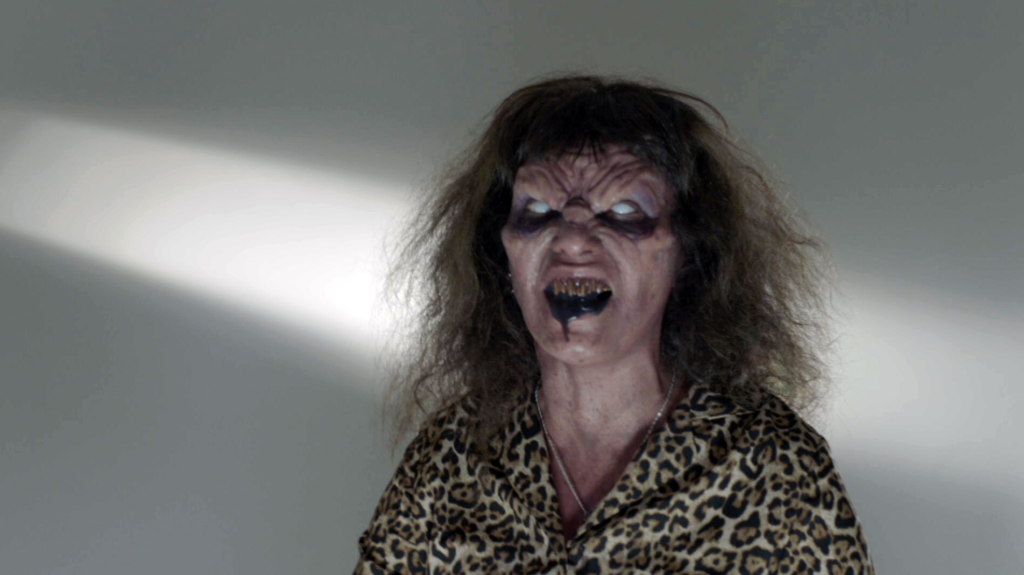
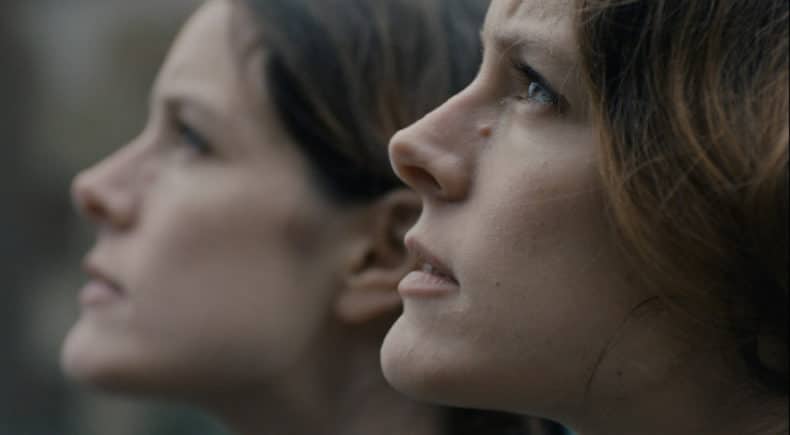
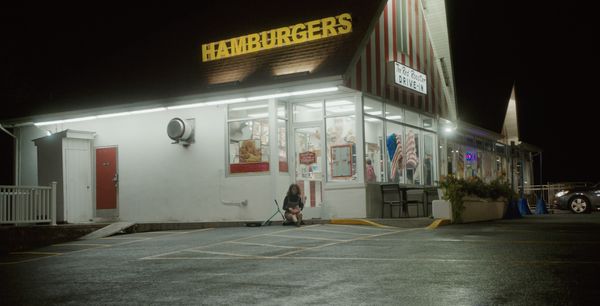
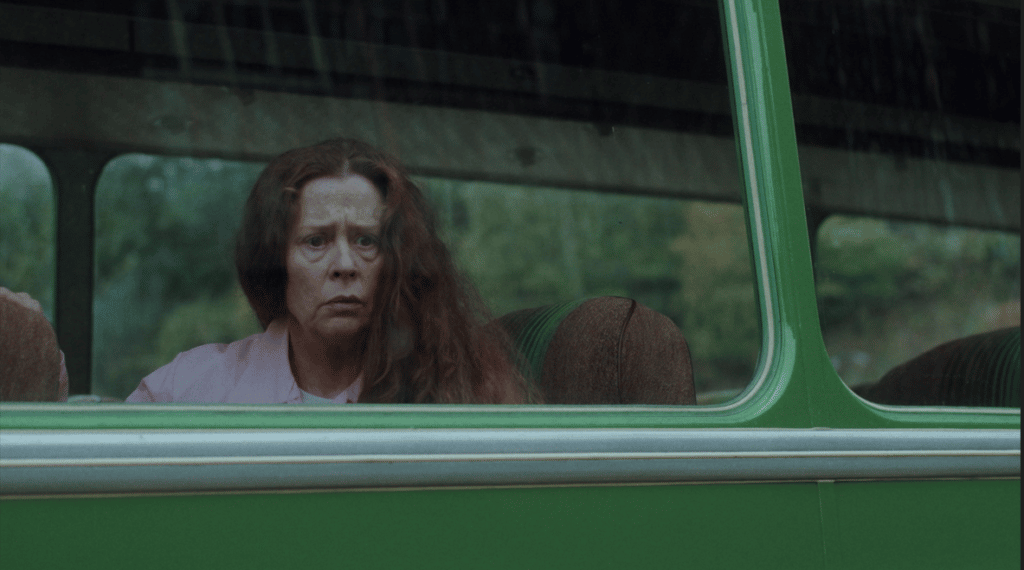
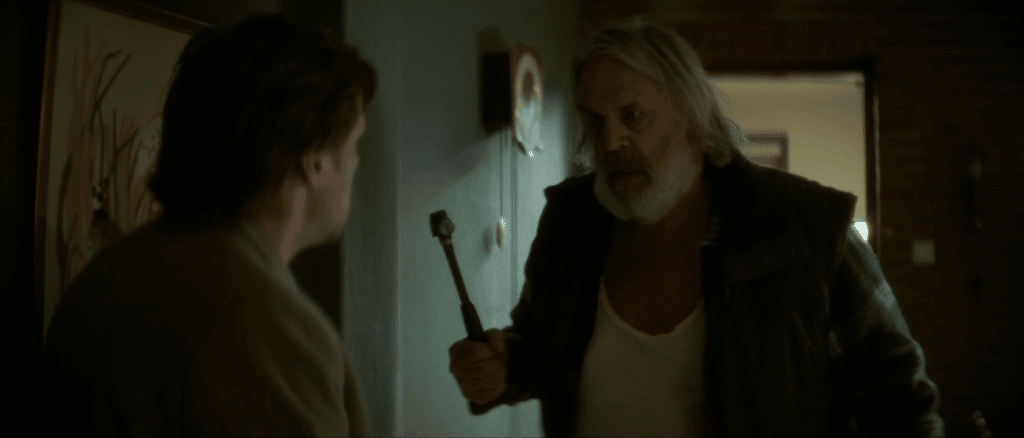
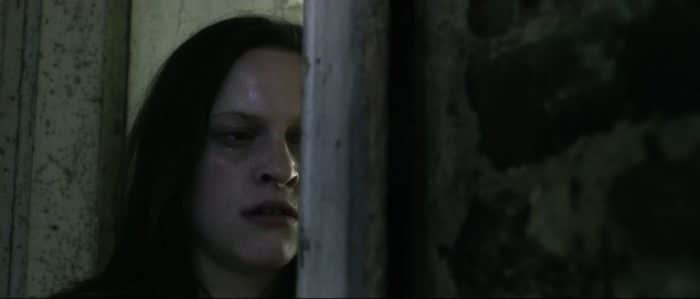
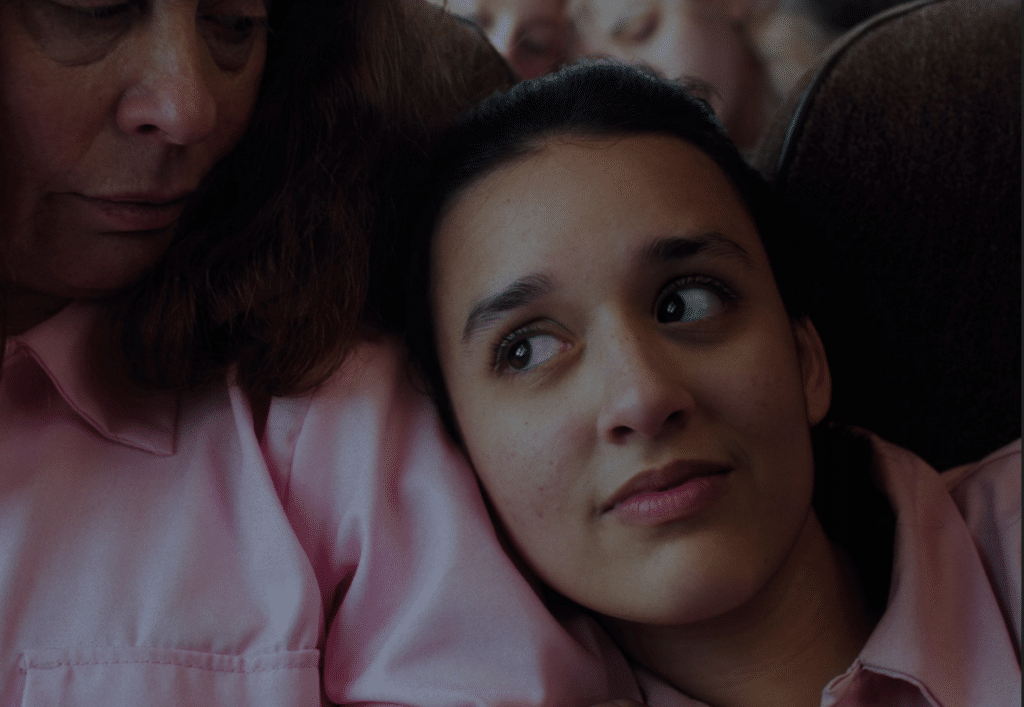
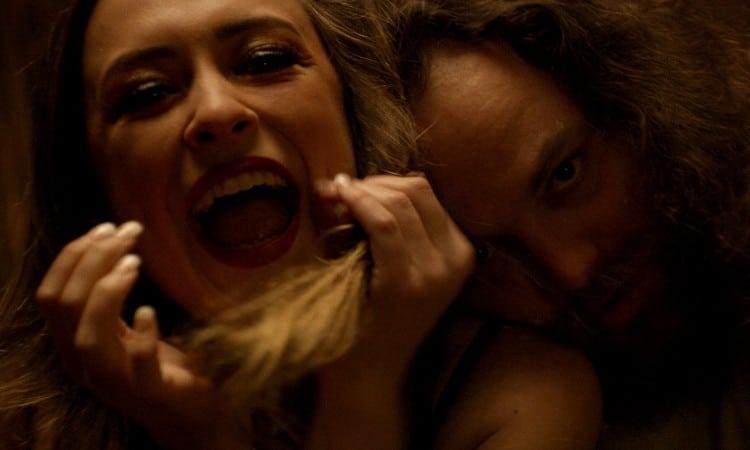
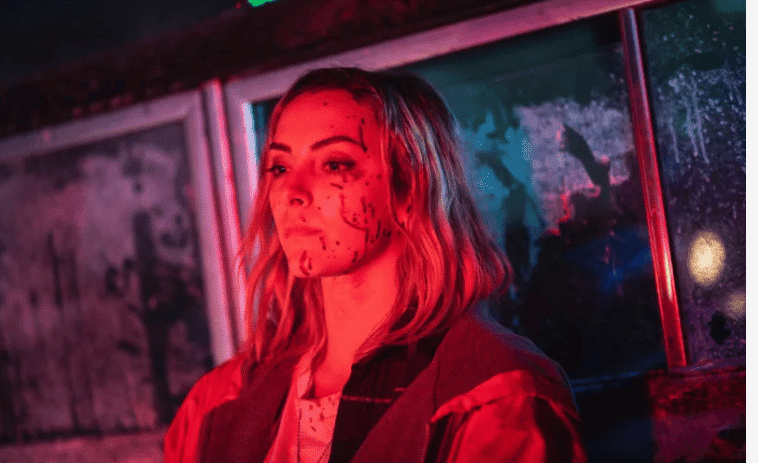
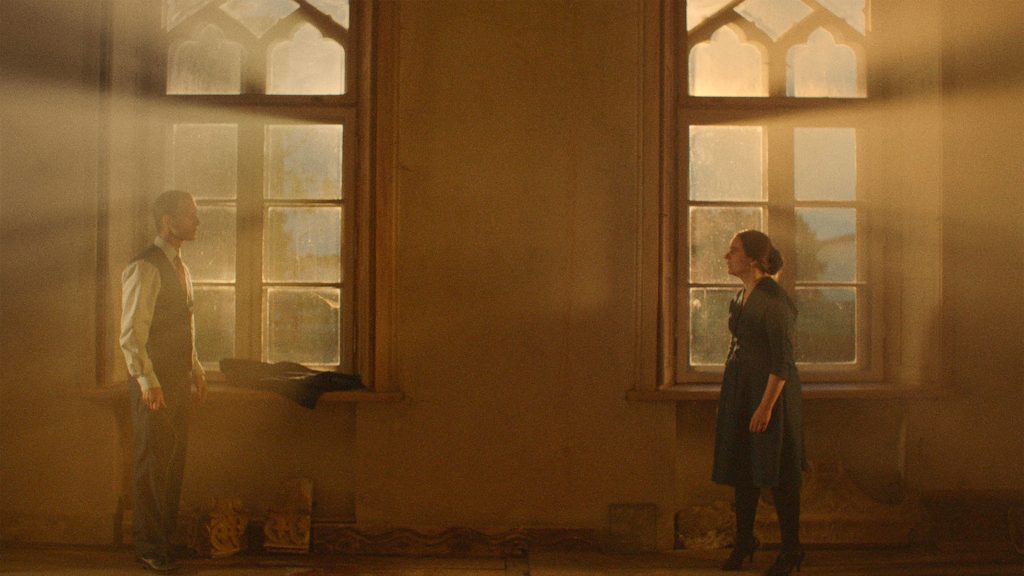
The beautiful and evocative coastal landscapes of Enys Men (2022) make for an unorthodox tourist board advertisement for a fantastical Cornwall – if you like your weekends away to feature a certain amount of the uncanny and the uncertain, at least. Taken as a series of still images, the film feels like a tribute to Lawrence Gordon Clark’s Stigma (1977) and to an extent, The Stone Tape (1972): the imagery, the isolation and the unorthodox exploration of ghosts are all present and correct. But there’s an issue, and it’s this: Enys Men is no more than a series of still images. Where it seems to be building atmosphere and driving towards some fascinating sliver of Cornish history or folklore, it takes the decision to dissipate that atmosphere by shattering into a handful of component parts, none of which feel like they have ever fitted together, nor ever could. This is a folk horror coffee table book, beautiful in its way, but insufficient, and too free-floating to really be considered a film, unlike the films which have inspired it.
In this muzzy-headed assemblage of places and ideas, we meet a nameless woman (Mary Woodvine) who is spending time on the remote island of the title to record information on a rare type of flower. To say she is underemployed would be an understatement; the ‘Volunteer’, as she’s called in the end credits, spends a few moments every day recording the temperature out where the flowers grow on one of the cliff tops. On her way back to the cottage where she’s staying, she pauses to drop a stone down an old well, then heads home, fires up an old generator, and spends the rest of daylight hours watching her tea caddy run empty. Horror enough there, perhaps. She receives occasional supplies, but that’s it: her teenage daughter is in the house with her (maybe; sometimes) but their communication is even more monosyllabic than is traditional with this generational gap.
The island seems to have been abandoned at some point around the turn of the 20th Century. There was, a wall plaque near the old harbour tells us, a maritime disaster here whereby a rescue vessel went to the aid of a supply ship but foundered, losing all hands (meaning, presumably, all or most of the men of the island). There are other indications of a former population, with hints at the long reach of the Industrial Revolution, with a small mine on the island, and a small chapel. But everyone is long gone, and the woman is here for an unspecified amount of time, with only radio contact with the outside world. She begins to see echoes of the past: people come and go from the cottage, children in archaic May finery crowd towards the door of the house – which seems, on certain glances, to be completely derelict. Men stand, silently, below ground, in their mining gear; men come ashore, wearing old-fashioned flotation devices and lifeguards’ uniforms.
It’s interesting, visually-appealing material in its own right, but so, so disparate. It tantalises at ideas of how ghosts are made, and/or how much ghosts know about what they are in ways which feel like a feverish spin on the narratively-coherent The Others (2001). But without dialogue, storyline, direction and denouement, it can never, ever be that. So what, then? Few things are clear; everything is detached from everything else, and where there is a kind of consistency, it’s boring. The film generates a lot of atmosphere, but nothing really lives there. At its weakest, the film feels like its director is almost lackadaisical about any of the usual filmmaking concerns, prioritising aesthetics which grow weaker with repetition, because he’s hoping the audience will overlay a purpose and a point on his behalf. Another explanation is that he doesn’t really care. It looks how he wanted it to look; nothing else really enters into it. Moments of unclear humour are baffling and odd, dissipating the dread that, elsewhere, the film proves more than capable of creating. And then, at last, it dissipates all of the dread, all of it. Metaphors are only effective when they represent something beyond themselves. Otherwise, what are they for?
Enys Men is set in 1973, for reasons which are unclear, other than that directors love to fill their films with leftover analogue technology and, in the case of director Simon Jenkin, he has shot the film on 16mm, too: the commitment to nostalgia here is thorough. Perhaps it has a Seventies setting to reflect the films and TV which went some way to inspiring it; perhaps it’s just an almost-obligatory dash of the kind of hauntological hipsterdom which so many filmmakers now love. It adds nothing specific, however, except some warping and flaring to the film -again, modern filmmakers go a heck of a long way to make their films look quaintly damaged. The audio was overlaid after recording, too, which furthers the strangely unsettling double-distance feeling between audience and actors. Again, it’s effective as a set of weird visuals, and it sounds suitably fever-dreamy too, but – that’s your lot. It’s also unfortunate that the film has garnered these links to folk horror, really, as the essence of folk horror is in the power of its stories and legends. This is not a folk horror in any meaningful sense; standing stones do not a folk horror make. No, this is a film made to be analysed, which we’re all obligingly doing with greater or lesser success. Sumptuous but partial, gorgeous but empty, symbolic without the requisite ideas, Enys Men may represent a different way to use the art of film, but it doesn’t work as a film.
It’s made clear pretty quickly in Argentinian demonic horror-comedy Legions (2022) that we are covering a long period of time – a then and a now. As a voiceover introduces us to a shaman, someone with magical know-how in his lineage, we’re shown life as it was, in a remote village operating by traditional rules against old adversaries. Our shaman is there, waiting for some of his neighbours to bring him the prone body of a young girl; as he begins a ritual over her body, the girl revives, let’s say, seemingly possessed by something with no inclinations to be friendly. As the shaman tries to exorcise it, the demon hexes his family line; no one respects people just doing their jobs anymore.
Back in the current moment, some forty years later, and we hear again from our shaman, whose voiceover is actually part of a conversation he’s just been having. We find out how he, Antonio (Germán de Silva) is living now, and it isn’t too promising. It seems he’s been institutionalised: he’s a killer, detained in a secure-ish hospital as he has diminished responsibility. This is something he seems to have begrudgingly accepted, for the most part. As part of the rehabilitation on offer at this hospital, it seems some of his fellow inmates have been planning a play dramatising his life stories. Again, he seems to begrudgingly accept this, even whilst watching, bemused, as the play slides into farce. Legions is full of humour, but it’s very gentle humour.
During some down time, he’s mentioned another of his life stories: the story of his daughter, Elena, born under a rare blood-red moon, which frankly, isn’t good news. She has apparently long been in need of protection from the demonic entities interested in her, both because of her lineage and the special circumstances of her birth. Sadly, dear old dad being where he is, this hasn’t been very possible of late, but it gets worse – another blood moon is on its way. With help from a descendant of one of the other old village elders, who reaches out to him, Antonio realises that he has to protect his daughter from a particular entity which has been waiting for her all her life. This means helping her, whether she likes it or not.
In many ways, this kind of bloodlines storyline feels very familiar; likewise, demons in horror films look and sound alike, for the most part, so you could be forgiven for some deja-vu in places. The film is quite open about where it takes its cues, so none of this is an oversight on the part of director and writer Fabián Forte, and instead seems to be an intentional use of these quite established elements. Where it differs in how it’s framed. There are no horrified kids in cabins, no sacrificial psychics, no size 6 damsels in distress or any heroic priests, for starters. The supporting characters here are refreshingly diverse in ages, appearances and body types, as Argentinian films seem not to be bound by the same rote expectations we hang onto in the West -and it’s great, even surprising to see. The film blends contrasts between urban and rural, rich and poor, traditional and modern very compellingly, though without labouring the point – again, something expected of a lot of Western cinema.
There are other notable features. For the most part, the film’s setting is a psychiatric hospital, but as much as the place seems a little dated, it’s light and airy, and hospital life is a bit, well – whimsical. This isn’t a bad place at all, and it’s peopled with a cast of rather likeable rogues, one of which is Antonio: it’s only very gradually that we see him move beyond his memories and his accepted role as the institution’s storyteller, but the people he lives with are very engaging in their own right. The film also confidently uses its structure to backfill key plot points, affording itself the time to go slow, both on themes and story development. This may feel frustrating to some, particularly given the flashy opening scene which seems to promise a Deadites-style of horror, and you do get the impression that – given the plural title, and the initial high-action opener – that Forte would have liked to have thrown more at it. But without a doubt the film has wrung every last peso out of its budget by the end, musters some impressive gore and ick, has admirable ideas, and offers an intensely endearing frame which helps those ideas land.
Legions (2022) arrives on VOD (US) on January 19th 2023.
Is the climate our enemy? Sometimes it seems so; sometimes it’s represented as such, too, as if the floods, hurricanes, heatwaves and cold snaps we’ve seen in recent years are all doing it on purpose. Perhaps, then, it was inevitable that horror would take the fear of a new relationship with the environment and run with it, as it has with Snow Falls (2023). It’s a film which takes some elements of the Dyatlov Pass incident and makes it all-American, placing a group of wholesome twentysomethings in a pretty cabin and then putting them through the wringer. As such, it’s a film which offers, and let’s just get these out of the way: a flurry of ideas, not all of which stick, but it deserves some credit for trying out those ideas in the first place.
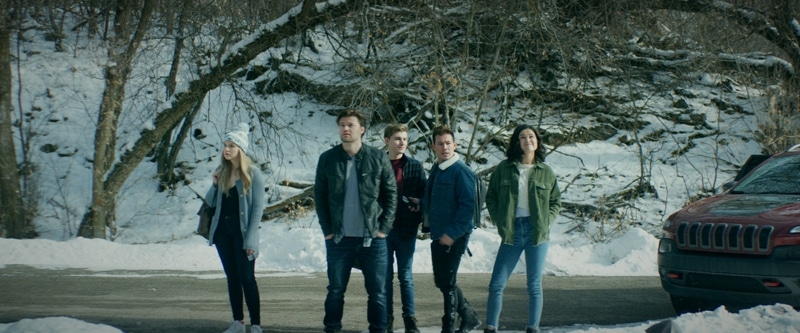
There’s doom and gloom on the radio as our twentysomethings Eden, Jace, Kit, Em and River – who sound like collectibles – head through a wintry landscape on a fateful New Year’s Eve. We obviously know it’s a fateful New Year’s Eve, or we wouldn’t be here discussing it. The town of Snow Falls is their destination, though they are headed to a remote cabin belonging to River’s family. The group wastes no time establishing there’s no phone signal – though this isn’t always the case, or else our characters couldn’t take some plot-expedient video calls or boast about social media – before settling in. One of the plot-relevant Zoom calls warns them that a snowstorm is heading their way; could they, too, end up on a cautionary radio bulletin?
The New Year’s celebrations pass without a hitch, but the promised snow does begin to fall…and fall…and fall. The group hunkers down, fully expecting to be stranded, but a power outage comes next which takes out the heating as well as the lighting. Their predicament gets worse: soon the roads are completely impassable, the house is getting colder and only a – actually, a reasonable number of people know they’re there, but they are still going to be cut off for a couple of days. Now, there’s a bit of a problem here. Firstly, it’s a little hard to believe that they’re all imminently freezing to death, given the prominence of a lovely, fireside glow; it also looks suspiciously as though the breath vapour has been done in CGI. Can’t we genuinely freeze actors now? Whatever are we coming to? It’s hard not to think of Meiko Kaji in Female Convict Scorpion: Jailhouse 41, filming the opening punishment scene and getting genuinely sprayed with ice-cold water so no steam appeared on the film, endangering the illusion for audiences. You don’t get that these days, evidently, or at least you don’t get it here. It’s also a little hard to believe in how quickly our twentysomethings come apart at the seams, given the whole ordeal is, what: a few days? Can they feasibly be this cold and hungry already? But, to move things along, we really need to believe in this: we need to believe that the group is growing paranoid and unstable – because here’s where it gets interesting, or shifts gears, at least.
In their fractious state, the group begins to wonder if their predicament might not be caused by the snow itself. They ponder: is the snow doing something? Is it malign somehow, a presence – or a virus, which is changing their behaviour?
This is a decent addition to the plot, this idea of sentient weather conditions, actively seeking to do harm to humans. Previous successful environmental horrors have simply let the conditions themselves do the talking, even if they have edged into fantastical in places; Crawl (2019), for instance, pushes it, but it still plays out admirably as a film about a flooded basement where things go extra wrong. We don’t always need unusual extremes of weather, either: Adam Green’s Frozen (2010) simply shows us how badly wrong things can go if you’re left out in the cold and no one knows about it, though, again, it all goes extra wrong. So Snow Falls attempts to blend the perils of extreme cold, isolation and privation with something else, something potentially supernatural. I mentioned the Dyatlov Pass incident because that, too, has always seemed to do the same, with many conspiracy theories (and a few films) over the years discussing what happened – was it disorientation and hypothermia, or more?
Unfortunately, it feels as though the film doesn’t fully commit to either of the two outcomes it suggests – that things are going to get really menacing, or get silly-zany. The role of the snowman out front (who even built it?) is ambiguous. Monster, hallucination, ironic symbol? Overall, the film really needed to decide on a way to go extra wrong. It doesn’t do this, and nor (given this is film is rated R) descend into out-and-out gore, violence, or anything of that sort. Ultimately, it offers a lot of possibilities, but never really realises these, opting for uncertainty which often feels like a bit of a cop out.
That being said, and taken as a whole, it brings an engaging idea to the table, with some scenes of peril which work well and a reasonable pace, neither outstaying its welcome nor overrunning the central idea. By the way, Snow Falls has to be seen in the winter; to view it in any other season would dissipate any relatability it has. But it seems that director Colton Tran already has another four horror or suspense titles in pre- or post-production, so it looks like there’ll be a few more to go around very soon…
Snow Falls (2023) will be released by Lionsgate on January 17th 2023. Get it while it’s cold.
The opportunity to watch and review short films continues to be one of the key motivations behind Warped Perspective. Yes, we keep saying it, but it’s true. This is such a golden opportunity to get to see calling cards from new, exciting filmmakers, tasked with getting their message across, or in some way communicating a punchline against the potential obstacles of time, money and means. So often, the calibre of storytelling across ten brief minutes feels like it counts for more than a tepid two hours; brevity really is the soul of wit, and for filmmakers who make the leap from short films to features – please don’t forget all the lessons you once needed to know inside out, as the potential to dilute all of the things which make your work great is very real. As ever, it’s a great shame that we still see comparatively so little of short films, or else we just don’t get to see them that often outside of a festival run. However, could that be changing? I won’t be featuring them here right now, as with Netflix money and influence behind them, it would be less a signal boost and just more white noise, but the very existence of Love, Death and Robots shows that there is an appetite for short films (and they really are excellent). There’s also a great streaming platform which caters to short horror films: check out Alter, which also has a YouTube channel, and which offers a great roster of titles – some of which we’ve covered and support wholeheartedly.
In the meantime, here’s a quick recap on some of the best short films of 2023. I hope you get to catch up with them; I hope the teams behind them go from strength to strength; I look forward to seeing what they will be doing next.
Everybody Goes To The Hospital
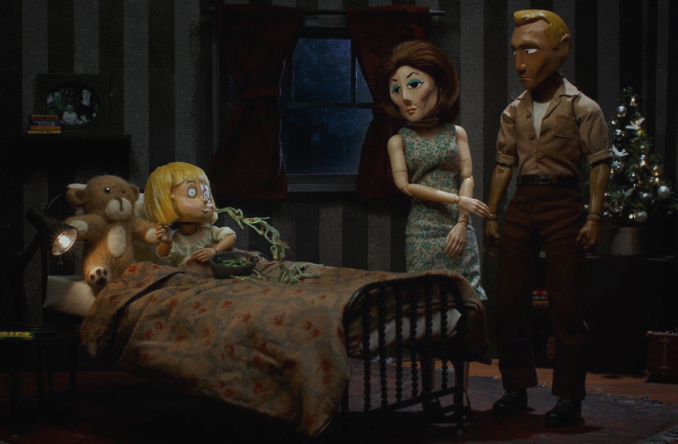
Everybody Goes to the Hospital starts innocuously enough, or it seems to: the presence of stop-motion animation, the use of a voiceover – it could all have been so innocent, and yes – it tells a story of childhood, but it quickly becomes apparent that this is a story of trauma, made all the more affecting as it retains its child’s perspective throughout, explaining events on screen as if from the point of view of the child affected. Being a child, being spoken for or talked over by adults and yet being entirely dependent on them, is scary; the film perfectly encapsulates that in its story of illness, hospitalisation and a life hanging in the balance.
Lucienne in a World Without Solitude
A smart example of a short film which immediately immerses you in a bizarre scenario, but makes you understand the normality of it all at the cost of your own sure-fire normality, Lucienne dans un monde sans solitude is a recognisable enough, small French coastal town – which is part of a world where everyone, absolutely everyone, has a twin. It’s just the way it is. Not only that, but it would be completely unimaginable to appear out in public without your twin; pity, then, that we meet Lucienne on the point of a break-up with her partner, Paul. It seems amicable, but the logistics of this are quite something. Paul, it seems, has lost his twin: this is unfathomable, subversive, even. In the pursuit of the ‘right’ kind of outcome, Lucienne (and her sister of course) find themselves on the trail of a bizarre, unidentified man – a man walking the streets without his sibling. Visually brilliant and gently compelling, this is a mesmerising short story which teases questions of individuality which we take for granted.
Scooter
A bad date turns into a strange expedition which turns into…well, something which obliterates the simple memory of a bad date in Scooter, where Adrienne is dumped in the middle of the night by a lousy boyfriend, and has to find a way to get home – by herself, by night. If the red flags here seem a little obvious, then forget it: the resulting story has humour, it develops in quite unexpected ways and it ratchets up the pace by performing an effective bait-and-switch. Adrienne isn’t just getting home: now, faced with the unexpected, she has work to do. Nicely done, with a plausible set-up and dialogue which leads us to want to follow wherever our lead character goes.
Kiddo
Kiddo is one of those films which, with a few carefully-realised lines of dialogue, makes you reassess everything you have seen up until the credits roll. It’s very clever, and it makes a few devastatingly effective points about our lived environment and how we behave within it – within our homes, our places of work, and within the wider area. Who is ‘Kiddo’? Why is she referred to by that nickname, particularly given how little it suits her? She’s an older woman; she’s the only older woman in the film. As relationships and ideas unfold, you realise that this is a simple but haunting piece of storytelling. The film will be available on Alter in a few short days (29th December).
Shut
Playing with ideas of personal perspectives, Shut at first seems to suggest that Jonas’s elderly father, Arend, is ill – or in some way incapacitated, certainly unable to recognise his son when he arrives, and seemingly racked with paranoia about life in his remote homestead. It is always worth reserving judgement, however, and as the film backfills its story, supplying us with Arend’s thought processes and what has brought us to this point, and things become devastatingly uncertain. At its core, Shut works well because it shows us people who do, ultimately, care about one another; that is what makes their predicament so impossible.
Smahorror
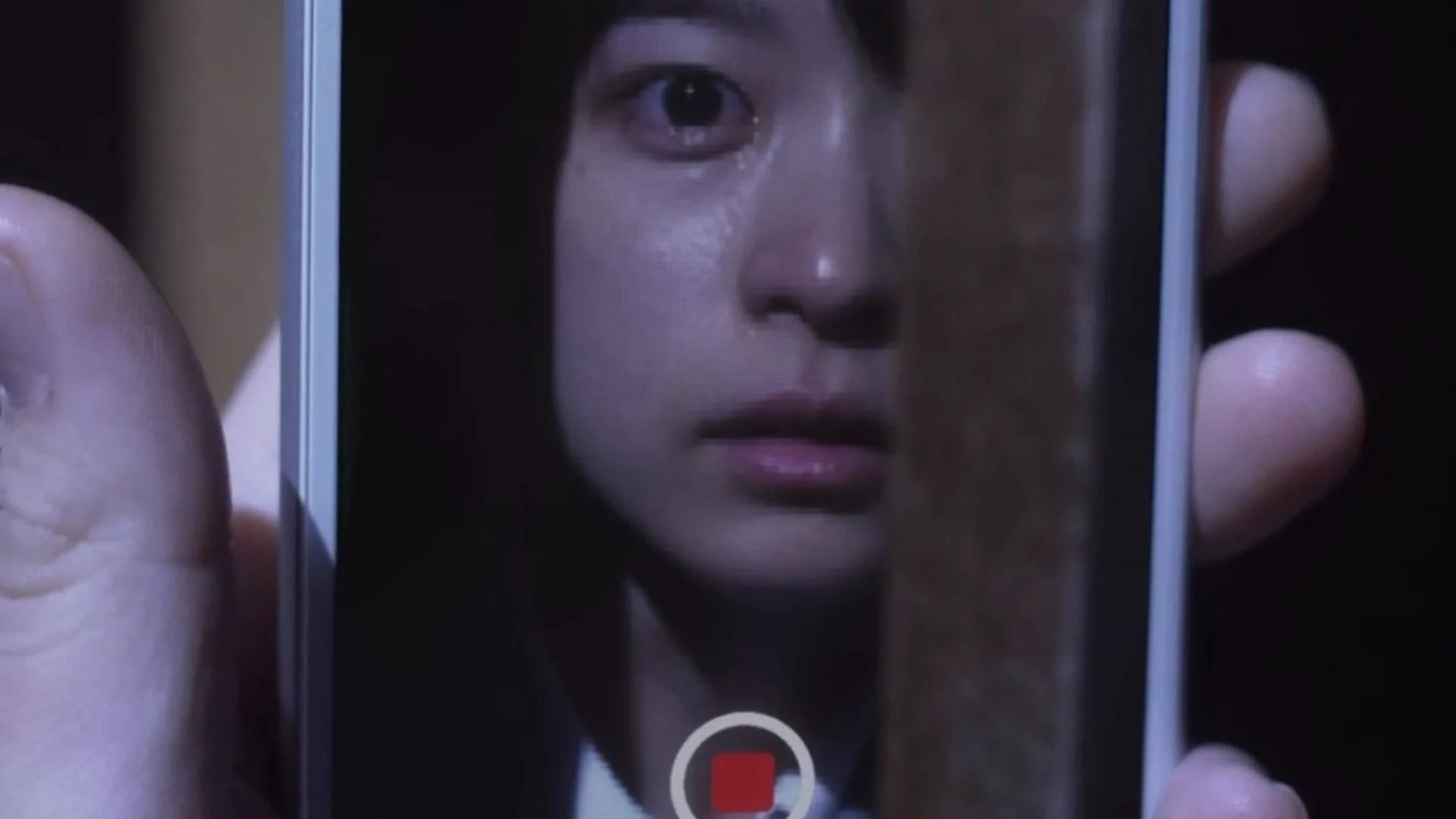
Two things spring to mind here: firstly, that Smahorror‘s subject matter (a live-streamed suicide, and the subsequent waves of urban legend which begin to amass) is not all that unusual today. We recognise the role of technology and social media in our most profound miseries; horror is already pretty damn good at exploiting this potential. Secondly, for a while there Western horror was absolutely inundated with successful Far Eastern horror, after Ringu (1998) almost single-handedly broke down the barriers. We even had a specific name for Japanese horror cinema, so much of it was crossing into Western markets and fandoms: J-Horror. But, whilst J-Horror (and films from other Far Eastern countries) continue to be made, the rate of crossover in the West has drastically slowed. Step forward, then, Japanese filmmaker Masaki Nishiyama, whose short film Smahorror covers reasonably familiar territory from a recognisable, even classic J-Horror perspective, but manages to make it feel fresh and invigorating. Oh, and at the time of writing, he’s twenty-three years old. This is a smart film which gets an abundant amount done in a short timeframe, and it deserves full credit for that.
Daughters of Witches
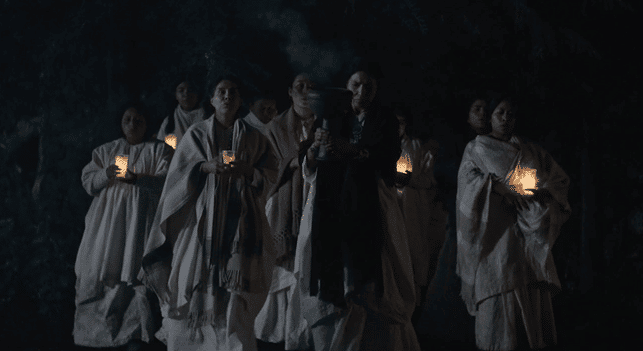
On occasion, you could be forgiven for hearing the term ‘folk horror’ and having your mind jump immediately to the English Civil War era; of course, in fact, folk horror depends entirely on the folk. This Mexican short film plays very effectively with the idea that folkish belief cares not a jot if you deviate from it or forget about it; it’ll be there, waiting, with the potential to go horribly, horribly awry if you happen to have forgotten the rules. New mother Clara lives in the US now, but she takes her baby back to her old village to take part in a traditional ritual, to give her baby daughter spiritual protection. Clara is dubious; could this rite really work? Or could it be as dangerous to her child as the risks it is meant to banish? The ritual goes ahead, by night, but there is something not quite right here…
Darker
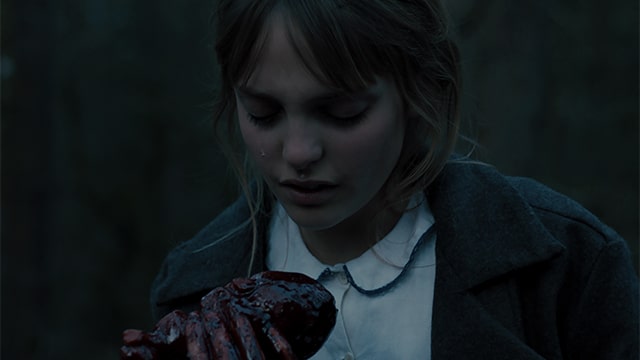
Darker (Donkerster) does a careful job of putting together its own fascinating, heart-rending mythology. Elements of it feel familiar, but brought together here it feels like it can more than stand alone. A little girl called Rhena enjoys hearing bedtime stories from her beloved father: he tells her that there’s a tree called Atlas where the life stories of living things can be found. The dead seek Atlas out, to preserve their own stories. So, when Rhena’s father disappears, she cannot prevent herself trying to find him – and trying to find the tree, so that she can be near him again. It’s an interesting, not to mention aesthetically beautiful film, which understands something of the way folklore and real life feelings and obsessions overlap.
Lips
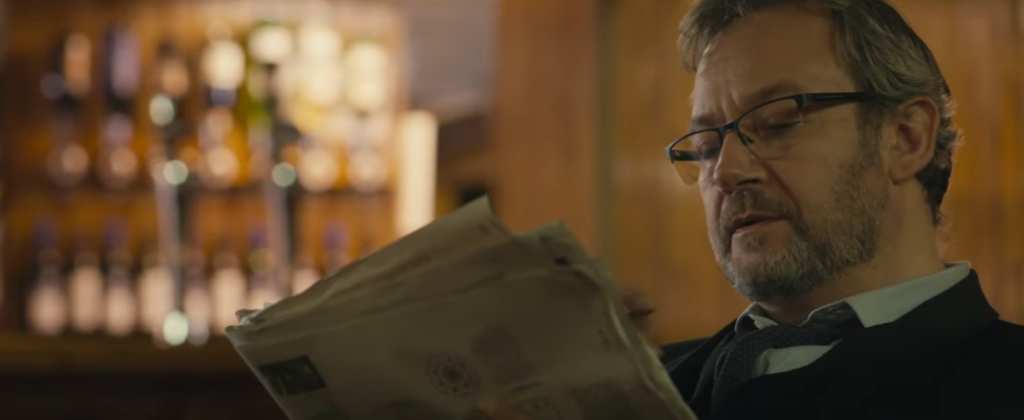
Lips manages to combine a very British sense of humour with a very British sense of horror. To be clear, a lot of what makes the British laugh is when pure, irritating inconvenience happens to other people – so when Michael is simply hoping for a quiet pint and a quiet read in a quiet pub, the arrival of a man simply determined to strike up conversation establishes a source of annoyance which many of us would recognise. And, oh god, he has no shoes and socks on; he’s probably mad. Or is he? The story he unfolds to Michael could point either way, to be honest, but the real issue is this: what if what he’s saying is…true? The ways in which Lips gradually ramps up its narrative is funny, icky and memorably extraordinary. If your curiosity is piqued, you can watch the film itself here.
Spare Body
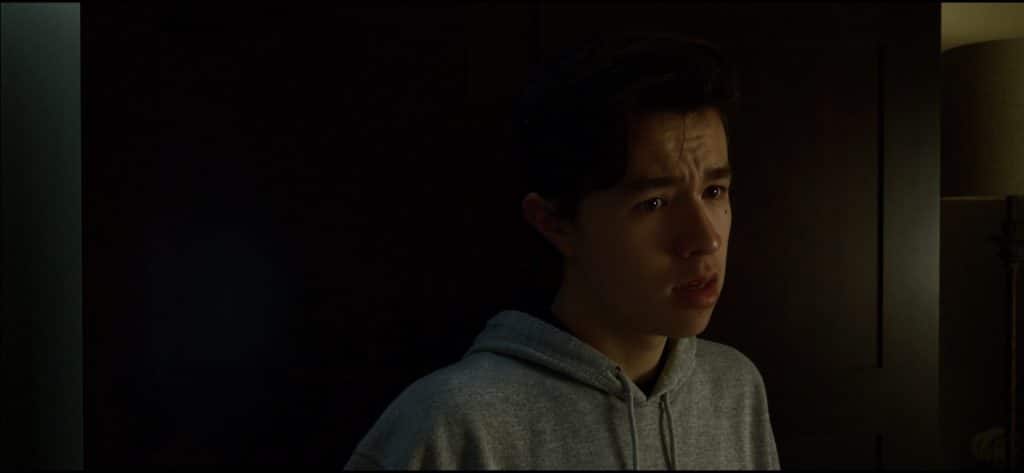
Spare Body is a simple and grotesque idea which has enough about it to generate a deep shiver down the spine. It also bases this moment of acute horror on a premise which reflects our ‘buy anything, anytime’ ethos, with parcels and packages arriving at our doors on an almost daily basis. You can buy almost anything. Well, moving from that, it seems that , in the world of the film, you can order something which has the slogan Second Lives Now Possible; this presents a very upsetting evening’s work for a teenager who gets curious about the parcel hidden in his parents’ wardrobe…
From the perspective of the kinds of independent films usually covered here at Warped Perspective, 2022 has, after everything, been a good year for film: lots of the big genre film festivals have boasted excellent, extensive line-ups, and after a run of virtual-only fests, most physical fests are back (though, if we’re lucky, also offering a virtual festival experience, too – this is one aspect of pandemic viewing which would still be useful to keep). if it seemed last year like normality would never be resumed, then it seems that – broadly speaking – there are more reasons to be optimistic now. It’s not a comprehensively positive picture, but there are reasons to be sanguine. That all being said, some fundamental issues remain for film fans.
In terms of big-budget releases, it’s taken until 2022 for some long-completed films to even reach the cinemas, as studios have remained noticeably twitchy about the prospect of insufficient profits; you could suggest that starving cinemas of long-awaited blockbusters is instrumental in jeopardising cinema attendance across the board, big budget epics and all, but one of the biggest releases has more than reversed the downward trend – as much as this is bound to be an outlier. This may be a valuable lesson for other studios and projects, although sadly one of my favourite films of the year did not do well in the box office, and so this may counteract any sense that the public are definitely ready to commit to going out to see films, all films, any films. 2022 also brought the sad news that the Cineworld and Picturehouse cinemas were in financial trouble and, although their cinemas ae still open at the time of writing, issues persist around the potential longevity of these outlets. Bur despite all of these issues – some of which have appeared to be overwhelming, at various points this year – the public is not done with the cinema just yet, despite an array of different viewing options, and ongoing issues regarding where one of these ends and the others begin. Time, as ever, will tell.
These things are important, of course, and you could write an entire piece about where and how one might have accessed new films this year, let alone next year, but as this article is intended to focus on the films themselves – back to it. Looking at 2022 as a whole, is it possible to summarise the year – particularly the genre cinema year – we’ve had?
Pandemic-inspired horrors continue to appear – how could they not, given the seismic scale of impact caused by Covid? – and some of these have been very good. It hasn’t made my final list, but The Harbinger offered a compelling spin on the illness-as-monster motif, with some genuinely unsettling ideas; in many ways this film feels like the high point of pandemic horror, one which is unlikely to be bested in terms of complexity and ingenuity (but – never say never). We have continued to see a lot of lockdown horrors emerge, now a couple of years after being filmed; these have been as variable as you might imagine, with vastly differing budgets, casts, sets and scripts, if scripts have really been used at all (the pandemic seemed to grant a special kind of dispensation where many filmmakers felt they could just ad lib). Other than that, my overall top ten list this year looks, for the most part, a lot like (largely horror) business as usual; there is little in the way of overarching style or theme, just a diverse and challenging array of titles, representing aspects of different genres but doing more than enough to craft a smart, engaging narrative. That being said, there are a few honourable mentions for what we could loosely term ‘social media horror’ in there; social media does, after all, continue to rule the developed world. A proviso too: I haven’t been able to see as many of this year’s anticipated titles as I’d have liked. There’s no Dashcam; no Bodies Bodies Bodies; no Huesera; no X – to name but a few. Who knows? Perhaps they’d have been on this list.
The vast majority of these films, by the by, were festival releases; only a couple were mainstream cinema releases. As ever, genre festivals are doing incredible work. But, actually, the first film we come to had a modest mainstream cinema run; nor could it be described as a genre film, despite its two co-stars having past form in genre film.
Nitram
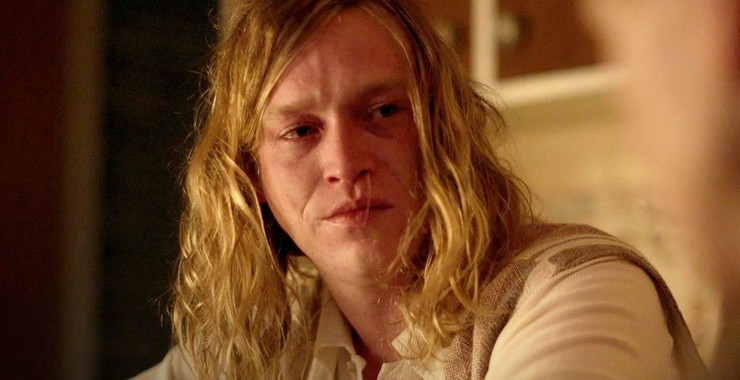
Whilst popular culture’s fascination with true crime shows no signs of abating, today’s films on the subject often swerve accusations of glorifying these acts of violence by modifying their perspective, and this is indeed the case with Nitram, whose subject – the life of mass murderer Martin Bryant – is given no gloss, no elevation. The focus is on him, his lack of moral principles or forethought, and the series of bizarre personal events which turned him into a notorious criminal – but not on his deeds. Hanging in the air throughout this film, though, is the sense that something, god knows what, but something awful was always going to happen to this man. Caleb Landry Jones is phenomenal, as is the supporting cast, with particular mentions for Judy Davis and Essie Davis. A gripping, fatalistic film. Full review available here.
We Might As Well Be Dead
Certainly, the spectres of lockdown and the pandemic seem to have cast a different light on the long-standing idea of the ‘gated community’, where perhaps we now have more of a sense of the advantages and disadvantages of such a set-up, or can at least imagine it all the more fully. This motif has been around for a long time, sure, but there’s a new, refined kind of paranoia available for use now, and such is the case with We Might As Well Be Dead, a subtle, clever film full of ironies and social commentary. Somewhere in the wilds of a possibly dystopian world (we honestly never see enough of it to say for sure), the luxurious Phoebus House is a des-res with strict entry requirements, and it makes an artform of demonstrating the ways in which a model community can begin to hairline-fracture and come apart. Along the way, it shines a light on anxieties and behaviours which have never fully been disavowed, however the discourse has shifted. Check out a full review here.
Repulse
Broken families are nothing new in horror cinema; if anything, we should be impressed that the genre constantly finds ways to both interrogate the topic, and also to present us with memorably damaged characters and situations. Repulse reflects this, though it flags up a great big reminder to the viewer that it’s not necessarily always your tumbledown, impoverished, degraded family units which provide all the trouble; in this film, it’s the accidental overlap between one unhappy home and another ostensibly wealthy, comfortable and respectable one which drives the plot. Another factor which works really well here is in the ways Katerina and Viktor’s families come into contact through a series of unfortunate events, rather than some sinister plot to single out the wellbeing of one household; it’s more coincidental than that. Trusting us to piece together the sequence of events which matter, Repulse toys with genre expectations, but has the confidence and clout to sidestep expectations where it sees fit. For a full review, click here.
Nocturna: Side A – The Great Old Man’s Night
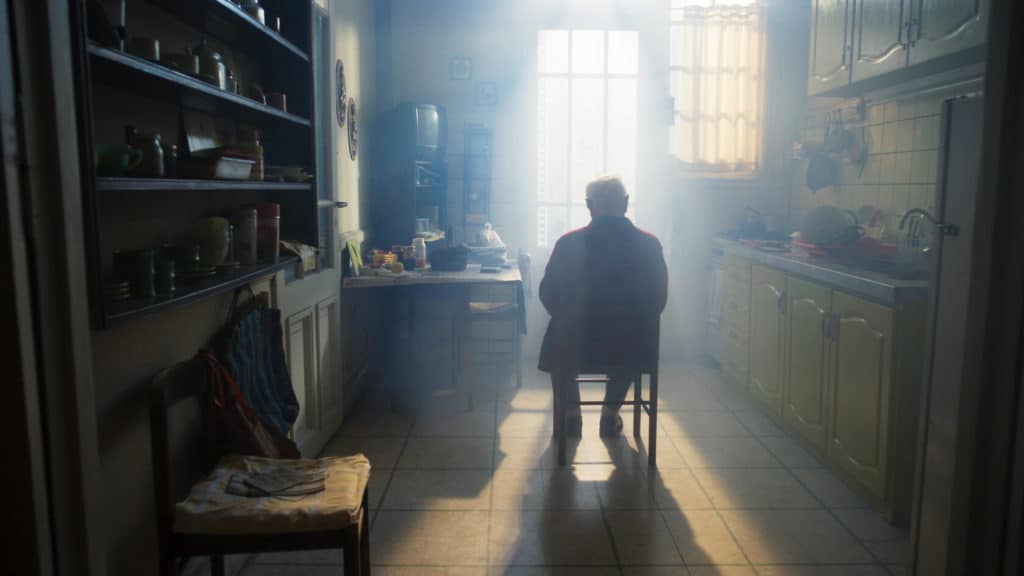
Bringing us to the only film on this list this year which had me break down in tears, Nocturna: Side A – The Great Old Man’s Night is a phenomenal piece of work, a film about old age which focuses on the unpalatable truths of ageing – namely that, in old age, your world begins and ends at your front threshold, and that without your memory, you have nothing to anchor you even to your own home. This is a well-realised, acutely painful study of dementia and regret – can there be any two more horrific topics in the modern age? – Topics likely to come near us all? The careful addition of what appear to be supernatural elements work well, acting as a focaliser for the pre-existing terrors and concerns held by elderly couple Ulises and Dalia; that all being said, it is in the phenomenal performances by these two actors, exploring the painful idea of time coming to its end, which underpins the film so successfully. Heartbreaking. Nocturna: Side B, by the by, an arthouse exploration of same, risks washing away the significant emotional weight and narrative impact of the first film, and does not come close to Side A in quality or value; Side A speaks ably for itself and deserves to be seen alone. My review can be found here.
Glorious
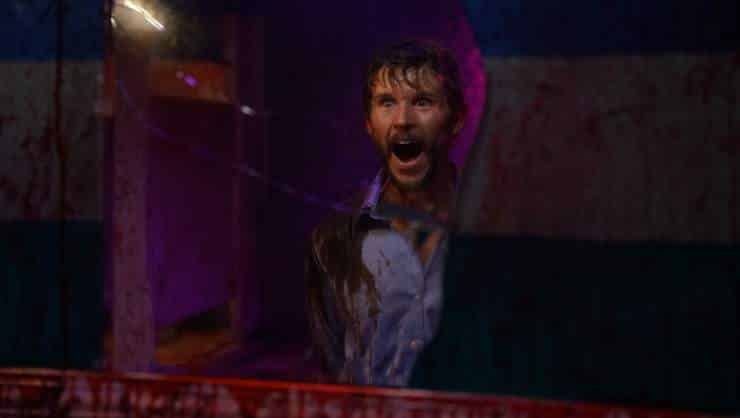
It’s not the first film shot almost entirely in a toilet, and nor is it the first film which takes an incredibly small set and still manages to explore some pretty vast existential questions from that location, but Glorious deserves full credit for doing both of these things – and of course far more – with a kind of ease, humour and yet, a steadily-ratcheting sense that something far more sinister is going on here, from a personal, very human level right up to – well, right up. Wes (Ryan Kwanten) has just gone through a hideous break-up and, his car loaded with stuff, he realises he needs to take a rest break. This rest break turns into an overnight stay, which turns into a hangover, which turns into a strange conversation with the guy in the cubicle next door – and it kind of goes from there. It takes some serious creative chutzpah to launch into a piece of world building like this, but full credit to director Rebekah McKendry for doing so, so much with what are ostensibly very simple elements – at least at first. Check out a full review here.
Barbarian
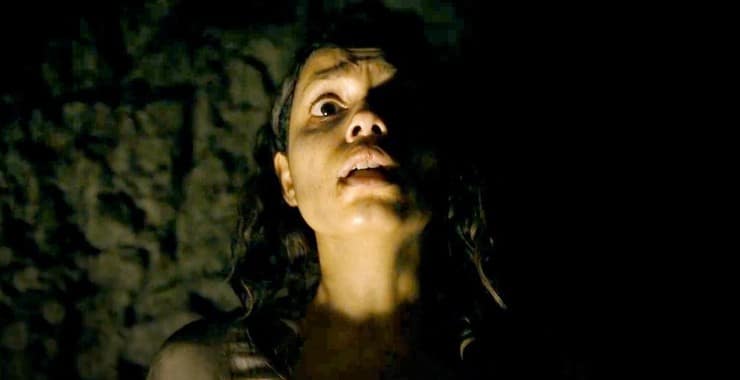
A film I decided to just watch and enjoy on its own terms rather than review – that happens from time to time – Barbarian makes this list because it’s simply so much pacey, multifaceted, grotesque fun. It starts with a very modern misunderstanding which seems to be leading us to anticipate one sort of fate for our protagonist Tess (Georgina Campbell), who arrives at an Airbnb in a remote, deprived suburban neighbourhood which has been double-booked; forget your expectations, though, because the guy already in the house (Bill Skarsgård) isn’t the bad guy here. The film soon spirals into an entertaining mélange of horror elements, encompassing: home invasion (well, sorta), the monstrous feminine, serial killers, you name it. It all glides along, gradually reaching out to draw in new characters and to add exposition, but never feeling like it has to hold itself to some kind of checklist; it hangs onto a few secrets, but it’s all immensely well-handled, engaging and entertaining. Sometimes that is more than enough, as much as you could identify a point or a scene here and there which have significance beyond themselves, pointing to an element of social commentary. But that’s not the key thing here, and it’s great that it’s the case.
Speak No Evil
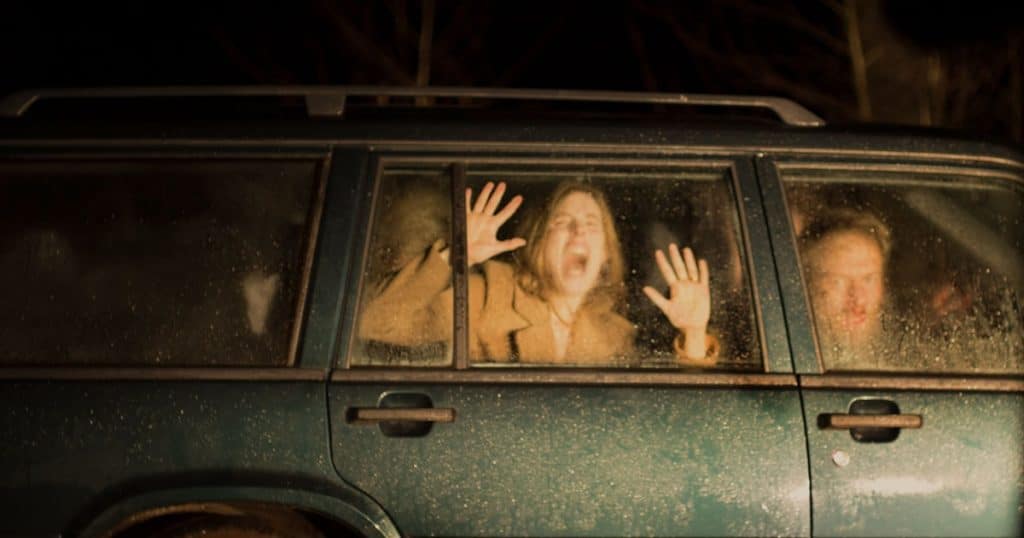
Speak No Evil is a horror rooted, ultimately, in good manners; all of the plot’s doubtlessly horrific, brain-frying elements come to pass because of the polite behaviour of its key protagonists, Danish family Bjørn (Morten Burian), Louise (Sidsel Siem Koch) and daughter Agnes (Liva Forsberg), who go to visit another family they met on holiday. Sure, we may have seen some of this before – the perils of not speaking up, or not following one’s instincts – but almost certainly director Christian Tafdrup’s film excels in terms of sheer, unflinching focus on the repercussions of this. Speak No Evil allows itself some very brief moments of humour, but these are entirely obliterated by the cruelty which follows; in fact, the humour included in the film only makes the eventual direction more galling, because the antagonists in the film are normal, in many respects; they tell jokes, they test the water, and therefore all of their subsequent brutality comes from a place not of superhuman horror, but plausible, if extreme choices. This film stayed with me long after watching. It still hovers uncomfortably on the periphery of my consciousness, asking, ‘Well? What would you do?’ For a full review of this superb and harrowing film, please click here. And remember to never be polite to strangers.
Megalomaniac
Another decidedly, unreservedly nasty film which doesn’t trouble itself with audience-calming resolutions or providing a sense of justice, nor want to show that the orderly world outside of the chaotic one is ready to come in and solve all the problems, Megalomaniac is no doubt a skilled, if challenging piece of work. Horror does not, after all, owe us social justice, but rather it’s there to contort, extend and reflect the worst aspects of humanity, and make us contend with it. Thus is the case with the appallingly makeshift family dynamic at the heart of this film, with adult siblings Felix and Martha struggling to make their way in a humdrum world after the death of their ‘father’ – if indeed he was their father – who turns out to have been a serial killer, and as such has not successfully passed on much in the way of workable life lessons. But where Felix can only emulate, Martha tries, heartbreakingly hard, to join the world outside, and her treatment at the hands of men very little better than any other men she’s known is genuinely unpalatable. An exploration of misogyny, not an excuse for same, Megalomaniac is a tough watch, but out of its gloom, its New Extremity colour palate and its violence come clever, well-realised messages. You can check out a full review here.
You Are Not My Mother
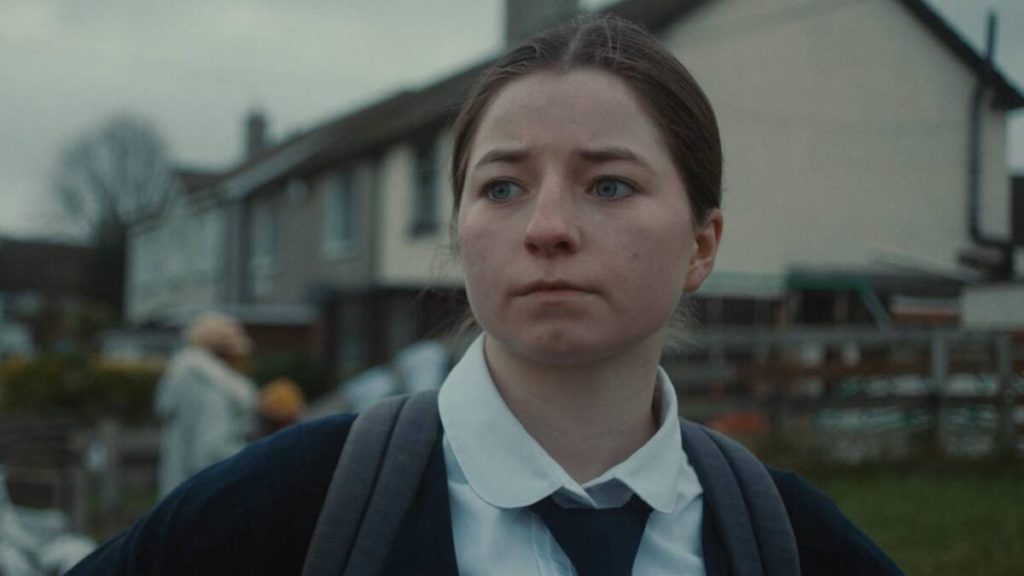
Out of the dour suburban background of a North Dublin housing estate comes an extraordinary debut film from director Kate Dolan, incorporating a very modern story of family alienation with a subtle, supernatural incursion that calls on barely-remembered Irish folklore (and indeed, the film successfully makes the point that even if you forget about the folklore, the denizens of that folklore won’t forget about you). Char, played by the very talented Hazel Doupe, is a teenage girl whose relationship with her mother is somewhat fractious; her mother has mental health difficulties, and struggles to be there for her daughter. But one day, when Char is leaving school, she finds her mother’s car, abandoned: what could be a missing person’s case is happily averted when her mother returns home unharmed that night, but where has she been? And why the sudden new interest in Char? It’s essentially a very simple idea teased out with extraordinary skill and patience, more than ably supported by an excellent cast and just the right balance of folk horror and gritty, unflinching realism. Here’s a full review.
The Northman
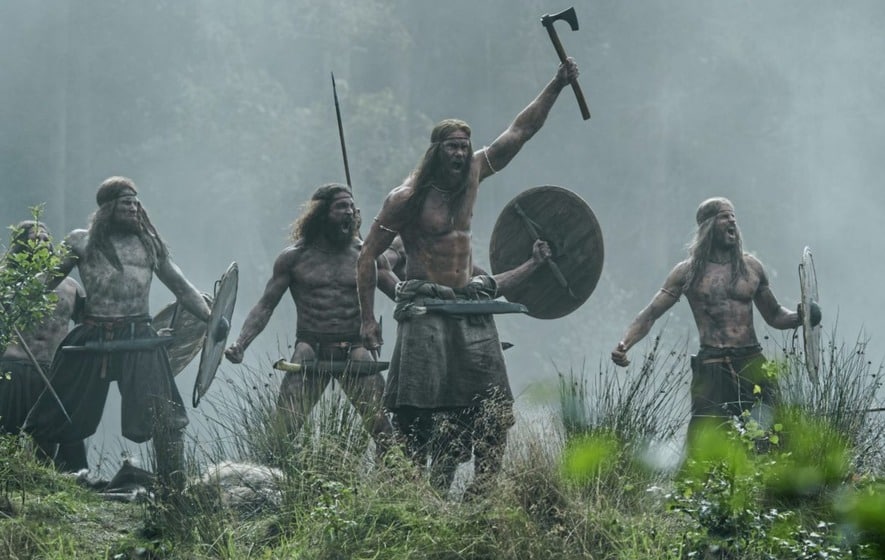
…and after all of that, my film of the year has significantly less in common with most of the films on this list than they do with one another, at least on first glance: it’s a fantasy-drenched historical epic, one where magic and fate feel like very natural parts of the world presented, as they should; The Northman is vast in scale, intricate, spanning years and digging onto two key preoccupations of so many sagas – vengeance, and bloodlines. Is that what perhaps pushed some audiences away? Perhaps it was too traditional for some audiences, too unconventional for others, but really speaking, Robert Eggers has done exactly with this subject matter what I would hope and expect him to do. He has also brought to bear plenty of the individual style he’s developed over the years through his other work.
His vision of a tough, bitter, warlike world on the fringes of Northern civilisation, a disinherited son and a curious, fantastical, shifting redemptive arc is an absolute triumph – and regardless of whether or not this film really flew at the box office, surely it will grow and build a deserved reputation from here on. After all, at the end of it all, it also manages to be profoundly moving; who wouldn’t watch that ending and not feel every part of that vindication is deserved? It takes courage to make a Viking epic with that level of magical realism and stern, unflinching historical detail, bring it all together, and succeed. Here’s my full review.
And finally – some honourable mentions…
The very funny Triangle of Sadness, where harsh reality lands on a group of nouveau-riche vacationers and possibly teaches them a thing or two;
Deadstream, an enjoyable social media horror (which has replaced found footage with selectively filmed footage for baying online audiences, which is better)
Follow Her, an entertaining exploration of – again – online platforms and revenue streams, with some harsh lessons around consent and content;
An intriguing and rightly unsettling interpretation of mental illness, Hypochondriac shows us what a breakdown looks like;
Sissy takes the rekindling of a childhood friendship and refracts it through modern, contested, always-online adulthood with all of its very own horrors;
And lastly, though perhaps a little bit because I almost overlooked this excellent zombie-ish horror as being one I’d actually seen in 2022, The Sadness is an absolute humdinger – visceral, sharp and unflinching.
Cyclic Law, based in France, occupies an important space as a purveyor of dark ambient and experimental music. And this label’s releases are genuinely experimental, too, rather than simply sounding eclectic in ways which themselves soon become pretty predictable. There’s often a sense of mystery to what CL releases, if that’s not overstating it. And so we come to øjeRum – actually the solo work of artist Paw Grabowski, who lives in Copenhagen. As so often with Cyclic Law releases, there’s an interesting story behind Reversed Cathedral, his newest album.
The album is based completely around a Mannborg Harmonium, an instrument which became very popular around the turn of the twentieth century, and was manufactured for many years at Leipzig. John Lennon played one on We Can Work It Out in 1965; this instrument was very popular throughout the century, made light work of its American counterparts in terms of competition, and became widely-known for its surprisingly resonant depth of sound. But tastes change; as such, many of these old Mannborgs became old fashioned, left to time.
This happened to the instrument eventually used by Grabowski, as it was closed up in a largely unused room in a house out in the Danish countryside. Denmark being a country of rainy autumns and bitterly cold winters, this benign abandonment had a subtle, but noticeable effect on the harmonium; it began to deteriorate, rattled by the damp and plunging temperatures. What better a condition, at the outset, for an album themed around it and it alone?
Yes, the harmonium itself is the only sound source used on Reversed Cathedral; all things considered, this is a very fitting title for the resulting music, which, if we accept that cathedral music is meant to be uplifting as much as it’s also often solemn, things here are rather more introspective and downcast. Each song is really a kind of chapter, with titles which call to mind a series of ghost stories, because the music has an ethereal, ghostly, liminal atmosphere throughout. Each track works together as part of this whole and fits together perfectly; it is all introspective, subtle and evocative, and as such it is an ideal immersive experience which happily hovers on the periphery of your senses, rather than demanding an intent listen. It simply isn’t that sort of music. It immerses you in something else entirely.
Fans of the left-field, not to mention audiophiles – I know some of you still pop by – you should check out this project, if you have any love in your hearts for this kind of layered, contemplative, genuinely experimental music. It would make a great soundtrack to other ventures, too – to paint, draw or write to.
Reversed Cathedral is available now and you can check it out on Bandcamp, a site which gives a fair deal to bands and labels.
Somewhere, in a very dour-looking Yorkshire, a group of young people are being taken on a bus trip to a place called ‘Wonderland’ (which, again, looks pretty dour – but that’s not beyond the realms of the imagination in Britain). They seem happy enough; however, there’s something not quite right about this whole set-up. They’re all wearing identical jumpsuits, QR-coded, and their mood darkens considerably once they actually get inside. What is this? A prison? Some sort of ‘reward’ which turns out to be something completely unexpected? Well, almost…but not quite. This excursion is also unusual for the fact that one of the people on this trip seems to be a lot older than the others, and yet she’s referred to as ‘Kiddo’. Has she been coming on trips like these since she was a teenager herself? What’s her story?
Answers to these sorts of questions are not clearly forthcoming in Kiddo (2022). This is not a failing of the film, however, but rather a testament to the ways in which writers Brett Chapman and Scott Milligan have left interesting spaces within a highly symbolic and surprisingly complex mini-universe.
Kiddo (Lisa Howard) seems to know the bus driver; in fact, it looks as though he’s not a driver as such, but a Jack-of-all-trades whose main job is as a farmer – okay, as some kind of agriculturalist, but he certainly looks the part, and as we see a celebratory dinner welcoming his young son Jasper (Paddy Stafford) as a full partner in the family business, it seems all the more like a long-standing relationship with the environment as a resource. Now, whether or not you guess the twist in this set-up is by the by; there are so many deft touches here which demand attention. Why does this family of farmers have such an overweening, but dismissive attitude to Kiddo? Why is she kept around in the way she is? What is so special about her?
There’s a slightly dystopian vibe here, or more accurately a speculative fiction vibe perhaps, but the way in which Kiddo works is that everything seems so normal – with one or two thought-provoking exceptions, so the contrasts work very well, one thing against the other. Kiddo herself is both humanised and dehumanised during the course of the narrative, and as dialogue is relatively minimal, we mainly glean her thoughts and feelings through her facial expressions. Dawning realisation is a key feature of the film, and it comes together against an aesthetically appealing, if perplexing, curious backdrop: the baby pink jumpsuits against the stark landscape, the homely farmhouse dotted with visual clues of a shared, and a sinister history.
It’s difficult to discuss the film’s overarching impact and success without discussing it in terms which give the game away, so let’s just say this: if Kiddo aims to question how we engage with our environment, and the hypocrisy in how we behave towards those in our care, then it does so incredibly successfully. It’s only really when the credits roll that you can really piece things together, and appreciate that this is a surprisingly rich, emotive narrative for its fifteen-minute run time. There’s plenty to think about after the credits, too. Kiddo is a worthwhile short film which makes light work of a particularly punishing perspective.
Kiddo will be available to watch on Alter from 29th December 2022. For more information on Alter, please click here.
It must be tough to be a priest in the modern age, preaching changeless values against a backdrop of falling church attendance and endemic levels of scepticism – but such is the lot of Father David (Joe Begos frequent flyer, Graham Skipper). He delivers worthy sermons to all-but empty pews, and knows that even a spiritual institution needs cash to prevail – which his church does not have – but he retains hope and works hard, doing his best to reach out to new people, and embracing his faith-based obligations towards the less well-off. You have to question the old edict that ‘you do unto others as you would have them do unto you, particularly because it could be an angel – or even Jesus himself‘, as this sounds suspiciously like a Secret Shopper scenario, but David preaches it: he even intends – he tries – to live by it.
As such, as he’s about to lock up the building one day, he finds a down-and-out trying to sleep there; he asks the man to leave (and really, it would have headed off a lot of stuff if he’d let him stay put), and the man, Terry (Jeremy Gardner) agrees to go, but – when David emerges from the church and overhears him on the phone, waiting for a ride which never seem to be coming, he offers to drive him to his destination. He asks to be taken to his girlfriend’s house, which gets ten minutes further away every time Terry describes where it is, but David drives him nonetheless. But there’s more. His girlfriend isn’t home, the streets are thick with snow, and Terry’s protestations that he’ll go and ‘sleep under a bridge somewhere’ just don’t sit well with David, who offers him a room for the night.
You know the drill. One night inevitably turns into several nights; soon, girlfriend Lexi (Taylor Zaudtke) arrives too, newly-homeless after being kicked out of her house; that this woman seems oddly familiar to David doesn’t ring alarm bells loud enough for him to ask these strangers to leave. Part of this is down to the rather obtuse hope that these two could constitute part of the new congregation he’s been after; after all, he rescued Rigo (Rigo Garay) from poverty and homelessness, and now he’s a kind of unofficial church curate. But if this is all part of some test by God, David can’t help but think he’s moving in ways even more mysterious than usual; the presence of these people is triggering more, far more, than just a mild schism between David’s charitable duties and his more worldly concerns.
In some respects, Terry and Lexi call to mind the man and woman who rock up at the door in Darren Aronofsky’s Mother! (2017) – there to generate rising levels of vaguely theological chaos, with some rather more, shall we say, earthy punctuation points. Also akin to that earlier film, there are some minor elements of brash comedy here, which mostly land well. Terry’s foibles seem very familiar, incorporating ‘bad guest’ tropes we’ll recognise – smoking indoors, blasting heavy metal (it’s never jazz, is it?) – but thanks to Gardner’s strong track record as a kind of ‘people’s deadbeat’, it’s funnier than it is overfamiliar, and he gets some good lines – which he delivers in his by-now well established deadpan style.
But things move beyond this kind of testing farce, and get consistently more intriguing. The plot doesn’t simply step up to a wholly spiritual level – were it to do so, it would be pretty easy to guess at an incoming twist – but it does weave aspects of carnal and spiritual together – including with regards gender roles, in some unsettling ways. As the film hinges almost entirely on its characterisation and dialogue, we are encouraged to focus on the very human impacts of this series of unfortunate events, and Skipper is more than equal to it; he’s a sympathetic character when it counts, and a bewildering, complex character with unexplained subtext in turn. It’s being presented as a Christmas horror, and it – sort of – is, but mainly for the fact that Christmas drives things to a certain end point, and hovers in the background as context, something there to push people to even more faith, hope and charity, if they are so inclined. It also adds some visual elements into the mix. The Leech is a surprisingly complex, deeply mean-spirited and often surreal character study, albeit with a few moments of black comedy to lighten the overall mood.
The Arrow release of The Leech (2022) is available now on all major VOD platforms.
A run of cable TV-style advertisements opens Christmas Bloody Christmas (2022), and amongst them is an ad for something called a RoboSanta+, a kind of seasonal cross between a decorative item – and a top-level piece of mall security. And why not?! It’s no detriment to the film that it’s completely clear this bit of kit is going to feature heavily in what happens from here; in fact, the way that the film continually wears its heart on its sleeve and so readily flags up its intentions is a big part of what makes this film work so well. It’s a delight.
We don’t stay in this retro setting for long: we skip forward to the present day, our world of Tinder and Reddit and social media (mentioned in the script for clarity) and meet record store owner Tori (Riley Dandy), who is about to close up on Christmas Eve, though agrees to have a few drinks with her clearly hot-for-boss employee Robbie (Sam Delich) on the way home. They head off, stopping by the nearby toy store to see their friends and clocking the store’s very own RoboSanta while they’re there; it’s a now-obsolete system, and all remaining models are about to get recalled (a kind of twist on the ‘detective’s last day’ trope perhaps, only flipped, so it’s the antagonist who’s about to have an eventful evening). As anticipated, RoboSanta is soon up and about, and he sees everyone as a potential threat; he starts with the toy store, but he has picked up on Tori and Robbie’s recent presence there and tracks them back to Tori’s, where they now are.
And so we’re off, in a film which has some similarities to Hardware (1990) in terms of its uncomplicated story, killer robot home invasion aspects and aesthetic detail – but the newer film is far more grisly and heady, incorporating more horror genres: we get slasher, a dash of splatter, and a little sci-fi of course, which moves more and more into the foreground as the film progresses. All of this is framed by an incredibly lurid, colour-saturated presentation – Begos has refined this approach more and more with each film he’s done – and so it looks great, glaring with festive red and green, but also rich with shifting palettes and an effective use of light. It looks 80s retro in places throughout, despite the contemporary timeframe, but it’s effective here, as the film itself is an homage to any number of horror films from that era (and just before, and just after).
Speaking of which, the Venn diagram of rock, horror and hard liquor – which surely we can all agree exists – is played for fun in the first half of the film, with horror and music fandom exerting an influence over many of Christmas Bloody Christmas‘s key elements – characterisation, settings, props, and dialogue. The script itself also works well: these are plausible, likeable, funny people, and relationships hang together just as they should, throwing in some overblown dialogue in places, but lines which are perfectly in keeping with the vibe of the film. In very little time, the film establishes its key characters as well-rounded enough and likeable enough to make us care about the outcomes. That all being said, the film feels primed from its first seconds for ultraviolence, and when it comes, it’s welcome.
The film’s occasional use of a ‘Santa’s eye view’ gave this reviewer some small concern that this was going to turn into a means of avoiding the kinds of unflinching, gory scenes which the film had so clearly set up. And, in RoboSanta’s first few moments as a killing machine, this did seem to be the case – the camera swings, veers and ultimately blurs what’s going on, at first. Happily, things don’t stay this way; they really don’t stay this way; there are lots of fan-pleasing set pieces throughout, which get more and more OTT as the film moves, with very few lulls, towards its close. It seems churlish to complain that RoboSanta (Abraham Benrubi) isn’t a massively convincing robot, as you’ll likely soon be ready to just go with it. Suspending your disbelief here is both a genre fan’s dream and the best course of action. The film also sets up later scenes of panic and disaster which only a horror fan, as opposed to simply a horror director, ever could (and, by the by, that is how you do a director cameo).
The film may have started off as a different kind of Christmas horror entirely, but its progression into a bloody, entertaining, unrestrained genre mash-up makes for a really fun film. Essentially, you’d have to be very easily bored or very hard to please in order to dislike Christmas Bloody Christmas: it’s a film which may just edge onto that hallowed list of Christmas cult horrors, given some time. Final note: somehow, and I’m not sure how it really finds the time, it even manages to feel really festive…
Christmas Bloody Christmas (2022) hits Shudder on December 9th 2022.
‘How long do you think we’ve been here?’ This early line in Dawn Breaks Behind the Eyes (2021) perhaps puts us in mind of a classic haunted house story: like The Haunting of Hill House, with its dreaming walls and watchful ghosts, the film is centred on a beautiful, if tumbledown castle, and the people who find themselves there. But the film has other ideas, and refuses to stick with one mode or trope. An avowedly experimental piece of work, it weaves familiar-feeling horror elements with something more meta; essentially, it’s asking what storytelling actually is, positioning filmmaking somewhere on its axis. It begins looking like something from a 60s Gothic pulp cover, segues into avant-garde Eurohorror and winds up dabbling with 60s counterculture. It’s a period piece, but not as we may know or recognise it. And it may attempt a little too much in its modest running time, but its strong aesthetics and genuine ambition prevent it from sinking into tedium, self-congratulation or insincerity. Here’s a film which would not only withstand a second watch, but seems to demand one.
We begin with Margot and Dieter, an unhappily-married couple taking the long drive to the same castle – which Margot (Luisa Taraz) has just inherited. This boon is seen as little more than a liability by Dieter (Frederik von Lüttichau), who envisions month upon month of renovations – which will need to be done so they can sell it, take the money, move on. When they arrive, he sets to, looking over every inch of the castle. Margot is a bit more considered, taking her time as she explores. When they each encounter something otherworldly in the castle, it seems attuned to their mental states; the uptight Dieter is terrified, Margot rather more entranced.
They stay the night. The next morning, the vision of the roseate dawn makes even Dieter see the place differently, but still very much with a view to sell; not so Margot, who now wants to stay. The more time she stays at the castle, the deeper her antipathy towards her husband, whose discovery of some mysterious items in the castle cellar does nothing whatsoever to level him out. But wait: if you were enjoying this tale, too bad. The story of Margot and Dieter gives way suddenly to a different story, and what appears to be a framing narrative: this new device also places Dawn Breaks Behind the Eyes in the category of metafilm, joining a fairly popular and established subgenre, particularly in horror: here, Berberian Sound Studio (2012) and to some degree, Censor (2021) come to mind, for reasons of mood, tone and visuals, to varying degrees. We are now – we might think – at the end of a shoot, watching the filmmaker and his team deliberate on the quality of their film, and the success of its ending. We’ll be invited to follow some of the same thought processes before the framing film also comes to an end. There’s something of a lull at this point – the pace drops, so that we can get to know these people – but look carefully, and there are a few key points and ideas which underpin the film – the one we’re watching – as a whole.
It would take some doing to make a location like this look dreadful; here, Herrenhaus Vogelsang (in Lalendorf, Germany) looks very beautiful, and the film-within-a-film also has a somewhat faded look which is consistent, embellishing the visuals selected and revealed to the audience. I could watch a candle burn in this film for ten minutes and still be charmed by it. Even the cracks in this marriage look gorgeous. The shift in the narrative is accompanied by a somewhat different visual and shooting style, though the castle itself retains its strange influence over people, eventually proving to be the real linking device. There’s arguably some homage, or at least some inspiration from the likes of Jean Rollin’s rustic-Gothic set pieces here, with a couple of dashes of 70s exploitation cinema, not least in the film’s queasy, peripheral treatment of sexuality, which is always thwarted, interrupted or otherwise made to feel unsettling, like it shouldn’t really be there. Eventually, it forms part of the circular structure of the film, keeping people together, keeping people apart.
Being such an experimental piece of work, particularly around narrative structure, means that this won’t be a film for every viewer, even though this film takes some of its cues from older films which themselves are not exactly neat, linear progressions (the same films many horror fans often rate amongst their favourites). But Dawn Breaks Behind the Eyes has ideas, it looks fantastic and it’s surprisingly economical, with some ambitious decision-making.
Dawn Breaks Behind the Eyes will receive a limited theatrical release on December 2nd 2022. It will be released on home media in February 2023.
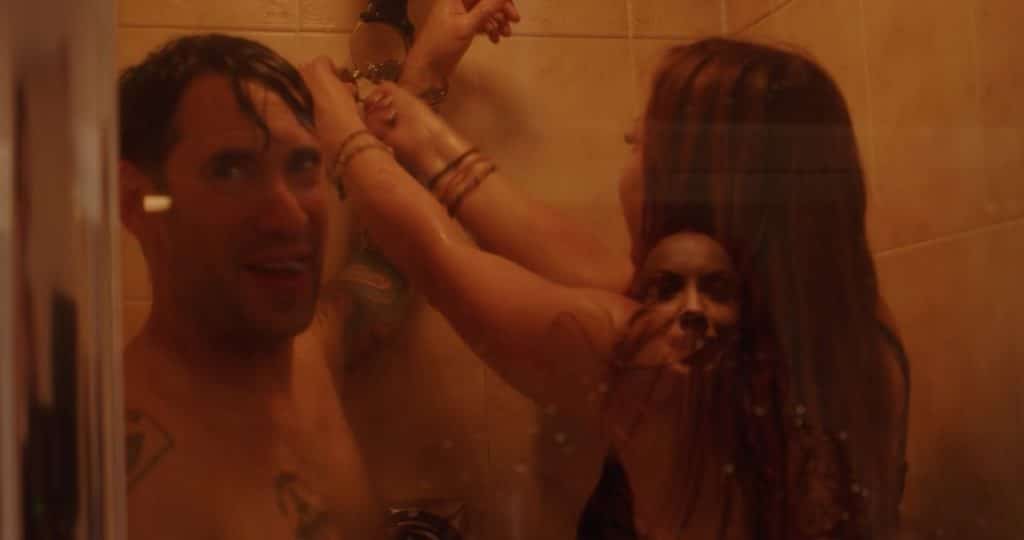
On The Edge sees filmmakers Jen and Sylvia Soska back at the helm: here, writing, directing and producing an original feature once again. You may, if you look around, see it being vaunted as a ‘psychosexual’ piece of work, a film targeted at an 18+ audience and, through its use of nudity, BDSM and kink, simplyguaranteed to agitate the censors. Hmmm. Here’s what will agitate most viewers far more: the student film quality, the shaky performances, and most of all the chippy, naive belief that all of this nudity is somehow edgy, somehow enough – if you add in a dash of dick torture, that is. On The Edge is a bizarre regression in quality, if not quantity; it’s all crass self-indulgence, flimsy moral message and nylon knickers. It’s absolutely astonishing.
As an American politician pontificates about ‘family values’ on the TV, a woman serves breakfast to her twin daughters, wink wink (the Soskas are way more interested in twins than most people are). Shame that dad (Aramis Sartorio/Tommy Pistol) arrives and possibly symbolically disrupts the meal by spilling it all over the floor – where it stays, by the by. But he’s out the door on a business trip, so it’ll be for mom (Sylvia Soska) to clean up: no mean feat in a bodycon dress. Anyway, we follow dad Peter to his hotel and see him checking in: the clerk specifies that he’ll be with them for specifically ‘thirty-six hours’. Noted, though an odd thing for anyone to say, and perhaps a clue on the calibre of the script, as much as what is to follow. For when he reaches his room, he’s greeted by a dominatrix, Mistress Satana (Jen Soska) who immediately holds forth on what a dreadful man he is, as well as getting started on the whole whips and chains stuff. Strangely, Peter seems genuinely bewildered by at least the beginnings of this ordeal; fair enough, we all sometimes pay for things we forget about.
Next: the film unleashes what I’m sure is meant to be deeply shocking footage of genital torture and the prone male body, albeit that you may have seen something very similar in, say, the godawful Neighbor (2009) – before the most graphic scenes were cut for UK audiences, anyway. In fact, if you survived the torture porn years, there’s little in this particular torture porn which will unsettle you. So, assuming shock value is out; what’s in? Not much, not much. There are long, long lulls throughout; lines of dialogue and scenes which repeat (“Let me out! Let me out!” etc) and – about an hour or so in – some theological/mythological plot additions, there to insinuate that there is far more to this than merkins, verbal abuse and various things being shoved up Peter’s jacksie. Yes, this is Peter’s dark night of the soul in more ways than one, and so across nearly two hours things cross into more surreal fare, with the whole ‘demons of conscience’ shtick taking over for the rest of the film’s duration.
And yet, just as the whole tied-to-chair thing had its day some time ago, so the whole surreal introspective nightmare has been done better elsewhere, too. But that aside, segueing from physical torment to existential drama offers zero excuse for the production values here: roughly edited, poorly lit and lacking impetus, the whole film comes overlaid with All The Musical Genres as a loud, clumsy accompanying soundtrack, easily drowning out most of the dialogue, as the audio here is atrocious – echoey, unclear and uneven. But when you can hear what’s being said, it contributes little of meaning anyway. The nagging suspicion here is that the whole idea behind the film started loosely with how subversive it would be to have a ‘strong female character’ reclaiming her sexuality by being in a position of power – something like that. Miss that memo, and what you have here is a film where you are mostly getting an ass-eye view, with little script, muddy audio, jarring music and a lacklustre plot. It’s as fragmentary as you’d expect.
An additional challenge here is this: it feels impossible to critique any Soska film without – to a greater or lesser extent – critiquing the Soskas themselves. But the particular way in which they, as people, blur into their projects is what makes this so tricky. Where they write, direct and inevitably appear (rarely deviating from ‘the badass’ or ‘the sexpot’) then creative priorities must come into question; is straightforward vanity at play here? In On The Edge, they also have a hand in the production design, the sets, the casting, some of the sound design. Where a film is flawed, this deeply flawed, these flaws keep on finding their ways back to them and how they chose to make that film. And it’s hard not to ponder the trajectory their careers have taken, as the sizeable momentum generated by American Mary (2012) largely dissipated and has instead found outlet in a number of smaller, and/or fewer original projects. Rabid (2019) was, for this reviewer, a rather hopeful sign of better to come. I’ve been watching their films for well over a decade; I’d genuinely like to like a new one.
Of course, it’s tough to get films made out there, particularly post-pandemic. Times are tough and getting a project off the ground, let alone completed, takes some determination. But it seems that the best outcomes for the Soskas are where there are other people involved to say ‘No,’ ‘What for?’ and ‘Are you insane?’ from time to time. Clearly, no one uttered those golden words on the set of On The Edge; the results are there to see. Maybe next time?
On The Edge (2022) received its world premiere at FrightFest Halloween 2022 and recently featured at Monster Fest in Melbourne.