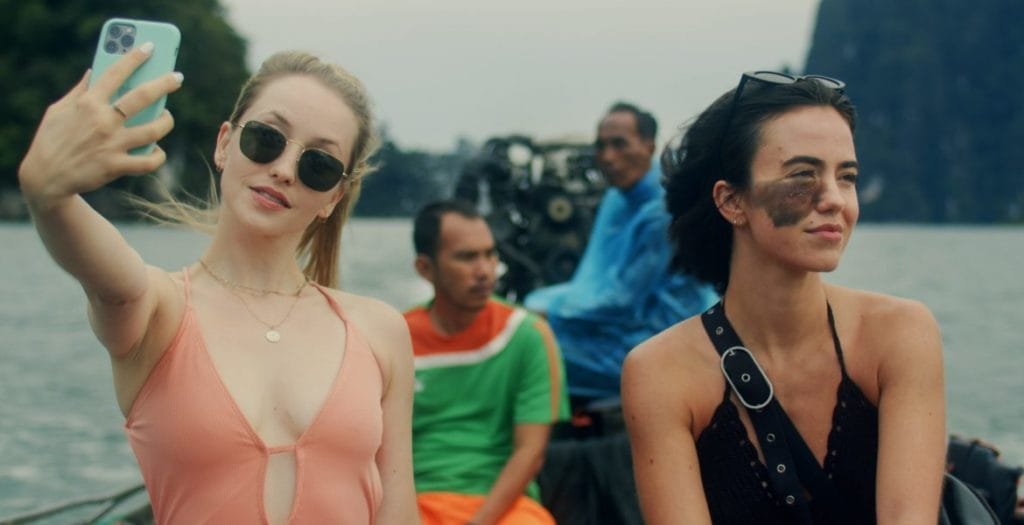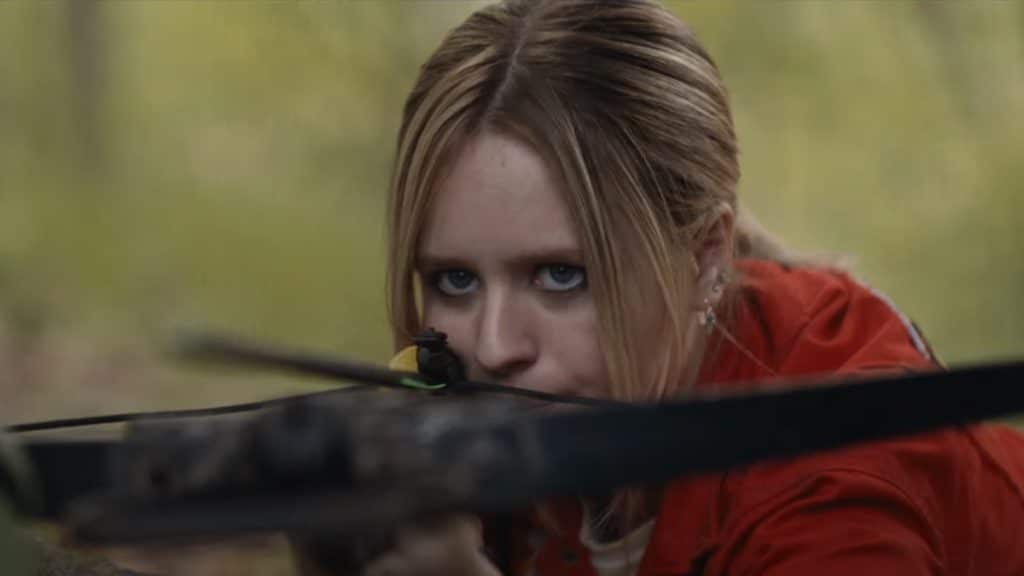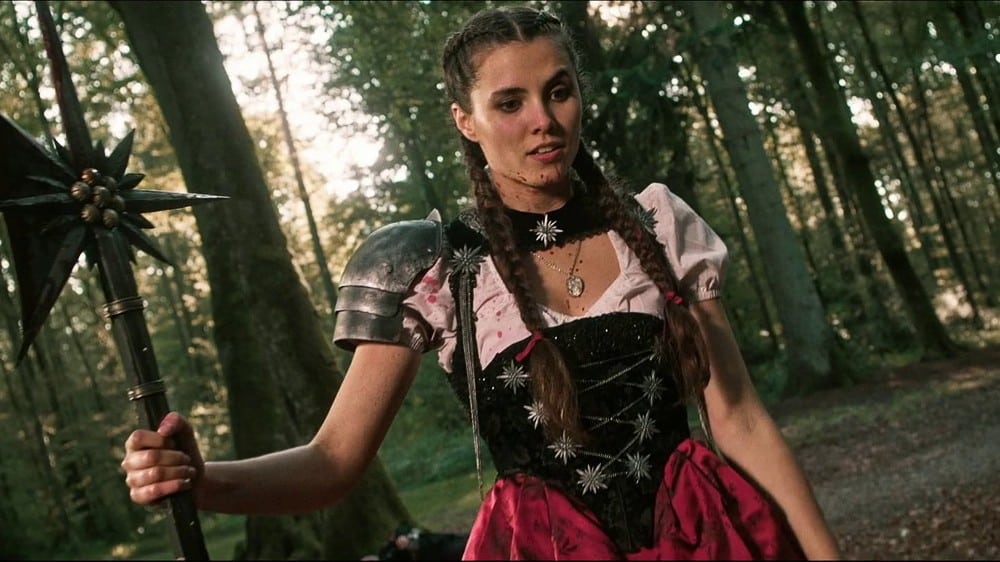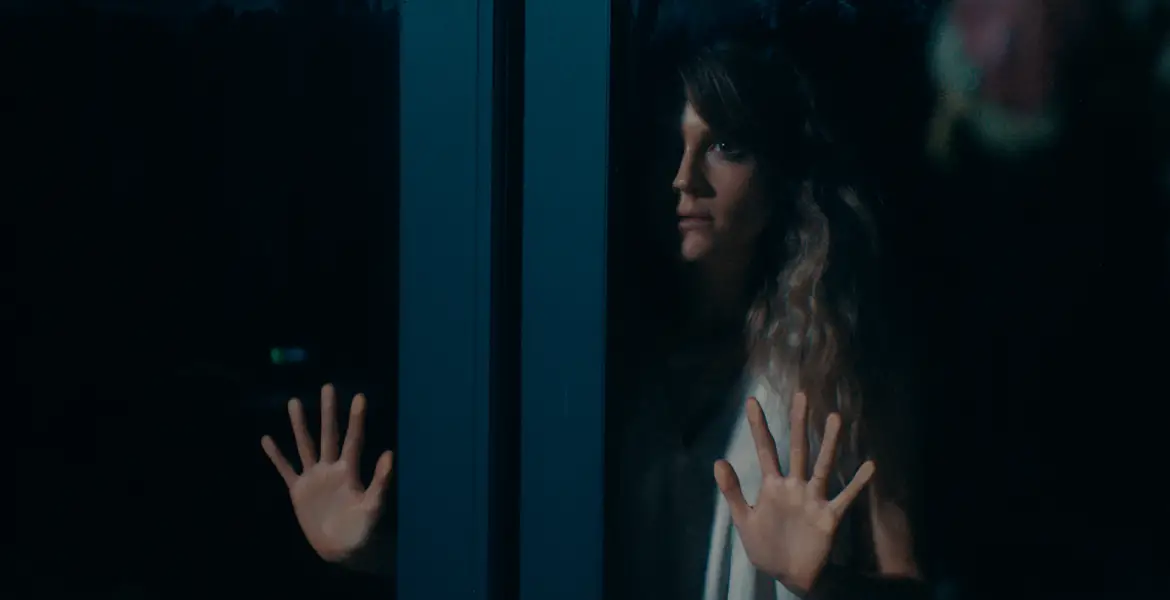
Motion Detected (2023)

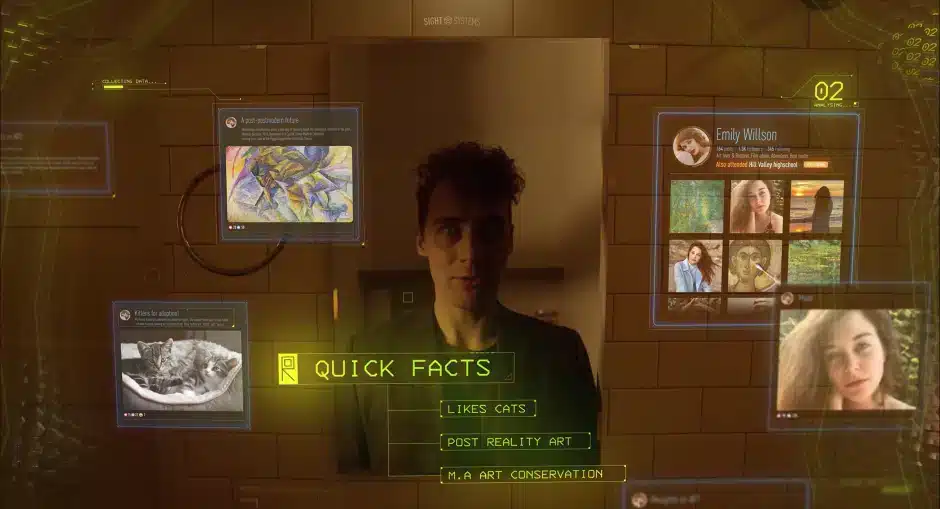
There have been, in recent years, a number of imaginative explorations of the role of technology in our lives. It’s a diverse topic, ripe for horror: the increasing levels of control we afford to tech, as well as the importance we attach to apps and platforms, have made for some great films – some scary, some funny, and some a blend of both. Unfortunately, Motion Detected (2023) won’t be joining those ranks anytime soon. It’s too diffuse, too confused and has no pertinent social comments to make. Tech framework or not, this is thin gruel.

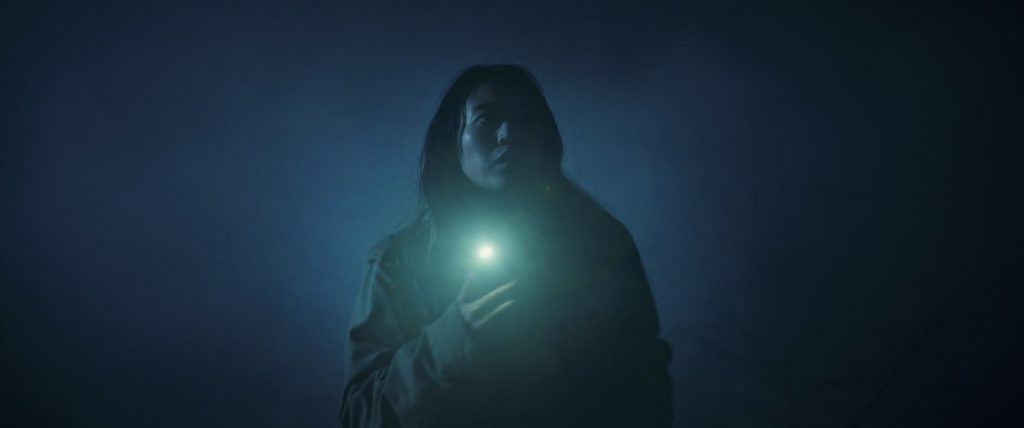
We start with a little girl lying in bed; she wakes up to see something static or akin to a glitching screen, almost creeping around her door. She sees ‘it’ at other times, too: when playing outside, she sees something at her window, and heads indoors to take a look. An antsy home security system chunters “Motion detected” as she heads upstairs, before – she’s gone. Literally gone. It seems that she hears her mother’s voice, and is fooled into heading into the big red cloud of electrical static accordingly.

The same house now being available to lease – not a great sign – we cut to a clearly wealthy married couple (albeit no wedding band for her), hoping to move in. The agent showing them around discloses that the last tenants ‘just vanished’, taking it oddly well, given they must have owed the company money. Here’s something else odd: the house’s owner has his own glowering portrait hanging on the wall. Heavy foreshadowing right here – and now that we’re on that subject, the fact that the overzealous home security system is called Diablo is not the best of signs either. Anyway, Eva (Natasha Esca) is enthused about the house, odd portrait and all, because of its state-of-the-art security. She recently survived a run-in with a Mexican serial killer at their old place in Mexico City, and wants the peace of mind. They sign up, just in time for husband Miguel to head back to Mexico City, and their old house, for ‘work’, which seems to be a perpetuity of client dinners. Nice work if you can get it.

This (in)conveniently leaves Eva alone in the new house, with no idea how to work the new security system. You’d think that at the very least the property people would have provided basic instructions, but then that may impede it continually going off. And go off continually, it does. Creepy, unseen triggers set it off. Boundaries are disrespected, weird, hooded figures seem to be menacing the area, and Eva is having a dreadful time of it – as often refracted through a home security eye’s view, with Motion continually Detected. Is this some kind of haunting? Is she being menaced by very earthly figures? Or is this all in her head?

There’s great scope here for a commentary on how our homes are scarily out of our control – or else, on how neighbourhood reliance on messageboards and apps can breed absurd situations, or even on how past trauma can create hallucinations which simply make tech part of their modus operandi. None of these, really, comes to the fore in this film. Eva sadly comes across as an unpleasant character: peevish, argumentative and needy. She is supposed to be deeply traumatised by her past encounter with a killer, but this gets only the sparsest of treatments, and isn’t plausible. There was space and time to do more, but unfortunately Esca’s character as-written instead has to loll about being ‘sexy’ with a disproportionate and pointless number of outfit changes and yoga sessions, not to mention another boundary-defying character (the Diablo technician, no less) who openly ogles her on two occasions, almost as much as the camera seems to peer down her top on a regular basis.

None of this contributes to the storyline. To be fair to this actor, she has to do most of the work alone, as she’s the only person around. But the exposition is clumsy, eventually handed over to one neighbour character who trots out the elements of the house’s mystery ad hoc, whilst this seems to mean Eva has ample time to get drunk and dance solo. I’m also unsure how Mexican viewers will respond to Eva, by the way, a woman who is at first outraged by the stereotyping of Mexicans, but out of nowhere becomes a hard drinking devotee to Santa Muerte. These two things are a little hard to consolidate.

Again, none of this really builds tension or suspense. Jarring edits between Eva’s nightmares and real life are clumsy; the film repeats itself, with the 6am wake-up call over and over, ‘lights out’ over and over, and only the barest, bluntest link between tech and ‘something evil’ being introduced. If this is meant to hint at the inescapability of Eva’s situation, then it doesn’t feel earnest. Even at just 1 hour and 20 minutes long, it becomes difficult to follow, and by the end it had scuppered any impetus it might have had. Unable to fully suspend disbelief, it became difficult not to yell, ‘Just go elsewhere for a while!’ Too many plot points are left dangling whilst these feelings build. Hey, it’s a shame. But as technological horror grows and grows as a genre, there are bound to be more films like this one – a swing and a miss.

Motion Detected (2023) is available from May 19th, 2023.

Peppergrass (2021)

We know that attempted home invasions can often flip on the perpetrators; the likes of Don’t Breathe (2016) and before it, Livide (2011) serve as reminders that, once you’re in someone’s home, you are very definitely at a disadvantage. Peppergrass (2021) sounds for all the world like it could be another one of these films: the press release states that, in the film, ‘a pregnant restaurateur tries to rob a priceless truffle from a reclusive World War 2 veteran’. However, this is no expected horror-heist, not in execution. Peppergrass has a kind of strange, often calm power, which is a strange thing to think or say, given its often brutal moments. But it feels incredibly confident, lining up its little clues, cues and plot points before gliding through them – moving through different horror and thriller elements as it goes. It may be too polished, maybe too calm in what it unfolds for some viewers, but this is certainly an engaging, often quiet – if at times underplayed – kind of chaos.

“Make sure that’s locked,” says one masked person to another, when she arrives outside the bar to find this guy has been laid on the floor, bored asleep, or else an opportunistic napper. Hang on, are they robbing this establishment, or..? The man has the keys and lets the woman inside. It’s not immediately clear, but they’re clearly planning something nefarious; the film may be set during the grim heights of the Covid pandemic, but they aren’t equipped with just regular face masks.

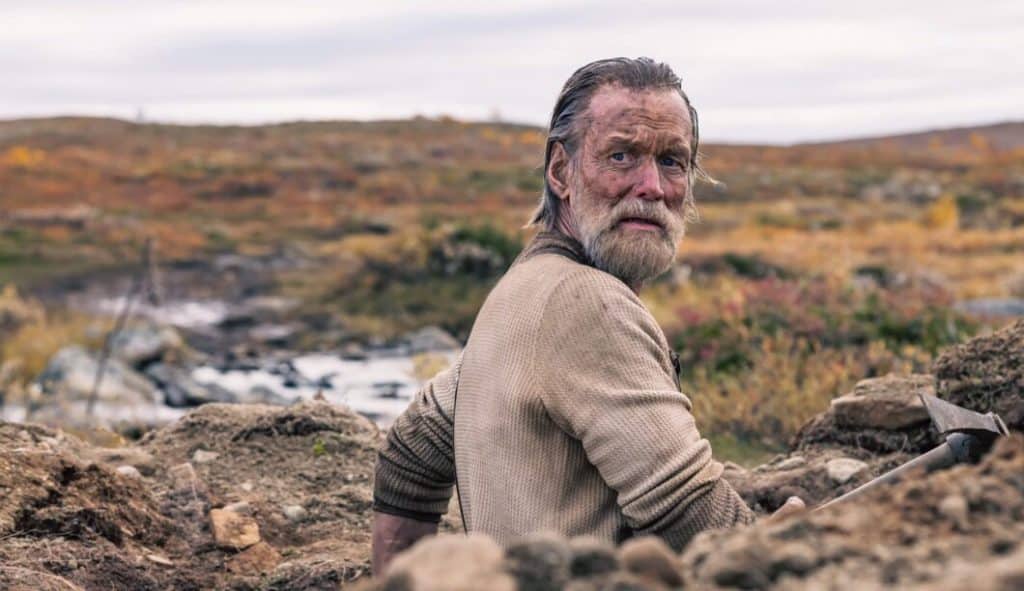
As they talk – or as they squabble, more rightly – it turns out that these two, Morris (Charles Boyland) and Eula (co-director Chantelle Han) both work in the hospitality trade, a trade which has been decimated by the pandemic. Times are tough. In their desperation, they are planning to steal something very specific but potentially lucrative, something which they know about given Eula’s work in her restaurant. Eula’s grandfather, also the original founder of their restaurant, has recently passed away: this has triggered a memory for her of driving out into the middle of nowhere to meet with an old service buddy of his, a Captain Reuben. Reuben farms truffles, keeping pigs specially for the purpose; if they can just find his land, and get a hold of the most expensive white truffles, they can sell it, keep afloat. It’s a crazy idea, but needs must.

Finding Reuben turns into a time-consuming affair; Eula is trying to do this by memory, but as she hasn’t been to see him since she was ten, it’s not easy, and Google Maps is little to no good if you don’t know where you’re looking for. More by luck than hard judgement, the two eventually track down a roadside stall whose proprietor – barking demands that they stay two metres distant – tells them that they are close to Reuben’s land, but to go careful: he won’t let anyone in after dark. They have to park up as close as they can, anyway, and here’s where the film segues into its first horror phase, all spooky light and forest mist. Oh, and a huge, tusked Iberian pig, roaming free. Let’s take a minute here to appreciate the role of pigs in horror; from the use of pigs’ shrieks in The Exorcist (1973) via Evilspeak (1981) to Hannibal (2001), these are mean, scary, clever animals. A large pig can devour all but the largest bones in the human body in around six hours; just saying. The femurs they’ll keep to nibble on a while longer. Morris and Eula are terrified by this creature jumping up at their car, and they should be.

Still, when they find Reuben – or more accurately, when he finds them – things get stranger still. They follow him through the woods, as he seems to require them to do: Eula speaks first, mentioning their connection. But thanks to Morris and his coked-up impulse management issues, the already tense situation quickly escalates, spinning out of control.

We’re moving from classic horror tropes, to something akin to a slasher (in terms of the antagonist) but Peppergrass also adds survivalist horror to its range. What unites all of these is the precarious situation of a stranger in a strange land (Canada or not, it almost doesn’t matter if civilisation is just within your grasp, if you can’t quite get there). The film focuses hard on Eula, in a sober and often character-centred turn of events. This is often aimless, because that’s how people are in these situations; nonetheless, it’s this section of the film which will probably draw its toughest criticism. It’s often largely silent here, too, playing with stillness, quiet and open spaces. Sometimes the trees seem to hem Eula in; sometimes the sense is of a vast, ungovernable wilderness, but neither of these are places to be, at least not like this. What definitely lends itself to the final act is Eula’s growing sense of desperation; we believe she could attempt anything. We also find out more about the film’s title, which is all about the cynicism, duplicity and error which govern the film as a whole.

Peppergrass is a film set against the pandemic in a meaningful way, rather than a film made simply to triumph over its adversity, getting it made no matter what. Its closed businesses, its desperate, often paranoid people; its designation of places according to whether they ‘have the virus’ there or not – these frame the film usefully, begging the question of whose behaviour is really the most destructive here. All in all, this is a thoughtful, capable piece of film, where all of the elements are woven together meaningfully, leading finally to a harsh, darkly witty conclusion.

Peppergrass (2021) will be available on digital platforms from June 16th, 2023.

Casting Kill (2023)

The casting call provides fertile ground for the topic of a film, particularly one looking at its pitfalls. It is, after all, a profoundly vulnerable place for actors: all that pressure, that power imbalance, and the fact that actors are often fairly itinerant, desperate to work and to get their ‘break’. From Mulholland Drive to Starry Eyes, it’s been used as an engaging setting and theme which leads us into something far, far bigger. Now there’s Casting Kill (2023), which uses that same setting to paint a picture of corruption, secret organisations and hidden identities. The casting couch is shown to be a dangerous place from almost the opening scenes; the end result is a kind of Hitchcockian vision, done on a restricted budget, but confident enough to make good use of its ideas.

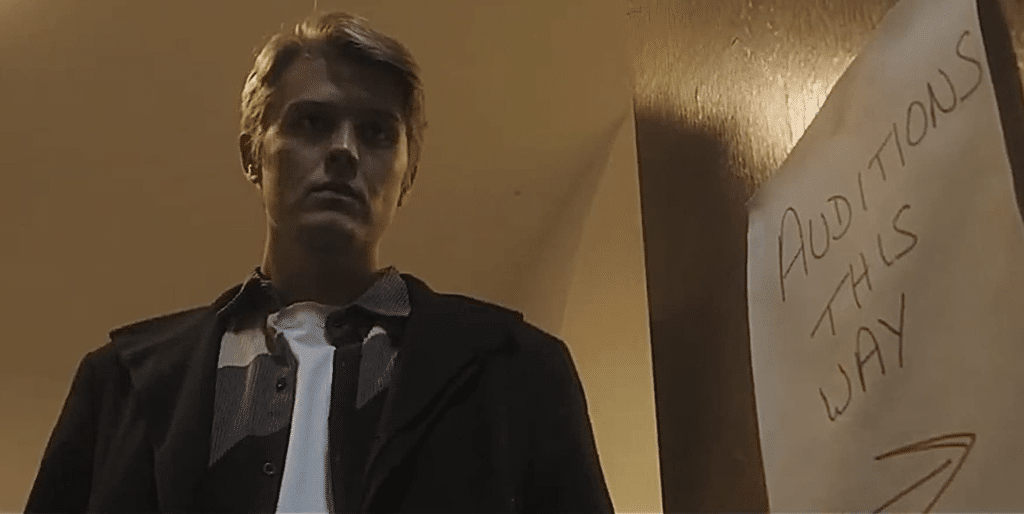
We start with what seems to be a blend of know-it-all smarm and genuinely unhinged behaviour from one Arthur Capstone (Rob Laird), casting CEO of Scotsville Studios. We’ve just seen him during a rather shadowy meet-up with another man which intimates some sort of deal or arrangement, and now here we are: as he rattles through his spiel on character motivation and the process, we quickly get the idea that he isn’t all that he seems – this isn’t a regular casting situation, and he’s labouring under some very particular delusions. But then we see something a little more conventional from him, with a legit queue of people all eager to make a call-back. He treats them with a blend of hostility and disinterest, but then, when he does find someone he likes, that seems to be a distinct dose of bad luck, not a positive. There will be no call-back for his chosen actors.

The casting is not done there, however: cut to the next day, and there’s another pair of contenders: Dom (Jack Forsyth-Noble), who’s actually rather good, which seems to offend the CEO on a visceral level, and Ruby (Rachel Chima), an old friend of Dom’s. They chat outside the casting venue, and then again later, when they’ve each had their strange, discomfiting experience with Capstone – and they decide to investigate him, each in their own way.

Casting Kill loses some of its forward impetus at this point, though it is wise enough not to overstay its welcome; the running time here is a modest eighty minutes (or just shy of that). However, it is driving at something, leaving room for a decent finale and giving over some more welcome space to Xander (Ian Renshaw, who is immensely enjoyable in even this small role). Capstone himself is an interesting character too: he’s delusional and overblown, but overall, fun, even if the violence he is supposed to be capable of is largely intimated, not shown to the audience.

This fits in with the film’s deliberate channelling of Hitchcock visual tropes and, to an extent, characters: by its nature, this film is rather low key and small scale, but within its limits it has a keen eye for camerawork, very deliberately composed and framed shots and best of all, a superb score which is fully interwoven with the film, not simply overlaid. It’s a great fit and shows great attention to detail. There are some moments of cruel wit, too, which ultimately poke fun at the process of filmmaking – and all that goes along with it – from the perspective of an insider, showcasing just a little frustration with the whole thing from that point of view. Well, they do say you should talk about what you know; you have to laugh at the alleged big-time CEO of a Hollywood Studio preaching the sanctity of his profession whilst robbing cash from those auditioning, for example, but knowing how hard it is to get film projects funded, perhaps this is just a bit of verisimilitude.

There are a couple of issues – little errors, which stem from the fact that filming on this was over and done inside six days. That said, some Americanisms creeping into the very British dialect of two of the main characters is a little jarring; there’s a very noticeably breathing ‘corpse’, and do the bank notes have ‘specimen’ written on them? Things must be even tougher for actors than expected. Overall, though, despite these few rough moments, the film has enough ambition to keep things going, and even if the film doesn’t necessarily see every idea or plot device through in full, it does still come across as a wry take on the filmmaking industry which brings in some watchable, engaging ideas. It pokes fun at itself and the industry as a whole, too.

Casting Kill (2023) is available now on Amazon Prime.

Brotherhood of the Wolf (2001): a love letter…

In 2001, right on the cusp of the slew of New French Extremity and ordeal horror, a peculiar, lavish period horror emerged from France. It’s many things, but above all else, Brotherhood of the Wolf (2001) is a film made during changing times, about changing times. Taking for its basis the Beast of Gévaudan panic which genuinely unfolded during the 1760s (a spate of mysterious animal attacks which prompted the time-old triumvirate of hysteria, fear and supernatural attribution), the film plays fast and loose with its range of identifiable historical elements, but uses a cast of genuine aristocratic names, as well as the verifiable fact that the king did get involved with the real case, sending dragoons to investigate the deaths. However, whilst building on elements of real history, Brotherhood of the Wolf allows its heady fantasy to run away with it; the notion of a possibly supernatural cause behind its events is certainly allowed to build, though at heart its point is a serious, worldly one, reminding us that – in the real case, as in the imagined – it is often the powerful who stand to gain from public hysteria, and they who are best-placed to exploit the already exploited. A beautiful, commanding film, its message is nonetheless as ugly as it’s recognisable.

Not that the great redress in power relations which followed hot on the heels of the Beast of Gévaudan affair is afforded so much as a lick of civility, though – and quite rightly. The film opens in late 18th Century France, at the point when the Revolution had ceded to The Terror; at this point, the revolutionary aims of liberty, equality and brotherhood had been stymied by unreason, paranoia and mass murder. Facing arrest, with a baying, cockaded mob at the door, we meet one of the film’s key players, the Marquis d’Apcher: with little time left, he sits down to write a personal testament of the events of 1764, when the notorious ‘beast’ stalked the remote Gévaudan area. As this testament becomes our embedded narrative, we see one of what we understand to have been many attacks, though there is something off-key about it: the attack on a young woman, by an as-yet unseen creature, seems vindictive rather than simply animalistic; this is a clue that this isn’t a simple wolf attack. Unsurprisingly, panic and persecution soon ensure. In this rain-lashed countryside, vengeful villagers are turning on one another, taking the generally febrile, watchful atmosphere as invitation to lash out.

However, some semblance of order arrives in the form of two riders, sent under command of the king to investigate these bloody events. Grégoire de Fronsac (Samuel Le Bihan), libertine, dilettante and gallant, and his companion Mani (Mark Dacascos), an Iroquois, bring along something of the worldly scepticism of Paris and the court, at least ostensibly: regardless, the accounts of some unnatural she-wolf stalking the land demand attention. Again, overlapping with the historical event, rumours are flying, insisting that this is no ordinary wolf. An immense hunt is subsequently called, one which draws in every aristocrat and landowner who can be called upon, but also, at points, transcends the incredibly entrenched (at least for a few more years) class system which was in place at this point in time. Unfortunately, despite this en masse effort, solutions fail, even when word comes that the deed is done, the beast is killed; Fronsac’s work is not done either, and the closer he gets to understanding what is happening around him, the greater peril he finds himself in.

The film continues less as a creature feature and more as an ornate game of politics, whereby rumours of the beast are seen to serve a purpose beholden to those already in power. The French aristocracy certainly had form when it came to backstage plotting and irrational belief: as much as the late Renaissance was in the process of ceding to the Age of Reason, stubborn and determined pockets of unreason clung steadfastly on throughout this time period, such as during the Affair of the Poisons – when key players on the court of Louis XIV decided to gamble their good graces on a frenetic period of drugging, witchcraft and murder – or, as in the film’s hallucinatory timeline – on similarly secretive cabals, poised to use terror to undermine existing bastions of power for their own ends. In the film, the beast becomes a political cipher, both to its victims and to its masters. Its masters are already powerful, of course, but secrecy, ritual and fervour will never be discounted where ‘progress’ inevitably means uncertainty, or a stripping away of power.

The role of the aristocracy in the film is key, and watching their machinations forms the largest share of the film’s running time. Even taken just on its own terms, it’s a fascinating, exasperating glimpse at a group of people clearly corrupt, self-indulgent and, yes, somewhat laughable in their little intrigues and competitions. However, we also see them in their historical role as landowners, guardians and, to a certain extent, the face of the ‘greater good’ in French society – though that may depend on who you asked. It’s also worth saying that these were the only people with the time, means and inclination to ponder events such as those in Gévaudan: everyone else, regardless of their fears, had to live, farm and work the land regardless. Even the grand hunt, the first response to the beast, feels like an extension of a noble pastime – hunting for fun, as we see in the repellent scene of the pile of dead wolves, so substantial that it obscures all else behind it (as much as it’s a lot easier to find this scene repellent when not at risk of being killed by wolves: French folklore was there to remind 18th Century France of what had allegedly happened in 15th Century France, but then even in the 18th Century, wolf attacks were a regular occurrence.)

We also see in the film that, in this period, all roads lead to Paris: the goings-on of Versailles loom large over the nobility, often crowding out all other concerns. One criticism of the film has been that it lingers too long over the intra-familial politics of these characters, hanging out in its (rather splendid) Rococo dining rooms, palaces and brothels at the expense of the horror or dramatic elements – though even its horror scenes are a bit Rococo, oddly ornate and detailed, if dreamlike. From this writer’s point of view, the time we spend with this effete bunch all adds to the immersive, heady ambience of the film, placing us amongst their number to ponder their schemes and outrages. Their social gatherings are faintly ridiculous, sure, but they matter to our key players, and even though our heroes Fronsac and Mari are often banished to the periphery of all of this, they’re still ordained by it, and still must navigate it. Feminine intrigue plays a key role here, too, both aristocratic and otherwise, with the impossibly beautiful Monica Bellucci doing a star turn as a fallen woman exercising immense, if covert power: another French historical tradition, present and correct.

Mari’s presence in the film also reminds us that this was a modernising France, flexing its muscles as an imperial power; talk of a New France – from where Mari comes – refers to France’s race for new territories and opportunities. Mari brings his culture and beliefs with him, overlaying another supernatural element onto the film’s more worldly ones, though ultimately pressing home the fact that we cannot underestimate the impact of race and empire on events in the film. New prospects bring new anxieties. Perhaps there’s a certain amount of stereotyping of Mari as the sage medicine man, but he is nonetheless a valued friend to Fronsac, if a source of baffled pantomime amusement for many of his aristocratic peers, fascinated by his talk of totem animals but dismissive of him as an equal.

The film is not just a character study of the aristocracy, though, and nor is it in any way a straightforward creature feature, not least because it hangs onto its reveal of what, or if this creature is. It’s also, unexpectedly, a martial arts film in places too, with simply loads of time given over to choreographed, often slow-mo fight scenes. It ain’t kung fu, but this is still martial arts in a wider sense, and frankly, it looks for all the world like kung fu, whatever the costumes. Mari is the chief proponent of this, seeing off the traditionally hard-to-believe number of assailants, but lots of the film’s more high-action scenes depend on improbable manoeuvres and physical abilities, too.

This is a film which lurches from languid and picturesque to sudden motion, tension and violence. As such, it blends elements from a range of different genres, and it does it in ways which don’t necessarily work on paper: martial arts, historical drama, momentary grisly violence, character study and horror may seem like a hard sell, when all bound up in one place. And yet, the film’s odd elements work, despite jarring sharply against one another from time to time. Sure, Brotherhood of the Wolf can be camp, or too loose and self-indulgent in places, but it’s a terrifically engaging historical romp which looks and sounds wonderful, with each shot set up like a piece of art. It’s hard not to be carried away in its wake; it seems to have been made to be a guilty pleasure. It tries hard to balance its horror elements – unforgiving, pre-Romantic landscapes, petrified damsels, mysterious creatures, blood and menace – against its bedrock of historical veracity, all interestingly selected, shot and acted.

It is perhaps most interesting, though, for its choice of source material. The historical Beast of Gévaudan case, being such a shocking and to an extent an inexplicable-seeming event, inevitably drew down claims of a supernatural force at work – something otherworldly, operating beyond the abilities of even a large or particularly ferocious wolf. Even a determination to regard these attacks as the work of one creature shows the beginnings of a mythologising tendency, this being often one step away from an outright supernatural belief. As such, events at Gévaudan have steadily become enmeshed with werewolf folklore – largely through being grouped in with other, adjacent beliefs in werewolves which had little to do with Gévaudan itself, but the misapprehension was there. Brotherhood of the Wolf, similarly, is often assumed to be a werewolf film: it looks as though it’s going to be, it sounds potentially like it could be, and on first glance, there appear to be supernatural elements at work. It even plays momentarily with some of the werewolf folklore which has been created by cinema, for cinema: the discovery of a metal fang, for instance, suggests that this is no ordinary wolf, and in horror cinema, when it’s no ordinary wolf, it’s likely to be a – well, you know what.

But, although the film allows itself a few ritual gatherings, some ritual killings and a mysterious, bloodthirsty fraternity, this fantastical add-on does not take away from the fact that this is no werewolf film after all; this revelation is for us, as well as the key characters. The creature has earthly origins, and it is controlled by a human. The film has its fantasies, and it has its lavish, supernatural plot points, but ultimately it’s earthly powers which are attempting to hold sway here – the same as ever. Abnormal wolves, mysterious creatures, even werewolves themselves: where these allegedly crop up in history, it is often as a result of a particularly traumatic event or particularly straitened times, as in Gévaudan. Ultimately, though, the explicable – the just-about explicable – is traumatic enough. Brotherhood of the Wolf manages to marry its luxurious fantasies to its realities, and it does so without sacrificing its vision of a peculiarly anxious moment in history, one where the spectres of war and rebellion were there to worry away at the edges of polite, restrained society, by then poised and peering into an abyss of change and progress.

Brotherhood of the Wolf is about to get a 4K UHD remastered re-release, courtesy of Studiocanal. It will be released on May 5th, 2023. For further details, please click here.

Evil Dead Rise (2023)

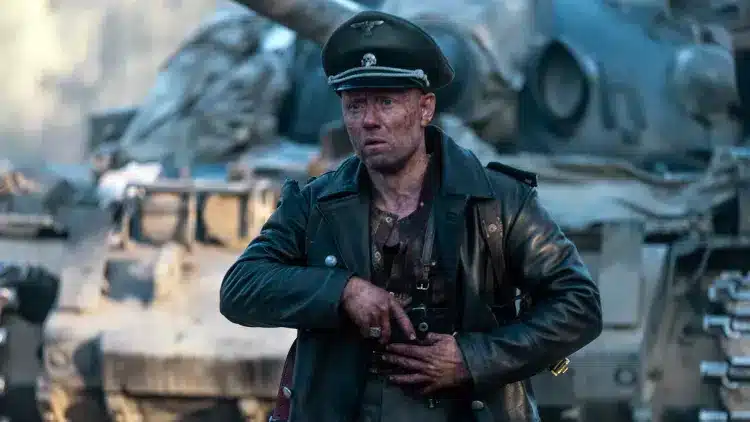
With a beautiful double-bluff opening – and not the film’s last double-bluff, either – Evil Dead Rise (2023) takes us straight to the ubiquitous cabin in the woods for its opening scenes. Reluctant cabin-goer Theresa (Mirabai Pease) is trying to dig in to her copy of Wuthering Heights, but her friend’s boyfriend Caleb is all too ready to interrupt her closest approximation to fun. So she heads indoors to see how their sickly mutual Jessica is doing and, it turns out, she’s doing none too well. None too well at all. Cabin, woods, new tendency in a friend to go from horizontal to vertical in a second: here we are, then, here’s where Evil Dead Rise is going to play out. Right? Nope. This sequence is simply here to jar us out of our expectations, on the micro and the macro level: with no time to waste it seems, this part of the film only serves to deliver the film’s modus operandi: nasty, ugly gore. Then we’re away, faster than a Deadite hearing an invocation (a term which, by the way, we never once hear in the film, but forgive me the shorthand here.)

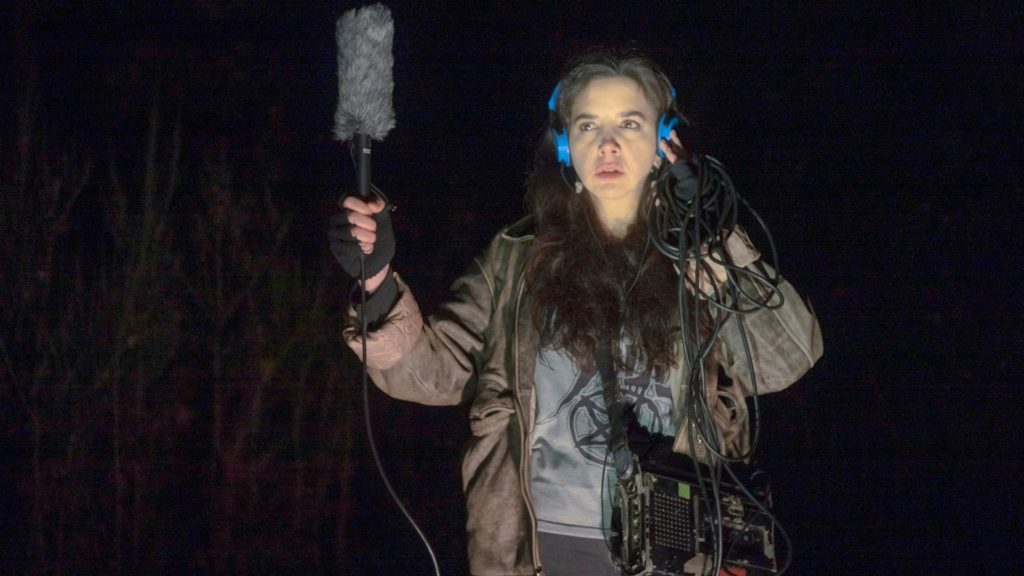
Downtown LA: single parent family Ellie (Alyssa Sutherland) and her three children, teenagers Bridget and Danny, and little Kassie, are doing their best to live normally ahead of an upcoming eviction from their now-condemned apartment block. They’re unexpectedly joined by Ellie’s younger sister Beth (Lily Sullivan), who lives on the road as a music tech, but has headed home under a rather predictable cloud – more on that anon. As Beth tries and largely fails to console her sister, fresh out of a break-up and with no discernible new home to offer her kids, an earthquake hits LA: newer, better-constructed buildings seem to get through this experience fairly unscathed, but the family’s Art Deco-era tower block suffers a big hit, not only losing power, but soon finding itself atop a large sinkhole which Danny, being an idiot, decides to explore.

He discovers an old vault, back from when their building used to be a bank, and emerges from the hole with a bundle of hundred-year old papers, a bunch of vinyl and – a mysteriously-bound book. By the way, it’s debatable whether anything much else would have happened here, had Danny not also been one of those new-wave vinyl guys; the world was fairly safe from the Deadites for a period of around thirty years, during the time analogue had seemingly gone into terminal decline. And now the record players are back, and essentially, the hipsters and the ‘you have to hear this on vinyl’ people have killed us all. You don’t need me to explain what happens to the mysterious vinyl recordings: they get played. Of course they get played. The book, too, starts to do its thing.

This film gives us a really unpleasant, grisly rendition of the Deadites which has far more in common with the remake-ish from a decade ago than it does with the 80s and 90s Evil Dead movies, let alone the Ash vs. Evil Dead TV series. The Deadites in this newest film – few in number, in keeping with the usual – aren’t as good-humoured as their forebears, perhaps. They smile, sure, but there’s not much laughter; everyone’s more serious about their work since the global economic downturn. This is an unrelentingly revolting vision throughout, and a key difference this time around is that the family dynamic is much more strongly centred, with a mother and her children the key target. The film troubles itself surprisingly little with modern social issues – although it threatens in that direction a couple of times – but if any one thing comes in for a serious drubbing here, it’s motherhood. Even pre-ordeal it’s represented as drudgery with a gloss of selflessness, and thereafter a source of sardonic glee for entities who mock it as a kind of parasitism. That being said, the main entity is quite Christian fundamentalist in its beliefs about who/what gets a soul and when: funny thing, there’s always unusual overlap between belief systems.

Evil Dead Rise is a grotesquely, inventively unpleasant piece of cinema which works the modern, urban setting very well, borrowing liberally from non-supernatural genres of home invasion and ordeal horror as well as riffing on the Evil Dead source material (which was always, let’s face it, a fairly simple plot which needed no embellishments). There are lots of nods to existing horror throughout, too, such as Hellraiser (particularly the new remake, actually), The Shining and even sci-fi body horror: Aliens came to mind a couple of times in certain scenes. The film also does what all films feel the need to do when they appear as a sequel or remake of some kind, and that’s to include Easter eggs which link to previous films. That’s not particularly compelling in Evil Dead Rise, as the tonal ugliness of the new film works against inclusions of scenes, symbols and lines which belong to the dark comedy content of the earlier films (and really, the whole opening scene can be seen as an Easter egg, which is a fairly large chunk of the film as a whole). But the film does work well on its own terms nonetheless, and there are definitely some openings for another one, should this film do well (it’s outstripping expectations so far). There’s one spoken line heard in the film which has set certain fans aflame with ideas about the next instalment, though it would be best to play cautious with that for now.

Would another film in this vein be a bad thing, though? Certainly not: absent the few minor issues, this is a brilliantly mean-spirited modern horror which walks a solid line between new ground and old. It’s strange, really, how watching the Deadites do what they do has become a source of enjoyment over the decades, but so it is: this film is a welcome addition to the Evil Dead universe and if it has established a tone for things to get even more visceral in future, then that can only be a positive.

Evil Dead Rise (2023) is in cinemas now.

All You Can Eat (2022)

Working in any kind of public-facing role is a test of one’s patience and mettle, and the food industry has to rank highly on any objective or subjective measures of tedium, ick or just downright stress – and that’s just when it comes to the customers. Let us not underestimate one’s co-workers, as it is their very own potential for weird conduct and overstepping all manner of personal boundaries which can make the job so additionally taxing. Spare a thought, then, for Nola (Verity Hayes), who opens short film All You Can Eat with a litany of complaints about her very, very odd colleague at the restaurant where she works. She’s not in the wrong: he’s been using the pantry at Planet Burrito for what seems to be some kind of weird science experiment, petri dishes and all. Environmental Health would have a field day.

Speaking to another co-worker, Nola recounts how she has recently stumbled across him poring over some kind of primordial sludge in there, but even worse, she overhears that he’s listening to some kind of diatribe about the procurement of a special sample of some kind (voiced in the film by Jello Biafra, no less). The sample is volatile, the voice solemnly proclaims, and it absolutely should not come into contact with any sort of foodstuffs. Well, that’s a bridge too far for Nolly, who feels that the only right thing to do in light of this discovery is to act as whistle-blower. But no sooner has she set herself this task, than shall we say ‘events’ conspire which take precedence over any professional complaint.

This is a simple, postcard-sized plot which serves in the main to showcase director Kieran Reed’s love of old school, 80s practical SFX and sci-fi origins which so often end in gratuitous gore and splatter (though a different explanation for events is mooted here). Think The Deadly Spawn (1983) in particular, which has a similar brand of toothsome critter with similar aspirations (the font used on the opening titles is a dead ringer as well, so in many respects All You Can Eat is as much a direct love letter to it as it is to other, albeit still similar films). There’s a touch of the eww factor of Bad Taste (1987) in here, too, and even a bit of Tokyo Gore Police (2008) – in reverse, if you will (an observation which makes more sense if you hone in one one particular scene in All You Can Eat). Interestingly, the film goes for a contemporary timeframe, as much as analogue cassette tapes appear alongside up-to-date mobile phones; it feels somehow in transit between the UK and the US, too, as the style of restaurant, the signage and some of the character voices are American, whilst the work safety notices, and of course Nola herself are clearly British. That’s not a complaint, more an observation, and further evidence that this is a British tribute to often American cinema.

At thirteen minutes running time, the film is by its nature a taster – an extracted sequence – rather than a fully-fledged narrative, and there are a couple of issues here (some of the keynote gore is hard to make out in the dark; some of the dialogue gets a little drowned by the incidental music). But there’s a clear sense of fun involved, and All You Can Eat would no doubt go down well in a festival setting where people’s enjoyment goes up in response to the levels of OTT FX on offer, particularly were the film to appear as an aperitif for a similarly-minded feature-length – which, for that matter, All You Can Eat is intended to be at some point.

All You Can Eat (2022) has been on its festival run: watch this space for more news…

Dark Glasses (2022)

Whether Dario Argento – 82 years of age – never makes another film, or has a flurry of late activity and makes another five, it is categorically impossible to watch one without the weight of expectations practically pressing you flat. Such is the case with Dark Glasses, a Shudder Original no less (how times have changed, etc.) which feels somehow like it’s all his films and none of them. It tunes into giallo conventions in places, but it feels like a moment’s deja-vu before the tone and style shifts to something else. It feels retro, but it feels modern – not fully modern, more kind of hanging in time somewhere between 2000 and now – well, the screenplay is from back in 2002, so that sort of makes sense, except you also feel like it would have had the same free-floating feel even had it been shot back then (with Asia Argento in the leading role, obviously). Yet for all its oddities, all its bizarre decision-making, it’s not by any means totally dreadful. It’s fairly entertaining, even if scatty and strained. Above all else, it’s fairly entertaining for reasons which go beyond, ‘at least it’s not Dracula‘, which isn’t the greatest claim for a likely swansong to make, but not one wholly without merit, either.

We meet Diana (Ilenia Pastorelli), a call girl driving down a residential street in Rome; neither an attentive driver nor a woman who keeps up to date with current affairs, she is distracted by the sight of many people with phones pointed to the skies, waiting for a solar eclipse – something which appears to be a surprise to Diana. It’s made clear that solar eclipses are historically regarded as portentous (especially if you look straight at the sun beforehand) but it’s not made clear whether this has anything to do with a flurry of serial killer activity in the city; in fact, now that I think of it, a detective later mentions that there have already been several victims, so that would be a no. So why is the eclipse in here? I had wondered, knowing from the blurb that Diana loses her sight, whether the eclipse would be somehow responsible; a later scene recalls Day of the Triffids, at least a little, but ultimately the event is just in here for aesthetic, symbolic reasons, if that.

We then discover that there is a man in Rome strangling prostitutes with a cello string (another inclusion which could be symbolic, but turns out not to be. That’s the extent of the false clue trail in this film). As a young woman leaves the hotel room of a client, she is attacked: a large number of people thereafter make no attempts whatsoever to perform first aid, watching her bleed to death from her injuries on the ground. Diana, being in the same line of work, is clearly in danger; we see her being attacked and assaulted in other scenes, and actually in fleeing one ogre she runs straight into another – the murderer, it appears, who rams her car with his van, sending her headlong into another car, killing two of the three occupants and blinding her.

Now with complete sight loss, Diana is given some help to navigate her new situation by a charity organisation who send an outreach worker, Rita (Asia Argento) to help her make adjustments. The guide dog, the white cane; these all follow. She also strikes up a friendship with the little boy whose car she hit, with the boy, Chin (Xinyu Zhang) coming to act as her de facto guide; let’s park the rather unbelievable safeguarding issues around that element of the plot, because Ching becomes rather important to what transpires next – as much as we have to wait for this to roll around.

Dark Glasses seems to be doing the groundwork for a classic bit of giallo ‘whodunnit’ but oddly, it doesn’t really go anywhere with this, as much as it’s heavily signposted in the opening few minutes. Come to think of it, aside from some gloriously implausible gore – heads seem to go off like ripe melons in this particular reality – there’s none of the double-bluffing, glimpsed possibilities, the clues, the trail which leads to possible and impossible culprits. There’s no leather gloves or masks, either. In fact, it’s made clear pretty early on who the culprit is, out of a perishingly small number of possible culprits. In this respect, it’s far more earthly than a lot of Argento’s other, well-loved works, particularly bearing in mind that he’s the only director ever to draw from me the comment, ‘Oh, come on, a CHIMP?’ So it’s less a giallo and more of a kind of pursuit film – more of a slasher then, I guess? – a pursuit both problematic and at times really bloody uneven on account of the lead character’s blindness, as she clambers slowly and unevenly away from the murderer, someone whom she already knows and recognises. Peculiar. The film ultimately lacks the exposition of your usual giallo, too, which usually unfolds some spurious, but imaginative reasons for it all, which brings me back to the chimp. We do get some wholly unnecessary water snakes in here, mind, though not especially wedded to the plot; I’d have loved it if Argento really sent himself up, adding a preying mantis, but no: it’s just snakes.

So it’s loaded with bizarre inclusions which eat into the run time, and it hasn’t troubled itself with the mystique and tension so fundamental to Argento’s best work, but hey: it’s all decently shot, the soundtrack is ferociously good, and I rather liked Pastorelli in the lead role, making the absolute best of the script whilst proving herself up to a pretty challenging physical and emotional performance; she does better with it than Asia Argento would have, had she inevitably been cast in this role – though Asia does turn up, looking rather better than she did in Dracula, and offering up a fairly plausible performance in an unusually dressed-down role for her. In essence, there are good things going on here, and this oddball collage of giallo and horror elements ticks along well enough. It may only have a dash of the gloss and flair of Argento at his best, but it’s by no means the crushing disappointment claimed by some critics and fans.

Dark Glasses (2022) is available to watch now through Shudder and other streaming channels.

‘Sadako’s fury’: Ring at 25

On occasion, a film comes along which makes an almost immediate, indelible mark. As soon as it appears, it disrupts what came before it; it can be difficult to even remember a time before it, so quickly do its characters and archetypes take hold. Such a film was Ring (1998), coming at the tail end of a decade where the most popular style of horror was, overall, markedly in contrast to Ring’s own brand. Audiences were ready for something else perhaps, something outside of the remit of ironic slashers and what I’d say really was a ‘post-horror’ film, Scream, which wove a hefty amount of mockery of horror into its own horror; it’s for its fans to argue that this was all in good part. But a shift was coming, and the new, largely unknown Asian horror phenomenon was about to engulf waiting Western audiences, keen not only to have their horror become more varied, more authentically scary, but to have it come from a place hitherto-unknown beliefs, folklore and mythology. With Ring, J-horror as we now know it was born: vengeful, horrifying spirits slithered onto our screens, acting according to motives and codes which were mysterious even to the young, modern, forward-facing Japanese characters being subsumed by them, and doubly so to us as Westerners. Other nations were quick to move, with other Far Eastern countries – South Korea, Thailand, The Philippines – soon bringing their own stories to the screen. But, arguably, interest in Far Eastern horror started with the international success of Ring.

Ring: a modern-day curse

Ring itself was based on a 1991 novel by Koji Suzuki, whose career has been to some extent defined by his trilogy of works Ring, Spiral and Loop; he returned to the Ring universe in 2019 and 2020, turning to manga to further explore the character of Sadako. However, for the film version, several key elements from the trilogy are significantly pared back; the novels invoke the theme of illness and transmission quite heavily, whereas Ring (1998) dispenses with this. The film excises the idea of disease to render Sadako an agent of pure, unadulterated hatred. This is what she spreads and this is what kills.

The film begins with two schoolgirls discussing a rumour of a ‘cursed videotape’; a run of false starts come from the TV and the landline phone as they talk, preparing us for the idea that all technology can be scary here, as it offers up a series of alarming incidents even before it acts as a conduit for something supernatural. One of the girls is niece to journalist Reiko, and we see her researching the same urban legend – the cursed tape, as described by a run of schoolchildren, who channel the same hearsay and rumour which feels familiar from similar interviews during the ‘video nasties’ debacle in the UK, just over a decade earlier. You just don’t know whether you can trust in the veracity of children this young and swept up in something so exciting; Reiko, still a clear-headed cynic at this point, notes that traumatic events, such as major accidents, often trigger these kinds of rumours. But she gets drawn in; her family connection is one thing after her niece’s sudden death, but then she makes the rational error of trying to substantiate one of the other assertions that another mysterious death has recently taken place, also linked to ‘the tape’. As so often in horror, reality crashes down in opposition to unreality; one becomes the other. She tracks down the video for herself, and views it.

Once it begins to slowly dawn on Reiko that the curse may be, somehow, ‘real’, she knows that she only has a week to find out what, if anything, she can do. Her problems are horrifyingly compounded when she discovers her young son watching the video too: the film at this point turns into a battle for a family’s survival. But, this family is not a happy one, and its own damaged state becomes apparent.

Who can Reiko turn to? Her situation gives us a glimpse of a fractured family unit; her young son, Yôichi, can’t be more than five or six years old, but he’s routinely left at home alone so that his mother can work and then, later, so she can delve into the backstory of the videotape. This kid is an end-level boss latchkey kid, alone well into the night, and most of the contact between his mother and him comes down the phone, with her routinely apologising for being absent. When Reiko needs help, she asks her ex-husband Ryuji; Ryuji, Yôichi’s father, has no contact with his young son whatsoever, at least that we see. Whilst their thoughts turn to making some provision for the little boy should they both imminently die, it feels oddly like an abstraction. Yuji muses, at one point, that it might be better if the whole family unit ‘dies out’. Perhaps equally tellingly, Ryuji often refers to Reiko by her patronymic, rather than her first name. They are seemingly more drawn to the story behind the video itself, and as they finally track down Sadako’s story and then her mortal remains, Reiko spends a moment cuddling Sadako’s remains almost fondly. It’s the only moment of nurture in the film. As much as Reiko does seem to love her son, we see her shaking him and grabbing him, rather than holding him as she does Sadako’s ghastly, long-haired skull.

There’s another broken family story concealed here, finally revealed to the audience as Reiko and Ryuji uncover it. Sadako herself, we glean, was murdered by her own proxy father; her own relationship with mother, the psychic Shizuko, is virtually unknown save for some evidence of bizarre loyalty on Sadako’s part, when she successfully wishes one of her mother’s critics dead. So the film is riven with family trauma; it’s one of its saddest, most significant moments that, once Reiko has identified the secret of surviving the videotape – at the cost of her ex-husband’s life, no less – Reiko is going to sacrifice the only loving family member Yôichi has, his grandfather. Why him? And what sort of a life would this mother and son go on to have, after doing that? The bleak cycle of emotional deprivation seems set to spiral on, thanks to a film which is as rationally bleak as it is supernaturally fearsome.

Analogue horrors

It’s interesting that the film’s use of technology is so integral to its horrors, but also that it is a film poised between two worlds – analogue, and digital, which was at that time already beginning to take hold. Mobile phones were rudimentary, but more and more people were starting to use them; the internet, too, hadn’t gotten its hooks into everyday life the way it does today, but it was there – simplistic, but functional, and offering new possibilities for promotion, as The Blair Witch Project – another significant, game-changing supernatural horror –  was to prove in the following year (some of the early faux webpages designed to push the idea of a genuine Blair Witch mythology were as sinister as hell, and spread like wildfire.) Clearly Hideo Nakata would have been aware of the potential of the internet and for new kinds of communications to work with the flow of his film, although, granted, his film was based on a book which was released at the other end of the Nineties. But Ring is avowedly analogue. It’s one of the last films, perhaps, with a contemporary setting which can plausibly ignore the rise and rise of mobile phones, digital cameras and the world wide web.

It’s not amiss. In the late Nineties, analogue was still being used. It was still the norm for many people. Analogue technology today has become a cumbersome fetish for many filmmakers, who include it because they think it’s quaint in some way, some kind of nostalgia trip, or a cheap shortcut to a ‘period’ setting which they seemingly can’t resist. But for many young filmmakers working today who may have seen Ring at a young age, perhaps it’s here that analogue tech really crept into their consciousness, despite the fact they probably saw it a couple of years later, when video cassettes were already being consigned to the scrapheap in favour of DVD. Certainly, in a lot of films being made now – where analogue technology is the focal point of the set or the plot, the filmmakers seem inexorably drawn towards the frightening potential of the video cassette itself; V/H/S 99, made very recently, seems to positively glory in the static, the clunks, the interference, the audio issues of its fake video framework. But here’s the thing: video was uniquely creepy, and one of the reasons Ring works is because it exploits that so effectively – and organically, because it was still a part of people’s lives.

The capacity for people to copy videos – I remember them, player running to player in real time – opened a floodgate not only for people to capture films and programmes from television (which they may never see again, in some cases) but also to share them. Friends of friends would pass them along; magazines would carry ads from people offering to fill a cassette tape with varying-quality horror or other banned material for a few quid. You could sign on for a mystery prize, you could go off titles alone, you could end up with something almost entirely different to what you might have expected. A snippet of an unrecognised film, when seen, could take on weird new significance; you’d remember it for years. But even old, generic cassettes at home, with no label, or blank cardboard sleeve, could be a source of mystique and there was often something disorientating or even disturbing about them. It’s no accident that the video tape Reiko discovers at the cabin itself has no label and a blank cover. Amongst the small video rental library, it stands out, its lack of markers suggesting something strange about it.

Videos operated as a kind of palimpsest, open to being copied again and again, with new clips overlaying old. None of this was neat and tidy; often you’d see tantalising fragments of what came before, appearing suddenly and disappearing as suddenly. The picture and audio could break down, dissolving and distorting before coming back to clarity, and there was no widespread, reliable way of ever discovering what those fragments were. Today, no video clip is a mystery for long; people can use the internet to discuss it and define it; there’s a comfort in being able to ground whatever you’ve seen in the babble of other people. Even if they’re not correct, the dialogue itself shrugs off the feeling of mystery, and places whatever-it-is back in the everyday. That couldn’t happen to the same degree before the internet was better-established, and things couldn’t be simply looked up. Video was, as such, rife for urban myths and legends, scaremongering and exaggeration. It’s fertile ground for the horrors of Ring, and is used to full effect. The cursed video clip itself, shot on 35mm, was made extra grainy in a laboratory to give it the right copy-of-a-copy feel.

A lot of time in the film is spent debating the existence of the cursed video itself. Ryuji, who is a rational man (before he reveals his own psychic tendencies) affirms the obvious: “it’s a video. Somebody made it.” He and Reiko deliberate over it, frame by frame, trying to decipher its message, if it has one (which it doesn’t; it’s a snapshot of unbridled resentment and anger, Sadako’s hatred literally burning a series of jarring images and sounds onto the nearest available imprintable media). But as they pore over the video, it does begin to offer up clues as to its provenance, even if its message – in its totality – remains chaotic. A woman combs her hair; the word ‘eruption’ scatters across the screen; bodies crawl; a man, his face concealed, points at something unseen, and the word ‘Sada’ briefly appears. The inclusion of a well, off on its own in the middle of the frame, is another mystery. It is nonsensical, mysterious and – utterly horrifying, a real jolt to the system. It is frightening. You don’t need to instantly be able to interpret this to feel weirdly unsettled by it. But, hidden in the audio, Reiko and Ryuji recognise fragments of a dialect only heard on Oshima; they are able to track the story lurking in the corners of the video there, heading to Oshima Island to investigate further, with a view to somehow, perhaps, evading the curse.

The video is by no means the only analogue technology used in the film, as vitally important as it is. Viewing the video triggers a mysterious phonecall: this is the beginning of the countdown to the curse running its seven-day course. The call itself has no language; it simply emits a terrifying noise. And, significantly, this only affects landline telephones; these, too, can suggest mystery where there’s no indicator of caller ID, and not hearing a speaker allows the imagination to fill the gaps, often guessing an unpleasant intent (the phenomenon of the ‘heavy breathing’ call used to be much more prevalent, given an added layer of malignancy by suggesting that the caller knows, somehow, that you are at home. In a way, these kinds of malign nuisance calls can feel like an element of home invasion.) The curse never bothers with nascent mobile phones; it, too, knows where you live. And then there’s analogue photography too: once cursed, those afflicted appear with weirdly distorted faces on camera film. Ryuji tries it out on Reiko; this is how they know, for sure, that she has days to live (and the dates included on the film are not just there for orientation; they’re essentially an expiry date). The curse creeps into all the technology which forms part and parcel of daily life, making use of it and rendering it conspiratorial, frightening. The idea of ‘viral videos’ did not exist when the film was made, at least not in the sense we would understand it today, though Sadako on TikTok would kill millions in short order; perhaps her curse requires a little more agency than that, at least, and it shouldn’t be forgotten that Reiko dodges her death sentence by – copying the cassette.

Sadako: myth and history

But who, or what is Sadako Yamamura? The child of renowned Oshima psychic Shizuko, she only features in the film as a mute, semi-real presence – we see her clearly only once, as she advances on Ryuji near the film’s close, in one of the most stunning scenes in modern horror – or, as a corpse, floating at the bottom of the ubiquitous well. Sure, the fourth wall had been broken before – weirdly enough, in a lowbrow zombie film called The Video Dead for one, not sure why that springs to mind – but never in such deliberate, unearthly, painful detail. We never see her face, we never hear her, but we know that she can literally scare people to death (the weird, distorted approach she makes was shot backwards at first). Her fingernails are eroded from, we glean, trying to climb out of the well where her mother’s mentor Dr Ikuma pushed her and left her to die; it’s a horrible detail, but one which doesn’t exactly detract from her menace, either. Even in flashback scenes which fill in some of the plot gaps. The reason she is able to do such things is only mooted in the film itself, but Sadako is presented as an amalgam of different mythological figures.

It’s worth pointing out that, in Japanese culture, historically women would not wear their hair loose, unless for funerals, or burials; the significance of Sadako’s long, dishevelled hair may look creepy in its own right, but it is more significant than that, and its death symbolism is clear. It is also associated with some of Japan’s vast array of ghosts and entities, supernatural beings which have some overlap with Western folklore on ghosts, but – due to the country’s unique history, where its Buddhist beliefs have merged and transformed alongside its folklore – often significantly different. Western author Lafcadio Hearn was one of the first scholars to introduce the West to Japan’s ghosts, many of which are perhaps more like our near-lost (or Disneyfied) fairy folklore in the West, neither quite of this world nor quite absent from it, sometimes benign, sometimes malign (Hearn’s writing formed the basis of the movie Kwaidan in the 1960s, providing an early cinematic glimpse at Japanese spectres, particularly in ‘The Black Hair’, which features not only another female rotting corpse with hair loose in a tumbledown ruin, but also some shots which prefigure Ring very closely.) Hearn’s work was well received in Japan as well as in the West: perhaps his tendency to adapt existing folklore for his own dramatic means had some influence on other writers, and filmmakers, who followed his lead.

Edo period depiction of a yūrei

There are other precedents for Sadako: she most strongly resembles the phenomenon of yūrei, beings broadly analogous with Western ghosts in that they are the spirits of the dead, returned to fulfil some purpose on earth. In the case of the yūrei, or more specifically onryō, being vengeful (usually female) spirits, they will return if they have been the victim of a sudden or violent death (the same idea behind the slightly later film Ju-On, or The Grudge). It’s revealing that the folklore goes that those with least status and power on earth will be the strongest, most formidable onryō if they return. However, the general consensus is that yūrei can escape whatever has drawn them back to the earthly plane, should their relatives perform the appropriate rites for them; this normally enables them to leave that particular life cycle to be reincarnated once again (as per the Buddhist belief system). In Ring, Reiko and Ryuji attempt something which approximates this by seeking out Sadako’s story and attempting to lay her to rest, though they are not family members, just unfortunate strangers drawn into her orbit. However, they are hopeful that this will work, that this will break the curse. It does not; in this respect, Sadako differs from typical yūrei, or perhaps it is also significant that the conflict which ended her life cannot be truly resolved, at least in a way which would end her suffering. With her long, black hair and also the white gown which, in Japan, is also associated with burial, or even seppuku (ritual suicide), she looks every inch the kabuki ghost, spinning out of control in a modern Japan.

Another source of inspiration for Sadako seems to have been the Legend of Okiku, a woman murdered by her samurai master by being thrown down a well. Various versions of the tale have her rising from the well to haunt him. We know that author Koji Suzuki is aware of this legend, as he has Sadako meet Okiku in his manga series, Sadako at the End of the World. And, in another link to the kabuki theatre tradition, which so often took as its basis Japanese folklore and mythology, Ring special effects artist Rie Ino’o deliberately emulated kabuki’s overexaggerated gestures and movements in how Sadako clambers out of the well, and then into Ryuki’s apartment.

Hokusai’s depiction of Okiku

But that’s not all. Prior to her murder, we learn through Reiko and Ryuji’s visit to the island that Sadako was of, shall we say, dubious parentage. As much as the married Dr. Ikuma’s relationship with Sadako’s mother was scandalous, there is some suggestion that he was not the girl’s father. So whose child was this? Shizuko’s brother, who still lives on Oshima, intimates that his sister always behaved strangely, spending hours sitting on the shoreline and looking out to sea. He alludes to folkloric beliefs about entities of the sea – as a representative of a fishing family, he is well-versed in this folklore, though ultimately seeing it as potentially harmful, ‘bad luck’. Shizuko’s odd obsession with the sea boded ill; he repeats a saying which suggests that, if you spend too long with the sea, then ‘goblins’ (no doubt a poorly-translated term from Japanese) will come and get you. If this is what happened to Shizuko, then Sadako could be a hybrid, half human and half something else.

Sadako clearly draws on a long and rich series of Japanese traditions, though combined together into something which has the capacity to stand on its own, particularly for Western viewers for whom all of this was very new. Testament to Sadako’s success as an influential figure in modern horror can be seen in how quickly she became a caricature; once you appear in dreck like the Scary Movie franchise, you know you’ve made it, even getting across the divide to the true quick-buck hucksters. There are a lot of less cynical Sadako-a-likes out there too, both in similar J-horrors of the era (and many, many since), and in the likes of Cabin in the Woods, in which a Sadako-looking figure appears amongst the ranks of seminal movie monsters. This to me feels like a far more complimentary tribute to Sadako, but imitation alone is a form of flattery.

Legacy and final words

As well as Ring’s sterling work creating something terrifying out of a number of pre-existing elements, you can perhaps chart some of its other features in other, earlier films. The Woman in Black – a very Western ghost story, but one based on a fractured family and a woman’s particular, inescapable vengeance – often comes to mind for me, if only in the ways that ‘solving’ the mystery is just as ineffectual in ridding the curse. The M. R. James story ‘Casting The Runes’ has had a significant impact on horror, most famously in Night of the Demon (1957), in which a curse is passed to an unlucky recipient (though with a quicker turnover in the film of just three days). The demon itself does appear in the film – some might say it would be stronger without – and indeed later film and TV versions play rather more coy with the big reveal, thus having more in common with Sadako’s screen time in that respect.

Night of the Demon

There have been a number of diminishing-returns sequels since Ring first surfaced, each adding additional context and information to the backstory which, honestly, feels unnecessary but, given the huge success of the original film (Japan’s highest-grossing horror film of all time) inevitable. I’m honestly avoiding too much of a mention of the American remake, which got it wrong, wrong, wrong, even making the new viral video clip somehow humorous, which takes some doing, given the base material. But, in its way, it stands as a useful reminder that people should just watch films with subtitles, not wait for a half-arsed version to appear which usually obliterates all the best elements of the original; J-horrors recast for American audiences have not worked particularly well.

Evil Dead Trap

There have been other precedents for the whole ‘video as dangerous artefact’ shtick, namely Evil Dead Trap (1988) which has another female journalist investigating a video tape which purports to show a sadistic murder – thus overlapping with the whole ‘snuff’ mythology, still rumbling along at that time. There’s something of Ring in Sion Sono’s 2001 film Suicide Club which, although not having a supernatural storyline, does feature a mysterious viral message that triggers a number of dramatic suicides (this time, the call goes out via a creepy webpage – analogue is no more it seems, just a couple of years later). And, in more recent years, time-sensitive jinxes have appeared in such disparate supernatural horrors as It Follows and Drag Me To Hell, each giving the victims a very limited window of opportunity – and some miserable choices – in order to attempt to stave off the lurking evil which is imminently coming for them…

Ring is a horror film which not only revolutionised cinema in the West as well as in its native Japan, opening up a whole new world of horror to us, but is also a film which stands up incredibly well, after twenty-five years and I’m sure long beyond that, too. Rewatching the film for the purposes of writing this article stirred up the same old feelings of unease, chiefly over the video clip itself, then of course from that final evidence that Sadako’s curse was not over. That’s of massive credit to the film, given how many hundreds of films have failed to make that mark – either on me, or in general – in the intervening years. If we’ve come to a point where the longhaired ghosts are just a little too ubiquitous, then it’s worth remembering that they became so numerous because Ring was so worthy of emulation. Nothing should, nor could, take that away from this brilliant piece of horror.

NFFTY 2023: ‘Thrills and Chills’ short films

L’Abattu des vents

You don’t have to ask me twice. Warped Perspective covered a number of the National Film Festival for Talented Youth’s horror, sci-fi or otherwise left-field short films last year; not only did this prove to be a good call, but two of the short films featured made it onto my favourite short films of the year. It’s a real privilege to get asked to cover this year’s films, too. That the filmmakers involved are all under the age of twenty-four is quite something, and deserves – as ever – to be encouraged and supported. This year’s short film package is more extensive than last, but the range of styles and approaches is intact; the films range across surreal to scary, darkly comic to dark fairytales. With any luck, a few of these will make it onto some other festival schedules once the judging is done; I sincerely hope they do. As with anything, I have my favourites here, but without exception these films are all well made, knowledgeable and thought-provoking. And entertaining; let’s not forget that. For information on how you can see these films for yourselves, check out the information at the end of this post. So, without further ado, here’s a rundown of this year’s roster.

There are a number of animated shorts in this year’s ‘thrills and chills’ block, kicking off with Reaper: in the film, a feminine Death seems to have come for a girl, who we see lying prone on the outskirts of a farm. Or has She? The film offers a false lead or two before we finally see what’s going on here, with a flash of something else, something nightmarish, which establishes the ghoulish parameters of this place. This is no mean feat, given the film only has a few minutes to run.

With a fairly similar artistic style, Mileage concerns a journey too: a young woman, stranded on a rain-soaked night, hails a cab. As she counts her lucky stars, enjoying finally being in a warm, dry car, she watches the mileage ticking; as she does, she notices that something else is happening – to her. This brief treatise on time and ageing is surprisingly effective, conjuring a range of brief but weighty questions as it makes for an effective, dramatic conclusion. It’s nicely, neatly done.

And then there’s L’Abattu des Vents, a black and white film whose protagonist has the time-honoured nightmare job of manning a lighthouse; honestly, are there any lighthousemen who have a good time doing it? Think of the Eggers version of the same job role, and you’ll be close to this short film, albeit that our guy is completely alone and the solitude is leading him to some other strange places. The film looks wonderful, with a distinctive and evocative style of art plus just enough hints at some specifically nautical horrors to tantalise its viewers. It’s visually and atmospherically striking.

Finally, Unlucky Charms takes elements of nostalgia from some of the creature features of the 80s and renders it into something which looks absolutely great, as a bored store clerk decides to make good on what the TV ads promise by assembling an entire range of cereal box leprechaun figurines. This turns out to be a spectacularly bad call, taking our hapless clerk into a netherworld both twee and terrifying. It’s a lively, well-paced skit which calls on well-known horror tropes but weaves them into something engaging and fresh.

Unlucky Charms

Aside from the animations, the narrative films encompass a great deal of variety, though coincidentally, the old adage ‘be careful what you wish for’ is often here, present and correct. Fitting that bill almost exactly is Cabbage, a film which feels like a cautionary fairy story, a warning about making bargains with strangers; indeed, remove the Disney gloss from the majority of fairy stories and they offer the same warning. Penniless farmers Abraham and Mabel are trying to eke out a living on their dry and dying farmstead; their miseries are compounded by a traumatic miscarriage, and their troubles look like they’re going nowhere. But when a man arrives at their door seeking shelter and food, they give it, though largely at Mabel’s insistence. He turns threatening; when he offers them their ‘greatest wish’, it feels more like menace than help. But then the rains come, and from outside, they hear a baby cry. It’s a sad, ominous story, balancing something very humane and engaging against its fantasy elements, and there are engaging performances here.

The Businessman is an odd film, though one which has clearly striven for that oddness; along the way (and it’s actually not the only film in this collection to do so) it calls into question the priorities we give ourselves, and particularly the emphasis on making money. Its 70s-seeming style seems to be pointing towards something horrifying, but instead it goes full weird, as a little girl encounters a guy in a suit, sat out on his own in the woods. He engages her in conversation, quickly getting to the point, asking her how she thinks she’s going to get by should she lose her economic support net, i.e. her parents and their proffered shelter and income. His solution is this: to recruit Lola to sell vintage fashion magazines on his behalf. Okay! This is a bizarre, possibly symbolic trip into: the weirdness of working life? Adulthood? It’s an appealing and actually, strangely unsettling film which hooks into your consciousness.

Cabbage

Nurture is another film with a defiantly ambiguous message – though it channels more horror archetypes along the way with its remote, tattered house and its silent, remorseful inhabitants. It looms indistinctly out of a black-and-white gloom, offering a partial, if clearly dysfunctional view of family life. There’s disarray and danger everywhere: as a man arrives back to the house, there’s an unattended hob, threatening fire; he deals with it, but he seems resentful, and the care of his elderly mother is pivotal in this. Whilst some more explication would have drawn these visual and atmospheric elements together more fully, it no doubt does what it sets out to do: it suggests that love and care can be, in their own ways, a horror.

Latchkey is also more recognisably ‘horror’ in some ways although, cleverly, it asks questions about what makes people afraid. We meet Connor, older brother to Henry; Henry is unwell and Connor is away out of the door, though his younger sibling protests that the house is ‘haunted’, not wanting to be left alone. Later, it seems that his fears are not completely unfounded, as there’s a disturbance in the house, and Connor gets called back to investigate. The film uses gaps in time and place very effectively, generating tension well whilst also adding in a hint of a question: is there a more earthly cause for all this, and what does this say about the people harbouring that fear? It’s a thoughtful and interesting film, a great calling card for how to structure and unfold a brief story.

There’s Something About Ryan has all the hallmarks of a festival favourite: it knows its stuff, it takes an element of vampire folklore and plays it for gruesome laughs, though not without pointing to a family’s rather grim fate. Dave is a pretty feckless dad; when his son, Ryan, develops Type 1 Diabetes, he just can’t bring himself to help with the insulin shots, claiming it makes him squeamish. His long-suffering wife has to deal with it. And yet, he’s also protective of his fecklessness, dodging well-meaning attempts by friends to recommend good doctors or similar. One night, when Ryan cracks and does something injurious to his health, Dave decides he has to step up: his efforts at doing that, as he insists on driving them both to the hospital, propel Ryan into a much more serious condition, shall we say. Strong and simply delineated characters give this film enough pep and humour to make its dark humour work well; horror infects this father/son relationship, but it’s hard not to feel for Dave, whose best efforts at being a father get him – well, this…

RING

In RING, no, not that one, a simple moment’s everyday predicament turns into a nicely-realised nightmare; again, as with the film above, just enough script and a decent performance from the key character makes for an engaging little horror story. A woman (and we can guess that this is in the 80s, or thereabouts) rings the doorbell at her boyfriend’s place: no answer. Irritated, she heads to a nearby phone booth to call him, wanting to chastise him as well as to get let in. They speak briefly, but then there’s a callback: who is this? Is this some kind of joke? Or something else? There are the right number of twists here to keep this ticking along nicely, with great use of the camera to generate tension and disorientation. It’s well made and well handled.

Photocopy takes that age-old figure of the uncanny – the doppelganger – and gives it a modern overhaul. When better than now? We all live with different versions of ourselves, thanks to social media and all the inducements which it brings. In this story, photographer Collin is startled to glimpse what looks like an exact replica of himself, wandering the same New York streets; it seems other people are seeing the same thing, as we find out when someone angrily challenges Collin for ‘taking his picture’. There are shades of Dostoevsky’s story The Double here, as there’s some of the same professional resentment, isolation and frustration which trigger the appearance of the ‘better’ Golyadkin in that narrative. However, unlike the traditional doppelganger narrative arc, Collin finds he may not simply be doomed by his other self being out there. It’s in intriguing spin on a well-established, if out-of-favour, horror archetype.

Photocopy

This brings us to my three personal favourites from this year’s package.

In Those Who Run, winning really is everything: as we see in the opening scene, as locker room nerves give way to a fateful decision by Sophie, who is about to race against an old rival. This is a cautionary tale where the horror escalates quickly and brutally: Sophie wins the race, but at great potential cost. Her subsequent actions prompt an array of horrific deeds, with sharp, brutal, clever twists. There’s not a wasted beat. Something else which works here: the girls authentically look fit and as if they have been training: the worn training shoes, the sweat. It helps to lend the film a very real feel, which filters down through its moments of calculating desperation. It’s pretty nasty, too. Excellent work.

Those Who Run

Things Could Be Better has something of a Cody Calahan vibe, with a similar quick pace, a charming, choppy story and the same deft twists and turns. The characterisation here is great, too, with strong performances across the board, but with special mention to Rachel Gold as Jesse. Jesse has recently made a decision: she’s going to quit her dead-end job at the diner and go and realise her dreams as a singer! Great, expect her last day is turning out to be rather more eventful than she wanted. The opening moments of the film reveal that she’s killed her boss, and that’s just the start of this likeable, well-pitched horror comedy. It’s a superb calling card, but at the heart of it all it’s asking that same old question: what are you willing to do in order to get what you want? The answers given here are a little extreme, but you can’t help but feel for Jesse – dangerous, desperate but sympathetic Jesse.

Things Could Be Better

With the best will in the world, it’s harder to summarise my personal pick of the bunch, Taming a Seahorse. It tells a story, but in an unorthodox way: the real story filters through some time after watching, because this is not a film which openly addresses its key themes and topics. To the film’s immense credit, it sticks with you. In our second cab journey of the short film package, we meet Solomon, a Ghanaian cab driver working the night shift in London. A great range of interior shots give us a clear sense of a taxi ride at night, an interior space amongst unfamiliar spaces. Solomon picks up a fare: he meets a young man called Nathan, and they talk, naturalistically enough, but more and more information comes out as the minutes tick away.

There is little sense of where this conversation is going; by this point, it feels clear somehow that the most obvious routes through the narrative are not going to be taken, but all the same, there’s a growing sense of foreboding here – that Nathan is not quite what he seems. But then, this is a film all about concealment: Solomon listens to spiritual radio programmes when he’s on his own, but hides the trappings of religious faith when his fare appears, changing the station too. Nathan has ‘been on a date’, but his language grows more sinister when he appraises the girl in question. The film’s title is openly addressed in the script, relating to a mention in the Browning poem My Last Duchess, which has its own sinister speaker, a man who hides his deeds in plain sight. What hides in plain sight as we go about our daily lives? This is a textured, tense story which dodges the conventional to nonetheless make a series of thought-provoking points. It’s clever and effective.

Taming a Seahorse

People in the Seattle area can attend the in-person screening of this Thrills & Chills program block on Saturday, April 29th, 8:30pm PT or Uneasy Street films Sunday, April 30th, 3pm PT — both at SIFF Cinema Uptown, and anyone can stream it online from those premiere dates through May 7th. Virtual-only passes are available, and grant viewers access to the whole festival catalogue. 

The Artifice Girl (2022)

The Artifice Girl (2022) comes straight to the point in its opening scenes, as Special Agent Deena (Sinda Nichols) asks Siri – in amongst its other, more straightforward household tasks – to distinguish between right and wrong. It can’t, and it’s this disconnect between technology and the human condition, not to mention our strenuous and possibly self-defeating efforts to erode that disconnect, which forms the bedrock of this film. The Artifice Girl asks, ‘What are we doing?’, stops off at the rhetorical, ‘Oh god, what have we done?’ and then heads over to, ‘Well, what should we do?’

Deena is tacitly asking the first of these questions now as her work, always deeply challenging, is about to enter a new phase altogether. Her investigations concern predators who groom and abuse children online; alongside partner Amos (David Girard), we next see her questioning someone called Gareth (director Franklin Ritch), an SFX expert who has lately permitted a film to be completed after the actor’s death by generating a CGI version of same. I mean, we’ve been routinely doing that for years – sorry, Ollie Reed – but CGI is getting better and better, with the prospect of things like deepfakes now behind new anxieties. As such, you expect Deena’s interrogation of Gareth to turn up something unpalatable, something unspeakable in his conduct. Her tone is accusatory; Gareth is a pioneer, but she’s all too keen to remind him of the swirling morass of ethical quandaries lurking just behind his skill set. Steadily, she zones in: there’s far more to this than rendering someone’s image for the purposes of making a film, and it suggests that he has been up to nefarious activities in his own time. It’s a tense, protracted opener, with warring sets of motivations and that debate on right vs. wrong again. It comes down to this, though: what’s acceptable when it comes to tracking predators?

Gareth isn’t in fact a suspect, but he has been working on a programme which is tailored to dupe even the most cautious groomer; it’s this which interests Deena and Amos. Called the Cherry Programme, it is a startlingly convincing emulator, which in turn reflects the ways in which AI boundaries are now seemingly shifting month by month, exploding our notions of reality as they go. At their worst, the new frontiers of AI offer a worrying spin on the old adage, ‘Nothing is real, everything is permitted’: discussions of morality, whether about the rights of the human beings whose work is purloined by the programmes which then spit out convincing facsimiles, or about the ethics of engagement with systems which mirror ‘us’ so well, are everywhere. The Artifice Girl primarily picks up on the latter aspect, though from the interesting perspective of doing good, rather than ill, via deception. This underpins much of the film’s first two chapters (this is a film very much of its time in more ways than one, so yes, there are title cards in here). The concept of ‘Cherry’ is interesting, though the film as a whole is very, very dialogue-heavy, grounded in human interaction as the human characters thrash out their thoughts. There’s been a spike in very low-key science fiction of late where technological advancement is shown in the detail, in how it affects people in the minutiae of everyday life, and this is another one of them, pared back even more than has become usual – even when Lance Henriksen appears.

The film has, mind, selected two of the most emotive themes it possibly could have, then considers them together. The concept of intelligent AI, as explored through the idea of the Cherry Programme, is a queasy reminder of the incumbent issues around ‘intelligence’ and ‘personhood’ and how these may develop. Also, taking CSE as a key plot point – as much as this subject is treated obliquely – brings the whole Cherry Programme idea into a particular focus. (There’s one plausibility issue in that, given the time the programme eventually runs, it wouldn’t become anecdotally known to the people it is meant to catch.) On the whole, genre film tends not to shy away from this topic, though here we have a film keeping up with the technological potential to tackle (or facilitate) it, and this is key: humans have driven developments in AI, but then struggle not to engage with AI in good faith, as equals. 40,000 years of evolution on our part makes us vulnerable to reading computer programmes as genuinely human, with genuine human emotions. It’s been there for the earliest days of computer programming, with the Eliza project being developed as early as the 1960s. here, Amos in particular struggles with it, speaking to Cherry as if she were fully sentient. Perhaps the film shifting gears once more – as it drives towards a more tense, if still philosophical plot development – is where it crosses into more familiar territory with a familiar-feeling conclusion, as nicely-handled as it all is. But the dilemmas generated by this forward-looking, innovative computer programme are consistently engaging.

The Artifice Girl retains a kind of late-night debate show feel throughout, with its low lighting and philosophical talking heads, taking on subjects such as free will, consent, capacity, responsibility and decision-making. There’s nothing flashy here, and this categorically isn’t a horror, sci-fi or other genre film about the march of the machines; it’s far more ‘Bicentennial Man’ than Lawnmower Man (and don’t laugh: that latter film was shockingly cutting edge, once). This preference for semantics over spectacle may potentially mean the film struggles to find an appreciate audience, as film viewers often want something more than (mostly) metaphysics in their ninety-minute windows. But it’s worth sticking with this one, as it offers a decent, often sensitive balance of pertinent plot points as it all unfolds.

The Artifice Girl (2022) will be released by Vertigo on digital platforms on the 1st May, 2023.

Surrogate (2022)

Whilst starting from a reasonably realistic, grounded place, Surrogate (2022) is soon racing along with a raft of recognisable supernatural plot elements, sacrificing its chances at doing something original or innovative to do something tried-and-tested. It’s an often attractive film which does much with its limited budget in terms of its framing, lighting and limited SFX scenes, but these scenes are dependent on ideas easy to follow straight back to The Changeling (1980), Ring (1998) or perhaps most of all, to Dark Water (2005).

We begin with a small family group celebrating the youngest member’s ninth birthday. We know that Rose has just turned nine, because she’s so keen to ask how grown-up she’ll be by the time she’s ten. This is a single-parent family, albeit with an uncle and a grandparent to offer support. Rose’s mother, Natalie (Kestie Morassie, Wolf Creek) works as a nurse and has just been working a shift at a small-town clinic on a night not long after the party, when she’s approached by a disturbed woman, seeking medical help. The woman follows Natalie to a garage, where she drinks something toxic and – well, a couple of Fulci-esque moments later, it’s clear she’s past helping. Natalie tries to revive her, but can’t. However, Natalie immediately begins vomiting, just like the woman was: her symptoms quickly worsen.

That night, she begins bleeding heavily (when you’re not told where a woman is bleeding from, you automatically know) and needs to be rushed into hospital. Tests turn up irregularities; the team assigned to her declare that she has recently given birth, something which is news to her. She begins to recuperate at home, but her physical and now psychological symptoms persist, soon reaching out to affect other people in her orbit, including Rose (Taysha Farrugia). A lot of new phenomena – and some new characters – all begin to tumble together, as the film settles into its ‘woman vs. malign mystery’ mode.

The set-ups here are easy to read, and presumably intended to be so; you know when a jump scare is coming; you know that a camera fixing its eye on a wobbly chair leg, just as someone steps up on said chair, can mean only one thing. When a random psychic presents his card in the park, we know this’ll lead to a bit of exposition on what is happening. Assuming that the director and writer know what the audience know, then, we can assume that the film is a kind of tribute to supernatural horror per se, though this makes it a challenging watch – it can feel like diminishing returns. The team behind Surrogate has specifically namechecked Ring as an influence, by the way; whilst the film does not go down the route of making technology a key plot point, this influence is quite openly apparent in other aspects.

However, some budgetary and performance-based problems in Surrogate can only make it feel as though it can’t quite match up to those films which influenced it. Some echoing sound on internal shots is one thing, and this can be overlooked; sad to say, Taysha Farrugia’s performance as Rose is unnatural enough to stand out, making her scenes rather jarring. It’s her first feature, granted, but her over-pronunciation of her lines feels like another obstacle in the film’s way. Alongside her, we do have Morassie doing an essentially decent job, and it’s nice to see Jane Badler (Diana from V) doing a brief turn as a surprisingly keen social worker. By the by, the other child actor, Ellie Stewart, has some of the same issues.

Alongside the attentions of social services, the film also has an interesting point to make about the overweening attentions of the medical profession, as Natalie’s unfair treatment by the hospital is – heavily signposted, yes, but no less repellent for that, as her own explanations of her own symptoms are disregarded in favour of a non-existent baby. But then, in shining a light on the burdens placed on mothers in particular, the film is also reliant on them, and perhaps rattles through more of these burdens than is feasible in ninety minutes, even in a supernatural horror. We get through pregnancy, lactation, birth, the maternity ward, parenting and ageing, with never a father in sight, and then there’s the small matter of the title, too. Sure, that’s ‘the point’ perhaps, but the film absolutely requires our shared understanding of these assumptions, as much as it’s ever able to question any of them.

As a result, Surrogate is a visually pleasing, but familiar-feeling story where a few of the decisions and developments tend to work against the film’s overall impetus. It’s by no means without merit, but some of the film’s prickly, predictable content hampers its success at generating scares.

Surrogate (2022) is available to watch now on Tubi and other VOD platforms.