Fantasia 2023: Satan Wants You

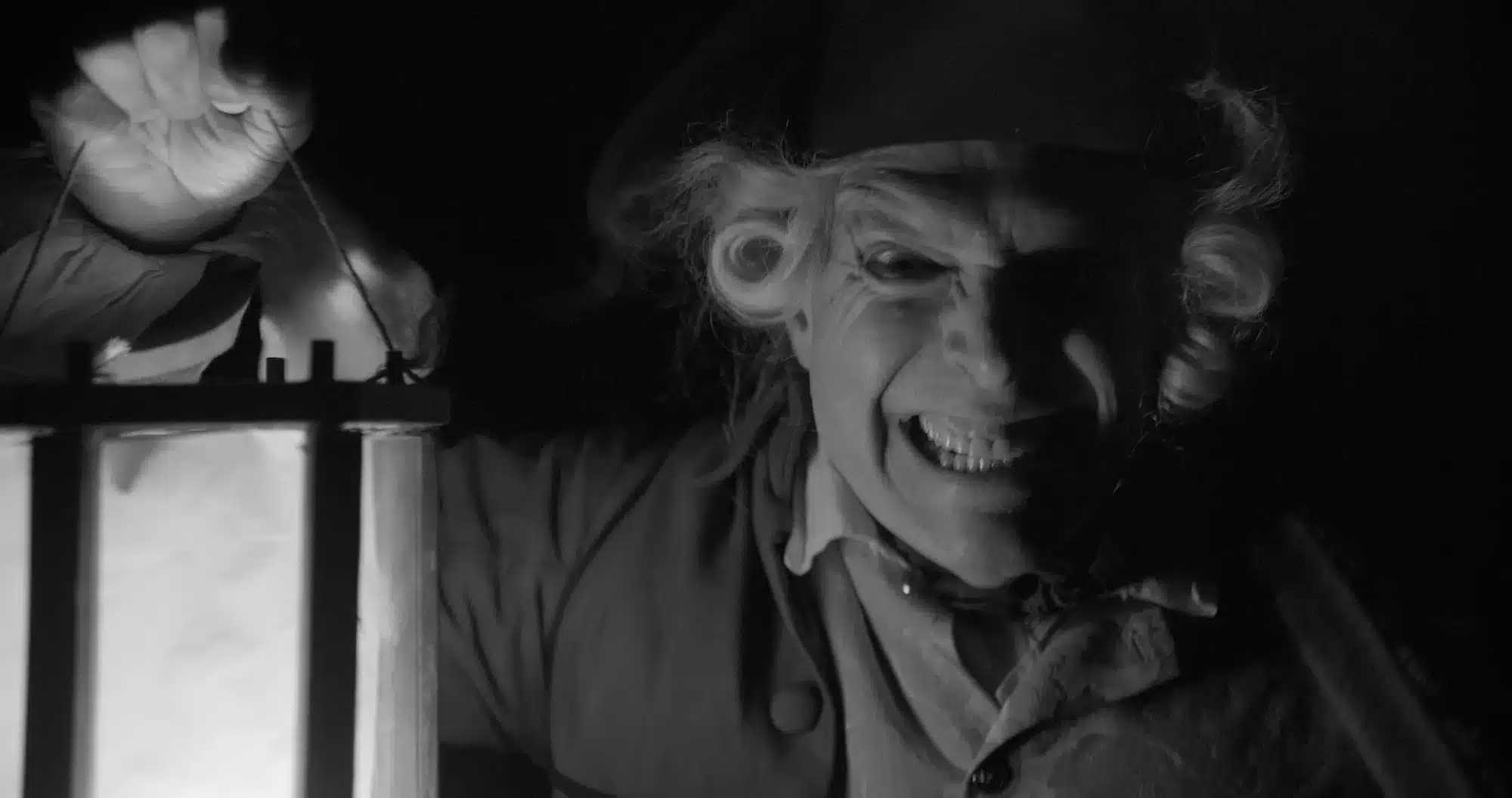
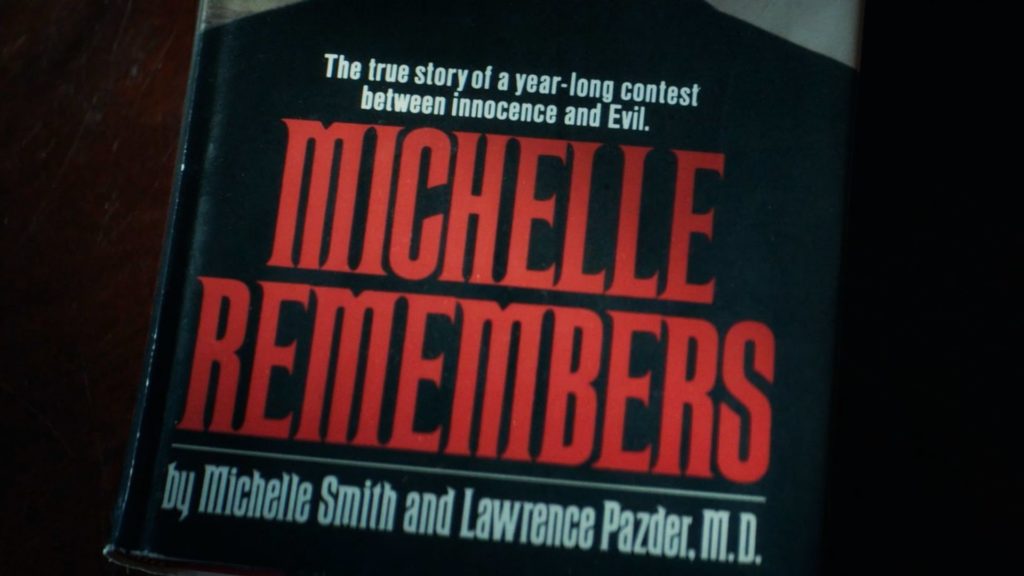
The ‘Satanic Panic’ of the latter decades of the 20th Century serves as a deeply unedifying lesson in paranoia, exploitation and groupthink. It also reminds us of the human capacity to ignore the overt to fantasise over the covert: this impulse is still with us, now aided and abetted by the internet and social media; Pizzagate was and is, if anything, even more outlandish than its predecessor, even if (for now) failing to make such an impact on mainstream media. As such, Satan Wants You is a gripping, often exasperating, and a very important watch. It charts the birth of this phenomenon via one outlandish book, which is explored at length here.

Probably the toughest thing about writing this review is summarising just what this book – Michelle Remembers – was, how it came about and what its legacy has been: even though conspiracy theory rolls on in modern life, we do live in a different world to the 1970s in many key respects, and certainly in our expectations around doctor/patient relationships (though I would argue that our increased desire for therapy keeps the door open for less scrupulous, less professional players to exploit us; there’s always a new grift).

The book was written as a result of a collaboration between a patient – Michelle Smith herself – and her psychiatrist, Lawrence Pazder. Opening the film, podcaster Sarah Marshall introduces us to Michelle and her recovered memories as the ‘patient zero’ of the Satanic Panic. Back in 1976 (the Satanic Panic is perhaps best-known as an 80s phenomenon, though the book pre-dates this period) Michelle began making claims about a slew of horrific memories – cruel, even absurd events which happened to her during early childhood at the behest of a highly secretive (of course) Satanic cult. Forgotten by her until this point in her adult life, Michelle was able to recall what occurred thanks to the special, unorthodox therapy sessions offered to her by Pazder; Pazder encouraged her, recorded her, and to a large extent refracted her scattergun recollections via his own experiences, ideas and beliefs. The book itself is a summation of this process, a folie à deux perhaps, only one latterly influenced by power, money, influence and – lust.

The book was a sensation; well of course it was, as it made claims about a well-organised, vicious, hidden cabal of devil worshippers operating in North America; people, being people, can’t help themselves. It also had a bulletproof justification for all of its lewd, bloodthirsty content – a defensible front, as this was Michelle ostensibly warning society about the nefarious goings-on in its midst. Speaking to Michelle’s sister, the film is able to glean some vital context for the type of person Michelle became as an adult; theirs was an unhappy home, with lots of house moves, a violent, alcoholic father and a downtrodden mother; this, maybe, goes some way towards explaining some of Michelle’s traits – but this is just a small part of the whole.

Steadily, a picture emerges of the early relationship between Michelle and religious faith; when she began to make her claims about Satanic abuse, the Catholic Church, perhaps already buoyed up by a newly-devout (read: scared) flock due to The Exorcist in ’73, was more than ready to give her complete credence (the Pope himself offered a foreword in Michelle Remembers). So it wasn’t just Pazder, not even in the early years, as fundamental as he was to the new life which unfolded before Michelle (and which he enjoyed alongside her). Tours, talks, travel, but perhaps most of all wealth and influence came along in quick succession. A rather more complex representation of Michelle comes out at about this point: was she simply a pliant, authority-motivated people pleaser, or was there more to her? How motivated was Michelle by her interest in Pazder in a capacity beyond being just her psychiatrist? How responsible was the Venn diagram between organised religion and psychiatric medicine? In interviews, but particularly in her transcripts, Michelle is as apologetic as she is grotesque, but – as it comes across from Pazder’s not-wholly-unbiased ex-wife and daughter – not above attention-seeking, and certainly not above selfishness. Families, including theirs, were destroyed by the book’s legacy.

Elsewhere, Michelle’s story led to a great blossoming of unreason, a snowball effect which went so far as to have people guarding newborns in British Columbia against Satanic cult kidnap; no one, it seems, with the exception of the Church of Satan (who actually brought a defamation lawsuit against the book) dared cast doubt on any of this. It was all too mysterious, too salacious; to call it out was maybe to suggest that you were a Satanist yourself. How do you win that one? Speaking on behalf of the CoS, Blanche Barton is a welcome voice of reason throughout.

Whilst you could come to this film as a complete outsider, knowing nothing about the topic, my feeling is that Satan Wants You is somewhat more for those already aware of the Satanic Panic and its origins: it gets going quickly off the bat and keeps up this pace and detail across its ninety minutes. A visually very smart documentary, it’s impeccably shot, edited and soundtracked, with old footage, new interviews, on-screen text (excerpts from transcripts, interviews and sections from the book) and lots of material which will certainly not have been seen by many people, or not in one place at least. Thorough and expansive, with a keen undercurrent of disbelief that this ever unfolded the way it did, Satan Wants You follows the story right through, covering its twists and developments in suitable detail. It feels very fresh and new. And perhaps it should, because this kind of paranoid racketeering never feels fully past tense. It can’t fully answer the ‘why?’ but it shines a light on what happened, and perhaps could happen again. This is great work by directors Steve J. Adams and Sean Horlor.

Satan Wants You featured at the Fantasia International Film Festival 2023.

Fantasia 2023: Hippo

Hippo (2023) isn’t a particularly easy film to sum up, much less to recommend along easily definable lines: it’s an often moody, deeply eclectic, art-house-leaning project with a storyline which is both minimal and yet…profound, at times. It doesn’t sit snugly in any one genre, it moves from vast or unpalatable topics into domestic familiarity and back again, but it rarely provides much sense of which of those two – seismic, or cosy – is coming next. How am I doing so far? However, for all its harder-to-read or harder to pin down elements, it eventually weaves together a strangely compelling story of its key characters. These two teenagers, for all of the (often self-made) chaos which unfolds around them, grab hold of you: they’re vulnerable, they’re trying to find their own way, and you can’t help but become invested in them, come what may.

We first meet Adam – nickname Hippo – and his adopted sister Buttercup – at the grave of their father, on the fifth anniversary of his death. Adam (Kimball Farley) is at that age and stage where he’s trying to see a future for himself as a man; this shapes his reflections on his father and whilst a graveside is a pretty suitable place to be morbid, Hippo keeps it going wherever he goes (which isn’t far). Buttercup (Lilla Kizlinger) came to this family having already had a family life in Hungary, so she brings different obsessions and concerns, but: she’s having her own existential crisis at the age of seventeen. Newly aware of her sexuality, she can only really refract it through her Catholic upbringing, blurring the lines between a new awareness of her potential to be a mother with the story of the Virgin Mary and Jesus. It’s a tough gig. Hey, her desire for a boyfriend eventually takes her to Craigslist, which perhaps in the 1990s wasn’t so entrenched in common knowledge as a place of unknown terrors. (This also triggers one of the film’s most intensely weird, and hilarious episodes. I’ve never laughed so much at the appearance of a simple CD.)

Mother Ethel (Eliza Roberts) is quite a character in her own right: her tolerance is infinite and she takes her children’s attempts to carve out their own paths with a kindly sort of disinterest, but she has her own things going on: she’s a big believer in extra-terrestrial infiltration, a sentence which sounds far less strange coming in a week of official testimonials essentially saying the same thing. Maybe Ethel knew what was going on first. Oh, and the theme of alien life turns out to be an important one. Still, she tries to help her kids navigate early adulthood, albeit that her ‘birds and bees’ talk probably causes them more confusion. Hippo’s crisis of masculinity increasingly gets blended with a kind of god complex, crossed with the kind of sexual cluelessness which has probably started a lot of wars. Buttercup more and more wants a family of her own, as much as she still relies on Hippo to underwrite her idea of ‘family’.

That’s the essential set-up in Hippo, though none of its conclusions come easily and nor do they come via expected plot developments or uses of tone. For example, the arrival of Buttercup’s first-ever date, the odious (and potentially dangerous) Darwin (Jesse Pimentel) underlines the naivety of the entire family unit, but it’s not necessarily played as a ‘threat from outside’ – it skates close to that line, but it becomes too ridiculous to fear, even given what happens later. The film keeps up its self-referential, self-effacing tone, even when it’s delving into significant ideas about selfhood and agency, which it certainly does. Shot in crisp black and white which draws all of the heat out of the film’s opening summer setting, it looks a lot like an arty, experimental film (and say, was I the only person who felt the odd nod to Eraserhead? Just me?) But there’s some mumblecore stuff going on too, particularly given its focus on teenage characters. Some of its content can be quite shocking; it almost casually throws in the concept of incest in the first few minutes, and via the film’s narrator (Eric Roberts) who speaks throughout, helping viewers to navigate, but feeling for all the world like a character here. Getting mired in which pre-existing genres Hippo does or doesn’t belong to isn’t perhaps the most useful way to assess it, but it can be hard to step outside that sometimes. And there does come a point, quite early in the film, where you either settle into what it’s trying to do, or you reject it.

Around it all though, however outlandish it gets, the film develops an unmistakeable kind of warmth. Once you become aware that this is a film unlikely to offer much in the way of denouement, and once you realise it’ll have to just sit across a range of genres, it’s still a story to draw you in. It builds a weirdly charming, aberrant little world which feels quite like anything else. The highly dramatic performance given by Farley (who also co-wrote the film alongside director Mark H. Rapaport) works well against the quiet, calm performance given by Kizlinger. All in all, the film achieves a weird and wonderful mixture of elements. And I’ll never look at a Super-Soaker the same way, thanks.

Hippo (2023) featured at the Fantasia International Film Festival 2023.

Unfriending (2023)

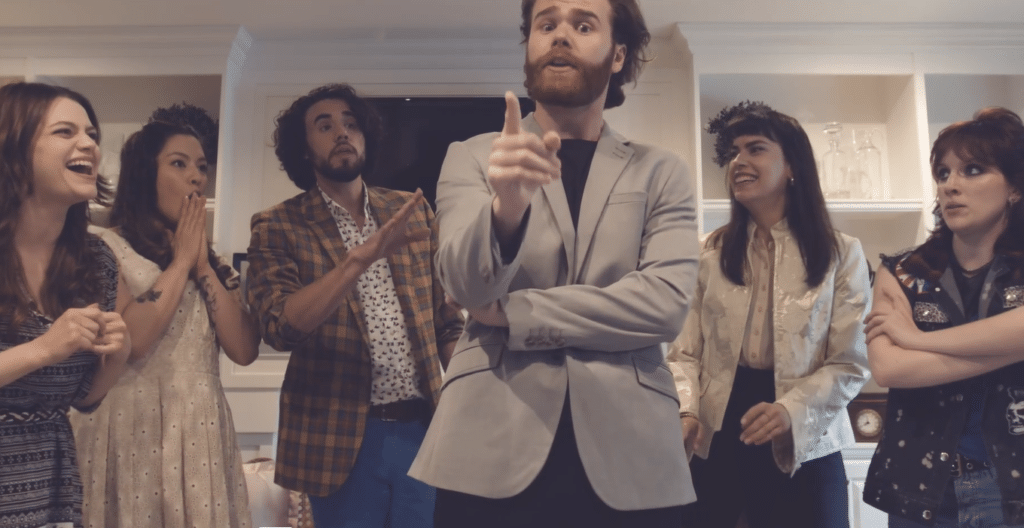
Don’t be misled by the title ‘Unfriending’ – as I was at first – into thinking this film has anything much to do with the kind of ‘unfriending’ we associate with social media and the internet (and for which the term was coined). Whilst this film covers the kinds of attitudes to friendships which are perhaps more prevalent in the social media age, it’s rather an honest-to-goodness dinner party drama which edges into dark, horror-adjacent territory. Things get uncomfortable, strained, then strange and horrifying, with a very dark key theme which is teased apart and explored throughout the film. It works very well; it’s low-key, but brutal in its way nonetheless.

We start with a young man getting ready at the mirror in the bathroom of a grand house, before heading downstairs to help with the prep (read: to complain about the prep) for an important dinner party. A dinner party: already we’re primed for the worst, as no one makes films about successful dinner parties. Mind you, what are we calling ‘success’ here? We glean that the dinner is all in honour of a mutual friend called Isaac: hosts Blake (Sean Meldrum) and girlfriend May (Simone Jetsun) have pulled out all the stops to make it a memorable meal, even if Blake emanates envy and irritation. So why are they hosting this dinner at all, given that Blake can hardly repress his dislike of Isaac – one of his best, longest friends? And wait: why did May just mention a ‘funeral’? Is Isaac ill?

More guests arrive and, as they talk, it turns out that this is a kind of intervention, rather than a simple social catch-up. But it’s not an intervention where friends and sometimes family get together to do the best they can to help someone thrive; the big idea here is that they all want to convince Isaac to commit suicide. They have, they feel, rock-solid reasons for encouraging him to do this, allowing themselves plenty of time to mull it over on his behalf. The film takes some time to settle into its groove here, being a very dialogue-heavy affair which takes place across a few rooms of the house for the most part, and it takes a moment to to get us into that; this isn’t a high-action thing, and it lags a little as it sets out its store.

Essentially, we as viewers are soon ready for Isaac himself to turn up, because he has been built up by this discussion by his peers (particularly by the odious Blake, whose one-upmanship with his friend of thirty years is made clear). But, at last, the man of the moment (Alex Stone) arrives: jaded, nervous, instantly sympathetic, and actually, unfortunately, quite excited to see everyone. What’s less expected, given the discourse on his many personal failings, is that he has turned up with a hot date in tow. Lexxi (Golden Madison) is an outsider here, and as such, a complicating factor.

The plot thickens as the night progresses. As it does so, the conversation (and the action) become increasingly mean, to the point of being excruciatingly cruel in places (and if you’ve ever rooted for an underdog, then you’re bound to feel something for Isaac). But all of this accompanies a series of pleasing twists and developments, so that – however unpleasant the original premise is – it doesn’t define the plot in simple terms. There’s more to come here.

There’s much to admire in Unfriending, even if with some of it, you do have to wait for it (the film’s script does an excellent job of delivering little clues and references which it picks up on later – it’s a pleasing thing to experience, showing lots of skill from writers/directors Brett M. Butler and Jason G. Butler). The little visual details – like Blake draining the bag from the cheapo box of wine – show nice attention to detail, whilst moments of awkwardness and absurdity (with more and more physical aspects) add depth to the conversation-heavy style of the film. Some of the initial comments on ‘consent’, ‘cancel culture’ and similar feel a little clumsy, though, as above, the script returns to these ideas, fleshing them out and reiterating their relevance. The sharper edges of the dialogue are all nicely handled and super mean-spirited; some of the repartee is very strong.

There’s decent acting here too, in some cases from relatively new actors: you can certainly love to loathe this bizarre bunch, and the performance style matches the central premise well. Of course the question has to be, why are these people even friends? Well, these things happen; we have another recently-coined word for it, ‘frenemy’; the film’s social satire picks up on the relationships between these people and sees them through to a satisfying conclusion.

In some respects, this film feels like it could have been a stage play: that’s not to disrespect it as a film, but just to point out that the rate and style of its reveals, its use of sets and its use of its script to carry its plot along feel like they could work in that environment, too. But the way it all comes together and the ways it grows its characters makes for an engaging indie movie which has plenty to say, and interesting ways to say it.

Unfriending (2023) is hitting the summer festival circuit at present, hitting Cobb International on Friday, August 4th.

Fantasia 2023: Restore Point

As the gap between science fact and science fiction narrows year on year, some of the best sci-fi simply takes recognisable elements from our day-to-day lives and gives them a tweak or two; that’s often enough to make us question the new normal in some way, and some great cinema has already appeared as a result. Restore Point (2023) does this too, but its key conceit centres around something far more profound and – in this way and to this extent, at least – hitherto unobtainable. But still, all of its developments are made to feel damn close at hand in this often inventive, provocative and smart film.

It’s 2041 in Central Europe: inequality is no thing of the past in this close future. Instead, social issues have escalated to the point that violent crime is fully endemic. Of course, removing the inequalities themselves would be a monstrous, difficult task; instead, a philanthropic organisation called the Rohan Institute has created a piece of technology which can resurrect people who die an untimely death. All they need is to maintain regular back-ups using the company tech: this is the ‘restore point’ of the title. It’s like a cross between a save point in a game, and the ultimate in life insurance. However, it seems that not everyone is fully on board with this techno-ideology; a terrorist organisation called River of Life rejects the notion of a deathless death, and they have been responsible for a number of attacks on the Institute.

We see one such attack-by-proxy taking place as the film opens; detective Em (Andrea Mohylová) is on the trail of a hostage-taker who has been systematically executing prisoners in a well-shielded location (which resists her scanning technology). A gunshot alerts her to the correct floor in the building: ignoring her orders to wait for backup, she tries to save some of the lives she can, but the assailant eludes her, falling readily to his old-fashioned, permanent death – a fate which seems to appal Em, product of her times that she is, but as it turns out she has a particular interest in this organisation, wishing to take them down for personal reasons.

Likewise, River of Life seems to have a personal interest in the Institute, too, seemingly murdering two individuals, a married couple called Kurlstat; David Kurlstat (Matej Hádek) had been working on a new scheme for Rohan, just at the point in time when the Institute was preparing to privatise its services (citing the need to improve those services, though its critics fear a two-tier, overtly wealth-based restoration system is really on the cards). It’s a fraught time, and things grow more complicated when David – believed dead-dead, with no up-to-date restore point – turns up alive, seeking Em’s assistance. There’s a conspiracy taking place, he claims, one which strikes at the heart of the Institute but, as is so often the case, showing that the divide between blame and blamelessness is never straightforward.

In many respects – as you might glean from the last sentence – the main narrative here is a familiar one. We’re used to determined, lone-wolf detectives getting drawn into power struggles and corruption, then struggling to balance duty against conscience. This is handled well in Restore Point; there’s a sense of a steadily ratcheting story, with a plausible (if very closed-off) central protagonist in Mohylová. And, those familiar ideas of secrecy, subterfuge and rebellion help us to orientate through the plot, actually; they’re all-too recognisable. This orientation is particularly helpful as the film’s more expansive ideas develop; rogue hard drives and recovered info are commonplace, sure, but questions about life and death remain more mysterious, and even if some of the surprise factor wears off with regards life, death and coming back from the latter state, it’s still an interesting, subtle idea negotiated through technology which looks like it belongs in our timeline (which provides a nicely uncanny sensation). Restore Point plays around with old, accepted divisions – not only life and death, but also presence/absence, eroding those boundaries too. Things suddenly turn out to be in doubt in the world of Restore Point. The Kurlstats, for example, have already been removed to the morgue, but holograms of their bodies remain in situ for the police to investigate the crime scene as-was. People are there and not there; nothing is certain.

Even the restore point itself is fraught with risk and uncertainty. It promises much, but yet the ‘undiscovered country’ is no less mysterious. The film opts not to investigate the physical and emotional impact of taking this journey in full: it uses death and restoration as more of a philosophical point (with one nod to a classic piece of horror cinema aside) which is a missed opportunity in some respects, though tonally, the film is clear and consistent just the way it is. It has a wealth of visual tricks and lots of grand, nearly-here urban vistas; it looks great. It was great to see a little reference to Arnold Böcklin in there, too, and Pino’s Resurrection of Lazarus (which actually reminds us that important organisations have been promising ‘death is not the end’ for rather longer than we’ve had modern technology). Restore Point tantalises, rather than answers all its own questions, but it’s an engaging and intriguing piece of world building which rewards your attention.

Restore Point (2023) featured at the Fantasia International Film Festival 2023.

Fantasia 2023: Blackout

The cinematic monsters made famous by Universal nearly a century ago continue to appear on our screens today, though often now imbued with much more modern symbolism; the vampire, Frankenstein’s creature (or versions of it) and of course the werewolf are used to represent current predilections, anxieties and fears. You could even say the werewolf has had a minor cinema resurrection of late, so it’s unsurprising that genre film actor, writer and director Larry Fessenden should have eventually turned his hand to the genre, after already directing stories about vampires and Frankenstein-like creatures; It’s apparently been a long-held ambition of his, too. The result, Blackout (2023) – not to be confused with the four other films or TV series of that name which have appeared since 2019 alone – is clearly and openly a werewolf movie, and one which tries to make clear its ambitions to address current socio-political topics right from the start. Unfortunately, to make these two strands hang together requires work from the viewer which I couldn’t muster; the aims may be noble, but the storytelling itself is laden with errors and fundamental issues which prevent anything more profound from successfully landing. As such, what are we left with?

We start with a ‘wolf’s eye view’ which actually calls to mind a lot of the more fun, honest-to-goodness monster movies of the 80s, including the old tradition of getting in some early nudity, as a lovemaking couple get terrorized by moonlight. There then follows a long, long panning shot of what looks like an artist’s studio. We’re left in no doubt that we’re dealing with a painter; the artist himself, Charley (Alex Hurt) even sleeps covered in paint. But then, he’s awake, clearing up and heading out; it seems he’s treated himself to a motel/artist’s retreat for a month, but now he’s heading back to town, specifically a rural town called Talbot Falls.

What follows is a difficult-to-follow outpouring of plot exposition which covers the following in just a few of the film’s opening minutes: Charley works in construction it seems, except for when he takes the month off and goes incommunicado; when he returns to the work site, he speaks briefly to a man called Hammond, who is building a resort near town, and this gives way to a conversation about: migrant worker exploitation, historical and current levels of corruption and generational conflict. Charley then pops in on a lady who has asked him to paint her shed (Barbara Crampton) but this turns into a request to help him decipher some old legal documentation relevant to the resort; despite discovering that there’s a long-standing but troubled romantic connection between Charley and Hammond’s daughter, there’s a romantic kiss between Charley and this Kate, and then it’s revealed that Charley is leaving town, again, but for good this time.

And why? Well, it could be that Charley is our werewolf; that would cover the month away thing, and also the murder of the naked couple (which is currently being pinned on a Mexican worker by the villainous Hammond). A lunar episode soon confirms our suspicions by turning Charley again (conveniently, it does this for three days per month) and on this occasion, he crashes his car as a result, before tearing his way past/through some would-be helpers and running from place to place.

Phew; after putting all those pieces on the board, it’s going to take a deft hand to play them. But this film can’t. After creating this barrage of names, topics and ideas, the film drags almost to a halt. It becomes Charley, travelling: Wolf Charley running somewhere, then Charley walking, and then catching lifts with people, up and down the road. The conversations which Charley has provide at least a sense that he has some scheme or motive at heart, something he now has to do. But the pace here is exasperating, skipping from crude snippets of exposition to laboured skits by cartoonish minor characters. First the film acts like it has to tell us everything in no time at all, and then it has all the time in the world to hone in on its attempts at humour.

As a werewolf film made by a frequent horror actor and horror fan, Blackout must come with a wealth of knowledge about the perks and pitfalls of filming werewolves, and it does at least seem to understand that less is more when it comes to transformation scenes, at least if budget is an issue. Accordingly, the film uses darkness to cover any major issues, and uses quick edits/close ups a lot of the time. This is wise (though it blows this wise approach out of the water with a few extraordinary scenes later in the film). Again, perhaps the emphasis on werewolf as corrector of social ills takes some of the fun out of things, or at least shifts the emphasis too many times; this is another of the ways in which the film’s priorities seem contested. Other aspects are a little too convenient; okay, Blackout hangs onto the Universal trope that silver bullets stop werewolves, but what are the odds that Charley happens to know someone in this town of what feels like fifty souls, who can unquestioningly make him some?

But perhaps that’s ultimately what makes this film feel broadly unsuccessful: so much of it depends on this idea of a community, of people pitted against one another by a calculating, rich white guy. And yet the calculating rich guy is almost never on screen, has little presence, and there is no sense of a town here. Charley spends the biggest part of the film travelling from remote house to remote house, each of which is inhabited by maybe one or two people. You never see more than a handful of people on screen until we’re approaching the ninety minute mark, and by then it feels strange that the film’s ample running time has covered so much, but not given any sense of the community on which everything depends. This would have been more important than the rather strained inclusion of ‘art’ as a plot device, which turns out to be fairly trivial in the grander scheme of things. The film valiantly tries to draw its elements together by the end, but by this point it has been compounding its issues for almost a hundred minutes. It’s by turns sluggish and unfocused, hurried and pious. It’s a shame, but so it goes.

Blackout (2023) featured at the Fantasia International Film Festival.

Fantasia 2023: Vincent Must Die

Social satire blends with horror in Vincent Must Die (Vincent Doit Mourir), but not – at least initially – in ways your average viewer might expect. It’s a film which starts small and retains that standard of intimacy, always playing out as one man’s struggle against an unprecedented turn of events, even when those events grow increasingly, to an extent familiarly nasty.

It all starts, as with so much horror, in the workplace. Vincent (Karim Leklou) is a graphic designer and, when we meet him, he’s undergoing an aimless monologue from a colleague (nothing screams ‘work’ like having to listen to someone describe their weird dreams). The awkwardness here is palpable, and recognisable. But when an intern fails to see the funny side of one of Vincent’s comments, returning later on to batter him with a folder, it seems like Vincent’s day has just got considerably worse. A one-off, of course; he decides against making a complaint, and even tries to get a little leverage out of the situation with a few ‘chicks dig scars’ selfies that night for use with his dating profile, so all’s well that ends well. The thing is, the next day at work, another colleague attacks him – and this attack is much more savage. Being stabbed in the arm with a biro apparently draws rather a lot of blood.

Again, Vincent decides not to make a formal complaint, but his line manager thinks it might be best if he works from home for a while anyway (the readiness of Vincent’s bosses to put this sequence of events down to Work Based Stress before sending the victim home is bizarre, yet strangely plausible). Vincent agrees, but by this point, he is highly anxious and destabilised. Is there an agenda against him? He begins to try to spot the pattern, or any potential triggers. In the meantime, his predicament grows more bizarre and alarming, and he begins to suspect that there is a broadening trend of anger and aggression unfolding around him, though he has little time to consider these wider ramifications: his personal ordeal quickly becomes far more brutal and inescapable.

Vincent is understandably genuinely alarmed and afraid here, and as such becomes an excellent, unwitting Everyman character (with a fraught, humane performance from Leklou holding things together throughout). It’s an unsettling viewing experience because we find ourselves sticking so closely with Vincent, and a lot of hand-held camera work makes it feel as though we are moving from place to place with him. Moments of absurdity emerge, though never for long enough to do much more than vary the tone a little, and perhaps to underline just how much of an existential, singular horror story this really is. Nonetheless, the film successfully scales up, introducing new characters and possibilities; they simply come down to us via Vincent and Vincent’s perceptions.

At its furthest extremes, the film could be said to resemble The Sadness, though it never quite crosses into that level of grisly spectacle. It’s slower, more measured, and somehow more domestic than that. Similarly, exposition is minimised to retain the overarching, discomfiting perspective of one man pushed to the edge. It allows director Stéphan Castang, here making his first feature, to do something a little different with what are, essentially, recognisable, potentially post-apocalyptic themes (depending on what’s done with them). And, if it’s difficult at some points to envision how things might end here, there’s enough heart (and horror) to sustain it. This is an engaging story throughout.

Vincent Must Die (2023) recently screened at the Fantasia International Film Festival 2023.

Fantasia 2023: Mami Wata

A crisis of belief besets a West African village in Mami Wata, as corruption and greed sweep in behind it. A dark, often cruel story unfolds, painting a devastating picture of the repercussions of change. The film does this without being overly simplistic, and it does it without any chiding, even if its message is firm. This is a languid, but gripping folk tale, with powerful and hypnotic performances.

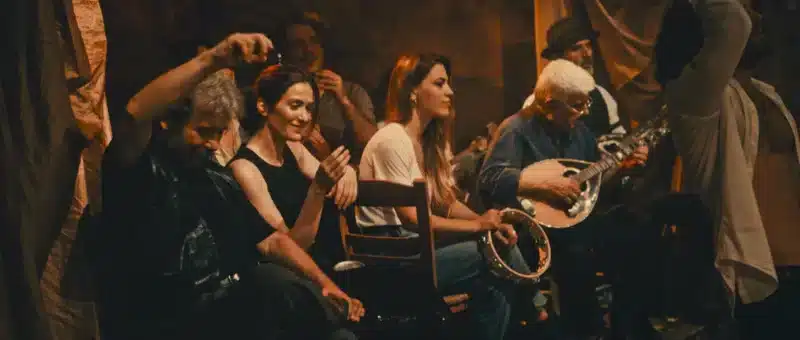
The village of Iyi maintains its beliefs in traditional deities, even when other communities – and people involved in the African diaspora – have started to question them; this is made clear to us by some on-screen text at the beginning of the film, which also primes us for some crisis of confidence to follow. Mami Wata – in Pidgin, roughly, ‘Mother Water’ – functions as a protective spirit, but seemingly also makes demands on those who venerate her, demanding back what she borrows, or seeking tribute (often via a chosen Intermediary, or I suppose what some would designate a priestess: this is a matriarchal community). We get an early sense of something supernatural which is, or which could be, subtle but devastating; a young girl’s disappearance is deemed to be due to Mami Wata, here taking back a kindred spirit who always belonged to the sea. Mama Efe, as the Intermediary, is the one to speak on her behalf; her daughters, Zinwe and Prisca, seem torn between their venerated position in the village and also the draw of something else, something modernising and different.

These contested feelings only grow when a thanksgiving ceremony takes place soon after the disappearance, in which Mama Efe (Rita Edochie) receives gifts and food on the deity’s behalf. Zinwe (Uzoamaka Aniunoh) at first seems most resentful of this, despite being in line to be the next Intermediary herself. Adopted sister Prisca (Evelyne Ily) seems more straightforwardly loyal, but it’s via her that we first get the sense that Iye isn’t quite as remote as it seems at first: gradually, we encounter bars, bikes, cigarettes. This is important (the film picks up small clues and lines and it’s only later that you realise that these were heavy elements of foreshadowing). Then, when a young boy falls ill and Mama Efe cannot heal him, the younger villagers begin to openly cast doubt on her usefulness. Why are people working hard to hand over tributes, if Mami Wata no longer seems to keep them safe? A visiting doctor promises vaccines; he says no more children need to die; why not try his way?

The crisis deepens when Mama Efe and Prisca find a stricken stranger, close to drowning on the beach near their house. They help him, feed him and Prisca pities him when she hears his stories of escape from a rebel group. Jasper (Emeka Amakeze) may be traumatised by his experiences; Prisca listens, and asks him why he is so keen to get back to a world which has harmed him so much. The ambiguous pull of a modernising world outside the village bounds is a constant; the people who come from this complex, Christian(ish), materially more comfortable world frequently intrude in Iyi, promising much but acting as a destabilising force. Jasper takes Prisca’s invitation very seriously; as he hears more and more from those now jaded with what they see as embarrassing old beliefs, he begins to plan something.

Whilst this is a very slowly-unfolding story which only invokes aspects of supernaturalism in very minor (if important) scenes, it’s nonetheless an effective, fey piece of tale-telling which, via its unusual performances and visuals, seems to balance the film’s symbolism against encroaching, harmful elements of realism. It achieves this in a range of ways, not just through its narrative. The director, C.J. ‘Fiery’ Obasi, has opted for an unusual monochromatic shooting style; nights are jet black, sunny days are blanched white, and the lead actors are incredibly sharply drawn against these backdrops, with distinctive hairstyles, face decoration and clothing which look almost otherworldly due to the ways they’ve been lit and framed; it has an artistic, distinctive effect. Another important feature of the film is in its language. It is nearly all spoken in Pidgin and dialect words – often clearly decipherable to Standard English speakers, but then sometimes, not at all. But SE is also used, and the code switching aspect is important; the language being used, by whom and when, has meaning.

The intrusive, alluring but often harmful impact of modernisation on this village reminds me in places of Chinua Achebe’s novella Things Fall Apart – itself named for a line from an enigmatic Yeats poem, The Second Coming, a poem which seems to prophesy the end of an old belief system and the prospect of a new kind of chaotic movement. Achebe’s village and villagers are in crisis as arriving Christians erode the old, sanctified, if at times cruel ways held dear by these people. Certainly, crosses worn around the neck in Mami Wata hardly signify new and better things. But the film is both more mesmeric and, steadily, more resistant than Achebe offered; Mami Wata is a beautiful, lyrical and quietly defiant spin on the same kind of existential crisis.

Mami Wata (2023) receives its Canadian premiere at the Fantasia International Film Festival 2023 on July 20th.

The Lair (2022)

We get some on-screen preamble before the events of The Lair (2022) unfold before us. Locating the film in conflict-ridden Afghanistan in 2017, we’re told that a US bomb strike on a certain province, intended to destroy an insurgent stronghold, occurred after alleged ‘disturbing activity’ in the area. So there we have it: we’re going to see that disturbing activity, aren’t we? It’s got to be that. And the film which unfolds is a watchable, but often sadly laughable blend of B-movie and po-faced real deal; this kind of disparity is, also sad to say, already becoming a hallmark of Kirkmarshall projects, of which this is the second of a steadily-increasing number.

Kirk plays Captain Kate Sinclair, a woman about to be parted from her child for a tour of duty in Afghanistan (we don’t get a lot on Sinclair’s domestic bliss, but just enough to remind us that motherhood is a great go-to backstory). Cut to the Middle East and – boom – Sinclair, not the most comfortable person in a cockpit I’ve ever seen, gets shot down alongside her companions in the super-remote Nangahar Province. The sole survivor, she quickly finds herself at the threshold of a long-abandoned Soviet bunker, which the pursuing Talibs obligingly blast open as they’re trying and failing to shoot her (though to be fair, they even more obligingly start off with swords versus her gun). Short on options, Sinclair heads inside; her enemies give her a head start, enough time for her to espy some very suspicious looking kit in the gloom – lots of Aliens-adjacent pods, bodies, and slimy tech – including a potentially handy camera, which she pockets. When the Talibs finally follow her in and there’s time for a bit of ‘nine stone woman decking an adult male’ nonsense – the kind which is itself a cinematic staple now – Sinclair escapes in the melee and encounters some whatever-they-were in the pods in rather more rude health. She again flees, finding her way back outside; here, she runs into a group of US soldiers investigating the crash site and surrounding area. They pick her up.

Back at their base, Sinclair tries to explain what she’s seen to a disbelieving team. They’re worried enough about a sudden increase in insurgent activity; she tries to warn them that there’s worse out there. Of course they’re convinced soon enough, when the creatures break loose and track Sinclair to the camp.

It’s not a bad idea for a film, and certainly not a bad idea for a sci-fi; if this feels somewhat like The Outpost (2019) spliced, a bit crudely, with a blend of Aliens (natch) and perhaps a bit of Storage 24 (2012) then it’s a fairly obvious splice, but not necessarily unthinkable – depending on how it’s done, of course. There are some good elements here. There are lots of panoramic shots which contrast well with the claustrophobia of the bunker/the camp when the proverbial hits the fan; the sets are pretty good, if owing a great deal to Mr. Giger in places; Marshall is wise, by now, to the potential of night scenes to generate a bit of mystery and doubt and the creature FX are decent, if again not the most original. Some scenes feel like direct re-treads of scenes from Dog Soldiers (2002), as much as there are some solid lessons there which bear a certain amount of repetition. Similarly, Marshall does know by now that less is more when it comes to screentime for the creatures themselves.

You know where this is going, though: whilst this film is not by any means as irritating and error-laden as The Reckoning in 2020, many of the same irritating tics persist and – look, there’s no other way to address this than by saying that Marshall & Kirk do not generate good screenplays together, based on the evidence to date at least. This is a quite separate issue to to Kirk’s performances, as an actor suddenly propelled to lead roles when perhaps one could argue this star-at-all-costs isn’t ready; it’s also a noticeable issue that Marshall seems unable to bear presenting Kirk looking beaten up and ugly, even when, for instance, her plane has just been blasted out of the air. He’s argued himself up to a neat, albeit make-up preserving streak of blood here or there perhaps, but it’s still eminently clear that Kirk has to look like a cover girl, come what may. It’s noticeable and it’s silly; critical consensus keeps picking up on this, but yet here we are again, priorities awry.

So, that’s one issue; then we have the writing bit – the characterisation, the script. Y’know, those pesky, crucial elements. These need to be in order for the film to fully work, but instead we get a strange, ragtag, Raggy Dolls bunch of sub-par soldiers, all bunched in one place for trivial misdemeanours; special mention for the arrival of a living, breathing set of Welsh stereotypes – one Sergeant Jones, of course – which made me, as a Welsh person, hide her face in her hands for a while; then there’s a scrappy script with some barely-there military plausibility; flat, childish lines of dialogue not spirited or self-effacing enough to be knowingly played for laughs; disparity of threat; jokey accents; and that photographic memory plot point: oh, come on! Actors Jamie Bamber and Jonathan Howard – together with Hadi Khanjanpour – just about hold the fort with their performances, but things still start to feel a little thin and aimless, despite all the (CGI-heavy) action sequences. There’s too many opportunities to disengage from these unbelievable people. That sort of thing needs to be combed out by a good script edit, and who’s doing that here? There aren’t the numerous historical faux pas which occur in The Reckoning, but there are plenty of mistakes here still, and they diminish the film.

Overall, The Lair isn’t a completely reprehensible project, but it’s a deeply flawed one, too derivative and too weighed down by its issues to really make the impact it could have. Perhaps Neil Marshall has forgotten what he used to know about genre film, because it really can be (and has been) more than this, and at his own hands, too. But treat genre film like a cheapo catch-all, super-simple star vehicle, and its fans will revolt; insincerity and pastiche are tough to overlook. Anyway, I gather that the next Kirkmarshall enterprise will be something about the gritty world of diamond smuggling; whatever else is around the corner, please God leave the Welsh out of it this time.

The Lair comes to Blu-ray, DVD and digital on 17th July 2023.

Fantasia 2023 is coming…

The Fantasia International Film Festival is a genuine delight and a highlight in the Warped Perspective year; its organisers definitely have the gift when it comes to selecting intrepid cinema from around the world. If anything, it can be a little intimidating to scroll through the selections: there’s enough there to keep a film fan going until the following year, and still get FOMO. Yeah, I said ‘FOMO’. But to make up for that, I’ve also taken a good look at the upcoming titles, and here are a few which look particularly interesting to the kinds of genre film fans who tend to pop in around here. (We may be covering some of these; we may be covering other titles; whatever transpires, we will be working hard to cover as many Fantasia titles as humanly possible from the end of July onwards, basically until we’re forced to step away.)

Booger

Director Mary Dauterman has showcased one of her short films at Fantasia previously, and now is back with her very first feature-length. In Booger, Anna (Grace Glowicki) is dealing with a horrible array of crises as she tries to deal with the death of her close friend Izzy, all whilst life refuses to stop ticking along: her landlord troubles her constantly for rent. When she gets bitten by Izzy’s cat Booger one day, things take an unexpected turn when she…thereafter starts craving canned fish, swallowing hairballs and – in a less cutesy move – starts to feel some decidedly predatorial instincts…Fantasia has the world premiere coming up.

Pandemonium

Please excuse me as I go into cut/paste mode, but short of saying that director Quarxx’s new feature sounds very intriguing, I simply can’t say enough with confidence about the film to explain its premise. Therefore, check this out: Drawing on themes found in Dante’s Inferno and Milton’s Paradise Lost, the film is a multi-textured existential fantasy topped with signature notes of visceral horror, disturbing fairy tale, wry comedy, and thrills. Exploring the many faces of death — suicide, murder, illness, accident — Quarxx dives deep into the notion of sin without redemption and the frailty of the human condition through the waking nightmare of one confused traveler (Hugo Dillon) who refuses to abandon all hope as he enters the gates of hell. 

Home Invasion

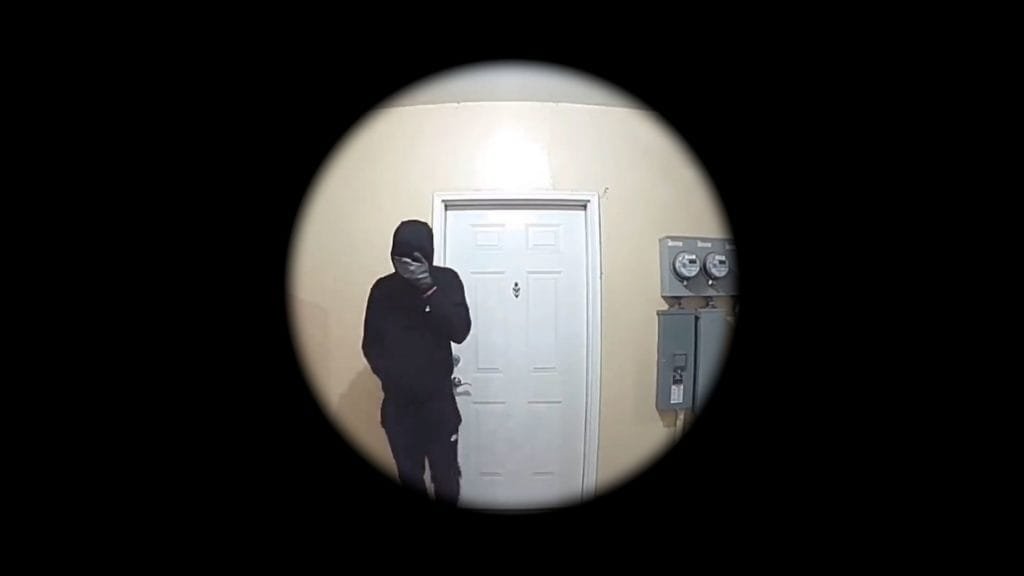
A genre of film in its own right, the premise of ‘home invasion’ fascinates and terrifies film fans; whilst many films contain elements of home invasion, i.e. they examine the unsettling impact of finding that your space is not fully safe, home invasion explores more fully the premise that your home can be forcibly broken into, your lives violated. Home Invasion, Graeme Arnfield’s blend of experimental film and documentary, charts the intermingling of fear, invasion and technology, from the first doorbell to Amazon Ring; the more ways we find to define the limits of outside vs. inside, the more ways we have imagined those limits being broken down.

Birth/Rebirth

The ghastly interplay between life and death sometimes give us films which explore them fully at their limits – Wake Wood (2009) questioned the limits of death, and asked what would be admissible to bring back a much-loved child; the likes of Grace (2009) blends birth, death and vitality via a blood-drinking newborn; Birth/Rebirth takes it a step further, as a single mother and a childless morgue technician (Judy Reyes, Marin Ireland) bond over a little girl they have reanimated from the dead. Like Grace, to keep the child alive necessitates some grotesque decisions and materials; what price this new life? Director Laura Moss invites us to explore the issues in this very modern retelling of that classic blend of Gothicism and science – Frankenstein.

Closing film: We Are Zombies

The team behind the stellar Summer of ’84 (2018) – RKSS – are back to ponder a world where zombies aren’t the continual threat we’d suppose them to be. We’ve been building towards this for some time, really, from the criminally underrated Fido (2006) to the end reels of Land of the Dead (2005) through to Zombie For Sale (2019). So we’re more than ready for We Are Zombies, where the zombies themselves – or the ‘living impaired’ as they’re now known – can wander freely, and have no urge to eat flesh, brains or anything else. But – as the above teaser image reveals – that’s not all there is to it, and we can expect plenty of RKSS’s signature flair and humour: after all, creatures who have no lives to worry about, as such, are not easy companions to live with, even if they mean new opportunities for the living.

Other titles to look out for:

Tiger Stripes (a monstrous coming-of-age story set in rural, religiously-observant Malaysia), Apocalypse Clown (it’s high time circus clowns get a post-apocalyptic story arc), Fantastic Golem Affairs (nothing has lost in translation there; it’s all about a friend who turns out to have been a golem – well, possibly), Eight Eyes (Vinegar Syndrome’s shock Serbia-set roadtrip horror) and of course, a special career achievement award for Nicolas Cage, a mainstay of both genre and mainstream titles for forty years and an actor who always brings his own centre of gravity to everything he does.

Watch this space for more, coming very soon…

Silo (2023)

As dystopia has become established as a genre, it’s become the case that the futures it explores have wound up with a few similarities. There’s no mystique about this; dystopia amplifies and extends our fears about the world we currently live in, so environmental angst, fear of political corruption, conspiracy, loss of selfhood – all of these things, explored in different books, art and films, can take on something of a similar pall. But that is not necessarily a bad thing, and nor – with careful, patient, clever handling – need it mean meaninglessness. Silo (2023), based on a series of novellas by Hugh Howey, has many of these familiar elements. Aside from the stasis of its world, it could almost be Snowpiercer upended; the inhabitants of both these contained environments peer at the world outside in a similar way, and labour under class divisions and expectations that shape where they live and what they (can) do. But it’s by no means a simple re-tread of Snowpiercer, or anything else.

Rather than write a simple review of the series – and bearing in mind that this brilliant show has itself been siloed on Apple TV, which not everyone has or is likely to get on the strength of one recommendation – this article will focus on Silo‘s core elements and what makes it work so well. Then, it’s up to you. There are some discussions of elements of the show which could be classed as mild spoilers, though not going much beyond what’s contained in the Apple official trailer.

The closed environment…

In the series, what is left of humanity lives beneath the ground in the silo of the title; humanity, we are told, numbers around 10,000 people, whose lives are tightly controlled in order to avoid overwhelming the life support systems of the silo. For example, if you want to have a child, it needs the approval of the judiciary apparatus which exerts law and order; you get a narrow window of opportunity to conceive, and if you’re unlucky, then that’s it: you enter the lottery all over again, or – you don’t. The silo has features which are eminently recognisable; IT is a big industry, as computer systems are integral to the running of the silo on a functional level, as well as aiding communications between levels. Ah, the levels: the deeper you go into the silo – and we are led to believe that it is a journey of many hours and miles to amble all the way down the central staircase to the bottom levels – the closer to what we’d see as blue-collar, manual professions we get. The so called Deeper Downs help the silo to recycle, deal with its trash, run the vast central generator, and do all of the grunt work which is oddly despised by the very people who depend on it. This is the class system, measured by depth (which itself isn’t so unusual, given how mining and excavating propped up an industrialising First World for hundreds of years, and was seen/is seen in similar terms).

This closed environment also looks a little like the Vault-Tec system in the Fallout games – by which, we’re talking the post-2008 Fallout games, which have placed more and more emphasis on the vaults themselves. The presence of a canteen area, living quarters, communal areas; they all look recognisable, forming up that overlap again – this is, it seems, what we fantasise when contemplating abject destruction over the nearest hill. Some kind of Cold War folk memory, perhaps – this notion that a select few could hide away underneath the ground away from all that, and just wait it out – if they had the means to feed and water themselves, perhaps they could survive. Popular imagination has run with that idea, contemplating what a larger-scale survival could look like. It’s the same impetus which drives sci-fi explorations of space, with a different select group looking for sanctuary away from a by-now bruised, broken Earth. Those who remain need to dig in and fund a way to function; the silo offers a miniaturised society, heavily controlled with a hard-line system of government who wish to ‘keep the peace’ at all costs. This isn’t a bad call – a riot in such close quarters would be a dreadful thing, and potentially fatal – but you soon feel that this peacekeeping impulse is masking something else.

And life below…

The silo itself is somewhat claustrophobic, but not dreadfully so, which is quite something in itself. It’s a vast space, and Apple money has done it justice, making it look the part. Its inmates are reasonably well turned out – this ain’t The Salute of the Jugger – and its apartments have a kind of moribund Ikea model-apartment vibe to them, shabby but clean and comfortable, even if dark cracks show on the silo walls (hey, symbolism). There’s also a noticeable colour palette which extends down through all the levels and recurs in the inhabitants’ clothes – oatmeal, teal, grey, terracotta. Setting aside some quibbles as to how this silo can produce enough food for all these mouths, extensive hydroponics system or not (we only have quite so many humans walking around today because we have industrialised farming so extensively; anyone who has ever tried to grow their own food will have a fair notion of how much you have to do for how little, and by extension, how much farming it takes to keep us going), it’s a surprisingly functional, even bearable space. No wonder people are happy to play ‘better the devil you know’ here. And indeed, people are happy to do this now, here, in their millions. Clearly, whoever planned this place wanted to balance aesthetics, form, function and longevity, and it’s worked. We see people living contented lives. But how do the people living here rationalise their existence in this surprisingly functional space?

Unusually, the silo has almost no sense of a pre-silo past, or else it’s tenuous at best. The founders created a Code, which still exists and is used as a lawbook for all citizens – with some residents, such as Billings, incredibly well-versed in all of its edicts, knowing them off by heart. But unlike other dystopias, where there is usually at least some sense of the world which came before – even if gleaned – the silo’s sense of a past was fatally stymied (or so the powers-that-be insist) by a failed uprising, 140 years prior. So here’s another reason to keep law and order so strictly: previous insurrections cost the silo all sense of its purpose, leaving it with only fragments. But this level of concern extends to extreme caution about all evidence of a world prior, which negates the sense that losing that link with the past is regrettable. ‘Relics’ – items which date to before the uprising – are contraband, and possession of these relics, however recognisably unimportant they look to our eyes, mean severe punishments for the owners.

This means that simple items take on a strange significance; a Pez dispenser, shorn of its context, becomes a mysterious cypher, its purpose shrouded in mystery. It reminded me of post-apocalyptic novel Riddley Walker, another story where there’s little sense of a timeline from past to present; the novel’s inhabitants tear a rusted car from the earth, bewildered by its purpose but recognising the value of its iron; Riddley himself becomes fascinated with a puppet, actually a religious figurine used in puppet shows, but it takes on a strange degree of meaning for him. Good dystopia invites us to look again at familiar objects and, by seeing them as unfamiliar, understand something of a world beyond our current perception. We perhaps need to start small to really appreciate things on a larger scale. Silo makes an artform of this by rendering all pre-silo objects both compelling, and illegal and, if you’ve seen the uproar a Pez dispenser can cause, then brace for the impact of a more – shall we say – complex, revealing throwback to the Time Before.

In terms of the structure of the silo, and excepting that classism is literally built into its structure (whether that was ever the explicit aim or not), it’s also fascinating for what it has at the very top. There is a viewing window. Whilst convincing blue light filters into residents’ apartments through their blinds and curtains, making it almost seem that there is natural light throughout, the canteen – an area used by virtually everyone – displays a pertinent reminder of what people need to stay below ground. The world outside is drear, barren and hostile: to go outside is to ensure a quick, choking death. People must stay in the silo until it safe to leave (though how this would be clear, is less than clear). It’s a little like the dystopian version of the late medieval practice of displaying the heads of traitors – a warning and an exhortation to do better. And it does function in this way, besides being otherwise a fairly innocuous view; a twisted, dead tree draws the eye, looming ominously over an unseen ridge. But as well as a warning to the curious – one man begins to notice the strange ‘lights’ above the tree which move in patterns – the window is also the source of a simple, but effective punishment for transgressors (and for those who declare on their own terms that they no longer wish to live this way.)

“I want to go out!”

The Code is clear that, should anyone express a desire to leave the silo, then their request must be granted, but: once said, provided there are witnesses, that request can never be redacted. If someone wants to go outside, then ostensibly they are granted that freedom – but it’s a freedom with the very grand proviso that the world outside is so toxic, that it will likely kill them within minutes. The process of granting that request, too, has become ritualised, turned into a performance, with a script, for the other silo dwellers (who watch the progress of the quitter on the grand canteen display). The ritual is a blend of faux concern and draconian punishment; the only fate worse than going outside is hard labour in the mines beneath the silo (and there we go again, that association between hard manual labour and delinquency). But even then, in the mines, a person’s death agonies are not broadcast to the other residents of the silo. Step foot outside, and that’s exactly what happens, seemingly without fail.

We do, however, see people willingly leave the silo, equipped with a protective suit (definitely ritual dress, as it’s already renowned for being next to functionally useless) and a special cleaning cloth (which is why the first story in Howey’s series is titled ‘Wool’). The last request asked of the person leaving the silo is that they spend a moment to clean the window to the outside world, making it as clear as possible for those who remain that the world outside is dangerous; indeed, people keel over within view of the window, and their remains stay visible for years afterwards; the silo wants them as visible as possible, as well as having the window itself clean. When someone requests to leave, it’s known colloquially as ‘being sent to clean’ for this reason. And, perhaps surprisingly, people do seem to oblige: the reasons for this forms up one of the most engaging about-face plot points I’ve seen in a long time, after keeping the audience on a par with key protagonist Juliette throughout, wondering alongside her what is going on with this: what is out there? Is this some last moment of altruism by the person who’s gone outside, or is it something different? It fascinates the audience just as it fascinates some of those living underground, because we are never omniscient in this story. Our questions are their questions, and nothing fascinates human beings like the details of an ominous fate.

Why, though, would someone ask to go outside at all? In the series, it boils down to those who develop serious doubts about this narrative which has been presented to them over a series of generations. If they begin to think, seriously, that the world outside is not poisonous, and that saying it over and over forms part of a conspiracy by the rulers of the silo to maintain order (and control), then they may be enticed to try it for themselves. The mystery of the outside world frames the series, opening it, establishing the parameters of the mystery, and then inviting us to work it out. We see law-abiding – and law enforcing – individuals gradually become convinced of some different version of events, but they are seemingly silenced as soon as they leave. If this is another aspect of a plot, then there’s an additional question: whom does this benefit? Is it just about fear, or something else? Bluffs and double bluffs obscure the way, but Juliette’s passion for the truth leads her, eventually, to something which opens up an unanticipated coda. It really is fascinating stuff, sustained sensitively across ten episodes (and, my word, it’s such a pleasant feeling to not be talked down to or scolded; Graham Yost trusts us to understand and appreciate the finest points of Silo without getting a moralistic drubbing.)

“We do not know why we are here. We do not know who built the silo.”

Silo‘s recognisable dystopian or post-apocalyptic elements are all familiar to a degree, and call to mind other, excellent dystopian stories, even if these play out differently. As already explored, dystopian elements crop up enough times to notice because modern humanity’s greatest anxieties have significant overlap; few and far between are the likes of Brave New World, with its wholly different, pleasure-drunk societal structure. For the most part, when we envision things going seriously wrong, we see those aspects of modern political, military, social and cultural life which already alarm us being taken to terrifying extremes, and if those extremes affect us, it’s because they contain the germ of possibility. Silo does this too: its fearful outside world, its contained society, its shadowy elite, its repression – sometimes subtle, sometimes unsubtle – of its everyday people; these are all dystopian elements seen everywhere from 1984 to Soylent Green (and in fact, Silo’s use of the natural world as a motivational factor in horrifying self harm is a clear link to Soylent Green, even if dodging Soylent‘s conclusions).

But by ensuring the silo itself is not a simplistic hellhole, but a surprisingly functional space which has subsisted for longer than anyone living can recall, Yost has perhaps made it both more plausible, more nuanced and as such, more frightening, more involving. Together with a knockout cast – Rebecca Ferguson, Tim Robbins, Iain Glen, the intimidating but humane Common as Sims – this is a gripping story with clear internal logic, excellent pacing, tension-building and characterisation. In short, those building blocks which any story, no matter how novel or otherwise, really needs in order to work. If your heart isn’t racing by the end of the last episode, then what can be said to you? Thankfully, Apple has just greenlit another series (and, even better, S1 wasn’t entirely engineered around getting a second series, and kicking any issues around the story down the road). This must rank as one of the best TV series of its kind in years, which makes its limited access feel like such a crime; as much as Apple doesn’t need the extra revenue, it’s definitely worth a short stint as a subscriber to get to this, or perhaps worth befriending one.

Bliss of Evil (2022)

With on-screen text which tells us that events in the film genuinely took place in Brisbane, Australia in 1997, Bliss of Evil avowedly sets itself up as something other than the more typical supernatural set-up we often get when music – particularly rock music – is concerned. And indeed, the opening scene is very grisly, with a tools-on-table murder of a terrified young woman and the slightly less grisly death of her male companion. So the film has set out its stall: it is bloody, and continues to be bloody, even if it must have been somewhat constrained in how much blood it could openly throw around.

We move elsewhere in the aftermath of the opening sequence; however, the trauma which sees us in is extended to the next character which we meet. Isla (Sharnee Tones) is a young woman prone to nightmares and broken sleep. They’re the kind of nightmares which overshadow your day, too, but she is determined not to hide away at home as a result of them. With her friend Jamie (Michaela Da Costa) unexpectedly in tow, she heads off to her work as a sound engineer, assisting a band called Prom Night at her uncle’s slightly beaten-up, but serviceable little recording studio.

The nature of Isla’s trauma isn’t immediately clear, but she does bear a few markers of some traumatic event; her arm is in plaster, for example. But clearly, a lot of her issues are psychological. As allegiances and love interests are established (and as the music itself gets laid down) it seems that it’s the track ‘Bliss of Evil’ which seems particularly triggering for her. As we begin to wonder why and to piece events together, things get worse as they move beyond flashbacks and possibilities when one of the party is themselves killed. Recriminations fly and paranoia rises as the remaining people in the group look for the culprit. But whoever’s responsible, it seems, has locked them all in.

This is an unashamed slasher film which has a keen sense of where it fits in to a long-standing horror tradition. The film’s script openly references horror throughout, right down to the band’s name, and it also takes some rather grim delight in running through all of the features of the recording studio which make it a good place to pick off a few terrified young people: all those doors, the fact that it’s sound-proofed, fortified – it shows us a few possible weapons, too, which we may or may not see again. In terms of what kind of slasher we get here, it’s very much in the darker, more ominous vein; it may reference other films, but this doesn’t mean it’s simply a meta-style movie which riffs on old ideas in a knowing or laughing way.

Instead, and right down to the music which accompanies the film, it hangs onto a sense of something profoundly nasty taking place. If it wanted to be more openly grisly (the calling card of the opening scene suggests this) then it deals with constraints by assuring us of the visceral, nasty violence taking place, even if we can’t see all of it. But then, there is a large psychological component here, ably acted by Tones as she charts old experiences bubbling to the surface again. In fact, give or take a few echo-y sound issues, this is a well-acted film with good visuals, good camerawork and some more creative sequences too; director Josh Morris (and co-writer alongside Corrie Hinschen) have done as much as they can with what’s available to them, not being restricted to one, simplistic, linear format. Fans of the genre will no doubt be impressed by the ambition and enthusiasm on offer here. It’s a testament to indie ingenuity, and deserves credit for that.

Bliss of Evil (2022) will feature at the Soho Horror Film Festival on Saturday 1st July.