What’s your bluff limit? You know, your bluff limit. The point to which you are willing to overextend your actual abilities. Maybe yours is pretty low – maybe you’d never want the stress of exaggerating what you can do to get somewhere which may be rather stressful. Or, maybe you like the thrill of chancing your arm, seeing where it gets you – because it could get you very far. The third possibility is that there’s no plan – just a willingness to see what might happen – if no one susses you out, that is. See what you can do, and make your excuses later, if necessary. Brilliant careers have no doubt been forged this way.
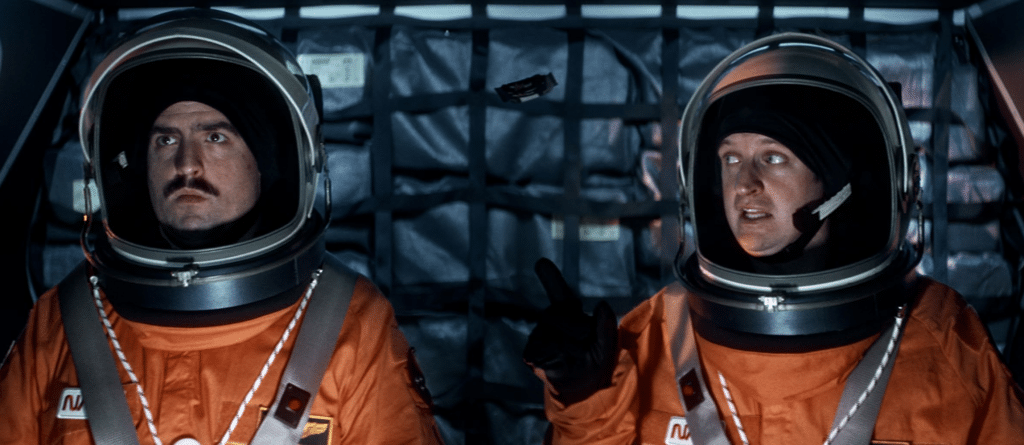
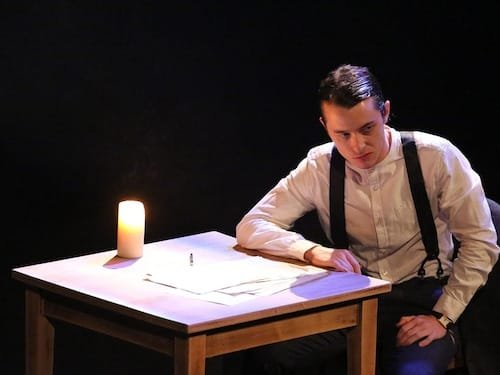
This brings us to AstroNots (2024), and the cockpit of the Ares 7. With the planet being in the state it is, the Ares is headed to Mars to scope out the possibility of terraforming the red planet: it’s a once-in-a-lifetime voyage in terms of its significance, so perhaps we can forgive Commander Thomas Collins (Adam Dunn) for running through the speech he’s hoping will go down in history. If optics were important in the Sixties, then they’re surely more important today, when everything is so dependent on public approbation – and when humanity itself depends on the mission. And yet, co-pilot Abe Adams (Aaron Glenane) doesn’t seem particularly excited. He doesn’t even have a speech prepared. Instead, he’s turning into a mess of snot and tears; he isn’t ready for this. Tom, who presumably starts out here wanting to avoid a long-term trip with someone given to panic attacks, keeps him calm. Remember your training, he reassures him. You have trained for this. You’re good.
Well, yeah – he’s trained for this in that he’s somehow got the boxes ticked and the certificates framed, but Adams is ready – with a couple of minutes to go until the launch – to confess that he is, if not the worst choice for the co-pilot seat, then certainly quite high on that list. His training has consisted of crashing things, breaking things and failing to understand the basics. Sure, he got through, but go to Mars? He’s upset because the crushing weight of realisation has hit him. He has overstepped his bluff limit by a staggering margin. So now what? What are they going to do?
As Tom talks him up and Abe talks himself back down, we get a sense of a neat script with a few nice moments of verbal trickery, but there’s more to AstroNots than just being an interesting farce. It has a gently serious punchline, but it also pokes timely fun at the fact that maybe very few of our motivations are selfless these days. Even Tom Collins, named for the drink he could probably use, is more given to ideas of his own reputation and legacy; he’s just as guilty, at a few points, of being willing to overlook more pressing concerns.
But the real joke – and the film’s heaviest moment – is saved for the end: here, the cockpit becomes a microcosm for a world where people like the ideas of things, but not so much the dedication and hard graft which go along with it. Sometimes, you just have to make do. This central conceit is nicely handled by director Andrew Seaton, alongside Dunn and Glenane, who are also the writers here. As to what happens to Collins and Adams? Well, watch this space because if plans come to pass, then there’ll be another instalment in a different format…
AstroNots will screen on 22nd July as part of the Fantasia International Film Festival.
Please note: this review may contain mild spoilers, so if you are hopeful of seeing Longlegs with no prior knowledge – be warned.
Neon has put together an intriguing, long-game promotional campaign for Longlegs (2024) which has been appearing in tantalising parcels for the past few months. For this, they deserve credit: this film will get seen, and it will probably make its money back. When faced with jaded audiences and a crowded market, it’s no mean feat to spread the word quite as far and as wide as this, especially considering it’s an out-and-out horror flick, with no obvious pretensions to be anything else. Longlegs also boasts an appearance (really a cameo) from the master of the OTT strange, Nicolas Cage – albeit buried under a tonne of make-up (though as it stands, he looks like one of the few actors here still in possession of buccal fat). So far, so good – but can these things, these lofty expectations, work against a film in the end?
Consider the above the world’s most hackneyed rhetorical question: of course they can work against a film, if the film ultimately fails to deliver. It’s not all that unusual for a marketing campaign to overpromise – it’s all part of the expected bluster of advertising – but it’s the way it moots a groundbreakingly scary horror that really eats away at Longlegs. In the end, Longlegs is essentially another serial killer movie. And in the end, it feels like a slightly curdled amalgam of a lot of other, better serial killer movies, turning out to be a sequence of diminishing returns which never delivers on the nightmare initially promised. Sure, it’s atmospheric, but in fits and starts: this is TikTok levels of focus and heft, there-and-you’ll-miss-it.
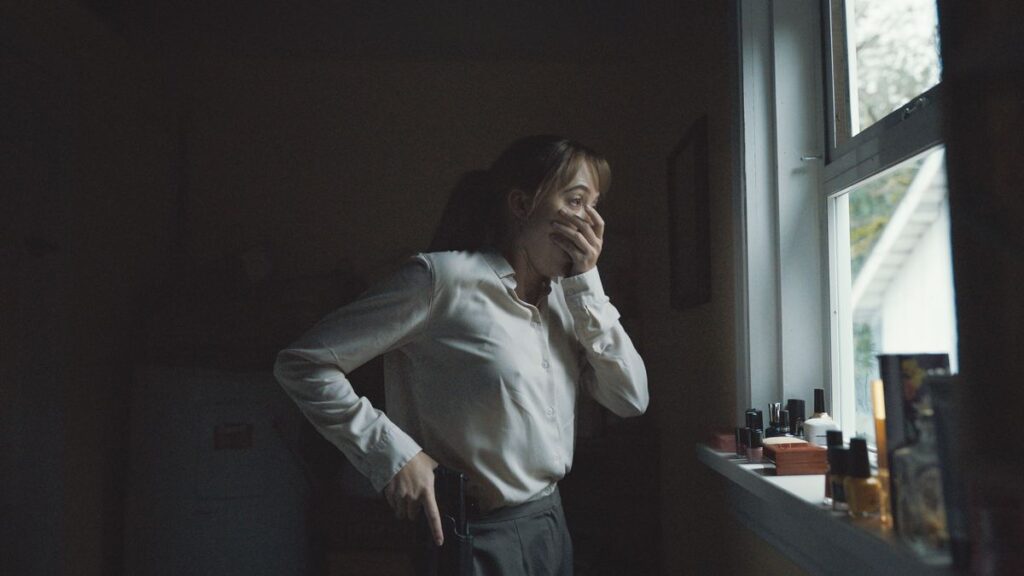
So Longlegs plonks some familiar pieces on the board, even if it then tries to play fast and loose with the gameplay. FBI rookie Lee Harker (Maika Monroe), who has rudimentary psychic abilities, is put on a long-term case, a series of unexplained family mass killings which have been happening for a few decades. Linking these, there’s a sequence of coded letters signed by someone calling themselves ‘Longlegs’. Harker is able to crack the code pretty much instantly: presumably, in twenty years, the finest minds in detective work have failed to do so or else, couldn’t be arsed. In any case, Harker’s uncanny, nervy knack for solving elements of the case make her a perfect choice to try and crack it, once and for all. However, this seems to draw her into the strangeness: visions, hearing voices, possible flashbacks, that sort of thing.
It turns out there’s a supernatural element to all this, and that ‘Longlegs’ himself is only part of what’s been happening. Well, colour us surprised, right? Brace for a very thinly-delineated Satanic element which feels both familiar and yet inferior; then there are dolls, another shorthand attempt at bulking up on the weirdness, but like much within the film it all feels perplexing, and more cynical than successful.
It’s a shame that things peter out in this way, because the film does look good: it’s beautifully and evocatively shot, with some wonderful moments providing lots of invitations to worry about what may be about to creep into view. Cage, whilst deliberately underused in a kind of ‘less is more’ approach, manages a few of his characteristically erratic, unpredictable scenes which are still worth the wait. But a film is not a painting, and even with the film’s occasional approach to storytelling (with the plot clustering around ideas, rather than a sequential narrative) atmosphere alone will not sustain it. A paucity of characterisation and backstory, with a script more given to quirky, low frequency Americana and anti-maternal blather rather than telling us anything – even things which might scare us – renders Longlegs a patchwork of piecemeal squares, rarely scary and barely sequential. Any dread soon dissipates, and a montage of non-sequiturs takes its place.
Directed by Oz Perkins and not – as this reviewer wondered for a moment – David Robert Mitchell, it’s odd, therefore, to note that Longlegs winds up having some similarities to It Follows, the film which kickstarted Maika Monroe’s career a decade ago. A horror which centres a young woman, and the supernatural buck-passing which saves her skin; an approach to time periods which both suggests a specific time period (e.g. Bill Clinton’s presidential portrait hanging on the wall) but then ignores other period detail, blending perhaps deliberately into a rootless, timeless and disorientating timeline. It all feels oddly familiar, in some quite specific ways.
However, perhaps the most obvious point of comparison for me is also the thing which finally sounds the death knell for Longlegs. It feels for all the world like someone has tried to blend a serial killer horror with Twin Peaks, and/or Lynch’s films: take that Lynch strangeness, layer it with Satanism, and Bob’s your uncle? Surely, a winning formula? Well, Bob provides wardrobe cues for Cage’s character, definitely, but there are so many other moments which feel like they’ve been basically purloined from Lynch; Lynch fans may like to count them. All this has achieved though, in the end, is to underline how hard it is to really blend fever-dream strangeness with engaging storytelling. Lynch can do it; Longlegs, on the other hand, cannot.
For the past few years, Warped Perspective has been fortunate enough to cover the Fantasia International Film Festival remotely and, every year, it’s a high point in the film lover’s calendar. This year looks to be no different. Whilst the availability for press coverage varies, Warped Perspective has high hopes that we may get a sneak peek at some of the following titles: we’ll certainly be looking out for them. In any case, if you’re fortunate enough to be going to the festival in person, or if you just want some pointers for the autumn festival season (Fantasia often leads the way on genre releases which surface in other fests later in the year) then here’s a few titles to look out for:
In Our Blood
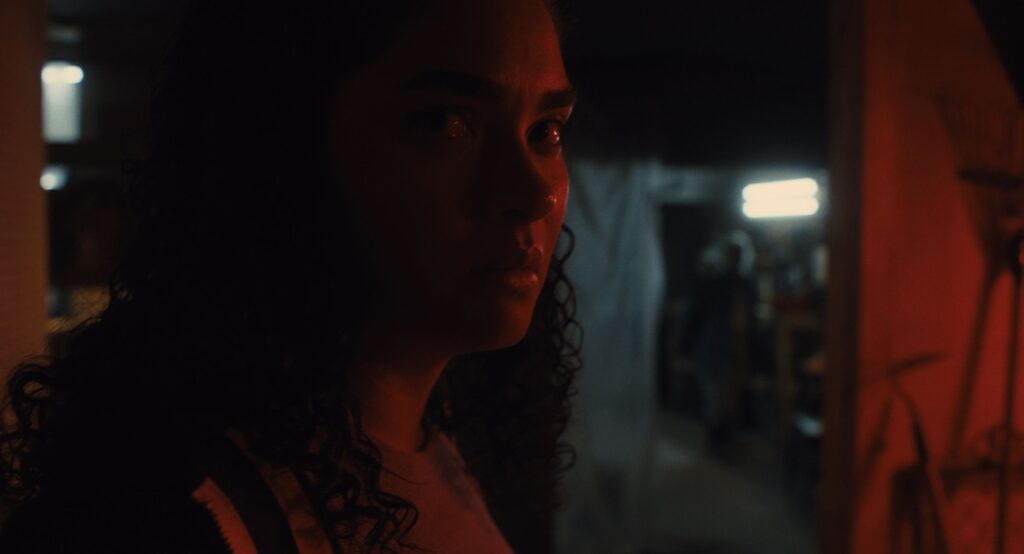
Found footage is a divisive subject at the site, for writers and for readers, but – love it or hate it – In Our Blood sounds like an intriguing spin on the style, coming as the first FF film from an already renowned documentarian, the Oscar-nominated Pedro Kos. In the film, a filmmaker called Emily Wyland (Brittany O’Grady, White Lotus) teams up with a cinematographer, Danny, to make a film about reuniting with her mother after a long hiatus in their relationship: however, the original plan for the film gets disrupted when her mother suddenly goes missing: now it’s a mystery about a missing person, and Emily and Danny must piece together the clues before it’s too late.
The Silent Planet
Science fiction has, overall, sacrificed some of its bombast in recent years: modern sci-fi often scales back the technology and the spacecraft and its other flashier hallmarks, electing instead to ponder deeper philosophical ideas, using the extraordinary situations and possibilities afforded by sci-fi to do so. This brings us neatly to The Silent Planet, directed by Jeffrey St. Jules. The setting here is a penal planet, and two prisoners sent there to mine the planet’s resources discover that they have a deep-seated connection – one which threatens and complicates their relationship, and their time in this faraway place. In the film, concepts of truth, meanings and responsibilities are explored via a whimsical, surrealist style.
Black Eyed Susan
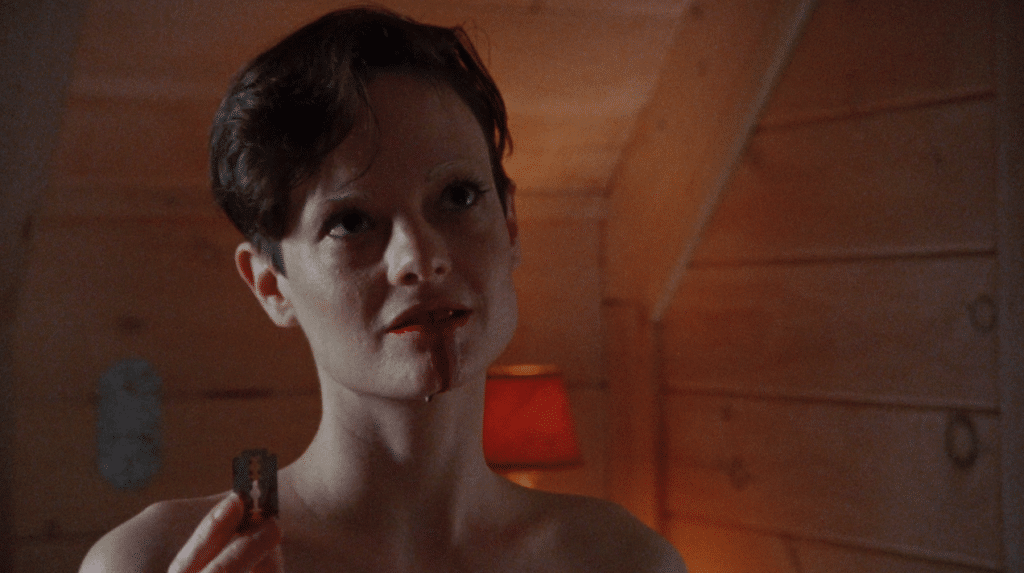
AI and its increasing presence in the creative industries, not to mention in the world at large, is an ever-evolving source of anxiety these days; as such, it’s little surprise that horror and genre cinema – always ready to face and twist our deepest anxieties into new shapes and forms – has come up with the queasy, and probably five-years-hence storyline behind Black Eyed Susan. Desperate for work, Derek (Damian Maffei) accepts a role with a shady tech start-up, working intimately with ‘Susan’ (Yvonne Emilie Thälker in a powerful debut role), a BDSM sex doll which learns via sexual pain and punishment. The focus is different to The Silent Planet but again, here we have AI and sci-fi coming together to ask big questions about what it means to be human – and humane, in this film with its pitch-black, unsettling core. It’s also edifying to learn that the maestro of movie soundtracks, Fabio Frizzi, is back at work on the score to this film.
Chainsaws Were Singing
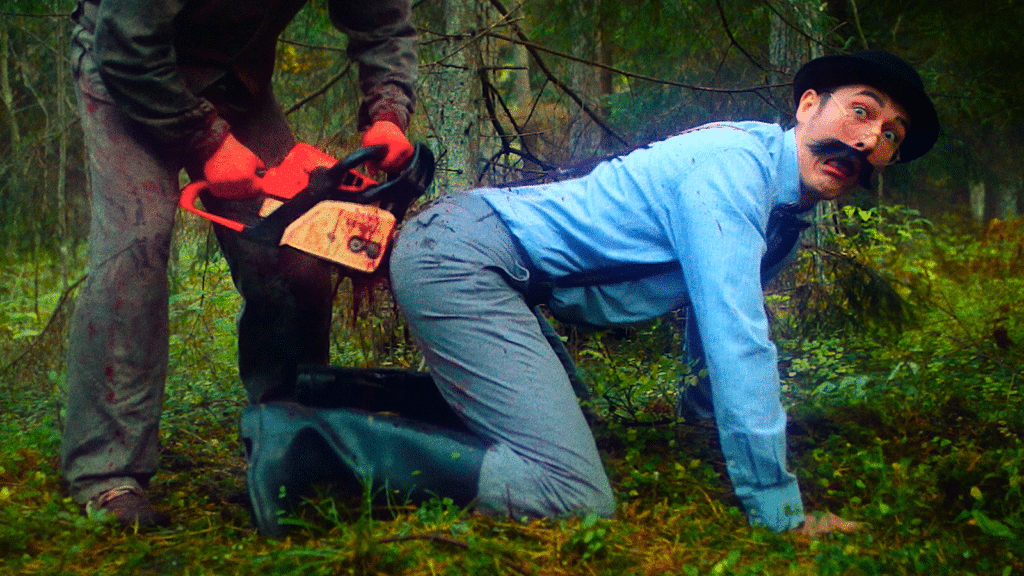
Whilst my personal experience of Estonian cinema is quite limited, the zany world-building of Kratt (which screened at the festival back in 2021) was a worthy, fun introduction, a film which showcases a bland of styles and genres to good effect. Sounding to be a similar kind of blend, Chainsaws Were Singing mixes slapstick, splatstick and – well, chainsaws, in a bizarre musical mash-up by director Sander Maran. Maran does the lot here, from direction to editing to writing the entire musical score, offering up a madcap palate-cleanser which neither takes itself too seriously, nor scrimps on the ludicrous chainsaw-based violence. If you liked Cannibal! The Musical, then this one’s for you.
Other highlights:
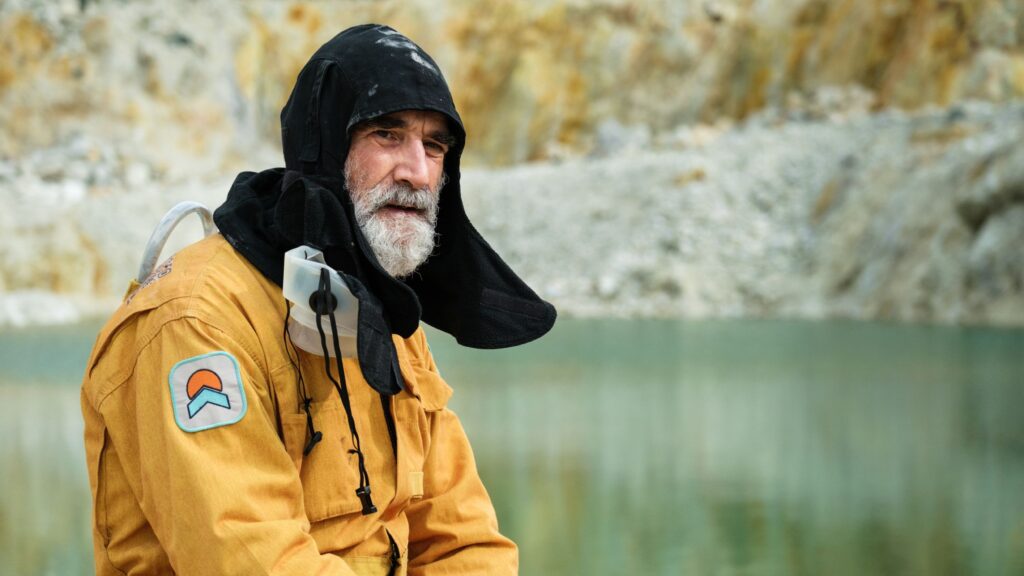
Steppenwolf: a bleak, post-Soviet Kazakh spin on the classic Hermann Hesse prayer to nihilism and self…
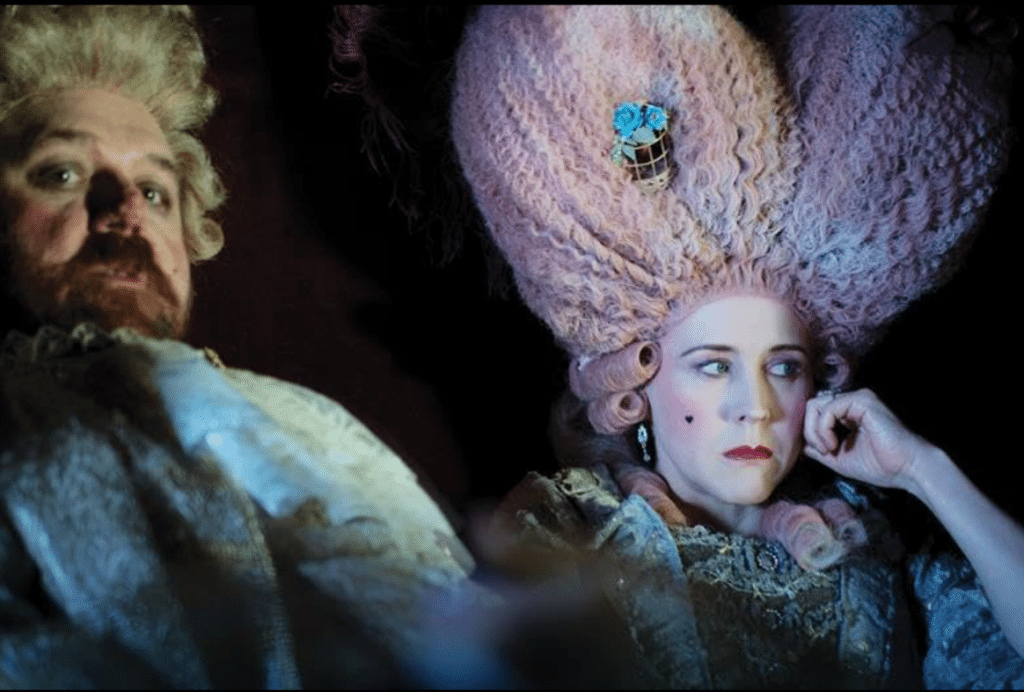
House of Sayuri: J-Horror is back (if it ever went away) but now it’s both self-referential and profoundly surprising…
South Korean movie The Tenants charts the course of property insecurity across the globe, with this macro storyline of a pair of lodgers whose strange behaviour escalates into a nightmare for their beleaguered landlord/housemate…
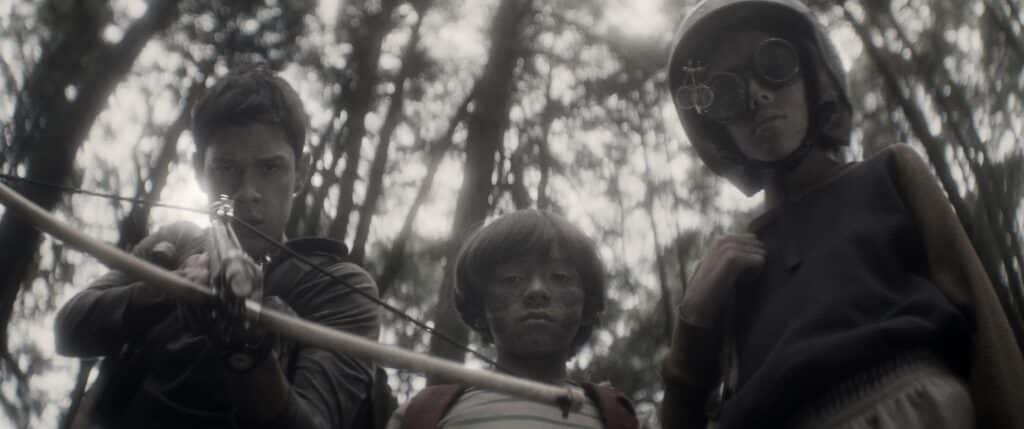
Párvulos -a gruelling Mexican dystopian horror about three brothers living together in a remote cabin. Hidden in the basement is a terrible secret which, as kids do, they have learned to accept but – the worst is yet to come. Seven years in the making, Isaac Ezban’s feature is likely to bring shock and awe to the festival.
Timestalker sees director Alice Lowe take comic aim at the heart of the romcom genre, in her new story of a woman seeking out the (presumed) love of her life across time…
Timestalker
Watch out for our coverage coming very soon, and in the meantime, head over to the festival’s official website for a look at what else is on offer.
For many people – many of us, anyway – a love for the works of Edgar Allan Poe is practically a rite of passage. At a certain age, young readers with – shall we say – a kind of in-built love for the darker side will almost inevitably find their way to Poe. And, once you’re a fan of Poe, it seems you’re a fan for life. No one disavows him; even if you come to appreciate some of his pitch-dark humour a little more as an adult, or if you move onto other authors and genres, it almost never seems to cancel out the initial impact that this singular author has on his audience. It’s historically been a large audience, too. His appeal has lasted for almost 200 years: at the time of writing, Poe has been in print, in some form or another, since 1827.
Performer and director Stephen Smith is a Poe fan for whom the lifelong appeal has recently taken a fairly unusual form. Growing up with the usual fascination with Poe’s body of work (and Poe-inspired cinema), he has made some of the author’s most seminal works into the basis for a solo dramatic performance. Perhaps ‘unusual form’ is an overstatement: whilst Poe’s work has indeed formed the basis for drama in the past, it almost feels like his introspective, first-person narratives are practically designed for the stage; in that respect, it’s strange we haven’t seen even more Poe adapted as drama. Smith’s approach to adapting Poe is both straightforward, and mind-blowingly challenging: he has learned Poe’s words across four stories verbatim – around 13,000 words in total. His staging and costumes are fairly minimal, which allows ample space for Poe’s own words to engage – and horrify – the listener.
The show took place at the tucked-away York Medical Society – a Grade II listed building which has functioned as a training and lecture hall space since it was built in 1832 (at around the time that Poe was court martialled out of West Point, spending the rest of his adult life as a struggling writer). Like many places in York, you’d walk past it a thousand times without realising its existence – but it is worth seeking out on its own terms, as it’s a beautiful place characteristically heaving with points of historical interest: portraits, medical equipment, even a tally of benefactors which pre-dates the YMS itself. Smith used one of the small lecture spaces for the show, making use of the stage and lectern as minor props; other dramatic effects come mainly from low-key costume changes and lighting, together with some use of accompanying audio (lighting and sound effects are managed by Smith’s wife and assistant, Stephanie).
The stories chosen for the show are: The Tell-Tale Heart, The Pit and the Pendulum, The Black Cat and – switching to poetry at the end – The Raven. Smith does terrific work at lending each of the stories the appropriate blend of gravitas and mania; none of Poe’s protagonists are particularly grounded, although Smith manages to lend each of them a somewhat different flavour of madness. The Tell-Tale Heart is a classic Poe monologue about a man desperately trying to prove his sanity as he proves his insanity, as he discusses his brutal murder of a neighbour (and his subsequent nagging, self-destroying guilt). This is Smith’s most unhinged character; even the victim in The Pit and the Pendulum only just about approaches these levels. Of all four individual performances, The Pit and the Pendulum was, for me, the most challenging one, as so much of the protagonist’s miseries come from external sources – however, Smith does a decent job of constructing this external world.
However, the performance of The Black Cat was my personal favourite. This was the most restrained character overall, which only serves to underline how vile this particular man truly is. As a pre-teen, I remember putting the book down in disgust when I read about what he does to Pluto the cat – I’d go so far as to say it helped shape my outrage at the kinds of people who harm animals, particularly animals which trust them, and this is something which has lasted a lifetime. Understanding that people who are cruel to animals often abuse people, too, is one of many examples of Poe displaying a prescient understanding of the darkest depths of human behaviour – including alcoholism, which is a key factor in this man’s catastrophic collapse. But, dipsomaniac or not, never has one of his characters deserved the terror they go on to feel; Smith does great work here. As the concluding element, The Raven really benefits from being read aloud, too: there’s a nice bit of circularity in Smith’s depiction of The Raven’s narrator as an old man who seems awfully similar to one of the characters already encountered…other than that, Poe’s poem about the horrible realisation that the good times are gone forever, full of its internal rhymes and cleverly-spring lines, works its magic best when appreciated this way.
Fans of Poe will obviously enthuse about this show; even those unfamiliar with Poe’s work, though, will appreciate the great feat of learning and acting which this low-key but highly effective show delivers. Smith has worked incredibly hard to bring this together and there’s so much to be proud of here. If you’re UK-based and intending to visit the Edinburgh Fringe this year, then you could catch the show there: to check out other shows, as well as Smith’s other current projects, then please check out this site for more.
As Sleep (2023) opens, we can – appropriately enough – hear someone gently snoring: a couple is in bed. And yet, you get the distinct impression that restful sleep isn’t going to feature heavily here, or even at all beyond this point. The film almost instantly starts to toy with the hazy delineations between sleep, dreaming and night terror, as soon as husband Hyun-su (Lee Sun-kyun) sits up in bed and announces, ‘there’s someone inside’. His wife Soo-jin (Jung Yu-mi) is already restless, and heavily pregnant: she finds herself patrolling the rooms of their apartment, looking for a potential outsider. (You’ll notice Hyun-su goes straight back to sleep; troubled sleep or otherwise, he’s rather good at dropping off.)
Things are more normal by day; you could go so far as to say that they seem idyllic, right down to the motivational quote hanging on the wall which, oh god, they apparently have in Korea, too. Husband and wife are preparing for the arrival of their first child; Hyun-su is in work as an actor, or an aspiring actor at least. At night is when these two properly catch up, as their day-to-day lives are lived rather separately, what with work and other commitments. But likewise, night-time is when a certain level of oddness is starting to creep in. This primarily affects Hyun-su, who begins to rake at his skin unknowingly, to sleepwalk, and to raid the fridge. He’s unrecognisable – and unreachable – when in this state. Then the baby arrives, and exacerbates these issues.
The de rigeur search for a cause for the sleepwalking ensues: one explanation is purely physical, with a trip to a sleep specialist and a prescription for medication; the other is more spiritual, and derives almost entirely from Soo-jin’s concerned mother, who has a retinue of mantras and shamans at her disposal. However, at least initially, both of these approaches garner limited success, and Soo-jin – with a new baby to care for – is growing increasingly alarmed.
One of Sleep‘s key issues is with its characters, which may derive from the fact that this is a first feature by director and writer Jason Yu: in encompassing a number of potential plotlines, the film skips over very detailed characterisation along the way, which leaves Soo-jin – at least initially – with rather a thin role as a chiding helpmeet. South Korea has a plummeting birth rate; there are plenty of damn solid reasons behind this, but you can’t help wondering if cultural representations of pregnancy like this one have something to do with it. Alright, that’s glib, but Soo-jin is needy, peevish, and for a large share of the film, entirely secondary to the foibles of her husband. This skittish dedication is often played for laughs – the film has a somewhat odd balance of humour to horror – but nonetheless she often comes across as highly-wrought – as does her mother, who pops up only as a conduit for the film’s more supernatural content, and as a babysitter. That all being said, the film does its best work when it sets itself up as a proper guessing game, making the audience guess at how much human neuroses are to blame for what’s unfolding here. The film’s middle act, where it turns the screws on a new mother in a very uncertain situation, demanding increasingly strained, sober maturity from her, is its best.
Another key strength is in how Sleep explores ideas around home, and what can happen to this safe space when something, even something quite simple, is disrupted. So someone starts to sleepwalk; even if that’s all they do, it destroys the restful sleep of other people in the home, and that can be enough to render home a very unpleasant place to be. Of course, the film does more than that, turning this light and airy apartment into a contested, uncertain environment. Bars and locks are fitted to keep someone in, rather than keep someone out, but then, as that individual escalates their strange behaviour, you might want them out. Soo-jin’s assertion that her husband shouldn’t move out, even temporarily, as he quite sensibly suggests, seems ludicrous given her rising terror for herself and the baby. But her ingrained ideas about marriage, family and functionality keep her in harm’s way; this very earthly, very recognisable content is strong, and more engaging than the exposition we finally get (which necessitates a PowerPoint to explain!)
Once we get into the supernatural plot points, Sleep gives us a ream of recognisable elements, with sadly guessable twists and turns. It makes for a weaker, more formulaic close to proceedings. As a film, overall, it’s perhaps a little busy with different strands of storytelling and different generic elements, although it happily doesn’t indulge itself in an inflated runtime, even though it is – as so many films have been before it – chaptered, for little explicable point. There are also high production values here, and clear evidence of ambition from Yu.
Sleep (2023) screened at the recent Raindance Film Festival.
Warped Perspective has long been promoting short films, and thanks to the ALTER channel on YouTube, it finally seems that there’s a decent outlet for them which extends beyond the enthusiastic, but limited remit of the festival scene. And so, we recently reviewed a body horror/cautionary tale called Nosepicker: if you haven’t already, then you should head over and watch the film, and then perhaps take a look at the review.
Then, you might like to take a look at this interview with the film’s director, Ian Mantgani. Ian has very obligingly answered some of my questions on Nosepicker: subject matter, snot, influences and everything in-between. Many thanks to him!
Responses below:
WP: My first question is probably the most obvious one, but let’s go for it: why did you choose nose-picking as your subject matter? And did any particular films, or anything else, influence your ideas?
IM: I’d actually intended to do another body-horror film entirely: An adaptation of the Roald Dahl story Skin, which had already been done as a terrific episode of Tales of the Unexpected starring Derek Jacobi in 1980, but which I thought would be a good vehicle for a filmmaker today to take another crack at. I was for whatever reason just desperate to do something in a horror short story form. The very week I intended to write to the Dahl estate seeking an option on the material, the deal was announced where Netflix bought the rights to Dahl’s whole catalogue.
Having Dahl in mind, I started thinking about doing something in that vein, and fairly quickly fixed on doing something morbid involving kids. What do kids like? Things that are gross, like snot, blood and guts. From there, pun intended, the rest just poured out of me.
WP:Practical effects are clearly really important to this film – no one would buy CGI snot, I don’t think – but what no-doubt interesting discussions, storyboards and perhaps even prototypes got the film where you wanted it to be?
IM: It was a surprisingly arduous journey. With friends, I’d made several backyard practical effects films before, so had some experience with creating life casts, wounds, decapitated heads, and things of this nature. And I naively figured there was nothing in this film that hadn’t been done in, say, The Blob in the late 1950s, so it must be easy to communicate some agreed upon orthodoxy on how to achieve everything. We also had detailed briefing books on everything from the various grades of bogey and snot we required to colour charts, animal comparisons and movie references for how the eventual monster should look.
So we went in armed to execute the effects efficiently, but it was a nightmare. Without dropping anyone in it, we tried to go the semi-professional route to both save money and give a young designer an opportunity to step up, but several people let us down and left us without our main effects ready in time for the main shoot. We then hired a more experienced special effects technician and arranged a split SFX unit, but his expertise didn’t really lie in creature effects, and the monster this designer created really wasn’t convincing or consistent.
As they say, buy cheap, buy twice, or in our case, buy cheap, buy three or four times, because at this point, we had to go the route we thought we couldn’t afford in the first place, which was hiring a majorly established creature effects designer. And we were also running out of time to make autumn festival deadlines, so didn’t even know if we could get one who wasn’t too busy with a more pressing project. So thank God that Dan Martin of 13 Finger FX agreed to step in; he and his team did a terrific job of building bladders that felt alive on set when they operated them. Dan and the team really saved our bacon; I love the effects in the final film.
WP:As much as it’s a body horror, there’s also a lot in the film regarding childhood and perhaps how adults relate (or don’t relate) to children. Can you tell us about that?
IM: There’s a characteristically thoughtful and perceptive review by the great critic Anton Bitel that situates Nosepicker as “the horror of abjection.” I don’t like talking too much about subtext, not wanting to ruin any viewers’ interpretations of anything, but to me the film is largely about being twisted, perverted and made violently crazy by a society that’s obtuse, or cruel, or patronising.
The ethnicity of the character wasn’t specified in the script, but I did prefer to cast a lead who was non-white, so Leo Adoteye, who is mixed-race Ghanaian-Italian, fit the bill and I think gave another unspoken dimension to the story, being non-white in a film of entirely white antagonists. The story is about the perversion of the underdog, in a society where the dominant races, the upper classes and the normative attitudes can all just make a minority misfit want to crack.
WP:Did you ever plan for Georgie to speak? Or did you always envision the character being silent?
IM: It just never occurred to me that he would speak. He doesn’t need to. He is alone on his weird little island, immovable as people talk at him and around him. I hope his silence doesn’t seem like a stunt. I hope it does make the viewer lean in. Additionally, I tend to come from the school of thought that every movie should work as a silent movie on some level, whatever sound and dialogue ends up adding to the overall melee. By the way, it’s funny that I should end up writing and directing a movie about a completely mute child, because I myself was always a motormouth smartass class clown when I was a schoolchild!
WP:I’ve enjoyed reading the responses to the film over on ALTER: lots of takers, lots of quite appalled people too! What have been some of your favourite responses to the film – either from critics, fans, or anyone else?
IM: People do seem to think the film is disgusting! Which is gratifying in a way, because a greater concern during the making of the film was that the bodily fluids would end up looking fake. Interestingly enough, child viewers more or less take the film in their stride and see the gruesomeness all in good fun. Adult viewers are more sensitive to it. Which coheres with my own experience as a film viewer – I think broadly as a very young person you respond to things completely instinctively, then as you get into adolescence you develop a sort of harder skin and then as you gain maturity you become sensitive again in a different way.
WP:How do you think your work on Nosepicker will influence you moving forwards as a filmmaker? Any important lessons learned? And while we’re on the topic, do you have any new projects or ideas for projects lined up?
IM: Hopefully Hollywood will come calling! Netflix, let me at your Roald Dahl stable! Let’s talk Tales of the Unexpected and The Twits! There’s also a film about lucid dreaming that I’ve been noodling away at for a few years and will hopefully achieve a breakthrough with before long. Right now, especially after all the uncertainty we had in completing our SFX, and after a long run of festival screenings, I’m so glad that Nosepicker is out in the world at the click of a button, and I hope people enjoy it.
When a film starts with a grand, Gothic peal of thunder, it had better mean it. It had better not be suggesting something it can’t deliver. Well, thankfully, The Vourdalak (2023) very much delivers: it’s a gloomy folktale made even gloomier by writers Adrien Beau and Hadrien Bouvier, and it’s an intimate, though always dreamlike piece of world-building.
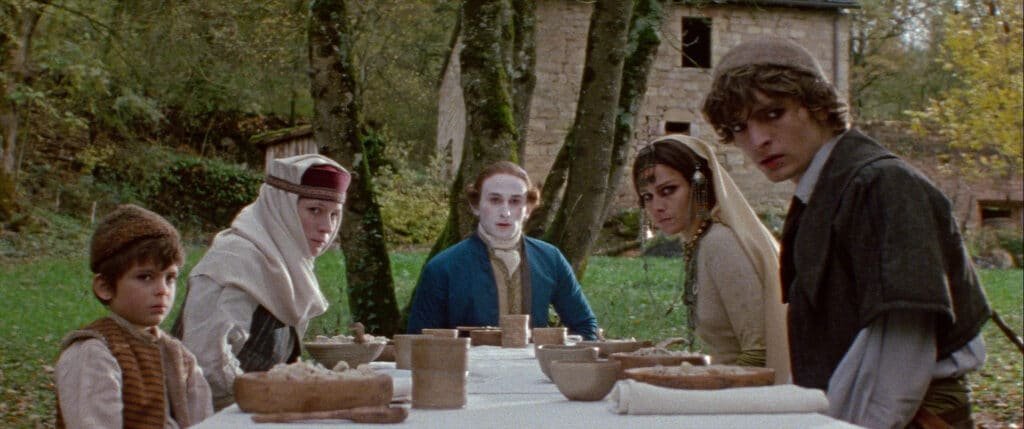
We start – as with the novella by Leo Tolstoy, upon which this film is based – somewhere in 18th Century Eastern Europe. It’s named as Serbia in the book, and might well be Serbia in the film, although it’s not specifically addressed: what’s key is the strangeness of the setting. In the depths of a stormy night, a man hammers at a door, begging for help: his horse and his provisions have all been stolen by marauding Turks. The man inside, not unkindly but very much unhelpfully, refuses to open the door, but advises the stranger on where to go to get aid. He tells him to walk on, to find the house of a man named Gorcha, and get help from him.
The visitor has little choice, so he continues on foot, skirting through the forest he’s been told to avoid, but what’s a man to do in such a situation? Along the way, he seems some strange things: the film sets out its stall. A beautiful young woman, dancing alone. A young man dressed in women’s clothes. Not put off by this – he is from the painted world of the French Court after all – our stranger, Marquis d’Urfé (Kacey Mottet Klein) speaks to the young man and it soon transpires that he is son to the Gorcha in question. He follows the young man, Piotr, to their house and meets the rest of the family, with the exception of old man Gorcha and his oldest son, Jegor (Grégoire Colin). They’re all appropriately surly, but they attend to d’Urfé and promise to help him: when Jegor arrives, fresh from fighting against the Turks, he says he will find a horse and help get the envoy home: he agrees to get d’Urfé a meeting with the patriarch, too.
There’s a problem. Old Gorcha, the head of the household, has also absented himself to go and fight the Turks, despite his apparent age and decrepitude. The family is shocked. As it turns out, the woman d’Urfé saw dancing in the forest is another Gorcha sibling, Sdenka, and she passes on a message from their father – that, fearful of being thought a coward, he has gone to fight, and that if he doesn’t come back, to say a prayer for him. If he comes back after a period of six days, however, don’t let him in even if he does appear: he’s no longer the man he was – he’s a vourdalak (a kind of revenant, reminiscent of a vampire).
So we wait, observing a difficult but interesting connection springing up between Sdenka (Ariane Labed) and d’Urfé during the first act. Things grow more complicated when it looks like Gorcha Sr. never left the grounds of the house at all: Jegor spots him, lying close to death nearby. Forgetting everything about Sdenka’s message, he hurries to take care of him; obeying him, as is proper, the rest of the family follows suit. They say love is blind, and bloody hell, it must be: old man Gorcha looks decidedly peaky. Whilst this increasingly heavy and tragic story isn’t exactly a laugh a minute, there is perhaps still a surprising amount of equally pitch-black humour in the film, and the way the Gorcha family accept the presence of their wraith-like father has something of The Emperor’s New Clothes about it, even accepting that gramps’s desiccated corpse is still very mannerly – and valiant, as he’s come home with the head of a notorious Turkish warlord for his pains (sound familiar?) There’s some humour in the early depiction of d’Urfé, too, as an archetypal pampered stranger in a strange land – a Lockwood, or, yes, a Harker, dropped into a culture he has little chance of understanding.
But the overriding atmosphere of the film is incredibly disconsolate, and grows more and more so. Very much a tale of a doomed family, with the script exploring ideas of fate and loss, it’s the love and respect which the family has for one another which traps them in this stifling, sickly curse. D’Urfé might have simply ridden his horse (or someone’s horse) out of there, too, were it not for the fact that he seems so rootless and remote, even from the society he champions. Finding meaning in his new connections would in a different time and place be a positive, but The Vourdalak isn’t too keen on positives, and instead makes an artform out of its irrepressible misery. It’s both more painterly, and more devastating, that Mario Bava’s adaptation of the same story.
Where Bava’s version is stark and shadowy, Beau’s is much more beautiful, an homage to Eurohorror – Hammer too, to a point – with a sensuous atmosphere and great attention to detail. Shot only using natural light, it always looks wonderful, an understated background for some very unpleasant, though sparing, horror. Dreams, rituals, tableaux – the framing and shooting of the film is multi-layered. The sound design here is superb too, adding a tremendous amount of horror which you don’t see – as such, anyway, even if you certainly see it in your mind’s eye. But perhaps the film’s real triumph is in its use of a marionette: it’s absolutely horrible. It makes you recoil, and it’s full of ghastly otherworldliness, just what you need for a Gothic tale like this one. Beau’s additions make the story even more pernicious than Tolstoy or Bava’s versions, too, and the resulting film is very successful indeed. Bravo.
The Vourdalak (2023) hits cinemas on Friday, June 28th.
Dystopian cinema – often based on dystopian literature – sometimes likes to centre itself around a special event of some kind. A TV show, perhaps. A day where conventional law goes out of the window. A special competition, or spectacle of some kind – or, if you’re the screenwriters behind Boy Kills World, maybe a little of all of those things. How come, then, that with so much ostensibly going on, that the world-building here feels like so much of an afterthought? Whilst there is likely enough fighting here to satisfy fans of…fighting, anyone else might find themselves labouring through nigh-on two hours of limited characterisation, setting and thematics.
As the opening credits roll a voiceover – not the film’s star, Bill Skarsgård, but H. John Benjamin – quickly fills us in on the world of the film. We get, in quick succession, the information that there’s been a violent overthrow of the political system by a ruling family, the Van Der Koys, and that these Van Der Koys keep their autocracy spick and span by having a special yearly event where they kill a number of dissidents on telly. Our narrator loses his family – his mother and sister – this way, but he escapes the melee to train as a fighter in the woods, under the watchful eye of a ‘shaman’ (Yayan Ruhian). It’s a little Karate Kid, a little Jaqen H’ghar. The main character – never named – progresses well, but he misses his family, particularly his little sister. All he can do is train, train, train. As he reaches adulthood (via a nice segue as Skarsgård appears to shake hands with his former self), preparations for the incoming grand vengeance epic begin to form in his mind.
Things move on quicker than planned when the Boy is running errands in a nearby town: wouldn’t you know it, but it’s the day of the Grand Culling on this particular day, and the Boy finds himself witness to the unpleasantries of the selection process. Even before he gets involved, things go badly wrong when there’s an accidental shooting: the Van Der Koy goons restore order, but the Boy has both learned a few things, and remembered a few, too. So we’re off: it turns out that today is as good a day as any to track down the baddies who destroyed his family. With the help of a handful of other dissidents, he’s off to find the matriarch, Hilda Van Der Koy (Famke Janssen).
There are good traits in this film, such as its best moments of sending itself up – and by extension, sending up the more serious genre films which operate along similar lines. Skarsgård does a decent job with a challenging role, being both very physical, and non-verbal: however, you might question the latter. He’s been written as a Deaf character who doesn’t speak, despite being a lip-reader; this leads to a sometimes strained and sometimes irritating use of the voiceover as the Boy’s own, unspoken voice, which unfolds in real time and can be heard by some characters in the film: so it’s sort of spoken, sometimes. This motif doesn’t bear much scrutiny, and can feel very thin.
As some of the film’s issues aggregate, it causes some insurmountable problems. For example, some of the film’s little asides and ideas can’t bear the amount of repetition which they get; the appearance and reappearance of the sister, for example, though no doubt intended to evidence the Boy’s complex inner world and tragic backstory, feels like a distraction as things tick on, as much as Quinn Copeland as Mina is a charming presence on screen in her own right. Given the film’s length, this kind of recurrence feels tantalisingly like something which could have been cut. Less is more. That goes for the sheer amount of time it spends sending itself up, too: a joke rarely bears much retelling. And for all that, the tone – which begins well, jogging along quite lightly – lurches and shifts in places, with events becoming increasingly heavy and unpleasant. Perhaps the film simply wants to be too many things.
Its increasingly protracted problems are no doubt exacerbated by choosing a dystopian setting which barely emerges from the murk. The budget, which is no doubt mostly focused on the fight scenes, strains when it gets anywhere near the scale and complexity needed to create a convincing framework. It’s giving The Hunger Games with its corrupt ruling family and gathered masses, but we lack for the kinds of numbers, the kinds of spectacles, which the film suggests are there, Hunger Games-like, in the background. A rule of thumb: don’t borrow what you can’t pay back. And when you can’t do scale, then you need great details, but Boy Kills World doesn’t have these either – it’s always fighting against what it wants, or needs to do, cutting corners in some places to fixate on its own self-selected quirks somewhere else. There may be just enough OTT violence here for fans of that, and people who like those old Far Eastern revenge flicks will see some pleasing moments of parity here, but for the rest of us, Boy Kills World contains way too many irritations to fully land its punches.
We start this short film in the natural domain of the nose-picker: a classroom, where a group of kids are learning all about plant biology. Little Georgie (Leo Adoteye) is not fully paying attention, however: clearly distracted and distant, he’s more engaged by digging things out of his nose than he is the lesson at hand. This draws down the wrath of a classmate who, as mean as she is, probably has to put up with this behaviour day in, day out (to be diplomatic here). The camera adds weight to her outrage by briefly showing us the underside of Georgie’s desk. The class teacher tries to reason, quite kindly, with Georgie – but he closes down entirely.
This prompts a phonecall home: as it turns out, Georgie indulges in a bit of nose-pickery at home too, and his behaviour seems to be getting worse. His mum takes a more active approach, whereas dad is all for giving the child some space. Finally, school rocks out the big guns: a counsellor! Rather neatly, the film explores the great deal of hope that we, as a society, place in encouraging, or even brow-beating children (and adults) into talking about their problems. Here, as more generally, you could have a sneaking suspicion that this process is as much about wanting to hear things, as it is about the benefits of saying those things. Despite the pressure placed on him, Georgie stays shtum.
What happens here is that Nosepicker moves from a well-observed look at the day-to-day existence of a possible traumatised child, to being a kind of surreal body horror. Not only does this play with the sorts of cautionary tales we tell children about doing things which polite society can do without (‘the wind will change and you’ll be stuck like that!’) but it expands the premise to its icky, but probably fullest expanse. The practical SFX here is quite something, skirting the line between funny and gruesome, as Georgie continues to pull things out of his nose which – when the right time comes – turn into something altogether different. But, quite honestly, any film where a child puts together a personal snot hillock could have headed in a couple of directions which could also have been funny and gruesome.
Adoteye as Georgie does a good job of representing a child who creates a fair amount of repulsion both in his peers and the audience, but is still a reasonably sympathetic character, as much as we figure out comparatively little about what is troubling him, beyond the general awfulness of the characters in his life. The film presents us with a raft of unpleasant kids, too, always ready to pick on the outsider – as kids are wont to do – so their more voluble performances are a good foil to the silent, largely unknowable Georgie. The film also manages to show us something of the perspective of children being faced down by adults, some well meaning, some more self-motivated. This sets us up for what follows giving us a plausible base layer of snot, sorry plot and character before things get a lot more weird.
And it is weird. Bravo. This is possibly the first truly mucosal body horror I can recall, though it feels like something Frank Henenlotter could have come up with, maybe to fill the time between Brain Damage and Basket Case 2. It’s never quite as camp as Henenlotter, but some of the cut scenes (especially the spaghetti!) and some of the trippier moments recall his work; you’re almost honour-bound to think about a few of the other 80s slime horrors, too, and any number of the ‘moral comeuppance’ horrors of anthology horror shows, because ultimately – and by grotty means – Georgie comes out on top. A bizarrely memorably little outing, this one, which gets more lurid as the film’s fifteen-minute runtime passes by. Great, noisy soundtrack, too. Plus, the film’s plotline has really upset a gentleman from Brazil on ALTER, who has insisted in the comments that this film could be a terrible influence on children, should anyone out there have the interesting idea to show it to them.
It’s not instantly clear what you’re looking at as Body Odyssey (2023) begins: perhaps led by the title, my first guess was an Inner Space type scenario, which turns out not to be the case. In a way, this is a very fitting opening for such a strange, unsettling but highly rewarding film: disorientation is key. What we’re actually looking at is a lake bed; above, floating on the lake’s surface, is Mona (Jacqueline Fuchs).
Mona is a bodybuilder. Meeting her more properly in the next scene, we see something of the dynamic between her and her coach, Kurt (the inimitable Julian Sands in one of his final roles). He runs her through a range of competition poses, studying her form on each muscle group. Finally, he praises her – as he should, as Fuchs is impressive, and Mona is at the top of her game. Bodybuilding is, as Mona puts it, a gesture to the self, born of love. And sometimes, love hurts: Mona is faced with constant scrutiny, an increasing workout burden and steroids, too: her every move is managed. Mona is in her late forties, and insists that she knows her body well: she is used to this codified, surveilled existence, and still thriving on it.
When she qualifies for a new competition, due to take place three months down the line, the regime intensifies even further. However, for all her avowals that she is comfortable with the plan, she begins to unravel. A chance encounter with a young man called Nic (Adam Misík) provokes her imagination: she comes to understand what she has sacrificed to be where she is, and this disrupts her usual relationship with her body. It also prompts a kind of wondering about the life she might have had, and even may still. As the script puts it, ‘the landscape is fracturing’. Mona’s journey onwards is fascinating to behold.
Films about women whose relationships with social roles and expectations cause them trouble are nothing new, but my word, Body Odyssey feels very new. What an impressive piece of world-building. The film establishes a cogent, engaging and otherworldly atmosphere: consider its use of colour, chiaroscuro, lingering macros. Then there’s the sparse, significant dialogue, heavy with subtext but free to add in dabs of humour here and there. Its sinister, rumbling soundtrack – and its wonderful, minimalist sets, adding surrealism to the world of bodybuilding. Where there’s form and dietary regime and gym sessions, there are dreamlike disruptions to the norm: clairvoyants pop up to give guidance, contests take place in bizarre settings, symbols and hallucinations weave through the film’s more linear moments. If there’s any comparison to be drawn, it’s to the work of Brandon Cronenberg – and Cronenberg on the world of body-building would be quite something, but it’s doubtful he could outdo director Grazia Tricario. Tricario has form, too: he essentially made a short-film version of Body Odyssey in 2014, also with Jacqueline Fuchs, titled Mona Blonde. Whilst this isn’t quite body horror, though horror always feels like it’s pressing in at the periphery of Body Odyssey, it’s certainly a film preoccupied with new, unusual discourses on bodies and selves.
The representation of Fuchs and her body is very interesting. It’s one of those odd quirks of cinema that, just recently, Love Lies Bleeding (2024) has popped up with its own close focus on a female bodybuilder, although Body Odyssey doesn’t deviate from Mona’s journey as a weightlifter in order to tell a different story. Her body is the story, really, and we follow her where she takes it. Sometimes she is represented as having a dizzying erotic appeal to men, though in the film men typically appear a little foolish, disposable and part of the general compartmentalisation of her life – excepting Nic, who operates differently. In other moments, the script addresses the ways that many men find a very muscular female body repellent. Whether or not you personally approve of the aesthetics, however, you cannot deny that this lifestyle demands incredible focus and commitment. There’s very little attention paid here to the kinds of passive, nubile female flesh beloved of the likes of Rubens, where beauty is associated with the-then rare privilege of being well-fed and idle; people always fantasise over what they can’t easily have. Perhaps, in that, Mona’s body offers another version of the tantalising female form, though of course you also need time and money to achieve it. The camera is fascinated with Mona, but doesn’t gloss over the realities of her chosen lifestyle: we see sweat, veins, dry skin, tense muscles. The inclusion of so many post-50 bodies is interesting too: we see them as they are: amazing, yes, but also ageing. The film allows itself fantasies, but in other respects it’s crushingly honest.
Equally engaging is the relationship between Kurt and Mona, not least because Sands is able – in a comparatively small amount of screen time – to bring his customary gravitas to the role. As he ever did, he grasps the film’s cultivated weirdness perfectly, and where other actors might have disappeared into the background, he never does. Magnetic, watchful and mysterious, Kurt is an intriguing character who keeps us at a distance, and it’s thanks to the skill shown by Sands, to whom the film is quite rightly dedicated.
There’s something of 80s-era Eurocinema in Body Odyssey which is hard to pin down: the experimental touches, perhaps, the roiling atmosphere, the fracturing narrative, or the fever-dream artistry of the film as a whole. People seeking a more straightforward piece of storytelling may be left behind here, but for anyone else this is a bold, painterly study of mind and body, with an unusual locus. I was mesmerised from start to finish, and this film is highly likely to be one of my favourite films of the year.
Body Odyssey (2023) will appear at the Raindance Film Festival 2024 on 22nd June. For more information, including tickets, please click here.
Cat Call (2023) is essentially a rom-com, though it starts by subverting a few expectations and – to do it justice – it sticks with this odd, if easy-going approach throughout. We’re introduced to our main character, a young woman called Fáni (Franciska Töröcsik) sauntering through – a cemetery. And yet, her laidback demeanour and the chipper accompanying music suggests a lightness of tone, despite the backdrop. The film sustains this lightness of tone throughout, so that when Fáni quite literally tumbles into the arms of a burly gravedigger a few moments later, even a certain revelation about her feels quite light. And what is this revelation? Oh, it’s just that Fáni fantasises about the grisly deaths of every guy she finds attractive; the gravedigger is just one in a long line. This is a problem. Equally a problem: today she turns thirty, and her family (who clearly know her well) have brought both a birthday cake and a birthday date to the cemetery, where she is hanging out at her father’s grave. They seem to make more of her age than her morbid affliction, quite honestly, which tells you a lot about cultural expectations around certain birthdays.
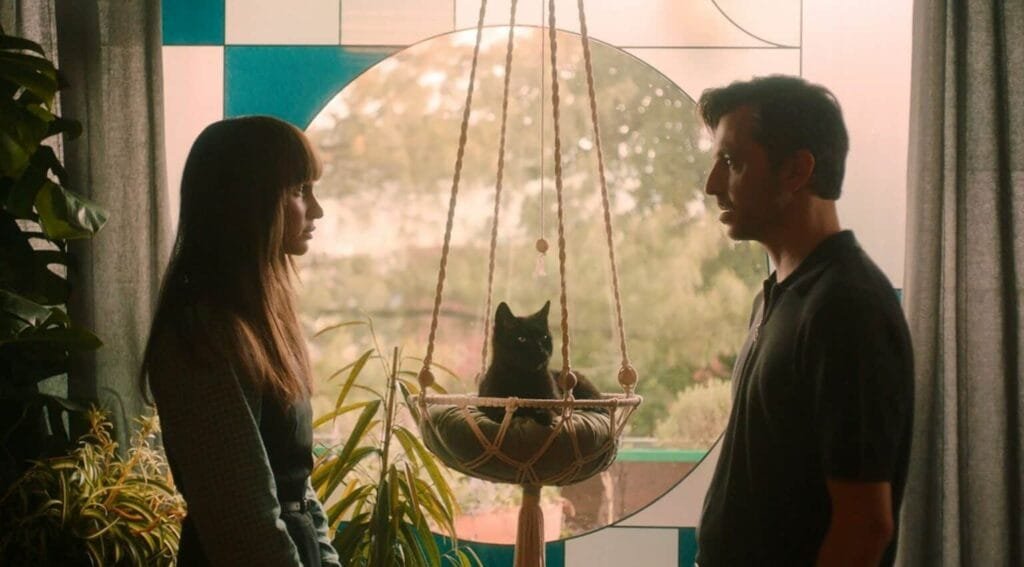
By trade, Fáni is an architect, but her workplace is presented as something of a boys’ club – so much so that, when a new employee joins the team, he’s immediately given a fist-bumping, dudebro welcome which Fáni finds quite disconcerting. The new guy is Mihály (Csaba Polgár) and of course they get tasked with working together; his presence triggers a ubiquitous death-vision, and if that wasn’t enough, it turns out he’s also going to be moving in to the apartment upstairs. Now, we have all the ingredients there for a perfectly fine romance, if that’s your thing, but there’s one more ingredient to follow, and it is by definition unexpected. As Mihály gets settled in, Fáni notices that he has brought a cat with him. This cat is unlike other cats, in that he instantly begins flirting with her. Yep, he can talk, and only she can hear him: first the death visions, and then a talking cat. What a way to see in your thirties.
They spend more time together when Mihály heads to Holland for a short excursion (this film is impressively pan-European, making mention of a fair few European destinations) and Fáni is tasked with cat-sitting. The human and the feline hit it off and we get to know each of them a little better, and in Fáni’s case the presence of deep-seated trauma which she needs to work through feels pretty self-evident (though to be fair, the cat’s desire to launch a career in gangster rap is less of a shoo-in).
Cat Call enjoys playing with the deep silliness of its central conceit, though it does so to gradually open up the character of Fáni, and it’s able to add in some humour as it goes. The talking cat motif, obviously, has its moments and the cat himself – given a sonorous, rather jaded personality which works – is an interesting addition. You have to hand it to Töröcsik and to…the cat, as they genuinely do seem to be acting together. That all being said, once this is established, the whole ‘she can hear him, no one else can’ shtick does get a little repetitive and the film begins to lag a little at the midway point: the gangster rap joke is extended as far as it possibly can be. It’s one of those things where less is more, or else, it’s at its most funny at first. In other respects, the trials and tribulations of a well-meaning, but floundering female feel very familiar; add in a few family issues, and a silly but still grounded Influencer friend to keep things current (Adél Csobot) and – Influencer thing aside – we’re somewhere between Ally McBeal and Sometimes I Think About Dying, especially given the growing importance of the workplace and colleagues to the unfolding plot.
Essentially, Cat Call has ‘quirky’ written through it, like Brighton rock: it’s an attractive film, colourful, a bit twee, with a running accompaniment of twinkly light-hearted music and an emphasis on the comic aspects of personal crises. It never allows itself to get particularly heavy, and just maybe its rather oblique treatment of some quite weighty themes won’t be for everyone. Still, and all in all, it’s a gentle sort of romantic farce, charming enough to sustain interest and with a gently dreamy style which is very visually appealing. It’s also a first-time feature from director Rozália Szeleczki, which promises good things.
Cat Call (2023) will screen as part of the Raindance Festival 2024 on 25th June. For more information, including tickets, please click here.