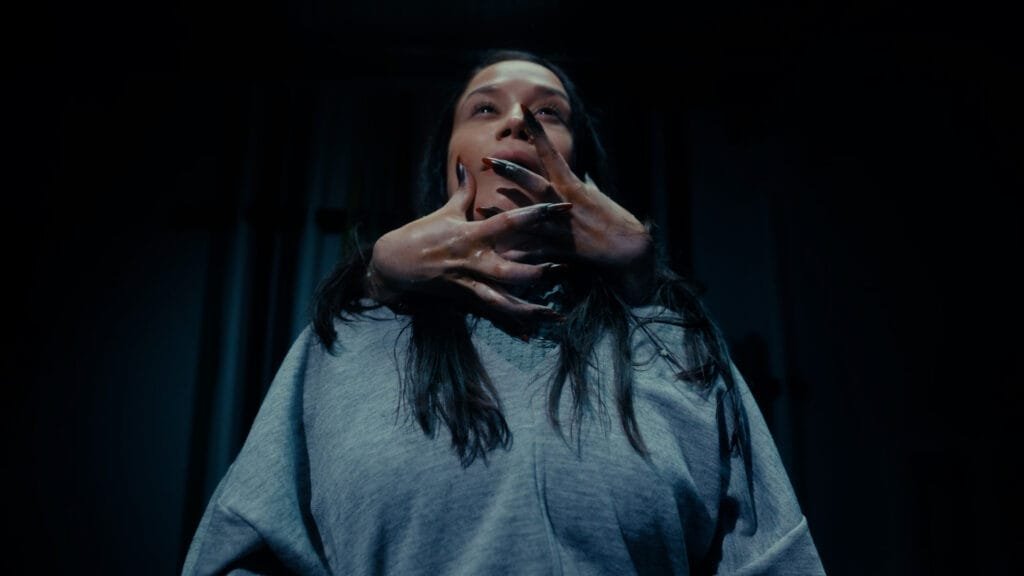
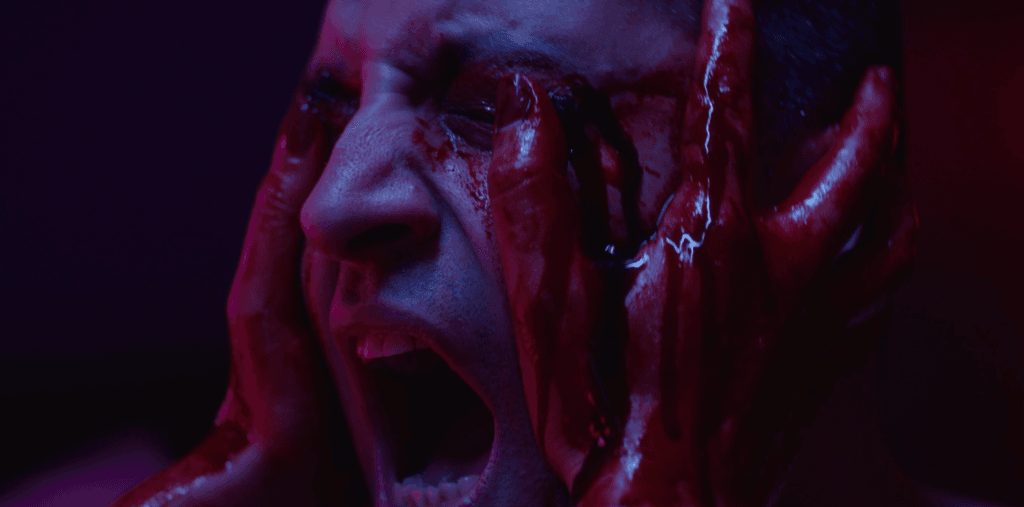
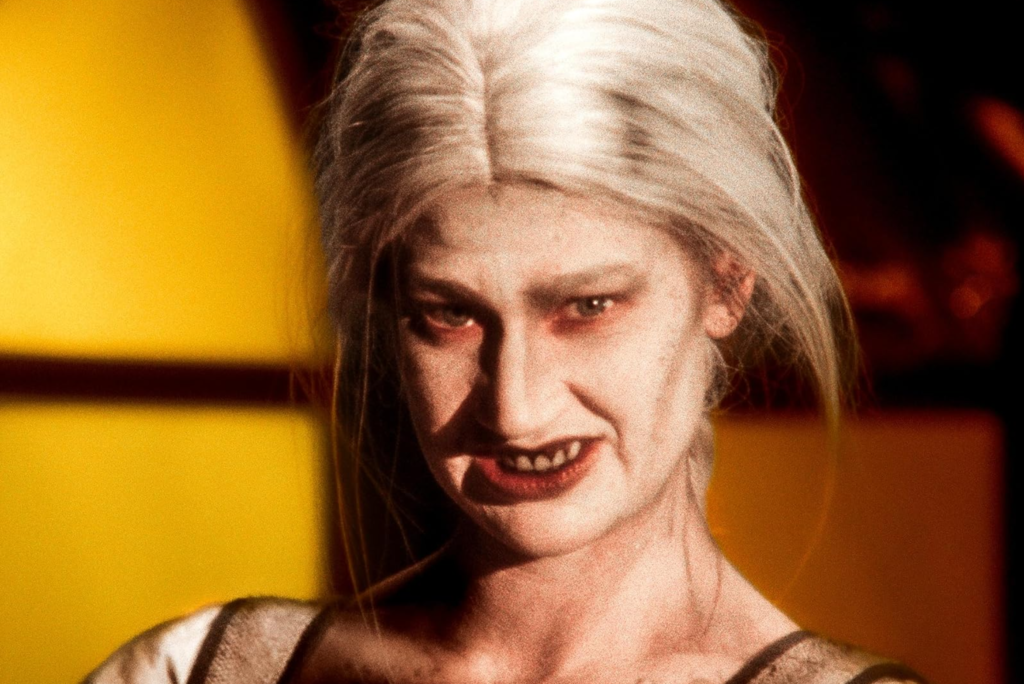
We start in a giallo-lit spin class as the opening credits of Thinestra (2025) run; the credits are rolling as if they’re on wheels, too. It’s a neat statement of visual intent for a film which takes beauty norms, particularly around weight, as a central theme, playing with aesthetics and style as it goes. In this instance, it turns out that the spin class is part of a dream, one in which Penny (Michelle Macedo) winds up eating the instructor. Clearly, Penny’s unsustainable efforts to reach an arbitrary target weight are getting under her skin. She lives and works in LA, too, a place coded worldwide as a city of extremes, and certainly a place heavily invested in prohibitive beauty standards. Penny works in advertising – an industry which clings onto a number of other, beauty-conscious industries: modelling, media, fashion. This makes it double-pronged for Penny: she’s the one who retouches the images, so she knows there’s a lot of lying going on, but she can’t help aspiring to the lie, anyway.
One evening, in a moment of weakness, she discloses to the current campaign model (Mary Beth Barone) just how miserable her weight is making her feel. Openly taking pity on her – helpful for morale, I’m sure – she hands Penny a small packet of diet pills labelled with the brand name ‘Thinestra’ (obviously named by a Satanist with a lisp). They’re not yet widely available, but – she avers – they have amazing effects. Penny accepts the pills, but she doesn’t start taking them straight away. For now, she’s sticking with the low carbs, meal replacement shakes and general misery, made ever more difficult by the fact that Christmas is coming, with all of its constant temptations. A festive biscuit-related blow-out finally sends Penny to the point of taking one of the pills. Surely, at this stage anything is worth a shot?
Of course this is a bad call: the pill works incredibly, horribly effectively, but comes at a cost – unleashing, temporarily, an alter-ego who comes out and, as alter-egos seem given to do, wrecks Penny’s life in a range of increasingly grisly ways.
I know what you’re thinking, so let’s get on and discuss the fact that Thinestra‘s story arc very much resembles The Substance (2024). Swap out ageing for dieting, and there we go. Thinestra also struggles the most in those scenes which most strongly mirror scenes in The Substance: starting with a fitness class, for instance, or the surreptitious presentation of the pills to a desperate woman by a beautiful user of the same medication. Despite these close similarities, though, Thinestra does have its own ideas, and does take things in its own direction. It’s much more given to laughter – not wry laughter, but a more open sort of humour, with plenty of bizarre hallucinations and dreams to flesh out Penny’s innermost thoughts. However, it never feels as though it’s laughing at Penny; she knows these things are ridiculous, and so do we. The film very clearly sends up the culture which both enables and then punishes disordered eating, rather than any individuals stuck in the system. Michelle Macedo plays Penny just right, too, as a likeable, fallible young woman; it’s easy to stick by her, even as things get worse and worse under the influence of the medication (and despite some minor issues in terms of reconciling the lighter tone of the first part of the film with the inescapable miseries of the last act).
There are other key differences. Female friendship is important in Thinestra, whereas The Substance feels very, very lonely in that regard. Penny’s co-worker Chaela (Shannon Dang) is a welcome addition, allowing for some good dialogue and also ensuring that Penny has at least some social outlets, even if these situations often become stressful places of comparison for her. There’s a broader range of characters here overall. But Thinestra is definitely still a body horror, and boasts some good, budget-busting sequences of abject horror content: there’s garbage eating, fat-secreting, bruises, vomit and blood. Even if the film struggles in how it’s going to bring all of this together – whether literally or metaphorically – it nonetheless brings the goods if you like your body horror to leave you feeling a little destabilised and in need of a shower.
In Thinestra‘s critique of beauty norms and the consumption culture which sustains it, it also pays a nod here and there to other films – The Neon Demon (2016), perhaps, and Excess Flesh (2015) – but, although it would have been nice to know a little more about Thinestra and where it comes from without its rather simplistic wrap-up, the film has many merits, and, once again, isn’t just a re-tread. In fact, there’s another layer of tragedy here, and that’s the way Penny doesn’t listen to the good advice given by her mother; society’s great irony is to ignore women of a certain age whose age virtually guarantees that they’ve lived through all of this and could comment on it, but once you reach that age, no one cares, which is perhaps another nod to the plot of The Substance, as well as key to what unfolds in Thinestra.
Thinestra (2025) is available to stream from 14th April.
Editor’s note: please be aware that this special feature discusses Sinners and Beloved in detail, so be mindful of potential spoilers.
Perhaps, on first pass, it might not feel like the most obvious move to write about both Ryan Cooglan’s smash hit horror Sinners and the more oblique, though no less devastating horrors of Toni Morrison’s Pulitzer Prize-winning novel Beloved, first published in1987 – but, honestly, it’s a comparison which has been in my mind ever since finally catching up with Sinners recently. Despite the obvious differences – Sinners pitches headfirst into classic cinematic vampire lore (and by the way, Universal’s Dracula appeared in 1931; the events of Sinners are set in the year 1932), whilst Beloved treats its own horrors much less graphically – the links between horror and history are clear in each story. In both Sinners and Beloved, the supernatural serves to underscore very real narratives of loss and discrimination. The addition of something otherworldly, in each case, draws down scrutiny on situations and burdens which unfold new meanings for the first time and in new ways under supernaturally-derived pressure.
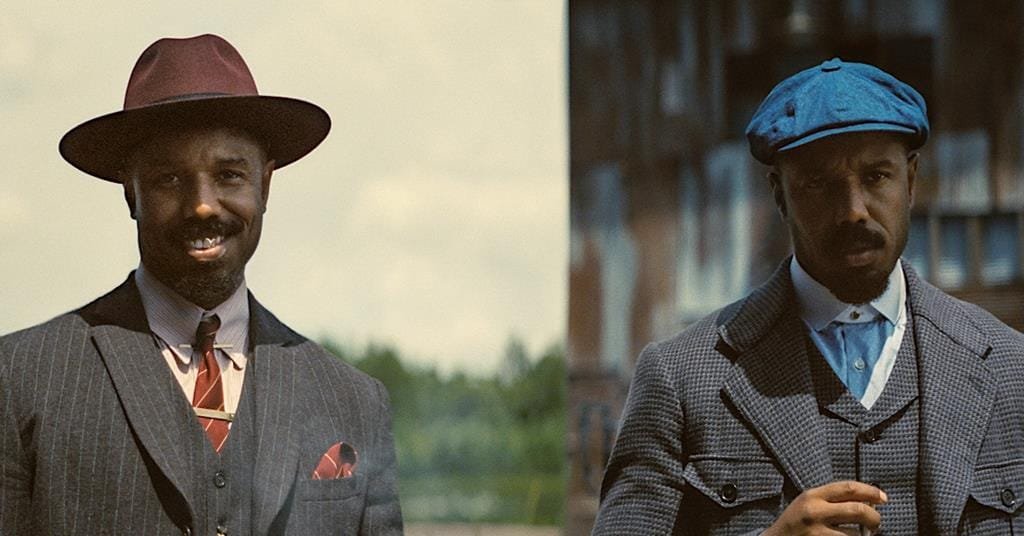
The two timelines – bearing in mind that Beloved never settles fully into a linear structure – are approximately sixty years apart, with Sinners taking pace in a post-WWI, pre-WWII America – which turned out to be the eye of the storm, with a still deeply-segregated nation recuperating from the shocks and horrors of the first decade of the new century whilst awaiting the inevitable shifts which were to come. Beloved, too, is a post-war novel, though it drifts back and forth between an America in which slavery was still legal, and the post-Civil War era; the most modern timeline in Beloved takes place in the 1870s, though always looking back at a period of time around twenty years earlier, when its main characters were still enslaved at a plantation called Sweet Home, in Kentucky. The Deep South of Sinners may not openly rely on slave labour, but with its system of indentured labour known as ‘sharecropping’ (we’re shown that Sammie still works the fields under this system), it seemed that little distance had been really travelled, even by the 1930s. The Jim Crow Laws passed post-Civil War (ostensibly to entrench a ‘separate but equal’ ethos) remained in place well into the 20th Century, outrunning the main timeline of Sinners by thirty years or more. In this febrile atmosphere, one in which brothers Smoke and Stack (Michael B. Jordan) could only ever get so rich, so young by getting involved with the criminal underworld of a large, Northern city (such as, here, Chicago), entrenched racism is still a fact of life in the Old South, with the “filthy talking sheets” described in Beloved (referring to the white costumes worn by the Klan) still both seen in-shot during Sinners, and, later, a key plot point, despite Hogwood’s protestations that “the Klan don’t exist no more”. The Klan is in fact always on the periphery of this film.
Illusions of ownership
In both the novel and the film, this is the backdrop for a day of celebration against all odds. The motifs of music, community and worship permeate both narratives, with the circular structure of Sinners looping us back to church, and to Sammie’s horrified but loving, accepting father receiving his son back amongst his people after he survives the events at the juke joint. In Beloved, the community matriarch, Baby Suggs, whose freedom is purchased by her son, Halle, often brings her unconventional message of solidarity to the freed Black community of Ohio at a space referred to as ‘the Clearing’, though that’s an expression which could just as easily refer to the sensation of seeing things differently for the first time. Baby Suggs, a woman who finds to her great surprise that her heart can beat just for her, receives the word of God like a conduit, transforming His message into a message of redemption for the gathered former slaves. But rather than the meetings at the Clearing, there’s a much clearer point of comparison between Beloved and Sinners: a day of unanticipated, unbridled celebration of a kind probably unknown to either of the communities it serves. The purchase of the old timber mill by Smoke and Stack Sinclair is intended to make a profit, sure, but its main aim seems to be to offer up a place for the Black community: it’s no accident that it’s a bar, serves food and gives them a place to play music in an era when entertainment, too, was segregated – even if the Blues was popular enough to lead to Black musicians to be hired to play for a whites-only audience.
In Beloved, at Baby Suggs’s house on Bluestone Road, Ohio, an impromptu celebration breaks out when her friend, known as Stamp Paid, brings her a pail of blackberries, partly in response to his joy at successfully escorting Baby’s daughter-in-law, Sethe, and her newborn, safely to the house. From here, the feast begins to grow and grow. In each instance – at the juke joint and at 124 Bluestone Road – events start positively, even happily. But there are issues. Baby Suggs senses resentment brewing, and from her own neighbours, too. For people with next to nothing, the presentation of all of this feels like an outrage; even as the feast is going on, Baby can tell that it will generate resentment. At the juke joint, it’s made clear that this is a house built on sand. The Sinclairs have been double-dealing; if any of the Chicago crime syndicates work this out, then they are in a lot of trouble. They know this much; what they don’t yet know, though they have their suspicions perhaps, is that Hogwood is not a genuine realtor, to say the least, and would have ensured that the venture, and its supporters, were very short-lived. Even without the catastrophe which overtakes each celebration, their foundations are unstable, and easily picked apart in such cautious, fractious, troubled times as these.
Perhaps, in both Beloved and Sinners, one of the key points is that Black people cannot realistically ‘own’ anything. That lack of agency may be given horrific treatment in each narrative, but this only underlines a fact which, even rinsed of the horror elements, serves to destabilise and traumatise the people affected, and would have done by other, less fantastical means. Baby Suggs’s house is gifted to her by some well-meaning (though, arguably, flawed) white people, a brother and sister, the Bodwins. It’s her own house, and the Bodwins assure her that it’s hers; surprised but delighted, she sets about making it a home. She rearranges its layout, she offers a home to Sethe and her children and eagerly awaits the arrival of Halle, her beloved son who, poignantly, never makes it. In Sinners, Smoke and Stack exchange a lot of money for the sawmill; it’s no doubt a deliberate and symbolic choice that they choose to repurpose a place of labour as a place of leisure, and they clearly believe that they have made a successful purchase. But the sale is a sham; even had the vampires not come at dusk, the Klan would have come by day (a fact which seems to have got past the brothers, until it’s revealed to them by the vampires – two of whom were previously related to one of the Klansmen). The arrival of the vampires – seeking admission, but also seeking Sammie in particular – makes something of a mockery of the folklore which decrees that ‘vampires must be invited’, when attendee Grace (Li Jun Li), not an owner, calls out to the bloodsuckers that they can ‘come inside’. That impermeable barrier at the door, guarded so carefully by the brothers and their associates, becomes no barrier at all, just as ‘their’ property was never anything such, and it’s very telling that the chaos and bloodshed which ensues follows a genuine, if short-lived high point for the community – a crashing back to earth which erodes all of the hope and goodwill which was previously there.
Something very similar happens in Beloved; Baby Suggs is shown, in horrific detail, that her property was never her property. Seeking Sethe, who fled slavery in Kentucky, and under the auspices of the Fugitive Slave Act, her owner, now a man only ever referred to as the ‘schoolteacher’, arrives at Bluestone Road to take back his property. Sethe is, just like Sammie, especially valuable. When Sethe sees the schoolteacher, come to reclaim her and her children, she reacts with an intensity of violence which astounds even him – a man already well-versed in ideas of racial science, someone who teaches lessons at Sweet Home all about Sethe’s ‘human’ and ‘animal’ characteristics. Baby Suggs never recovers from the shock of this, and the event which, after a lifetime of slavery finally proves to be her undoing, is that the schoolteacher and his men “came in my yard”, shattering all of her illusions. Baby Suggs never recovers. The banquet, like the sawmill, ends up drenched in blood – it’s just that, in Beloved, the blood belongs to Sethe’s children.
Sethe’s terror that she will be retaken (and as such, her existing children, and any other children, will become Sweet Home slaves) prompts her to attempt to murder all of her children with a handsaw. Morrison based this event on the true story of a Kentucky woman called Margaret Garner who, faced with the same, opted to murder her own child (though tried to kill all four of her children). Margaret Garner cut her daughter’s throat; Sethe is only able to kill the child who comes to be known as ‘Beloved’ by the same method, but the scene of carnage which confronts onlookers – refracted for us by the racist perspective of the schoolteacher – is a shocking one, with blood pooling liberally in the sawdust of the woodshed. She almost severs Beloved’s head from her body; when confronted and arrested for what she has done, she is essentially holding the child’s head on. There’s nothing supernatural here: Sethe’s deeds are, as she avers later, done to protect her children at any cost from a life of slavery. However, it is as a result of this action that the novel gains its clearest supernatural element. Beloved, named for the gravestone which Sethe eventually has carved with that word, returns – first as the ‘baby ghost’, which Sethe refers to as a ‘haint’, a mischievous spirit, like a poltergeist. Hope for a better future for Sethe – which comes via the arrival of another former Sweet Home slave, Paul D – seems to drive the baby ghost out, but before long, Beloved finds another way to get back to 124 Bluestone Road. And, arguably, when she gets there, it’s in the form of a new kind of vampire.
The nature of monsters in Sinners and Beloved
Interestingly, in Sinners, Annie (Wunmi Wosaku) – a woman who never lost sight of the tribal practices and beliefs of her ancestors – makes an explicit comparison between haints and vampires, showing there’s room in her understanding of folklore for both. That in itself is interesting, given that the arrival of Remmick (Jack O’Connell) and the other vampires, who clearly display behaviours we might associate with the Northern/Eastern European vampire traditions, rather than similar tales which belong to West African belief systems. A haint, according to Annie, is a spirit, like a memory – a kind of collective, restless memory. A vampire, on the other hand, loses its soul; it becomes a predator, actively recruiting others. Remmick, still carrying somewhere within himself the trauma memory of the oppression of the Irish (never enslaved, but variously indentured, stripped of their language and land and left to starve en masse) is still searching for that connection to his own ancestors, and has the foresight to see Sammie as a conduit somehow, given his talent for music which speaks to the soul. Remmick, alongside the new vampires he creates, sees the vampiric state as a proxy community, one where everyone shares the memory of what they once were, and what they knew. That this has value to him is itself very revealing.
Similarly, Beloved, the young woman who seems to come out of the creek seeking admittance to 124 Bluestone Road, eventually turns out to be more than a manifestation of Sethe’s dead daughter. Even Denver, Sethe’s surviving child who also lives at 124, eventually sees Beloved as “something more” than her sister. The suggestion, made during Beloved’s alarming, fractured internal monologue once she has established herself as a permanent presence at the house, is that her own family’s suffering is only a small part of centuries of generational suffering, and that Beloved herself is part of this collective memory, too. She recalls events which she couldn’t have seen: she seems to describe life aboard the slave ships, memories which may have persisted for Sethe’s own mother, but not for her daughter or granddaughter, either born in the US, or during the passage. In this, at least in terms of memories and motivations, Remmick and Beloved are similar, each of them with dubious origins, each with a partial or changed name (‘Remmick’ is an Anglo-Saxon-derived word, not a Gaelic name; Remmick himself switches between an American accent and and Irish one, giving further credence to his complaint that his own people had been subjugated and that he lost who he was, even before whatever befell him).
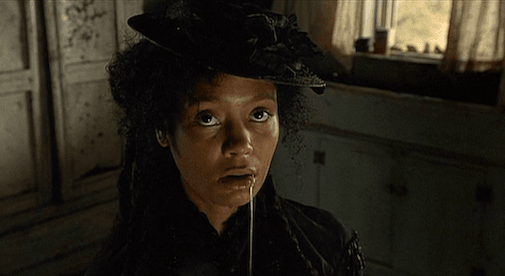
Thandiwe Newton in the 1998 film version of Beloved
Of course, Beloved is not a monster in the same sense: she is, frequently, a sympathetic character, an unwitting representative for generations of victims who also yearns for a connection to the mother who, for whatever reason she may have had, murdered her. Beloved does not drink blood. She does not perpetrate violence. However she is, in some respects, vampiric: she feeds on Sethe’s ‘rememory’, her guilt and distress over the events of her past. When she is not able to function as the haint she once was, she finds a different incarnation; she is, in this respect, devious. The events of what Stamp comes to call ‘The Misery’ cast a very long shadow over Sethe; her deeds separated her from the Black community which once supported her; her world is already diminished, and when Beloved arrives, the separation grows even more entrenched. Sethe’s mistaken jubilance over repairing her family unit severs her last ties to the outside world. She loses her job, she loses her income and then – as the symbiotic link between her and her unnatural, now-grown daughter increases its hold – Sethe begins to starve. It is as though Beloved is physically feeding on her mother, as much as Sethe’s starvation comes about as a result of her new entrapment at home, too afraid to reveal Beloved’s presence to the world, and unable to earn, to cook, to feed. Beloved’s attachment to Sethe might have come from a place of love, but given her position as, arguably, a manifestation of centuries of harm, she also has the capacity to harm others.
“Just for a few hours, we was free.”
Set against these horrific situations – regardless of the differences in scale – Sinners and Beloved each offer horrifying situations only surmountable by the renewed efforts of the community. Again, it’s a blend of Christianity and folklore which eventually drives Beloved out – at the point where she has seemingly grown, now physically overshadowing Sethe. Thanks to Denver’s efforts to establish a kind of life outside of the house, the alienated Black community once again takes an interest in 124 Bluestone Road; a group of local women, headed up by an old friend of Sethe’s called Ella, come to the house to pray, believing that the young woman now lurking inside means harm; she is seen as an aberration. Beloved’s escape back towards the creek indeed marks her out once more as something other than a normal young woman. Beloved is also pregnant, naked, and a child reports seeing her as she flees, noting that she has ‘fish for hair’: offering no answers, only mysteries, she departs the novel as oddly as she appears in it, albeit the process of trying to forget her doesn’t seem to quite shift her. Footprints still appear near the creek; something of her, from time to time, still drifts across the memories of those who remember her. In Beloved, the community, which has been so broken for so long, reunites to save one of its own, or at least to try. The ending of the novel is still deeply ambiguous; Sethe, now bereft of her “best thing”, cannot understand Paul D’s insistence that she is her best thing. He implores her to look to a future – one which he says they both deserve. But Sethe’s last words in the book are disbelieving. “Me?” she repeats. “Me?” We never know what sort of a future, if any, Sethe experiences; the book ends with the strange folklore which sustained Beloved throughout, though there is at least hope for Denver, now forging a life for herself: there is a future for the young woman who finally broke out of the novel’s singular haunted house.
In Sinners, the Black community itself, already showing fault lines from the very start of the film, is irreparably damaged by events at the juke joint; families are lost and divided; lovers are parted; despite their own sympathies with the newly-turned vampires, all of whom they loved, the living need to preserve themselves against them – despite the vampires’ pleadings that theirs is the true community, with all of their knowledge and experiences shared and acknowledged forever. But as Annie warns, the vampires will be lost to their ancestors forever. The only way they can enjoy the kinship of the afterlife is to avoid being turned; this is something she herself insists upon, and Smoke – who dies delivering solo vengeance on the men who would have destroyed his community by decidedly non-supernatural means – is able to join her and his deceased child as a result. The others are turned into ashes, a particularly brutal fate for a community who might have been lynched and burned come the morning anyway. Sammie, who survives, is torn from his friends, but is able to piece together a life. In fact, we know his life has been a long one: he does not give up the music which put a target on his back, and goes on playing. But he encounters two of the vampires again. Stack and Mary escaped on that night; whilst arguably there’s a lull in the threat levels established earlier in the film when they come and speak to Sammie without choosing to harm him, we do at least glean from this that, despite his eternal youth, Stack still sees that night at the juke joint as the happiest of his life, an opinion which Sammie shares – and they say as much to each other. At least in this moment, there’s some community left, something of that moment which was never going to outlast the night. Something in Stack still cherishes the memory of his brother, and what they achieved that night.
However, both Beloved and Sinners end ambiguously, with scattering hopes which never quite match up to those high points of celebration and self-belief, and hopes which have succumbed, in many ways, to the harsh realities which come and cross the threshold, finding issue and form. Whilst each story works perfectly as a realist, historical narrative, the addition of the supernatural – in the forms of entities which literally come to subvert and to consume – help to underline deeper truths about the experience of oppression, whether in 1873 or 1931. But they also highlight what it means to survive, and what might come next. In both of these tales, horror serves as a great distorting mirror with bizarre elements, but a mirror nonetheless, reflecting and emphasising unpalatable ideas and truths.
Not short on ideas but perhaps short on ways to finally unite them all, I Know Exactly How You Die (2026) finds a place in that small but dedicated subgenre of horror which takes a fantastical look at the creative process. We start with an incredibly grisly, attention-grabbing start (as is customary, as filmmakers tend to bookend their films with the enticement of blood ‘n’ guts). There’s an unprompted murder at a launderette; this shows us a serial killer on the loose, and though the as-yet unnamed killer does the job with a brick instead of a blade, this already has more than a few hallmarks of the slasher genre.
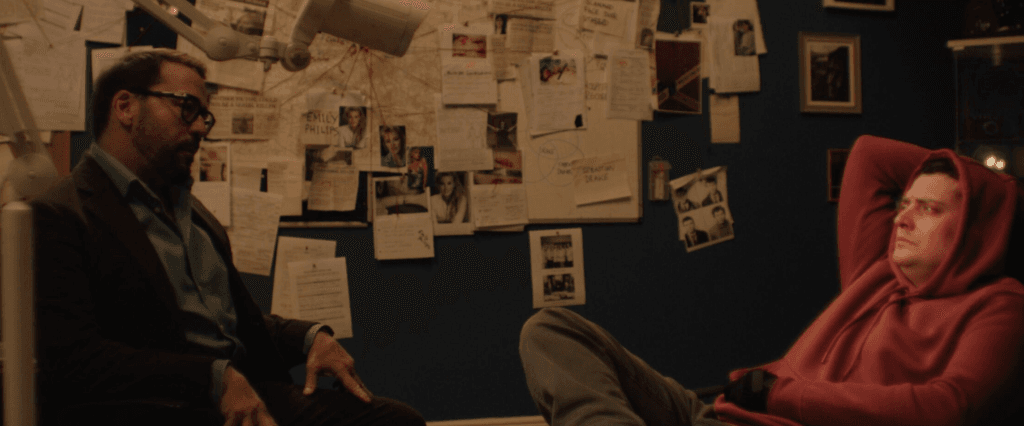
It’s not an uncomplicated slasher, however; there are other layers to consider. Our next introduction is to a penitent boyfriend named Rian (Rushabh Patel), on the road, but leaving a raft of voicemails for his uninterested girlfriend Sarah – and as she’s so clearly uninterested, the messages go unheard. He veers from temper tantrums to pleadings, mind, so perhaps Sarah is already wise to his approach (and over it). Thwarted in love, he finally checks into a motel so that he can focus on his writing. He’s a horror writer, he’s a week off an important deadline and – here’s another character trait which makes Rian a bit of a hard sell – he’s clearly treated the deadline, the agent and the contract with at best indifference, and at worst, contempt. He’s done nothing. There’s a pinboard with a beginning and an end, and literally nada in-between. When he finally checks in and opens his laptop to begin writing, he seems barely literate; again, Rian’s not winning hearts and minds here, which makes his clunky shift into sympathetic protagonist territory a little tricky…
At this point though, other guests begin to arrive at the motel. One of the guests is a woman called Katie (Stephanie Hogan), a drug counsellor going prepared with a Narcan nasal spray in her pocket, just in case. But, wait: Katie is the name of Rian’s main character in his ‘book’. And, like the Katie of the book, the real Katie also has an issue with a malicious stalker; at least, there’s a Post-It on Rian’s storyboard suggesting as much, and we might recognise the clues when it transpires that this man is, being a stalker, following Katie: in fact we’ve already met him. This is brick guy, the killer from the opening scenes. Therefore, something weird is going on here – art is bleeding into life. Ensuing events further blur the line between fiction and non-fiction, with Rian coming to understand the concept of ‘manifestation’, that he is in some way responsible for how Katie’s story will play out. He has to balance her needs against his own issues, only one of which turns out to be writer’s block.
Getting these characters and plot points in place and then blurring the line between the real and unreal takes some establishing, leading to some looseness and uncertainty around the film’s pace, particularly up to and around the first third of the runtime. This, perhaps, resembles Rian’s creative difficulties, and the fits and starts around that process (or of course, it could be entirely incidental). However, once Rian begins to take ownership over the activity, particularly when he begins to appreciate the weirdly liminal presence of the motel itself – though this plot point is also rather low in the mix overall – he and Katie join forces, each hoping to get to the end of the story unscathed. If it was as simple as Rian just writing a perfect, bloodless conclusion then it would be less engaging, so the film does try to add in different considerations – novel in places, more strained in others.
Perhaps Rian’s own backstory and personal issues could have been drawn out more strongly, given their overarching importance; another issue here is the divide between two characters suddenly striking up a romance in the midst of, and punctuated by, scenes of sporadic but graphic ultraviolence. It just feels like, despite monolithic ideas such as agency and ownership being held up here, the film struggles to reconcile the bigger ideas to the smaller details, resulting in some sense of the film running away from the writing, which, in a way, is the plot of the film all over again. But there’s clearly ambition at play in I Know Exactly How You Die, the film looks and sounds good, and the key actors do well with what they are given: it’s just that, given the proliferation of meta-horror over the past few years, many fans now expect something both original and tightly constructed in equal measure, features which this film can’t quite boast.
I Know Exactly How You Die (2026) comes to digital on April 7th.
An Irish marital body horror? Why not? A Hand to Hold is a highly entertaining short film which melds a recognisably lilting sense of humour with some outrageous practical gore effects.
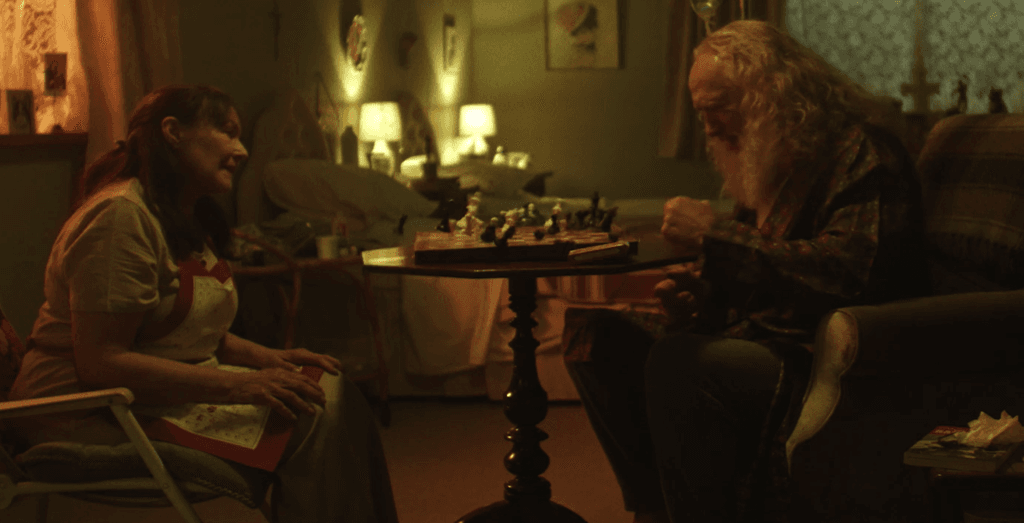
We start with an older couple, Moira (Frances Barber) and Patrick (Murray McArthur). Patrick is in ill-health – rigged up to a morphine drip, the lot – but they are spending the evening reminiscing over old times, as well as avoiding the promise of a murkier future. Patrick is too ill to finish the game of chess they’ve started, and as it turns out it’ll remain incomplete: Patrick passes away the following morning, as confirmed by the local doctor (Frank Bourke) and the undertakers, who have been parked up at the bottom of the lane for a couple of weeks, just in case. You get the impression that word travels fast in this small, coastal community.
But is all it seems? When Moira, by now grieving, tries to let go of her husband’s hand, she finds she can’t. She’s trapped in his grip – and although the doctor assures her that it’s a case of rigor mortis which will pass in ‘seventy-two hours or so’ (long enough to be stuck at the bedside of a corpse, all the same), it doesn’t pass at all. Patrick is still clinging on, and as the proposed solutions get weirder and weirder, so does the situation. Physically severing the hand only seems to trigger something bizarre and very, very grisly to begin growing from the hand itself…
This is a fun film, and it knows exactly the length, style and level of detail needed to match its premise, ensuring a film that doesn’t get sidetracked by explaining absolutely everything or worse, trying to pad out what it has to feature-length. Instead, we get enough characterisation to understand the dynamics at play and a great blend between gentle humour and a ridiculous, but incredibly impressive array of gory, practical SFX. A Hand to Hold – as well as exploring the idiom very, very literally – plays with attitudes to marriage and the ‘man of the house’ idea, too, though again, without pushing a moral message too heavily: we know enough, and that’s that, at core, there’s a ‘miserable old fecker’ who wants it all his own way.
Just to reiterate, the decision to showcase practical effects here was absolutely the right one, and it looks fantastic on screen: there’s no shying away from filling the frame with it, and the contrast between bloody gore and the cosy practicalities of domestic rural life is another boon. A Hand to Hold is a charming, pithy short film which takes a simple enough idea and explodes it (no typo). Oh, and you don’t get to say this often as a predominantly horror reviewer, but: Jimmy Tarbuck is in this!
Syria: six years previously. Journalist Jason Frey (Aneurin Barnard) and a female colleague have been captured by Isis; the woman’s refusal to fulfil their kidnappers’ demands, to read out an address on video, results in her losing her life, whilst Frey is maimed, having his hand smashed. He, however, does survive, and escapes: once back in the UK he resumes his journalistic career, doing pretty well out of it, but at great personal cost. We are already clear that our lead character is carrying around a motherlode of trauma and grief, yet part of him misses the fieldwork, and when we first catch up with him, he’s even considering returning to Syria.
This sets the stage for some difficulties at home. Heavily pregnant wife Claira (Pixie Lott) is understandably none too keen at being left on her own at this point in her pregnancy; distraction luckily comes in the form of a night out, as they have planned to sit in the audience of a talk show hosting famed hypnotist Timothy Bevan (Jeremy Piven, here balancing our Aneurin with a Bevan). He’s there to promote a new book about his specialism: past life regression. Momentarily – and only momentarily – the film starts to feel a little bit like Late Night with the Devil (2023) as Bevan attempts to regress an audience member. Jason is nonplussed by the whole affair – so much so, that when Bevan calls for another volunteer, he puts up his hand, perhaps to disprove what he perceives to be “bollocks”. Ethics and checks be damned; suddenly, the poster boy for CPTSD is being hypnotised in front of a live studio audience, and entirely predictably, it goes horribly awry. Jason doesn’t just remember snippets from Syria; there’s someone else there, another woman, and he witnesses the woman being attacked. Soon, there seem to be more faces from a point in the past, looming up into his present.
This tumble of traumatic flashbacks and something else sticks with Jason long after he leaves the studio, and just at the point when he needs to give his answer on Syria. But all of the work he’s done in therapy seems to erode under the weight of his new visions. He needs urgent help, and the only way he can think of to get this is to finish what he started with Bevan.
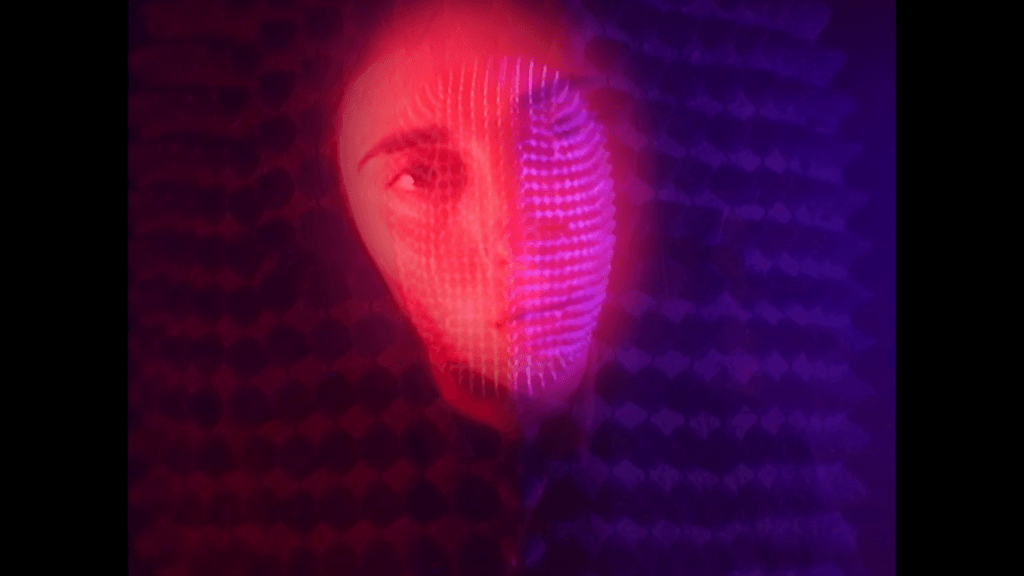
Past Life leans heavily and with relish into its horror and giallo elements, feeling reminiscent in several places to Last Night in Soho (2021): this is a mystery, a mystery which expands every time the morally-ambivalent Bevan takes Frey under. The sequences intended to show Frey under hypnosis are very cleverly handled, playing with by-now cultural expectations about this particular kind of altered state: the metronome, the corridor, the pendulum, the light. It’s all woven expertly into ‘the real’, using careful edits, linking motifs and an excellent, immersive musical score to ensure this. Back in the real, the investigative elements have been updated with very modern features. Internet searches and true crime podcasts help to punctuate the process of unfolding new information; these are nicely contrasted with very plausible flashbacks to the Eighties, when earlier events took place. The film, and its director, have a meticulous eye for detail which helps to make these sequences a formidable visual and aural experience. The casting, too, comes from an impressive roster of names. Barnard has the requisite brewing, brooding, barely-suppressed emotions which underpin the film, helping to sustain its interest and impact. There are some nice curveball casting choices in here, too.
Of course, as a supernatural-tinged giallo, Past Life is a horrific fantasy at its core, but it carries within it an intriguing premise: generations of violence against women which transcends place and time, spreading its misery outwards, in a kind of monstruous ripple effect. Here it is negotiated through the backstory and the up-to-date efforts of a decent man trying to solve a mystery, but even so, his issues in dealing with his own past and his later actions still bring down a storm (at times literally) on his marriage, risking harm and trauma to his own wife. Due to this moral weight, the resulting film often feels hefty, discomfiting and paranoid, as it almost should do, given its topics. And if some of the film’s surprise elements settle more into an expected mode – often reliant on montage and some expedient, though less realistic developments in places – then Past Life still works as a whole. It is well-handled, well-paced and offers an effective finale, one which rewards our attention. There are also shades of director Simeon Halligan’s earlier film Habit (2017) in Past Life‘s night scenes. The script studiously avoids naming Manchester, even though we later see its name on a map, but it’s Manchester alright (or Stockport, to be more specific) and again, Halligan has done great work turning the city into a fitting backdrop both for a grim, gritty plotline and supernatural, fantasy elements.
Past Life is in cinemas from 20th March and on digital from 6th April 2026 (Miracle Media)
Oh, we know what’s coming as the opening scenes of City Wide Fever (2025) appear on screen, and it’s good: as soon as we start to roll, the New York cityscape blends with a nightmarish montage of masked figures and gritty set pieces, showing the audience a film which wears its neo-giallo credentials openly and proudly. That in itself will endear it to many, but there’s much more to like here than just well-realised fan service. Despite being up against a miniscule budget, City Wide Fever does a great deal with what it has and pushes the limits on what it can do, weaving together an engaging piece of independent film choc-full of love for film itself.
Here’s how things start: a young woman, Sam (Diletta Guglielmi/Nancy Kimball) is walking the streets, minding her own business – when she happens to spot a discarded USB flash drive, which she picks up and takes home. As luck would have it, it’s relevant to her interests; Sam is a film student and exploitation film cineaste, and her place is full of film memorabilia (including, oh hello, a copy of that fabulous exploitation cinema bible, Nightmare USA). As she looks through the contents of the drive, her interest is soon piqued: she finds herself looking through a series of stills and info on a whole host of tantalising-looking exploitation cinema made by a director whose name she doesn’t recognise. His name is Saturnino Barresi, and he’s the cult film maestro who never was, his work disappearing into obscurity whilst the likes of Mario Bava and Dario Argento moved into the fore. It’s a crying shame; it’s also, as Sam realises, a damn good opportunity for a film student like her to investigate and perhaps to restore Barresi’s name.
Using a still image and the title of his last, unfinished film – which shares its title with ours – Sam begins to investigate this singular mystery. Starting with her film studies professor and following a trail through a number of interesting and insalubrious film people, she seems to be getting closer to finding out something more tangible, but once she’s really on the brink of discovery, her position grows precarious. Interestingly, and in keeping with the genre of the film, she realises that whatever it is doesn’t seem to be bound by the rules of reality. This is a giallo director and a giallo project, after all. But that doesn’t mean the risks to her are any less real; her search for information on Barresi means that she, too, is being pursued. Baressi’s work seems, somehow, to want to remain unknown.
Firstly, the amount of thought, ambition and affection which goes into every frame of this film is clear, especially when we consider that it’s constrained by a small budget: City Wide Fever may have had to curtail itself somewhat when it comes to SFX – relatively costly and time-consuming – but elsewhere, it layers and re-layers influences, mood and visuals throughout, ensuring everything here counts, as well as looking and sounding good. That means that the film also acknowledges the foibles of the giallo genre, too: the script goes from being hyperreal to more-or-less comedic in places, though never lingering on this so long that it starts to unravel the overall atmosphere and impact (in fact, it’s all part of that whole). It pokes a bit of fun at film people, too, which is fine – it all comes together to suggest insider knowledge and awareness. The film is, above all else, a film fan’s film, from the sets, references, characters, dialogue and filming style to the props glimpsed in certain key scenes. It’s also interesting to see depictions of Times Square and 42nd Street, once the backdrop for a whole host of exploitation cinema classics, now part-gentrified, but not quite sleaze free: director and writer Josh Heaps also tackles the overlap between horror, exploitation and pornography – one outsells the rest – and in the world of this film, they sail very close to one another. Also of note: the fourth wall in this film is always a permeable barrier, and nothing is every quite certain.
Narrative rules are made to be broken in City Wide Fever, which stops things ever settling too much into one mode or routine. It hangs onto its identity-fracturing plot points for a long part of its runtime actually, and it’s a winning tribute to classic giallo from a modern-day perspective, shot on video with smartphones, flash drives and computers being brought to bear on archetypal giallo ideas and developments. Personally, I’d now love to see Heaps get handed some of the funding which filmmakers Cattet and Forzani always seem to get hold of, to see what he could do with it: hey, we can dream. But as it stands, the film he has made is a genuinely pleasant surprise and more evidence of what independent filmmakers can do with their own fandom and passion for genre film.
City Wide Fever (2025) receives a US theatrical release from April 15th.
A nameless female gravedigger (director Grace Glowicki) has a work-related issue: she stinks. This has made finding a partner very difficult. Who wants a girlfriend who smells of grave dirt and dead things? She tries to fix the issue by concocting perfumes for herself – which don’t work. The day (or night) job goes on, and so does the search for love.
However, a particularly busy evening of funerals, with graveside eulogies to match, throws a young man into the gravedigger’s path. He’s there to grieve his late sister, but when the gravedigger saves his life (apparently from an aggressive, pursuing dog mask), they begin a passionate relationship. Not only does he not mind her smelling the place up; he quite likes it. Someone for everyone, etc.
Their relationship is disrupted when the gravedigger’s lover has to head overseas to seek a medical cure for his infertility. It’s clearly not coincidence that a film starting with a Mary Shelley quote for its epigraph is going to have someone dying tragically at sea, leaving only a disembodied finger (rather than a heart). Moving on from this, the film perhaps inevitably starts to channel Frankenstein, as the gravedigger starts to bring her rudimentary scientific expertise to bear on the thorny issue of reanimating her man. To do this, she will have to make use of what’s available: his finger, his dead sister, and some inventive experimental thinking.
Dead Lover (2025) wears its non-existent budget on its sleeve as a point of pride, looking partly like a 1920s silent film (cosmetics, wigs and all) and also somewhere between Ed Wood and Garth Merenghi’s Darkplace – though with extra gurning. Whether it’s all a choice or not quite, it also deliberately blurs its timeline: some of the costumes and hair look like something from the 18th century; some of the accessories (and fabrics) look positively 1980s. There’s also the small matter of the ground-breaking male fertility treatment; all of this makes an initial impact, true, but once seen and acknowledged, it all starts to feel like diminishing returns. Once you’re immersed in the film’s visuals, you start to scan around for different aspects to enjoy. So there’s a script (deeply self-effacing, blending jokes with accentism, cliches and fart gags) which relies heavily on dramatic monologue, voiceover and stage play elements, such as the presence of a dramatic Chorus. Glowicki, who also co-wrote Dead Lover, winds up carrying a lot of the film: in a project with such a small cast, she is responsible for much of the film’s ongoing tone, pace and style, too, right down to sex scenes and Victor Frankenstein-akin experiments, all in the service of keeping her lover around for good. There’s also a number of set pieces which must have been fun to storyboard, and some deliberately provocative and unflinching scenes.
In a word, then, it’s odd. More than that, it dearly wants to be odd. That, plus its love for gender-bending, unprecedentedly weird intimacy and self-effacing dialogue/monologue will endear it to many audiences who’ll note certain inclusions and chalk up the ensuing film as a much-needed piece of social commentary, but not all films offer, or need this kind of meta-analysis. Whilst the film’s lo-fi bloody-mindedness is to its credit – it sticks to its guns – it felt throughout as though not only was it winking at someone in the audience other than me, but perhaps not quite landing any deeper points, either. The aesthetics are bold, but it’s not too long before the film starts to groan under the weight of not-very-much. To cut to the chase, there simply isn’t enough here for a feature, even a relatively short one like this. It may offer something for a late night screening and just the right assemblage of people, but Dead Lover positively revels in its limitations in ways which just don’t land for this reviewer.
Dead Lover (2025) screened at this year’s Final Girls Berlin Film Festival 2026 on Saturday 7th March.
Like many film festivals, Final Girls Berlin understands the value of short films and includes themed blocks of these on the schedule. This particular block – loosely grouped under the ever-popular title of ‘folk horror’ – is an eclectic range of films from a diverse roster of countries, though there are still, appreciably, thematic similarities. We get takes on the relationship between wider society and the individual; we see the importance of ritual, whether or not the origins of those rituals are obscure; then, perhaps most interestingly of all, the films included in this block all move beyond what would often be the film’s final moment. Here, folk horror encompasses consequences: what is the legacy, what are the implications of the events which we see (or have suggested to us) on screen? That is a novel approach given that in so many of the canonical, early folk horror films, we see almost nothing of that. A woman’s perspective, perhaps, moves beyond the crisis itself to pick up the pieces.
In Lok (‘Men’, d. Mahmuda Sultana Rima), we find ourselves in rural Bangladesh – and there’s a mob of men on the move. They are heading to the house of a woman they deem a ‘witch’, hammering on her door and seeking admittance. “Why won’t you open the door?” yells one man over the clamour. It’s amusing, and ridiculous, that he has to ask that question. Eventually, and finding no other choice if she wants to keep her door intact, the woman does open it. The men are looking for one of their number, another man who has disappeared, and despite turning the place over, they can’t find him. Leaving the woman and a young girl alone once more, we are asked to consider: what has actually transpired here? Is she as powerless as she appears to be? Whilst Lok is more of a tantalising snippet than a fully-fledged narrative, it nonetheless offers us something from beyond the limitations of a Northern European witchcraft tradition, hinting at variations in magical practices and toying with men’s fear of magic, even whilst they rail against it (and reduce in number).
Striya
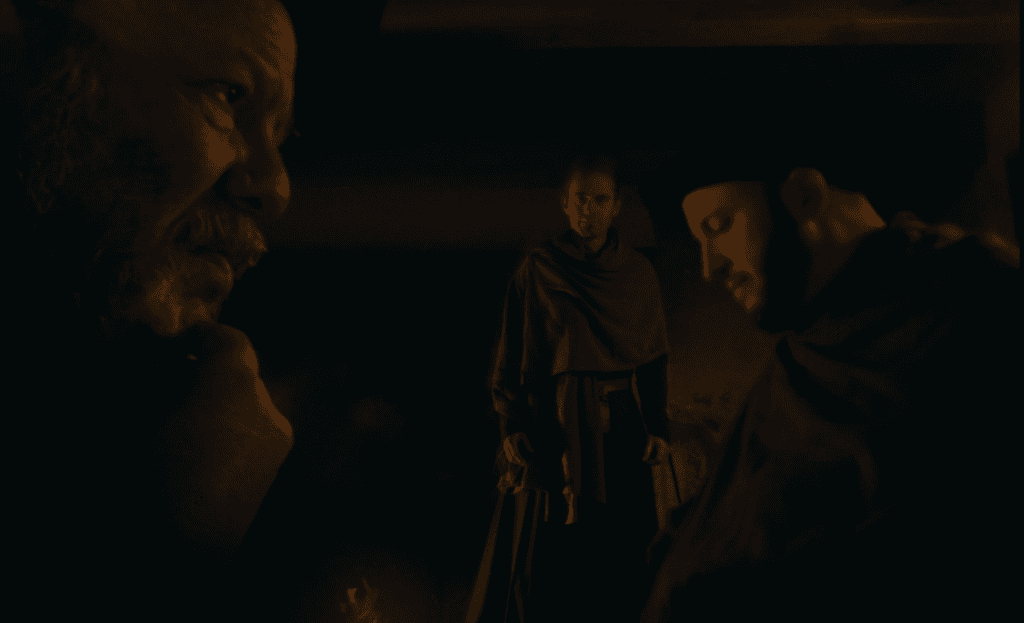
Striya (d. Paige Campbell) starts in a similar way to Lok, although there’s no overt mob politics on display. The men who open this film speak in a measured manner, but they are deciding on the proper course of action for a bizarre quandary: how to deal with a vampire, the ‘Striya’ of Jewish lore and the film’s title (the film itself also features Yiddish dialogue). As the men speak, we glean evidence of the patriarchal power structures which shape this response (and curtail it). The woman, Gele, cannot be simply dispatched, as her father is a respected community figure and he pleads with the rabbi for leniency. Yet, her father promises that love, not scripture, can prevent her from causing harm. Striya is well-acted, lit, framed and scripted, with interesting historical and theological inclusions. This Rembrandt of a horror tale also comes with a message, perhaps, that all the theology in the world has its limitations.
Kill Tradition (d. Juliana Reza, featured image) also looks at the parental role, only this time from the perspective of a mother, whose community is on the brink of an annual festival of some kind in which she takes no interest: she switches off the radio when an announcement about the event is being read out. She seemingly prefers to spend time with her child – presumably her only child – though she has to head out of the home, leaving the little girl alone for a few hours – at which point, their quiet and self-contained lives change forever. There’s an early sense that the intimate and the familial is about to come into conflict with wider society, and it does; focusing on the emotional impacts rather than explaining the finer details (the film’s title suggests something much harsher and more overt than we get), Kill Tradition (Mati Adat) is a beautiful and very painterly film, offering numerous set pieces from a domestic setting in a way which feels very unusual. It’s a subtle and engaging film which eschews ritual detail to focus on the emotional impact of upheaval from without the family unit.
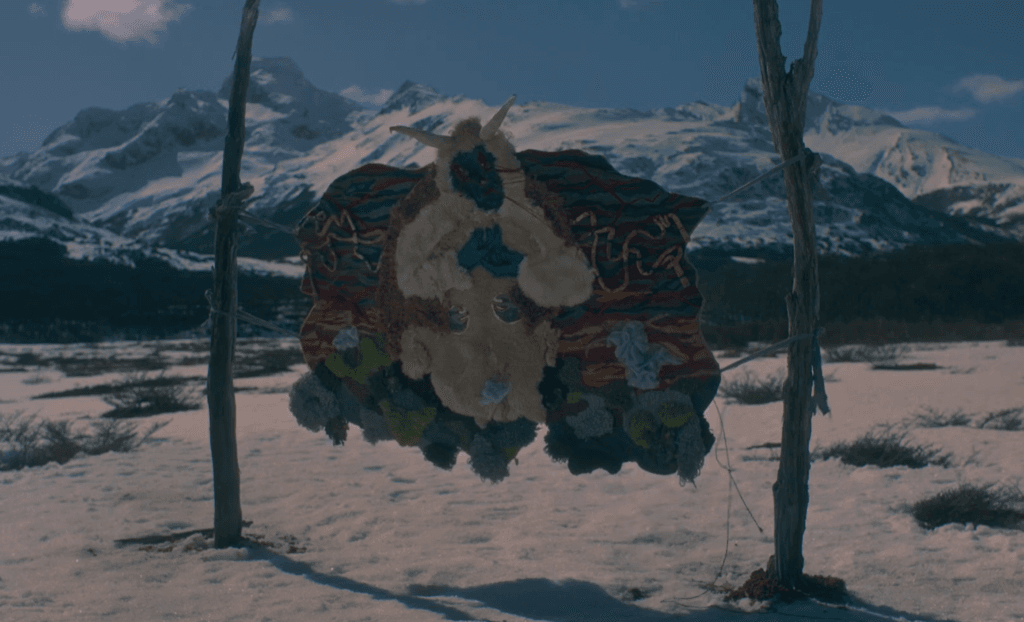
Antibody (‘Anticuerpo‘, d.Ludmila Rogel, Sofia Chizzini) has an ominous start: a conversation in a slaughterhouse, where a young woman makes a series of unusual requests of the slaughterman – which go unfulfilled, it seems. She leaves with a bundle, with notices displayed outside suggesting that this is some kind of dystopian reality, though hitherto given a subtle treatment here. The woman takes her sheepskin bundle to another woman but, when they discuss some upcoming event, it seems that only one of them will attend. The event itself looks to be an underground club night – a surprising inclusion – but despite the lack of trad-coded ritual activity, things turn ugly. Again only hinting at a dark culture and its attendant practices, Antibody boasts striking, wintry visuals, and the physical presence of Nina (played by Chizzini) really contributes to this film. With some May (2002) vibes in places, the film offers a sense of a bizarre project taking place against a background of loneliness and disorder.
Hafermann
Lastly in the block, we come to Hafermann (d. Helena Haverkamp), where monochrome, stylised opening credits cede to an idyllic pastoral. A young woman teases her baby brother with tales of the ‘hafermann’ or ‘oat man’, a harvest spirit who protects the fields. However, and as she is warned, names have power: speak his name, and he will follow. Forging a link between the opening credits and the now-ruined nature of this idyll, the film turns into a riddle, one which has particular psychological weight for little Arthur, now grown and seeking answers. But, despite the personal path he takes during the film, Hafermann retains its riddles, favouring symbol and idea over straightforward explication. All of this, together with the film’s unusual shooting style, keeps the audience at a remove – but still engages us in this dreamlike and often disturbing journey.
For more information about the Final Girls Berlin Film Festival, please click here.
Director Howard J. Ford has had a go at the lot over the past couple of decades, variously delivering independent films on zombies, cannibals, climbing – and now, extra-terrestrials. Moving around subgenres in this way, no wonder there’s been some variability: Bone Keeper (2026) is certainly evidence of that. It’s by no means the first of Ford’s films to start with a rather flawed, even a cliched premise (even by horror and sci-fi standards, the framing device here is pretty preposterous). And, unfortunately, many of those initial issues hang over the film throughout its runtime, even if it’s able to deliver some fairly engaging monster set pieces as it moves things along.
The film starts with a meteorite smashing into earth (via a genuinely effective sequence which looks good) using CGI only briefly, whilst showing us that there’s more to reckon with here than just a natural disaster. The meteorite has brought with it some kind of betentacled creature, which immediately finds its way below the earth’s surface. It re-emerges to eat some of a sheltering Neanderthal family and then – as far as we’re concerned – it hides out, until it becomes the subject of interest for a journalist who goes to investigate the cave system in the 1970s, leaving only a piece of Super-8 film behind (tough stuff, that Super-8 film). Then, there’s an unaccountably long interlude until the journalist’s daughter waits for middle age and then goes to look for clues on what happened to him; she also disappears. Then her daughter Olivia (Sarah Alexandra Marks) decides to go and look for what happened to both her grandfather and her mother, taking a group of friends along with her to investigate.
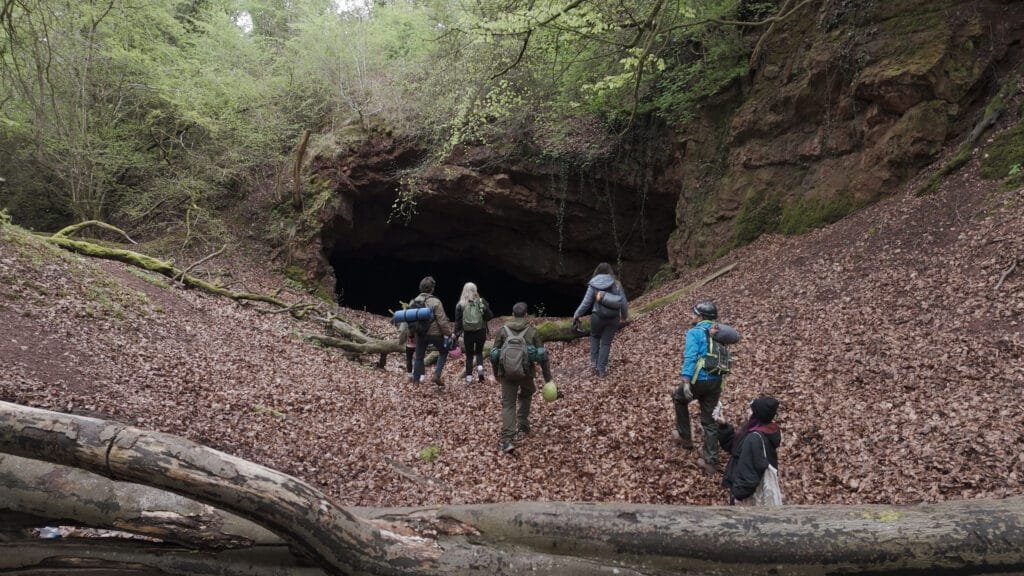
When they’re on their way to some undisclosed location somewhere in the British Isles, the group pauses to pick up a hitchhiker/Influencer called Ashley (Sarah T. Cohen), despite half of the party not really wanting to; in a very British way, they just grimace through it. This could potentially grant the film an additional found footage layer, given Ashley’s love of mobile recording devices; at least, that seems likely. The film has already managed to bring together analogue and digital tech, so anything’s possible. Before descending into the caves, the newly-expanded group calls on a local expert, Professor Harrison (John Rhys-Davies, whose acting style is very different to his counterparts) who admits that he spoke with Olivia’s mother before she disappeared. With some pretty watertight reasoning behind him, he essentially tells them not to go and doesn’t offer to accompany them either, but of course they still go. Armed with microscopes, mobile phones and very little in the way of spelunking know-how, off they go, to be essentially picked off by a very unfriendly lurking alien creature. That’s…kind of it, honestly.
Bone Keeper clearly has no illusions about how cerebral is is or isn’t; it has the caves, but it’s no Descent and offers rather little in the way of characterisation to justify this expedition, other than Olivia needing to ‘find out’ what happened to two generations of her family by doing the exact same thing which likely killed them. Realistically, a creature which offers no harm to anyone not burrowing directly into its lair might be best left alone, but never mind all that: it wouldn’t be much of a monster movie if everyone agreed to leave things be. Furthermore a film of this kind clearly lives and dies on its creature FX, and as it foregrounds the tentacles from almost the opening scenes, it’s obvious this is where the appeal is intended to lie. On this front, it’s not bad. There’s a fair amount of practical FX, some decent (if derivative) ideas, and the film’s dark environment definitely helps to minimise any CGI-wince; it helps the additional effects as a whole to hold together, keeping them sympathetic, rather than too jarring (though woe betide any filmmaker attempting to pass off AI in a film; the tide, so far as that’s concerned, has already long since turned.)
There are other positives, though. It’s nice to see an ostensibly British monster movie, even though it comes via a slightly disorientating smorgasbord of unrelated regional accents and a place undisclosed in the script (though the film was in fact shot in locations along the Welsh/English border). In any case, the landscape shots are great, and it’s a nice reminder that there’s absolutely no reason why Britain can’t offer up its own cryptids and alternative histories for cinema of this kind. When it comes to the cave shots, of course a whole film team can’t get too deep into these systems, but to its credit part of the film was shot on location and Bone Keeper still manages to create an impression of the group dispersing deeper underground, though this works best initially; some cave locations and scenes do start to become a little familiar as we go.
It’s just that…by the time we reach the midway point, by which the film has settled into a rather unengaging panic – disperse – get picked off – panic – disperse mode, it’s clear that nothing much else is going to happen. We don’t really find out anything which we didn’t know at the start of the film, and nor do we really get the expected different layering of shooting styles from the multiple phone cameras we’re shown going into the cave system with the group (which could be a red herring, or indeed a bit of fun at the expense of the bonus Influencer who joins the party, but in practice this feels like a bit of a waste). Without a sense of real characters with relationships and histories, it’s all a bit weak on the whole. Sure, there are some neat monster-y set pieces – some of which clearly emulate ideas from other films, mind – but they do need to be meaningfully connected by something, and unfortunately here it’s flimsy rationale after flimsy rationale. Massively implausible inclusions (a SWAT team in the English countryside?) compound these issues, as well as flinging in a few unlikely resolutions to wrap everything up by the ninety-minute mark.
It has its moments, but Bone Keeper can’t really do anything to set itself apart from the films it takes for inspiration, and whether or not it’s aiming at a B-movie style, too many aspects feel unconvincing for this to truly make the grade as a memorable monster movie, despite some crowd-pleasing scenes.
Bone Keeper (2026) received its World Premiere at Glasgow FrightFest on Friday 6th March and gets a digital release from 6th April.
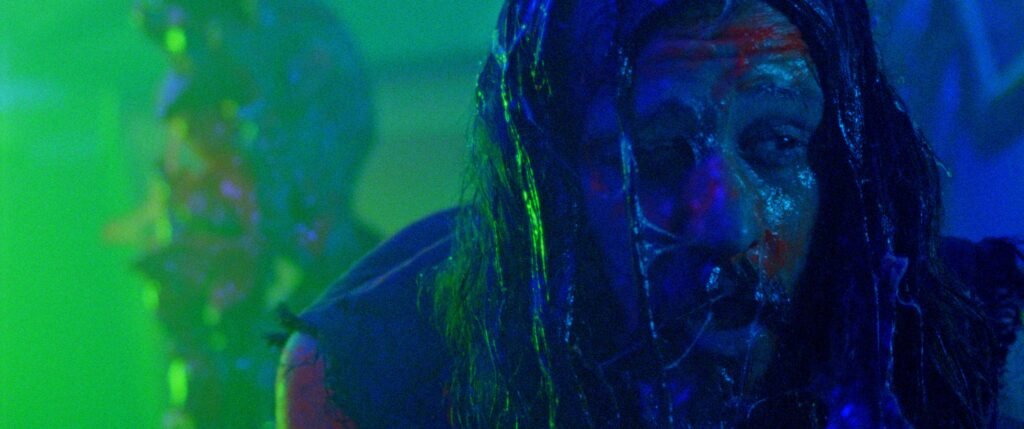
Starting with a couple of fake 80s DTV trailers (The Piano Killer and Don’t Go In That House, Bitch!) Jimmy & Stiggs – presented by Eli Roth – feels a little like an in-joke in places, and the Roth fan service and nods are clear to see, particularly in the early part of this feature. This is also, undoubtedly, a Joe Begos film: from the very beginning, the acid colours, the booze and drugs and the out-of-control behaviour set the tone for what’s to follow. Jimmy (Begos) is an out-of-work filmmaker who has faceplanted into oblivion; we pick up with him at around the time he’s had a long period of missing time, but it’s not just regular drinker missing time. We have seen something in the apartment with him: it’s alien (think standard-issue ‘greys’) and – as we shift over from Jimmy’s-eye-view to more conventional camerawork, we see Jimmy trying to work out what has happened to him.
Somehow joining the dots between the fact that he can’t remember…anything, the strangely lurid blood all over his apartment and a hypothesis that a) he’s been abducted, b) they’re coming back and c) he’ll be ready to unleash a tirade of violence upon them, Jimmy reaches out to his estranged best friend and movie collaborator Stiggs (Begos frequent flyer Matt Mercer), asking for his help. Stiggs – who has been on the wagon for a few months – heeds the call, though he gets very little time acting as the voice of reason before it transpires that Jimmy may be a mess, but he’s right. The aliens are back, and they’re hellbent on tearing some humans into little pieces.
That’s it, really.
The whole film takes place in Jimmy’s apartment, like a kind of splattery remake of Hardware (1980): this, too, is a sci-fi/horror spin on a closed environment with a killer intruder. Aside from a bit of heart-to-heart between the two old friends (and there is some chemistry between these guys, unsurprisingly, after working on so many projects together), the rest of the film takes us through an intensely violent, lurid, practical FX frenzy, clearly made as an homage to the direct-to-video gore of the 80s which Begos likely grew up on. Part and parcel of that is the film’s teenage vibe (alcohol is toxic to aliens!), teenage dialogue and fixations and blaring, headache-inducing audio and visuals; homage or not, many of the film’s key elements stand to divide the crowd, and you will either think that Jimmy & Stiggs is the ultimate no-brainer midnight movie, or find it all very self-indulgent. Personally, I’m on the fence: I admire its bloody-minded dedication to its simplistic plotline, but in several places the pinballing camera and ‘Jimmycam’ perspective become very wearing, even across a sensibly curtailed runtime and no clear pretensions to doing anything more than blasting through an Attack The Block-style story in a limited location with a tiny cast.
It’s also worth adding that Jimmy & Stiggs started life as a ‘pandemic project’: on balance, looking back at the oeuvre of films which have come into existence due to the lockdown boredom and restrictions of half a decade ago, there are very few films which really stand up. At least this one doesn’t stray too far into alternate timelines and the multiverse, but on the whole, it’s not the strongest Begos film out there: that accolade still goes to VFW, with a strong showing from Christmas Bloody Christmas. Jimmy & Stiggs is a reasonably fun, if flawed, practical-FX-laden tribute to the horror genre, and depending on your outlook its limitations could even be its strengths. One more thing: can we expect to see the Snoop-voiced Don’t Go In That House, Bitch! appear, as is now the way, as a full-length feature? Watch this space…
Jimmy & Stiggs (2024) is available now on UK and Irish digital platforms.
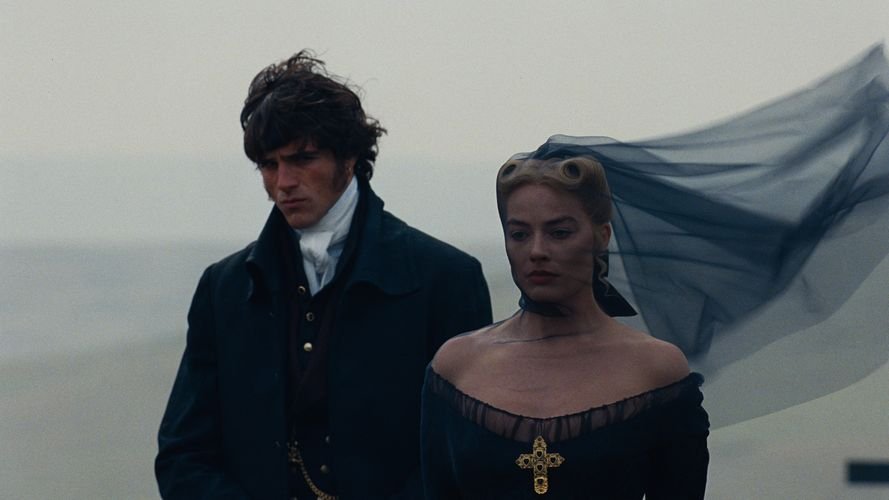
Rarely does a film exercise the public this much before it’s even been released, but Emerald Fennell’s “Wuthering Heights” – speech marks and all – has done it. This has been rumbling along for months actually, and certainly for longer than usual, even for most contentious film adaptations. Long before the trailer landed, it was all about who’s in the film. Fennell’s casting decisions – too old, too blonde, too pale – have been picked up on with what you could term accusatorial glee by people ready to get bent out of shape to prove their knowledge of the source text – knowledge which has turned out to be a bit piecemeal in places, if we’re being harsh. This continued; Catherine’s dresses were anachronistic; even the fabric was ‘wrong’; the accents were not up to scratch; finally, Fennell herself shouldn’t have bothered, being as she is too posh, and therefore somehow out of the running to direct a film where the spectre of class and wealth casts an undeniable shadow over the relationship between Catherine Earnshaw and Heathcliff… or, maybe that could work rather well? In some cases, hatred for the film feels more like personal hostility towards the director; perhaps consider what she could be doing with her unstinting privilege, and be grateful she’s making bold, original feature films instead.
Forget all of that. Or, rather, if you’re determined to be annoyed by “Wuthering Heights”, then fill your boots: there’s already a raft of affirmative reviews for that out there, many of which have had a blast evaluating a film against criteria it was never suggested it had. This fever dream version of the novel is visually stunning, captures elements of the book’s subliminal energy and passion that haven’t yet been brought to the screen, and though it plays fast and loose with key plot points, to this reviewer it feels affectionate and engaged, not cynical or jaded. If it’s all a bit much for you, then feel grateful that the novel’s worst excesses have been left on the page: tortured wildlife, hanged pets, imprisonment, domestic abuse, even unearthed corpses. Remember also that Wuthering Heights has been adapted for the screen many times, and not one has been a faithful retelling of Emily Brontë’s novel – a novel which, by the way, her sister Charlotte apologised for in her preface to the book, noting that it contained characters full of “perverted passion and passionate perversity”, which wouldn’t be a bad description of the 2026 film. In Emerald Fennell’s rendition, arguably her second take on the novel (oh come on: Saltburn essentially follows the same story arc), the second generation of Heathcliffs and Lintons never come into existence; the film sticks closely with the first-generation love story, not lingering on the legal apparatus later used by Heathcliff to disinherit those who wronged him, but staying very, very close to the mutual passion which made Brontë’s Heathcliff want to avenge himself in the first place. It’s a singular reading of the book, sure, but it’s valid, daring and gorgeous.
Starting with a public hanging which instantly conflates and foreshadows the film’s big, bold links between sex and death, we meet Cathy as a little girl. Her father, here a hybrid between the kindly, if odd Mr. Earnshaw who brings home a ‘Gipsy brat’ from a sojourn to the dock city of Liverpool and Cathy’s older brother Hindley (played with zeal by Martin Clunes) divides his time between getting grotesquely drunk and squandering all of his money on gambling, but finds a moment to bring home an abused and rootless little boy from the marketplace, christened Heathcliff by young Cathy. The child actors in this part of the film are fantastic. Owen Cooper, who plays Heathcliff, made a ferocious impact playing Jamie in the TV series Adolescence in 2025 and he’s great here, too, balancing the slow-burn of an ardent attachment to his foster sister with a masochistic, taciturn streak which turns readily into tangible cruelty in adulthood. Young Cathy (Charlotte Mellington) comes closest to capturing the ‘wild wicked slip’ epithet bestowed on her by Nelly Dean in the novel; it’s worth remembering that, landowners or not, the Earnshaws live on a working farm; there’s no long stays at school, no lessons in etiquette and no mother to keep her daughter in line. Little Cathy is a headstrong menace, even if her heart is (sometimes) in the right place. The Heights here is a like Fellini’s Satyricon (1969) come to the edge of the Yorkshire moors, by the way: the striking visuals of the house help to position the whole narrative somewhere on the fringes of reality and possibility, making the whole thing feel like a febrile hallucination. If you can get your head around that and accept it on its own terms, then you’ll likely enjoy the rest.
In adulthood, Cathy is at a loss what to do with herself: when she’s not dragging her skirts through pigs’ blood, she’s stuck in a childlike inertia, unmarried, without occupation and reduced to stamping her foot at her father’s ongoing excesses as the house threatens to disappear from under them via a slew of unpaid bills and debts. Her sexual feelings for Heathcliff, still on hold at this point, are quite suddenly lit by a touchpaper when she becomes innocently exposed to the fact that the servants are conducting assignations of their own in the darkest corners of the house; she sees this at the same time as Heathcliff does, but before anything happens, Cathy’s curiosity over the new, wealthy neighbours down at the stately Thrushcross Grange throw her into the path of the kindly Edgar Linton (Shazad Latif) and his ward – not his sister, in this film – Isabella (Alison Oliver). Catherine sprains her ankle trying to peer into this Secret Garden world and ends up staying for a period of time to recover. She returns to the Heights as a lady, or at least looking like one, and shortly afterwards – here compelled by the spectre of imminent poverty – she finds herself engaged to Mr. Linton. Heathcliff overhears her say that she has accepted Edgar, and that it would degrade her to marry Heathcliff. He disappears, leaving Cathy to the comfortable boredom of the Grange, but once he’s a made man, he returns to stand by the words he spoke as a child – that he would take any punishment for Cathy’s sake. This being finally out in the open, their affair becomes by turns all-consuming, soul-sapping and toxic; it’s worth remembering that these are not nice people – and were never intended to be – but their lust for one another is undeniable, pushing the film onwards to its fatalistic conclusion.
Where the novel hints (but hints strongly) at the romantic and sexual attraction between Cathy and Heathcliff, Fennell’s film thinks, let’s just go for it. Just once. Let’s do a version of the story where Cathy and Heathcliff’s love is about as far away from unconsummated as it’s possible to get. Admittedly, even all this passion gets a little plodding, but there’s undoubtedly chemistry between Robbie and Elordi; the age difference doesn’t seem like a problem, and some of the set pieces used are absolutely painterly. Heathcliff, once the street urchin, has no problem clambering in and out of Thrushcross Grange when he wants; Edgar seems perfectly clueless at first, though when he eventually begins to take back control of his house and his wife, he essentially imprisons Catherine in her room, finally forcing the impasse between her and her true love. Thrushcross Grange here is an enchanted space, lush and strange, a doll’s house world within a doll’s house world, but a gilded cage nonetheless. Catherine’s room, bizarrely, is a facsimile of herself, the walls decorated to resemble her skin, walls which are bled just like she is during her illness. Like The Masque of the Red Death, every room has a colour and a theme, and every room bears closer inspection. It’s not real, and doesn’t want to be. Had an obscure arthouse director come up with this, and had audiences had to seek it out, the film would be lauded around the world.
Of course, no film is perfect and “Wuthering Heights” has a few less successful elements, beyond the repetitive nature of Cathy and Heathcliff’s hook-ups. There are misfires; for example, against an array of earthy Yorkshirewomen grudgingly cleaning up Mr. Earnshaw’s vomit after a libation, we get a strange, strained version of Nelly Dean (Hong Chau) who turns out to be some illegitimate offspring of the landed gentry, dumped at the Heights to alternate between a maid-of-all-work and a haughty lady-in-waiting, sometimes joining in with the housework and sometimes sitting aloft like a moral cipher. There’s no real vigour to the role, and it feels on several occasions that this Nelly is only around to play receptacle to some of the novel’s finest lines. Which, by the way, this film does contain: lots of Cathy and Heathcliff’s most ardent speeches are included and still pack an emotional punch. Some reviewers have been uncomfortable with the few tension-busting moments of humour in the film, but they work: remember, again, that the film is based on a book which has its own, awkward moments of comedy too. Audience discomfort with the most strident reminders of the film’s sexual undertones show a director utterly confident in the version of the story she’s created, who doesn’t much care, and feels like she can joke. It’s refreshing.
There’s a huge weight of expectation around any literary adaptation like this, but Fennell has gone her own way, and whether you can get fully on side with that or not, she deserves praise for it, not snide hostility. She doesn’t owe you social realism, folks, no film ever does, and if you’re feeling a tad “smooth-brained“, go back and read the book.
“Wuthering Heights” (2026) is on general release now.