Bear (Michael Johnston) is a music store employee who harbours romantic feelings for childhood friend and co-worker Nikki (Inde Navarrette), but is finding it difficult to articulate his affection. Mutual friend and workmate Ian (Cooper Tomlinson) thinks that Bear shouldn’t risk jeopardising the current, comfortable situation between members of their easy-going social group, which also includes yet another music store staff member in the form of Sarah (Megan Lawless).
When Nikki loses a favourite crystal necklace of hers, Bear finds himself at a local mystic store with the intention of looking for a replacement. Deciding that presenting someone with jewellery is possibly too much of a statement and possibly too much money, he ends up buying a supposedly supernatural item called a One Wish Willow, with the intention of gifting it to Nikki as a fun but still thoughtful present. Instead, after a little deliberation and self-reflection, Bear decides to take the long shot of using the novelty toy to wish that Nikki loves him more than anyone else.
Bear initially thinks the One Wish Willow’s powers are nonsense, but the shortcut to Nikki’s heart appears to work as she asks Bear if she can sleep at his house, because she doesn’t want to be alone after receiving some bad news about her father. Reluctant to do so at first, Bear agrees, but the fact that she hasn’t exercised a choice in choosing Bear over the bear is about to backfire on our hitherto lovelorn fella in ways he would never have predicted.
Writer/director Curry Barker’s previous project, the micro-budgeted, found footage chiller Milk & Serial, made its home on YouTube and garnered a number of positive notices which made Barker’s move to the big screen both inevitable and more than welcome. Milk & Serial landed in a well-established, arguably tired subgenre and still managed to introduce freshness and unexpected shocks. Obsession takes classic tale The Monkey’s Paw as its base and skews it into an unforgettable, suffocating nightmare of a dependent relationship taken to the extreme, short on jump scares but long on gripping, inescapable terror and fuel for discussion long after you’ve left the cinema.
The film opens with Bear stumbling over his words as he attempts to explain how he sees Nikki as more than just a friend and colleague, but this is soon revealed to be a practice run in a diner, with a waitress acting as stand in for the object of Bear’s affection and Ian supplying less than constructive feedback on the sidelines. Arguably, the death of Bear’s cat Sandy does not help with any kind of preparation for revealing his long-suppressed yearning, but the option to remove any chance of rejection proves too tempting.
Here lies Obsession’s complexity and straightforward genius. Bear suddenly finds himself trapped in a situation where any thoughts of redefining the partnership are met with increasingly unhinged behaviour, but it’s Bear who removed Nikki’s ability to consent. He only has himself to blame when he wakes to find that he’s being watched from the shadows of the bedroom and when his girlfriend doesn’t even want him to leave her in order to go to work (watch for the reveal with the door). I won’t even mention how Nikki chooses to memorialise Bear’s cat.
Barker’s background in comedy plays perfectly into Obsession. As an example, if you’re a fan of the Tim Robinson series I Think You Should Leave, many of the uncomfortable set-ups in that show could easily tilt into unfiltered horror if they were taken to their disturbing apogee. Here, there are sequences that could be mined for their coal black humour, but almost all of the laughs I heard in the screening I attended were of the nervous variety. Barker himself provides an effective voice cameo as a disinterested customer helpline operator, but even those uneasy chuckles generated by Bear’s latest, increasingly desperate bid to find a way out hit an abrupt, ghastly dead end.
Rather than have Nikki launch into Fatal Attraction-style mania from the start, her outbursts and changes in behaviour are sufficiently tempered to cause concern, but also keep Bear thinking that somehow, someway, he will be able to fix all of this, because he’s being worshipped by the woman he thinks was always out of his reach. For different reasons, Ian and Sarah don’t buy the sudden lurch from friend zone to devotion, but neither can quite work out why and, for very different reasons, don’t want to ask too many questions.
Obsession’s sly screenplay is full of loaded lines and astute observations, but ultimately this stands or falls on its performances and Barker is incredibly well-served by a brilliant cast. Johnston’s Bear is described at one point as a “closed book”, suggesting hidden depths, but his portrayal of the character immediately reveals a mass of insecurities, a built-in unwillingness to confront the truth and a bewilderment that nothing is ever his fault, while also skilfully suggesting that maybe this guy has no ambition whatsoever, other than working a job that requires minimal effort as long as he can bask in the glory of having an amazing wife waiting for him at home.
Tomlinson puts in a satisfying shift as the kind of low-key douche we’ve all known, Ian being the sort of guy who’s unproportionally inconvenienced by the slightest thing that doesn’t fit with him being the centre of the universe, whilst Lawless brings a sense of worry for the viewer as a genuinely caring sort who generally ends up as the collateral damage when a group with a close bond comes under unnatural stress (and there’s little more unnatural than the particular type of stress that’s caused by Bear’s actions).
Bouquets, of course, must go to the astounding Inde Navarrette – obviously, the biggest bouquets you can find with a note on each making sure you tell Nikki that you love her so, so, so, so much. Her “disappointed” face is next level unnerving; her smiley face is one of the most alarming things I have ever seen. I was petrified on a molecular level. The unpredictable, mercurial nature of Navarrette in almost every single scene will put the audience in a state of constant agitation, and yet there are fascinating moments at which Nikki seems to get a glimpse of just how worryingly fixated she is without ever being able to control it. Again, we have a showstopping performance in a horror movie and it’s about time the genre gets the respect it deserves. None of this “elevated” bullshit either.
I plan to head back and rewatch Obsession a number of times, because I’m almost certain I missed a number of clever details the first time around due to the fact that I was genuinely terrified for a large proportion of it. What with this and Undertone, 2026 is shaping up to be a year in which I wander out of a screening shaken and, as a veteran horror hound, that’s an uncommonly delightful place to be. Once you catch your breath and level out, of course. It may have a fantastical premise, but you should brace yourselves for some real, grounded fear.
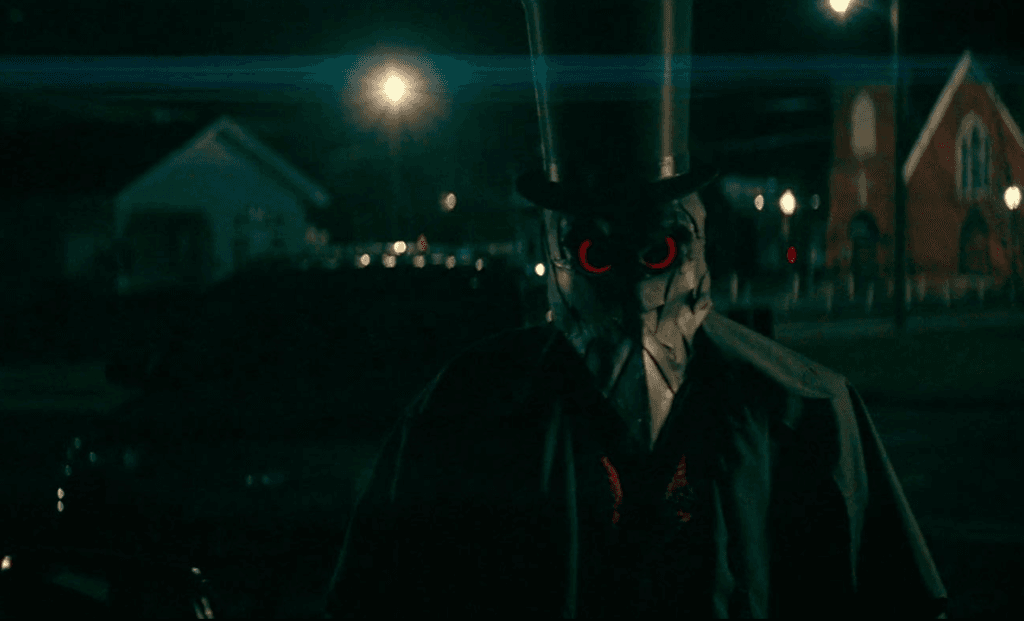
Leslie (Lily-Claire Harvey), Brian (Turner Vaughn) and Moses (Matthew Tichenor) are three friends who work for Hooper Industries and the preparations for the firm’s New Year’s Eve bash are in full swing, despite a general lack of enthusiasm at having to work for the sexist, misogynist dinosaur that is Mr. Dugan (Dave Sheridan). Unbeknown to them, the party is going to be livelier than expected as a serial killer known as The Doctor has upped sticks from his previous kill zone and headed to their home state of Kentucky to continue his kill spree…
Directors P. J. Starks and Eric Huskisson are clearly dyed-in-the-wool horror fans, because their love letter to slasher movies is full to bursting with nods to icons of the genre, whether it’s the bar called Coscarelli’s, characters with very familiar surnames (such as an employee called Harry Warden) or the inclusion of such recognisable figures Sleepaway Camp star Felissa Rose and Scary Movie alumnus Sheridan, plus deeper casting cuts such as Final Destination creator Jeffrey Reddick.
Rose gets to throw herself into the part of the perma-enthusiastic Stephanie, Reddick is actually a bit of a hoot as deadpan, exasperated HR rep Norman Perkins and Sheridan gets to lean into cringe-inducing workplace humour as the boss from Hell and the source of Perkins’ exasperation. The opening act leans into The Office’s style of provoking laughs from viewers while they watch through their fingers; meanwhile, the emphasis on gags which focus on bodily functions and fluids may have some feeling ready for the plague-masked killer to lay into the cast as soon as possible, starting with Dugan. Your wish is New Fear’s Eve’s command.
A lot of people die in this movie. Sometimes in groups. Always in gruesome fashion. The opening sequence, which catches us all up with The Doctor’s previous exploits via a news report, bumps off no fewer than five folks in West Virginia with an accompanying, brisk shot of gore for each. Once it switches to the three main protagonists, there could be a feeling that Starks’ screenplay is going to kick its heels with matey interactions and possible romantic complications but no, there’s just enough time to establish these folks as the guys who are likely to make it to the last few minutes before the kills start up again and rarely stop, save for a subplot involving law enforcement which still manages to include a splattery, Saw-style, multi-victim trap.
It feels as if the creative forces behind this wanted to use as many different implements as possible to cause loss of life and didn’t cross any of them off the whiteboard, so there’s murder by knife, hand drill, axe, cleaver, hand drill, scalpel-loaded crossbow, shears, dildo (yep!), toilet (yep!) and many more besides. Faces are ripped away, throats are ripped out, but nothing feels ripped off despite the constant references, both visual and verbal. The main trio takes time out to namecheck other New Year’s horror movies (Norman J. Warren, your time is now) and there’s even a riff on a joke from Die Hard which is instantly dismissed as being inappropriate for that segment of the holiday season.
New Fear’s Eve’s wafer-thin story may just be a peg on which to hang a series of gory set pieces, but the enthusiasm for the project is infectious, carrying the whole thing through the moments where the performances or the jokes don’t quite hit the mark. It might degenerate into a line ‘em up, hack ‘em down procession of disposable folks who get to show up, maybe say a line or two and then get dispatched in bloody fashion by a psychopath they can’t outrun (or don’t try to), but gorehounds who tuned into such franchises as Friday The 13th or the later Elm Street movies primarily for the body count will find their lust for carnage sated here.
If anyone expected a serious, suspenseful update of costumed executioner tales, I suggest that the title gives more than a hint of this film’s intent and, although blood sprays and guts spill with relentless regularity, the tone is comedic and the violence imaginatively cartoonish. You’ll almost certainly be chuckling rather than chundering and waiting until our featured friendship group finally gets pulled into the mayhem.
New Fear’s Eve is tropey. Of course it’s tropey, that’s the point. Starks and Huskisson know that our final folks can flee from the menace, but anyone lower down the cast list will stand in place to get annihilated. Guest stars are there to burn brightly and briefly. The killer will appear next to the next target without them noticing. The effects are the show and, more often than not, they’re pleasing and practical. The ending teases a potential follow-up, with the final girl having faced off with The Doctor and…
…ah, now this is where New Fear’s Eve diverts from the usual template, because the tale comes to an abrupt halt and the end credits take the place of where I’d expected a final shock or confrontation. This lack of a solid resolution risks the erosion of some of the goodwill built up over the previous eighty-odd minutes, especially for anyone seeking anything approaching a crumb of conclusion, but there’s an audacity to bringing the curtain down at that point and an eye on extending the lore is a feature of so many genre entries, so I can’t be as mad as I probably should be.
Undemanding, genre-literate and fun, New Fear’s Eve may prioritise sanguinary spectacle over substance but hey, are you here for Oscar-level acting? Don’t pretend you are. We’ve all rented this kind of thing for an untaxing watch after coming home from the pub on Friday nights in years past, so why should we get sniffy about a modern spin?
In 1983, the Director Of Public Prosecutions published its first list of movies which were tagged with the tabloid-friendly label of Video Nasties. These cinematic outliers were deemed to have to power to deprave and corrupt and, if the title in question had been successfully prosecuted under the Obscene Publications Act of 1959, any dealer stocking it could be fined or jailed. In one case, involving Romano Scavolini’s Nightmares In A Damaged Brain, one of its distributors was sentenced to eighteen months in prison (eventually reduced to six months on appeal, but sheesh).
It was a heady time, driven by moral outrage, framed as a battle for the very soul of the United Kingdom, and the seventy-two films that appeared at one time or another on that DPP list attained a level of notoriety their filmmakers never expected (unless, arguably, you were Umberto Lenzi). Thirty-nine remained banned, thirty-three were dropped from the list. All of them became must see items, of course.
As the memory of those crazy days fades and those of us who lived through the Nasties era scratch our heads and wonder what all of that hysteria was about, did those movies actually threaten the fabric of society as we knew it? Let’s take a look at another of them…
CANNIBAL TERROR (1980, dir. Alain Deruelle)
*** THIS REVIEW CONTAINS SPOILERS ***
Mario (Antonio Mayans, credited as Antony Mayans) and Roberto (Antoine Fontaine, credited as Tony Fontaine) are two small time criminals who, with the help of a woman named Lina (Mariam Camacho, not credited at all), kidnap the daughter of millionaire Monsieur Danville (Olivier Mathot, credited as, er, Olivier Mathot). The fugitives from justice then hightail it over the border to a safe house to await the ransom. However, their journey is rudely interrupted by a tribe of cannibals (yep, we’re all sick of that happening) and, although our shady trio escapes their clutches, plot shenanigans dictate that this will not be the last time they come up against this bunch of people munchers…
After the Italians proved to be dab hands at the queasy delights of the cannibal-inflected adventure flick, other European folks saw the opportunity to jump on the bandwagon and production company Eurociné thought they’d help themselves to a piece of the human shaped pie. They had three cannibal-related movies in production around the same time, the other two being Jess Franco’s White Cannibal Queen (also known at Cannibals) and The Devil Hunter (also known, at least by me, as What The Hell Did I Just Watch?). Surprise, surprise, both of these titles are present and (in)correct on the Video Nasties list.
Terreur Cannibale, to give Deruelle’s opus its original, French title, shares footage with the aforementioned White Cannibal Queen because Eurociné were fond of cutting budgetary corners. Case in point: their 1981 undead Nazis vs French villagers tale Zombie Lake was offered to Jess Franco, who apparently turned it down due to the lack of money provided for the project. Considering how little cash Franco was able to make a film for, that’s a damning indictment. By the way, my description of Zombie Lake, which also found its way on to the Video Nasties list, makes it sound several times more exciting than it actually is.
Although Deruelle is generally credited as the director of the piece and made an appearance at the 1980 Cannes Film Festival promoting the movie (which I find hilarious), other prints credit Julio Pérez Tabernero as the guy at the helm and some anecdotes suggest that cast member Mathot may have assisted along the way. For the UK release, Deruelle was given the pseudonym of Allan W. Steeve, which is flirting with Alan Smithee a little too much for my liking. Regardless of who was in the director’s chair, Cannibal Terror is, not to put too fine a point on it, shite. I know that’s not a particularly erudite way of describing something, but I think it fits the bill perfectly. It’s shite.
Shite, I hear you say (especially as I’ve just used that term twice)? How so? Pull up a chair, because I have thoughts. The opening seconds do not bode well for the remainder of the runtime, as the jolly, La Bamba-esque stomper of a theme from Jean Jacques Lemeztre heralds the beginning of an, er, cannibal movie. Not the doomy synths of Donati preceding Ferox or the wistful, intriguing Ortolani stylings of Holocaust’s theme, it’s party time on the French Riviera and you’re all invited! Coupled with that, as soon as the English dub kicks in, you’ll be convinced you’re in trouble. What was the point in anyone trying to sync the dialogue properly? It’s all in another language and it wouldn’t have matched up anyway. You’re here for the cannibal stuff, right?
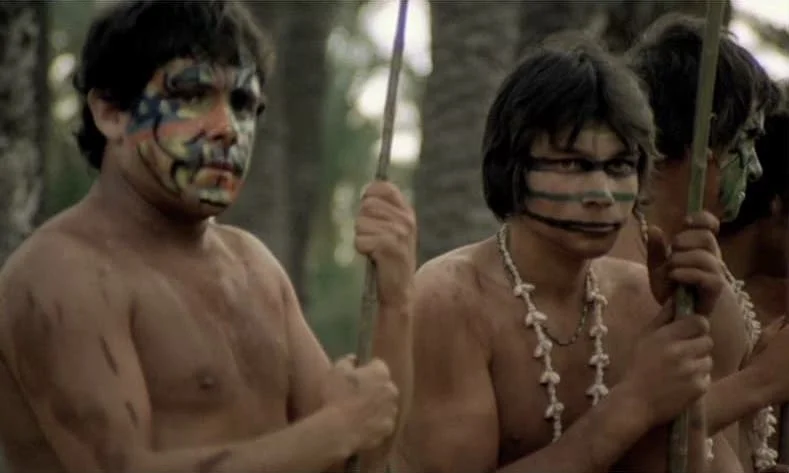
If you are here for the cannibal stuff – and that’s probably the only reason you are – it takes around twenty-five minutes for the tribe to show up and make off with Mickey, a woman who a) takes it upon herself to drive the kidnappers and kidnappee into the jungle and b) is there to provide some first act disembowelling material. The sequence in which Mickey is killed off is risible for a number of reasons: the jungle appears to be scrubland somewhere in Spain; it showcases just how inauthentic – and European looking – the cannibals are; the suspense generated as to her inescapable fate is absolutely zero; and the gore effects come courtesy of what looks very much like a pig carcass that’s been stuffed with various items of offal.
This amateur hour approach to the gruesome moments is likely to be one of the reasons that, although Cannibal Terror made it on to the very first DPP list of Nasties, it was subsequently dropped and when 88 Films finally dared to foist it back on the public in 2003, it passed through the British Board Of Film Classification uncut and without so much as a whiff of controversy. Yes, the original VHS video box cover was designed to emphasise terrifying savagery, but it looked more like a bunch of blokes chowing down on undercooked ribs after participating in a face painting session. In terms of what’s on screen, viewers were far more likely to be offended by the shoddy filmmaking than the amateurish displays of blood and guts.
Likewise, the potentially upsetting scenes in which Mario stalks and then assaults the bound Manuela (Pamela Stanford), the wife of safe house owner Antonio, are so incompetently staged that they wind up being offensive in a different way than they were intended. Manuela can clearly extricate herself from the ropes with very little effort, but instead we’re treated to an extended helping of Mario slobbering all over her and thrusting at an angle which suggests he’s having sex with thin air.
Of course, once Antonio finds out what’s happened to his missus, his feelings of hospitality for Mario and his mates run out very quickly. With equally terrible rope-tying skills, Antonio traps Mario in the same place as Manuela was attacked and then whistles (!) for the cannibals to exact revenge on his behalf and grab themselves an unexpected, all you can eat buffet. Meanwhile, Danville is on a mission as he closes in (very slowly, mind) on his missing daughter. Everyone and their dog eventually wanders past the remains of Mario – not entirely sure why what’s left of him has been abandoned in plain sight – and the rest of the crims are captured by the cannibals. It ends with more unconvincing entrail spilling, the kid is returned to her parents and that sodding piece of jaunty music gets another airing.
Oh, sorry, did I spoil the ending? Let’s be honest, I’ve saved you ninety-three minutes which you would have wasted on watching this. At best, this is a curio for anyone who’s wondering just what kind of material provoked the ire of the censorious. At worst, this is genuinely one of the most awful movies you’re likely to see. All those folks who go to the cinema to watch a technically proficient, decently acted but not especially great movie and then take to social media to pronounce it “Worst. Film. Ever.”? It’s blindingly obvious none of that lot have seen anything of the likes of Cannibal Terror.
It’s highly likely that there was no completed script when Cannibal Terror began filming and that the story was being written as the production went along. I would say that this explains the pacing being off, but in terms of the pacing, there is none for me to complain that it’s off. It’s a grind from start to finish, there’s almost no character development and even fewer surprises as Deruelle throws his disposable protagonists to a bunch of ridiculously realised savages, whose tribe seems more likely to be knocking back a cerveza or two of a weekend rather than carving out a primitive existence in the uncompromising wilderness. They spend most of their time jumping on the spot to the latest jungle sounds and holding spears which are never actually used to stab anyone.
A number of years back, I wrote a blog piece covering a dozen different cannibal movies from Umberto Lenzi’s seminal 1972 subgenre entry Deep River Savages all the way through to 1988’s gore-lite Natura Contro from Antonio Climati. Cannibal Terror was one of the titles I sat through; I thought it was the worst of the lot by some way back then and the intervening years have done little to change my mind. Even if you’re a connoisseur of bad films, this doesn’t fall into the “so bad it’s good” category. It’s just bad. Very, very bad. Cheaply made, terribly dubbed, dreadfully acted and remarkably dull, even the extended scenes of laughably fake gore outstay their welcome and only serve to enhance the paucity of the technical knowhow attached to this production.
This appears to have been Deruelle’s only foray into the horror arena but, outside of this apocalyptically awful waste of celluloid, he made a number of porn films under the alias of Alain Thierry. I can’t say I’ve had the pleasure of seeing any of those, but I’m willing to bet that that most, if not all of them, are more fun to watch than Cannibal Terror. Fill your boots if you have a fetish for badly tied knots. Everyone else, you have been warned.
In 1983, the Director Of Public Prosecutions published its first list of movies which were tagged with the tabloid-friendly label of Video Nasties. These cinematic outliers were deemed to have to power to deprave and corrupt and, if the title in question had been successfully prosecuted under the Obscene Publications Act of 1959, any dealer stocking it could be fined or jailed. In one case, involving Romano Scavolini’s Nightmares In A Damaged Brain, one of its distributors was sentenced to eighteen months in prison (eventually reduced to six months on appeal, but sheesh).
It was a heady time, driven by moral outrage, framed as a battle for the very soul of the United Kingdom, and the seventy-two films that appeared at one time or another on that DPP list attained a level of notoriety their filmmakers never expected (unless, arguably, you were Umberto Lenzi). Thirty-nine remained banned, thirty-three were dropped from the list. All of them became must see items, of course.
As the memory of those crazy days fades and those of us who lived through the Nasties era scratch our heads and wonder what all of that hysteria was about, did those movies actually threaten the fabric of society as we knew it? Let’s take a look at one of them…
THE BOGEY MAN (1980, dir. Ulli Lommel)
*** THIS REVIEW CONTAINS SPOILERS ***
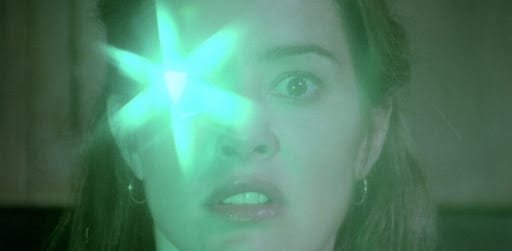
When young siblings Willy and Lacey (real life brother/sister combo Nicholas and Suzanna Love) are spotted spying on their mother kissing her current boyfriend, her brutish beau ties Willy to the headboard of his bed and Lacey is sent to her room. Lacey frees Willy and her brother takes serious umbrage to being bound, grabbing a large knife from the kitchen and stabbing the boyfriend repeatedly. Twenty years later, Lacey and Willy live on a farm with their aunt and uncle, Lacey being married with a young son and Willy still mute from the trauma of two decades ago. A terrifying incident leads to the soul of their mother’s murdered boyfriend being released from his prison in a mirror, and the boogey man is back…
I say “boogey man” because The Boogey Man is the original US title of Ulli Lommel’s supernatural slasher but UK audiences clearly wouldn’t have had a clue what boogey men are so a renaming to The Bogey Man resolved the obviously massive comprehension issues across the pond. Was there a danger of Brits hearing the name of the film and thinking it was about a dance competition? Same issue in the States with that, to be fair. Anyway, Bogey in the UK, Boogey in the US. Sorted.
In my review of Absurd, I mentioned that I hadn’t gone out of my way to see those items on the Video Nasties list when I was underage. This is still kind of true with The Bogey Man, but a friend of mine was desperate to see it, mostly on the strength of the Vipco release’s lurid front cover, and the same rental shop which was quite happy to see me wander out of the place with a Joe D’Amato sci-fi gorefest were equally quite happy for me to experience some cursed mirror shard shenanigans at home. The assumptions was that I was renting it for my parents. Yeah, right.
Full disclosure: I really did not like that front cover. There’s a stylistically similar shot from Battleship Potemkin (bet you didn’t think I’d be referring to Sergei Eisenstein in this review) with blood running down a face that still gives me the ick in exactly the same way as the claret cascading down Llewellyn Thomas’ bonce freaked me out every time I clapped eyes on the box in the video shop. The late Mr. Thomas has this as his profile photograph on IMDb, which is a nice touch for the unsuspecting.
With one-time Warhol associate Lommel’s original background in more arty – though still gruesome – fare such as 1973’s Tenderness Of The Wolves (which boasts Rainer Werner Fassbinder as a producer), there’s more than a chance that the blood shower given to the character of Father Reilly was a nod to a classic from the 1920s and The Bogey Man does provide an intriguing bridge between the American slasher craze of that era and a more considered, European approach to its chills.
At the time, Lommel was married to lead actress Suzanna Love, a Dupont heiress who, after a debut appearance in 1979 musical Hair under the alias of Suki Love, acted in a series of her spouse’s flicks and more than likely assisted on the financial as well as the performance side. She’s actually pretty decent here as Lacey, even when she has to act possessed in front of an admirably straight faced psychiatrist played by John Carradine in one of his many late career horror movie cameo appearances.
In the case of The Bogey Man, there’s a case to be made that the British Board of Film Classification were going after the packaging of the video release more than the content of the movie. After all, it had been awarded an uncut “X” certificate for its bow at the cinemas and, although there are extra considerations to be made for home viewing in terms of the potential for repeat watching and pausing the more salacious moments, there’s nothing much to truly upset the viewer here. The murder set pieces are imaginative and budget conscious rather than aggressively gory, although the BBFC klaxon for blood running down breasts would be sounding in one sequence following a scissor attack.
Let’s be honest, Mike Lee, the head honcho of Vipco, knew how to pull in the punters, using the box design to promise a non-stop barrage of blood and guts and choosing the gnarliest still they could in order to tempt the public in the video shop. The case par excellence for this was their release of Driller Killer, the cover of which captures some screaming bloke, mid-trepanning. As a marketing tool (excuse the pun), it was effective. As a reason to ban the movie, it was even more effective.
The censorship journey of The Bogey Man is an interesting one, as the uncut version was dropped from the DPP Video Nasties list when a prosecution couldn’t be secured. Previously having been awarded a BBFC certificate with zero controversy attached probably didn’t help the forces of law and order. When it was re-released some years later, and the industry was arguably even more twitchy about horror movie content, forty-three seconds was trimmed, losing much of the dream sequence in which a bound Lacey is dragged along the floor and into a bedroom where she’s about to be stabbed. Even so, Vipco marketed the movie like it was still a ferociously transgressive genre piece, even though it never really was.
As with a number of the Nasties, modern viewers of The Bogey Man will be left scratching their heads as to just what the fuss was about. It’s less bloody than a lot of its peers and its killer, be it the stocking headed bloke in the mirror or the glowing glass shard out to wreak telekinetic havoc, is unlikely to be the stuff of nightmares. The proceedings don’t really kick into gear until about halfway through either, so folks expecting a spectral Friday The 13th riff will be twiddling their thumbs until the scissor kill and a kid getting surprisingly, though bloodlessly, offed.
Shot for around $300,000, the restrictions of the budget do occasionally show through (watch for the BBQ with a single sausage) but it’s attractively filmed and the performances are generally appealing. The electronic score from Tim Krog is evocative (although my podcast co-host will disagree vehemently with that) and the climax is a fun and fiery one, as a couple of likeable but disposable characters up the body count, Willy predictably speaks after twenty years of silence and a revelation about how to destroy the mirror finally sees off the bogey/boogey man. Or does it? The final shot suggests otherwise, and the sequel Revenge Of The Bogey Man, which was also handed a spot on the Nasties list, obviously confirmed that.
The Bogey Man may try to have its cake and eat it in terms of mixing ghost story and slasher plot beats and some of its attempts at chills may elicit chuckles for those visiting it for the first time forty-odd years on, but this remains a standout in Lommel’s filmography, many years before he started churning out almost unwatchable serial killer films on a dispiritingly regular basis. However, let’s forget where Lommel’s career ended up, and look back with fondness on this 1980 effort, which is both creative and charmingly ragged.
US audiences responded positively, and The Boogey Man made back its budget several times over at the box office. However, distribution company The Jerry Gross Organisation went bankrupt at the time of the film’s release, leaving the cast and crew wondering where the money had gone. That’s a shame, because the folks behind this deserved at least some kind of reward for providing such a singular take on the slasher genre. As a footnote, the UK release of The Bogey Man teamed it up with the 1978 Canadian apartment complex invasion thriller Blackout. That’s a double bill I would go back in time to watch.
In 1983, the Director Of Public Prosecutions published its first list of movies which were tagged with the tabloid-friendly label of Video Nasties. These cinematic outliers were deemed to have to power to deprave and corrupt and, if the title in question had been successfully prosecuted under the Obscene Publications Act of 1959, any dealer stocking it could be fined or jailed. In one case, involving Romano Scavolini’s Nightmares In A Damaged Brain, one of its distributors was sentenced to eighteen months in prison (eventually reduced to six months on appeal, but sheesh).
It was a heady time, driven by moral outrage, framed as a battle for the very soul of the United Kingdom, and the seventy-two films that appeared at one time or another on that DPP list attained a level of notoriety their filmmakers never expected (unless, arguably, you were Umberto Lenzi). Thirty-nine remained banned, thirty-three were dropped from the list. All of them became must see items, of course.
As the memory of those crazy days fades and those of us who lived through the Nasties era scratch our heads and wonder what all of that hysteria was about, did those movies actually threaten the fabric of society as we knew it? Let’s take a look at another of them…
ABSURD (1981, dir. Joe D’Amato)
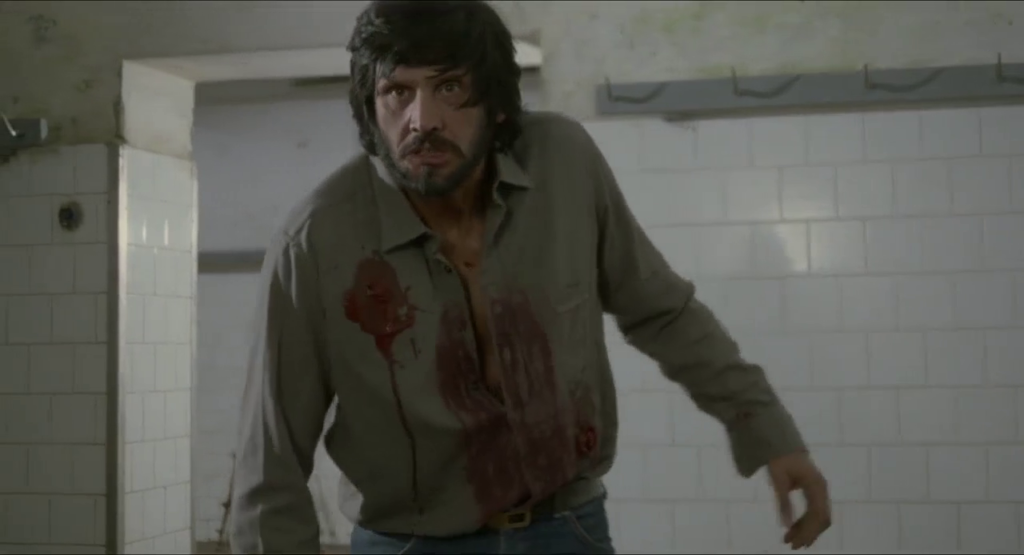
Escaping from a church-sanctioned series of medical experiments, Mikos (George Eastman) arrives in small town America, with a Vatican priest (Edmund Purdom) in hot pursuit. The chase ends with Mikos being disembowelled on a set of railings – is there any other need to include railings in horror movies unless someone ends up on the spiky end? – and that would appear to be that. But no! The experiment was to give its recipient healing powers and before you can say “Who left that drill lying around?” Mikos regenerates and escapes, driven insane by the dodgy clinical trial and hellbent on wiping out everybody who stands in the way. Plus, a few people who aren’t really in his way at all…
I wasn’t someone who went out of his way to seek out the Video Nasties at a young age. I certainly wasn’t going to ask my parents to rent them for me. Yes, it was a badge of honour for kids in the playground to say they’d watched things like Faces Of Death (I bet they’d only seen the box in the video rental shop) but I wasn’t interested in being cool and that’s a good thing, because I never have been from that point onwards. That said, I did manage to rent Absurd when I was sixteen from a hire place which had clearly never been raided by the police and continued to display it proudly on the shelves long after the Video Recordings Act had come in.
The back cover of the Medusa release had no details of the plot whatsoever, opting instead for the following text: BRUTAL!…SHOCKING!…VIOLENT!…SAVAGE!…NOT FOR THE SQUEAMISH! I’d been conned many times by video era hyperbole and my first thought was, who are they trying to kid? Ninety minutes after slotting the tape into our VHS machine, I had to admit it was all of those. Neither I, nor my younger sister who watched it with me, ever forgot Absurd because it contained a level of gruesomeness we hadn’t previously experienced. Was it scary? Not especially. Were we expecting to see some poor unfortunate getting his bonce band-sawed in glorious colour with no cutting away? Absolutely not.
Absurd, re-titled from the original Rosso Sangue, is a quasi-sequel to Anthropophagous, also on the Nasties list, also directed by D’Amato and also written by Eastman (under his real name of Luigi Montefiori), who starred as another killer driven to madness but in a different, more tragic way to what we’re given here. Make no mistake, this is absolute nonsense on stilts, frequently tasteless and often clumsily realised, but the British Board Of Film Classification were having none of it, certainly once it started causing upset in the living rooms of folks who, er, rented a film which featured a bloody axe on its front cover. In any case, the BBFC hauled it in, instructed Medusa to cut just over two and a half minutes from it and then it was free to be released back into the wild with that all important 18 certificate.
The problem with the cut version is that, if you lose all of the gory business, what are you left with? Not a lot, to be precise. The set pieces are the show and, although by modern standards most of the effects look pretty unconvincing now, the impact of such over the top violence was resonant way back when. Montefiori provided the scripts for a number of action and horror pieces and he was always looking for really dreadful ways to bump people off.
We’ll come to the worst of those when I get around to covering Anthropophagous, but elsewhere Luigi was quite fond of having folks collide with power tools and there’s a pickaxe death in this one which was recycled in more stylish fashion a few years down the line in Stagefright, another Montefiori screenplay joint given excellent directorial treatment by Michele Soavi. Soavi himself was apparently an assistant director on Absurd, but he’s not actually in the credits. He appears briefly as a motorcyclist who crosses paths with Mikos and, not much of a spoiler alert, dies. He’s not credited for that, either.
Outside of the Mikos mayhem, Absurd is a bit of a plod, bogged down initially by Purdom’s role as the chief source of exposition and then dragged down by a Superbowl party where the parents of Katia and Willy Bennett (Kayta and Kasimir Berger) are doing their darnedest to enjoy American football at a friend’s house while their kids, babysitter and nurse are being menaced by Mikos, who has turned up again at the place where he previously had his insides torn out because of a hilarious contrivance that I don’t feel I should ruin here.
The Bennetts employ a nurse because Katia is currently bedbound due to a spinal condition, so when it comes to the point where Mikos is trying to gain access to Katia’s room as she desperately attempts to extricate herself from the various straps holding her in place, that very concept takes the proceedings in a chilling new direction. Or it would, if D’Amato could have generated so much as a sliver of tension for any of the shock sequences. Carlo Maria Cordio’s score work, for once, doesn’t particularly help either, which resorts to an annoying, repetitive keyboard battering that usually signals something bloody is about to happen but doesn’t get the hairs on the back of your neck standing up as, say, Carpenter’s work on Halloween did.
While we’re on the subject of Halloween, Absurd is a combination of beats from the first two of those movies with a science gone awry subplot, then stuck in a blender and with added censor-baiting elements on top. In terms of a rapidly healing killer being tracked down by someone who has to stop him at any cost, I’m curious as to whether the makers of the following year’s Silent Rage took a passing glance at D’Amato’s work and swapped out Purdom’s character for Chuck Norris. Purdom does face off with Eastman come the end of the film, but not once does he roundhouse kick him, which is a shame. To be fair, the priest is there to be Absurd’s version of Loomis but, let’s face it, he’s not Donald Pleasance.
Viewed with 2026 eyes, Absurd is an even more curious mix than I’d encountered on my first contact with such disreputable scuzz. The murders are still pretty nasty and it’s easy to see why the BBFC hacked all of them, but there’s a sense of the ridiculous hanging over the whole thing and a large proportion of the runtime is inexcusably dull. Considering the inherent wackiness of the story, the tone is so resolutely po-faced it always risks becoming an unintentional laugh fest and it’s only because Eastman’s tale has the good sense to have Mikos find a prolonged and extravagant way to reduce the cast by one at regular intervals across the piece that will keep even the most tolerant of horror hounds watching. Absurd? Yes, it is.
Oh, by the way, this movie also goes under another, alternative title of Horrible. Sometimes filmmakers just bring it upon themselves, don’t they?
In 1983, the Director Of Public Prosecutions published its first list of movies which were tagged with the tabloid-friendly label of Video Nasties. These cinematic outliers were deemed to have the power to deprave and corrupt and, if the title in question had been successfully prosecuted under the Obscene Publications Act of 1959, any dealer stocking it could be fined or jailed. In one case, involving Romano Scavolini’s Nightmares In A Damaged Brain, one of its distributors was sentenced to eighteen months in prison (eventually reduced to six months on appeal, but sheesh).
It was a heady time, driven by moral outrage, framed as a battle for the very soul of the United Kingdom, and the seventy-two films that appeared at one time or another on that DPP list attained a level of notoriety their filmmakers never expected (unless, arguably, you were Umberto Lenzi). Thirty-nine remained banned; thirty-three were dropped from the list. All of them became must see items, of course.
As the memory of those crazy days fades and those of us who lived through the Nasties era scratch our heads and wonder what all of that hysteria was about, did those movies actually threaten the fabric of society as we knew it? Let’s take a look at one of them…
AXE (1974, dir. Frederick R. Friedel)
*** THIS REVIEW CONTAINS SPOILERS ***
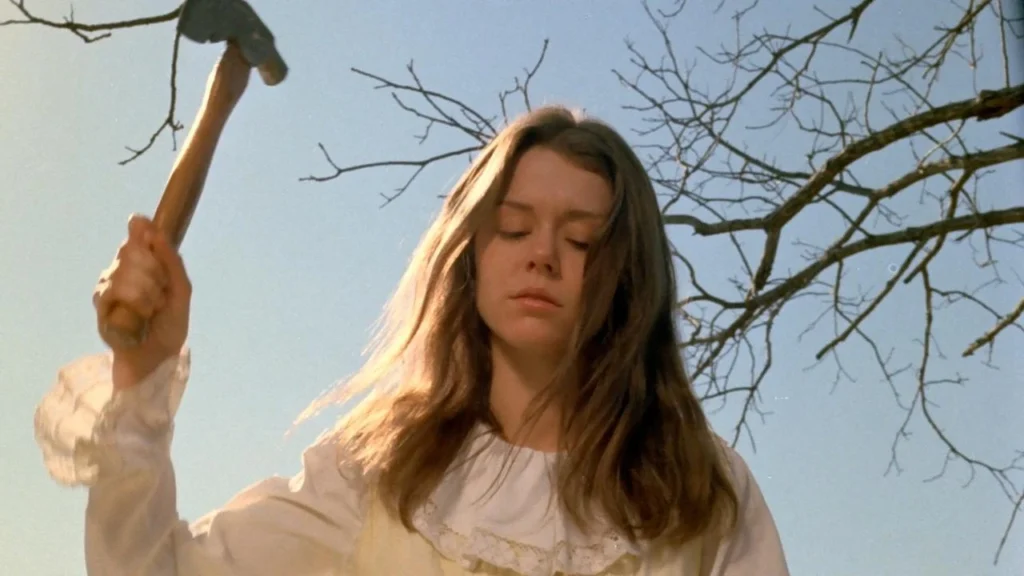
A trio of sharply dressed hoodlums – Steele (Jack Canon), Lomax (Ray Green) and Billy (director and writer Friedel completing his triple-threat status) – leave a trail of devastation in their wake before finding an ideal place to hide out for a while. Said place is a remote farmhouse, where a young woman called Lisa (Leslie Lee, embodying rural unconventionality) looks after her disabled grandfather and takes care of the daily chores on the homestead, including killing the odd chicken with the titular implement, an impassive look on her face the whole time. If these guys think they’re going to take advantage of her, they’re dead wrong.
Originally released in late 1974 as Lisa, Lisa, distributor Harry Novak of Boxoffice International Pictures saw the potential of tapping in the exploitation film market with a change of title, and the newly monikered Axe hit the screens four years later. It’s a title with which Friedel was not particularly enamoured, as it gave the game away regarding what was to come, but it was the UK cinema release which took the prize for least subtle renaming in the form of California Axe Massacre, clearly done to capitalise on a different massacre with a different weapon of choice over in Texas. By the way, the movie was shot in North Carolina.
If you turned up at the flicks for a massacre in either state at the time, you were probably going to be disappointed, although there is slightly more axe-related damage in this one than Leatherface got to dole out with the saw. Axe is more concerned with an examination of isolation and the strangeness of the environment than explicit bloodshed. The characters are all fascinatingly enigmatic, having scant backstory and developing little over the course of the wafer-thin plot. Canon and Green are remorseless, brutish types and hence the viewer will be waiting for them to come to a sticky end. Friedel’s Billy is the more sympathetic youngster of the group and dogged by the guilt of his actions, knowing full well that his accomplices will leave neither Lisa nor her gramps alive before they clear out, but conflicted as to whether or not he should – or will be able to – intervene.
That point proves to be moot as Lisa doesn’t take kindly to impolite, gun wielding city folk invading her turf, especially ones who think all females are fair game. The 1999 UK DVD release of this movie attained what it previously had failed to grab – an 18 certificate – but that came at the cost of losing nineteen seconds of Lomax attacking a sleeping Lisa. The British Board Of Film Classification were, and still are, wary of allowing material containing sexual violence to pass uncut, although the 2005 re-release saw those cuts waived as the Board re-assessed the power of Axe to shock and offend.
Conceptually, it is a disturbing sequence, but it’s given context by the fact that it doesn’t focus on the assault itself, instead prolonging the scene for just long enough to give the audience a clear sight of the straight razor Lisa has taken from a drawer, unbeknown to Lomax, generating the suspense of when/if she’s going to use it on him. It’s horrible, but there’s none of the gloating, unpleasant, violence against women tropes you might find in other Nasties. Lomax has totally underestimated his prey and now his corpse is being chopped up in the bathtub. Serves him right.
Of course, with Lomax missing – Billy having unwittingly carted the various bits of him up to the attic in a steamer trunk – it’s time for Steele to try his chat up routine on Lisa, which goes just about as well as you’d think and sets the scene for a chilling climax, as it dawns upon Billy as to the catastrophic mistake he and his associates have made by holing up there. Put it this way, it might put you off tomato soup for a short while.
With artwork suggesting a gorefest and a synopsis suggesting a gorefest, it’s surprising to find that Axe is a strikingly shot piece with attractive compositions and a languid pace that makes the brief, brutal jolts of violence all the more potent. Even with a runtime of just sixty-six minutes, nothing is hurried – even the opening and closing credits – and the lack of urgency may prove a stumbling block for those wanting the story to stop faffing about and get to the gory action. Despite the main thrust of the tale being a young woman committing disgusting acts of violence against intruders, it all feels resolutely unexploitative, serving up a cautionary tale of how male hubris and exceptionalism is met with the ultimate response.
It is very low budget. It is rough around the edges. The performances are patchy. The focus on atmosphere over action will have some folks thinking it’s just too dull for words, especially as the DPP declared it obscene, and that will surely make for a blood-soaked evening’s entertainment. However, Friedel has an eye for framing and, considering the grimy goings-on, the settings possess an oddly beautiful quality. The guy had never worked on a film prior to this and, for a debut, it’s a more confident effort than some of the less polished technical aspects might suggest. As far as I’m concerned, it’s a genuine shame that Friedel didn’t go on to make a ton of other movies because, for all of its faults, this is a weirdly compelling one and like none of its other Nasties cohorts.
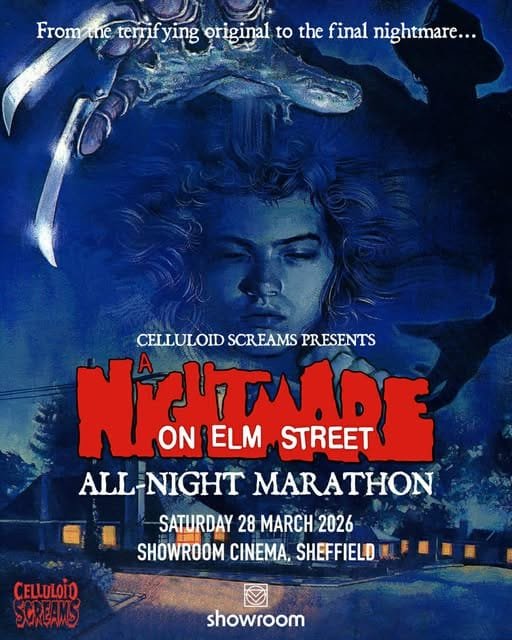
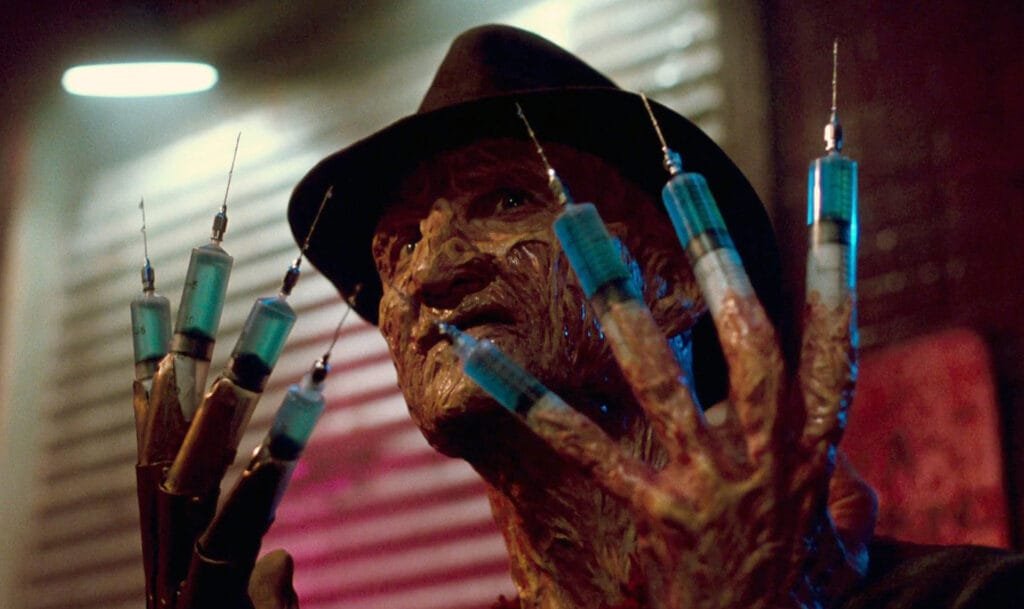
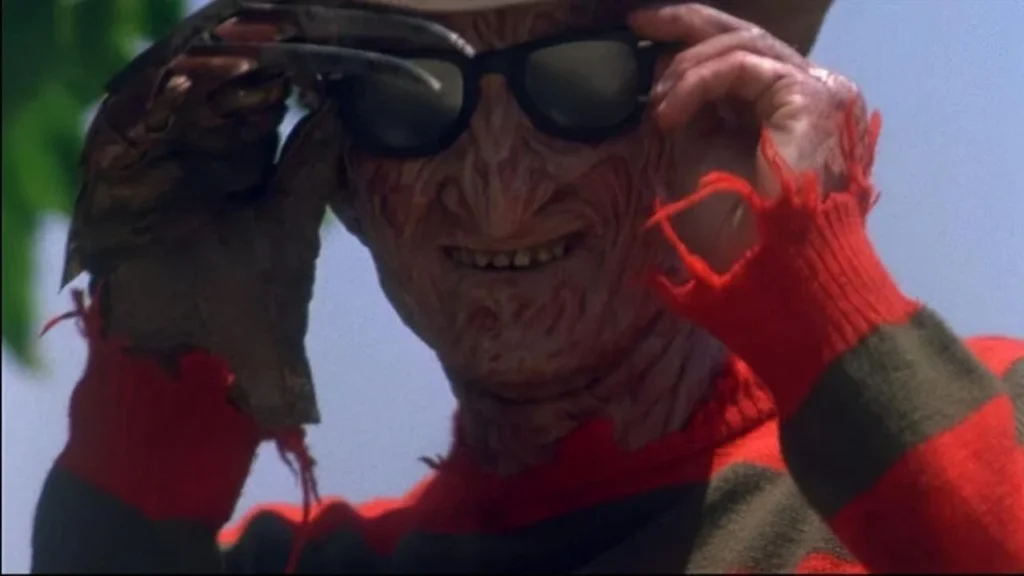
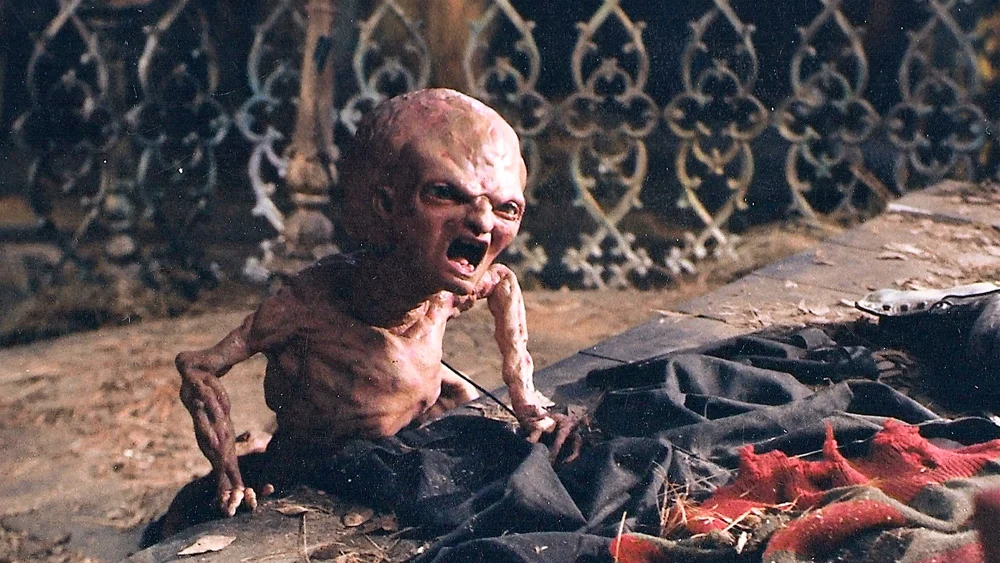
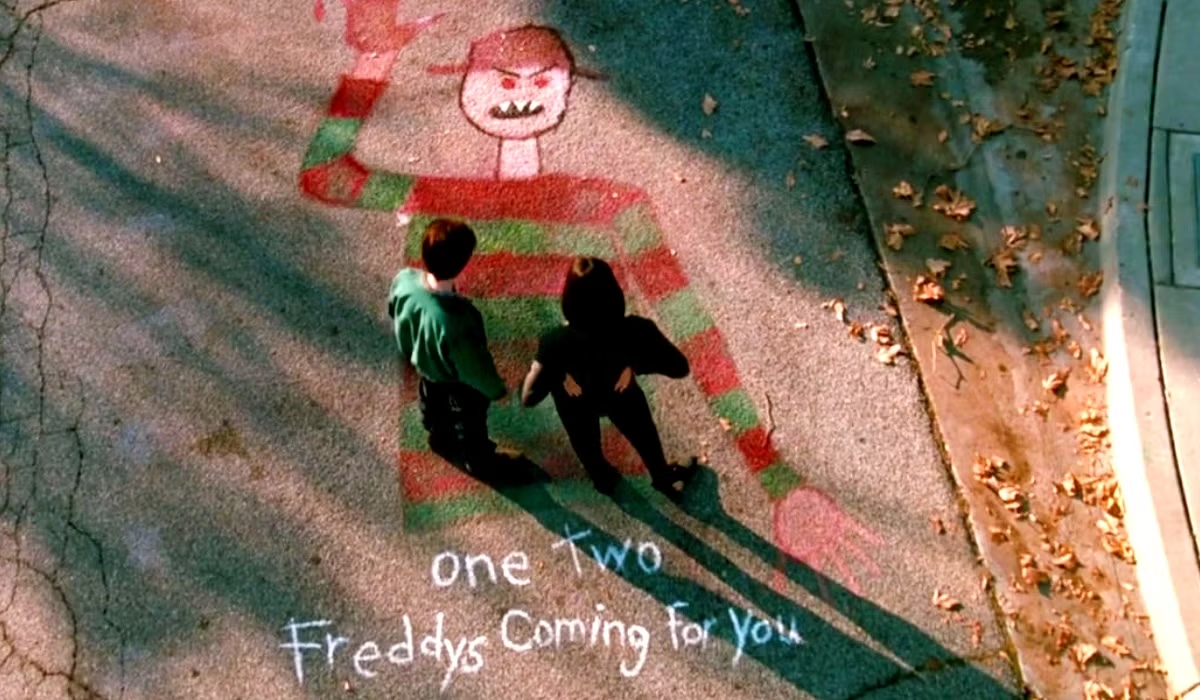
One night. One cinema. Six movies. Are you ready for Freddy?
That was the more than tempting carrot dangled in front of hungry horror fans by Sheffield horror festival Celluloid Screams, here breaking out of its extended weekend format to bring one of several events it will be holding this year outside of the main event. Cell’s previous overnighters have featured five unrelated films, but with an extra title on the slate to work through Krueger’s history, how would it affect those brave/stupid enough (delete as applicable) to take on the challenge? Considering the premise of the series, it was apt to use the tagline “Don’t fall asleep” but did I, or anyone else, drift off before the evening, and most of the following morning, was through?
When you’re about to embark on a such an undertaking at the flicks, preparation is key. Plenty of sleep the night before. A relaxing day leading up to that six film endurance test. Of course, because I am an idiot, I stuck to neither of those, having double billed They Will Kill You and Ready Or Not: Here I Come the evening before, getting home late and getting to sleep even later. I was awake a few hours later in order to get the train into Birmingham, where I watched the matinee performance of jukebox musical Priscilla, Queen Of The Desert, before catching a train back to Sheffield and grabbing food in the city centre before heading to the Showroom.
Getting there an hour before the start allowed for some downtime. Another all-nighter had been scheduled, covering the extended version of the Lord Of The Rings movies, and those folks were getting ready to go into The Fellowship Of The Ring as I rocked up. It felt like that’s where the grown-ups were heading, leaving the rest of us to indulge in that dirty horror stuff. Celluloid Screams supremo Rob Nevitt and programmer/social media head honcho Lucy Swift were also there so we were able to have a chat about upcoming spin-off festival Culture Shock and this also allowed me to profess my undying love for Possession, which is on this year’s line-up.
The usual suspects arrived as the start time drew near and there was the usual chat about which Elm Street movies we liked, which ones we didn’t, which ones we couldn’t actually remember and just who would be the first to start snoring in the auditorium. We did not have to wait long.
A selection of retro ads – unfortunately, it’s no longer possible to get the big taste of Westler’s hot dogs – and a slew of era-appropriate trailers set the scene for Wes Craven’s franchise starter, now sporting a comparatively genteel 15 rating and with a strange, almost comforting glow of nostalgia attached, as opposed to its 1980s reputation of unrelenting terror in a VHS box.
It still works. It’s well written, decently acted – even if there’s a whiff of Grease casting about the supposed mid-teens of the piece – and Robert Englund, whom many of us knew as the benign, bumbling alien Willie from the superior miniseries (and not so superior TV series) V, flipped the script and propelled himself to genre icon by giving us a murderer with a genuine sense of menace and complete lack of remorse, yet to be saddled with the wisecracking persona of later outings.
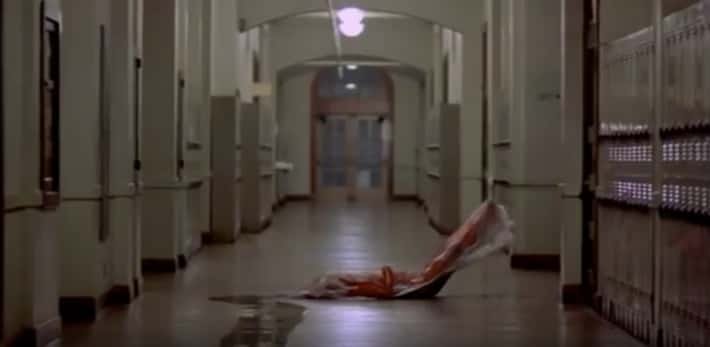
It doesn’t hang about either, detailing its protagonists economically and sufficiently before we launch into the dreamscape action. Folks will draw attention to a young Johnny Depp (here given an “introducing” credit, which gives an idea of the star power the industry saw in him) but it’s the killing of Amanda Wyss’ character Tina Gray which still shocks to this day. The likeable friend of Heather Langenkamp’s Nancy is brutally slashed and dragged along the walls and ceiling of her bedroom before her bloody body is unceremoniously dumped on the carpet. Dead silence in the cinema…
…except for someone snoring. Someone is snoring, in the first half of the first movie. Krueger would have had their guts for garters.
SUNDAY 29TH MARCH, SHOWROOM CINEMA SCREEN 4, SHEFFIELD: 12:15 AM
A NIGHTMARE ON ELM STREET 2: FREDDY’S REVENGE (1985)
Between the first and second Freddy fear fests there’s the longest interval the audience will be able to take in the whole of the marathon, with the gaps between films becoming less and less as the marathon kicks into gear to sort out the insomniacs from knife glove fodder. I chat with various folks who’ve obviously seen all six movies before and there’s a worry spreading across the group that The Dream Child could be the destroyer, because none of us can remember much about it.
For anyone wishing to stay in their seat for the entire event, there’s a wealth of franchise-related content on screen between each cinematic entry, including interviews, video game levels, music videos and ads. I took the opportunity to stretch my legs and peruse the memorabilia near the box office. In my case, this meant looking at the VHS case for unofficial spin off Nightmare On Sex Street and arsing about with a facsimile of the prop telephone that has the tongue emerging from it. Don’t @ me.
Freddy’s Revenge is a sequel that everyone expected in terms of making more cash for New Line Cinema, but few people expected in terms of its tone, opting for a story of supernatural possession as the family of teenager Jesse Walsh, played by Mark Patton, moves into the old Thompson house and finds that dodgy electrics are the least of their problems. Jesse is plagued by visions of the crispy killer of kids, telling the poor lad to kill various folks on his behalf.
This is the one which, apparently, has a gay subtext. Subtext be damned, this is all text, from the sequence of Jesse throwing dance moves in his bedroom to a visit to a very specific kind of bar to high school coach (and bully, natch) Schneider, being tied up in the showers by spectral forces and having his buttocks whipped with a towel. The romantic subplot between Jess and Kim Myers’ Lisa does little to convince otherwise and the shock ending of the first gets another run out here, only in a school bus, rather than a car.
And yet, there’s plenty about this film that’s fascinating. There’s clearly a drive to do something different, even if a lot of it doesn’t quite come off. The effects are pretty decent, even if a late in the day meltdown is frustratingly underused. Patton is a thoroughly likeable lead and, had there been any justice, this should have been a star making turn. Director Jack Sholder had already made a great little chiller called Alone In The Dark in 1982 and was only a couple of years away from making the classic sci-fi/horror/action mash-up The Hidden, so this is an interesting bridge between the two.
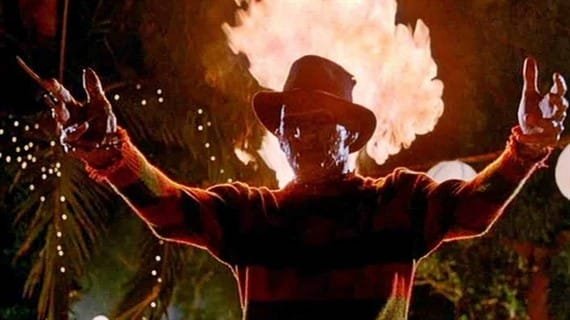
There are creepy moments along the way and Freddy’s gatecrashing of a BBQ party shows Sholder is adept at handling chaos but, like Jesse himself, Freddy’s Revenge seems a trifle confused about what it wants to be. That said, I heard no snoring during this one at all, which makes me think this one is due an intriguing revisit for those of you who haven’t seen it for a while.
I feel that arsing about with the prop phone a second time is unnecessary and someone else is looking at the VHS box of Nightmare On Sex Street with a sense of bewilderment, so I grab a quick coffee and notice that someone is purchasing a ticket for the remainder of the marathon. There’s no temptation to tell them they’ve missed the best one because a) I’m not that kind of bellend you find in the horror community (I’m a totally different kind of horror community bellend) and b) they haven’t missed the best one as far as I’m concerned. That one is about to be screened. We are still concerned about The Dream Child.
The clocks have gone forward and the Elm Street universe has looked backwards to re-enlist Heather Langenkamp as original final girl Nancy Thompson, now a hotshot grad student and an expert in the area of dreams (well, duh). Wes Craven is back as co-producer and also on co-writing duties, alongside a certain Frank Darabont amongst others. It’s also the assured directorial debut of Chuck Russell, kicking off an impressive three-movie run, following this up with The Blob and The Mask. If you rate Arnie action-fest Eraser, make that a four-movie run. As I said, an impressive three-movie run.
Nancy’s new gig at the Westin Hills Psychiatric Hospital has her cross paths with Patricia Arquette’s Kristen Parker, who has the ability to pull others into her dreams. This is useful when facing off with Freddy, as Kristen drafts in Nancy herself for an early dreamscape escape and then extends the team to include the surviving kids of those who murdered Krueger, all of whom are patients of Craig Wasson’s Dr. Gordon at the facility and ready for a bit of group therapy/arse kicking.
Amending the rules of the game without breaking them, Dream Warriors is tons of fun from start to finish, introducing an engaging bunch of new faces before having Englund turn their hopes and fears against them. Arquette is, as you’d expect, excellent, but the supporting cast are just as adept, particularly Jennifer Rubin as the “beautiful and bad” Taryn and Laurence Fishburne (in his “Larry” days) as sympathetic institution employee Max.
Adding some seniority to the proceedings are Wasson and a returning John Saxon as Nancy’s father Don, no longer a detective and seeking solace in the bottom of a bottle, but coming good in the third act as Gordon and Don are involved in a real world race against time to find Freddy’s bones and give them a proper burial before the Dream Warriors are wiped out. Don’s demise is not all that much of a shock, but there’s some surprise in the major casualty being Nancy herself, taking a glove to the guts before Krueger is banished once more, with the survivors set up to take the fight to Freddy in another inevitable continuation.
That person who purchased a ticket for the final four films was asleep within minutes of Dream Warriors rolling. I guess it beats checking into a hotel.
A NIGHTMARE ON ELM STREET 4: THE DREAM MASTER (1988)
There’s something about Dream Warriors which always peps me up. And at five in the morning with still three films to go, that’s a good thing. I chat with a few folks who’ve also taken a walk up to the kiosk for supplies. I think it’s time for a strategic coffee and a wander before heading back into Screen 4. Few of us can remember a lot about The Dream Master but the general consensus is that it was better than The Dream Child, which is poking its head over the horizon, ready to send us to the Land Of Nod.
What I could remember about the fourth instalment is that it was directed by Renny Harlin and that Patricia Arquette didn’t return, her character of Kristen being played by Tuesday Knight. Joey and Kincaid, the other folks who made it out of part three, were still played by Rodney Eastman and Ken Sagoes respectively.
Kincaid makes a lot of the early running in this one and is of course killed off, because reasons. Joey also goes out with a bit of a whimper, leaving Kristen and her new friend group to take on Freddy, who has been resurrected via Kincaid’s dog taking a fiery leak on the Krueger grave. Fans of the first movie may feel that the flamethrower jet of piss is exactly what Brian Helgeland and Scott Pierce’s screenplay has done to the chilling origin story, but on we go.
To be fair, The Dream Master is more enjoyable than I remembered or expected it to be. Renny Harlin had directed the atmospheric, if slightly plodding, Prison the year before and his persistence with/outright hassling of New Line Cinema head Robert Shaye finally landed the Finn the Freddy gig, and he continued his directorial ascent through popular, big budget actioners Die Hard 2 and Cliffhanger before coming unstuck with unpopular, big budget actioner Cutthroat Island.
In keeping with returning Elm Street alumni not lasting particularly long, Kristen is killed off by Krueger, but not before she passes her powers to Alice (Lisa Wilcox), a timid sort who you just know is going to turn into a badass as the tale progresses. The way this is achieved is at least handled in an interesting way, with Alice inheriting the skills and personality traits of the friends of hers who are killed by Freddy so, for instance, when the guy with the martial arts skills gets bumped off, Alice breaks out the karate moves and so on.
The list of would-be victims this time don’t have the character development or personality of those in Dream Warriors, save for Toy Newkirk as Sheila, the resident science and maths expert who doesn’t fall into all of the usual geek clichés, but is unceremoniously (and annoyingly) suffocated midway through the proceedings, leaving some of the blander folks to eat up the remainder of the screen time. That said, Wilcox is very good in the lead and is up to the task of portraying the increasingly multi-layered Alice. The climax, despite some excellent prosthetic effects work, is a bit of a damp squib which ultimately relies on remembering the text of a poem called The Dream Master. Soon as that memory comes back, Freddy’s toast. Again. Still, you do get a giant cockroach along the way.
Some definite pockets of snoring in this one across various parts of Screen 4. As for me, so far, so good, but I’m not exactly looking forward to the next one. This could be the one that breaks me.
One of the most disturbing things about all-nighters is wandering back into a foyer and realising that it’s light outside. At this point, you feel as if the event should be over. It’s now daytime, after all. I am immediately transported back to Celluloid Screams’ very first all-nighter, which ran hideously over schedule and meant that the final movie – Lamberto Bava’s superb Demons – didn’t roll its end credits at just after nine in the morning. I had watched all of the previous day’s Cell line-up as well and by the time I staggered out onto Paternoster Row, I was concerned the sunlight would cause me to burst into flames. Long story short, I went for breakfast, then had a whole thirty minutes of sleep before taking a shower for what felt like several hours and then making it for the screening of Der Fan at 1:00pm. Great days.
However, I’m older and, it appears, no wiser, because there are still two Nightmares to go, with the worrying spectre of The Dream Child now hanging directly over the noticeably wearier audience. I’m taking no chances here – a splash or two of cold water to the face, then a black coffee to accompany me back into the auditorium.
Alice and Dan (Danny Hassel), having survived the previous movie, get to at least start the movie in happy relationship mode, but this is turned on its head in fairly short order as Alice has a vision in which she imagines herself to be Amanda Krueger on the night she was attacked by the patients in an asylum. Of course, Freddy is back for a fifth go at a new pack of unwitting targets, this time using the pregnant Alice’s unborn baby as a conduit to attack her new but dwindling set of friends and this time, she doesn’t even need to be asleep.
Apparently Stephen Hopkins, the director of The Dream Child, doesn’t think much of the finished product, citing a schedule which was rushed and extensive cuts made by the MPAA to the gore. I get where he’s coming from but, having been worried about falling asleep during this one, it’s actually not that bad. The tone is darker than that of The Dream Master, the production design is effective, what you do see of the effects is very good indeed and the performances are decent across the board, with Wilcox once again being the standout.
Delving into the mythology gives this Elm Street entry a different feel to any of the other movies in the series and it doesn’t just slide into being a series of set pieces in which Freddy gets to murder someone, although there’s plenty of room for some imaginative slayings in this one. However, the atmospheric trips into the world of Amanda Krueger and the more kinetic, splattery jaunts into that of her troubled son Fred don’t always sit well together, meaning that the pacing sometimes feels off and the tone doesn’t hold across the piece. The numerous rewrites and a ridiculously short shoot probably didn’t help either.
During some early exposition, I did sense that I was about to drift off and drained the half cup of coffee I had left to stave off the snoozing but, on the whole, I didn’t mind The Dream Child. There are some intriguing ideas which are unfortunately underdeveloped, but it avoids being a lazy re-tread of what had gone before, which deserves at least some credit. The less flashy, more plot heavy bits took out a few folks but hey, the marathon had been going for around nine hours at that point, so it was understandable.
Oh, and Hopkins was given Predator 2 to direct off the back of this, so someone out there recognised his directorial chops, even if the critical and box office reception to The Dream Child was relatively underwhelming.
Having stayed awake through The Dream Child, I was reasonably confident of making it to the end without having a kip as I hadn’t seen Freddy’s Dead for a while, but remembered enjoying it. I was pretty sure we weren’t going to get the 3D Freddyvision experience for this particular screening but, even so, it was all downhill from here, or so I hoped. The folks who had wandered up to the foyer seemed to be getting their second wind and I hadn’t seen anyone give up and leave the cinema so this was a hardy flock of souls, to be sure.
The gap between the end of The Dream Child and the beginning of Freddy’s Dead was just ten minutes, so there was just about time to catch breath before Rachel Talalay’s series closer, which picks up “ten years from now” in an Ohio town called Springwood where Freddy has murdered everyone under eighteen, except for one (un)lucky teenager who sustains a head injury and ends up at a shelter for troubled youths where Lisa Zane’s Dr. Maggie Burroughs works.
Maggie tries to unlock the memories of the amnesiac teen by taking a road trip to Springwood, but things quickly go awry and the doc is pulled into the world of Freddy, unaware that she has a connection to the Elm Street killer and the scene is set for one last showdown. In Freddy’s mind. In 3D!
Well, actually, not in 3D. As I mentioned previously, I thought Freddy’s Dead would be shown “flat” and this proved to be the case. I have seen it in the version where you get to put on the crappy red/green cardboard specs and I have seen it without the bins and, although the initial 3D viewing was a novelty, I’d rather not get a headache and I’m fine with enduring various items and effects being pushed towards the lens in a slightly artificial way. It’s nowhere near as overt as the plethora of stuff being shoved into your fizzog when you watch the 2D version of Friday The 13th Part 3.
As for the film itself, I have a fairly large amount of affection for Freddy’s Dead. It spins the plot off into various offbeat directions and a lot of the humour lands without detracting from some nifty kills. The callbacks to the previous movies are all woven into a story which actually works and there’s a tendency to embrace its more creatively daft moments, while still managing to unnerve in several places, chiefly the flashbacks where the urban, unburned Englund proves to be the father and husband from Hell.
The tagline “They saved the best for last” isn’t true – could it ever have been? – and it was never going to satisfy a legion of fans who were waiting to see Freddy die in the most prolonged and spectacular fashion, but the final act is an enjoyable one, Zane makes for an appealing protagonist and you have the great Yaphet Kotto dispensing advice from the sidelines. Add to this a cracker of a cameo from early Krueger victim Johnny Depp and some of the ickiest ear violation since Chekov got his lug invaded in Star Trek II: The Wrath Of Khan and you’d have to be a curmudgeon to find absolutely nothing to like during its trim runtime, even when the approach is as wacky and, at points, downright irreverent as this.
Okay, so maybe having Freddy quoting a line from The Wizard Of Oz while he’s flying on a broomstick alongside an airliner is going to irk the purists but, six movies in, maybe it was time to be irksome and I very much like the cut of Talalay’s gib here. If you are one of those folks pining for the high points of those earlier movies, the end credits provide a potted history of the Elm Street saga and you can point to the screen and say how much better it was before they decided to make a second one.
Also, to the naysayers, I don’t recall hearing anyone snoring during Freddy’s Dead, so that whole “worst of the lot” tag slapped on it from some quarters was not replicated in Sheffield.
After sticking around to be a part of the Survivor’s Photo, which demonstrated that the NOES marathon attendees were at least coherent, if not exactly bright-eyed and bushy tailed, I had time to burn (rather than a school janitor) before heading to the railway station and a mug of strong tea seemed the perfect accompaniment to reflect upon the festivities.
Should you do this kind of thing? Absolutely.
Will you regret it? Almost instantly. Your arse will almost certainly be numb. Your legs will feel like they belong to someone else and you will suddenly not be able to think straight, even though you think you’re thinking straight. However, once those feelings have subsided and once you’ve managed to catch up on your sleep, you’ll realise that both the cinema and the horror community is built for nights like this.
You’re part of a weird family that comes together for this kind of occasion. Few other people will understand why, but it’s not about them. It’s about a horrifically scarred murderer offing innocent folks over the course of half a dozen films and appreciating the meta undertone of not falling asleep during a franchise where its characters die when they doze off. And if you survive the night, you’ve beaten Freddy in your own unique way.
Thanks must go to Celluloid Screams Director Of Programming Rob Nevitt for organising the event and putting together all of the between film entertainment. Rob’s efforts to keep the Celluloid Screams regulars and willing newbies amused over the years must be recognised. There was talk of other potential all-nighters and one offs, the most bizarre suggestion being Guest Fest, in which 2014 Dan Stevens starrer The Guest plays repeatedly over a twenty-four hour period. Do you know what? I’d probably get a ticket for that one.
Freddy (Thom Mathews) is a new employee at the Uneeda Medical Supply Warehouse in Louisville, Kentucky. Supervisor Frank (James Karen) attempts to give this thoroughly unglamourous form of employment some umph by taking Freddy to the basement, where drums of a toxic gas called 2-4-5 Trioxin have been stashed by the military. Frank accidentally breaks one of the drums and the gas is unleashed, making Frank and Freddy unwell, but rejuvenating a cadaver which is being stored in a nearby meat locker. Warehouse owner Burt (Clu Gulager) joins Frank and Freddy as they attempt to deal with the reanimated corpse, but that’s just the start of their troubles…
Having recently covered a forty-fifth anniversary screening of The Fog, it’s time for the same bunch of folks to feel ancient all over against as life begins for Dan O’Bannon’s comedic, irreverent, lightly punk rock flavoured take on Night Of The Living Dead, postulating the events of that classic as a fictionalised version of an actual event which took place. This causes its central characters to question what works and what doesn’t when it comes to disposing of the undead. This also leads to the line “You mean the movie lied?” It’s not a bad question, Burt.
Away from the increasing chaos at Uneeda, Freddy’s sweet, innocent girlfriend Tina (Beverly Randolph) and a bunch of their friends are waiting for him to finish work and, as this is a horror film, they choose to while away this time at the local cemetery. For anyone well versed in this flick, this is the point at which Linnea Quigley does what Linnea Quigley did in many an 80s title, which is disrobe. As much as the story tries to give Quigley’s character some kind of motivation for dancing naked on a gravestone, it’s the flimsiest of excuses and she’s still dancing naked on a gravestone no matter how much you try to (un)dress it up (down). Hey, gratuitous nudity was very much the order of the day in that decade and we can all recoil in 2025-inflected horror at it now.
As a matter of fact, Freddy’s circle of friends is somewhat incongruous, mixing odd takes on society’s fringe types in the form of Spider and Mark Venturini’s permanently angry, inaccurately monikered Suicide with tropey, virginal squares such as John Philbin’s Chuck. These folks would not hang out together and would certainly not hang around in graveyards for a couple of hours to kill time while their mate finishes their shift. Still, TROTLD isn’t here for accuracy in either its characterisations or its fleet-of-foot, verbally adept zombies. It’s a knockabout mash up of impressive gore effects and broad comedy, with the Karen/Mathews double act bringing the chuckles and a surprising amount of pathos, come the final act.
Modern horror fans won’t be watching through their fingers – it’s not especially scary and it hasn’t dated nearly as badly as some of its other stablemates from that decade – but it rattles along, puts the prosthetic work front and centre and has a couple of cracking running gags. Also, the joke with the eye chart will never fail to raise a laugh from me and the dialogue in the foreground carries on just long enough for the viewer to read all of it (although you’ll probably find yourself squinting if you don’t see it on a big screen). Very much like Night Of The Living Dead, this return comes complete with its own climactic kicker, although this one is less of a slap in the face than George A. Romero’s original punchline, despite this one’s destructive, darkly comedic resolution.
Whether or not this counts as genuine punk rock – and I’ve a feeling that a lot of Brits will think the movie is far too polite to earn that label – The Return Of The Living Dead is still tons of fun forty years on. The practical effects alone would make it worth a watch, but there’s a knowing, often wry script from O’Bannon, running with Russo and Streiner’s seminal storyline to offbeat effect. Yes, there’s increasing wailing from Mathews and Karen as they realise their exposure to the Trioxin may have some terrifyingly permanent side effects, but for every moment in the second half which confuses volume with impact, there are several others which will have horror fans guffawing, applauding the effects, or both. Overall, you may be in little danger of splitting your sides but if you are, this has the answer: Send more paramedics!
The Return of the Living Dead (2025) featured at this year’s Celluloid Screams Festival.
Dre (Katy O’Brian) is an event organiser, DJ and general fixer at Bushwick’s Yum club, which is all set to bring in the punters with a drag show featuring top notch headliner Yasmine (Dominique Jackson). However, the draw of a more lucrative gig for Glitter Bitch Vodka has Yasmine heading for the hills – well, heading for a glitzy promo tent – and Dre is left with a spectacular hole in the evening which veteran performer Ginsey Tonic (Nina West) is wary of trying to cover. Enter Sam (Jaquel Spivey), who has left the world of drag behind and is working at a local hospital, which is also where we find Dre’s wife Lizzy (Riki Lindhome). Stay with me…
Sam and Dre have history, because Sam left Dre in the lurch at a previous show and the idea that Sam could sashay back in to save the day doesn’t exactly fill Dre with confidence. Could it be time for the sassy, up and coming Nico (Tomas Matos), aka Scrumptious, to bring the star quality? Ginsey is definitely not besties with the headstrong Nico and would rather rely on Sam to make a glorious comeback, but Sam isn’t even sure of themselves. Also, regardless of the talent roster, will the show go on at all? There’s an inconvenient outbreak of a zombie virus about to hit the city. With me? Good.
This isn’t a George Romero movie – along the way, you’re literally going to be told that, by a key player in the canon – but it is a Tina Romero movie, who picks up the baton from her father, respects the legacy but switches to a lane which is very much her own, resulting in a zombie flick that’s both reassuringly familiar and bracingly fresh. There’s siege action from Night, the importance of cultural touchstones from Dawn and musical cues direct from Day, but all of this is seamlessly woven into a genuinely inclusive, frequently amusing and unshakably modern take on that serviceable, decades-old premise.
As much as Queens Of The Dead plants its extravagant heel in LGBTQ+ territory – I mean, come on, look at the title – the overriding message is one of understanding, unity and finding common ground. The movie’s one obviously straight character Barry (Quincy Dunn-Baker) is set up as the unreconstructed bigot and figure of ridicule, but the story reveals him to be much more than that as he tries to adapt to a world of pronouns he can never seem to get right first time. That said, there’s a softer edge to this than George’s often harsh takes on the world, but that doesn’t mean this isn’t political, it’s just wrapped in a suitably matching velvet glove.
Like any successful movie in the Romeroverse, characters are given space to breathe and this may prove a sticking point for those hankering for unrelenting battles with the undead. There is gore but the levels of splatter are relatively low, with the battles often leaning into the humour of the outrageous situations rather than mining them for outright horror. That doesn’t mean the sense of fun dissipates the tension, as our ragtag band of erstwhile zombie killers are sufficiently developed to create a sense of genuine worry whenever they’re placed in peril.
O’Brian is possibly the best known of the cast after her superb turn in Love Lies Bleeding and certainly gives a fine performance here, but the role isn’t afforded extra attention merely because of who she is. Dre is part of the wider ensemble in a story which dishes out its standout moments in even-handed fashion. In particular, the relationship between West and Jackson is warm and lovely and there’s a feeling of lived, affectionate history as they reunite for what turns out to be the biggest show of their lives.
For anyone who hasn’t seen a George A. Romero zombie flick – no judgement here, but is there anyone who hasn’t seen a George A. Romero zombie flick? – the nods to previous movies aren’t intrusive and even the most obvious, featuring the city’s rather dubious Mayor, is both brief and chucklesome. It’s also nice to see a Gaylen Ross cameo, a reporter by the name of Jill Cardille, as well as a second act scene stealer from Margaret Cho as the no-nonsense Pops, some hilarious, impromptu lyrics invention from the sweet Kelsey (Jack Haven) and the affecting journey – in all senses of that phrase – of the transitioning Jane (Eve Lindsey)…there’s plenty going on here, but the plot plates are kept spinning with some skill.
Queens Of The Dead may not spill the guts with the regularity and elan of Dawn, nor does it have the apocalyptic chill of Day but it’s rather fabulous in its own way, forging a unique identity and providing a thoroughly accessible view of drag culture. Although it’s a film which has the word Dead as a prominent component of both its title and action, you’ll find a constantly life-affirming piece, ultimately choosing hope rather than Hell on Earth. If the series is to continue, Tina’s grasp of the overriding framework is as impressive as you’d expect, but also has the confidence to bring her own experiences to bear. I think George would really enjoy this one.
Queens of the Dead (2025) was this year’s opening film at Celluloid Screams UK.
Mickey (Stephen Reilly) is a labourer who wants much more out of life. When he meets Kenny (Johnny Wilson) in a bar, he finds himself with a sideline gig of peddling drugs for gang boss Luther (Peter Hirst) but Mickey wants much more than that and, if he’s going to take risks, he’d like to be at the top of the tree rather than being thrown scraps from up on high. Does Mickey have what it takes to wipe out everyone standing in his way and fall to the top?
Once again, we’re on those mean streets of London and we’re back in gangster territory, but Fall To The Top brings a more regional flavour to the usual diet of booze, drugs, knives and shooters. It takes me right back to the shot on video stylings of Mancunian movie mogul Cliff Twemlow’s delirious 80s crime epic GBH. Yes, this one was filmed in 4K rather than VHS – affordable camera tech has moved on – but all of that decades-old grunge, grime and gumption to make something from nothing is resurrected in an all hands on deck, genuinely guerrilla filmmaking project.
Up front, I need to say this. Fall To The Top is rough around the edges and if some of its technical side happens to feel like the cast and crew were learning on the job, well, they were learning on the job. If you’re looking for the sheen and polished wisecracking of an early Guy Ritchie caper, you won’t believe your mince pies. This is scuzzy, off the cuff stuff. It also has Paul Chuckle as the fever dream version of The Terminator. You can go back and read that last sentence again to check you didn’t just have a stroke.
Given that this movie was made on a wing, a prayer, and the hope that something even vaguely coherent would be the result, the finished product does end up being more than vaguely coherent. Despite there being zero budget for elaborate action set pieces (or, indeed, zero budget for much of anything), the team behind this throw themselves into it with a great deal of heart and, although in my view the shootouts need judicious trimming, the crunchy fight sequences often land a lot better than I’d expected.
Performance wise, Reilly seems to be going for a bit of Jimmy Cagney – not a bad choice – and there’s one particular moment of violence which is a bit of an unexpected gut punch, literally. The cast is extensive and lacking in experience but hey, if you’ve got your mates involved, why not give them roles, even if the roles are to be killed off by no-nonsense criminal types? Hirst and Wilson are the standouts, the former bringing a level of quiet menace to his role as the kingpin and the latter giving a charismatic and amusing turn as the eminently practical and often exasperated Kenny.
This isn’t the kind of fare that you’d see at your local Odeon. Those brought up on a diet of studio output are going to be utterly bewildered by Fall To The Top, and that’s even before Chuckle shows up. When he does show up, as a fixer called The Jackal, it’s a delirious cameo that has to be seen to be believed. It’s his gift to you (to me, to you, to me, to you). I am never taking that line out of this review.
Lo-fi this most certainly is and the proceedings, certainly in the second half, lean less into plot diversions and more into a procession of so many folks dying that you wonder if there’ll be anyone left to sell any drugs at all by the credits. The inevitable fate of the increasingly vicious and substance addled Mickey is offset by a darkly amusing, late in the day switch which is accompanied by one act and one line of dialogue that, regardless of your thoughts on the previous carnage, ought to at least make you think that moment is nicely played.
Fall To The Top is unpolished to the point that, if you’re not into low, low budget exploitation flicks and filmmaking on the hoof, it may not chime with your idea of cinema and that’s fine. For me, there’s always something fascinating about the alchemy of just getting a movie made and screened, doubly so if it’s done with enthusiasm and not driven by the cynicism to make a quick buck out of whatever happens to be the latest trend. This could definitely benefit from another pass at the edit, but this also has more bags of coke than the final scene of Scarface, a hilariously succinct explanation of how drug trafficking works and there’s one half of Chucklevision right there, on screen, portraying an agent of chaos. If that doesn’t have you at least slightly interested, I don’t know what to tell you.
Fall To The Top featured at this year’s Spirit of Independence Film Festival in Sheffield, UK.
Tattoo artist Tales (Lorn McDonald) is living in his place of work after being kicked out by his girlfriend. In the middle of the night, he’s awoken by a phone call from a guy called Truth (Michael Akinsulire) who represents a well-known figure who needs some new ink right now and has heard Tales is the man for the job. Having accepted the request, Tales is surprised to discover that his latest client is none other than music star of the moment Tummy (Orlando Norman) and asks for a selfie. To the chagrin of Tales, Tummy refuses, which triggers the beginning of an increasingly strange battle of wills as Tales makes it his mission to end the night with that precious selfie in his possession…
Getting to the heart of the matter in double quick time, placing the protagonists in a powder keg of a situation where both physical and mental escape turns out not to be an option, Ciaran Lyons’ film may be small in physical scale but big on ideas, interrogating masculinity itself by means of an ongoing psychological tussle between Tales and Tummy, the former taunted by the latter’s repeated, one line instruction. Tales must abide by said instruction if he has any chance of getting the coveted selfie and Tummy doesn’t appear to be budging in his commitment to challenging Tales over the course of what could be a very long day.
Initially, Tummy appears to be the laid back, softly spoken aggressor, taunting Tales with a reward he hasn’t even promised and may never actually give but as the story moves on, so does the dynamic between the pair, leaving the viewer questioning not only what the hell is going on and what may or may not transpire but also who has the genuine ego problem. Along the way, we’re introduced to the women in Tales’ complex and often disastrous love life, tellingly heard at a distance down a phone line or listened to behind a locked shutter, as is the case with recent romantic interest Shimmy (an excellent debut from Gudrun Roy) who has a lot to say about their relationship.
Tummy Monster is a film that rarely heads in obvious directions and, as such, folks waiting to see if the plot drags in violence and torture porn – which it could lazily and quite easily have done – will be thrown by the lack of claret-soaked face-offs. It’s the dialogue which does the real damage as Tales’ takes on himself and those around him are laid bare by someone at the opposite end of society’s spectrum. It’s elevated further still by a dazzling performance from McDonald, with Norman as a capable and crafty foil for the increasingly unhinged antics which unfold.
Laugh out loud funny at times, nail chewingly tense at others, Tummy Monster is an impressive, genre flipping calling card for Lyons, helming his first feature with confidence and flair. The interactions between the three leads are sharp without ever being silly, which is an achievement given the increasingly ludicrous bind Tales realises he’s in, leading to a last act which reminded me of an even better Locke and replacing concrete with someone particularly special in our (anti-)hero’s life.
Homing in on the not-exclusively – but often destructive – male drive for competition and recognition, plus the inevitable fallout which often comes with both of those, the tale hits hard when contrasting Tales and Tummy’s approaches to their creative lives and their very different views of notoriety. There’s a cautionary note of being careful what you wish for running through this, embodied by Tummy’s powerful, rueful moment of reflecting upon people not being interested in his life beyond the public persona and Tales’ griping about not being appreciated for his artistry.
Tummy Monster may initially come across as bizarre, brash and bawdy but there’s intelligence, heart and wisdom at its core. Like Tales’ cultural icon turned nemesis, there are points at which you will feel your buttons are being pushed, but that’s all part of the experience and, in my book at least, there’s nothing wrong with being tested in this way. It also winds up with a doozy of a payoff which may leave you wondering whether to spew or snort. Endlessly talky? Perhaps. Endlessly entertaining? Yes.
Tummy Monster (2024) featured at this year’s Spirit of Independence Film Festival in Sheffield, UK.