Societal Monsters: Social Commentary in 2010s Horror

By Guest Contributor Grace Anderson
Have you noticed that horror movies have been becoming more political these days? With iconic filmmakers such as Jordan Peele and Eli Roth leading the trend, double meanings and social allegories have become more and more prevalent in the horror movies of the past decade. The 2010s were an extremely influential era in social horror. From the commentary on liberal racism in Get Out or the criticism of the upper class in Knives Out, it seems like every 2010s horror had something to say. Here we will explore some of the major social issues of the 2010s and how they were handled in 2010s horror, as well as what the future of the genre has in store.


A History of the Societal Monster

Horror has been a vehicle for social commentary since its inception. Old Hollywood horror movies, for example, embody many of the societal fears of the 1950s. Cold War nuclear panic dominated this era of horror, particularly in the flourishing monster movie genre. The Beast of 20,000 Fathoms (1953) and the iconic Godzilla (1956) deal with the catastrophic effects of nuclear radiation and the potential monsters that this may create. Sci-fi horrors such as When Worlds Collide (1951) and War of the Worlds (1953) Tackle the fears of an impending nuclear apocalypse through science fiction allegories. 1950s Horror also often explore themes of science gone awry. The Fly (1958) and Bride of the Monster (1955) feature scientists who are incompetent, irresponsible, or just plain evil, reflecting both the fears of the atomic age and societal anxieties around the rapidly developing technology of the era.

The 1970s brought in a new era of social commentary in horror. The forerunners of the slasher genre such as The Texas Chainsaw Massacre (1974) and Halloween (1978) were brought on by increased cultural awareness of violent crime and inspired by highly sensationalised serial killers of the time, such as Ted Bundy and Son of Sam. 1970s horror also satirised the long-standing gender roles that had begun to unravel. The Stepford Wives (1972) explores seemingly perfect suburbia where women are programmed like robots to be perfect housewives. This reflected the shifting societal attitudes towards the “perfect housewife” archetype of past decades, which was becoming increasingly stale and outdated as more and more women entered the workforce.
The Carrier

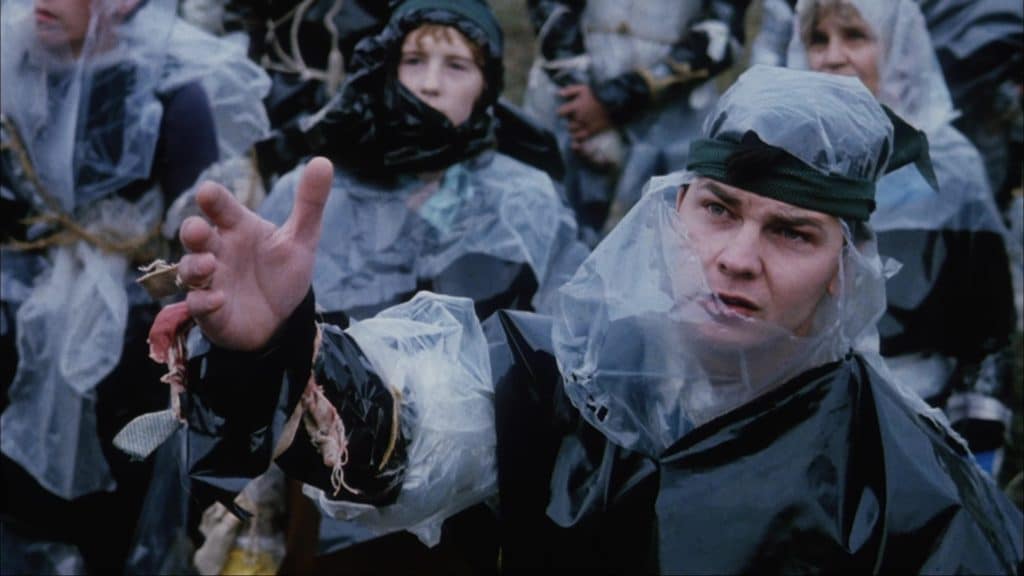
With the 1980s came a new horror sweeping through society: the AIDs crisis. Many of the quintessential 80s horror movies involve a virus or botched science experiment that results in disfigurement or invasion of the body. In John Carpenter’s 1982 remake of The Thing, a group of scientists unearths a creature that can take over its victim’s body and assume its identity. The Thing can appear in anyone and go unnoticed in everyday society, much like the AIDs virus itself. The Carrier (1988) follows a protagonist who contracts an unidentifiable disease that has no visible effect on him. Any object he touches becomes infected and absorbs the bodies of any person that comes into contact with it. This is a much more direct allegory of the AIDs virus than previous examples. In short, horror movies have always held up a mirror to the social fears and anxieties of their time. This legacy has carried on well into the twenty-first century and into the modern age.


Societal Monsters of The 2010s


The legacy of the societal ills that inspired the horror movies of past decades continued well into the twenty-first century. While the AIDS crisis and nuclear panic were distant memories in the eyes of the movie-watching public, some of the themes remained. Themes of wealth inequality, feminism, and environmentalism are just as prominent in 2010s horror as they were in the mid-twentieth century, but with a fresh, modern spin. New themes emerged from this decade as well, such as social media. With rapidly developing technology and growing political and social unrest, the 2010s had no shortage of sociality fears to manifest in our horror movies. Here are three examples of modern social issues tackled in 2010s horror movies.


The Monstrous Elites


Following the 2008 financial crisis, the general public has been becoming increasingly aware of class devices and wealth inequality. As with previous decades, this shift in societal awareness made its way into our horror movies. These movies often involved corrupt elite, violently wreaking chaos on the lower classes or, more profoundly, a vengeful lower class forcing us to examine our privilege and reflect on how our actions may have impacted the less fortunate.


Ready or Not (2019)
This horror comedy follows Grace, a former foster child engaged to the son of an ultra-wealthy business owner. Upon meeting her fiancé’s family she discovers they have an odd tradition of playing a game on wedding nights. The movie devolves into a deadly ritual game of hide and seek where Grace has to kill or be killed to avoid being sacrificed to a Satanic deity. This movie contains commentary about the wealthy causing harm to the lower classes for personal gain. Grace, coming from a disadvantaged situation such as foster care, makes her vulnerable to exploitation. The inclusion of the Satanic ritual plotting is an allegory of how the ultra-wealthy “sacrifice” the underprivileged for their selfish gain.

US (2019)
US is the second film written and directed by the then-up-and-coming Jordan Peele. Following in the footsteps of Peele’s debut film Get Out, US is rife with allegories and social commentary. The story follows Adelaide, her husband, and her two teenage children as they vacation in California. When a horde of murderous doppelgangers known as the Tethered rise up from underground tunnels and terrorise their above-ground counterparts, Adelaide is forced to confront her mysterious past. US is a bit different from other examples of class commentary in horror. Instead of aiming at the ultra-wealthy elite, it holds up a mirror to the average middle-class American. The Tethered represent the poor and underprivileged class of America. They look and feel just like we do, but are forced to spend their lives without the basic comforts and necessities we take for granted. They are also expected to stay hidden away from the view of the average person, leaving them in wilful ignorance. By the big reveal at the end of the movie, you are left unsure of who the real villain is. Is it the disadvantaged Tethered or the middle-class citizens who refuse to see their struggles? US makes you reflect upon your own privileged life and empathise with those who may be less fortunate than you.


Political Monsters


The 2010s was a decade rife with political turmoil. Whether it was LGBTQ+ rights, separation of church and state, or the extremely divisive 2016 election, there was always some political issue at the forefront of the minds of the public. Not only that, but with the rise of social media and clear biases in our news cycles, people were becoming increasingly aware of the corruption and greed running rampant in our political spheres. People felt that they could no longer trust their government. As with every deep-seated societal fear, the horror of the time reflected that. More and more 2010s horror movies included themes of insidious politicians and other people in positions of authority as well as satirising fatal flaws in even seemingly progressive political ideologies.


Red State (2011)

Red State is an independent film following three teenage boys as they meet up with a woman they met online hoping for a sexual encounter, only to get taken by an extremist Christian cult that kidnaps those they view as immoral or undesirable; their victims are then tortured and killed as punishment for their perceived “sins”. The cult in this movie, though fictional, shows obvious parallels to real-life extremist religious groups such as the Westbro Baspist church, which drew in a lot of media attention for protesting at LGBTQ+ events during the fight to legalise same-sex marriage in the early to mid-2010s. However, there are also deeper themes in this movie about the separation of church and state and the corruption of religion. The leader of the cult in Red State is a charismatic, manipulative preacher, not unlike some of the religious leaders and politicians of real life.
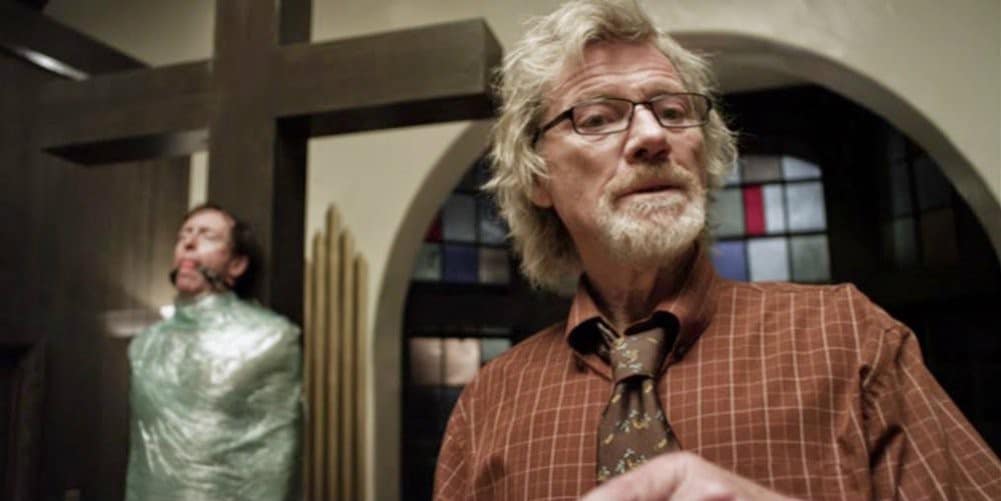
Red State


Get Out (2017)
Jordan Peele’s directorial debut, Get Out follows a black man named Chris going to meet his white girlfriend’s parents on a weekend getaway. Upon arrival, Chris notices something strange about his girlfriend’s family and their estate. Her parents seem extremely accommodating and go out of their way to assure Chris that they are not racist, but as Chris discovers more and more of the family’s disturbing secrets, he discovers that they are transplanting a white person’s consciousness into the bodies of black people to possess their desired physical characteristics. Chris must now fight to escape the estate and keep his bodily anatomy intact. Get Out is, in essence, a critique of white liberal racism. The white family portrayed in the movie pride themselves on not being racist, even going out of their way to praise black people for their accomplishments. However, this is all a façade. The white family in Get Out subscribe to the racist notion that black bodies are physically superior and wish to use them for their benefit, such as real-life white liberals using black people as tools to further their political causes. Transplanting white consciousness into black bodies itself is an allegory for black people’s strength being used for the benefit of white people, portrayed in gruesome and solemn detail.


The Monster of Climate Change


Climate change has been one of the most contentious issues of the twenty-first century. With global temperatures rising rapidly and ice caps melting at an alarming rate, raising awareness is more important than ever. These 2010s horror movies serve as a dire warning of what will become of the earth if we don’t take drastic action.


Crawl (2019)
This nature horror follows a competitive swimmer named Haley who gets an urgent phone call from her sister alerting her to a category five hurricane headed to her Florida home. Against police advice, Haley goes to check on her estranged father. As the storm rages on, Haley’s father’s home is flooding rapidly. Haley then takes her dog and stuffs herself into a crawl space for safety only to be trapped and hunted by prehistoric alligators. As climate change progresses, natural disasters – such as the hurricane portrayed in this movie – are only going to become more common. Crawl portrays the devastating effects of such natural disasters in realistic and gritty detail. The movie even invoked imagery of real natural disasters such as Hurricane Katrina. The alligators represent an ancient primal danger brought forth by our deteriorating environment; it’s an ominous warning to the viewer that, unless drastic action is taken, we too will be at the mercy of the earth’s rage.
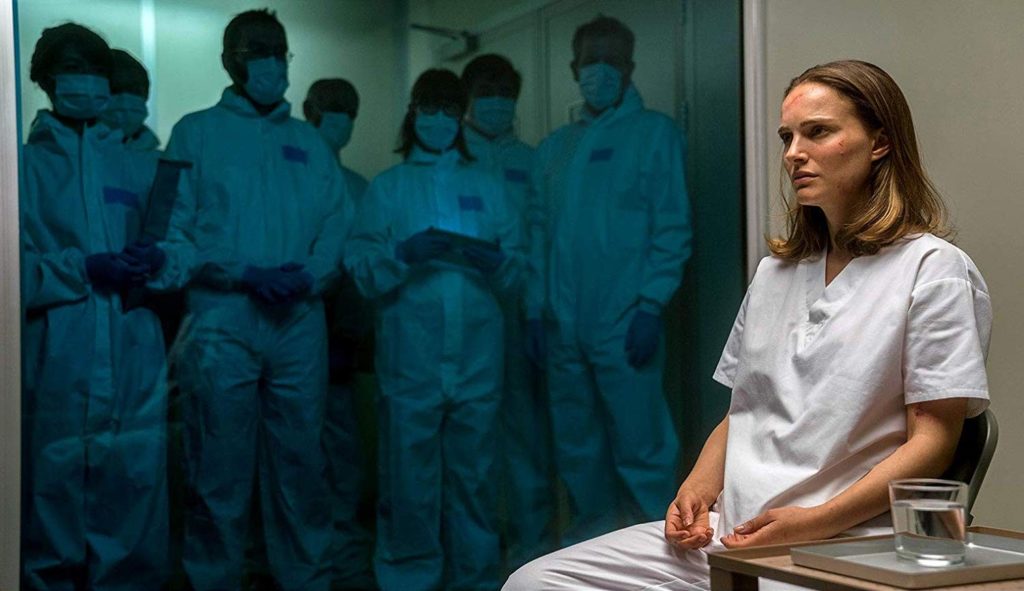
Annihilation (2018)
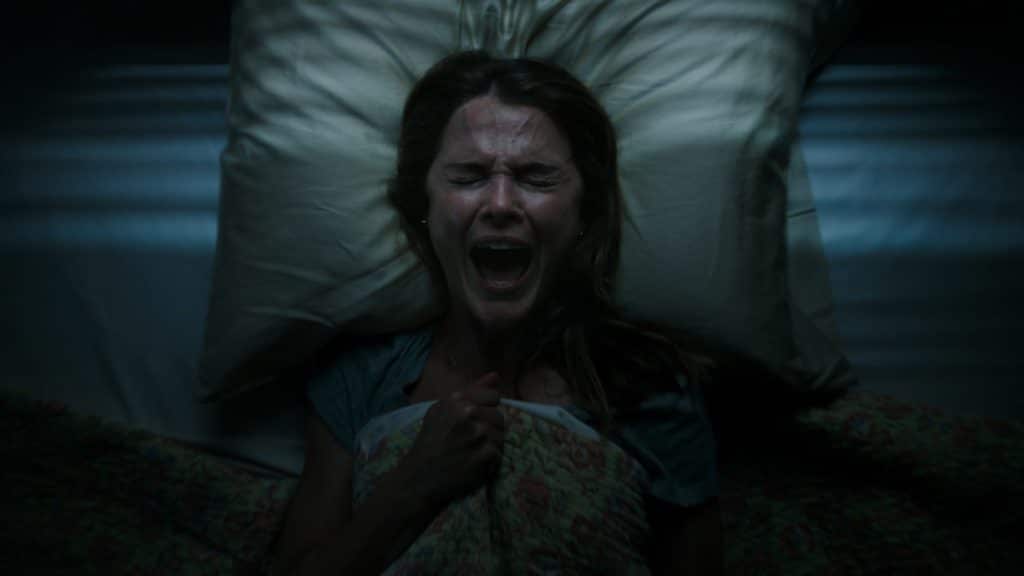
This psychological horror follows an army veteran and biologist named Lena. When her previously missing husband starts convulsing as soon as he reappears in her life, Lena calls an ambulance for him, only for it to be directed to a secret government facility. Lena comes to find that her husband had contracted a disease from researching a mysterious zone called “Shimmer”. Created from a fallen meteorite, Shimmer has been rapidly expanding for three years. When her husband falls into a coma, Lena decides to join a team of scientists on an expedition to study Shimmer. As they venture further, they uncover a mysterious alien fungus that mutates the body of its host until it resembles an entirely different creature. Annihilation plays heavily into the “nature takes its revenge” trope that has grown in popularity in both the eco-horror subgenre and mainstream horror in the late 2010s. Like Crawl, Annihilation shows the potentially catastrophic consequences of unchecked climate change, if in a more metaphorical way.


The Legacy of 2010s Social Horror: into the 2020s and Beyond


Now that we’re two years into the 2020s, what’s in store for the dreaded societal monster? What form will it take next? Here are a few predictions for what’s in store for the next decade.


Horror in Quarantine


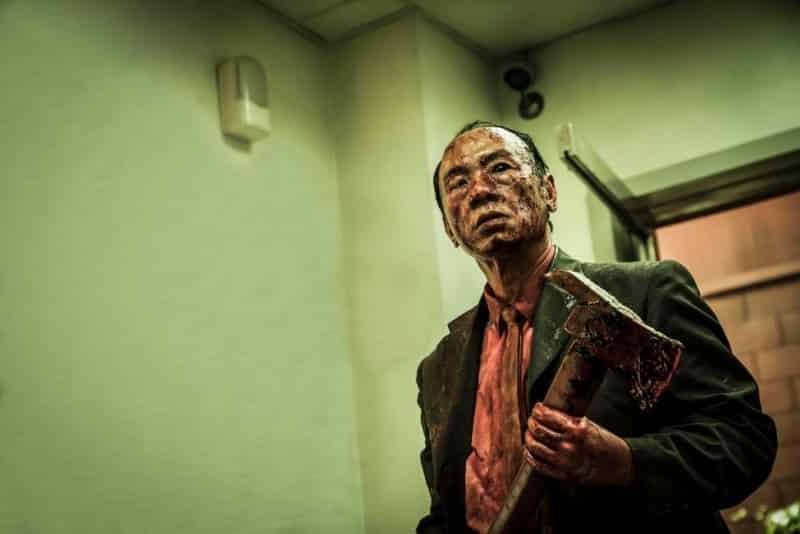
In March 2020, the world was blindsided by the COVID-19 pandemic. People were confined to their homes, living in fear of the disease. COVID-19 drastically changed the world, impacting the lives of millions. This undoubtedly will have a monumental effect on the horror movies of the next decade. Like the AIDs epidemic of the 80s, we may see a boom of body invasion, possession, and involuntary transformation stories in horror, mimicking the experience of contracting the disease. The 2020 film The Host features a demonic entity processing a group of friends through Zoom, taking over their bodies and taking control of their lives just like the virus itself. We may also see a return of the classic zombie plague trope, drawing obvious parallels to the Covid-19 pandemic. The 2021 Taiwanese body horror film The Sadness follows a couple trying to survive a mysterious flu-like virus that quickly morphs into something much more sinister. Virus allegories in general are predicted to rise in popularity in the next decade.


The 2020 Election


No matter what your opinion is on the former president, there is no denying the impact time Donald Trump’s time in office has had on the media and American culture as a whole, Horror movies are no exception. The black comedy movie The Hint (released just before the 2020 election) portrays a world where political divides are so severe that both sides have no qualms about systematically murdering each other, a clear allegory for the turmoil around the election. We may see more movies addressing the deepening political divide or possibly even satires of the former president himself.


The Age of Social Media


Technology has been advancing rapidly in the past decade, particularly in the area of social media. Statistics show Gen Z spends an average of 7.3 hours a day on social media. Apps like Instagram and TikTok have become a crucial part of the lives of many young people. Much like the science gone wrong trope of the 1950s, the social media boom is rife with potential for social commentary. The 2022 movie We’re All Going to the World’s Fair follows an isolated teenage girl whose activity on social media leads to her gruesome downfall, no doubt a theme that will become more prevalent in horror movies as social media grows more popular.
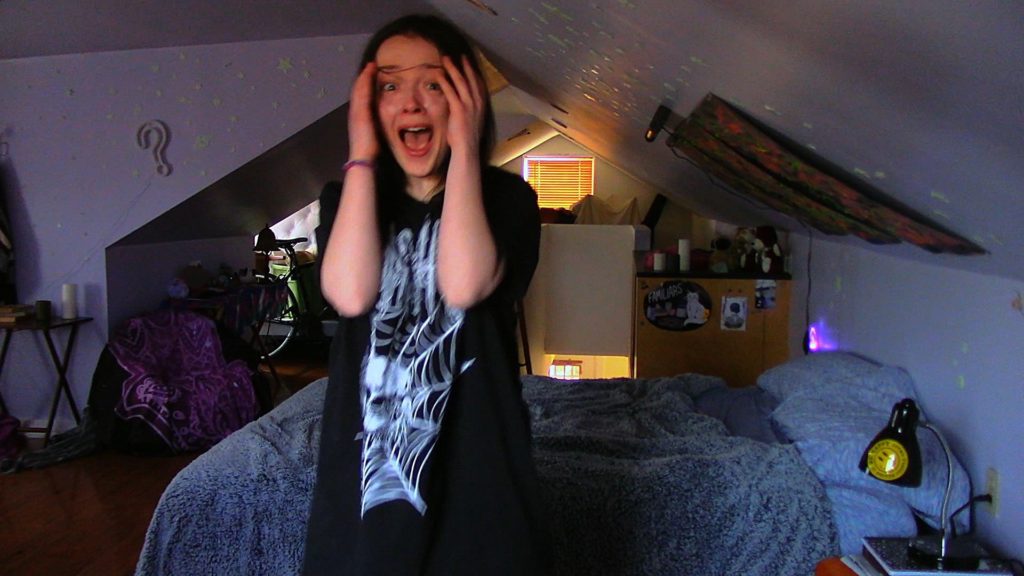
We’re All Going to the World’s Fair


Final Thoughts

Since the beginning of the genre, horror has been a vehicle to satirise and reflect society’s fears. The 2010s is a perfect example of this. Class inequality, political divisions, and environmentalism were some of the social issues portrayed by 2010s horror movies. The influence of these movies will be felt long after the decade has ended. The horror films of the 2020s will carry on this legacy, as well as offer up fresh commentary on nuanced issues of the future.
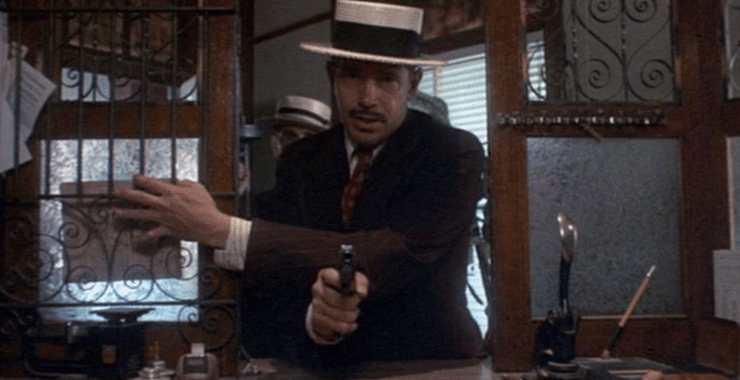
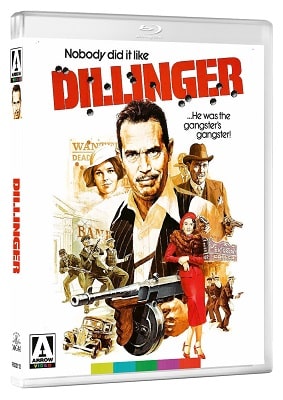
Dillinger (1973)

By Guest Contributor Chris Ward

Kicking off the new year in explosive style, Arrow Video’s latest addition to their catalogue is 1973’s Dillinger, the directorial debut of John Milius, a filmmaker not known for exploring his sensitive feminine side on the screen. Milius had a hand in several violent movies in the early 1970s, including such macho features as Dirty Harry and its sequel Magnum Force, as well as helming Arnold Schwarzenegger’s breakthrough fantasy adventure Conan the Barbarian, so you should know what to expect going in to a Milius movie about a bank robber and his gang.


John Dillinger was a notorious gangster during America’s Great Depression of the 1930s, robbing banks and courting the press, who viewed him as some sort of Robin Hood-like figure, whenever he got caught. In this movie, Dillinger is played by Warren Oates, who does bear an uncanny resemblance to the real-life Dillinger, and he is joined by several familiar faces in his gang – including Geoffrey Lewis (as Harry Pierpont), John P. Ryan (as Charles Mackley), Harry Dean Stanton (as Homer Van Meter), Richard Dreyfuss (as Babby Face Nelson) and Frank McRae (as Reed Youngblood) – as they go on a robbing spree across America’s Midwest, chasing, kidnapping, shooting and (occasionally, if they have to) killing in order to escape.


However, the gang are being pursued by determined FBI G-Man Melvin Purvis (Ben Johnson) who will stop at nothing to bring down Dillinger and his band of merry men, despite the press and the general public heralding the criminal as some sort of folk hero.


As a story, Dillinger does stick fairly closely to events that actually happened back in the 1930s, although if it’s a more nuanced character piece you’re after, then Michael Mann’s 2009 movie Public Enemies might be more to your liking because John Milius is less concerned with details and more concerned with creating exciting, entertaining and overtly violent set pieces that certainly get the blood pumping – both metaphorically and, judging by the amount of squibs they must have gotten through, literally – if not the editing scissors, because after nearly 110 minutes of serviceable shoot-outs, car chases and some admittedly beautiful cinematography, you do start to wonder if anybody had dared to suggest to John Milius that maybe he should try and pace it out a bit better.


But if you come to gangster movies for dogged detectives, charming antiheroes and screeching female characters there to make the main characters look more manly, then Dillinger delivers, offering up similar insights into historical American figures as Arthur Penn’s 1967 classic Bonnie and Clyde or even the more modern(ish) Young Guns (except the cast of Dillinger aren’t exactly pin-up material). The Sam Peckinpah-esque action scenes add a little more edge than a standard mainstream picture from the era would normally exhibit – and John Milius does not hold back on the blood and pyrotechnic effects as Oates, Lewis, Stanton et al deliver stellar performances, despite some lopsided dialogue – but for sheer adrenaline and manly men doing manly men things then Dillinger is as good a movie as you would need to scratch that particular itch. Double it up with, say, John Boorman’s Deliverance and the amount of testosterone coming through your TV screen could probably encourage beard growth as you watched.

Dillinger (1973) is available on Blu-ray from Arrow Video. For more details, please click here.

Celluloid Screams 2021: Antlers

By guest contributor Caitlyn Downs

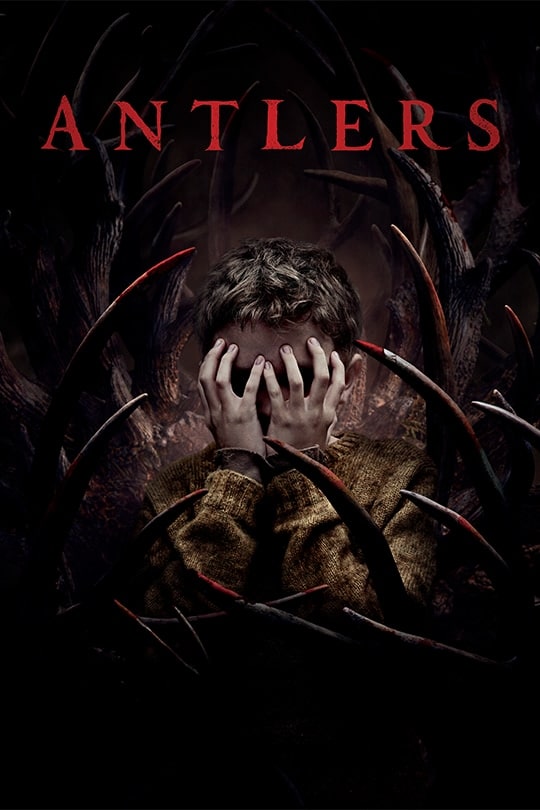
Twice delayed by the pandemic, Antlers has likely been on the radar for many horror fans for some time, thanks in no small part to the involvement of producer Guillermo del Toro and the promise of the kind of magic creature horror that he is so well known for. Those looking for that del Toro stamp here may be left wanting, with a feature that falls short of the richness expected.

“Don’t take what isn’t yours” is a major preoccupation of Antlers, with that ranging from what humans take from one another, from nature and how this impacts the world around it. This places it within a context of other recent release films that, perhaps understandably given climate concerns, have sought to reflect the earth returning to wrest control from the humans that have damaged it. The threats are multiple within Antlers, with the focus of the mining town resulting in poor jobs, poor finances, plus pervasive addiction and abuse issues that scar everyone. The film’s shifting focus from this wider, global concern to something more intimate and small-scale across two families ultimately serves it well, allowing it to do less than if it had to explore the entire town.

The use of spiritual entities that form the belief system of marginalised cultures in mainstream film is, understandably, a thorny issue. As a white woman based in the UK, I can’t offer too much comment in how respectful or accurate the portrayal is here, or in Nick Antosca’s original short story The Quiet Boy that forms the basis for this story. Having done some reading and viewed the Comic Con at Home 2020 panel for the film released ahead of the film’s release, it seems that First Nations consultants (including Grace L. Dillon and Chris Eyre) were afforded a say in the role of the entity, especially in terms of educating director Scott Cooper on its deeply held importance. It is something of a shame, then, that the bulk of the story is focused on non-Indigenous characters. Aside from Warren Stokes (Graham Greene bringing suitable gravitas) who appears to provide an explanation and grave warning, we primarily focus on Julia (Keri Russell), sheriff Paul (Jesse Plemons) and Lucas (Jeremy T. Thomas).

Keri Russell gives an engaging performance as Julia although there are moments where the film uses shorthand that leaves her with little to do. For example, her alcoholism is showcased almost exclusively by her looking sadly at bottles in the local shop, but never feels like it represents a significant enough threat to impact the rest of the narrative. More interesting is the shared abusive history she shares with brother Paul and the way this becomes the source of tension and miscommunication between the pair. Plemons is ever reliable and while this is hardly a role to stretch him, he brings a necessary presence and a good chemistry for the strains with Russell’s character. The echoes from their past are carefully positioned within the narrative but never quite overcome the repression that would arguably free them from it. The real star of the piece is Jeremy Thomas who, despite his youth, turns in an impressively nuanced performance, perfectly embodying Lucas as a young boy ill at ease in the world and within his own skin.

The location provides a beautiful, if ominous setting for the story to unfold – the lake lending it a remoteness and the woodland shrouding it in darkness for much of the time. That reliance on woodland extends into homes, the wood often left bare and unwelcoming (especially as it finds itself with a layer of blood and viscera). The elements of the location suitably become part of the entity design too, lending the film a sense of cohesion and connection to the source of that belief system. The area feels all-encompassing, encasing the characters in an oppressive cycle that draws them all to darker impulses. As already referenced, however, Julia’s struggle with alcoholism is dominated by her almost instant maternal instinct towards Lucas who she notices struggling in the classes she teaches so some of this darkness is reserved for other characters who are not needed to drive the plot.

Despite its mainstream positioning, Antlers does not feel like a blockbuster horror offering and that may well hurt it with some audiences. The scares escalate in the third act, including an excellently timed jump scare that proves Cooper’s ability to deliver on that style as much as the quieter building of tension and menace, but this follows a longer time period of mood-setting. The gorier elements too, especially when coupled with the downbeat tone hardly makes this a fun night at the multiplex, so it is refreshing in that sense to see something like this given further attention. In addition, there are vital beats of the film that thrive on characters making ill-advised decisions, which while always a part of horror particularly stand out within the confines of a relatively small cast. Despite the emotional weight the film aims for and the misery it indulges in for much of the runtime, so much of the narrative feels like a foregone conclusion that you almost resign yourself to that in early scenes and by the end, despite that final burst of energy, you’re left with relatively little to hold on to.

Antlers released in UK cinemas on October 29thand screened as part of the Celluloid Screams film festival in Sheffield, UK. You can check out more of Caitlyn’s writing here.

Fantasia 2021: Radical Spirits

By guest contributor Caitlyn Downs

The Fantasia 2021 Radical Spirits shorts block showcases six films that focus on belief systems and ancestral connections, using genre as a gateway to the unique nature of spirituality and ritual. Often complex and frequently contested, these films all offer powerful representations of concepts frequently difficult to put into words.

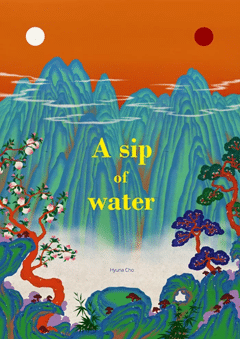
First in the line up is A Sip Of Water, an animated piece from filmmaker Cho Hyuna which seeks to explore the role of Shamanism (and by extension, the Shaman) in Korean culture. While the beauty of the animation more than justifies its place, it is notable here in the closing moments of the film that explains how the voice and images of Shamans were not used in the film because they are regarded as unlucky within Korean culture. This lends the animation further power as the world of the Shaman becomes an ultra-colourful, liminal space in which it is possible to step into the metaphorical shoes of otherworldly figures. The separation from the Shaman from the muted every day experience highlights how they exist on the edges of society, a watchful, protective yet excluded presence.

That sense of figures existing outside of the everyday, but able to directly aid people continues in At Last, The Sea. Ana Karen Alva Medina’s short opens on a horrific scene, set in the 1700s, in which a woman is held against her will. Seemingly temporarily saved from sexual violence by the arrival of her period, the film is a powerful representation of ancestral strength and comfort. Matriarchal power is framed as elemental, embodied through water as the prisoner finds an inner strength. The water motif throughout builds, balanced between the potential for care, restoration and destruction in a short that contains a quiet, but nonetheless potent power of the flow of generational knowledge and trauma.

In a similar way to A Sip Of Water, the next film, Nicholas Tory’s Lifeblood uses animation to detail what it cannot show in live action. In this case, it concerns the exploration of Aboriginal spirituality and connection to the land, sky and trees. The short carefully sets out that this is not representative of the belief of all First Nations people, acknowledging the variety of practices and viewpoints, narrowing its approach to the area of Bourke in New South Wales. It’s a meditative, sweeping journey that offers a view of an evolving landscape, serving as a portrait of the connection between people, the land and the intersection of the modern world. Nardi Simpson’s delicate tour guide-like reading over the images really allows the beauty of the work and its importance to take centre stage.

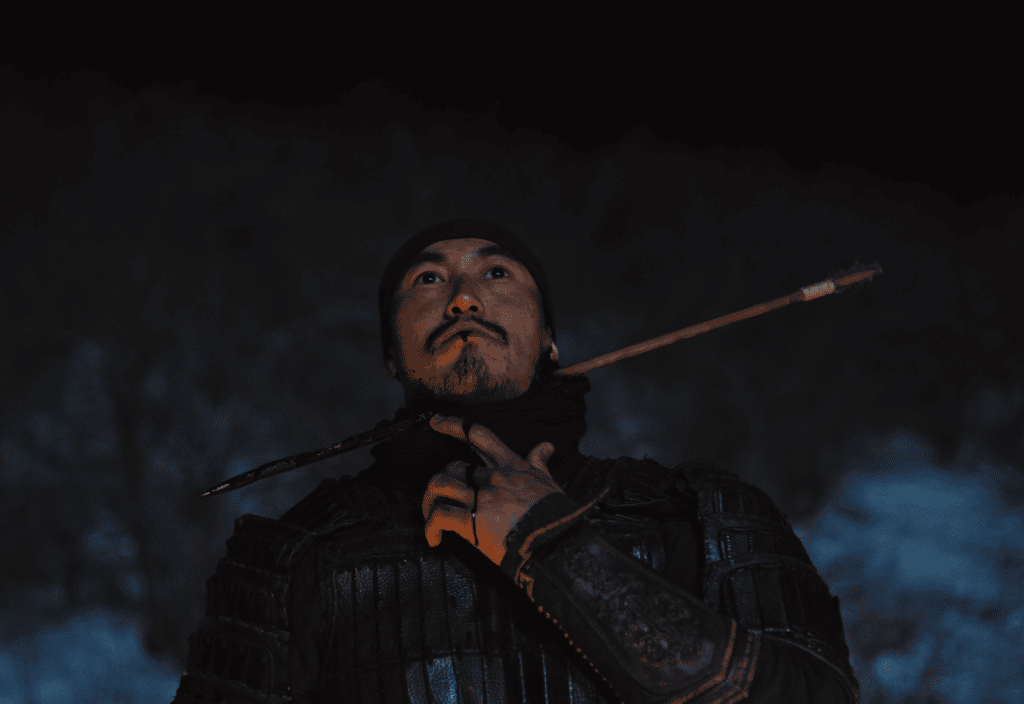
Mergen is a film from Kazakhstan that foregrounds that sense of identity immediately, utilising a piercing soundscape set against a snowy setting. The film foregrounds its protagonist, a young boy forced to defend his family when his warrior father leaves home and features a sympathetic and assured performance that impresses. Counteracting moments of tension, well-timed choreography with soul-searching, emotive material, there is a lot to fit in, even with the film’s runtime almost reaching 30 minutes. The clear identity and absorption into a situation that sustains a sense of threat throughout is a real strength.

The last film in the block takes things full circle with another, more abstract view of a Korean Shaman. This is an energetic, dialogue-free representation of the Gud rite with a focus on colour that evokes the rhythms of ritual, infused with a thumping soundtrack. Taking on the qualities of a frenetic sketch rather than a narrative format, this is six minutes of enthusiastic and compelling mark-making and shape-shifting that is difficult to look away from.

My personal favourite of the block came in the form of Snake Trail, a deeply emotive portrayal of finding security in superstition when society doesn’t offer a space for you. Yuan’er Chen plays Mona, a grief-stricken young girl forced to confront her illegitimacy after her mother passes away. From her helpless position, she clings to the powerful conviction that her mother should be buried within seven days. Superstition dictates that this allows the deceased to return to the home. The importance of this event leads Mona to work with her elderly grandmother on an alternative solution. The film unfolds into an enormously touching experience, full of beautiful sentiment, using animation in some sections to help visualise the concepts.

Even if you aren’t a believer yourself, the Radical Spirits selection offers an eye-opening portrayal of ritual, belief and how they can bring comfort and strength to those who do believe. The mix of the otherworldly as well as past and present tensions make this a fascinating block that offers insight into how people adapt stories, including oral traditions into their daily lives and particularly in times of hardship. These shorts all find the human experience within the context of the fantastic, offering lessons and insight along the way.

You can find out more about the Radical Spirits block at the Fantasia webpage.

Many thanks to Caitlyn Downs for this feature. You can read more of Caitlyn’s work at her own page here or check out her contributions to Horrified Magazine here.

Road Head (2020)

By guest contributor Chris Ward

Every so often a movie breaks through the barriers of genre, dares you to question what you think you know and threatens to make you think differently about horror movies and how they can challenge and defy social norms. Road Head (2020) isn’t that movie, mainly because at its core it’s a slasher with a twisted sense of humour, but thanks to a few key elements, it could be one of the freshest takes on a familiar format we’ve seen in a while.

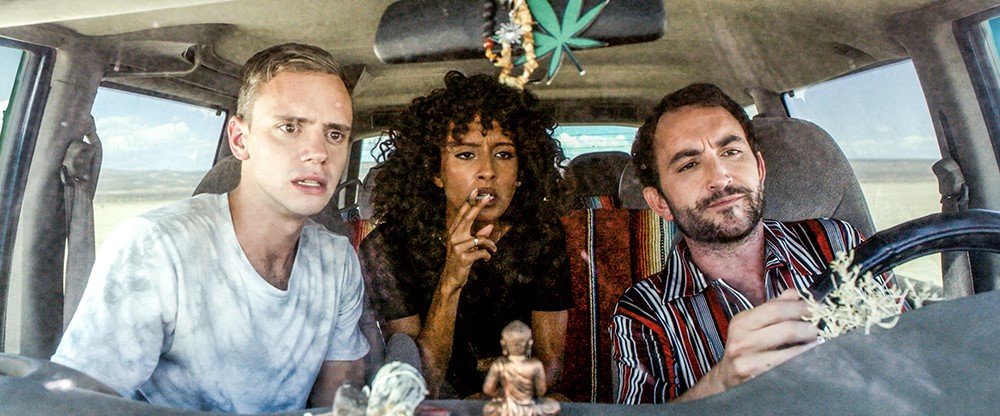
In proper The Hills Have Eyes/The Texas Chain Saw Massacre style Road Head sees a van with three friends contained within travelling to Lake Isola in the Mohave desert. Why are they going there? Because one of the group, Bryan (Clayton Farris), went there as a child and wants to return to take pictures as he is now a photographer. Who are these people? Well, Bryan owns the van, his boyfriend Alex (Damian Joseph Quinn) has come along as he thought he and Bryan would have a romantic break together, but on the backseat is Stephanie (Elizabeth Grullon), a friend of Bryan’s who has a rather antagonistic relationship with Alex and has just split with her boyfriend David, who makes appearances throughout the movie thanks to Stephanie’s drug-induced hallucinations.

So far, so standard fare, but when the trio gets to the lake they discover that the water dried up years ago, leaving the area a barren wasteland, but, unperturbed, Bryan still wants to take some photos while Stephanie crashes out in the van. All well and good until a chainmail-wearing behemoth of a man wielding a broadsword enters the scene and the movie becomes a fight for survival as friendships are tested, quips are fired out like bullets and some of the weirdest antagonists in recent horror history are introduced. Safety and glory, indeed.

Promoted as a LGBTQ horror comedy, Road Head is rammed with camp humour right from the off as Bryan, Alex and Stephanie make their way across the desert in their Scooby van, and immediately these are characters that are so likeable and pitched perfectly that the witty dialogue feels completely natural. In fact, the first few minutes of them bickering in the van sets them up so well that when the first attack comes, the violence – despite being gloriously gory and completely silly (in a good way) – threatens to shift the tone a little too much. It doesn’t, mainly thanks to an electrifying performance from Elizabeth Grullon as the feisty Stephanie, but as the movie approaches its second act it feels like it could fall apart any moment if the threat from the villain is taken too seriously.

Luckily, Hellraiser: Judgment’s Paul T. Taylor is on hand to add the necessary whimsy to this movie’s equivalent of Texas Chainsaw’s Sawyer family in a scene that could have come straight from a British sit-com from 30 years ago with one or two linguistic twists (and two words have never been as funny when repeated as “Safety and glory” in a movie for a long time – it really has to be seen). The finale comes round fairly quickly and the filmmakers remind you that this is supposed to be a ‘horror’ comedy and so throw in some more gratuitous Shogun Assassin-style gore to end on a high note just before the inevitable slasher movie kicker; oh yes, Road Head hasn’t forgotten its influences and anybody with a knowledge of slasher/backwoods movies will have seen it all before, but when it is done with this much love you’d be upset if it didn’t go there.

Let’s get this straight – Road Head is not a game-changer nor is it ever going to be labelled as a classic. However, it is tremendous fun and is clearly poking at the corpse of the classic slasher genre to try and tease a bit more life out of it. It mostly works thanks to the strong performances, sparkling script and lightness of touch to the direction that means it never gets bogged down or comes to a standstill like so many similarly-themed movies do. The tonal differences threaten to clash every now and then, but the actors seem to be clued into what they are doing and handle the material with apparent ease, and although the horror elements are a little past their sell-by date and not exactly scary it doesn’t matter, as Road Head is hugely entertaining and basically a good laugh throughout. Safety and glory!

Road Head is available now on digital platforms.

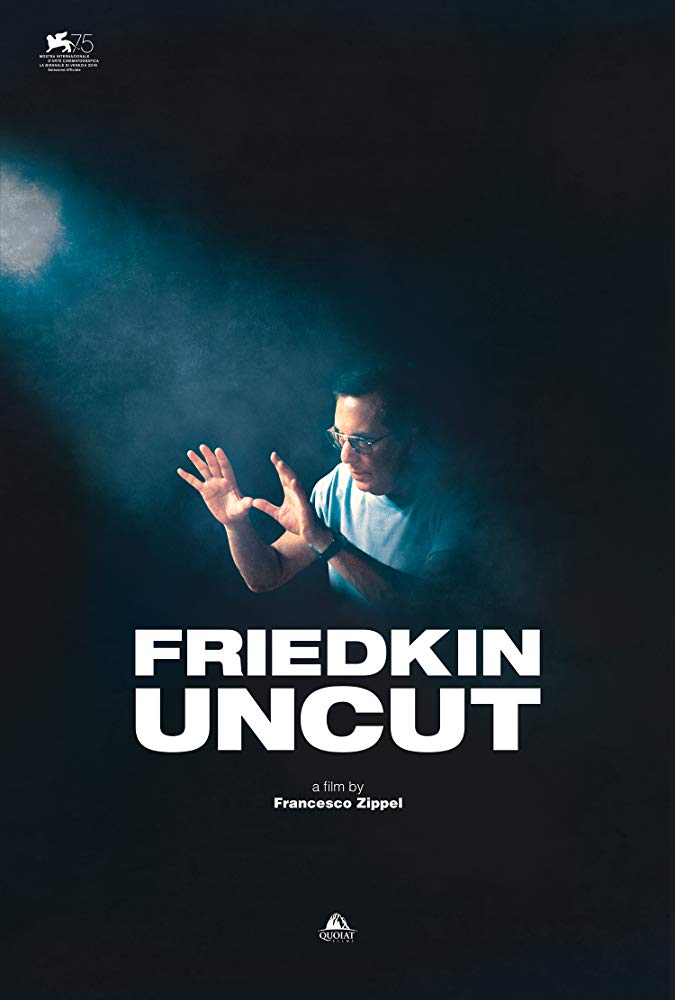
Raindance 2019: Friedkin Uncut (2018)

By Matt Harries

Despite professing to not be a political film maker, William Friedkin demonstrated his social conscience at the very beginning of his directorial career. The People Vs Paul Crump was Friedkin’s 1962 debut and follows the story of the titular Crump, sentenced to death by electric chair for his part in a bungled armed robbery in which a security guard was shot dead. Friedkin, not yet 30 years old at the time, had only just begun a career in television. Having watched Citizen Kane at the age of 21 and first felt the call toward a career in film, so it was that having met Crump and being convinced of his innocence, he and cinematographer Bill Butler took up their cameras in the name of justice.

The governor of Illinois eventually saw the film and was so moved by it that he commuted Crump’s term from the death penalty to 199 years’ incarceration (Crump was eventually released on parole in 1993 before being returned to prison on less serious charges). The governor’s decision convinced Friedkin of the power of cinema. Then he went to Hollywood and was, in his own words, ‘completely dispelled of that notion.’ Within ten years of The People Vs Paul Crump he directed The French Connection and The Exorcist, two cinematic classics and as devastating a directorial one-two punch as you could wish to see. The legend of William Friedkin was established.

Friedkin Uncut is built around a coffee-fuelled interview at the home of the venerable director and features the input of a fairly staggering array of talent from the cinematic world, including Francis Ford Coppola, Quentin Tarantino and Dario Argento, as well as others who have worked beneath him such as Ellen Burstyn, Matthew McConaughey and Willem Dafoe. Despite this assemblage of heavyweights, Friedkin is characteristically forthright about his own work and harbours no ideas of artistic grandeur relating to his own contribution, despite taking the directorial helm on a couple of bona fide classics and a handful of less critically regarded, but still highly notable efforts such as Sorcerer, To Live And Die In L.A and his most recent full length Killer Joe. Regarding his craft as a profession and not an art, Friedkin is a director who eschews philosophising and fabrication in favour of the rawness of spontaneity and poignancy of the unvarnished truth.

This liking for an approach aligned with the Cinéma vérité tradition was apparent in 1972’s French Connection, where Friedkin shadowed police officers, even going so far as to clap the cuffs on a triple murder suspect, in a bid to absorb as much of the reality of law enforcement on the streets of Brooklyn as he possibly could. We learn of the shooting of the film’s famous car chase, a sequence Friedkin admits would not be possible to shoot on today’s health and safety conscious film sets. The director left his team in no doubt that they had not performed adequately thus far and that this take simply had to be the one.

Aside from the results of this scene – as kinetic and perilous and as ‘on the edge’ as any cinematic chase – this method of extracting the essential aliveness of the moment became a modus operandi for Friedkin, a self-confessed ‘one take guy’ who preferred to direct his actors with spontaneity rather than perfection as his watchword. Matthew McConaughey, who’s turn as Joe in 2011’s Killer Joe lead directly to his winning the role of Rustin Cohle in the brilliant first season of True Detective, speaks of the way being told to shoot in one take was a way of freeing up the actors, for whom the way forward was suddenly simple –  leave everything on the table, now. Indeed whether it was dropping his trousers on set to help actress Juno Temple feel more comfortable with a nude scene in Killer Joe, or telling the studio that he would walk if Jason Miller was not given the role of Father Karras over the original choice of Stacy Keach, Friedkin is unapologetic about his methods in always striving for the utmost professionalism in the telling of a story.

Friedkin tells a great yarn and indeed has many a great yarn told about him. If a man could be judged in any way by the respect of his peers, the list of contributors to this documentary should tell its own tale. For someone who came from the era where, as Ford Coppola puts it ‘to shoot something incredible you had to do something incredible’, Friedkin is unpretentious, modest and yet at the same time unmistakably passionate about art – whether or not he sees his work as a demonstration of artistry or, perhaps instead the building of a platform that allows art to be expressed upon it. Either way, Friedkin Uncut is an essential document of one of cinema’s most enduring figures, who’s legacy is forever woven into the fabric of contemporary mythology. 

Friedkin Uncut will screen as part of the Raindance Film Festival on Monday, September 23rd 2019. For more information, please click here.

Raindance 2019: Certain Kind of Silence (2019)

By Helen Creighton

At first glance, Certain Kind of Silence has the whiff of a certain kind of Stepford: vague parallels could be drawn between the classic 70s sci-fi The Stepford Wives and Czech director Michal Hogenauer’s tale of a young au pair slowly but inexorably drawn into an oppressive cult environment against her better instincts, resulting in the destruction of her initially independent and thoughtful personality. In this case, substitute for the uncanny US-based valley of Stepford and its inhabitants a small, smothering cult set in a wealthy suburban community in an unidentified and unidentifiable part of western Europe. It’s all a long way from sci-fi or even satire though, as the film’s final frames show. But we’ll get to that later.

Misha, a young Czech woman, is recruited as an au pair for the young son of a wealthy European family, whose household is best described as a mixture of top-to-toe dull as ditchwater, colourless Scandinavian aesthetics and an obvious preoccupation with control. At first it’s weird, but ultimately harmless rules about which colour dishcloths can be used to wash which colour dishes, which the now renamed ‘Mia’ (first sign of trouble there as Misha loses her first marker of her real identity) mocks behind the family’s back via Skype to her boyfriend back in Prague. She easily resists the father’s early requests to keep her passport and valuables. She has no issue saying ‘no’ to requests she finds distasteful. She shows she’s no easy mark for manipulation and resists the family’s first attempt to induce her to physically punish the son she’s employed to care for ‘for his own good’ and she abruptly quits and leaves in a state of distress at what she has witnessed to that point. We learn that beyond dishcloths and colour codes, the main rule of the house is total obedience, backed by a sinister maxim regarding the necessity of pain in achieving any desired outcome.

Alas, things happen, as things always do in this kind of film, to force her return to the family and eventual capitulation to what is demanded of her. Soon it appears that she has renounced independent thought, draped herself in beige, and become a fully signed-up member of what is revealed to be some kind of bizarre if unnamed family cult. Part of this involves a very brief sex scene which is as oddly colourless and devoid of life and passion as the furnishings, as Misha/Mia appears to succumb to a request to produce another cult member fresh out of the oven, so to speak. The family seem to be well on their way to turning Misha/Mia into an fantastically obedient robot for the cause, whatever the cause is, which is never really made clear, perhaps because it doesn’t really matter. A cult is a cult is a cult is a cult, as Gertrude Stein memorably never wrote.

Cut early into the narrative are brief scenes of Misha/Mia in her final form as beige-clad, dull-haired, dull-eyed cult member undergoing a police interrogation about the household which signals that things will get very, very dark. Which they do, although there’s little on offer in terms of gore, extreme violence or even raised voices. A significant act of violence takes place entirely off-camera. The worst horror is simply suggested by a character’s sudden absence, and a brutishly dismissive answer to a query into his whereabouts. It is entirely left to the viewer to imagine his fate. There are no sudden thrills or jump cuts, no blaring soundtrack or anything designed to make the viewer jump out of their skin. A Certain Kind of Silence instead provides a gnawing, low-level tension and a kind of slowly burgeoning moral horror. Fittingly, despite the psychological and physical torments heaped upon the viewer and certain characters, a preternatural sense of calm reigns throughout, even in the closing moments with the law closing in on the cult.

The film seems to offer an allegory on the dangers of conformity, the amorality of a go-along-to-get-along culture, or perhaps corporatism; again and again, the intense but quietly-spoken parents justify physical abuses on the grounds they are designed to render the abused individual obedient and thus successful in society. At other points it almost comes across as a treatise on how the rich may treat domestic employees as replaceable units rather than human individuals.  It certainly explores the wider issue of  how flexible a once upright individual’s moral compass can become in the right or rather wrong environment, where compliance with dubious requests is both praised and rewarded materially, while resistance produces less emotionally rewarding outcomes. Certainly we can all think of easy historical examples of this outside of a classic cult environment, anything from WW2 horrors to the US college prison experiments of the 1970s, so it’s not such a reach to interpret the film as reaching for a variety of wider issues than simply how cults operate. It seems odd to contemplate this precise scenario could be going on in nice neighbourhoods in western Europe, with such ostensibly ‘normal’, presentable (if dull) and successful people behind it.

That’s where I was wrong, as the final frames provide context that turn any perception of this as even a uncomfortable satire on its head and acknowledges a real life event that took place in Germany in 2013 as the basis of the storyline. Sobering stuff indeed. I did appreciate the filmmaker’s decision to leave this information until the final moments, as it allows the viewer a wider interpretation of the material than they might have otherwise if concentrating on it as a ‘based on true events!’ kind of show.

It’s certainly a very confident outing, with Hogenauer never once giving in to the demands of smash-bang, turn-it-up-loud mainstream entertainment values. The limited colour palette he uses throughout; the dreary grey skies, leaden oceans, the drab decor and drabber clothing of the faithful, creates a stronger sense of a group of people in the grip of an ideology to which they are required to subsume their entire identities and personal preferences, more than any amount of emotional flailing, bloodletting or noise could. The lack – of colour, of music and human passions, even of an identifiable location is what lends such an oppressive atmosphere and lingers in the mind long after watching. Highly recommended, with a semi-serious warning that you may never contemplate Scandi chic and beige v-neck cardigans in the same way again.

Certain Kind of Silence will screen at the Raindance Film Festival on 24th September 2019. For more details, please click here.

The Mind is a Labyrinth: Hellraiser II at 30

By Matt Harries

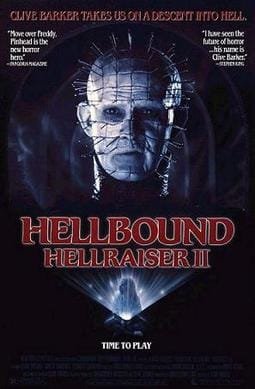
If ever there was a horror franchise that elicited an equal sense of both joy and frustration, it is surely the Hellraiser franchise. How many films have managed to nail (sorry) such a heady blend of slasher flick and (to paraphrase Doug Bradley) ‘Gothic Ibsen’? The first film, Hellraiser, established a template that has long seen cult status achieved and a host of sequels spawned, unfortunately with ever diminishing returns. Unsurprisingly it is Hellbound: Hellraiser II, filmed with many of the same cast and crew and featuring the direct involvement of creator Clive Barker as Executive Producer, that of all the sequels best manages to keep intact the atmosphere and artistry of the original.

Hellbound retains a gloriously archaic quality to this day, that of a time capsule imbued with the remnants of old, once potent magick. Creature effects, rudimentary animation and set design – all hampered by budget restrictions imposed by collapsing studios and the like. Concepts on a grand metaphysical scale imperfectly realised by the technology of the time, halfway between the practical effects of the 80s and the nascent era of CGI. The fecundity of Barker’s vision was such that any attempt to capture it within the strictures of the mundane realm of the late Eighties film set was always going to be fraught with imperfections. Yet, it is in many ways these imperfections that makes the first two Hellraiser films so enjoyable, even to this day.

As often happens throughout the various storylines of the franchise, the Lament Configuration itself is at the heart of things. So too with Hellbound, where we begin with the sight of a strangely familiar individual in childlike repose – cross-legged and furrowed of brow – turning the box over in his hands, seeking to unlock its mysteries. His fingers write his desire upon the golden patterns of the box, and soon his workings invoke the familiar dolorous tolling of bells and dimming of light. As the device opens to the tinkling strains of a child’s music box, the hungry eyes of the man peer into it. His curiosity is rewarded with hooked chains, blood and pain. We are taken then into some kind of subterranean dungeon and forced to bear witness to the unmaking of this man and the creation of something else – something with precise lines carved into living flesh and decorated by nails hammered into skull by inhuman tentacular appendages. The entity known as Pinhead is therefore revealed to have origins as a man, while it is also made clear that there is some kind of will behind the enticement of the Lament Configuration, some shadowy being using the puzzle box as a fisherman uses a lure.

Returning to the present day, we are reunited with Kirsty Cotton (Ashley Lawrence), as well as the disastrous state of medical facilities of the era. Waking in a dimly lit and dirty hospital room, still covered in grime, the threat of the Cenobites has understandably left her in a parlous state. However, she is not in any old hospital; no, the lucky girl is attended to by the reassuring presence of one Dr. Philip Channard (Kenneth Graham), who we first see delivering a rather metaphysical-in tone speech, while simultaneously delivering a (live) patient from the contents of her skull. The Doctor’s professional detachment can’t quite disguise a certain special interest in Kirsty’s case, but she is none the wiser and in fact has more than enough to deal with after seeing a bloody message daubed from on the wall of her room by a skinless man she believes to be her father.

As Kirsty literally struggles with her demons, we come to learn more about Channard, who takes an elevator to the subterranean depths beneath the hospital. If you thought the regular patients had cause for complaint, the lower levels seem to have been modelled on a cross between Jack Harker’s asylum in Dracula and Freddie Krueger’s boiler room. Patients in the grips of horrifying psychoses are left to battle their imaginary enemies in squalid padded cells, Channard paying them a visit as if checking on seeds germinating in a potting shed. Still hiding behind the veneer of professional concern, he arranges for delivery of a certain blood-stained mattress from the crime scene of Kirsty’s old house. Meanwhile his assistant Kyle (William Hope), bringing some much needed humanity into proceedings, develops suspicions about Channard and breaks into the Doctor’s home, whereupon he discovers sheaves of paperwork including articles on psychic children, diagrams and sketches of a certain exotically-detailed box and photographs showing the individual we first saw at the very beginning of the film.

Much like Kyle, we the viewers have seen enough to know that Dr. Channard is yet another man driven beyond human morality by insatiable curiosity and thirst for knowledge pertaining to life beyond the earthly realm, beyond death itself. Following on from Frank and Captain Elliot Spencer (he who would become Pinhead), the Doctor’s pursuit of the unholy unknown is like a puzzle itself, comprised of various pieces he assembles and begins to manipulate: knowledge gleaned from his studies of the Lament Configuration, his unfettered access to psychotic patients, a young girl with a preternatural skill for solving puzzles, a certain blood-stained mattress – all these elements he brings together, drawn by the dark force behind everything, the force that unmade Captain Spencer and raised a great demon in his stead.

There were, of course, others before Channard who were drawn inexorably into the machinations of the box. Soon, his bloody experiments have raised one of these individuals back into the earthly realm, namely Julia (Clare Higgins), the woman whose lust for good old Uncle Frank proved just as great as Frank’s own deadly desires in the first film. She provides a crucial facet of the story, that of being a romantic foil for Channard. Naturally enough for a Clive Barker creation, sexual magic is as potent as blood magic and both together are irresistible, especially once the hapless Kyle – always far too nice to be anything other than cannon fodder – falls victim to Julia’s thirst for restorative blood. With the young girl Tiffany working to unlock the Lament Configuration, Channard and his partner in lust seem destined to step into the world beyond.

With the rather extensive use of flashback scenes in the first part of the film (perhaps a consequence of the aforementioned financial woes afflicting the production), a fairly coherent narrative is established as the principal characters chart an inevitable course to Hell, the labyrinthine dimension of Leviathan, the great power behind the Lament Configuration. Henceforth, perhaps encouraged by the creative possibilities of a place located beyond the boundaries of our world, things get a little less linear and a touch more chaotic. This state certainly suits the visual concept behind Hell, represented here as a vast Escheresque maze of stone stretching beyond the horizon, shadowed by the monolithic, diamond shaped Leviathan. While you’d be perhaps be forgiven for thinking a visual representation of such a realm would be beyond the set designers of the time, in fact for me they do a pretty good job with the tools at their disposal, in creating a vista in which atmosphere just about manages to outweigh the clunkiness.

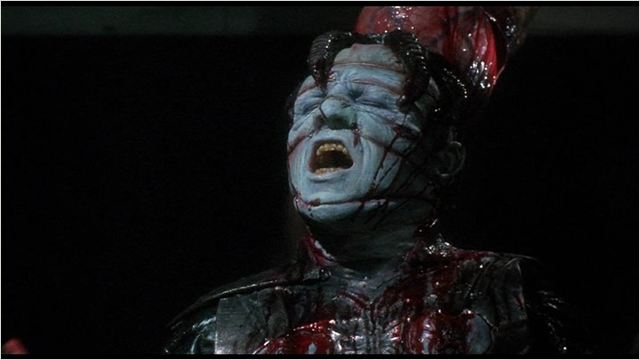
Character motivations now become a little harder to discern, as Julia reveals her true purpose, presenting Leviathan with another soul in the shape of her beau Channard, who is then remade as the Doctor Cenobite. This memorable new creature is umbilically connected to Leviathan, empowering the former surgeon with more of the tentacular appendages we saw in the creation of Pinhead at the very beginning. These bizarre appendages, brought to life with a kind of third-rate Harryhausen animation style, are like some kind of Swiss Army knife/worm hybrid – they really have to be seen to be believed – and aren’t in all honesty the most impressive of weapons, at least in terms of appearance.

The Doctor’s charm as a villain lies instead in the way he combines the Cenobite stylings of leather and scarification with remnants of a surgeon’s patter, camply declaring ‘I recommend…amputation!’ among other gems. Whereas Pinhead is a model of icy comportment and moves as though he has all the time in hell, the Cenobite formerly known as Channard is all juddering, malformed laughter and ‘What was on the agenda today? Ah yes, evisceration!’ Certainly he is grotesque and awful, but also quite amusing.

The film tumbles as if hurricane-blown toward its conclusion, all ham-villainy, gore galore, double-crossing and chases down dead-ends. We get to see Uncle Frank in both his vest-sporting and skinless guises, while Julia too learns that borrowed flesh can easily be returned against her will. Leviathan’s great power seems not to extend to omnipotence within its own realm, something I admit to never having a detailed comprehension of, but then again, in examining Hellbound we are asked to turn a bloodied cheek; to the erratic plot, the general campness and the occasionally shonky visual effects.

It may not make a great deal of sense, but in combining the timeless gothic-gore style of the Cenobites with the lust-addled human element – in all its error strewn and shambling incomprehension – Hellbound: Hellraiser II is a worthy successor to the original and certainly worth a watch at 30 years old.

The Boys – All Grown-Up At Last

By Helen Creighton

Power corrupts. Superpowers corrupt absolutely. That’s the message of the 2006 comic series ‘The Boys’ – a 72-issue story arc about superheroes gone bad and the people who fight them, and now a TV series for people who don’t like superheroes, or are at least bored with the current, ever-spawning, squeaky-clean superhero movie franchises.

Except maybe Deadpool. If you like Deadpool, you’ll probably love The Boys.

The Boys in the original comic are a CIA-sponsored black ops team consisting of a rage-filled, vengeful and manipulative ex-Royal Marine named Billy Butcher; his curiously-named second in command Mother’s Milk, an ex-US military single father of an errant teenage girl and a diminutive, mute and traumatised Asian female assassin-for-hire simply referred to as The Female. The Female, who is prone to horrific uncontrolled outbursts of deadly violence, is taken under the caring wing of ludicrously Gallic and still possibly fake Frenchman (‘Frenchie’) who may or may not have once served in the French Foreign Legion. A  clueless, small town Scottish everyman and conspiracy theorist, Hugh Campbell,  (nicknamed ‘Wee Hughie’), recruited by Butcher after his fiance is killed in front of him due to  the careless actions of a popular superpowered individual named ‘A-Train’, completes the team. Their purpose is to punish and corral the worst behaviour of notoriously degenerate teams of superheroes, all thinly disguised analogues of various Marvel and DC heroes. All ‘supes’ are essentially the latest corporate product and property of a sinister US weapons company named Voight-American, which also has a propaganda arm churning out – you’ve guessed it – endless superhero comics.

The Boys takes the deconstruction of the superhero genre started in the 1980s by Alan Moore’s classic ‘Watchmen’ to its natural end point. The satire is filthy and brutal. Nothing is exempt from mockery. The comic offers barrels of bawdy humour,  irreverent dialogue, vastly over-the-top characters, many and varied Anglo Saxon swear words, excessive bloody violence and constant sexual depravity. It plants a mocking kiss right on the forehead of the comics industry itself and raises a jolly middle finger to the corporate world and its machinations. Originally published by the DC Comics adult imprint Wildstorm, it was hastily cancelled and then picked up by Dynamite after the DC head honchos actually bothered to read the first few issues and realised the off-message, anti-superhero and far too brutally adult nature of the beast. The comic even features a personification of the comics industry as a whole in the form of a incredibly sleazy, cynical old man simply named The Legend, who lives in the basement of a comic book shop, knows all the dirt on everyone and hates ‘supes’ quite as much as Billy Butcher.

I’m a longtime fan of creator Garth Ennis’s writing, and The Boys to me is among his best work so I was very curious about how the adaptation to screen would be handled. Would they retain the brutally irreverent nature of the original work? Could they handle the sick humour? In an age of Twitter mobs, ‘cancel culture’  and casual accusations of  ‘misogyny’ regardless of intent or narrative context, how would they handle a major part of the story, in which sweet, idealistic Christian ingenue supe Starlight, aka Annie January, is coerced into a humiliating and abusive sexual initiation by the male members of The Seven, Voight’s premier supe team, led by the obvious Captain America/Superman analogue, The Homelander? Would they dare feature the over-endowed Russian superhero Love Sausage or would that be a bridge too far? Would Disney get their knickers in a twist over the soiling-by-association of their various intellectual properties? Would they chicken out and tone everything down? Or would they go there? Let’s find out!

One binge watch later, my overall impression of the series is that it is a highly enjoyable and quickly darkening story that takes the plot points of the comics as a jumping off point. There’s less outright bawdiness, fewer gratuitous sexual moments and a lot more delving into the various characters’ backstories and their humanity, or lack of it. My one real disappointment is that Hughie is not the Simon Pegg-lookalike young Scotsman of the original whose often naive, fish out of water view of the USA provides some comic moments, but is instead portrayed as a native of New York city. This is slightly made up for by the fact that Pegg actually appears as Hughie’s father. Jack Quaid however does a fine job as the meek, unassuming Hughie, an innocent abroad anyway in the world of supes and the only member of the team who starts the story with no blood on his hands. Apart from that of his fiance, of course, in an impressively gory scene which actually matches the visceral horror of Darrick Robertson’s original art.

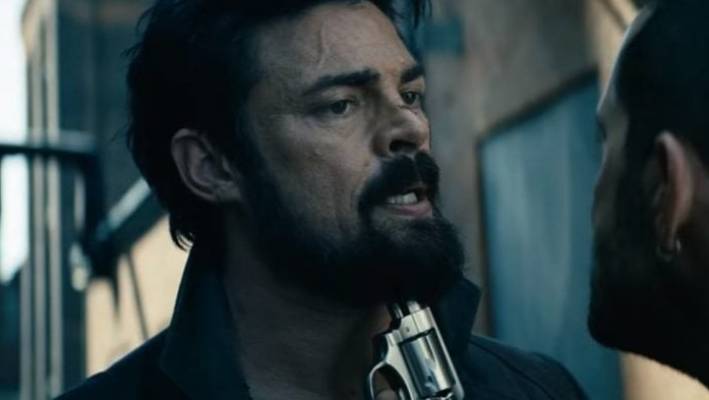
The standout performances are from Antony Starr as the Homelander and Karl Urban as his nemesis, Billy Butcher.  Urban, who I think often doesn’t get quite the credit he deserves as a actor – he always seems to disappear into a role – is note-perfect, a charismatic man who will give you a bizarre pep talk laden with comical Spice Girls metaphors, but who really harbours a deep-seated rage, and a deadly purpose. There’s a scene in which he brutally murders a physically harmless yet traitorous supe that is chilling in its brute physicality and fury.  Just as chilling is Antony Starr’s turn as Homelander. He nails the physical presence and the wholesome, all-American charm of a classic superhero; a charm that instantly evaporates to reveal a petulant, angry and deeply damaged individual when the cameras are off. An individual who is beginning to wonder quite why someone with his powers should be taking orders from lesser mortals. An individual with some rather weird psychosexual issues that are … ah, managed by the Voight vice-president Madelyn Stillwell, as played by the ever-excellent Elizabeth Shue. Nice to see her pop up in something of this quality. Both Homelander and Billy Butcher are ticking timebombs who mirror each other in their violence, anger and their ability to put on a mask that puts others at ease. Their confrontation in the last episode turns certain events in the comics on their heads and I’m very curious to see where they will eventually go with it.

As for the whole Starlight rape issue, well, it’s done rather differently, as one should probably expect in the current era. It’s less gratuitous and involves only the aquatic supe oddity The Deep, rather than the Homelander, A-Train and the rest as in the original comic. Perhaps the whole casting couch analogy hits far too close to home in current Hollywood, as well it should. The grand reveal in the comics of the dirty secret of Starlight’s ascension to The Seven that sends Hughie into a tailspin of judgement and shows Butcher for the manipulative sod he is – and allows Ennis to probe the topic of sexual double standards – doesn’t occur. It’s rather handled as a simple female empowerment arc as Annie/Starlight eventually goes off-script in public to shame The Deep aka Kevin, a strange character played as a mixture of arrogance and complete insecurity by Chace Crawford.  Kevin seems oblivious to basic standards of decency when it comes to women, but has an actually quite touching empathy with sea creatures, making him a somewhat more interesting character than just a stupid, one-dimensional rapist type. Interesting take. Tables are eventually turned and indignity upon indignity is piled upon The Deep until he begins to break down. Then there’s that scene with the poor dolphin. Blackly comical, and totally Ennis-ian, but damn.

There’s little to say about Mother’s Milk as played by Laz Alonso except that he IS the MM of the comics. Perfect. Moral, respectable and committed to his family, exactly how I imagined him, down to the way he speaks. Alonso makes the perfect foil to Tomer Kapon’s Eurotrashy Frenchie, whose character is quite wildly different from Ennis’ original work, as he should probably be – what works on the page doesn’t always translate to screen, and Frenchie’s utterly ludicrous speech, although hilarious in the comic doesn’t seem to fit this version of The Boys at all. Instead we are given a  vastly toned-down interpretation with a believable backstory. What remains from the comics is his instant empathy with Karen Fukuhara’s The Female. Her backstory has also been vastly expanded from the original comic. She, like Laz Alonso, is pretty much exactly the same visual presence onscreen as in the comics, a ball of tension and murderous misery who starts to soften under Frenchie’s care, but still remains utterly deadly when pointed at the enemy.

Another female character whose role and backstory has been expanded is The Seven’s Wonder Woman analogue, Queen Maeve, played by Dominique McElligott. There does seem to be a focus on giving women more to do than in the comics, down to the gender-swapping of Stillwell which actually works really well, given the fact they actually had a reason other than ‘it’s the current year and by gum, we need more women in stuff’ to justify it via the vital plot point of her relationship with Homelander. Anyway Maeve here is a long way from the totally dissolute, aloof and permanently trashed supe of the original and I do wonder if successive series will hasten her descent into that state before long. As it is, she’s almost too likeable, too lovely even, compared to the jaded ageing blonde with ‘cracks around the edges’ (Butcher) seen in the comics. Her sheer horror at Homelander’s behaviour on that plane (an event that’s actually even way more horrifying in the books, somehow, as a much more pointed 9/11 analogy) seems destined to be the thing that will tip her over the edge.

So, yes, I can say that The Boys lives up to expectations, despite some obvious changes. Sadly no Russian arc featuring Commie hero Love Sausage yet though. One can only hope for season two. Maybe we’ll even get an appearance from Terror, Butcher’s dog (geddit) next season? More importantly I really have to wonder where that final plot-twist is going. Hopefully not into tedious marital soap opera, but judging by the quality of this first season, there doesn’t seem to be much chance of that.

Hocus Pocus, Mumbo-Jumbo, Black Magic: The Devil Rides Out (1968)

By Matt Harries

We often exclaim, or hear others exclaim, ‘They don’t make ‘em like that any more!’ Call it sentimentality, rose-tinted spectacles, or plain old nostalgia; whatever you call it, the audience for stories refracted through the lens of retro-appreciation is huge these days. Listing various works of the small or big screen that tap into this desire is hardly necessary, so frequently are the devices of nostalgic product placement and faithfully detailed cultural recollection employed. Therein lies a great deal of the charm of one of my personal favourite Hammer Horrors – the adaptation of Dennis Wheatley’s novel The Devil Rides Out. The film turned 51 years old this July and is itself set in the 1920s. So go ahead and remove the lens of modernity, the self-referential irony and all traces of contemporary social politics. This is a story of good old-fashioned Satanic ritual and derring-do, set among the leafy lanes of the British countryside, and is simply great fun.

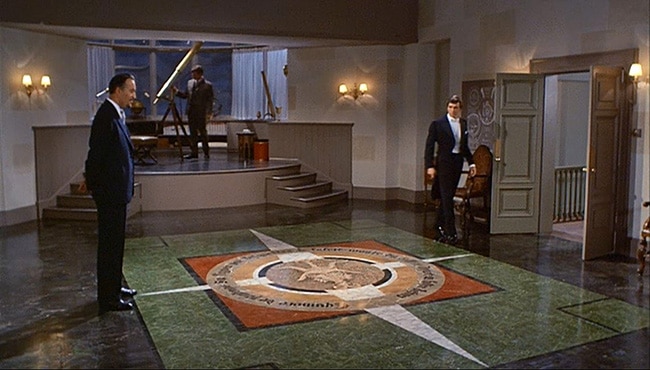
The tale begins with the meeting of two of our heroes. The Duc de Richleau (Christopher Lee), protagonist of several of Wheatley’s novels, greets old pal Rex Van Ryn (Leon Greene), freshly arrived via twin-seater biplane. They are planning a reunion with a third man, Simon Arron (Patrick Mower), their charge since the death of Simon’s father, an old companion, some years beforehand. Simon is however not there to meet them and as they settle into the Duc’s Rolls-Royce, he brings Rex up to date. Simon has not been seen or heard of for several months. Instinctively sensing trouble, the Duc instructs his driver to take them to Simon’s recently-purchased house.

They arrive at Simon’s rather splendid new country home, which features a domed rooftop observatory set against an ominously clouded sky. Heralded by the warning notes of the splendid and distinctive score, they step inside. It becomes apparent they have arrived in the middle of some kind of soiree. The guests are formally attired, standing around chatting in small groups while being waited upon by servants bearing silver platters. Rex and Richleau locate Simon, who is clearly disturbed to see his friends but he breaks away from conversation with two of his guests to greet them, a friendly grin swiftly replacing his unsettled expression.

It turns out that Simon has joined an ‘astrological society’ and is hosting a meeting of the group. He introduces the Duc and Rex to two of their number, a Mr Mocata (Charles Gray) and the sultry Tanith Carlisle (Nike Arighi). Although a look of recognition passes between Rex and Tanith, Mocata swiftly leads Simon away for a private word. The Duc senses they will be asked to leave and he and Rex take the opportunity to move among the assembled guests and listen in on their conversation before they are ejected. The guests seem to be discussing matters of astrological import and tantalisingly, something more…

As predicted, Simon returns from his conversation with Mocata and awkwardly ushers them out on the pretext of this important – and private – meeting of his society being about to begin, but the Duc has other ideas and diverts straight up a flight of stone steps to view the observatory they spied upon their arrival. Instantly, he recognises that the charts on the wall are anything but astrological. The design in the centre of the circular room’s floor features the Sabbatic Goat. Most damning of all, a persistent scratching sound is revealed to be a basket containing two chickens, one white hen and a black cockerel, captured in preparation for sacrifice – no surer sign of the practice of black magic could exist. The Duc confronts Simon, who denies everything, but before he can raise help from his guests downstairs, Richleau’s right-hand punch renders the younger man unconscious. Rex shoulders his friend’s body and they make their escape, Mocata glowering behind them.

The groundwork has thus been laid for a good old-fashioned battle between good and evil, as Rex and the Duc seek to keep their friend and the winsome Tanith from the clutches of Mocata and his well-heeled acolytes. Lantern-jawed Rex, recalling the likes of Roger Moore, is a combination of bumbling sceptic and dashing man of action. He whisks Tanith away in what develops into a memorable vintage car chase through winding country lanes, far more comfortable in such a role than as an uncomprehending sidekick to the esoterically educated Richleau. The Duc meanwhile takes himself off to London in order to conduct research into the occult practices of Mocata and his purple robed minions. Upon his return he enlists the help of his niece Marie and her husband Richard, as they face the inevitable onslaught from Mocata. Richleau’s study of occult doctrine is put to good use as he attempts to ward off the Angel of Death and Baphomet, amongst others. The scenes in which our heroes seal themselves within a magic circle and face off against the dark sorceries of Mocata is one of several classic set pieces throughout the story.

With capable support all round and a charismatic villain, played with cold and steely presence by the glacier-blue eyed Charles Gray of Blofeld fame; filmed amid lush green English countryside with its opulent manors and mansions; replete with supernatural chills and thrills; The Devil Rides Out is a gloriously enjoyable romp. In particular Christopher Lee is marvellously cast as the indefatigable Duc de Richleau. It was a role he apparently enjoyed more than any other in his career and it is indeed wonderful to see him bring his own unique screen presence and gravitas to bear in a heroic capacity for once. On top of that there are several areas of interest for those who like their music metal and occult in tone – the film’s distinctive Baphomet imagery has been adopted by doom legends Electric Wizard and the wonderfully bombastic score was adapted by super group Fantomas for their movie music-themed record The Director’s Cut.

All in all, The Devil Rides Out offers a hugely enjoyable 90 minutes of pure escapism, with roots in an era free from the affectations of modernity and any contemporary need for validation. A film that reminds us how much fun raising the Devil can be.

Gwen (2018)

By Matt Harries

With the weather in this country finally starting to resemble the heat and humidity of last year, summer, it seems, is finally well underway. Swiftly following on from the critically-praised Midsommar is a second piece of folk-horror for these warmer months. But while Ari Aster’s film is replete with the fertile imagery of flowers and feasts and white-clad maidens dancing in the Scandinavian sunlight, William McGregor’s Gwen utilises a very different, rather unseasonal atmosphere. Set among the beautiful yet austere mountains of Snowdonia in Wales during the Industrial Revolution of the 19th century, the landscape is heavy with a brooding sense of foreboding, which culminates in the stark narrative of this gothic-toned production.

Gwen (Eleanor Worthington-Cox) is a girl still, not quite yet a woman. As the oldest daughter she is both the main support to her struggling mother Elen (Maxine Peake) and friend and playmate to her young sister Mari. Although tender in years, for Gwen adulthood looms large, in the form of her duties upon the small farm she tends with her mother. With the father away at war – his return hoped for, but without any recent contact a seemingly distant prospect – life is a daily struggle. The times she plays with Mari offer brief moments to enjoy some vestige of a carefree childhood, but these are as scarce as the reward for their long hours of toil upon the cold and muddy slopes of the Snowdonian hills.

Where once the valley they resided in was home to three families and their small flocks of sheep and humble crops of vegetables, the recent death of the Griffith family – struck down by cholera – means Gwen, her sister and mother are all that remains of the farming community in those hills. Much of the surrounding populace are now employed in the mining of the distinctive grey slate that is such a common sight in Snowdonia to this day. The mining industry is the true source of wealth in this part of the world, and with the guaranteed work in factories as well luring more and more people from subsistence on the land, Elen and her family increasingly seem to be regarded as outsiders by their own community. Under pressure from the glowering Mr Wynne (played by who else but Mark Lewis Jones), who repeatedly attempts to buy the farm to give the land over to industry, the beleaguered Elen is struck down by illness. Despite the well-meaning advice of the mine-employed doctor, for young Gwen there is no question of leaving their home – they simply must keep the farm running ready for her father’s return.

With Elen weak from illness and exhibiting increasingly erratic behaviour, and with the twin threats of Mr Wynne and failing crops, it is no wonder Gwen often wakes in fear of an intruder, or suffers vivid nightmares. Increasingly it seems as though there may be a malign presence out there in the windswept darkness.

Where Midsommer focused on a vibrant community, engaged in bright and colourful fertility rituals with no small amount of social cohesion, Gwen is concerned with a very different scenario. Always beneath the stare of icy peaks, surrounded by windswept expanses of cold grass and black rock; with a shroud of dark cloud that seems to hover just above the hills; this is an oppressive landscape that serves only to heighten the sense of an imminent catastrophe. People seem sullen and indifferent to Gwen and her family’s situation, even as she takes the farm’s meagre produce to market and battles to uphold the duties of her bedridden mother. The more we see of Mr Wynne, the more likely it seems that he and his thugs are prepared to go beyond verbal offers to secure the farm. Gwen is old enough to see what happened to the Griffiths and read into the nature of her mother’s hushed but heated conversations with Mr Wynne. Is some agency, human or otherwise, working to destroy her family? Are her nightmares prophetic, or merely the product of a child’s imagination?

Director William McGregor has made a name for himself by employing Britain’s rural landscapes as a hallmark of his work, and in Gwen his appreciation of the power of the Welsh mountains as a storytelling device is obvious. There are numerous lingering shots of the dark-hued valleys, whether of the small house Gwen and her family live in, set against dark sky, or the horizontal lines carved across the landscape by the slate miners, who themselves appear indistinguishable and industrious as ants as they go about their labour. Often these shots are silent apart from the sound of the wind. To once again draw comparison with Midsommar, Ari Aster’s preference for strident use of the film’s score is in direct contrast to the style of McGregor. Often he uses silence, rather than sound, in a way that draws the senses further into the scene, inviting us to search for meaning written in the landscape. A sense of mystery soon to be unveiled, indeed possibly hidden among the details of the physical geography, pervades throughout.

For all that we are impressed by Gwen’s maturity and determination to keep her family home, it is hard not to be concerned for her plight, so tightly do the hills and clouds encircle her, so unrelenting is the air of gloom that lies upon them all. Indeed, this film works well on two levels – a gothic tale of haunted landscapes and memories and also as a piece of social history, documenting a time of huge change across Britain as the industrial era saw a shift away from a rural life toward one centred around the factory and the mine. Certainly, there is a sense of inevitability that infuses proceedings. Gwen’s family is caught between the immovable object of the mountains and the weather, and the unstoppable force of change that swept over Wales and elsewhere during the 19th century.

For all its historical context, it is the human component that resonates most strongly and the central performances are key to this. Gwen herself is beautifully played by Eleanor Worthington-Cox, who manages to demonstrate the character’s vulnerability, toughness, resolve and fearfulness all at once. Forced to grow up before her time, to work the land and care for her ailing mother as well as her young sister, she elicits both our sympathy and our admiration. Elen, looking like a woman worn thin by her own battles, serves as a warning to Gwen, a reminder of what the forces seemingly aligned against them can do to someone over the years. Maxine Peake brings both a sense of frailty and of ferocity to the character of Gwen’s mother, a woman who, despite her debilitating illness, lights up with an inner fire in defence of her daughters and their home. Elsewhere Mark Lewis Jones delivers his stock-in-trade performance as Mr Wynne and Kobna Holbrook-Smith offers a small yet much needed element of humanity as Doctor Wren.

Beautifully shot and sympathetically told, Gwen is a stark, sometimes chilling tale of life at a time when folklore and tradition were being swept aside by the forces of socio-economic change, but for all that the land is sometimes cruel and seemingly haunted by dark spirits, perhaps in fact it is man himself who stalks the valleys; who is monstrous of deed and the true agent of misfortune.   

Gwen (2018) was released on 19th July 2019 (UK).