 I start this review with something of a confession: it has only dawned on me in the past few years, really, that my liking for Dario Argento’s work is based on a very small number of his films. And it’s awful – as well as terribly unpopular these days, given the vicissitudes of the likes of ‘film Twitter’ and so on – to have to start a piece of writing on a negative note, but I still can’t help but wonder whether a lot of Argento’s cult following stems from blind luck and happy accidents, rather than a cogent approach and intention on his part from the beginning of his career. Yes, he has a strong aesthetic style, often distilled into a number of notorious key scenes per film, but given time and money, he has never really scaled to the heights of Suspiria (1977) in his subsequent work. This brings me, then, to Opera (1987), made a full decade after Suspiria, and a film that, whilst showcasing some of that Argento magic, flounders in a number of ways which ultimately break the spell.
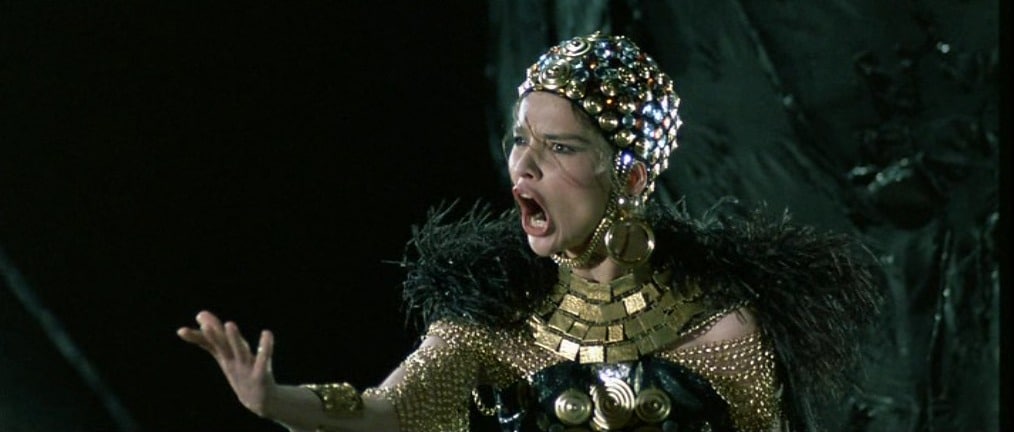
True to the title, we start in rehearsals for an opera performance – with the leading lady, Mara, none too happy with the ways things are being done, much to the exasperation of the crew and musicians. Eventually, annoyed beyond the point of self-control, Mara flees the venue – straight into the path of a car, incurring injuries which take her out of the performance altogether. In true cinematic style, it’s opening night, but any panic is assuaged by the fact that there’s an understudy, all ready to go. Betty (Cristina Marsillach) goes through the rigmarole of saying she doesn’t want to, but before too long she’s getting into her (bloody weird) costume and preparing to take to the stage.
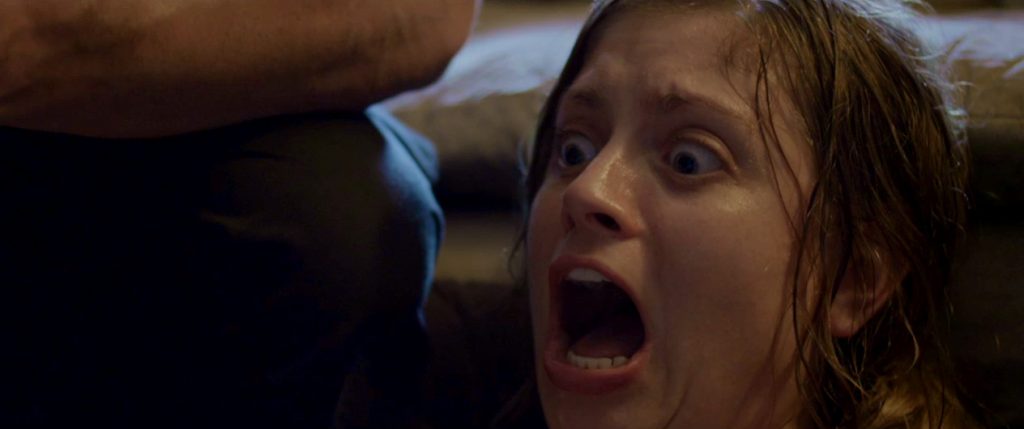
Things are, of course, going on behind the scenes: someone is stalking the stalls, and once you see the ubiquitous black leather gloves on whoever-it-is, you know that the person in question can’t have good things in mind. Betty successfully gets through a storming debut, but it seems that she already has a stalker fan who is methodically dispatching anyone who seems close to her. Their issues seem bound up with sexual attraction/jealousy, and they have a predilection for making Betty watch whatever they’re doing. This gives us this film’s own key infamous visual, as the killer takes to sellotaping pins beneath Betty’s eyes to stop her blinking and missing any of the brutality. Opera is of course, akin to its giallo cousins, essentially a grisly whodunnit where the audience is encouraged throughout to guess at the guilty, replete with (if you know of some of Argento’s other work) a certain sense that it’ll be someone improbable. Is this correct, in this case? Well, it wouldn’t be for me to say…
 There were a few of these ‘performances of performances’ horror films during this era; everything from Waxwork to Demons could qualify. However, Opera’s closest comparison piece is almost certainly StageFright, directed by Argento’s associate and countryman Michele Soavi and released earlier the same year. The links are clear: Stagefright also boasts a mysterious killer stalking around an arts venue, seemingly fascinated by elements of the performance itself whilst picking off the performers and crew in a series of ways which happened to give good set pieces. Opera broadens its remit rather more widely than StageFright in the end, moving the action beyond the opera house and following Betty wherever she goes (which turns out to be quite a long way indeed) but I have to say that I think StageFright has the edge on Argento’s offering. For me, it’s more tightly plotted and coherent, lacking some of the frankly oddball decisions which are perhaps intended to lighten the mood in Opera, but dilute the appeal instead. For instance, why the former leading lady Mara appears in the film as nothing more than a shrill voice and a pair of legs is beyond me; it put me in mind of the ‘mammy’ character from Tom and Jerry, which isn’t a comparison I expected to make here. Then, even given my usual delight in viewing an 80s (or indeed any era) time capsule, the costumes are distractingly weird, the script is wincingly stilted and there are even some weak, clownish moments, which rest uncomfortably with the eventual grisly content. Opera simply underlines for me that Argento depends on atmosphere, with a good eye for key shots which underpin this atmosphere: plot/dialogue so often falls flat.
I can’t deny that the use of macro shots and some ingenious framing have some charm in the film, and actually, so much of this falls to actress Cristina Marsillach, who is put through a great deal of these shots and a great deal of other things too. Had she been less engaged in her role, then I doubt very much anyone beyond serious completists would really be talking about Opera today. Hopelessly, plausibly naive, but also putting in a lot of quite physical graft, Marsillach admittedly does a good turn here. She’s had absolutely nothing to do with the horror genre since Opera, mind; this is a shame, and ours not to reason why, but she seems to be known for this role and this role only outside of her home country, perhaps proving that success in the genre is a mixed blessing at best.
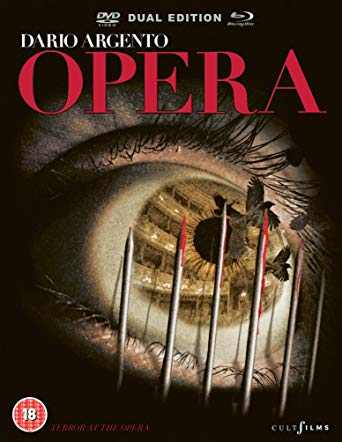
Still, regardless of the fact that Opera has a few interesting moments and a good lead actress, I doubt very much whether this could ever be a film to win Argento any new fans. Existing aficionados of his work will, I am sure, appreciate this clean, tidy print from CultFilms, which also boasts directorial involvement with its 2K restoration and a number of extras, including a brand new interview with Argento and a behind-the-scenes film showing the film being made. For the rest of us, we may like the more stylish and innovative moments here, but perhaps not be altogether engaged by this nearly two-hour movie.
Opera (1987) will be released on Blu-ray on the 21st January 2019 by CultFilms. It is now available to pre-order.
 It must be incredibly hard to carve a new niche for yourself as an actor when you’re largely known for one role, but – as Game of Thrones is about to enter its final ever season – this is something the cast are going to have to negotiate; that is, unless they’re doing it already. Josie, starring Sophie ‘Sansa Stark’ Turner, is at least a fair attempt by this actress to do something rather different, and – on paper at least – it’s an interesting premise, promising ‘rural noir’ and dangerous obsessions spilling over into action. We know that bad things are definitely going to happen, as the opening scenes show us police kicking their way into a room; the only question, then, is how we get to this point. Unfortunately, the journey which takes us there isn’t able to sustain the initial promise.
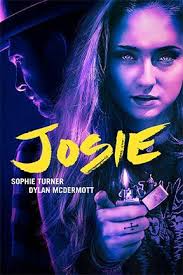 As for Sophie Turner, she does a reasonable job with the script and the direction she’s given, but she doesn’t quite cut it as a Lolita character which, frequently, the film seems to be implying she is – but any sexuality is shied away from, or takes place off-screen, leaving the allure which is integral to her motivations and her interactions with the men in her life a little lacklustre. The film waves through her rather unconvincing Southern accent by having her say she’s lived all over the country, but this is another factor which holds the audience at bay; she just isn’t quite in the role, to me, and I really don’t think that this is the role to silence Sansa for good.
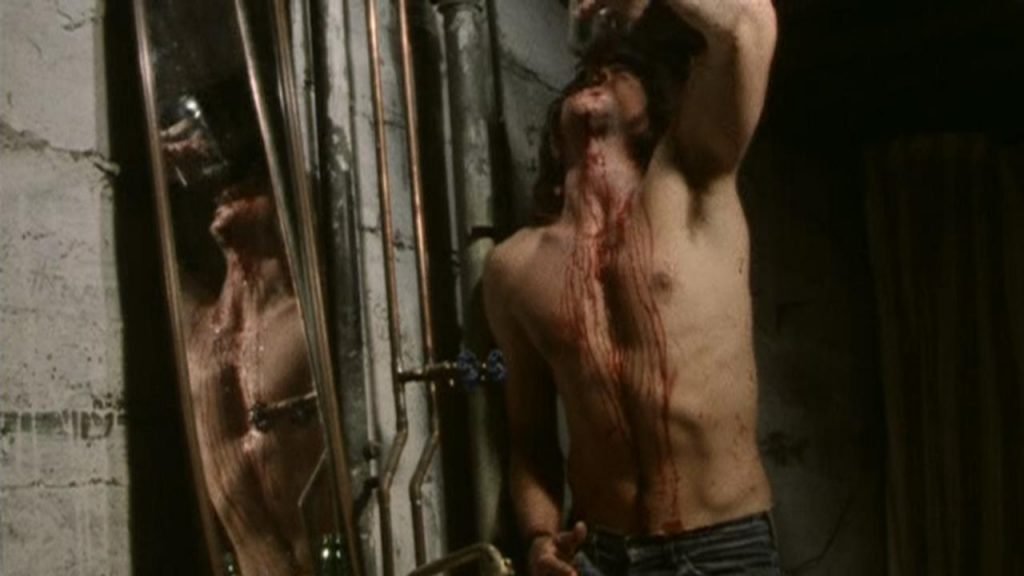 I’ve really only encountered director Jim Van Bebber thus far through his art-house spin on The Manson Family (1997), a film which I confess didn’t quite gel with me – but I’ve never, until now, seen his first feature Deadbeat at Dawn, made around a decade earlier but filmed over four years altogether. Deadbeat at Dawn is certainly more linear than The Manson Family, but it’s still a surprisingly multi-layered spin on your standard gang movie, with some hints of the art-house approach yet to come. All in all, it makes for a gritty but expansive experience, something quite unlike any of the other 80s gang movies made during the decade, whilst still recognisably part of that sub-genre.
 But then, the film does far more than make a series of knowing nods here and there in-between the fight scenes. The gang warfare itself veers from plausible to risible in some places: Goose’s training sequences look oddly choreographed, for instance, and dialogue spoken by some of the Spiders sounds rather stagey. In effect, lots of elements of Deadbeat at Dawn play out like modern Grand Guignol: this is definitely performance, but the subject matter is ferocious and no one gets off lightly. The worst of the violence might not be on-screen in the nature of the ‘torture porn’ which followed the film around a decade or so later, but the well-timed glimpses and insinuations of the horrors inflicted upon people work just as well as the longer sequences (saved for an incredible later pay-off which very definitely shows us the works, with Van Bebber more than paying his dues by doing his own stunts during the course of the action). Yes, there are a few lulls as Goose falls back and regroups, but these add a lot to his character. In the end, you do find yourself rooting for this anti-hero, which is no small thing given his behaviour throughout the film.
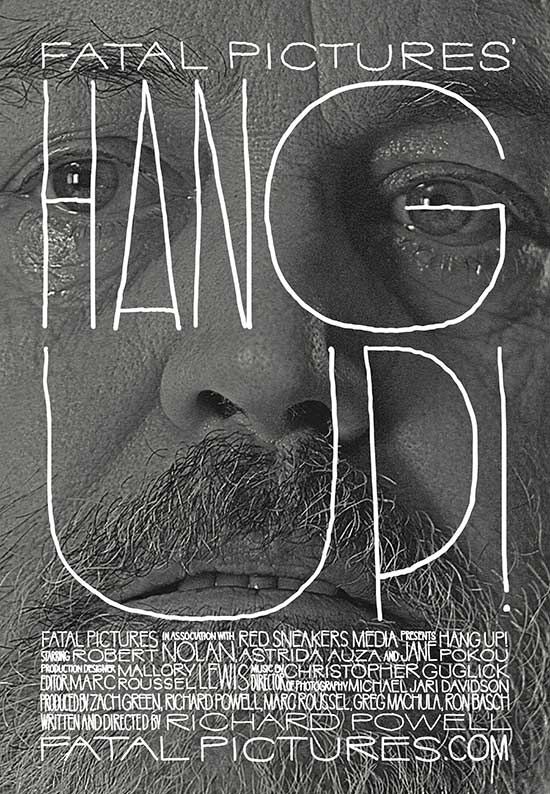
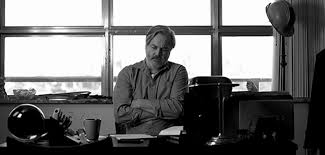 Every year, if we’re lucky, we’ll encounter a short film at a festival which just blows us away. The affordances and limitations of the short movie medium provides so many opportunities for filmmakers to showcase their ideas, making them render these ideas in an economical manner, but nonetheless – if successful – weaving a story which indelibly stays with the audience. This is very much the case with a short film I encountered at this year’s Celluloid Screams Festival in Sheffield, UK. Hang Up! takes a very simple idea – that of someone making a mobile phone call by accident, just like we all have – and takes this idea forward, escalating the tension in a series of hand-over-mouth shocking ways, as husband Gary finds himself listening in on a conversation his wife, Emelia, is having about him. It turns out that his happy, stable life is anything but – and his wife doesn’t feel about him the way she has been enacting over the years. It’s a plausible, everyday set-up – and director/writer Richard Powell develops this horrid, believable framework in an engrossing manner.
 The response has been great! I think the film is unique, especially in today’s short film climate. I’m asking an audience to wait and listen and be patient, and that isn’t something they are used to in the short film medium. I think that alone creates a rewarding experience. I’ve watched people watching the film and it holds them, despite how static and paced it is; there’s a kind of perverse voyeurism in spying on Gary as his life falls apart while spying on his wife. You feel like you’re hearing and seeing things you shouldn’t be and there is a thrill to it all. I also think the film is darkly funny which makes it palatable considering where it ends up going. I just love that I can have a theatre full of people watch what is essentially a 14 minute monologue and be entertained and disturbed with words and acting and careful shot selection!
 Nicolas Cage has to be one of the most divisive actors out there, as well as one of the most hard-working; in fact, these days it’s actually pretty odd for an actor to garner the kinds of mixed feelings which he inspires, but everyone seemingly has an opinion about his extensive body of work. For me, he swings from borderline unwatchable (Vampire’s Kiss, ack) to phenomenal (Leaving Las Vegas is simply brilliant, just as an example). All I knew then, going in to see Mandy, was one thing: I knew nothing at all about the plot, but I did know that I could expect to see ‘peak Nicolas Cage’ in the film. And, oh my, this is the case. Gloriously so. Mandy also happens to be a perfect vehicle for its lead actor, and one of the best films I’ve ever seen him in. Whilst fairly plot lite, the film’s pace and ambience makes for a thrilling, engrossing viewing experience. I’d say that this could be the best film I’ve seen this year.
 I told you it was plot lite and it is, but this is by no means a bad thing; Mandy is more of an aural/visual experience than it is a detailed story, and the characters’ predilection for mind-altering substances gets passed on to the audience via the film’s incredible colour palettes, detailed asides into fictional worlds, pulsing soundtrack and overall talent for hyperbole. Red glowers, grimaces and screams his way through his ordeal, turning into more of a supernatural force than a man. Likewise, the cult members are larger than life themselves, and no pushovers. The biker gang are more like cenobites than regular beings, and the overblown, quasi-religious psychobabble coming from the cultists is matched against their extraordinarily cruel behaviour – Jeremiah in particular (played with full frontal aplomb by Linus Roache) is a deeply menacing figure, very arresting on screen. It’s interesting that the film takes for its title the name of a character who isn’t actually in the film for very long: however, it feels as though Mandy (British actress Andrea Riseborough) is present throughout, even if only as the driving factor behind Red’s escalating lunacy. The film’s quick, almost frenetic pace after the initial assault, supported by varied approaches such as animated sequences and on-screen text, make the film dreamlike, like a fractured memory of something so outlandish it could hardly be believed.
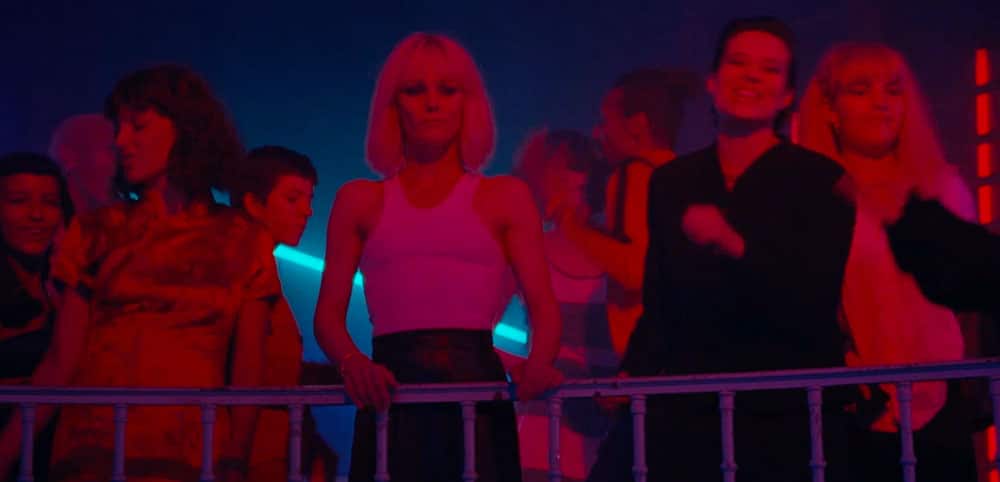 The opening scenes of Knife + Heart feel achingly familiar: how many films start with a woman in peril, running alone through the dark? Well, this is a film which doesn’t mind turning things on their head, even if the surprises are momentary. Anne (Vanessa Paradis) isn’t running from an assailant; she’s having a minor breakdown instead, and when she phones her girlfriend Lois for moral support in the early hours, it proves to be the final straw for her partner of ten years, who breaks off their relationship. It seems as though these drink-fuelled meltdowns are not so unusual. Anne is devastated, but we don’t see her showing weakness to this extent again. She simply gets back to work as a gay porn director, always looking for novel ideas and approaches to use in her films. She regularly sees Lois, who is also her film editor, but she’s trying to get on with her life whilst respecting Lois’s wishes, so they keep a discreet distance.
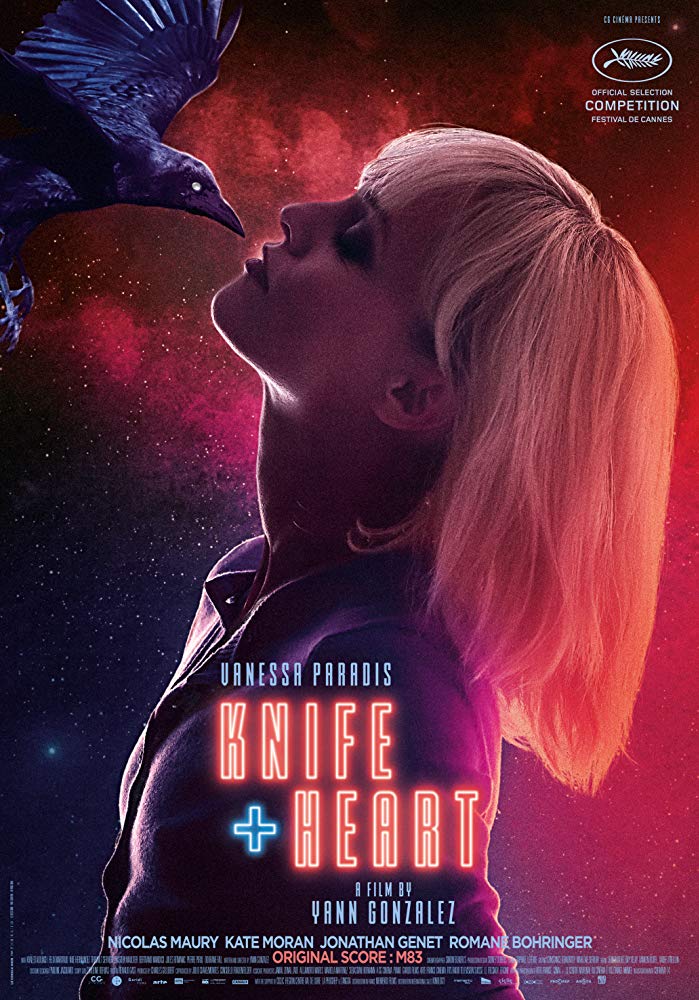 Along the way, the film also plays with ideas of whether art imitates life, life imitates art, or whether the whole process is somehow cyclical. Anne, always the experimenter when it comes to her work, begins to use the unfolding case as a the inspiration for a very unusual kind of film, writing the real life goings-on into a script and filming a weird new hybrid of erotica and horror. It also transpires that the rest of her filmography plays a key role in the plot, too. All of this – bearing in mind that Knife + Heart is set in 1979 – allows for some glorious visuals. Sequences from Anne’s films are all refracted through plausibly vintage camera and celluloid, though the film itself is just as carefully framed and styled, with rich use of colour and a careful eye for stylistics. The M83 soundtrack is great, too, and fits really well. Paradis, a veteran actress albeit primarily in Francophone cinema, fits the bill perfectly here: whilst you don’t get particularly close to her character, I think that works given the context of the plot, and she looks great, with (and pardon me this observation) a fantastic aesthetic and wardrobe. In fact, it’s nice to see that the two lead female actresses are somewhat older, whilst it’s the guys that are far younger; it’s not an inversion which will change your life, granted, but it’s somewhat refreshing nonetheless, and I didn’t feel that this was simply driven by our current predilection for ‘subverting expectations’ by dithering with gender roles. It just works nicely. There are some very angry user reviews on IMDb complaining about the gay content, though I have to say that after the initial mild surprise of it being men not women getting it on FOR A CHANGE, it too simply settles down as a plot device, a reasonable framework for the rest of the film which allows interesting exploration of its themes.
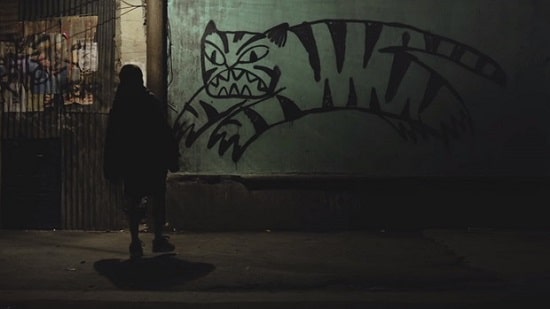 Tigers Are Not Afraid spins some uncomfortable truths about life in Mexican border towns into a fantastical yarn. In so doing, it embeds its characters in a fairy tale, inviting the audience to see the tale through to the end, and to look for tropes we all recognise. The besieged princess, the ogre, the magical creatures, the three wishes…all present, but all interlaced with realistic horrors. It’s an interesting film which accomplishes a great deal.
 All the while, more and more supernatural phenomena are plaguing Estrella. The ghosts of the Huascas’ victims are following her, terrifying her as they implore her to bring them the gang that murdered them. Blood literally and metaphorically begins to course through the children’s lives; dragons and tigers leap from walls and objects; the dead return and speak. Eventually fantasy and reality overlap, stories come to life, but at great cost to people who have already lost a great deal.
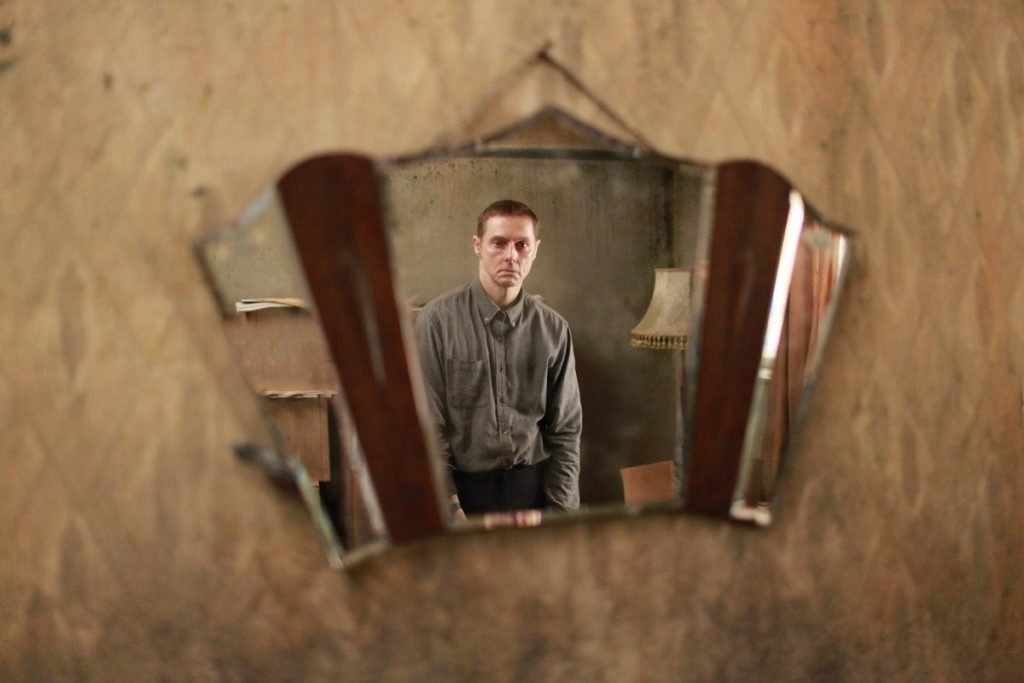 Some films excel at that kind of grimy, disconcerting quality which Possum (2018) has in abundance. Every frame of this film makes your skin crawl: it’s a love letter to abandoned places and anonymous spaces, swept through with dead foliage and rot. This, in and of itself, makes the film fairly challenging viewing, even whilst you can appreciate the skill which went into arranging its sets and locations throughout. Add to this an arachnid puppet which seems to stand in for a grown man’s arrested development and mental trauma, and you have a fairly gruelling viewing experience. However, Possum doesn’t lend itself particularly readily to a coherent narrative – with the result that those not hypnotised by its interesting looks might find the whole experience as frustrating as it is unsettling.
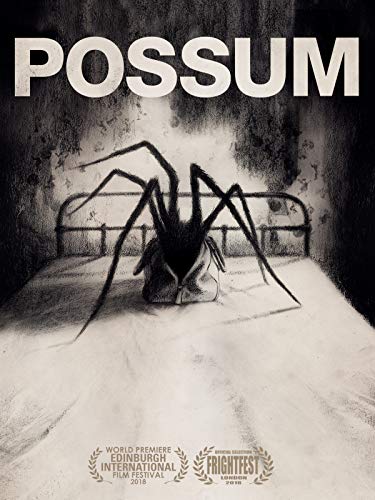 As the film progresses, Philip looks authentically more and more haunted by Possum, and seemingly more and more in need of getting things off his chest. It is certainly impressive to see how Harries manages to enact this increasing sense of oppression, as he almost disappears inside himself during the film’s progress. He also looks authentically ill, which is testament at least to the turmoil he’s feeling, even if he describes it very little indeed. In some respects Possum reminds me of the underappreciated Tony (2009), another film with a troubled, but unseemly male main character. As for Philip, his desperation to burn or to ditch the horrible puppet thing is, we see, useless; the more he seems to try to deal with this nightmarish situation, the more Possum appears, spider-limbed and vicious, in his dreams. Some of the sequences in Possum are genuinely unsettling, capturing something of those helpless childhood fears which so many of us seek in the horror cinema we watch as adults. Director/writer Matthew Holness clearly appreciates a good, creeping scare, and can bring a certain sense of a child’s powerlessness to the screen.
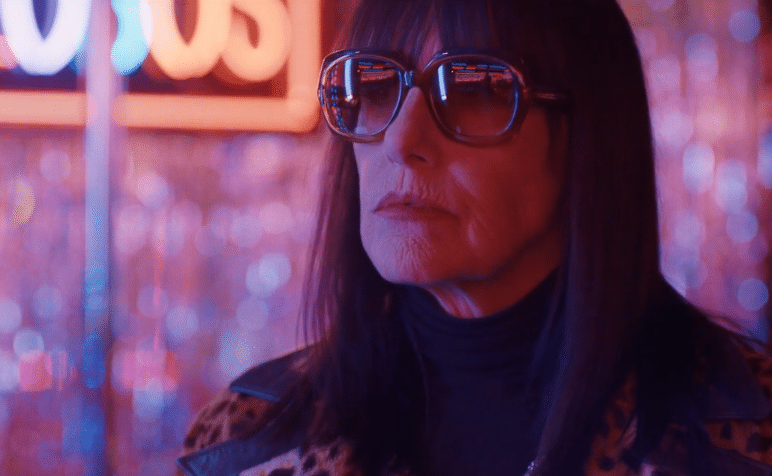 A noir-ish montage of images and a voiceover ruminating on the immorality of Hollywood introduces The Queen of Hollywood Blvd, a self-professed crime drama which promises to pitch a hard-bitten club owner against the tactics of a gang of organised criminals. On paper, the film does just this – but the style and tone involved are not what many would expect, and indeed anyone expecting a high-action piece of work would find themselves feeling all at sea after watching this movie. Your tolerance for this take on a crime story depends very much on your tolerance for slow-burn, almost art-house cinema generally.
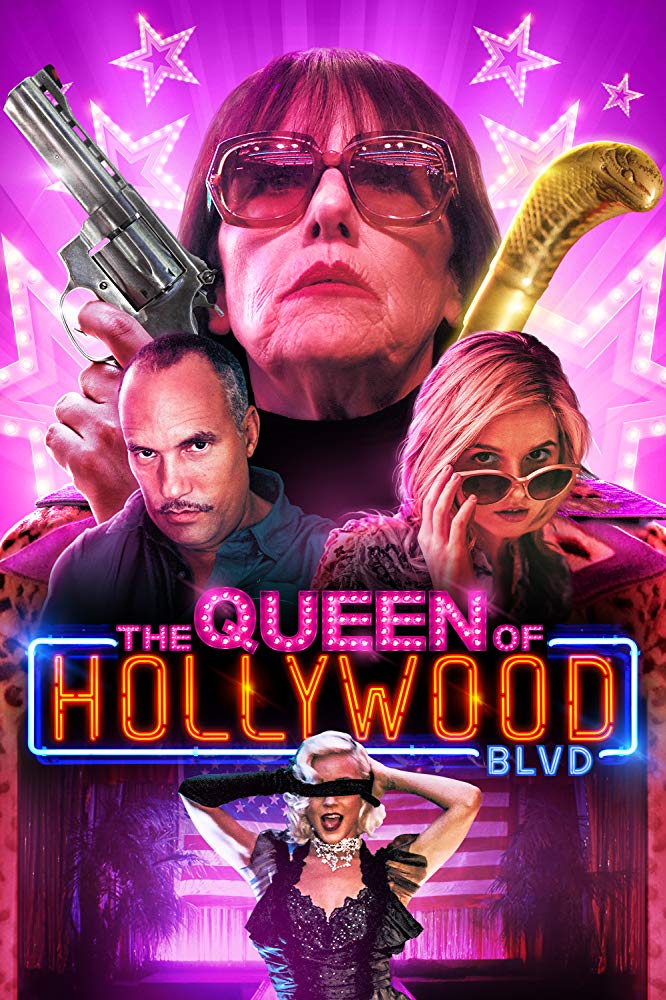 I also found that some minor issues caught my eye; some continuity issues are in there, but then a bigger issue is that the film’s position in time was unclear. I found myself wondering why, say, one of the crooks had a framed picture of Reagan on the wall and VCRs figure in the plot, but then the streets are full of modern vehicles and the girls at the club have very modern-style tattoos. It could be that the film has opted quite deliberately to belong to that timeless, rootless type of setting which focuses fashionably on the lo-fi and doesn’t want us to know when these events are taking place, but I always find this distracting personally, an attempt to ignore time which makes me wonder about nothing else. (It Follows, I’m looking in your direction here.) But all of these things would be minor, were it not for the fact that The Queen of Hollywood Blvd is, I am afraid to say, quite so slow and ponderous as it is. Its deliberate pace and minimal action means that very little happens within the first hour; unless the atmosphere is note-perfect and engrossing, then this can be alienating. It even risks an audience’s engagement completely, something which worked against it in my case.
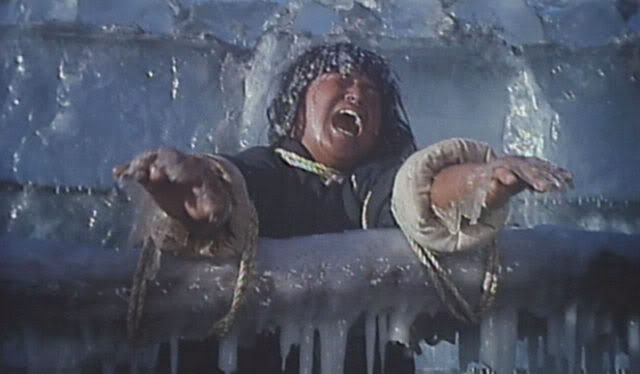 Editor’s note: this discussion of Men Behind the Sun contains spoilers.
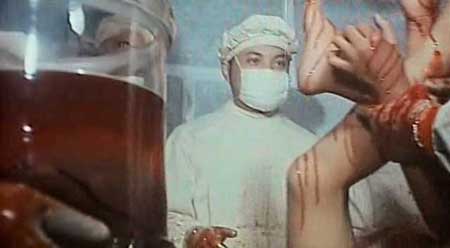 To make this scene (one amongst many) even more skin-crawling, rumours that this scene contains a real autopsy turns out to be quite true. When a local child died in an accident, Tun Fei Mou somehow prevailed upon the doctors performing the child’s post-mortem to allow him to use footage: the deceased was about the same height and weight as the child actor for the scene, so it has that unsettling note of veritas. The doctors (incredibly) accommodated his request, even dressing in Japanese uniform to complete the procedure. The organs we see being removed are, so we’re told, pig organs rather than human, though it seems an odd concession to modesty when we’ve just seen a real child’s corpse being cut into. Likewise, the notorious ‘rats can overpower a cat’ scene where a cat is apparently mauled to death by rats is now being denied as real by the director, though it looks very, very much like an animal genuinely dies here. This sort of thing could of course never, ever happen today, and it’s bizarre that it ever did, but even if we can’t quite accept it, we can perhaps explain it by the fact that at this time, there was no SFX industry in China, and Tun Fei Mou felt it was of the utmost importance to show the experiments as they really were. He couldn’t have found anyone to make rubber models for key scenes, and even if he could, perhaps this would have gravely affected the film he was trying to make.
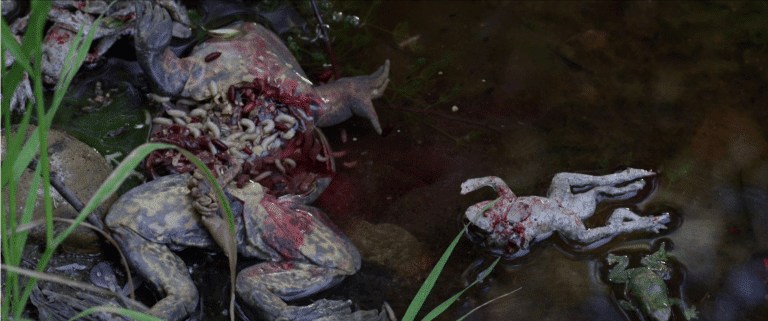 There have been many horror films about environmental havoc over the years, but it seems as though frogs have not figured prominently in these. Aside from the game-changing (or even life-changing) Hell Comes to Frogtown and a short cameo in Baskin, frogs have been largely overlooked, so I’ll admit: the press information for Strange Nature won me over via its apparent novelty, speaking of mutant frogs and the like. It’s possibly strange that we’ve seen so few amphibians in horror cinema; frogs have to live with us, have to cope with whatever we flush into the water, and their habitat has an immediate effect on them. This brings us to rural Minnesota, where the story begins.
 The film at this juncture could have gone, to my mind, in one of two ways. Either it could have gone all out with glorious excess, using its environmental theme as an excuse to hurl froggy gore at the screen, or else elected to look quite seriously at the topic of pollution and its aftermath. Perhaps surprisingly, at least to my mind, the film largely opts for the latter. This is a very script-heavy film with a lot of dialogue employed to develop character and motivation, though thanks to this it feels a little slow in the middle act, and after Tiffany Shepis departs proceedings very early (she’s criminally underused here, and generally deserves more appreciation for sheer work ethic alone) it feels as though we’ve just been tantalised with the promise of some huge aggressive monster-creature. Instead, Kim is all about exorcising her demons as a former pop singer who made the mistake of insulting the denizens of Tuluth before heading off to a better life, and so she ends up working with the local elementary school science teacher to understand the situation and hopefully alert the locals to what’s happening before it’s Too Late.