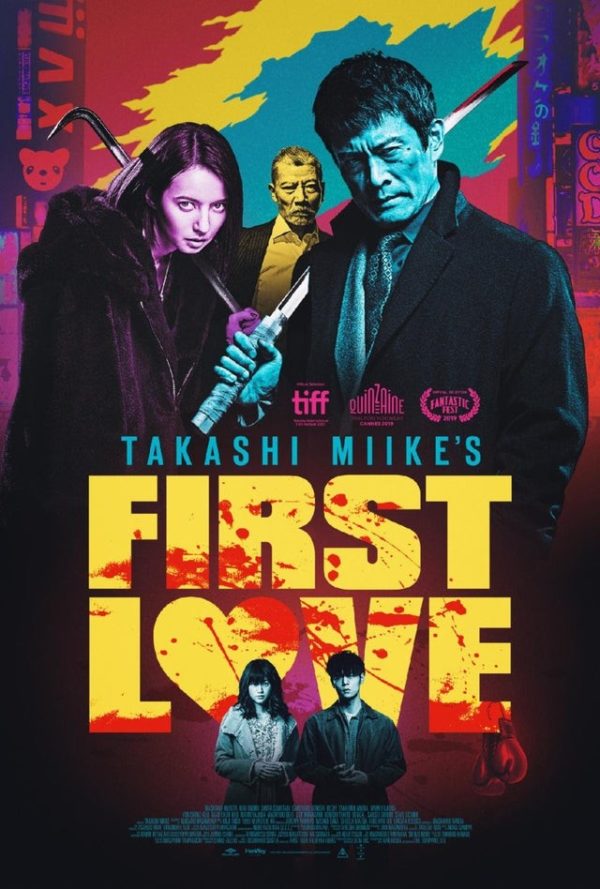
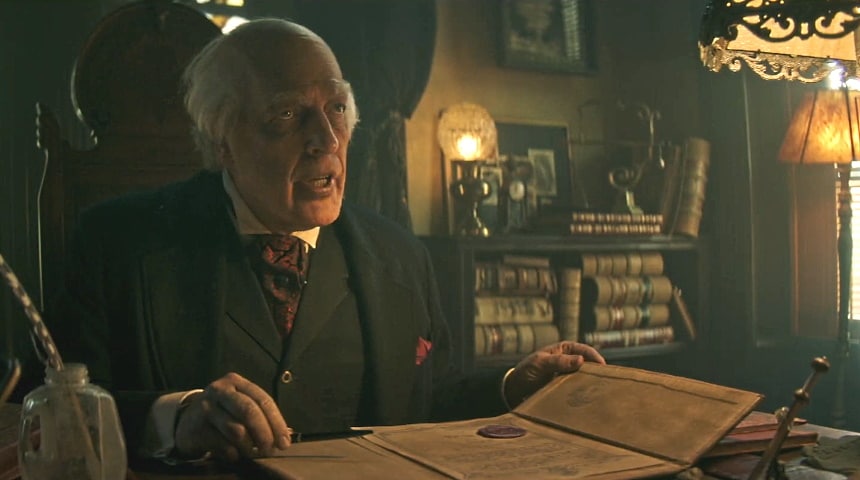
Takashi Miike’s output is so expansive that I am in no ways caught up with his recent films; in fact, I reckon the last one I might have seen was about nine years ago. Now with over one hundred credits to his name, you could essentially get a part-time job for a few months just to play catch up; that said, if you’ve seen even a few of his, then you know that a few themes are pretty likely. Yakuza, gangs who are not Yakuza, rites of passage, bent cops, ultraviolence…they’re not always there, but they’re often enough there. First Love (2019) is furthermore described in its press materials as ‘Tarantino-esque’; whatever you think of Tarantino as a man, it’s probably fair that he’s become eponymous at this point, but to what extent is First Love reminiscent of Tarantino?
Well, obvious links to True Romance aside, there’s some Venn-diagram style overlap between the two directors, perhaps especially given that each is a fan of the other’s work. First Love has that emphasis on the interplay between gangland and normal folks; there’s some of the same kind of black comedy in there, and visually this Takashi Miike film is a lot more muted -almost Tarantino-retro in aspect – compared to many of his better-known projects. But they’re not identical; I seriously doubt that Tarantino would ever feature a ghost in underpants…
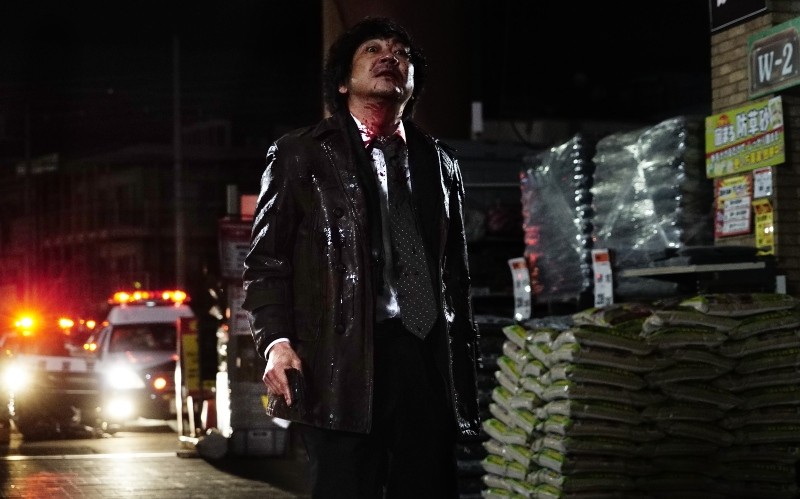
We are introduced to an array of characters; of chief interest there’s Leo, a boxer, whose slowly-rising career is scuppered when he discovers he has a brain tumour; there’s Kasu, a local Yakuza who’s sick of the Chinese muscling in on the local drug trade, wanting instead to steal a large amount of the supply before making himself scarce; there’s also ‘Monica’, a drug addict whose father (actually, he of the underpants and added spectrality) sold her into prostitution over debts. A great deal of time is taken over it, but essentially the collision course between these people – and their surrounding people, given the gang elements – seems set, as both Leo and Monica end up in the frame when double deals start to go badly wrong. ‘Wrong place, wrong time’ impacts rather heavily on them.
For all the promise of violence and the presence of regular topics, though, First Love spends the greater amount of its running time being quite subtle; I’d go so far as to say slow, and moments of violence which occur during the first two thirds (or so) are not front and centre the way they typically are, or perhaps, were. Even an early decapitation takes place quietly off-screen. Things do of course heat up as various gangs and interests clash in the final act, and gangster moll Julie (Becky) is an enjoyable, grunting, yelling, violent foil to all of the more understated content. Then again, there are issues in moving from a slower, often subdued film into the ever-anticipated grisly sequence; how well that works, or feels like some kind of genre obligation, is down to the viewer. Perhaps expectation is this film’s greatest enemy.
Another issue here would seem to be the ‘star-crossed lovers’ motif which, despite the film’s 108 minutes, feels rather thin and underdeveloped. The cast isn’t at issue; although Monica/Yuri is played by a new actress (Sakurako Konishi), Leo (Masataka Kubota) has some serious Takashi pedigree, and more could have been made of their time together. There was no sense of overarching sympathy or investment in them; I wonder if there were simply too many characters in this film altogether.
For all that, First Love isn’t a bad film, in many respects. It has a good cast, it’s well shot, lit and scored, and it’s all competent enough with a number of enjoyable scenes and developments. It simply lacks the spark to be memorable, a film of disparate parts which trundles through its subject matter without any real verve. It’s a shame, but then if you make as many damn films as Takashi Miike, can they all be great?
First Love (2019) was released by Signature Entertainment on 14th February 2020.
Sometimes it feels as though icons of the films we hold dear are leaving us at such a rate, that we couldn’t meaningfully pay tribute to them all. However, it would be completely remiss not to talk about the loss of director Stuart Gordon today, a skilled and frankly underappreciated director who has a hand in numerous classics of the horror genre.
Gordon was a man who appreciated horror in all its versatility and potential, and never disavowed his work in the genre – which is something which fans loved him for, because there can, at times, be a tendency for directors to move away from their horror cinema, as if it was somehow the bottom rung of the ladder. Not so Stuart Gordon, as dismissive of those people as any of us, saying, “there are always people who think that horror movies are just kind of one half-step away from porno to begin with.” He is associated, for me, with his lurid and novel interpretations of Lovecraft; sure, Lovecraft might have written more extensively about the unnameable and the unknowable, but Lovecraftian lore was certainly rather less abstract and rather more overt in Gordon’s visions. His interpretations played with ideas of the monstrous, making them graphic, colourful and even comic, if you like your humour pitch-black.
One of his earliest works – Re-Animator in 1985 – was one of the first videos I ever saw-but-shouldn’t-have-seen, albeit a few years later; it’s a calling-card for what could be done (and hadn’t yet been done) with, in this case, a minor Lovecraft story, which he transformed into a science-gone-awry body horror, underpinned by the brilliant casting of Jeffrey Combs as Dr Herbert West. Combs played West utterly deadpan and in earnest: it worked, and theirs was thereafter a partnership which worked brilliantly and continued for many years, across other horror films now recognised as classics of their body-melding or genre-splicing kind – anything from From Beyond (1986) to The Pit and the Pendulum (1991), a historical horror epic which took the Poe title and rendered something rather more from it than the tale offered, being a brilliant, but minimalist yarn about the psychological impact of torture.
Gordon never exclusively worked in horror and racked up a list of modest successes in other genres from sci-fi to family-friendly TV during his career, but I suppose for me his film Dagon in 2001 not only marked a welcome return to horror, but to Lovecraft too – something which happpily continued with the Masters of Horror series some years later. Re-locating The Shadow Over Innsmouth to the Spanish coast (Dagon is a Lovecraft story, but not the one actually used here) Dagon is unashamedly one of my favourite films; yes, it’s true that the CGI hasn’t aged particularly well, but the script, the cast of largely unknowns who made the film their own, and a fantastic reworking of the Lovecraftian themes of death, destiny and the grotesque potential of the slumbering old gods is given unique, enjoyable treatment here.
And I think that’s key – Stuart Gordon’s films are well-directed and interestingly-written, but they’re always entertaining. His films aren’t exercises in directorial experimentation or criticism for their own sake. They’re made for audiences to enjoy. It’s something else we can be grateful for, as we mark the loss of a singular talent and a director who deserved far more praise and recognition than he received.
Having been very lucky indeed to have attended FrightFest Glasgow – even more so, given the current ban on cinemas and gatherings – I decided to stretch my luck a little more by asking Adam Stovall, director of the deeply humane and immersive indie film A Ghost Waits, if he could spare a little time to answer some of my questions. I asked about the writing process, any inspiration behind the film and the shooting of A Ghost Waits itself. The result is a great, detailed interview with loads of insight, which I’m very happy to feature here. Many thanks to Adam for his time.
Okay Adam – first question – tell us a little about the inspiration for A Ghost Waits. What was the creative process of writing this film like?
I’ve been writing screenplays for twenty years, and the process is never the same. The only thing that remains fairly constant is that I don’t really start working on a script until I think the story doesn’t work, as I then have a puzzle to solve. It’s just so much easier to not write than to write, if a story has already been told then I’d rather just pop some popcorn and watch that.
That being said, this one was completely new to me. MacLeod and I had spent a year trying to make another film, but we couldn’t raise enough money. I went home to Northern Kentucky to figure out what was next, and while I was there my friends Brian and Jenn sat me down and had me play a video game called P.T. It’s a first-person puzzle game in a haunted house, designed by Guillermo del Toro and Hideo Kojima. Very atmospheric. So I was playing that and I had my friends laughing, and it occurred to me that there might be a movie in someone like me having to deal with a haunted house. As I was playing with that idea, I read a webcomic, Saturday Morning Breakfast Cereal, where a man asked a woman what she thought was the most American movie and she answered “Ghostbusters. Here’s a movie where you have demonstrable proof of an afterlife, but the whole movie is about growing a small business and navigating bureaucracy.” I thought, “That’s hilarious…and I want to see that movie.” So I wrote it!
P.T. (Kojima, del Toro)
One of the investors we met while trying to make the other movie remained very excited to make something. He was talking to a mutual friend one day and asked if they knew what I was up to. “I think Adam just had an idea about a weird haunted house movie,” our friend told him. So he and I got on the phone and I talked him through the story as I saw it, and he said he’d invest half our (admittedly small) budget. My Mom put in the other half, and suddenly I had a budget…and a script to start.
I knew it would be largely confined to one location, as that’s a good way to keep the budget down. I also knew the cast would be minimal, especially in terms of speaking roles. With those logistical concerns in mind, I set to thinking about ghost stories. One thing I love about genre storytelling is that it allows for a more operatic style, but your metaphor has to be strong. My first thought was that usually ghosts have unfinished business that’s keeping them here, and the idea of a handyman being presented with the largest task of his life — helping a spirit resolve their unfinished business — was exciting to me. In the original ending, Jack helps Muriel finish her business and then she leaves, because everyone leaves Jack. But that didn’t feel right. I was in Austin for Christmas 2015, and my first night there I hung out with my friend Matt. He had three movies for us to watch, but after the first one I told him I was working on a script and could maybe use his help with it. He had the idea for an All About Eve dynamic, which created the character Rosie. This created a context which could bond Jack and Muriel, and that led to the ending as it is now.
In summer 2015 I’d seen a show called “Hundred Days” which The Bengsons were workshopping in Cincinnati. The song which ends the film, “Years Go By”, is in that show. I was out with my then-girlfriend one night, and in the middle of a conversation I had the image of the garage with the song playing under it. I ran home that night and wrote the ending, and that’s when I knew I had a movie.
Of course, it changed a lot throughout the entire process. We wrapped principal photography in August 2016, and I started cutting together the assembly – which was 1:50 and not good. But the ending worked! So it was just about getting to the ending quicker. Eventually, scenes started to take shape and the edit became less not good, and eventually the film was strong enough to tell that from minute 34 on we were good, but we hadn’t earned our way there over the previous 33. We didn’t have money to bring anyone else back, so MacLeod and I reconvened on our own and figured out how to make those 33 minutes work. This worked, but it didn’t fix everything. The dreams still didn’t work, but I refused to scrap the idea because the first two dreams set up the third one at the end. So we talked through what the point of the dreams should be, and settled on what’s there now. The second dream was actually the last thing shot in the movie. We had to film it at 7:00am on a Sunday morning before he flew back to Los Angeles.
And finally we were happy with the film.
Were any other films (or art and literature, for that matter) an influence on you?
The aforementioned video game and webcomic were the chief influences on the story. I have a rule that you should never remind the audience they could be watching a better movie, so I try to avoid homage and that sort of thing. That said, we did absolutely steal one scene from another film…and no one has caught it yet.
In a more general sense, I would say the biggest influences on my writing are music, Charlie Kaufman, and the film Marty. Someone once told me, “Film is an emotional medium. You can give your audience all the information in the world, but if you don’t give them a reason to care, it’s all for naught.” Music is all emotion for me, and my brain is basically a hard drive filled with every song I’ve ever heard and they’re all on shuffle. So as I’m working on an idea, some songs will usually start to bubble up and attach to it, and that shows me the direction in which to head.
Kaufman once said that he considers most films to be dead, in that it doesn’t change or move. His goal is to create a story that feels alive, in that it changes upon your experience of it. That stuck with me, as did the experience of watching Marty. I had just seen a very good rom-com where the characters bonded almost exclusively through pop culture, and then here was a movie about two adults meeting and connecting through frank discussion of their insecurities and desperate hope. It felt so much more timeless to me, and I have aimed for that ever since.
You mentioned during your FrightFest interview that your lead actor, MacLeod Andrews, improvised some of his lines during his scenes. How important to you was it to retain that kind of organic performance on screen, given how important the character of Jack was to the film as a whole?
I wrote Jack expressly for MacLeod – to the extent that had he said no, the movie would simply not exist.
We’ve been friends for a few years now, and have been wanting to make a movie together that entire time. Once this became a reality, he was very involved at every stage of writing. The character is based on myself, but it’s for him. I think MacLeod actually did a great job sticking to what was on the page, but our collaboration is very much a two-way street. We trust each other, and we speak a shared language. I cannot count how many times I’d text or email him a weird idea for the movie, and he’d respond “How does this serve the story?” and I would say “But it’s funny and weird and okay fine you’re right.” But then sometimes I’d come up with something weird and funny and he’d say, “Actually that works.”
The toilet scene is the biggest improvisation in the film. The phone call was scripted, and indeed we shot it during principal photography, but it didn’t work and so I cut it. During the editing process, we realized that we really did need the information it imparted, so during pickups we dug back in and figured out how to make it work. I cut a bunch of dialogue and we ran it a few times, and then MacLeod said “I have an idea. Let the camera run.” And then he made the toilet talk, and I had to walk away because I was laughing so hard.
For those unaware, in addition to the films MacLeod has made, he works mostly as an audio book narrator. Between those two things, he pretty much lives in story, so his instincts are amazingly sharp. He gives the best notes, too. I’m just really, really lucky to have such a staggeringly talented friend.
Your female lead, playing the ghost character of Muriel (Natalie Walker) seems to have a difficult task in that she has to enact being very detached, before showing some aspects of something else creeping through which gradually re-humanises her, but not in a sentimental or a really overt way. Was this challenging? How did you decide to manage this from the point of view of a director, and Walker as an actor?
This will surprise no one, but casting is ridiculously hard. It’s the process of looking for someone who is 100% right for a character, and the chasm between 99% and 100% is everything. Talent and discipline can get you to 99%, but it’s instinct that carries you the rest of the way.
I had written Muriel for another actor, a friend of mine, but she was cast on a TV show and was unavailable. I recast the part with a local actor in Cincinnati, but we had to reschedule and she wasn’t available for the new dates. So I went back to my desk, opened up my laptop, and cleared my mind.
I had been following Natalie on Twitter for a while, so I knew she was hilarious and brilliant. Then one night I thought, “Oh wait, she’s an actor too! I should check out her work!” I couldn’t find anything online, so I emailed her and told her about the project and offered to send her the script, which she took me up on. She liked the script, so we talked and she taped an audition, and the next day we connected on FaceTime and I offered her the role. I just had a feeling in my gut that she’d be great. She has so much vibrancy, it reminded of Robin Williams. I suspected that putting her in a role that demanded she sublimate that energy might produce similar results.
Once we were on set, it was a very small crew so I had a million jobs and was constantly running around, which left little time to sit and talk with her and MacLeod. I don’t know how general this advice can be, but in my experience casting actors with theatre background helps immensely as they’re accustomed to really digging into the script and crafting something of their own.
So much of directing is just maintaining a perspective and a sensibility. As both writer and director, and given how personal this story was, both of those things were in my bones. I quickly learned that whenever they had a question about something, I should just be honest and speak from the heart.
Did you have any misgivings about how you were going to end the film, or was this always the ending you envisaged? (I’m wary of spoilers here and I will ensure none creep in…)
I didn’t, no. I understand why some are concerned by it, or worry that it could be in poor taste. But it’s honest, and I don’t shy away from talking about the subject. Roger Ebert once said that film is a machine that generates empathy. I think if people open their hearts to what’s happening, they’ll understand that it’s not prescribing anything, but rather empathizing with a taboo.
And finally, the film seemed high on people’s lists after the Glasgow FrightFest screening – mine included. I was wondering, what would you feel was the highest praise someone has given, or could give to your film?
The best thing that could be said, was said after the premiere. People were effusive in their praise overall, but several of them told me about their own struggles with mental health, and that the film made them feel seen and heard. I have struggled with depression and suicidal ideation my entire life, and at my lowest I’ve never had the words to ask for help…but movies were always there.
At my lowest, invariably a film would come into my life that made me feel less alone, and I would make it to tomorrow. I wanted to make something that would do that for someone else, and to know that I accomplished that goal means everything to me.
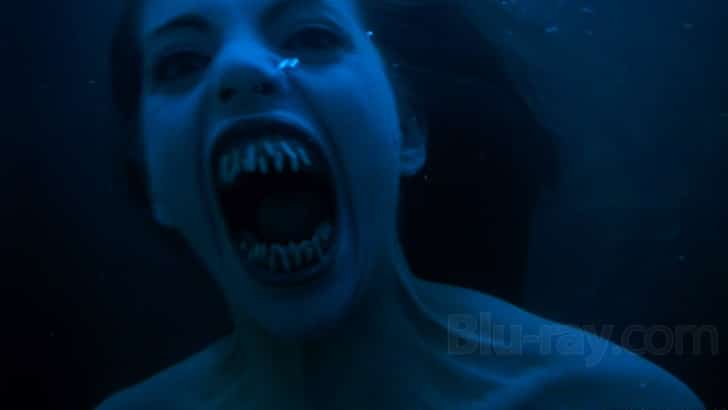
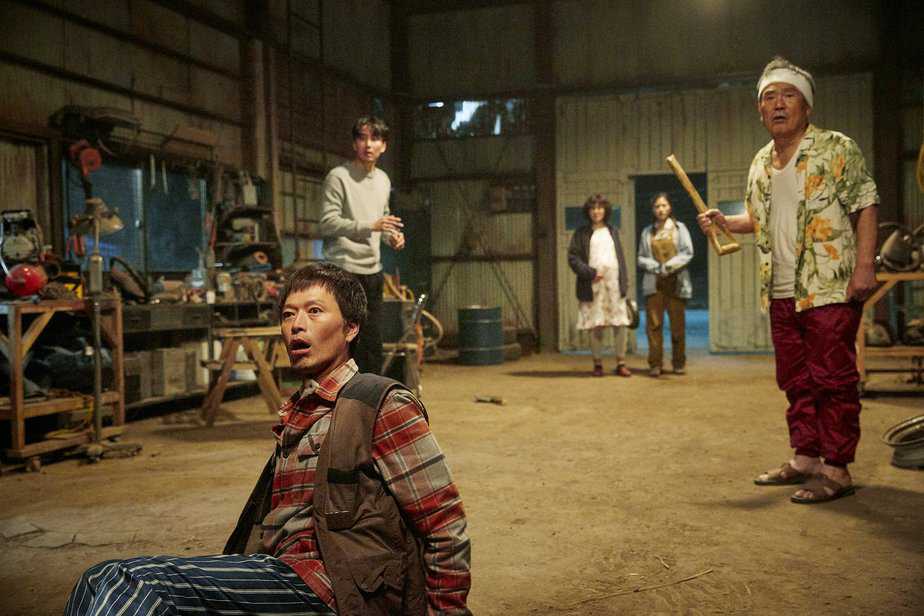
You could be forgiven for thinking that whatever could be done with the zombie genre has been done by this point, but a viewing of The Odd Family: Zombie on Sale (or Zombie For Sale, as it was titled at the screening I attended) proves this wrong. A deeply funny and ingenious spin on the idea of zombie as contagion, this is as much as anything else a film about family life in a provincial part of Korea – where the pace of life is far too sleepy and detached from the rest of the country for a zombie outbreak to get adequately dealt with. But, ever enterprising, what could have been a disaster for the Park family is rendered a boon. This rather troubled clan see their fate move quickly from the ridiculous to the sublime.
The source of the outbreak is not really the important thing, but for the record: big pharma are the bad guys here, and medical experiments gone wrong give rise to the not-quite-dead but certainly mindless, shambling zombies. One such zombie is a young man who finds his way out of some top-secret medical waste and makes his way to the Park family home – after wandering the back roads for a while first, where it seems zombies are afraid of dogs. Frightened of both the zombie and the dog, the Parks tie the boy up in one of their outbuildings (they run a petrol station, or did) whilst they think about what to do next. In the melee, the pater familias is bitten. You might think you know what is to follow, but out of nowhere the film delivers its first surprise: Man-deok doesn’t turn into a zombie himself. The film takes a turn towards Cocoon, as the zombie bite rejuvenates Man-deok, making him look and feel years younger. Before long, his friends all want a piece of the action and the Parks sense a business opportunity…meanwhile, teenage daughter Hae-gul takes quite a shine to the mute, cabbage-prone zombie boy, even christening him Jjong-bi (sounds an awful lot like ‘zombie’, see) and doing her best to make the lad remember his humanity.
This all sounds too good to be true and it is, but the gradual descent into more of a standard zombie fare is a very diverting journey which manages surprises all along the way. Knowing they are playing, essentially, a pack of ratbags, the Park clan play for laughs throughout – there is no glamour here, only a rather dour daughter-in-law, a sacked salaryman, an isolated teenage daughter, a chancer of a husband and an even bigger chancer of a grandpa; I had no idea that Korea was as fond of pratfalling and other physical humour as we Brits, but the film is very much a physical comedy and this is a good match against the overblown character types on display. But, despite their tendency to see everything through the lens of what could financially benefit them, they do develop and grow and you can find yourself broadly in sympathy with them come the end.
Zombie For Sale does not make any attempt to make any of this scary, either; it knows exactly what it is, even referencing the far more serious Train to Busan as the characters try to work out what to do once the shit hits the fan. It also references other zombie horrors, including a certain scene from a certain Braindead (Dead Alive) so it clearly has a sense of where it does, or doesn’t fit in with the genre and pays due deference to it. There are definitely shades of Fido here, too, as the Parks all try to make the most out of the semi-domesticated Jjong-bi – but when it transpires that a zombie bite isn’t simply a means to cheat the ageing process and the big pay-off comes along, this is a high-energy, escalating crisis to rival many of its peers, even if the sense of threat is mitigated by the comedic style. This is also a film about rural life, how whatever could befall a major city would at least generate some kind of response; here, it takes a whole lot of time for anyone to really notice what’s going on. All of this only adds to the good-natured appeal of the film overall.
A quirky, often ingenious film, Zombie For Sale keeps things pretty light whilst bringing a series of surprises to the screen – and the genre. It’s great entertainment throughout, if you allow its profound silliness to carry you along.
Zombie For Sale screened at FrightFest Glasgow on Saturday 7th March 2020.
Whilst depictions of loneliness are not rare in genre cinema, on odd occasions a film comes along which treats the subject with a level of sophistication and subtlety which is both compelling, and difficult to do justice in words. Saint Maud (2019) definitely fits into this category. Having some similarities to Lucky McGee’s May (2002) in terms of subject matter, Saint Maud nonetheless disposes with the left-field ‘kookiness’ and colour of that film (accepting that the earlier film does of course wind up in a very dark place). Stylistically and tonally, there are some links to Possum (2018). But whilst similarities and connections can be noted, Saint Maud is very much its own beast nonetheless. This is a very finely-wrought, often subtle film which trusts the audience to fill in the gaps. It also trusts in our empathy, even when our central character grows increasingly destructive. It’s a trust which is amply rewarded.
Maud (Morfydd Clark) is a nurse, and we meet her just as she’s about to embark on a new role: she will live in with her new patient, Amanda Kohl, offering living support and palliative care. Kohl (Jennifer Ehle), once a renowned dancer and minor celebrity, is terminally ill with cancer; there’s an obvious disconnect between Maud’s new-found piety as a born-again Christian and Kohl’s defiance of her condition, electing to drink, smoke and enjoy herself as much as she can whilst she can. However, a guarded relationship begins to form between them. As we find out more about this quiet, introverted young woman, we are given hints that something terrible lurks in her past; this is revealed little by little, and some of the burden of Maud’s pre-conversion days is never discussed, only shown to us – little physical clues, for example – or alluded to in the script. For Maud, her religion is very real and the crutch upon which she leans; she asks for answers from God, talks to Him as if they have a cordial relationship, and pleads for the sense of direction she desperately wants. Soon, she feels he has revealed it to her: her mission is to save the soul of the lost Amanda Kohl, bringing her to the light before it’s too late.
Yet, for all the sense of purpose this bestows, Maud’s certainty in God is soon tested and her quiet introversion begins to slip. She begins to veer back and forth, between elements of her old life and her desperation to hang on to the new. Having a purpose provides great responsibility, therefore it’s a source of anxiety and it’s something this damaged young woman cannot sustain. Her subsequent disassociation is deeply involving and difficult to watch; she’s ever more a person not equipped to cope with a grasping, mean, superficial world and she moves away from it.
The use of religious ecstasy in the film is very interesting. For Maud – in the early parts of the film – it seems connected to her need for direction, for a purpose; when she thinks she has it, she exists momentarily on a level with what she believes to be a higher power. It is not sexual – it has replaced sex. When religious ecstasy isn’t possible, sex is – as is mania, which comes later satisfyingly spoken in Welsh to reflect actress Clark’s heritage. Maud tries to encourage her patient to replace the pleasures of the flesh with something spiritual and is led to believe that she has been successful; her disillusionment is a central plank in what later goes wrong for her, and even as a non-believer, the crushing sense of loss which Maud feels is really rather difficult to watch. Equally, Maud’s state of mind is always presented rather adroitly, her facial expressions and gaze revealing the most part of the turmoil she’s feeling. We even get odd moments of bleak humour. Again, it feels very much that director Rose Glass trusts her audience to see this; the script so rarely spells anything out that moments when the film breaks out of this subtlety are genuinely shocking. Morfydd Clark is phenomenal as Maud, an almost frail girl emoting huge existential crises with a glance or a sob. Equally, Jennifer Ehle – whose genuine motivations are never really explored – is an ambivalent character in her own right, equally as deserving of sympathy, despite her own wrongdoing. Characterisation is never fully straightforward, but it definitely allows empathy and understanding, even whilst not liking everything which unfolds.
It takes skill to represent a flawed character, like Maud, who calls to us through all her flaws and her actions. Add to that a fantastically-framed and shot film, with the sad faded artifice of Scarborough forming a suitable backdrop for what unfolds, and we have a fantastically sad, sophisticated but oddly redemptive story. It’s not an uncomplicated response, and to reiterate, it hasn’t felt easy to do this film justice. But if you have space in your heart for a character-driven, sensitive exploration of mental states via moments of note-perfect horror, then this is for you.
Saint Maud screened at FrightFest Glasgow on Saturday 7th March 2020.
The (almost total) demise of the anthology film is a crying shame: despite a minor, if noteworthy comeback with some notable entrants into the genre such as the ABCs of Death or Dead Girls over the past decade or so, it’s still a format which just doesn’t seem to attract the interest it once did, whether from filmmakers or distributors. But why? As I’ve said elsewhere, the anthology or portmanteau film has all the ingredients it could need to endear it to an audience: there’s scope and range, there’s the possibility that one or more of the stories will appeal to different people, and there’s the promise of a good, workable framing story which can only to the appeal. It’s as close as we get to old-fashioned storytelling, gathering around to share a selection of stories shared by an overriding purpose or need – different tellers, somewhat different styles.
I don’t think it’s audiences who have rejected this format, either; rather, it’s been done for them/to them. Horror fans so often fondly recall anthologies from their early viewing days: depending on their ages, it could be an Amicus production, or it could be the likes of Creepshow – but the love and appreciation is there, and it’s encouraging to see filmmakers like Ryan Spindell, after directing a raft of excellent short films (including the singular, superb Kirksdale) making his first feature-length film an anthology horror.
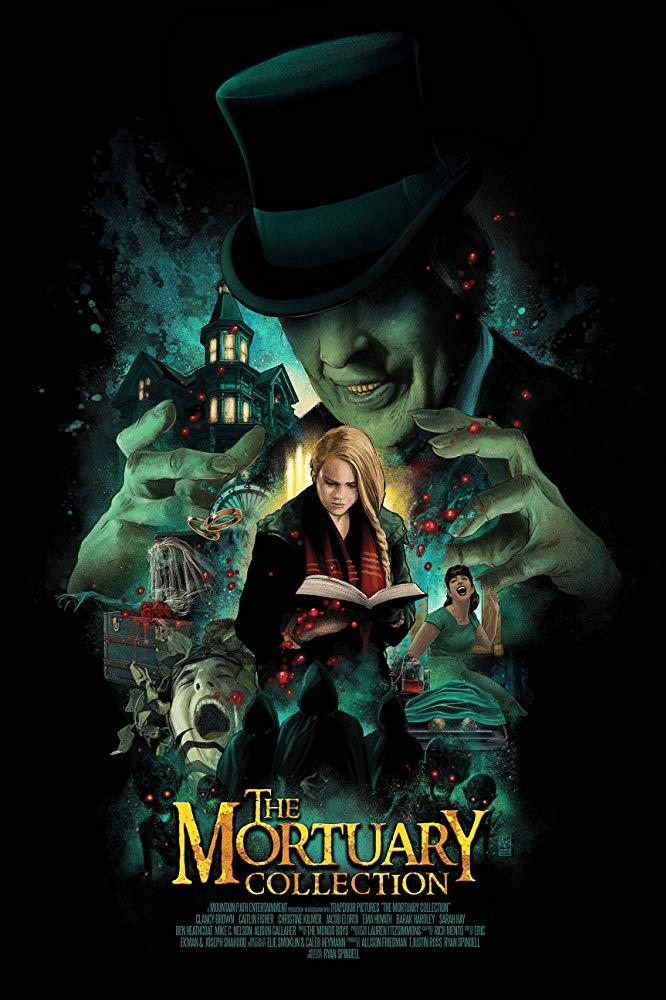
The Mortuary Collection is a selection of four short tales, as told by an undertaker (played with aplomb by Clancy Brown) to a visitor at his establishment. From the outset, and via the kid who opens and closes proceedings, this feels like a rather sumptuous, overstated piece of Gothic and feels to be channelling some of the ‘kiddie horrors’ of the 1980s. This, however, gives way to the tales themselves, which are rather more grisly and cautionary; they also get away with being tonally quite different to one another, as they are only very loosely themed by the mordant undertaker’s desire to tell a few tales about interesting deaths. So,, whilst this isn’t the most thematically-solid framework, it’s plausible within itself and to be honest, Brown is so much fun to watch in-between times, channelling the high macabre camp of the AIP classics, that it works on the basis of that alone. Spanning around three decades all in all, the tales cover the likes of an inter-dimensional bathroom mishap, a tables-turned warning about sexual conquest, a sad tale of Til Death Do Us Part (my personal favourite) and, finally, a bridging story which quite cleverly joins up tale to framework, exploring the real reason that there’s been an unexpected caller at the mortuary that day.
This film gets so much very, very right and the first thing which springs to mind is what an absolute visual treat it is. In a perfect world, there’d be a three-hour extra feature on the DVD release where you get to potter around and explore the sets – there isn’t a single wasted object or a dud angle which dispels the magic; everything is note-perfect for the setting, whether the faded Victoriana of the funeral home or the period settings used in the tales. There’s also a very watchable balance of a kind of stagey performance against more natural moments which work well, never going too far into realism (which wouldn’t make sense) nor too far into hokey acting either, which would derail things in the other way.
Now, if I were to criticise the film at all – and, having heard the director’s immense excitement about getting this film made, it almost pains me to do so – it would be regarding the film’s total running time. The Mortuary Collection has had a strange journey to feature-length, having first consisted of short films made individually , then getting stitched into one film afterwards. This is also a film initially written, edited and directed by one man, though I understand that an additional edit has taken place since. Coming in at around two hours with four stories altogether, this is a long film and whilst to give credit to all involved, it certainly doesn’t feel like a patchwork, it’s also clear (and appreciable) that Spindell didn’t really want to let anything go. Tough love would suggest that the first and shortest story could go altogether, leaving the more usual three stories behind.
But, this minor quibble aside, The Mortuary Collection is what it should be – a lot of fun. It feels retro and it looks it, and it offers entertaining tales around a successful central plot device. If this film’s legacy is to make the point that the anthology film is not dead, then that would be a great outcome for a modern film with such a classic feel. Oh and hey, I got a custom toe-tag as a memento…
The Mortuary Collection screened at FrightFest Glasgow on 6th March 2020.
Unorthodox stories of the afterlife seem to offer a great deal of potential for exploring fundamental ideas about what it means to be alive: when faced with disruptions to what we know, or think we know, or believe in, we’re encouraged to think differently, or given a new focus on what’s important. A Ghost Waits (2020), in some respects, reminds me of the classic alternative afterlife movie Beetlejuice (1988) with its after-death bureaucracy and perplexing guidance for hauntings; to an extent, there’s something of The Lovely Bones in there too, a story which equips its heaven with an ‘intake counsellor’ to help people settle in and yet also makes its heaven a frustrating, even sometimes alienating place. Yet for all of these comparisons, A Ghost Waits manages to feel entirely original. Yes, it introduces its own unorthodox afterlife into its narrative, but it does it with a gentle charm and a pitch-perfect interplay between the living and the dead; the resulting film is both humorous and deeply moving.
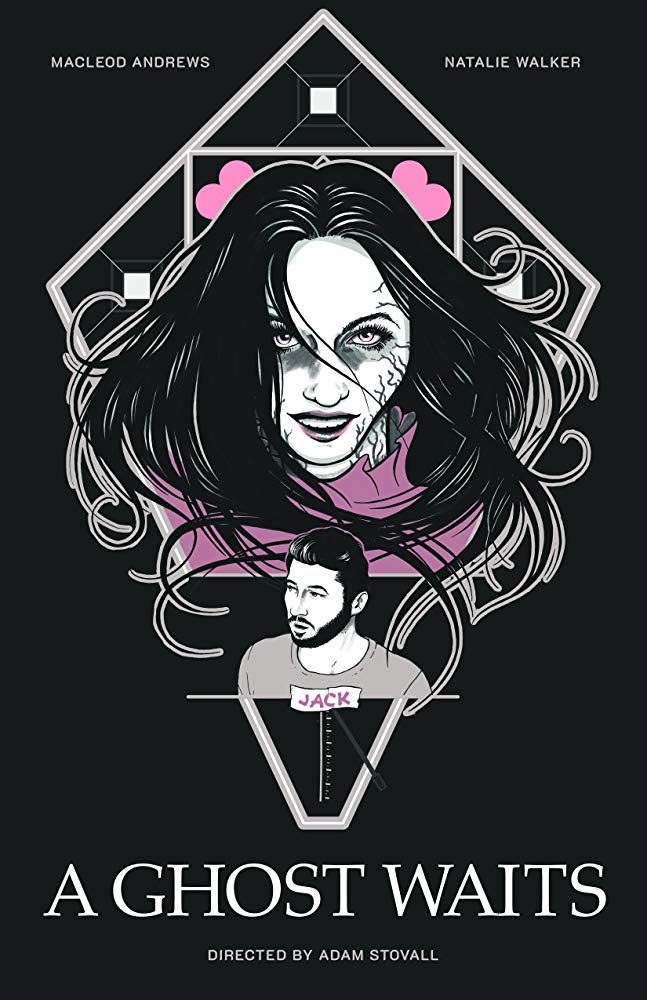
MacLeod Andrews plays Jack: Jack works on behalf of a rental company as a fixer-upper, going into properties after the tenants have left to make sure the electrics work, the fixtures and fittings are intact – that sort of thing. One house in particular seems to have a strangely high turnover of tenants, and we’re made privy to the fact that this is because the house is haunted. Unawares of this, Jack finds himself with nowhere to go during this job and so winds up staying over at the now-empty house, even though he’s technically not supposed to. But everywhere he turns, his supposed friends ‘can’t help’ (something which provides the film with one of its most organic yet bittersweet scenes when Jack calls a friend to ask for a place to stay; she turns him down flat, but ends their phone conversation by glibly repeating ‘if I can do anything for you, just ask!’) So Jack is stuck in the house until the job’s done. He waits around a lot in the evenings. He twiddles his thumbs. He plays on a guitar that the tenants left behind, wondering out loud why in hell they left so much of their stuff.
Perhaps Jack’s sense of detachment from the land of the living prepares him for what follows; he begins firstly to hear voices, and then to dream that he’s actually sleeping in one of the beds upstairs, rather than his good old sleeping-bag. Eventually, he sees something manifest in the house. This is ‘spectral agent’ Muriel (Natalie Walker) – not a ‘ghost’, never a ‘ghost’ – and she’s employed here too, though they seem at cross purposes. It’s her job to drive away the living. Why? It’s just what spectral agents do. Gradually, these two come to understand one another better; Jack’s lack of fear enables Muriel to begin exploring human emotions once more, and come to that, she allows Jack to move on from his deeply-entrenched loneliness. But there are issues at hand; there are other powers at work behind the scenes which decree that Jack must be scared away. Muriel has to navigate these, as well as defend her place in the house she loves.
A Ghost Waits absolutely thrives on its performances and its script, which is balanced with improv and moves seamlessly from very naturally and plausibly funny to equally naturally, plausibly sad. Whilst Andrews plays his role absolutely convincingly as a kind of ‘everyman’ character; clever, witty but stranded in an indifferent modern world, Walker is at first appropriately stagey and dispassionate; she grows back into a woman with human emotions and her own kind of sadness as the film progresses. These two are but rarely in the same shot (actually, Andrews carries almost the entirety of the shots with ease) but nonetheless, the film engenders a sweet developing relationship between them; other character additions add layers of humour in their own right, but the film belongs to the two leads and how they each change, given their new awareness of each other. The film being in black and white – well, that works, too, though it’s harder to define why; perhaps it adds gravitas and a sense of a story bigger than the sum of its parts, but also adds a nice contrast to the normal, suburban setting we find ourselves in.
I absolutely understand that one of the plot points in the film’s ending isn’t for everyone, and I spoke to some people after the screening who felt absolutely flattened by it; I wouldn’t dream of correcting or commenting on that outlook, and I can completely understand why it is not for everyone. For me, the conclusion gets a pass because the film itself is a fantasy, albeit one with a great deal of the real at its heart. It extends this fantasy at its close, but does so to offer a kind of redemption to characters which it has encouraged us to invest in.
Overall, the film’s great energy and ability to weave something new out of pre-existing motifs more than sustains it for me. A Ghost Waits is a clever, harmonious and darkly funny film, an oddly but genuinely heartwarming story which deserves to be seen. For a directorial debut, this is an incredible piece of work.
A Ghost Waits premiered at Glasgow FrightFest on Friday 6th March, 2020.
I can’t help it. I see a film is set at sea, I hear mention of ‘creatures’ and my Pavlovian response is ‘Lovecraft!’ God knows, we don’t need every horror story set at sea to feature the Great Old Ones, but it’s a response that’s always lying in wait with me; saying that, some elements of the synopsis for Sea Fever (2019) do call to mind ideas of unnameable, unknowable creatures lurking in the profound darkness of the deep. Well, whilst there is something unnameable and unknowable here, it doesn’t spiral into the kind of madness, nor indeed become the kind of creature feature I assumed it would. If Sea Fever has any one film in its family tree, I’d say it was The Bay (2012), though happily without the ‘found footage’ shooting style. Whilst whatever-it-is seems to be anomalous, it’s people who make the mistakes which throw them into its path. This is a film of human dynamics under extreme circumstances, and your enthusiasm for it will depend on your tastes for that kind of ‘family group in isolation’ drama.
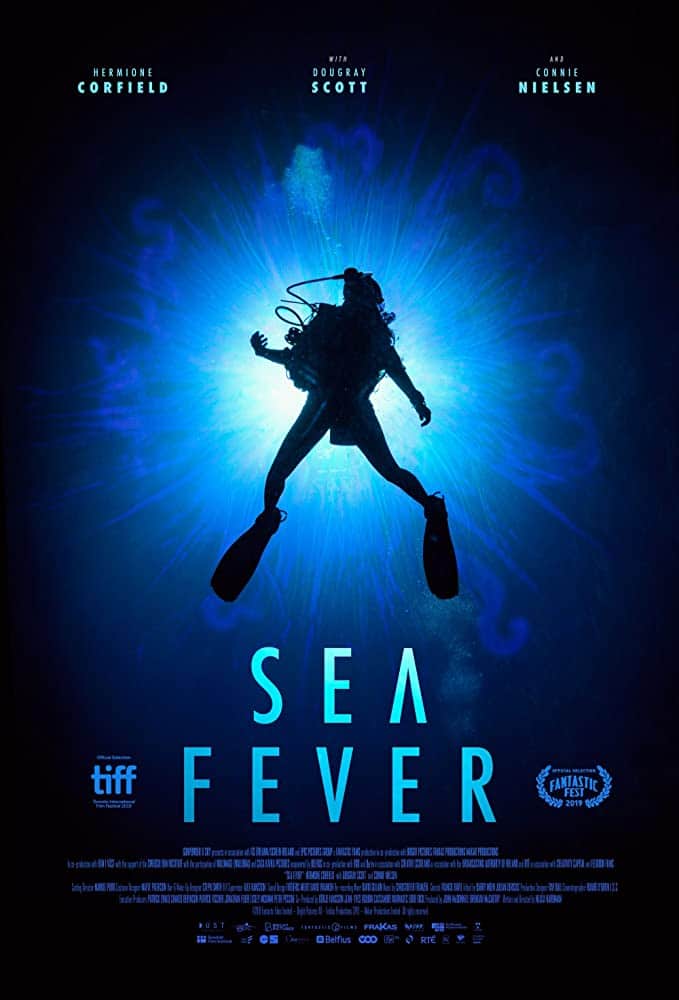
Siobhan (Hermione Corfield) is a driven young scientist who eschews socialising in favour of getting on with her work: she is interested in biological patterns and trends in the marine environment, and along these lines she manages to get herself passage on a fishing vessel in order to study the ecosystem first-hand. She’s a somewhat awkward fit on board the boat, and the superstitious crew are none too pleased to observe that she’s a redhead – it’s bad luck – but they set off as planned. The deal is that skipper Gerard (Dougray Scott) alongside his partner Freya (Connie Nielsen – and before it sends you mad as it did me, she’s Lucilla out of Gladiator) prioritise getting a valuable catch. Siobhan stays out of the way, and does her work around all of that. The first problem with this comes when Gerard chooses to ignore an exclusion zone, cutting through it in pursuit of a lucrative shoal; he doesn’t explain this to the crew, but before long it’s clear the advice was sound and so the vessel gets stuck there.
But what is it stuck…on? They seem to have run into some sort of organism which has mistook them for a whale, according to Siobhan’s best guess anyway. It has attached protuberances onto the hull which are strong enough to infiltrate it; as the crew wonder what to do, a kind of (scientific term) gloop begins to amass inside the ship. A solid catch is still the crew’s priority but Siobhan, now the voice of reason, warns them that this substance could well be harmful. Too late; first Johnny (Jack Hickey) and then Sudi (Elie Bouakaze) become infected with what seems to be a parasitic organism.
As the crew ponder, and grow paranoid, and try to gain help from the nearest, incommunicado vessel, I’ll admit that thoughts next turned to The Thing (1982) and I know it would be mercilessly unfair to judge a film on the fact that it is not, in fact, The Thing, beyond these couple of similarities. This is another issue, separate from the Lovecraftian one; mention ‘strange parasite’ in your synopsis, bring up thoughts of The Thing. Sea Fever has a few moments of body horror, but overall, it is very understated. In fact, it’s frequently rather quiet. It’s a study of enclosed spaces, really, where the threat is larval in every sense of the word. Dynamics between the crew members are – some minor script issues aside – plausible and watchable, but we see but a little here beyond that. There is some intimation of a grander being out there, but it plays only a little part in the narrative style overall. Again, how you feel about that – whether a tad disappointed, or glad of the character-driven alternative – is with you.
If you value a slow-burn horror of enclosed spaces and strange nature, where a large share of the horror derives from the vast, isolating expanses of the sea itself, then there is much to recommend Sea Fever. It looks good, it’s well shot and the performances certainly do the job, with back stories gradually teased out of the narrative as the film goes along. It’s also, thankfully, a sparse ninety minutes – hallelujah, as things would have been unnecessarily diluted by a longer running time. All in all, whilst not the escalating monster epic I’d gotten into my mind, this is a well-wrought film with many merits.
Sea Fever (2019) screened as part of Glasgow FrightFest 2020.
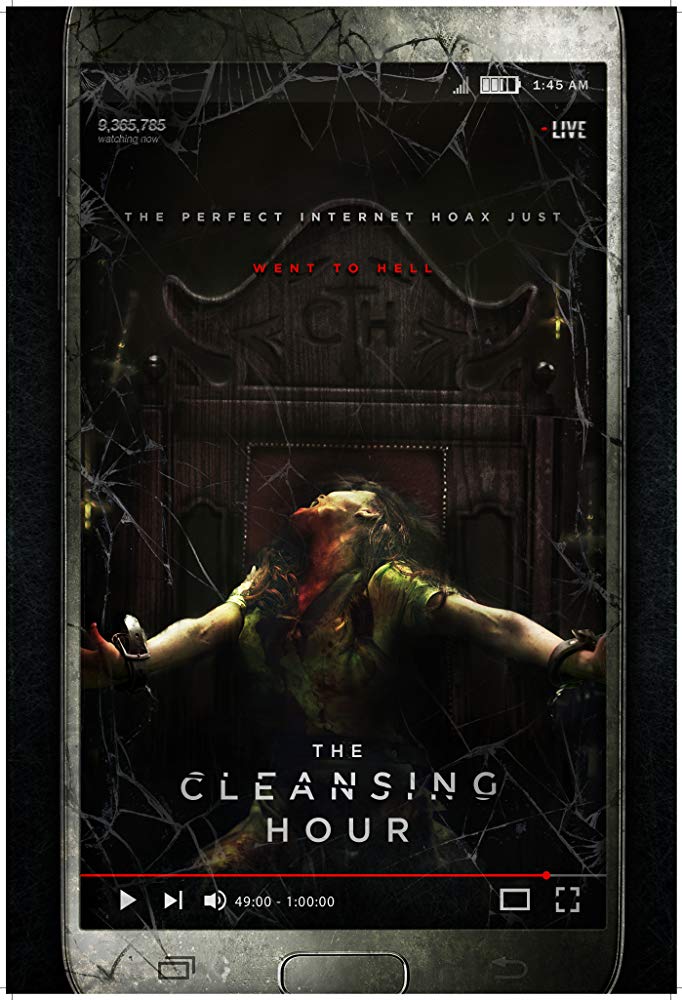
Perhaps it’s to be entirely expected that the number of social media-related horrors continue to grow and grow. Alongside the likes of Tragedy Girls, Assassination Nation and Making Monsters, we can now count The Cleansing Hour, though quite unlike those others, this most recent film melds the premise of a successful social media channel with something altogether more occult. The resulting film is a very physical, often gory project, with elements which are eminently recognisable alongside the rather newer horrors of live feeds and ratings – things are kept fairly light-touch, though the film suffers somewhat by just how much it strives to do during its touch-over ninety minute running time.
The title of the film is also the title of
a successful, but plateauing ‘live stream exorcism’ channel, hosted by an
allegedly real priest – Father Max (Ryan Guzman). It’s no great spoiler to say
that we’re soon shown he’s nothing of the sort, but he’s good on camera and
alongside his friend and partner Drew (Kyle Gallner) they shift a fair amount
of Vatican-blessed merchandise. Again, you can probably guess how legitimate
that all is. Things are ticking away pretty well but Drew is getting antsy
about expanding the brand; he wants to branch out, do something a little
different – seances, maybe. Max isn’t so sure. He’s happy with how things are,
rocking up with minutes to go but turning in a reliable performance. He
promises Drew he needs to book a friend of his, a drag queen who is willing to
take part in the rite; sadly, this friend doesn’t show so Drew asks his
girlfriend Lane (Alix Angelis) to step in, read the prompts and gnash her teeth
a bit. Very reluctantly, she agrees. It’s time for the show to begin.
Thing is, this time, it seems as if it
could be for real. Lane is doing more than just ad lib here; Drew and Max,
after adjusting to their sense of justified shock, are instructed by the
mystery demon now inhabiting Lane to unpick the reasons why it has manifested
right here, right now…
The Cleansing Hour deserves credit for
appreciating the need for comedy here, as despite the internet framing device,
a lot of the other elements it needs to play through during its time are very
familiar by now. Demonic possession, in
all its gravel-voiced, gurning glory has been with us for a while; this film
opts to run with the Evil Dead-style of possession, all wisecracking and grim
physical manifestations (if I remember rightly, there’s even a pencil). This
works, showing a sense of legacy whilst also not delving too far into the kind
of drama which would not be such a good fit.
That said, the friendship between Max and
Drew feels very genuine, and their backstory is explored in just the right
amount of depth to sustain interest in what will happen to them. The only
moment which felt truly strained to me occurs when the demon forces a
revelation regarding a prior romance which affects these two; I guess the
filmmaker/writer Damien LeVeck didn’t want to tarnish a character by suggesting
adultery, but the way in which this was otherwise approached, well, it didn’t
seem like too much of a thing to get upset about to me. However, overall I did
feel on side with Max and Drew, and Max in particular gradually gets humanised
by his brush with a real entity. This is a very physical film, too, with every
actor put through their paces. There might be a girl tied to a chair, but she
still manages a physical performance. There are lots of practical effects,
which match the overall OTT tone and style of the film.
There are also some good, if again quite
light-touch comments on the nature of live streaming; the people watching all
of this unfold, many of whom – we can infer – believe utterly in the notion of
demonic possession do nothing but pour
scorn on what they’re seeing; you get to watch the comments stack up, and most
of them are of the ‘never read the bottom half of the internet’ standard.
(During one of these scenes, by the by, I got to see my first example of Welsh
used during the weekend, though not the last. One of the comments read, ‘Cymru
Am Byth’!) A serious appraisal of online behaviour this ain’t, but it does provide
a very plausible addition to proceedings, even if the film’s skit on ‘going
viral’ perhaps feels like a bridge too far, given the onslaught which brings us
up to this point.
And that’s my only real criticism of this film, as it’s otherwise good fun and in earnest; it crams in so much, it almost feels as though LeVeck wanted to get everything he ever wanted to put on-screen, into this one movie. As the film broadens out beyond its otherwise confined set and small cast, it perhaps goes further than it ever needed to. But, hey, if ambition and a burning desire to push one’s ideas as far as you feasibly think they can go is a crime, then it’s by far and away not the worst crime out there in indie cinema. The Cleansing Hour overall has a good sense of its own strengths, has fun with its subject matter and keeps things entertainingly gory, splicing its occult theme with some well-realised gore.
The Cleansing Hour played at Glasgow Frightfest on Friday, 6th March 2020.
Short films are fun because they often make for statements of intent: whilst good short films do more than simply act as calling cards, it’s still true that the best of these show something, in terms of style and theme, of what could follow. This is certainly the case with Mr. Clean (2020), an economical short film which blends its own ideas with a sense of the horror canon.
Based loosely on real-life cases, Mr. Clean describes a character whose thing is breaking into people’s homes to deep-clean them – doing so thorough a job, that he leaves no trace of who he is. That’s if anyone would want to complain, anyway. We soon see our Mr. Clean at work, as described by local radio DJ Jess during her show (Sophie Klaesson) – and of course, she can’t resist wishing aloud that he’d come and clean up at her place – but there’s more to this than just harmless eccentricity. It seems that Mr. Clean is so good at what he does because he’s cleaning up more than your usual day-to-day mess…
Mr. Clean (2020) is intended to be the first of three short films, so it doesn’t give away all of its ideas in one go; what we get instead is something which tantalises, rather than tells. The film reserves its energy for some decent practical FX and, via some mooted links to something akin to cosmic horror, an indication of a bigger picture, yet to be revealed. This film certainly does enough to generate interest in this, whilst moving at its quick but suitable pace (using Jess as a narrator as well as a character is a neat move, for instance). At just over six minutes, Mr. Clean shows what it’s possible to do in such a short time frame, and sets its agenda for films to follow. As such it’s a successful and fun project which blends moments of gore with hints of ‘old god’ weirdness.
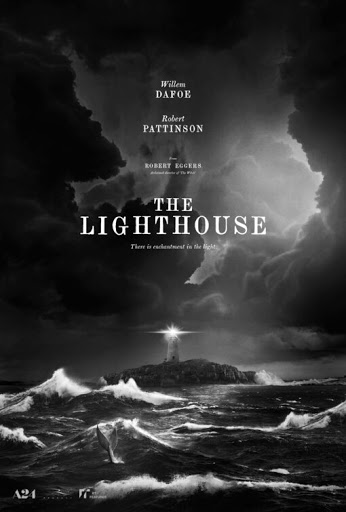
It was with no mean amount of anticipation that I went in to Robert Eggers’ newest film; his last film – and his first ever feature – The Witch (2015) blended just enough ambiguity with its supernatural content, leading to a film which kept its mysteries without sacrificing its scares, but perhaps most of all, it successfully crafted a tale of the profound impact of isolation. It seems this is a theme Eggers wanted to explore further, so The Lighthouse has an even smaller cast, and the complete isolation of two men who – shall we say – would not ordinarily be friends. However, for me, the interplay between possible supernaturalism and isolation simply is not sustained here with the same level of success as in the earlier film. Atmospheric it may be, but The Lighthouse is in other key respects very, very dull indeed.
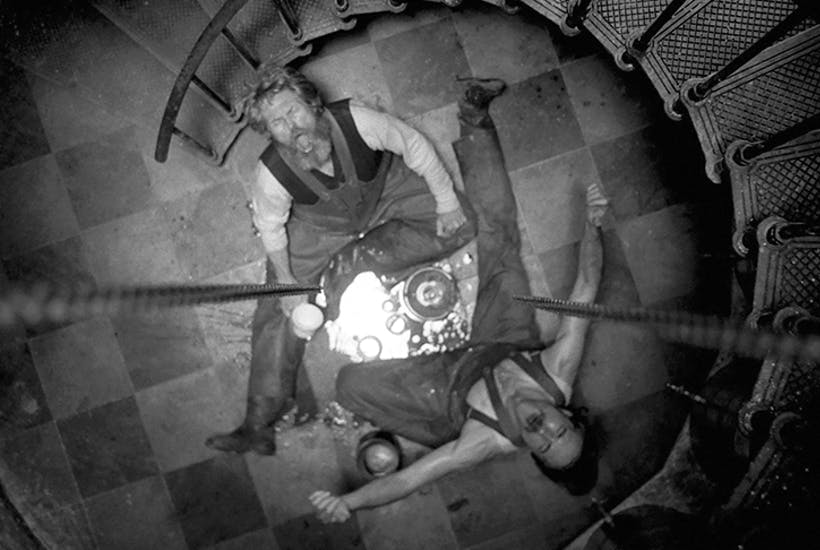
The premise is simple enough: on a remote island somewhere off the wind-battered New England coast, two men have taken on the role of tending the lighthouse there. It’ll be a four-week stint, then someone will be along to relieve them. The older of the two men, Tom Wake (whose name I heard as ‘Wick’, and thought was a bit of nominative determinism) is a grizzled old hand at this, and he makes it very clear to his new second-in-command that tending the light itself is his job. Everything else, it seems, is to be done by the younger man, who eventually introduces himself as Ephraim Winslow. It’s back-breaking and thankless work, and there’s little respite: the only thing to do in the evenings is huddle in the dim lamplight and, eventually, share a few stories.
But there’s something odd about this place: Wake reveals that his last helper went mad, and whatever is on Winslow’s mind seems to be troubling him, too: his dreams are increasingly traumatic, and he soon begins to lose his sense of time. Wake comes across as a practical man used to the life, but his determination to stop Winslow from having anything to do with the lamp – as well as his demented fixation with the power of the light – suggests that there’s a force or a presence involved with it somehow. Winslow’s curiosity is given little credence, and as the two men continue to co-exist, tensions develop between them. Winslow reveals that he isn’t, in fact, called Winslow – his name is Thomas Howard. Lots and lots and lots of rum (I assume) gets consumed. Many suppers are eaten. A seagull gets battered to death, possibly leading to an awful lot of bad (or worse) luck. And eventually, the confinement begins to get to Howard far more appreciably, driving him to desperate, violent behaviour.
Granted, there are elements here to admire. The choice of black and white certainly lends the film a grim sort of gravitas, and the tempestuous seas genuinely look impressive on screen. The continuous booming of the foghorn lends an air of menace which suits the content well. Inspired, also, is the casting: Willem Dafoe does a great deal with what he is given as Tom Wake, and Robert Pattinson is barely recognisable from his days as a harmless but feckless Twilight pin-up boy. They plausibly enact two men getting heartsick of one another, doubting one another and finally exploding into anger; they each play very physical roles, growing steadily more ingrained with filth and soaked by the perpetual rain. The Lighthouse is a very sensory film indeed.
The thing is, in its unwavering pursuit of atmospherics, narrative coherence and structure have been almost totally sacrificed. Whilst the horrors of witchcraft in The Witch could conceivably have been all in Thomasin’s mind, her family’s remote lives and hardships taking its eventual toll on her, it never felt like a cop-out for all that, and works just as well as a film whose witchcraft is real. The film felt as though it had a shape to it, too, whereas that is almost totally lacking in The Lighthouse which, at one hour fifty minutes, desperately needs some sort of pay-off to reward audience patience (several people walked out of my screening, I’m sure beaten back by the relentless nothingness of it all). In common with The Witch, The Lighthouse hints at some supernatural goings-on, but removes these even further from plausibility by making it all possibly ‘just a dream’, even suggesting in the script that it could all be a figment of the imagination of a young man trying to run from his own guilt. And there is no exposition at all, just a couple of hints of something weird out there, enough time for a mermaid sex scene (I guess that’s ONE burning question the film answers) and some deeply suspect seagulls. I liked some of the allusions to sailor lore, and who doesn’t love a shanty? But with so much screen time dedicated to watching two men steadily getting sloshed, The Lighthouse is less a brooding study of madness and more a Lovecraftian piss up. Moments of humour don’t really work, either: the farting, wanking and brimming bedpans jostle for position with long monologues about how bad the other person smells.
So, sadly, whilst I could marvel at the physical hardships undertaken by the two leads, and whilst Eggers has done sterling work displaying the ocean as a malign entity in its own right, this is a jagged, indulgent film which says very little. It is likely to be a very divisive offering, with its fans adoring its psychological horror and its detractors feeling almost completely detached from its psychology. Perhaps the ability to split viewers so cleanly is an achievement in itself, and if this was ever the aim then – mission accomplished, but ultimately there is just too little of substance here and the ends do not justify the means.