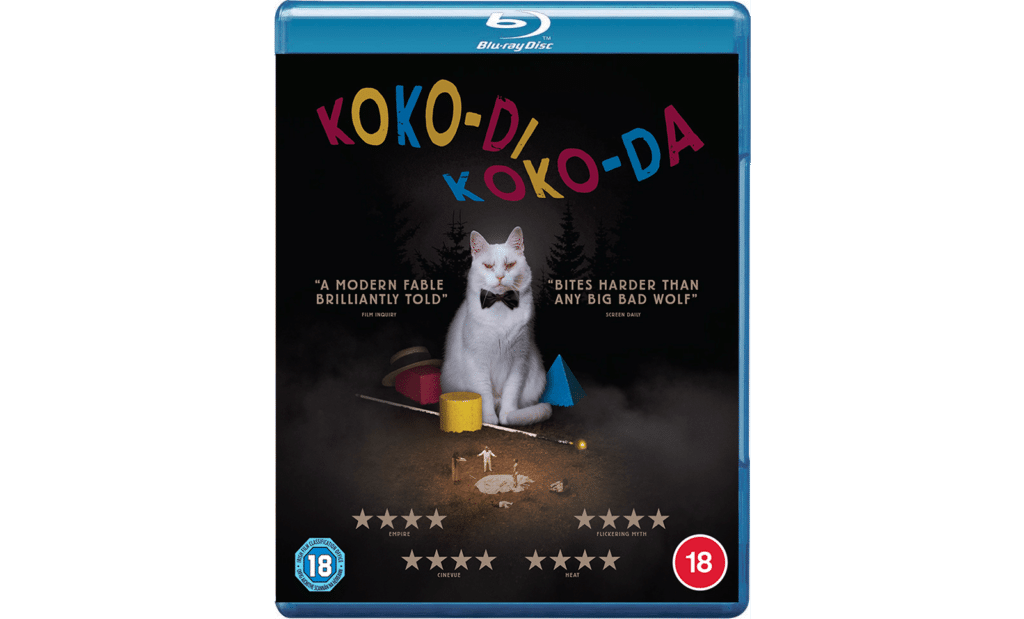
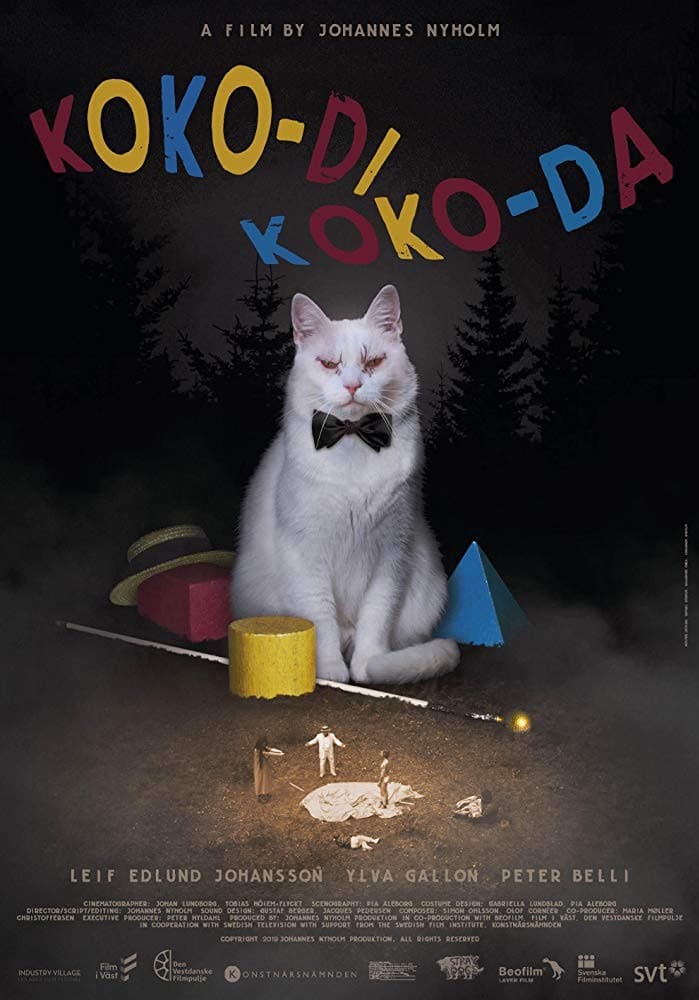
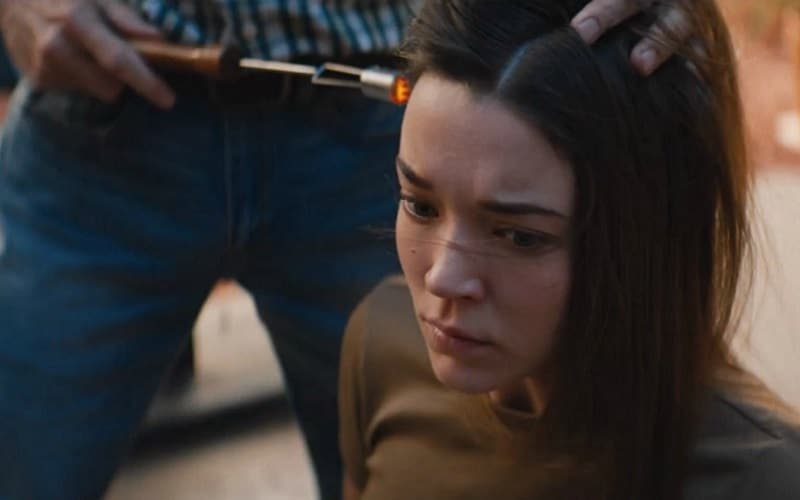
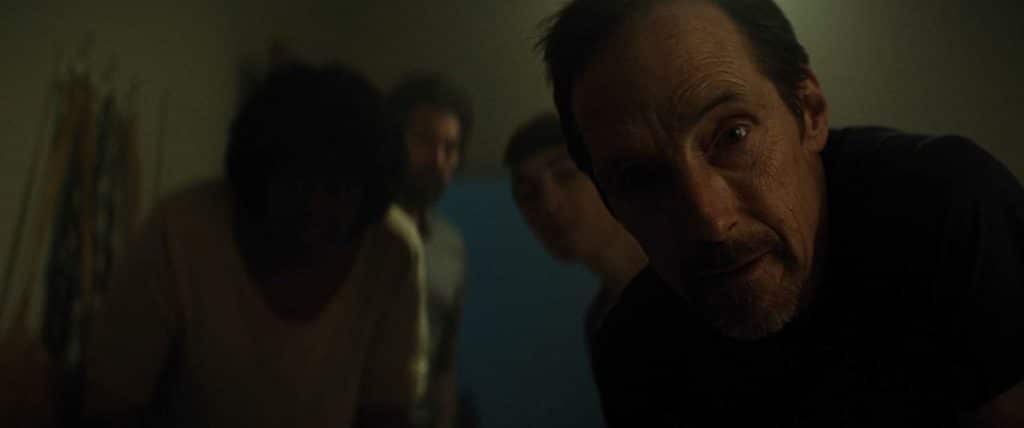
We don’t do this very much, but – want to win a copy of Koko-Di Koko-Da on Blu-ray?
To celebrate the recent release of this unusual, often challenging and often poignant horror (check out my review here) we have a copy to give away. If you would like to be in with a chance (provided you are 18 or over), please send your details to keri@warped-perspective.com. The winner will be drawn at random on 18th September 2020 at 23:59 GMT and notified via email. Good luck!
Please note: this is for UK residents only: sorry folks.
GDPR compliant: your details will be stored until the time of the competition on a secure connection and deleted after the draw. Your details will not be shared or further stored after this point.
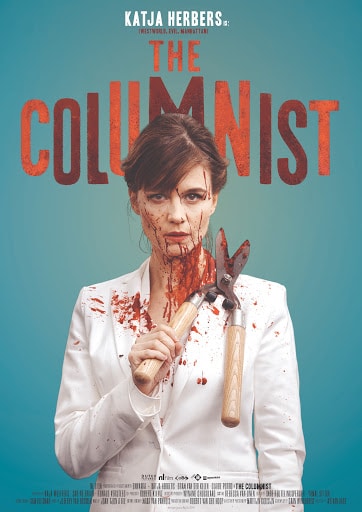
Social media, being a hellworld of our own making, is inevitably creeping into horror cinema; The Columnist (2019) is unusual, however, as it focuses on the implications of online trolling before riffing on what for many people is probably pure wish fulfilment – finding and punishing the worst offenders. In this regard, it mixes social media with elements of the slasher: that’s not to say it doesn’t have some heart, too, and a few bigger ideas to ponder.
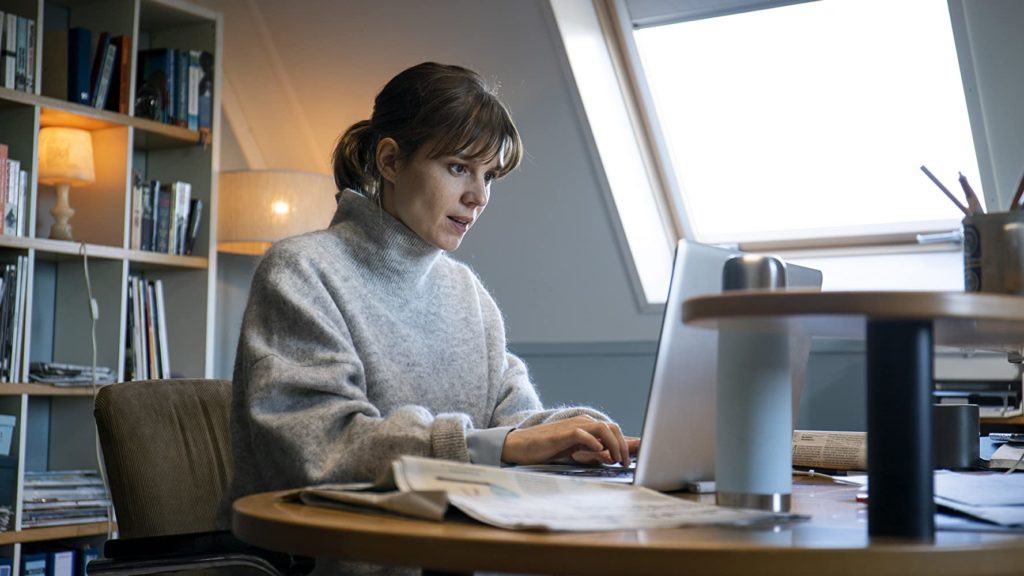
Journalist Femke Boot (Katja Herbers) writes a column in a Dutch newspaper; as a woman who – let’s be frank – is no stranger to an inane column or a high internet presence, she receives more than her share of vile internet comments. Art imitates life, so the most vitriolic of these appear after she writes a column imploring people to be a bit nicer. She decides to call it a day, making the decision to – ulp – get off Twitter altogether. Meanwhile, her literary agent is concerned that there’s just not enough of a ‘buzz’ around Femke to generate interest in her upcoming book. She is told to crack on with it regardless, but she is clearly hitting a bit of a professional impasse. Even her teen daughter Anna (Claire Porro) is reading professional rival Stephen Dood’s books now – that’s ‘Stephen Death’ in English, with Mr Death himself a bit better-versed in separating his persona from his personhood. Before long, the frustrated Femke is back to poring over savage internet comments, to the exclusion of a lot else.
This situation tips over from ‘annoyance’ to ‘opportunity’ when she recognises the gurning userpic attached to one of the worst attack-dog profiles: it’s her new neighbour, Arjen, who has thus far seemed pretty reactionary but otherwise a reasonable enough bloke. The first warning sign that Femke is about to take a turn for the worse is when she decides to hack down his brand-new fence. But, things escalate, and when she spots him doing some work on his roof, she cannot resist making him pay a bigger price…
Whilst the sudden escalation into violence is a rather jarring turn given the careful realism of the characters to this point, it does at least establish the film’s central tenet: if you can find some way of exorcising your demons, then you can get along a lot better. Or maybe it’s just a horrible warning about reading the bottom half of the internet? Still, with Femke getting it out of her system, she can now focus on her writing and begins making good headway. Alongside her new mojo is a new relationship – again, our Stephen is quite a nice fella outside of his gothy persona – and a newfound, improved relationship with Anna. The question is obviously – how long can this last, and what will be next?
It’s certainly true that people in the public eye get all manner of absurd, cruel and unnecessary bile hurled at them, and The Columnist is on-the-money with this – there does seem to be a peculiar subset of men out there who will reply to literally anything an uppity woman says online by avowing that she’s too ugly to sleep with, as if this was ever an option theirs to refuse in the first place – but whether the film is actually critiquing this, or the ways in which people fixate on it, is a tad less clear; there’s no reason it can’t be obliquely about both of those things, of course, as it’s her tendency to get strung out by commentators which hamstrings Femke’s ability to work, but then she becomes arguably a hell of a lot worse than her detractors by, well, maiming and killing them. That’s another interesting thing here: whilst some of the Twitterers she catches up with seem authentically unpleasant, others amongst them are…not so bad. Again, there’s that disconnect between real life and online life, but it reminds us that most of the guys furiously typing ‘choke, bitch’ probably have unremarkable, largely inoffensive lives. Not only that, but they have family and friends. When Arjen’s wife and young son watch the hearse roll away and Femke’s response is cold at best, it shows the horrors which are possible when finding it possible to excuse injury to everyone else.
You could choose not to engage wholesale with any of that, mind (though it would take a little of the belligerence on display in the plot) and see this simply as a decent film with some plausible, often likeable characterisation, all wrapped up in some grisly tableaux. Still, things get undeniably darker as the film progresses towards its conclusion, and as much as anything else the ending is sad – it’s about people’s lives breaking apart, and a short-lived happiness which allows you to infer far greater sadness coming after the credits roll. It was always going to come unstuck: a grim, but visually-appealing ending moves the worst violence off-screen finally, but you are left in no doubt.
It doesn’t try to be exhaustive, it doesn’t necessarily hold up greater truths, but The Columnist meshes current issues and concerns with a kind of gore vibe which is either cathartic or cautionary, depending – I’m sure – on who you ask. Overall, it’s a satisfying and worthwhile watch,
The Columnist appeared at the Fantasia Film Festival 2020.
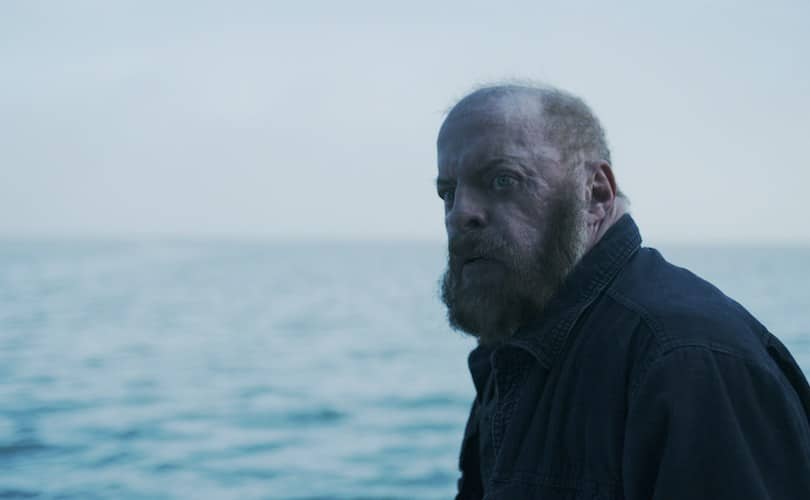
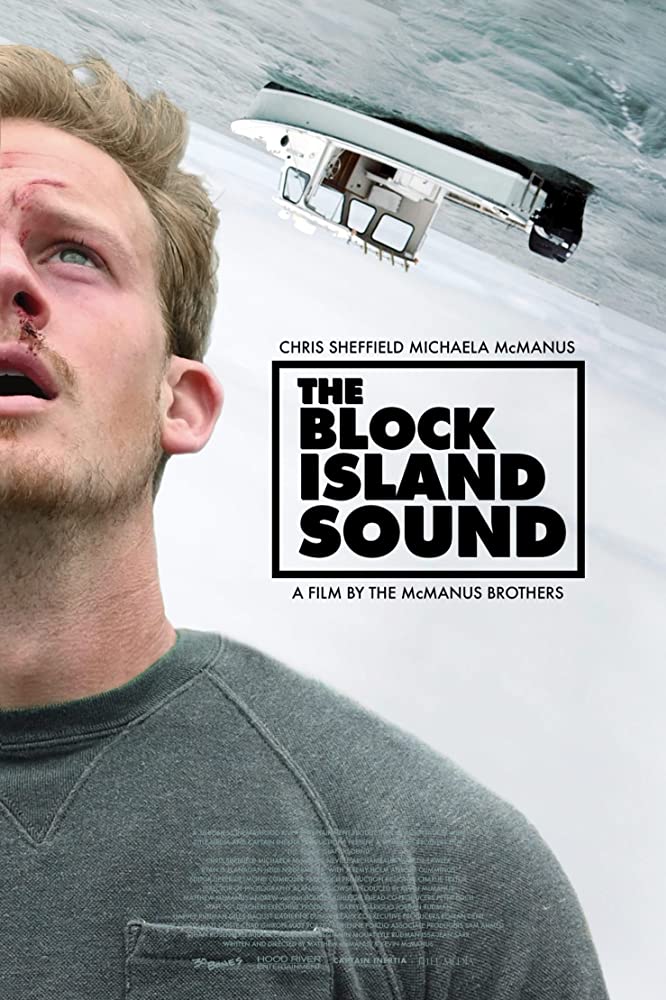
A boat drifts, its lone crewman (Neville Archambault) coming to and shocked by the disarray on board. A horrific, guttural sound attracts his attention…this all takes place within the first few moments of The Block Island Sound, a neat, often inventive horror which splices a kind of eco-horror with something altogether more supernatural, though it never quite gives up its secrets.
Back onshore, we are introduced to the boatman’s son: Harry (Chris Sheffield) is hanging out in a bar with his friends, giving conspiracy theorist pal Dale a ride home when their car strikes a bird, which they watch, flailing on the windscreen. You get the sense that this is the shape of things to come. Back at the house, his father is alive and well but acting strangely, zoning out from time to time and seemingly not in control of his actions when undergoing this experience. Harry puts it down to sleepwalking, but he doesn’t seem convinced by it, and his father’s new tendency to take his boat out in the middle of the night is alarming.
Meanwhile, Harry’s sister Audry (Michaela McManus) her partner and young daughter are making a rare visit home because her role as a marine biologist is of relevance in a part of the world where tonnes of fish have started to wash up, dead. It’s an awkward reunion – Harry is a kind of manchild writ large, always on the verge of losing his temper – and she is very alarmed by her father’s behaviour. When he disappears altogether, Harry will not accept it and goes looking for him; soon he is suffering from the same mysterious symptoms, hearing the same inexplicable noise. What is this?
The Block Island Sound strikes a balance between the kind of eco-horror of The Bay (2012) and something else; the raucous sound which afflicts father and son does make it clear, though, that there is something otherworldly going on (the mention of a certain American city might also put you in mind of a particular kind of horror, though that is never nailed down nor alluded to further). You would hope in a film which begins this way that the soundscape elements would be well-developed and that is the case; from the mysterious ‘noise’ itself to the Paul Koch score, the film sounds fantastic, incredibly eerie and ominous. There are some heavily-signposted scenes – one of which, Audry’s justification to her daughter for the cruelties of her role – is handed back to the audience in the film’s later scenes, but it’s a ‘reveal’ which works. Elsewhere – the allusions to mind control, conspiracy, the dying bird – the symbolism is pretty straightforward.
Whilst there is a lull around the middle of the film, as Harry begins to dominate proceedings, his journey towards understanding unfolding slowly – The Block Island Sound more than rewards attention, with its good, inventive moments and a genuine, unsettling thread of horror which holds things together. The use of amnesia is well-handled, and the expanses of the sea itself – shown as containing some unknown, malevolent force – works well on screen. The moments of snappier horror are very unsettling, because they are used sparingly. Exposition is held back – the film doesn’t speak all its truths – and it ends in a clever final moment. A well-realised, inventive piece of work, The Block Island Sound is a nicely handled piece of storytelling.
The Block Island Sound premiered at the Fantasia Film Festival 2020.
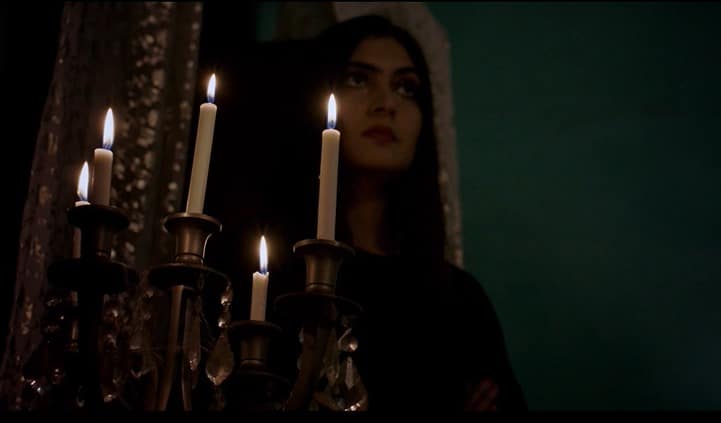
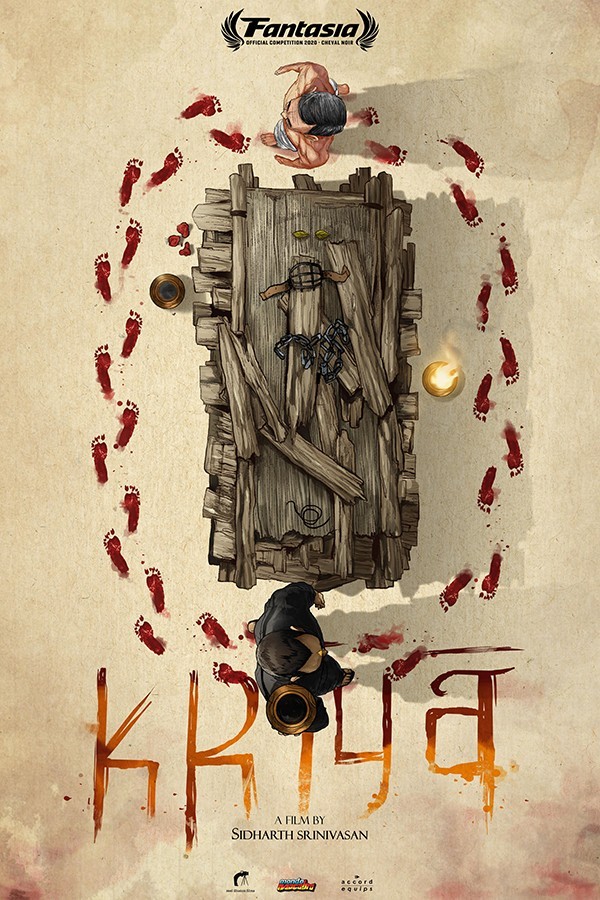
During the opening credits of Kriya, on-screen text tells us that in Hindu tradition, it is the son who must be the one to perform a father’s last rites. We cut straight from this into a modern club scene: in this way, the film establishes straightaway that old and new India will find themselves in discord here. Kriya is a film which uses horror as a conduit to ask big questions about Indian cultural life. In some aspects – given the style of this treatment, and some of the themes which emerge – Kriya could be classed as an Indian Gothic.
Neel (Noble Luke), a DJ at the club, finds himself making meaningful eye contact across the dance floor with the beautiful Sitara (Navjot Randhawa). It’s a long sequence, brought down with a bump by the pair, some time later, trying to find somewhere to be intimate. Sitara suggests that they drive to her rather grand, though decaying family home – a dead ringer for the House of Usher – but Neel is suitably disbelieving that this could ever be okay with her family. Well, there’s certainly an issue to contend with, but not what he expects.
As the pair enter, they find Sitara’s father, prone and on the verge of death, surrounded by the other members of the family: mother Tara Devi (Avantika Akerkar), younger sister Sara (Kanak Bhardwaj) and holy man Panditji (Sudhanva Deshpande), whose interest in the family seems more than a strictly spiritual one. Rites are already being read over Sitara’s father, whose death is imminent; as eldest daughter, Sitara quickly begins to participate, as the rest of the family, rather begrudgingly given his outsider status, insist that Neel joins in with the prayers.
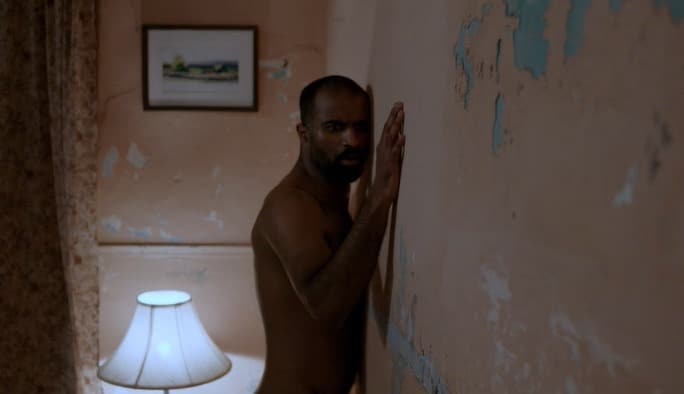
He begins to participate as best he can, but soon he’s struggling under the complex social and cultural norms of high-caste traditions such as these; this is exacerbated by Tara Devi’s anger at him as ‘improper’. Worse, it seems that Sitara bringing him here has been deliberately timed, given the length of her father’s illness and the vital importance of a male ‘family member’ to complete the rites. Neel wishes to leave, but nightmarish episodes of his own begin to afflict him, even whilst he gets increasingly drawn into this secretive family group.
The subtly off-kilter behaviour of this family, particularly evident between mother and eldest daughter, makes Kriya an almost immediately bewildering, discomfiting experience. Combined with the intricate finer points of religious practice, we are kept at a distance here – though the sheer weight of these, overwhelming in many respects, does become clearer as the film progresses. It’s important to note, though, that Neel is far more like the audience than he is like the family; he’s as alienated and taken aback by the goings-on of the evening as we are, and this helps to make him a very plausible outsider, someone with whom it is easy to empathise. There are other degrees of strangeness woven in here, some of which are potentially more shocking to Western audiences; our relationship to death is often rather distant, medicalised. Sitara’s tactile behaviour with the corpse of her father, cradling him, grabbing at him and later, completing acts which require her to open and close her father’s mouth, for instance – these things are not things we routinely do in the West. It adds significantly to the sense of unease.
Kriya is further notable for the way it seems at first to have positioned a man at the centre of its horror. Manipulated and effectively captured – albeit with language rather than physical force – Neel wants nothing more than to get away from this place, but he becomes trapped in a web of the expectations placed on males. The female characters, at least at first, seem to be in command; light touches, such as Sitara’s use of formal Hindi against Neel’s English, underline the gender and class differences between them, and in some respects, this is a subversion of expectations. However, when you understand more about the family’s motivations and the issues which afflict them, then it becomes apparent that here we have women using the means available to them to rally against an impossible situation, one that absolutely requires a male presence. This is one moribund gilded cage.
By its close, Kriya is a tale of fractured identities and the steady loss of personal control. The subversive elements used are far more than just ‘gotchas’, there to play with generic expectations; they’re wedded to the narrative, providing for a sometimes challenging but ultimately rewarding horror tale. Not every question in the film is answered, but Kriya is no less a film for that.
Kriya (2020) premieres at the Fantasia Film Festival on Wednesday 26th August 2020. For more information on the film, click here.
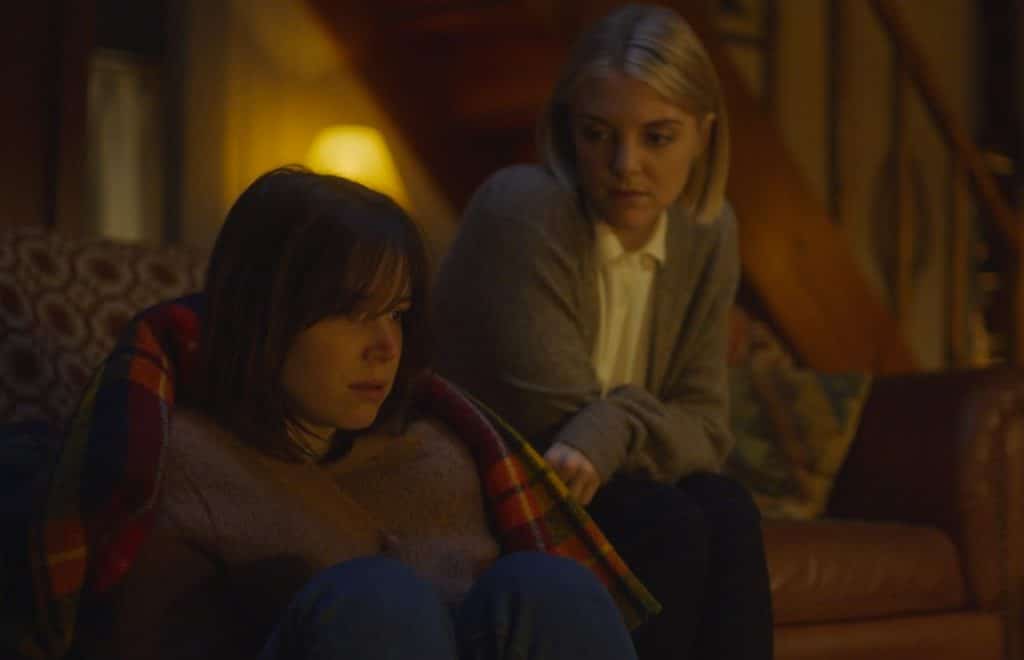
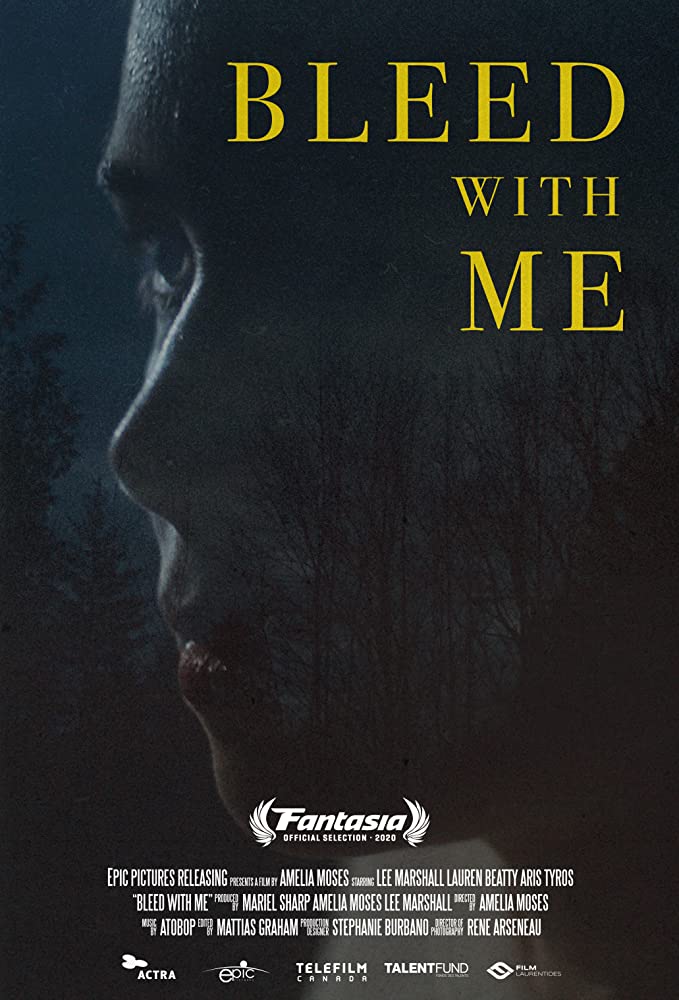
When I read the synopsis for Bleed With Me (2020), my mind jumped straight to ‘body horror’ – but that’s a term reminiscent of jarring, even ludicrous extremes, from Tetsuo to Videodrome. In truth, though, there are many quieter entrants into that genre with their own questions to ask; this brings us to Bleed With Me, where reality and dream meet very uneasily at the margins of the female body in an ambiguous, claustrophobic and economical tale. It tackles female agency and friendship in a low-key, but nonetheless at-times unbearable fashion.
Two friends, Rowan (Lee Marshall) and Emily (Lauren Beatty) head into the Canadian woods for a weekend getaway at Emily’s cabin. Yes, it’s a cabin in the woods – but it’s a cosy, well-loved family retreat, and so the site – rather than the source – of what later unfolds. Emily’s boyfriend Brendan (Aris Tyros) is already there to greet them, and things get off on a good footing. It’s clearly a fairly new friendship between the two girls, but all seems fine. At first. When Rowan thinks she sees something or someone outside the cabin whilst she’s preparing food, she accidentally cuts her finger; Emily’s reaction is a little overzealous, shall we say, but there’s no major cause for alarm at this point. The wine flows, maybe a little too much, but a generally pleasant evening is had.
However, Rowan – clearly a damaged young woman, as the film oh-so subtly reveals to us – has some (deserved) misgivings about cramping the couple’s style, soon aided and abetted by Brendan. Her escalating anxiety gives way to disturbed sleep, and the following morning, Rowan wakes to find an unexplained wound on her forearm. She has no recollection of it; the mystery is compounded when she also sees spots of blood on Emily’s nightclothes. The cabin and its inmates begin to feel actively hostile to Rowan: is it paranoia, or a plot?
Bleed With Me is an incredibly slow burn, unsettling piece of film. For the most part, this stems not from what is shown, but from what is not: the gentle lighting, hushed dialogue and long periods of stillness, taking in the natural beauty outside, belie the ratcheting uneasy inside the cabin’s walls. It’s a very attractive film which establishes one aesthetic, only to bring this into direct contrast with the cold, blurred world of Rowan’s dreams (if dreams they are). Director and writer Amelia Moses has a skill in making the run-of-the-mill very intense and alienating.
Much of this is communicated through Rowan’s own eyes, but the film raises a number of queasy questions regarding female friendship, questions which seem to be more than solely Rowan’s. Each of the girls is keeping quiet on their true motivations; doubt and unreason begin to filter through into every word and gesture. As Rowan’s night terrors begin to segue into her days, her proliferation of strange wounds are a symbol of her unease as much as they are a cause for concern in and of themselves. The steady increase in uncertainty achieved here is quite something. Some of Rowan’s terror of her companions’ real motivations has echoes of Rosemary’s Baby, another film where a woman is left vulnerable because it’s unclear who to believe. In other respects, the film reminded me of the short story The Yellow Wallpaper – again, featuring a woman who projects her own suffering onto external phenomena. However, Bleed With Me expands these ideas, using blood as a locus for unmistakably feminine concerns, where friendships simmer and boil out of control.
This is a film which never gives up all of its secrets, and as such it may be too low on exposition for some – personally, I found it a very affecting piece of work which allows intrigue to remain, contributing to the atmosphere and style of the film as a whole. That all of this is done in one setting with a total cast of three people is all the more remarkable.
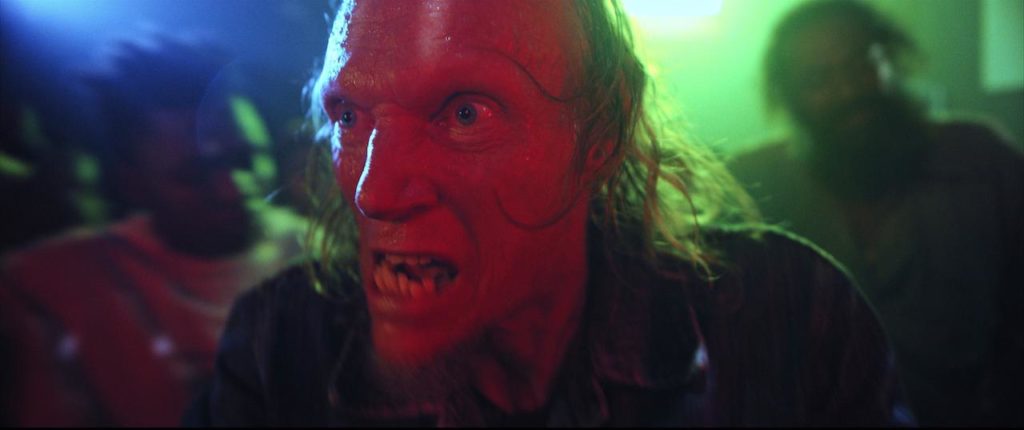
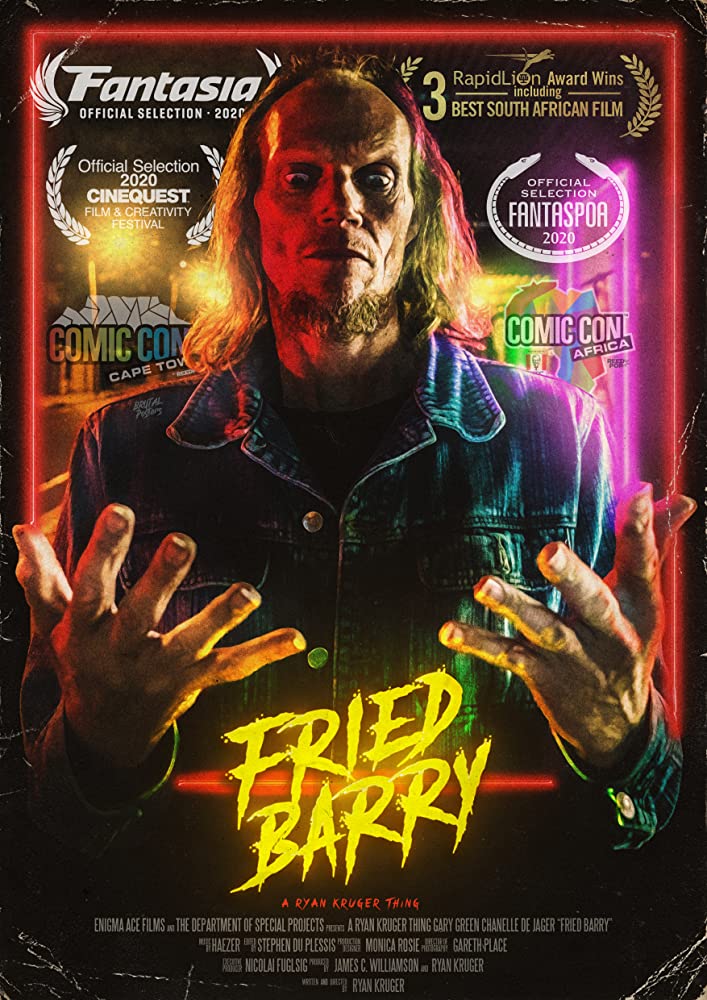
The BBFC-esque send-up at the beginning of Fried Barry – with a ‘warning’ of all the adult content to follow and the pointer that film certification is there to help us make informed decisions – suggests from the outset a film stacked with OTT content which is also ready to send itself up. In the case of the former, there’s no argument with the amount of sex and drugs on offer here, though with regards to the latter, it wasn’t always clear to me when or if to laugh at Fried Barry. Furthermore, the tantalising idea of body horror mooted in the premise doesn’t come to pass, or at least not in the ways I was expecting. So it’s scuzzy, yes, but horror is rather low in the mix overall. This is a strange, drug-addled odyssey through rather grotty terrain with some intimation of a ‘bigger picture’ of the human experience, though again, not expressed overtly.
The Barry who gets Fried is a middle-aged man and, even before the big event, he’s not in the best of states: an intravenous drug user, his return home to a distraught wife and child is only of a few moments’ duration before he’s back on the streets again, chasing debts and hitting a local dive bar in his hometown of Cape Town, SA. He heads off from there with a local mate for more of the same; you get the impression that life could be ever thus, but then on his way home late that night, Barry is beamed up by some extraterrestrial force. These aliens experiment on him before swapping him for one of their number, then return ‘him’ right to the place he was picked up. So it’s ‘Barry’ – still wired and still walking around in a state of blank abandon – but it’s also not Barry.
A little like Grant in James Gunn’s Slither (2006), this Barry is new to the world and its inhabitants, seeing for the first time through alien eyes, despite inhabiting a human body. (A later moment in the film also seems a clear allusion to a scene in Slither.) But where Grant’s human frame soon begins to corrupt, Barry seems – for most, if not all intents and purposes – much the same as he was. We begin to get a lot of shots through Barry’s point of view, underlining how incredibly strange all of this seems to him, but bodily? He probably says a little less and dances a lot more, but given the amount of pills he chins as soon as he’s given the opportunity, it’s hard to definitively say he wouldn’t have been like that anyway. And he’s certainly no worse a person than many of the folks he meets on his travels. The Cape Town nightlife scene he blunders into is all grimy streets, dreadful bars and caricatured partygoers (though perhaps this is authentically the case; I’ve never been.) Barry also seems unusually alluring to many of them, perhaps necessarily, given the film’s stated determination to provide numerous sex scenes, but it adds a perplexing plot layer nonetheless. One of these sex scenes sees the film veer for a moment into the kind of Henenlotter territory I’d initially expected, with what seems a clear nod to Bad Biology (2008): some of Barry’s wanderings call to mind the equally scuzzy New York of Basket Case (1982) and the altered states of Brain Damage (1988), but Fried Barry never sticks with that kind of SFX for more than a moment.
Barry’s journey eventually takes him to some incredibly dark, or should we say, even darker places: encounters with Cape Town’s hidden criminal elements bring him up against violence and kidnap, where on some occasions he intervenes – perhaps knowing he is acting for the good, perhaps not. In other situations he does nothing, or just seems to help by accident, showing some evidence of supernatural abilities which is not explored beyond itself. Similarly, his own later incarceration sees him carried along by the forces around him, unable to do a great deal but take any substances proffered. There are large lulls during the middle act of the film where it seems unclear where all of this is going; the inclusion of a fake ‘intermission’ reel, an opportunity to shoehorn in a little more lurid 80s aesthetics it seems, is an unnecessary add-on which doesn’t fit with much around it. I fear this might be one of the problems so often seen when a short film is adapted into a feature – and this is a first feature, too, by director Ryan Kruger. At nearly 100 minutes and with no prepared script and an almost mute protagonist, Fried Barry is a very protracted walk through the streets.
There are some moments of warmth, and underpinning the whole is the question of what extraterrestrial life would learn from a walk on the wild side such as this, even if explication is minimal. Some of the more lurid, retro-weird scenes are fun, and the synth soundtrack works very well with the film. It’s not all bad. It’s just that the head-scratching, or slow, or inexplicable moments outnumber the good here.
Fried Barry (2020) will screen at the Fantasia Film Festival, which starts on 20th August. For more details, click here.
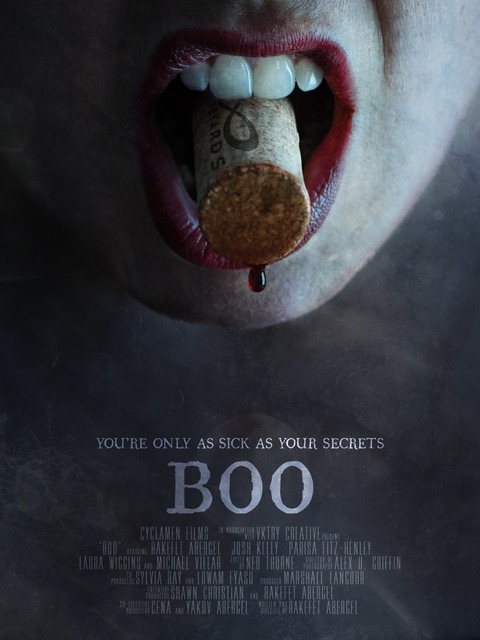
Horror has often examined the role of addiction: lots of its best-known antagonists have laboured under something of this kind, and it’s fertile ground for taking a closer look at people, their motivations and their flaws. This is the rationale behind short film Boo (2019), an economical exercise in filmmaking which shows a careful hand and sense of structure throughout its fifteen minute running time.
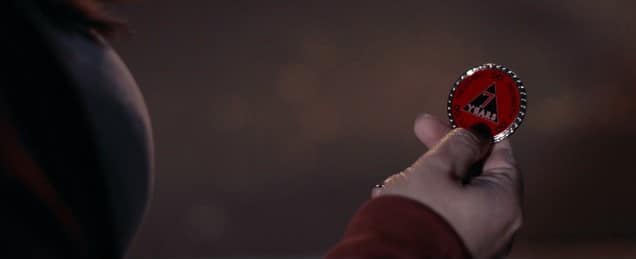
The film starts with a man, Jared (Josh Kelly), startled by the appearance of his girlfriend Devi (also director and writer Rakefet Abergel) at his passenger-side window. Her hands are bloodied and she’s in distress; this is not the straightforward ride home he’d envisaged. Using a time frame which flashes forward and backwards between two pivotal moments, we see Dev some time just prior to this, emerging from an AA meeting with some of her friends, in proud receipt of a 7 years’ sober chip. Still, she tells her friends, she still misses some aspects of drinking – the smell, for instance, even after all that time. They head off into the night while she waits for Jared, reassuring them that she’ll be fine.
Dev said she still suffers from temptation: bang on cue, a car door opens and an inebriated guy emerges. He’s one of those ‘can’t take no for an answer’ kind of guys, as the film quickly reveals; the situation quickly begins to spiral out of control, and although the way in which the film cuts between past and present masks the length of Dev’s ordeal and how her lapse affects her, we know enough to understand why she is so shaken up and panicked when Jared gets there. Or do we?
Boo riffs on that idea, that an addict is an addict is an addict, no matter how much time elapses; the way in which horror underpins this is by shining a different kind of light on the behaviour, making it something monstrous which haunts Dev and makes her fear that Jared will not see her as the person she wants to be. Good short films can get all of that across in often just a few minutes and Boo qualifies for this; whilst genre stalwarts might be able to see where things are heading, a decent pace and handling, with touches such as revisiting aspects of the dialogue under drastically different circumstances, help Boo to get its points across well. It also has enough about it that you may find yourself reconsidering earlier scenes – were they entirely what they seemed to be?
A sharp film with a pleasing punchline – including a neat final scene which asks one question more – Boo is an effective horror short, with a lively feel and much to recommend it.
You can find out more about Boo (2019) and director Rakefet Abergel by clicking here.
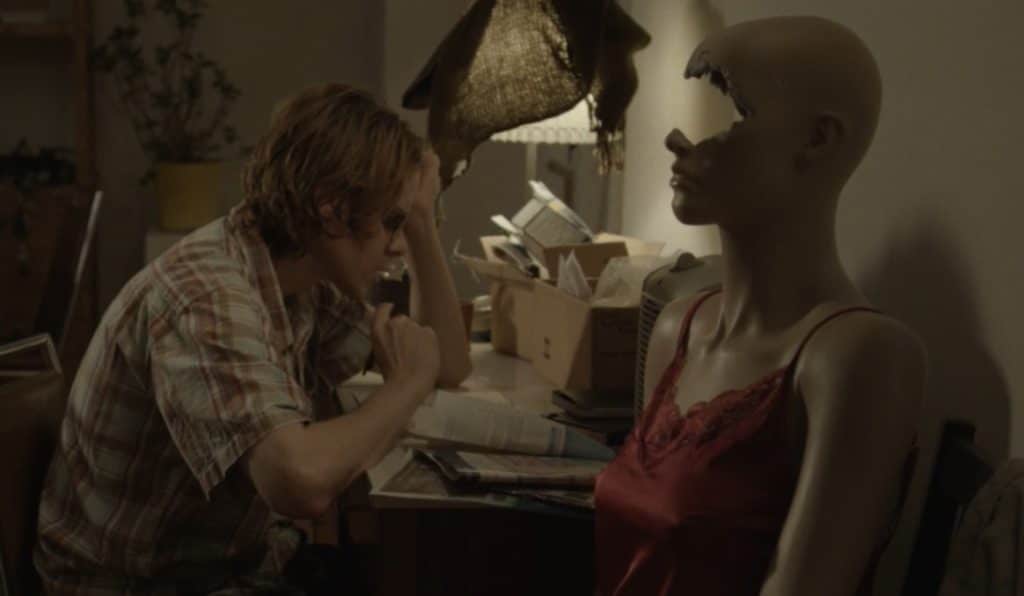
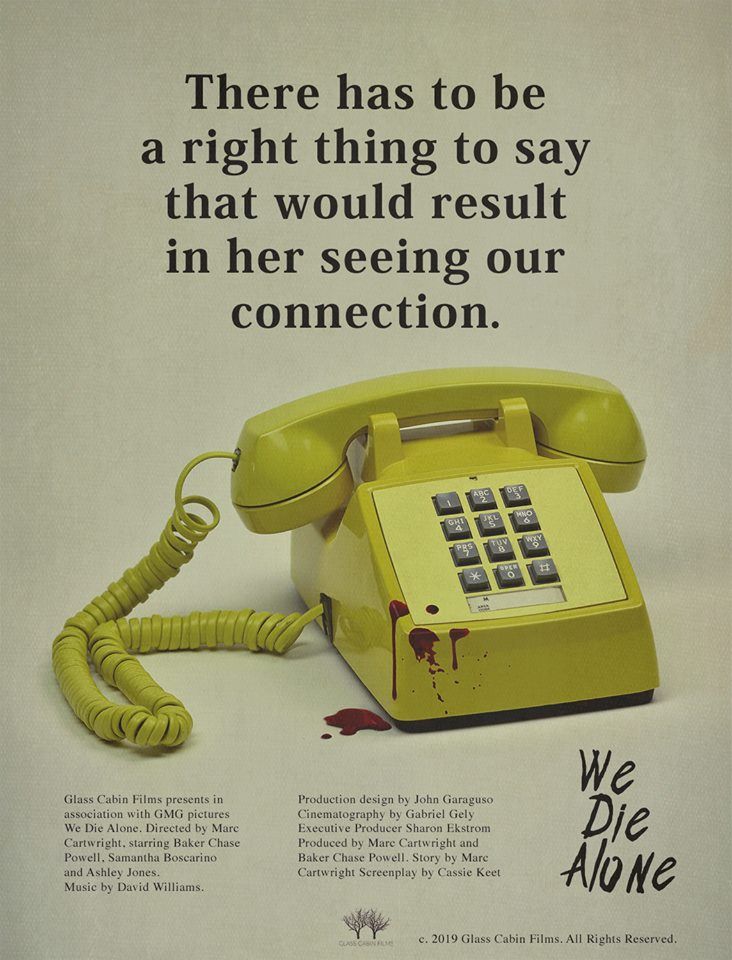
The first character we meet in We Die Alone is Aidan (Baker Chase Powell); he’s preparing for a date, and he’s nervous – so nervous that he is practising the same line, over and over. We never see him get to the restaurant; his nerves are so bad that he stands the girl up, receiving an angry voicemail as he trembles and self-loathes back at his apartment. This is, it seems, par for the course – and establishes one of the key themes of the film. It’s isolation, and the reasons why, in a hyper-connected world, some people find themselves so seemingly isolated.
Aidan goes back to his daily routine, working shifts at a thrift store and making polite, if friendly small talk with his co-worker Elaine (Ashley Jones). You get the impression that this could go on forever, but then by chance a new neighbour from across the hall named Chelsea (Samantha Boscarino) locks herself out of her apartment, asking for Aidan’s help to call the manager to let her back in. This, again by sheer coincidence, makes this the nearest thing Aidan has ever had to a blind date – perhaps in forever, given his behaviour. They even oddly hit it off via some shared interests. Aidan is then presented with a quandary: maintain the pretence of online dating, or take a shot at asking out his new neighbour – a woman he has at least already spoken to. Encouraged by Elaine, he begins trying to find a way to ask Chelsea out. But is a ‘yes’ really what Aidan wants or expects it to be?
Oh, my. You cannot help but feel an immediate sense of sympathy for Aidan: this is no incel, no entitled woman-hater, and in some respects he could be seen as an everyman figure for our times – nice, quiet, but in absolute turmoil just beneath the surface. However, for all that, he is unable to treat women like individuals. He learns one line, to parrot at every (or any) woman he gets near. You could imagine he’d be one of those guys who went on to say any girlfriend was ‘the female version’ of himself, so unable is he to see things from a different perspective than his limited own – women as proper equals are missing from this equation. In shades of Maniac (2012), he substitutes one girl’s face for another; the fantasy surpasses the potential reality. So in a very brief running time (just over twenty minutes, all in) We Die Alone successfully develops a nuanced character, vulnerable but flawed, sympathetic but teeth-grindingly wrongheaded. Similarly, you feel for Chelsea when her well-meaning friendly behaviour is misconstrued; you know something, something is going to give, and the film’s tight editing build and build this impression. It’s a tense watch.
On a deeper level, all the people in this film are in some kind of flux, and as such, it represents familiar aspects of modern life which offer fertile ground for horror stories. People are rootless, or lonely. They lie, or misrepresent themselves online. They want to use professional photos to generate ‘real’ connections. We Die Alone very successfully takes this modern malaise and plays with audience expectations, shifting perspectives and bringing different aspects of the story to the fore; to reiterate, this is a twenty-minute horror film which achieves what many features cannot. I can think of few films which riff so well on what at first seems a very straightforward set-up.
Utilising some deft touches and moments of repetition showing a clear sense of direction throughout, We Die Alone is a clever, economical short film. Its brutal pay off offers an equally deft punchline. Be careful what you wish for and be careful what you do in this world.
We Die Alone will be released to VOD on 21st August 2020.For more information about We Die Alone, please click here.
By pure chance, several of the most recent films I’ve watched have had elements in common: a certain kind of body-mod sci-fi has cropped up in films such as Parallax, with its riff on memory and mental states, and again in Peripheral, where one woman takes on futuristic tech in an attempt to maintain her sense of self. This brings me to Perfect (2018), which coincidentally blends all of these ideas; it’s a young man’s personal journey, refracted through futuristic tech and psychoactive add-ons. The resulting film is creative and visually-appealing, though plot is low in the mix.
We start with a young man who remains nameless throughout, only ever referred to in the credits as ‘Vessel 13’ (Garrett Wareing). Waking alongside a girl’s corpse and having no recollection of what has happened, he calls his mother in a panic. She (Abbie Cornish) comes to his aid, but rather than alerting the authorities, she decides it’s better to find her son a place in a remote clinic – somewhere she once received treatment, so that he can get ‘fixed’. The kinds of treatments offered vary, but fundamental to ‘the journey’ which he will be expected to take is the use of implants which distort (or is it improve?) perception.
However, whilst the other inmates seem to be making the kinds of progress required by the secretive organisation behind the clinic, known only to our young man by the voice which addresses him over his intercom, he struggles with it. He continues to suffer black-outs which hint darkly at the kinds of violence of which he’s capable, and although he forms a bond with another patient called Sarah, she rejects him – given his lack of progress. If this is his path, then it’s by no means a straightforward one and he is by no means assured of reaching the ‘perfect’ state he craves.
I will say that I’m not a fan of the monologue voiceover which underpins a good share of this film: I find the platitudes and self-help speak quite alienating, although I understand the need for it, given the rather lofty themes being explored. But what this film can boast above all is in its aesthetics – which are undeniably superb. From the look of the clinic itself – sparse, minimalist but augmented by a very specific style of technological hardware – through to the actors and their outfits (everyone in the film looks as though they could be cast in marble) and through to the incredibly lurid and imaginative psychoactive sequences, albeit that some of these do utilise the kind of retro-80s vibe so popular at the moment, this is a visually very attractive project throughout. There are some nods, perhaps, to Blade Runner – the kind of consumerism which offers items to ‘improve’ life – though in its developing levels of ordeal and body horror, there’s also some overlap with Starry Eyes. However, the story moves very slowly, to the point of being ponderous; the delivery of new implants tends towards being repetitive as the means of applying them is always the same, and there is very little exposition overall, even given the monologues which overlay proceedings. Perfect is very much a film for those who enjoy the experience of strong, creative visuals, happy to have those visuals wash over them for ninety minutes without reaching a marked crescendo of any kind.
This is science fiction which eschews high action and even characterisation, the better to have its complex themes play out in a visually-mesmerising way. It’s a sombre, reflective affair, existential rather than narrative-driven. Its creativity deserves praise, although there are some issues here for people who prefer their storylines a little more strongly-drawn.
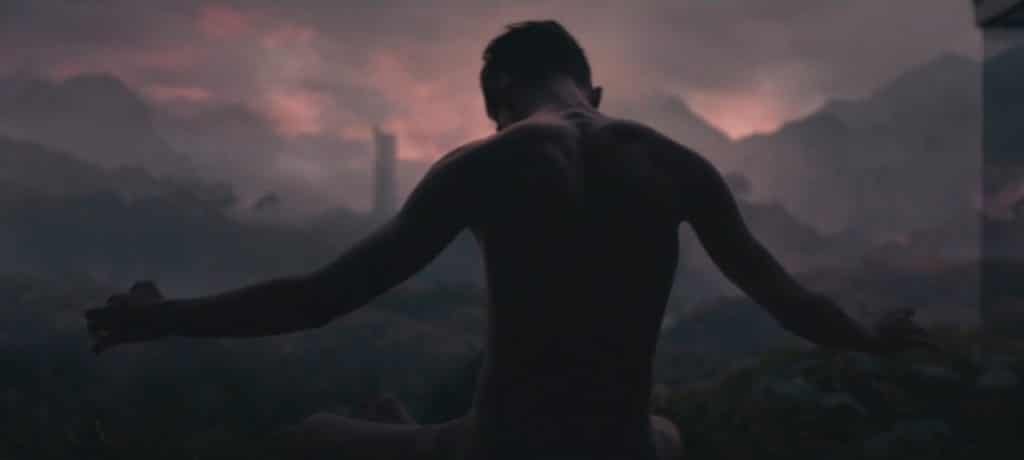
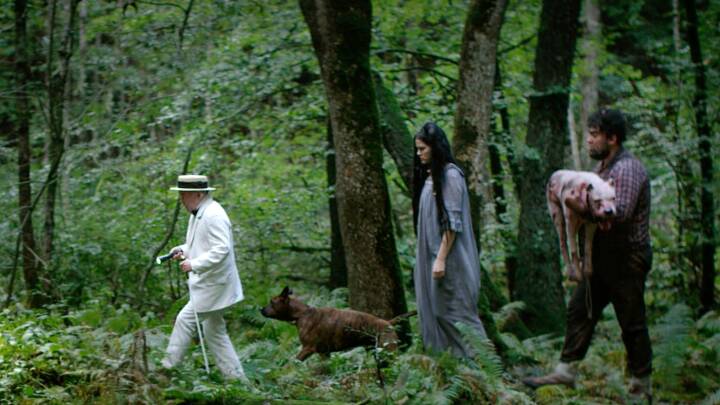
‘Koko-di koko-da’ – this is a tune sung by an oddly jaunty showman making his way through the woods with a group of equally odd companions, as the opening credits introduce us to this film. Koko-di Koko-da is an often challenging, if always creative watch which uses unorthodox means to explore very real experiences. Our odd little group remains in the woods – for now.
We shift our attention to a young family – father Tobias (Leif Edlund), mother Elin (Ylva Gallon) and daughter Maja (Katarina Jakobson), who are out for a day at the coast when Elin gets sick after eating some bad mussels. It’s serious enough that she needs to get airlifted to hospital, but she begins to recover, staying in hospital overnight (which means that it’s Maja’s eighth birthday when they wake up).
But they can’t wake her. In a genuinely upsetting long take, they realise that Maja has died in her sleep after eating some of the same mussels as her mother. An abrupt cut silences Elin’s desperate screams and time, it seems, has passed. Without the anchor of their mutual love for their daughter, Tobias and Elin’s relationship has lurched into the petty and the peevish. Negative gender stereotypes abound: Elin has turned into a passive-aggressive complainer, Tobias into a blend of heroic masculinity and sullen torpor. Perhaps because of this – or perhaps despite this – they have decided to go on a camping trip to try and reconnect with one another. Early signs are not promising.
Worse still, the strange band of people from the opening credits arrive on-site and they are savagely, pointlessly cruel, treating the pursuit and torture of the pair as a pastime: you get the impression they have done this many times before, so assured are they in their actions. Or are they? What are they? Overlaying a genuine, realistic portrayal of grief, Koko-di Koko-da transforms into a circular fever dream of power and powerlessness.
Even attempting to look past the tragic central event which underpins the issues which plague Tobias and Elin, this is potentially a deeply unsettling viewing experience for an audience. The film moves forwards and backwards in time, unpicking previous scenes, repeating other scenes and destabilising the narrative throughout. The magical, the optimistic, or even the faintly normal gives way endlessly to harsh (un)realities; for example an animated insert, providing a childlike way of expressing the unpalatable, is brought back down to earth with a loud bump. Like a scale tipping first one way and then another, the film displaces moments of calm in favour of something startling – though as it progresses, even the moments of calm are horrifying, a waiting game for the next ordeal. The characters who appear from the darkness to torment the couple are an interesting group, acting like a new, dark fairy tale version of the stages of grief: the animal, the mute, the brute and the showman encapsulating a range of covert feelings or ways of behaving.
Bringing this back down to earth even more sharply is the fact that Tobias and Elin are far from sympathetic characters for large parts of this film. Yes, their love for their daughter is clear, but without her they are not the same people and seem fated to go through the same process forever, never understanding it or undergoing the kind of awakening you expect, even in such surreal styles of storytelling. Tobias, however, does start to realise something is going on as the overnight camping trip goes on and on and on, and he tries to break the cycle – though he does this purely selfishly at first, with Elin going through a stage during the mid-point of the film where she seems less and less like a character in her own right at all, just an annoying, inert being who fails to understand Tobias’s alarm. This impression of her is dispensed with it a truly beautiful, truly moving sequence later in the film, one of the finest developments on offer here.
Koko-di Koko-da is a relentless exploration of loss, where new miseries and terrors overlap the old and realism jostles for position with the surreal. Much of it has a kind of Waiting for Godot vibe, in the sense that you have two people trapped in the question, ‘how do we ever move on?’ However, the grisly, nightmarish aspects of the film transform the question into something altogether more pressing and fearful. This is by no means an easy, enjoyable watch and god knows it’s not for everyone, but it’s always a thought-provoking experience.
Koko-di Koko-da will be exclusively released to BFI player, Blu-ray and digital on 7 September 2020. For more information, click here.
1BR, which I reviewed recently, was one of those great screeners which managed to surprise me whilst clearly also paying due respect to existing genre features. This is a skill which not everyone can demonstrate, much less in their debut feature, so I reached out to the director, David Marmor, to find out a little more about the world of 1BR and the experience of bringing it to the screen…
1) So for your very first feature, you chose to go with a horror/thriller. What was it that drew you to this genre? I hope it won’t be a disappointing answer to say it was kind of just luck. It wasn’t a strategic decision at all. I love horror movies, but had never written one until 1BR.
I actually never think about genre when I’m starting a new project. Usually once I know what the story is, it will naturally feel like one genre or another, and that was definitely the case with 1BR. When it started taking shape in my mind, it always had a nightmare feeling, and seemed to clearly want to be horror, so I embraced that.
That turned out to be really lucky, I think, as I’ve learned in retrospect that horror is one of the few genres where you have a chance of breaking through with something very low-budget and with no “name” stars. We also discovered the wonderfully passionate world of horror fans, who are such an engaged and warm (if you’ll forgive me) community.
2) Why LA? Los Angeles is an important setting for 1BR, and it’s often held up to be the ultimate ‘American Dream’ city, though there’s a different side to it. Was it important to you to set your film there, and why? Originally, the script was set in Los Angeles simply because the story was inspired by the apartment I lived in when I first moved to L.A. So when I started writing, I just kept things as close to reality as possible. But as I worked on it, I realized L.A. was actually integral to the story. I think you’re completely right to say that L.A. is the ultimate “American Dream” city. It’s full of people who have moved away from everyone they know, pursuing improbable dreams, trying to reinvent themselves. We hear about the few who succeed spectacularly, but the fact is most people in L.A. have not “made it” and many never will. It’s a city of people struggling alone, far from family and friends (as I was when I started writing the script), and I found it uniquely potent as a setting that Sarah would find seductive as well as desperately lonely.
3) 1BR touches upon ideas of cults, communes and closed communities which operate under often very punitive rules and regulations. What drew you to that as a theme, and how did you navigate the line between real-life precedent and fantasy? I’ve long been fascinated by fringe communities, and it turns out L.A. has been very fertile ground for these types of groups, probably in part because of the loneliness I’ve just talked about. So it felt natural to connect the two thoughts, and that was really where the idea of the movie first came from. I started with this basic idea, of an extreme community operating in the most normal of settings, and as I wrote, I found that it just kept branching out, adding layers to the story, and resonating to me as a metaphor for my own ambivalence about the trade-offs we make to be part of society.
As far as walking the line between reality and fantasy, my instinct is generally to stick as close to reality as possible, and only embellish when the story demands it. In this case, that turned out to be sadly little. Almost all the awful things that happen to Sarah are drawn from real life examples, either from real cults, or from interrogation techniques used by the U.S. military and others.
4) Did you draw on any specific cinematic influences for 1BR? Oh yes, too many to list here! Of course in making a movie like this I couldn’t help but be influenced by Roman Polanski’s Apartment Trilogy (Repulsion, Rosemary’s Baby, The Tenant). I also studied Darren Aronofsky’s brilliant Black Swan closely for how it keeps the audience in the protagonist’s point-of-view. I’m generally always influenced by Stanley Kubrick, and there’s a good deal of A Clockwork Orange in 1BR as well. In less specific ways, I was also influenced by movies like Caché, Invasion of the Body Snatchers, The Texas Chain Saw Massacre, and many, many others…
5) What has your first experience of writing/directing a feature taught you? And what would you like to go on and do next? I don’t know if there’s any film education as intense as making a first feature. In just those fifteen shooting days, I think I learned as much as I ever did in film school.
Maybe the most important lesson was to let go of my perfectionist tendencies. We were so limited in time and money, and had to make so many compromises all the way along, it would’ve been a recipe for insanity if I’d tried to cling to the idealized version of the movie in my head. At some point early on, I realized all I could do was fight for the most important things and let go of the rest.
Even that wasn’t always easy, given the disasters we experienced (our producer, Alok Mishra, has written an entire article for MovieMaker Magazine about this, but a few of the lowlights included losing three lead actors a few days before shooting; being shut down by wildfires; and having an equipment truck stolen in the middle of the night). But in a way I’m grateful for the chaos, because it forced me to learn to put everything else aside, trust the producers to keep us afloat, and focus on carving out a positive, creative space on set where the cast and crew could do their best work.
A smaller lesson, but just as important for me, was to pace myself. Even a shoot as short as ours is a marathon, and it was really important to learn to be disciplined about sleep, and to make sure to find moments to be alone and quiet so I could stay focused over the entire length of the production. As for what I’d like to do next, 1BR was so harrowing and exhausting it probably took years off my life–and all I want is to do it again as soon as possible! I’m actually working with the same producers on my next feature, which is very different, a science-fiction thriller on a much bigger scale. Alok has forbidden me to say any more about it for now, but I can say it’s a script I’ve been working on for years and I couldn’t be more excited to make it. (Whenever we get to start making movies again in a post-Covid world!)
6) Sounds great! Before we wrap this up, do you have any other comments? I’d just like to thank everyone, yourself included, who has embraced our little movie. The reception we’ve gotten has been beyond anything I’d hoped for, and I’ll be forever grateful to the festival programmers who took a chance on us, the genre press who have gotten the word out, and the fans who have taken a chance on this movie. It means the world to me!
Massive thanks to David Marmor, Alok Mishra and the team behind 1BR. To find out more about the film, check out the official account on Twitter: @1BR_Film