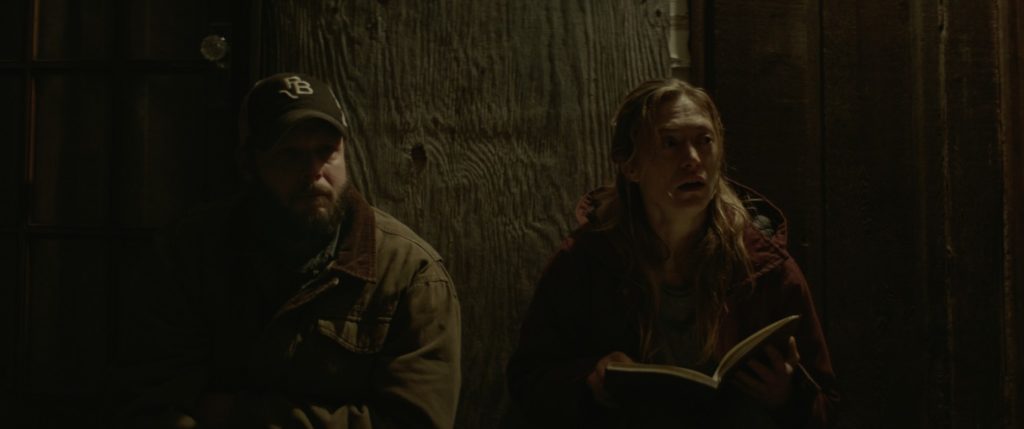
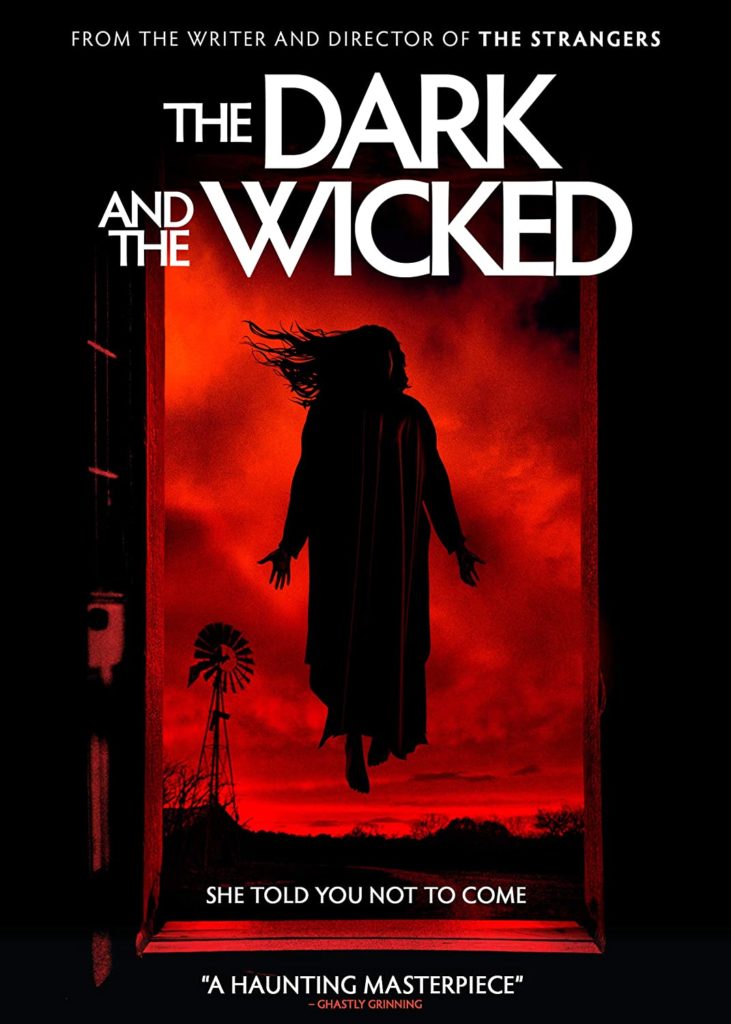
In rural Texas, grown siblings Louise (Marin Ireland) and Michael (Michael Abbott Jr) have returned to the family farm, knowing that their father is close to death. Their arrival is, however, no cause for celebration and the reunion is strained; their mother tells them that they shouldn’t have come at all. Even so, and through their concern for her, Louise and Michael notice that something seems strange about the old place. Here at least they might agree with Mom (Louise Oliver-Touchstone), who has also been hearing things and seeing things on the periphery of her vision. Is this as a result of overweening stress and grief, or something more?
The answer to this, from the matriarch at least, is a resounding ‘yes’, and in her absence, her children try to piece together what has taken place, relying heavily on her old diaries – which talk about a presence, a menacing entity of some kind which has a claim on her and her husband, too. Now Louise and Michael are left with the same ominous phenomena closing in on them, and the not-insignificant issue of what to do with their ailing father. We know little about this brother and sister, beyond the fact that they’ve come from somewhere else back to here, and we can infer that their relationship with their parents has been sparse: The Dark and the Wicked is no character study, but the sense of doom is always tangible.
What the film focuses on is atmosphere, and the film signposts this from the very opening scenes. For example, it denies the viewer clear shots of people’s faces, using shadow, or shifting focus, or macro shots of objects; add to this the frequent use of low light, and you are rarely permitted to get your bearings, or see what the burgeoning horror content is doing to the people in the house (which happens to to be director Bryan Bertino’s own family estate). As a welcome contrast, the outdoor shots are very beautiful, making the best of the film’s rural Texan location and allowing the odd moment of respite.
So the film looks very attractive, and clear care has gone into the framing of its shots. It isn’t always as quiet as it starts out, though. It builds up to a differing, and to an extent competing approach, alternating the ominous elements with sudden shifts in pace which have far more in common with Bertino’s prior work (particular his writing and directing duties on The Strangers in 2008 – there are parallels here). The Dark and the Wicked pulls off some successful shocks and, at least initially, these are a welcome shake-up. A motif is soon established, however; once you have been startled by one figure-who-turns-out-to-be-a-vision-of-evil, you’ll settle down once you realise more are coming, particularly all behaving in a similar way. Thereafter, the movement between ponderous foreboding and fast-edit shock beds in.
The notion of a darkness clustering around a matriarch figure, a rurally-isolated older woman who tries to make sense of her experiences through her own writing, feels so familiar because I reviewed a very similar film called Sator recently; that’s no fault of The Dark and the Wicked of course, but things with the newer release definitely feel like deja-vu in some aspects. Admittedly, Sator is even less clearly-organised around a coherent narrative, but the visuals and atmospherics certainly overlap in a series of ways. Likewise, some of the pitfalls are the same. If you happen to enjoy this kind of relentlessly dour occult horror where its pet scenes take priority over clear, demarcated events on-screen, then The Dark and the Wicked fits the bill: it knows what it is, it unfolds well overall with some effectively creepy scenes and it keeps a careful hold over its strong aesthetic values throughout.
The Dark and the Wicked (2020) arrives on Blu-ray, DVD and digital on 5th July 2021.
The death of a loved one is undoubtedly a difficult time, but just as undoubtedly, a lot of the difficulties stem not from straightforward grief, but from the suddenly pertinent issue of money. Only weddings kick up as much dirt. Whether settling debts, distributing legacies, or selling property – or more usually, arguing about all of those things – nothing moves faster than a relative with a claim. Rock, Paper and Scissors (Piedra, Papel y Tijera) takes an oblique look at all of this, and is by turns an unsettling, often darkly funny piece of film, albeit that some of its initial promise dissipates, moving for a long stretch into something more surreal in nature. However, references to The Wizard of Oz abound, and that film’s focus on the importance of home – as well as its child-like, unreal and possibly allegorical world – run throughout, lending Rock, Paper and Scissors a tangible precedent.
After the death of her father, who had been disabled and ill for some time, Magdalena (Agustina Cerviño) arrives at the Argentina home which he shared with her two half-siblings, María José (Valeria Giorcelli) and Jesús (Pablo Sigal). They are politely pleased to see her, though they say they would have been better-prepared, had they known she was coming; Magdalena points out that she’s been ringing and ringing, getting no reply. This, together with María José’s preference for re-watching The Wizard of Oz instead of ever answering the door, indicates that something’s not quite right. Still, Magdalena is invited to stay the night. She’s not planning to be around for long, she tells them, as she’s just there to help them sort out the paperwork relating to the inevitable upcoming house sale and her share in the profits…
This would have gone down poorly with anyone, let alone the siblings who were tasked with round-the-clock care for their father whilst their older sister trod the boards in sunny Spain, but María José and Jesús seem fairly amenable – that is until, oh dear, Magdalena takes a serious fall down the stairs on her way out of the door.
Did she fall, or was she pushed? That is never entirely clear, but she’s badly hurt and gets tucked up in bed to recuperate (hospital is apparently out of the question). She’s now very vulnerable to the attentions of her brother and sister, who seem to each take turns, one seeming reasonable, one seeming unhinged; although the initial high action quickly dissipates (hard not to when someone is essentially confined to their bed) things remain tense, as each character’s motivations remain doubtful. Maria is a dutiful nurse, but a woman completely detached from the outside world; Jesús is far more well-rounded and sympathetic, right up until he isn’t, and each of these three vacillate in their feelings about one another. Comparisons to Misery (1990) are hard not to make, and there are many similarities in the basic set-up. Certainly, Annie and Maria aren’t a million miles apart, each obsessing over a fantasy, whilst getting on with the hands-on business of looking after a vulnerable person who may well be in that state because of them in the first place. But things get more interesting where Magdalena starts to exploit weaknesses and doubts in these family relationships; they all know one another and have axes to grind. This gives the film many of its strongest developments, and personally, I think there was scope for more here – the shifts between the unfolding situation and Jesús’ attempts at filmmaking, surreal add-ons though they were, felt less engaging overall. This is really a story of family relationships and there was definitely more to explore, preferably through Magdalena’s pithy psychological warfare.
Still, as a film unfolding in one setting, you’d hope that the house itself provided plenty of interest, and it does. Somewhere between grand and quaint (with marble floors but mundane clutter), it’s both homely and yet bizarrely cut off from the outside world, an outside world we never ever see. Alongside the references to Oz, religion underpins the film too, in the house’s Catholic iconography and in the beliefs of its inmates – this is as close as we get to another place outside the front door. Against this backdrop, alliances are forged and broken, characters shift and change and Magdalena does whatever she can to escape the situation she is now in. Narrative events are slow to come along during the middle act of this film, but in the meantime, the characters do have enough about them to keep you wondering about their eventual fates, as well as the back stories which are only hinted at.
Rock, Paper and Scissors is, after all, a slow-burn family drama, one which dips into dreamlike horror in some respects. Solid performances, particularly from the ambiguous María José, and strong visuals help to sustain the film’s ghastly spin on family politics. And, if it has any lessons for us at all, it’s to always pack the correct phone charger when heading off to see estranged relatives. You just never know.
Rock, Paper and Scissors will be available On Demand on July 6th 2021 from Dark Star Pictures.
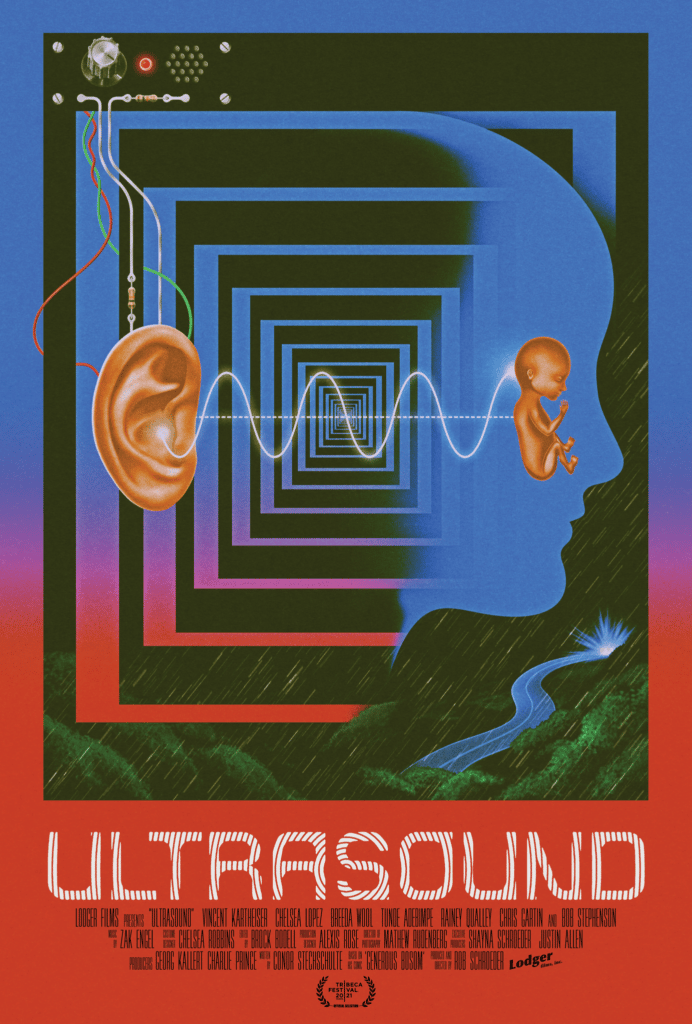
Science fiction has become increasingly sombre of late. That’s not to say it hasn’t always explored the intricacies of human interaction in some pretty heavy ways, but it at least feels as though this more often happened against a backdrop of bigger-picture world building, rather than the more intimate films we see more now. Step forward, Ultrasound (2021), an intricate and sensitive, if often gruelling, exploration of memory and certainty. It’s by no means an easy watching experience, but it is strangely compelling, and would certainly have much to reward a second viewing. Just as its key characters are often perplexed by events unfolding around them, so the audience is, too.
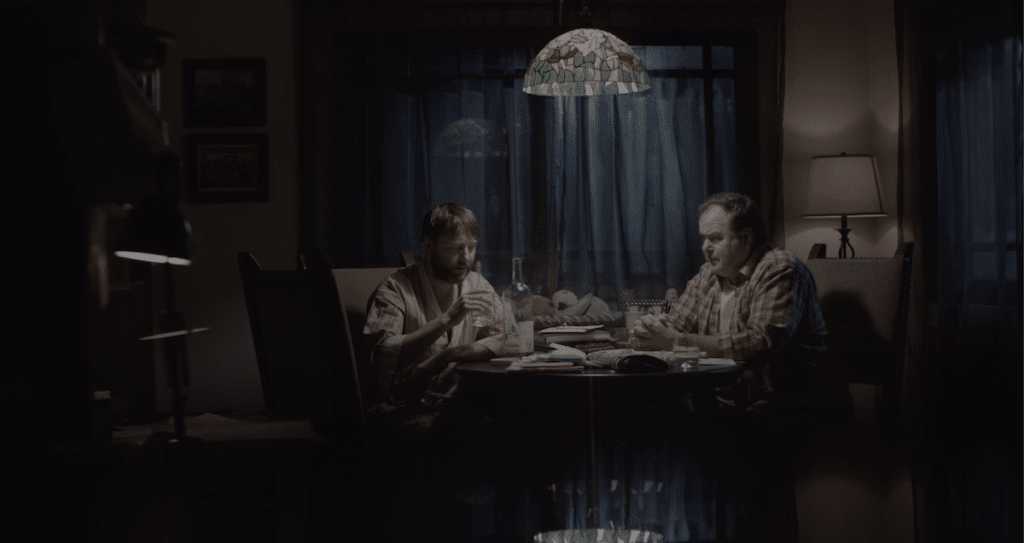
Through film noir levels of rain and darkness, a car, already driving erratically, hits a discarded piece of wood spiked with nails and gets a flat. The driver, Glen (Vincent Kartheiser) finds himself stranded, and so seeks shelter at a nearby house. In one of the film’s rarer light-hearted sequences, the homeowners are very sympathetic and helpful; given the late hour and the lack of garages anywhere near, Art (Bob Stephenson) and his young wife Cyndi (Breeda Wool) suggest that Glen spends the night. They actually seem to relish having a guest; well, Art does, though Cyndi is more reticent. The affable Art cracks open a bottle and he and Glen pour a few drinks. Glen soon starts to feel woozy, whether through the alcohol or the sudden impact of the car accident, but he’s about to feel more disorientated when Art suggests that Glen should take the bed in the master bedroom, while he sleeps on the couch. Oh, Cyndi’s in there, but not to worry; Art says he’s seen the way they looked at one another, and he’s not jealous.
Few things are crystal clear in this film, but the sense of something potentially sinister going on is very carefully doled out, expressed in conversations which are very organic and low-key, never grandstanding. Glen feels that he can’t really say no, in these odd circumstances, but he gets talking to Cyndi, and does feel a connection with her and her quiet, sad history. The story of Glen, Cyndi and Art begins to overlap with other story elements: there’s Katie (Rainey Qualley), a woman who would love a greater share of time and respect from her boyfriend, whose political position is keeping him away – or is there a different reason behind his behaviour? Stranger still, all of these interactions seem to be of interest to an at-first unseen group of people with some kind of experimental interest in Glen and Cyndi; it even seems that conversations between the latter are somehow known to those who watch them, or even under their control altogether. But where does Art fit in? And Katie?
Revelatory moments are held back in Ultrasound, either presented in a blink-and-miss-it format to be revisited later, or avoided altogether for as long as possible – so that characters blur together, events are never really stable, and elements of the narrative overlap. It’s not until over an hour into the film that I could get any sort of a handle on proceedings, with the experience up until this point feeling like a puzzle box – not easy, not necessarily straightforward, but engaging, even if frustrating too. From that hour until the film’s close, the ideas and the explication move rather more quickly, with more familiar fare as the role of science and to an extent, pseudoscience is examined: its highly ambiguous, manipulative aspects are, it turns out, the bedrock of what has been going on here.
There’s a lot of scope within the film’s central premise, and it’s largely carefully constructed, even when close to bursting with ideas which just needed a bit more explication to really round things off. Ultrasound takes concentration, though it still successfully places itself as a discomfiting watch – especially with its later positioning as an auditory nightmare. If it has any precedents, I’d think of last year’s Possessor, with its own study of the struggle for bodily and psychological autonomy, the idea of ordinary people suffering for others via technological developments. There’s less emphasis on body horror here, though, and more of a study of very ordinary people against increasingly alienating subtexts. I’ve seen it described elsewhere as pulpy, but its tone didn’t feel that way to me.
Ultrasound is director Rob Schroeder’s first ever feature, and a great leap apart from the short films he’s directed previously in terms of style and genre; alongside a first-time writer, Conor Stechschulte, they’ve clearly set out to do a wealth of things with this project, most of which land. As a cold, cynical exploration of human interactions, it’s definitely the ticket, and certainly fits in with that more introspective, detached style of sci-fi taking hold of the genre now.
Ultrasound (2021) receives its world premier at Tribeca Film Festival, Tuesday June 15th. For more information please click here.
Our fascination, as film fans, with the extraordinary era of the ‘video nasty’ continues unabated. Perhaps then, it’s fully understandable that films and filmmakers themselves display the same fascination; the lure of the heady mix of frenetic output, myth-building, mass appeal, liberal ignition and the puritanical pushback of the 80s is irresistible. That goes for people who remember the era personally, or simply feel that they do thanks to its role in cinema history. Now, a particular subset of films looks at the era in a more specific way; they explore the fantastical possibility that the puritans could have been right to be concerned. What if there was something else going on? What if, on some level, there was real harm? It’s the same thinking which has informed persistent rumours of snuff movies and cursed films; such was the sea-change back then.
Censor (2021) explores those boundaries between reality, fiction and video nasty, and as such it belongs to an existing subgenre of contemporary horror films; the key difference is in how it does what it does. For starters, Censor takes the bold decision to humanise a film censor (working for the BBFC in all but name). These characters have long been, and often fairly so, folk devils to horror fans – but Enid (Niamh Algar) is immediately represented as someone who just wants to do their job well, whatever you might think of that job. She is a woman living through interesting times, with the dawn of home video, moral panics and backlash; rather than feeling drunk on power, Enid feels that she is, somehow, ‘keeping people safe’. How does a diligent young woman take such meticulous notes about the kinds and durations of on-screen murder scenes she sees, whilst remaining so completely detached from them? It’s soon apparent that it’s all something of a proxy; her personal life is strained, particularly her relationship with her parents. Her younger sister Nina went missing when they were both children; Enid’s parents are desperate to move on, but Enid cannot.
Enid’s emotional distance from the day job is soon afterwards tested: a real-life crime has apparently emulated a video nasty, one which she and a colleague recently passed for release. Significant cuts or not, this is her direct responsibility, or so it seems. The UK press are, of course, on it immediately; this ‘Amnesiac Killer’ is blamed on Enid personally, and the thought that she’s at fault precipitates a crisis point which feeds into her next gig, viewing an unusually eerie nasty by cult director, Frederick North. The film calls troubling memories to mind – but is that all? Enid begins to doubt; something about this mysterious filmmaker and his roster seems familiar somehow.
Censor has some serious heft behind it in the triumvirate of BFI, Film 4 and Ffilm Cymru Wales: speaking of BFI in particular, they have recent form with similarly bizarre, if aesthetically-gorgeous horrors and fantasies, with In Fabric (2018) and Undergods (2020) coming to mind. Censor has a lot of the same juxtaposition of rich visuals and stark scenes as both of those films, and it looks wonderful throughout. (There’s something of Saint Maud in Censor as well.) Thankfully, its representation of the 1980s goes beyond the standard overreliance on big tellies and big glasses (though both are present in Censor; the prerequisite indie cinema nod to analogue at least makes perfect sense here). Its subtleties are incredibly well-observed, and recognisable. Little things…the quality of outdoor electric light, for instance, something I just about remember from the before-times when subways etc. were still lit by analogue bulbs; the world was just lit differently. It looked different. Then there’s the barely-there use of contemporary news broadcasts and the nods to some of the debates and discourse which were bubbling along beneath the surface of polite society, though these never obliterate the creeping sense of the horror to come. It certainly looks the part. It calls to other elements from the before-times, too; remember having to store information about films in our memories, rather than relying on IMDb to do the job for us? By no means is Censor a simple nostalgia piece, but its other strengths wouldn’t work if its basic premise was tawdry or simply unbelievable.
Its dialogue works seamlessly too – at least, for the first couple of acts, seeing as the script recedes as more surreal elements creep into the fore. It all feels very British somehow, the way the profound jostles with the deeply mundane; for example, a censor goes from showing off his knowledge about art and culture to the worldly concerns of trimming a torture scene; Enid’s parents go straight from a chat about Nina’s death certificate to meal recommendations. It’s economical, and often very funny too. Another key element is in how it uses the ‘film within a film’ idea, as this is integral to Censor from the very start as the censors do their thing, and increasingly so as Enid grows fascinated with the work of Frederick North. Reality and fantasy begin to blend, albeit in a low key way; the films shown are no simple ‘invented trailer reel’ style affair. Gradually, Enid’s real life begins to be lit and framed like a genre film, such as when the camera captures her walking down corridors and subways, or anxiously answering the phone: with one or two shaky set pieces aside as the film moves towards its conclusion, fantasy and reality become fully one and the same and this all leads to a very effective end sequence. There’s a lot to unpack here, and it’s a film which would definitely reward a second viewing.
Censor is undeniably a horror film, but one which is able to sustain a wealth of elements throughout. It’s well-realised, thoughtful and provocative, with a subtle emotional intelligence that is both stylish and nightmarish.
Magnet Releasing will release CENSOR in US theatres on June 11th, 2021. On Demand: June 18th, 2021.
2018’s A Quiet Place was an excellent film, emerging out of the minor trend for sensory deprivation horror – such as Pitch Black, Don’t Breathe, Birdbox – but using as the basis for its own horrors sound, rather than sight. Added to this, it placed the audience straight into a monster mythos, with no information about its origins. It just was. The world had been decimated by creatures which hunted by sound alone; the Abbott family had managed to survive, largely through their ability to use sign language, learned in order to communicate with daughter Regan, who is Deaf (and is played by a Deaf actress, Millicent Simmonds, in both of the films to date). However, their losses had already been severe, and Evelyn’s pregnancy and imminent birth precipitate an insurmountable risk; babies are quite hard to keep quiet. But, a chance discovery allows the family to fight back; at the close of the first film, things looked if not quite hopeful, then marginally less desperate, and the expression on actor Emily Blunt’s face as she realises what she can do is a superb way to bring the first film to a close.
I say ‘first film’, as it transpires that a third chapter of A Quiet Place has already been green-lit, with a release date for 2023. This has no doubt affected what’s been included in Part II; there is no great pressure to explain everything, or even to offer that much additional context for audiences. There is some, though in some respects the back story elements offered raise as many questions as they answer. Rather, A Quiet Place Part II sticks to the formula which worked for the first chapter, doling out only a little in the way of significant knowledge about these creatures, but sticking with the remaining members of the Abbott family and their struggle for survival. Some of this is a little repetitive in terms of plot points, but you can forgive that because it’s paced very well, the family is as likeable and plausible as they ever were, and let’s be honest: the creatures themselves are a welcome addition to our existing array of cold-hearted super predators. What is lacking in terms of what their game plan actually is apart from ‘rip everybody apart for sport’ is offset by some interesting creature design, strong action sequences and conversely, lots of solid, slow-burn suspense. These critters can do it all.
Part II begins after the first film left off, with what’s left of the safe house; despite having killed the creatures which were in the local vicinity, Evelyn knows they can’t just stay where they are and so the family takes part in that staple of apocalyptic cinema, the Long Walk. (Think The Road.) The film does, though, give us a glimpse of what life was like before the creatures appeared, with father Lee (director and Mr Emily Blunt, John Krasinski) back with us, at least in flashback; one of the things which the film excels at is contrast, so the lively, everyday scenes giving way to absolute chaos work very well against scenes from the aftermath, where silence is paramount. That all being said, A Quiet Place Part II is an audiophile’s dream, particularly if you are lucky enough to see the film in surround sound; sound is used very carefully and precisely, and the range of high action and quiet tension play off one another very well indeed.
Do we find out anything significant about the creatures themselves? Well, something is revealed, though you have to wait for it, but perhaps more to the point there is some evidence of other survivors – via a song on a radio channel playing on loop, which seems to indicate a clue about the survivors’ whereabouts and a new location to find. There’s also a new character to contend with in the form of Emmett (Cillian Murphy), a man we are shown early on as a friend of the family. This allows the film to ponder different responses to the extraordinary circumstances these people have found themselves in, essentially individualism vs collectivism, and Emmett’s progression from a closed-off character ready to level a gun at a child, to a very different man by the film’s close is a good addition, especially given the dwindling number of Abbotts left. The family group splits up, too, which allows the plot to encompass different details and revelations, as well as upping the ante in terms of creature encounters – which the film does not scrimp on.
It remains to be seen whether more exposition is coming in what will surely be the final part of this story, a couple of years from now; that being said, not everything needs to be neatly tied up and the films to date certainly haven’t suffered by not explaining absolutely every element. Parts I and II do mirror each other, with the middle chapter spending a good amount of its run time echoing similar crises and scenes too, but at no point did this feel dull: Krasinski, who has presided over two very good films here, has shown himself adept at balancing human drama and relationships against supernatural threat and often grisly content. He has, however, stood down from Part III, with Jeff Nichols currently named as director: I sincerely hope that this shift doesn’t scupper what has been built so far, but it’s clear that Nichols will have very big boots to fill and lots of decisions to make.
A Quiet Place Part II is available in cinemas now.
If society gets the kind of horror which reflects and distorts its worst nightmares, then it seems these days that we’re the monsters – isolated, repressed and sinking fast. Open Your Eyes (2021) certainly fits into this category, and does a lot with its minimal elements, despite a couple of lulls here and there. After a tense introduction, we meet our lead, Jason (a very able Ry Barrett), who seems to be busying himself with a wealth of mundane, everyday activities; oh, wait, he’s a writer, so this is good, honest procrastination. A first draft of his newest screenplay is due imminently, so naturally he can’t get a thing done, no matter how much coffee he brews. We’re privy to him sat, listless, staring at his laptop. Some might say that Jason’s creative torpor, from the depths of his claustrophobic apartment, is horror enough, and perhaps it could have been.
But there seems to be more going on than simple writer’s block. Waking suddenly after pulling an all-nighter, he notices some strange marks running down one of the apartment walls. With no idea where this is coming from, he attempts to investigate by asking his upstairs neighbour, but there’s no reply; if this is a leak, then it’s not going to get resolved any time soon. Then he begins to notice things, things which may or may not be there. The beginnings of a friendship, perhaps even a relationship with his pretty neighbour Lisa (Joanna Saul) shows potential as a distraction but when he spends time with her, the strange experiences seem to increase, making it increasingly difficult to hope for more. Meanwhile, as the phenomena increase, his feelings of panic and unhappiness escalate.
It always strikes me as a big gamble when a film starts with what is clearly a climactic moment, be it the ending or at least something far nearer to the ending, and this is something which Open Your Eyes risks by doing. Jason is shown to us first off struggling with something and in some state of acute distress, before we are whisked to a clearly different moment in time – i.e. the procrastination scenes, which occur in the first few minutes. Not only does this dispense with some element of surprise, but the film gives itself the task of convincingly developing tension up to a point which we already know something about. All in all, it has the potential to flounder. Open Your Eyes does, all in all, avoid these pitfalls. Economical by its nature, with a tiny set and usually only one actor on screen, it has a long way to go to maintain audience engagement, but it manages with only a few short lapses: this is pretty impressive, and it’s also relevant that the film has a fairly solid run time for so few changes of scene or interactions between actors, and it largely handles this too. A good deal of the credit for this must go to Barrett, who may have a few too many instances of “Fuck!” and “Goddamnit!” in his early script, but still shows that he is equal to the shades of irritation, boredom, disbelief and, finally, alarm and fear in store. In terms of the building blocks of this film, I did find the constantly booming (or whimsical) soundtrack a little grating where it seemed to be constantly implying something dreadful was about to come; it worked far better towards the end of the film, and for me, the quietly creepy scenes were the genuinely unnerving ones.
Overall, though, it’s the aspects of overlap between art – particularly writing, given the narrative – and reality which give Open Your Eyes its most intriguing content, even if the film comes at it quite obliquely. To say more would give the game away, but it adds a very worthwhile depth to the film overall. The ‘monster psyche’ idea has been done elsewhere, but Open Your Eyes deserves its place amongst those films which have looked at similar ideas. There are some engaging twists and turns from this stylish indie movie.
Open Your Eyes (2021) is available now on VOD, DVD & Blu-ray from Gravitas Ventures.
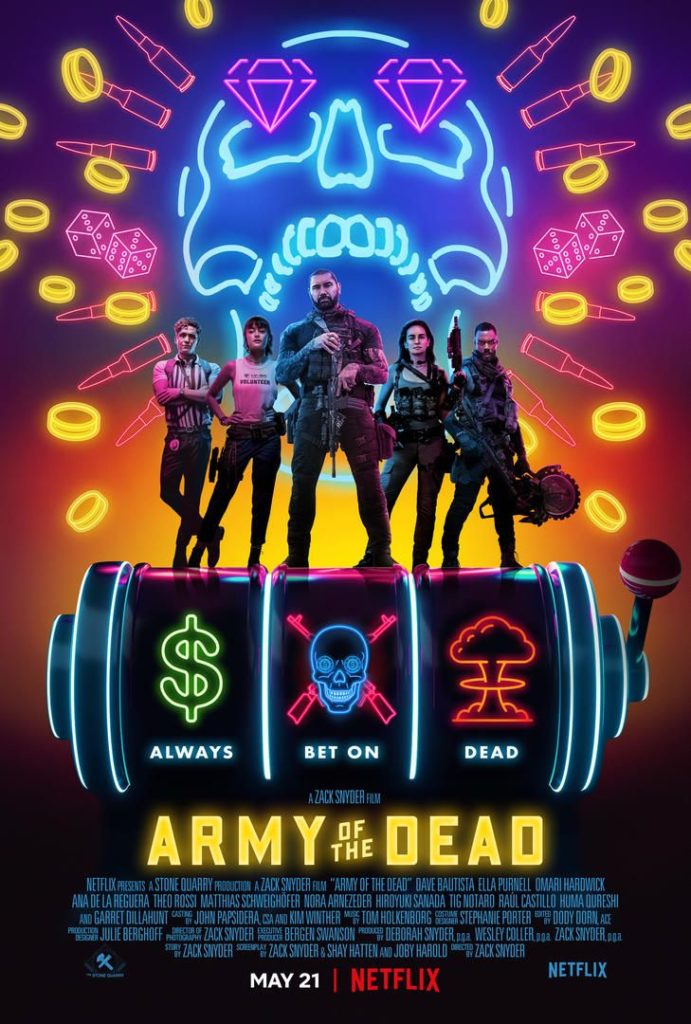
This is an opinion article about Army of the Dead which contains spoilers.
Here in the UK, we’ve been under a pretty protracted Covid lockdown which is only just coming to an end. Somehow, I managed to get to a film festival last October, narrowly missing the all-out lockdown which was to follow, whilst having to navigate what turns out to have been a pretty ineffective ‘tier’ system, but I’m not knocking it: I’m glad I got to go. Still, last October feels like a long time ago, so I was really looking forward to getting out to a cinema again. Excitedly, last week I checked the listings for what was to come.
The results were not great. Whilst one of the smaller local cinemas was showing the new Saw-adjacent film, everything else was misery, misery, misery – and not fantasy misery, but real, recognisable, worldly misery. Having just lived through a third lockdown, I was really rather looking forward to some escapism, not a ‘thought-provoking’ or ‘hard-hitting’ array of socially-conscious dramas. Most of 2021 so far had been a thought-provoking, hard-hitting socially-conscious drama. I wanted escapism. Step forward, then, Zack Snyder, with Army of the Dead, a film which hasn’t just turned out to have fortuitous timing (though more by luck than design) but has neatly filled the void in the listings which was crying out for something bloody silly. From a personal perspective, it did not disappoint.
I’ll be the first to admit, I haven’t seen any of Snyder’s superhero films – turns out I’m very fussy about my escapism – but his directorial debut, the at-the-time contentious Dawn of the Dead remake (2004), has steadily gone from low to very high in my estimations. At the time, I think I was outraged that it had dared to reimagine anything from the hitherto-untouchable Romero oeuvre, and disappointed too that it had gone its own way; with a more mature eye, I’m glad it did things exactly as it did, and it’s by far and away one of the best remakes of the sudden glut of these which emerged. I could be facetious here and say that it does a few things better than the Romero original even, a classic horror film where the faults are often casually overlooked in favour of the good by fans with an almost religious devotion to their old favourites, but as I’m myself about to casually overlook some of Army of the Dead’s faults in favour of the good, I’ll leave that thought here for now. The fact is, I had a reasonable amount of confidence in Snyder to give us an at least entertaining zombie flick, and Army of the Dead fitted the bill admirably, even whilst moving away from the undeniably grisly, and largely straightforward spin on the zombie motif which Dawn of the Dead ’04 brought to our screens. Is it a perfect film? Absolutely not. Is the ire from some quarters nonetheless baffling and tedious? Absolutely. In the interests of fairness, here follows a little break-down of the good, the bad and the ugly of the film, but for sure, my overarching feelings are very positive. This was exactly what we all needed right now.
The Genre-Mashing Elvis Excuse
For someone who has never been to Las Vegas, but incorrectly feels that they know a lot about the city through cinema, the Las Vegas setting was a real plus via its potential for a dash of a trashy, performative, excessive backdrop. As a city with a reputation for glamour, excess, gambling, ill-advised wedding licenses and a level of artifice which has become legendary – there’s a pyramid on the main strip, for god’s sakes – of course it was going to provide a good setting for a zombie outbreak. But wait…there is quite a lot to unpack regarding the initial outbreak, a military operation which starts out talking about UFOs and Area 51 before the inevitable newlyweds/poor observance of driving safety/firebomb which results in the release of the…alien zombie world builder? This isn’t made terribly clear in the film, one of a few moments where I felt that either things were being lined up for a sequel or underwritten simply to get us to the spectacle, but regardless, Vegas is where shit starts to go down, with a lovely long shot from the desert down over the bright lights.
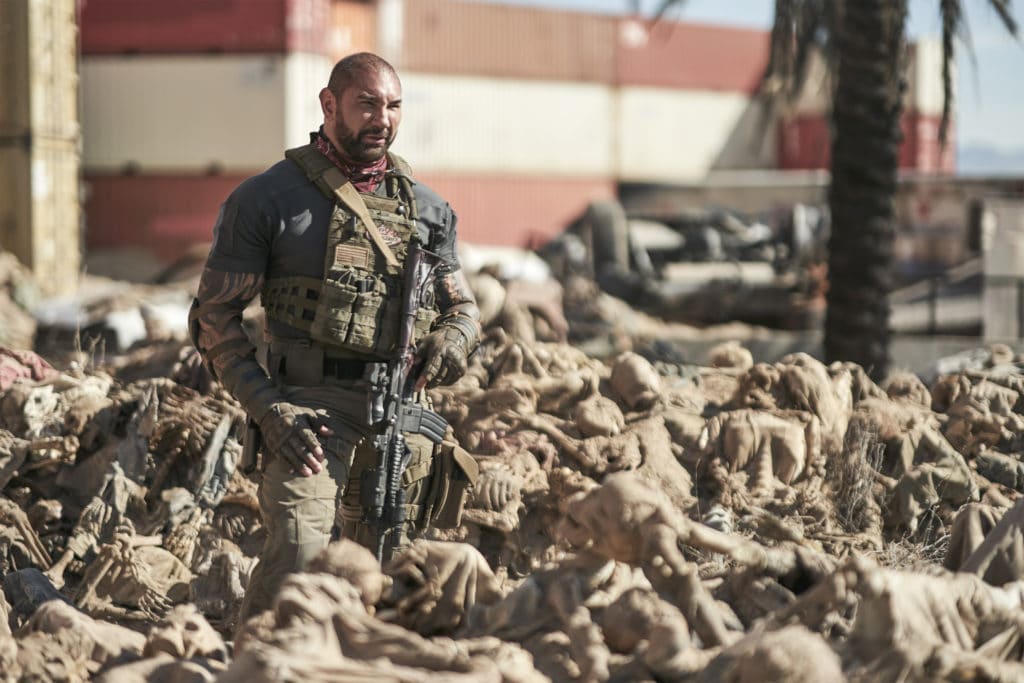
Soon overrun by bitey showgirls and, thank you Lord, a zombie Elvis impersonator (I’ve finally seen one up close), Vegas is turned into a walled city to keep the undead hordes inside. The powers-that-be decide that only a nuke can straighten out the situation, though the city looks like it’s already been hit by one (someone played Fallout New Vegas and enjoyed it, I reckon). Before this happens, like, right before this happens, hence disrupting the stereotype of Japanese people as being punctilious and prepared, a mysterious Japanese businessman sets the wheels in motion to gather a crack team of military personnel (and a safecracker) to go into Las Vegas to retrieve a lot of money from a hotel safe. This crack team consists of some people who worked together to secure the Vegas borders when all of this first happened: Scott Ward (Dave Bautista) joins up with a group of fellow soldiers, crooks and ne-er-do-wells to go in and fulfil this absurd request, because they get the option of a share of the cash. No, it doesn’t make a lot of sense, frankly, but a side quest involving Ward’s estranged daughter blends a dash of military muscle and a bit of human interest, though rest assured, there is no dense layer of social commentary here. You’d have to look very hard for it, and you’d still come up short. Perfect.
King and Queen of the Zombies?
I’m not entirely sure why Snyder decided that a horde of rhinestone zombies wasn’t enough on its own; there are definitely layers to the mythos here which weren’t needed or included in Dawn of the Dead ’04, and again, there feels like more to come, either in the new pre-production TV series or in subsequent films. It’s a funny thing, because some of the most successful and watchable zombie films of recent years – Train to Busan, say – were completely unambitious in terms of what the zombies actually did, prioritising human relationships threatened by the sudden shift in events towards a sudden array of mindless, violent ex-people. Army of the Dead has our Patient Zero Alien Zombie guy acting de facto as King of Las Vegas, and he’s taken a queen – presumably from a cosplay gathering of some kind, to look at her. To gain access to Vegas, it’s necessary to deposit an offering to the royal couple, this being a living human being which they then stash somewhere and turn into ‘one of them’ in due course. Come to think of it, there’s a surprising lack of traditional biting/tearing for large amounts of time here given the sheer numbers of zombies you would expect from an early crowd scene, but the selected emphasis on a hierarchy takes away a little from this approach, and drags in something else – similarities to a few vampire movies, as well as nods to other films.
I noticed a few of these, in just the same way you can easily spot a few references to the likes of Aliens in the appearance and behaviour of the crack squad on the trail of the cash. Stake Land 2: the Stakelander (2016) dispensed with the straight-up vampire mythos of the first film and installed a ‘Vampire Queen’ who retains a sense of intelligence and purpose in contrast to those who serve her; the I Am Legend remake in 2007 not only resembled Army of the Dead in its ruined city streets (and big cats at liberty to roam around) but also featured the idea of the ‘hive’, where the infected congregated and communicated with one another, working to a kind of hierarchy with at least one thinker able to understand and plot against Neville (Will Smith). If this isn’t borrowing, it’s a hell of a coincidence, and it could all have proved too much, if the film hadn’t merrily traipsed through all of this with not a great deal of consideration, lining up new elements simply to play them through for a bit of suspense or a wry laugh. Leaving aside the team’s decision that heading into a hotel was the best possible option, even though I’m not sure that was the right hotel or in any way, shape or form the best possible option, the presence of an array of seemingly napping zombies inside was an immediate shoe-in for a fun sequence of sneaking, inevitable failure and bloodshed. The King and Queen motif is probably completely unnecessary, but how else are you going to get a zombie walking around in a helmet and a cloak? Or plunging his hand into the dead-again belly of his queen consort to retrieve a glistening, mewling zombie foetus, a kind of horror riff on the Pilsbury Doughboy? Admittedly Snyder has form with zombie babies, but this was a glorious, head-scratching moment, and one among many too.
The Cunning Plan
Of course, it’s churlish to poke holes in the zombie elements of the plot without turning our attention to the plot proper – the heist element, this idea to sneak into a zombie-infested hellhole (and as it turns out, monarchical society), load up on bags and bags of hard cash, which itself easily looks as alien now as any reanimate corpse, and then fly to safety, using a helicopter which, even if it was pristine when it was left on that roof, has seen better days by now. I mentioned the family-orientated secondary plot; there is of course a Company Guy with ulterior motives who accompanies the squad into Vegas, and you’ll never guess what he wants to do? Yes, smuggle a zombie out, or even smuggle a bit of one out: they’d make great assets in warfare, see. I told you there were resemblances to Aliens, right down to a particular bandana. And, as in Aliens, I get the impression that the great and the good haven’t really thought this one through: xenomorphs, zombies, all decidedly uncooperative.
But even if the culmination of that plan made good, solid sense, the guy they send in to make it happen confuses very, very easily and ends up falling for the old swaperoo, taking the wrong bag and not in fact collecting a zombie head. Ultimately, this turns out not to matter all that much as the entire crew eventually get bitten, shot, pulled to bits, or …locked in a safe? Easily done. Again, the tone throughout all of this going down is never completely serious; if you start to get too immersed in the peril of any given situation, you will readily be assigned a massive, probably inexplicable explosion or a minor plot shift which picks up a different part of the story; we’re rarely allowed to linger, and it’s only right at the end when it turns out that absolutely everything has been for nothing that we get a slowed-down sequence where people pause to really talk to one another.
But even so, and I do feel that Bautista does a great job here with what he’s given, a large chunk of the film is an inevitable follow-up to Ward’s warning to his daughter Kate to tell her that she has to stay within his sight at all times. She goes off to find some hapless friend of hers who has been snuck in to try and partake of the rich pickings left in the city; the thing is, Geeta, i.e. the whole point for the story arc where Kate disobeys her dad and minces off on her own to try to rescue her, seems to disappear mysteriously from the plot upon retrieval. I may have been missing something in the midst of yet another explosion, but where on earth does she go? Everyone is dead, dying or injured through looking for her, but she doesn’t seem to even be in the wreckage at the end. If she turns up as another Zombie Queen somehow, I called it first.
‘Where you stumble, there lies your treasure.’
Oh well, oh well. I enjoyed the blend of the brutal, the pessimistic, the utterly pointless and the borderline laugh-out-loud moments of the ending; I’ve seen criticism of the film elsewhere saying that it’s not genuinely funny, but I really think it is; the sheer OTT nature of the series of unfortunate events which sweep our usually amiable, but thinly-drawn characters along provides for a fair few humorous lines of dialogue, and like a game of toy soldiers, it feels like we could simply go again with a few other soldiers in a new setting – Mexico, wasn’t it? They even threw a nuclear missile in there. I just don’t know what some people want, and don’t give me all that stuff about ‘a better film’, ‘a more coherent plot’. There is a time and a place for a coherent plot, but even if we ignore the many superb zombie films which have taken the starting point of an outbreak to explore very human concerns and dilemmas, slamming a zombie film for being nonsensical seems an odd choice of critique. Look at the justifications we’ve had for the dead starting to walk…a space probe…a farming tool…viruses which turn people into ravening gymnasts…see, zombie cinema is a kind of monster cinema, a grisly fantasy where we either play out our terrors of death, or take these as read and head in a different direction, having fun with the sheer excess and panic and silliness. I seem to remember a certain revered zombie classic spending a few minutes hitting the undead with custard pies. Plop that scene into Army of the Dead, where to be fair, it would fit fairly well tonally, and people would be outraged at its lack of respect for the genre and the fans.
The only really unforgivable thing for me is where zombies are added in to a film out of a complete dearth of imagination, and the need to have one’s cost-effective daft friends stumbling around in once-white clothing. Army of the Dead may be many things, and in common with so many films of today its runtime is way too long, but in its high-action sequences it certainly doesn’t lack imagination. If anything, it shoehorns so much in there that it’s easy to lose track of what the hell is going on. But, to reiterate, it is exactly the kind of escapism I was after. Against a backdrop of banal, brow-beating or quaint current cinema offerings, it’s easy to see how and why Netflix is so often able to run rings around the cinema, and I sincerely hope that Army of the Dead’s overall success gives a clue to filmmakers and cinemas about the range which audiences want to see. Less than two hours, please, but let’s have a bit of spectacle which doesn’t make us feel anything except entertained; bravo to Army of the Dead for delivering the spectacle. Did I mention the zombie tiger?
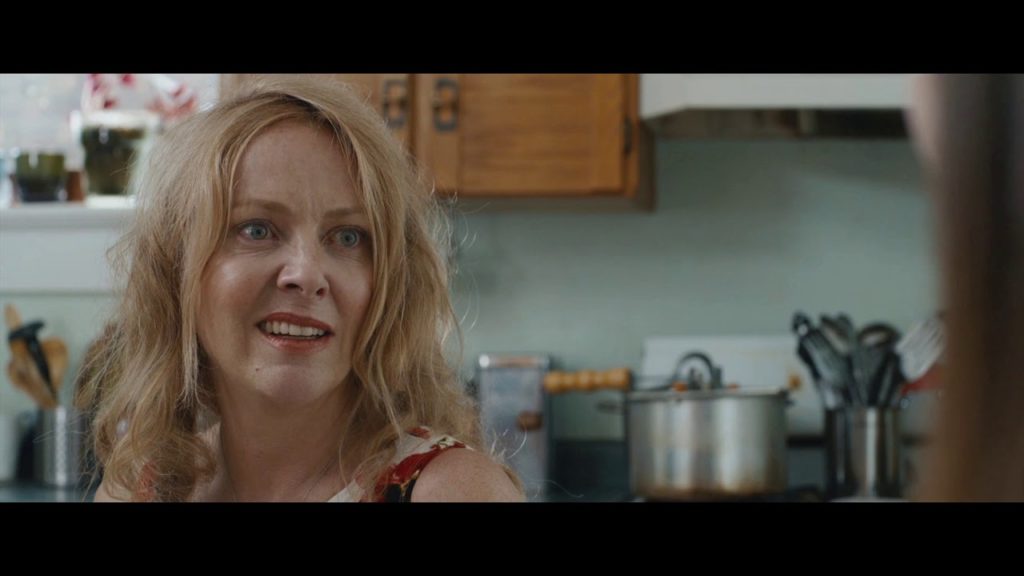
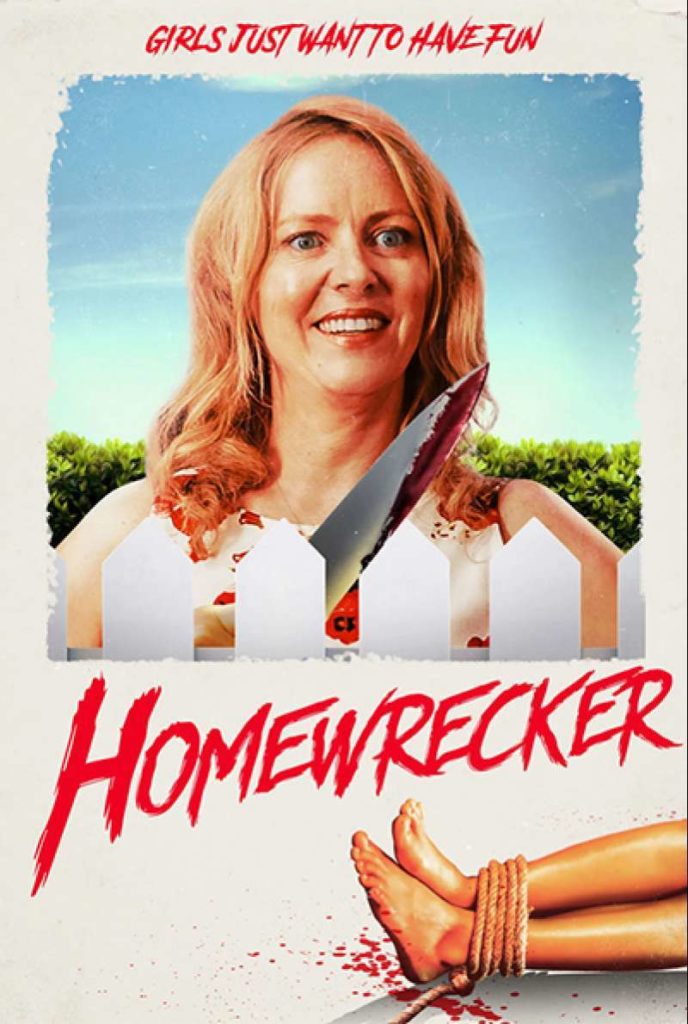
Toxic female friendships have not infrequently come in for a good, hard, if specious look in cinema. Perhaps unsurprisingly, many of these films have opted for the horror/thriller route, sometimes putting a spin on the home invasion idea (i.e. Single White Female) and sometimes going a step further, having a woman infiltrate the life of another woman who is, for whatever reason, doing a better job of nailing those social rites of passage, which are more often than not still marriage and motherhood: from The Hand That Rocks The Cradle to The Stylist, beware the woman who doesn’t have it all. So Homewrecker (2019) is certainly a film which springs from that stock, but it does do a few things rather differently. Firstly, it opts to retain a certain level of black humour, at least until its ‘throw everything at it’ final act. It also manipulates at least some of the ‘unhinged women’ norms, even if quite subtly, so that it hangs on to a few surprises along the way, although these come at a cost: ultimately, this does all boil down to two women fighting over something which hardly seems worth having, and any finer points about this, or female friendship generally, get rather lost in the mix.
Anyway, we start by seeing a couple of ladies clearly getting their memberships’ worth out of the gym: thirtysomething and, as it turns out, interior designer Michelle (Alex Essoe) gets chatting to another gym member, fiftysomething Linda (Precious Chong) after a class one day. Let’s make no bones about it, things seem a tad off with Linda from the start; her rather manic befriending style is a shock to the system for Michelle, who has a lot to think about currently: she’s been trying, and so far failing, to have a baby with husband Robert, but his rather distant attitude is giving her second thoughts anyway: is it a good idea to essentially sign yourself up to a lifelong contract with a man who can’t even look pleased to be in a coupley picture on your desktop wallpaper? Maybe this is why she finds herself opening up to the older, maybe wiser woman, who seems to be taking a rather wide-eyed interest in her wellbeing. And, when Linda suggests that Michelle might like to take a look at her place with a view to doing it up, Michelle finds it impossible to refuse.
The film therefore sets out its stall very early on: unhappy younger woman finds herself stuck in the home of an older woman with apparent issues. Linda seems to be stuck in the time period where she was at her happiest and most optimistic (which of course is the late eighties/early nineties; how else are you going to fix the camera on the now indie-film staple of a VHS recorder?) and, in the here and now, she seems to have buried herself in a mire of motivational quotes and fridge-magnet philosophy about sisters doing it for themselves. Outside of that, she reveals that she’s been unlucky in love herself, and takes a keen interest in Michelle’s own situation, imposing upon her unwitting guest by trying to opt in as her best friend, demanding heart-to-hearts and so on. Some of the lighter-touch dialogue in the early acts of the film showcase the script at its best and most observant, though I did find Linda’s overblown body language and eye contact a little too cartoonish, and it felt as though the film could have gone in one of two directions – fully cartoonish, or increasingly serious. Actually, though, it does largely try to do both for the most part, splicing a few increasingly violent scenes with downtime which ups the dialogue, even if doing this to add in a few twists and turns. Still, Alex Essoe, probably best known to the likes of people who read this website as ‘her out of Starry Eyes’ gets put through the wringer here, too, but she does have form for being put through an ordeal in order to discover her authentic self, and this aspect of the film works best of all for me. Also, where the film pauses to focus on the interaction between Michelle and Linda, the characterisation improves overall, becoming more intimate.
Homewrecker certainly has its moments, though it is hamstrung by budgetary constraints and its tendency to skate the line between humour and serious point/content – to the extent that, if it ever did purport to really say something about female relationships, or loneliness, or love, then it doesn’t quite get there, and relies on a few reductive assumptions of its own, too. The final act is a sink or swim decision for the whole film; I felt that it just about held together, but its patchwork approach wasn’t overall to my liking and it reverts to tried-and-tested fare at its close which may smack of overfamiliarity.
Homewrecker (2018) is available now on VOD via 101 Films.
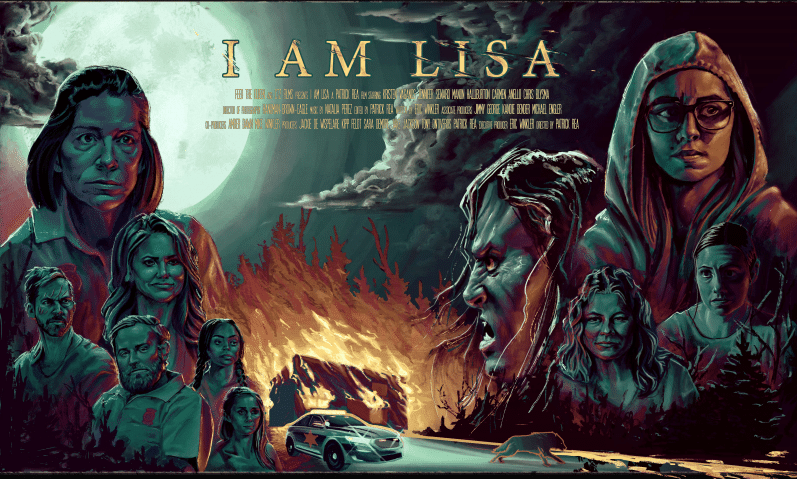
A couple of selected quotes about the nature of vengeance set us up for I Am Lisa (2020), and foreground the overall tone rather well. For a film which at times features bloody gore and violence, it takes a surprisingly sober approach to its storytelling overall, even if it quickly establishes that it’s a story which will feature lycanthropy. There have been a few werewolf horrors in past years which have used this theme to explore very human preoccupations and vulnerabilities: Late Phases, Bloodthirsty – here, werewolves aren’t often simple, straightforward monsters. Similarly, I Am Lisa is a struggle for autonomy and self-worth, just one which is shot through with a new variant on lycanthropy folklore.
After we’d made privy to a pursuit in the woods by moonlight and the shooting of a part-transformed girl by the local sheriff (Manon Halliburton), we know all is not as it seems in this small town. And, when the shy, nervous Lisa (Kristen Vaganos) returns to the same town to take care of her late grandmother’s bookstore business, her shyness and relative isolation are very quickly used against her by the local mean girls, seemingly as soon as they realise she’s back. The worst offender, Jessica (Carmen Anello) has harboured a grudge against Lisa since high school; the other girls are more hangers-on, or even only in it for a quiet life. Not that this helps Lisa. After one confrontation Jessica returns, seemingly to make friendly overtures, but this quickly morphs into a sexual assault and a threat.
After discussing her predicament with her best friend Samantha (Jennifer Seward), Lisa makes the desperate decision to report Jessica’s actions to the police. It’s a desperate decision because Jessica is part of the sprawling Huckins clan, and the matriarch of the bunch? The sheriff herself. Lisa’s attempts to file the report are inevitably incendiary, drawing the full wrath of the family down upon her; they take her out to the woods to ‘finish the lesson’, leaving her out there where – they hope – the wolves will eat what’s left of her. Needless to say perhaps, but things turn out a little differently. Some of the elements which follow are instantly recognisable; Lisa begins to change, healing rapidly, craving meat…but where the film begins to deviate from that familiarity is in its world-building. As she develops, Lisa begins to get closer to the secrets and strange phenomena associated with this place, and the role of the Huckins family in all of this.
I Am Lisa shifts from some pretty heavy signposting and referencing – a key scene from Vincent Price in The Last Man on Earth, the Arbor Demon poster clearly visible in a shot – to significantly more low-key elements and developments. The characterisation of Lisa is very subtle, with quiet hints at a back story or her motivations which do just enough. We don’t get everything spelled out in this respect, and it works. Similarly, even with an archetypal bitch like Jessica (as clearly denoted by her heavy tattoos and piercings) there are hints of more, particularly in how others gravitate towards her, but make it clear they’d rather not do so. There’s more to it, I think, than just her family’s influential and instrumental power. There are definite allusions here to the whole idea of evil flourishing when good men do nothing; there’s more to unpack about the mentality of bullies, too, and the film’s grisly and very cruel in parts; this is made more gruelling by the close focus on Lisa’s face as all of this unfolds, and what it doesn’t show is significant. Events in the film, particularly in the first twenty minutes or so, escalate very quickly before settling into a more consistent, slow-burn approach; it is quite a shift, but it makes sense overall. Only very slowly does Lisa gain a true sense of agency, overcoming her own doubts, but this is satisfying to see. In terms of plot developments, whilst I Am Lisa is more soberly-done than either of them, there is an acknowledged element of I Spit On Your Ginger Snaps to the film – it’s a vengeance flick with supernatural overtones – and even though this might sound a little mad, it feels like a Western in some places too; kinda like Hang ‘Em High (1968) only with, you know, werewolves.
I Am Lisa is a thoughtful, well-handled horror film with plenty of the 80s-homage soundtrack and practical SFX beloved of indie horror fans (though its inclusion of the beautiful acoustic version of Type O Negative’s Wolf Moon, as performed by a band called Beezlefeast, was a huge plus for me and a welcome new addition to my music library). Also, given its original spin on the werewolf mythos, there’s more than enough here for another chapter – something which I gather is a distinct possibility.
I Am Lisa (2020) is widely available to stream now.
Brian Emond is, or was, a ‘content producer’ from Brooklyn who always badly wanted to rise up through the ranks to real journalism. And, as he tells us early on, journalists are always looking for their exclusive – but don’t always end up telling the story they expected to tell. It’s a premise which guides us through a deeply funny, often considerate and heartfelt mockumentary, one which manages to balance its humour against a worthwhile skewering of the kind of content producers who appear in the film. There’s a certain amount of self-deprecating humour here which plays well against the other strands of humour; perhaps you have to know what you’re sending up to do it well, as well as to meld it with other themes, friendship turning out to be one of them.
We first meet Emond and his producer/cameraman Zach (who play themselves) attempting to get an interview with a hip-hop musician who just loves to cancel, regularly, on journos. But they finally get him to talk to them; this helps them onwards with their career at Compound TV (very clearly a pitch-perfect pastiche of Vice) but they grow disenchanted with the material: a guy who makes artisanal antibiotics; a feature on the craft beer scene in war-torn Ukraine (and as someone who would probably quite happily watch that, I felt seen.) Brian and Zach set about getting a new gig – which turns out to be travelling to Georgia to investigate the ‘Bigfoot Community’, and just maybe to look into any truth behind the claims that the sasquatch is real. So off they go to begin their research, meeting a range of colourful characters ahead of a surprise – to them – field expedition.
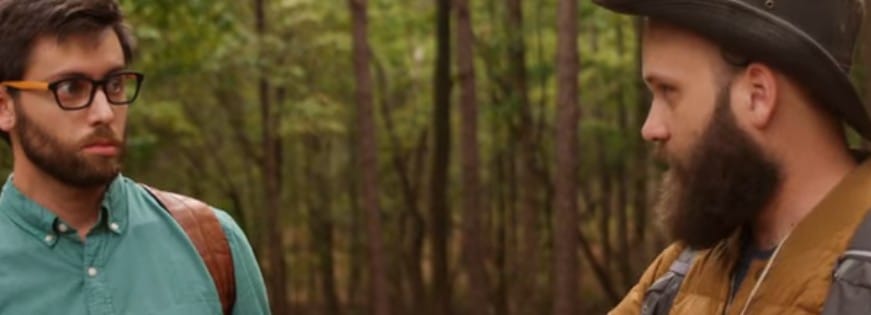
To get their story, and to know what to do in the middle of the Georgia woods. they need the help of a guide: Jeff Stephenson (again played by himself) is another content creator and the host of a YouTube channel all about cryptids; he’s an Eagle Scout too, as he keeps on telling them. Jeff’s an eccentric to say the least, and as the trip progresses, Zach and Brian begin to wonder if Jeff may be becoming the de facto subject of the film. But that’s just the start, and their film heads off in a series of quite unexpected directions, taking them with it.
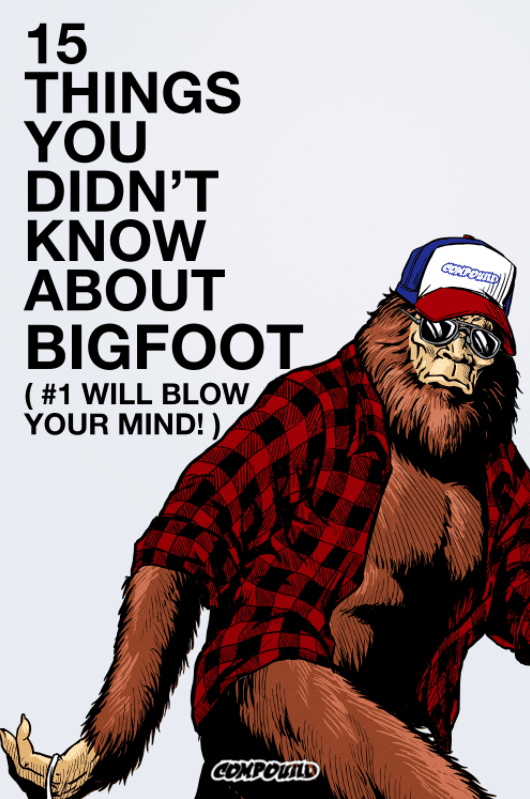
With the exception of a very minor lull around the fifty minute mark, this is a well-paced film and very well-observed throughout, right down to the ‘listicle’ title. Not only does it poke fun at the internet generation and the kind of content which has emerged, providing a low-key but pithy comment on our times, it also presents a range of very well-drawn characters which are a pleasure to watch. Many of the segments and the scenes are genuinely laugh-out-loud and Brian, who is usually on-screen, provides just the right balance of deadpan ennui and mild confusion about what the hell is going on. His weary demeanour is perfect. Another solid decision is to suggest that this is an edited, completed piece of documentary filmmaking, because it fully excuses and allows for the neatly-edited, well-made film, something which has always dogged the verisimilitude of ‘found footage’. 15 Things You Didn’t Know About Bigfoot is very polished, and this is completely plausible; the voiceover works really well, too.
In some respects, as the plot thickens, this mockumentary emulates many of the features of a horror movie with its beautiful landscapes, the ‘getting lost’ shtick, the evidence of something savage in the woods and so on: however, by coming at it with a different perspective, it allows the film to dodge a few of the worst of the horror tropes in favour of just the right balance between action, humour and pathos. This is a succinct, cleverly written and worthwhile indie film: it’s certainly new terrain for director, writer and star Zach Lamplugh given his career to date, but he clearly has skills working as a humourist across a feature-length project and we need directors who can do this – right up until the clever tying-up of loose ends at the end.
15 Things You Didn’t Know About Bigfoot releases to VOD on 7th May 2021.
Whilst Warped Perspective is fortunate to work with (note: not for) a number of promotion companies who readily furnish the site with screeners and provide information whenever asked, I can’t help but note that the simple act of reviewing films is becoming more and more of a strangely competitive, restrictive environment in many ways; this has become more noticeable over the past couple of years, but interestingly, the Great Shutdown which prevented film festivals taking place in any usual sense (thanks to a certain pandemic) hasn’t in any ways led to a reassessment of this new working practice. If anything, with an audience so often wedded to Netflix and less open to some of the low-budget oddities which are still filtering their way through, things have become even more oddly strident. And, I’d contest that, slowly but surely, some of these working practices are leading to a breakdown, or certainly a disconnect between companies and fans.
Here’s the thing: Warped Perspective is not a money-making venture. With the exception of the Buy Me a Coffee app, which has paid for the hosting for another year (and thank you to those few people for contributing) WP keeps going because I pay to keep it going. What was once a team of people has slowly eroded to being just me; that’s fine, it is what it is, but I am well aware that Warped Perspective isn’t in the big league and has a very modest following. And why wouldn’t it? It’s a fan site, written by a fan – these days, by just one fan. This is a hobby, something I enjoy; I have a demanding day job which pays the bills, so I write about films in my ever-limited spare time, because I still like doing it. There are thousands of people like me, a few of whom are my friends, and I’m sure their reasoning is exactly the same. As for a number of distribution and promotional companies – in their case, I’m not so sure they are even aware of the difference between sites like mine and the huge, pull-quote generating money-making sites; or, if they’re aware, then they don’t particularly care, and so address us all as if we all co-exist to generate profits for them.
Of course, if I enjoy a film, then I’m more than happy if that pushes a modicum of publicity its way, and it’s great when a director gets in touch to show some appreciation – that really is special, and it matters. But I’m not here to make money for middlemen. That’s not what my site is for. Recently, I have started receiving numerous ready-made articles – puff pieces, written by publicists, with an attached message saying they’d be ‘grateful’ if I’d run it, verbatim, on my site. In effect, I’m being asked to publicise a film without question, with no input, and at my own expense. Where is my incentive for providing not only free press, but press which costs me money to run? I run a fan site because I like writing: why, then, would I then opt out of the writing bit on some stranger’s behalf? I enjoy writing, so much so that it is still worthwhile even when I’ve hit a run of not-so-great films; when you discover a real gem, all of that dissolves into nothing. I’m not here as an unpaid intern for a company that often forgets to even amend the header and as such, addresses me by the wrong name (and by the way, ‘Josh’, if you’re out there, I think I might be getting a lot of your mail…)
And there’s more. Embargoes. Ah, embargoes. These used to be fairly rare as well, and usually attached to brand-new films which had no existing press, though if you ask me, these sometimes look awfully like votes of no confidence in the project, and attempts to curtail negative press until it’s past the point of no return for a paying audience; embargoes also have the effect of generating cynicism it seems. But let’s assume they are simply, in such an instance, a means of organising press coverage and perhaps generating a level of excitement, avoiding spoiler-heavy coverage, and so on. Perhaps wrongheaded, but still somehow logical. Of course, I also understand the perils of piracy for new films, even whilst I cannot understand why anyone given the benefit of an unseen film would behave in such an appalling way; if having my email address and name emblazoned across my screener is the only straightforward remedy for the asshole behaviour of the few, then so be it. Still, though, we routinely get slapped with embargoes when a film has been out for months, has a healthy existing number of reviews, and an even bigger number of Twitter (et al) posts all happily discussing the film at hand. For whom is this embargo? Is it just a piracy issue? In an online world, press doesn’t work like it used to. If someone wants to see a review, regardless of whether its release date is imminent or weeks away, then they can usually find that coverage – and, for me, I feel highly unlikely to give time over to a screener which warns me that I can’t write anything for six weeks, because – and here’s that thing again – I rather like writing. Scheduling posts is all well and good, but it’s quite frustrating for my site to sit fallow for weeks when I have embargoed coverage sitting there for little good reason that I can see. I now get embargoes on short films which will, sad as it is, probably never get seen again outside of a handful of festivals. I’ve even had embargoed press releases, which to me is nothing short of barmy. Where on earth is this coming from? And who does it benefit? Not to mention the behaviour of some companies, should you dare to write a less than positive review; you can often stand to get unceremoniously removed from distribution lists. According to some of these, you don’t get to see films if you’re honest about what you think of them. There’s that expectation of free, positive press again.
Look, I understand that getting films out to fans is monumentally challenging at the moment, and in common with many other fans, it’s a privilege to get to see so many new films still somehow getting completed and finding their way to me. I’d certainly advise publicity and promotions people to have a rethink about some of their current practices, though. Attempting to piggy-back unpaid fan ventures and these needless efforts to control the agenda are pouring energy the wrong way; in fact, people find it exasperating, and the last thing any of us need is encroaching ill-will.