Tiger Stripes (2023)

A blend of styles and themes but ultimately a body horror, Tiger Stripes is incredibly worthwhile: lively, evocative and multifaceted. Like the best of horror, it strikes a solid balance between humane and fantastical: the crazy things which happen here, happen to people who are completely plausible and likeable. This is a daring and darkly comic feature debut from director and co-writer Amanda Nell Eu.

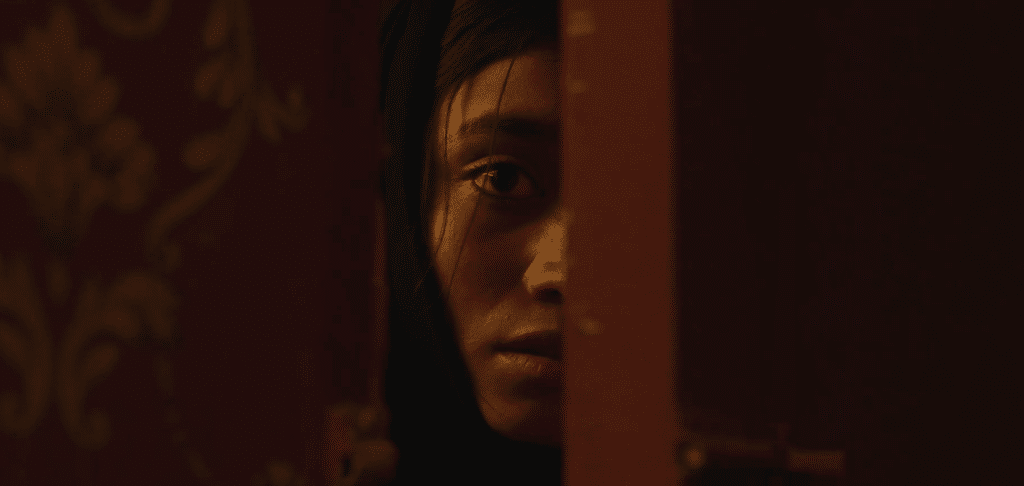
We meet our key characters at school: it’s a fairly conservative establishment, but the three girls Zaffan (Zafreen Zairizal), Farah (Deena Ezral) and Mariam (Piqa) find time to play. Being modern kids, this includes an obligatory dance routine or two, though it seems that Zaffan is a little more, to use the euphemism, ‘developed’ than her friends – she’s taken to wearing a bra, and this is appealing to the others, who – fascinated – ask if they can try it on. The girls soon get in trouble for messing about in the toilets, though, and get disciplined for it – they’re told they have no respect for their school, their peers, or even for Malaysia itself. This falls on deaf ears. The girls are seniors (so either eleven or twelve years old) and they’re full of the place. The girls may have the odd spat, but it seems like they’re a tight-knit friendship group.

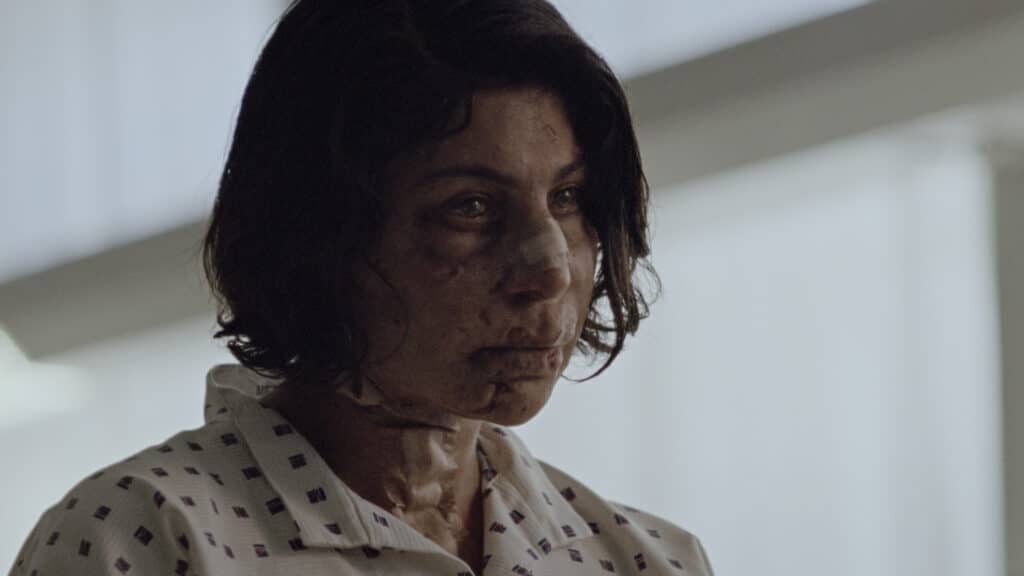
What we soon work out is that this is Zaffan enjoying the last day of her childhood. The little squabble she has with her mother for walking home in her underwear (as she’d soaked her school uniform by jumping in a river) is probably their last squabble as mother and child, by a few measures at least. This is drawn into sharp and inimitable relief that night when Zaffan gets her first period. This is such a relatable horror for girls: the body you thought you knew suddenly reveals that it has its own agenda, and it’s a messy, bloody agenda too. You get used to it, because it’s where you live, but it’s the end of your old, carefree life. There’ll be no walking home half-dressed from here on in. Add to that cultural and religious beliefs which stigmatise you for menstruation, and it all gets even tougher: when Zaffan’s mother announces, “You’re dirty now,” she perhaps means it figuratively, as well as literally.

Zaffan is now excluded from certain things: she can’t take part in prayers, for instance, and has to sit it out. Her best friends, who – for now – are free from this stigma, begin to treat her differently too, peering in at her with an outsider’s interest. But there are other physical changes happening to Zaffan. Her sensory ability is beginning to change; other, inexplicable things are happening to her body. She becomes increasingly isolated, but she’s a resourceful girl, and does her best to claw (!) her way back into the good graces of her classmates. The problems really start, however, when it seems that her afflictions are starting to affect her peers too…

First things first: Tiger Stripes brilliantly captures the icky, disconcerting aspects of menstruation, and it films everything, even the bits no one tells you about: the washing, the blood, what happens to the blood. The smell. It’s not exciting, and it most cases you don’t end up with superhuman abilities, but getting your period is a kind of body horror, right? You know the old, sexist joke about never trusting a creature that can bleed for five days and not die? It would be interesting to know what the Malaysian film censors cut from the film before its local release (leading the director to publicly disown the version of the film screened to home audiences) but I wouldn’t mind betting some of the more open, bloodier, intimate material got taken out. Similarly, the ways in which Zaffan begins to carve a new identity for herself, striking a balance between growing pains and new freedoms, may well have fallen foul of the censorial scissors. What a bloody shame, if so.

It’s to do Tiger Stripes no disservice to point out its similarities to Ginger Snaps, made a (staggering) quarter of a century ago. Even if Ginger Snaps is very Western, even if its animalism and its folklore revolves around a different animal, then the extension of body to body horror is similar. Tiger Stripes differs in how it interweaves other folkloric ideas and entities, sure, but the female body is the locus. In fact, Tiger Stripes is an immensely female-centred film. That may be a strange thing to say, given that it’s a Malaysian film and Malaysia is generally more sex-segregated than, say, Western countries, but its focus on female environments, friendships and themes is unstinting. Men are, by design or decision, quite out of the loop. Zaffan’s dad and his levels of inertia are a wonder to behold. Dr Rahim (Shaheizy Sam), the live-streaming faith healer, really shouldn’t have bothered.

All of this, and set against a backdrop of a lush, beautiful rural Malaysia, a country relatively unknown and unseen, from a Western perspective. There are great performances here: it’s impossible not to love the sparky, sympathetic Zaffan and even Farah at her worst is still a recognisable, contested kid whom you hope can sort things out. It’s also worth saying that, as much as the film is rich with subtext, that it works perfectly well as just a supernatural movie, just as Ginger Snaps – that title again – works perfectly well as a werewolf movie. There’s plenty to enjoy, and lots of wit, humour and charm too. Check it out.

Tiger Stripes (2023) hits select cinemas on June 14th and VOD on July 9th.

Buying Time (2024)

Anxieties about illness, technology and the conspiracy theories which operate in between have proven a rich source for filmmakers post-Covid. You could even suggest that this has grown into a specific subgenre. Buying Time (2024) adds to this number: it’s a super low-budget outing, with all of the attendant challenges and issues that low budget can bring, but for the most part it’s a competent drama, with flashes of solid ideas and approaches which promise more to come.

The film is set in the future, but for all intents and purposes, it’s the here and now: never say never, but the world of 2028 is fully recognisable as our own, with just a few tweaks here and there. Nihilism is the order of the day, and we start with a voiceover which explains that most people are just too preoccupied with the everyday to notice how much their lives have changed. Our narrator, Daniel (Andy Blithe) has, at least early on in the film, chosen to withdraw – to drink, and to grieve the premature deaths of his partner and daughter. News programmes on in the background fill us in on a number of new, or mutated viruses which are currently afflicting humanity; luckily, big corporations like Lifeline have been working round the clock to develop new tech which aims to prolong people’s lives, rendering them immune to a whole host of diseases. Hmm, you might think. And you’d be right.

Daniel might easily have spent the whole film quietly fulminating in his bottle-strewn lounge, but for the efforts of his friend and colleague Shaun (Ryan Enever) who tries his best to drag Dan out of the house, since he’s not currently in work and needs some sort of routine. He’s dismayed by the state Daniel has got himself in, though to be fair, they’re both look of a type, stubble and all. The stubbled men talk: Daniel reveals that, since losing his loved ones, something hasn’t quite seemed right to him. He has started to see his flashbacks and dreams not as evidence of his trauma, but as something of a puzzle, a puzzle to solve.

Meanwhile, in the bigger picture, we begin to hear more about the much-vaunted new technology which is about to dispose of many human diseases. Lifeline has engineered a microchip which combats illness; this replaces an earlier, somewhat less effective version which had already been rolled out by the NHS free of charge, but the original plan is that the new Delta chip will cost money. Safety issues be damned, there are market forces at work here and politics is starting to rear its head, too. This is clearly where Daniel’s storyline is going to meet another, with a fairly tried-and-tested tale of an individual vs. a corporation. Is the chip to blame somehow for the sudden spate of premature deaths? And if so, what can be done?

Buying Time is very much of its time, and conflates two different strands of Covid discourse: firstly, that the technology exists to combat disease (i.e. the vaccines) and secondly, that the vaccines actually carried a secret microchip, so we get business greed, anxieties about health, and the Covid death count as clear sources of inspiration. Why not imagine that the chip idea is real, it’s got a purpose, and that it may showcase the worst behaviour of the wealthy and the powerful? It’s a decent idea, even if, despite this, things do feel rather predictable in places, with guessable plot points and even character arcs. Budget is a limiting factor in many key respects, from overreliance on affordable exposition (such as via the repeated use of news bulletins to backfill the story) to variability in performances: some actors are more overblown, and others more low-key. The Lifeline team just didn’t convey menace and power effectively; happily, though, Andy Blithe (who dominates the film’s screentime) commands audience attention very well.

The filmmaking team has also worked hard to add texture and detail to the film through a range of shots, particularly in the opening act, with aerial shots, long shots, fades, flashbacks and nightmares all making an appearance. That can’t have made for an easy edit, but it shows that a lot can be made of a little, and that the ingenuity is there. The push/pull between what can be imagined and what can be realistically achieved does affect the film throughout its runtime, and so whilst Buying Time might not reinvent the genre or throw in too many surprises, it certainly acts as an interesting calling card, and works through its key ideas with a decent pace via a technically solid film. These are important things, whatever the budget. It also seems that director Kris Smith is already working on a follow-up to Buying Time (working title: Killing Time) so it’ll be interesting to see how he expands this story, now that the groundwork has been done.

Buying Time will be released on July 12th, 2024.

Furiosa: A Mad Max Saga (2024)

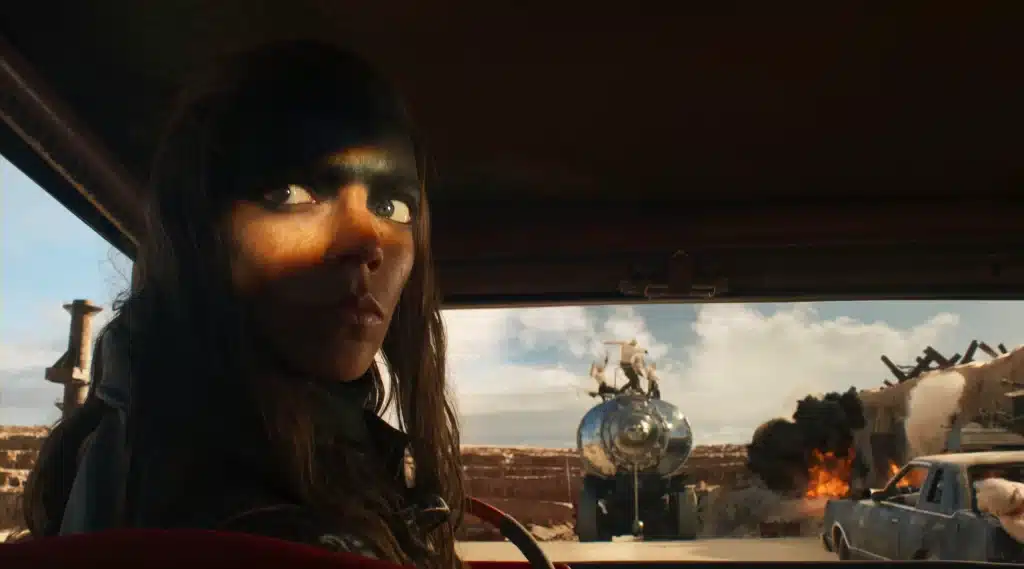
There’s not a lot of greenery in Furiosa: A Mad Max Saga, but we get a few flashes of a more abundant way of life as, at the very start of the film, we meet the heroine of Fury Road in her childhood days. This is the mysterious Green Place, then, and it’s somehow been concealed from all of the marauding fuel heads until now. As they play, and eat! Fruit! a young Furiosa and an even younger Valkyrie spot a group of bikers, who have seemingly just stumbled upon this place. Furiosa (Alyla Browne) tries to sabotage their bikes – they can’t be allowed to carry word of what they’ve discovered elsewhere – but she gets caught and kidnapped.

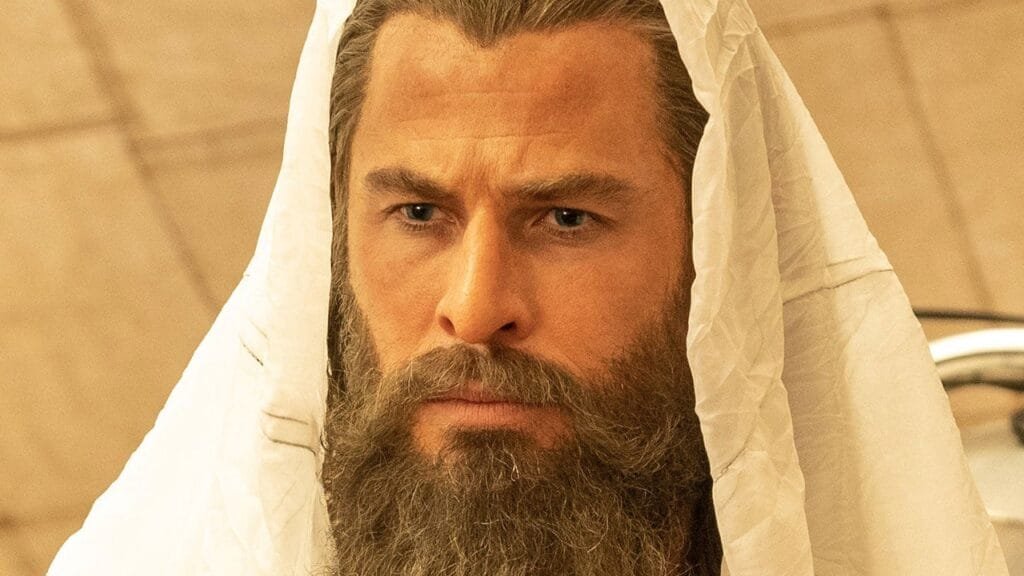
These bikers – or ‘Roobillies’ as they’re known (one of the film’s lovely coined words) want to ingratiate themselves with petty gang leader Dementus (Chris Hemsworth), which they wager they can do by bringing him a living, breathing, pathfinder. Resources in the wasteland are scarce. A little girl who can lead them to her home? Perfect. They’re right to guess that Dementus will be intrigued; we see him at his momentary most hinged moment here, if people can be hinged: he’s clad in a parachute-silk vestment, like a religious figure. It’s interesting to watch his cowl change colour as the film progresses, with a darker hue for every increasingly unhinged stage. But for now, he’s happy to treat the child well, then on the next day, to follow her trail. However, the trail runs both ways: Furiosa’s mother has tracked them to the camp, and wants her daughter back. The rescue attempt does not go very well, but she does at least extract a promise from Furiosa to make it home one day. So here we have purpose and key enemy: locked in.

We get to spend some quality time with Dementus’s gang, just before they move on again. There are some interesting dynamics and world-building to enjoy here, and the casting of Hemsworth, who was pipped to the post to play Max in Fury Road, is an inspired choice: forget Thor; what a damn good villain he makes. Later down the line, a chance encounter with a War Boy – for this reviewer, the War Boy phenomena is still the most intriguing aspect of the Mad Max universe – alerts the Dementus gang to the presence of the Citadel, as of course being run by a …comparatively rather healthier-looking Immortan Joe (Lachy Hulme). Dementus’s merry men sense an opportunity to grab some of this power for themselves, pushing for a food, water and guzzolene deal, once they’ve overrun some important Immortan territory. Quid pro quo.

One of the quirks of this film is that Immortan Joe comes across as a rather measured figure compared to Dementus, who – though choc-full of ambition and pluck – is exactly what happens when people get overpromoted. A message for our times, perhaps. As a result, when when Joe asks to retain the mysterious child in Dementus’s party, seeing her as a would-be wife of the future, the Citadel still seems less awful than the chaos which soon begins to unfold elsewhere. Come to think of it, Miller definitely enjoys playing around with the ghosts of bureaucracy in this film: it’s Dementus’s failure to turn up for a scheduled meeting which really pushes Joe over the edge later on. Dementus reluctantly agrees to part with his ‘daughter’ Furiosa, but she doesn’t really think much of the easeful, but horrific lifestyle which threatens to unfold before her, and as soon as she’s able, she escapes, making herself too useful as a mechanic to be sought for elsewhere. So that’s another big question answered. As Furiosa grows up (with a super-subtle segue from Alyla Browne to Anya Taylor-Joy) and as she gets entrusted with more and more responsibility for Joe’s beloved war rigs, she never loses sight of her desire to avenge herself on Dementus.

It’s a fairly simple set-up, just as the glorious (and it has to be said, vastly superior) Mad Max: Fury Road is essentially a drive out and back again, and so at its absolute best Furiosa is another high action, high drama road movie, with massive pursuits and disasters, and sustained, engrossing sequences. There’s so much to recommend it: George Miller clearly eats, breathes and sleeps this universe, and so the little touches (the props, the costumes, the finer points of the script) are incredible. That being said, one thing that the Mad Max films have never needed is ample explication. In fact, they’ve made an artform of doing the opposite. The same script which can draw a laugh in Furiosa can also overstay its welcome in other moments; we know the world has been killed, and we’ve never really needed to know much else, so why talk things through so much here? Of course, the argument could easily be that this isn’t a Mad Max film – except it can’t quite decide if it is or it isn’t. Max is shoehorned in as a kind of token gesture; excerpts from Fury Road bring us full circle, and he’s right there in the title, too. From the outside looking in, things don’t quite hang together without him, and Miller seems to know that – or else, there were some difficult chats at the planning stage, which is of course, more than possible.

There are some other puzzlers and problems in Furiosa. The film is at its absolute best when the physical spectacles it offers are most plausibly real, with sustained live action and stunts. In other aspects however, things are almost entirely derailed by great, clumsy dollops of CGI, not just at scale, but in the detail, too: bringing these extraordinary scenes to life probably necessitates the use of CGI, but when used, it has to be beyond reproach, or else the brain checks out: this happened a few times, unfortunately. Then there’s the length of the film: at just shy of two and a half hours long, it still feels like the timeline gets rather squashed at the end, with the rush to line everything up for Fury Road affecting the pace, which had grown quite uneven by the last chapter, and as ever, we don’t need the bloody chapters: the audience are always capable of working out that we’ve moved on in time and place without text to explain this.

But, look. A few flustered moments don’t mean I’m not glad to revisit this world: George Miller, still working, with maybe another Mad Max film in him, gets held to a high standard because of the work he’s done throughout his career. And Furiosa herself is an engaging character, worthy of her own story: Anya Taylor-Joy, despite her current ubiquity – popping up in any interesting epic – does a good job in this very physical role. It’s Charlize Theron’s part. We know that. But Joy is a close second, and that’s no insult at all. With its high colour, visceral sound design and roaring vehicles, there’s a lot to love about Furiosa, and a few misfires don’t derail the appeal of the film as a whole.

Furiosa: A Mad Max Saga (2024) is in cinemas now: go and support it, or get more and more superhero films until you reach a lethal dose and can no longer walk away.

Handling the Undead (2024)

Are the undead growing less vicious? Once upon a time, they’d be up and at you the second they were resurrected, but a few films of late have taken a drastically different approach, repositioning the dead as a moral and philosophical quandary – which brings us straight to Handling the Undead, a film which very nearly skips straight past the presence of the undead in order to ponder their existence. The resulting, more-or-less arthouse approach to the topic will not be for everyone. In some ways, it’s not for me either, but the film’s deep commitment to its bleak, minimalist approach does hold a certain appeal.

We start, to give director Thea Hvistendahl credit, as we mean to go on: things are quiet, and they’re ominous. The credits hang in darkness for what feels like a suspiciously long period of time, before finally ceding to opera music. We meet one of our characters, though like most of the characters here, we find out very little about him. This older man sits at home alone; after a while, he gets up, grabs some food from the fridge and sets off from his apartment to another apartment in a different block. Still silent, he enters, where he encounters a young woman who – there’s a pattern emerging – studiously ignores him. Trauma hangs in the air. Clearly keen that she eats something, he plates up a meal for her, but she gets past him, finally telling him that she will, ‘eat at work’. Unfazed, he covers her plate with clingfilm, and puts it in the fridge, with all the other clingfilmed plates. We follow the young woman to work, watch her keeping calm and carrying on, clearly evading well-intentioned offers of help from her colleagues.

Elsewhere, we encounter some other domestic scenarios: an elderly woman says goodbye to a relative at a chapel of rest; a reluctant teen is tasked with babysitting her younger brother, Kian, as her her parents head out by car. What is going to link these stories, we wonder?

Death. It’s death. It’s undeath, too, but perhaps not quite as we know it. Later that evening, a weird electrical phenomenon overruns the country: radios crackle, heads ache, lights blink out. Whilst all of this is over as soon as it begins, it has an incredible impact: it resurrects the dead. Just the newly dead? That is not an answer we get from the screenplay at hand, but for those people we have already met, it has a significant impact, as they have recently lost a loved one. Of course, the reappearance of these grieved-for people is a profound shock; we have no schema for such things. Why would we?

A lot of horror cinema usually skips quite neatly past the schema idea because things are a tad more urgent; Handling the Undead, by contrast, has all the time in the world to show us everyday people struggling as the only great certainty they have ever known, shatters. Nonetheless, there are also some meticulous, and rather repellent examples of of attention to detail when it comes to the dead themselves. Of course, for example, their eyes might be uncomfortably dry. If this film resembles any other film, then it’s Birth/Rebirth, which shares some of the same predilections, and takes the same approach to the undead – here, as there, shadows of their former selves, inert more than wicked, and presenting issues for human relationships. Handling the Undead focuses with great scrutiny on human relationships, even if we glean whatever we know. No one expounds anything. The dead are only slightly more reticent than the living.

However, even before the going gets properly strange, the films sets out its stall as an odd, minimalist piece of horror-drama. From the array of perfectly comfortable but anodyne housing, to the amount of aerial shots creating distance, to the slow, deliberate pace of the film, you always feel at arm’s length. The film looks weirdly cold throughout, too, despite it being set in the middle of summer. When we first meet Anna (Renate Reinsve), she’s sat nearly on top of a room fan; at work, her face is moist with perspiration. Throughout the film, people sit around in various states of undress, but it looks like the whole thing is in some kind of deep freeze. It makes New French Extremity look positively tropical by comparison. Essentially, the world feels awry, even before the phenomenon takes hold: there’s a definite, sustained artistic vision behind the film, lending a kind of consistency to proceedings which does help to hold things together.

The film’s key issue is that all of this build up, aesthetic and otherwise, begins to groan and collapse under its own weight. Its unusual depiction of the undead – for the most part as mute, unfeeling, inexplicable beings – gives us the bare bones of an engaging plot point, but also a sticking point. So the dead are like this, then: what happens now? Where do we go from here? The screenplay hints that similar crises are unfolding everywhere, though we learn almost nothing about what could have been a fascinating contextual backdrop for the more intimate storytelling. And, when things do become more interesting, it’s when the film gets closer to far more familiar treatments of the undead, and what the undead tend to do. That’s a problem, because we get neither fuller world-building, dramatic tension, nor resolution. The original short story, by Let The Right One In author John Ajvide Lindqvist (who also co-wrote the screenplay) looks more at the conflicts between society and individual in such a scenario. Indeed, the film has been in ‘production hell’ for some time: perhaps some of that troubled development has had an impact on the film itself.

But, troubled birth (or troubled resurrection) aside, the film does offer sometimes brutal, but more often very sad, sustained depictions of grief and loss, and it deserves credit for that. It’s the old idea that ‘sometimes dead is better’, but handled very carefully and deliberately. It will be too sparse, too ponderous for some audiences, but Handling the Undead does boast a crisp, artistic presentation, a brooding, death-march pace and plenty of rich symbolism. It has its issues, but all in all, it’s quietly provocative.

Handling the Undead (2024) opens exclusively at the IFC Center in NY on May 31st, then in select cities on June 7th.

Win! A Bittersweet Life Box Set

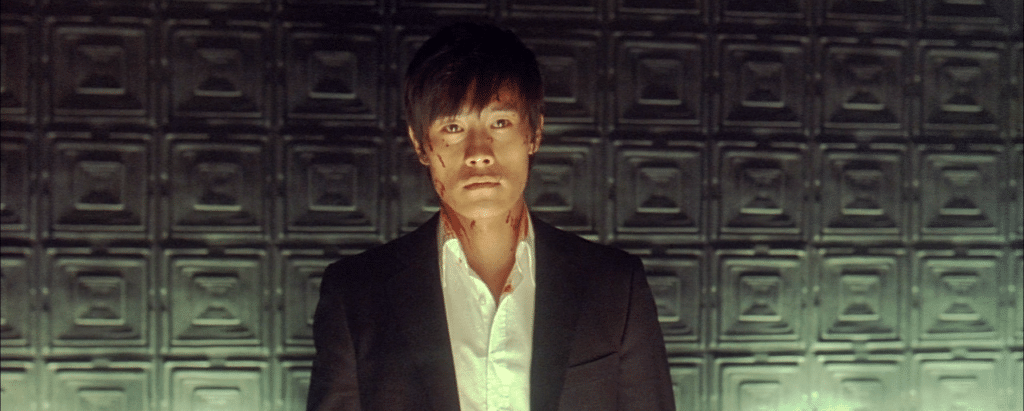
Multi-award-winning director Kim Jee-woon’s (The Good, The Bad, The Weird, I Saw The Devil) ultra-violent Korean neo-noir A Bittersweet Life gets an all-guns-blazing Limited Edition Dual UHD and Blu-ray release this summer courtesy of critically acclaimed label Second Sight Films. The brand-new set promises an extensive array of fascinating special features and is slated for release on 22 July 2024. It will also be available in standard editions.

A loyal gangster Sun-woo (Lee Byung-hun – I Saw The Devil, The Magnificent Seven), falls foul of his gang when he’s assigned to keep watch over the young mistress of his crime boss. When he’s unable to carry out an order to kill the girlfriend and her new lover, things take an ultra-violent turn.

His boss wants payback, but has he taken on the wrong adversary? After a brutal beating, Sun-woo is hellbent on vengeance and embarks on a vicious rampage of punishment… there will be blood, blood and more blood. As the body count rises, the action ramps up, until the furiously violent mayhem reaches its thunderous crescendo.

A Bittersweet Life Limited Edition Box Set is presented in a stunning rigid slipcase with new artwork by Michael Bolland, accompanied by an in-depth 120-page book. There’s an arsenal of extensive new and archive material, including new commentaries, a making-of featurette, music videos and much more.

Life’s what you make it, so make yours A Bittersweet Life with this must-have kick-ass collector’s edition.

We have one box set to give away, so if you would like to be in with a chance of winning, please email the site with the email header A Bittersweet Life (and please include your name and address). This prize will be drawn on Friday 12th June at 12:30pm (GMT). Sorry folks, but this prize is for UK readers only! Your details will be securely stored until the end of the competition and then deleted.

Thanks and good luck!

ETA: apologies, this competition is now closed

Butcher, Baker, Nightmare Maker (1981)

The best way to sum up Butcher, Baker, Nightmare Maker is to say that it’s mesmerisingly weird – both in its plot and in its origins. It was directed by William Asher, who is better known for gentle TV comedy series such as I Love Lucy and Bewitched: this film is – to say the least – a change of pace. A domestic psychosexual horror which morphs into a slasher, it has a few echoes of Pete Walker here and there, but it’s very much still its own beast. It doesn’t move from the sublime to the ridiculous, but rather holds both in balance throughout its runtime. None of its given titles – Butcher, Baker, Nightmare Maker, Night Warning nor Protégé of Evil – really make sense, but that’s okay. That’s not really the point.

We start innocuously enough, with a family trip: two young parents are leaving their toddler son Billy in the capable hands of his loving aunt Cheryl (Susan Tyrrell) while they head off to visit grandma: all perfectly normal. However, soon there’s a (horribly protracted) problem: the car’s brakes don’t work. Being in an American car, dad probably can’t change down through the gears to slow himself down, though that’s not the only reason that both parents are killed as the car weaves from one side of the steep-sided mountain road to another. The upshot is that Billy is orphaned.

Fourteen years pass by, as they have a habit of doing. It seems that Aunt Cheryl stepped in to raise basketball-mad Billy, in a fairly comfortable middle-class home stacked with Catholic iconography and – photos of Billy. Aunt Cheryl is a little overbearing: clue number one. Clues number two and three are a little harder to miss: we see her rummaging through Billy’s wallet, less than happy to see that he has a condom in there, and then waking him up by purring in his ear. But for the moment, at least, Billy is none the wiser, because this is all he’s ever known. He has a few other things going on: there’s some jealousy and conflict in his basketball team with a guy called Eddie (a young Bill Paxton, who unfortunately disappears from proceedings rather early on). Then there’s girlfriend Julie (Julie Linden) and the odd squabble.

But the biggest problem for Billy, and one which we see blown up to immense proportions, is his error of growing up. He’s delighted when he gets a chance at a college sports scholarship: Cheryl is very much opposed to the idea, and it’s from this point that the veneer of domesticity begins to crack. Disaster (well, the first disaster) strikes on Billy’s birthday: Cheryl knifes a TV repairman after making a clumsy attempt to seduce him; by chance, as he’s looking through the window at the time, Billy finds himself complicit, and initially tries to cover for his aunt’s story – that the repairman tried to rape her, so she killed him in self-defence. This brings them into contact with Detective Carlson (Bo Svenson), a deeply unpleasant man who doubles up by being profoundly useless at his job, but his unstinting attention to the case definitely ups the ante in an already tense situation.

As Cheryl tries to reassert control, and as Carlson (together with the slightly less useless, albeit Safeguarding Awareness Course drop-out Sergeant Cook) continue investigating the repairman’s murder, Billy gets hit the hardest. Poor, sympathetic Billy, well played by Jimmy McNichol, who briefly ended up in light entertainment after Butcher, Baker, Nightmare Maker – appearing in The Love Boat). He gets caught between clashing moral attitudes, both his aunt’s and Carlson’s, so whilst the film is definitely a domestic horror, it stands in for a bigger picture, too. It’s hard not to use the word ‘microcosm’, so – here it is. Something very interesting here is how the normal and the functional intrude onto the dysfunctional, not the other way round: visits from Julie, or well-meaning neighbours, are what initially complicate things. The prospect of Billy heading off to have a normal life is total anathema to Cheryl. Carlson can’t allow himself to believe that Billy is ‘normal’, either.

This brings us to how fascinatingly unreconstructed the film is. It’s not all that unusual, of course, to see and hear things in older films which wouldn’t fly today, and in a way this is all part of the time capsule effect which we get so often in films of this vintage, and older. But still, look at the way Carson interrogates Cheryl on her marital status, designating her as a lesbian when it turns out she’s neither married nor divorced. Then there’s his immense paranoia about Billy’s sexuality, reflecting casual and institutional homophobia in increasingly pig-headed, unpalatable ways. But, hey, these attitudes are still around, and Coach Landers (Steve Eastin) is one of the film’s sole decent, measured individuals, despite being threatened and outed by Carlson as a ‘fag’. It’s clear we’re meant to see Carlson as just as dangerous as Cheryl in several respects, and to understand that he has the weight of powerful institutions behind him, too. One monster facilitates the behaviour of the other, when it comes down to it.

In terms of performances, though, Svenson may be good, but Tyrrell is brilliant. Going from inappropriately flirtatious, to overwrought, to authoritarian, she dominates the screen. Sure, some of the final act exposition could use a little more work, and the film’s slasher mode shifts things quite a long way from where we started, but Cheryl is always queasily interesting to watch, giving a very physical performance. Nothing is phoned in. Representing something of the warped maternal drive which has been used to designate psychotic females for generations, she adds something else – societal expectations around marriage, and childbearing, are brought to bear here too. Carson speaks for some of these, but it runs deeper than that.

Little wonder that this title ended up on the DPP 39 Video Nasties list – it’s basically a shopping list of all the elements that the 80s censors disliked enough to prohibit. Still, Severin have stepped up and put together a phenomenal presentation here: the film looks very much of its era but colourful and crisp. There’s a wealth of extras, too: audio commentaries, interviews with stars and crew, a cinematic trailer and a TV spot. It comes highly recommended. Take a look.

Butcher, Baker, Nightmare Maker was released on 4K UHD/Blu-ray on 13th May 2024.

In Flames (2023)

As the film begins, it seems that two different spheres – the domestic and the world outside the home – are being drawn into sharp relief here; navigating these two spheres, and the risks attendant on each, does indeed form a key part of In Flames. We are first faced with a young woman, who looks fearfully through – it’s not immediately clear where she is, but she looks alarmed, and a raised male voice is what is making her nervous. This is a family home in modern Pakistan, and by day, we see that the same household is dealing with the shock news of a recent death. The family’s patriarch has died unexpectedly; neighbours arrive to pay their respects, but the women do not attend the burial, scheduled for that day. It’s their job to prepare a special meal and to clean the house – there’s that domestic sphere again. They are less well-placed to deal with a sudden slew of financial concerns. Not knowing he was about to die, the patriarch has left debts. Uncle Nasir, arrived out of a blue sky to attend the funeral, offers to help them out: it’s the least he can do. At least funerals the world round seem to bring out the very worst in people; all he needs is a few signatures and their problems are over…

Mariam (Ramesha Nawal) is clearly, quietly troubled by it all. She attempts a spell of normality away from the house, taking her mother’s car to go and study and the nearby library, but as she waits to drive on, she is startled by an unknown man who smashes the car window and tries to take control of the vehicle. (To do what? We could hazard a guess. Festering, repressed sexuality haunts this film like a ghost throughout; you get the distinct sense that commandeering the vehicle is only step one of this new, opportunistic plan – and the man’s yells of ‘whore!’ as she gets away from him are another clue.) Mariam is shocked, but clearly no pushover: she continues to her destination, meeting up with her friend Rabiya as planned. Rabiya also has a friend with her: recently returned from Canada, Asad (Omar Javaid) has clearly brought a few more progressive values back with him, and he’s shocked by what Mariam has just gone through for simply driving down a residential street.

They soon begin to grow close, even though at first, Mariam seems honour-bound to question his motives. However, their connection is wholly innocent, loving and sweet – even if it means that this questioning eldest sibling of the household isn’t around when her mother Fariha (Bakhtawar Mazhar) finally acquiesces, providing Nasir with the paperwork he wants. It’s the perfect storm; no, scrub that. Mariam’s absence and Fariha’s trusting desperation create a sequence of storms, the navigation of which makes up the rest of this captivating, slow burn film.

It’s certainly not just the presence of brazen, grifting crooks exploiting an outdated and misogynistic legal system which grants In Flames its well-rounded sense of outrage. The whole film builds a picture of a heavily-surveilled, policed world – which impacts, in the main, upon women. ‘Good’ girls don’t walk the streets; they don’t sit inappropriately close to male acquaintances; they study indoors, privately, if they know what’s good for them. But nor are they safe at home: the whole film’s premise is how even that security can be taken away, whether by depraved men literally clambering into supposedly safe compounds, or by malingering male relatives. Open spaces are – with one notable, beautiful exception – dangerous, hostile places. Mariam’s disorientation when placed in these open spaces is palpable, not least through the cinematography itself, for example with the use of a rolling, careering camera going in and out of focus: the sense of panic passes to us, too. The whole film is perfectly engineered to engender queasy sensations of anxiety: the heat, the streets, the people. Long before any hints of supernatural story-building, the film is rife with sickly, brewing foreboding.

Rich visuals are refracted more and more through carefully-crafted fantasy elements which, as the film gets closer to its final scenes, are recognisably horror in origin. They are woven into dreams and flashbacks, but seem very real; their presence doesn’t detract from the film’s otherwise meticulous realism, however, nor from its cautious pace and superb characterisation. Ramesha Nawal as Mariam is fantastic, enigmatic but still clearly sensitive, a young woman of few words who nonetheless makes you believe in her completely. When she’s ferocious, you want her to succeed, but how quickly she has to put that fire aside – for propriety’s sake, or because she simply cannot match the bleak ferocity of the world she lives in. Likewise, when she’s adrift in that world, you want her to be safe. Such a precarious emotional investment, this. Her mother Fariha begins to blossom as a character, too. It happens under duress, dreadful duress, but regardless, even in her desperation she has a matchless, quiet reserve of energy. Together, they are quite something.

The film as a whole is quite something, even with a few unresolved questions hanging there in the dark by the end. Whether via its meticulous realism or the increasing use of supernatural content, In Flames illuminates, with clever detail, a greater kind of darkness. Challenging and complex, it is a tour de force meld of harsh reality and harsh fantasy; that this is director Zarrah Kahn’s first feature is just incredible.

In Flames (2023) will be in select cinemas from 24th May 2024.

The Seductress From Hell (2024)

A genre-splicing look at broken people and relationships, The Seductress From Hell has a wealth of creative visual ideas, but its rather flustered approach to storytelling (and its script issues) do unfortunately hamper the film’s overall success. In essentials, this is a revenge flick – albeit some of the targets are more collateral than anything else. Along the way, we get other narrative ideas being tantalised but not always developed more fully, leading to some issues in terms of focus, clarity and tone.

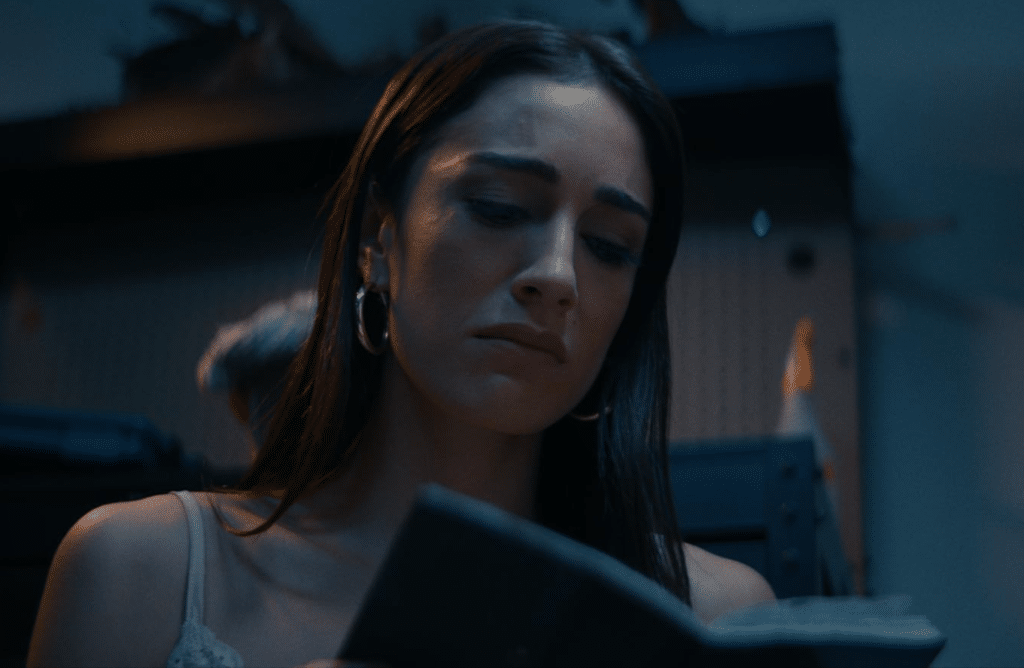
The film is set in Los Angeles, and boy, does it make that clear throughout. We start at 2am, and there’s a couple in bed – which turns out to be husband and wife Robert (Jason Faunt) and Zara (Rocio Scotto). Our first acquaintance with Zara is as she sneaks out of bed, down to the garage to get a mysterious box out of a lock-up. Inside is some occult paraphernalia, including a notebook filled with Satanic scrawls and artwork: you know exactly what these look like without laying eyes on them. Satan isn’t very often represented via Impressionism. As the opening credits roll, we see Zara flicking through the pages of the book. But, post credits, we’re at the breakfast table. It’s not long before we’re shown in no uncertain terms that Robert is not a very nice guy. He berates Zara for her lack of acting work; she vocal-fries her way through a ream of apologies. But she’s waiting on a call-back; unfortunately, when Robert the bully leaves the house to go to his soul-crushing sales job, Zara retaliates by knocking back a handful of pills, passing out and missing the all-important call.

She lies about this to Robert at dinner, but thankfully there’s an upcoming distraction: old friend Derek (Raj Jawa) and his girlfriend Maya (Kylie Rohrer) are coming to dinner the following night. (We check in with them too and they’re not exactly looking forward to it: awkward dinner date incoming!) It’s a disaster, we see more of the kinds of treatment Zara has to ensure, and it’s all enough to trigger a late night visit to the lock-up with the Satanic sketchbook; she also picks up some chloroform, a few tools and – as luck would have it – some surgical scrubs.

Zara is now set on a new phase as a torturer and enthusiastic amateur surgeon; the set-up in the impromptu surgery shifts the film from being reminiscent of the famous-at-all-costs Starry Eyes to being a little more reminiscent of the surgery-as-penance movie American Mary, but there’s also a few hints and clues regarding just how much of all of this is pure fantasy, or at least, not quite unfolding as it seems to be, which keeps the viewer questioning the ensuing events. However, it’s to Scotto’s credit that she’s able to turn in an increasingly spirited performance, going from terrified victim to easeful aggressor and back again (as the film experiments with fantasy and flashbacks in places, too).

So what’s the problem? In a nutshell, it’s this: The Seductress From Hell spells out a lot of things we could assume, glean or accept quite readily without being told, whilst dodging some of the key details which we could really do with knowing. It paints in incredibly broad strokes; its important themes (Hollywood! Capitalism! Gender!) are represented by repeated, overblown mentions in a script which really needed a solid, uncompromising edit. No one talks like this, in such long, complex, grammatically accurate sentences loaded with abstract nouns – not in informal settings, anyway. It occurred to me that this may have been a deliberate symbolic decision; the script could be some way of addressing the scripted, unreal nature of our lives – or something like that. But I’m not so sure; this script tells us in such detail who and what is ‘good’ and ‘bad’ that it loses a lot of its plausibility, something which is still needed, even in a film with fantasy elements. And yet, the Satanic content is barely mentioned; it creeps in, rather than being properly introduced, then it becomes integral to the plot, for reasons unexplained.

Perhaps a stylistic decision to either go for the arty and experimental, or full-on Satanic horror, would have focused the film more successfully; in either case, the film’s themes and ideas could have emerged without needing to be explained to the audience as they have been here. For all that, though, there are some interesting and engaging visuals, and finally we have some Euro trance music assuming its rightful place in a kill scene.

Last Words (2023)

Much is made in supernatural horror of what is seen or unseen, but so much of what scares us is down to what we hear – or think we hear. Using that idea, Last Words (2023) is an effective short film which, although it tantalises several ideas regarding the source of its horror, is ultimately frightening through what it does with sound. It may have a very different location – unfolding its horror for the main part in a sunny, bright and starkly beautiful setting – but it’s reminiscent of The Signalman, with the same, ominous voice carrying uncannily across the divide.

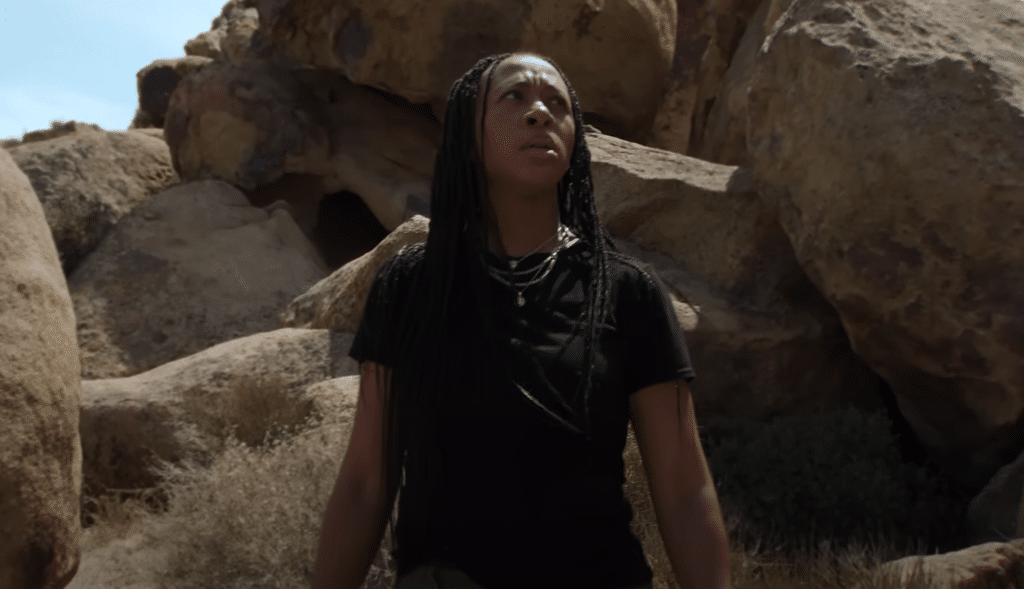
We start in medias res – never a bad idea in a short film with a limited timeframe – and we encounter Kira (Ché March), a hiker who has just fallen down a stony ravine. She’s able to stand, but she has injured her ankle. Her friend Max (Nick Luberto) thankfully manages to spot her from above, and suggests he’ll come to her. It’s not the best of ideas, given how treacherous the drop is, so Kira begins to make her way along her new path, presumably looking for the safest route back – for both of them. However, as she shuffles along, she spots someone else. There’s a young man, watching her. She instinctively calls out to him for help but he responds passively, only pressing a finger to his lips to gesture for her to be quiet. It’s a simple and strangely uncanny gesture; Kira is unsettled, but as this strange few seconds unfold, she hears Max – and now it sounds as though he is the one needing help. This is one of the ways the film subverts expectations: here, the person who has fallen is not, at least initially, the person at the most risk.

Sound has now overtaken sight as the key means of interacting with the world. As sunny and as bright as it is, Kira is dependent on Max’s voice; she may as well be in the dark. Hearing him cry out in alarm only fills her with more urgency to reach him. But none of this feels right: the sound of his voice has become uncertain, unsettling. If he cried out in pain just now, how can he now be calling out to her, semi-normally? She has no choice but to try her best to get back to her friend, but what will she find when she does?

If the odd moment in this film – a key reveal, in fact – looks a little tried-and-tested in terms of its appearance and make-up effects, then it hardly matters when looked at against the film as a whole. This is very nicely pared down, works well within the nine minute (or so) runtime and directors Teal Greyhavens and Nikolai Von Keller understand that you can get a great deal from an essentially simple idea – here, the uncanny horror of a displaced voice. This is the film’s real strength, although the end sequences suggest the presence of a myth or mythos of some kind, some barely-glimpsed orchestrator, lurking in the film’s rare dark corners. The film is genuinely creepy where it presents the audience with its voiceless watchers, and it produces some truly effective scenes along these lines. Best of all, Last Words is available to watch on Alter right now. Have at it.

Pandemonium (2023)

There’s nothing more galling in life than a dwindling promise, and sadly, that is a real problem for Pandemonium (2023). What begins as a rather beautiful, stark and savage riff on what happens to us after we die disintegrates into a mess of clumsily-stitched parts, united for the most part only by two ideas: death is cruel, and so are families. As much as Pandemonium boasts intense sound design, some initially stunning visuals and a decent opening idea, its rapidly meandering focus cancels them out, leaving us with a tonally odd hodgepodge which just doesn’t work.

We start out with a man called Nathan (Hugo Dillon) who awakes, disorientated, on a remote mountain road. His first thoughts are, ‘I made it,’ and ‘I’m not hurt,’ which you can quickly guess are just wishful thinking; once he stands up and sees the nearby wreck of his car, we are perhaps privy to something he has yet to accept. But for exposition’s sake, he is helped to accept it by the presence of another man, Daniel (Arben Bajraktaraj). Daniel has worked it out: they are dead. He was on his motorbike, Nathan was in his car and they fatally collided.

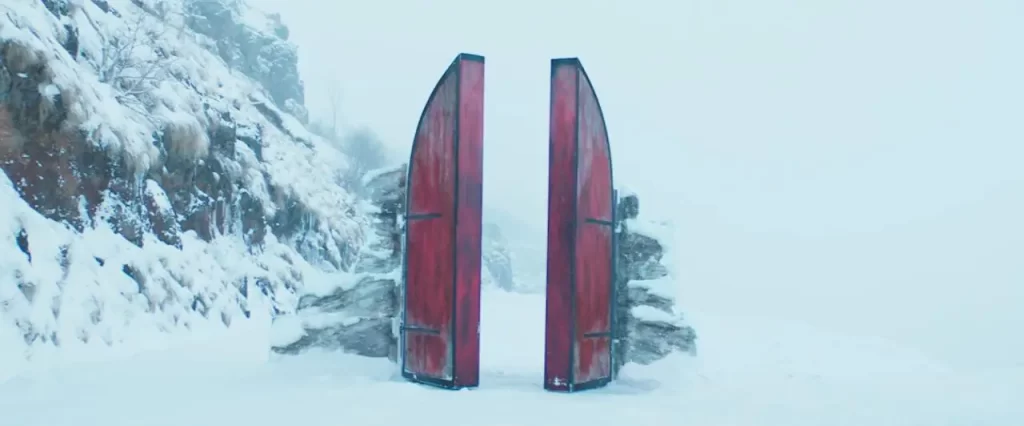
Nathan’s distress is genuinely painful to watch as he is gradually convinced of what’s happened to him. Both men grieve for their lives, but for the moment they’re unable to move. No one has come for them; no one is there to guide them. Rather like the death which occurs in the wonderful A Ghost Story (2017), they seem doomed to remain in one place – in their case, where they passed away. However, Daniel hears something, and then he sees something. Two sets of doors appear on the now impassably snowy road and, if it seems that Nathan’s past actions preclude him from following Daniel through one of the doors, then it ain’t so simple for Daniel, either. No one is getting off lightly here. If it seems, for a moment, like it’s all about to turn into a version of the idea that ‘good guys go to heaven’, then the film at least spares us that.

However, Pandemonium next opts to park this sequence, and in so doing, dispenses with the most successful part of its storyline. It broadens its scope, beginning to take in other scenarios, characters and settings. It slowly transpires that this is actually an anthology film: that could have all been fine, with a genuinely solid overarching narrative. Instead, the icy horror of the opening twenty minutes or so is first replaced with an odd, Gothic storyline about a disturbed little girl in a chateau, a blend of My Pet Monster and something altogether bleaker. Then there’s another, more worldly chapter which, again, has little to do with the two previous ones, other than how it takes death for a theme. This is horror cinema, folks, or at least it’s horror-adjacent: we’re already wall-to-wall with scintillating stories about death in horror, and audiences generally require more convincing than this. Even the presence of a clear nod to Fulci’s The Beyond (1981) – if openly lifting a scene constitutes a ‘clear nod’ – can’t cut it on its own. The nagging suspicion here is that these segments were never scripted at the same time, and have found themselves cut and shut together for reasons of expedience, rather than coherence.

At its best, Pandemonium‘s simple symbolism, stark scenery and the effective performances from Bajraktaraj and Dillon are very appealing, whilst its booming, sturm and drang music (together with a well-realised soundscape more generally) make this, initially, an engaging, sensory experience. There are some interesting ideas too: for instance, around the seeming corporeality of the newly dead: can Daniel really heave a corpse from one place to another? Or is this part of the fantasy? However, after experiencing this feeling of total engagement, the next phase feels like falling out of love: you remember what appealed to you in the first place, so you try to maintain interest, but as time passes – though you can’t pinpoint the exact moment – you find yourself moving through uncertainty and boredom to a final feeling of rather shameful hostility. There are just no convincing links between these tales; each tale feels reticent about any kind of closure or cogency. Fantasy shouldn’t mean that all narrative expectations go out of the window, after all, if you have clearly elected to start using those narrative elements. And then, when we get Dillon back again, he’s being made to guest star in an episode of Buffy.

It’s genuinely very difficult to account for what happens to this film during its runtime, and whilst there are technical aspects to applaud, it takes more than effective cinematography to make a film.

Pandemonium (2023) launches on Arrow’s streaming service in May 2024.

Interview: Alberto Corredor, director of Baghead

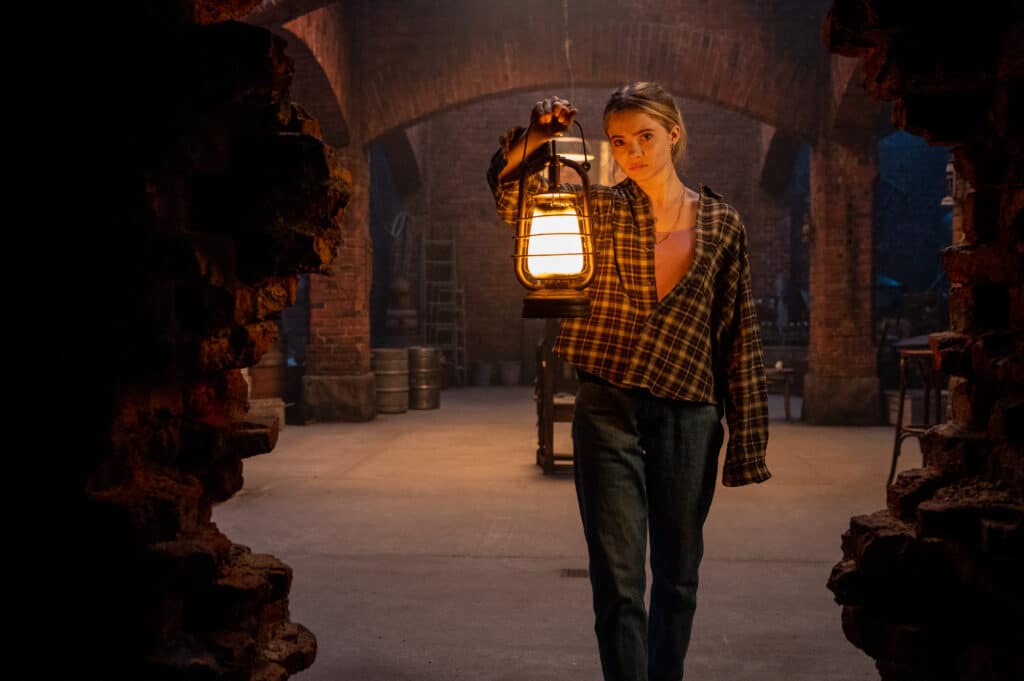
Following up from my recent review of Baghead (2023) – a broadly successful and often intriguing supernatural horror tale – Warped Perspective has been fortunate enough to have a chat with its director, Alberto Corredor, about his experiences working on this film, his first feature. Keri asked the questions: many thanks to Alberto, his team and all who facilitated this interview.

Keri/Warped Perspective: having initially made Baghead as a short film back in 2017, you decided to expand it into a feature-length: what inspired you to do this, and what were the challenges of this process? How pleased are you with the results?

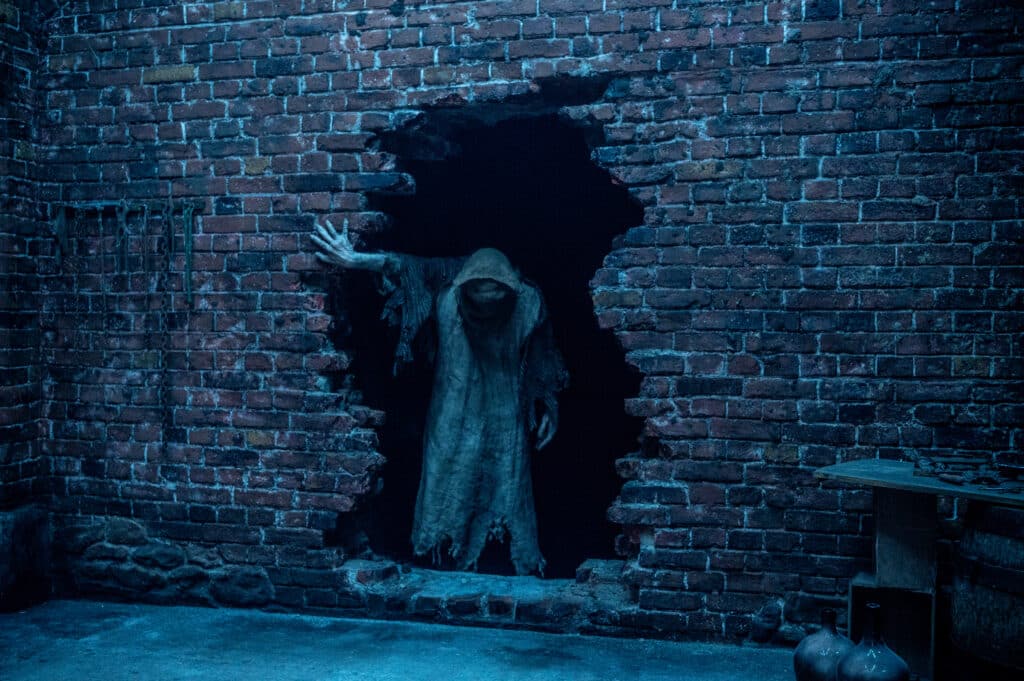
AC: From the moment I read Lorcan’s script for the short film, I recognized that Baghead was a character with significant potential for a feature film adaptation. We approached the short film with this expansion in mind. Although the script was a complete story in itself, we always saw it as a proof of concept for a longer tale, exploring themes of grief, family, and closure. We invested considerable effort in designing Baghead, knowing that an iconic character would be crucial for the transition to a feature film.

There were numerous challenges in achieving this. The main challenge was crafting a story that retained the mood and essence of the short film without becoming redundant. Additionally, the transition from a short film, where I managed every aspect, to a studio-led project was substantial. It can be overwhelming, and feelings of insecurity—the well-known “impostor syndrome”—can surface, so it’s essential to be adaptable and rely on your team.

I am very proud of the film, especially considering the challenging circumstances we faced working during the COVID pandemic. Saying that, as a director, I now can only see all the mistakes and think about how I could have approached certain scenes differently. However, it’s important to accept these imperfections and apply the lessons learned to future projects.

WP: Where do you see Baghead in terms of its predecessors: did particular films or styles influence it?

AC: Visually, I discussed my references with Cale Finot, the director of photography. I am drawn to expressionism and J-Horror, as well as films like Mama and the works of Guillermo del Toro. We focused on the use of light and shadows, and the strategic use of negative space, as these elements significantly enhance the mood and tension necessary for genre stories. For the initial scene in the basement, where our protagonist encounters Baghead, I wanted to infuse a touch of Sam Raimi’s style. Raimi is a master at creating an uncanny yet amusing atmosphere, which was perfect for setting the tone for that scene.

WP: Reviews and articles about Baghead have so far tended to point out its (I’m sure entirely coincidental) similarities to another recent horror with a similar theme, Talk to Me. As an audience member this felt a little frustrating, given the fact that the short film came out years before Talk to Me. How do you feel about this as a filmmaker, first of all, and do you personally feel that these comparisons have had any effect, good or bad, on Baghead?

AC: I first learned about Talk to Me through an actor friend I met during the festival circuit for our short film in 2018. By 2023, we had been in post-production with Baghead for over a year when he mentioned that Talk to Me had a very similar premise and was quite impressive. Naturally, I knew the potential negative impact on our film, fearing that the novelty and shock factor of our character might be diminished. As a filmmaker, you must come to terms with the fact that people might independently conceive similar ideas, and sometimes the timing can be an issue. That’s simply part of the industry.

What is harder to accept, however, are the reviews or comments suggesting that we copied Talk to Me, especially considering our short film and its concept predates Talk to Me by five years. Honestly, I still haven’t watched Talk to Me; the thought of making comparisons is something I’m not ready for right now. Perhaps in a couple of years…

WP: Tell us about working with Freya Allan: she’s probably best-known in her career so far for playing Princess Cirilla in The Witcher: how did she enjoy working on a supernatural horror of this kind?

AC: Working with Freya was a fantastic experience. It was my first feature film, and it was also her first time leading one. We last discussed this during a promotional tour in Mexico. Initially, we faced some challenges, but we gradually found our rhythm. As Freya had never acted in a horror film before—despite her experience with fantasy elements in The Witcher—it took some time to determine the best approach for her character. Nevertheless, she was incredibly dedicated and succeeded in creating a compelling Iris, a character that audiences can understand and empathize with. Everyone on set could see her potential for a remarkable career. Freya is professional, a proper trooper, and has a natural rapport with the camera, which is something priceless for actors.

WP: It can be fun to ask directors to tell us something about making their film which audiences wouldn’t necessaily know about otherwise: some back story, some event, or anything of interest. Did anything unusual or interesting happen during the making of Baghead?

Looking back now, it was a crazy time to shoot a film. We just came out of lockdown and everyone wanted to shoot their projects, as we didn’t now if the restrictions would come back. We faced challenges in securing parts of our cast, crew, and even locations. Ultimately, we relocated the shoot to Berlin. The producers from The Picture Company were already there working on a Liam Neeson film, and they believed we could persuade some of the core crew to stay on and join our project. But the funny thing (well, funny now) was that [John Wick director] Chad Stahelski was shooting John Wick 4 at the same time. This meant that any location we were interested in was either unavailable to another film crew, or had become prohibitively expensive due to the John Wick effect!

WP: And finally, now that you’ve worked on a horror feature, do you have any new plans or projects on the horizon?

Oh, absolutely. I’m currently involved in a couple of projects, each at different stages. One is a military-horror story set against the backdrop of renewed Cold War tensions, inspired by the conflict in Ukraine. It draws from the mood of John Carpenter’s The Thing, taking place in a U.S. military barracks in the German mountains, adding an element of isolation in a frosty, hellish setting—complete with a monster. Mad Chance (Andrew Lazar’s production company) is producing this project, and we are currently in the process of casting.

Also, following my experience with Baghead, I realized I wanted a deeper involvement in story development, which meant taking on writing duties. I’ve completed the first draft of a screenplay in collaboration with Stephen Herman. This story feels very contemporary as it explores themes of human isolation and the challenges of finding compromises, all set in a dystopian, ultra-violent future. I like to describe it as A Quiet Place meets Mandy

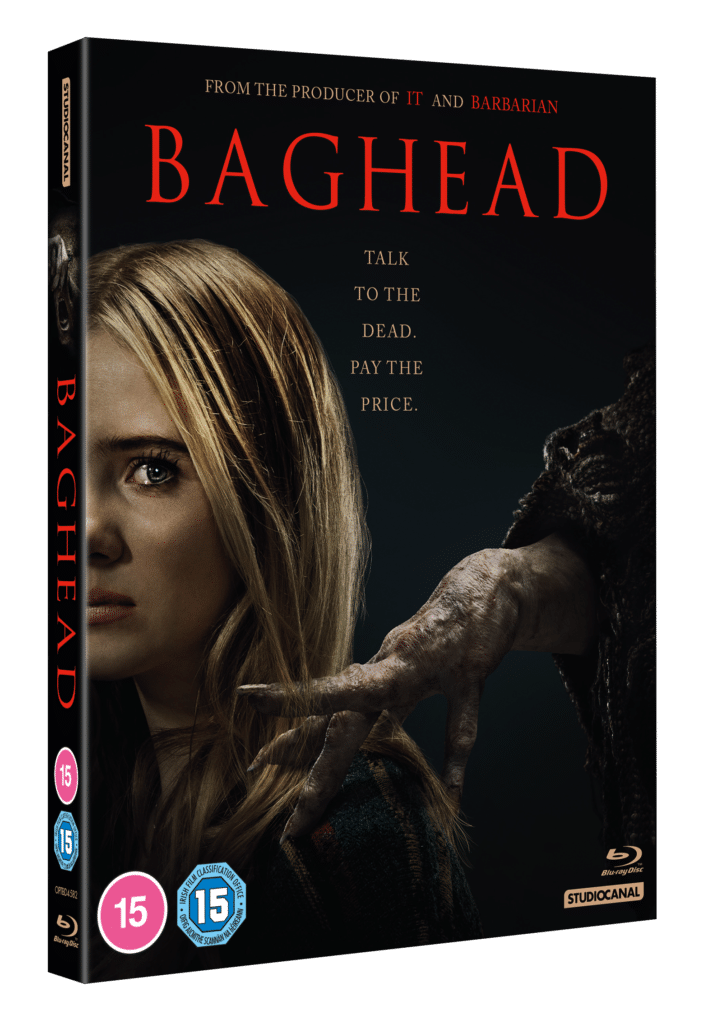
Baghead (2023) is available to buy or watch now.